



Some braid styles look polished for the first hour and then start fighting your scalp by day three. Afro braid styles for natural hair work best when they respect the hairline, the shrinkage, and the fact that coils do not behave like straight hair under tension.
A style can be beautiful and still be a bad match. Tiny parts on dense hair can take forever and sit heavy; very loose braids can unravel faster than you want; and a design that looks crisp on one head may sit awkwardly on another because of face shape, length, or how much of your own texture you want to leave out.
That mismatch is where most bad braid days start.
The styles below cover the whole range: lighter roots, bold patterns, big statement braids, and protective looks that keep your own texture in play. I’m leaning toward styles that are practical as well as good-looking, because nobody needs a braid style that only works for one mirror angle and a single hour of wear.
1. Knotless Box Braids with a Soft Feed-In Root
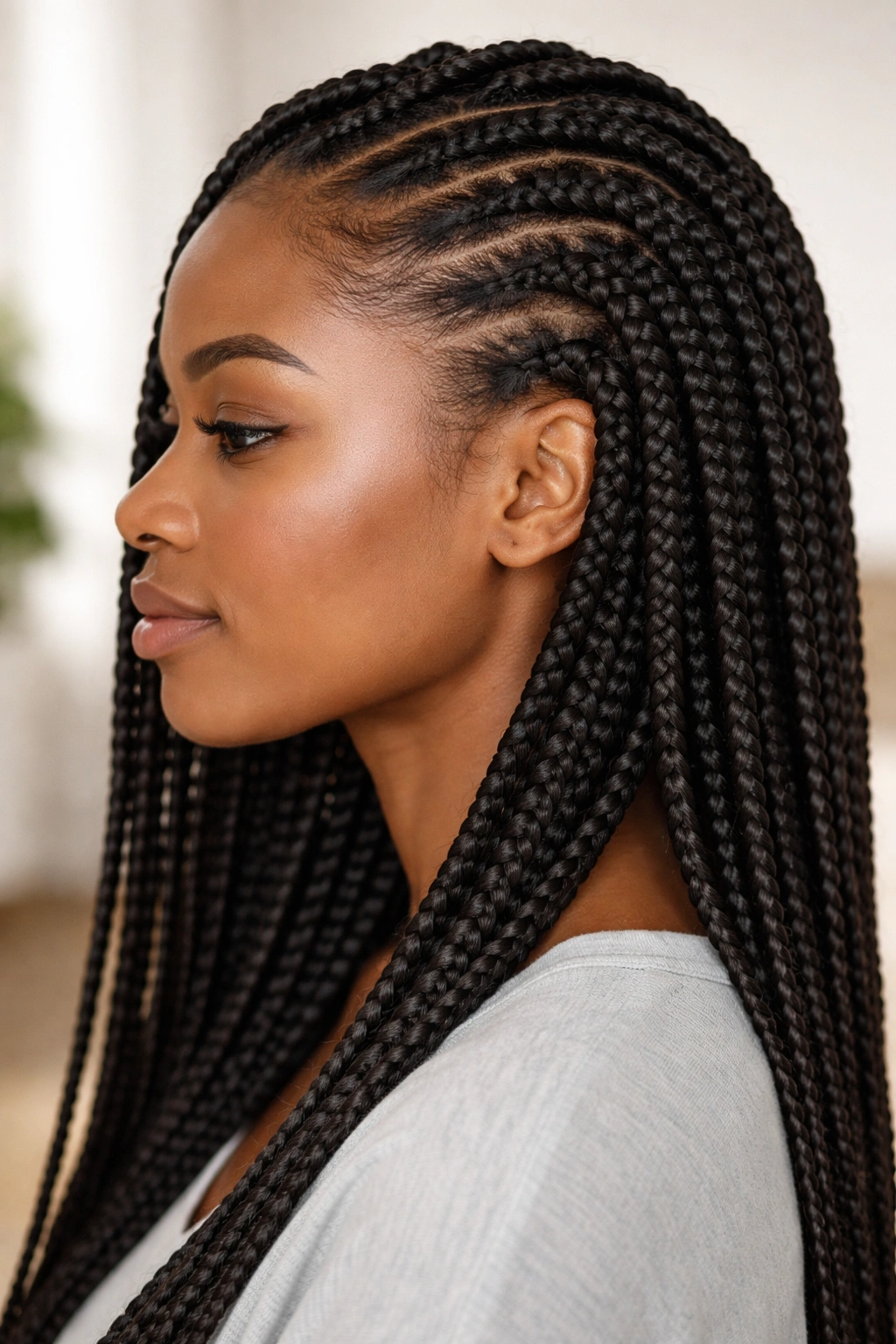
Knotless box braids are the style I reach for when the scalp needs a break. The braid starts with your own hair and the extension hair is fed in little by little, so the root feels lighter and moves more naturally than a hard-start braid.
That matters more than people think. A braid can be clean, neat, and still feel like a brick sitting at your temples. Knotless braids avoid that blunt “grab” at the base, which is why they sit well on natural hair that gets tender fast or hairlines that do not love a lot of pulling.
I also like them because they grow out with less drama. The braid does not leave a sharp bump right away, so the style keeps its shape longer and looks softer as the weeks pass. If you want a style that swings a little and does not feel stiff when you turn your head, this is a very safe bet.
One catch: knotless braids can look wispy if they are too tiny or too long for the density of your hair. Medium parts and a moderate length usually look balanced. Waist-length knotless braids are pretty, sure, but they are not light.
2. Classic Box Braids with Sharp Square Parts
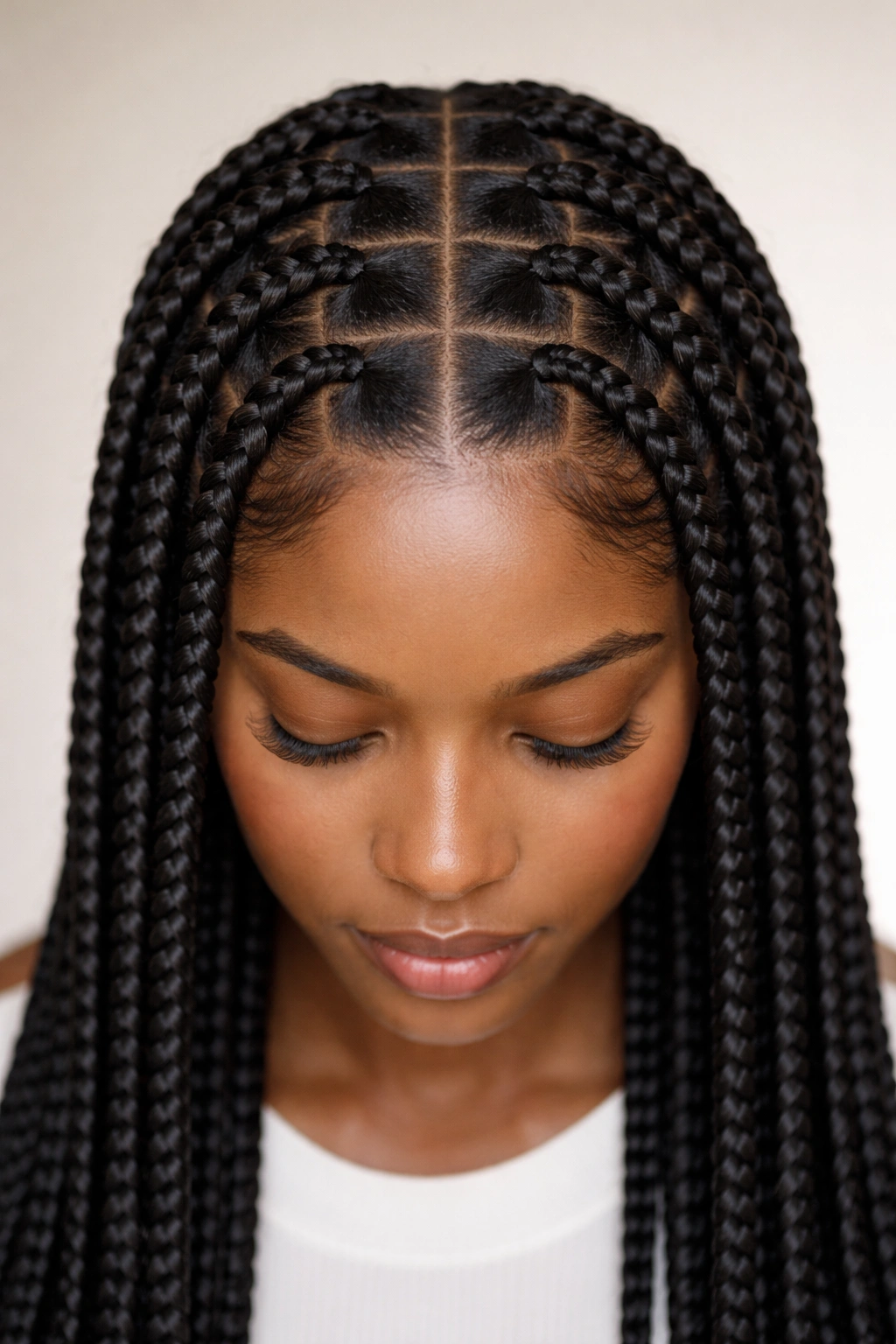
Classic box braids give you structure. The parts are squared off, the base is firmer, and the whole style reads neat in a way that softer braid styles do not always match.
Unlike knotless braids, classic box braids begin with a more obvious grip at the root. That is the point. You get a crisp start, a visible grid, and a braid that feels a bit more anchored from the first inch down. If you like your parts clean enough that you can actually admire them, this is the one.
Why People Still Choose Them
Classic box braids hold their shape well, especially when you want medium or large sections that stay defined. They also work nicely when you want the braid itself to be the statement rather than curls, beads, or accessories.
- The square parting gives a tidy, orderly look.
- The root sits firmer, so the braid has a more uniform start.
- Medium sizes usually feel less bulky than very large sections.
- They can be styled into buns, ponytails, half-up looks, or left long.
Best for: people who want a polished braid grid and do not mind a slightly firmer root. If your scalp is sensitive, ask for less tension at the front. That small request changes the whole experience.
3. Fulani Braids with Beads and a Center Braid
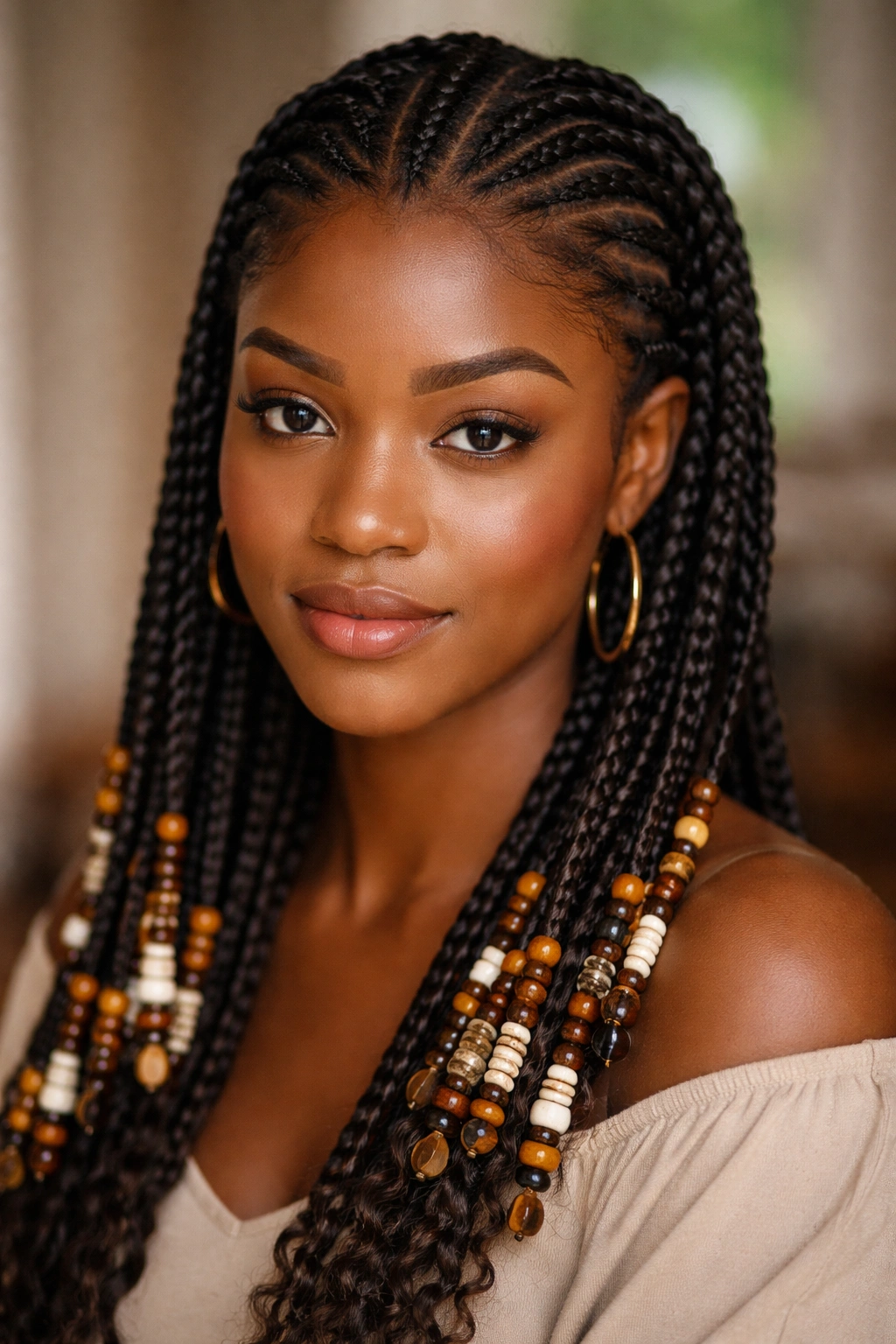
Fulani braids are the style I think of when someone wants a braid look with real personality. The usual setup includes a center braid, cornrows or side rows that move away from the face, and decorative pieces like beads or cuffs at the ends.
They have a cultural backbone, not just a decorative one, and that is part of why they land so well. The style feels purposeful. A center braid gives a clear line down the head, and the side braids frame the face in a way that can be soft or bold depending on the thickness and the accessories you choose.
Beads are where people either get it right or overdo it. Lighter beads near the face keep the hair from feeling dragged down, and heavier wood or metal beads are better saved for the ends. Too much weight around the temples is a bad idea. No style is worth a sore hairline.
Small Details That Make Them Better
- Keep the center part clean and straight.
- Use lighter accessories near the front.
- Let the braids around the face curve gently instead of pulling tight.
- Match the bead count to the braid size so the style does not look crowded.
If you want a look that carries movement, sound, and a little bit of ceremony, Fulani braids do that without needing much extra styling.
4. Lemonade Braids Swept to One Side
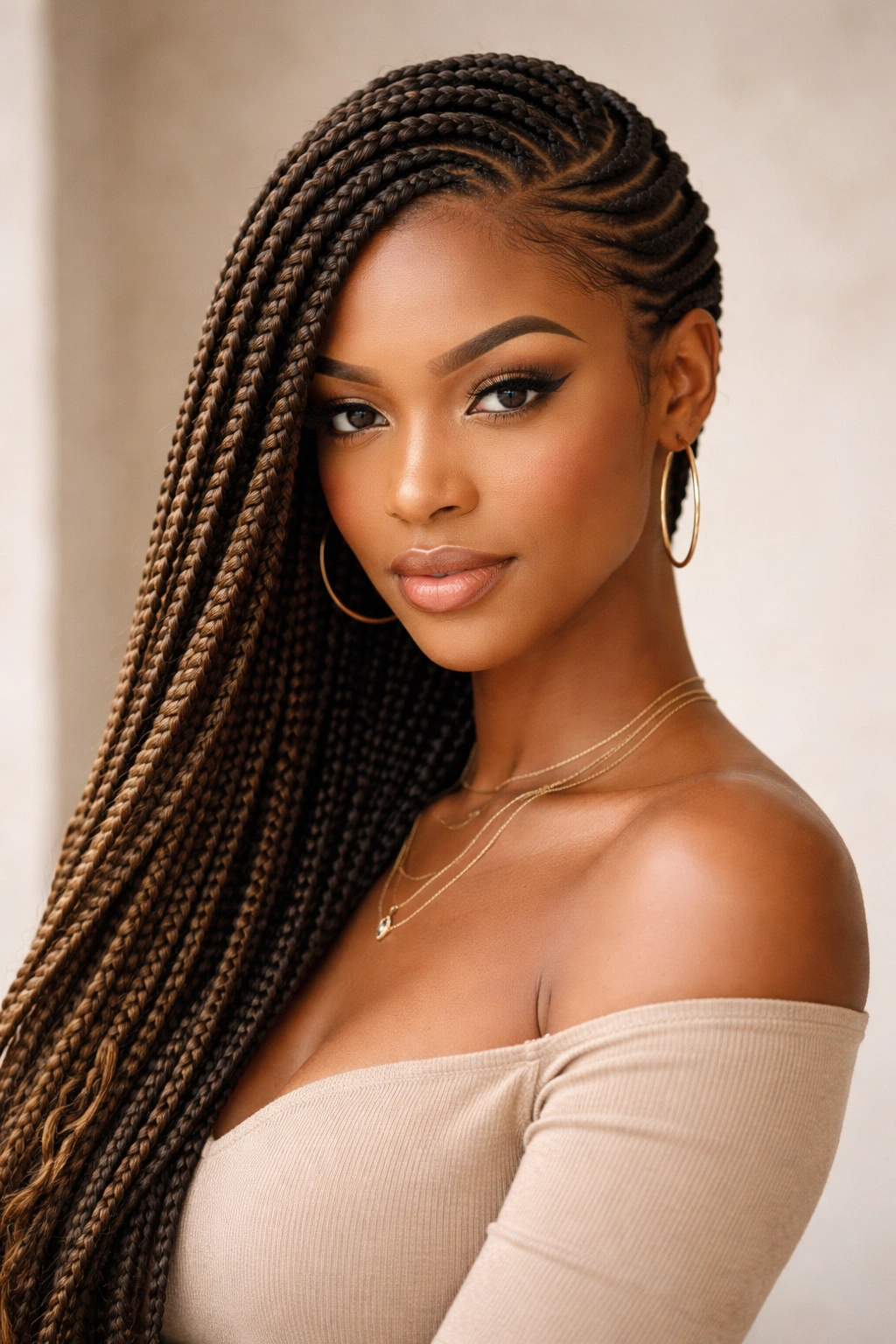
Lemonade braids are built on side movement. The entire style leans to one side, which creates a line that feels more dramatic than a straight-back braid pattern and often frames the face in a flattering way.
What makes them different is the direction. Instead of braids marching straight back, the rows follow a slanted path across the head. That angled fall gives the style a long, lean look, and it also lets earrings, cheekbones, and jawline do their thing without the hair swallowing everything.
I like lemonade braids for people who want a braid style with presence but do not want a lot of bulk. The side sweep feels intentional. It works with long braids, but it also works with medium length if you want the shape more than the size.
They are not for anyone who hates seeing one side fully open. The style asks you to commit to that asymmetry. If you do, it pays off.
A clean side part, a neat feed-in at the front, and enough length to let the braids drape instead of stick out — that is the sweet spot.
5. Goddess Braids with Loose Curly Ends
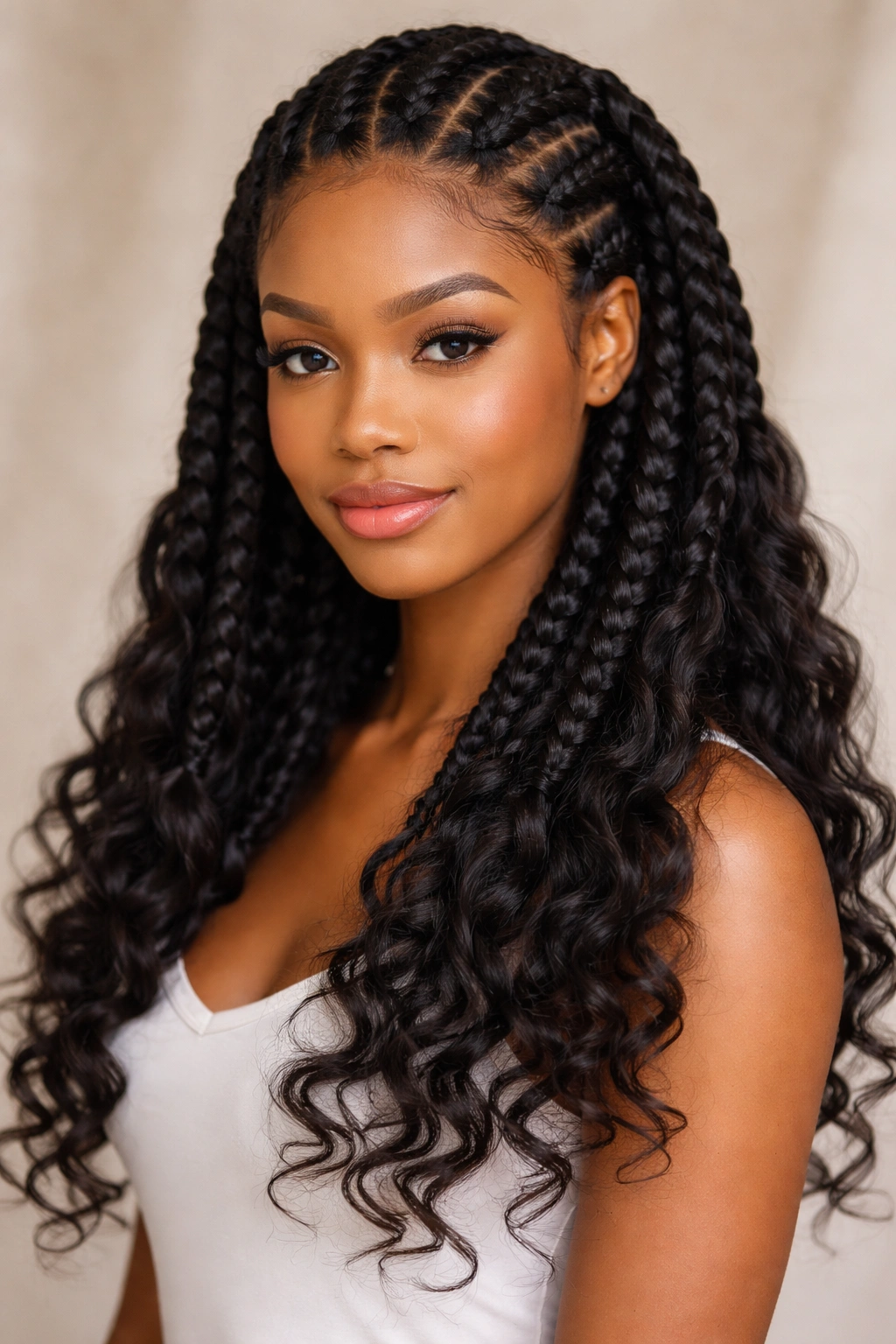
Goddess braids are for people who want polish but not a hard finish. The braids are usually larger and chunkier, and loose curly pieces are left out or added in so the style moves a little instead of sitting like armor.
The curls change the whole mood. Without them, you get a clean braided look. With them, the style softens at the ends and around the face, and that matters if you want something romantic without going full loose hair.
I think the best versions keep the braids large enough to read from across the room but not so huge that they feel bulky at the scalp. Medium-to-long lengths work well here, especially if the loose curls are set with enough hold to survive sleep and a normal day.
What Keeps the Curls From Turning Frizzy Too Fast
- Wrap the hair at night with a satin scarf or bonnet.
- Use a light mousse on the curly pieces if they start to puff up.
- Finger-comb, not brush, the loose curls.
- Avoid soaking the ends every day unless you want the style to get fuzzy early.
A little frizz does not ruin goddess braids. It just shifts the texture. But if you want the curls to stay pretty and separated, treat the ends gently.
6. Feed-In Cornrows Laying Flat to the Scalp
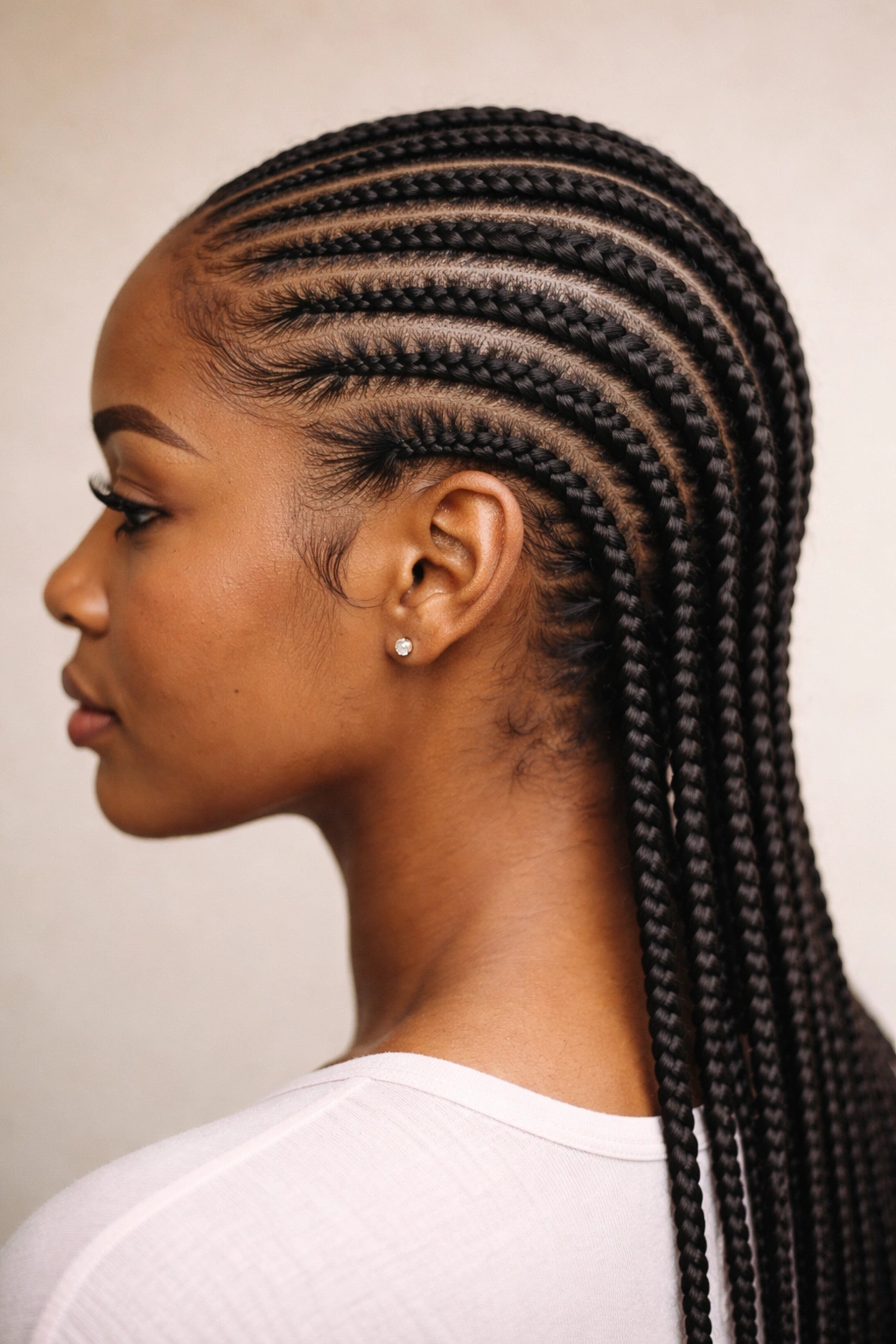
Feed-in cornrows are the workhorse style of the bunch. They sit close to the scalp, build thickness gradually, and keep the silhouette low and neat instead of puffy at the root.
Why do they feel different from standard cornrows? The braid begins small and more hair is added step by step, so the line from scalp to braid looks smoother. That also means less of a sudden lump near the front, which is one reason people with tender edges often prefer this method.
What Makes Feed-In Braids Useful
- They stay flat enough for wigs, hats, and helmets.
- They work well on short natural hair when the stylist is careful.
- The gradual build makes the front look cleaner.
- You can keep the style simple or turn it into a pattern-heavy look.
There is a warning here. Flat does not mean tight. If the braid feels like it is pulling your skin, it is too much. A good feed-in braid sits close without tugging, and your scalp should not sting when you blink, sleep, or turn your head.
I like this style for active weeks, office days, and any time you want the hair out of the way without giving up a finished look.
7. Stitch Braids with Crisp, Straighter Lines
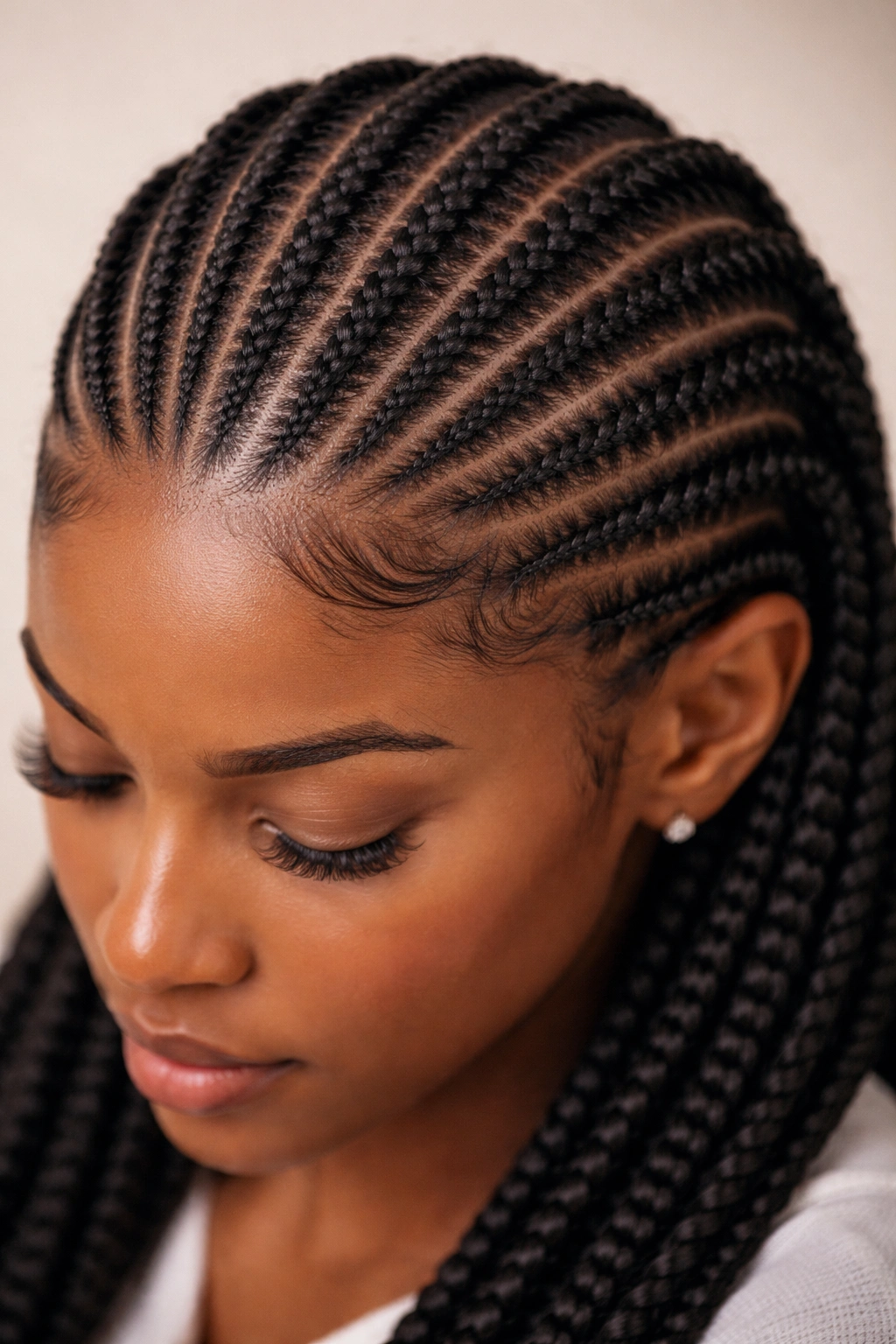
Stitch braids are for people who notice part lines. The style uses very defined sections that look almost sliced into the hair, then braided down in a way that leaves those “stitch” marks visible between each grip.
Unlike feed-in cornrows, stitch braids are about visual precision. The parting is the main event. A tail comb, some patience, and a strong styling product go a long way here, but sloppy sectioning will show immediately. This is not a forgiving style if the hands doing it are rushed.
They look sharp on natural hair because the contrast between the neat scalp pattern and the texture of the braid itself is so clean. I especially like them when the wearer wants a more graphic finish — something that looks deliberate rather than soft.
One-sentence truth: stitch braids punish sloppy parting.
They are a good choice if you like clean lines, geometric shapes, and a braid style that still looks fresh when the hair is pinned into a bun or gathered into a ponytail. If you want more softness, pick another style. If you want definition, this one has it in spades.
8. Tribal Braids Mixing Cornrows and Hanging Plaits
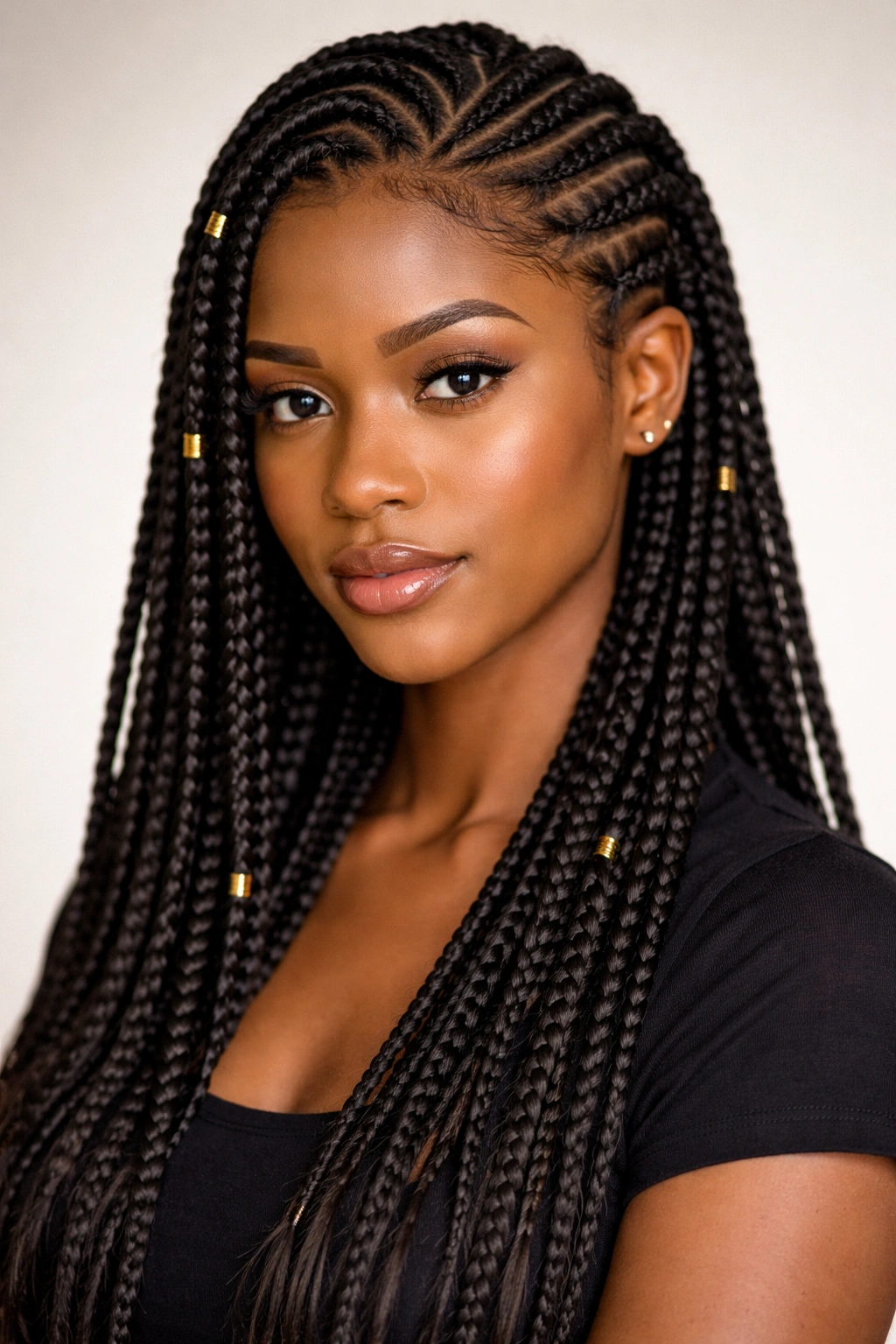
Tribal braids are what happen when you stop trying to make the whole head behave the same way. You can mix cornrows at the front with hanging braids in the back, switch braid sizes, add beads, leave a curly piece out, or change the parting pattern from row to row.
That flexibility is the charm. The style gives you room to build a look that feels personal instead of copied straight from a catalog. Some versions use a clean middle part with thin braids near the face. Others go heavier on the sides and leave the back full and loose. Both work.
Common Pieces You’ll See In Tribal Braids
- Straight or curved cornrows at the front
- Hanging braids at the crown or back
- Beads, cuffs, or shell accents
- Sometimes loose curls tucked in between sections
I like tribal braids because they show how much styling can happen inside one head. The look can be subtle if the parts are simple, or loud if the accessories are doing the talking. Just keep the overall balance in mind. Too many braid textures fighting each other can make the style look busy instead of intentional.
If you like a braid style that gives you choices, this is one of the easiest places to play.
9. Halo Braids Wrapped Around the Hairline
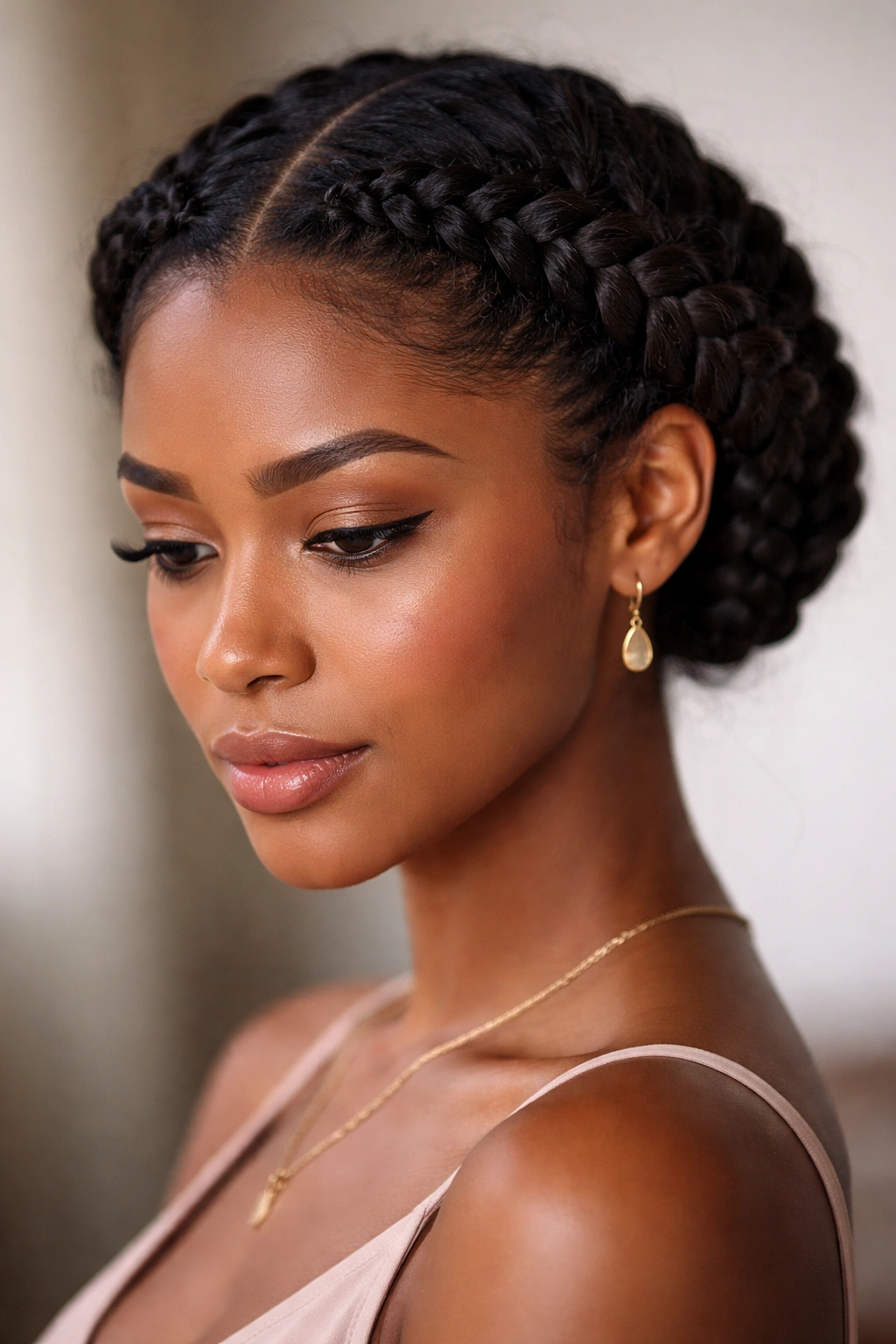
Need something that keeps the hair off your face and still looks soft? Halo braids are hard to beat. The braid wraps around the head like a crown, which makes the style feel neat without being severe.
The best thing about a halo braid is how it changes the outline of the face. It opens the forehead, shows the cheekbones, and keeps the neck clear if the ends are tucked well. With added hair, it can look fuller. Without added hair, it can look sleeker and more understated.
How to Keep It From Slipping
- Anchor the braid with discreet pins that match your hair color.
- Keep the base smooth so the braid does not sit on bumps.
- Tuck the ends well under the braid or behind the ear.
- Use a light hold product, not a heavy layer of gel.
Halo braids suit weddings, dinners, pictures, and those days when you want your hair to feel composed without being fussy. They also work nicely on natural hair that has been stretched a bit, since a smoother base makes the wrap easier to build.
The only real downside is that they can take a minute to pin correctly. Once they are set, though, they look finished in a way that feels calm and tidy.
10. Braided Bun Sitting Low or High
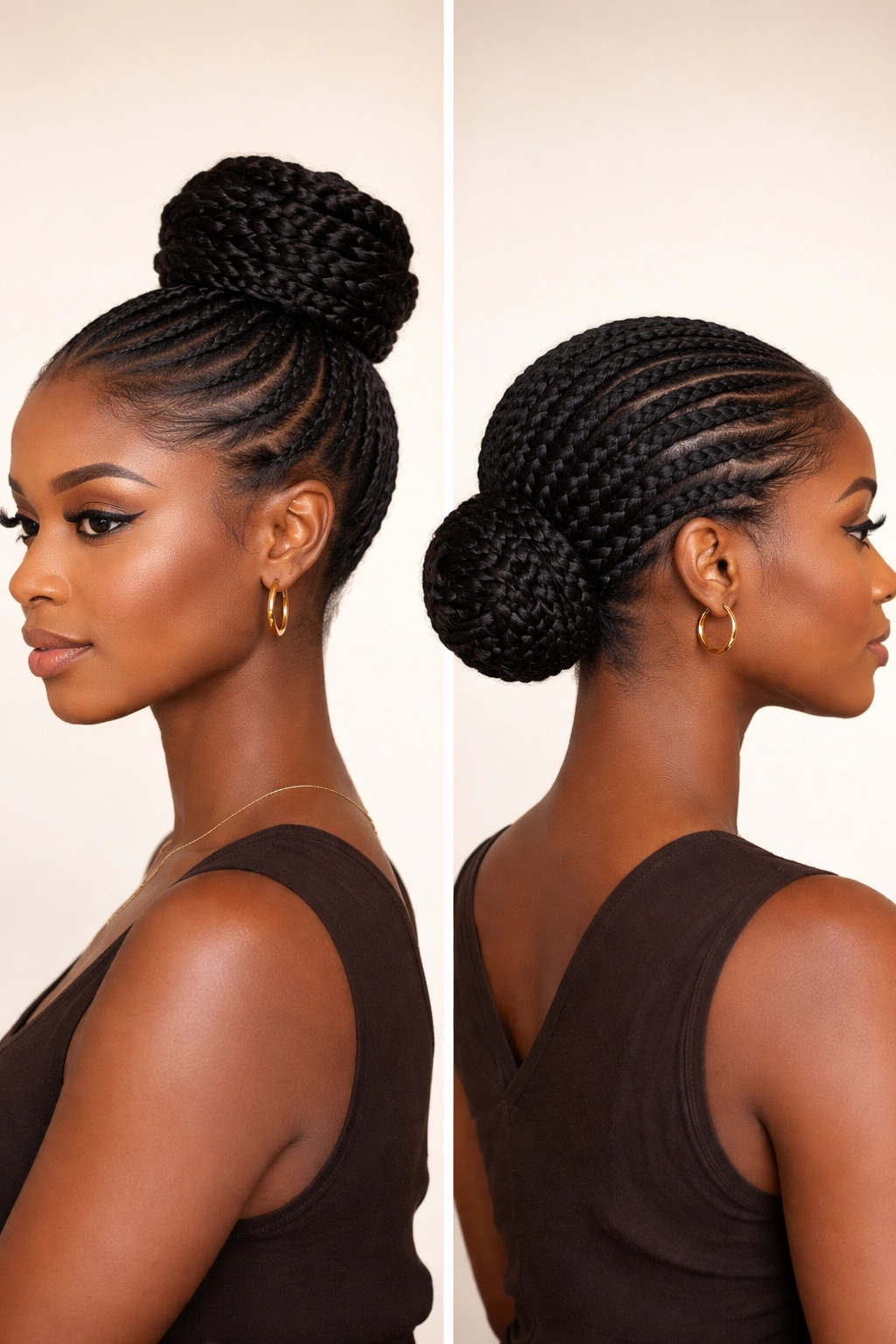
A braided bun is one of those styles that looks straightforward until you start balancing the weight. A good braided bun holds shape, sits where you want it, and does not sag by the end of the day.
You can build it from cornrows, box braids, or a mix of both. The braids can feed into a low bun at the nape or a high bun near the crown, and each choice changes the mood. A low bun feels composed. A high bun feels sharper and more lifted.
This style is excellent when you want your ears, neck, and shoulders exposed. It also behaves well under coats and scarves, which sounds small until winter fabric keeps catching on your hair. That gets old fast.
The main mistake is making the bun too heavy for the base. If the bun is large, the anchor braids need to be secure and balanced across the head, not all pulling from one tiny spot. Otherwise the bun starts drooping and the scalp pays for it.
I like this style for long workdays, dressy events, or any time you want braids that stay off your shoulders and out of the way.
11. Braided Ponytail with a Sleek Base
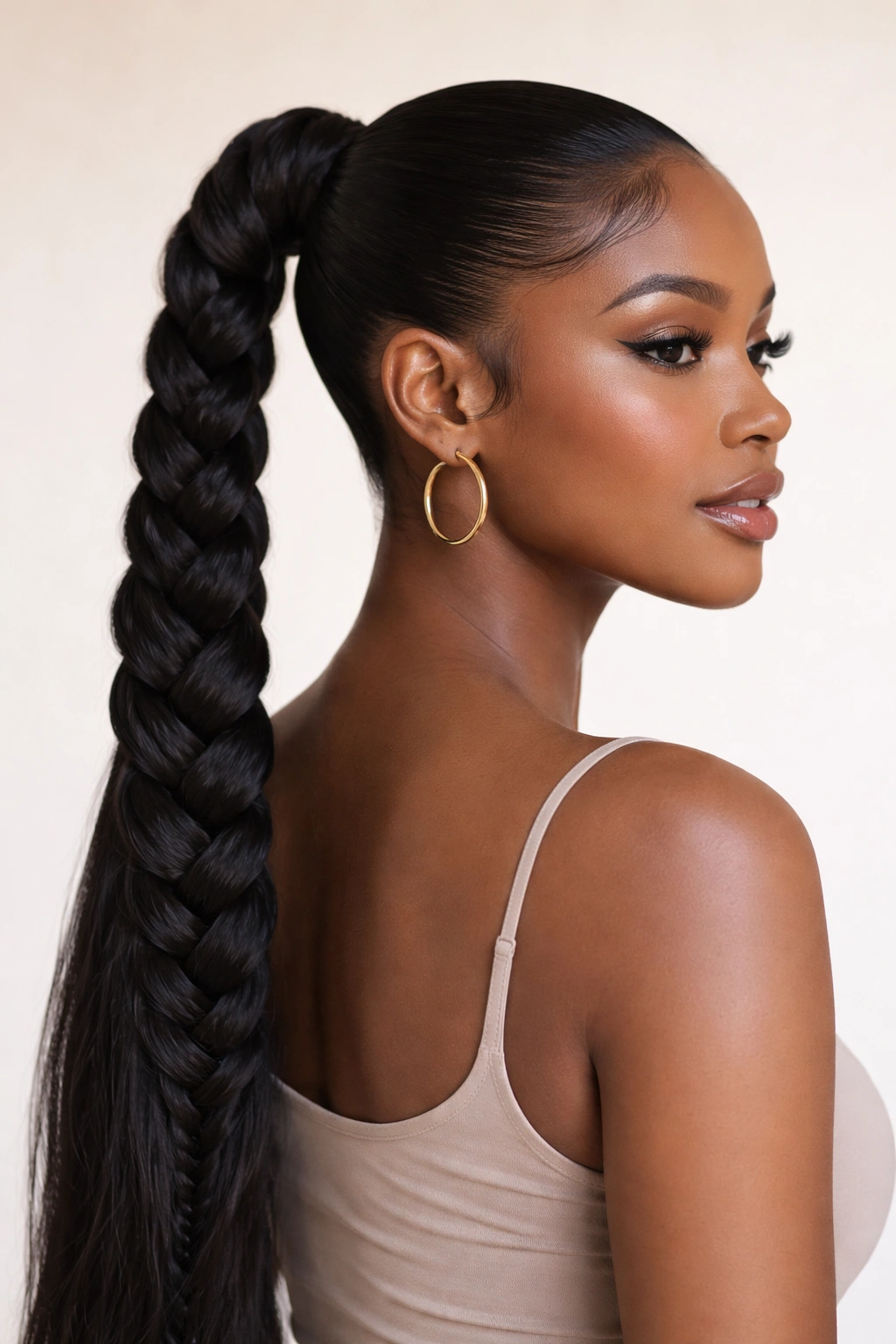
A braided ponytail looks simple from a distance. Up close, it takes more planning than people admit. The base has to be flat, the ponytail has to sit where you want it, and the wrap around the elastic should hide the mechanics.
Why does it work so well on natural hair? Because you can keep the front sleek with cornrows or feed-in rows, then let the ponytail carry the length. That gives you height without dragging the hairline. It also keeps the style easy to switch from casual to dressed-up with a change of earrings or a sharper edge finish.
Things That Make the Ponytail Hold Better
- Place the ponytail on the crown for height or lower at the nape for a calmer shape.
- Use an elastic that grips without chewing the hair.
- Wrap one braid around the base to hide the band.
- Keep the edges smooth, but do not flatten them into pain.
I prefer this style when someone wants movement. A ponytail swings. It bounces. It changes when you walk. That little motion makes the whole look feel alive.
If your natural hair is thick, ask for a sturdy base so the ponytail does not slide. Thin bases and heavy braid bundles are not friends.
12. Boho Braids with Freer, Piecey Ends
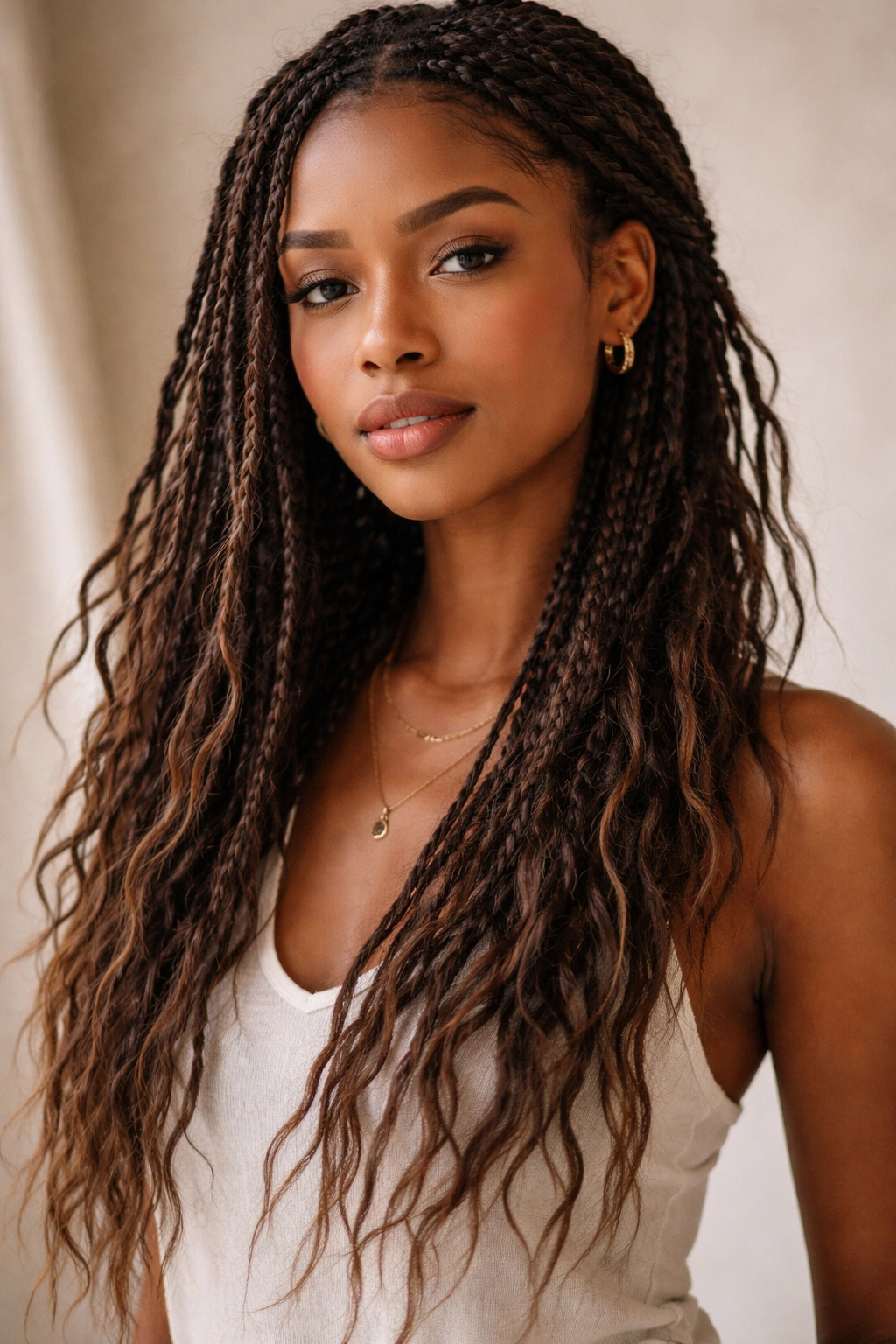
Boho braids are the answer when you want your braids to look a little looser and less finished. The braids themselves may be box braids, knotless braids, or cornrowed sections, but the ends have free pieces, curls, or soft strands left out on purpose.
That free texture is the whole point. The style feels more lived-in, less rigid, and more playful than neat box braids. I like it when the wearer wants movement and does not mind a bit of frizz. Because yes, frizz comes with the territory.
How to Make Boho Braids Look Intentional
- Keep the loose pieces evenly spaced so the style does not look random.
- Use a curl cream or light mousse on the free sections.
- Sleep with a satin bonnet so the pieces do not knot up.
- Detangle the loose strands with your fingers, not a brush.
Boho braids are not the style for someone who wants every strand locked into place for weeks. They change shape faster than a crisp braid set. But that softness is exactly why people like them. They feel a little less severe, and on natural hair, that matters.
When done well, they look relaxed rather than messy. That distinction is everything.
13. Triangle-Part Braids for a Graphic Grid
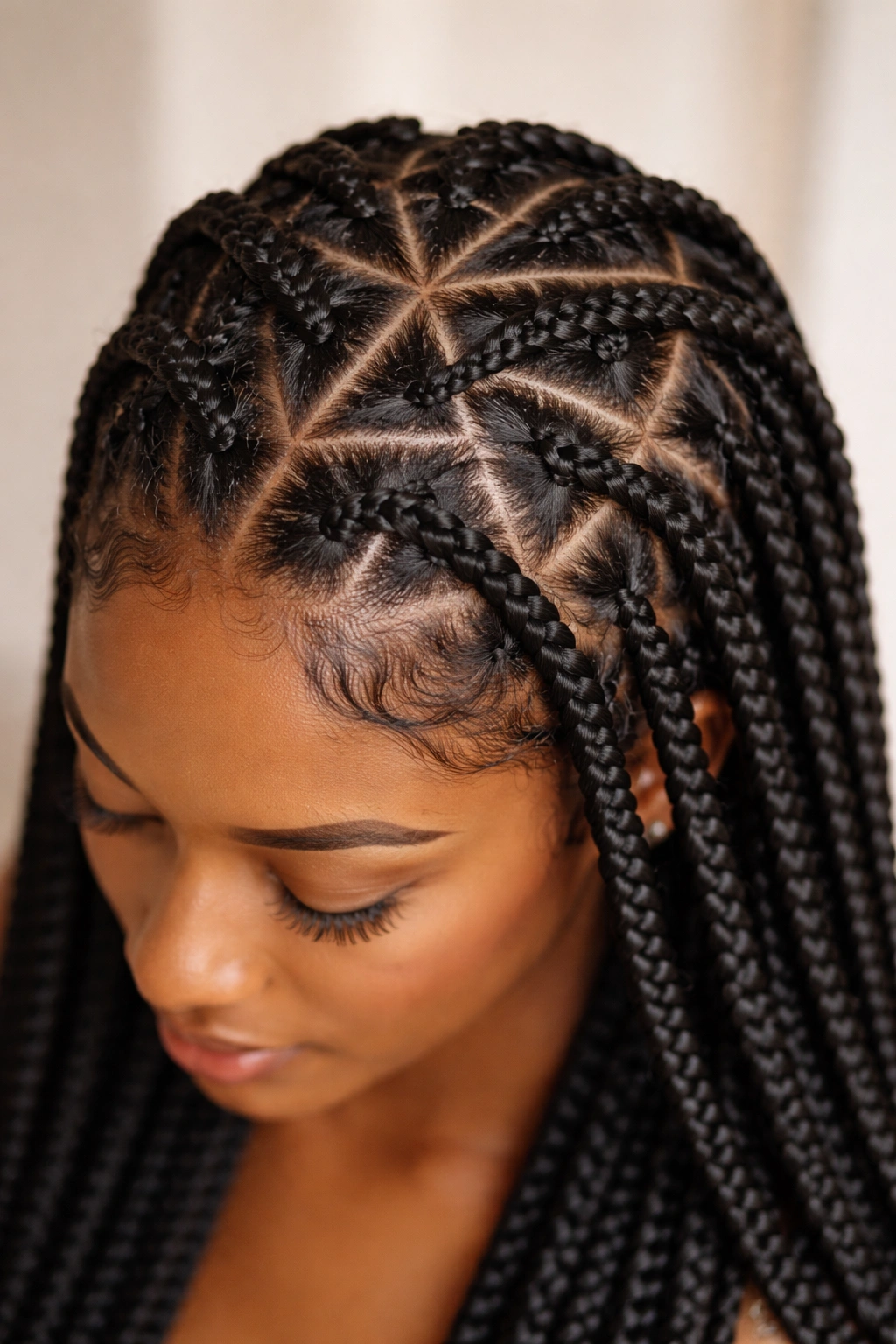
The braid itself may be ordinary. The parting is what makes triangle-part braids stand out. Instead of square sections, the hair is divided into triangles, which gives the scalp pattern a sharper, more geometric feel.
That shift sounds small. It is not. Triangle parts break up the grid effect that box braids can sometimes have, and they make the top of the style look a little more custom. On natural hair, especially dense coils, the different shapes can make the whole style feel fresher without changing the braid size at all.
I like triangle parts when someone wants familiar braids but does not want the usual look. The change is subtle from a distance and obvious up close, which is a nice balance. It also works with knotless braids, classic box braids, and even shorter braid lengths.
The one downside is time. Triangle parting takes more careful sectioning, and if the part lines wander, the whole design loses its edge. So this is a good style for a stylist who actually likes parting work, not one who rushes through it.
If your hair is medium to thick, triangle parts can look especially clean because the shape holds even when the hair grows a little.
14. Braided Bob with Tucked Ends
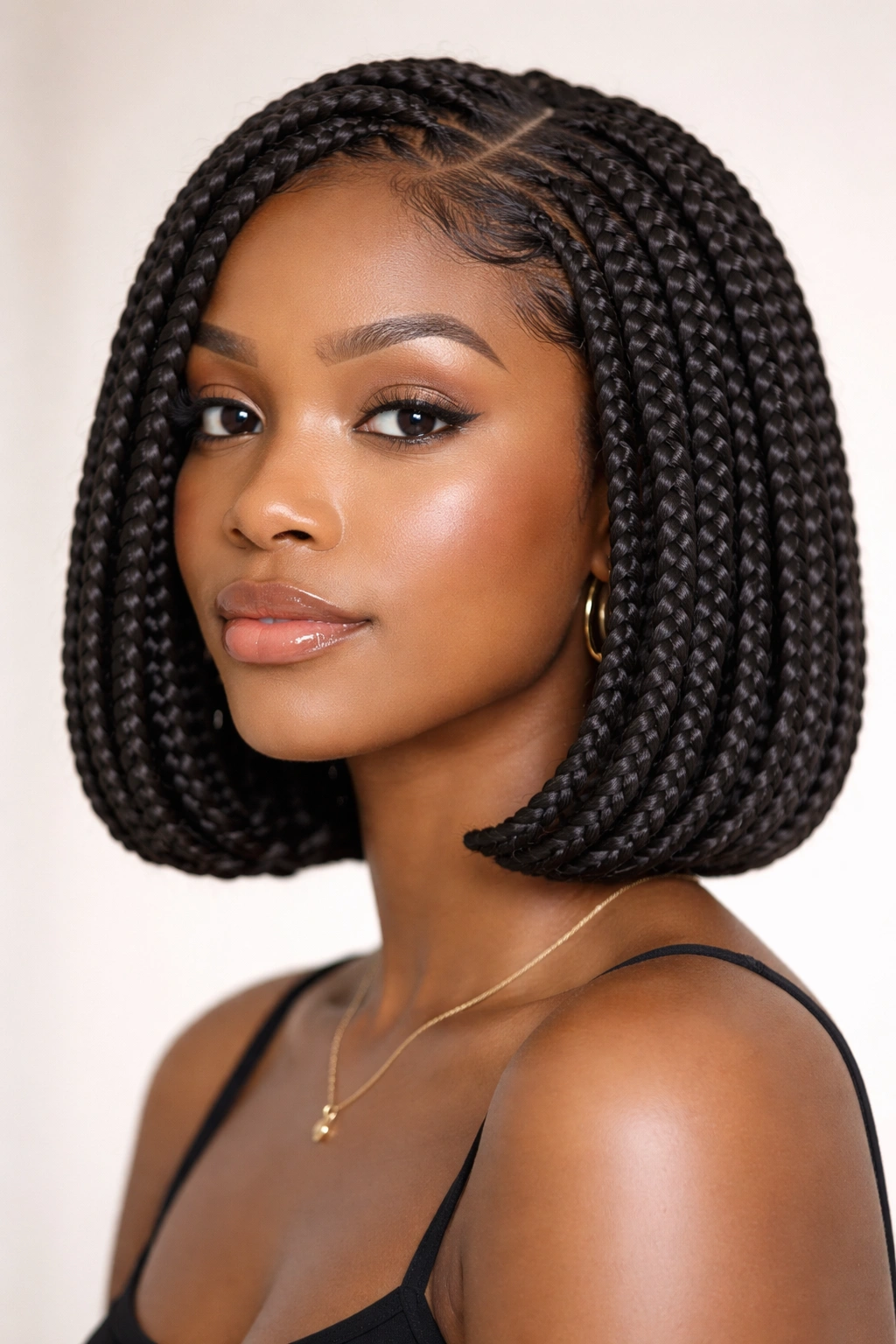
Braided bobs are lighter, faster to wear, and easier on the neck. That is the simple truth, and it is why I recommend them to people who like braids but get tired of all that length hanging around their shoulders.
Why do shorter braids feel so good? Less weight. Less snagging on jackets. Less time sitting under the stylist’s hands. And when the ends stop around the chin or shoulders, the whole look moves with your head instead of dragging behind it.
What to Ask For
- Chin-length for a sharper, bolder finish
- Shoulder-length if you want a little more swing
- Medium parts to avoid too much bulk at the root
- Tucked or sealed ends so the bob stays even
This style works nicely on natural hair when you want a shape that does not overwhelm the face. It can look soft, clean, or a little edgy depending on the parting and the braid thickness. Side parts change the mood fast. So do curled ends.
A braided bob also makes daily upkeep easier. It takes less time to dry after washing, and the shorter length usually tangles less at night. That alone wins a lot of people over.
15. Cornrows into an Afro Puff
Not every braid style has to cover every strand. Cornrows into an Afro puff keep the front or sides neat while letting your own texture take over in the back or at the crown, and that mix feels honest in a way I like a lot.
This is a strong choice when you want your natural hair to stay visible. The cornrows protect the front, shape the hairline, and keep the style clean, while the puff gives you volume and movement. It is one of the easiest ways to wear braids without losing the personality of your curls.
The puff can sit high for a fuller shape or lower if you want something calmer. If your hair is stretched first, the puff usually looks bigger and lasts longer through the day. A wide elastic or soft band helps, but do not yank it so tight that the base gets sore. That mistake happens fast.
I keep coming back to this style because it solves a real problem: you get structure and softness at the same time. That is not a small thing. If you want a braid style that lets your own texture stay in the conversation, this one does it without trying too hard.
And that is the part that matters. The best braid style is the one you can actually wear, sleep in, shake out, and live with — not the one that only behaves for the first photo.
