



Curls do not wear color like straight hair does. A shade that looks soft on a smooth blowout can turn loud, flat, or oddly muddy once it bends through a coil or ringlet.
That’s why the best hair color ideas for curly hair are never just about the shade. Placement matters. Depth matters. So does the way the color fades as your curls shrink, spring, and stack on top of each other.
A curl pattern gives you built-in dimension, which is a gift and a trap. A little caramel ribbon can look richer on curls than on nearly any other texture, while an all-over bleach blonde can be gorgeous one week and a frizzy headache the next if the hair is already thirsty.
The smartest choices usually keep some darkness at the root, some light where the curls catch the eye, and enough softness that grow-out does not look harsh. Start there. Everything else gets easier once you know how color and curl shape work together.
1. Soft Caramel Ribbons
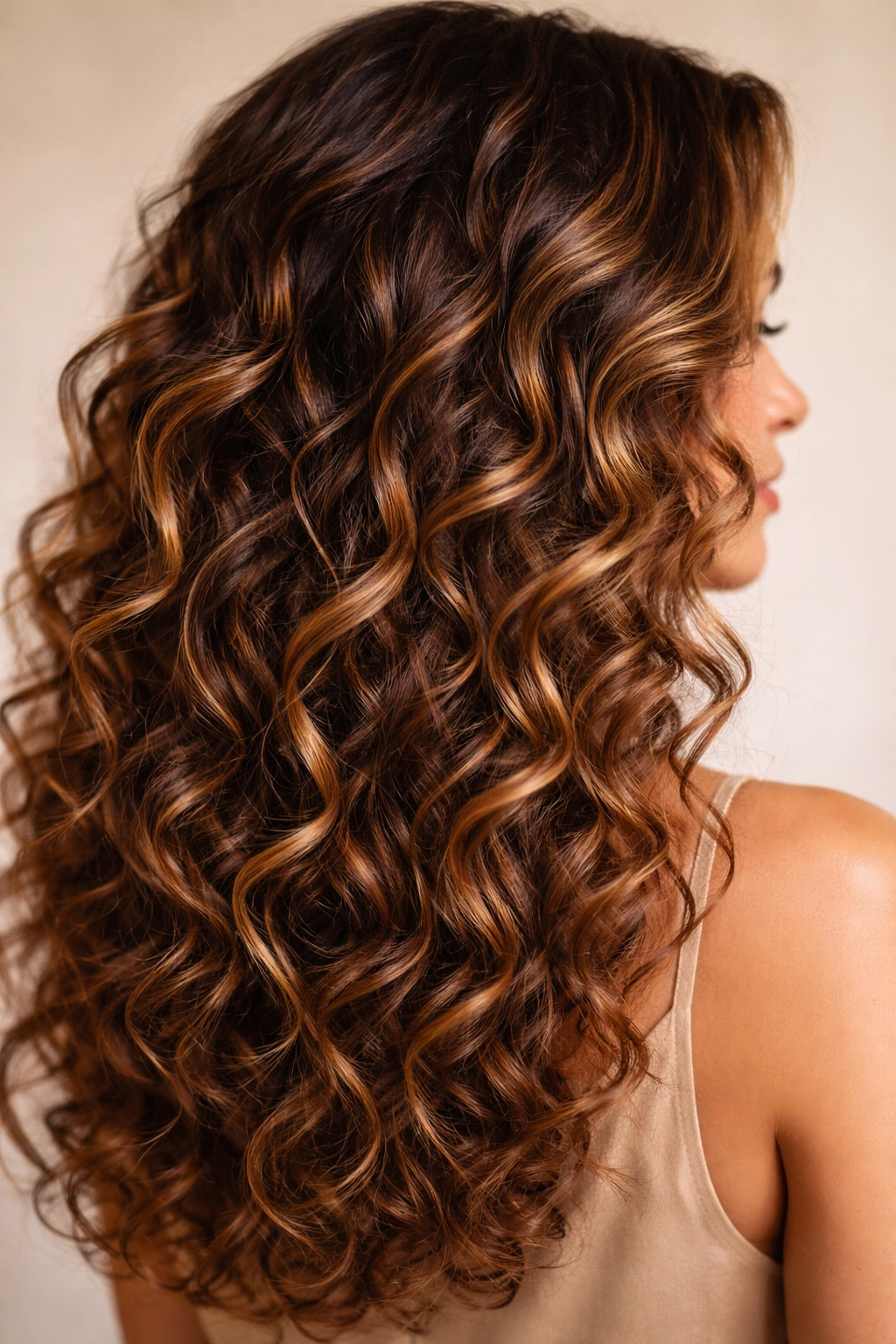
Soft caramel is the shade I reach for when someone wants change without drama. It sits in that sweet spot between warm brunette and blonde, so the curls still read as rich and full instead of stripped down to one flat tone.
Why It Flatters Curly Hair
Caramel ribbons work because they follow the bend of the curl instead of fighting it. The lighter pieces land on the outer curve, where light naturally hits, and the darker base stays tucked underneath.
That gives you movement even when the haircut is simple. It also grows out cleanly, which matters more than people admit.
- Best on medium brown to deep brown bases
- Looks especially good on loose spirals and medium coils
- Ask for fine hand-painted pieces, not chunky streaks
- Keep the lightness to about 1 to 2 levels above your base for a natural finish
My favorite trick: leave the roots a shade or two deeper than the mid-lengths. Curly hair needs that shadow or the whole shape can look puffy.
2. Honey Blonde Balayage
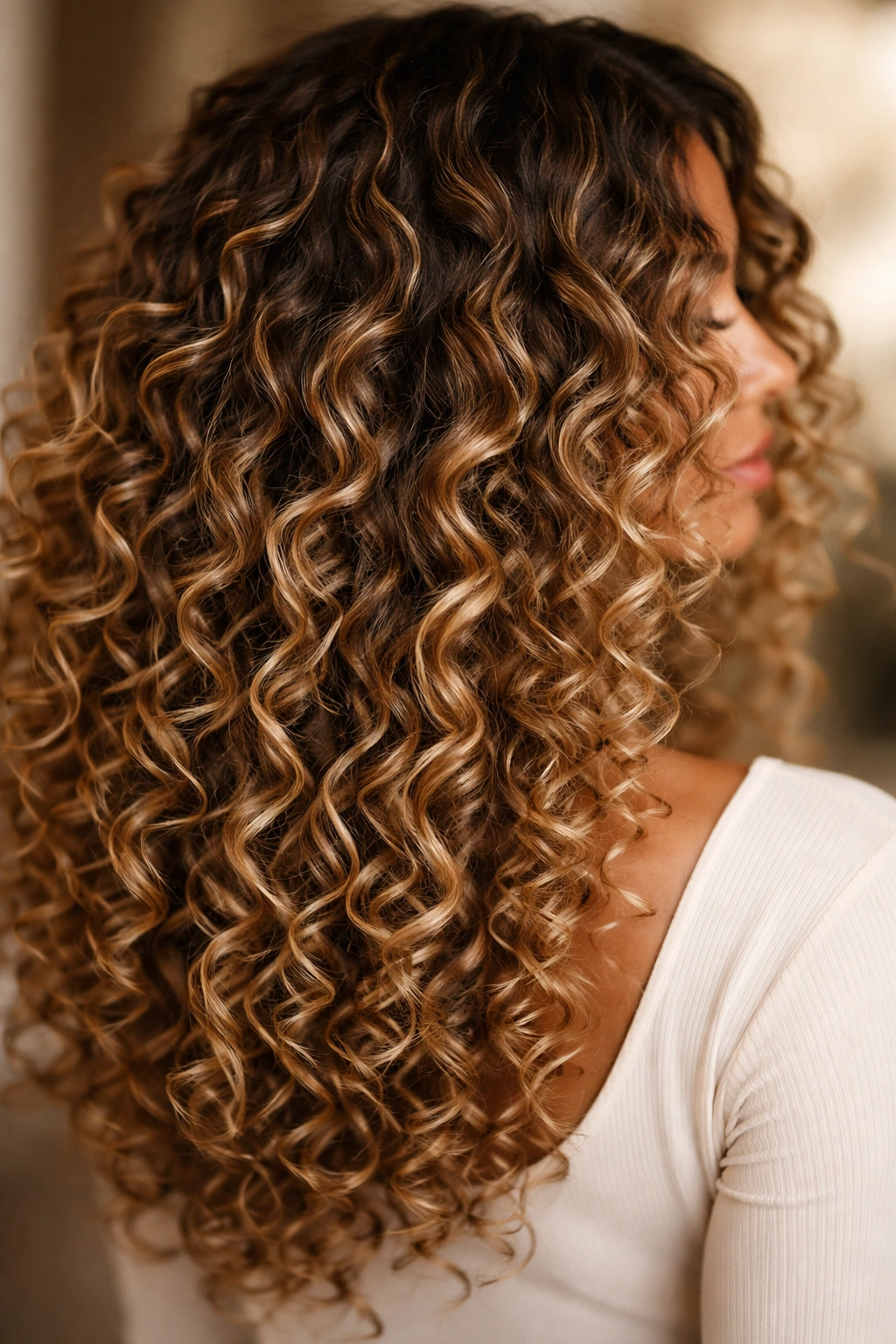
Honey blonde is what happens when sunlight behaves itself. It is warmer than beige blonde, softer than gold, and far kinder to curls than the icy shades people keep trying to force onto every head of hair.
The color works best when it starts in broken ribbons rather than one solid sheet. On curly hair, that soft contrast makes each ringlet look more defined. You can usually see the shape better, not because the curls changed, but because the color gives them edges.
Ask for balayage that begins lower on the hair shaft, especially if your curls are dense. Too much lightness near the root can make the style feel wide and busy. Honey blonde wants a little breathing room.
And please keep the toner gentle. Strong ash toners can fight the warmth that makes this shade feel expensive in the first place.
3. Copper Penny Glow
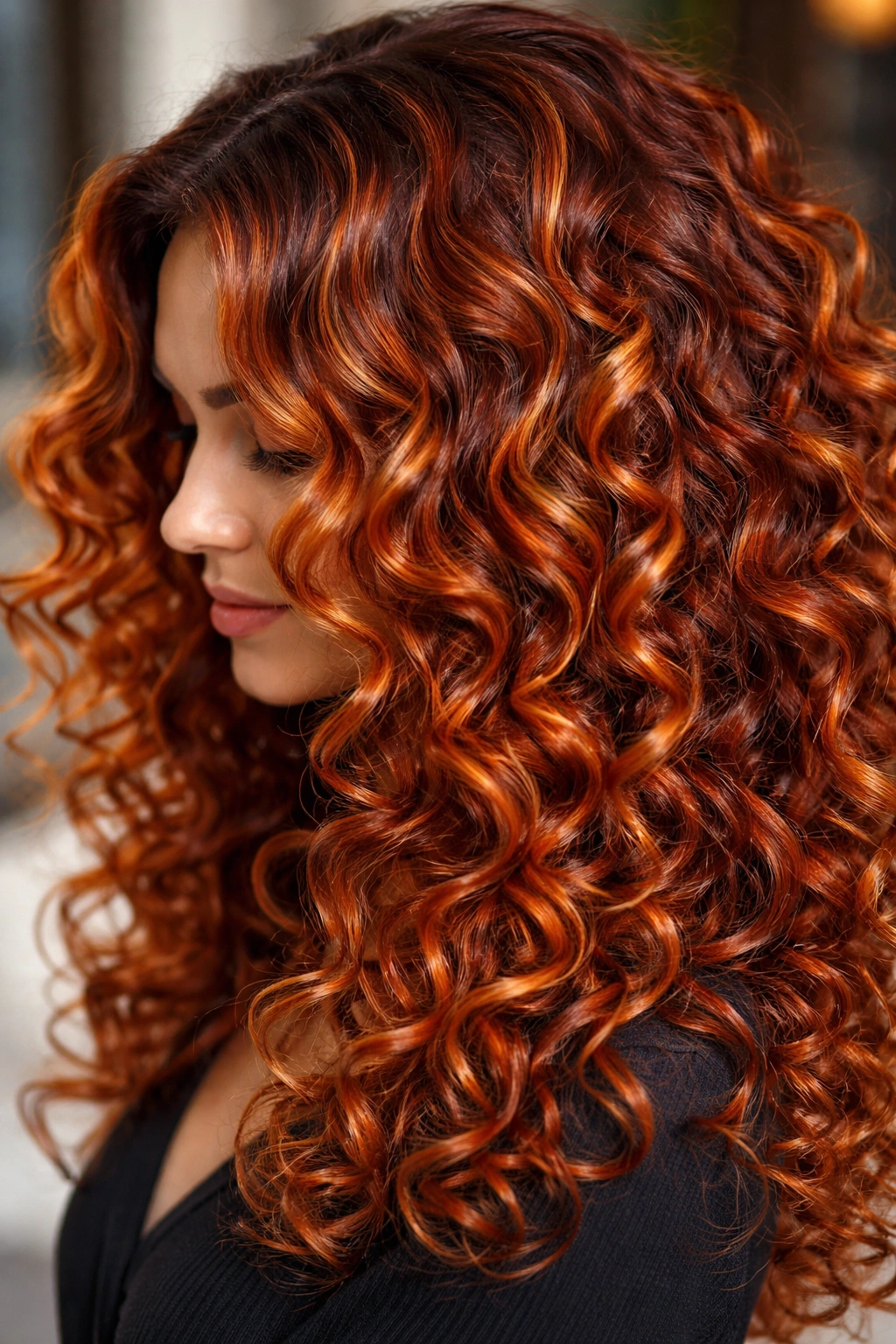
Why does copper look so good on curls? Because curls already move like flame. Add a penny-bright copper, and the hair starts doing half the work for you.
Copper reads especially well on curly hair because the bends catch different notes of the pigment. One curl can look orange-gold, the next one deeper red, and that shifting effect makes the whole style feel alive instead of painted on.
How to Keep Copper From Turning Flat
A copper that is too even can look heavy on curls, so ask for depth at the root and a little variation through the mids. A demi-permanent copper glaze can be a smart move if you want shine without committing to a harsh permanent line.
If your base is dark, you may not need a full blonding session. A copper brown or copper red-brown can be enough to wake everything up.
Best Ways to Wear It
- Short springy curls with lots of movement
- Shoulder-length coils that need more light around the face
- Layered cuts, where the ends can show off the red tones
- Hair that already pulls warm in the sun
Copper fades fast if you scrub it hard. Use a color-safe shampoo, keep the water lukewarm, and do not overdo clarifying masks.
4. Cinnamon Auburn Shine
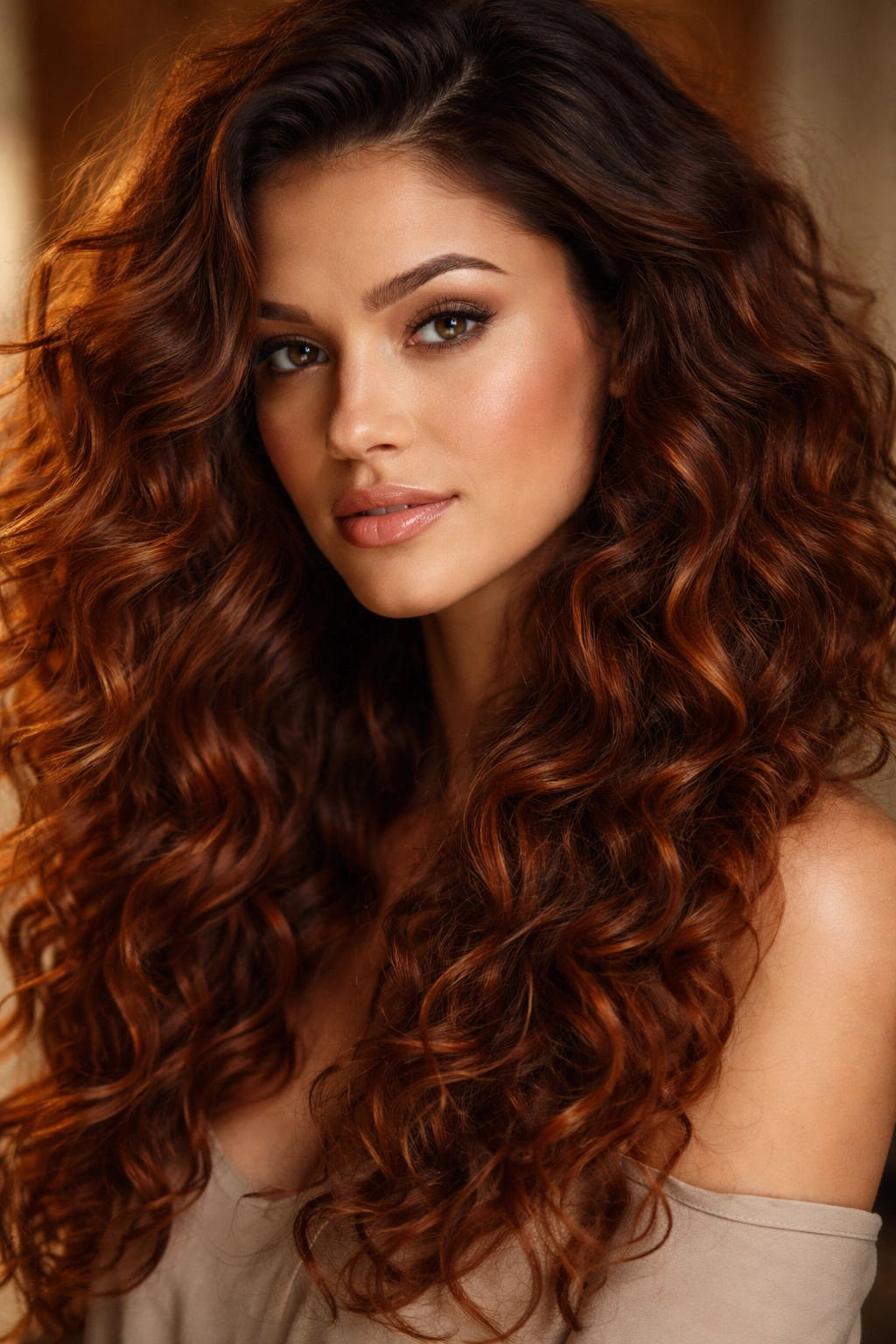
Auburn is the color for people who want red but do not want to babysit it like a fragile ornament. Cinnamon auburn sits deeper than copper, with brown in the background and red only showing up when the light hits just right.
I like this one on curls because it does not scream from across the room. It lets the texture do the talking. The color feels polished, warm, and a little grown-up without becoming stiff.
What Makes It Work
- The brown base keeps the shade grounded
- The red tone gives curls a soft glow
- It flatters both loose curls and tighter ringlets
- It tends to fade into a nice warm brunette, not a weird washed-out orange
Ask for the auburn to be concentrated through the mid-lengths and ends, then softened near the root with a shadow. That keeps the color from looking like one solid helmet of red.
Small warning: if your hair already pulls very warm, cinnamon can slide into brass fast. A gloss every 4 to 6 weeks helps keep it rich instead of loud.
5. Mocha Brown Lowlights
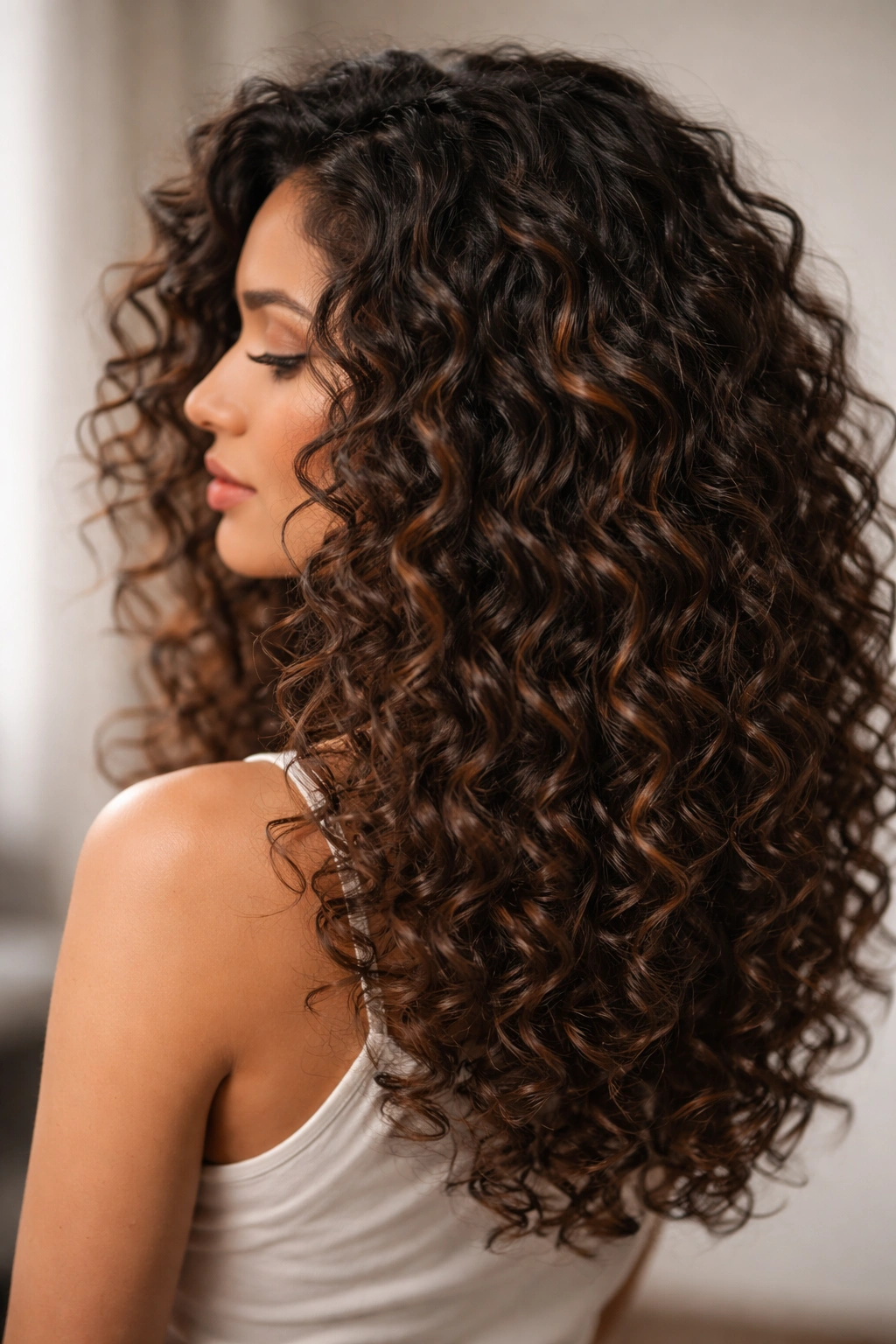
Mocha brown is not flashy, and that is exactly why I like it. If your curls are already lightened, or if your natural shade feels a little too one-note, lowlights can put the depth back in without starting from scratch.
This is one of those colors that people notice without being able to explain why. The hair looks thicker. The curl pattern looks more defined. The whole head gets a little more shape.
It works especially well on dense curls because lowlights sink into the interior of the hairstyle. You get contrast when the hair moves, but the surface still feels soft and believable. That matters. A chunky contrast band across the top can look sharp on straight hair and awkward on curls.
Mocha is also forgiving during grow-out. The darker pieces blend into the root, so you are not racing back to the salon every few weeks. If you want a safer color refresh, this is one of the smartest options in the bunch.
6. Espresso Black With a Gloss Finish
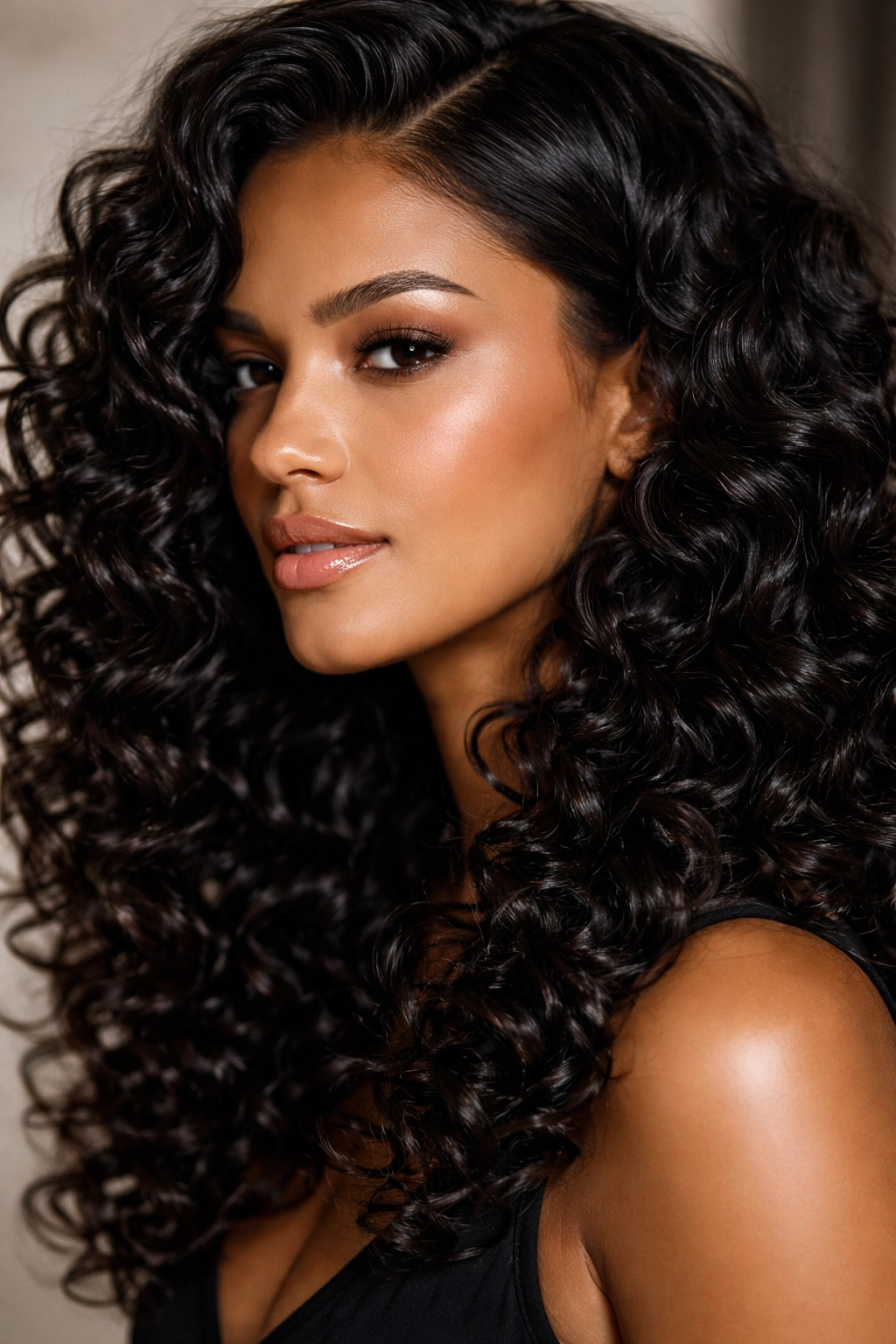
Jet black and espresso black are not twins. Espresso has a brown note that softens the look and keeps curls from disappearing into a hard, ink-like block.
That difference matters. On curly hair, pure black can be stunning, but it can also flatten the silhouette if the haircut is not layered well. Espresso black gives you the same drama with a little more dimension and a lot more shine.
If your curls are dry, a clear gloss is your friend here. It helps the surface reflect light, which stops the color from looking dusty. Ask for a neutral or softly warm black if your skin reads golden or olive. If your undertone is cool, a blue-black espresso can look sharp and clean.
Best of all, this shade grows out without a glaring line if you keep some softness at the root. It is moody, but not harsh. That balance is the whole point.
7. Mushroom Brown Dimension
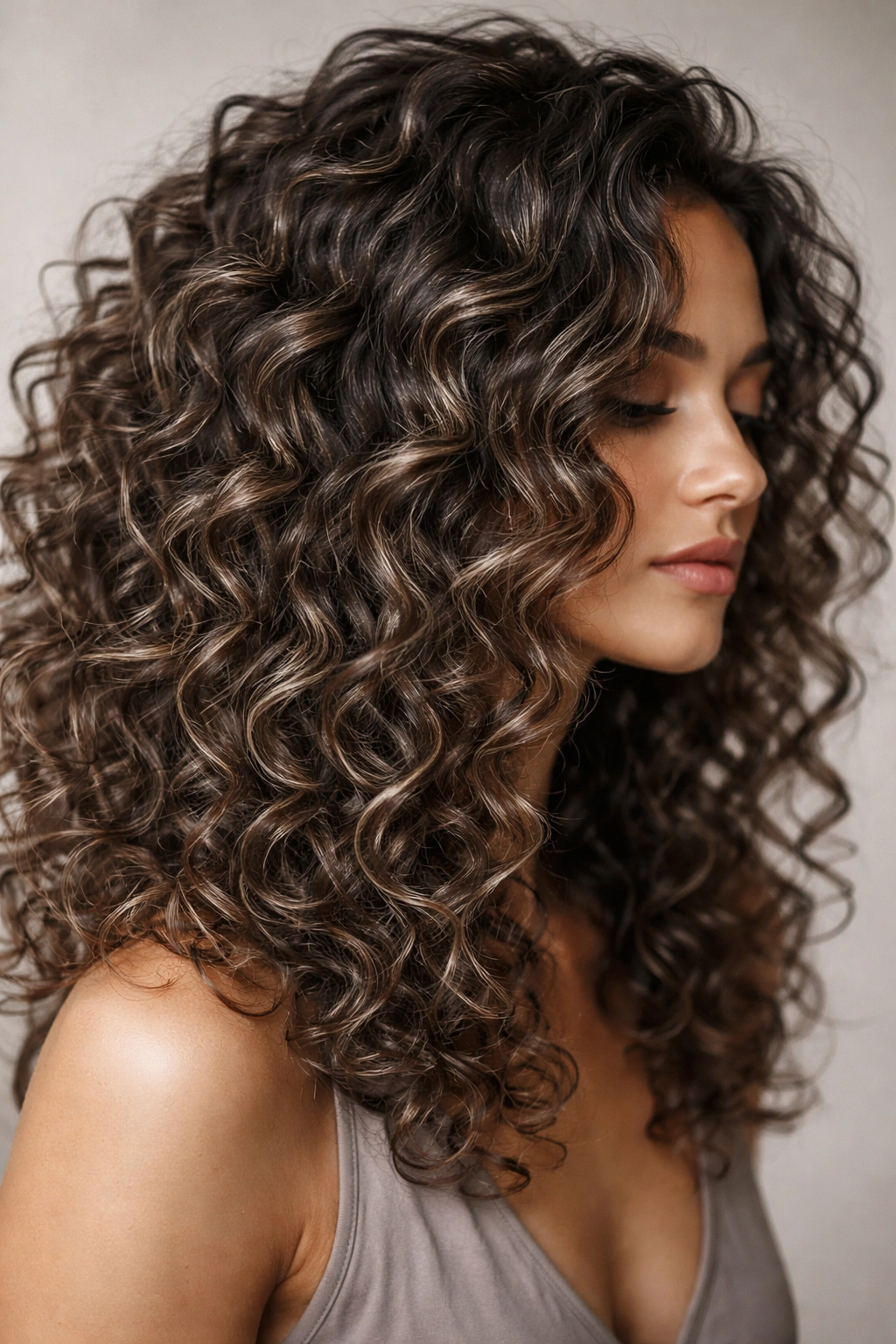
Mushroom brown is a cool, smoky brunette that works better on curly hair than people expect. The trick is moderation. Push it too ash-heavy and the curls can look dull. Keep a little beige in the mix and it turns into a quietly expensive-looking brown.
What to Ask For
Tell your colorist you want a cool brown with soft beige undertones, not a flat gray-brown block. That distinction matters a lot. Curly hair needs movement in the tone, or the texture gets lost.
Why It Suits Curls
- Great for natural brunettes who want a change without warmth
- Helps define layered cuts
- Works well with looser curl patterns and thick waves
- Can be paired with a shadow root for easier grow-out
Mushroom brown is best when the lightest pieces stay subtle. Think veil, not stripe. Too much contrast kills the mood. If you want a cooler brunette that still feels soft and wearable, this is one of the most useful options.
8. Blue-Black Shine
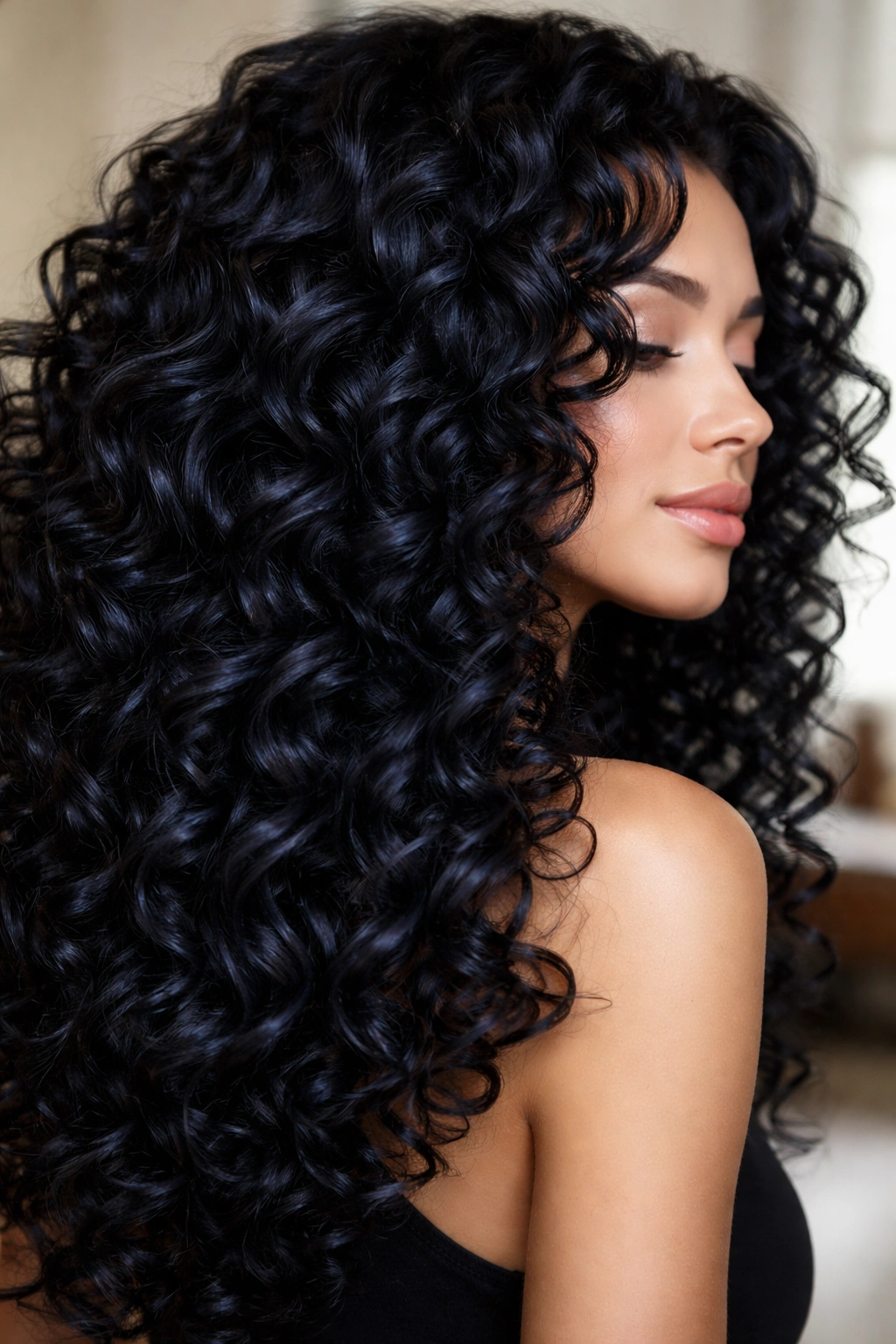
Blue-black gets a bad reputation because people picture helmet hair. On curls, though, it can look sleek and almost velvet-like when the cut has enough shape.
The blue note keeps the black from looking flat or muddy. Under indoor light, it reads as deep and cool. In sunlight, the curls can pick up a faint navy sheen that feels intentional instead of harsh.
It works best on healthy hair or hair that has already been cut back from damage. The darker the shade, the less room there is to hide rough texture, so trim the ends first if they are frayed. A gloss finish helps too.
This color is especially good if you want something dramatic but not bright. It is strong without being loud. And on spirals, that deep shine can look cleaner than a lot of lighter options.
9. Cherry Cola Red
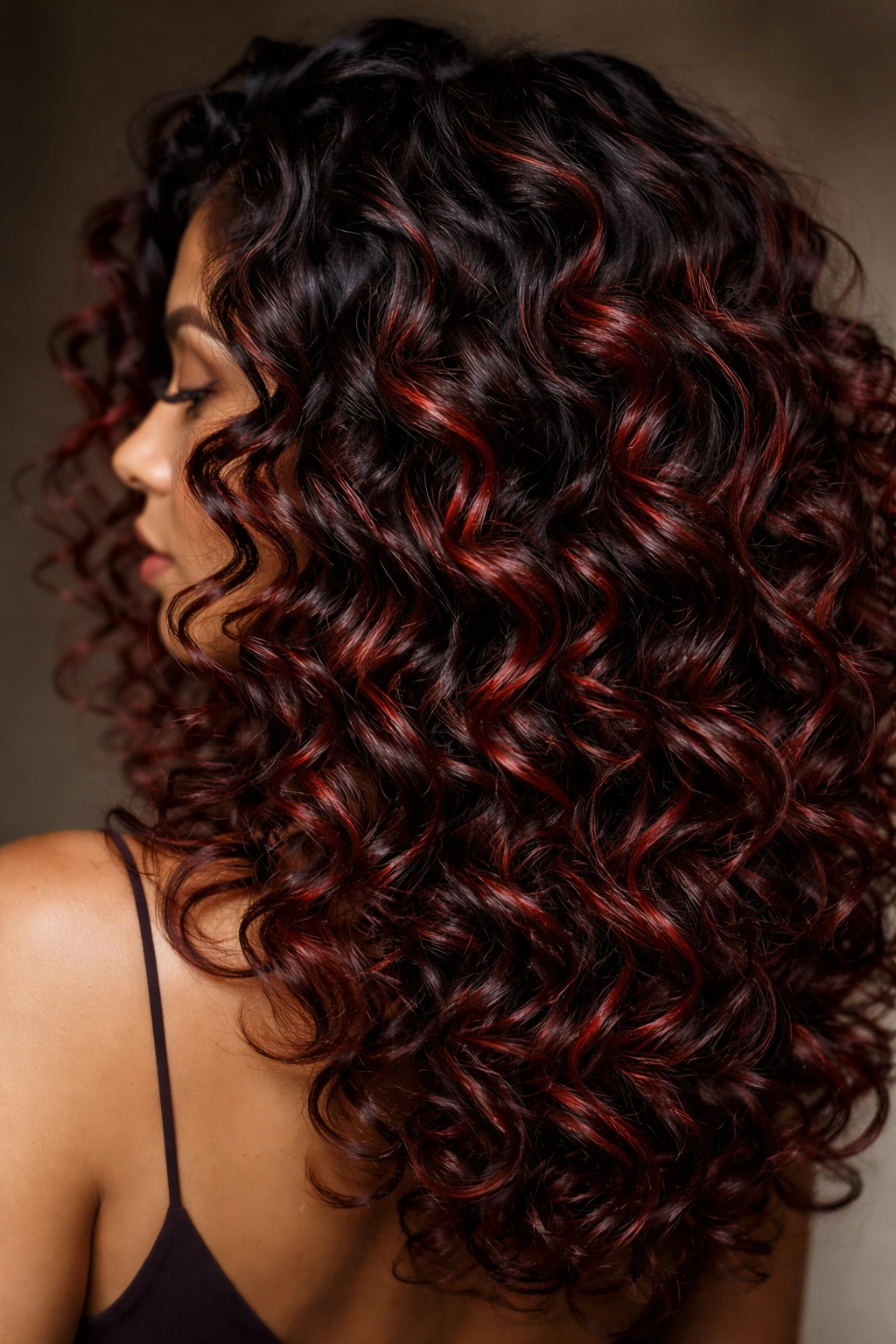
Why does cherry cola work so well on curly hair? Because it gives you red without forcing the red to sit on top of the hair. The darker berry base lets the color hide in the shadow of the curl, then flash out when the light changes.
That makes it one of the easiest “fashion” shades to wear. It is bold, but not neon. It can look playful in daylight and almost burgundy at night, which is a nice trick if you want versatility.
How to Wear It Without Losing Depth
Cherry cola looks best when the base stays deep brown or dark red-brown. If the whole head is lifted too much, the shade can start reading flat and sugary. A little darkness at the root gives it shape.
You can also ask for a gloss or semi-permanent overlay rather than a full permanent red. That keeps the shine high and the upkeep lower. Red pigments fade fast, so this matters.
Best Match
- Medium to dark curl bases
- Layered cuts with movement
- People who want color that still looks polished at work
- Curls that hold shine well after conditioning
10. Blackberry Plum
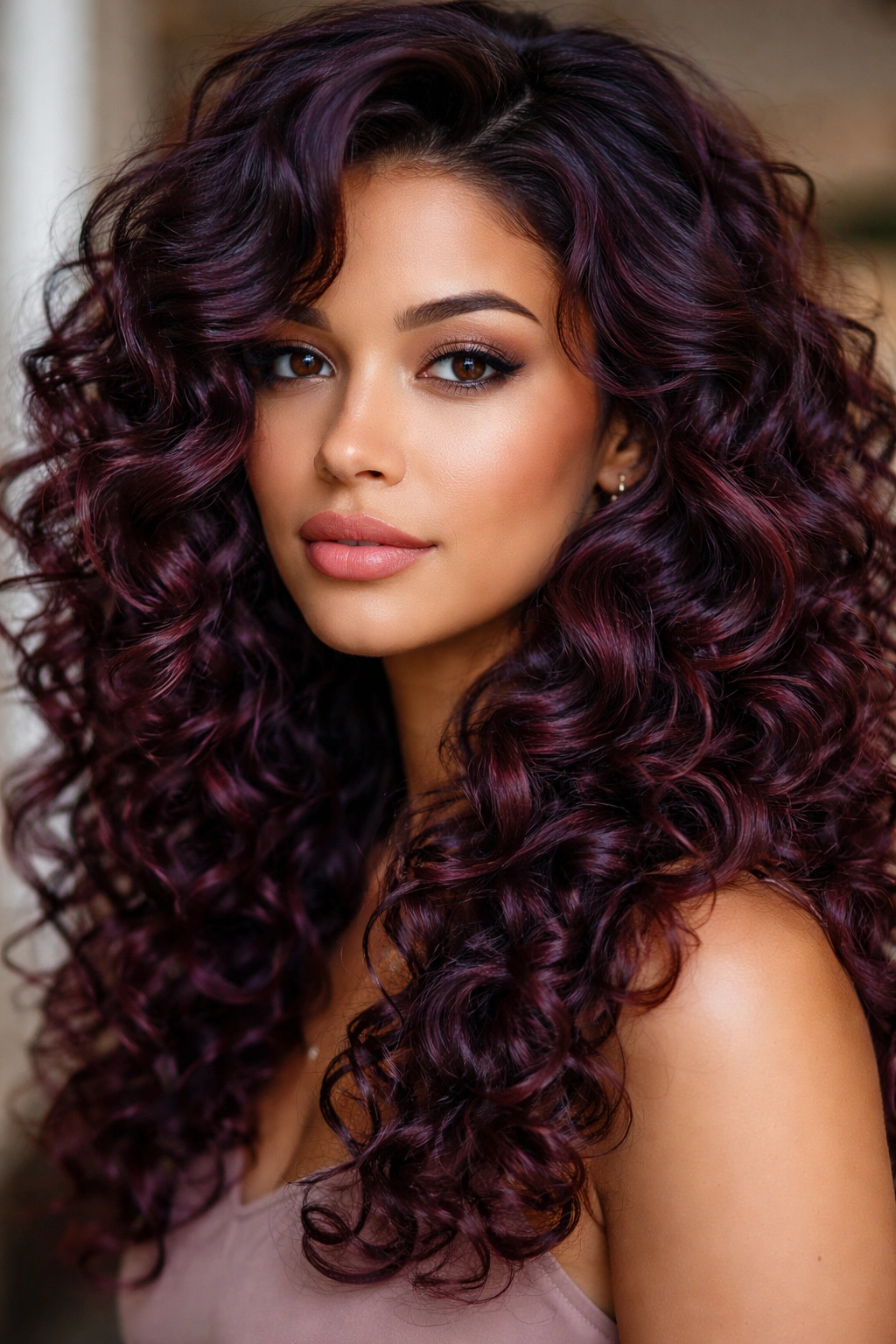
Blackberry plum is one of those shades that looks richer in person than in photos. The purple-red mix gives curls a deep, almost jam-like tone that shifts as the hair moves.
I like it on medium to dark hair because the plum note shows up without needing an extreme lift. On curls, that matters. The texture already creates contrast, so the color can stay dimensional rather than loud.
Key Details to Know
- A level 4 to 6 base usually gives the nicest depth
- Violet undertones keep the color from turning flat red
- It looks best with soft layers, not one blunt shape
- Glosses in berry tones help keep the shade alive between appointments
This shade is a good choice if you want something moody but still a little playful. It is not as obvious as a bright red, and it does not carry the same maintenance burden as pastel fantasy colors. The result feels dark, plush, and a little bit unexpected.
11. Golden Bronze Balayage
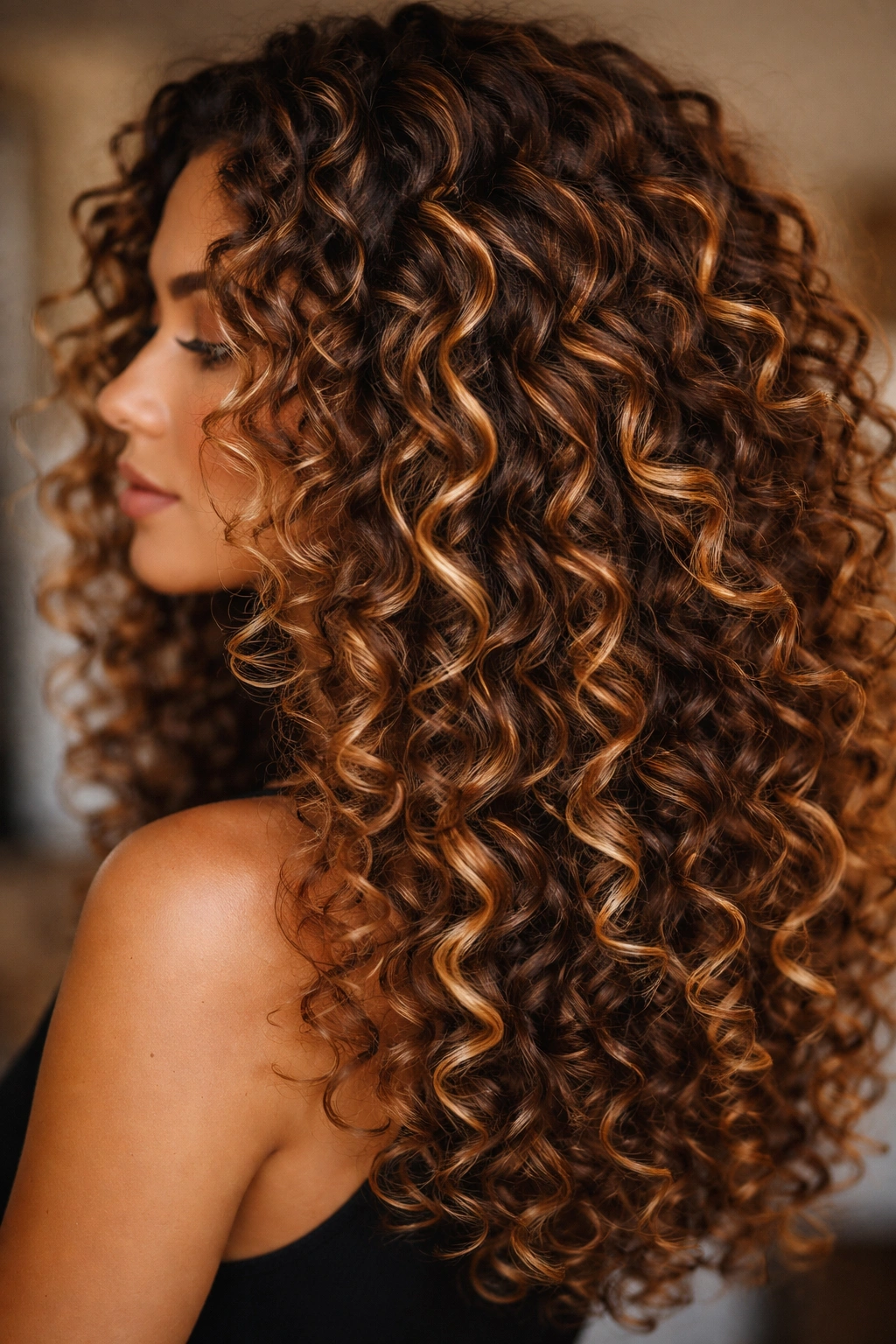
Golden bronze is a warm metal shade that sits somewhere between honey, copper, and soft gold. On curls, that mix can be gorgeous because the different tones show up in different parts of the coil.
It works best when the brightest pieces are placed on the top layer and around the face. That way the curl pattern does the movement for you. A full head of bronze can look too even; a broken placement looks far more natural.
What I like here is the softness. Bronze warms the hair without making it look orange, as long as the lift is controlled and the toner is chosen carefully. Curls with a medium-brown base tend to wear this color well, especially if the haircut has a lot of shape.
The shade does ask for decent conditioning. Warm blondes can get dry fast if the hair is already porous, and porous curls soak up pigment in strange ways. Keep the mask rich, but not heavy enough to collapse the curl.
12. Toffee Ombré
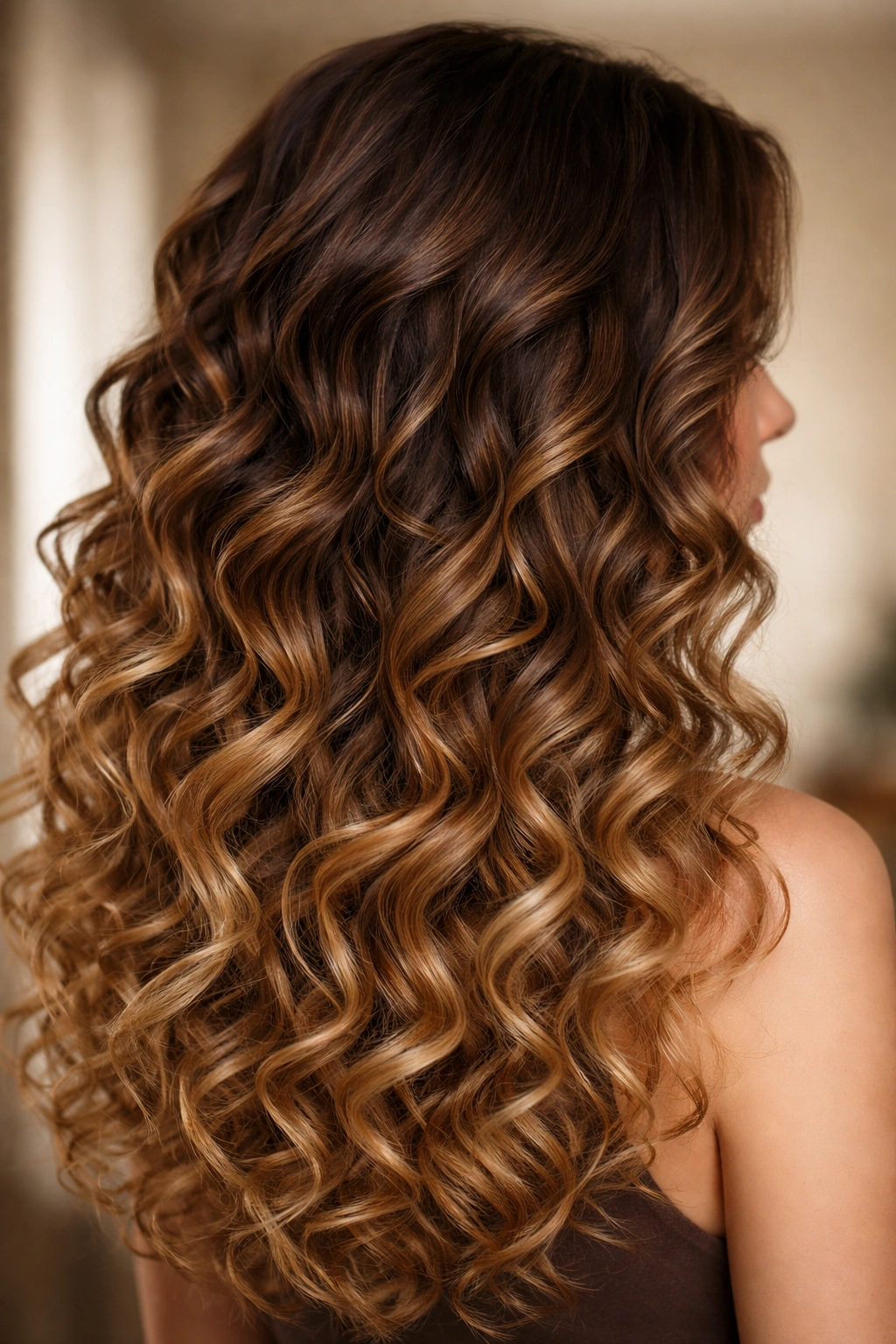
Toffee ombré is the brunette’s answer to wanting lighter hair without signing up for constant salon visits. The roots stay deep, the mid-lengths soften, and the ends warm up into a sweet beige-caramel blend.
Compared with traditional highlights, ombré feels calmer on curls. There are no harsh stripes fighting with the pattern. The color melts from darker to lighter in a way that makes sense once the hair shrinks up.
What Makes It Different
Ombré works with the length of the curl. Long spirals can show the shift clearly, while shorter curly bobs get a more subtle blur at the bottom. That makes it a good fit for people who want movement without a lot of obvious maintenance.
Who It Suits
- Curly hair that is past the shoulders
- Natural brunettes who want brightness at the ends
- Anyone who hates root touch-ups
- Loose curl patterns that show gradient well
If you want warmth but not copper, toffee is the lane to stay in. It is soft, wearable, and easy to grow out.
13. Rose Gold Tint
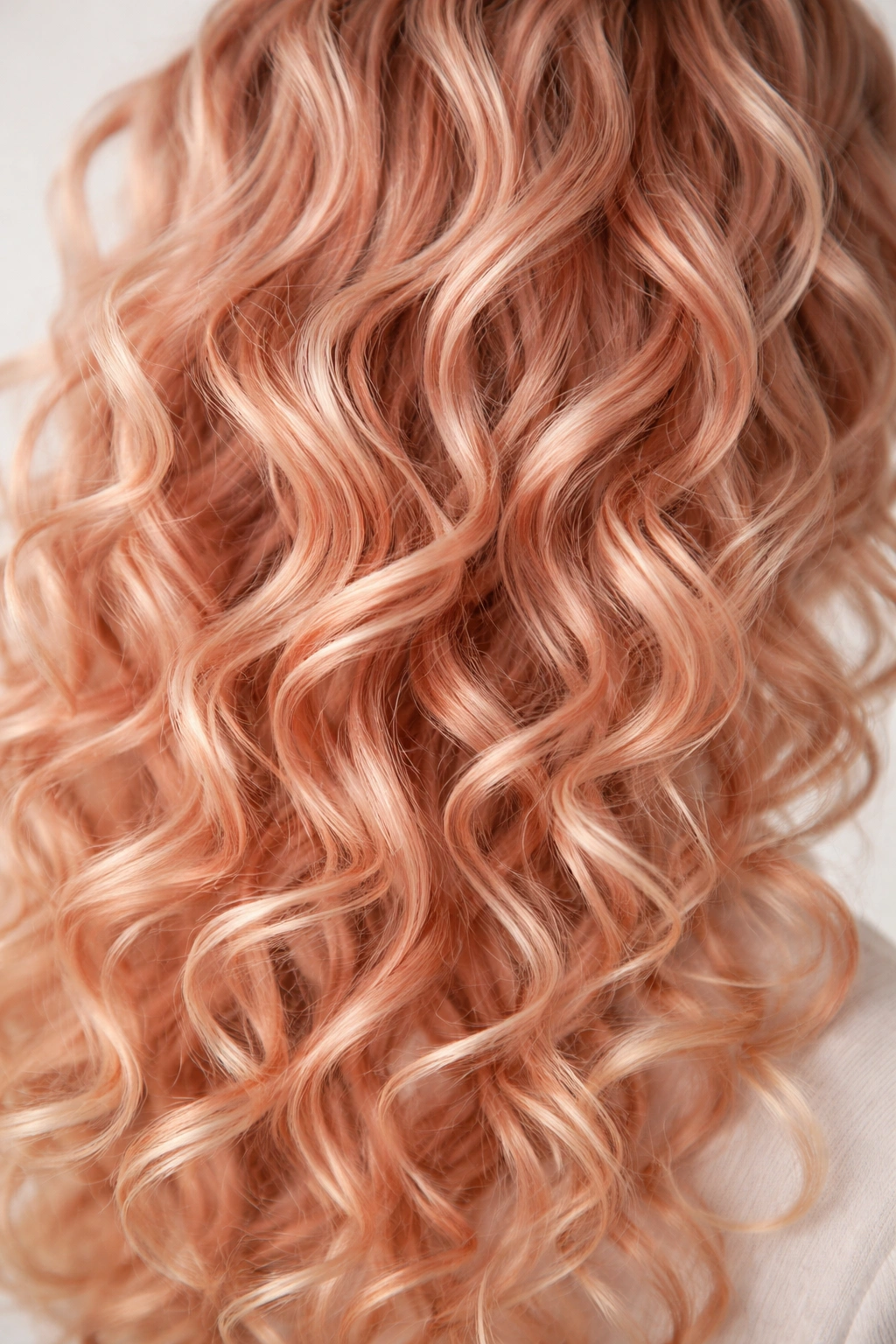
Rose gold on curls can be lovely, but it is one of those colors that works best when the starting point is honest. If the hair is not light enough, the pink gets lost. If the lightening is too aggressive, the curls pay for it later.
Why It Stands Out
The trick is the peach-pink balance. Rose gold is not bubblegum. It has a warm, metallic feel that sits well on textured hair because the curl bends keep the color from looking too uniform.
For the best result, ask for a sheer rose glaze over a pale blonde or light beige base. Heavy pink dye on dark hair usually turns dull fast, and it rarely gives the soft shine people want.
Quick Guide
- Best on pre-lightened curls
- Refresh with a tinted conditioner every 1 to 2 weeks
- Keep heat styling low so the tone does not fade unevenly
- Use sulfate-free shampoo if you want the pink to last
Rose gold is not low maintenance. It is fun, though. If you want a curly color that looks light, pretty, and a little unexpected, this one earns its spot.
14. Strawberry Blonde Glow
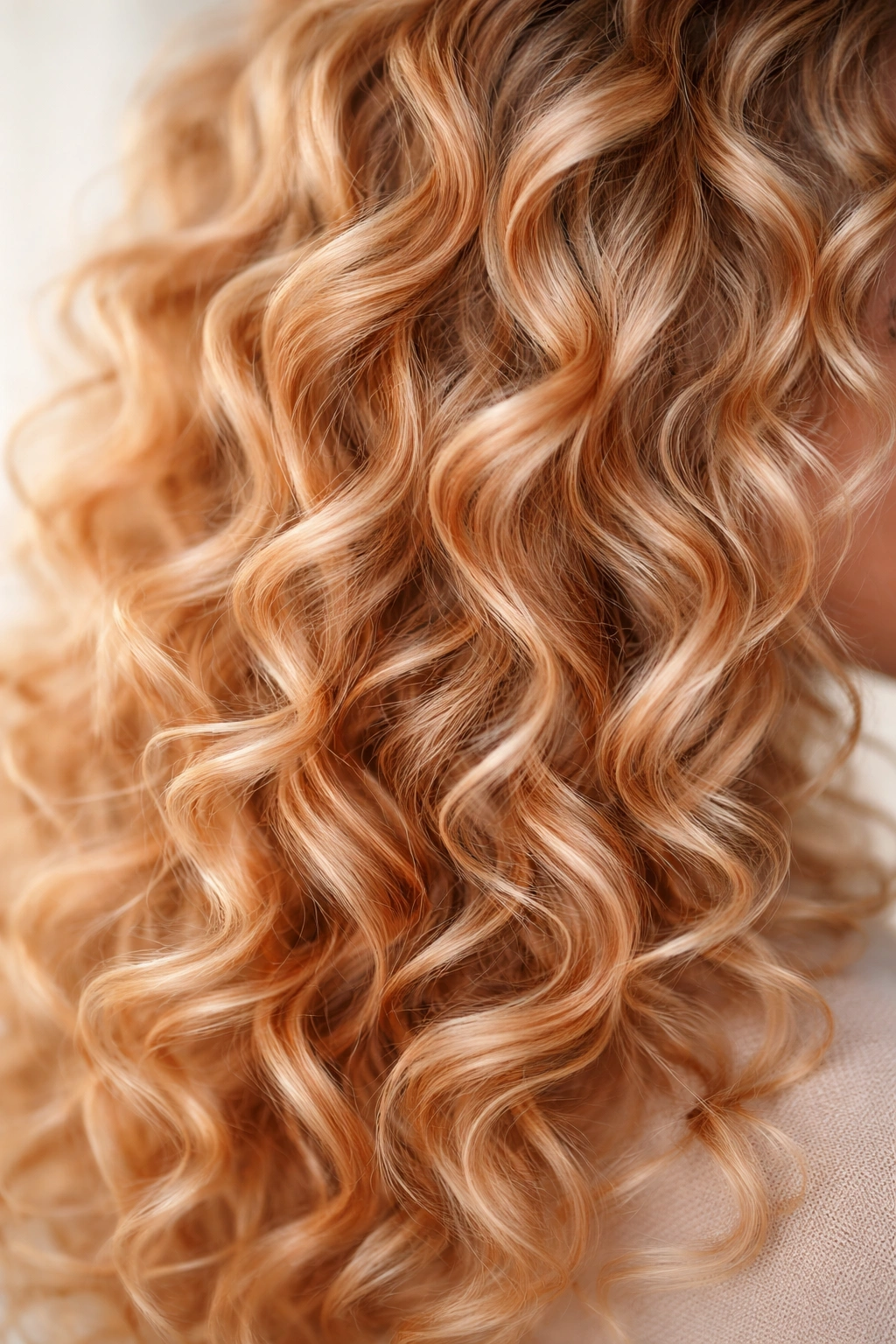
Strawberry blonde is a useful color because it can look soft, not fake, when the base is right. On curly hair, the slight peach note gives the hair a warm halo that catches around the bends of the curl.
The shade sits somewhere between blonde and copper, which makes it a nice option for people who want brightness but do not want to go full gold. It usually flatters lighter brunettes and dark blondes most, though a good colorist can coax it onto deeper bases with enough lift.
What matters here is restraint. Strawberry blonde gets ugly fast when the tone leans too orange or the lightening is patchy. Keep the finish soft and the highlights broken up, and the curls look airy instead of busy.
A toner in the peach-gold family helps the color stay sweet instead of brassy. That little shift can make a huge difference on curls with a lot of surface area.
15. Sandy Beige Blonde
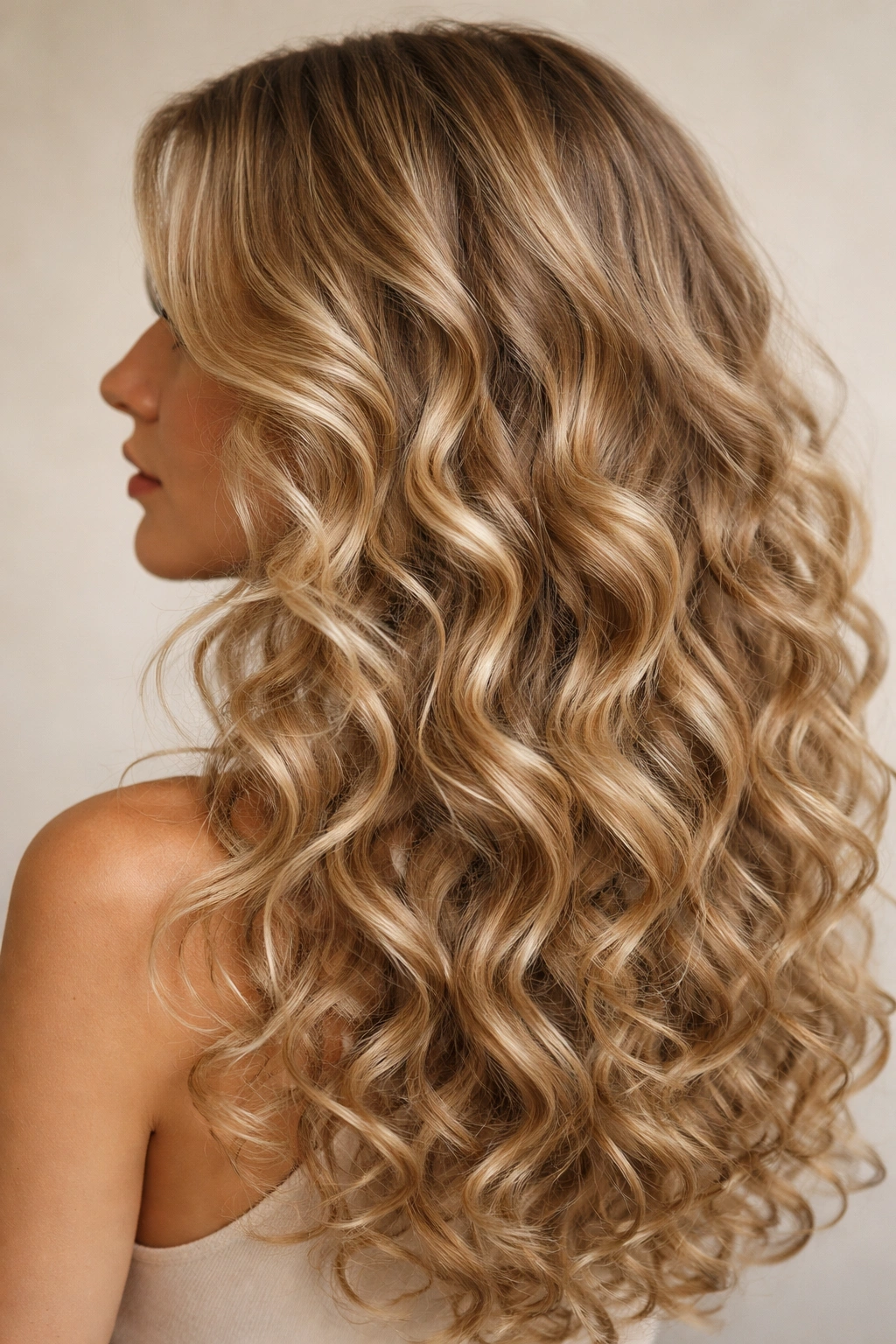
Does beige blonde sound boring? On curls, it usually isn’t. Sandy blonde has enough warmth to avoid looking dusty, but enough softness to keep the hair from going yellow.
This shade works because it behaves. It sits quietly on the curl pattern and lets the texture do the showy part. On a curly bob or shoulder-length cut, that can look cleaner than a brighter blonde, which sometimes fights the shape.
What to Ask For at the Chair
Tell the colorist you want a beige blonde with a soft root shadow and no hard white pieces. That root shadow matters. It keeps the style from looking overprocessed and makes grow-out less annoying.
This color is best on lighter brunettes and dark blondes, though a darker base can get there with careful lightening. The end result should feel sandy, not icy. If the toner makes the hair look too cool, it usually loses the softness that makes this color work on curls.
16. Mahogany Brown
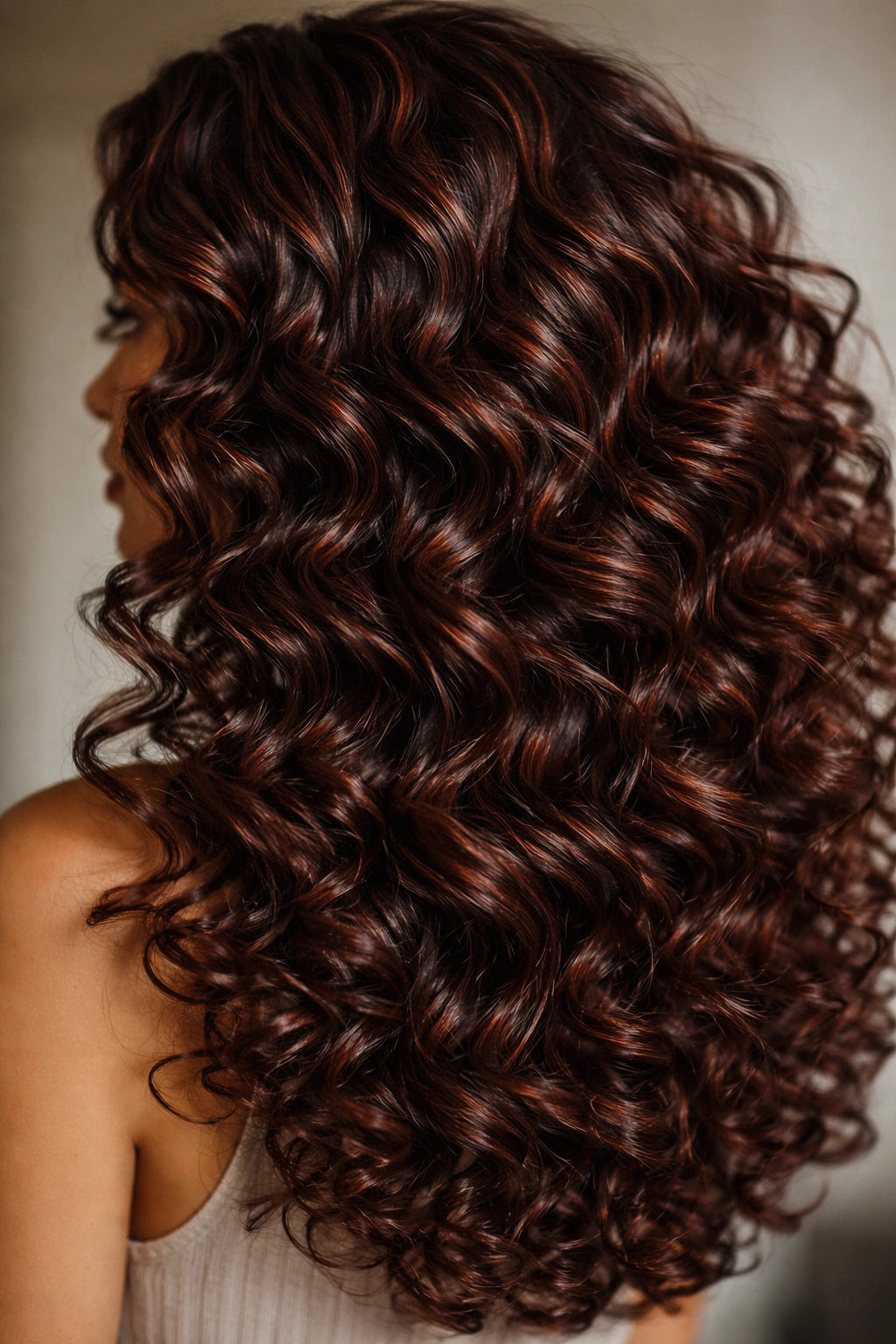
Mahogany is what I suggest when someone wants depth with a little red hiding under the surface. It is richer than plain brown and less obvious than red, which makes it easier to wear every day.
The color plays nicely with curls because it adds warmth inside the shadow of the hair rather than sitting on top of it. You get movement when the curls separate, but the overall look still feels grounded.
Key Details to Know
- Strongest on dark brown bases
- Red undertones show up more in sunlight
- Great for dense curls that need depth
- A demi-permanent gloss can keep the color looking polished
Mahogany also happens to be a forgiving choice for grow-out. Roots tend to blur into it instead of popping out in a hard line. If you want something richer than brunette but less maintenance than copper, this is one of the smartest shades on the list.
17. Ash Brown With Cool Veils
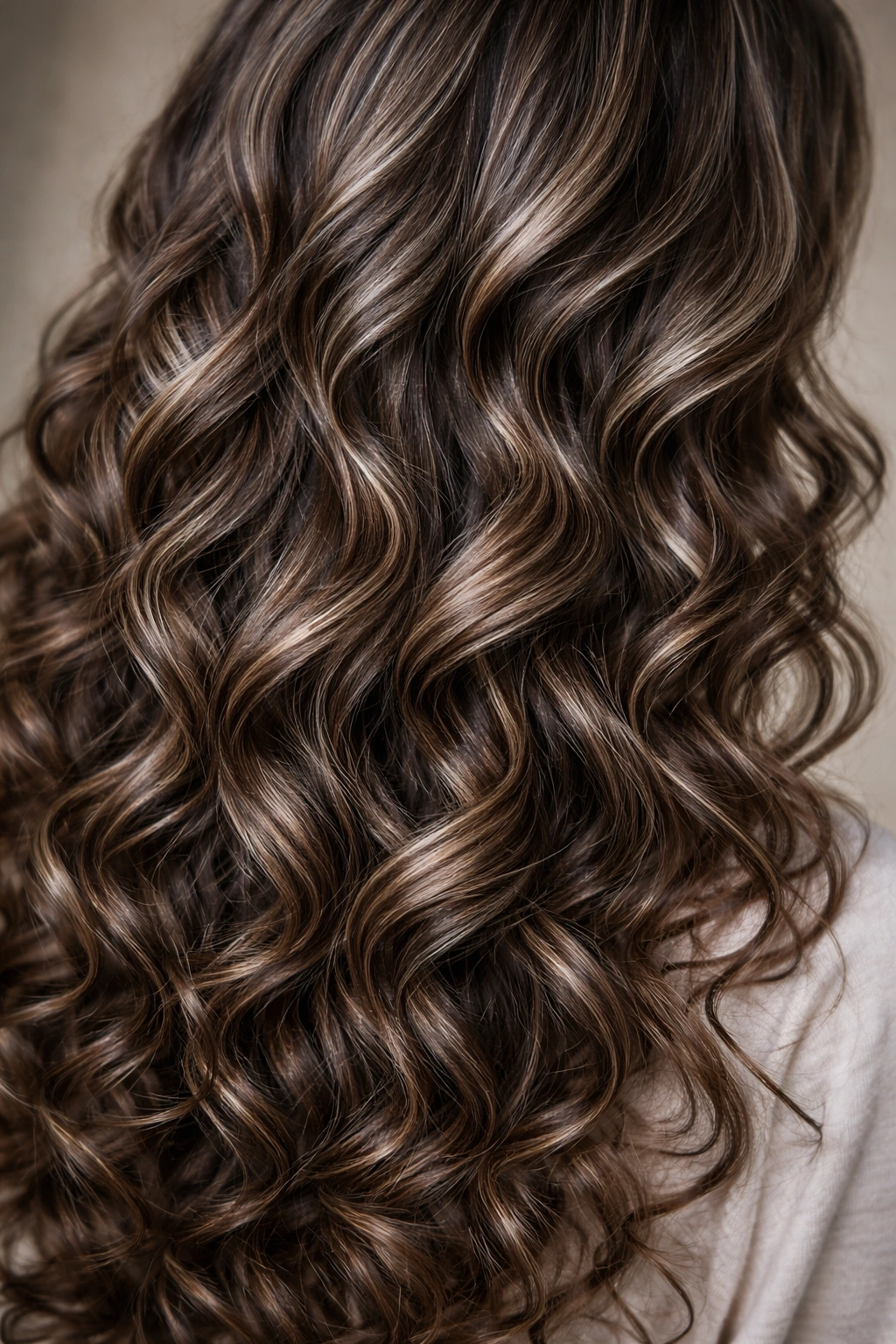
Ash brown is a tricky one. Done well, it looks clean, modern, and calm. Done badly, it can turn the hair greenish or flat, which is a mess on curls because the texture needs some life in the tone.
The answer is not to avoid ash entirely. It is to use it like seasoning. Thin cool veils over a neutral brown base can tame warmth without draining the hair of shape. That balance matters more on curly hair than on straight hair, where a cooler tone can look more even.
A lot of curl clients ask for ash when what they really want is less orange. That is fair. But pulling all the warmth out can make the curl pattern disappear in dull light. Keep a little beige or chocolate in the formula and the result feels much better.
This shade tends to work best on dark brunettes who want a cleaner finish and do not mind cool-toned makeup near the face. It is quiet, but not boring.
18. Silver and Charcoal Blending
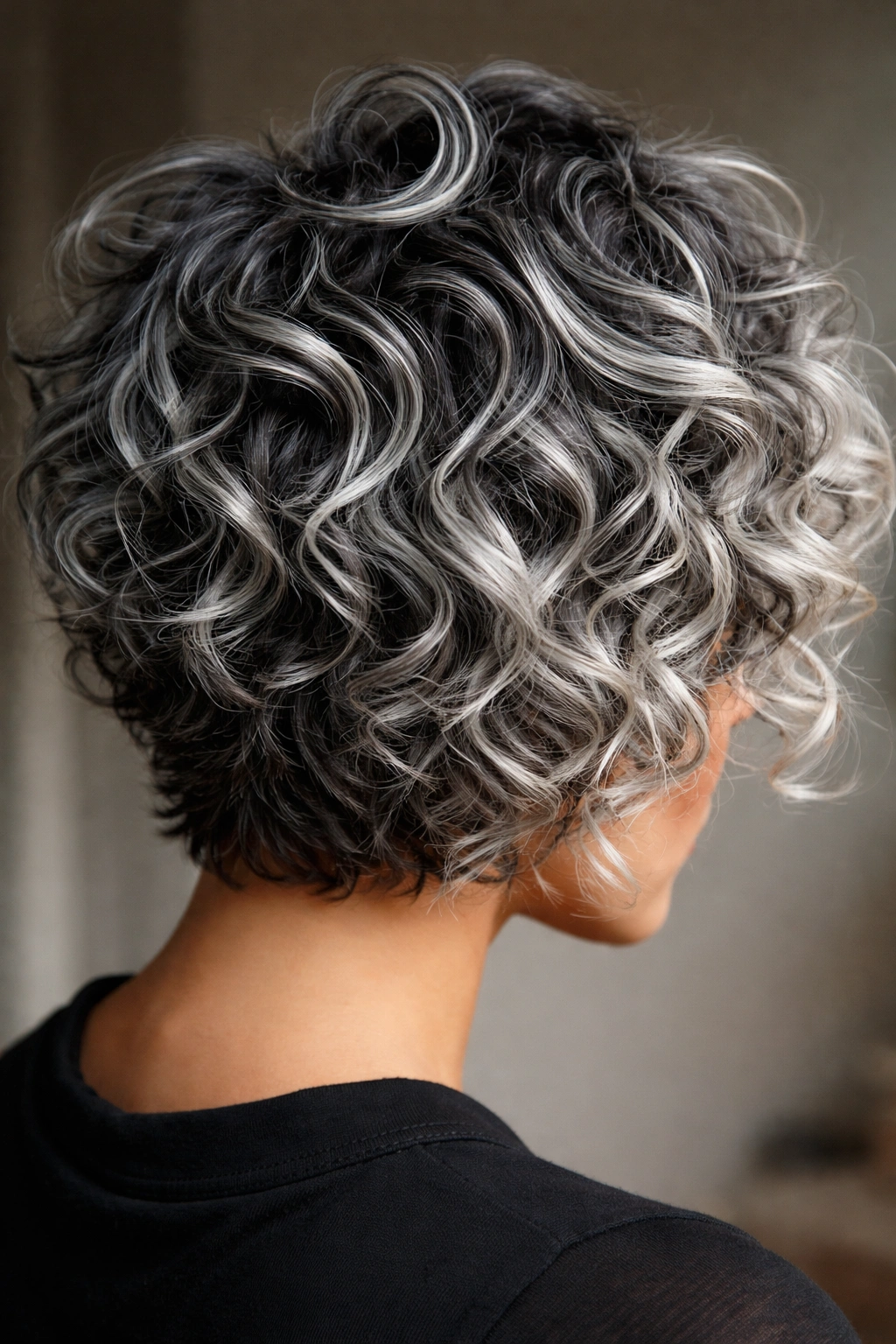
Silver blending is not the same thing as full gray coverage, and that distinction matters. One tries to hide the gray. The other works with it, using charcoal lowlights and silver ribbons to make the whole head look intentional.
On curls, this can be beautiful. The curl pattern naturally creates shifts in tone, so silver doesn’t sit flat the way it might on smoother hair. Instead, it moves between light and dark, which gives the color a little grit and a lot of shape.
What Makes It Different
- Charcoal near the root gives depth
- Silver in the curl peaks keeps the style bright
- A good cut matters more than usual here
- Toning every few washes helps keep the silver clean
Who It’s Best For
People with natural gray coming in, obviously, but also anyone who wants a cool, polished look without chasing full coverage. The shade is especially nice on short curls and layered shags, where the contrast can show from every angle.
Ask for softness around the hairline. Harsh silver at the front can look stripey. A gentler blend looks far better.
19. Peekaboo Teal Panels
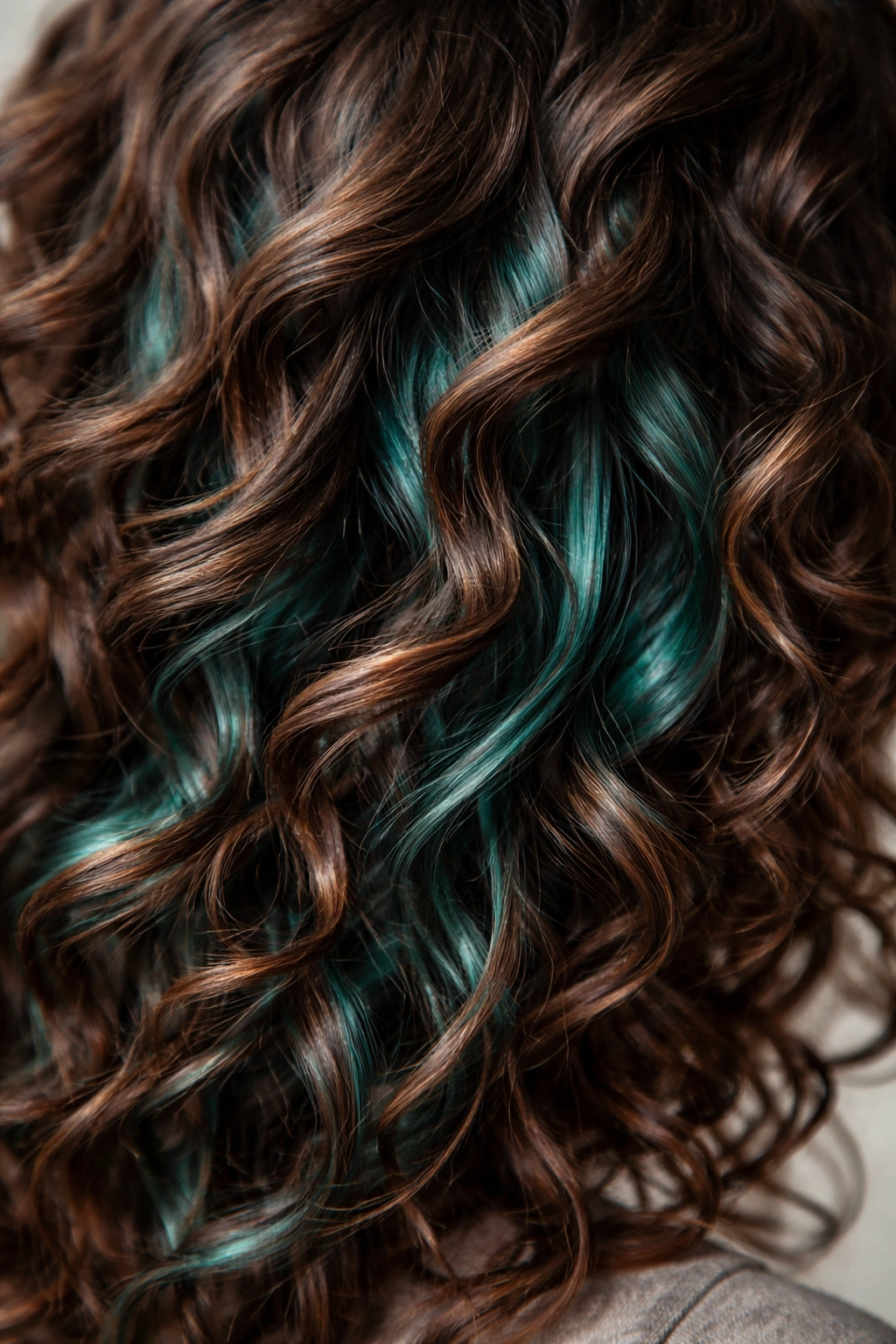
Peekaboo teal is the kind of color that curls handle better than you might expect. Because the hair bends and stacks, the hidden panels appear in flashes instead of all at once. That makes the color feel playful instead of overwhelming.
Why It Works on Curly Hair
The top layer can stay natural or lightly tinted while the underneath sections carry the teal. As the curls move, the color peeks through in ribbons. It is a much smarter choice than painting the whole head if you want something bold but wearable.
Placement That Actually Looks Good
- Put the teal underneath the crown or in the lower half
- Keep the visible pieces smaller near the face
- Use a deep teal if your base is dark brown or black
- Go brighter only if you are comfortable with more upkeep
Best tip: let the teal live in curved sections, not straight horizontal stripes. Curly hair breaks up the line for you, and that is half the charm. If you place it well, the color feels secret until the hair swings.
20. Apricot Copper Face Frame
Apricot copper is the cheerful cousin of classic red. It has enough warmth to light up curls, but the peachy note keeps it from reading too dark or too intense around the face.
That is why I like it as a face frame. A few brighter pieces around the front can make the whole haircut look fresher, especially if the rest of the hair stays deeper brunette or soft copper. Curly hair benefits from that contrast because the front curls sit close to the face and catch light all day.
Ask for the front pieces to be only a few shades lighter than the base, not bleach-blonde. You want glow, not a stripe. If your hair is already light, a tinted gloss can do the job without a hard color change.
This shade is especially nice on layered curls, curtain bangs, and shoulder-length shapes. It gives movement where people actually look first. And that is the whole point, honestly.
A good curly color does not need to shout. It needs to move.
