



Short 4C hair has a way of telling the truth. If a style is sloppy, you see it immediately.
That honesty is part of the charm. The nicest cute afro styles for short 4C hair do not fight the coil pattern; they shape it, define it, or give it a little stretch so the silhouette reads clean from a distance and even better up close.
Length is not the deciding factor here. A two-inch fro, a tapered cut, or a cropped coil set can all look sharp if the perimeter is neat, the roots are moisturized, and the styling choice matches the density of the hair. I keep coming back to shape because that is what most people miss. The right short style is rarely about doing more. It is usually about doing less, but doing it on purpose.
The first style below is the one I reach for when I want the least fuss and the cleanest outline.
1. Teeny Weeny Afro With Soft Shape
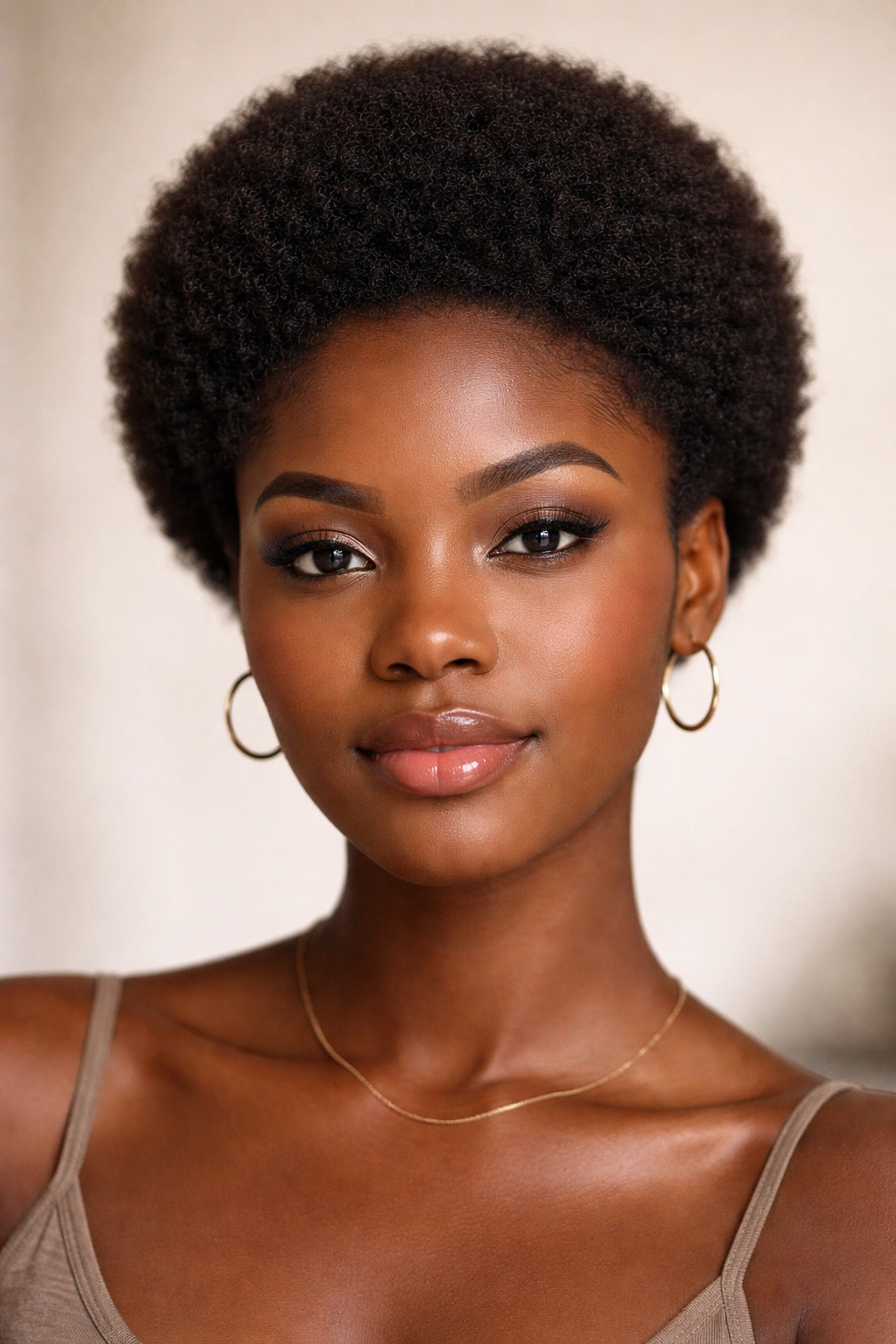
A good teeny weeny afro is not “basic.” It is a clean, confident shape that lets short 4C texture look full without asking for a lot of styling time. The trick is the outline. If the sides are too flat and the top is too uneven, the whole look can feel unfinished. When the shape is soft and rounded, though, it looks polished in a very natural way.
Why the shape matters
The best version of this style usually starts with freshly moisturized hair and a light pick at the roots only. Do not rake the ends. That just creates frizz in the wrong places.
A soft taper around the temples and nape can help a lot too. Not a harsh fade. Just enough clean-up so the hairline frames the face instead of crowding it. If your hair is dense, this style can look especially good because the tight coils create fullness even at short length.
- Works well on hair that sits between 1 and 3 inches.
- Looks best when the shape is rounded, not boxy.
- Needs only a little daily revival with water and leave-in.
- Pairs nicely with a side part or a slight lift at the crown.
Tip: ask for a soft trim, not a dramatic reshaping, if you want to keep the fullness. Too much cutting makes short 4C hair look thinner than it really is.
One small thing people forget: a good pick matters more than a big one. A wide tooth or Afro pick with smooth tips will lift the roots without shredding the coil pattern. That is the whole game here.
2. Defined Finger-Coil Afro
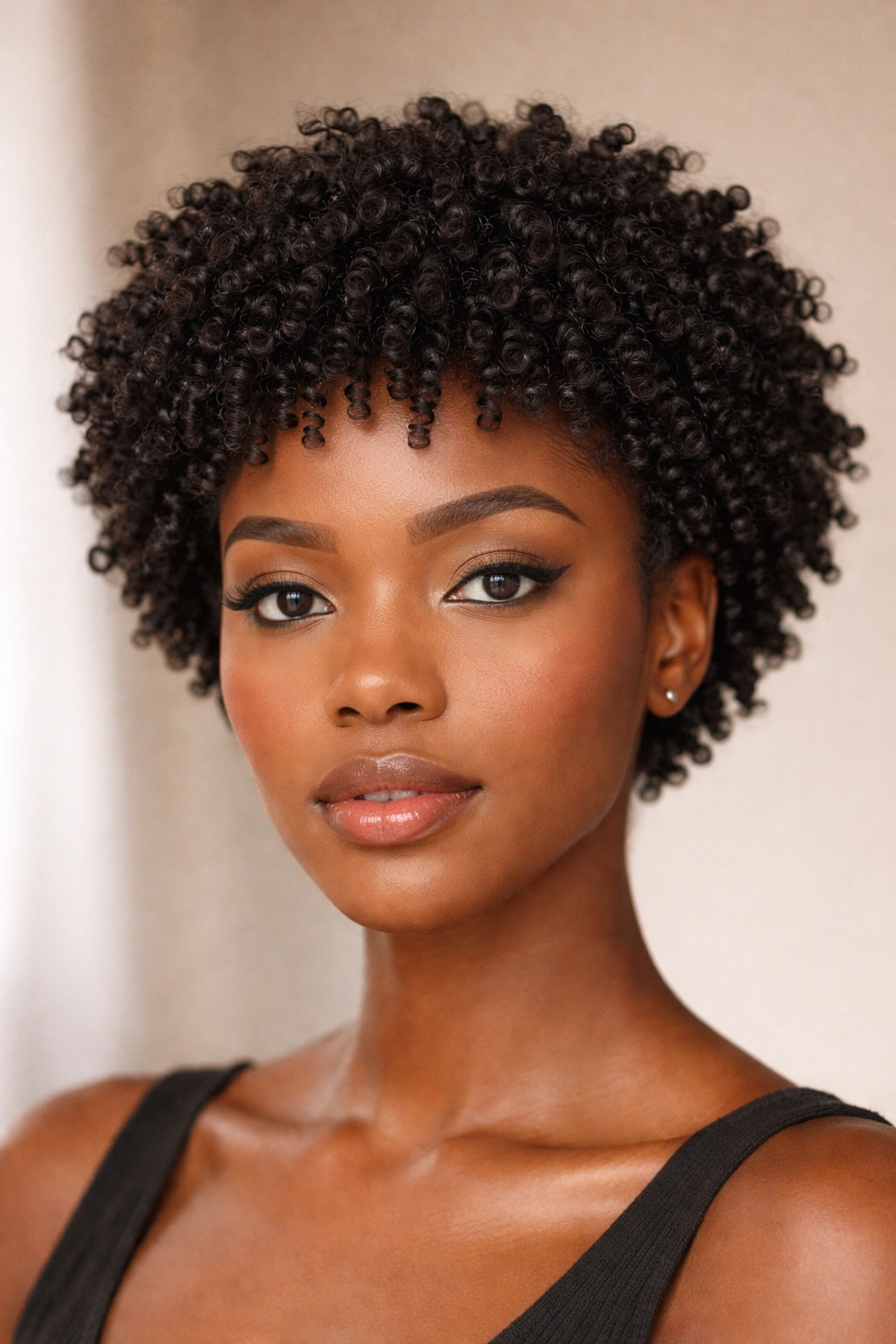
Want a short style that looks more finished than a plain fro but still keeps every coil visible? Finger coils are hard to beat. They give short 4C hair a neat, springy look that reads as deliberate even when the rest of your outfit is casual.
You do need patience. Not a huge amount, but enough to section the hair cleanly and work in small pieces. On damp hair, I like a water-based leave-in first, then a cream with some slip, and finally a little gel on top if the hair needs hold. The coils should feel damp and coated, not wet enough to drip.
How to get the coils to hold
Use sections that are roughly 1/2 inch to 1 inch wide. Smaller sections give tighter definition. Bigger ones look softer and a little fluffier.
Twist each section around your finger until it wraps into itself, then let it spring back slowly. If the hair resists, add a touch more product. If it feels gummy, you’ve used too much. That sticky stage is the one that causes flakes later.
- Best for short cuts that still have enough length to wrap once or twice around a finger.
- Hooded drying works faster than air-drying.
- Separate coils only if they are fully dry.
- A satin bonnet at night helps the coil pattern stay neat for a few days.
The look has a nice balance of neat and soft, which is why I keep recommending it for events, work, or any day when you want a little more structure. It can shrink up a lot, though, so if you want visible length, stretch the roots lightly before coiling.
3. Tapered Frohawk
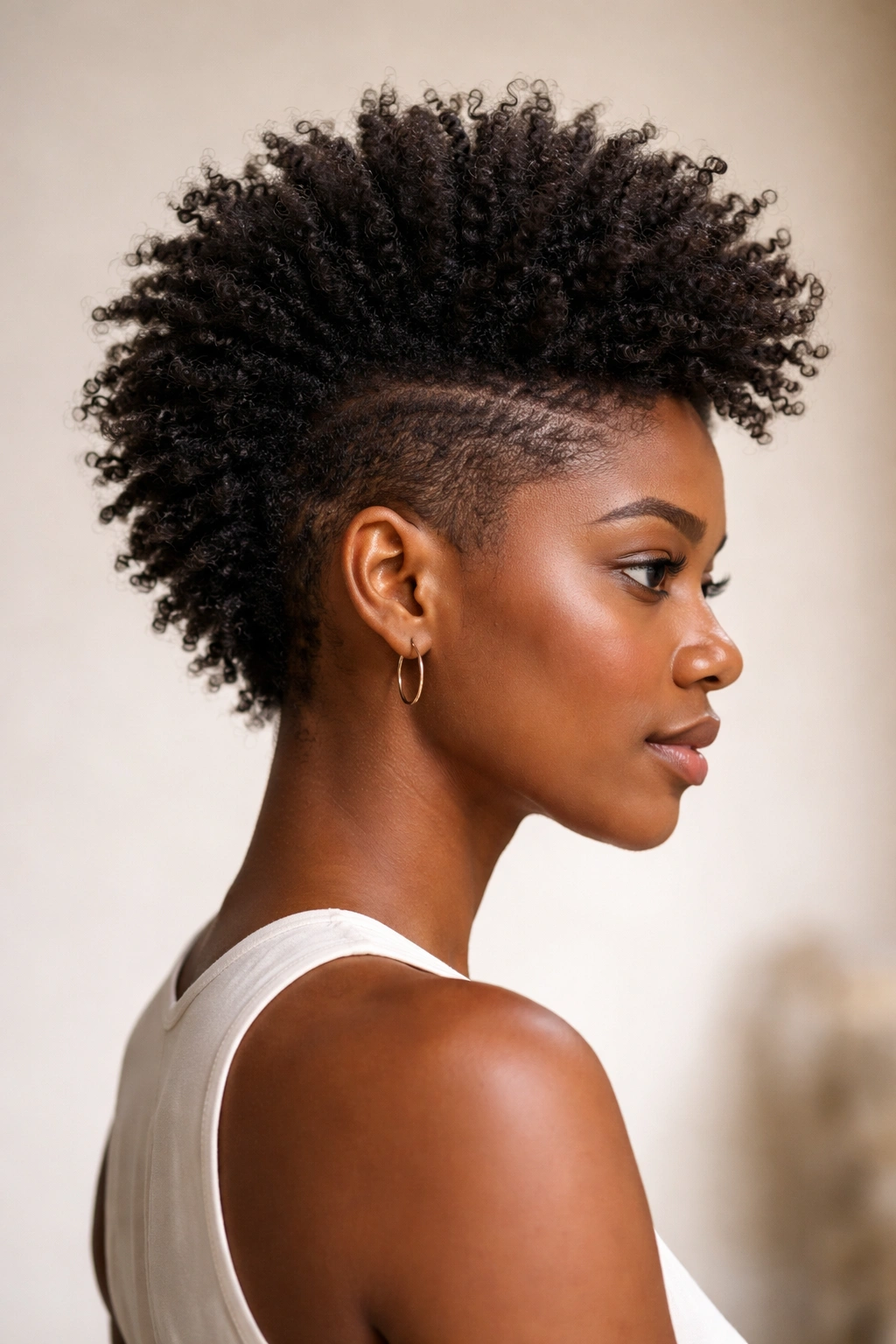
If the sides are already short, the tapered frohawk practically styles itself. That’s why it works so well on short 4C hair. You get a strong shape without having to stretch the hair into something it does not want to be.
The center strip is the star. Keep that section fuller, higher, and a little puffed up at the crown. The sides should be neat and close, whether they are tapered naturally, brushed down with gel, or clipped very short. The contrast is what makes the style look sharp.
A frohawk can be soft or edgy, depending on how clean you make the sides. I prefer it with a defined side panel and a slightly lifted middle ridge. It gives the face more height, which is useful if your curls tend to sit wide. And yes, it looks especially good with small hoops or a bold lip. That part is optional, obviously. The hair already does most of the work.
Keeping the middle high
- Start with hair that is damp, not soaking.
- Use a light mousse or styling cream on the center section.
- Clip the top up while the sides dry so they do not collapse.
- Smooth the sides with a soft brush and a small amount of gel.
- Sleep with a satin scarf tied around the perimeter, not the whole crown.
This is one of those styles that looks more complicated than it is. It usually takes less than a wash-and-go, and it lasts well if you avoid touching the top all day. That matters. Constant fluffing can make the silhouette lose its shape by lunchtime.
4. Mini Twist-Out Afro
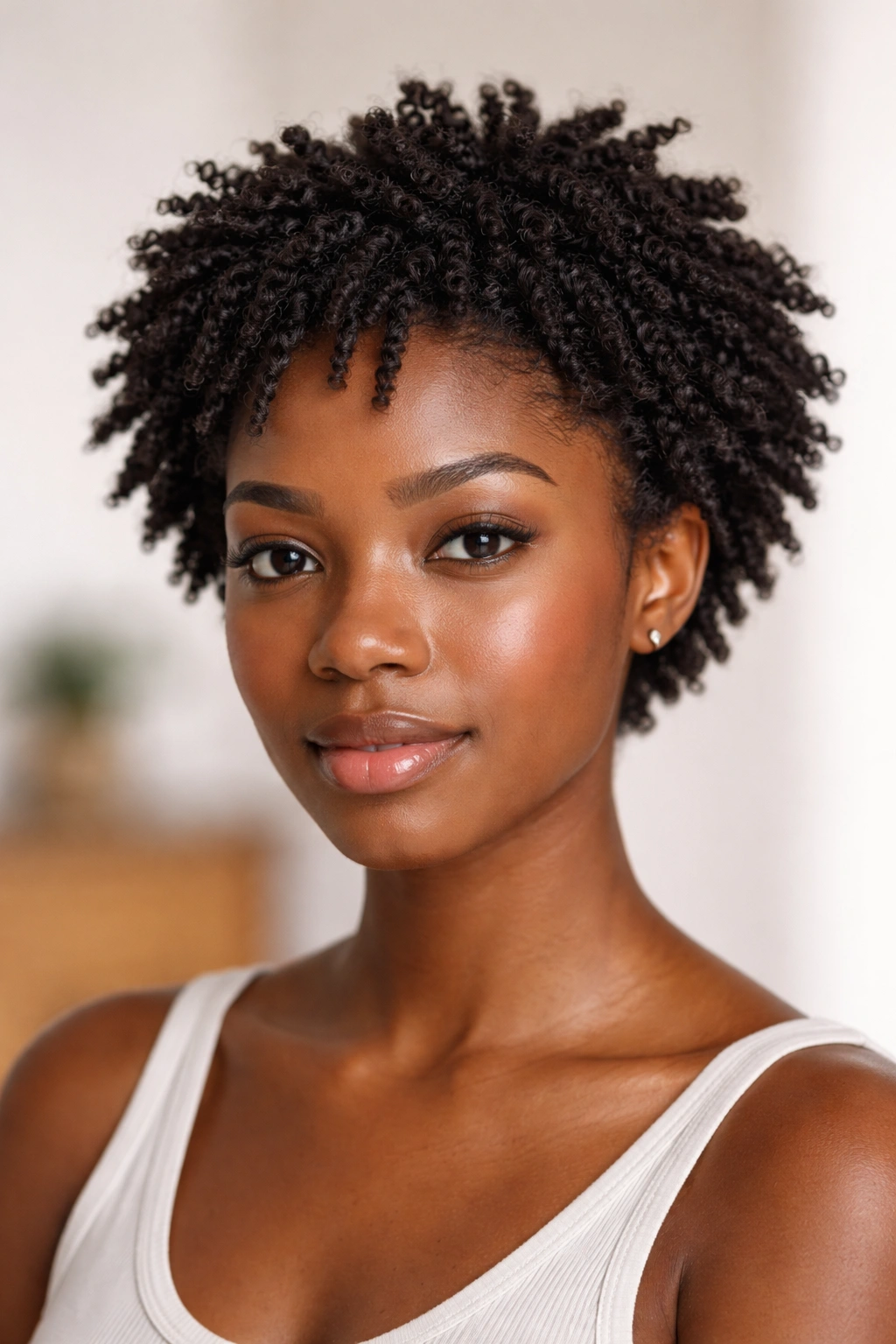
You do not need long twists to get a good twist-out with body. Short 4C hair can make an especially pretty mini twist-out because the pattern is tight enough to hold shape without looking stringy.
The set matters more than the takedown. I like to twist on damp hair with a little leave-in and a cream that gives slip. If the hair is dry before you start, the ends fray and the twist-out looks fuzzy in the wrong way. Use smaller twists if you want more definition. Use chunkier ones if you want a fluffier, fuller finish.
How I set the twists
Part the hair cleanly, then twist each section firmly from root to tip. Keep the tension even. Not tight enough to ache, not loose enough to unravel overnight.
Let them dry completely. That is non-negotiable. A half-dry twist-out looks limp at the roots and puffy at the ends, which is a strange combination no one asks for. If you have a hooded dryer, use it. If not, give the twists a full overnight dry time and maybe a little extra if the sections are dense.
How to separate them
- Rub a drop of oil between your fingertips.
- Undo from the ends upward.
- Separate only once or twice per twist.
- Stop when the hair looks fluffy, not shredded.
The charm here is in the texture. It gives short hair a little elongation while keeping the coil pattern visible. I like it for people who want definition one day and softness the next. The downside is frizz if you over-separate. So don’t. A light hand goes much further than people expect.
5. Mini Puff With a Satin Scarf or Headband
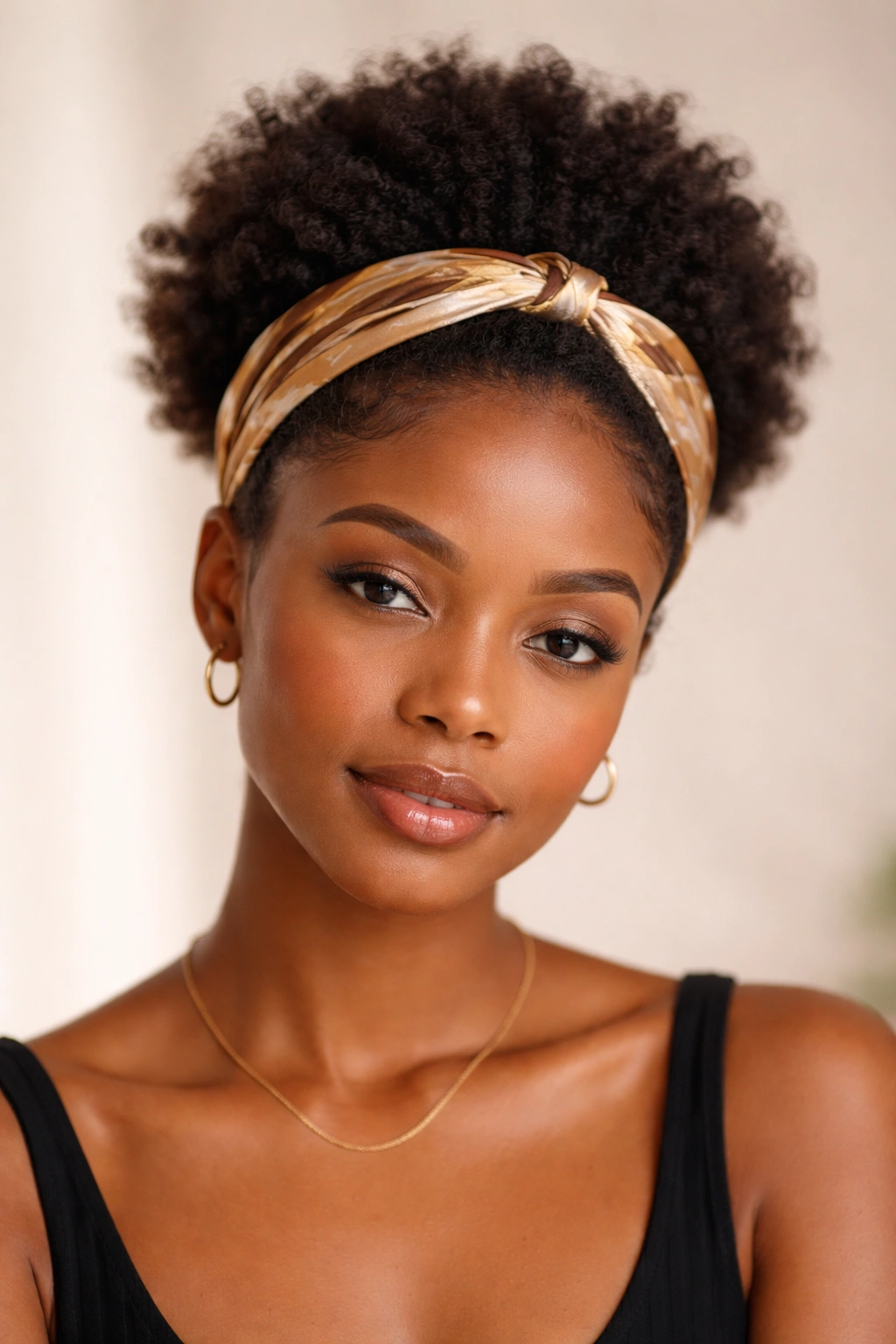
A short puff has a soft, cloudlike look when the crown is brushed up and the edges stay smooth. On short 4C hair, it may sit higher and tighter than the big puffs people show on longer hair, and that is fine. In some cases, it looks better because the shape is compact and intentional.
The band you choose matters. A stretchy band with a soft inside gives you hold without snagging the strands. A satin scarf can sit like a little crown across the front, while a wide headband gives the look a sporty finish. I like the scarf when I want the style to feel more dressed up. I like the headband when I want to leave the house fast.
What makes the puff stay put
Brush the hair upward with a little water and a light gel at the perimeter. Do not drench the roots. You want control, not wet hair dripping down your neck.
Then gather the hair at the crown or slightly back from it, depending on where your hair has the most fullness. Short 4C hair often looks best with the puff set a little higher than you think. If you place it too low, the style can flatten. If you place it too high, it starts to look playful in a good way.
- Best for wash day two or three, when the hair has some body.
- Works with a side part, middle part, or no part at all.
- Needs only edge smoothing and a quick fluff in the morning.
- Looks stronger when the puff itself is not over-stretched.
The nice part about this style is that it doesn’t pretend to be anything else. It is quick, easy, and still looks intentional. Sometimes that is exactly the move.
6. Flat Twists Into a Crown
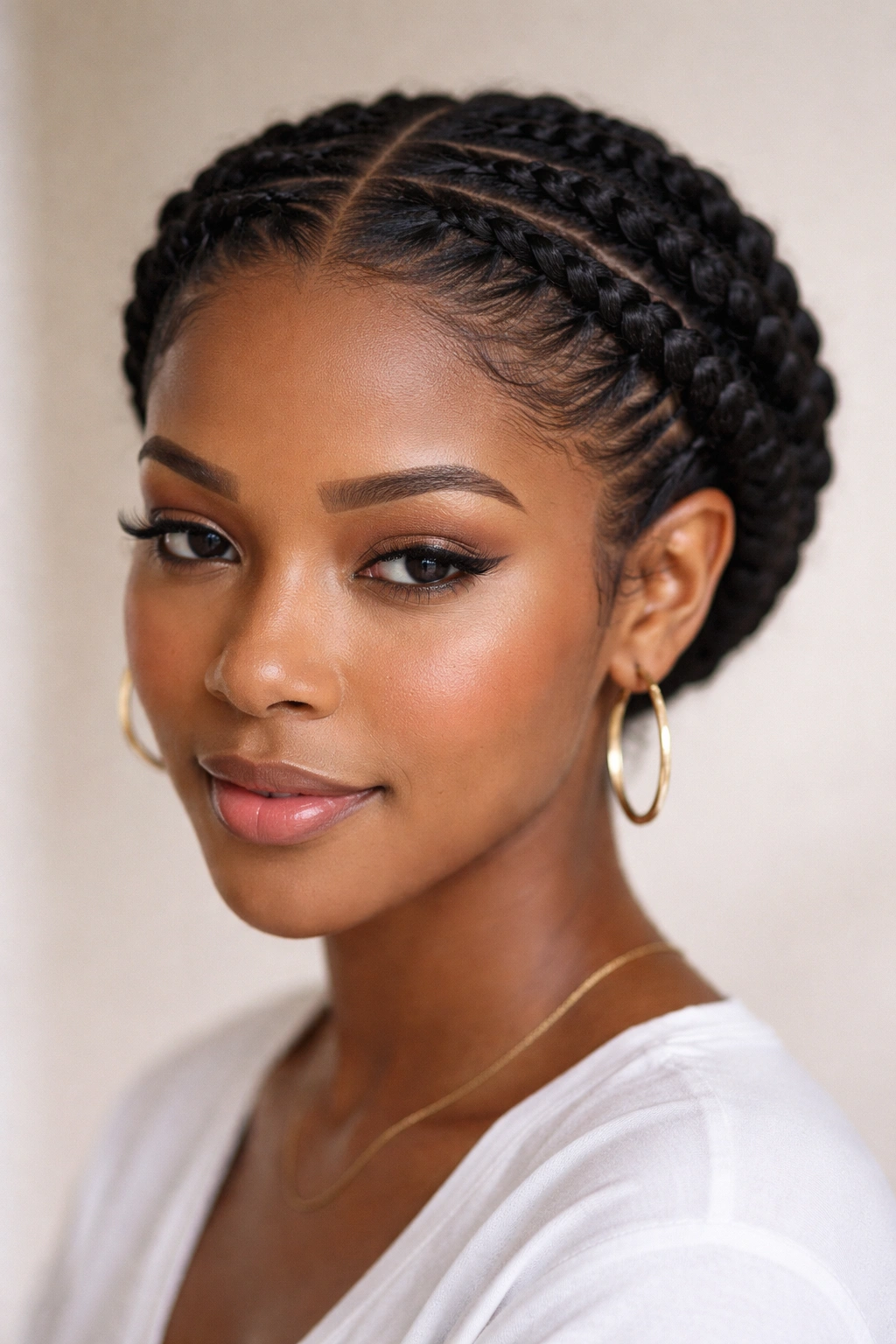
Flat twists are one of the most forgiving short-hair styles. They sit close to the scalp, they hold shape well on 4C textures, and they make short hair look styled even when the length is barely there.
The crown version works especially well if you want hair off your face but still want something soft and feminine around the hairline. The parting usually starts at one temple, runs around the head, and loops into another twist or a tucked end near the nape. Two twists can be enough. Three gives the style more detail.
The parting map
Clean parting matters here more than fancy products. Use a rat-tail comb and make the lines neat before you twist. If the parts wander, the whole crown can look loose and unfinished. That sounds dramatic, but it really does show.
I like to smooth a little styling cream or twisting butter onto each section before twisting. Too much product makes the roots slippery, and then the twists slide out. Too little makes the hair frizz before the day is over. Somewhere in the middle works best.
How to finish the back
- Tuck the ends under with bobby pins if they are short.
- Cross-pinning keeps the crown snug.
- A small decorative clip can hide the back seam if you want a cleaner finish.
- Sleep with a satin bonnet so the edges stay neat.
This style has a quiet kind of charm. It is tidy, but not stiff. And because the twists sit flat, it works well on mornings when you want your hair to behave without giving up the texture that makes short 4C hair look good in the first place.
7. Bantu Knot Accent Style
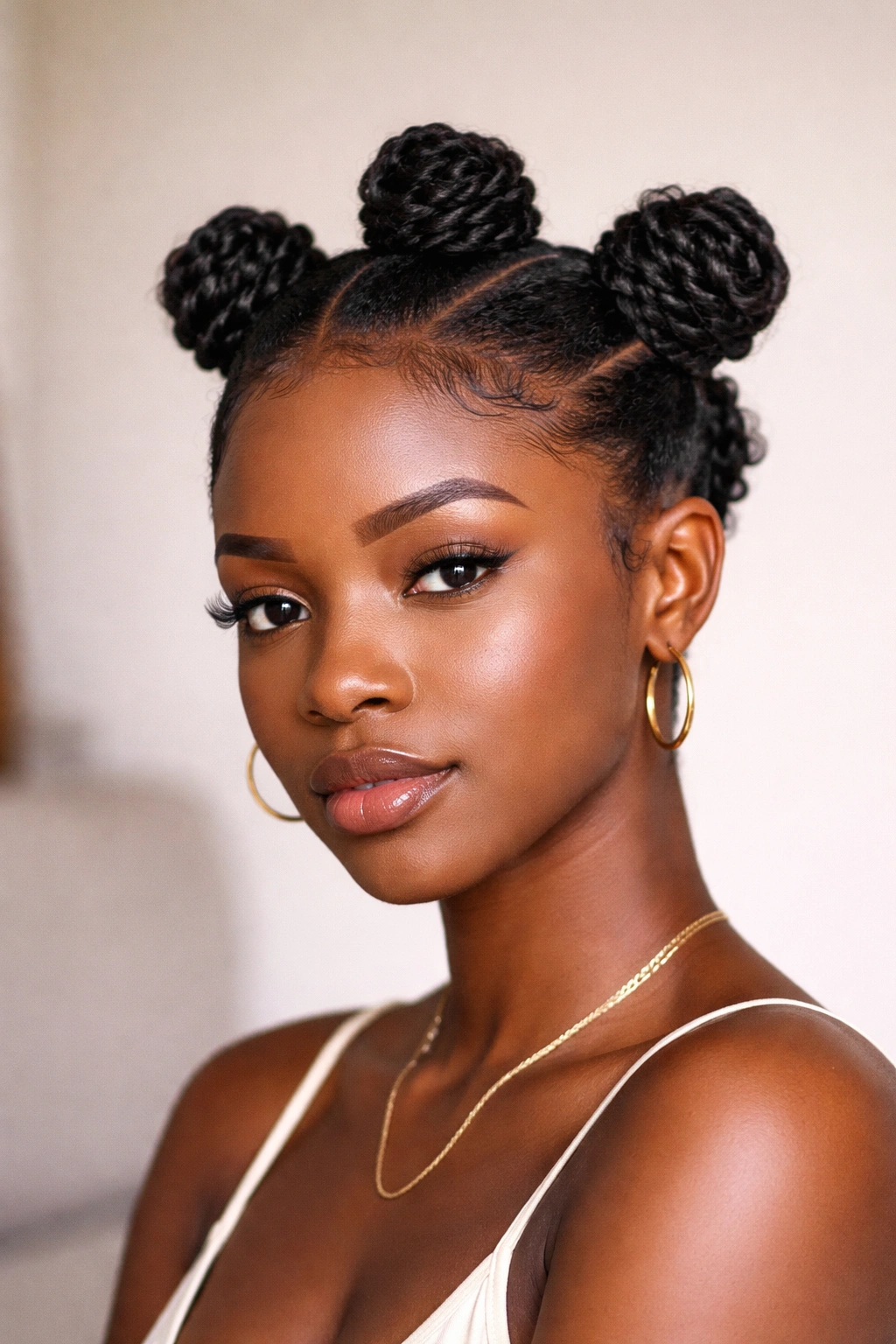
Why do Bantu knots look so good on short 4C hair? Because the length is short enough for the knots to sit compact and crisp, and the texture is tight enough to hold the shape without a fight. They look playful before you even add anything extra.
You do not need a full head of tiny knots if that feels like too much work. Four larger knots on the crown can be enough. Six to eight smaller knots create more pattern and more curl if you unravel them later. The parting can be square, triangular, or even curved if you want the knots to follow the shape of your head. Triangles are my favorite. They look cleaner once the hair is parted.
Wear it two ways
Bantu knots do double duty. You can wear them as knots, which gives a sculptural look, or undo them once the hair is dry for a knot-out with a soft coil pattern. That second option is worth the time if you want extra definition for the next day.
- Section the hair on damp, moisturized strands.
- Twist each section from root to tip.
- Coil the twisted strand around itself until it forms a knot.
- Tuck the end flat so it doesn’t stick out.
- Let the knots dry completely before taking them down.
A little gel at the base can help the knots stay neat, but too much turns them hard and flaky. That is not the look. The charm here is in the shape. Short 4C hair makes Bantu knots look bold without seeming oversized, which is a nice balance when you want something a little more eye-catching than a plain puff.
8. Side-Part Picked Afro
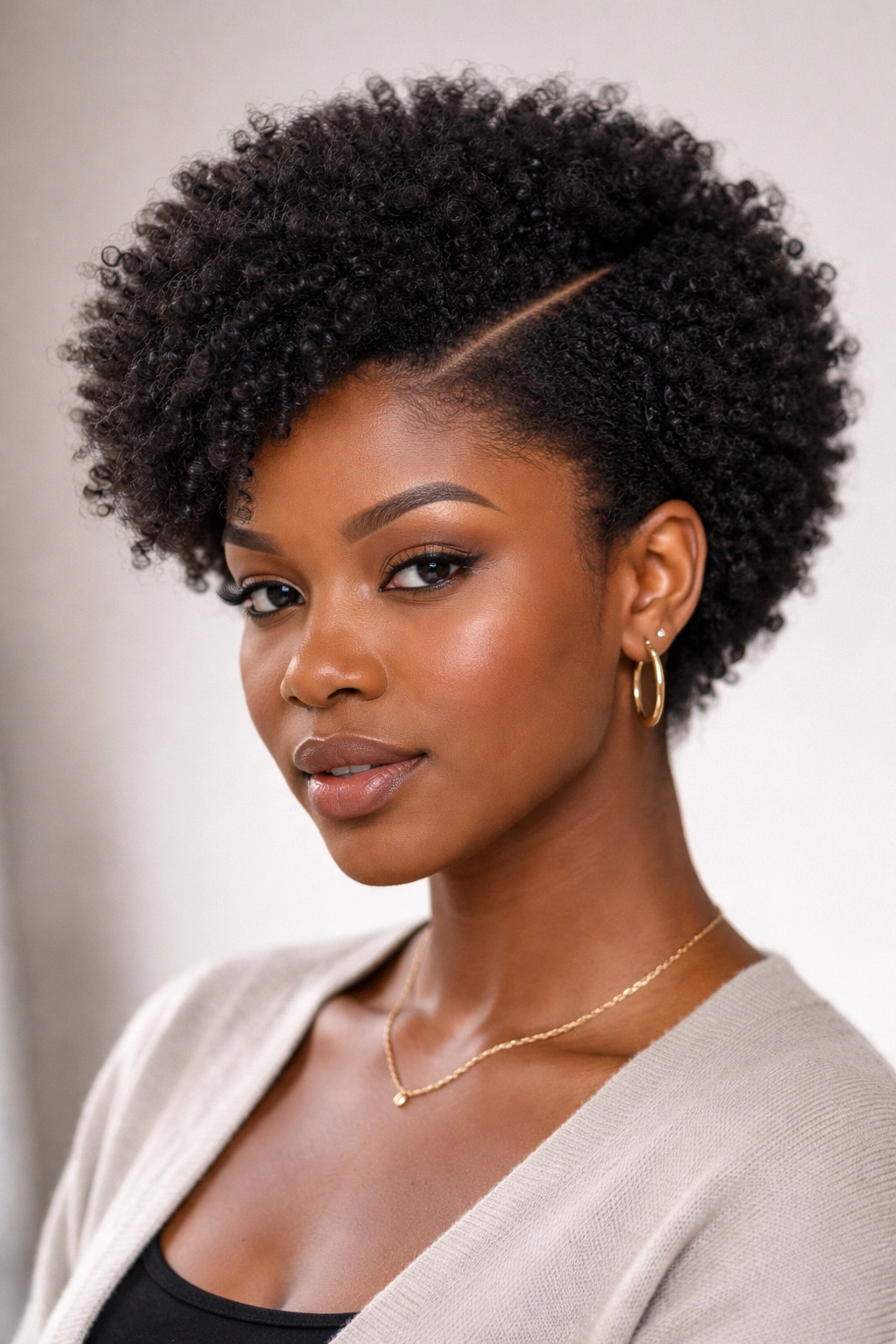
A hard side part can change the whole mood of a cropped afro. One line, and the hair suddenly has direction. Short 4C hair takes to this style beautifully because the natural density gives the part something to sit against instead of collapsing into it.
The part does not have to be razor sharp, either. A clean line drawn with a rat-tail comb is usually enough. If your hair is very dense, a tiny bit of gel along the part helps keep the line visible for the day. Then use a pick at the roots on the heavier side to build height and shape.
That parting detail is doing a lot. It makes the style feel more finished than a straight pick-out, but it still keeps the hair looking soft and natural. I also like it because it frames the face without forcing all the volume to sit evenly on both sides. Sometimes symmetry is overrated.
One small warning: a deep side part on very short hair can make one side look too flat if the root on that side is thin. A shallower part is safer when the hair is cropped close. You can always sharpen the line later if the shape has enough body.
The best thing about this style is that it takes a plain short afro and gives it a little attitude. Not loud. Just enough.
9. Tiny Cornrow Front With a Fluffed Back
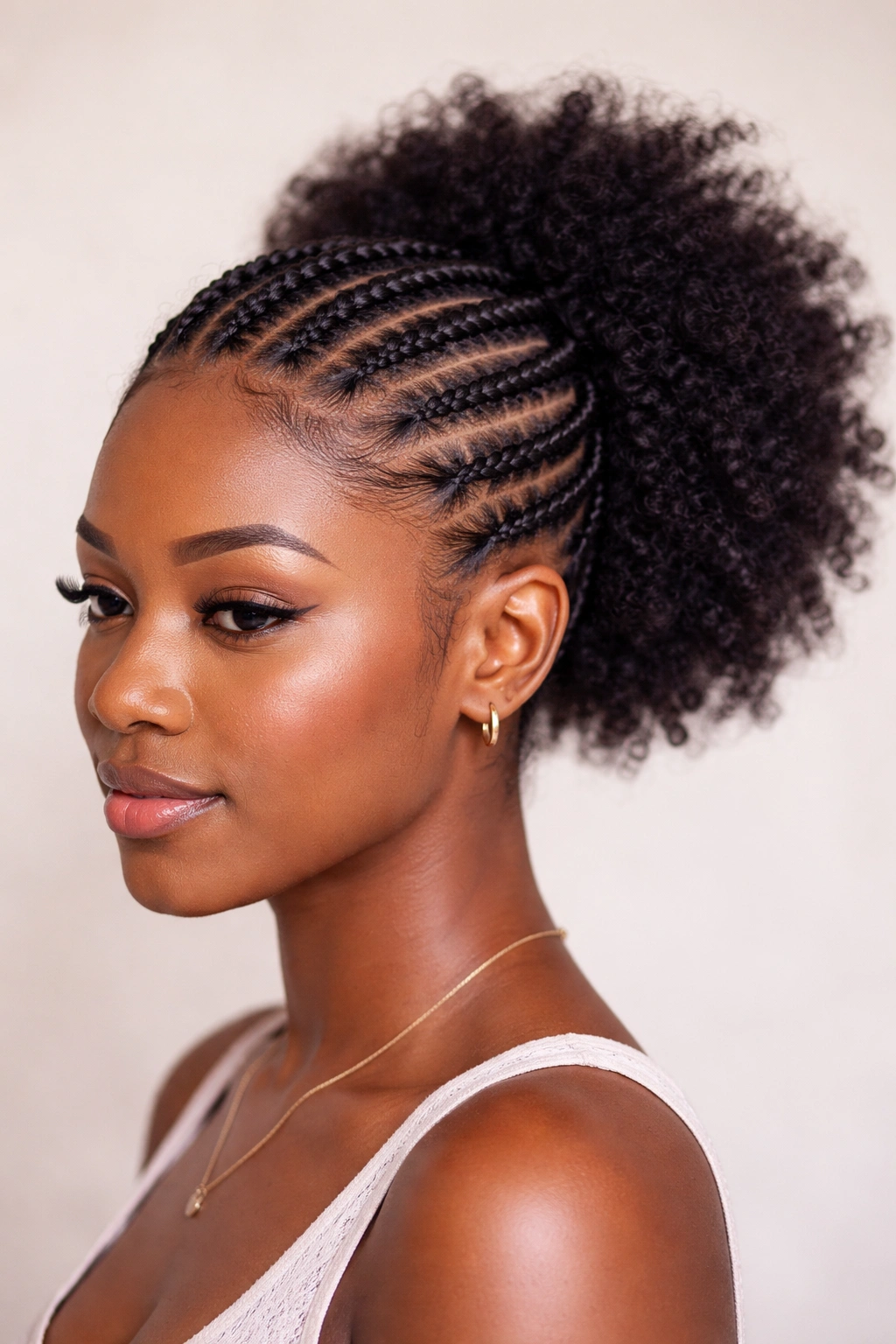
Short 4C hair does not need full cornrows to borrow braid detail. A few tiny braids at the front or along the sides can change the whole style, especially when the back is left out and fluffed into a small afro or puff.
This works best when the front has enough length to hold a braid without slipping. If the hair is too short, flat twists can step in and give a similar look with less frustration. When the length is right, though, the contrast is lovely: clean lines in front, soft texture in back. That mix is what makes the style feel cute instead of severe.
Where it shines
- Good for short hair that is long enough to grip at the hairline.
- Nice when you want part of the hair controlled and part of it free.
- Easy to dress up with tiny beads or cuffs, if the braids are long enough.
- Works well with a middle part, side part, or two slim braids framing the face.
I like to keep the braids narrow, maybe 1/4 inch wide, so they sit neatly and do not pull too hard on the edges. The back can stay fluffy, picked out, or lightly stretched with a small puff. If you want a cleaner finish, smooth the back with a little cream before picking it out. If you want more texture, leave it alone and let the coils do the work.
This is the style I’d pick when I want a little structure up front but I am not in the mood for a fully braided head. It feels balanced. And that balance is rare enough to be worth keeping.
10. Sponge-Coiled Afro
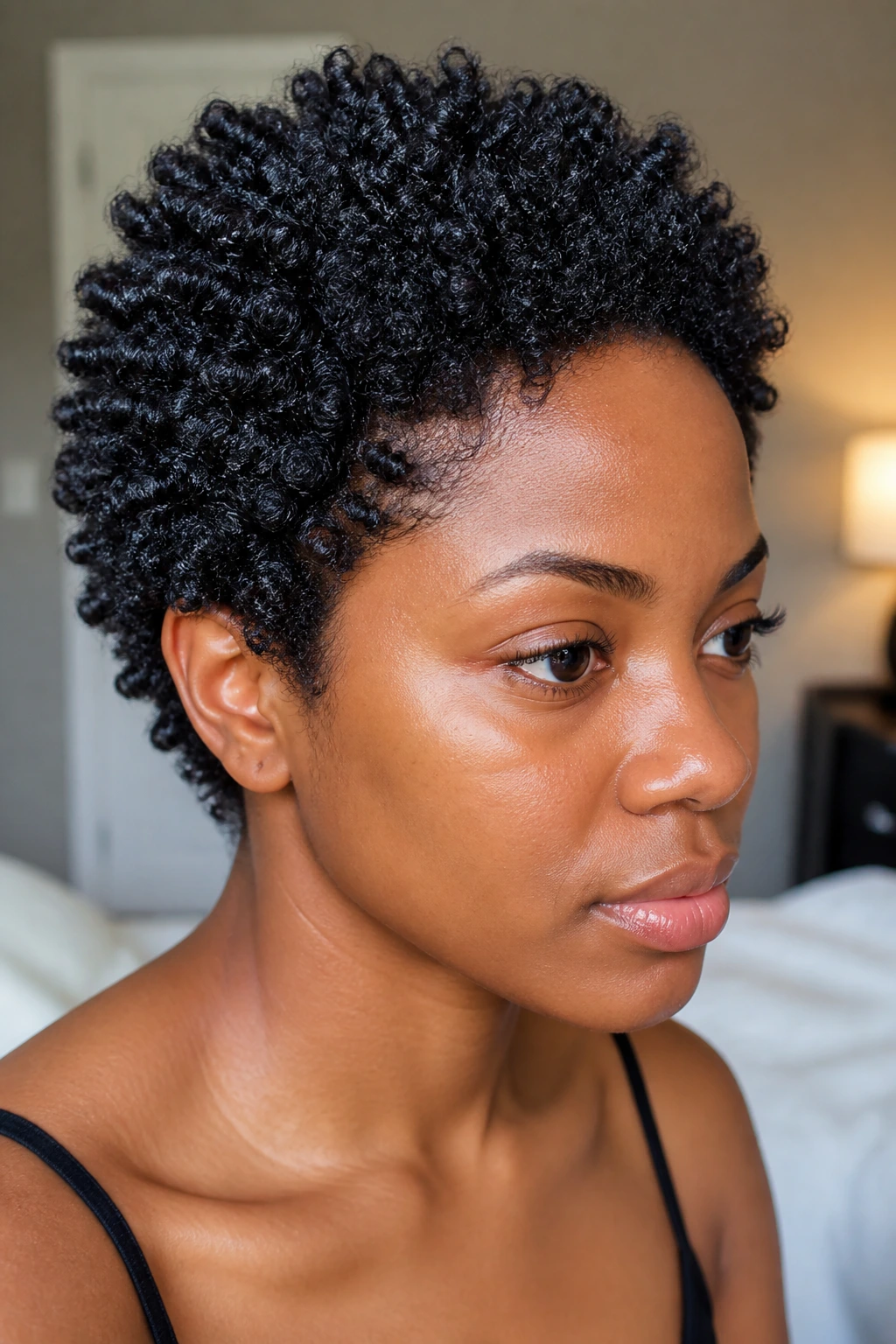
The texture gets tighter, cleaner, and a little pebbly under a curl sponge. That’s the easiest way to describe it. On short 4C hair, the sponge can make the hair look neatly formed in under 10 minutes, which is why people keep reaching for it when they want something fast that still reads as styled.
Use it on damp hair with a small amount of leave-in or styling cream. Not a heavy layer. Too much product makes the sponge drag, and dragging can pull the coils apart in a messy way. Work in small circles with light pressure, then lift the sponge off every few seconds so the hair does not tangle into the holes.
The result depends on how much you move the sponge and how long you stay in one spot. More spinning gives tighter coils. Less spinning keeps the hair softer and a little fluffier. I like that control. It means the same tool can give you a neat everyday look or a more defined one depending on how you use your wrist.
If you sleep on it, the pattern may loosen a little. That is normal. A quick touch-up with a mist of water and another short sponge pass usually brings the shape back. Do not chase perfection here. The whole point is speed and texture, not a helmet of tiny coils.
For short 4C hair, the best styles usually do one of three things: they clean up the shape, they give the texture a bit of definition, or they add one strong detail and leave the rest alone. That is why this list works. None of these styles asks the hair to pretend it is something else. They just give it a better frame, and honestly, that is often enough.
