



Pretty hair matters. So does time.
A short afro can give you both, if the shape is doing some of the work for you. That is the part a lot of people miss. They think short hair means fewer options, when the opposite is often true: a tight silhouette, a smart part, or a little coil definition can change the whole mood in ten minutes flat.
For busy women, the real test is not whether a style looks good in a photo. It is whether it still looks decent after a commute, a lunch break, a humid train platform, or a child tugging at your sleeve. Short afro styles can handle that pressure better than people give them credit for, but only when you choose styles that suit your length, your shrinkage, and your energy level on a Tuesday morning.
That’s where the good ones stand out. They do not need a half-hour of fussing, and they do not fall apart the second you stop looking in the mirror. A little moisture, a clean part, a shape that respects your texture — that is usually enough. The best ones do not ask for an hour in the mirror.
1. The Clean TWA Shape for Short Afro Hair
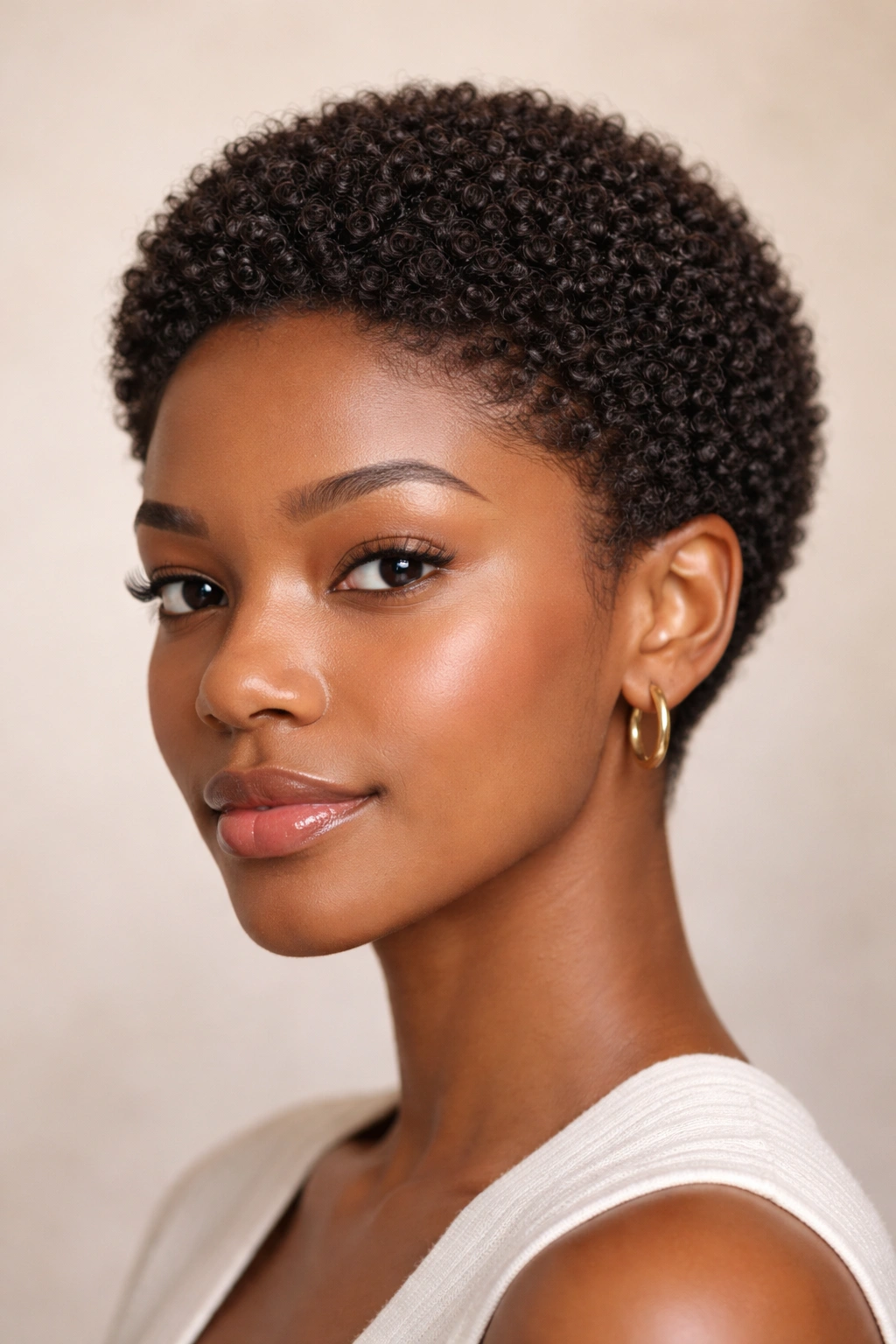
A fresh TWA, or teeny weeny afro, is one of those short afro styles that looks simple until you notice how much it depends on shape. When the outline is even and the curls are moisturized, the whole style reads clean, polished, and deliberate. When it’s not? It can look like you just gave up halfway through wash day.
Why It Saves Time
The TWA works for busy mornings because it does not need a complicated finish. A small amount of leave-in conditioner, a soft curl cream, and a quick finger fluff are usually enough. If your hair is still damp, you can let it air-dry and keep moving. If you have ten minutes, a diffuser on low heat helps speed things up without flattening the curl pattern.
A lot of women try to over-style a TWA and end up fighting it. Don’t. The cleanest version is usually the one with the least product and the best shape.
- Use a dime-sized amount of leave-in per section so the hair stays soft, not coated.
- Lift at the roots with an afro pick used only at the base, never dragged through the ends.
- Sleep in a satin bonnet or scarf so the shape holds overnight.
- Ask for a rounded outline instead of a boxy cut if you want the style to look intentional as it grows.
Best tip: keep the edges neat, but let the texture stay visible. That contrast is what makes a TWA look alive.
2. The Tapered Afro With Tight Sides
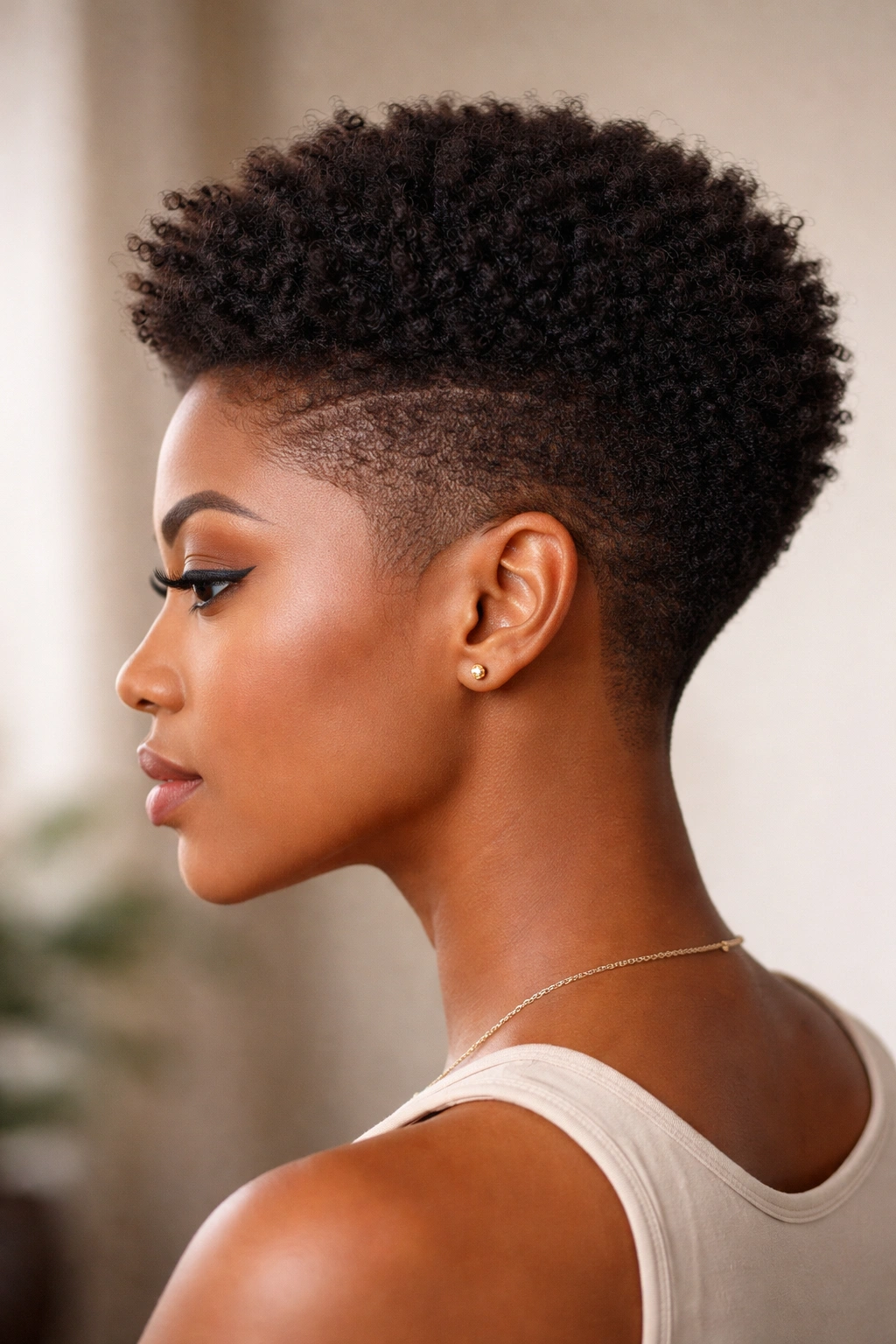
If you want a style that looks done even when you barely touched it, the tapered afro is hard to beat.
The tapered cut removes bulk around the nape and sides, then keeps the crown fuller. That shape does a lot of visual work for you. It sharpens the jawline, opens up the face, and keeps the hair from puffing out in every direction by noon. For women who need something that behaves at work and still feels natural after work, this is a smart cut, not a fussy one.
The part I love most is how well it grows out. A tapered afro can look neat for weeks because the shape stays readable even as the hair gets a little longer. You do not need a fresh salon visit every time the roots wake up. A quick mist of water, a little leave-in, and a finger rake through the top is often enough to revive it.
Keep the crown a bit longer than the sides — usually around 2 to 4 inches of visible length on top is enough to get that soft lift. If your hair shrinks a lot, ask the stylist to cut it dry. Wet hair lies. Dry hair tells the truth. That matters here.
3. The Finger-Coiled Mini Fro
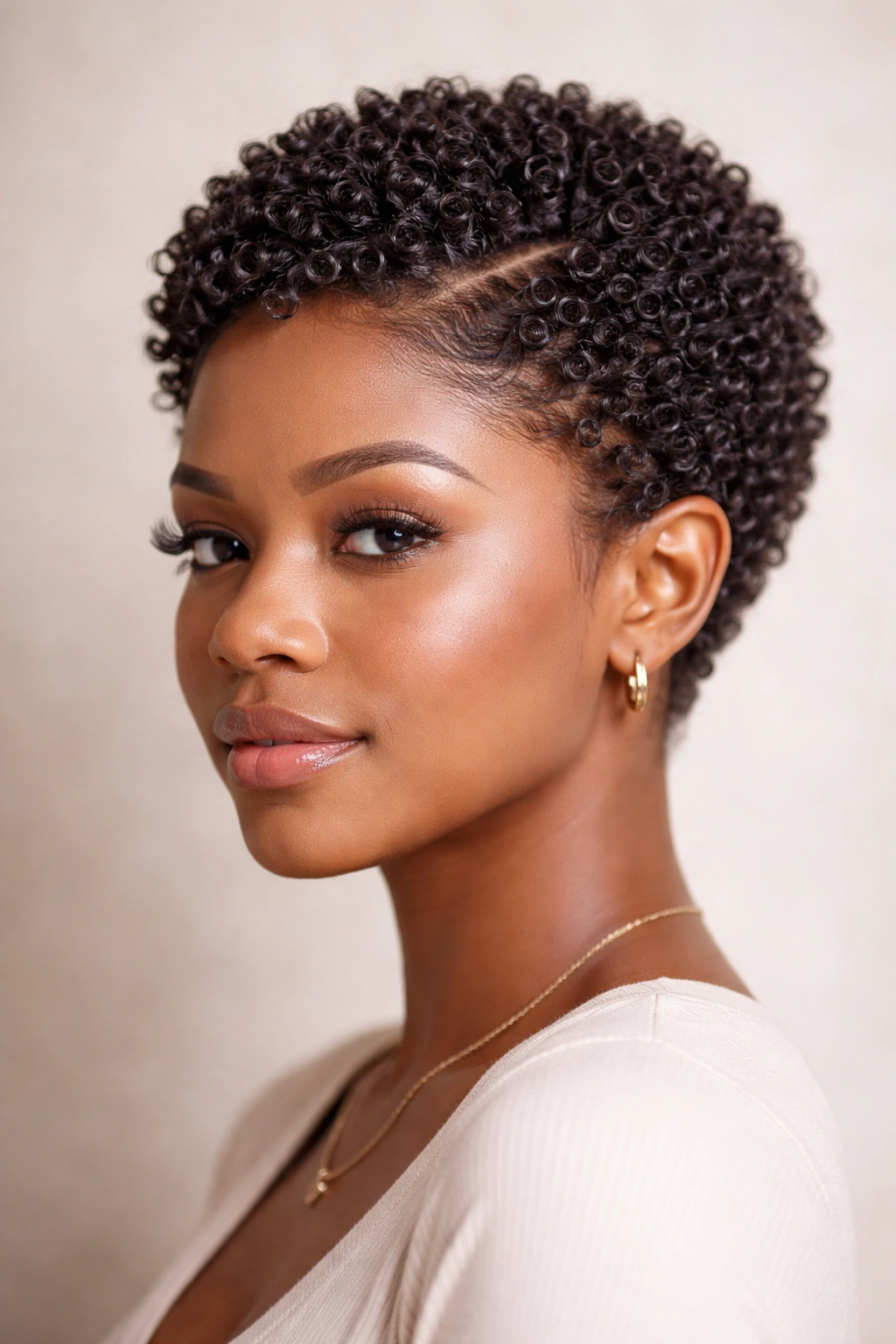
Why do finger coils look so put together with so little drama? Because they give short hair a clear pattern, and clear patterns always look more intentional than loose pieces that are fighting each other.
Finger coils are one of the easiest ways to give a short afro definition without heat. On hair that is slightly damp, you work small sections with a little styling cream or gel, then twirl each piece around your finger until it forms a tight spiral. The sections do not need to be tiny enough to make you miserable. Pencil-size is a good place to start if your hair is dense; a little larger works if the hair is finer.
How to Style It
- Start on freshly washed or lightly misted hair.
- Add a small dab of curl cream or gel to each section.
- Twirl the hair 2 to 3 turns around your finger, then let it spring back.
- Let it dry fully before separating or fluffing.
- Pin the front or tuck one side if you want the shape to feel softer.
The mistake people make is touching the coils too soon. If the hair is even a little damp when you separate it, the definition collapses fast. Give it time. Then let the style sit for a minute before you decide whether it needs more volume. Sometimes the best move is doing less.
4. The Side-Part Afro With Definition
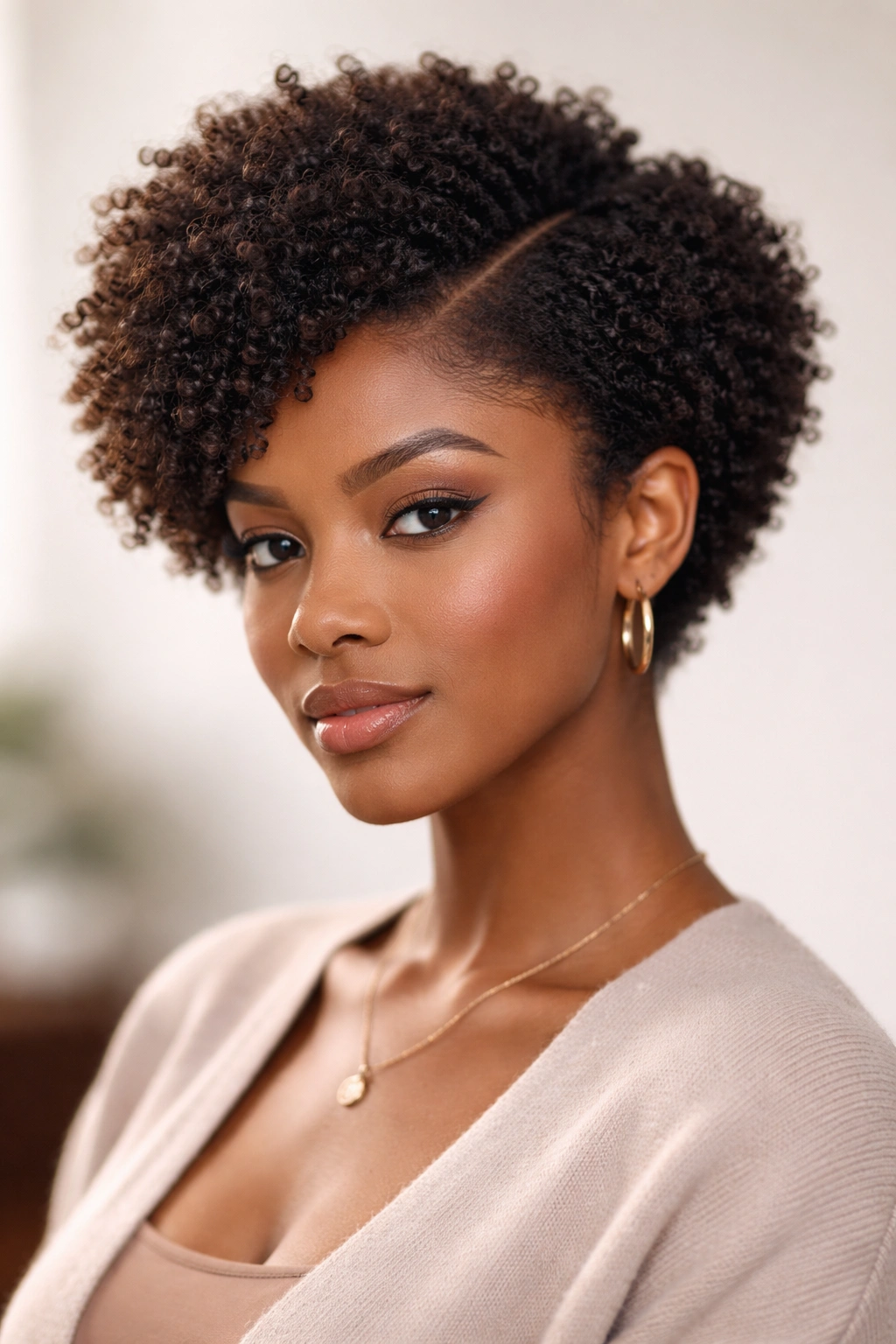
You know that morning when your hair wants to sit flat in one spot and puff up everywhere else? A side part can save the whole look.
A side-part afro changes the balance of the style without changing the cut. That sounds small, but it isn’t. Shifting the part moves the eye across the face differently, which can soften a strong forehead, add shape to a round face, or make a short fro feel more styled with almost no extra work. It also gives you a clean line to build from, which helps if your curls dry in random directions.
The easiest version starts on damp hair. Make the part with a rat-tail comb, then use a light curl cream or foam to guide the hair on each side. Once it dries, lift the roots on the fuller side with an afro pick and leave the part side a little flatter. That contrast is the whole point.
- Set the part before the hair fully dries.
- Use foam or mousse near the roots if you want the part to stay visible.
- Tuck one side behind the ear for a faster, more relaxed finish.
- Keep the top fluffy; don’t press everything down.
It’s a small change, but it makes a short afro look chosen instead of accidental. That matters more than people admit.
5. The Mini Puff With Sleek Edges
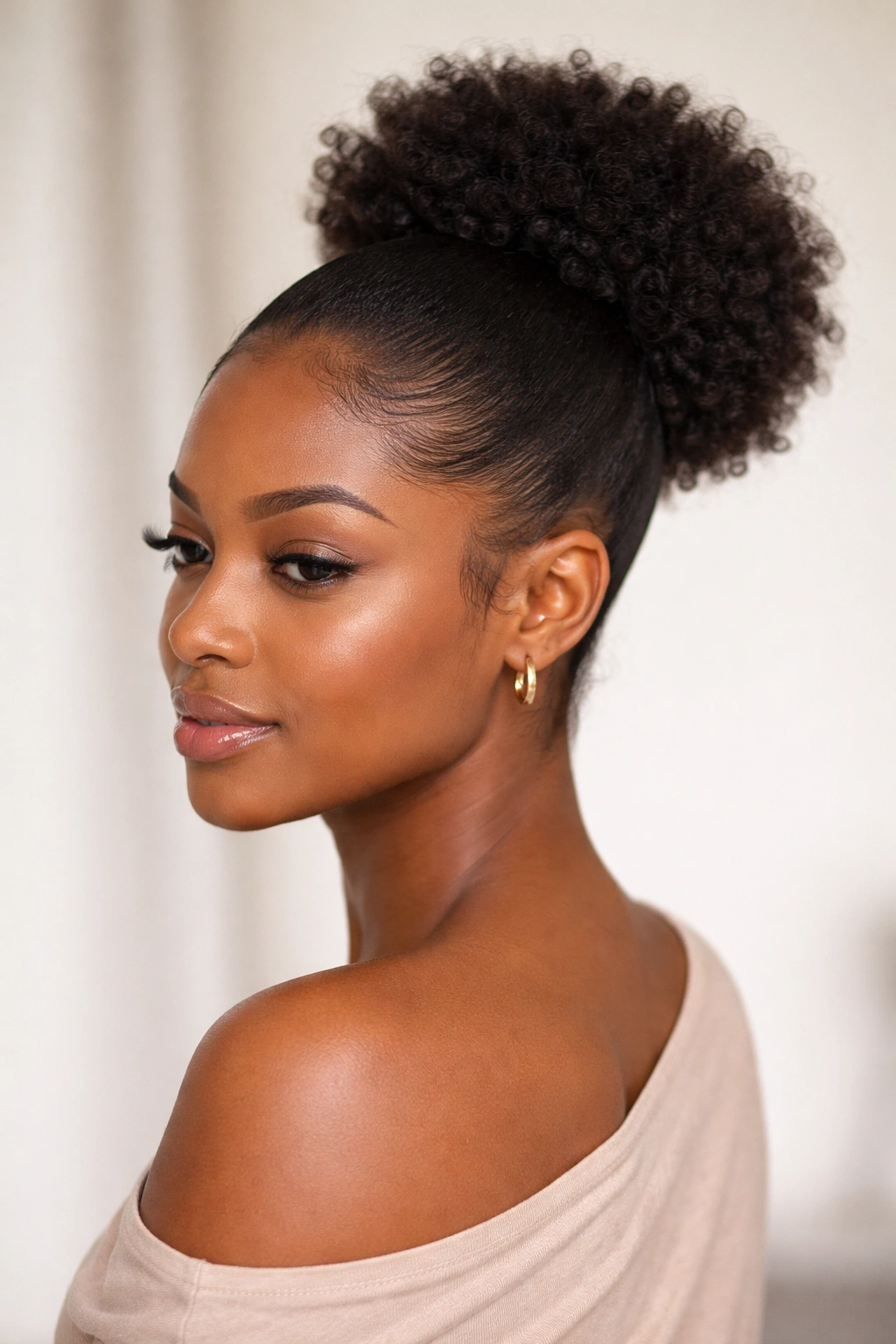
A mini puff is one of those styles that sounds simpler than it is, which is exactly why it works for busy women. You are not building a sculpted updo. You are just gathering enough length to make the hair feel contained, then letting the texture stay visible in the puff itself.
This style usually works best when the hair is short but not tiny-short. Think a few inches of growth with enough density to gather at the crown or the back of the head. A soft elastic band, a puff cuff, or a gentle snag-free tie can hold the hair without pulling too hard at the scalp. The point is control, not tension. Tight is not the goal.
I like this style because it gives you a clean face frame in seconds. A little edge control along the hairline helps, but you do not need to build a helmet. Brush the front softly, smooth the edges with a small toothbrush or edge brush, then stop. If the puff sits a little higher, it reads playful. If it sits lower, it feels calmer. Both work.
Sleep with a satin scarf wrapped around the hairline and the puff still loosely in place. That one habit keeps the style from turning into a fuzzy halo the next morning.
6. The Flat-Twist Crown on Short Afro Hair
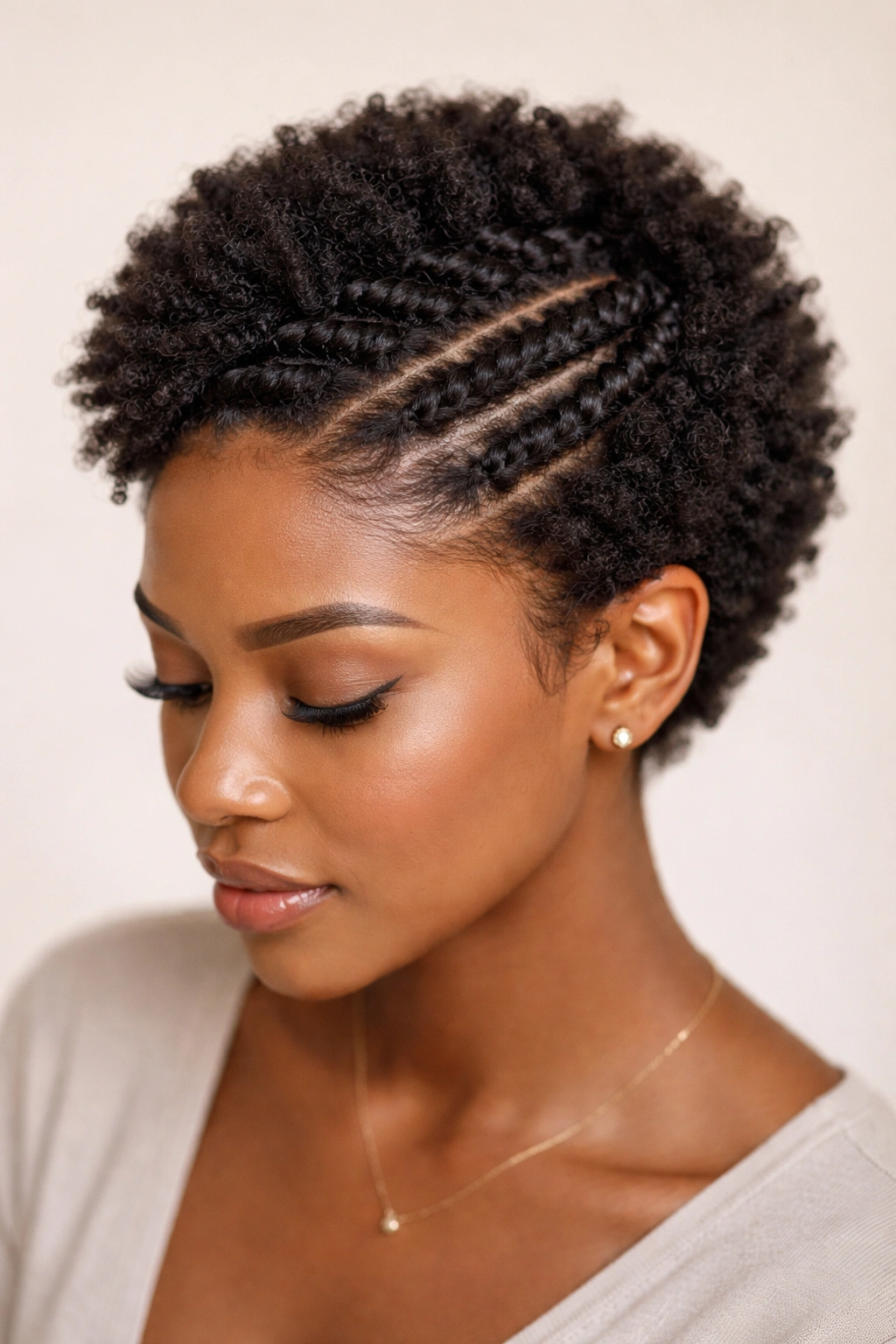
Unlike two-strand twists, flat twists sit close to the scalp and keep the front of the hair looking neat for longer. That is exactly why they are useful when your week is packed and you need a style that stays tidy between wash days.
The crown version uses a few flat twists across the top or along one side, while the rest of the hair stays short and soft underneath. You get structure without a heavy look. You also get a style that survives a lot of movement, which matters if you wear glasses, wash your face twice a day, or spend half the morning tugging a jacket on and off.
Where It Makes the Most Sense
Short afro hair with a little stretch holds this style well. If the hair is freshly washed and sealed with a light cream, the twists glide easier and stay neater. If your hair is very dense, two or three flat twists across the front are enough. If it is finer, even one strong side twist can carry the whole look.
Ask for this if you want something that keeps hair out of your face but still leaves texture on display. It’s also a strong choice for women who like to stretch their style for a few days without having to rework the whole head.
Use a medium-hold cream, not a sticky gel that leaves white flakes behind. Nobody has time for that.
7. The Mini Twist-Out
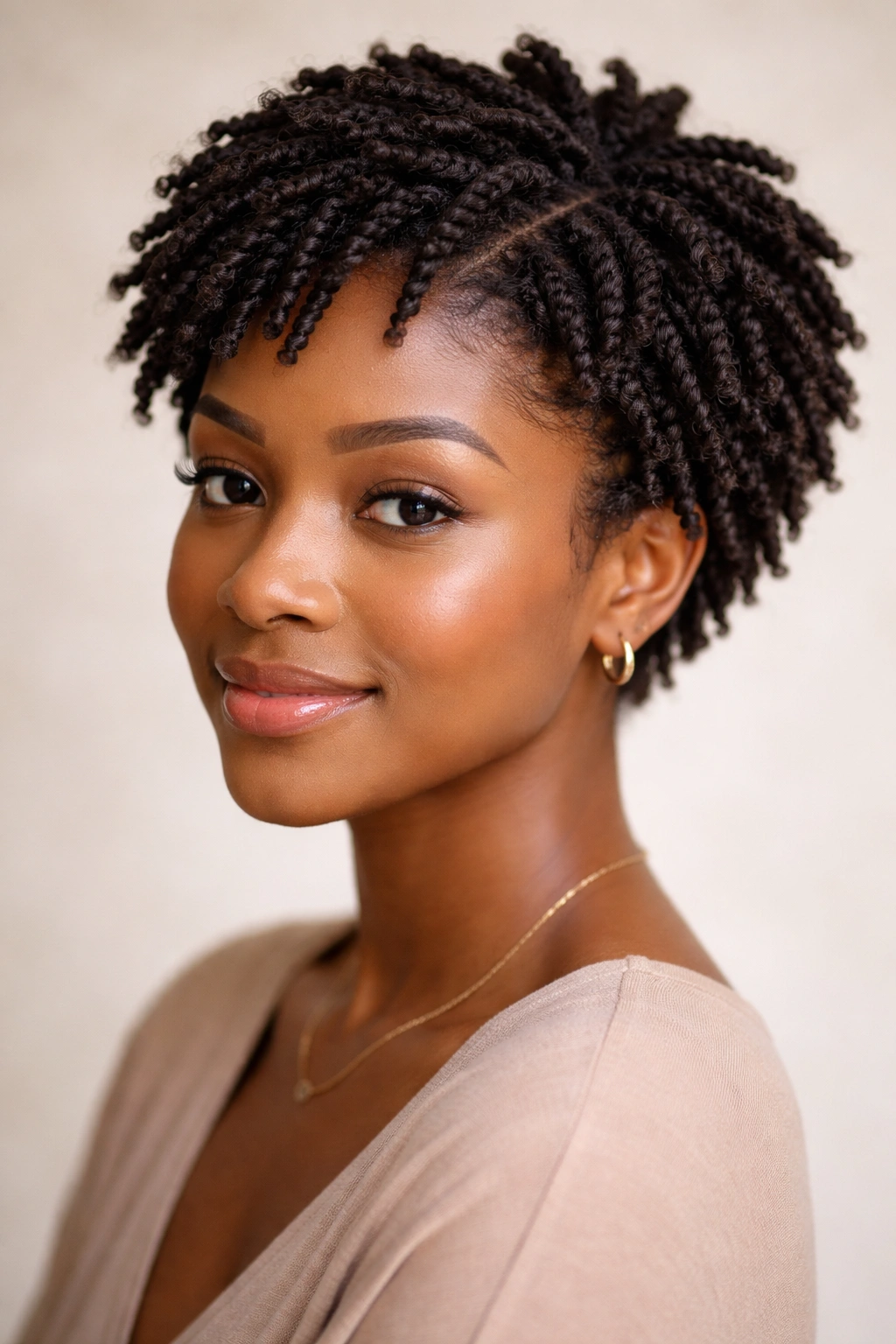
A twist-out on short hair is not hard; it’s just unforgiving if you rush the dry time.
That’s the honest part. The good part is that mini twist-outs can give short afro hair softness, stretch, and movement all at once. They also make uneven lengths look more blended, which is handy if you are growing out a cut or you do not want to go back in for a shape-up yet. The result is fuller than finger coils and looser than a defined wash-and-go.
How to Keep It Soft
- Start with hair that is slightly damp, not soaking wet.
- Use small two-strand twists if your hair is under about 3 inches.
- Add a little cream first, then a light gel if your hair frizzes fast.
- Let the twists dry fully overnight, or use a diffuser on low heat.
- Separate each twist once, with oiled fingertips, and stop there.
The biggest mistake is separating too much. People get excited, keep pulling, and end up with a fluffy cloud that lasts about twelve minutes. One careful separation is usually enough. After that, let the roots do what they do. A pick at the base can give you height without wrecking the definition.
This style is a good middle ground when you want more shape than a fro but less precision than a coil set.
8. Bantu Knots That Turn Into Soft Curls
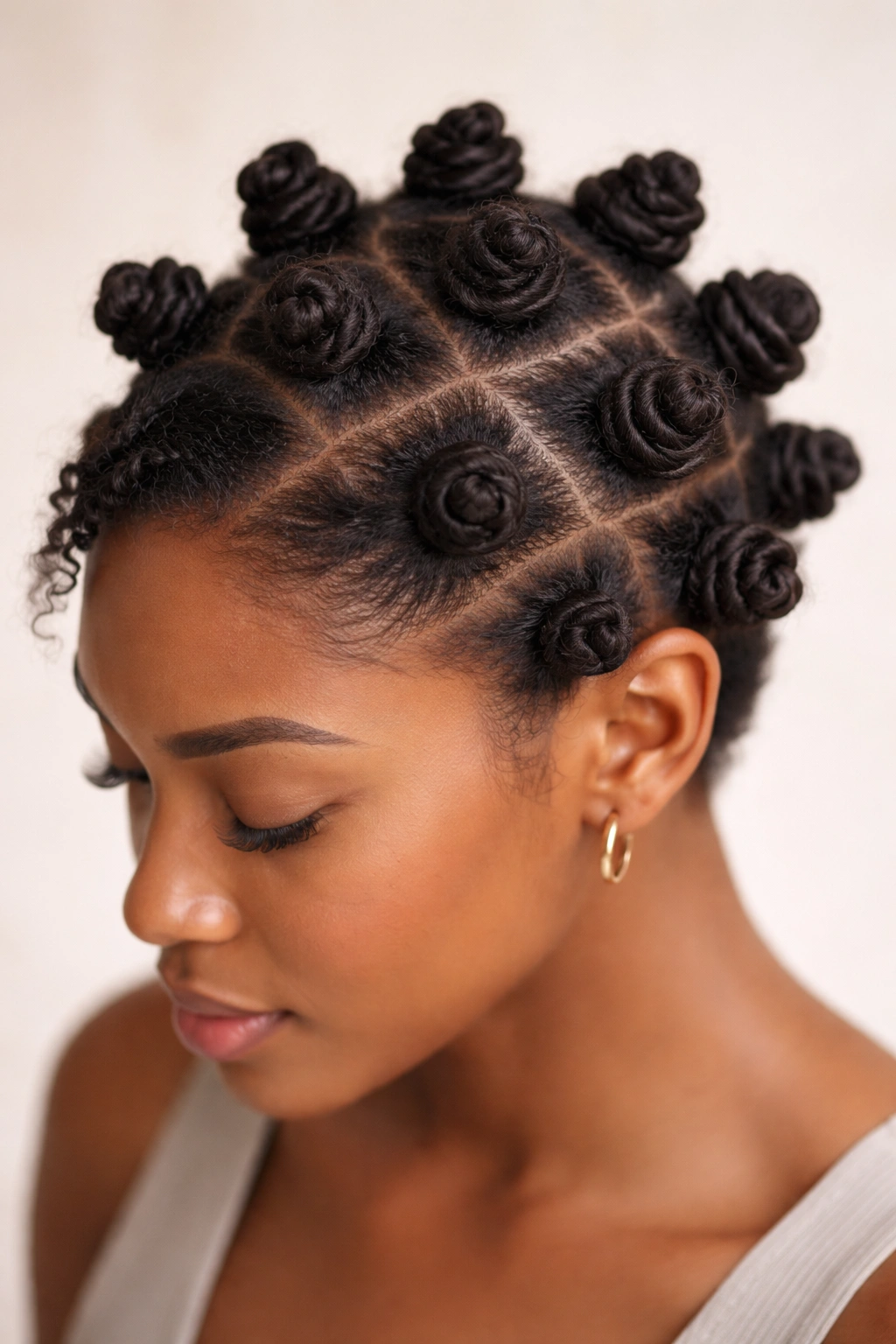
Why do Bantu knots work so well on short hair? Because they stretch the curl pattern, set a clear shape, and make the next-day takedown feel like a reward instead of a chore.
The style itself is simple enough: you section the hair, twist each piece until it starts to coil into itself, then wrap it flat against the head and secure the knot. On short hair, you do not need a huge number of knots. Six to ten is often enough, depending on density and head size. More knots can give tighter curls; fewer knots create larger waves. Neither one is wrong.
The dry time is where most people get impatient. Don’t. If the knots are even slightly damp in the center, the curl pattern turns frizzy when you take them down. Give them a full night, and if your hair is thick, give them longer. A satin scarf helps keep the outside smooth while the inside sets.
How Many Knots You Need
- 6 knots for a quick, loose shape on very short hair.
- 8 knots for a balanced curl pattern with some separation.
- 10 knots if you want smaller, springier curls.
This is one of the better styles for women who want a soft, dressed-up look without heat. It has a little extra personality, which I always appreciate.
9. The Soft Frohawk
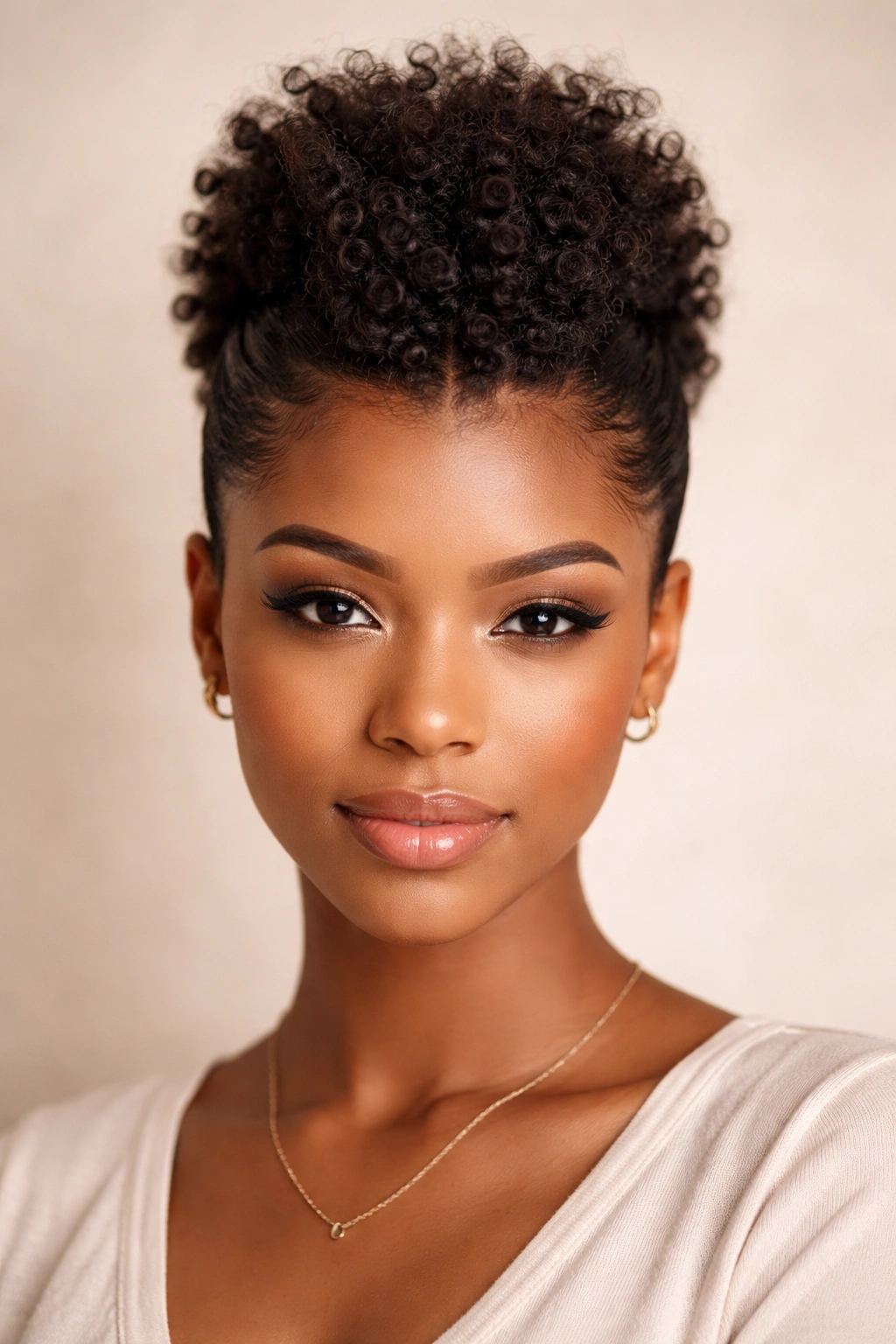
There is a moment when short hair stops cooperating and starts standing up on its own. The frohawk is what you do with that energy.
It works by keeping the sides smoothed or pinned down and letting the center section hold the volume. That center strip can be left fluffy, twisted, or lightly defined, depending on how much time you have. It is one of the best short afro styles for mornings when you want a little edge but do not want to spend forever getting there. It also looks more complicated than it is, which never hurts.
The easiest version begins with a middle section from the front hairline to the nape. Brush or smooth the sides toward the scalp, then pin them with bobby pins or small clips. If you want extra hold, a little gel at the temples and nape helps. The center stays free. That is the part that gives you the shape.
- Use 4 to 8 bobby pins, depending on hair thickness.
- Keep the middle section moisturized but not heavy.
- Pin the sides from the temples backward so the lines stay clean.
- Fluff only the center strip; leave the sides sleek.
The style looks especially good on day-two or day-three hair because the texture already has some memory. You are working with the hair, not forcing it.
10. The Rounded Shape-Up Afro
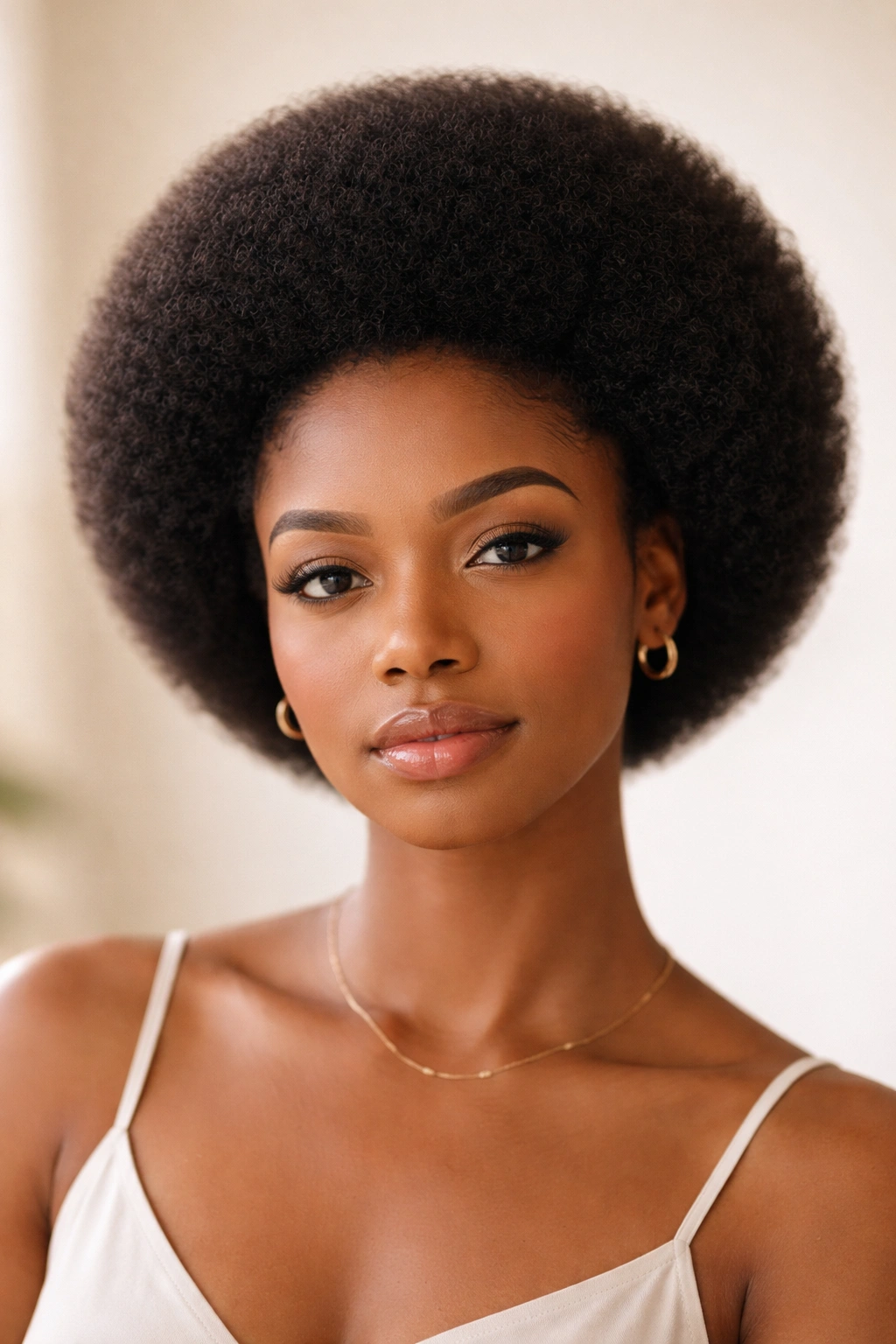
A rounded afro can make short hair look fuller than it really is. That is the whole trick, and it is a good one.
Instead of letting the hair grow out in uneven directions, the rounded shape keeps the silhouette soft and balanced. The perimeter follows a gentle curve, so the fro looks deliberate even when it’s small. This style is worth asking for if you want a short afro that still feels feminine, neat, and easy to live with. It also grows out better than a sharp shape on hair that shrinks a lot.
The cut matters most here. Stylists often shape this kind of afro on dry hair so they can see the real length, not the stretched version. That matters. If the hair is cut while wet, the final shape can come back too short around the edges and too bulky in the middle. A good rounded cut should feel even when you run your hands around it, not flat like a helmet.
Morning care is simple. Mist the hair lightly, add a small amount of leave-in, and use a pick only at the roots to lift the crown. Do not rake all the way through unless you want to flatten the shape you paid for.
Shape is the whole trick.
11. The Headband Afro
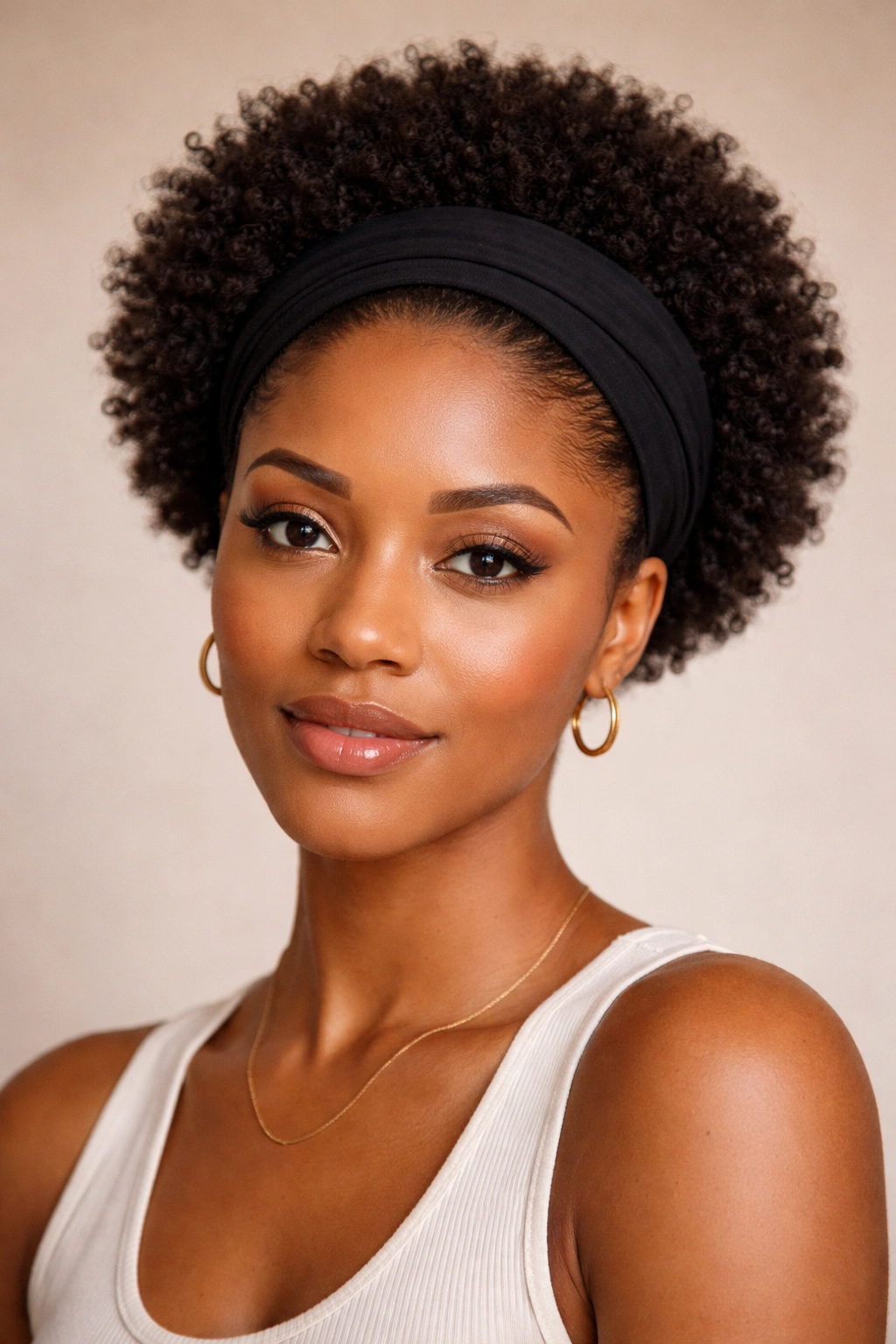
A headband afro is what I call the rescue style that still looks intentional.
Unlike styles that ask for perfect parting, twisting, or pinning, this one leans on the accessory to do part of the work. You keep the hair loose, let the texture stay visible, and slide on a wide headband when you need the front to behave. It is fast. It is honest. It is also one of the easiest ways to make a short afro look styled on a morning when you would rather be doing anything else.
The best headbands for this job are soft and a little wide — around 1.5 to 2 inches is a good place to start. If the band is too thin, it can dig into the scalp and create a line you will spend all day trying to hide. Place it a finger’s width behind the hairline so the edges stay comfortable. If you like, tuck a few curls forward above the band for shape.
This style is especially useful for errands, workouts, travel days, or weather that makes your hair puff in directions you did not invite. It also pairs well with a fresh twist-out or wash-and-go that needs a little help staying put.
A silk-lined band is worth the money if your edges are touchy. Cheap elastic can be a real nuisance.
12. The Wash-and-Go Short Afro With Soft Definition
If you only learn one routine, make it this one.
A wash-and-go short afro is the style that lets your curl pattern do the talking while you keep your hands mostly out of it. The trick is starting on wet hair, adding a leave-in and a light gel in the right order, then leaving the hair alone long enough to set. That “leave it alone” part sounds boring. It is also the part most people skip.
Work in small sections after washing, and apply a lightweight leave-in first. Follow with a gel that matches your texture — something with enough hold to keep the curls from frizzing, but not so much that the hair turns hard and sticky. Rake the product through with your fingers or a wide-tooth comb, then scrunch gently at the ends if your curls need encouragement.
Do not touch the hair while it dries. That rule saves more wash-and-gos than any fancy product ever will. If you have time, air-dry. If you do not, a diffuser on low heat for 8 to 12 minutes can help start the process. Once the hair is dry, pick lightly at the roots for height and stop before the definition disappears.
The short version? This style is fast on wash day, easy to refresh with a spritz bottle, and flexible enough to wear loose or tucked under a scarf the next day. For a busy schedule, that kind of repeatability matters more than a style that looks dramatic for one hour and then quits on you.
