



A precision cut bob lives or dies by the line. If the edge is crisp, the haircut looks expensive even when the styling is plain. If the edge goes mushy, the whole thing falls apart fast.
That’s why precision cut bobs are such a satisfying haircut to talk about. They don’t hide behind texture or a lot of fluff. They rely on shape, weight, and the way the ends sit against the jaw, the neck, or the collarbone. A tiny change at the perimeter can shift the whole mood from sharp to soft, from classic to severe, from polished to merely short.
And that’s the charm. A good bob is honest. It shows you where the hair falls, how the nape sits, how the front frames the face, and whether the finish was cut with care or rushed through with thinning shears. I’ve always thought that a bob looks best when it knows what it wants to be.
1. The Classic Blunt Precision Bob
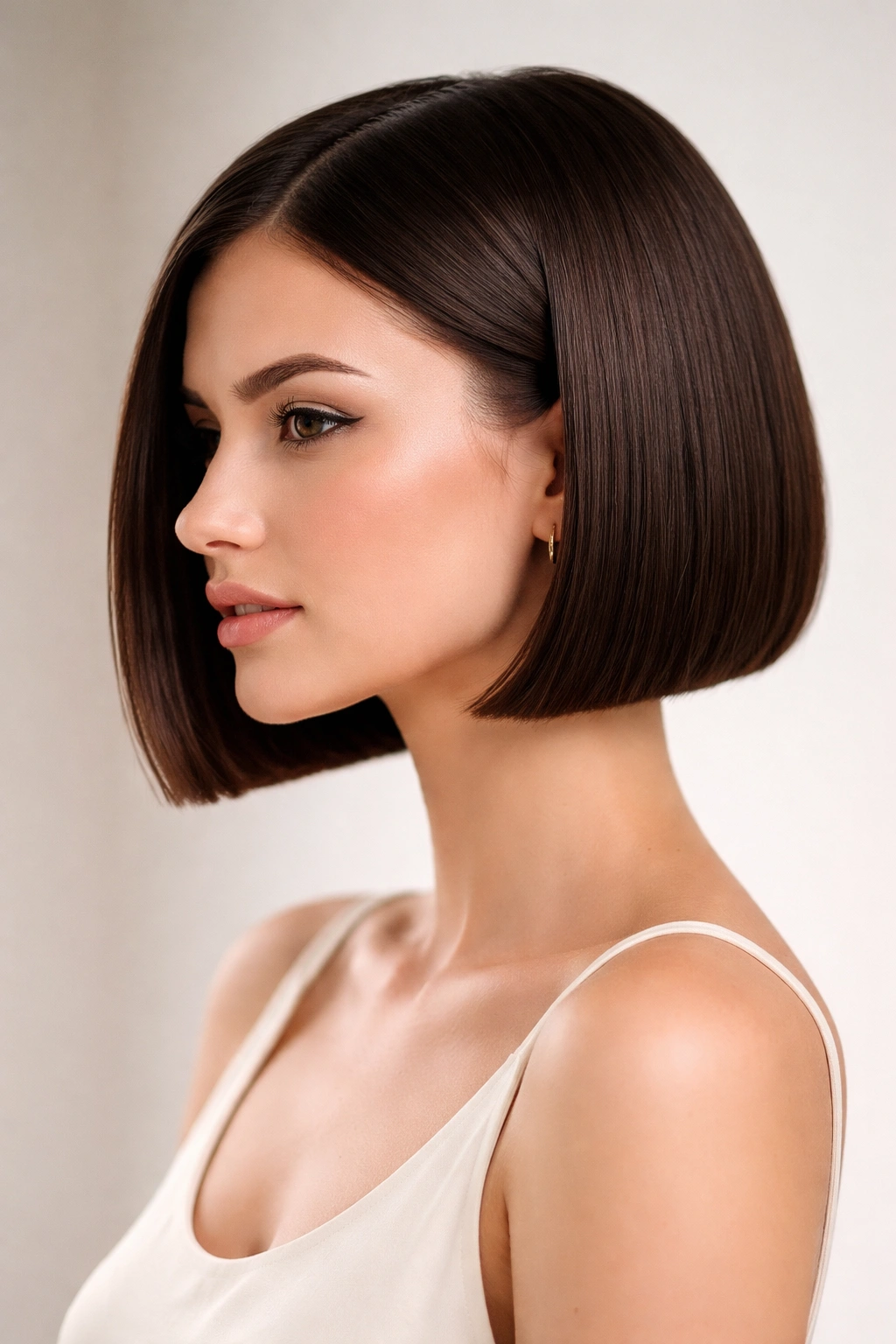
A blunt bob is not shy. It makes its point with a single, clean perimeter line, usually landing somewhere between the jaw and just below it, with no visible layering to blur the shape. That hard edge is the whole story, and when it’s cut well, the haircut reads as crisp from every angle.
Why the blunt edge works
The blunt bob gives hair a thicker, denser look because all the ends meet at the same place. Fine hair especially benefits from that. Instead of disappearing into wispy pieces, the hair sits together and looks deliberate.
It also photographs in a way that softer cuts do not. The line at the bottom gives the eye somewhere to land. On straight hair, the effect is almost architectural. On slightly wavy hair, you still get that clean base, as long as the stylist keeps the perimeter even and doesn’t over-thin the ends.
Quick fit check
- Best for fine to medium hair that needs a fuller-looking edge.
- Strong jawlines tend to look even sharper with it.
- Center parts keep it modern and spare.
- Side parts soften the read a little without changing the cut itself.
Use a flat brush or a paddle brush and a light smoothing cream if you want the finish to stay glossy without looking stiff. A blunt bob does not need a lot of product. Too much, and the line starts to clump.
Best move: ask for the perimeter to be checked dry before the final trim. Wet hair can lie to you, and a blunt bob shows every uneven millimeter.
2. The Chin-Skimming Bob With a Soft Bevel
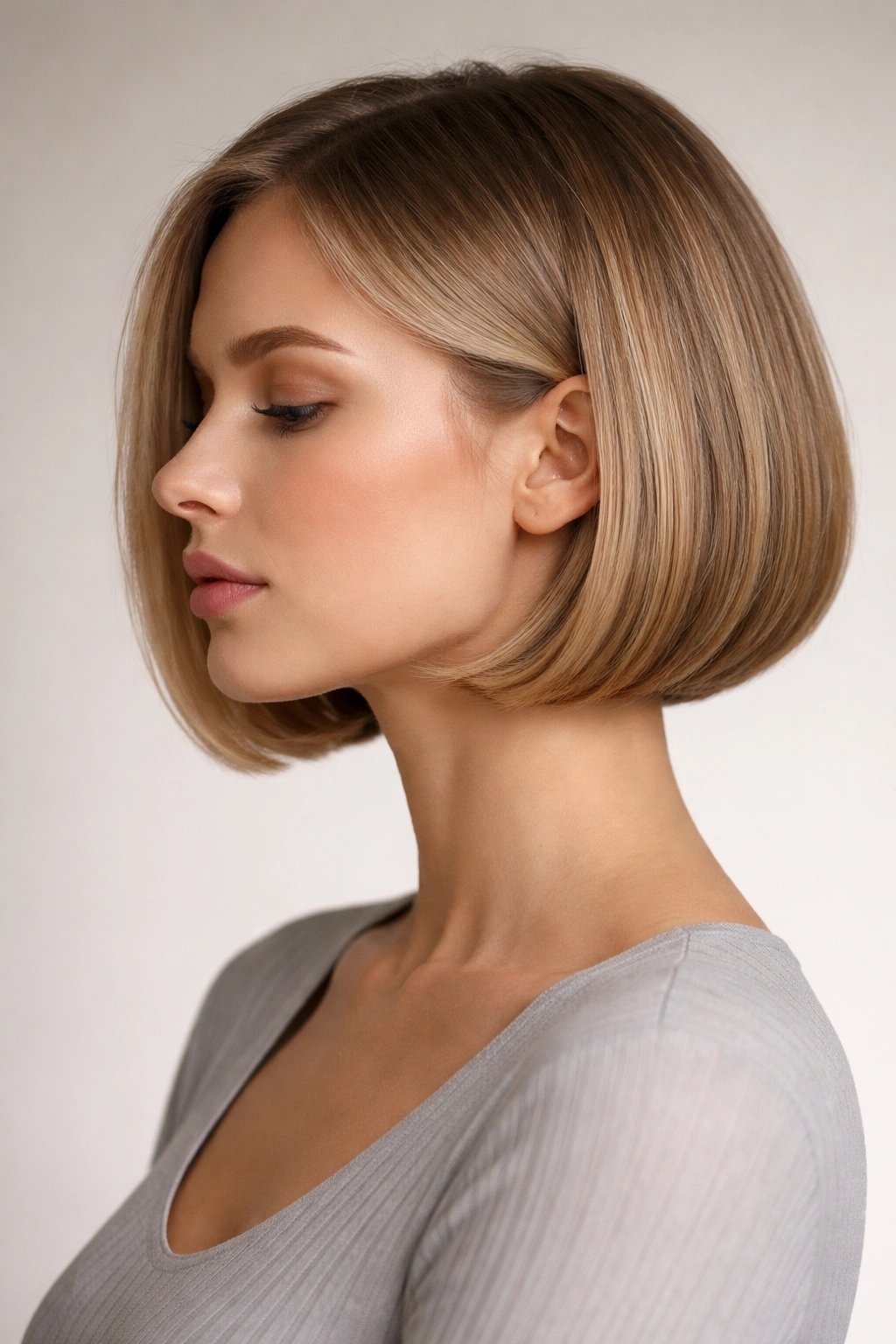
Why does a chin-skimming bob look so polished even when it has a little movement? Because the shape is still precise. The difference is in the ends: instead of sitting flat and boxy, they turn under just enough to give the cut a small bevel at the edge.
That bevel matters more than people think. A bob that grazes the chin can feel severe if the ends are too blunt or too heavy, especially on a square face. A tiny curve at the bottom softens the line without turning the haircut into something fluffy or round. It still looks exact. It just breathes a little.
The sweet spot is usually a cut that sits right at the chin, or a fraction below it, with the front angles checked carefully so they don’t dip too low. If one side falls noticeably longer than the other, the style starts to look accidental. This haircut works because the geometry is controlled.
What to ask for
- A clean baseline at the jaw
- A slight bevel at the ends, not a stacked layer
- A dry check around the chin to keep both sides balanced
- Minimal thinning, because the shape should come from the cut, not from texturizing shears
This is a good choice if you want a bob that moves when you tuck your hair behind your ears, but still settles back into place with one quick blow-dry. It’s tidy without feeling rigid. That combination is hard to beat.
3. The French Bob That Sits at Lip Length
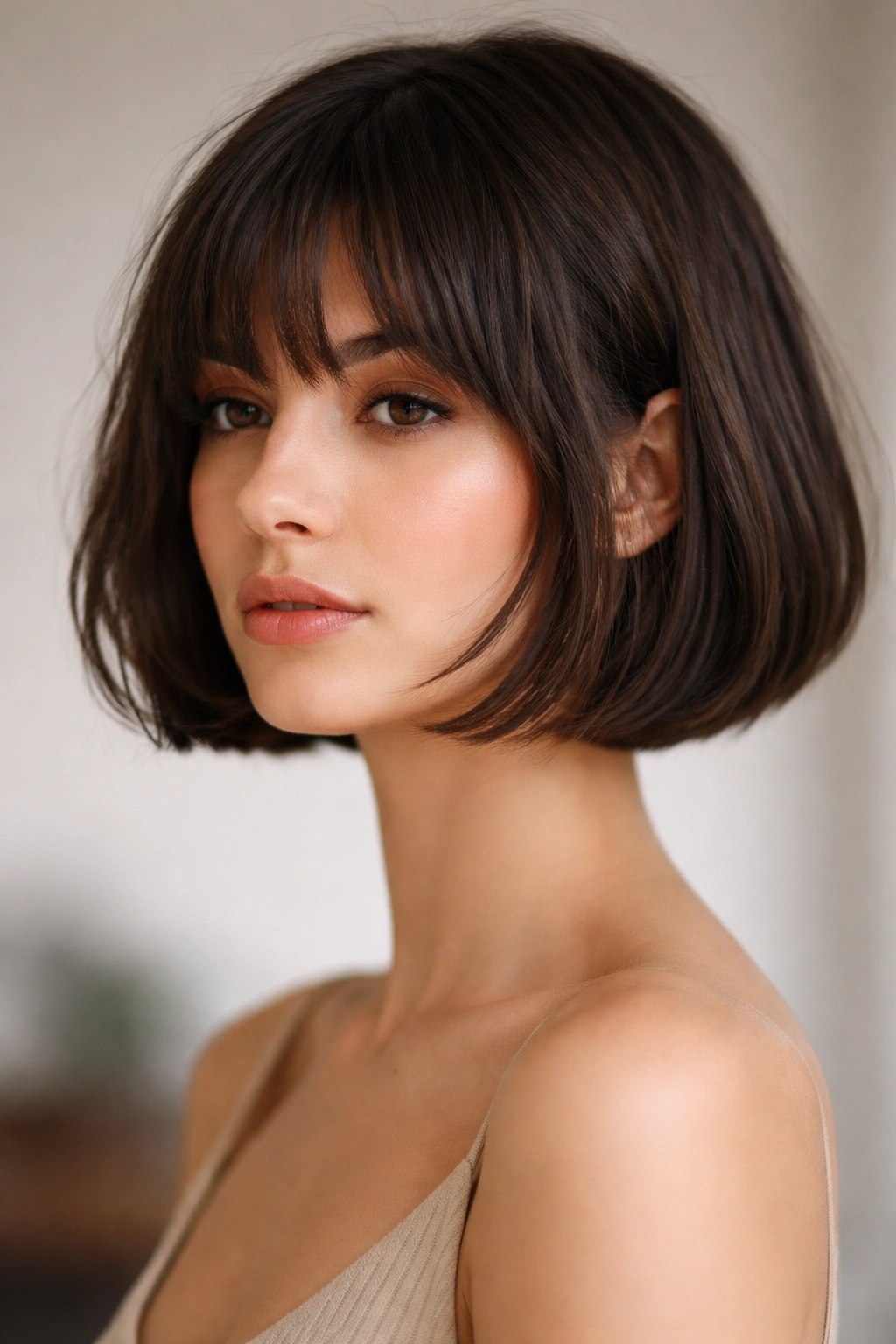
The first thing you notice is the swing. A French bob sits shorter than most people expect, usually around lip length or a touch higher, and the shape looks crisp because the ends are kept clean and the neck stays open. It has attitude, but not in a loud way.
A fringe changes the whole thing. A soft brow-grazing bang or a short, wispy fringe can make the cut feel lived-in while the bob itself stays precise. The contrast is what makes it work: the front can feel airy, but the perimeter underneath still needs to be exact. If the line wobbles, the haircut loses its edge.
This style is especially good when hair has a little natural bend. Straight hair gives it a sharp little frame, while wavy hair adds movement around the face. The trick is not to over-style it. A French bob looks best when it feels intentional but not frozen.
How to style it
A small round brush, roughly 1 to 1.25 inches, gives the fringe shape without making it puffy. Dry the roots first, then direct the ends under just a bit so the bottom line stays neat. If you air-dry, tuck the fringe into place with a dab of lightweight cream and leave the rest to settle naturally.
Shorter bobs need honesty. If the cut is too layered, too chopped, or too soft at the perimeter, it stops reading as a French bob and starts looking like a grown-out pixie. That is a different haircut entirely.
4. The A-Line Precision Bob With a Longer Front Corner
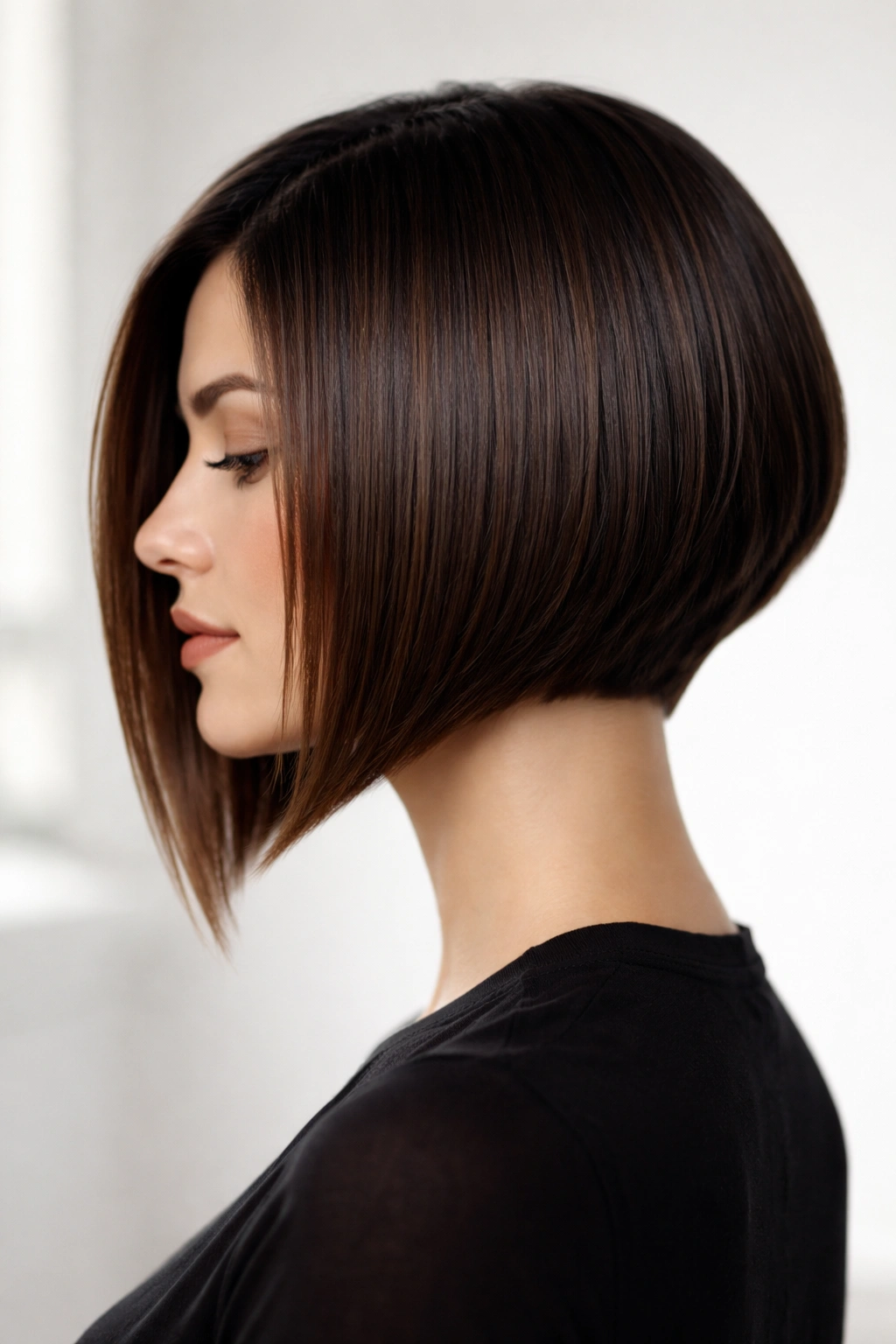
Compared with a blunt bob, the A-line precision bob does something smarter with the profile. The back sits shorter, the front corners stretch longer, and that diagonal gives the haircut a built-in sense of motion even when the styling is simple.
The angle does a lot of heavy lifting. It can make the neck look longer, the face look narrower, and the whole shape feel more purposeful. I’ve always liked this version on hair that tends to puff out at the sides, because the forward length helps pull the shape downward instead of letting it balloon around the cheeks.
Where the angle should sit
- Shorter at the nape
- Longer by 1 to 2 inches at the front
- Sharp enough to read from the side
- Soft enough that it doesn’t look like a triangle
The best A-line bobs do not scream “angled” from across the room. The front corner is there, but it feels clean rather than dramatic. That’s the difference between a polished bob and a haircut that looks like it was designed to make a point.
This cut suits people who want a little more shape than a straight blunt bob gives them, but not a lot of layers. It also grows out more gracefully than a pure chin-length crop, which matters if you dislike frequent salon visits. The angle stays readable for a while, even as the bob gets slightly longer.
5. The Box Bob With a Strong Perimeter
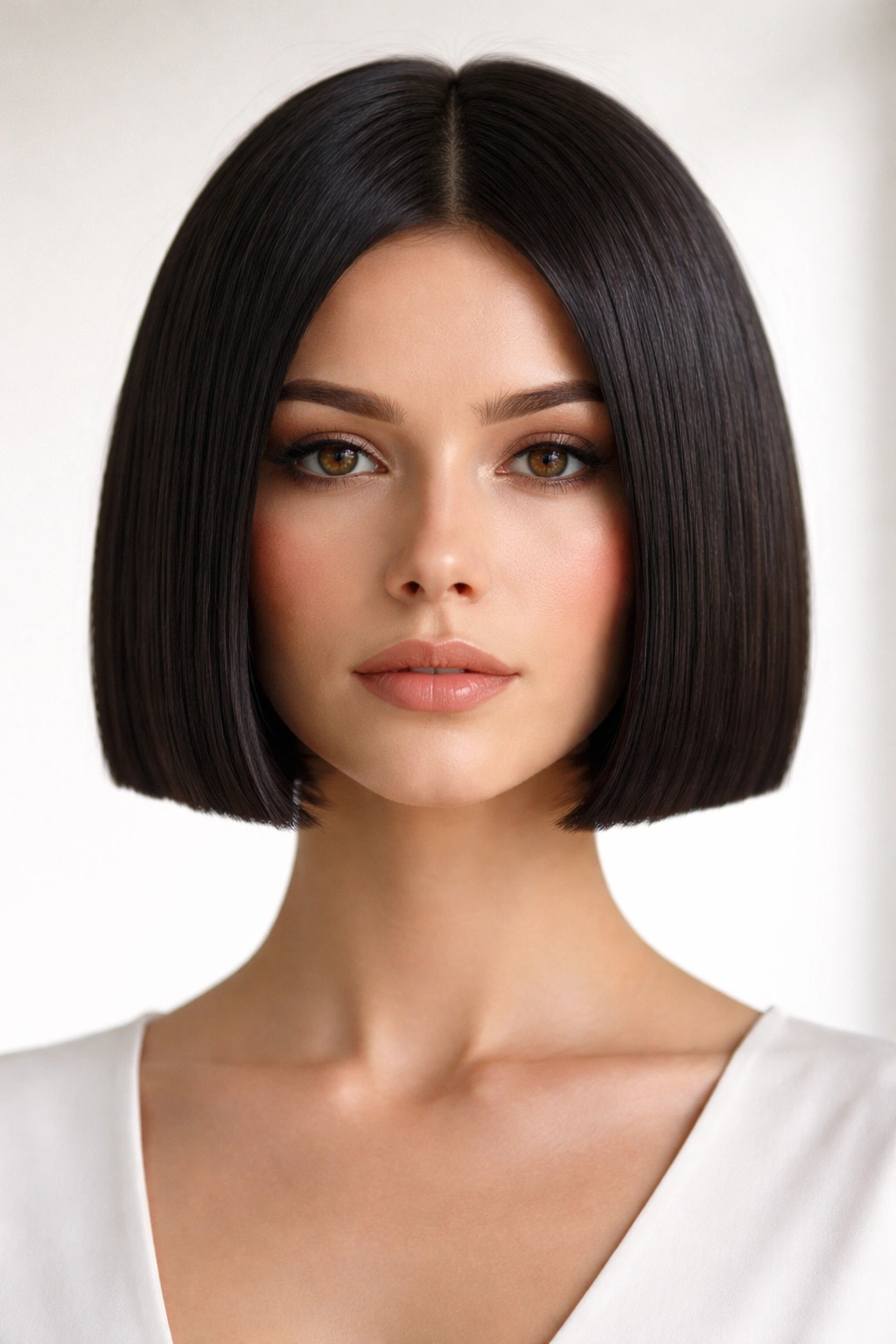
A box bob sounds severe, and that is exactly why it works. The silhouette is square, the sides are full, and the bottom line stays firm instead of tapering away. It’s one of the most graphic precision cut bobs out there, and when it’s done with care, it looks smart rather than harsh.
This shape can be a relief for thick hair. Instead of removing too much weight and leaving the ends fluffy, the box bob holds the bulk in a controlled shape. The trick is to keep the corners clean and the outline smooth, so the haircut feels deliberate from the front and the side.
What makes it different
Unlike a rounded bob, the box bob keeps more width through the cheek and jaw area. That means it can look very polished on someone who wants structure and doesn’t mind a strong outline. It’s especially good when you want the haircut to wear the face instead of disappearing into it.
What to watch for
- Too much bulk at the sides can make it feel helmet-like.
- Over-thinning ruins the square shape.
- A sloppy nape line shows immediately.
- Blow-drying it flat can make it look wider than it is.
A flat brush is usually enough here. If you need heat, keep the movement subtle. You want the cut to look controlled, not blown apart. And if your stylist starts talking about “softening” the perimeter too much, ask a few questions. The perimeter is the whole point.
6. The Micro Bob With a Clean Nape
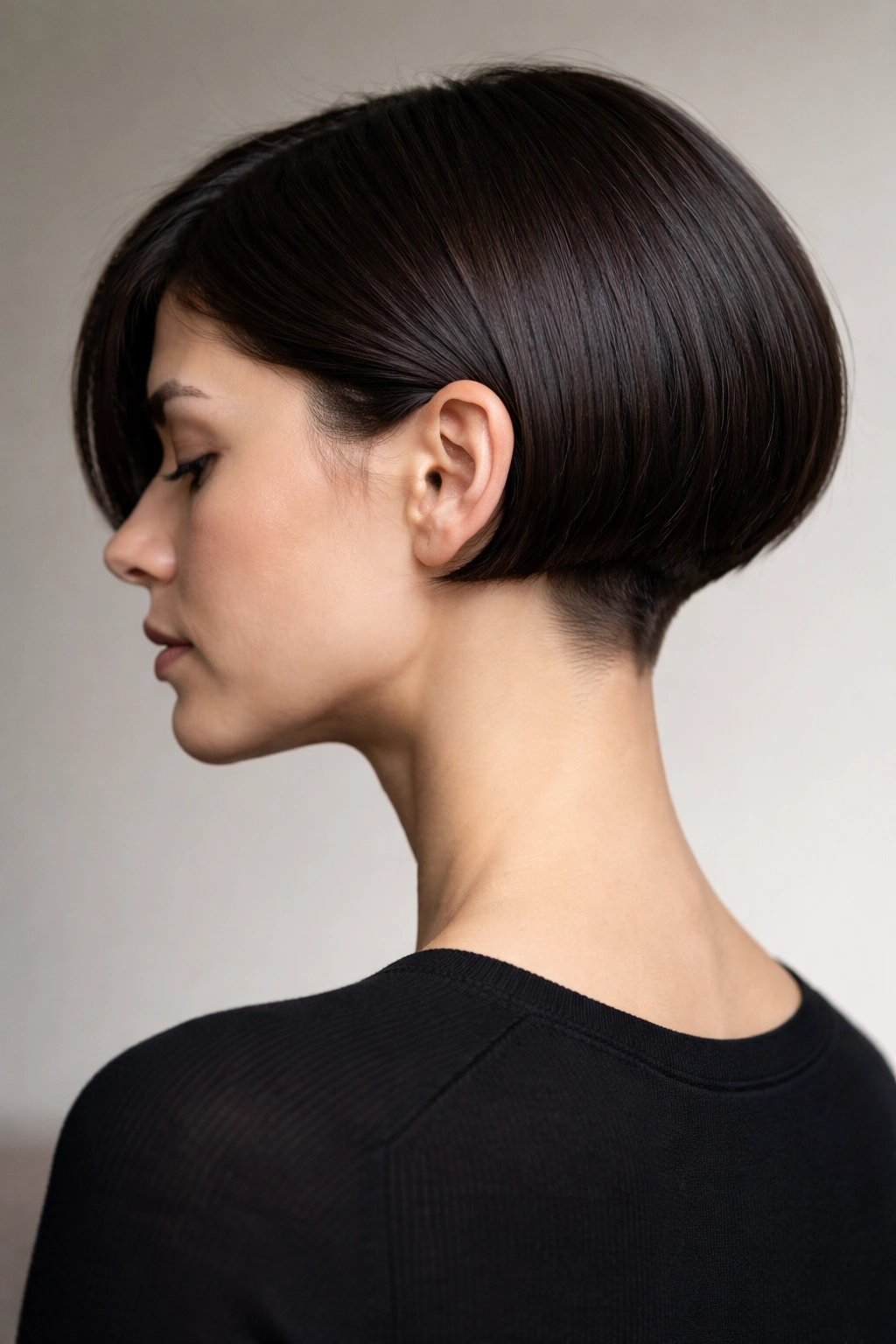
Picture hair that lands right under the ear and clears the collar completely. That’s the micro bob, and it has a ruthless little elegance that a longer cut can’t fake. The nape is visible, the jaw gets all the attention, and the line sits high enough that every millimeter matters.
This haircut is not for people who want camouflage. It shows the neck. It shows the ears if you tuck the hair back. It shows whether the finish was cut cleanly or left fuzzy. But when the shape is right, the result feels sharp in a way that’s hard to beat.
Micro bobs work especially well when the stylist keeps the outline tight and the sides slightly tucked in rather than flaring out. If the ends kick outward, the whole thing can turn cartoony fast. The best version feels clean, close, and intentional.
Short hair also needs upkeep. That is the deal. A micro bob can lose its shape quicker than a collarbone-length cut, so the trim schedule matters more. If you let it go too long, the clean line starts to sag and the haircut loses its clean little snap.
Good fit: straight to softly wavy hair, strong cheekbones, and anyone who likes a short shape that looks neat with almost no styling.
Less forgiving: very dense hair that expands at the sides, unless the cut is handled with real restraint.
7. The Collarbone Precision Bob That Still Feels Light
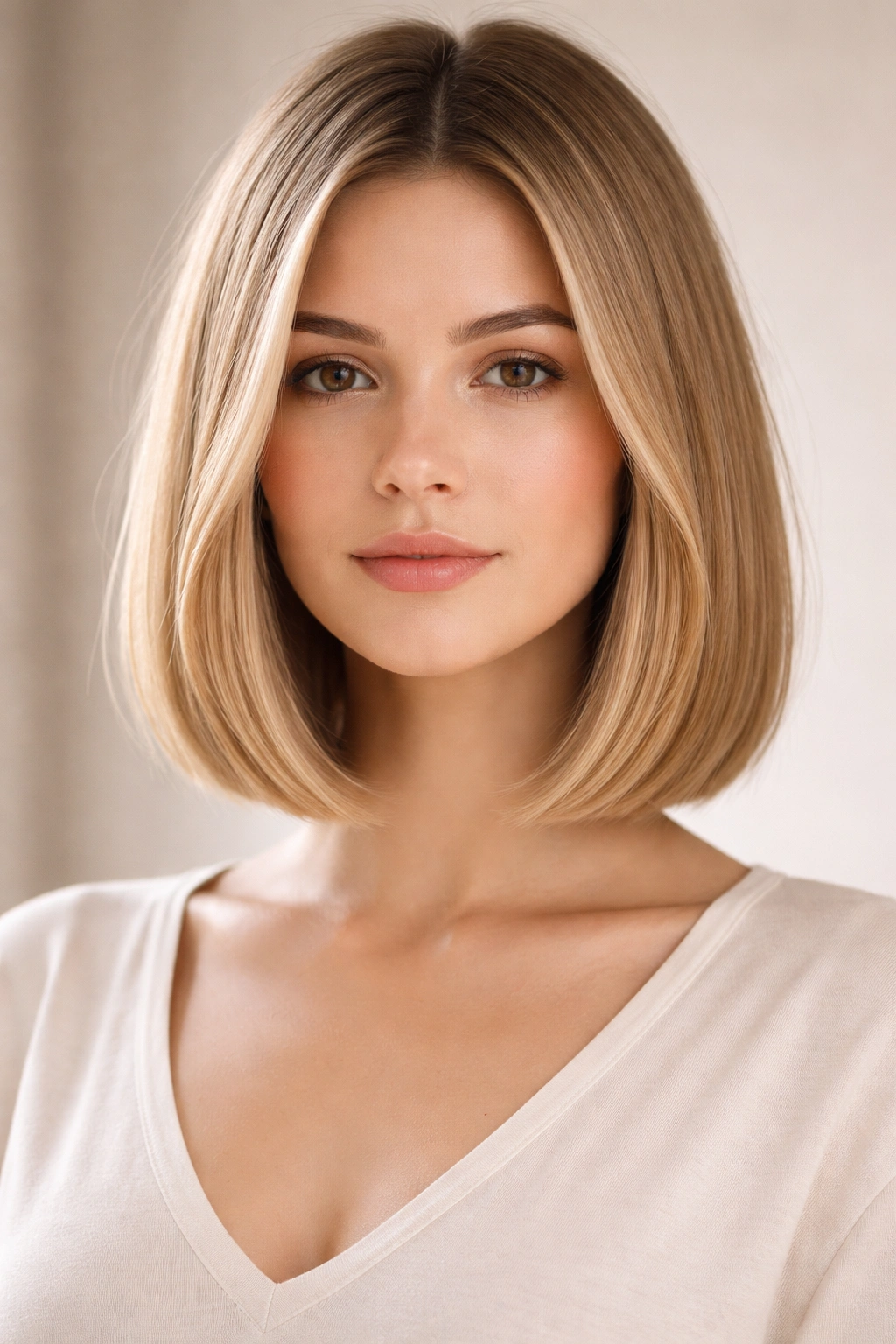
Can a bob still feel polished when it grazes the collarbone? Absolutely. In fact, this is one of the easiest precision cut bobs to live with because it keeps the clean perimeter while giving you enough length to tuck, twist, and tie back when needed.
The reason it works is the line. Even at a longer length, a bob can look polished if the ends are cut evenly and the weight sits in the right place. A sloppy lob often has too many layers and too much feathering around the face. This version does the opposite. It stays tidy, and that’s what gives it structure.
A collarbone bob is forgiving in a practical way. It grows out better than a jaw-length crop, which makes it a smart choice if you like the bob look but do not want to live in the salon chair every month. It can still be styled sleek, but it also looks good with a slight bend from a blow-dryer or a soft wave from a flat iron.
What makes it polished instead of shaggy
- A sharp, even perimeter
- Minimal face framing
- Healthy-looking ends with no wispy thinning
- A clean center or side part, depending on your face shape
This is the bob I’d point to for people who want the finish of a shorter haircut without committing to short-short hair. It has range. And range matters when you want something that looks neat on a Monday and still behaves on a rainy day.
8. The Inverted Bob With a Tucked Back
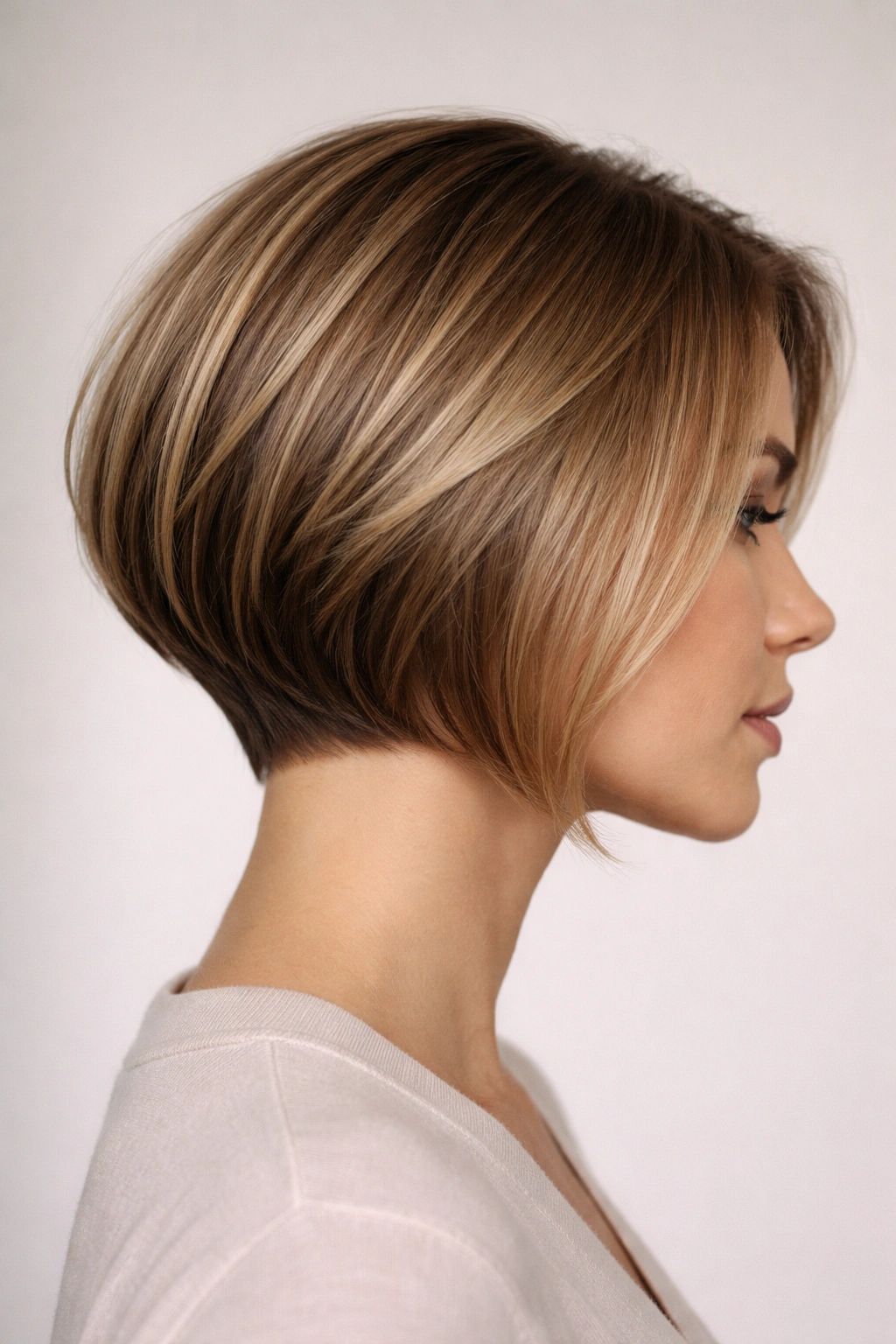
The inverted bob earns its shape from the back, not the front. That’s why it feels so tidy when it’s cut well. The nape sits shorter, the back hugs the head, and the front lengths fall forward with a gentle stretch that gives the haircut movement without chaos.
A lot of people confuse an inverted bob with any old angled bob, and that’s a shame, because the difference is in the graduation. The back should be carefully built so the crown has lift, not bulk. Too much stacking and the whole thing starts looking dated. Too little and the shape loses its spine.
Where the weight sits
The weight should sit high enough at the back to create lift, but not so high that the silhouette balloons. You want the head shape to look clean and the front to swing forward in a controlled way. It should look like the haircut belongs to the bone structure underneath it.
What to ask your stylist
- Graduation at the nape, not a choppy stack
- Longer front pieces that still connect smoothly
- A clean neckline
- A dry finish check, because damp hair can disguise uneven corners
This cut is a strong option for fine hair that needs a little lift at the back. It can also work on thicker hair if the interior is handled carefully. The key is restraint. An inverted bob is at its best when it looks engineered, not overworked.
9. The Precision Bob With Curtain Bangs
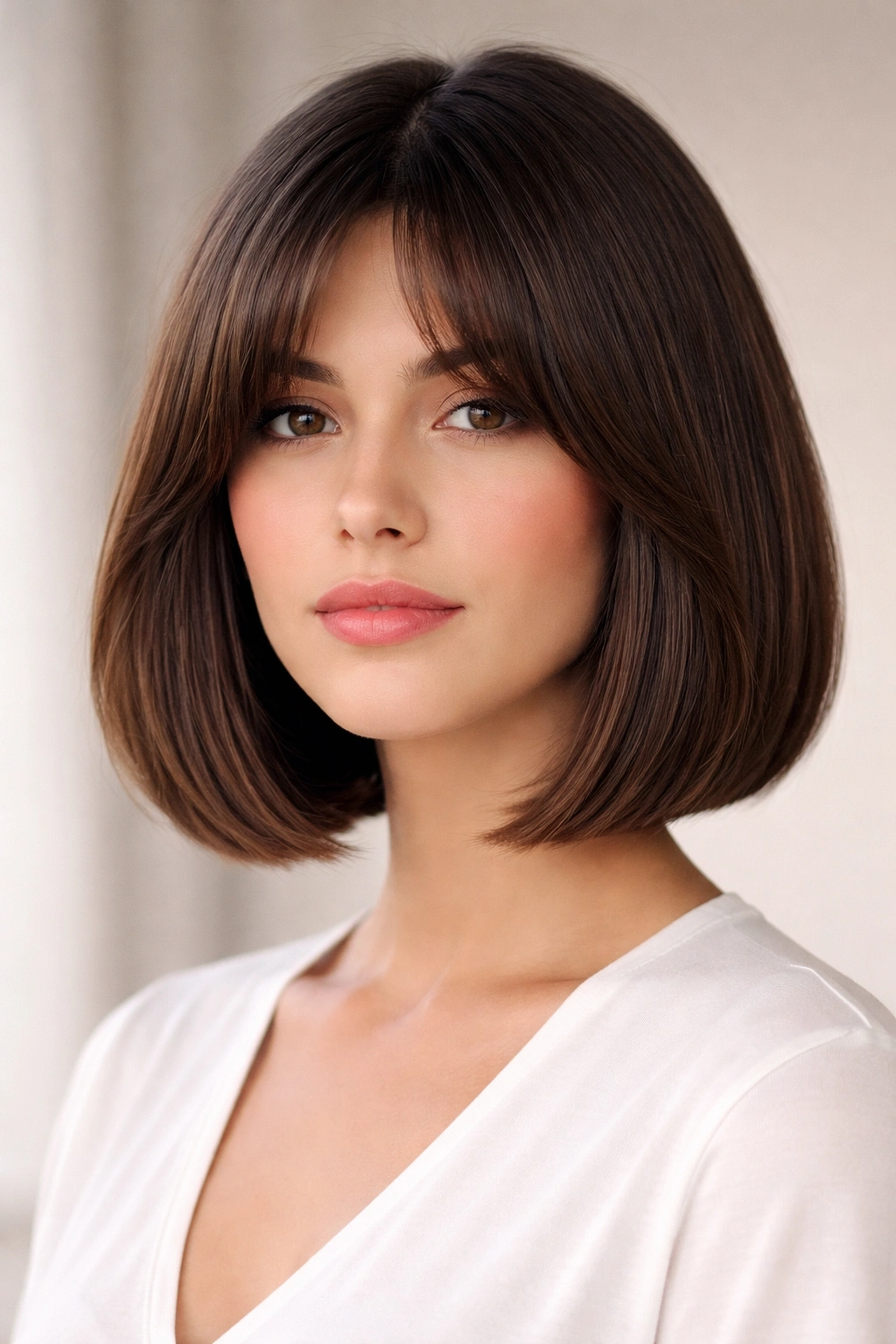
A side part changes everything. So do curtain bangs. Put them with a precision bob and the haircut gets a softer frame without losing the clean edge that makes it polished in the first place.
The bangs should not swallow the bob. That’s the mistake. Curtain bangs work best when they start near the cheekbone or just below it, then open away from the face in a gentle split. If they’re cut too short, they fight the bob’s perimeter. If they’re too thick, they cover the structure you paid for.
The bob underneath still needs to be exact. The ends should sit cleanly, the line should stay readable, and the fringe should feel like an accent rather than a second haircut competing for attention. That balance is what makes the style look expensive.
How to keep the fringe from collapsing
A small round brush helps, but so does a quick blast at the roots with a blow-dryer. Pull the bangs away from the face first, then let them fall open. If you smooth them straight down, they lose the curve that gives curtain bangs their shape.
This version is good for people who want face framing without full bangs. It softens a strong jaw, trims the width of a broad forehead, and gives a plain bob more personality. Not a lot of personality. Just enough. That is usually the smarter move.
10. The Wedge Bob With Controlled Volume
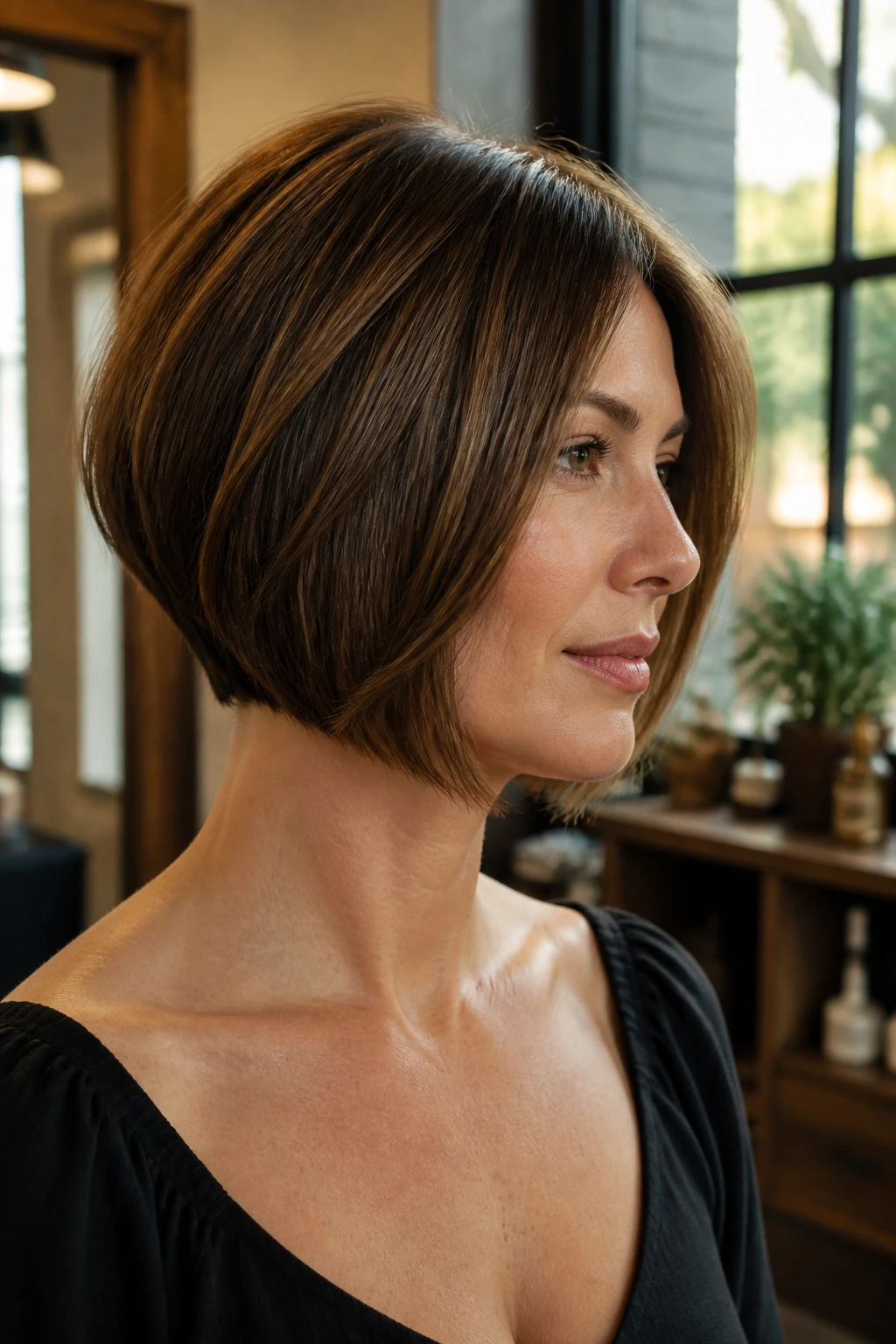
The wedge bob is the quiet workhorse of polished short hair. It gets its lift from the back, its neatness from the sides, and its shape from careful graduation rather than obvious layers. If you like a haircut that looks tidy from every angle, this one deserves a closer look.
It sits somewhere between a classic bob and a stacked shape. The back is shorter, but not aggressively so, and the sides taper forward in a way that keeps the cut compact. On the right hair, that creates a beautiful little curve through the crown without making the haircut puff out.
This is one of the best choices for hair that needs direction. Thick hair can be controlled into a slimmer outline, while finer hair gets a bit of body at the back. The catch is that the geometry has to be precise. A wedge bob that’s cut too short in the nape can feel old-fashioned fast. One that’s too soft loses the whole point.
The easiest way to choose the right precision bob
- Want the sharpest line? Go blunt.
- Want a little angle? Choose the A-line.
- Want neck exposure and a cleaner profile? Try the micro bob.
- Want a softer face frame? Add curtain bangs or a gentle bevel.
- Want movement without losing order? The inverted or wedge bob usually wins.
A precision bob is only as good as its outline, and that’s why these styles hold up. They don’t depend on trend tricks or heavy styling. They depend on clean cutting and a shape that makes sense on your head, not on a mood board.
If you’re sitting in a chair with a stylist and trying to decide which direction to go, start with your hair’s natural behavior. Does it puff out at the sides? Does it collapse at the crown? Does it bend under at the ends or kick outward? Those answers matter more than a photo saved from six different angles. The best bob is the one that looks like it belongs to your hair, not one that fights it every morning.
And that, more than anything, is why precision cut bobs stay useful. They have a point of view. They look tidy, clean, and put together without needing much explanation. That’s a rare thing in hair.
