



A shaggy bob can look like you barely touched your hair and still somehow got it right. That’s the whole appeal. The cut has movement, the ends are broken up, and the shape never feels too stiff or too precious.
But the best shaggy bob cuts are not random layers hacked into a chin-length shape. They’re controlled. A good one still frames the face, keeps the outline on purpose, and leaves enough weight so the hair doesn’t puff out like a mushroom on humid days. That balance is what gives a lived-in look instead of a sloppy one.
I’ve always thought this haircut works because it respects the way real hair behaves. Some strands bend, some lie flat, some stick out a little, and the right bob lets all of that happen without looking unfinished. It’s friendly to air-drying, good with second-day hair, and forgiving when you do not feel like round-brushing every morning.
The trick is choosing the right version for your texture, face shape, and how much styling you’re willing to do. Some shaggy bobs want curtain bangs and salt spray. Others look better with a soft side part and a little cream worked through the ends. The details matter, and the first cut on this list shows exactly why.
1. Soft Feathered Shaggy Bob for Fine Hair
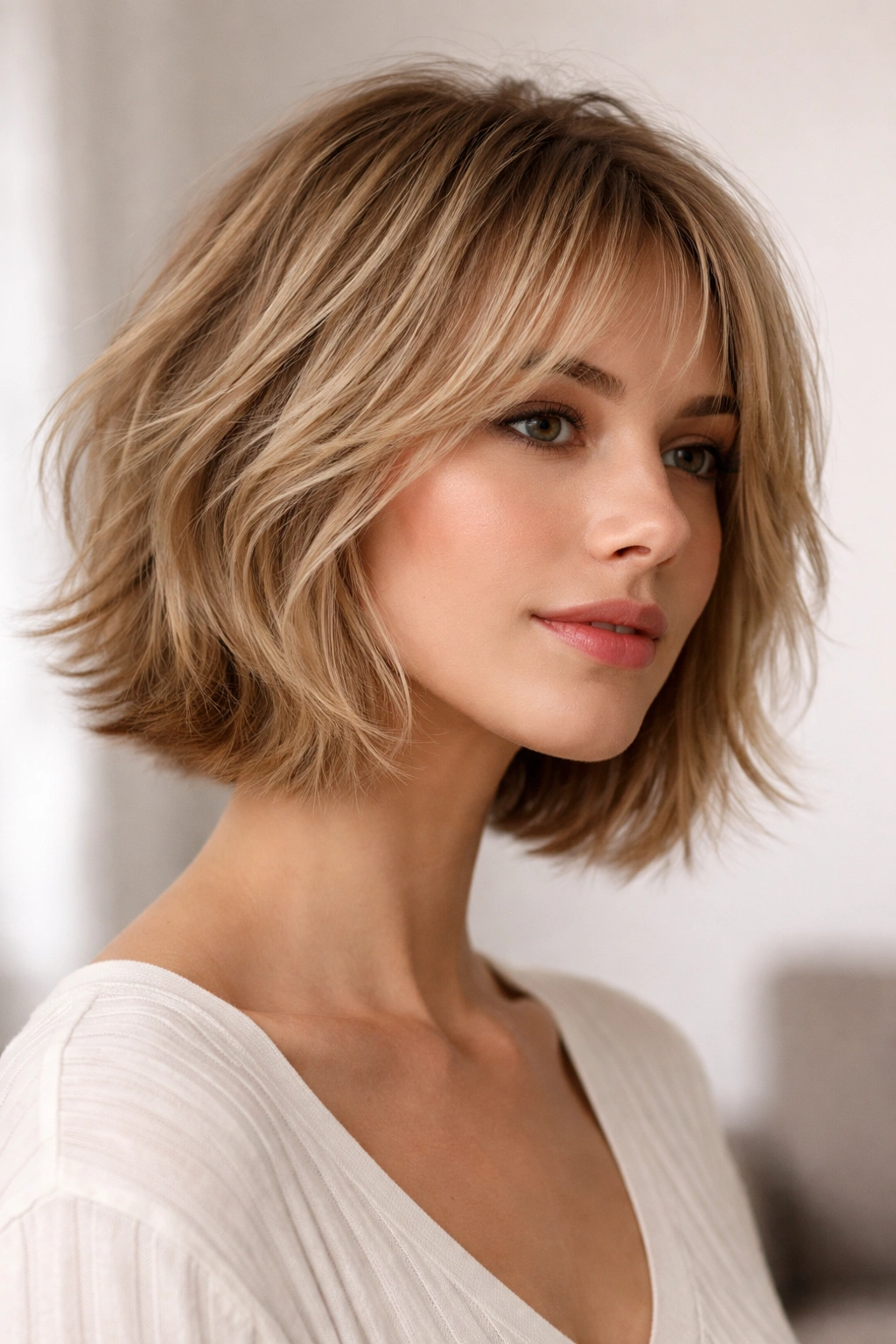
This is the shaggy bob I’d hand to someone who wants movement without losing too much density. The layers are light, the edges are feathered, and the outline stays close enough to the jaw to keep the style from collapsing. Fine hair loves that kind of restraint. Too much slicing and it goes limp fast.
What makes this version work is the balance between lift and weight. Ask for soft interior layers, not a stack of obvious steps. The goal is to let the hair swing a little when you turn your head, not to make every strand compete for attention.
Why it flatters fine hair
Fine strands can look thin if the ends are too wispy. A feathered shaggy bob keeps the perimeter soft but not see-through, which is a small difference with a big payoff. The cut gives the impression of fullness at the cheekbones and collarbone, even when the actual hair density is modest.
A lightweight mousse at the roots helps here. Blow-dry with your fingers until the crown feels dry and slightly lifted, then bend the ends with a round brush or a flat brush if you want less polish. Keep the finish loose. That is the point.
Best for: hair that falls flat at the roots, soft waves, and anyone who likes a neat shape with a little air in it.
2. Choppy French Bob with Airy Bangs
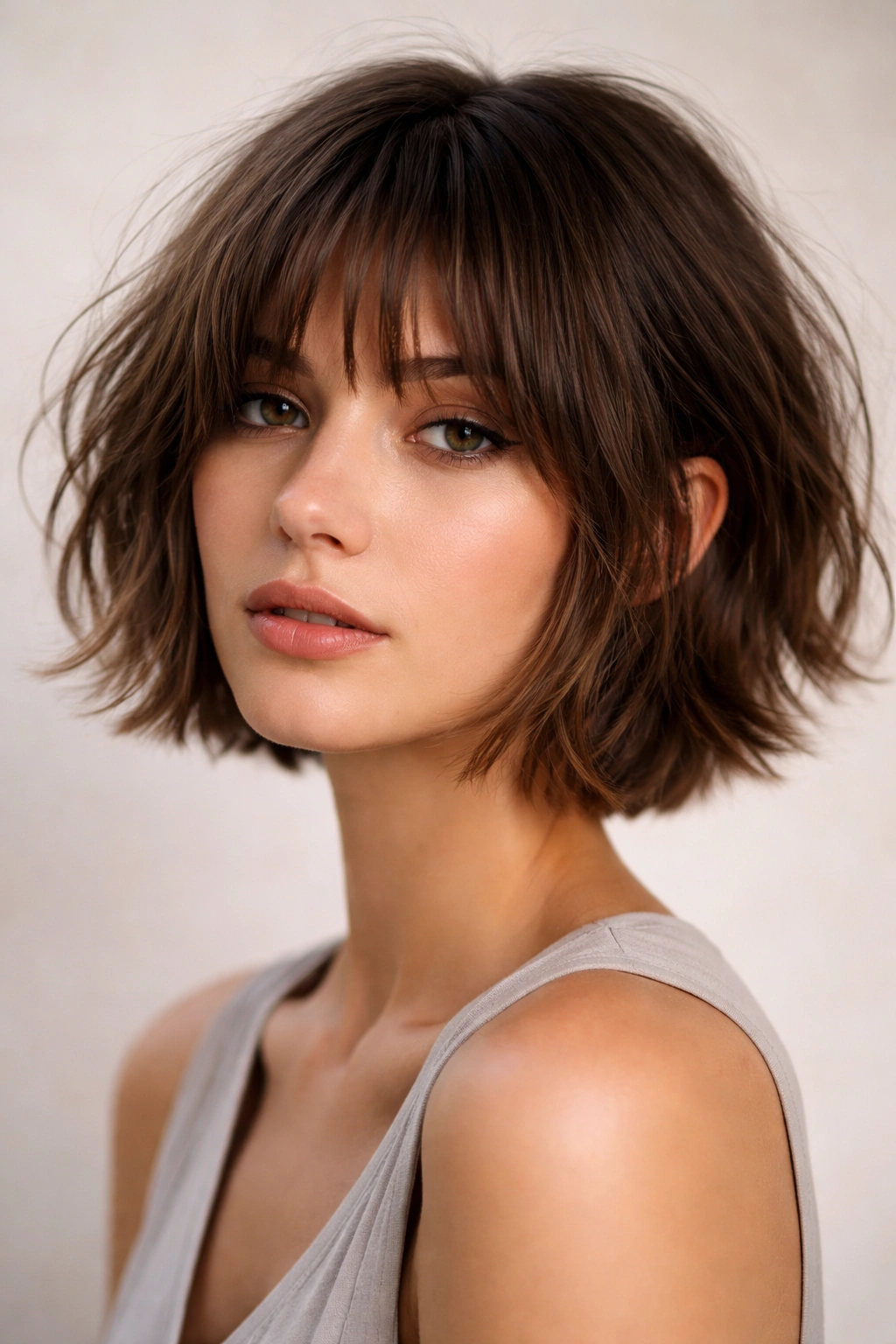
Short, sharp, and a little cheeky. This version sits closer to the cheekbones and uses choppy ends to make the whole cut feel effortless without looking careless. It’s the kind of bob that looks better after you’ve worn a hat, tucked one side behind your ear, or slept on it for an hour too long.
What makes it different
The French bob shape gives structure, but the shaggy part keeps it from feeling boxed in. The bangs are usually soft and airy, not heavy. That matters. Thick, blunt fringe can drag the whole look down, while wispy bangs open the face and make the cut feel lighter.
A slight bend through the mid-lengths helps a lot. You do not need perfect curls. A quick wrap with a 1-inch iron, then a shake-out with your fingers, is usually enough. If your hair is straight and slippery, dry shampoo at the roots gives the style a little grit and keeps it from sliding flat by midday.
How to wear it
- Tuck one side behind the ear for a more casual shape.
- Leave the fringe piecey, not pinned into place.
- Ask your stylist for point-cut ends so the edge feels broken up instead of blunt.
If you want a bob that reads chic but not fussy, this is a strong pick. It has attitude. Not too much. Just enough.
3. Curly Shaggy Bob with Rounded Layers
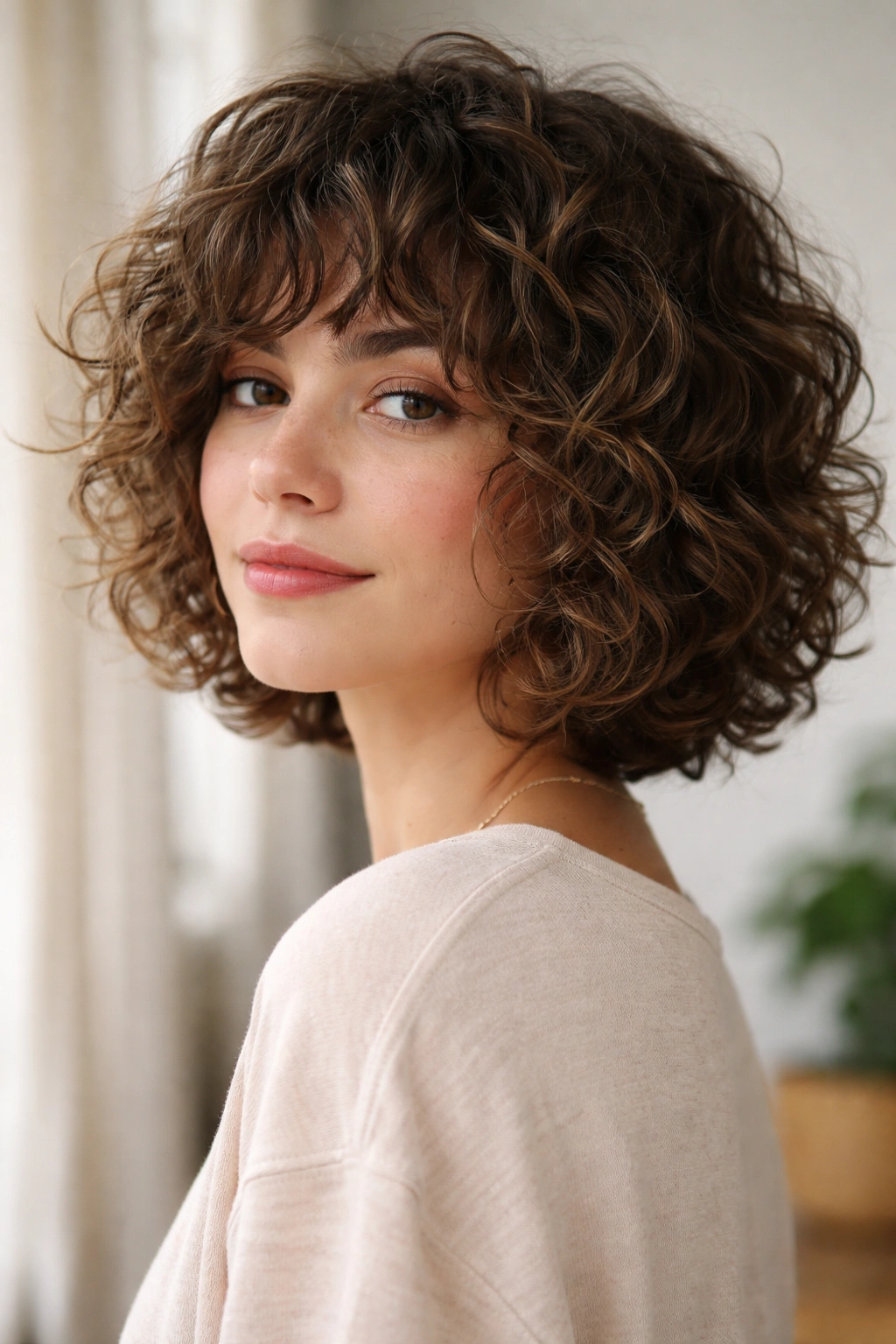
Can curls work in a shaggy bob? Absolutely, and this is where people often get it wrong. A curly bob should not be cut like straight hair with curls tacked on afterward. The shape has to respect the curl pattern, or the result can turn bulky in the wrong places and narrow in others.
This cut uses rounded layers that let curls stack naturally without building a triangle. The perimeter usually sits somewhere between the chin and the upper neck, but the exact length depends on shrinkage. A curly bob almost always looks shorter when dry, so that first consultation matters more than people think.
How to get the shape right
Ask for dry-cutting or at least some shaping while the curls are in their natural state. That helps the stylist see where each curl sits and how much spring it has. If your curls are loose, the layers can be a little longer. If they’re tight, the interior should stay softer so the bob does not balloon out.
Use a curl cream or light gel on soaking-wet hair, then scrunch with a microfiber towel. No rough towel nonsense. It frizzes the cut before you even start. Air-drying works well here, though a diffuser on low heat can help define the top layer without stretching the pattern.
What to watch for
- Too many short layers can create a halo effect.
- Heavy bangs can shrink up awkwardly.
- A little face-framing goes a long way.
Curly shaggy bobs have a lived-in feel built in. They don’t need much persuasion.
4. Collarbone-Length Shaggy Bob with Curtain Bangs
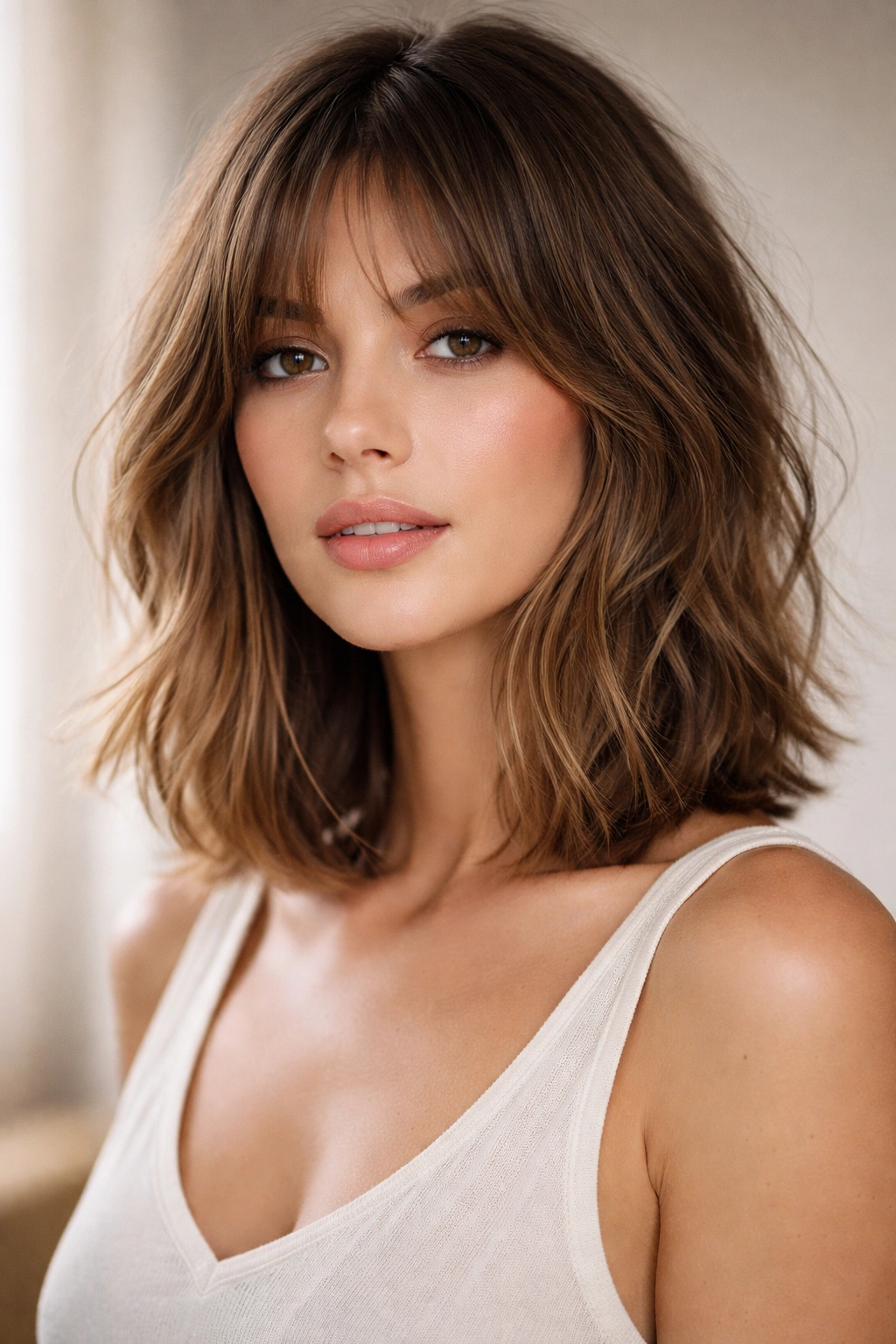
This is the safest bet if you want softness without going short-short. The collarbone length gives the hair room to move, and the curtain bangs help the cut fall around the face instead of straight down. It is flattering on a lot of face shapes because it opens at the center and closes gently at the sides.
I like this version for people who want an easy grow-out. You can tuck it, clip it, wave it, or leave it air-dried and slightly messy. The length buys you flexibility, which matters more than most salon photos admit.
The layers should start around the cheekbone and gradually feather down toward the ends. Nothing choppy for the sake of drama. Too much contrast can make the cut feel disconnected. Here, the charm is in the soft blend.
A medium-barrel curling iron works well if you want a loose bend, but this cut also behaves nicely with a round brush and a quick blow-dry. Keep the front pieces away from the face until they cool. That gives the fringe its curve without making it look curled under like a school picture from the wrong decade.
5. Razor-Cut Shaggy Bob with Broken Ends
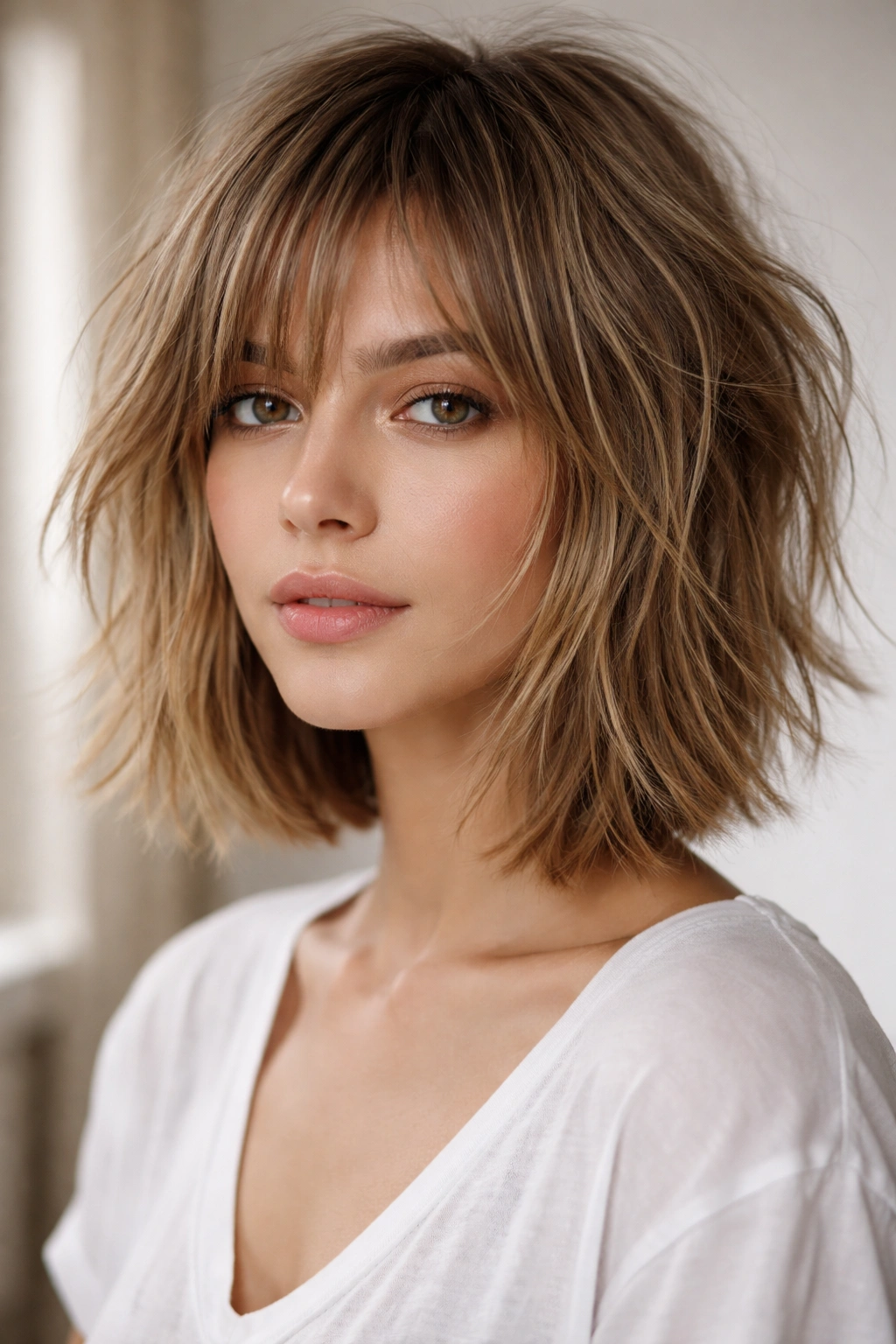
A razor-cut bob has a different energy. The edges look airier, the ends separate more easily, and the shape feels a little cooler without trying too hard. If a pair of scissors gives you a tidy finish, a razor gives you movement. That’s the trade.
What to ask your stylist
Request soft, broken ends and a razor finish only where your hair can handle it. Very fine hair can go too wispy if the razor is used everywhere. Thick hair, on the other hand, often benefits from that softer removal of bulk. The sweet spot is usually through the mid-lengths and perimeter, leaving enough density at the bottom to keep the bob from fraying.
Styling notes
Razor-cut shaggy bobs usually look best with a dry texture spray or a light wax mist. You want separation, not crunch. Work a small amount through the ends with your fingers and stop before the hair starts to feel sticky.
Avoid over-smoothing this cut. That ruins the point. If you flat-iron it to glass, you erase the texture that makes the shape interesting in the first place. A few bendy pieces around the face are better than a perfectly even finish.
This is one of those cuts that looks a little better on day two. The texture settles. The shape loosens. It earns its keep.
6. Piecey Asymmetrical Shaggy Bob
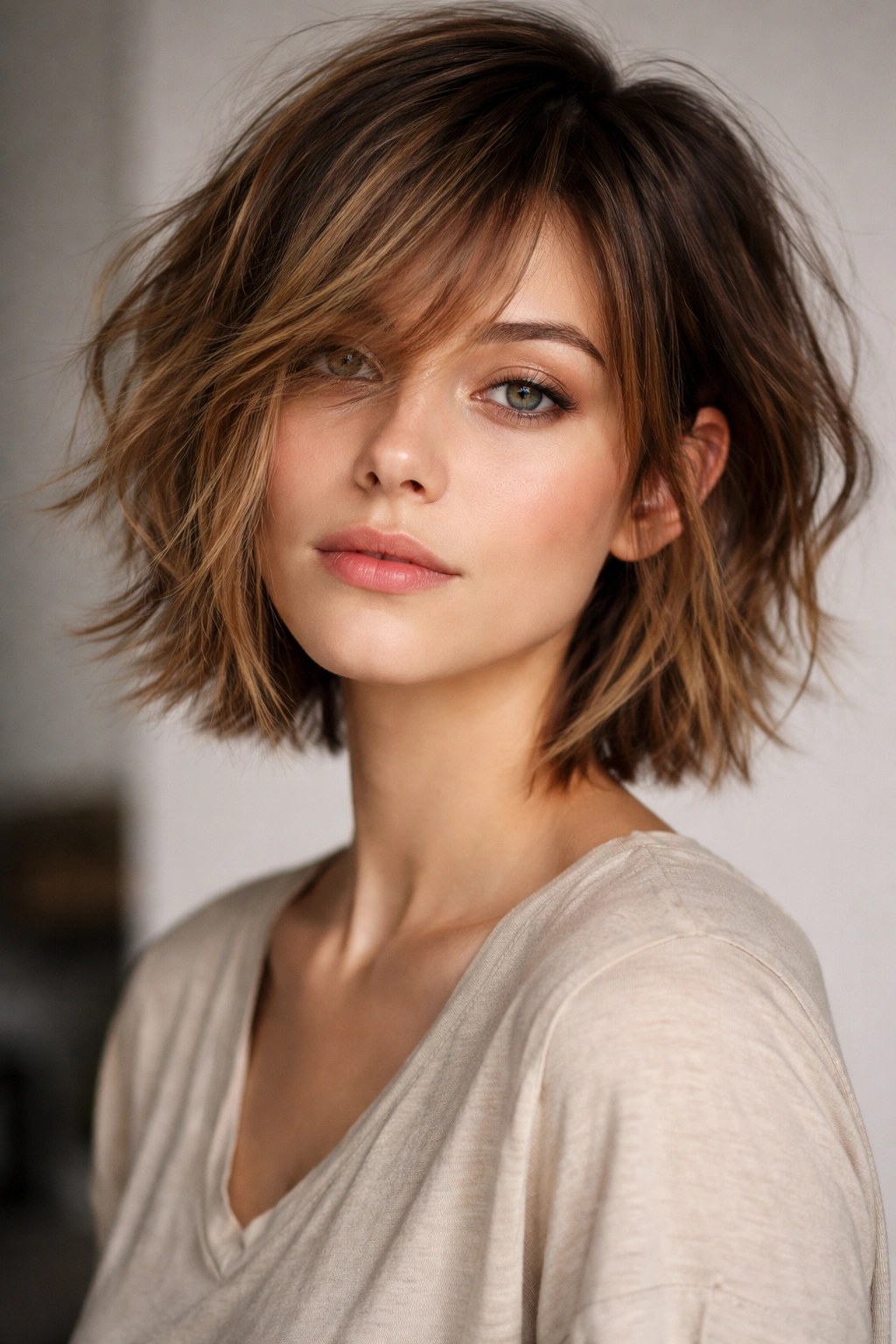
A little imbalance can be a good thing. This cut keeps one side longer or more forward than the other, and the shaggy texture stops it from feeling too severe. The result is a bob with movement and personality, not just a polite haircut that sits there.
The asymmetry does most of the visual work, so the layers should stay soft and directional. One side might skim the jaw while the other drops closer to the neck. That small difference changes the whole mood. Suddenly the bob feels more deliberate, more styled, even when you barely touched it.
Who it suits
People with straight to wavy hair tend to get the most mileage from this shape because the difference in length shows up clearly. If your hair is very curly, the asymmetry can still work, but the cut has to be adjusted for shrinkage and curl pattern. Otherwise the shorter side disappears.
A deep side part makes the asymmetry more obvious, which can be great if you want drama. A softer part keeps it subtle and wearable for everyday life. Either way, this is not a haircut that needs perfect symmetry to feel finished. In fact, it looks better when it doesn’t.
If your wardrobe leans simple and you want the hair to do a little more talking, this one has real range.
7. Tousled Shaggy Bob with Bottleneck Bangs
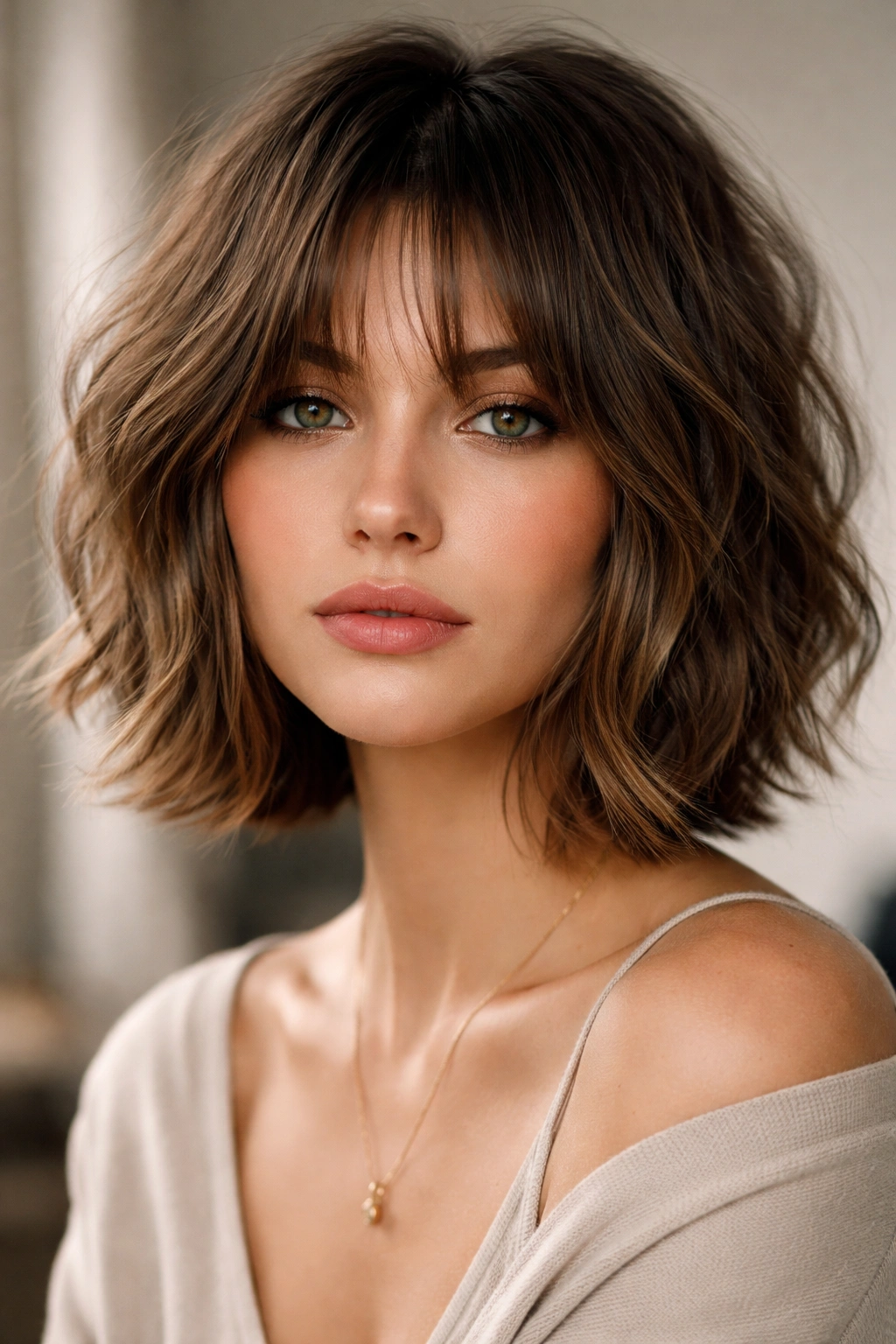
Bottleneck bangs are the happy middle ground between full fringe and curtain bangs. They start a little narrower at the top, then widen around the eyes, which makes them an easy partner for a shaggy bob. The shape draws attention to the eyes and cheekbones without swallowing the forehead.
Why the bangs matter here
A lot of shaggy bobs depend on fringe to keep the cut from feeling too basic. Bottleneck bangs do that job with less drama than a heavy bang and more structure than a wispy split fringe. They also grow out well, which is useful if you hate sitting in a salon every three weeks.
The bob itself should stay touchable and a bit messy. Not chaotic. Just loose enough that the bangs do not look separate from the rest of the cut. A texture cream from mid-length to ends helps connect everything, especially if your hair tends to puff at the sides.
Styling trick
Dry the fringe first. Always. That keeps the bangs from drying in random directions while the rest of the hair still has moisture in it. Then bend the side pieces away from the face with your fingers or a small brush.
- Use a pea-sized amount of cream.
- Keep product off the roots unless they are very dry.
- Separate the fringe with your fingertips after styling, not a comb.
It’s a small thing, but it saves the haircut from looking too neat.
8. Wavy Shaggy Bob with Invisible Layers
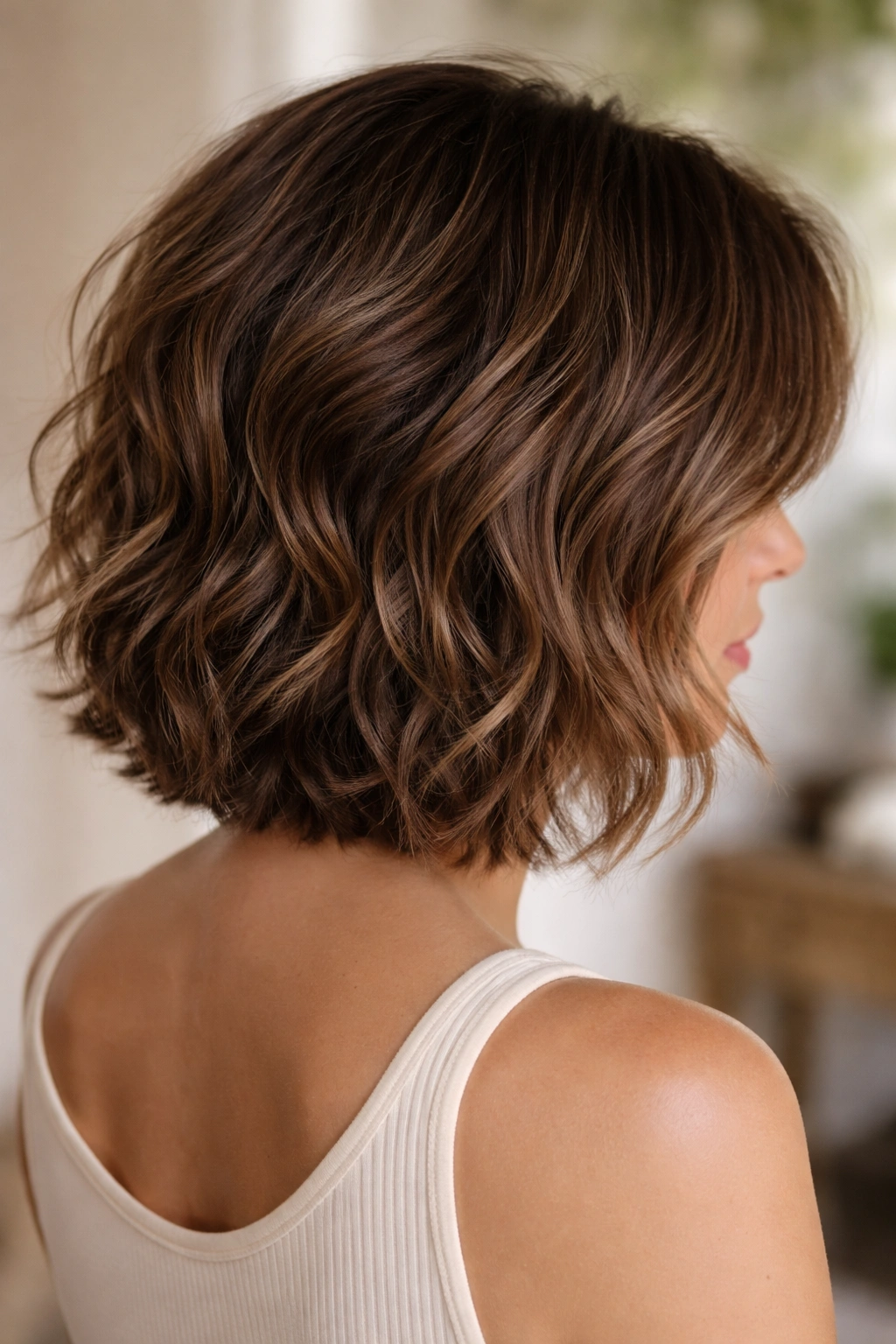
Invisible layers are the quiet hero of a good shaggy bob. You do not always see them, but you feel them when the hair moves. The cut keeps a clean outer line while removing enough weight underneath to make the waves fall in softer bends.
This is the version I’d choose for someone who wants texture without a choppy, heavily styled result. It works especially well on medium-density hair that gets bulky at the ends. The layers live inside the haircut, so the shape still looks full from the outside.
What makes it look expensive without trying
Not that the goal should be expensive-looking hair. Still, there’s a reason this style feels polished. The outline stays deliberate, and the movement happens in the interior. That means the bob can be tossed around a little without falling apart.
A salt spray can help, but use it sparingly. Too much and the ends dry out and go fuzzy. I prefer a light mist on damp hair, then a rough blow-dry with fingers until the waves start to form. If the hair is already naturally wavy, let it air-dry halfway before you touch it.
The best part? It grows out gracefully. Hidden layers do not scream for attention, which is handy when you want the haircut to last past its first perfect day.
9. Mullet-Inspired Shaggy Bob with Extra Crown Volume
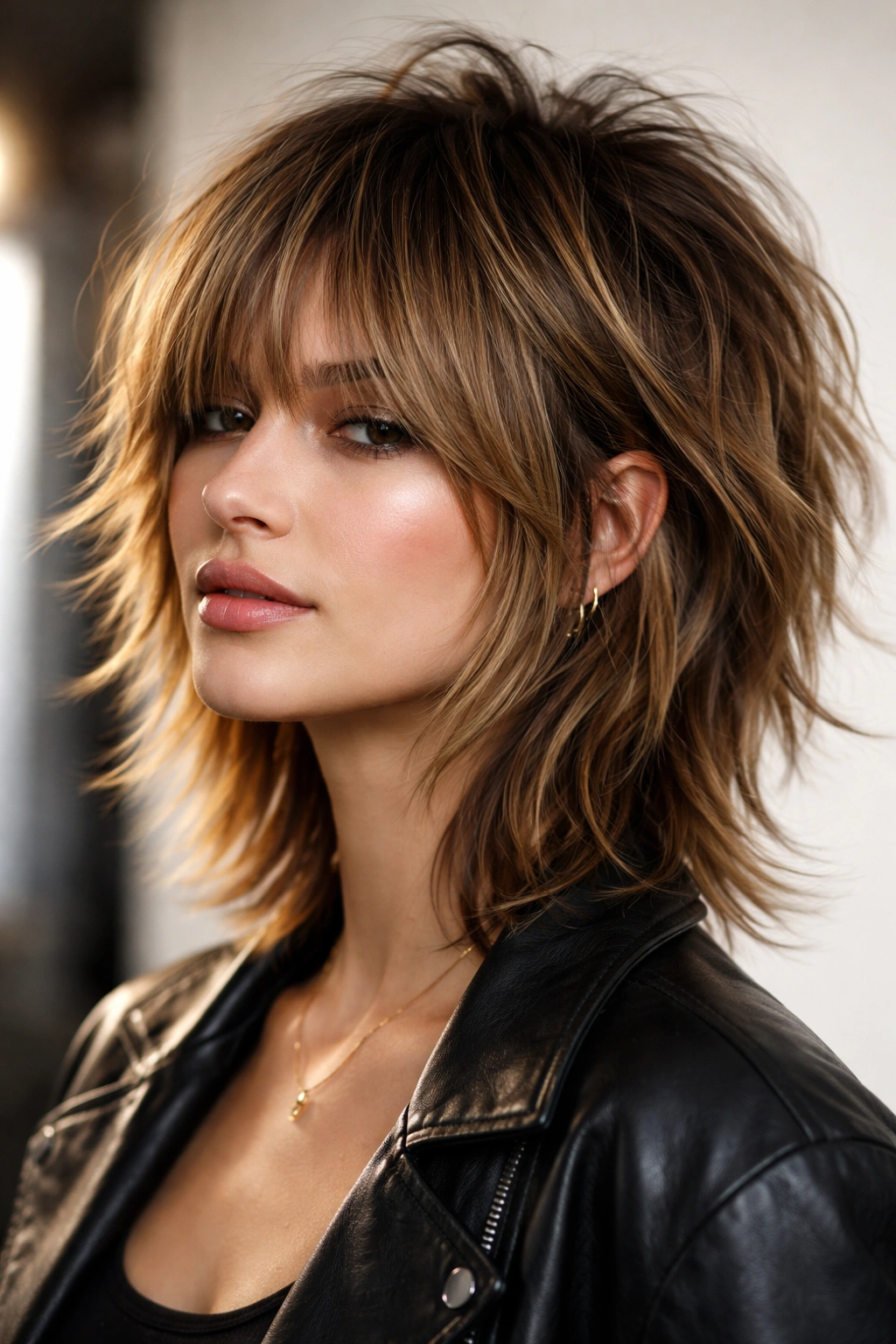
This cut is for someone who likes a little edge and does not mind hair with opinions. The front is usually softer and shorter, while the back keeps more length and lift at the crown. It borrows the attitude of a mullet but reins it in enough to stay wearable.
The shape in plain English
Think volume at the top, movement through the sides, and a bit more length in the back than a classic bob. The result is shaggy, not sloppy. When the cut is done well, the top lifts off the head and the back swings instead of sitting flat.
This shape loves texture paste and a little root lift. You do not need a ton. A tiny amount rubbed between your palms and pressed into the crown can be enough to wake the haircut up. If your hair is fine, a volumizing spray at the roots before drying will help keep the top from collapsing.
- Best on straight or wavy textures
- Works well with a deep side part
- Needs some confidence. Not a lot, but some.
I wouldn’t call this the most understated option on the list. It is, however, one of the most fun. And fun matters.
10. Chin-Length Shaggy Bob with a Side Part
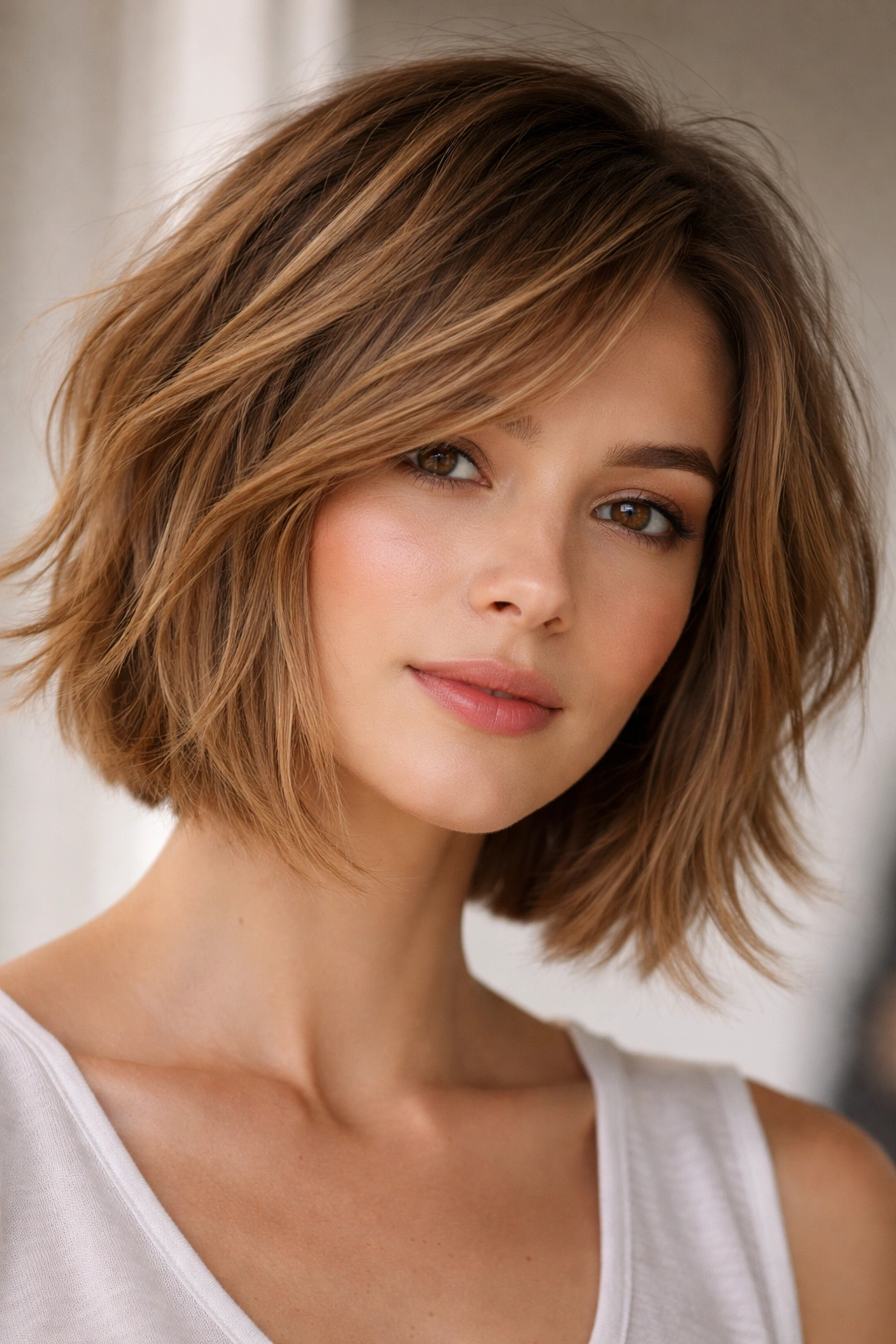
A side part changes everything. On a chin-length shaggy bob, it shifts the weight, softens the forehead area, and gives the haircut a more relaxed line. It’s a simple move, but simple is not the same thing as boring.
The cut itself should stay fairly compact, with light layers at the ends and a little softness through the top. Chin length is tricky because the shape sits right where the jaw is most visible. That can be flattering or harsh depending on how the layers fall. A side part helps tilt the balance toward softness.
If your face is round, this version can create a nice vertical line. If your face is angular, it softens the edges a bit. If you like wearing earrings, this cut also frames them nicely. Small detail. Big visual payoff.
Styling move
Dry the heavier side forward first, then sweep it across once it’s almost dry. That gives the part a little root memory. Finish with a flat brush or your fingers, depending on whether you want polish or a messier finish.
This is the bob I’d suggest when you want texture, but you still want to look like you brushed your hair at some point.
11. Inverted Shaggy Bob with Soft Stacked Back
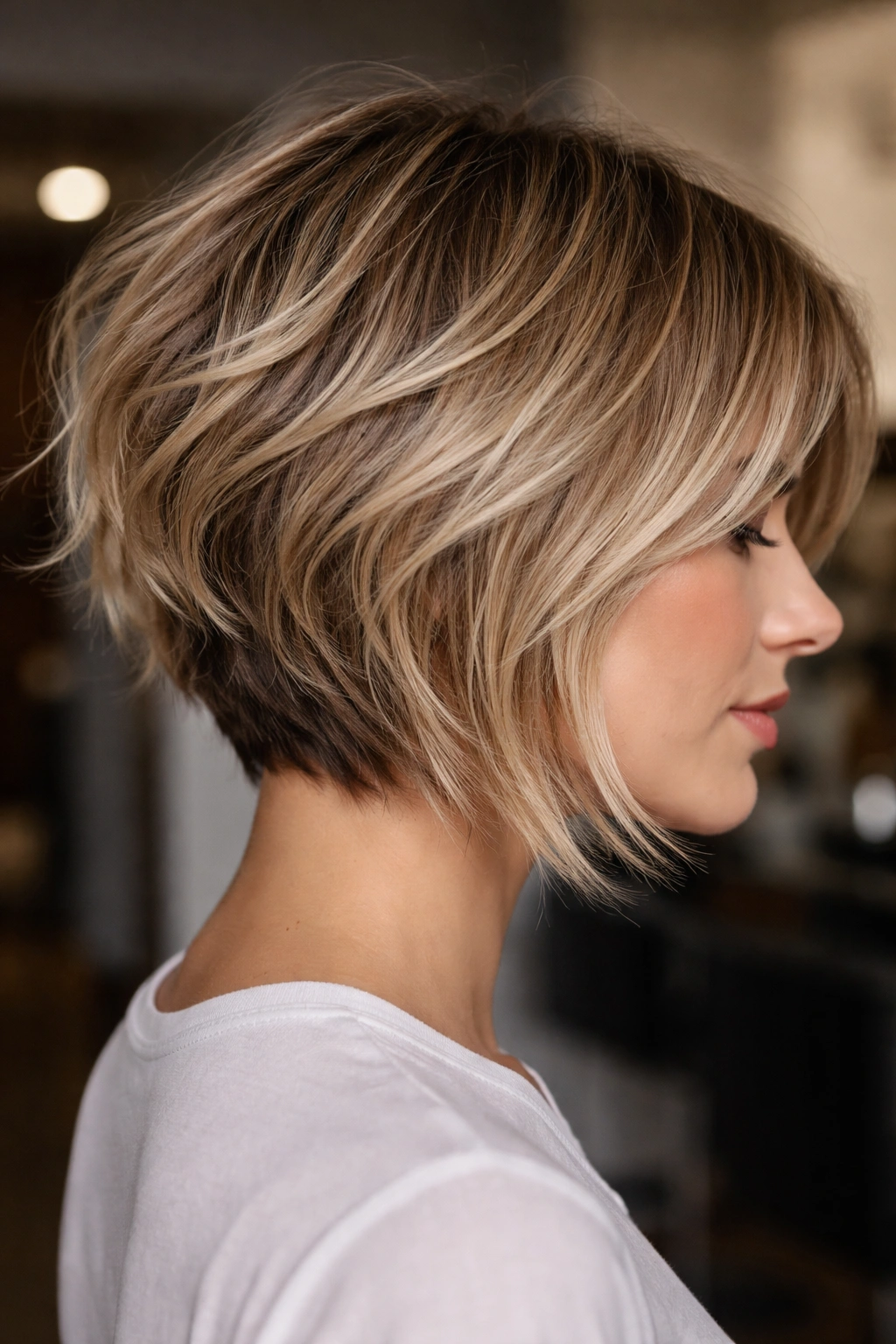
The inverted bob already has shape built into it. The back sits a little shorter, the front runs longer, and the silhouette naturally angles forward. Add shaggy layers to that structure, and you get a cut that lifts at the nape without feeling stiff.
Why it works on thick hair
Thicker hair can turn bottom-heavy fast. An inverted shaggy bob solves that by taking some bulk out of the back while keeping the front pieces long enough to drape around the face. The layers create air between the strands, which keeps the haircut from feeling like a helmet.
A blow-dry with a paddle brush works well if you want the back smooth and the front soft. If you prefer a messier finish, scrunch the ends with a light styling cream and let the shape do its own thing. Either way, the cut should show movement from the side view. That’s where it wins.
What to avoid
- Too much graduation in the back can look dated.
- Over-thinning the ends makes the shape collapse.
- Flat ironing every strand defeats the point.
This one is sharper than the softer shaggy bobs, but still easy enough to live with. That mix is rare.
12. Thick-Hair Shaggy Bob with Internal Weight Removal
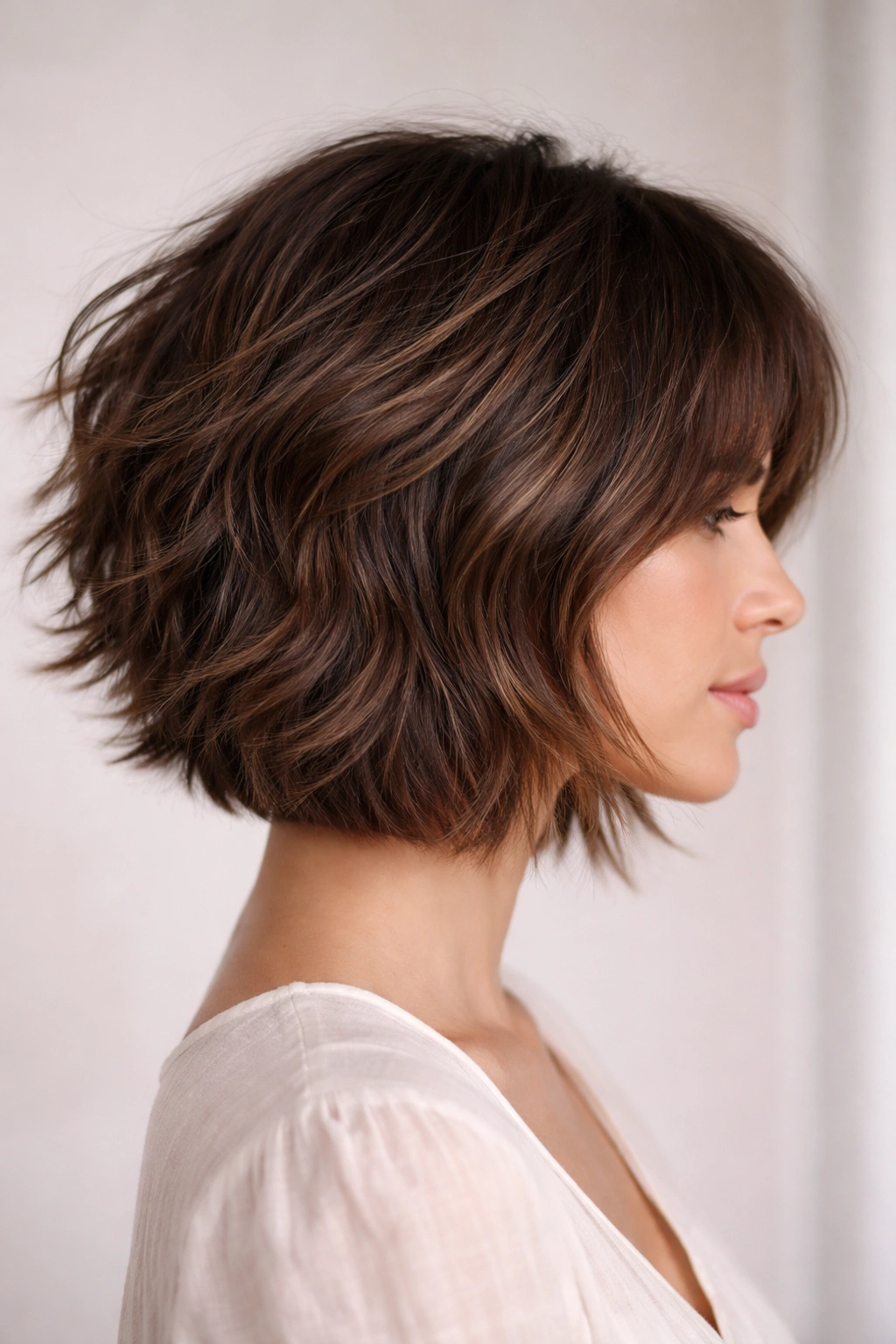
Thick hair needs a different kind of respect. You can’t just layer it to death and hope for the best. The smarter move is internal weight removal, which means taking bulk out from the inside while leaving the outer shape clean and controlled.
That’s what makes this shaggy bob feel wearable. It stays full, but it doesn’t sit like a block. The ends move, the sides bend, and the crown doesn’t puff out quite so aggressively. Anyone with thick hair knows that’s not a small detail.
Best way to cut it
Ask for long internal layers and a perimeter that still feels solid. The stylist should shape the hair so the outer line remains recognizable while the inside is opened up. If the hair is cut too aggressively, it can get frizzy and uneven at the ends, especially when it dries.
A smoothing cream at the mid-lengths can help keep the shape from expanding too much. I’d also skip heavy oils near the roots. They can weigh the cut down and make the top lose the very lift you wanted in the first place.
In practice
- Great for dense straight hair.
- Also works on thick waves.
- Needs a stylist who understands bulk control.
This is one of those haircuts that looks easier than it is. The right version takes restraint.
13. Fine-Hair Shaggy Bob with a Blunt Perimeter
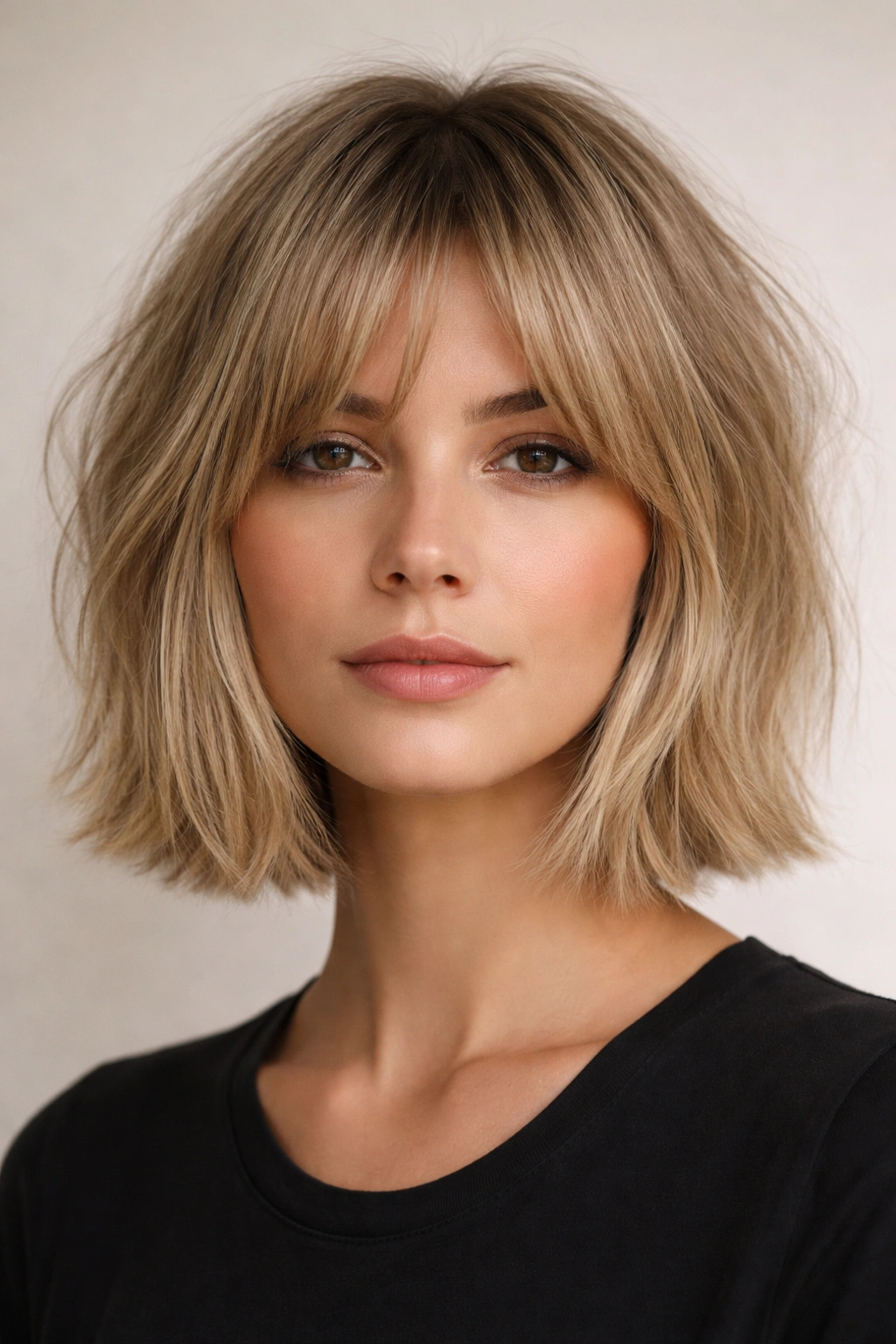
A lot of people with fine hair think they need endless layers. Usually, they do not. A blunt perimeter with soft shaggy movement inside often gives a better result because it keeps the ends looking full while still adding texture where it counts.
That blunt edge is the anchor. It prevents the haircut from going stringy. Then the shag elements—light layers, a bit of face framing, maybe a soft fringe—bring the lived-in feel. It is a clever setup, and it works.
The styling payoff
This bob looks especially good when blown dry with a slight bend at the ends. The blunt base makes the style appear thicker, while the shaggy interior keeps it from feeling flat or helmet-like. If your hair is very silky, a little root powder or dry texturizing spray at the crown helps the style hold shape longer.
A lot of stylists overdo layers on fine hair. I’m not a fan of that. The haircut ends up looking airy for one day and sparse for the next. A stronger outline is usually the better bet.
One good rule: if the ends start to look see-through, the cut has gone too far. Keep the edge.
14. Air-Dried Shaggy Bob for Natural Texture
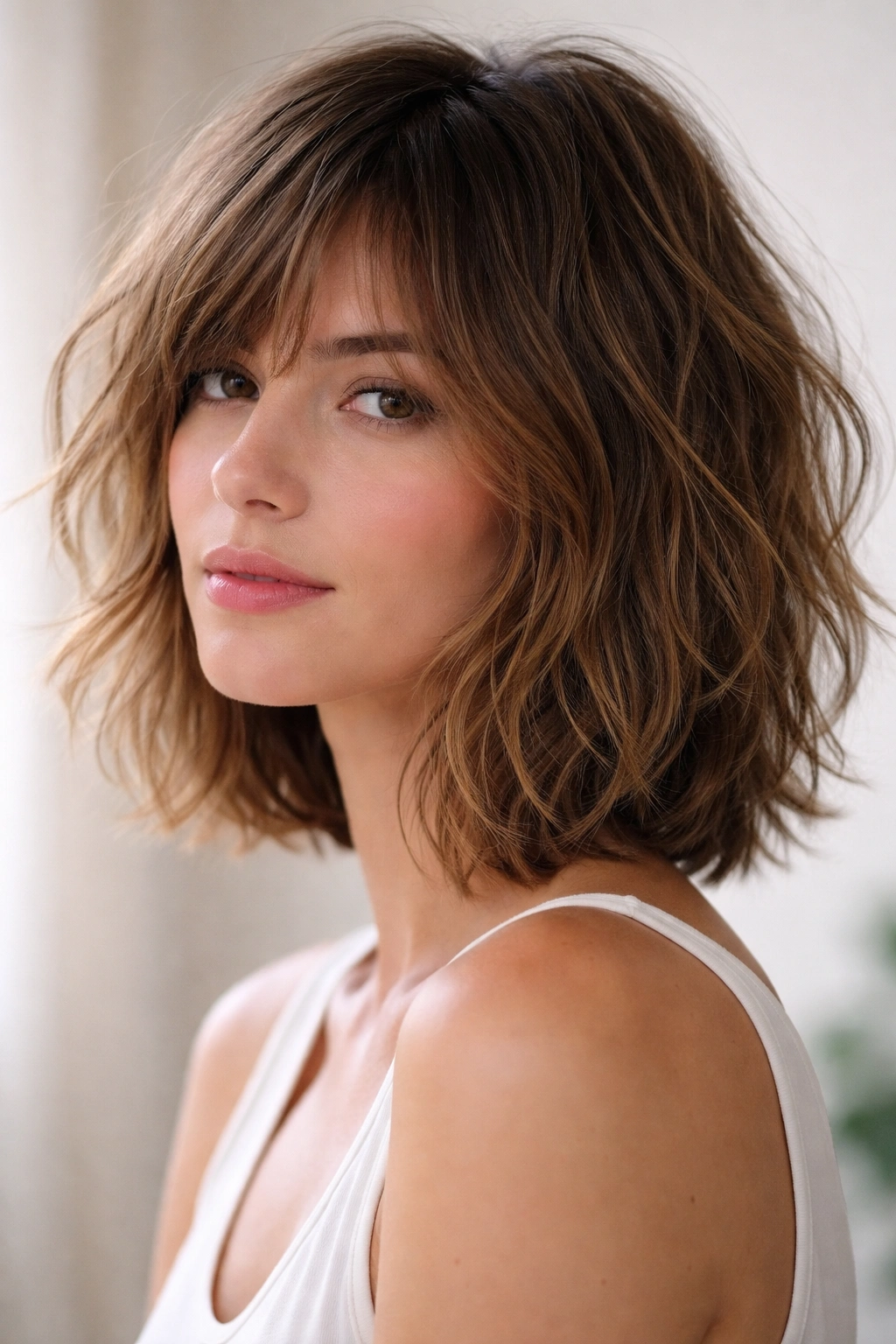
Why fight your own hair? If you already have a little wave, bend, or roughness in the texture, the air-dried shaggy bob may be the easiest cut on this list. It’s built to look better when it’s not over-managed.
The key here is shape. The haircut needs enough structure that it still looks intentional once the hair dries on its own. Soft layers around the face help, and the perimeter should sit in a place where the hair naturally wants to fall. If you cut against your pattern, you’ll spend every morning trying to fix it.
Best styling habits
Start with a leave-in conditioner on damp hair, then add a small amount of mousse or curl cream depending on whether your texture leans straight-wavy or wavy-curly. Scrunch the ends, twist a few face-framing pieces, and leave it alone. Seriously. The more you touch it while it dries, the frizzier it gets.
If your hair is prone to flattening at the roots, clip the crown up for a short while after applying product. It helps the top dry with a little lift instead of clinging to the scalp.
This is the haircut for people who want their hair to look like hair, not like a polished object.
15. The Grown-Out Shaggy Bob That Still Looks Intentional
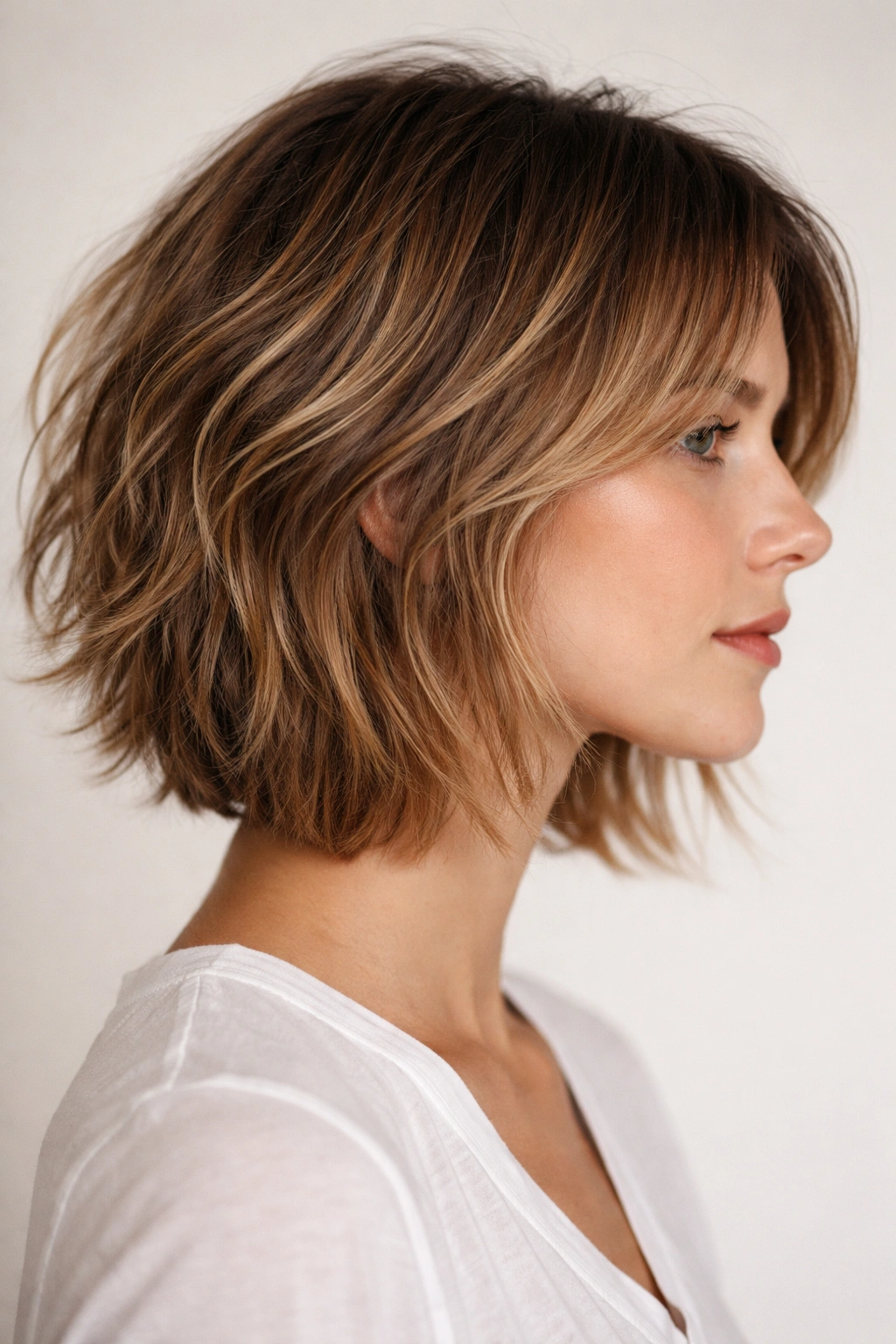
The best shaggy bob isn’t always the freshest one. Sometimes it’s the version that’s grown just enough to soften the edges, drop a little lower around the neck, and settle into its own shape. That slightly lived-in stage can be the sweet spot.
This cut depends on a perimeter that stays strong even as the layers loosen. The front pieces may fall closer to the collarbone, while the back keeps enough shape to avoid looking like an awkward in-between length. If your hair grows fast, this is the version that gives you a little breathing room between trims.
Why it’s the most forgiving option
A grown-out shaggy bob is easier to tuck, braid, clip, or air-dry. It doesn’t demand perfect styling because the whole point is that the haircut already has some motion built in. The layers aren’t shouting. They’re working quietly in the background.
If you want it to look tidy, smooth the top with a round brush and leave the ends piecey. If you want it looser, mist on a texturizing spray and squeeze the mid-lengths with your hands. Either way, it should look like the haircut has lived a little.
That’s a good thing. Hair with a little history tends to look better than hair that is trying too hard.
Final Thoughts
A shaggy bob works when the cut has shape and the texture has room to breathe. That’s the real secret, if you want to call it one. The style only looks relaxed because the structure underneath is doing its job.
The smartest choice is the one that matches your hair’s natural habits. Fine hair usually needs a stronger outline, thick hair needs bulk removed from the inside, and curls need a cut that respects shrinkage instead of fighting it. Get that part right and the rest gets easier.
And if you’re stuck between two versions, pick the one that still looks good after a long day. That tends to be the haircut you’ll actually keep wearing.
