



A bob with a hard color line can look busy fast. The same cut, softened with a careful ombre, suddenly looks deliberate, especially when the color shift follows the shape of the haircut instead of fighting it.
That’s why ombre bob cuts work so well. Short hair gives you less room to hide a clumsy transition, so the blend has to be clean at the roots and believable through the ends. A good bob color should look like it grew that way, not like two separate dye jobs taped together.
The trick is choosing the right contrast for the cut you already have. A blunt jaw-length bob can carry a tighter fade; a stacked or rounded bob often needs more dimension through the back; wavy bobs can handle a softer, airier melt because the movement does part of the work.
Some people want brightness near the face, others want a darker base with just enough lightness at the bottom to keep the haircut from feeling heavy. Both can work. The difference is in where the color starts, where it peaks, and how much upkeep you can live with between salon visits.
1. Soft Caramel Ombre Bob With a Root Melt
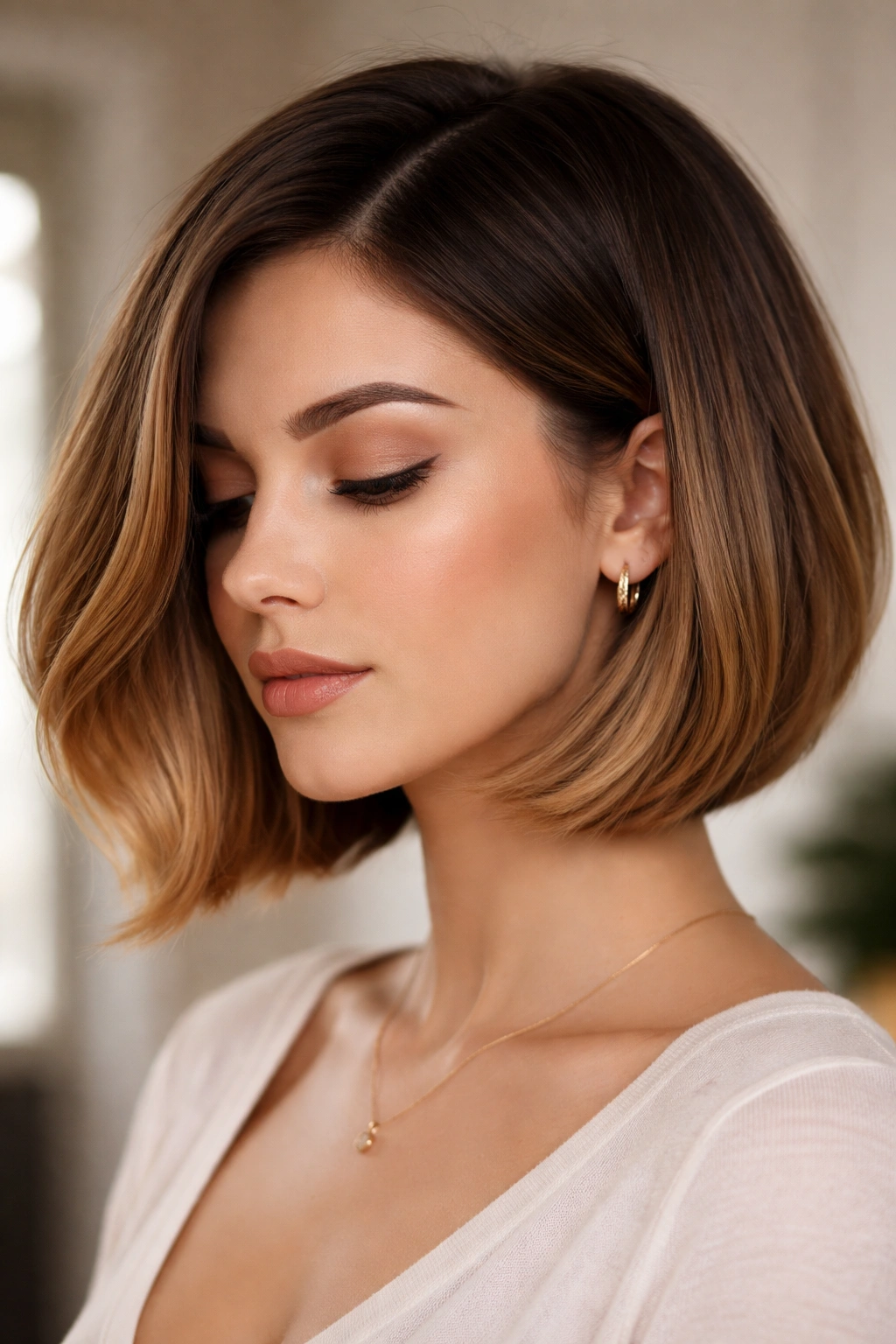
This is the easiest ombre bob to wear if you want color that looks polished without looking loud. A deep brunette root that slips into warm caramel through the midlengths gives a chin-length bob a softer edge, and that matters more on short hair than people think.
Why It Works on a Chin-Length Bob
The bob itself does the shape work; the ombre just has to echo it. When the fade starts low and stays gradual, the eye moves down the cut instead of stopping at a harsh line. That makes the whole style look more expensive, even if the haircut is pretty straightforward.
Ask for a root melt about 1 inch below the part, then let the caramel build slowly through the ends. If the lightest pieces sit only at the bottom inch or two, the result stays soft instead of stripey. Fine hair gets a little extra fullness from the contrast, and medium hair tends to show the blend nicely around the jaw.
- Best on chin-length or slightly longer bobs
- Works especially well with straight, slightly bent, or loose-waved textures
- Ask your colorist to keep the root 1 to 2 shades deeper than the mids
- A gloss every 6 to 8 weeks keeps the caramel from turning dull
Pro tip: If your hair is naturally dark, keep the caramel in the warm chestnut family, not the pale beige family. The result looks softer and is easier to grow out.
2. Ash Brown to Beige Blonde Blunt Bob
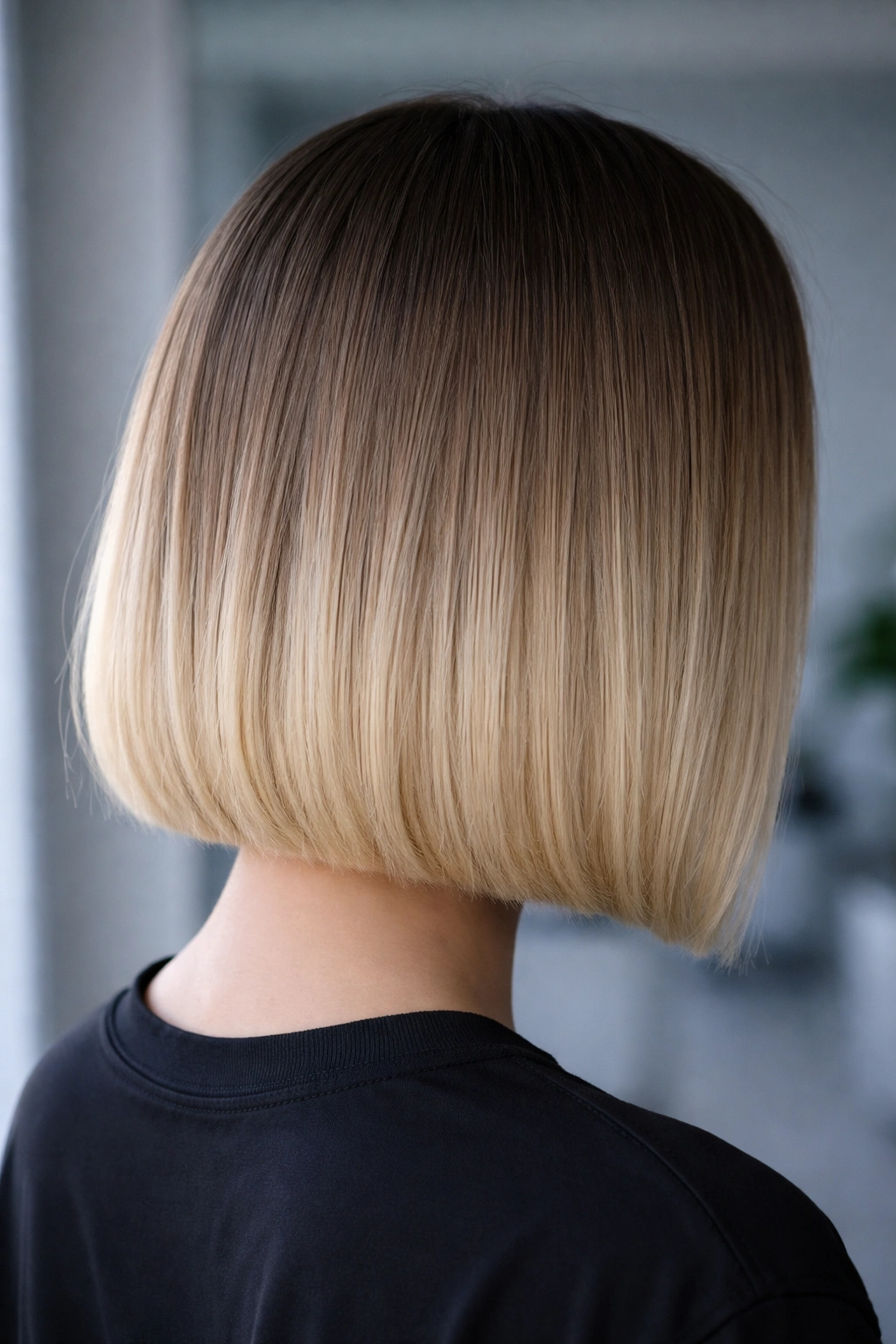
Want a bob that feels crisp rather than sugary? This is the one. A blunt cut paired with a cool ombre gets its power from contrast: ash brown at the top, beige blonde toward the ends, and no fuzzy border between the two.
The blunt edge is what makes this color story work. On a layered cut, that much coolness can feel scattered. On a straight, even bob, it reads clean and sharp, almost tailored. The beige blonde keeps the look from turning severe, which is the trap people fall into when they go too icy.
I like this combination on hair that naturally lies flat or hangs in a smooth sheet. The color creates the movement that the cut does not. If your hair is thick, ask for the lightest color to stay a little lower on the length so the top doesn’t puff out visually. If your hair is fine, keep the ash soft rather than smoky-dark; too much depth can swallow the shape.
The maintenance is not tiny, though. Cool blonde ends need toner, and blunt bobs show every inch of regrowth. That is the trade-off. If you want a look that stays polished between trims, this one delivers, but only if you stay on top of the tone.
3. Copper Fade on a Rounded Bob
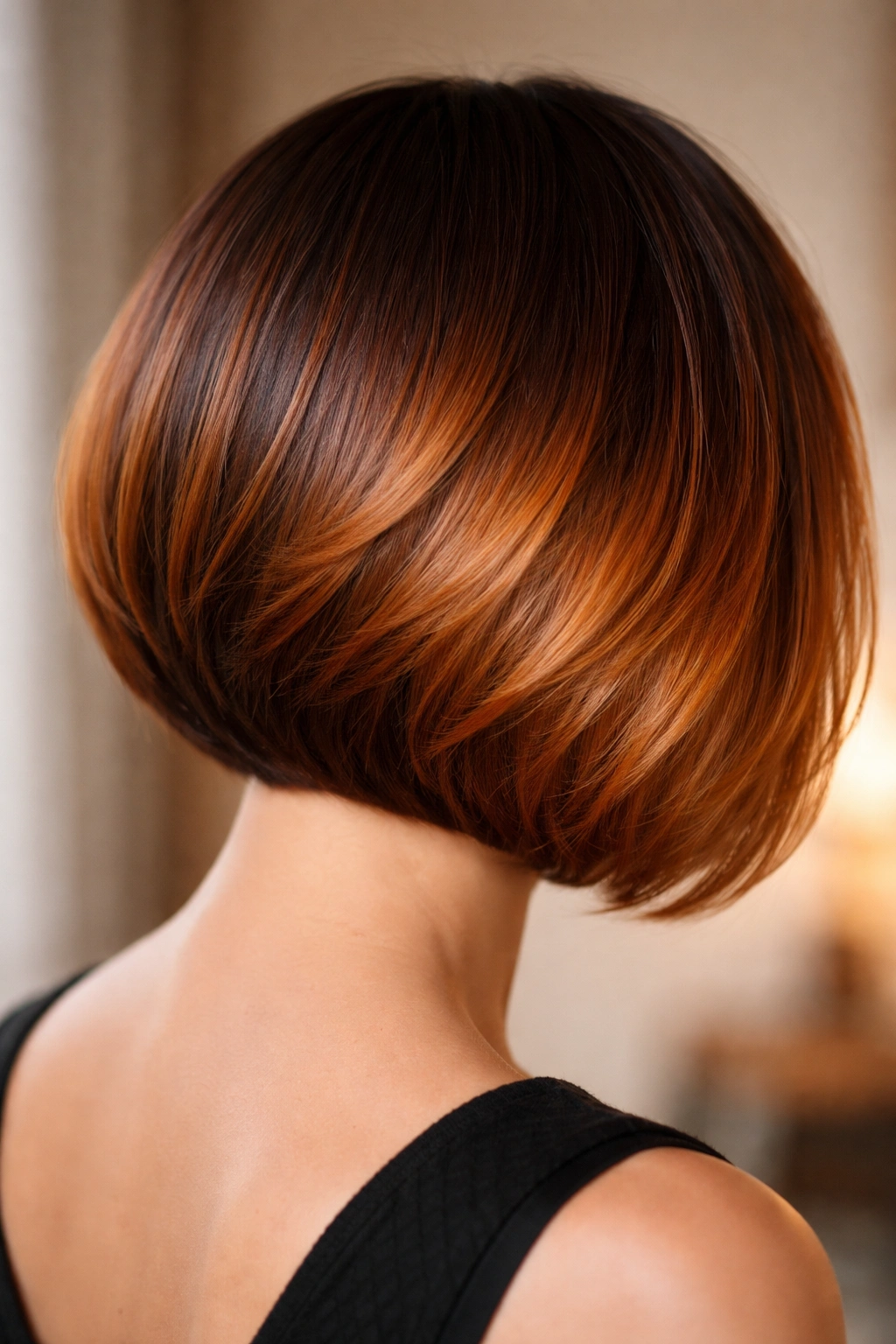
A rounded bob and copper ends make each other look warmer. That sounds obvious, but it’s the reason this style works so well: the curve of the haircut picks up the glow of the color, and the color keeps the shape from feeling stiff.
The Shape Does the Heavy Lifting
Rounded bobs already have a built-in softness at the perimeter, so a copper fade doesn’t need to fight for attention. Start with a richer brunette or auburn root, then let the copper build through the mids before landing in a gold-leaning finish at the ends. The best versions of this look have depth first and brightness second.
Copper is especially kind to short hair because it reflects light even when the cut is simple. You do not need curls or a lot of styling for it to show up. A quick blow-dry with a round brush, or a loose bend with a 1-inch iron, is enough to make the color shift visible.
- Ask for warm copper, not bright orange
- Keep the fade concentrated from midlength to ends
- A clear gloss helps the copper stay shiny between salon visits
- This looks strongest on neutral, warm, and deeper skin tones, though a cooler copper can work for lighter complexions too
The one thing I would avoid is letting the ends get too pale. Copper on a bob wants richness. When it gets washed out, the whole cut starts to look flatter than it should.
4. Mushroom Brown Ombre on a Layered French Bob
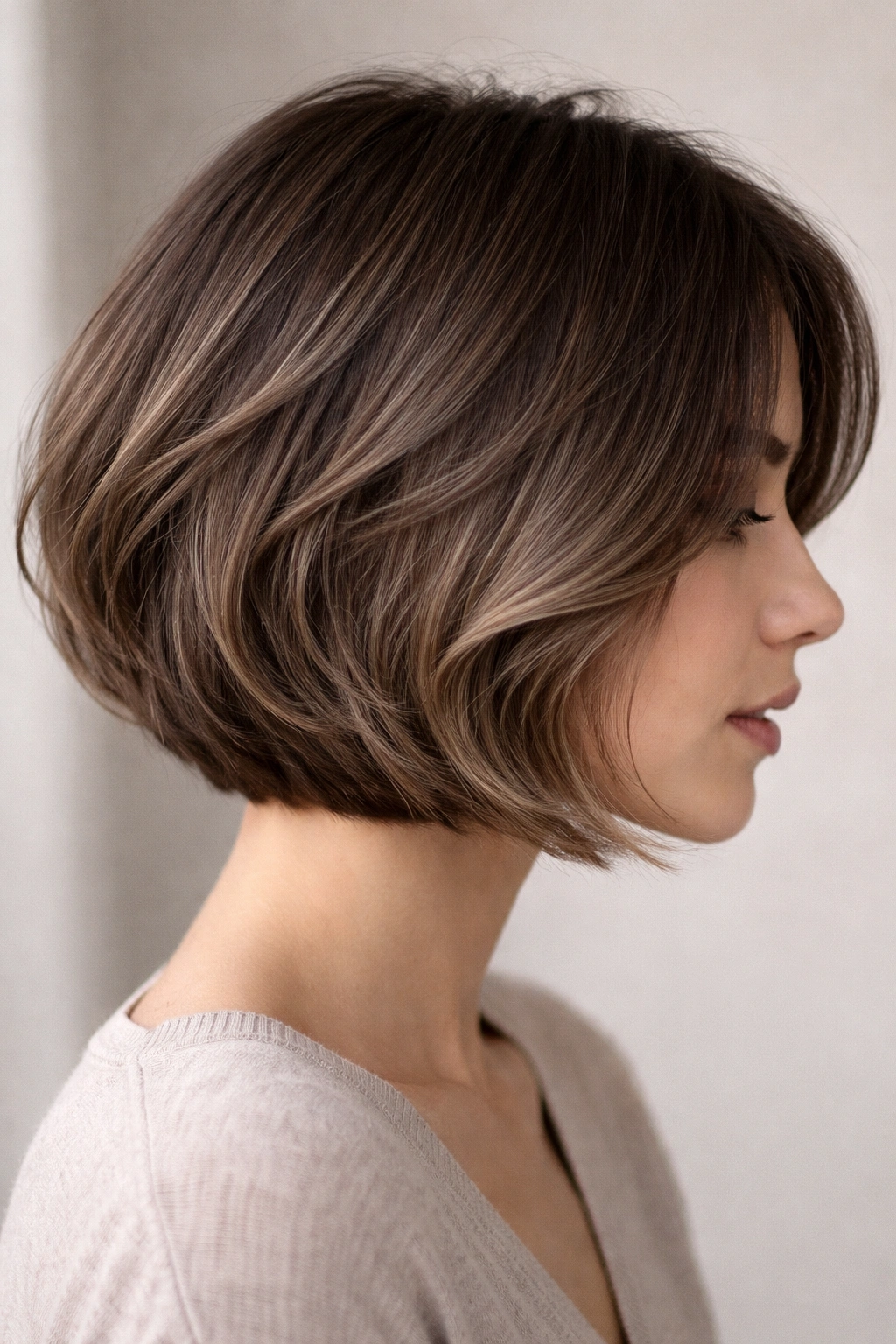
Not every ombre has to announce itself from across the room. Mushroom brown is quieter, and on a layered French bob that quietness is the appeal. Taupe, beige, smoky brown, and soft ash tones blend together in a way that feels lived-in rather than processed.
The cut matters here more than the color, honestly. A French bob with soft internal layers gives the ombre places to break apart a little. That little bit of irregularity keeps the neutral tones from looking muddy. If the bob is too blunt, mushroom brown can read flat. If the shape has some airy movement around the cheeks and nape, the color feels richer.
This is the version I’d point someone toward if they want dimension but hate obvious blonde pieces. The grow-out is gentle. The tone is forgiving. And because the palette stays close to the natural brunette family, the roots do not shout for attention every time they appear.
It is quiet in the best way.
If you style it with a loose bend, stop before the curl becomes ringlet-shaped. Mushroom tones look better when the hair moves in soft bends rather than tight spirals. A bit of texture spray at the ends helps, but go easy; too much grit makes the color look dull.
5. Platinum Smoke Ombre on an Inverted Bob
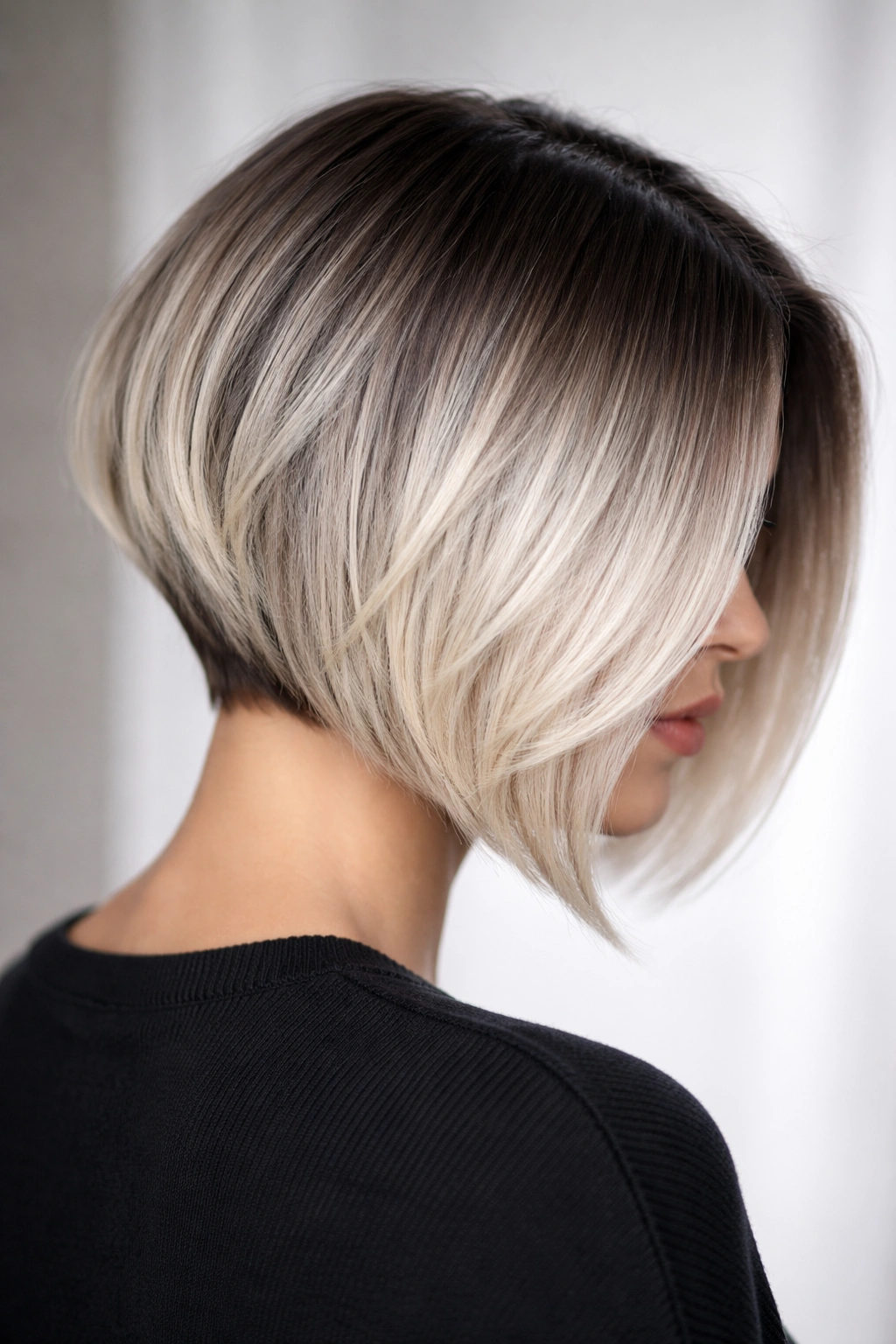
Platinum does not have to look harsh on short hair. On an inverted bob, where the back is shorter and the front slides longer along the jaw, a smoky platinum fade can look sharp, modern, and surprisingly wearable if the transition is handled with some restraint.
The Cut Does Half the Work
An inverted bob gives the color a built-in direction. The shorter back keeps the head from looking heavy, while the longer front pieces act like a frame for the lightest blonde. That means the platinum does not need to cover every inch. It only needs to land where the haircut wants your eye to go anyway.
The safest way to wear this is with a darker root shadow and a pale silver-beige blonde through the lower half. Pure white ends can look a little blunt on a bob unless the hair is exceptionally healthy and the style is razor-clean. The smoky version is softer, and in my opinion, easier to live with.
- Best on straight to slightly wavy hair
- Ask for a shadow root so the grow-out does not slice across the head
- Use a bond-building treatment if your hair has been lightened more than once
- Keep heat low; platinum ends dry out fast
If your hair is fragile, skip the brightest version and stay closer to pearl or pale beige. The cut will still read light. It just won’t punish the ends quite as hard.
6. Rose Gold Ombre on a Wavy Textured Bob
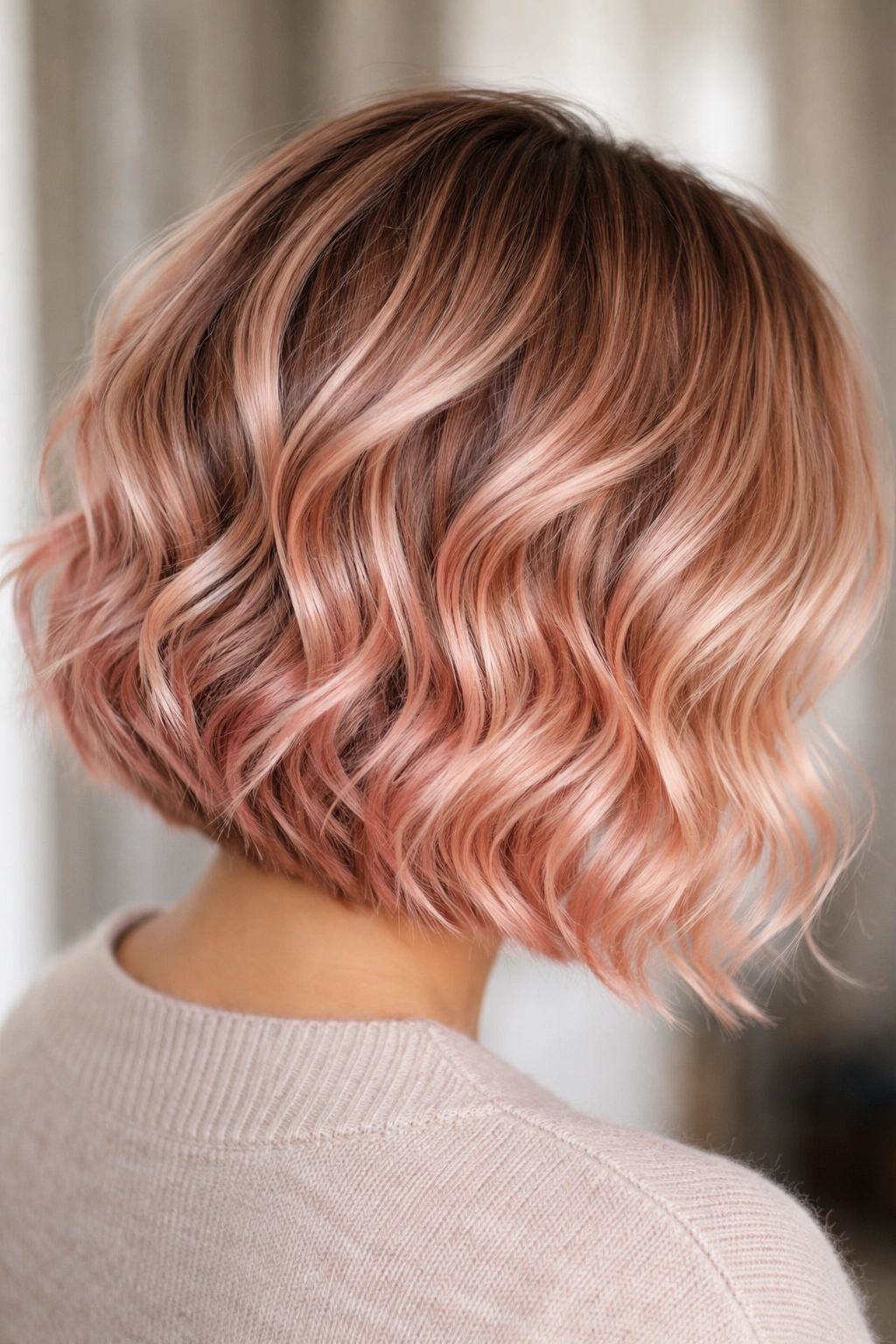
A wavy bob can look unfinished until the color starts moving with the bend. Rose gold fixes that. The peachy-pink tone sits somewhere between copper and blush, which makes it easy to wear on a short cut without feeling like a costume.
This is one of those shades that looks softer in motion than in a still photo. On a textured bob, the waves break the color into little panels of shine. You get warmth near the ends, a touch of pink in the light, and enough depth at the root to keep the style grounded. That mix matters. Too much rose and the bob turns sugary. Too little and the tone disappears.
If you wear your bob air-dried, this is a strong choice. If you like using a curling wand, even better. Alternate the curl direction, leave the ends out on some pieces, and finger-comb everything once it cools. The color looks richer when the bend is loose and imperfect.
- Works best with soft waves or a lived-in texture
- Ask for a rose gold glaze over blonde ends rather than heavy permanent pink
- Use a color-safe shampoo so the peach tones do not fade too fast
- A drop of lightweight oil on the ends helps the rose reflect light
The one catch: rose gold fades. Fast, sometimes. If you love the tone, plan for gloss refreshes and do not over-wash the hair.
7. Honey Blonde Ombre on an A-Line Bob
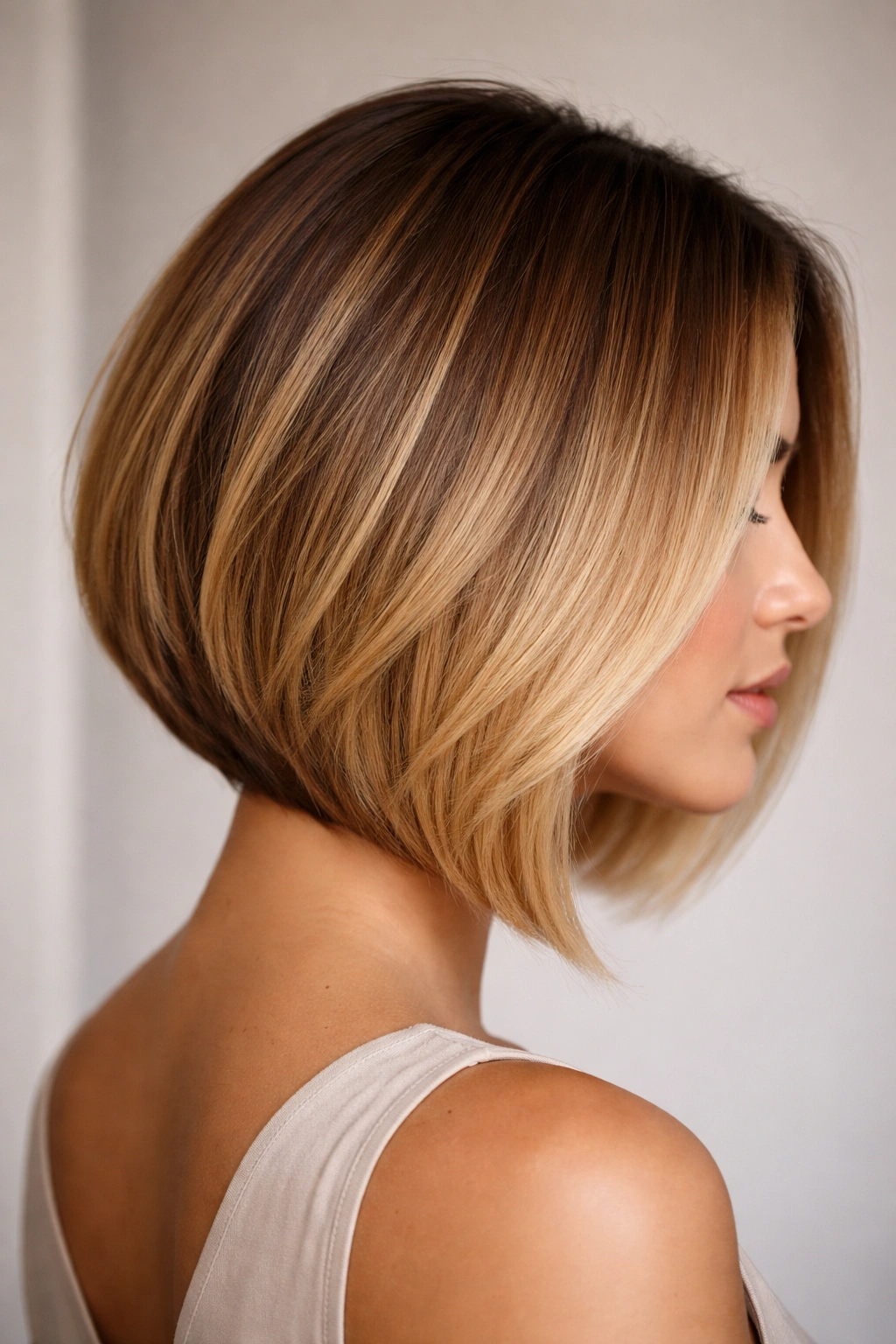
Can a bob feel lighter without losing its shape? Absolutely. An A-line cut, with the front pieces a little longer than the back, was practically made for a honey blonde ombre because the color follows the diagonal of the haircut instead of flattening it.
The front does most of the talking here. Keep the back a bit deeper, then brighten the hair as it angles forward toward the collarbone or chin. That makes the face look open and keeps the bob from feeling boxy. Honey blonde is warmer than beige, so it tends to flatter hair that already has some gold or amber in it.
Where the Brightness Should Sit
If the lightest blonde starts too high, the whole style can look broad at the temples. If it starts too low, the cut loses that graceful swing in the front. The sweet spot is usually somewhere around the cheekbone line, with the lightest ends sitting just below the jaw.
- Great for thick hair that needs shape
- Ask for subtle brightness on the front panels
- Keep the nape area one to two shades deeper
- Style with a round brush under the ends for that clean A-line shape
This version is a nice middle ground. You get enough lightness to change the feel of the haircut, but not so much contrast that the bob starts shouting at you from every angle.
8. Espresso to Mocha Ombre on a Tousled Bob
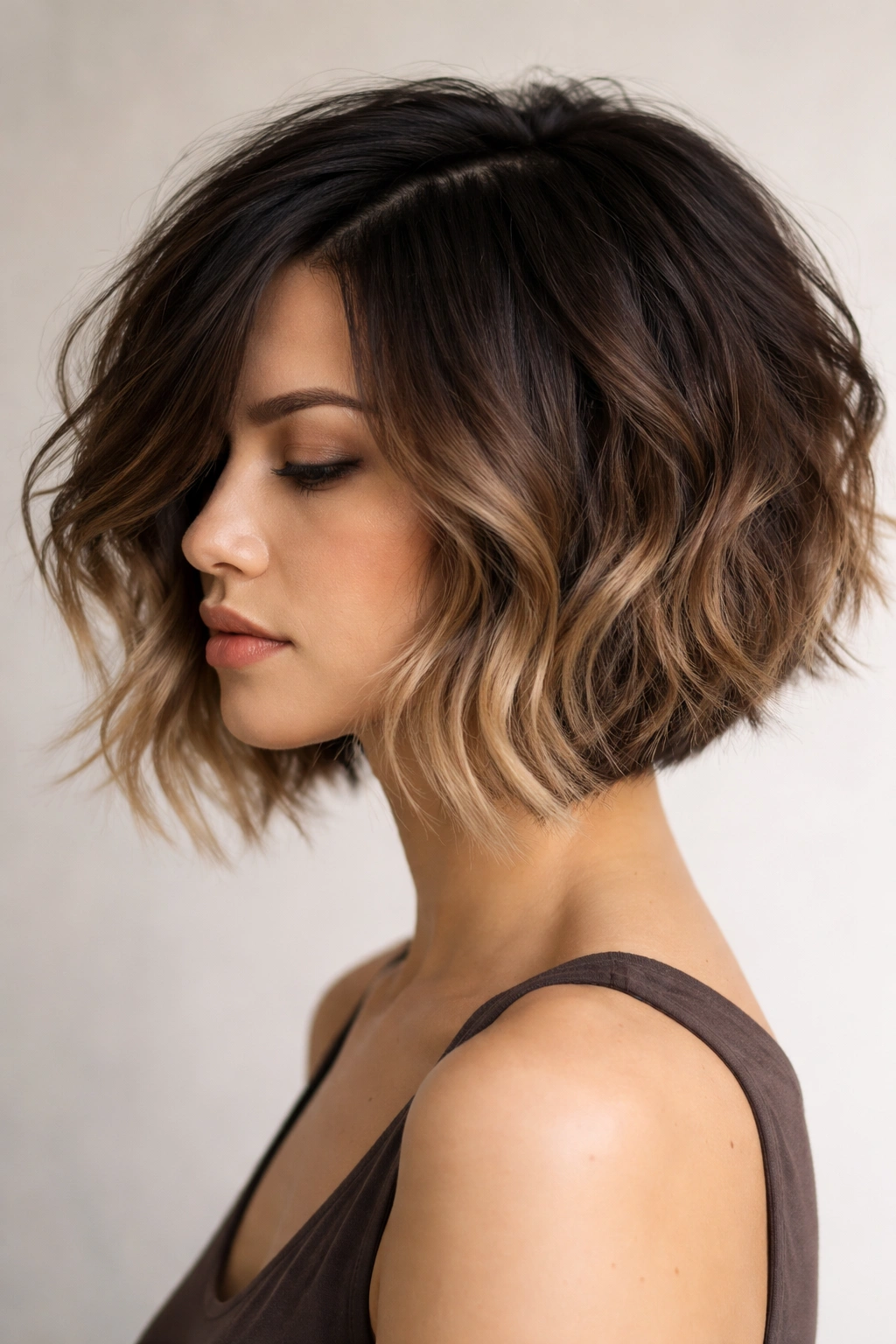
Dark hair, soft shine, zero harsh line. That is the appeal of espresso to mocha ombre on a tousled bob, and I think it gets overlooked because people assume ombre has to mean blonde ends. It does not.
A dark-to-slightly-lighter fade can be every bit as noticeable as a bright blonde one, especially on short hair. The trick is letting the tone shift do the work instead of the contrast. Espresso roots keep the base rich. Mocha mids add movement. The ends catch just enough light to stop the bob from looking heavy.
This is one of the easiest ombre bob cuts to wear if you like air-drying your hair. A little mousse, a little scrunching, and you’re done. The texture makes the tonal shift visible without needing perfect styling. It also grows out gently, which is a relief if you are tired of babysitting your color appointment.
One thing I like here is that the shade does not compete with the cut. Some color choices can overpower a bob and make it look like the color owns the hairstyle. Espresso to mocha stays in the background and lets the shape stay the main event.
If your hair is naturally dark, this is a smart choice. If it is light already, it can still work, but the effect changes. The color becomes more about depth and gloss than about a dramatic fade.
9. Burgundy Ombre on a Stacked Bob
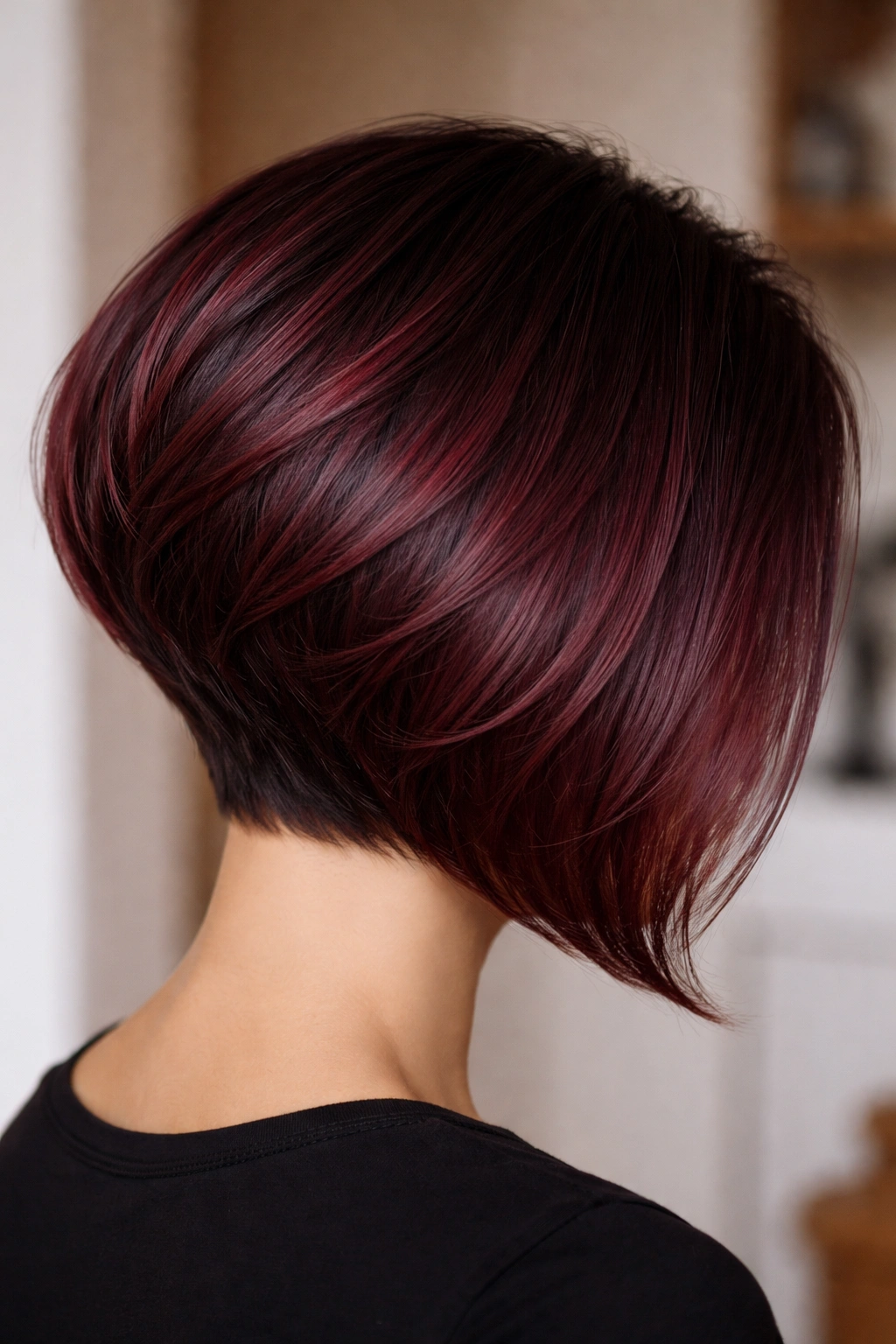
If you want a bob that has some attitude, burgundy is hard to ignore. On a stacked bob, where the back has more lift and the nape sits shorter, burgundy ends create a dense, rich color field that makes the shape look even more sculpted.
Where the Red Should Sit
A stacked bob already gives you volume in the back, so the ombre should not compete with that structure. Let the deepest red or burgundy sit through the lower half and the back curve, then soften it at the crown with a darker neutral base. That keeps the cut from becoming too busy.
Burgundy works best when it stays wine-like, not neon. A red that leans plum or black cherry tends to look more dimensional on short hair. It also ages better between color appointments, because the fade still reads intentional instead of washed out.
- Choose a plum burgundy if you want a richer finish
- Ask for a soft root shadow so the top stays grounded
- Color-depositing conditioners can help between salon visits
- Heat protection matters; red tones lose punch when the hair gets too hot
This look is strongest on people who like seeing their hair color from across the room. Indoors, it reads deep and glossy. In direct light, it turns almost jewel-like. That shift is the fun part.
10. Beige Blonde Ombre on a Curtain-Bang Bob
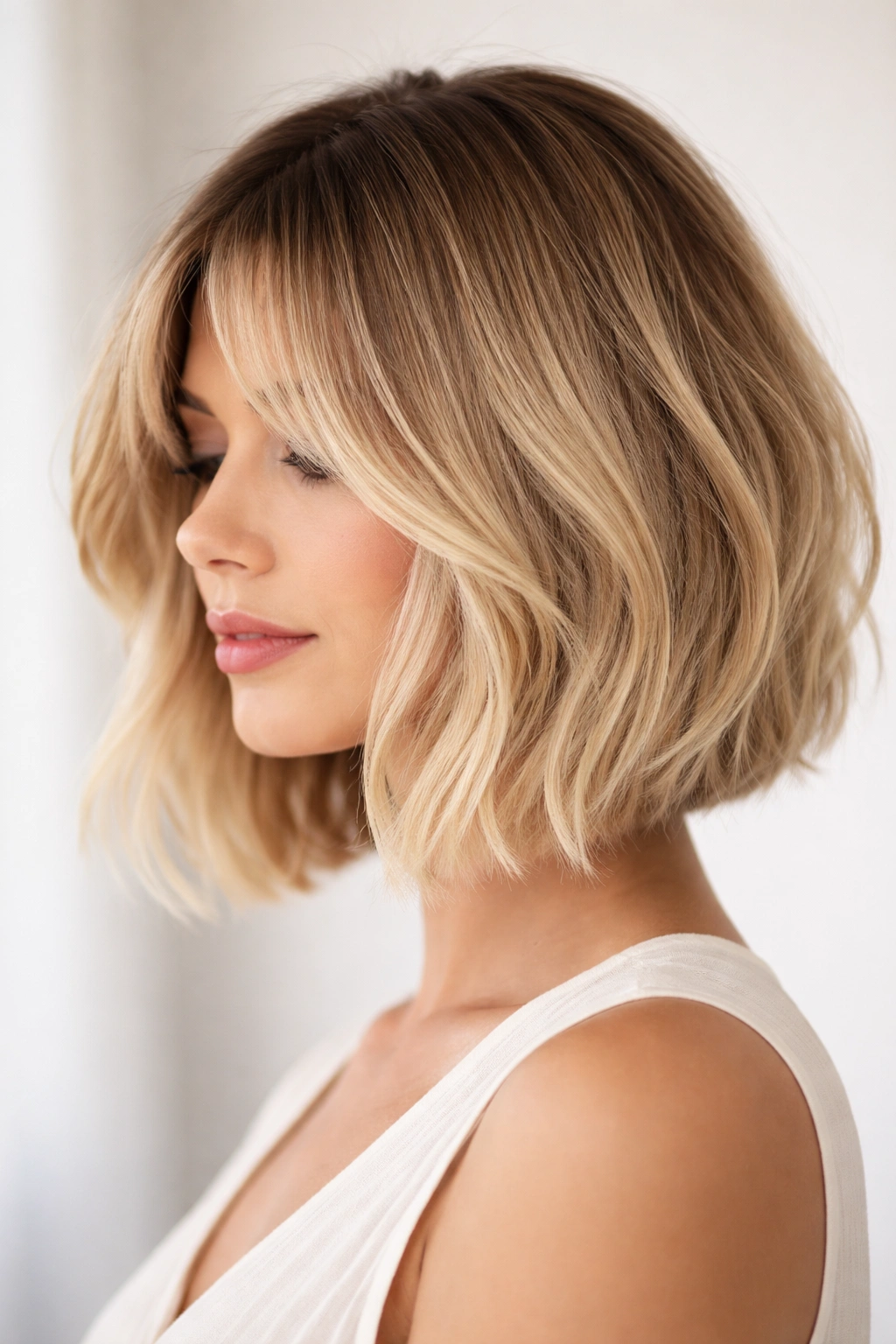
Can a bob with bangs still look soft? Yes, and beige blonde is one of the easiest ways to get there. Curtain bangs already break up the face line, so pairing them with a pale beige ombre gives the whole haircut an airy, less severe finish.
The reason this works is placement. Curtain bangs pull attention to the eyes and cheekbones, so the blonde does not need to start at the root to make an impact. In fact, it’s better if it doesn’t. Keep the root a shade or two deeper, then let the beige open up through the front pieces and the lower lengths. The result feels lighter without looking striped.
This is a good choice if you want movement around the face but you do not want a big chunk of blonde sitting right on the top layer. It also grows out with less drama than a high-contrast platinum. That matters if you like to trim bangs often and keep the rest of the cut neat.
Style-wise, this bob likes a soft round brush at the fringe and a bend through the ends. Straightening it pin-flat can make the bang line feel severe. A little curve around the cheekbone is enough.
The color is delicate, but not fragile-looking. There’s a difference.
11. Sandy Brunette to Toffee Ombre on a Rounded Bob
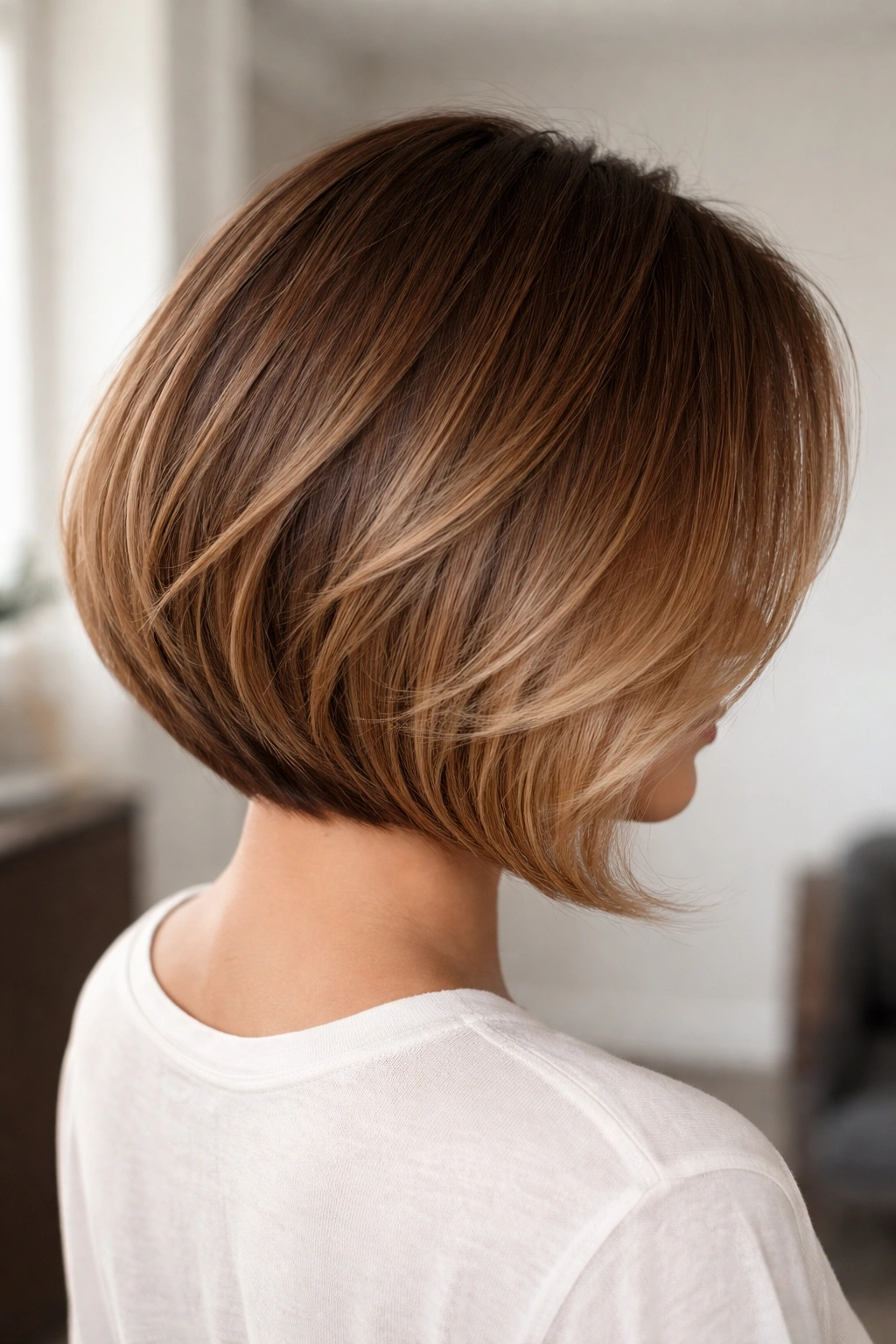
Unlike high-contrast blonde fades, this version reads polished even when you barely style it. Sandy brunette moving into toffee gives a rounded bob depth at the base and a gentle lift through the ends, which is a nice fix if your hair tends to collapse around the jaw.
Best for Thick Hair and Soft Movement
Rounded bobs can get heavy fast. A sandy-to-toffee blend helps break that up because the lighter ends stop the cut from feeling like one solid block. If your hair is thick, this is a smart choice; the color makes the shape feel lighter without stripping too much pigment out of the top.
Ask for fine ribbons of toffee through the lower half, not chunky light pieces. The blend should look soft enough that you can’t point to a line and say, “There it is.” That is what makes this version so wearable. It gives dimension, but it doesn’t look busy.
- Good for thick, wavy, or slightly coarse hair
- Ask for fine balayage or hand-painted lightening
- Keep the top mostly natural so the bob stays grounded
- A shine spray on dry hair makes the toffee ends look richer
If you are stuck between brunette and blonde and do not want to choose, this sits in the middle nicely. It’s not a dramatic departure. That is the point.
12. Silver-Lilac Ombre on a Sleek Glossy Bob
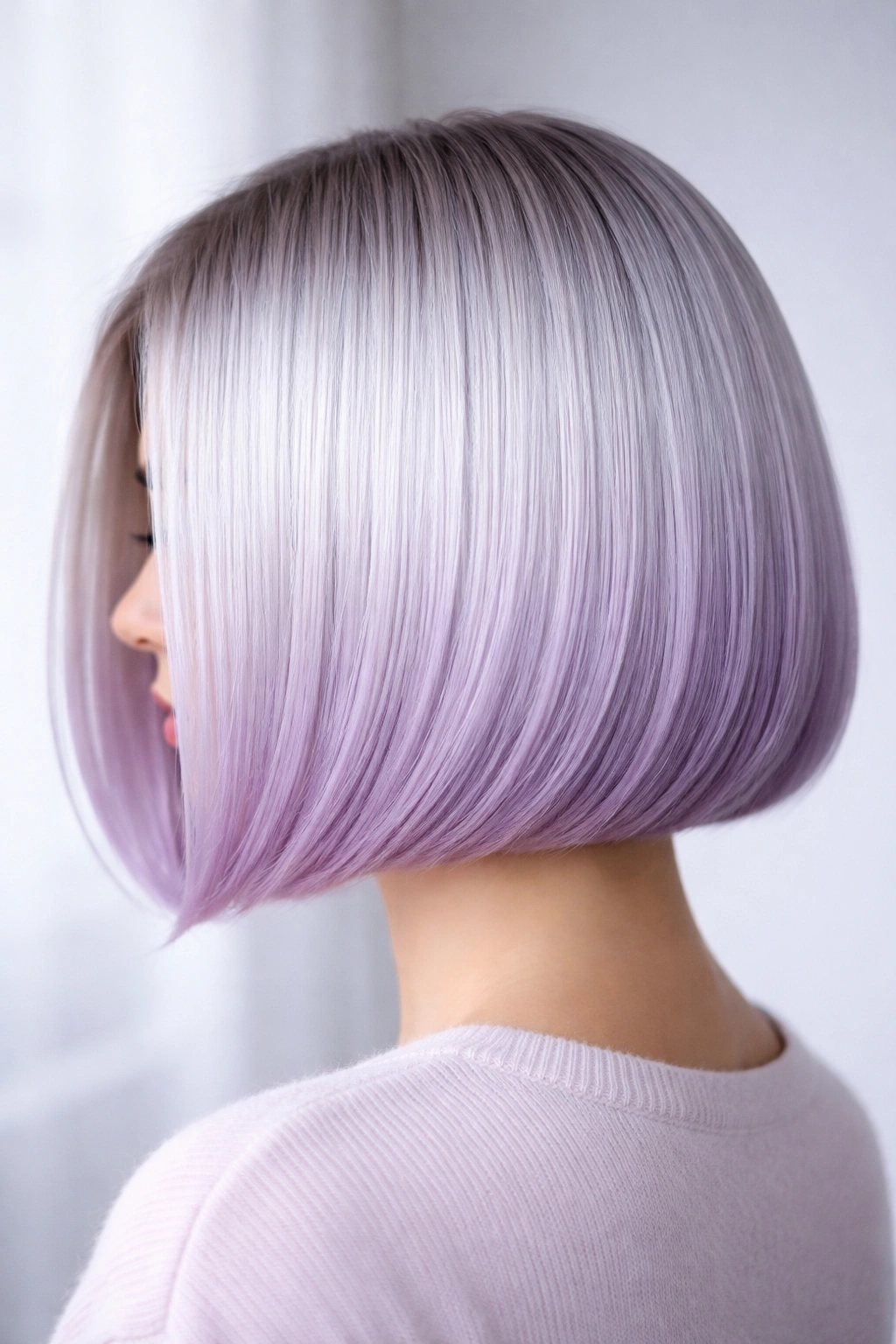
A sleek bob with silver-lilac ends is the style people ask about twice. It looks clean at first glance, then the lilac haze shows up in the light and changes the whole mood of the cut.
This works best on hair that is already lightened enough to take a pale silver base. The lilac should stay whisper-soft, more mist than purple. On a bob, too much color at the ends can feel heavy. A sheer tint keeps the line airy and keeps the shine front and center.
I like this on a blunt bob because the geometry gives the color something crisp to sit against. The straight line at the bottom makes the fade more visible. If the hair is too layered, the silver can disappear into the texture. Sleek styling fixes that. So does a clean center part, if that suits your face.
What to Ask for at the Chair
- A silver gloss with a faint lilac toner at the ends
- A soft shadow root to avoid a hard regrowth line
- A trim that keeps the bottom edge blunt and tidy
- Heat protection every time you style, because pale ends dry out fast
If you want less commitment, ask for silver with no lilac at all. The color still looks sharp, and the bob keeps its edge. The lilac is just the quiet little twist at the end.
Final Thoughts
The strongest ombre bob cuts are the ones that respect the haircut’s shape. A blunt bob wants a different fade than a stacked one. A rounded bob likes warmth and curve. A French bob tends to look best when the blend stays soft and close to the natural base.
If you are choosing between shades, think about contrast first and color second. A subtle root melt will look more expensive than a flashy blend that fights the cut. A good bob color should help the haircut read cleaner, not busier.
Bring photos, sure, but bring the right ones: one for the cut, one for the color placement. That small detail saves a lot of salon guesswork, and it makes the whole result feel intentional from the first glance.
