



High ponytail hairstyles for curly hair work best when you stop fighting the curl pattern and start deciding what kind of height you want. A ponytail on straight hair and a ponytail on curls are not the same animal. Curls bring built-in volume, shrinkage, texture, and a little unpredictability. That is the whole charm, and also the part that gets people into trouble when they pull too hard or smooth too much.
A good curly high ponytail can look sharp, playful, soft, dramatic, or all three at once. The trick is choosing the right balance between smooth roots and natural movement in the tail. Some styles want a polished crown with a cloud of curls. Others look better with a few flyaways left alone, because trying to flatten every strand usually makes the style look stiffer than it needs to be.
Curly hair also changes the practical side of the styling equation. A ponytail that feels fine on loose waves may tug hard on tighter coils. A style that looks tiny in the mirror can expand into a full halo once the curls settle. And a style that seems simple on paper can fall apart if the elastic is wrong, the base is too tight, or the product load is heavy enough to make the curls droop.
The best way to think about a high ponytail on curls is this: you are not just pulling hair back. You are deciding whether you want height, shine, shape, or a little bit of swagger. The first style is where I’d start if volume is the goal and fuss is not.
1. Full Volume High Puff Ponytail for Curly Hair
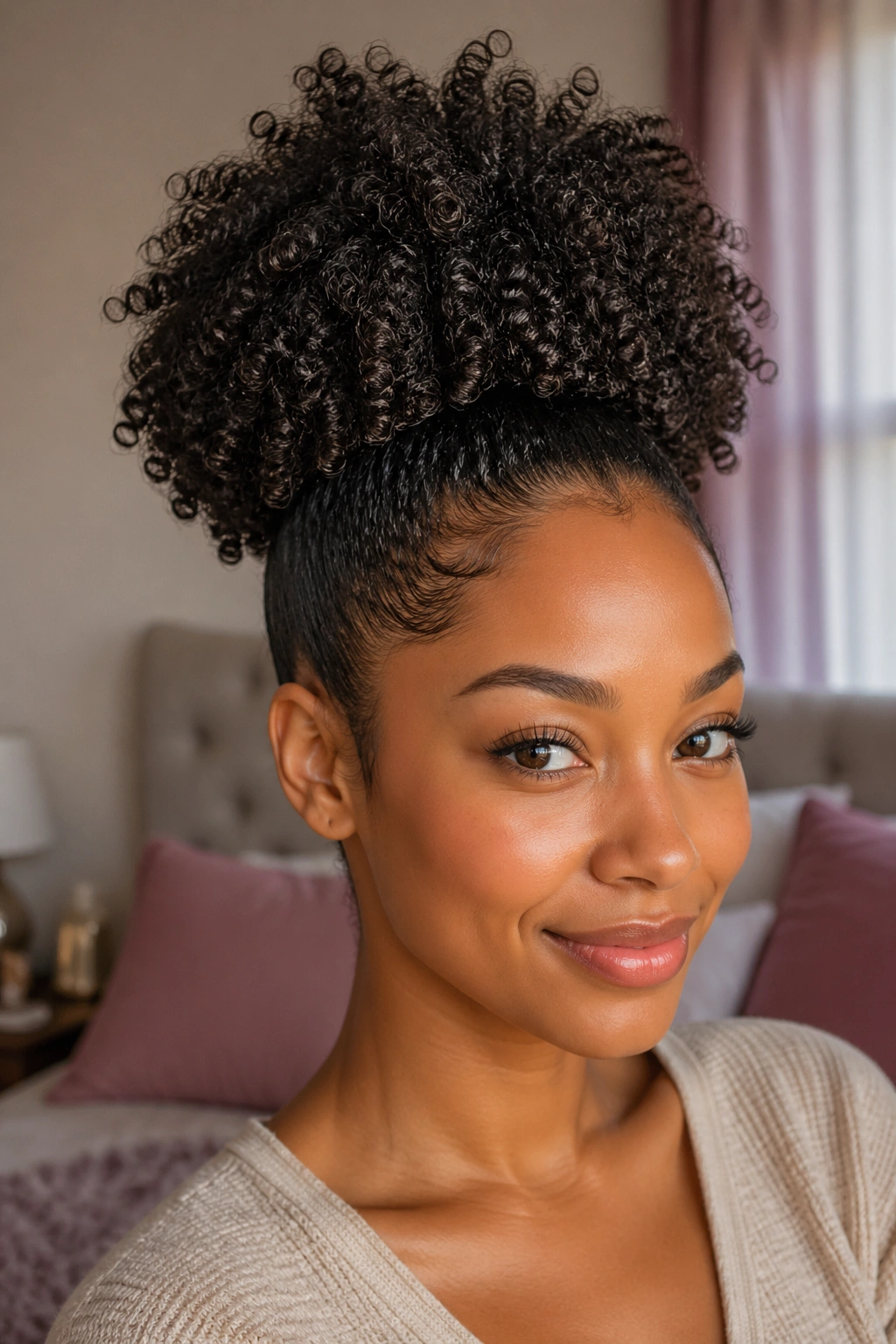
A high puff is the boldest, easiest version of a curly ponytail, and it works because it respects the way curls naturally stack on top of each other. You are not trying to force the tail into a sleek shape. You’re letting the crown stay lifted, then giving the ponytail room to bloom.
Why It Works on Curls
The puff uses curl shrinkage as part of the design. Instead of fighting the spring, you gather the hair high, smooth the front just enough to keep the shape clean, and let the length do what it already wants to do. That means less time with a brush and less chance of ending up with a flat, overworked crown.
A wide satin scrunchie helps more than people think. So does a soft edge brush and a small amount of gel or cream around the hairline. The point is not to freeze the style in place. The point is to hold the base while the curls stay fluffy and alive.
- Use a wide satin scrunchie so the base does not dig into the hair.
- Keep a tail comb or rat-tail comb nearby for sectioning and lifting.
- Smooth only the top layer with light gel or mousse.
- Pick the roots upward with your fingers once the ponytail is secure.
Pro tip: place the elastic at the highest point of your crown, then tug the puff upward with your fingertips instead of pulling it tighter at the base. That keeps the style full instead of squashed.
2. Sleek Crown With Defined Ends
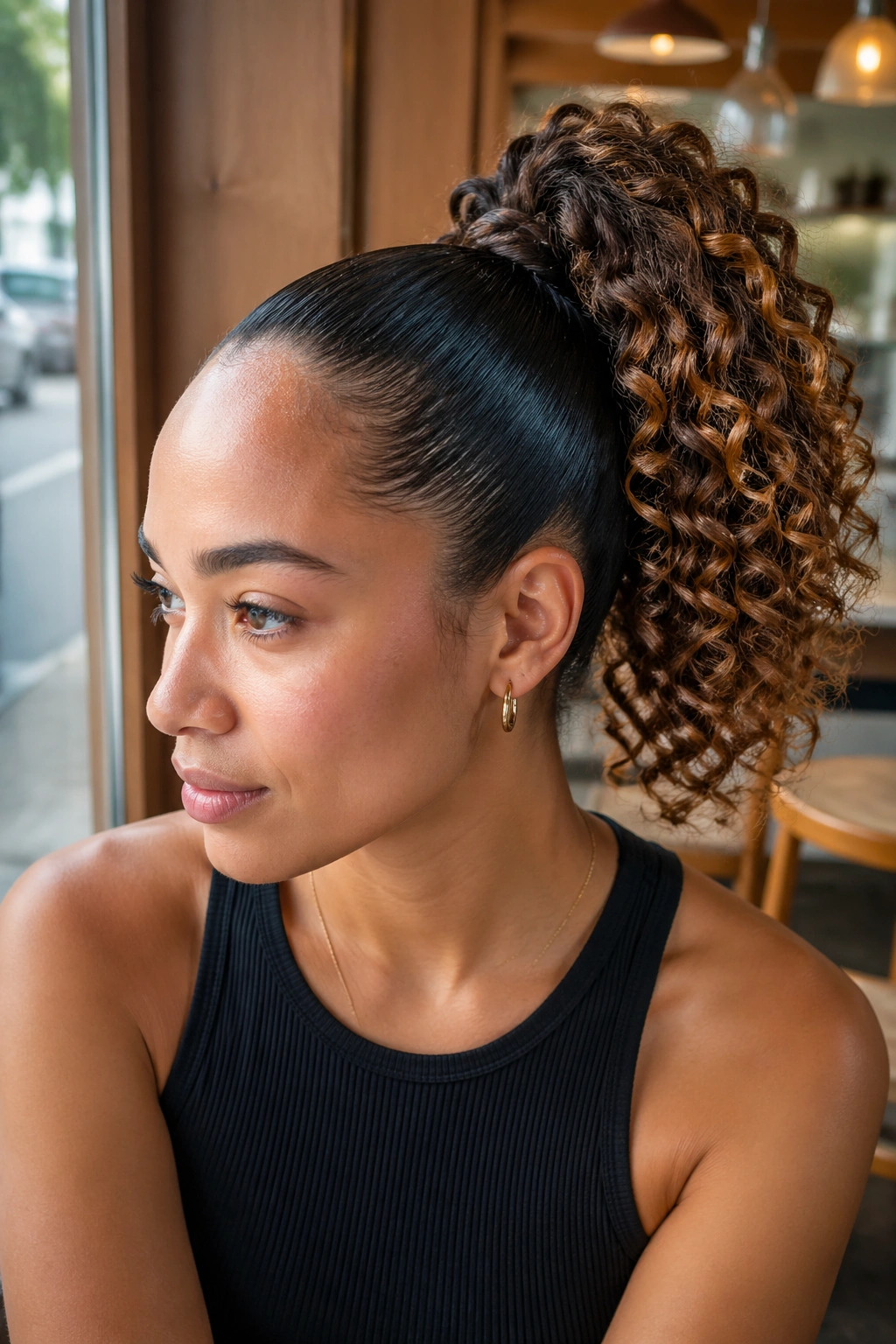
Want the cleanest outline without flattening the curl pattern? This is the one to try. The roots stay smooth, the ponytail sits high and tidy, and the ends still look like curls rather than brushed-out fuzz.
The main move here is control at the crown, not all over the head. Work a small amount of leave-in conditioner or styling cream through damp hair, then add a light layer of gel at the front and sides. Use a brush with firm bristles to guide the hair upward, but stop once the crown looks smooth. If you keep brushing through the tail, you’ll erase the shape you actually wanted.
A silk or satin scarf helps a lot. Tie it around the hairline for 10 to 15 minutes while the roots set, then remove it and leave the ponytail alone. That short set time makes a bigger difference than most people expect. It helps the front dry in the direction you want, which is half the battle with curly hair.
I like this style when the outfit is simple and the hair needs to look deliberate. It feels cleaner than a puff, but not severe. And that matters.
3. Wrapped Base High Ponytail
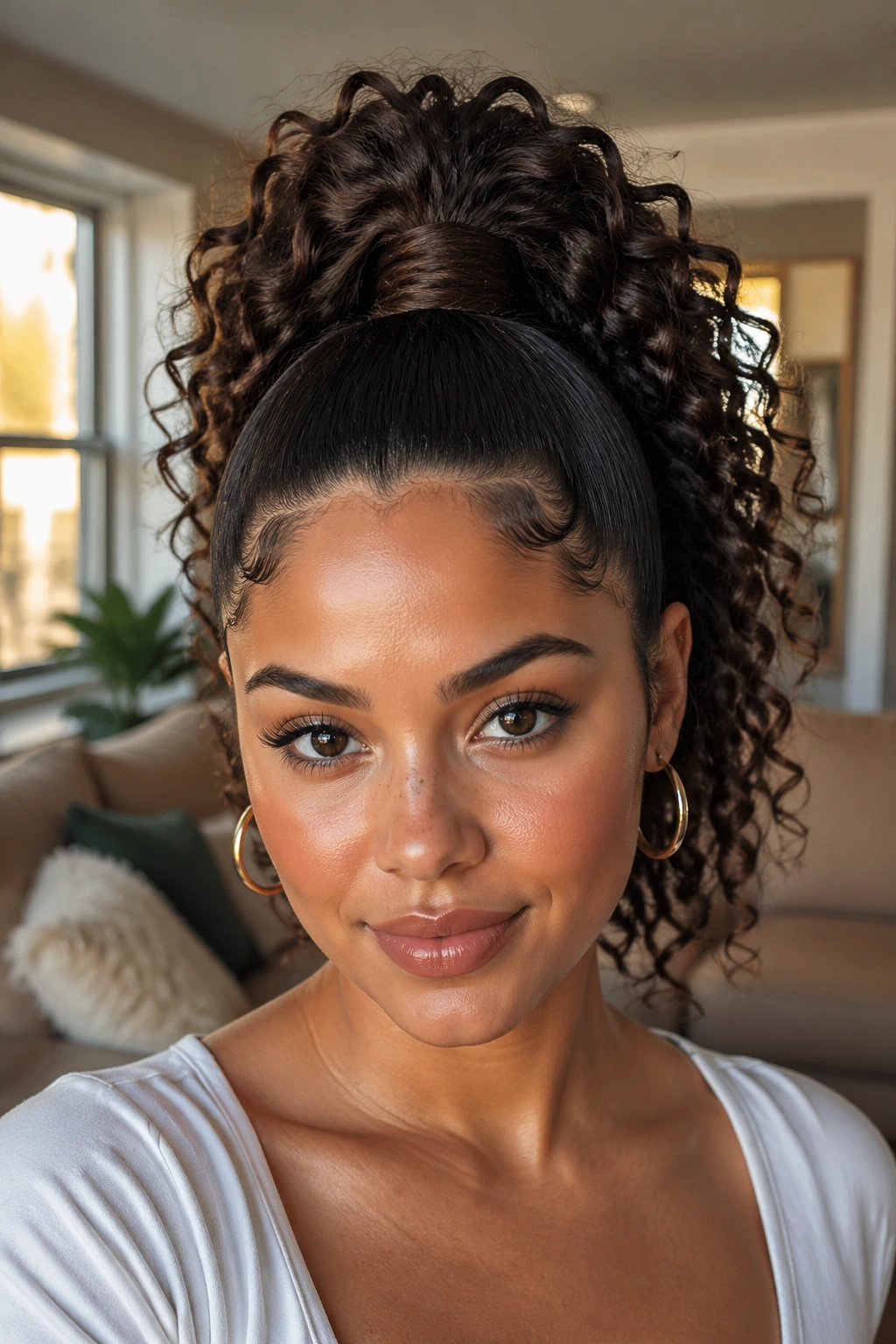
Picture this: the ponytail is secure, the curls are sitting where you want them, and the elastic is gone from sight. That little wrap around the base changes the whole mood of the style. Suddenly it looks finished.
The wrap can be a strand of hair pulled from underneath the ponytail, or a tiny braid if your curls are short or layered. I prefer the braid when the hair is thick, because it hides the tie better and stays put longer. A loose curl can work too, but it needs two hidden bobby pins tucked upward through the wrap so it does not slip out halfway through the day.
The Small Detail That Keeps It Neat
Use a section from the underside of the ponytail so the wrap blends into the base. If you take the top layer, the seam shows more easily. A small mist of flexible-hold spray on the wrap itself helps tame frizz without turning it crunchy.
- Pull a 1/2-inch section from under the ponytail.
- Wrap it once or twice around the elastic.
- Pin the end upward with two bobby pins.
- Smooth the finish with a light spray, not a heavy one.
A wrapped base is one of those details that looks like more effort than it really is. That’s the appeal.
4. Braided-Into-Ponytail Look
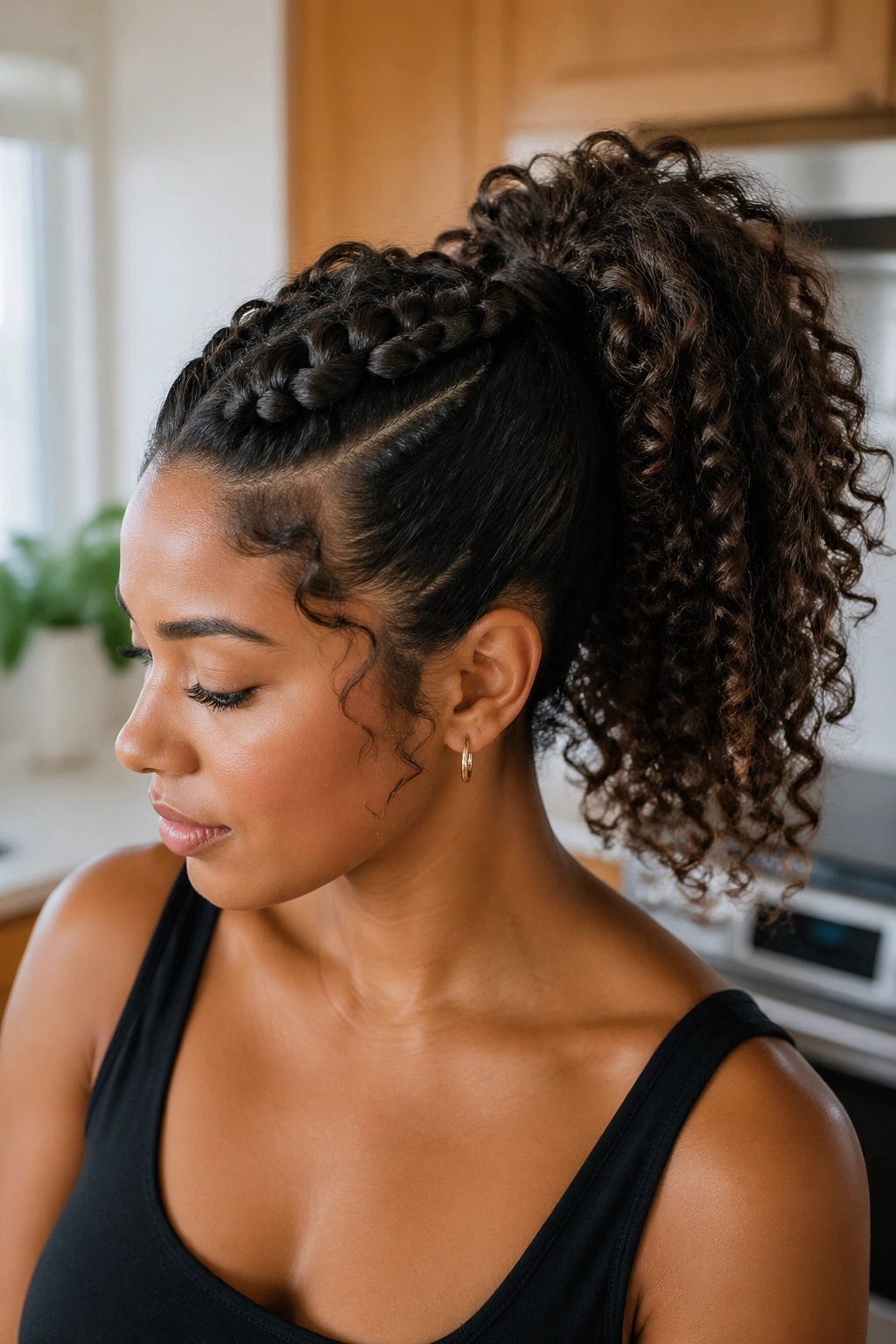
A braid feeding into a high ponytail is not the same thing as a regular ponytail with a braid added for decoration. The braid does real work here. It directs thick curls upward, controls bulk at the crown, and keeps the base from puffing out in random directions.
I like this style when the hair is dense or has a lot of texture at the roots. Two cornrows, a Dutch braid, or a single center braid can all lead into the ponytail. The style feels a little stronger and more structured than a plain pony, which is useful when you want the look to last past lunch.
What Makes It Different
A braid gives the front of the style a line. That line matters. It makes the ponytail look intentional from the first glance, even if the curls themselves are loose and full. It also helps if you are growing out layers, because the braid can hide shorter pieces that would otherwise pop loose.
Keep the braid loose enough that your scalp does not ache. Tight braids look neat for about ten minutes, then they start paying you back with tension. No hairstyle is worth that. If your hair is very fine, use a touch of gel and a small elastic at the end of the braid before gathering everything into the ponytail.
This one is practical, but it still has personality. I’d reach for it on a long day.
5. Bubble Ponytail With Curly Sections
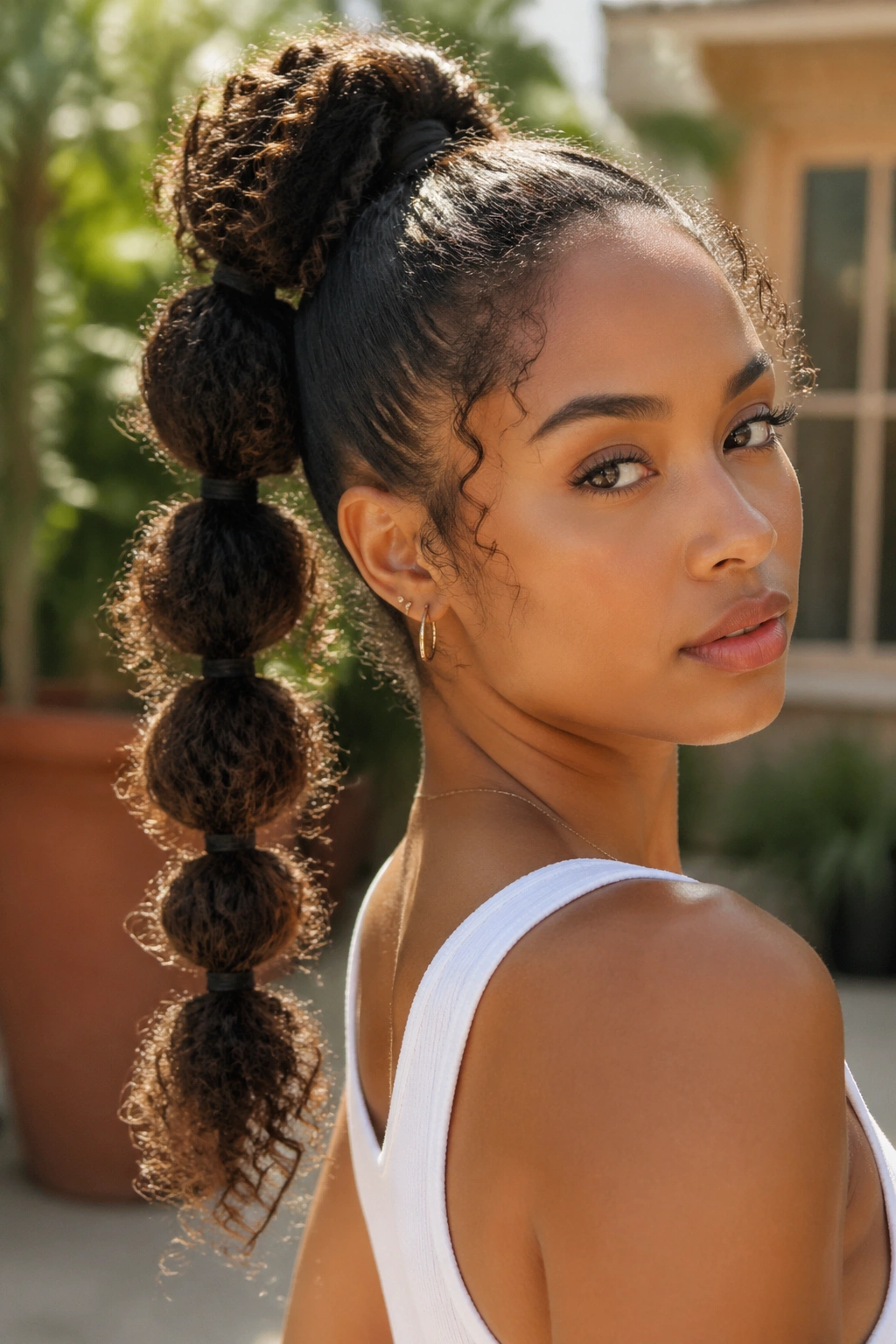
Why does the bubble ponytail work so well on curly hair? Because curls already create shape between the ties. You are just giving that shape a framework.
The style is built by securing the ponytail in several places down the length of the hair, then gently pulling each section outward so it rounds into a bubble. On curls, that means you can often use fewer elastics than people with straight hair. The natural texture does a lot of the heavy lifting. A medium-length ponytail usually needs ties spaced about 2 to 3 inches apart, though thicker hair may need closer spacing.
How to Space the Ties
- Start with one secure high ponytail.
- Add a small elastic 2 to 3 inches below the first tie.
- Tug the section between the elastics until it looks rounded.
- Repeat down the length, keeping the bubbles even or slightly irregular.
The best part is that this style hides uneven length. If your curls shrink at different rates, no one notices much because each bubble breaks up the silhouette. I also like it for second-day hair, when the ends have already clumped and the style needs a little structure.
Don’t pull the bubbles too hard. They should look full, not stretched into sausage shapes. That is a bad look on anyone.
6. Curly Ponytail With Laid Edges
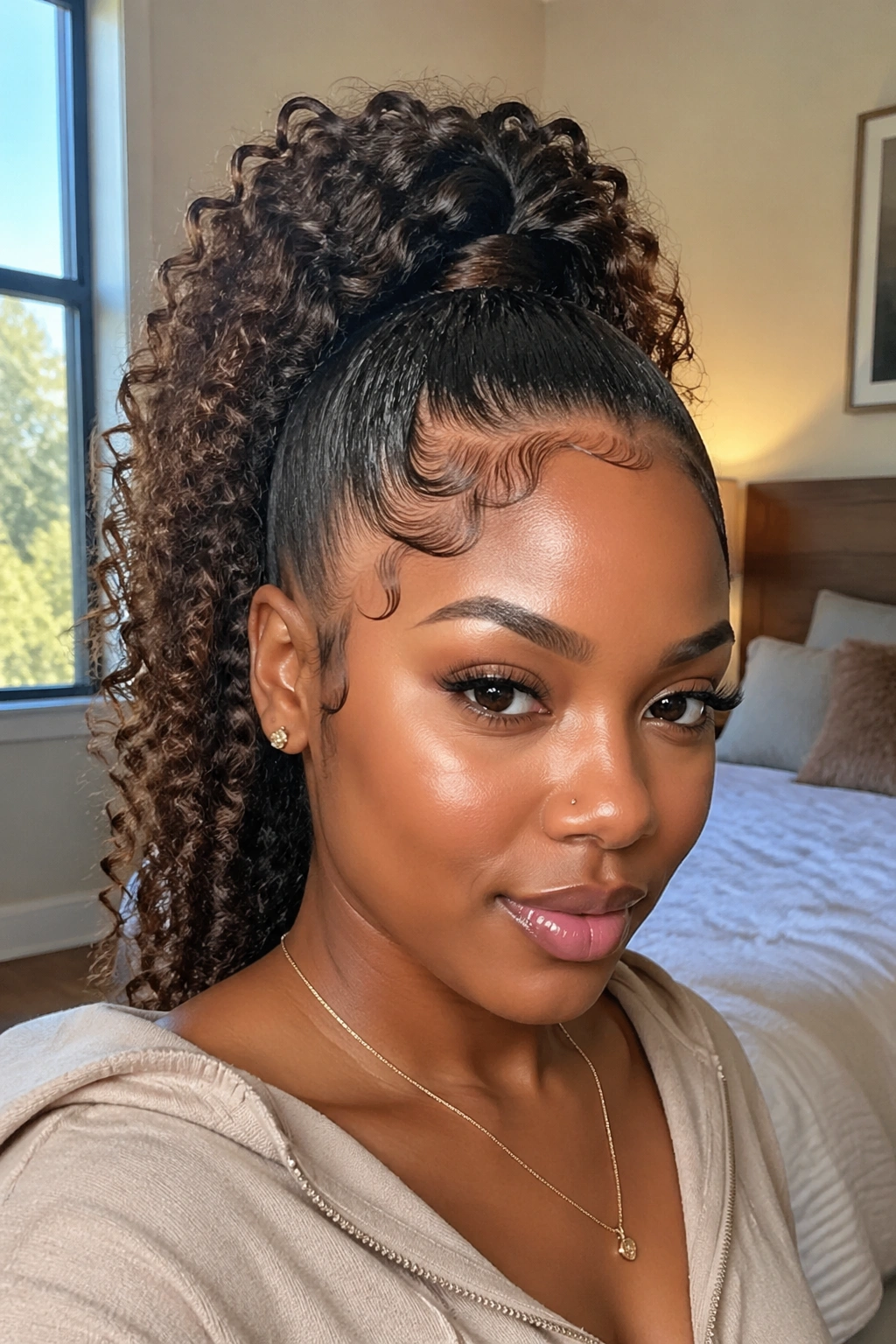
Edges can make or break this look. Too much product, too much brushing, or too much tension, and the front goes from polished to stiff in a hurry.
The sweet spot is a small amount of edge control, worked only where you need it. Use a soft brush or even a clean toothbrush and smooth the baby hairs in short strokes, not long sweeping ones. The goal is to shape the hairline, not glue it to your forehead. If your curls are tighter, a little more product may be needed. If your hairline is fragile, less is better. A lot less.
A high ponytail with laid edges looks especially sharp when the rest of the style is full and soft. That contrast matters. It gives the face a frame without making the whole hairstyle feel overstyled. One thin line of neatness is enough.
If the front of your hair tends to frizz back up fast, tie a scarf around the hairline for a few minutes after styling. That small bit of pressure helps the edges set. A little restraint goes a long way here.
7. Side-Swept High Ponytail
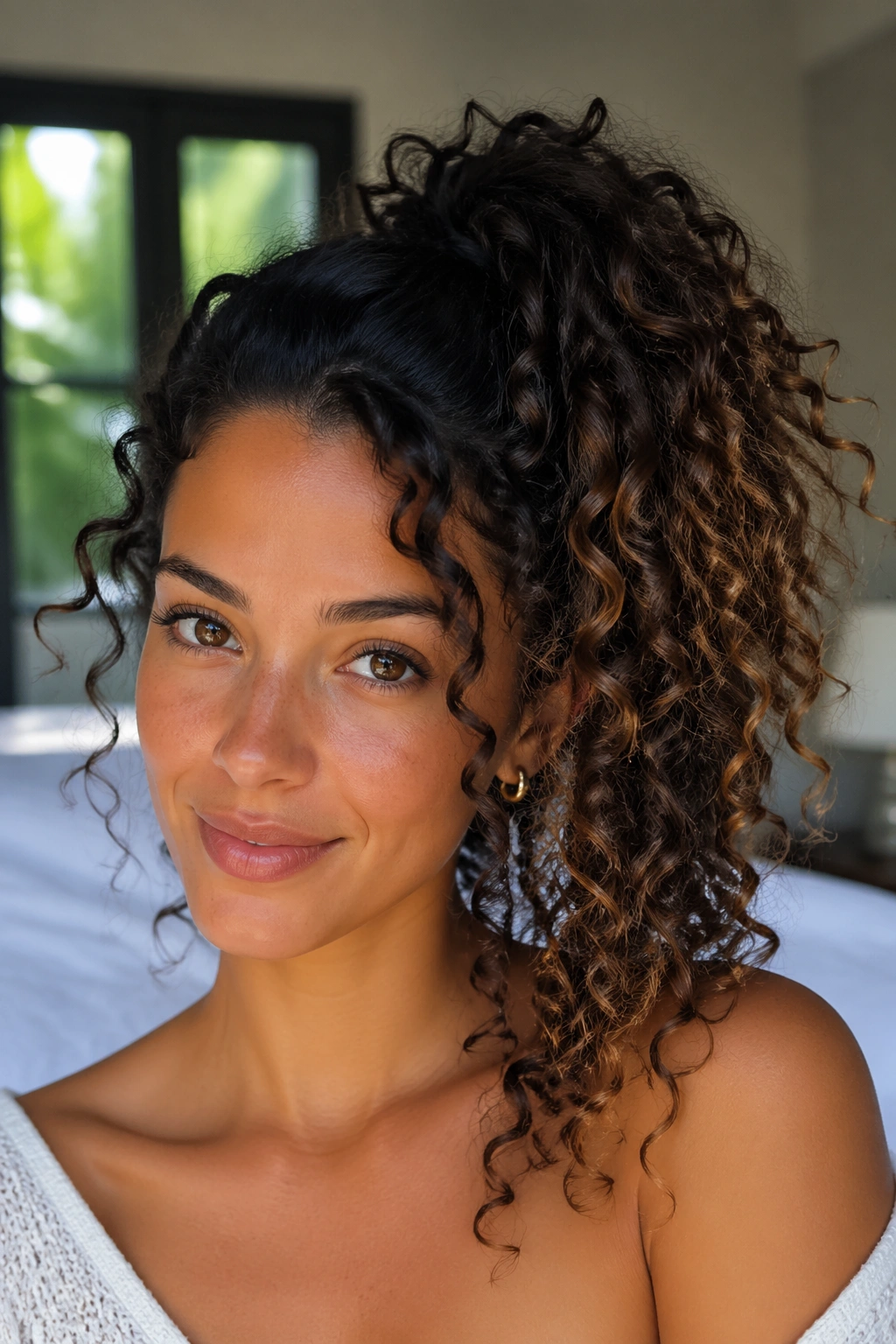
The center line is optional. A side-swept high ponytail proves it.
Shifting the ponytail slightly to one side changes the whole shape of the style. It softens the symmetry, gives the curls a sense of movement, and makes the ponytail feel less rigid. On curly hair, that matters because the texture already brings a lot of energy. A side part or deep diagonal sweep keeps that energy from looking too boxed in.
This style is especially useful if the crown has different curl patterns on each side. Instead of fighting the difference, you use it. The heavier side can sit a little lower, while the opposite side gets smoothed up into the ponytail base. The result looks deliberate, not lopsided.
I also like this when the front pieces are growing out and refusing to behave. A side sweep lets them blend into the style instead of sitting in the middle of the face like they own the place. They do not.
Use one or two bobby pins under the heavier side if it wants to slide. That tiny fix keeps the look where you placed it.
8. Messy, Piecey High Ponytail
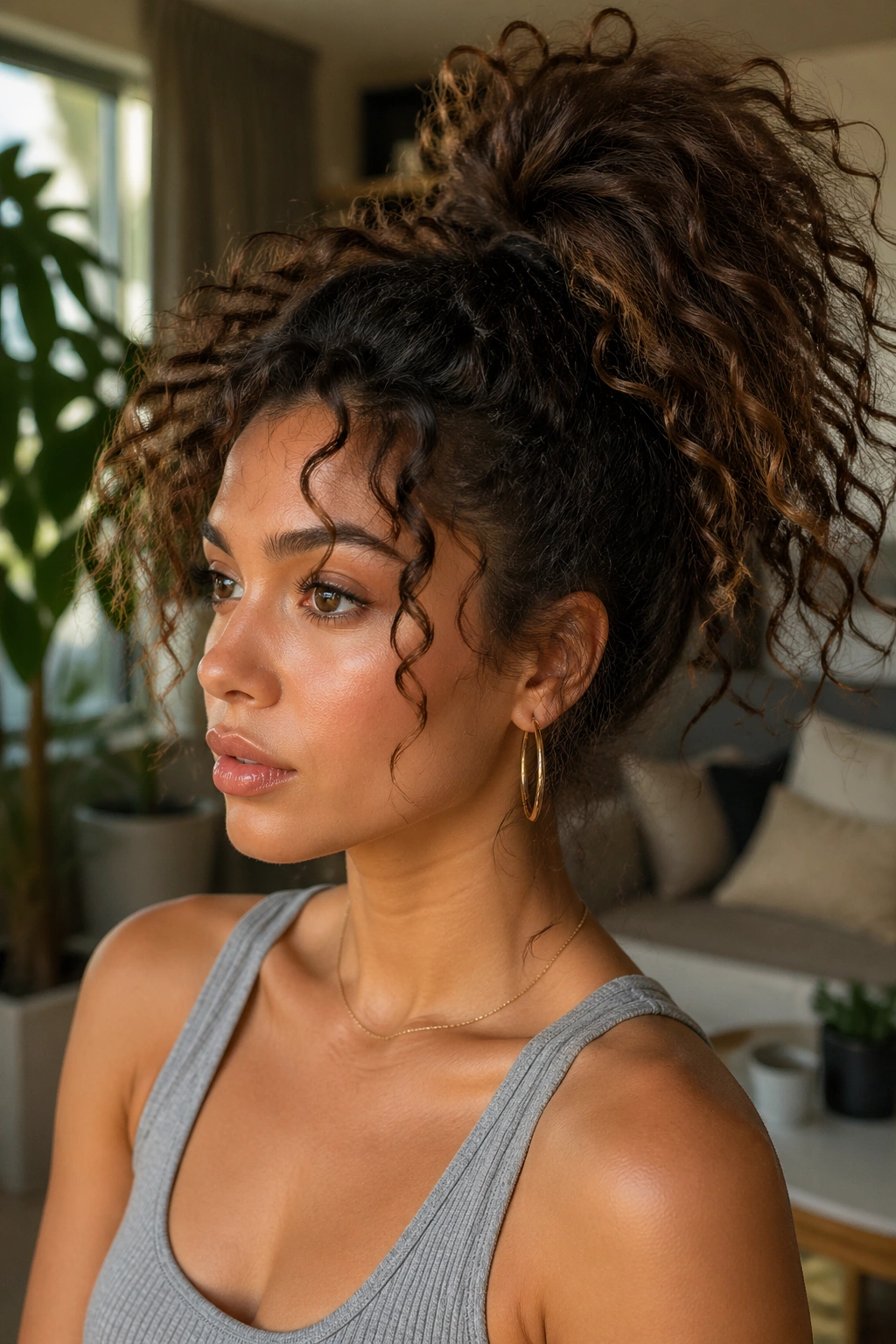
A messy high ponytail can look lazy or it can look deliberate. The difference is in the pieces you leave behind and the way you shape the tail.
For curly hair, the smart version of this style keeps a few defined curls around the face and crown, then lets the ponytail stay a little loose and airy. You are not brushing the texture away. You are choosing which curls get to stand out. That means separating just a few clumps with your fingers and maybe adding a drop of serum to the ends so they don’t look dry.
What to Leave Alone
- Two small curl pieces near the temples.
- One or two soft bits at the crown.
- A few separated curls at the tail, not every strand.
- Enough looseness that the style still moves.
A messy ponytail works best when the hair is not freshly stripped of all product. Slightly stretched second-day curls usually cooperate better than super-soft wash-day hair. Freshly washed hair can puff up too much and make the “messy” part look accidental.
The main thing is not to mistake frizz for texture. They are cousins, not twins. Texture has shape. Frizz looks like you gave up.
9. High Ponytail With a Scarf or Ribbon
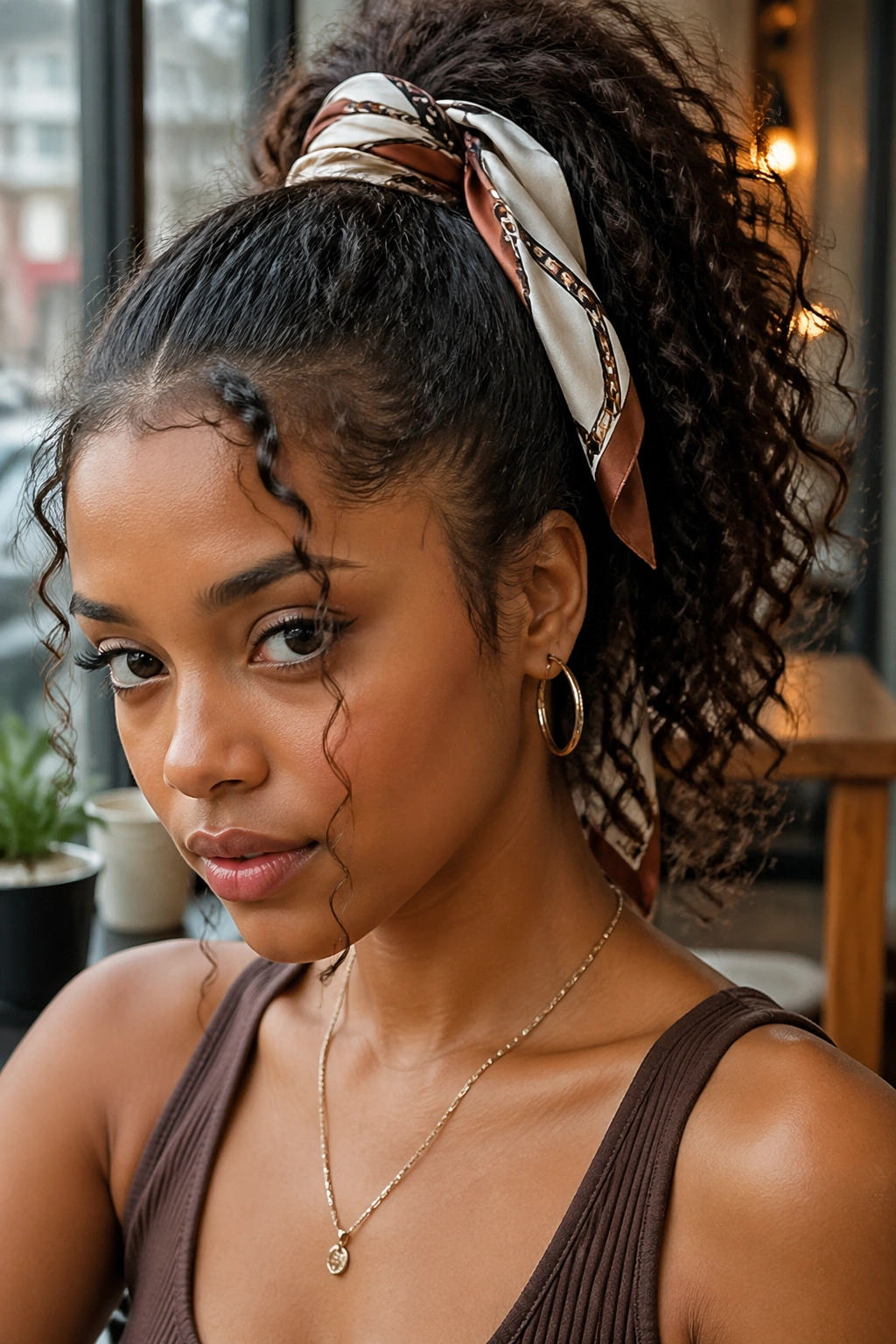
A scarf changes everything. Same ponytail, different attitude.
Wrap one around the base and the style suddenly feels more finished, even if the curls underneath are doing their usual thing. A satin scarf is the safest pick because it slides less against the hair. A ribbon works too, though I’d choose a wider one—about 1 to 1.5 inches—so it does not cut into the ponytail or look too thin once tied.
How to Thread the Scarf
Fold the scarf into a strip about 1 to 2 inches wide. Tie it around the base of the ponytail, not too far down the shaft, then let the ends trail or knot once more for a cleaner finish. If the scarf is long, keep the tails short enough that they do not catch on coats, zippers, or earrings.
This style is useful when the hair is clean but not cooperating. The scarf distracts from minor puffiness at the base and makes the whole ponytail look more styled than it really was. That is a win in my book.
Choose a pattern only if the rest of your outfit stays simple. If the clothes are already loud, a plain satin scarf usually works better. Too many competing details start fighting each other.
10. Cornrow Feed-In High Ponytail
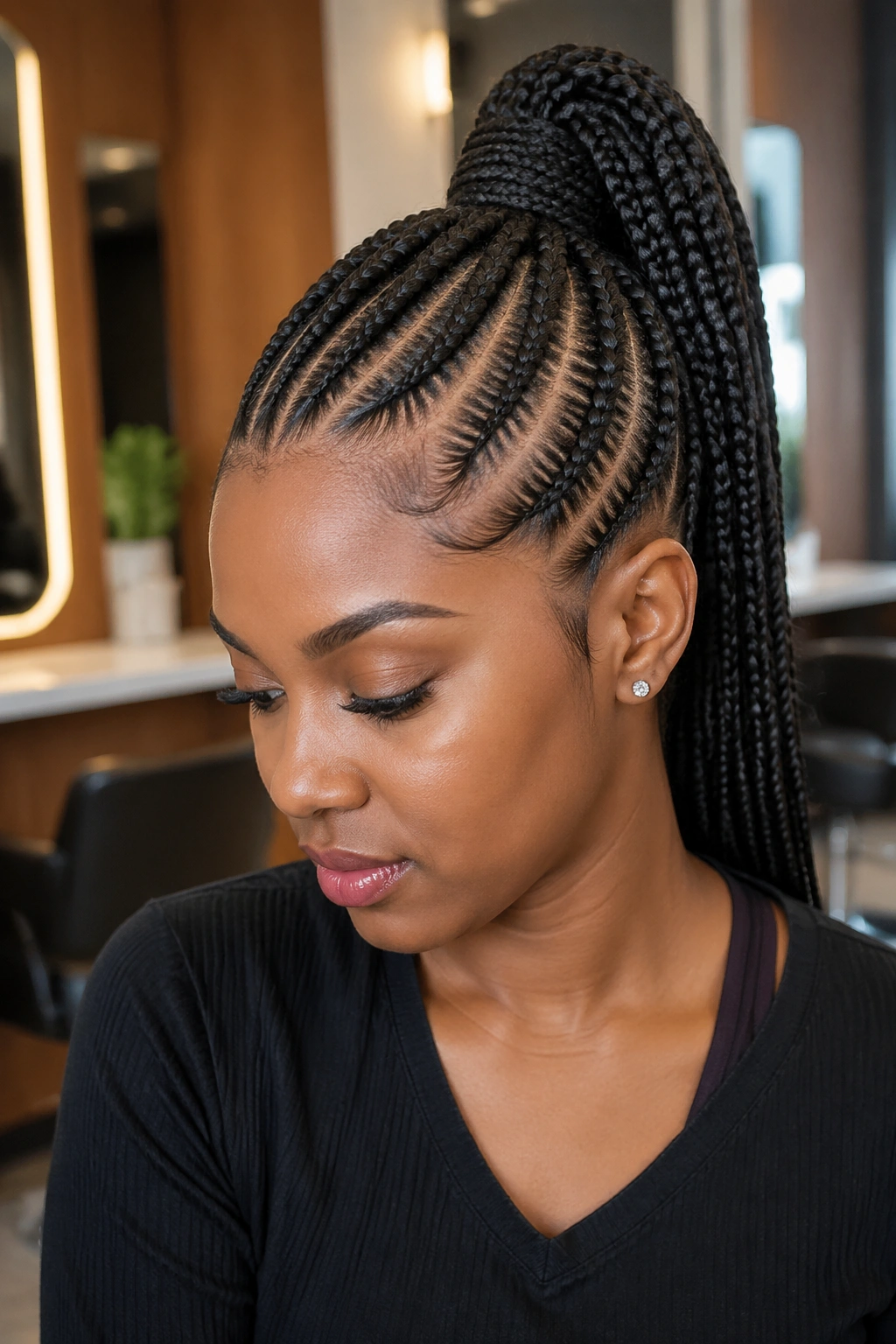
A feed-in braid ponytail is not a casual five-minute style. It is one of the most secure, long-wearing options in the whole group, and it makes sense when you need the hair out of the way for hours at a time.
The feed-in part matters because the braid starts small and gradually gets thicker as more hair is added. That creates a smoother look at the scalp and avoids the bulky start that can happen with regular braids. Once the braids reach the crown, they gather into a high ponytail and the rest of the hair can stay curly, braided, or extended with added length.
A Safer Way to Anchor the Braids
- Detangle the hair before you start.
- Keep the parts clean and even.
- Add hair in small sections so the braid does not bunch up.
- Stop tightening if the scalp starts to feel sore.
That last part matters more than the others. A braid should feel secure, not painful. If your hairline is sensitive, ask for looser tension near the front and let the braids sit a little farther back. The style still holds.
I like this look for active days, travel, or any situation where touching your hair every twenty minutes gets old fast. It is practical. It also has real presence.
11. Wet-Look High Ponytail for Curly Hair
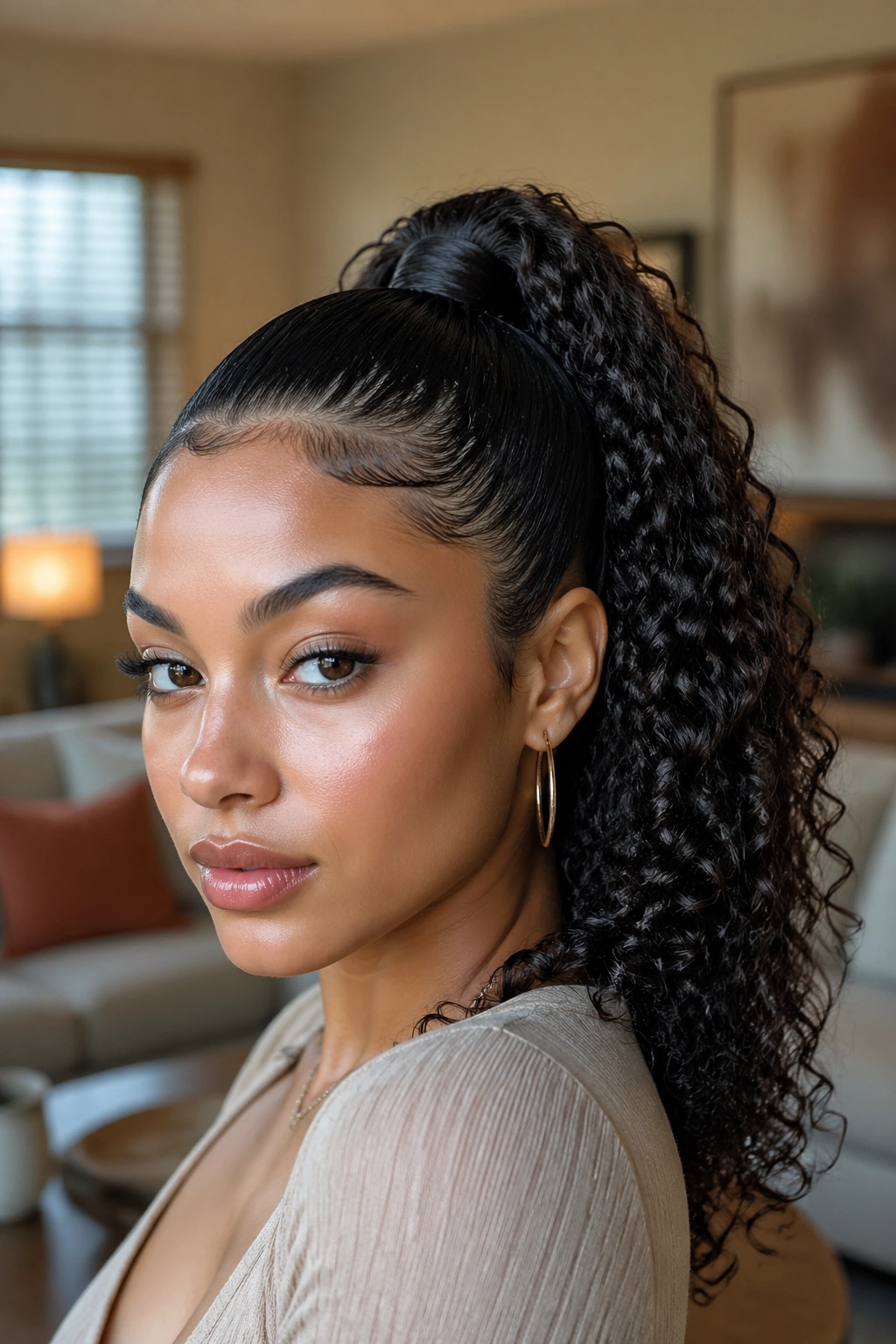
Wet roots, shiny sides, and defined curls give this style its whole mood. It looks bold because the contrast is bold: the top is smooth and glossy, while the tail keeps the curl pattern visible.
Start with damp hair and work in a leave-in conditioner, then add gel from the hairline up through the crown. Use a brush to smooth the sides and back into a high ponytail, then leave the tail alone or define it with a small amount of cream. If the curls are looser, a little more gel through the lengths can help keep the shape. If they are tighter, too much product will make the tail feel heavy.
Touch it too early and you’ll pay for it.
This style needs patience while it dries. If you can, let it set fully before moving around a lot. That keeps the surface smooth and prevents tiny dents at the crown. A diffuser on low speed can help if you are short on time, but don’t blast the hair from close range or the top will puff back up.
This is one of those styles that looks sharper at night under indoor light than people expect. The shine shows up fast.
12. Clip-In Length High Ponytail
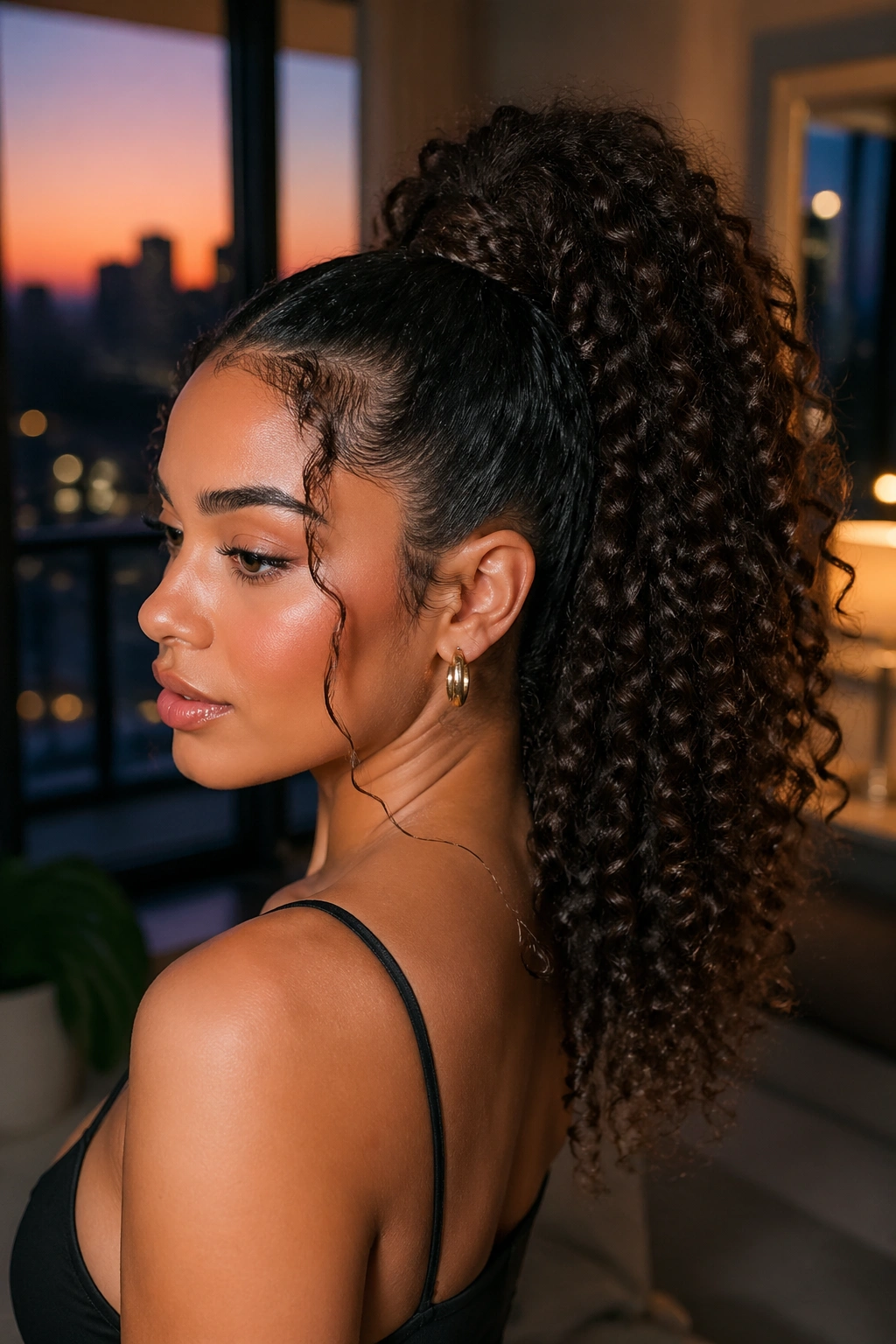
Clip-ins are not cheating. They are a tool, and on curly hair they can save a style that needs more length, density, or both.
If your natural ponytail is too short to make a dramatic tail, a curl-matching clip-in piece or ponytail extension fills in the gap. The trick is weight distribution. You want the added hair anchored close to the base, not hanging off the ponytail like a swing. That keeps the style comfortable and stops the base from sagging.
Where Clip-Ins Go
- Secure your natural hair into a tight high ponytail first.
- Clip the extension close to the elastic or built-in base.
- Wrap a small piece of your own hair around the join.
- Pin the wrap underneath so the seam stays hidden.
Match the curl pattern as closely as you can. A looser wave on a tight coil looks obvious, and the same goes the other way around. You don’t need a perfect match, but the shapes should at least speak the same language.
I’d use this when the outfit asks for more drama than the natural length gives you. Just keep the base firm. A loose anchor and a heavy ponytail are a terrible pair.
13. Twisted Base High Ponytail
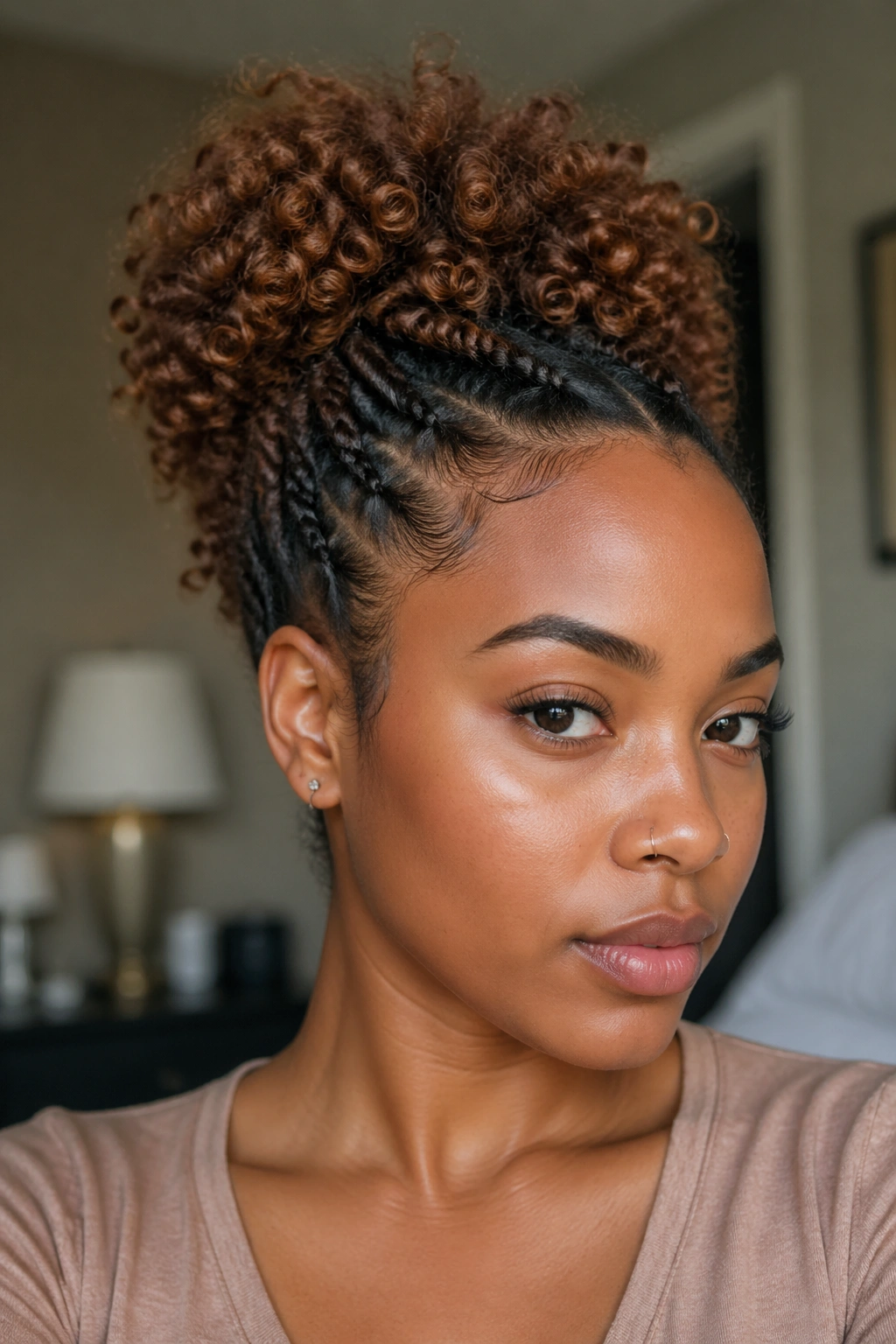
Do you want something between a braid and a plain ponytail? A twisted high ponytail sits right in that space.
Two-strand twists leading into the base give the style a clean path without the time or tightness of a full braid. They also work well when the front pieces are different lengths, because twists can be pinned and tucked more easily than braids. On curly hair, that matters. The texture likes a little flexibility.
Twists are kinder to your wrists, too. Braiding the front of your hair can take effort, especially if the hair is thick or your arms tire quickly. A rope twist is simpler: split the section into two, twist each side in the same direction, then wrap them around each other in the opposite direction. Once they reach the crown, pull everything into the ponytail.
How to Hide the Twist
Pin the end of the twist under the ponytail base, then cover the join with a small curl wrap or a wide elastic. If the twists are thick enough, they can stay visible as part of the design. If they are thin, it is usually cleaner to let them disappear into the ponytail.
This style feels neat without being severe. That is its charm.
14. Pineapple-Style High Ponytail
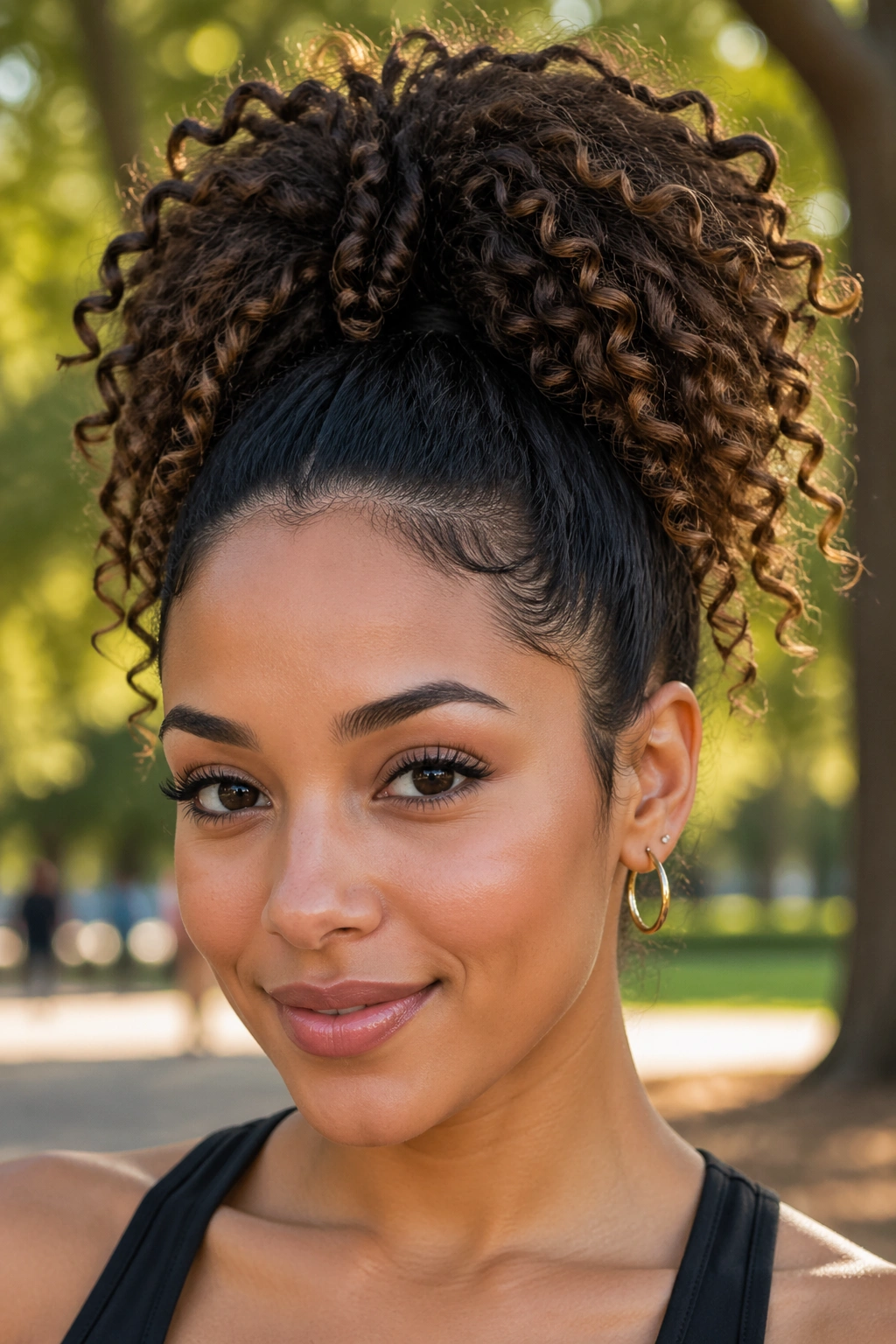
The pineapple ponytail is the style I reach for when I want volume without tension. It sits very high on the crown, often a little looser than a classic ponytail, and keeps the curl pattern from getting crushed.
The look comes from the same idea people use to preserve curls overnight: gather the hair up high so the ends stay on top instead of getting bent or flattened. On the street, it reads as playful and soft. On day-two curls, it can look like a deliberate style instead of a compromise.
Unlike a tight high puff, this version leaves more air between the curls. That makes it useful when you want shape but do not want the roots slicked down. It also works well if the hair is shorter, because the height creates the illusion of more length and keeps the ends from disappearing into the nape.
A few small clips can help if the shorter layers keep falling out. Use them under the top layer only. You want support, not a row of metal markers showing through the hair. If the curls are already stretched from a twist-out or braid-out, this style falls into place fast.
15. Soft Face-Framing High Ponytail
A soft face-framing high ponytail is the style I’d pick when I want the hair to look finished without looking fussy. The ponytail stays high, but a few front pieces are left out to soften the line around the face. That tiny decision changes everything.
The pieces do not need to match. In fact, they usually look better when they don’t. One can sit closer to the cheekbone, another can skim the jawline, and a third can stay tucked behind the ear if that side needs more control. Curly hair gives those pieces shape on its own, which is why this version feels so easy to wear.
The Bit Most People Miss
The front pieces should be defined, not blended into the rest of the hair like an afterthought. A little cream on damp fingers is usually enough to separate them. If one curl wants to spring too high, stretch it gently while it dries and let it fall where it wants to fall.
This style is the one that gets saved when the hair is clean, the schedule is tight, and you still want the ponytail to look chosen. It works with a sweater, a blazer, a T-shirt, or a dress. No drama needed. Just a high tie, a few loose curls, and enough shape at the front to make the whole thing feel complete.
