



Curly dreadlock hairstyles can look soft, sharp, playful, or formal, and the difference usually comes down to shape, not length. A high ponytail reads one way. A side sweep reads another. Add curled ends, and the whole style suddenly has more lift, more movement, and a little drama even when the base is dead simple.
That extra curl changes the math. Locs with spring at the ends sit differently from straight locs, and they hold space differently around the face and neck. Some styles need more pins than you’d expect. Some need less product than you think. And if your locs are heavy, the wrong placement can pull at your edges in a way you feel by lunchtime.
Curly dreadlock hairstyles also give you more range than people usually admit. A messy updo can look formal. A low bun can look relaxed. A half-up style can go from errands to dinner with one accessory swap. The trick is matching the silhouette to your loc thickness, your curl pattern, and how much movement you want to keep.
1. High Curly Dreadlock Ponytail
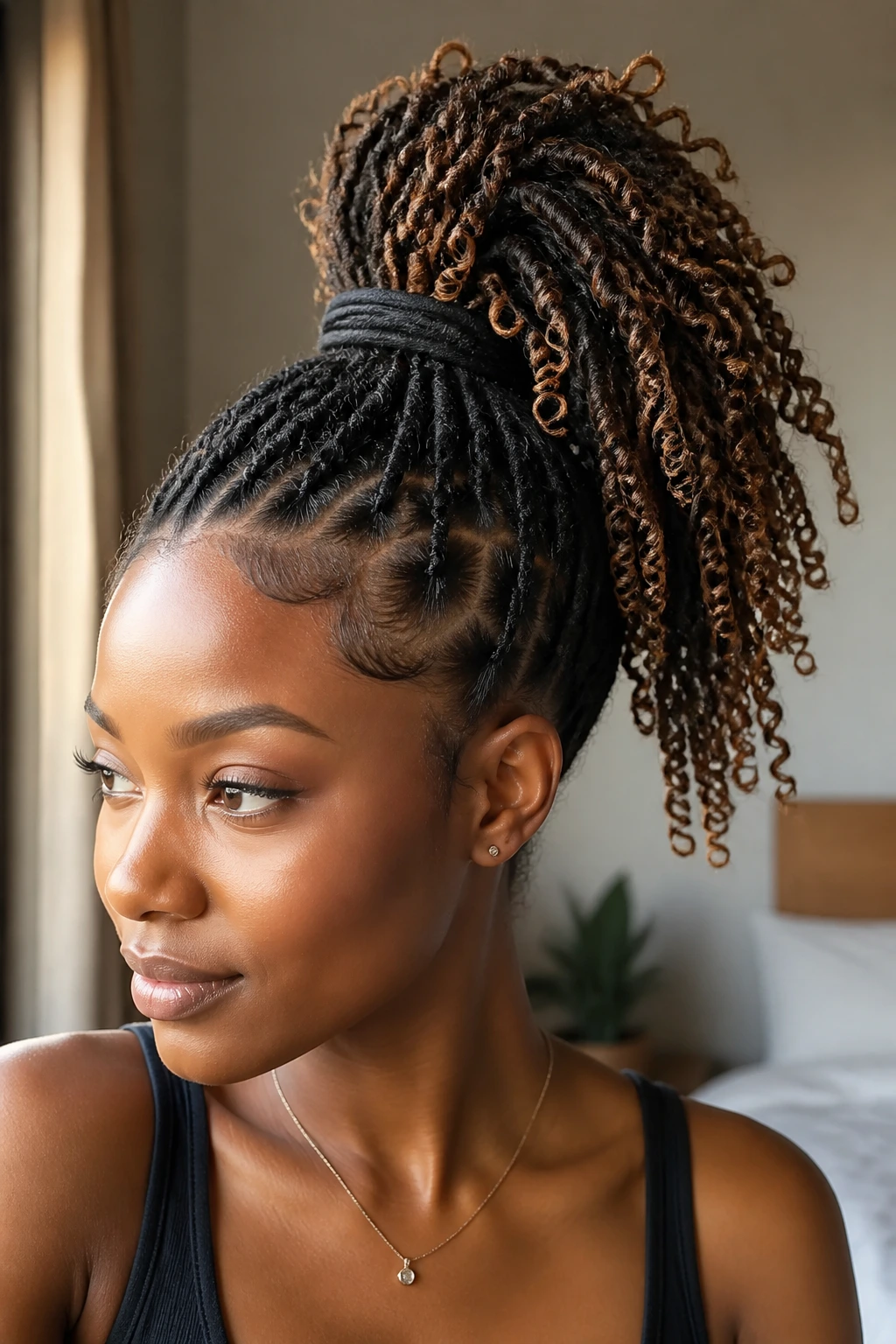
A high curly dreadlock ponytail has one job: lift everything up and let the curls do the talking. It’s the style I’d pick when the locs feel too heavy hanging down or when you want your face to look a little more open without putting in a full updo.
Why it works
The height changes the whole line of the head. A ponytail placed just above the crown makes the locs look longer, and the curled ends keep the style from reading stiff. If your curls are more defined, the ponytail gets a clean bounce. If they’re fluffier, it looks fuller and a little more lived-in.
- Use a snag-free elastic with a soft grip.
- Wrap one thin loc around the base to hide the band.
- Leave the ponytail slightly off-center if your crown is sensitive.
- Let 2 or 3 curly locs sit loose around the temple when you want a softer frame.
Best detail: don’t yank the base tight just because the ponytail is high. If the style hurts while you’re doing it, it’ll annoy you all day.
2. Half-Up Curly Loc Cascade
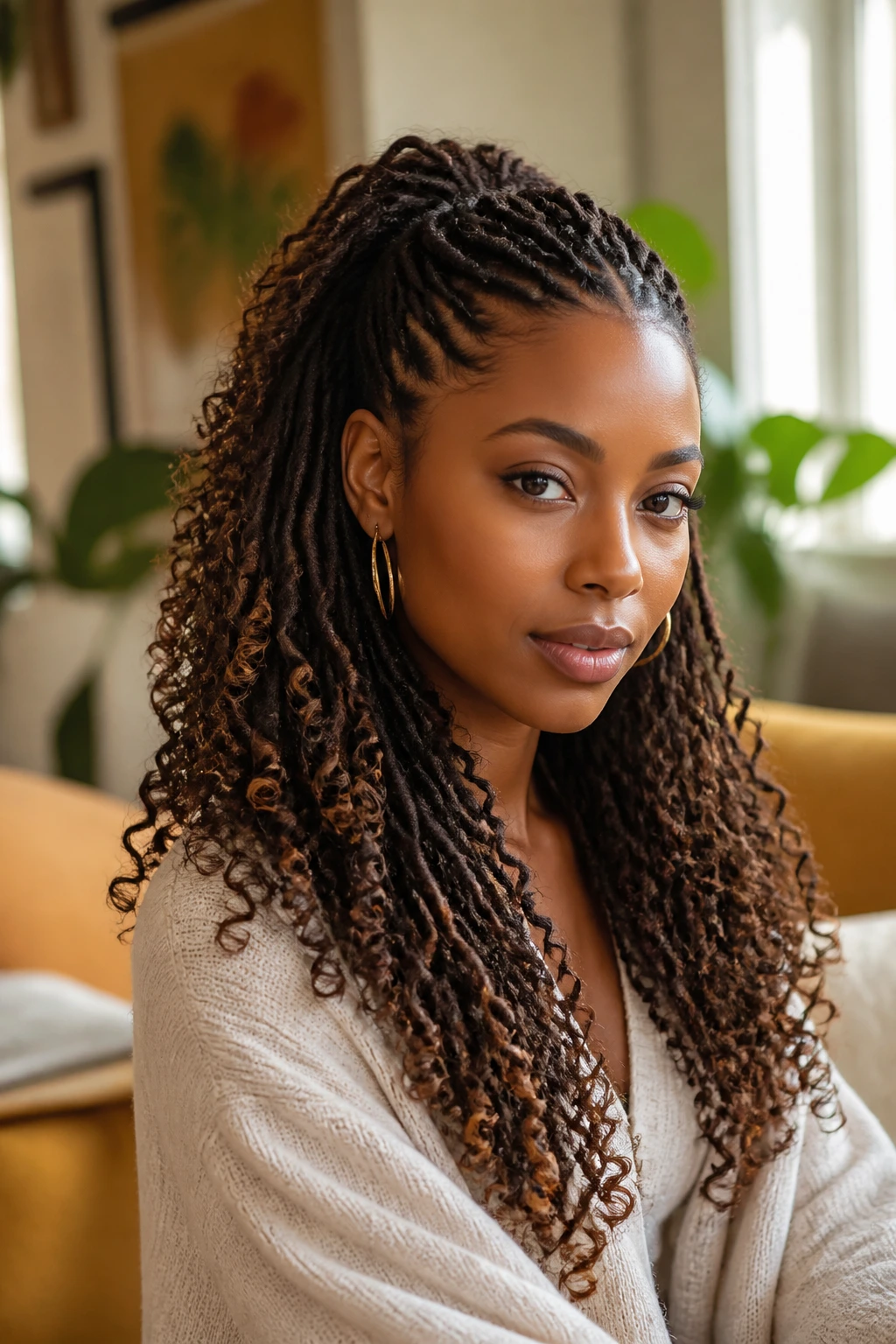
The half-up, half-down style is the one I reach for when I want the curls to stay visible but the front of the hair to behave. It keeps the shape neat near the scalp and lets the rest spill down in a way that feels relaxed without looking unfinished.
A clean half-up section works best when the top part is gathered from temple to temple, not all the way back to the nape. That keeps the silhouette balanced. The lower locs should fall freely, and the curls at the ends give the style a soft finish instead of a blunt drop.
This one also handles mixed textures well. If some locs curl tighter than others, no one cares once the layers fall. The unevenness actually helps.
A small clip or a wrapped band at the back makes the style look deliberate. Skip the giant scrunchie unless you want a more casual feel. A slim tie keeps the top section compact, which matters when the curls below already add plenty of volume.
3. Side-Swept Curly Loc Curtain
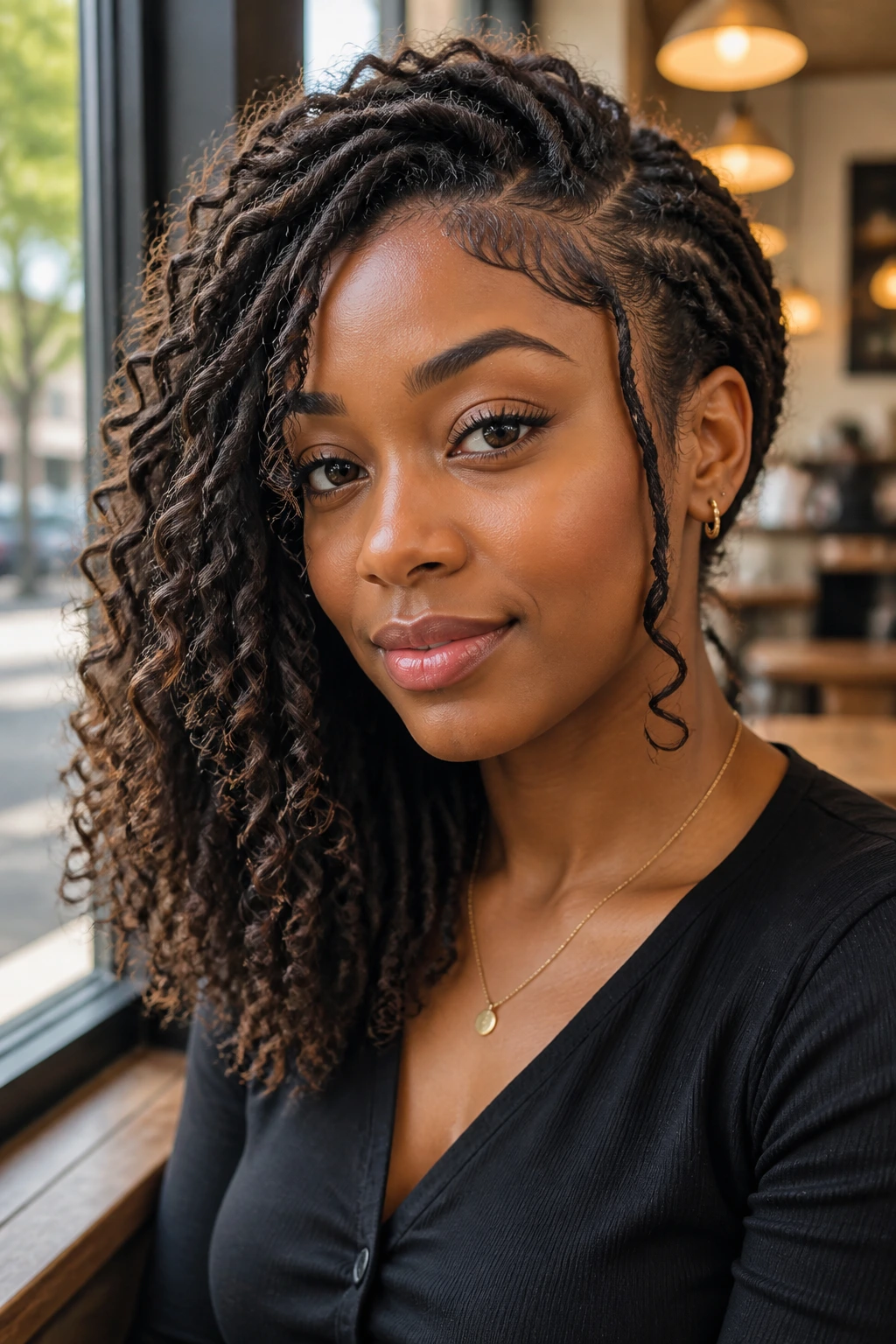
Why does a side sweep look polished even when the curls are a little wild? Because the asymmetry does the work for you. One side carries the weight, the other side opens the face, and the curl pattern keeps the whole thing from looking flat.
What makes it different
A side-swept curly loc style is not the same as tossing everything to one shoulder. The roots still need direction. I like a loose side part that starts just above one eyebrow and then guides the locs across the forehead without flattening the curl too much. That slight lift at the root matters.
How to wear it
- Pin the heavier side behind one ear.
- Leave 1 or 2 face-framing locs out so the style doesn’t feel severe.
- Use a couple of hidden pins at the crown if the weight keeps sliding.
- Let the curled ends land over the shoulder instead of tucking them under.
This is one of the better curly dreadlock hairstyles for people who want movement without a full updo. It has enough shape for dinner, but it still feels easy for daytime.
4. Low Curly Dreadlock Bun
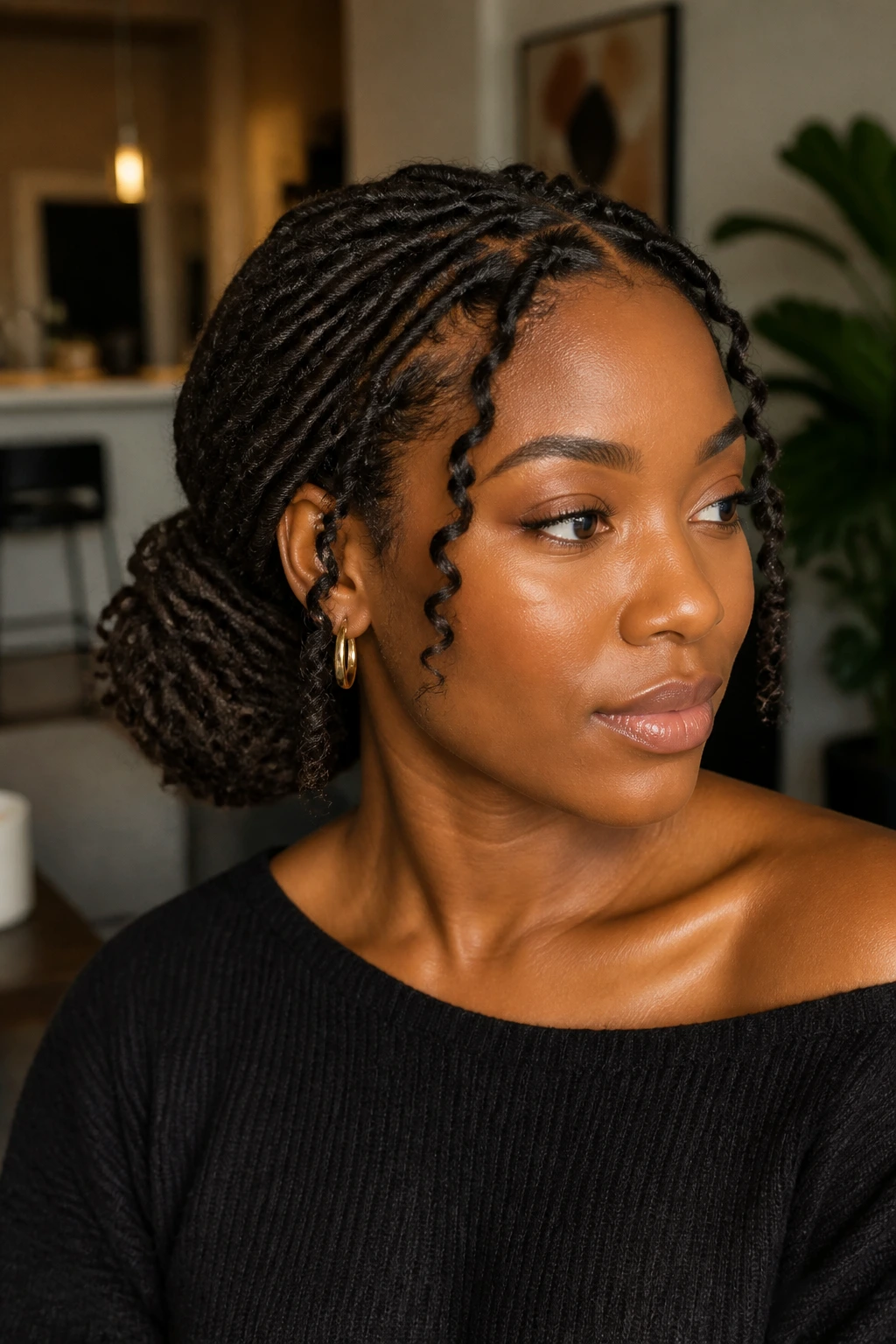
A low bun is the quiet workhorse of curly dreadlock hairstyles. It sits at the nape, keeps the profile clean, and makes curly ends look intentional instead of chaotic. I like it most when the locs are thick enough to build a solid bun without stacking five different clips.
The trick is to let the bun stay a little loose. A tight knot can make curly locs fight each other, which leaves the silhouette lumpy. A better approach is to twist the length once or twice, then tuck the ends under in a wide loop. That gives the style a round shape instead of a pinched one.
Curled ends are useful here because they soften the bun’s edge. You do not want every strand glued down. A few tendrils near the ears or at the neck make the style feel less rigid and easier to wear for hours.
This one works especially well with earrings. The bun clears the jawline, so a simple hoop or drop earring gets room to show up without competing with the hair.
5. Curly Loc Space Buns
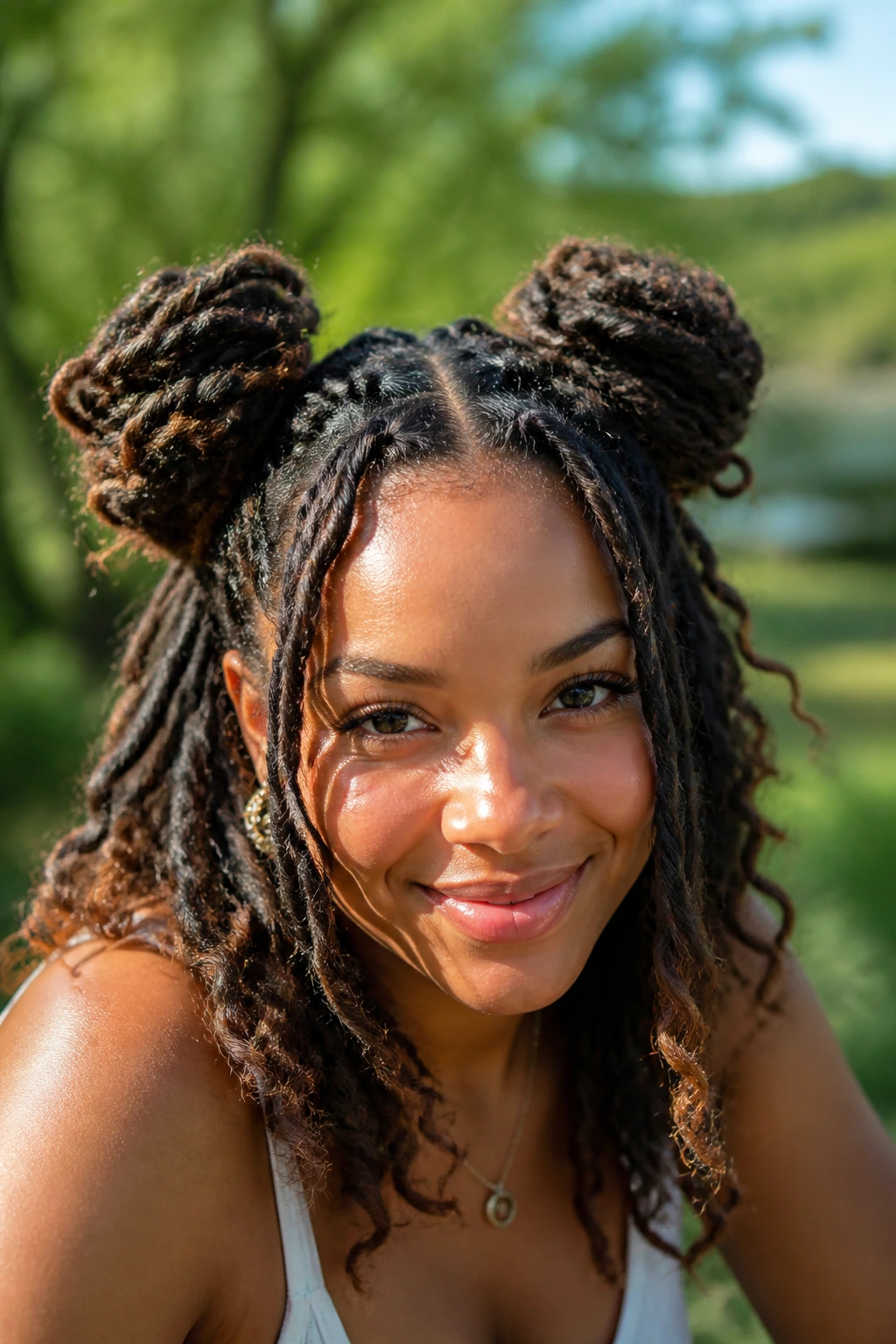
Space buns are playful, yes, but they also solve a real problem: they take heavy locs and split the weight so your scalp doesn’t have to carry all of it in one spot. That matters more than people think.
Best when you want volume on both sides
Two buns placed above the ears keep the curls visible and the shape symmetrical. If the locs are long, you can leave the curly ends out of each bun instead of hiding them completely. That gives the style a little extra height, which keeps it from looking too compact.
Details that make it work
- Part the hair cleanly down the middle before you start.
- Make each bun at the same height, or the style looks accidental.
- Use bobby pins that match your hair color if you want a cleaner finish.
- Keep the front slightly soft by letting 1 or 2 locs fall around the temples.
My tip: space buns look better when they are not identical twins. A tiny difference in fullness makes them feel less rigid and more human.
6. Curly Loc Faux Hawk
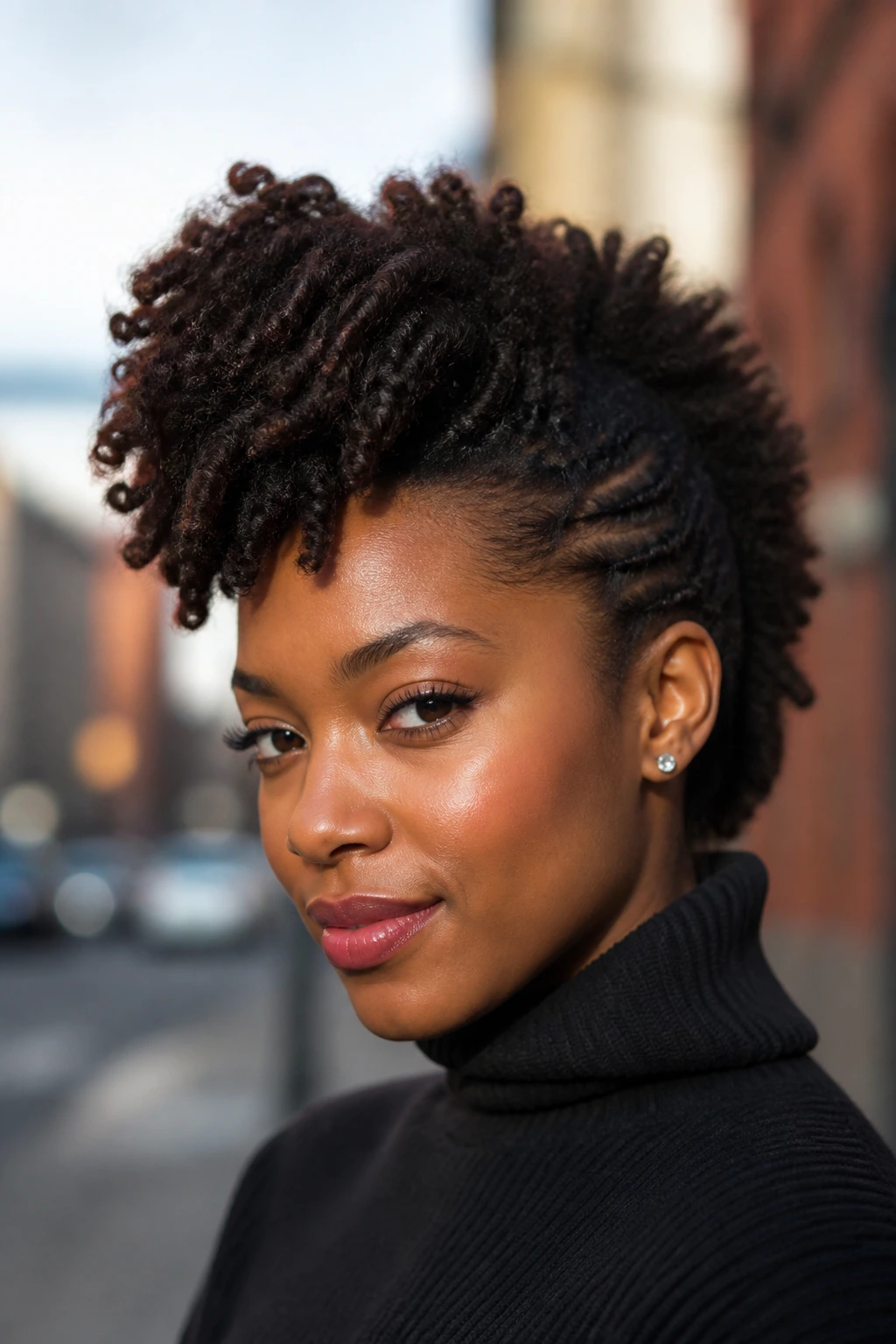
Unlike a full updo, a faux hawk leaves the curly texture on display along the center line of the head. The sides are pinned in, the middle rises, and the result is sharp without being severe. I like it because it gives structure to thick locs without hiding the curls.
The best version starts with a central strip from the forehead to the nape. That middle section gets lifted and pinned into a ridge, while the side locs are tucked or rolled back. If your locs are dense, you do not need much height to get the effect; the texture alone creates it.
This style is especially good when you want your face to look longer. The vertical line does that naturally. It also holds up well for events where you’ll be moving around, because the pinned sides keep the locs from swinging everywhere.
A faux hawk does ask for a little patience. Pin one section at a time. If you rush the base, the whole thing starts sagging halfway through the day. That’s the part people skip, then complain the style fell out. It usually wasn’t the curls. It was the pinning.
7. Curly Loc Crown Updo
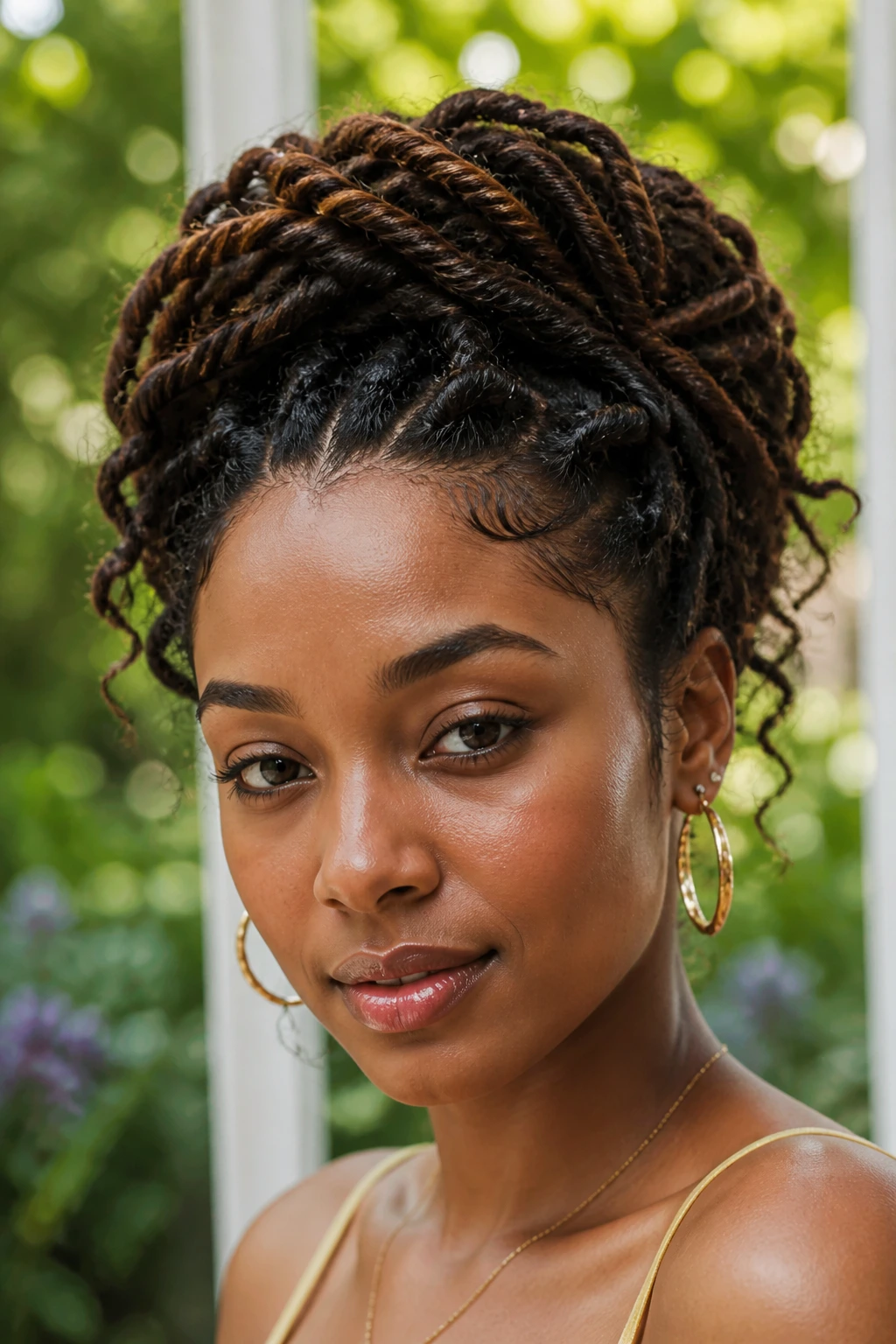
A crown updo gives curly locs a softer kind of formality. The hair wraps around the head like a halo, but the curls keep it from feeling severe or overbuilt. It’s one of those styles that looks composed even when the locs themselves are thick and a little unruly.
The best crown updos use the locs’ natural bend instead of forcing them into a tight braid. Twist sections back toward the crown, then secure them in overlapping loops. The goal is shape, not rigidity. If the curls peek out along the edges, that’s a good thing. It keeps the style alive.
This style is a smart choice for weddings, photo sessions, or any day when you want the neck clear and the profile neat. It also lets you wear heavier earrings or a high neckline without crowding your face.
One thing I’d avoid: too many tiny pins on the outer ring. They can snag curls and leave the updo looking overworked. A few well-placed pins hold better than a dozen little ones fighting each other.
8. Shoulder-Length Curly Loc Bob
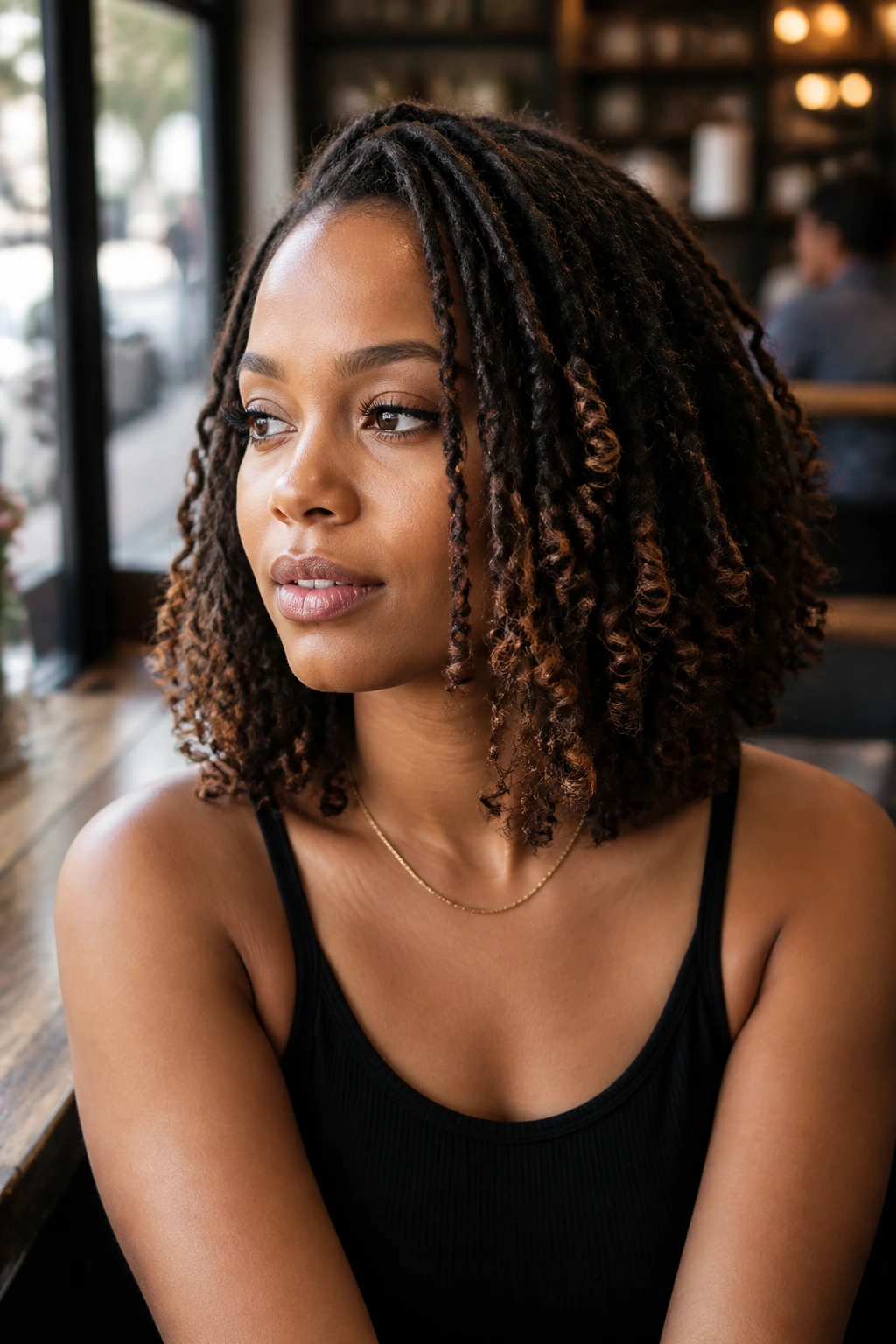
A shoulder-length curly loc bob changes the mood fast. Shorter locs sit closer to the jaw, which makes the curls feel bouncier and easier to shape. The style looks deliberate because the ends land in a clean line, even when the texture itself is loose.
What makes this bob work is the perimeter. The ends should hit around the shoulders or just above them, not flop all over the place. If the locs are layered a little, the curl pattern gets room to show. If everything is the same length, the shape can look boxy.
What to watch for
- Keep the front pieces a touch longer if you want more movement.
- Use light mousse or setting foam when the curls need refreshing.
- Sleep with a satin bonnet so the shape doesn’t frizz out overnight.
- Avoid stacking too many clips at the root; short locs show every bump.
This is a good option for anyone who likes the feeling of hair off the back but still wants enough length for curls to matter. It is tidy without feeling boring. That’s the sweet spot.
9. Curly Loc Top Knot
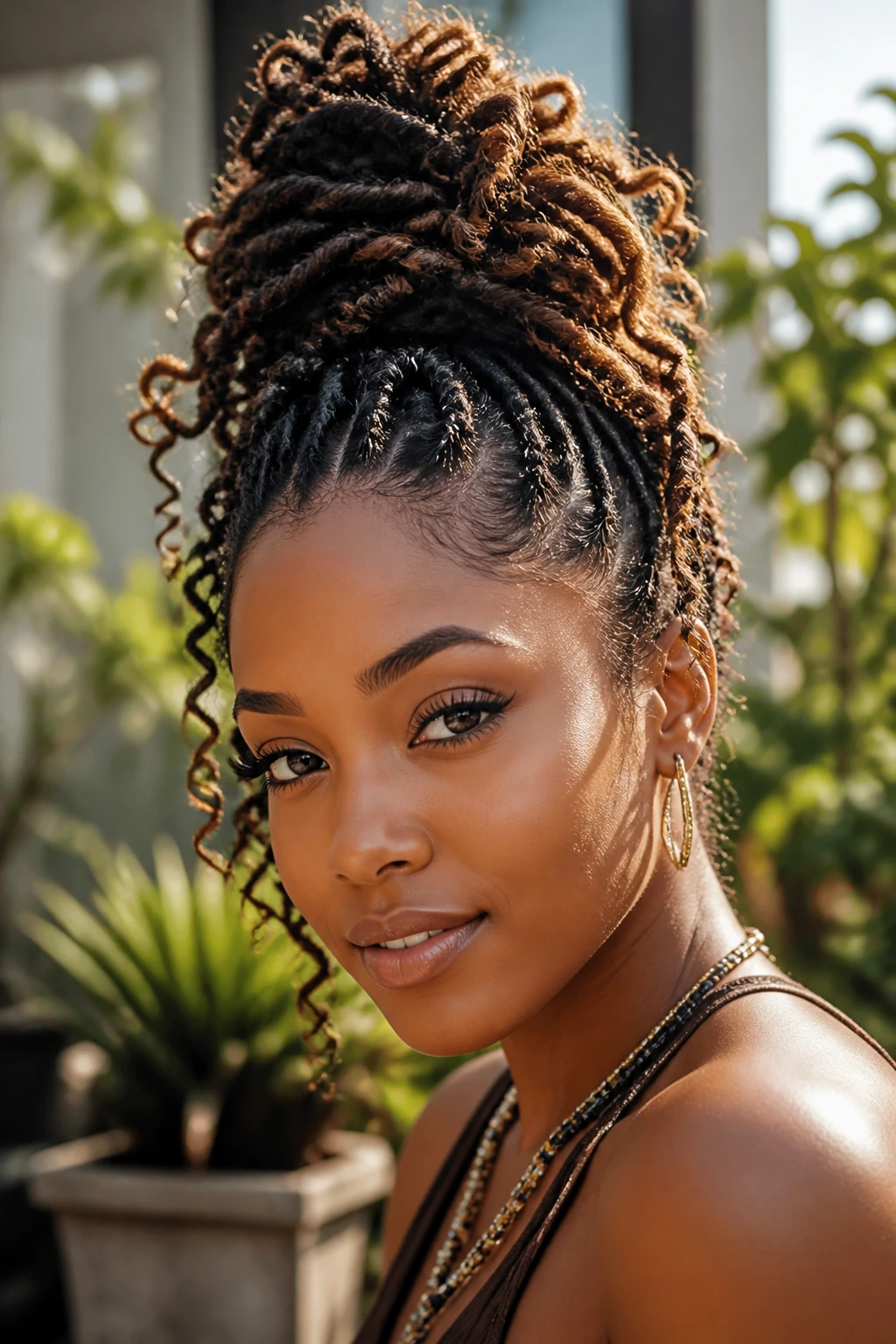
A top knot sounds basic until you wrap the base cleanly and let the curly ends spring out on top. Then it stops being basic. The difference is shape control. A sloppy knot reads lazy. A stacked knot with defined curls reads intentional.
I like this style when the locs are in that awkward middle zone — long enough to bunch up, not so long that a high ponytail feels comfortable. Pull the length upward, twist once, and coil the hair into a knot that sits near the crown. Leave the ends loose if you want height. Tuck them in if you want a cleaner profile.
The top knot is also one of the easiest ways to show off a strong cheekbone or a clean neckline. That sounds cosmetic, sure, but it matters when you’re dressing the whole look. Hair and clothes talk to each other. They really do.
If the knot feels too bulky, split the tail in two before wrapping it. That trick spreads the weight and keeps the bun from collapsing on one side.
10. Curly Dreadlock Side Ponytail
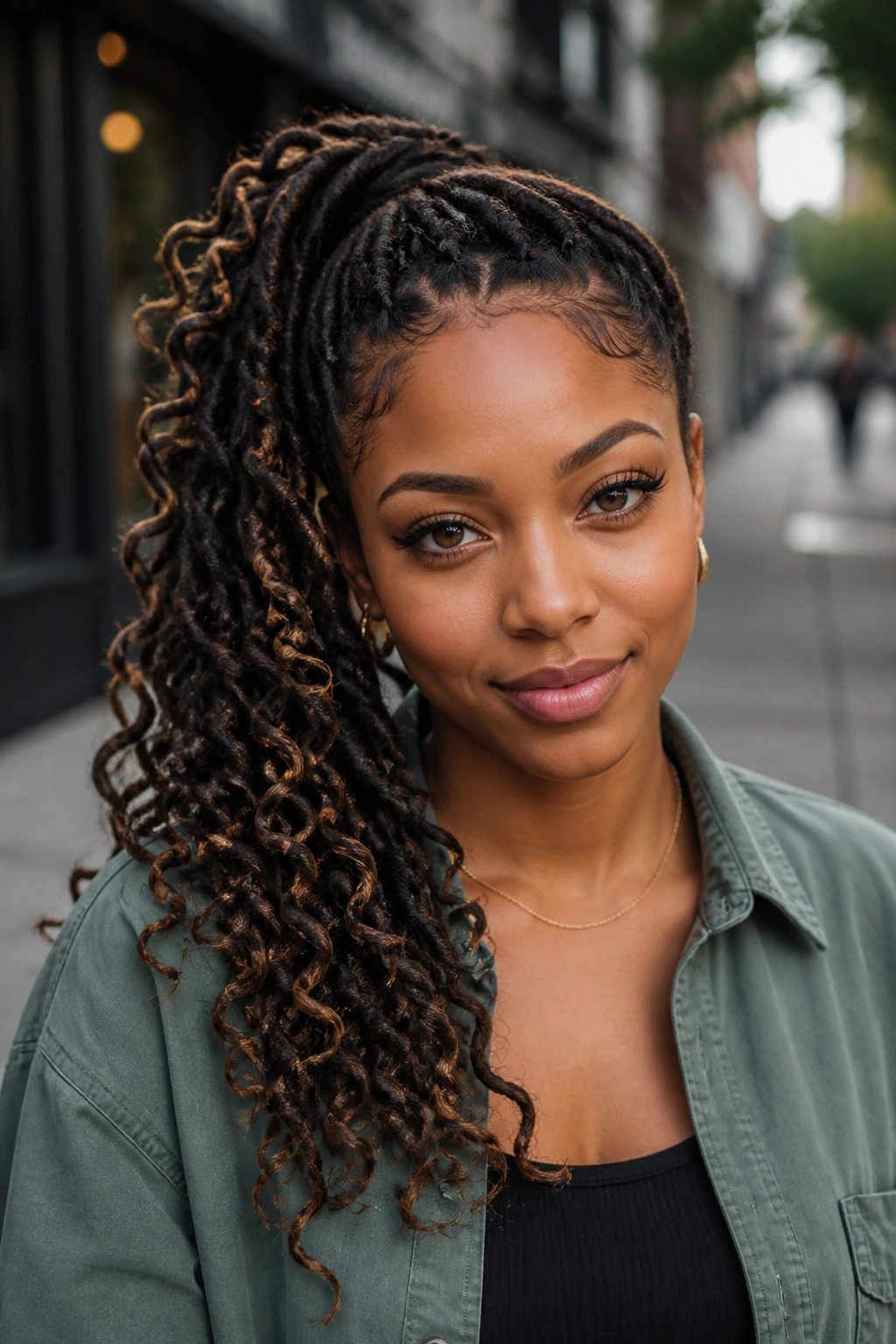
A side ponytail is the move when you want movement more than height. It shifts the weight to one shoulder, gives the curls a long line to follow, and keeps the whole style from feeling too formal. There’s something easy about it.
The trick is placement. Set the ponytail low enough that it rests on the collarbone, not so low that it disappears behind the back. A middle or deep side part helps direct the locs into the ponytail without creating a harsh ridge across the scalp.
This works especially well when the curls are big and airy at the ends. The side drop lets them fan out instead of stacking on top of each other. If the locs are heavier, secure the base with two ties rather than one. One tie tends to slip.
A side ponytail can look sporty with a T-shirt or sharp with a fitted jacket. That range makes it a real keeper, not just a filler style you reach for when you’re out of ideas.
11. Wrapped Curly Loc Chignon
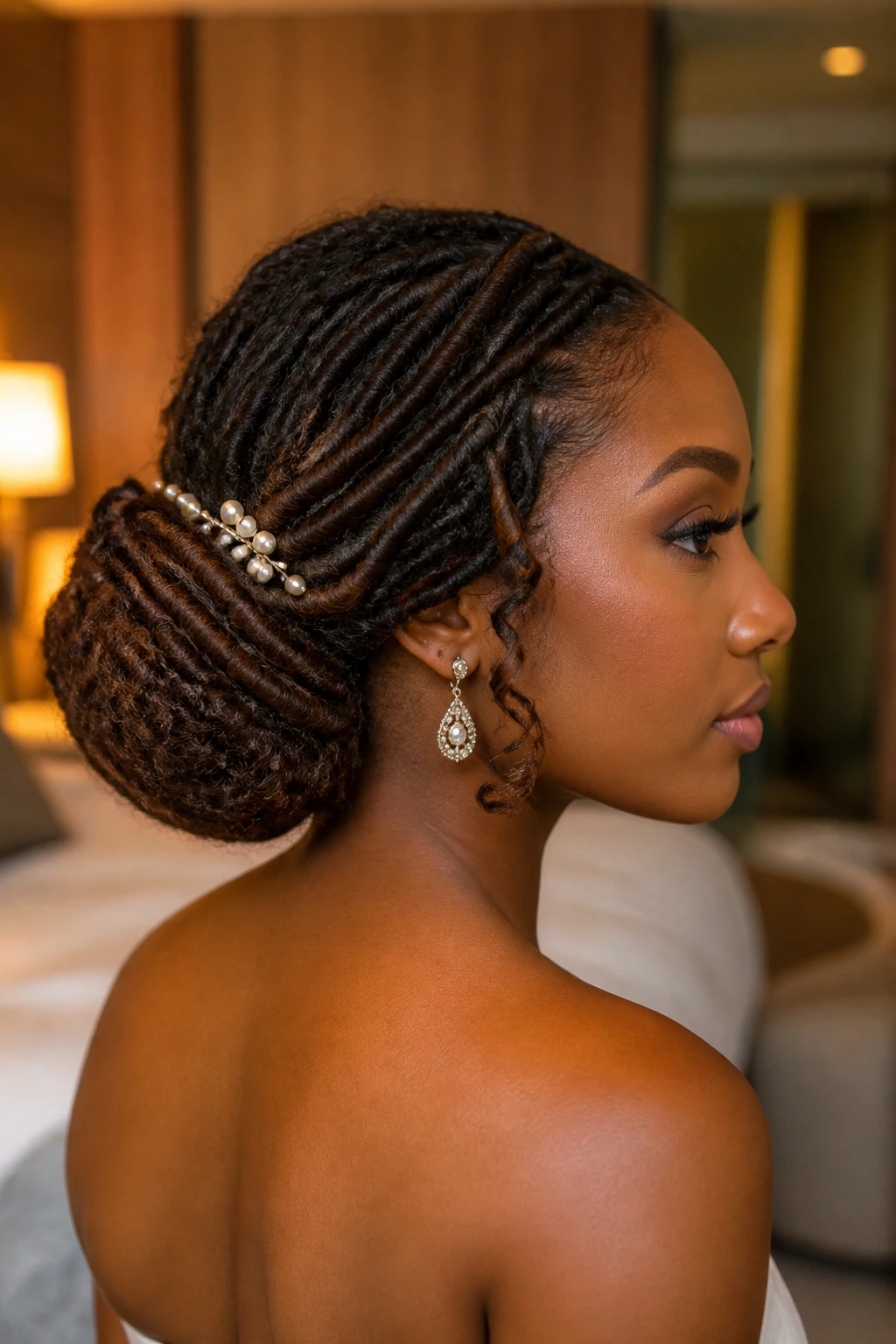
For formal events, the wrapped chignon is the style I trust when the locs need to stay off the neck and still look textured. It sits low, stays neat, and gives curly ends a place to hide or peek out depending on how polished you want the finish.
The base matters here. If you start with a smooth, low ponytail, the chignon has a cleaner shape. From there, wrap the locs around in broad loops rather than tight spirals. Tight wrapping makes curly locs fight back. Broad wrapping gives the updo a soft edge and keeps it from looking stuffed.
A few tiny accents help. A pearl pin, a metal cuff, or even one wrapped loc crossing over the front of the bun can make the whole thing feel finished. Don’t pile on too many accessories. The chignon already has enough presence on its own.
This is one of the styles that holds up best when you need to look put together for a long stretch. It’s calm. It stays where you put it. And it doesn’t ask for constant fussing.
12. Curly Loc Pinned Mohawk
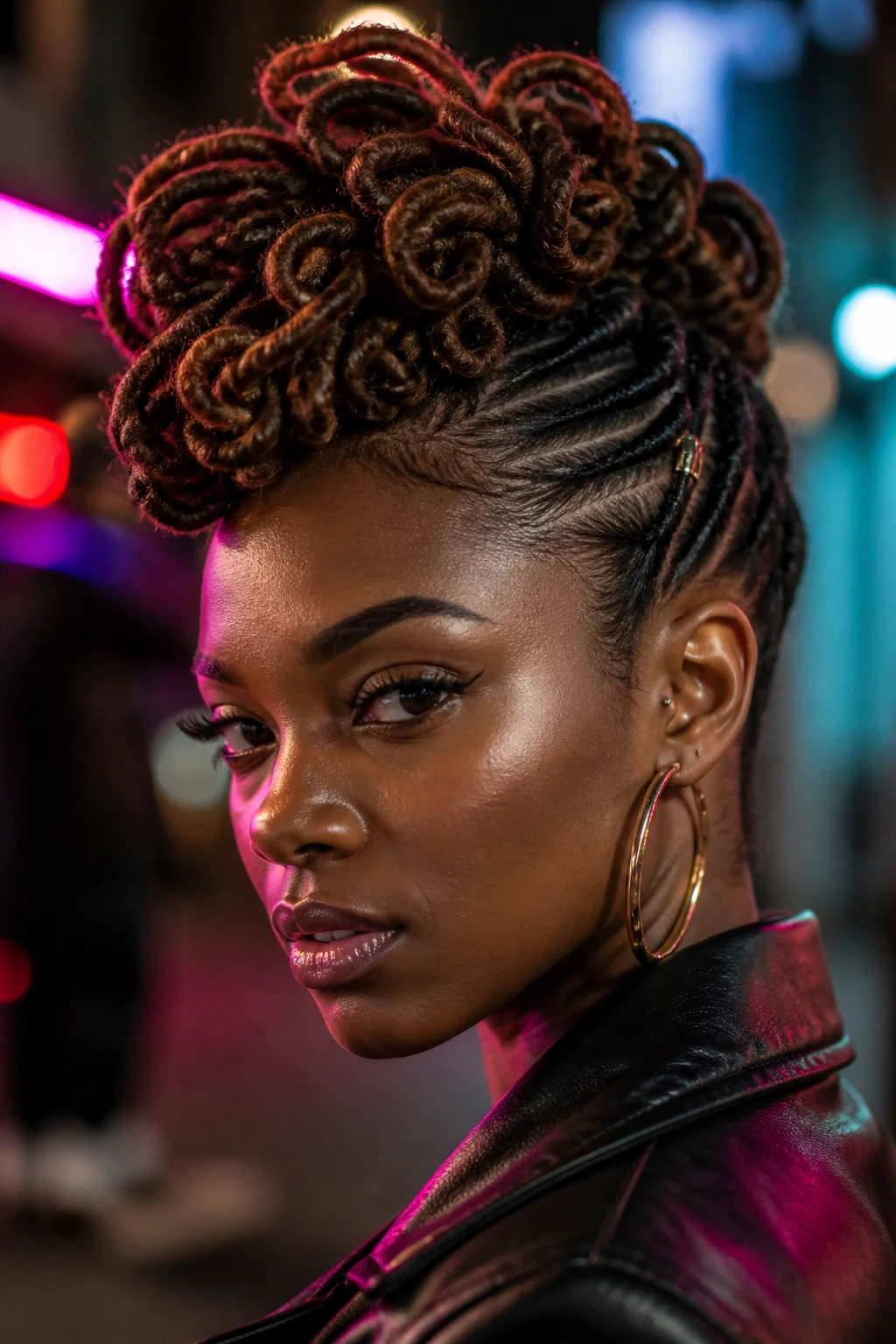
Ever tried a pinned mohawk on curly locs? It’s a little bolder than a faux hawk and a bit more dramatic, because the sides are pushed tighter while the center stands taller. The texture of the curls keeps it from looking harsh, which is the part I like most.
How to shape it
Start by defining a center strip from the forehead back to the nape. Pin the sides close to the scalp in small overlapping sections, then lift the middle locs upward so they create a ridge. You want height, but not a stiff shell. The curls should still move when you turn your head.
Why it works on curly locs
- The curl pattern fills space fast.
- Side pins disappear more easily in dense texture.
- The middle line gives the style a clear shape, even on shorter locs.
- A few loose tips near the back soften the finish.
This style is good when you want personality. Not subtle. Not timid. It also handles mixed curl sizes well, because the whole point is texture and contrast.
13. Twisted Half-Crown Curly Loc Style
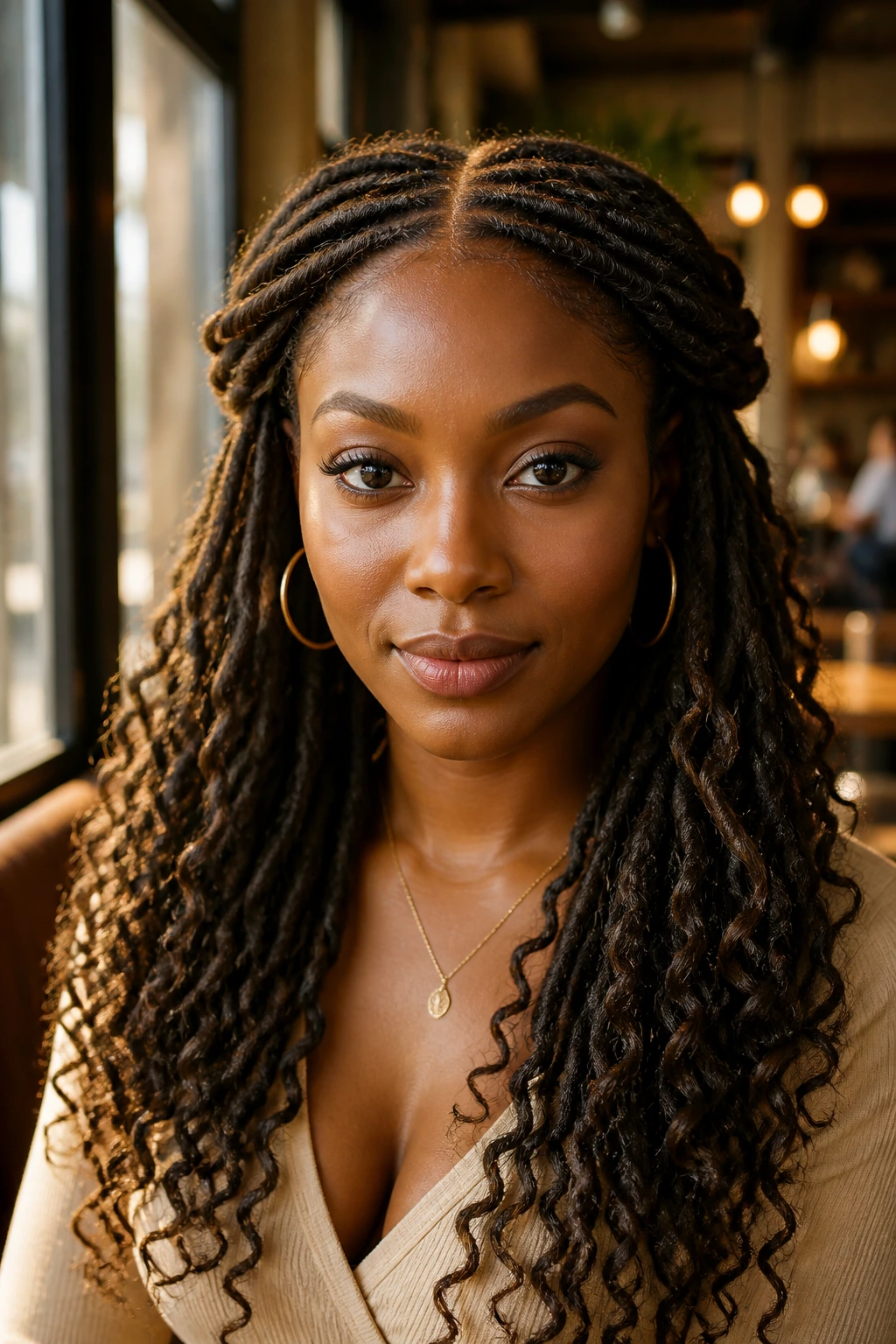
A twisted half-crown is what I suggest when you want the front to stay neat and the back to keep its softness. It’s calmer than a full crown updo, and that middle ground makes it useful for work, brunch, or days when you want to look tidy without losing the curl pattern.
The front section gets twisted from each temple and pinned toward the back of the head. The rest of the locs falls free. That separation gives the face a frame while letting the curls move down the shoulders. If the locs are long, the bottom half can swing. If they’re shorter, the curls puff out more. Both look fine.
A center part gives the style a formal feel. A side part makes it softer. I like both, and the choice usually comes down to the outfit rather than the hair itself.
The style also gives you room to add a few slim cuffs or small beads on the loose ends without overdoing it. Just keep the front clean. That contrast is what makes the whole thing work.
14. Curly Dreadlock Pigtails
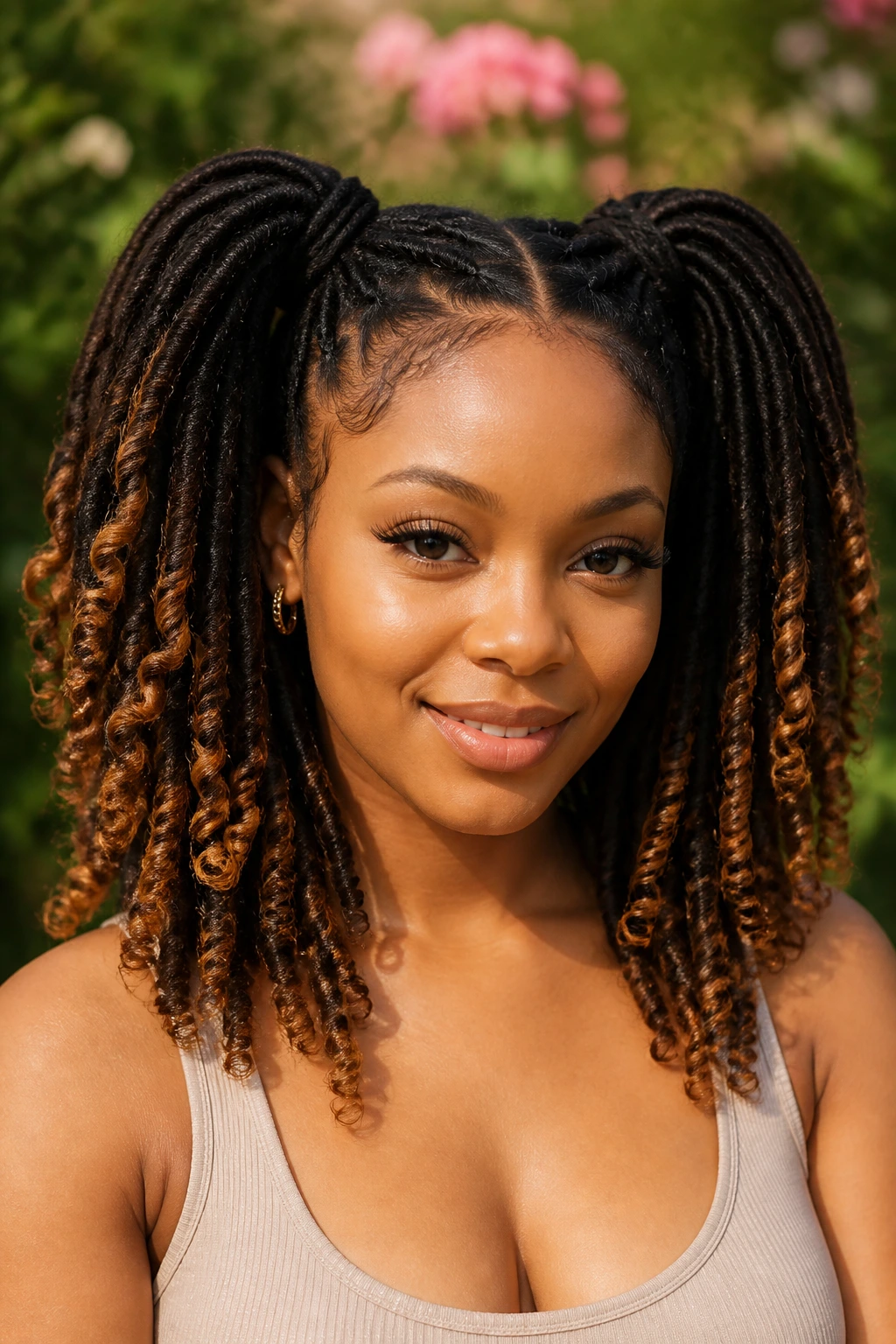
Pigtails are not childish when the locs are thick, long, and curled at the ends. They read playful, sure, but also balanced and practical. Two ponytails split the weight, which can be a relief if your scalp gets tired of one heavy style all day.
The parting matters more than the actual tie. A clean middle part gives the style symmetry. A zigzag part or a slightly off-center line makes it feel less school-uniform and more styled. If the locs are very dense, you may want the pigtails low enough that they sit near the jaw instead of sticking out at the sides.
This style gets a lot better when the curls are allowed to spread. Don’t crush them into tight bundles. Let the ends move a bit. The whole point is bounce.
I’d choose pigtails on days when I want ease without losing shape. They’re casual, but not sloppy. There’s a difference.
15. Curly Loc Waterfall Layers
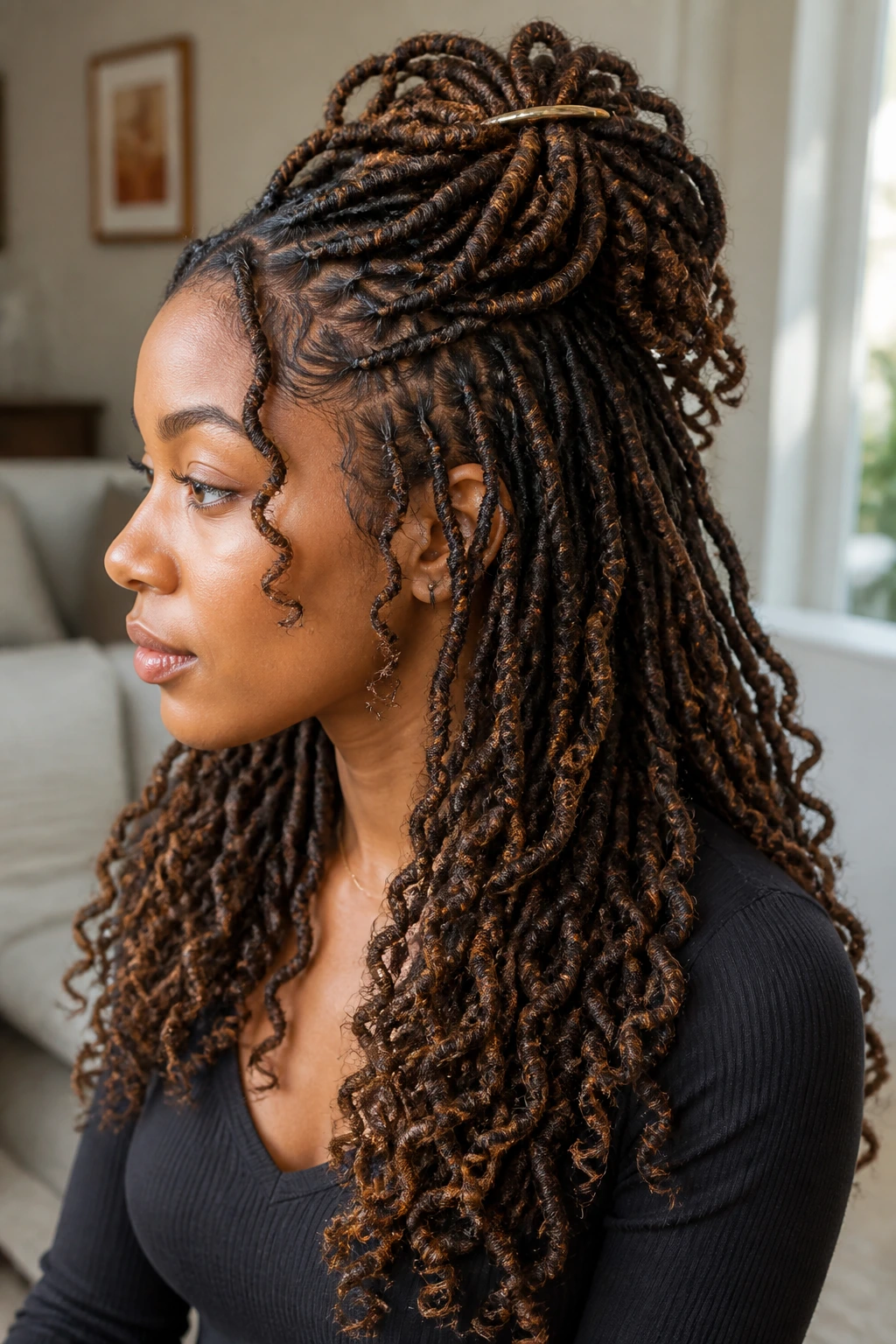
The waterfall style works because it lets weight drop in layers instead of one heavy block. That matters with locs, where density can make everything feel bulky fast. By pinning some sections higher and leaving others to fall, you get movement without losing structure.
This style needs a little planning. The upper layer should be lifted and secured, while the lower locs spill out underneath in a staggered pattern. The curls at the ends help the layers separate visually, which keeps the style from looking like one solid curtain.
What to look for
- Best on medium to long locs.
- Works well when the curls are defined but not crunchy.
- Needs hidden pins placed under the top layer.
- Looks better when the bottom section is slightly uneven.
The waterfall shape has a softer, almost dressy feel, but it does not require a perfectly neat finish. That’s one of the reasons I like it. A little looseness makes the style better, not worse.
16. Curly Loc Bangs with Loose Length
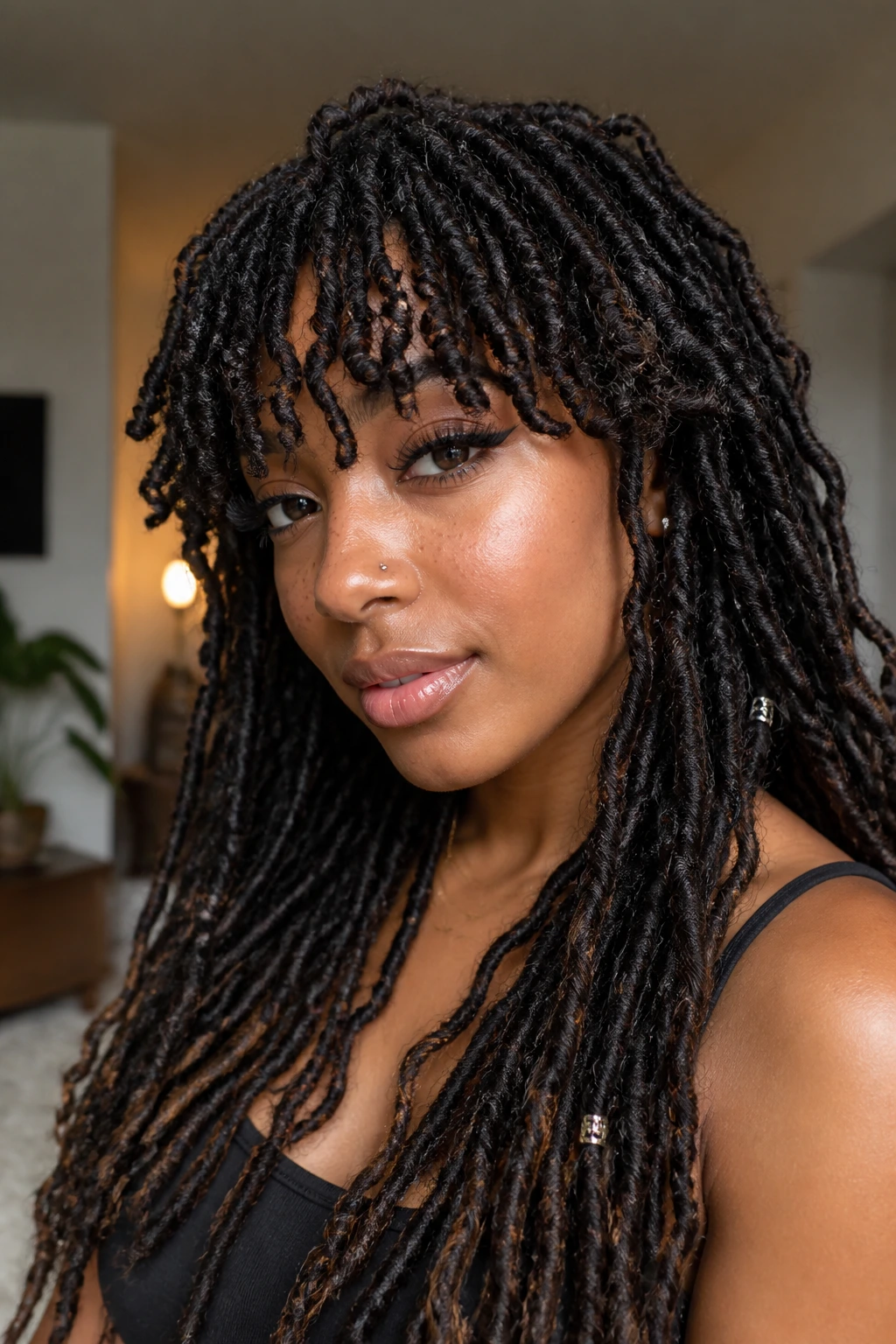
Curly loc bangs are bold, period. They change the face shape faster than almost any other option on this list, and they make the curls front and center instead of treating them like an afterthought. If the bangs are too short, the style can feel choppy. If they land around the brow or cheekbone, they look intentional.
The rest of the locs should stay loose and soft so the bangs have something to contrast against. That contrast is the whole point. A dense fringe with a fuller body of curls behind it gives the style depth. Without that, the bangs can swallow the face.
I like this one on people who wear glasses or want the eyes framed without a hard part. It also works on longer face shapes because the front fringe shortens the vertical line a bit.
There is a catch. Bangs need regular refreshing. They frizz first, flatten first, and get in the way first. If you want them to stay neat, set them with a little foam and clip them while they dry.
17. Low Bun with Face-Framing Curly Loc Pieces
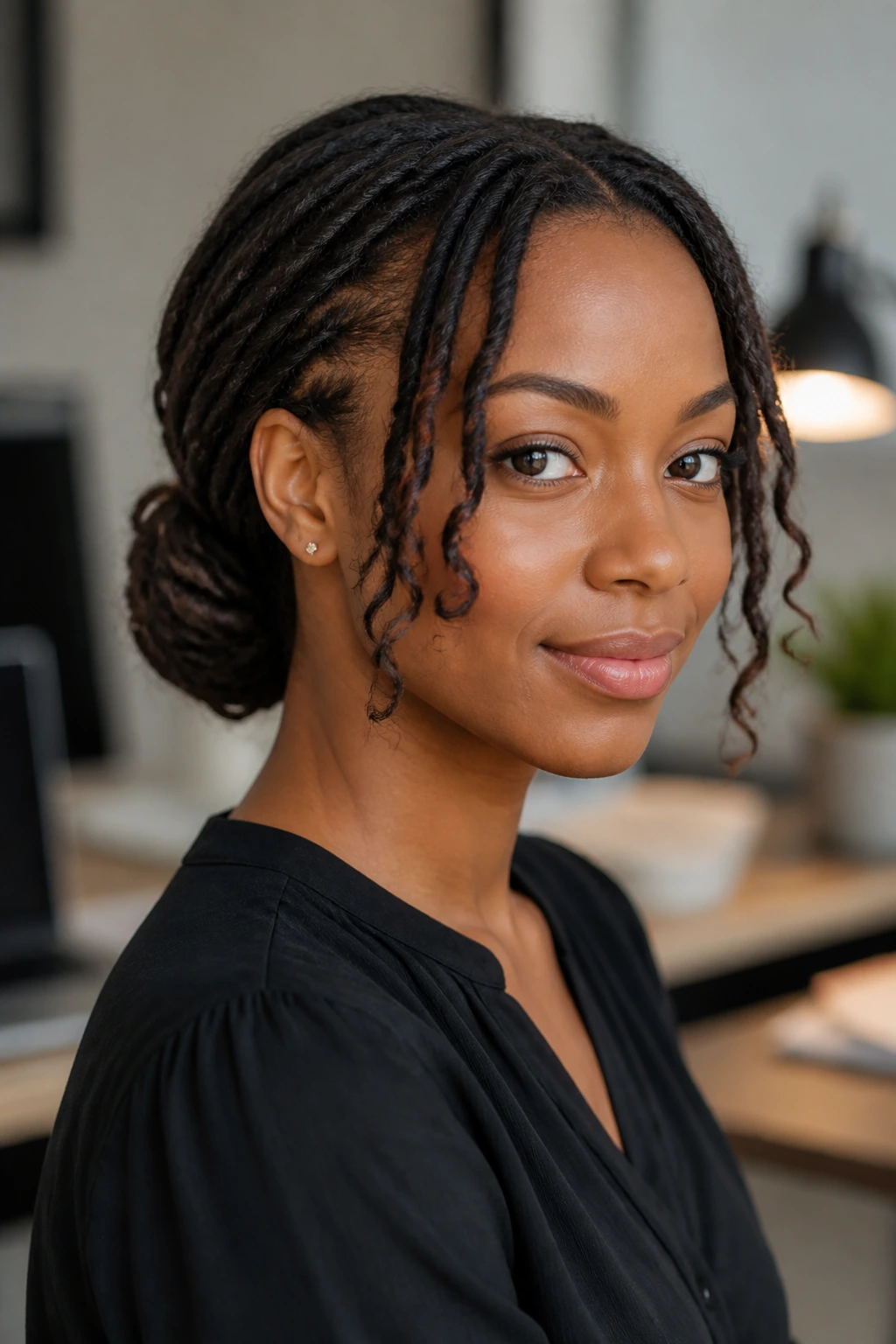
A low bun with face-framing pieces is the style that saves you when you want polish without looking stiff. The bun keeps the back neat. The loose curls near the cheeks keep the whole thing from turning severe.
What I like here is the contrast. The bun can be tucked tight at the nape, but the front pieces should move. Two or three locs left out on each side are enough. If you leave too many, the style loses its clean shape. Too few, and it starts to feel formal in a cold way.
This works well with curly ends because the front pieces can bend outward or curl under depending on how you pin them. That little shift changes the mood. Curled pieces near the jaw soften the face, while longer ones can stretch the line a bit.
This is a good style for interviews, dinners, or any day when you want to look finished without looking overdone. Straightforward. No drama. Which, some days, is exactly right.
18. Rolled Curly Loc Updo
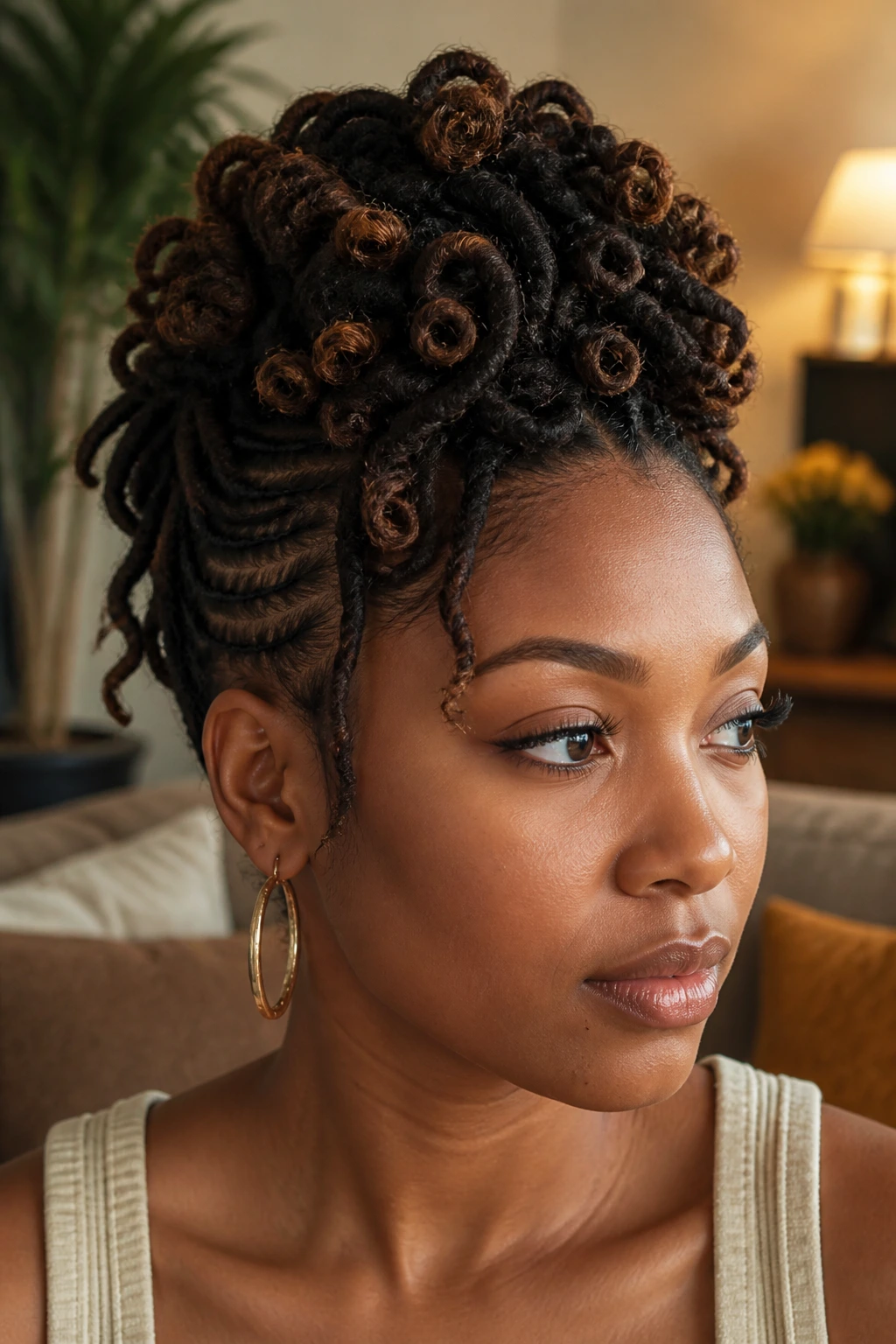
I have a soft spot for the rolled-up style, mostly because it handles odd-length locs better than people expect. Instead of forcing every piece into one shape, you roll sections upward and secure them one by one. That gives the final style a layered look with enough variation to feel natural.
How it comes together
Start at the sides and roll the locs inward toward the center or upward toward the crown. Pin each roll before moving on. The back can be tucked into a soft coil, or you can leave a few curly ends out to keep it from looking too smooth.
Why it’s useful
- Works on medium or uneven lengths.
- Hides frizz better than a super slick bun.
- Gives you texture without needing a lot of accessories.
- Holds a little better when the locs are dense.
The rolled shape has a vintage feel, but not in a costume way. It just looks considered. That’s the part that keeps it interesting.
19. Side Bun with Curly Ends
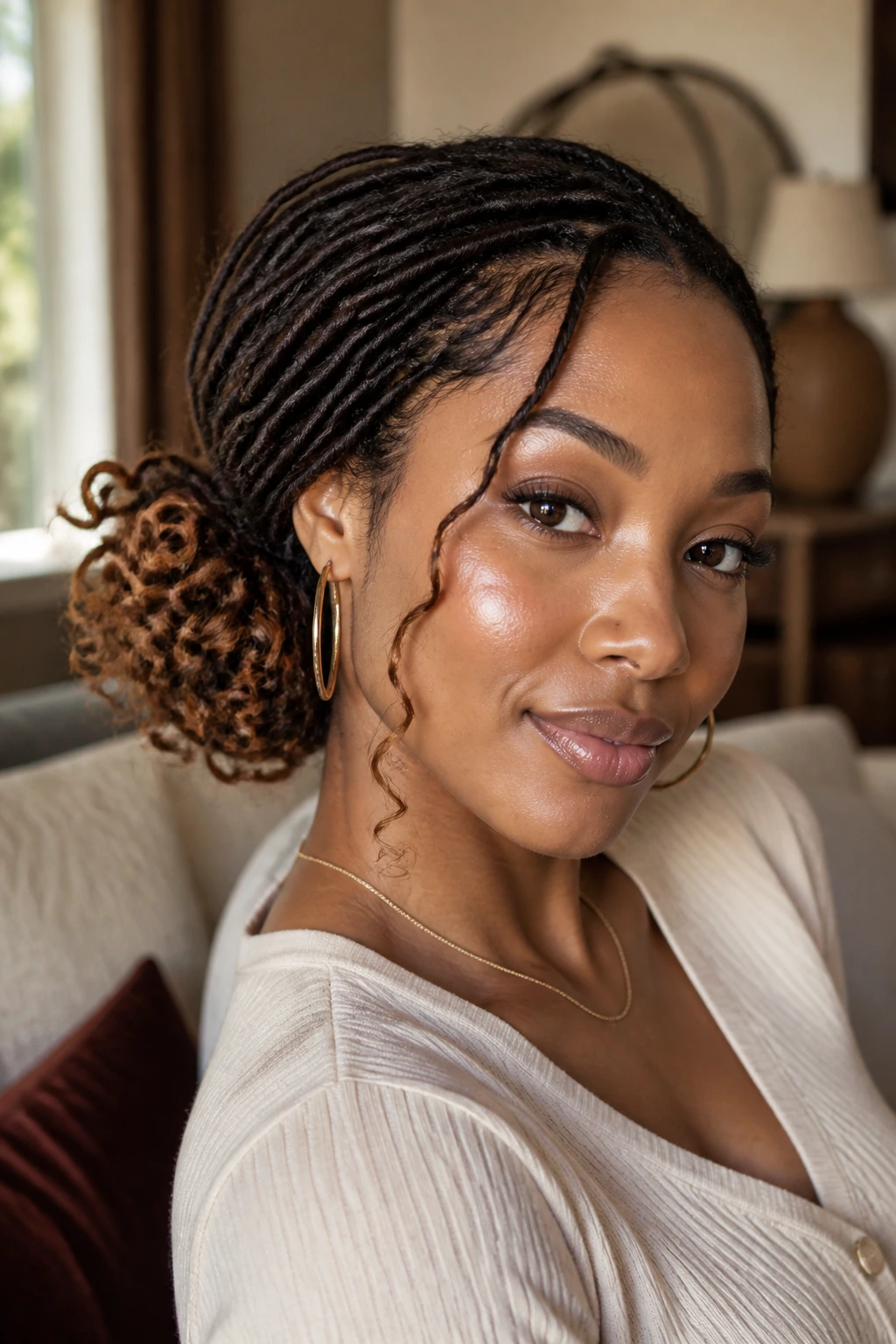
What makes a side bun worth trying? The angle. A side bun shifts the focus away from the center of the head and brings the curls to one shoulder line, which can make the face look a little softer and the whole style more relaxed.
The bun itself should sit below the ear or just behind it. That placement gives the curls a chance to spill outward instead of stacking straight back. If your locs are longer, leave a few curly ends loose so the bun doesn’t look sealed shut. If they’re shorter, pin the ends in a wider loop so the shape still reads clearly.
How to keep it balanced
A side bun needs support on the opposite side of the head, especially if the locs are heavy. I like two hidden pins near the base and one anchor pin where the bun starts to droop. That usually stops the tilt.
This style works well with off-shoulder tops and high necklines alike, which is rare. It looks a little dressy, but not precious.
20. Free-Flow Curly Locs with Shells and Cuffs
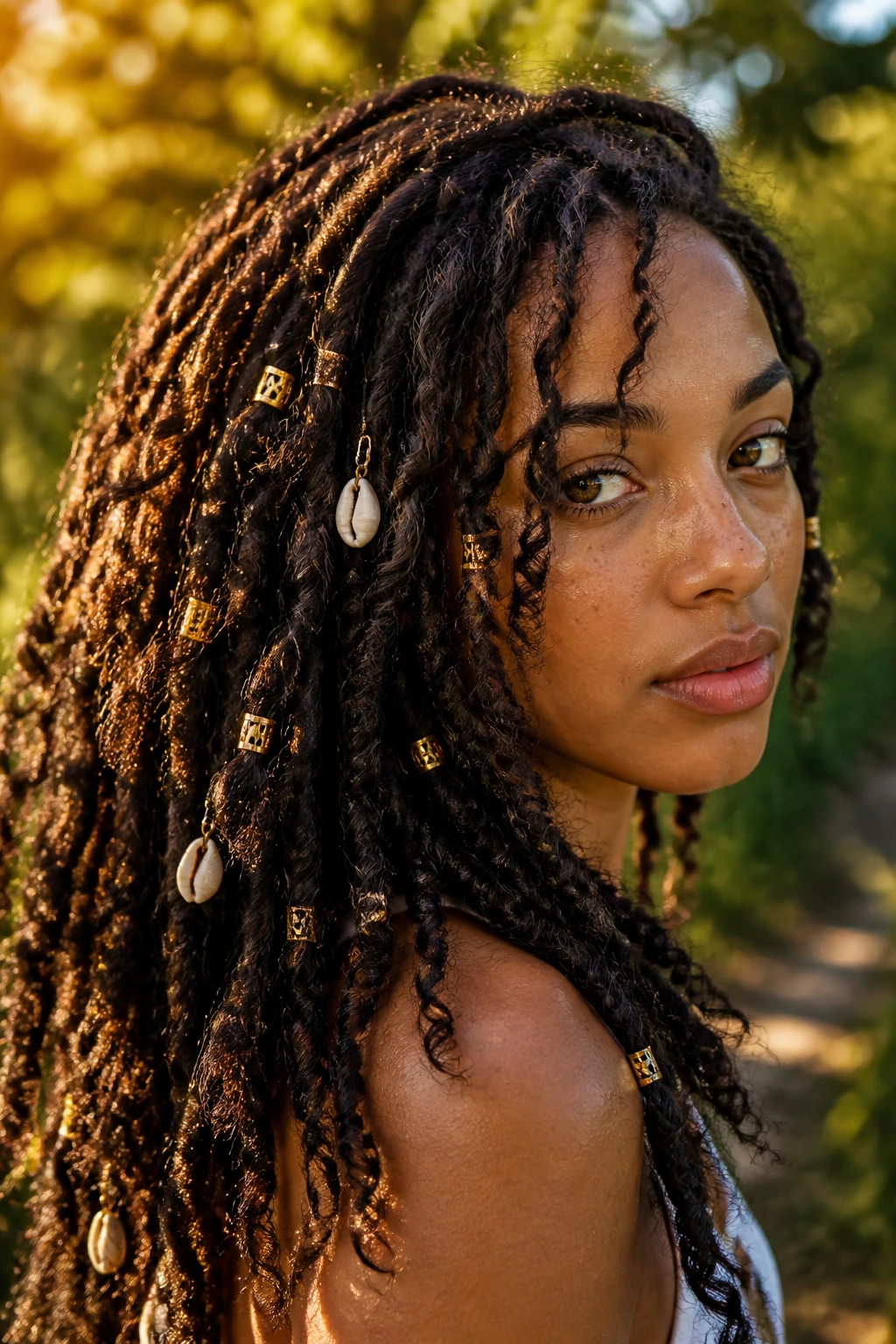
Some days, the best curly dreadlock hairstyle is the one that leaves the locs alone. Free-flow styles let the curl pattern stay visible from root to tip, and once you add a few shells, cuffs, or small beads, the shape gets enough detail without any forced styling.
The reason this works is simple: curly locs already carry movement. You do not need to pin everything back just to make them look finished. A center part, a side part, or no visible part at all can all work here. The real decision is how much ornament you want near the face and how much you want down the length.
A few rules keep the style from looking cluttered. Use accessories in one area, not everywhere. Place cuffs where the light hits the locs naturally. Keep beads off the weakest ends if your hair is still maturing. And if the curls need a little help, mist lightly with water and smooth a touch of leave-in through the mid-lengths, not the roots.
This is the style I’d choose when I want the hair to move like hair, not like sculpture. Sometimes that’s the better choice. Sometimes it’s the only one that feels right.
