



Type 4A curls have a way of shrinking up just when you thought you had your length figured out. That is part of the charm, and part of the headache. One day your hair looks like a compact cloud of coils; the next, it stretches into a shape you barely recognize after a twist-out or a good detangling session.
The trick is not fighting that texture. It is choosing hairstyles that work with the coil pattern, the density, and the amount of time you want to spend styling. Type 4A hair tends to hold shape well, but it also dries out fast if you keep touching it, stretching it, and re-styling it all week. A good style gives the hair room to breathe and keeps the ends out of trouble.
Some looks are about height. Some are about stretch. Some are about putting the hair away for a few days so you can stop thinking about it for a minute. The best ones usually do at least two jobs at once, which is why 4A hair can be so satisfying when it’s styled well.
1. High Puff
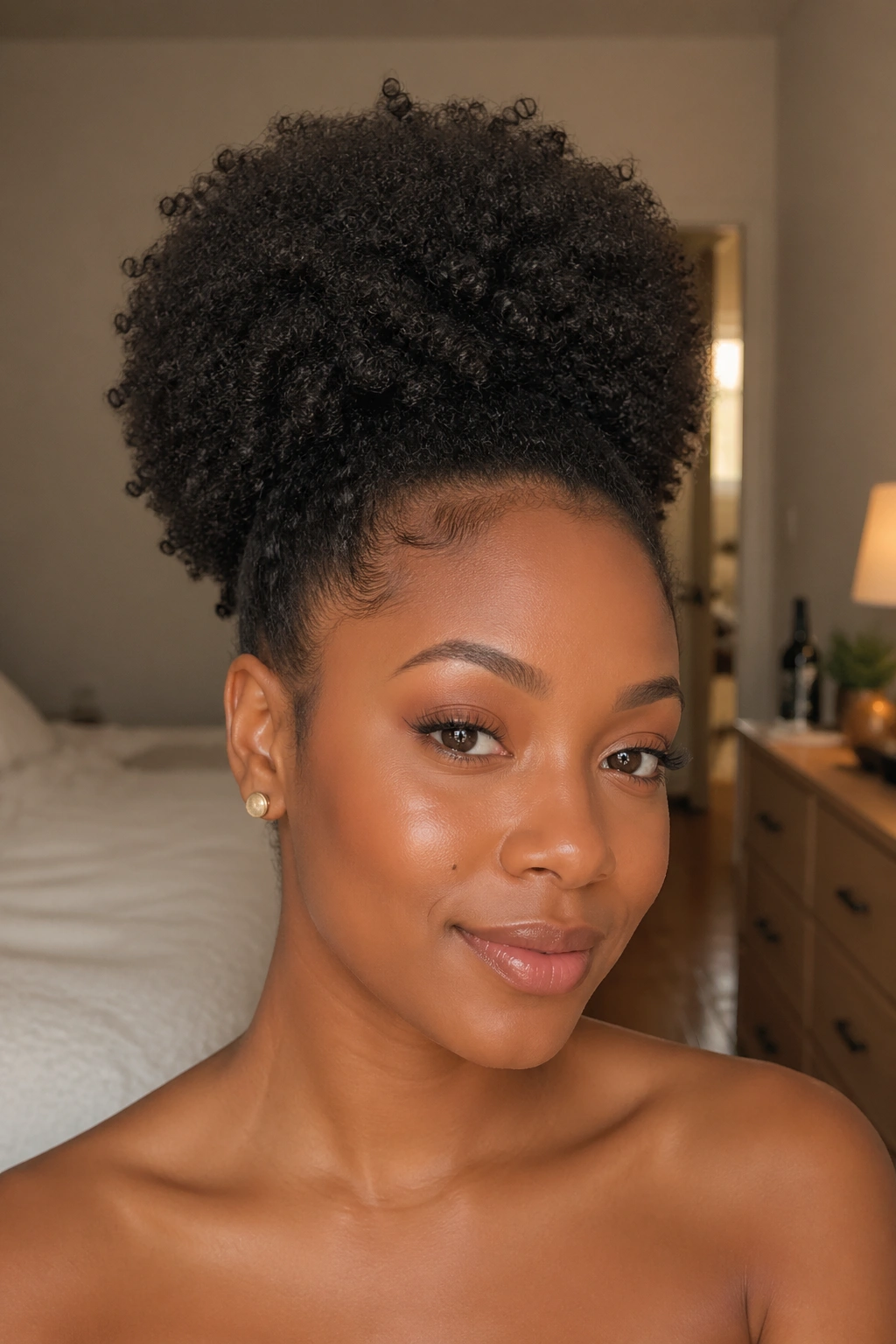
A high puff is the hairstyle that saves the day when your 4A curls are doing what they do best: showing off volume whether you asked for it or not.
It works because it gathers the hair without flattening the texture. The crown stays full, the curls stay visible, and the ends are all pulled into one soft shape that reads as intentional instead of rushed. On dense 4A hair, that little bit of height can make the whole face look more open.
Why it works so well on 4A curls
The high puff gives you a clean silhouette without forcing the hair straight. You only need enough tension to hold the puff in place, not enough to stretch your scalp into regret. That matters.
A little leave-in, a smooth perimeter, and a satin scrunchie go a long way. If the puff starts to look flat after a few hours, gently pick the roots at the crown with the tip of a tail comb. Do not drag the comb through the whole puff unless you want the style to puff up in every direction at once.
How to keep the shape neat
- Smooth the base with a soft brush or your hands before you secure it.
- Use a scrunchie or elastic that does not snag.
- Leave the puff slightly loose so the curl pattern can bloom.
- Finish with a tiny bit of edge control only where you need it.
Best move: lift the roots in small sections, not all at once. That keeps the puff full without turning it into a frizz halo.
2. Twist-Out
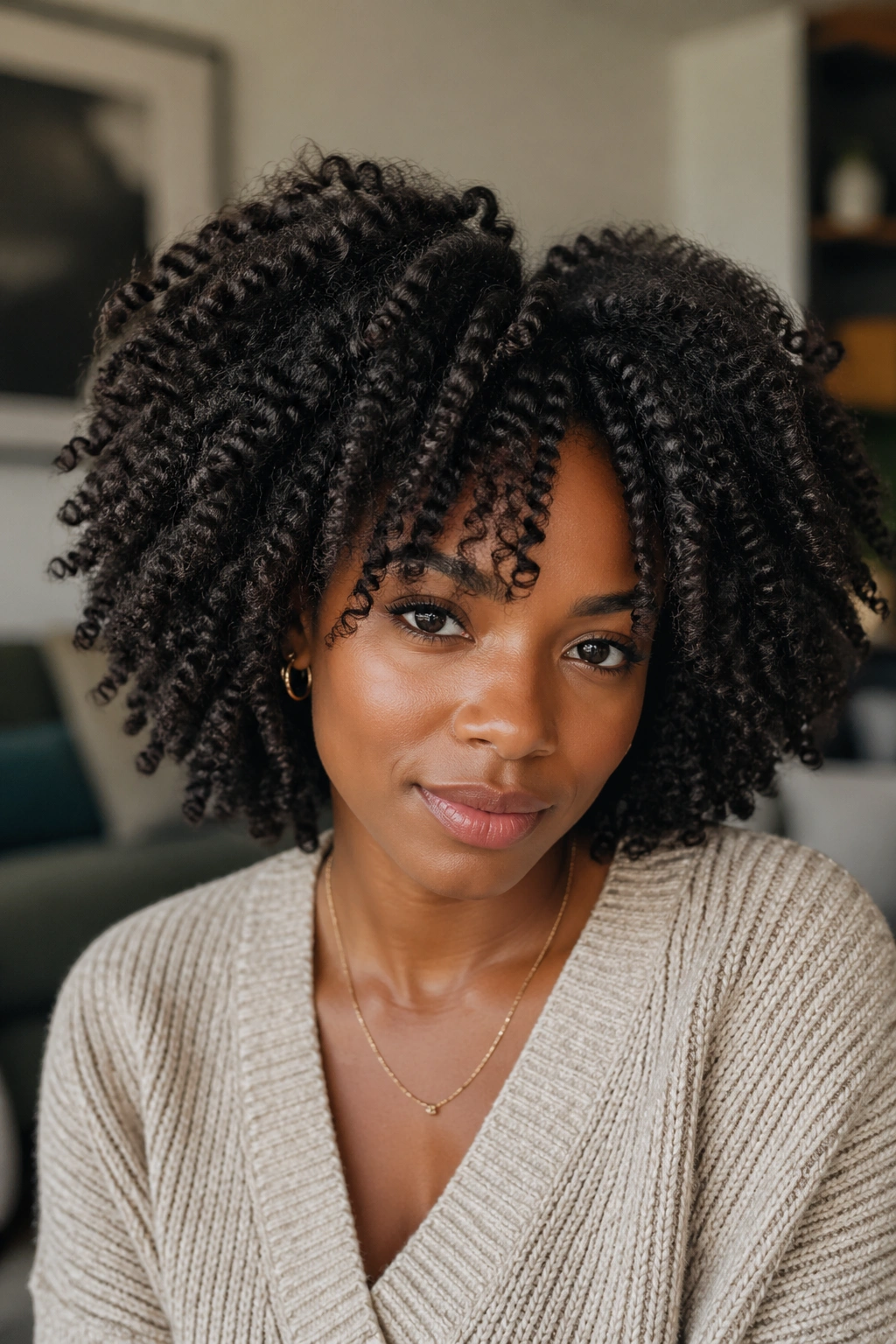
A twist-out is one of the cleanest ways to stretch type 4A curls without stripping away the curl pattern that makes the hair interesting in the first place.
On 4A hair, the result is usually soft, defined, and springy. The tighter the twists, the more uniform the finish tends to be. Larger twists give you more volume and a looser look. Either way, the style gives the hair shape and stretch at the same time, which is why people keep returning to it.
Set the twists once, then leave them alone
Start on damp hair, not soaking wet hair, and use a cream or gel that gives some hold. The product should coat the strands without leaving the hair greasy. If the twists feel crunchy at first, that is not always a bad sign. A light cast can help the style last.
Drying matters more than people like to admit. If the twists are even a little damp when you take them down, the definition collapses fast and the frizz shows up early. Overnight drying works if your twists are small and your room is dry. If not, give them more time.
What makes a twist-out crisp instead of fuzzy
- Keep the sections even.
- Twist with steady tension, not a death grip.
- Seal the ends carefully so they do not unravel.
- Separate the twists only when the hair is fully dry.
Tiny detail, big payoff: rub a drop of oil on your fingertips before separating. It cuts down on friction, which helps the curl clumps stay neat.
3. Braid-Out
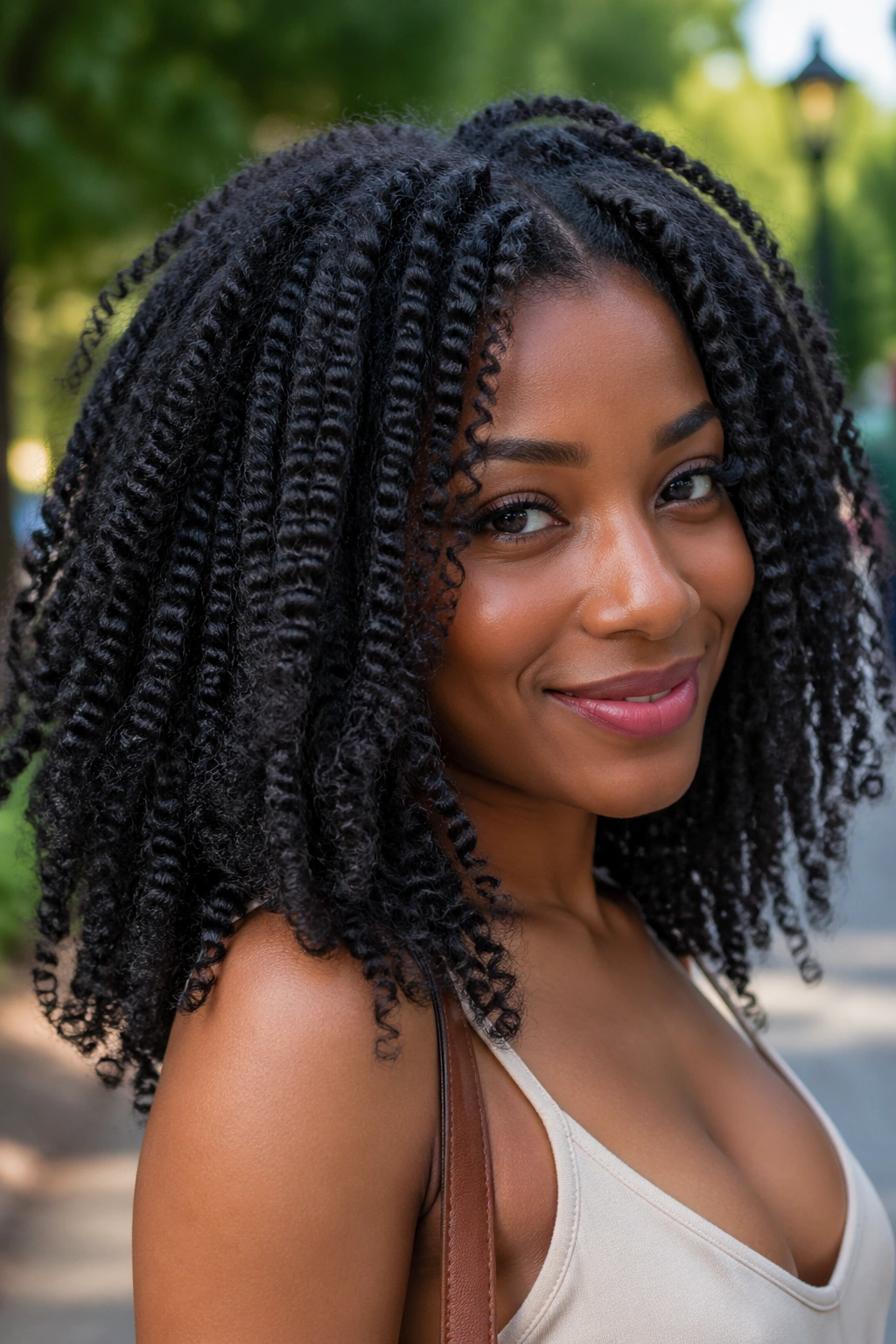
A braid-out gives 4A hair a different kind of stretch than a twist-out. The look is flatter, a little more elongated, and often more wave-like near the ends.
That difference comes from the braid pattern itself. Braids compress the hair more tightly, so the resulting texture tends to look more defined and less rounded than twists. If your hair has a lot of density, that extra compression can be useful because it reins in some of the bulk without making the style feel stiff.
The braid-out is one of those styles that looks casual from far away and more complex up close. Up close, you get the pattern. From a distance, you just get a polished shape.
It is also a smart style when shrinkage is a sore spot. A braid-out stretches the hair enough that you can actually see some of the length you worked for. Just make sure the braids are fully dry before you take them down, because a half-dried braid-out can go frizzy at the roots faster than most people expect.
4. Wash-and-Go
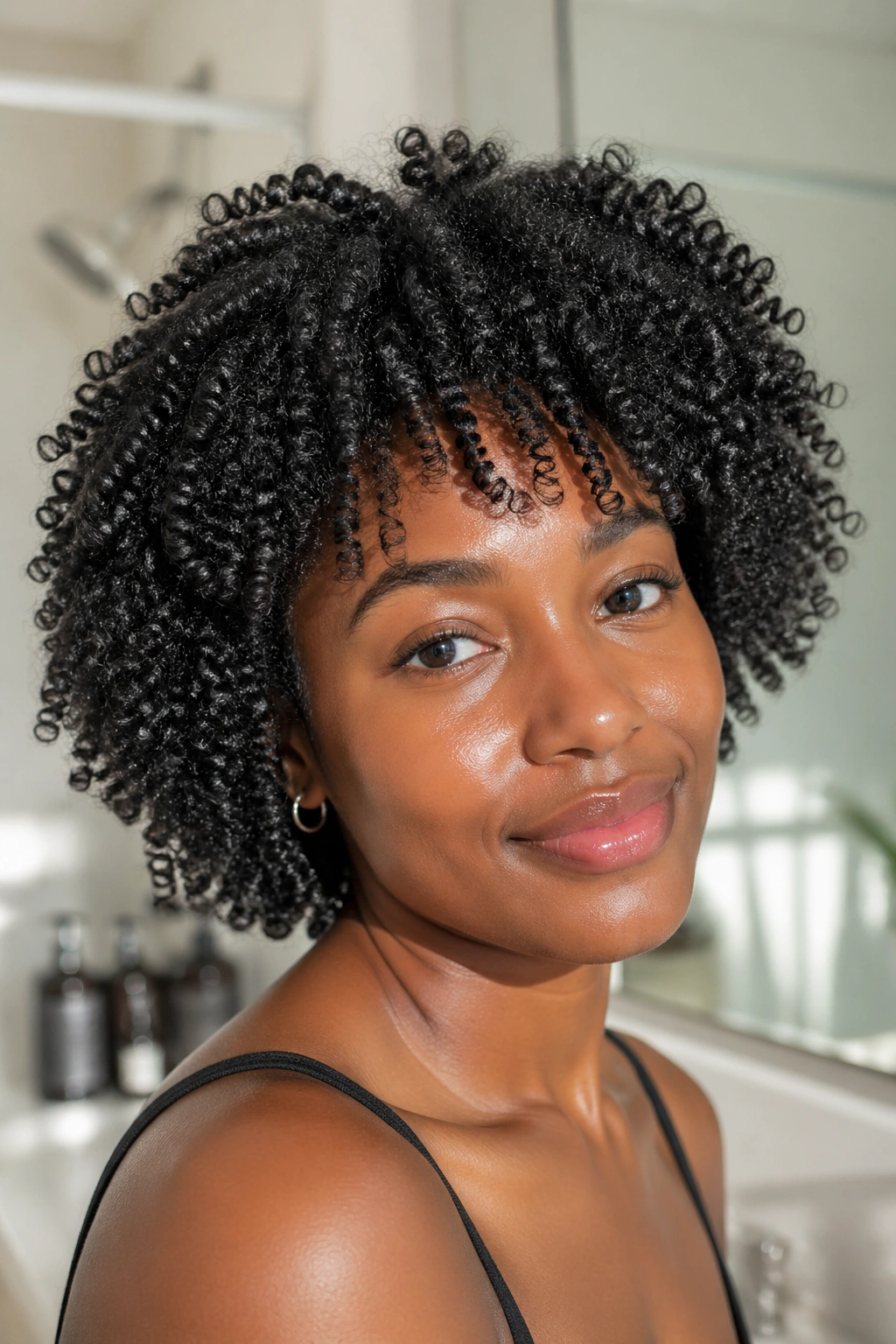
A wash-and-go on type 4A hair is not lazy. It is precise.
The best version starts with hair that is soaking wet, a product with enough slip to coat every coil, and a hold product that keeps the curls from puffing out before they set. If you have ever tried to “just scrunch and leave,” you already know that 4A hair usually laughs at shortcuts. It wants structure.
The product stack that matters
- A good leave-in conditioner for slip and moisture.
- A curl cream if your hair needs softness and shape.
- A gel with hold so the curls clump instead of frizzing apart.
- A diffuser if you want faster drying and a little more root lift.
The order matters too. Coat the hair while it is wet enough to clump, then leave it alone. Too much raking breaks up the curl groupings. Too much touching after the gel goes on breaks the cast and invites frizz before the style has time to set.
Hands off after the product goes on. Seriously.
A wash-and-go can look sharp on 4A hair when the curl pattern is defined, but it can also be the fastest way to reveal dryness if you skip moisture. The style is honest. That is why it looks so good when it works.
5. Pineapple Puff
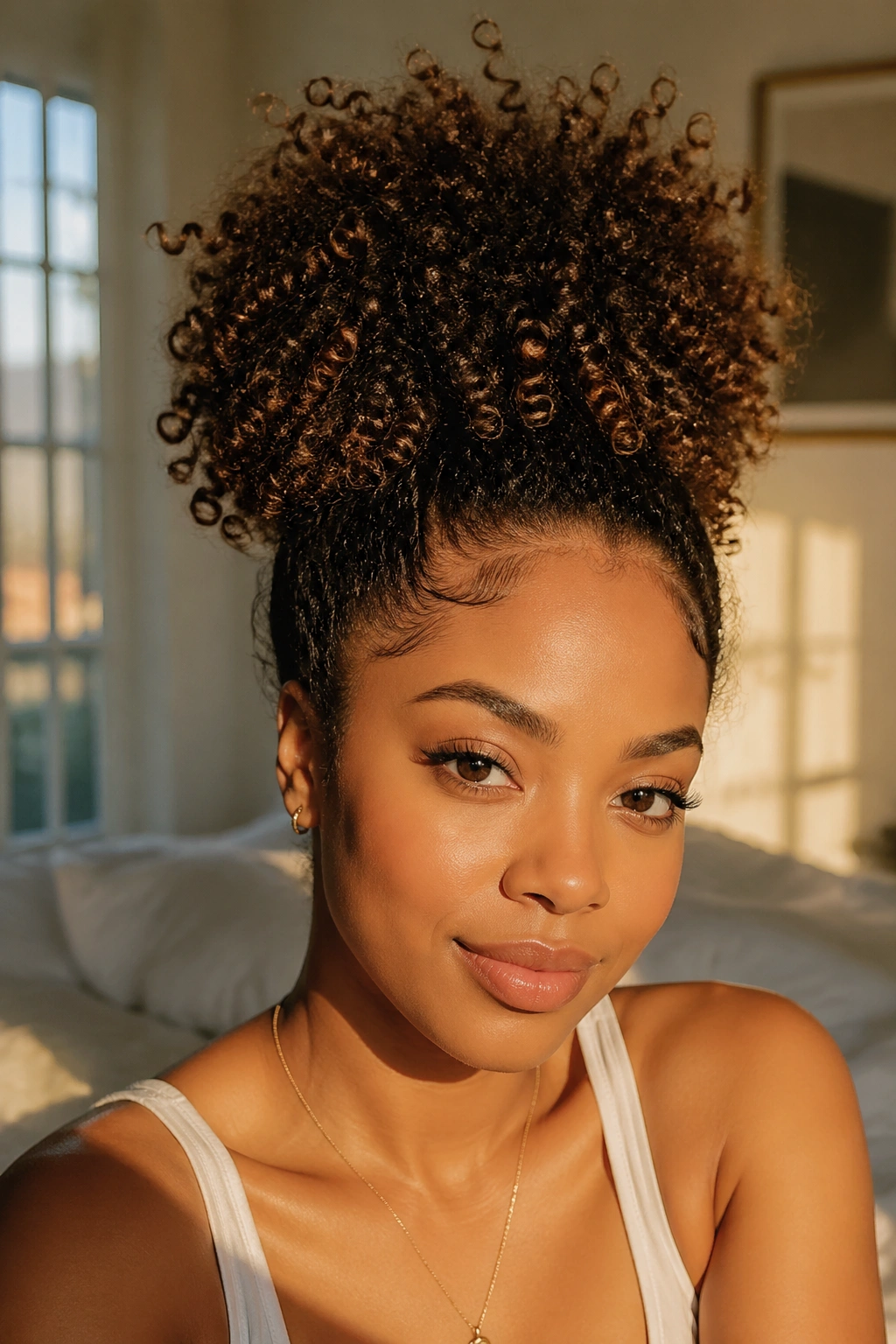
A pineapple puff is what happens when you want to keep your curls intact and still get them off your neck.
The style is built by gathering the hair very high, usually at the crown or just above it, and letting the curls fall upward instead of backward. On 4A hair, that creates a playful shape that protects definition at the same time. It also solves a real problem: day-two hair that still has life in it, but not enough patience to be worn loose.
The beauty of the pineapple puff is that it looks easy, and for once, that word is fair. The hair does not need to be overly smoothed. It just needs enough support to stay up without being dragged tight. A soft scrunchie or satin tie is better than a firm elastic, because the goal is lift, not a headache.
If you sleep in a pineapple and wear it out the next morning, you may need to separate a few flattened sections with your fingers. That is normal. A quick fluff at the crown brings the shape back fast. Keep the tie loose enough that the curls can still breathe.
6. Space Buns
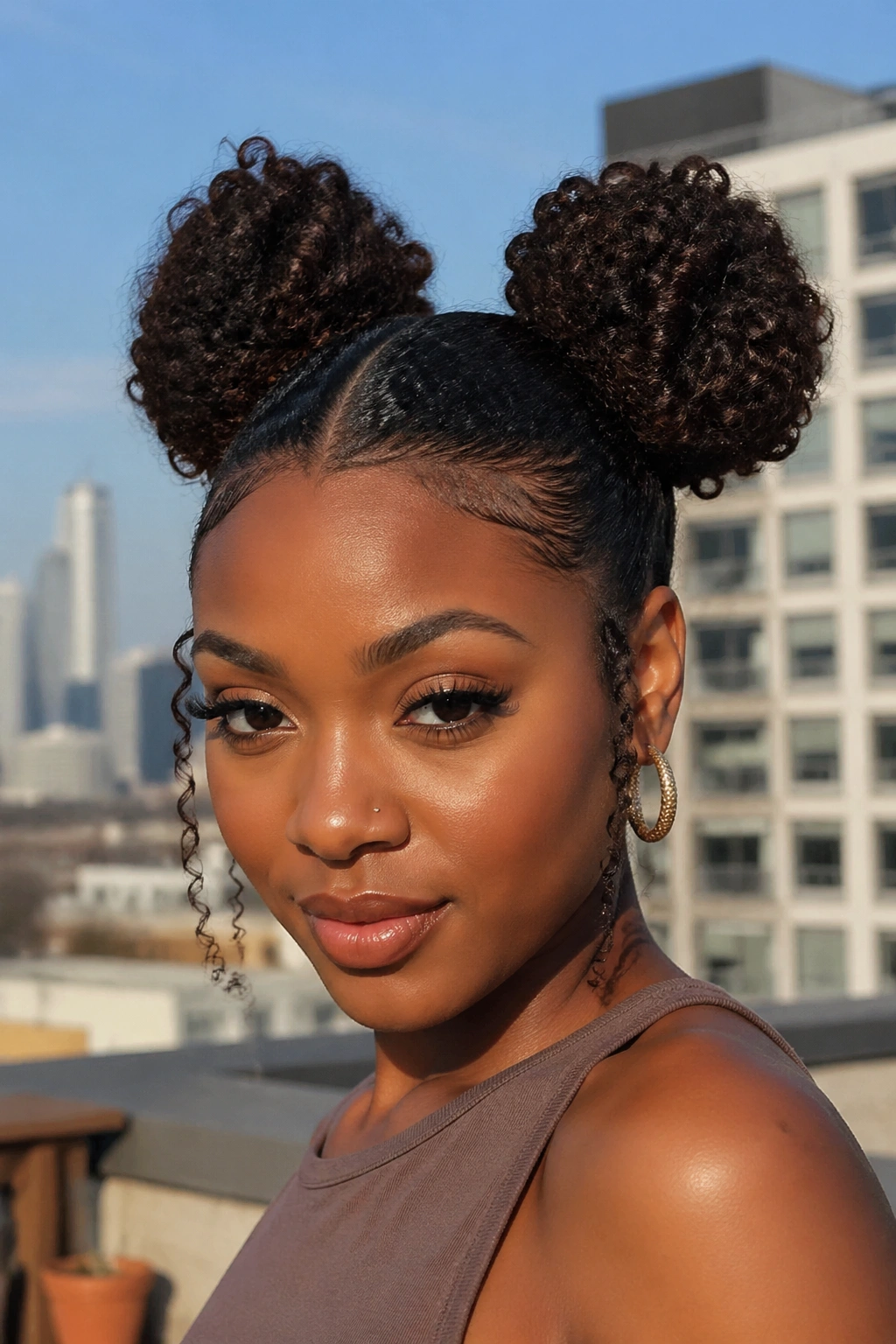
Space buns can look playful on 4A hair, but they also solve a practical problem: what to do when one bun feels too heavy and a full updo feels like too much work.
The style splits the hair into two sections and turns each side into a bun, usually high on the head, though lower placement works too. On dense hair, that balance is useful. You get symmetry, shape, and a little personality without needing a complicated set of pins.
How to keep the parts even
- Make the center part first and check it in a mirror.
- Divide the hair from ear to ear so both sides have the same amount of density.
- Twist each section lightly before wrapping it into a bun.
- Secure with pins instead of over-tight elastics when the hair is very thick.
The buns can be sleek or fluffy. Sleek versions work better when you want a sharper finish. Fluffy buns look softer and feel less formal. Neither one is better. They just give off different energy.
One warning: do not make the base too tight just because the buns are small. 4A hair can hold a shape without being yanked into place, and the scalp usually prefers that.
7. Flat Twist Crown
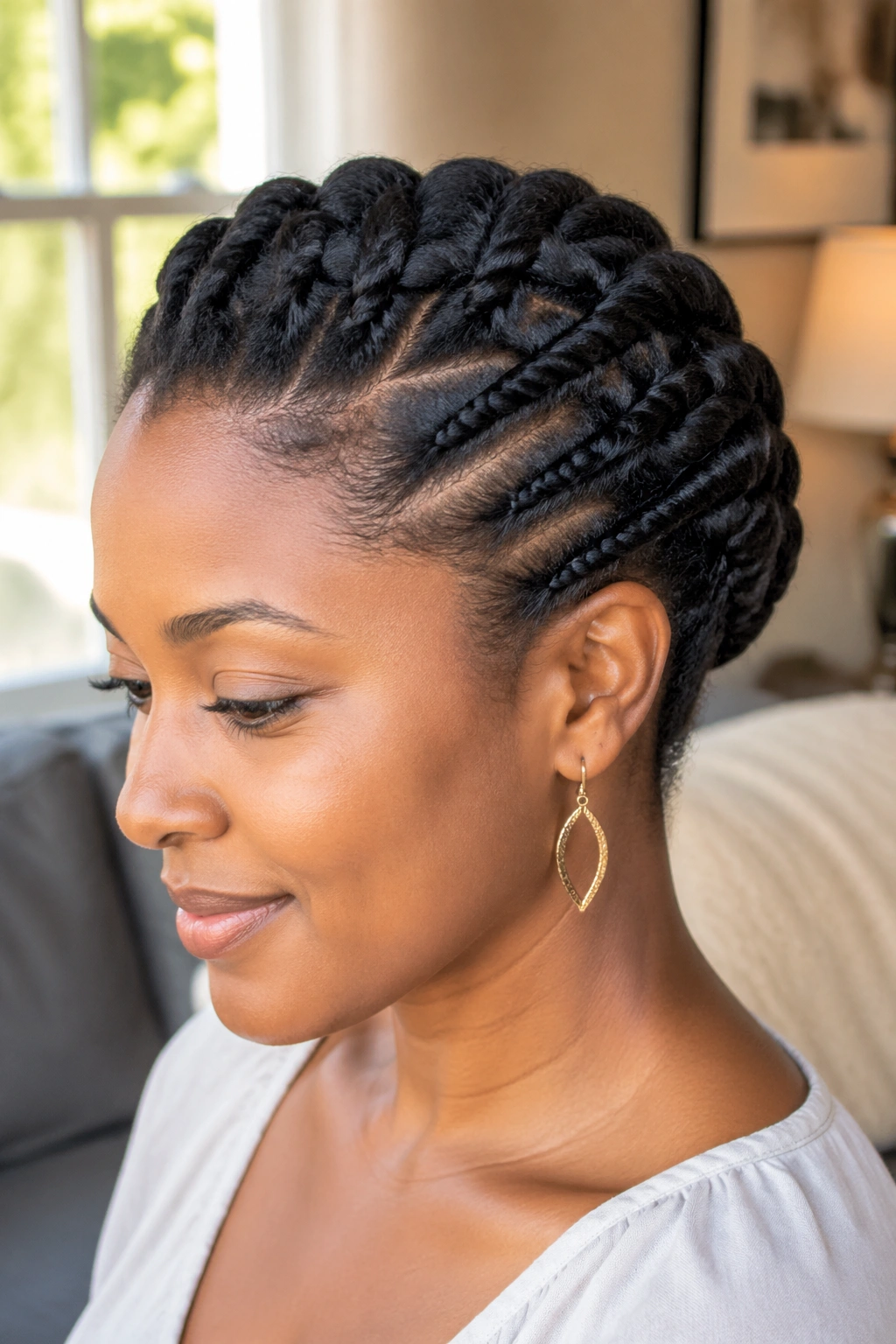
Need a style that stays put and still looks finished? The flat twist crown is a strong answer.
This style wraps the hair around the head in a halo shape, using flat twists laid close to the scalp. On 4A hair, the look is neat without being rigid, which is a useful combination. The twists create structure, and the crown shape gives the style a little polish without demanding a full braid install.
A good flat twist crown starts with moisturized hair and a clean parting map. If the sections are uneven, the crown looks lopsided by the time you reach the back. If the twists are too tight at the temples, the style can feel sharp and uncomfortable in a hurry. There is a sweet spot here, and it is not hard to find once you slow down.
Where people rush and regret it
- They part the hair too wide at the start.
- They pull too hard near the hairline.
- They skip sealing the ends before tucking them in.
- They pin the twists before checking the shape in a mirror.
The good part is that this style usually lasts well when it is installed cleanly. It can carry you through a workday, a dinner, or a weekend without much fuss. That is the real appeal.
8. Mini Twists
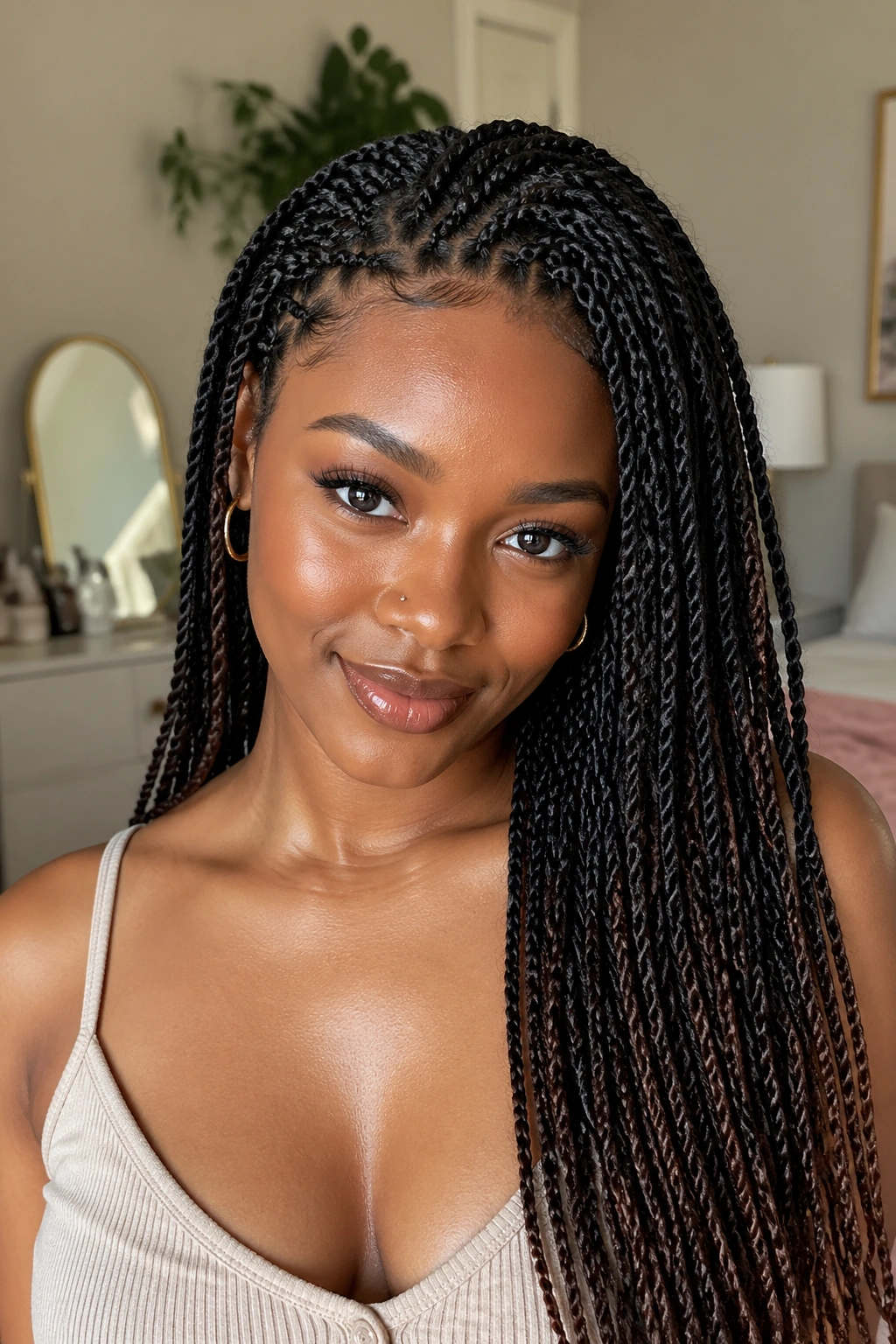
Mini twists are what I reach for when I want the hair out of the way for more than a day or two and I do not want to keep touching it.
The style is made by splitting the hair into small sections and twisting each one down to the ends. On 4A hair, mini twists tend to look tidy, sit close to the head, and hold shape well if the sections are even. They are not quick to install, and that is the one honest downside. But once they are in, they buy you a lot of peace.
Why size changes everything
Small twists last longer because each section has less hair trying to escape. Larger twists are faster to make, but they frizz sooner and can unravel at the ends if the hair is dry or layered. If you want low manipulation, smaller wins. If you want speed, go bigger.
Mini twists also make styling easier later. You can wear them loose, pin up one side, tuck them into a low bun, or pull the front half back with a clip. That kind of flexibility matters when you do not want to restart your whole routine every morning.
The catch is maintenance. Keep the scalp clean, mist the hair lightly when it feels dry, and protect the style at night with a satin bonnet or scarf. If the ends start to unravel, do not keep pulling them apart. Trim the frayed bit or retwist the section.
9. Chunky Two-Strand Twists
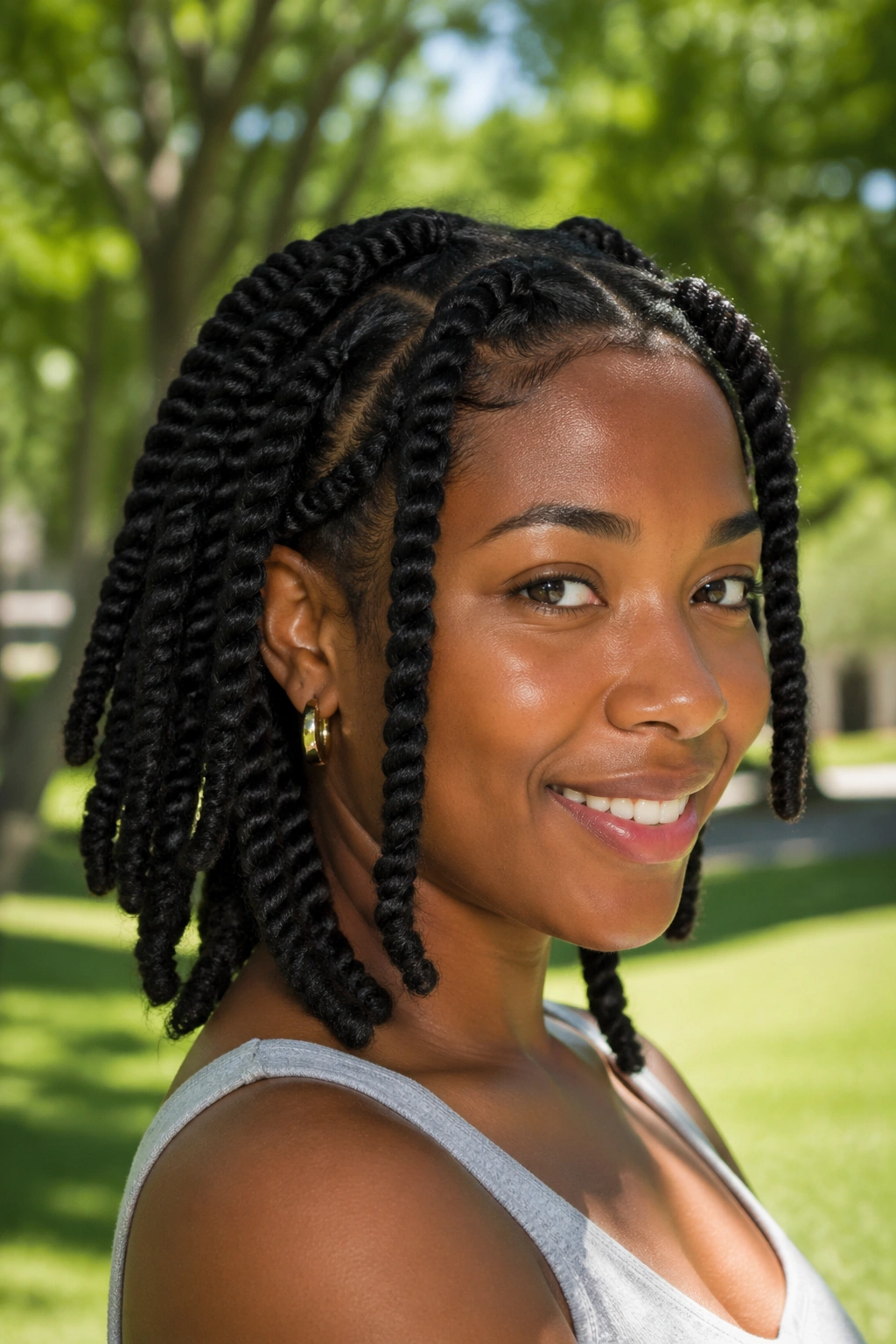
Chunky two-strand twists give you a quicker install and a fuller look than mini twists, which is why they work so well on thick 4A hair.
The larger sections mean less time in the chair and more volume once the hair settles. The finish is softer too. Instead of looking tiny and uniform, the twists have a little body, and that body is often what makes the style feel wearable rather than stiff.
There is also a nice bonus here: chunky twists can become a twist-out later. That gives you two styles in one install. Wear them as twists for a few days, then take them down carefully for a stretched, fluffy finish. That is a smart use of time, and it suits 4A hair because the pattern holds shape so well.
The only real drawback is longevity. Bigger twists do not usually stay neat as long as mini twists, and the roots can puff faster if the hair is very soft or layered. Still, if you want a style that looks full right away, this one earns its spot.
10. Bantu Knots
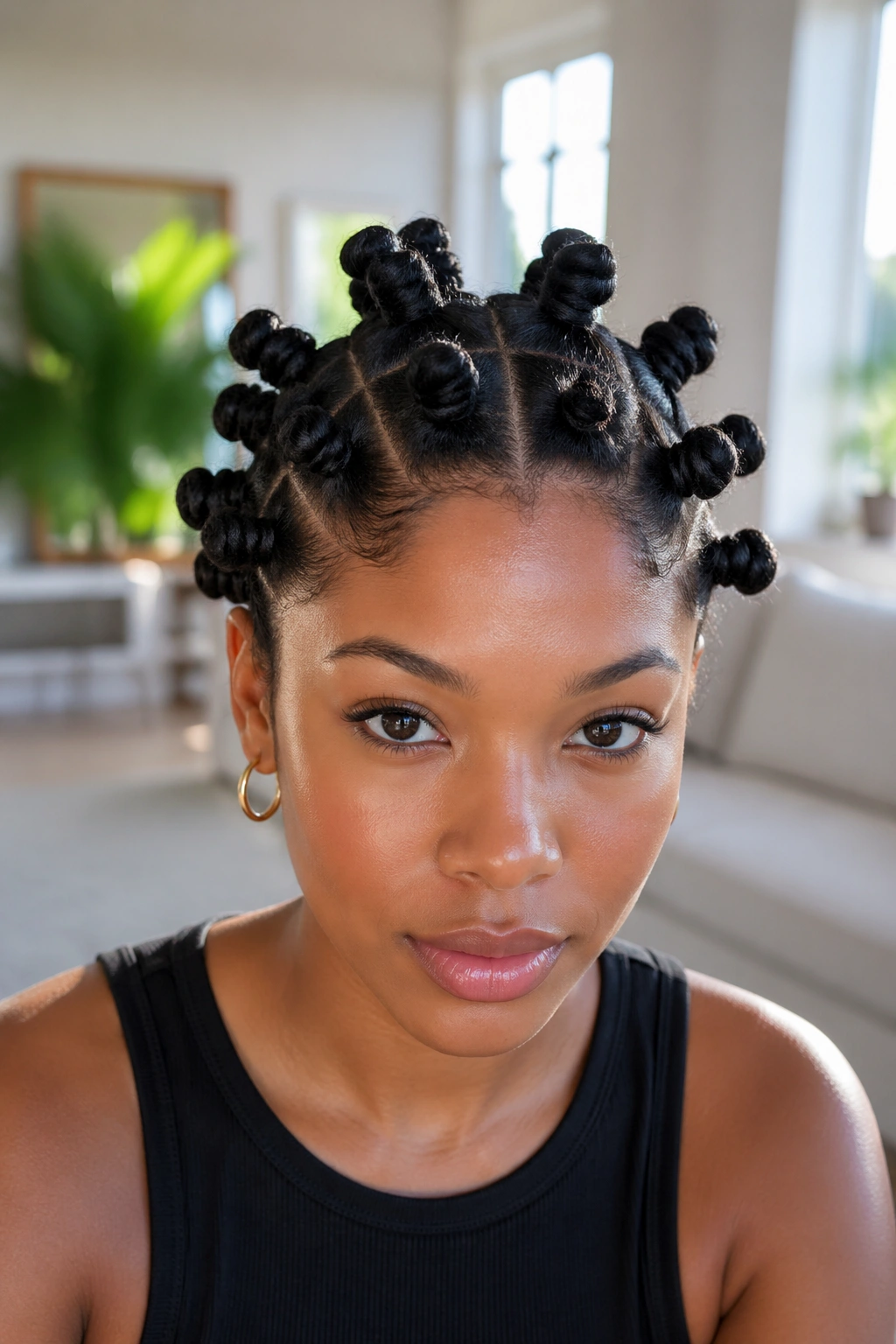
Bantu knots are both a hairstyle and a set-up for a knot-out later, which makes them one of the more useful options for type 4A curls.
The style works by sectioning the hair, twisting each section until it coils into a knot, and securing it near the scalp. On 4A hair, the knots sit nicely because the texture already has enough grip to hold shape. The result can be sleek and sculptural when the knots are left in, or soft and curly when they come down.
If you want the knot-out later
- Make the sections even so the curl pattern comes out balanced.
- Let the knots dry completely before taking them apart.
- Use a little oil on your fingers to reduce friction.
- Separate each knot gently from the ends upward.
The biggest mistake is rushing the dry time. Wet Bantu knots may look set on the outside, but the center can stay damp for hours. If you unravel too soon, you lose the shape and invite frizz at the roots. Patience pays off here.
Bantu knots also bring more structure to 4A hair than many people expect. The style can look bold on its own, and it can shift straight into a defined curl look the next day. That flexibility is hard to beat.
11. Low Bun
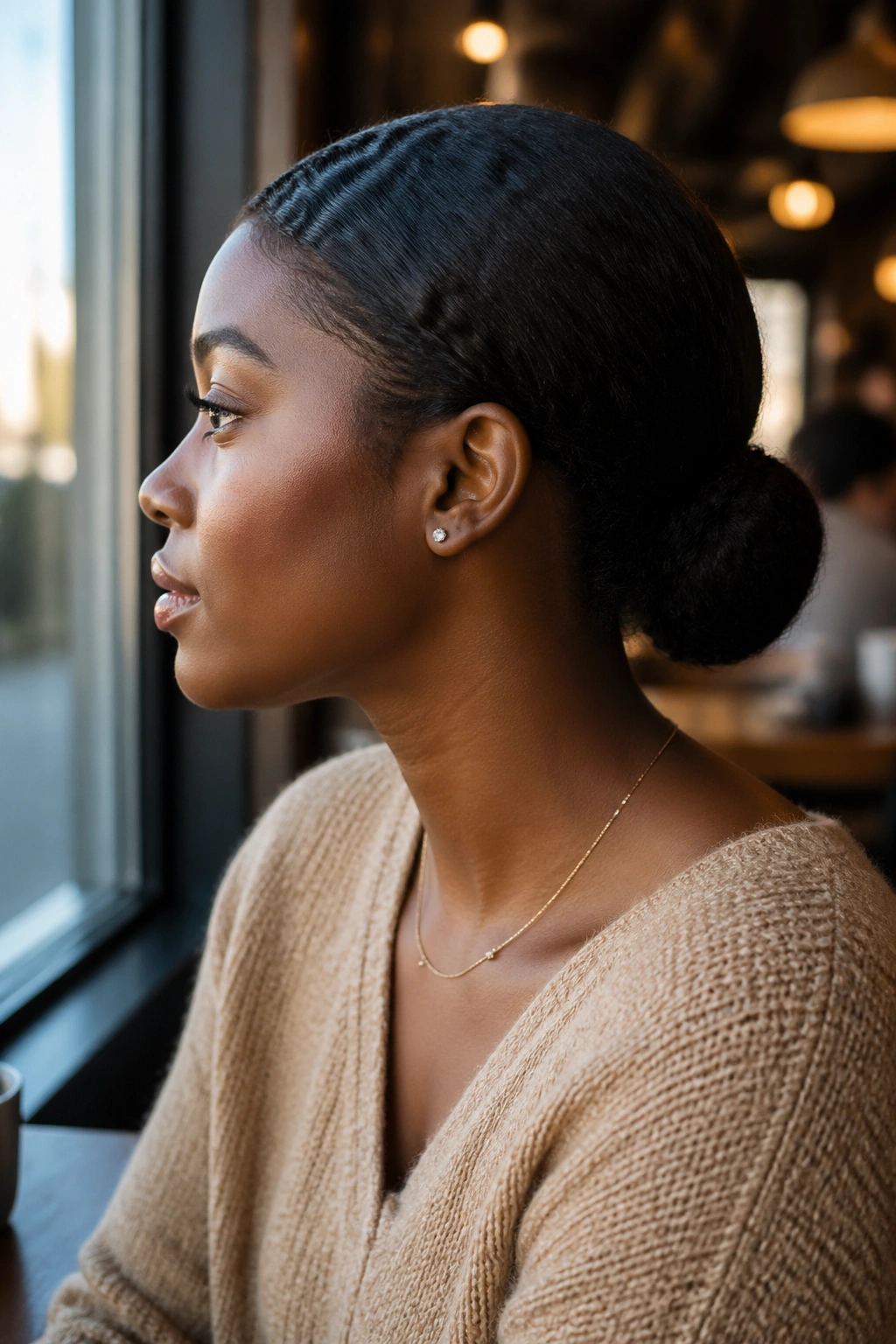
Some mornings call for hair that sits close, feels calm, and does not ask for attention.
That is where the low bun comes in. On 4A hair, it can be sleek, soft, or somewhere in between, depending on how much you smooth the roots and how tightly you tuck the ends. A low bun is especially useful when the hair needs to stay protected, because the ends are tucked away and the shape stays contained.
A clean low bun starts with a moisturized base and a part if you want one. You can work with a middle part, a side part, or no part at all. After that, gather the hair at the nape and wrap or pin it until the shape feels secure. The goal is support, not strain.
A lot of people make the bun too tight because they want it to look neat. It does not need that. A bun that grips the scalp too hard is uncomfortable, and on 4A hair, it can flatten the curls in a way that takes several days to recover from. Smooth the surface, not your whole head.
12. Half-Up, Half-Down
Half-up, half-down is the easiest way to keep 4A curls visible while still getting some of the hair off your face.
The style works because it splits the difference. You keep the volume and movement of the loose section, but you control the top so the shape feels planned. That balance matters a lot for 4A hair, where the crown can swell fast and the sides can frame the face in a way that feels heavy if everything is left loose.
Three ways to wear it
- Pull the top into a puff and leave the rest free.
- Twist the front sections back and pin them at the crown.
- Use a claw clip on stretched curls for a softer, looser finish.
Each version changes the mood. A puffed top half reads casual and fresh. Twisted front sections look a little more dressed up. A clip gives you an easier, softer shape that works when you do not want a hard line.
This style is also kind to mixed-texture days, when the top has more shrinkage than the back. It gives the hair one obvious shape, which is half the battle. The rest is just a few pins and a mirror check.
13. Faux Hawk
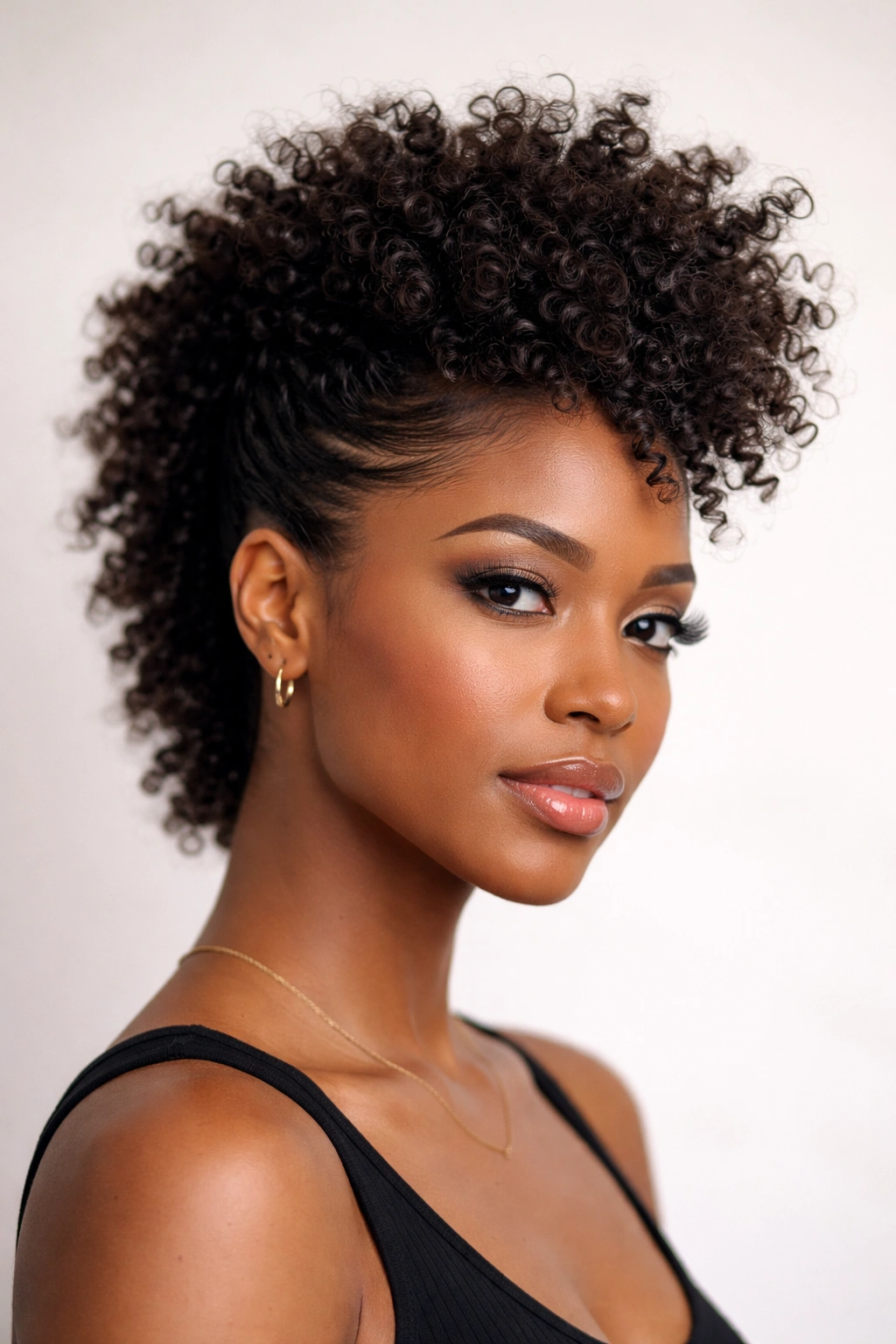
A faux hawk sounds dramatic. On 4A hair, it can be surprisingly simple.
The basic idea is to pin or slick the sides toward the middle and leave a strip of volume running from the front to the back. That central ridge can be puffed, twisted, stretched, or shaped into loose sections depending on how formal you want the look. Because 4A hair has enough density to hold a shape, the style often looks fuller than you expect.
The faux hawk is a strong choice when you want height without committing to a full updo. It frames the face, shows off texture, and gives the style a little edge without needing a cut. Bobby pins matter here, and so does placement. If the pins are spaced too far apart, the sides creep loose. If they are packed too tightly, the style can feel stiff.
A light gel at the sides helps, but the center should stay soft. That contrast is what makes the shape work. Keep the volume in the middle and the control at the sides. That is the whole trick, really.
14. Side-Part Afro
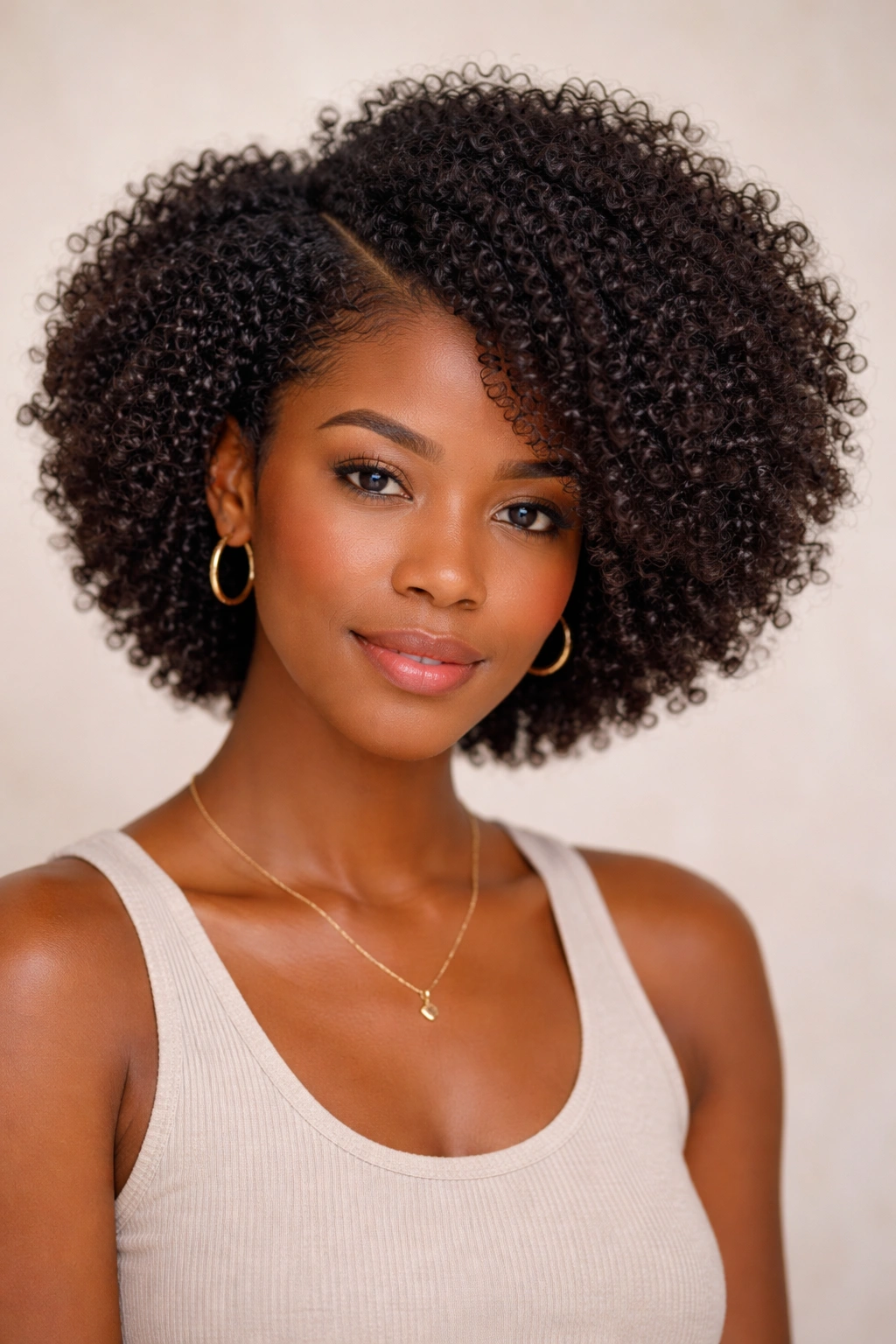
A side-part afro is one of the cleanest ways to wear type 4A hair when you want shape without hiding the texture.
The side part gives the afro a little direction. Instead of looking evenly round from every angle, the hair falls with a clear slope, and that slope makes the style feel more intentional. On 4A hair, which shrinks and stacks beautifully on its own, the side part can give the crown a little lift and the face a little softness.
How to keep the shape from going flat
- Make the part while the hair is lightly damp or already stretched.
- Lift at the roots with a pick, not all the way through the ends.
- Fluff in sections so you do not break the curl clumps everywhere.
- Refresh with a mist of water and leave-in when the hair starts to look dull.
The side-part afro is one of those styles that gets better when you stop overworking it. You do not need to force every strand into place. You just need to guide the general shape and let the texture do the rest.
It also pairs well with a little shine at the front and a fuller halo at the back. Not slick. Not flat. Just shaped.
15. Double Puff Pigtails
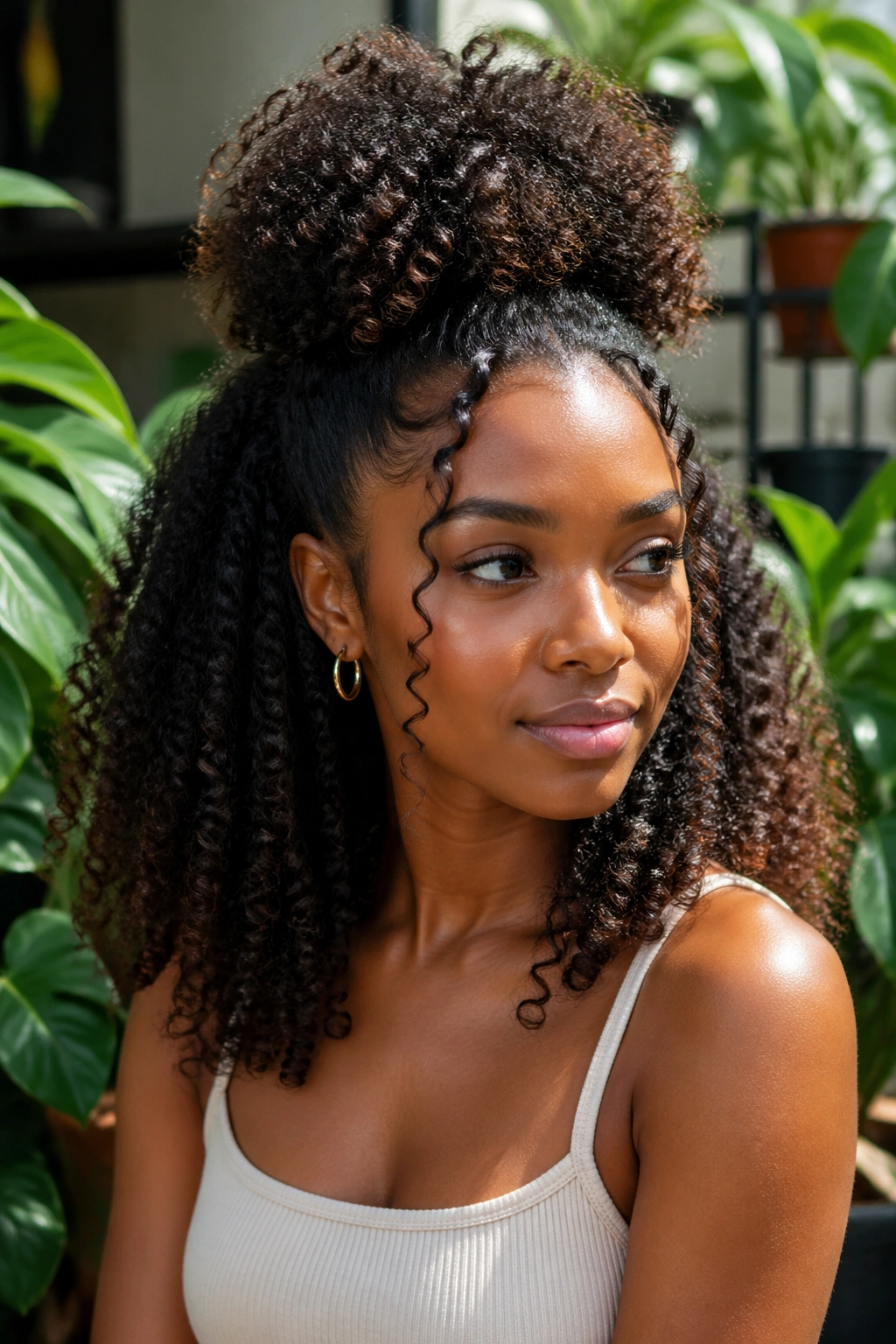
There’s a reason double puff pigtails keep showing up on 4A hair of every length: they are easy to read from across the room.
The style divides the hair into two sections and gathers each one into a puff, usually high or mid-height. On dense curls, that split makes the hair feel lighter without making it disappear. The symmetry is playful, but the shape is practical too. You get lift, control, and a style that keeps the hair off the neck.
Why this style still works on grown-up hair
- It keeps the volume, which 4A hair already has in abundance.
- It works on stretched or shrunken hair.
- It can be dressed up with flat twists at the front or left plain.
- It takes less time than a full updo.
The important part is even tension. If one puff sits tighter than the other, the style looks off right away. A center part helps, and so does checking the placement before you tighten both sides. If you want more polish, wrap a small strand around each band or smooth the edges with a little gel. If you want a softer finish, leave a few curls loose near the temples.
A lot of 4A hair styling comes down to this: respecting the shape that already exists. These styles do that in different ways. Some stretch the curl. Some tuck it away. Some just give it a better frame. The nicest thing is that you do not have to flatten the hair to make it look neat. You just have to choose a shape that lets the coil do its job.
