



Casual curly hairstyles work best when they don’t fight the curl pattern. That sounds obvious, but I still see people flattening their roots, over-brushing their lengths, and then wondering why the style feels stiff by noon. Curly hair tends to look its nicest when it has a little air, a little movement, and a shape that respects where the curls want to fall.
A good casual style doesn’t need to be perfect. It needs to be believable. A few face pieces left out on purpose, a twist placed a little higher on one side, a ponytail that sits where your curls actually want to gather — those tiny choices do most of the work. I’ve always thought curly hair looks strongest when it’s allowed to keep some of its personality. Polished can be lovely. But too polished on curls often reads a bit harsh.
The practical part matters too. Curls shrink, puff, and change shape as they dry, so a style that looks flat in the mirror can open up nicely an hour later. That’s why a lot of the best easy curly hairstyles are built around soft tension rather than tight pulling. Less tugging. Fewer pins than you think. Better results.
And because casual doesn’t mean careless, the details count: where the part sits, how much product is already in the hair, whether you’ve got fresh curls or day-two texture, and how much volume you want at the crown. Once you start paying attention to those things, the list gets a lot more useful. The first style is a classic for a reason.
1. Casual Curly Ponytail With Soft Face Pieces
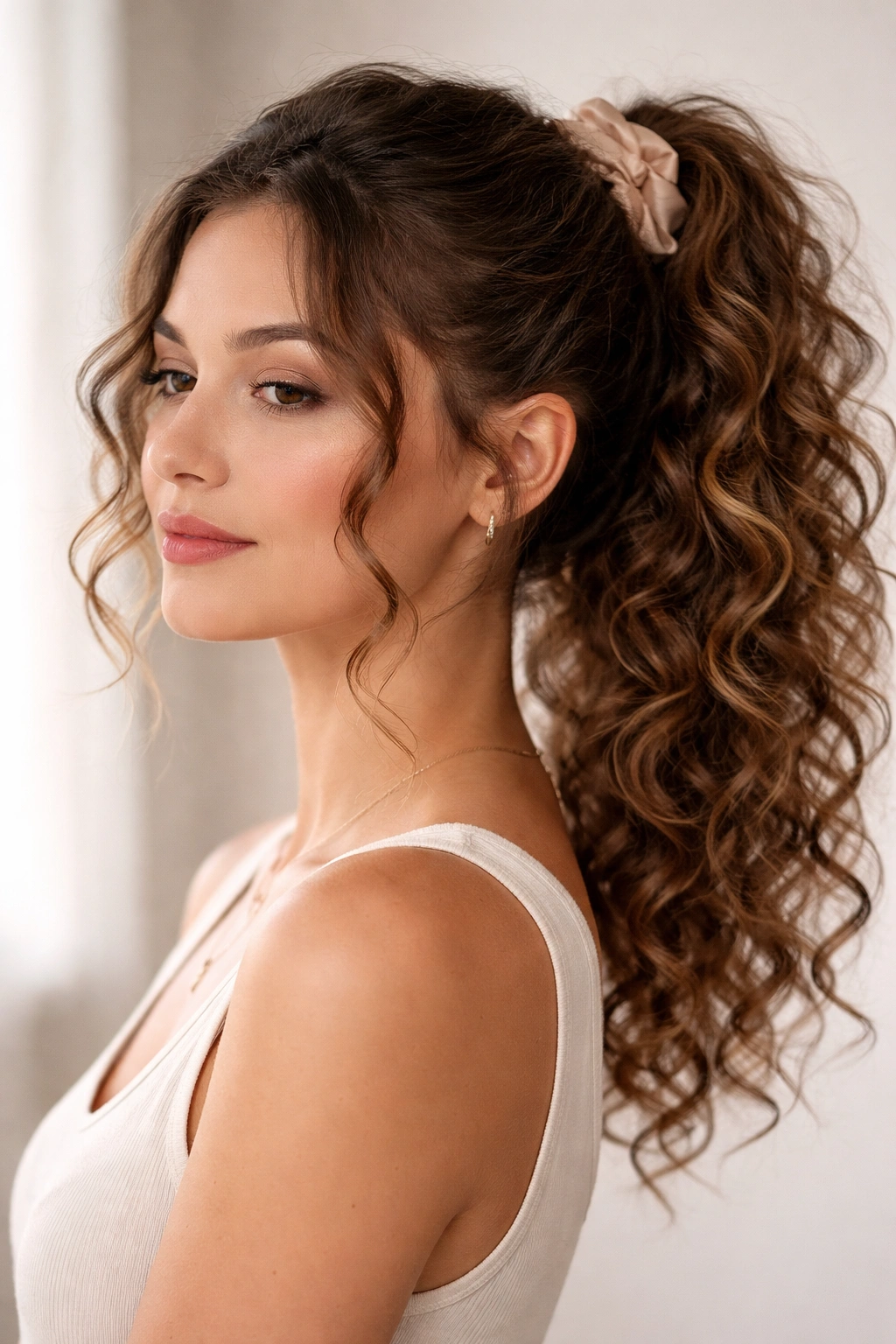
A curly ponytail is one of those styles people underestimate right up until it saves the day. Done well, it looks clean, relaxed, and intentional — not like you gave up halfway through getting ready. The trick is to keep the ponytail soft at the front and full through the length, so the curls can still do their thing.
Why It Works
The ponytail shape gives the curls a clear outline without crushing them into submission. That matters. If you pull curly hair too tight at the roots, the style can get puffy in the wrong places and flat in the ones that matter. A mid-height ponytail usually gives the nicest balance, especially if you leave out two small face-framing pieces and let them curl on their own.
A satin scrunchie or a coil elastic helps too. Regular tight elastics can leave a dent, and curly hair remembers everything. If your hair is dense, gather it in two hands first, then secure it where the crown still has a little lift.
How to Wear It Better
- Smooth the surface with damp hands and a pea-sized amount of curl cream if the top looks fuzzy.
- Leave a few curls loose at the temples for softness.
- Pull the ponytail apart gently once it’s tied, so the shape feels fuller.
- Wrap one curl around the base if you want the elastic hidden.
Best tip: keep the base slightly loose. That one detail makes the whole style look softer and more expensive-looking, even though it takes about two minutes.
2. Casual Curly Pineapple Puff
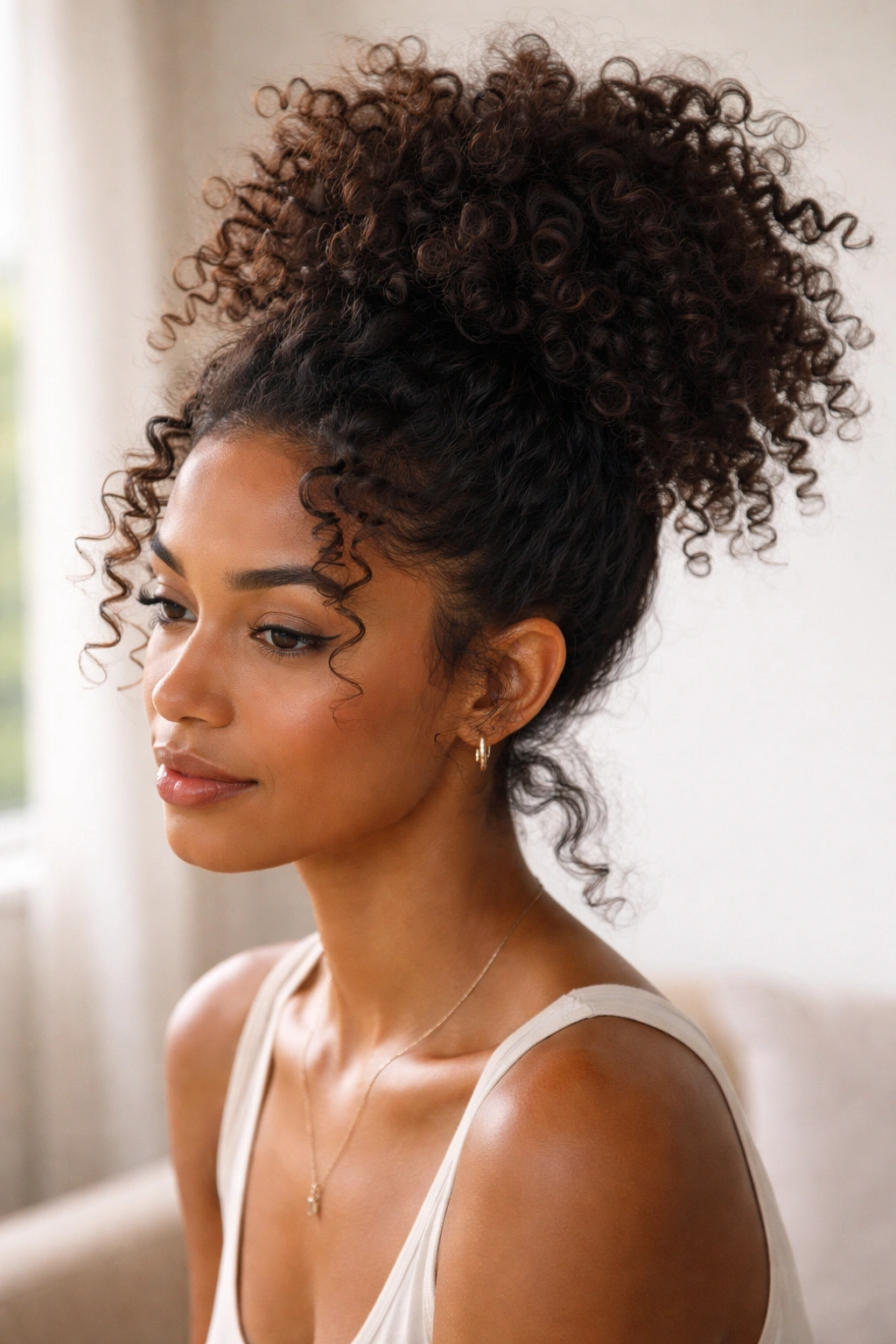
Why does the pineapple puff work so well on curls? Because it protects the pattern and still looks like a real hairstyle. The hair sits high enough to keep your curls from getting crushed, but not so high that it turns into a stiff top knot. On long curls, it feels playful. On shoulder-length curls, it can look a little flirty and very easy.
The crown gets the attention here, which is why this style is such a smart choice on second-day hair. You don’t need freshly washed curls for it to look good. In fact, a bit of texture helps. The ends spill out into a soft puff, and the top stays loose enough that the volume doesn’t collapse. If your curls are tight, a wide satin scrunchie helps hold the shape without making a dent.
I like this style because it doesn’t ask for much. Flip the head forward, gather the curls high, and let the ends fall where they want. That’s it. If the edges near your hairline look a little frizzy, don’t panic and start smoothing everything into oblivion. A tiny amount of lightweight gel on fingertips is enough. Too much product and you lose the airy shape that makes the style worth doing.
If you wear it while running errands or working from home, it stays out of your face without looking precious. And if you add hoop earrings, the whole thing gets a little more finished without losing the casual feel.
3. Half-Up Curly Twist With a Claw Clip
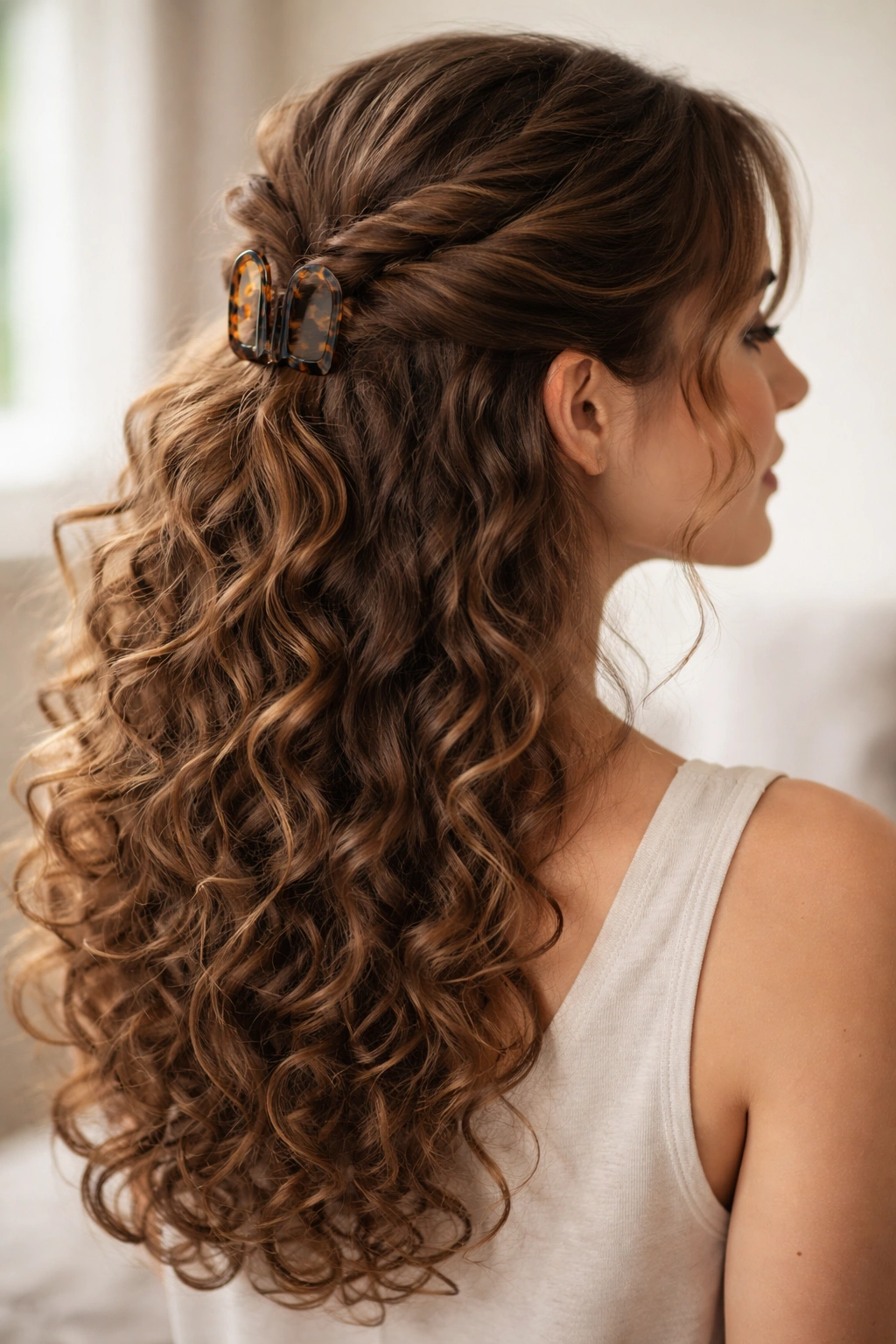
You know those mornings when your curls are doing half the work already? This is the style for those mornings. A half-up twist with a claw clip keeps the front out of your eyes, shows off your texture, and takes less effort than a full updo that needs five bobby pins and a prayer.
The move is simple: twist each side back toward the crown, let the curls keep their own shape, and clip them together. A medium claw clip usually works better than a tiny one, because curls need room. If the clip is too small, the twist gets squeezed flat and starts sliding anyway. That’s annoying. And unnecessary.
What to Watch For
- Choose a clip with teeth that grip, not a slick decorative one.
- Don’t twist so tightly that the curl pattern disappears.
- Leave the lower half loose for bounce.
- If your hair is fine, mist the twist with a little texture spray first.
A good half-up twist has a casual tension to it. Not sloppy. Just relaxed enough that the curls still look like curls. If you want more face shape, pull a couple of front pieces forward after clipping. If you want more lift, pinch the crown gently with your fingers and let the roots loosen up a bit.
4. Low Curly Bun With a Soft Nape
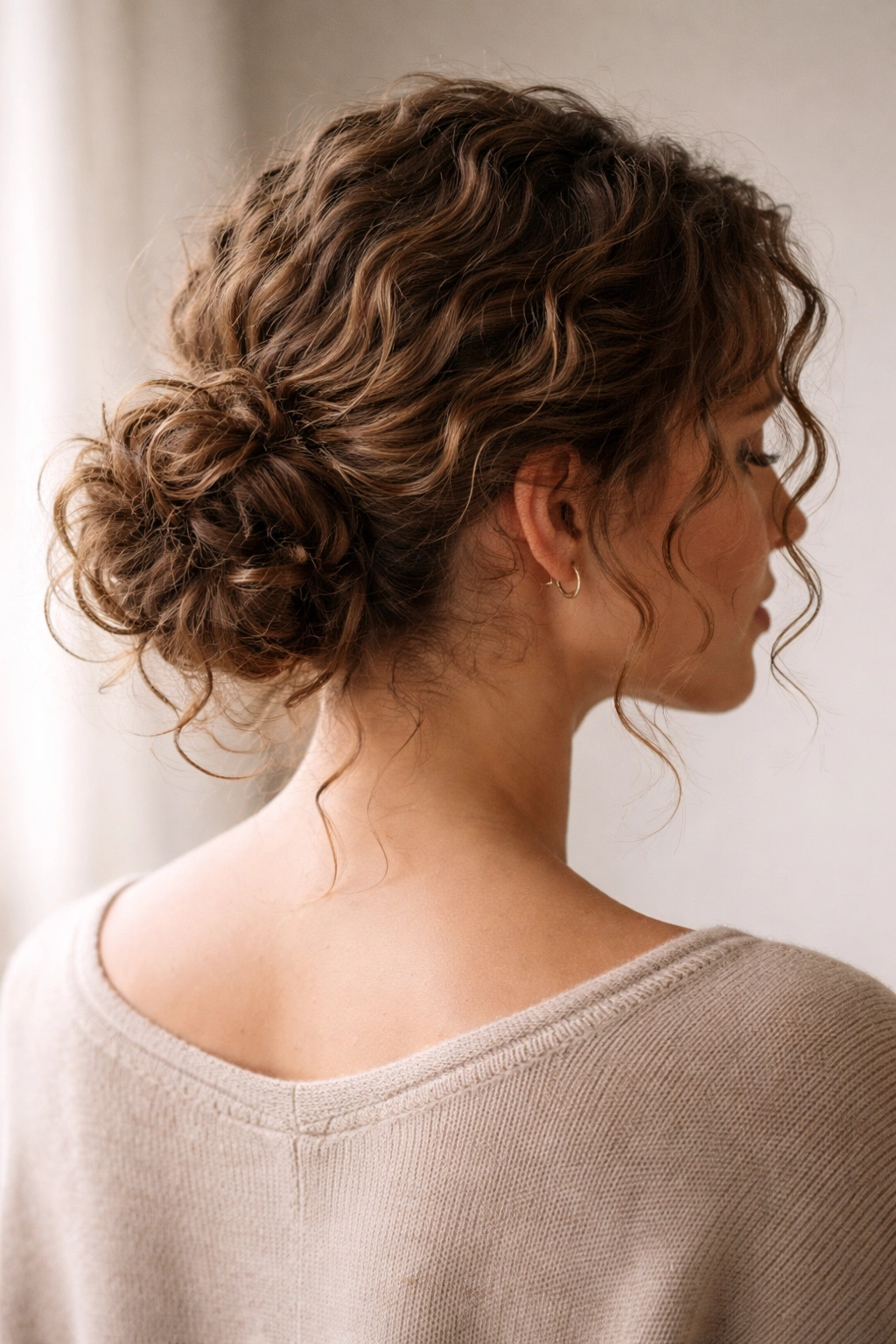
A low curly bun should feel soft at the nape, not pinned there like it’s being punished. That’s the difference between a style that looks easy and one that looks strained. When it’s done right, the bun sits low and full, with a little texture around the crown and just enough looseness around the ears to keep it casual.
This is one of my favorite curly hairstyles for days when you want your hair off your neck but don’t want the hard look of a slick bun. Gather the curls low, twist them into a loose coil, and pin them with U-pins or a couple of bobby pins crossed in place. If you’ve got layered curls, expect some pieces to escape. Good. That’s part of the charm.
How to Keep It Relaxed
- Leave the top slightly loose before you pin anything.
- Don’t brush the curls out first unless you want a fuller, softer bun.
- Tuck the ends under, but not too neatly.
- Pull one small curl free near the ear if the style starts feeling too severe.
This bun works especially well when your ends are a little dry or your curl definition is mixed. The shape hides the uneven bits and turns them into texture instead of a problem. Very handy.
5. Curly Shag With Air-Dried Texture
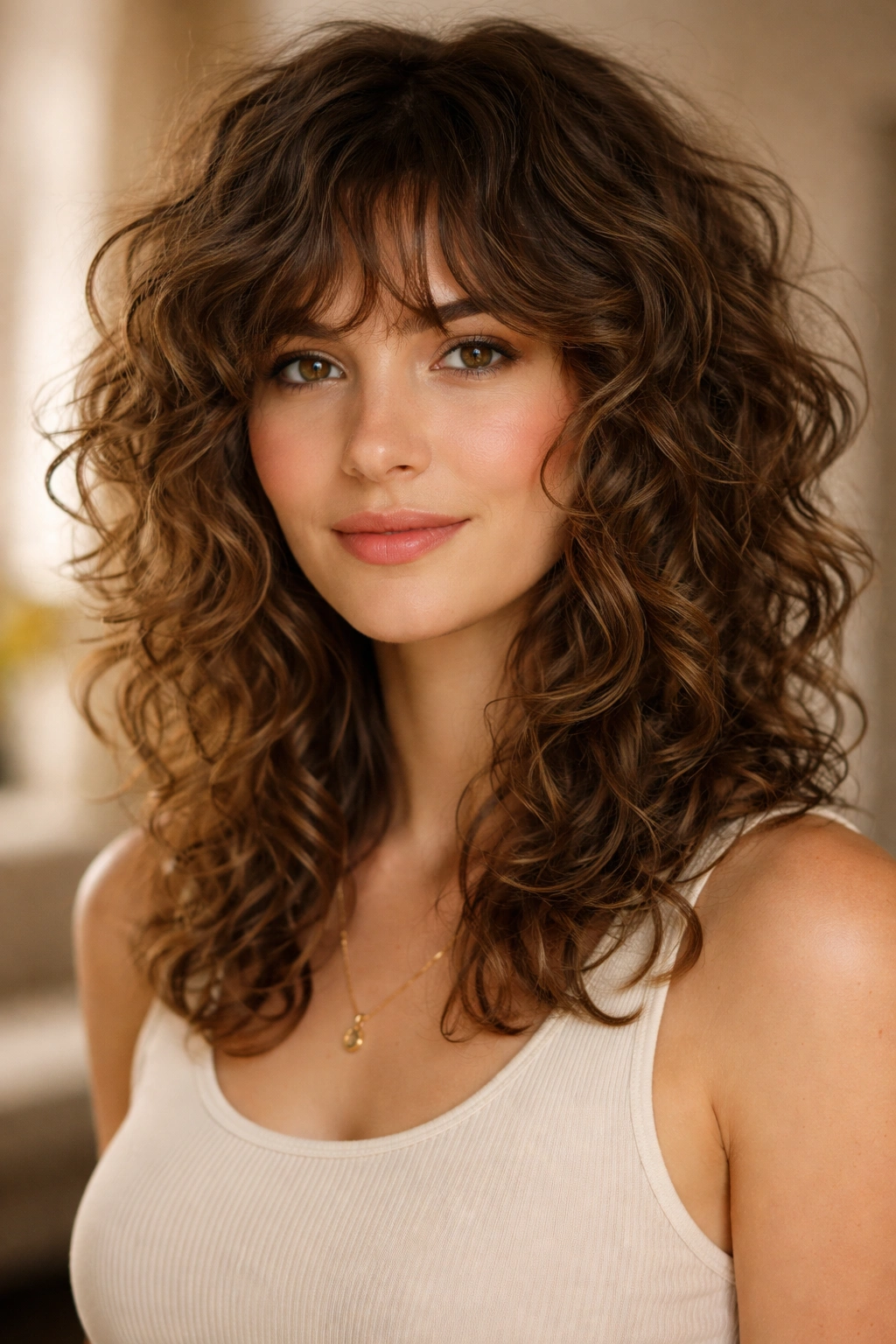
The curly shag is what happens when you stop trying to make your curls sit in one neat, even curtain. It has layers, movement, and a little edge, but it still reads casual enough for everyday wear. If your hair tends to balloon into a triangle when it’s one length, the shag is usually the fix.
The real beauty of this cut is that it makes styling easier on ordinary days. You don’t need to labor over perfect sections. You need shape. The layers take weight out of the bottom and bring the focus up around the face and crown, where curls usually look liveliest. On dense hair, that can be a relief. On looser curls, it keeps the cut from falling flat.
There’s one catch: the shag looks best when the layers are cut with the curl pattern in mind. A dry cut usually gives a better result than hacking through wet hair and hoping for the best. If the layers are too blunt, the whole thing can get boxy. If they’re too aggressive, you lose length faster than you expected. That part matters.
Air-dried styling suits this cut beautifully. Add curl cream, scrunch in a light gel, and let the hair dry with minimal touching. The end result should feel undone in the good way — not messy, just alive.
6. Side-Parted Wash-and-Go
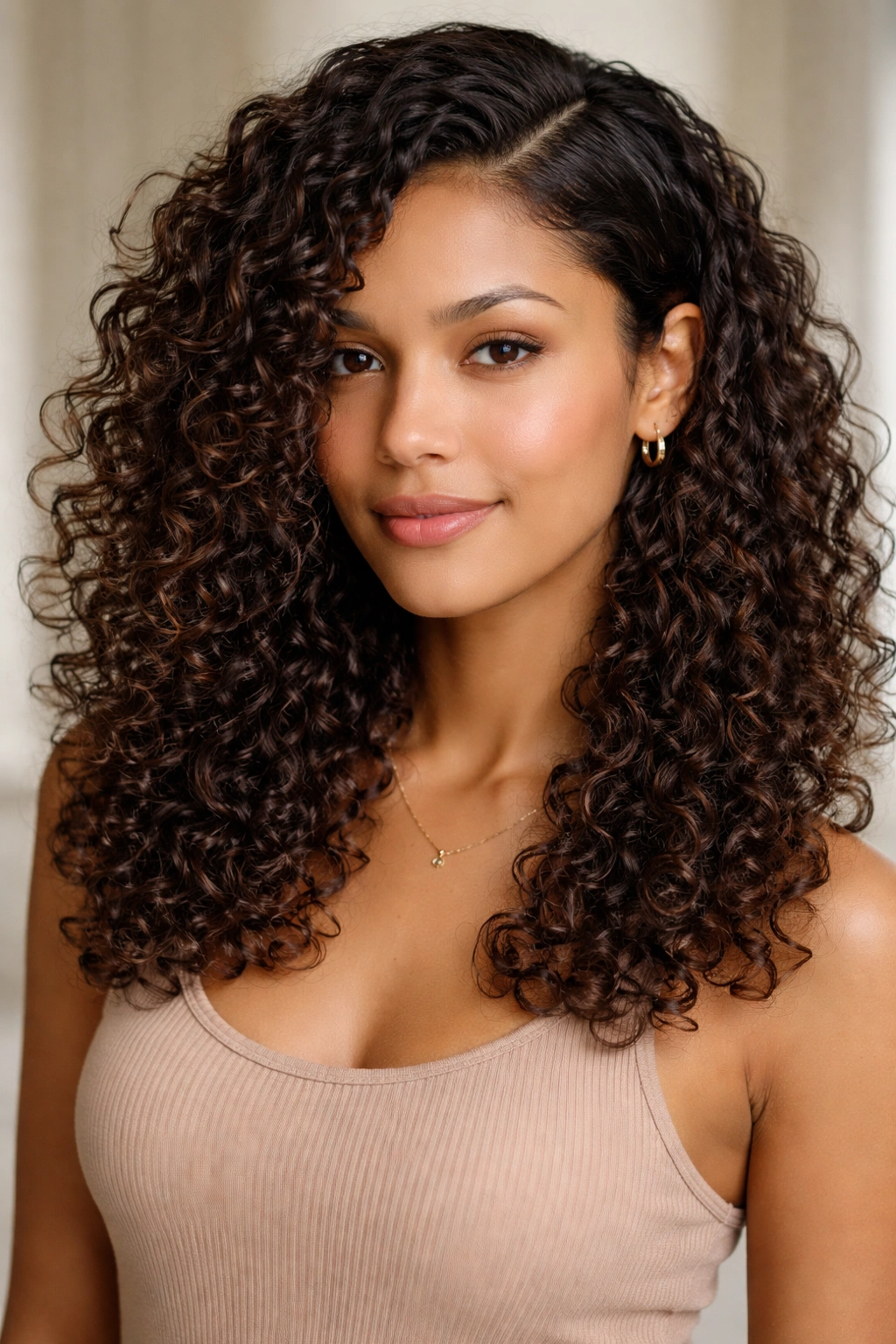
Ten minutes can be enough. Seriously. A side-parted wash-and-go is one of the fastest casual curly hairstyles because the part alone gives the curls a new shape, and the wash-and-go method lets the texture stay front and center. No hidden tricks. Just a clean foundation and a little patience while it dries.
The side part works because it changes where the volume sits. A deep side part gives one side more lift and can make the face look a bit more open, while a gentler side part keeps the style softer. If your roots have gone a little flat, flipping the part while the hair is still damp often gives the curls a useful reset.
Product Textures That Help
A light leave-in plus a medium-hold gel is usually enough for most curl patterns. The leave-in gives slip, and the gel helps the clumps stay together while they dry. If you use too much cream, the curls can go stringy. Too little, and the surface gets fluffy before lunch.
- Use a dime-sized amount of leave-in on fine curls.
- Use more gel near the crown if frizz starts there first.
- Scrunch upward instead of rubbing.
- Diffuse on low if you want faster drying and more lift.
This style has a nice honesty to it. It doesn’t try to hide the curl pattern, and that’s exactly why it works.
7. Half-Up Mini Buns
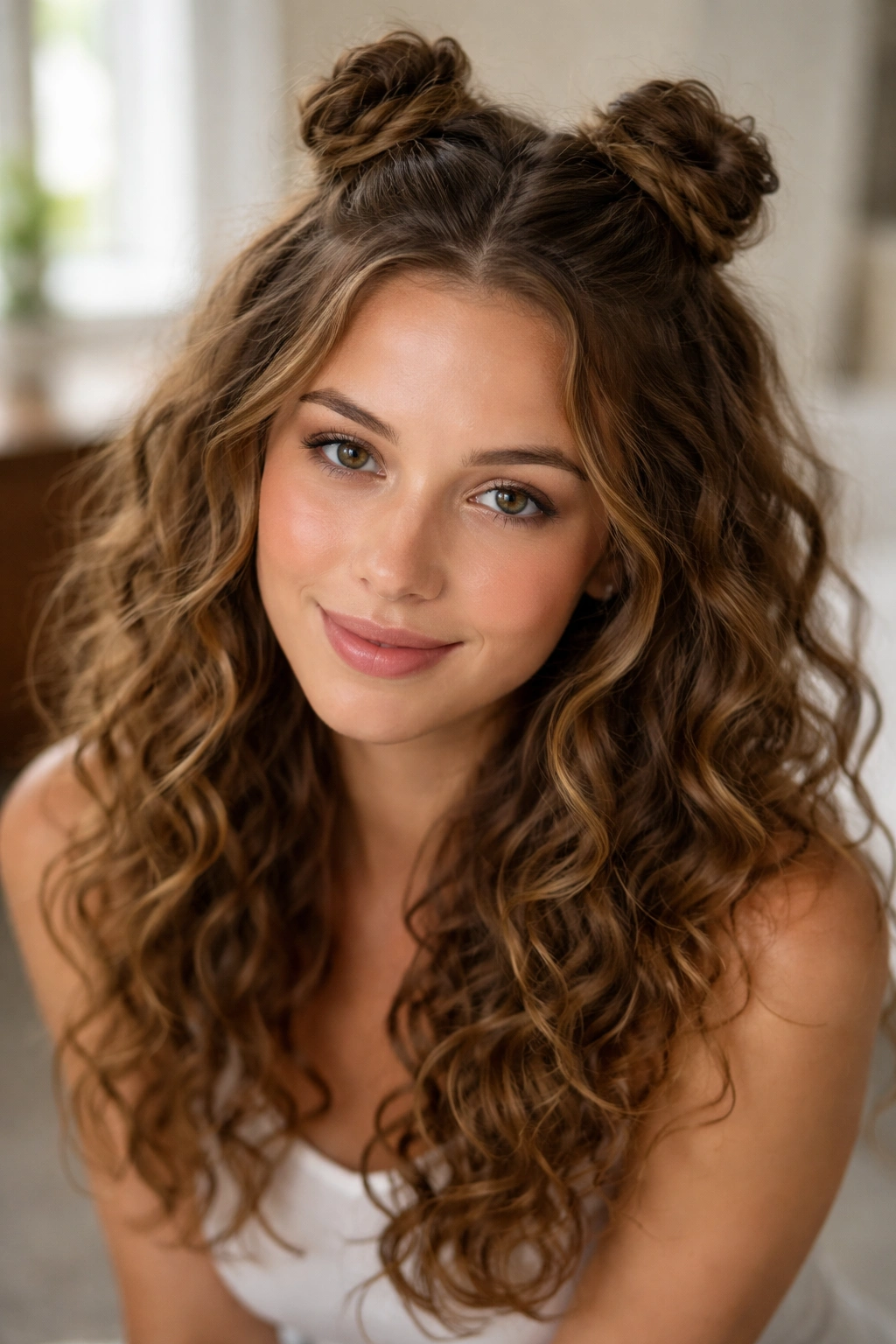
Half-up mini buns are a little playful, a little practical, and far less fussy than they look. They sit somewhere between “I made an effort” and “I still want my hair to move,” which is a sweet spot for casual curly hairstyles. On longer curls, they keep the top tidy while letting the rest fall loose. On shorter curls, they can look almost cheeky.
The best version isn’t perfectly symmetrical. That’s the part people stress about, and it’s not worth it. Two small sections from the front or crown, twisted into buns and pinned, usually look better when they’re slightly loose. If you make them tiny and tight, they can vanish into the rest of the hair. A little size gives them shape.
I like this style when curls are day-two or day-three and have a bit more grip. Fresh curls can slide around, especially if the product is still soft. Older curls hold the mini buns more easily. If you want extra security, clip each bun first, then pin once you’ve checked the balance in a mirror. That saves a lot of redoing.
The loose curls left underneath do the rest. They soften the whole thing and stop it from feeling too youthful or too exact. It’s casual, but not careless.
8. Curly Bob Tucked Behind One Ear
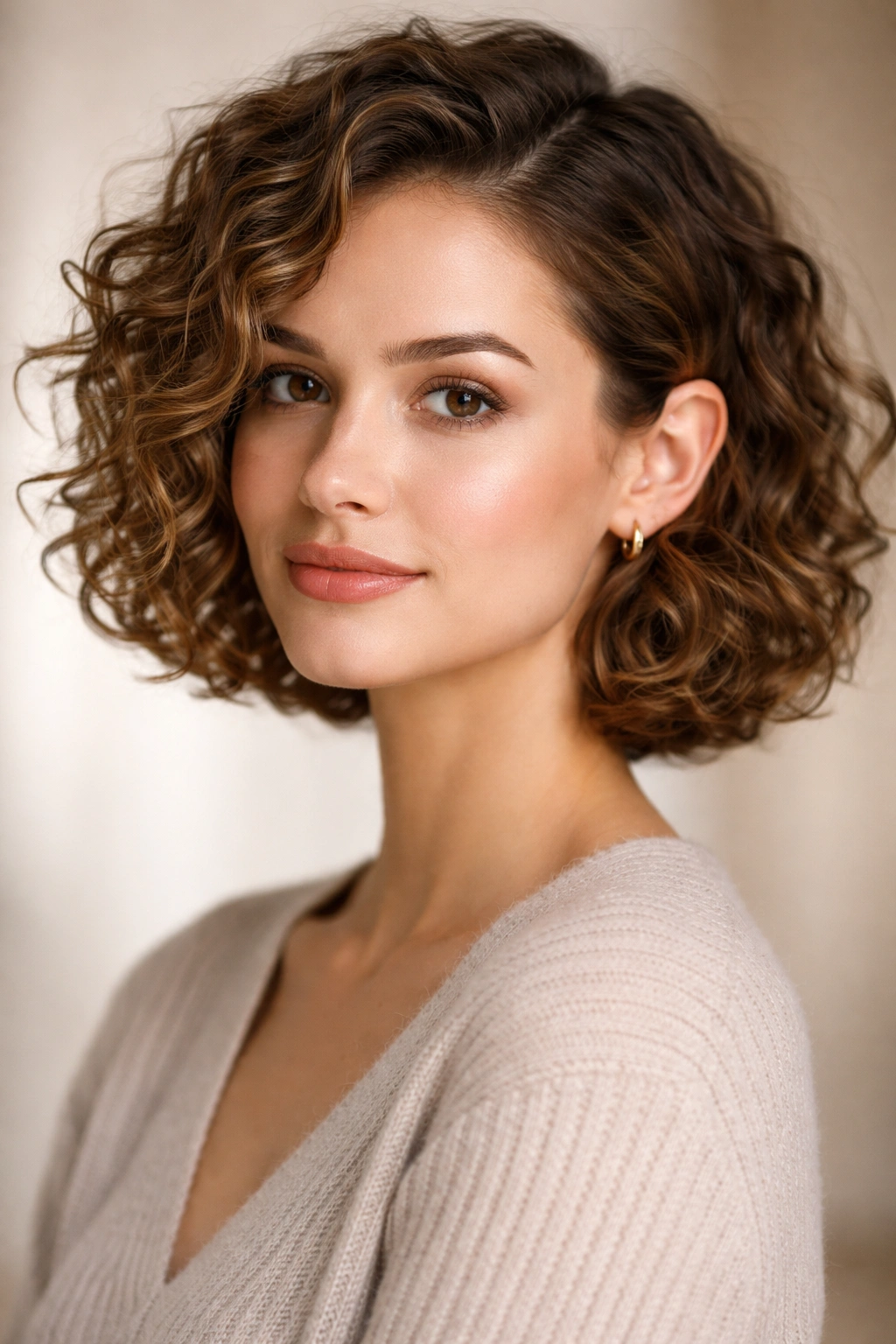
Small move. Big payoff. A curly bob tucked behind one ear changes the entire shape of the haircut without touching the length at all. It opens the face, shows off the cheekbone on one side, and lets the curls keep their volume on the other side. That imbalance is what makes it interesting.
This style works especially well when your bob has enough length to skim the jaw or collarbone. The tuck creates a little asymmetry, which keeps the curls from feeling too round. If you have naturally side-swept fringe or a few shorter front layers, even better. Those pieces soften the look and keep the tucked side from going flat.
A Few Things That Help
- Use a small barrette or pin if the curl slips out easily.
- Tuck the hair when it’s fully dry so the shape stays put.
- Keep one side a little fuller instead of flattening both.
- Pair it with earrings if you want the style to feel finished without extra work.
This is the sort of hairstyle you can wear to a casual lunch, a desk day, or even a low-key evening out. It does not need much. Which is probably why I keep coming back to it.
9. Scarf-Tied Curly Puff
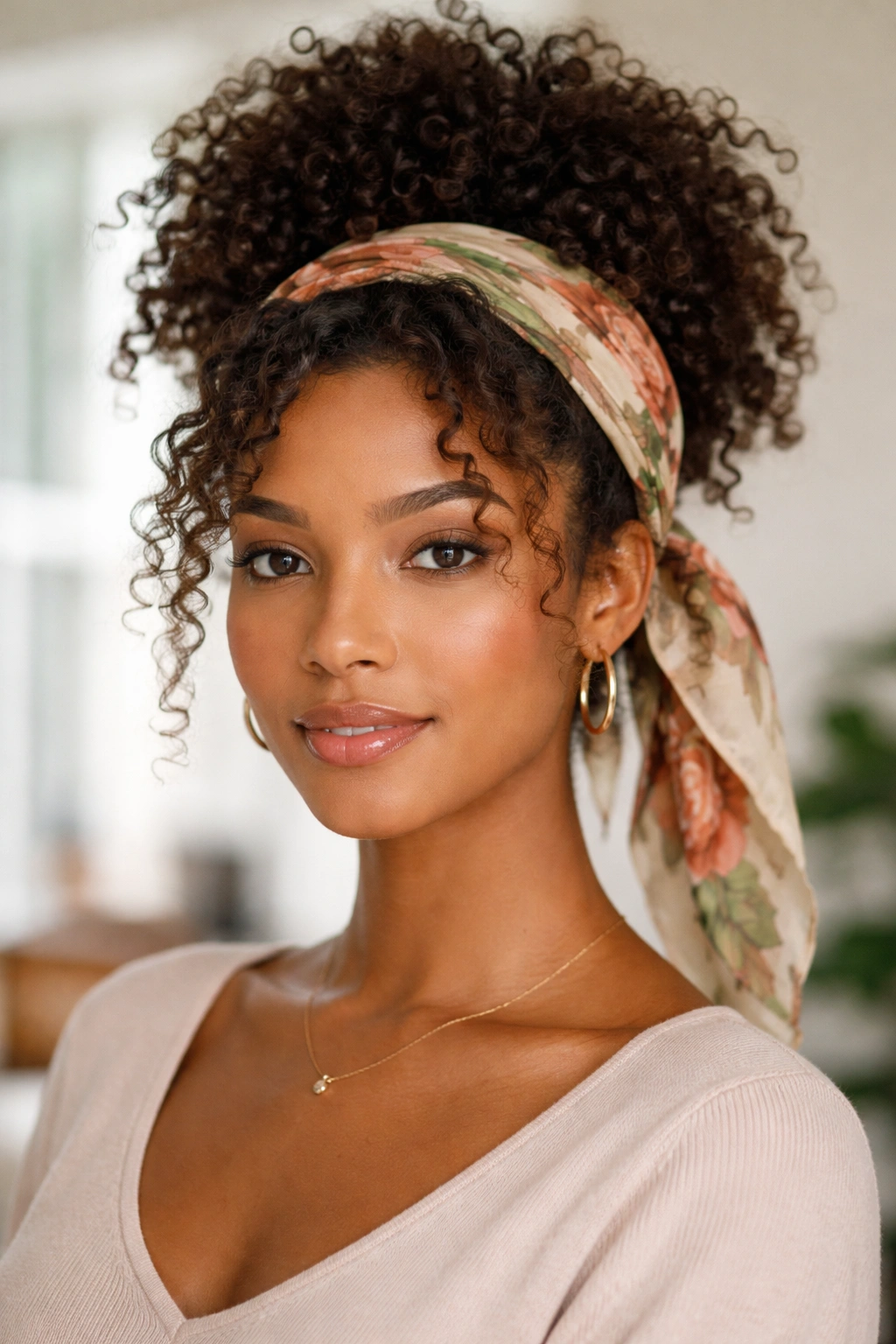
A scarf tied around a curly puff feels easy in the best way. It gives the style a bit of color and makes the puff look planned, even if you only had five minutes and a mirror mounted too high on the wall. The scarf also helps hold the front sections in place, which is useful when your curls are too slippery to stay put.
Choose a scarf that isn’t overly stiff. Thin silk or a soft cotton bandana tends to sit better against curls than a thick, crunchy fabric. Fold it into a band, place it over the crown or hairline, and tie it either above the puff or at the back. The exact placement changes the whole mood. Higher feels a little brighter. Lower feels more relaxed.
Easy Ways to Wear It
- Match the scarf to one color in your outfit.
- Let the ends hang loose if you want a softer look.
- Tie it under the puff for more of a retro feel.
- Use it to hide roots on a day when the hairline needs a break.
The best part is how forgiving this style is. The puff can be messy, the part can be imperfect, and the scarf still pulls it together. That’s a useful trick to have around.
10. Braided Crown on Curly Hair
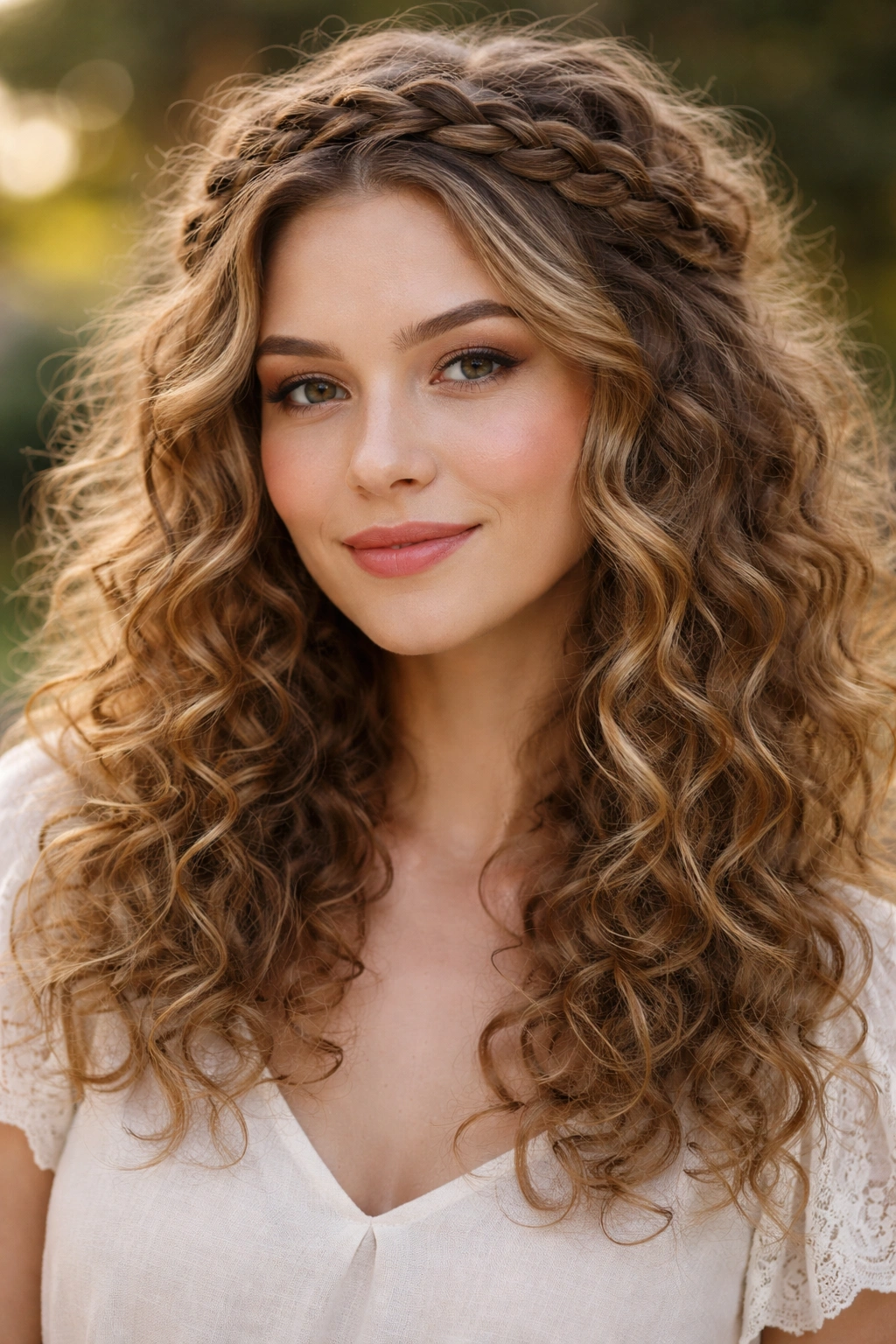
On days when your front pieces keep falling into your face, a braided crown solves the problem without making the rest of your curls look stiff. It’s one of those curly hairstyles that feels a little more done, but not formal. The braid acts like a frame. The curls do the rest.
The crown does not need to be a tight, neat braid. In fact, a looser braid usually looks better with curls, because it leaves some texture around the hairline and doesn’t steal all the softness. You can braid from each temple and pin the ends at the back, or take one side across the top like a headband. Both work. The second option is quicker.
A few small details matter here. Start with hair that has enough slip to braid, but not so much product that it slides apart. If your curls are freshly washed, a little mousse or cream helps the braid hold shape. If they’re older and drier, a mist of water can give you just enough control.
This style is especially good for second- or third-day hair. It hides uneven roots, keeps curls off the face, and gives the whole look a soft shape that works with jeans just as well as it works with a sundress.
11. Messy Side Bun for Thick Curls
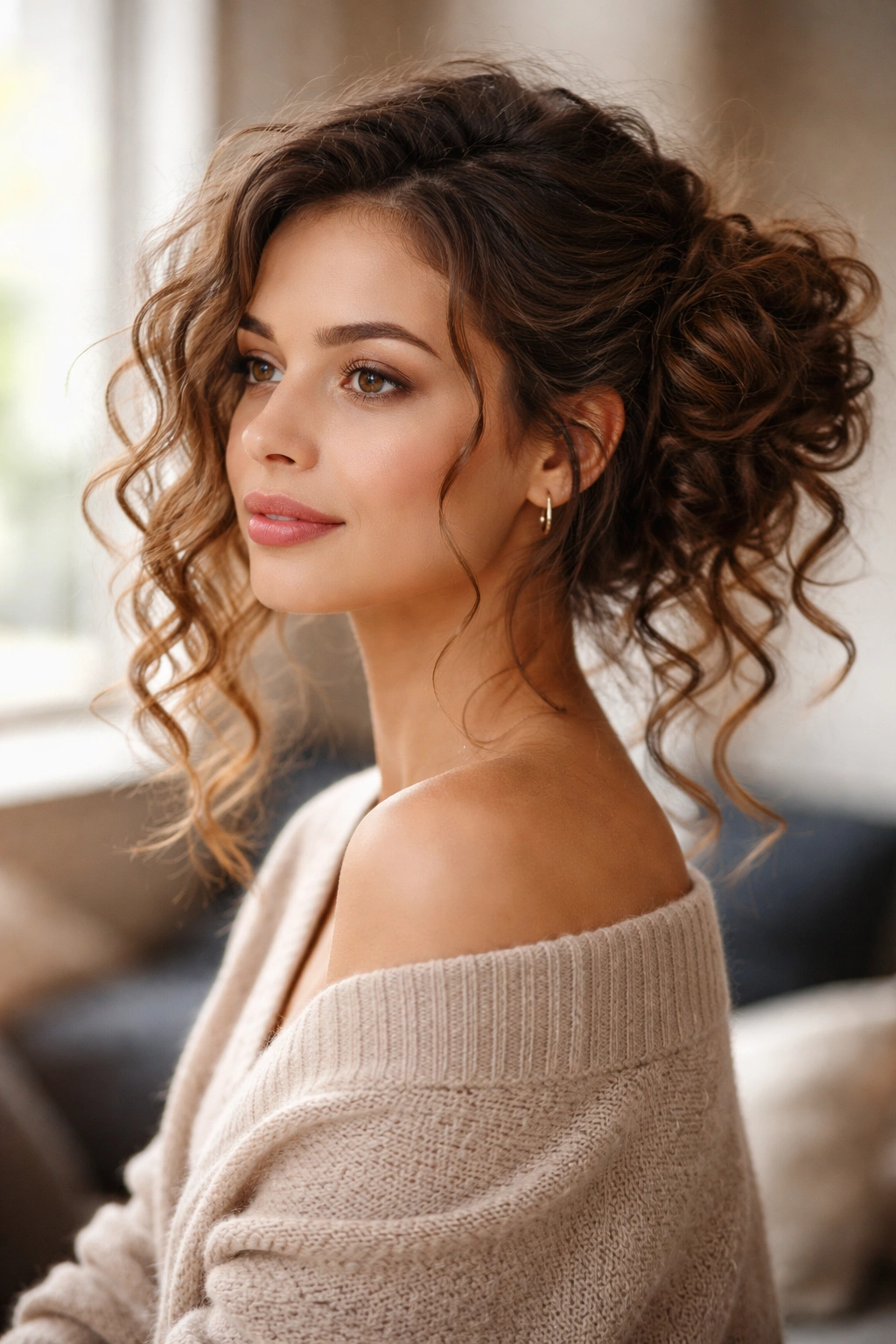
Thick curls often look best with less perfection, and the messy side bun proves it. A side bun gives the hair a little drama without asking it to be sleek, and the fullness of curls makes the shape feel rich even when the styling is loose. That’s the whole charm.
The bun sits just below one ear or along the jawline, depending on your length. Gather the hair loosely to one side, twist it, and pin it in a bun that keeps some ends visible. Those ends make the style better, not worse. If every curl is tucked away, the bun can start looking too controlled. A few escaped spirals soften the line.
What Keeps It From Looking Heavy
- Leave volume at the crown before you gather the hair.
- Pin in layers so the bun holds without needing too much tension.
- Use a light hold spray only on the outer surface.
- Pull out a front curl or two if the side bun feels too closed in.
This is a good choice for long, dense curls that need shaping but not flattening. It also works on days when you want something a little dressier without losing the easy, lived-in feel.
12. Clipped-Back Front Sections
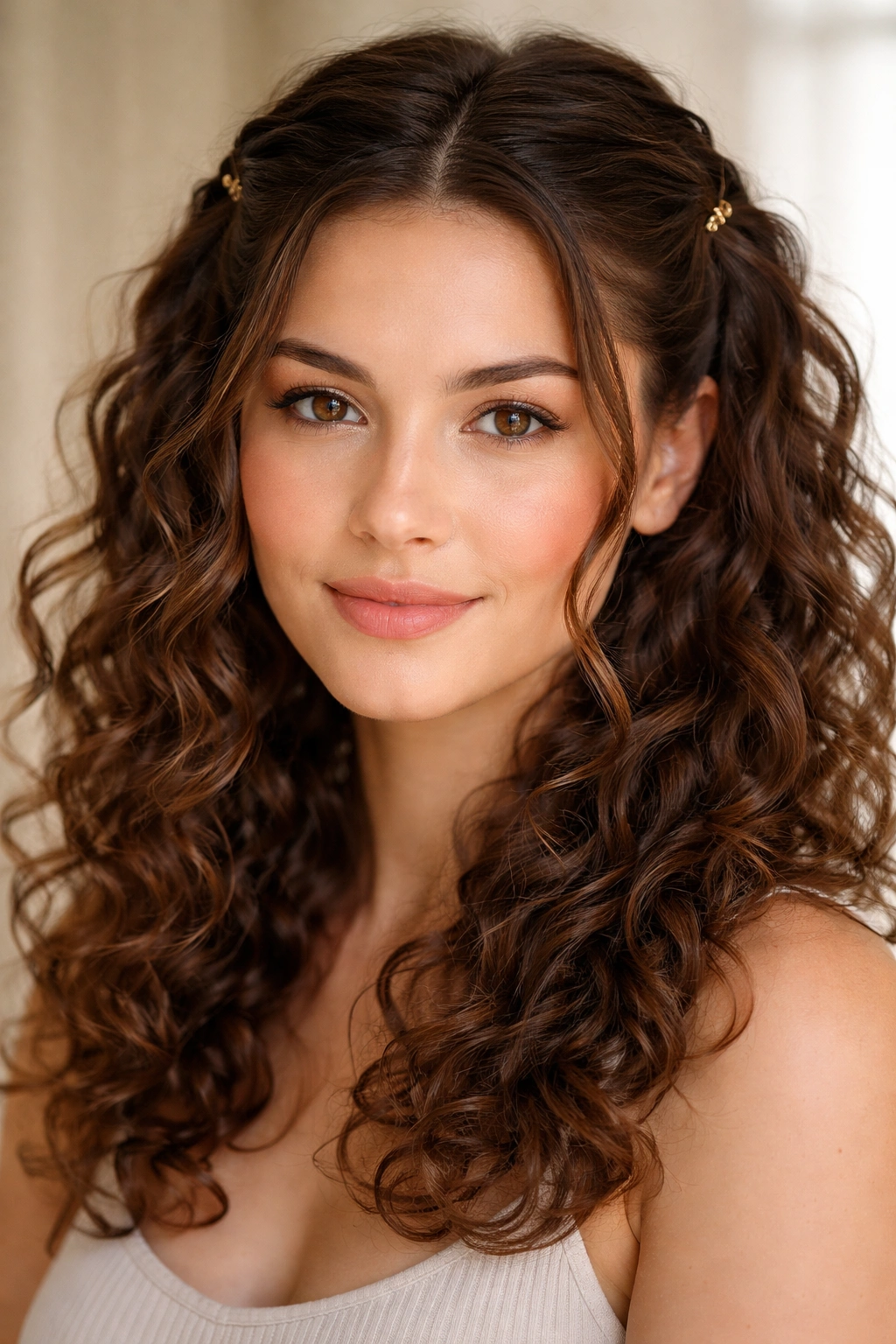
Front sections are underrated. People spend ages styling the back and then let the front hang in their eyes like it doesn’t matter. It matters. Clipping back the front pieces gives your face room and keeps the curls in the back looking full and free.
The nicest thing about this style is how little it asks for. You can take two front sections, twist them away from the face, and secure them with a pair of small barrettes or snap clips. That’s enough. If the clips are pretty, the style looks deliberate. If they’re plain, it still works. This is one of those styles that depends more on placement than on skill.
You can make it softer by leaving the twist loose near the temples. You can make it cleaner by tucking the twists closer to the scalp. Neither version is wrong. That flexibility is what makes it so useful for real life, where curls rarely fall the same way two days in a row.
If your hair is in an awkward grow-out stage, this is a lifesaver. It gets the front under control without forcing the rest of the cut into something it’s not. Practical. Fast. Not boring, either.
13. Curly Bangs and Loose Layers
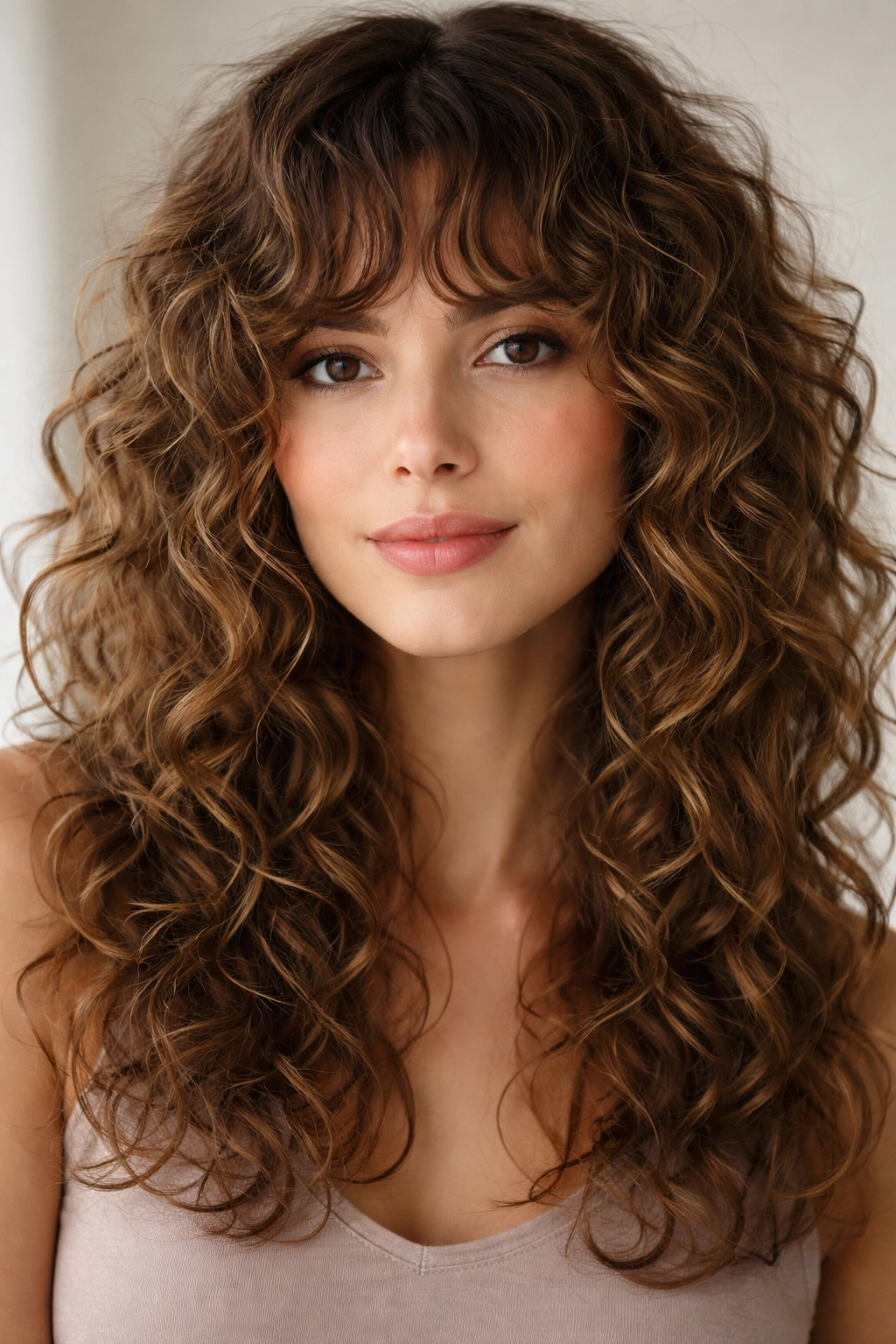
Curly bangs are one of those things people hesitate over for too long. Then they get them and wonder why they waited. When the bangs are cut for the curl pattern, they can make casual curly hairstyles feel much fresher because they bring attention to the face without asking for much styling.
The key is the cut. Curly bangs usually need to be shaped while dry, or at least while the stylist can see the spring of the curl. Wet curls lie. They stretch and shrink in their own strange little way, and bangs cut too short can jump up far higher than expected. A gentle curve around the brow or cheekbone usually gives the best balance.
What to Ask For
- A dry cut or curl-by-curl shaping.
- Bangs that hit a little longer than you think you need.
- Layers that connect softly instead of creating a shelf.
- Face-framing pieces that blend into the rest of the haircut.
Loose layers help the bangs sit better because they stop the front from feeling heavy. If you like your curls up often, this cut still works. The bangs fall out with the style instead of fighting it. That’s the whole point.
14. Twisted Half-Up Halo
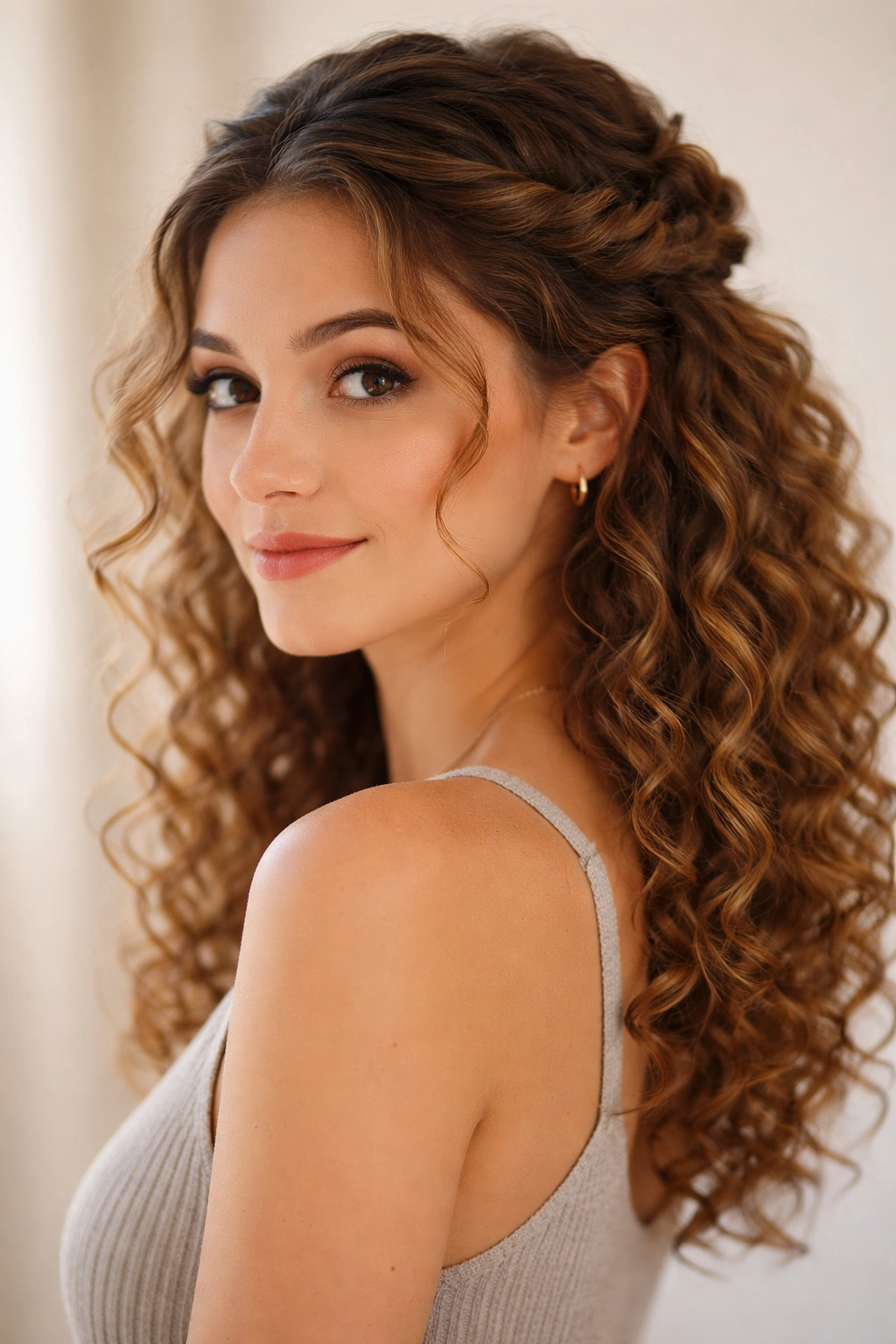
This style looks more complicated than it is. A twisted half-up halo keeps the hair off the face, shows off the length, and gives curls a soft frame around the head without turning into a tight updo. It has a pretty shape, but it still reads casual enough for daily wear.
Take a section from each side, twist them backward toward the crown, and pin them where they meet. You can stop there, or you can continue with a second small twist lower down if your hair is very thick. The result should not look identical on both sides. A little difference is good. Perfect symmetry can make curls look stiff, and that’s the last thing this style needs.
How to Keep It Casual
- Keep the twists loose enough that the curl pattern stays visible.
- Hide the pins under the twists, not on top of them.
- Pull a few curls forward near the ears if the crown feels too open.
- Use one statement clip if you want the style to look more finished.
It’s a nice option for brunch, a casual dinner, or any day when you want the hair away from your face but still want the curls to be part of the look. Which, honestly, is most days.
15. Low Bubble Ponytail on Curls
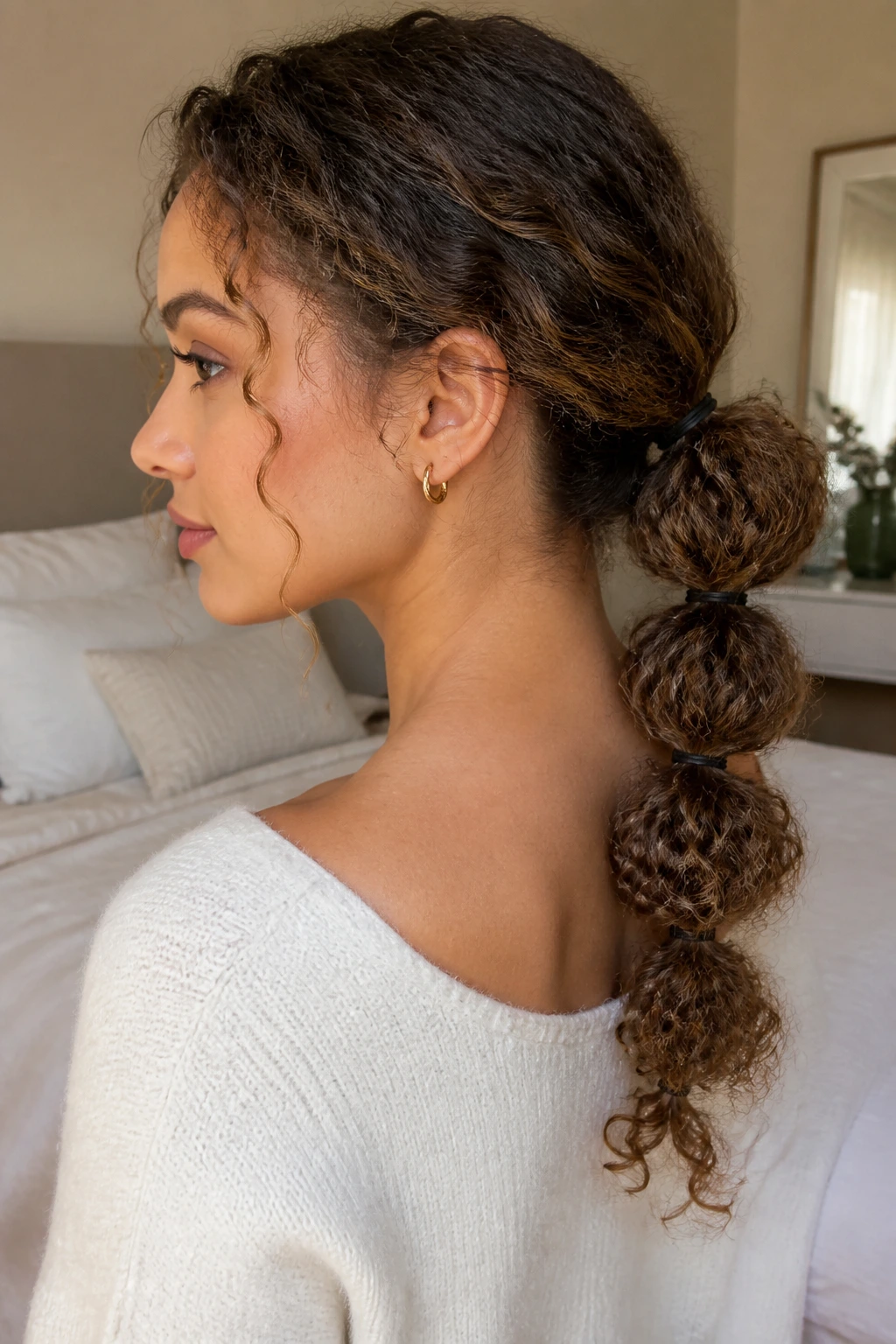
If your curls hate being fully pinned back, a low bubble ponytail gives them breathing room. It keeps the hair contained, but each section still has space to puff out a little, which is exactly what makes it work on curly hair. The shape feels relaxed and playful, not fussy.
Start with a low ponytail and add small elastics every few inches down the length. Then gently tug at each section so the bubbles round out. The curls fill the spaces on their own, which means you do not need to overthink the shaping. If your hair is layered, some ends may slip out. Let them. That movement keeps the style from feeling too neat.
A bubble ponytail is handy when you want to stretch your curly style for another day without wearing it down again. It works on long curls, medium curls, and even thicker shoulder-length hair if the elastic spacing is close enough. You can place one or two curls around the first elastic to hide it, and if the roots need a bit of polish, smooth just that area with a tiny bit of cream. Not the lengths. The lengths should stay airy.
For a low-effort finish, this is hard to beat. It stays casual, it keeps the texture visible, and it doesn’t ask your curls to pretend they’re straight for the afternoon.
