



A good curly undercut can make your hair look sharper in ten minutes. A bad one turns into triangle territory before lunch.
That usually has less to do with curl type than with shape. Where the weight comes off, how high the sides are cut, and whether the barber respects your natural shrinkage—those details decide if the haircut looks deliberate or just chopped.
People often ask for a fade when they really want a disconnect, or ask for an undercut when they actually want the softness of a taper. Those are not the same thing. A fade melts into the skin or very short stubble; a true undercut leaves a visible break, and curly hair shows that break in a way straight hair never will.
Short sides change everything.
1. Classic Curly Undercut With a Soft Disconnect
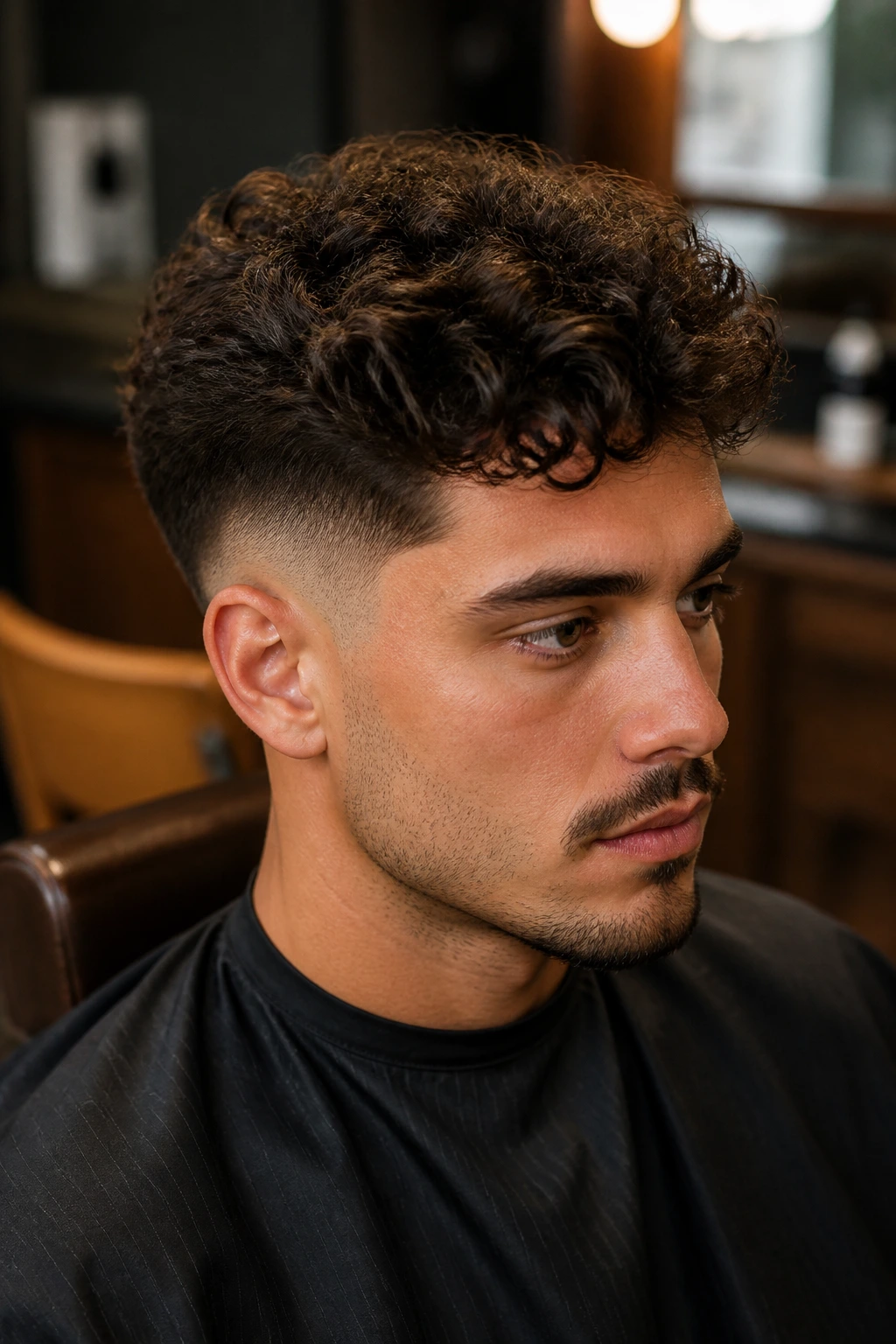
The classic curly undercut is the one most people picture first: curls on top, clipped sides, and a clean line where the two meet. It works because it gives the curls room to sit up instead of spreading out sideways, which is what makes so many curly cuts look heavy.
Keep the top long enough for shrinkage. For loose curls, that may mean 3 to 4 inches; for tighter patterns, you often want closer to 4 to 6 inches so the finished shape still shows after it dries. The sides can sit at a #1, #1.5, or #2 guard depending on how stark you want the contrast.
What to tell the barber
- Leave extra length at the crown if your curls flatten when wet.
- Keep the disconnect clean, not faded, if you want a true undercut look.
- Clean up the neckline, but don’t push the nape too high unless you want the cut to look more aggressive.
- Ask them to check your crown swirl before they clip too much off the top.
That last point matters more than people think. If your crown kicks one way, the top needs a little more weight in that area or the curls can stick up strangely when they dry.
I like this style when someone wants the haircut to show right away without looking fussy. A little curl cream, a medium-hold gel, and a diffuser on low heat are usually enough. Let the hair set into a soft cast, then scrunch it out once it’s fully dry. Skip the heavy butter if your hair is fine; it can drag the curls down and make the top look mushy instead of full.
2. Temple Fade Curly Undercut
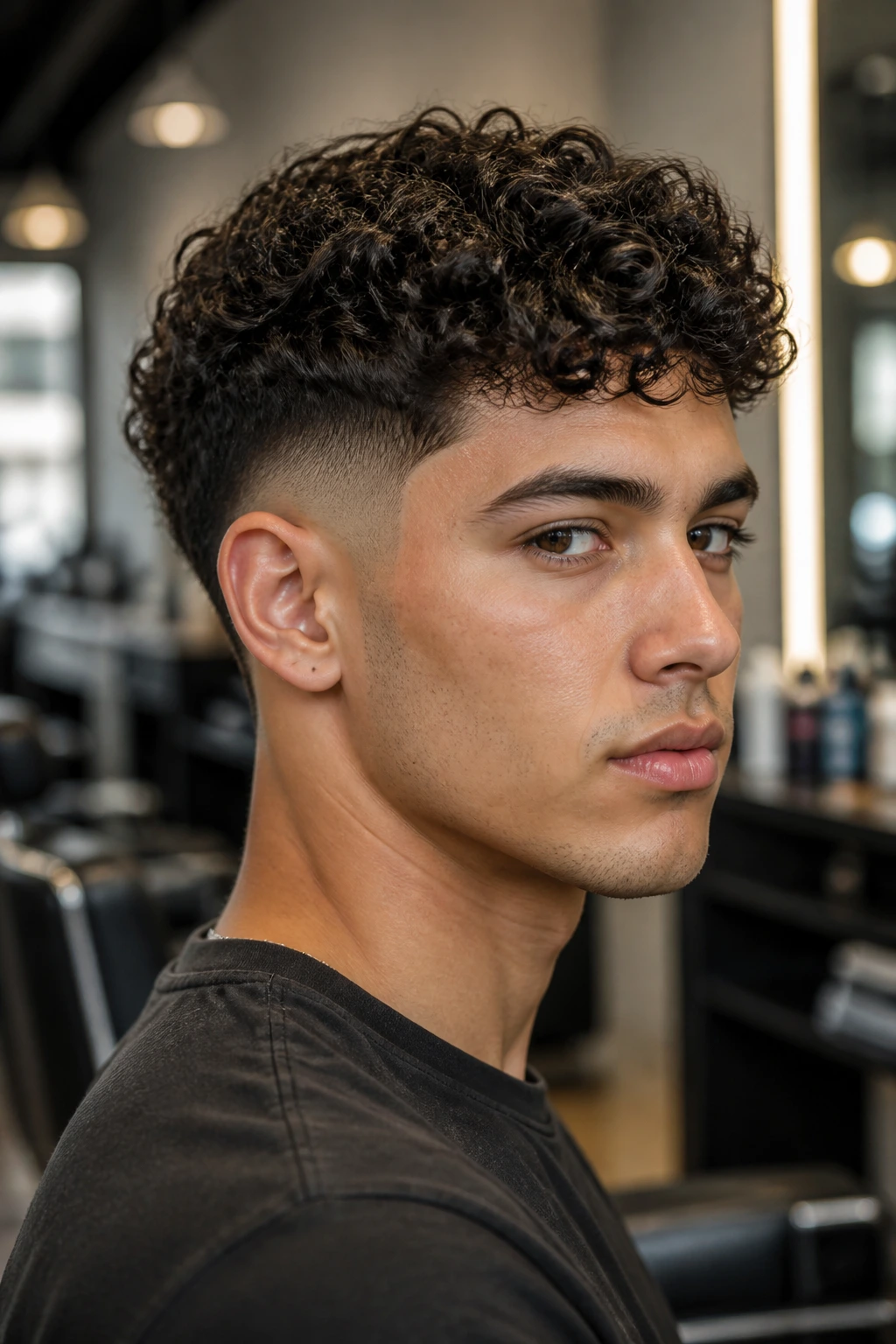
This is the cleanest way to sharpen curls that puff first at the sides. The fade is carved around the temples and ears, then it drops away so the top keeps all its movement.
That narrow fade band does a lot of work. It keeps glasses from getting buried in hair, gives the face a clearer edge, and stops the side profile from looking wide. If you have a square or round face, that extra vertical space at the temples can make the whole cut feel less boxy.
A temple fade also gives you room to keep the top a little shorter than a classic undercut. That’s useful if your curls are dense and you don’t want to fight a heavy crown every morning. The barber can leave the top textured and still make the edges feel crisp.
One caveat: don’t let the fade climb too high if your curls are short on top. Once the sides disappear too aggressively, the haircut can start to look top-heavy, and curly hair does not hide that mistake well.
3. Low Curly Undercut for Office-Friendly Shape
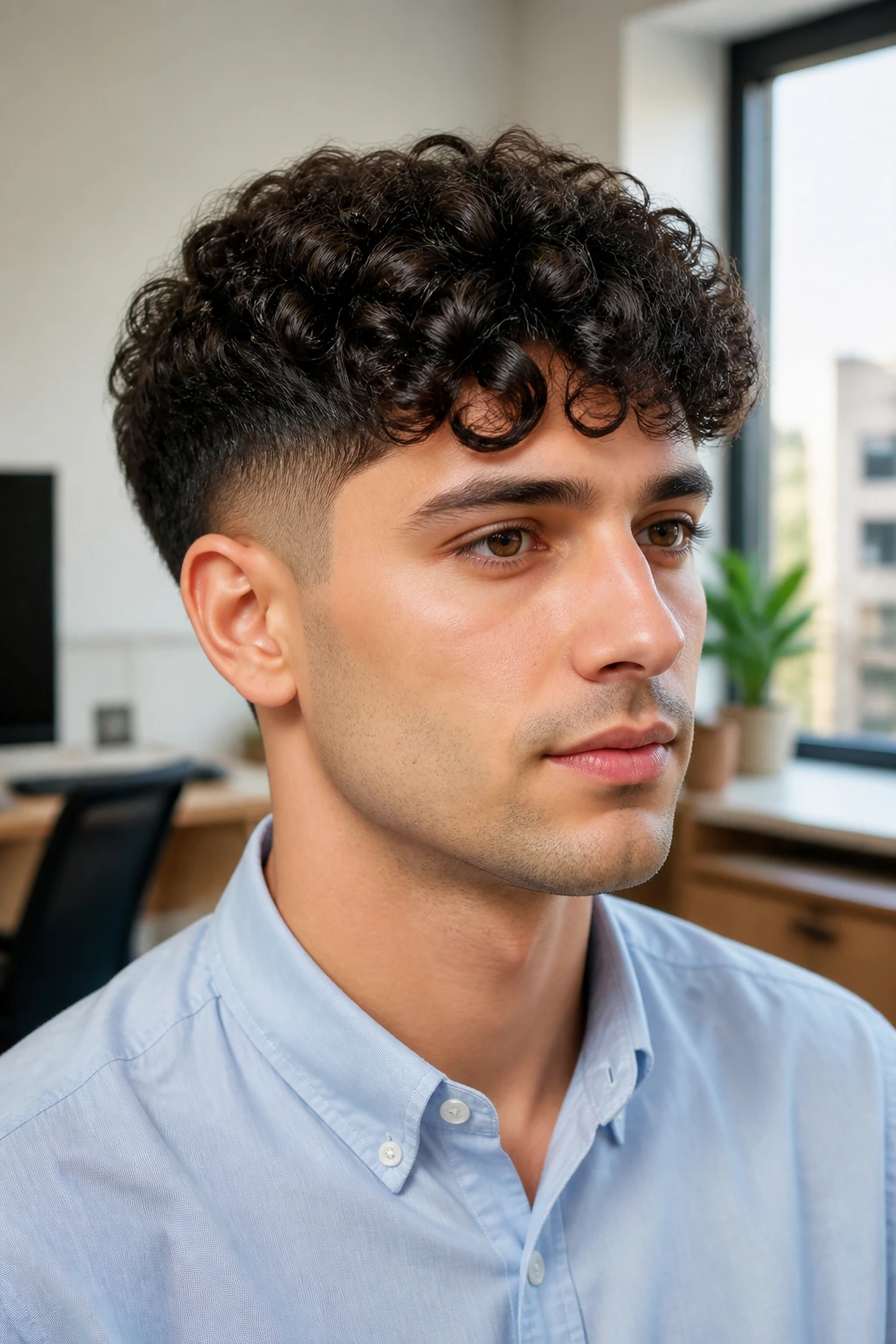
If you need a cut that still looks calm in a meeting, this is the one. The low curly undercut stays beneath the temple line, so it removes bulk without turning the haircut into a loud shape.
That lower placement matters because it keeps the silhouette soft at first glance. From the front, you still get curls, texture, and movement. From the side, the sides sit flatter and neater, which makes the style easier to wear in places where a high disconnect would feel too bold.
Why it stays wearable
A low undercut grows out better than a harsh high one. The transition sits lower on the head, so even when the sides start filling in, the haircut doesn’t lose its shape all at once. That’s a relief if you only get to the barber every few weeks.
It also plays nicely with looser curls and waves that don’t need a lot of side removal. I like it for people who want contrast but not drama. If you tuck your hair behind one ear, wear glasses, or need to throw on a hat without the whole thing collapsing, this version makes life easier.
The top doesn’t need to be huge here. Three to four inches is often enough, especially if your curl pattern has decent spring. A lightweight leave-in and a little mousse are usually enough to keep it controlled without making it stiff.
4. High Curly Undercut With Big Volume
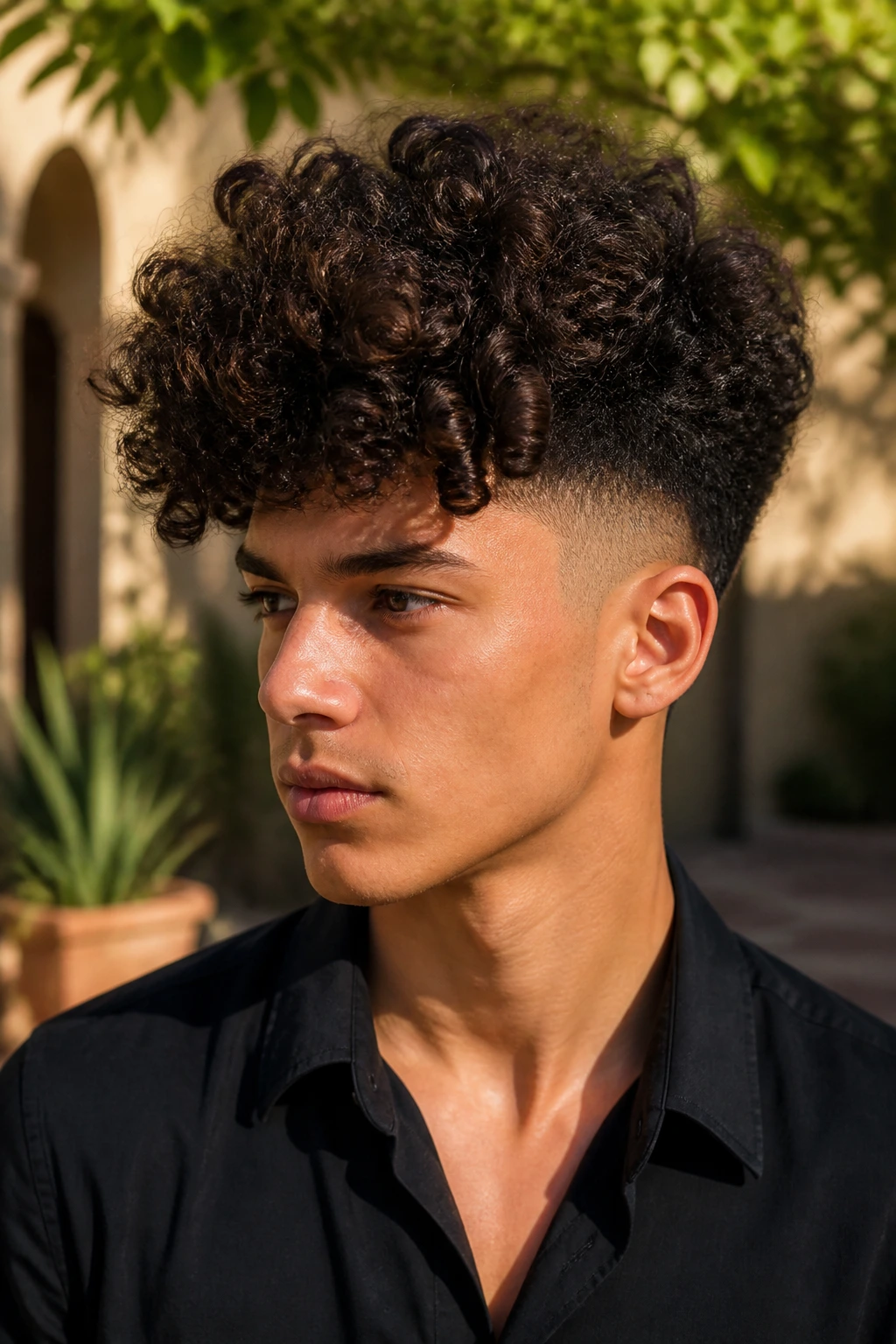
This is the loudest version, and I mean that in a good way. The high curly undercut starts above the temples, which leaves a tall mass of curls sitting on a tight base.
The payoff is height. Lots of it. If your curls are dense or your hair naturally expands upward, this cut can look fantastic because it turns that volume into part of the shape instead of something you’re trying to tame. It also suits longer faces better than a low undercut, since the height adds balance.
When the top is this visible, shrinkage becomes a real planning tool. If your curls shrink a lot after drying, the barber should leave more length than your eye thinks you need. A top that looks “too long” when wet may be the right length once it dries and tightens.
A diffuser helps here, but not in the overeager way people sometimes use it. Start on low heat, keep the airflow moving, and stop once the roots are about 80% dry. Then let the rest air-dry. If you blast the curls all the way dry from soaking wet, the top can get frizzy at the edges and puffy in the wrong spots.
5. Curly Top Knot Undercut
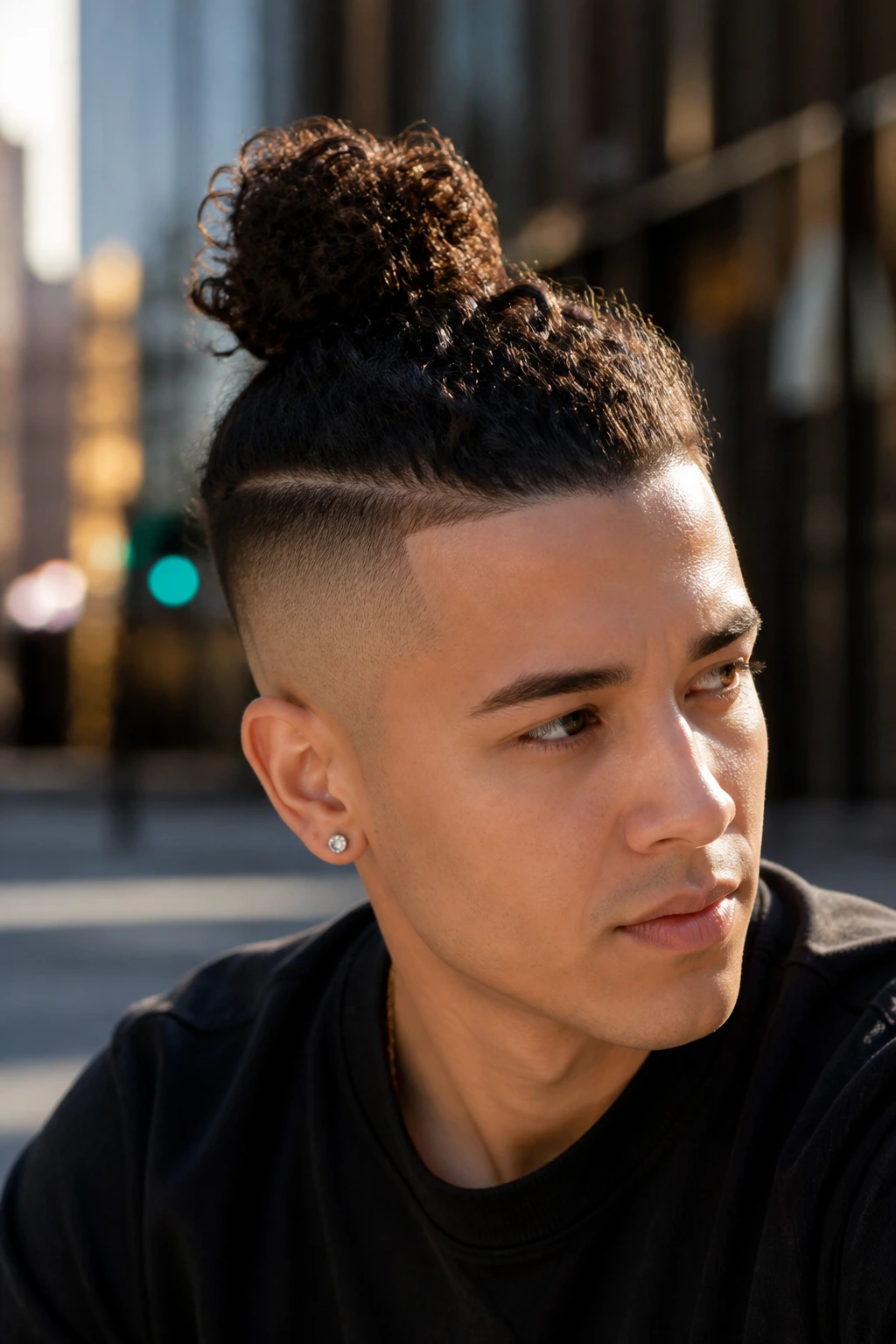
What if you want the curls off your neck on workdays but still want to wear them down later? The curly top knot undercut solves that pretty neatly.
You need enough length on top—usually at least 6 inches, and more if your curls are tight or springy. The sides and back are cut short, sometimes very short, so the knot can sit like a crown while the undercut keeps the lower half of the head cool and tidy.
How to keep the knot from wrecking your hairline
Use a fabric elastic or a coil tie, not a sharp little rubber band. Pull the hair back loosely first, then tighten just enough to hold it. If you yank the knot too hard every day, the front hairline starts complaining fast. Thin temples, breakage, and sore spots are not a cute trade-off.
I also wouldn’t tie it up when it’s soaking wet. Wet curls stretch, and stretched curls are easy to over-pull. Let the hair dry halfway, smooth in a little leave-in, then gather it. That keeps the knot from looking stringy and keeps the curl pattern healthier around the edges.
This is one of those styles that looks casual but asks for restraint. Leave a few curls out near the front if you want softness. Pull everything back too tightly and the haircut can start reading severe instead of relaxed.
6. Curly Undercut With Line Design or Hard Part
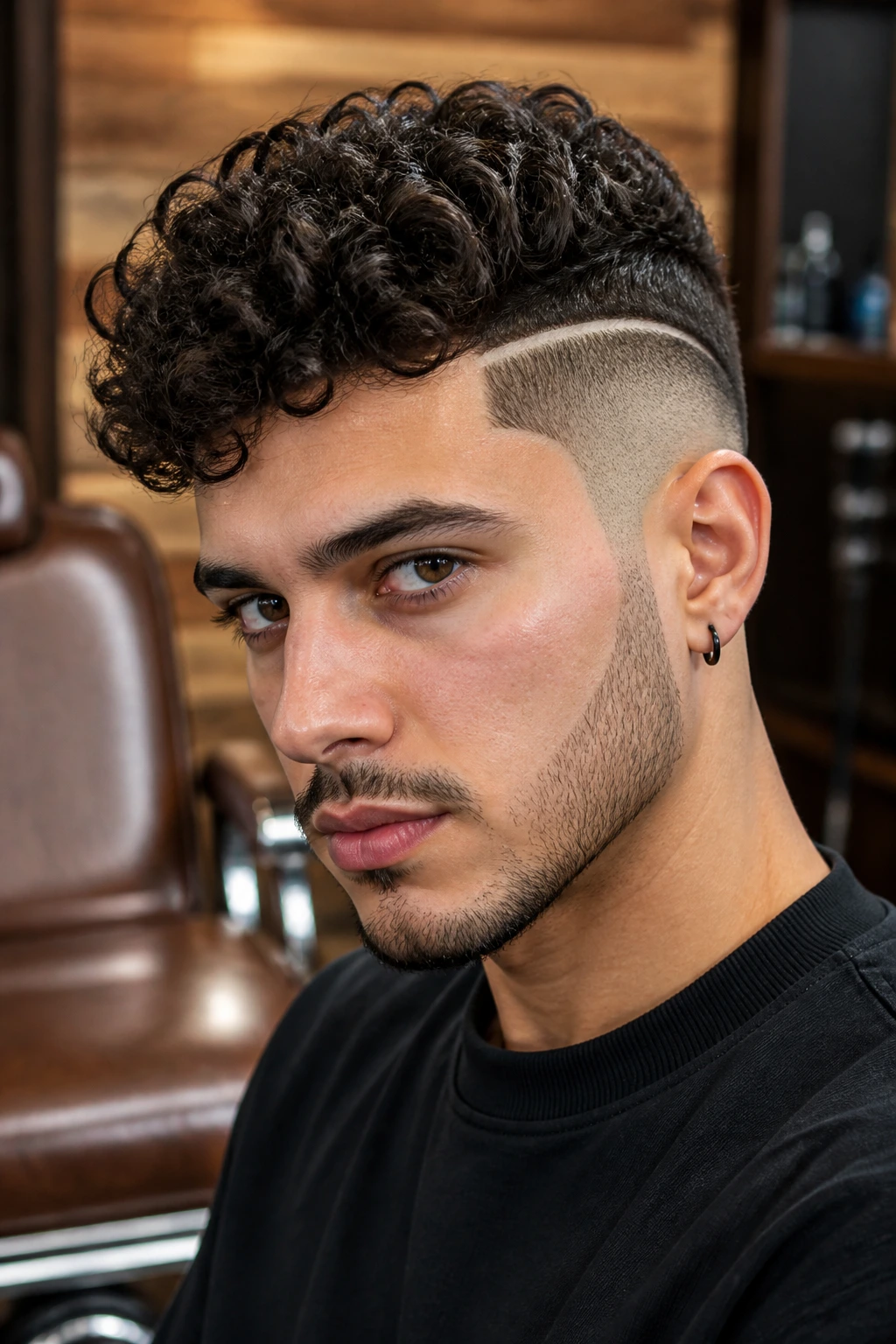
A small shaved line can make a curly undercut feel custom instead of generic. It is a tiny detail, sure, but on curly hair tiny details show fast because the texture gives the line a lot of contrast.
You can keep it subtle or go sharper. A single hard part on one side gives the haircut direction. One line near the temple feels cleaner and more restrained. Two parallel lines, or a curved slash, push the look into barbershop statement territory.
Options that work well
- One thin line above the temple for a quiet accent.
- A hard part that separates the top from the faded side.
- Two short lines near the back for a stronger graphic look.
- A curved line that follows the head shape instead of fighting it.
The catch is upkeep. Those shaved details grow soft fast, especially if your hair grows quickly at the sides. If you like crisp edges, you’ll be back in the chair more often than with a plain undercut.
I would not choose this version if you hate maintenance. But if you like your haircut to look like someone meant it, the line design does that job well. It also works best when the rest of the cut is already tidy—think clean sideburns, a controlled neckline, and curls that have been shaped, not just left to grow wherever they want.
7. Tapered Curly Undercut With a Longer Back
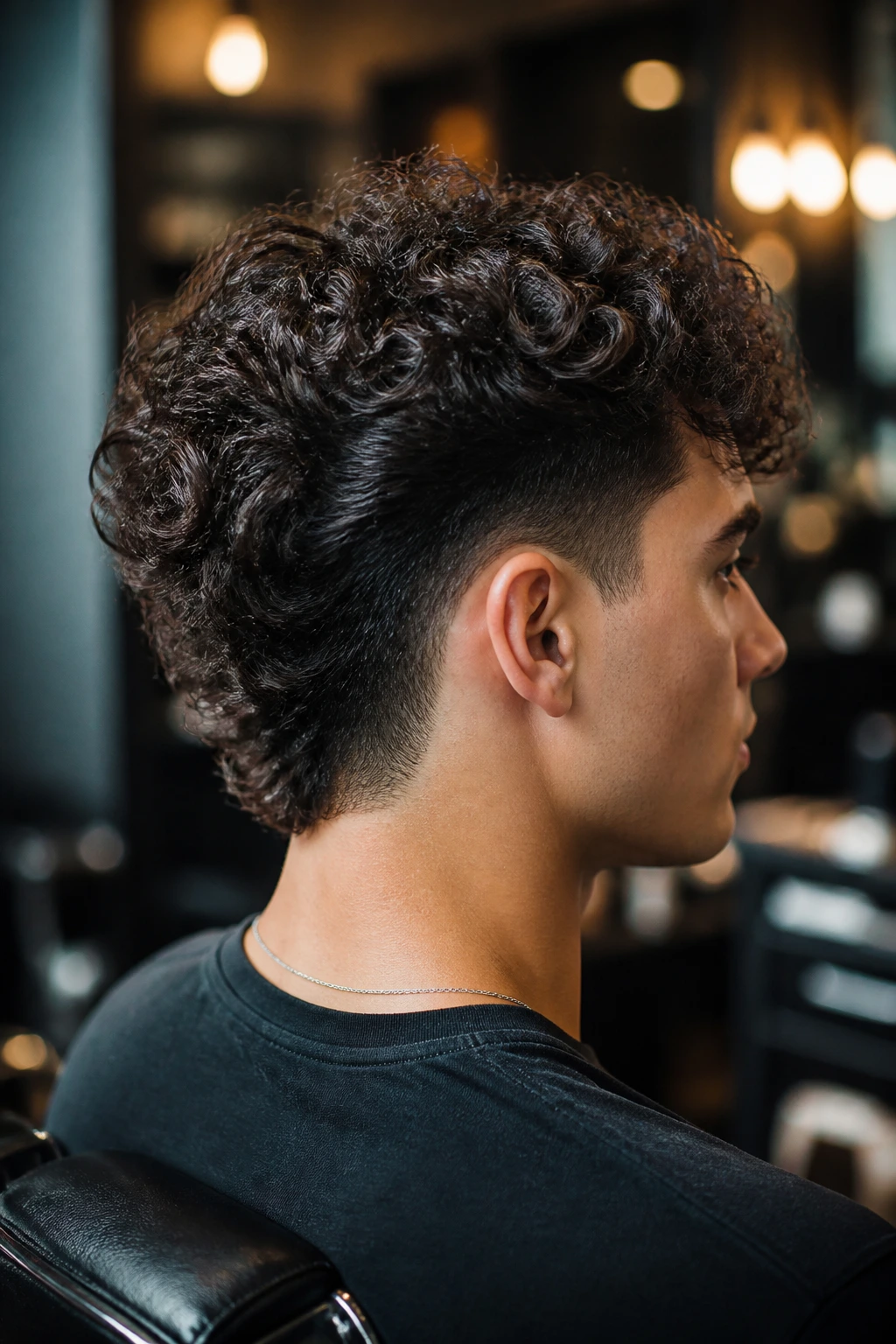
Not every undercut needs a hard shelf. This version softens the transition by tapering the nape and the area behind the ears while still keeping the sides shorter than the top.
That softer back shape makes a big difference for thick curly hair. A blunt undercut can leave a blocky shape at the back of the head, especially if your curls are dense or your neck hair grows fast. A taper takes some of that bulk out in a way that feels cleaner and less abrupt.
Why the back matters more than people think
Most people check the front first. Fair. But the back is where this cut either looks polished or looks unfinished.
A good tapered back follows the curve of the head instead of stopping in a shelf. The barber can use a #1.5 or #2 guard and then blend down toward the neckline with scissors or clipper-over-comb work. That keeps the outline neat while still letting the curls on top do the talking.
I’d pick this style if you want the practicality of short sides without the harshness of a full disconnect. It’s also useful if your curls puff at the nape, which happens more often than people expect. That little taper cleans up the back without making the haircut feel severe.
8. Hidden Undercut for Long Curly Hair
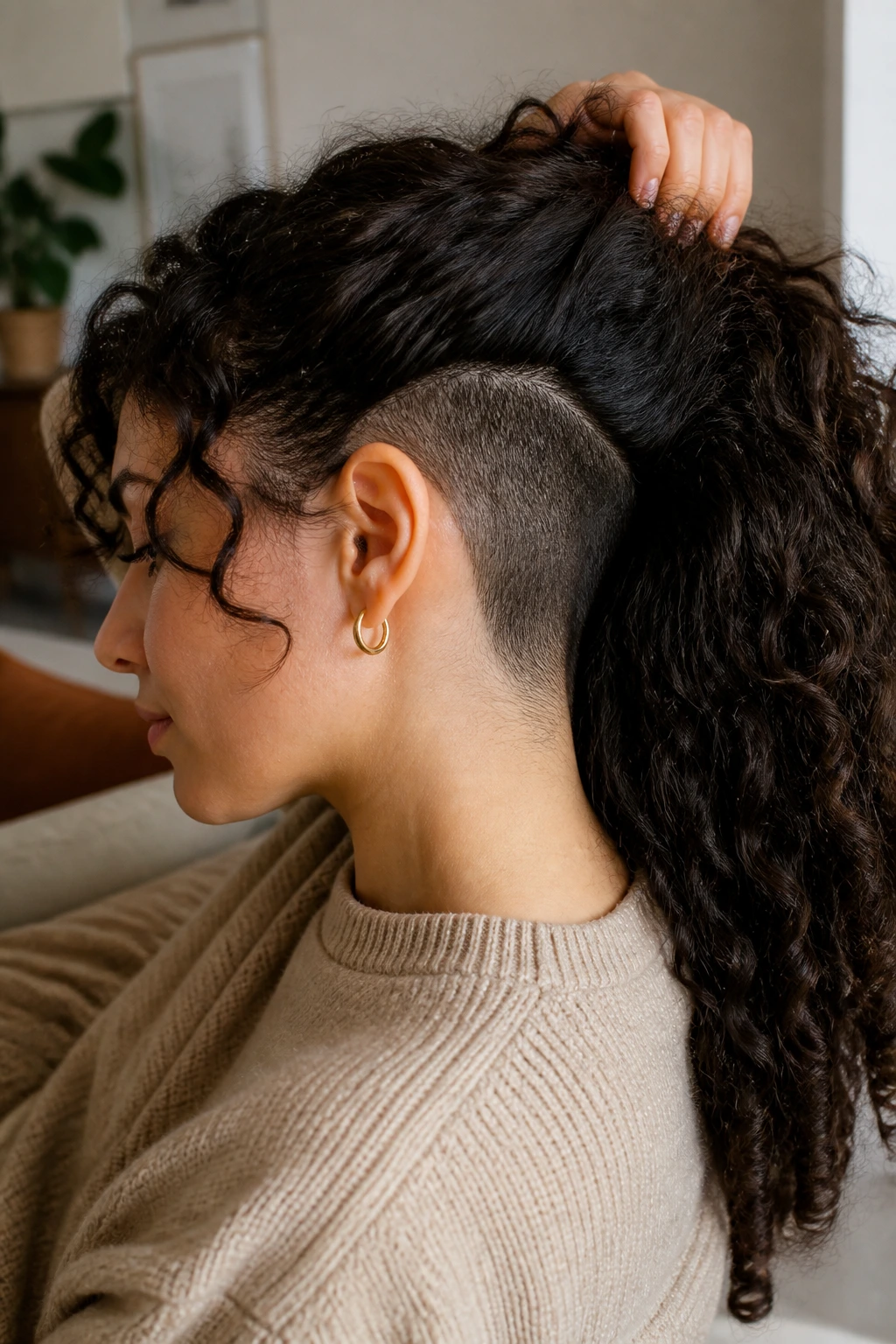
When long curls swing over a shaved underlayer, the cut feels lighter the second you move your head. That’s the charm of a hidden undercut: from the front, you still get length, but underneath, a big chunk of bulk is gone.
This is a smart move for heavy curls that feel hot or slow to dry. It’s also a nice option if you like wearing your hair down most days but want a way to reduce the weight underneath. When you tie it up, pin it back, or tuck it behind the ears, the undercut shows up like a little surprise.
How to ask for it
Ask the barber to leave the visible top layer long enough to cover the shaved section when the hair is worn down. For many curl patterns, that means keeping at least 4 to 6 inches on the outer layer, sometimes more if the curls are loose and don’t stack as much.
The underlayer can be taken down to a #1 or #2, depending on how much contrast you want and how visible you’re comfortable being. If you want the hidden part to stay hidden, tell them exactly how you normally wear your hair. Down, half-up, clipped back, braid, whatever. That changes where the shave should start.
I like this style for people who enjoy a little flexibility. It keeps the outside soft and long, but it quietly solves the weight problem underneath. That combination is hard to beat when your hair feels like it’s growing in every direction by midday.
9. Curly Mullet Undercut
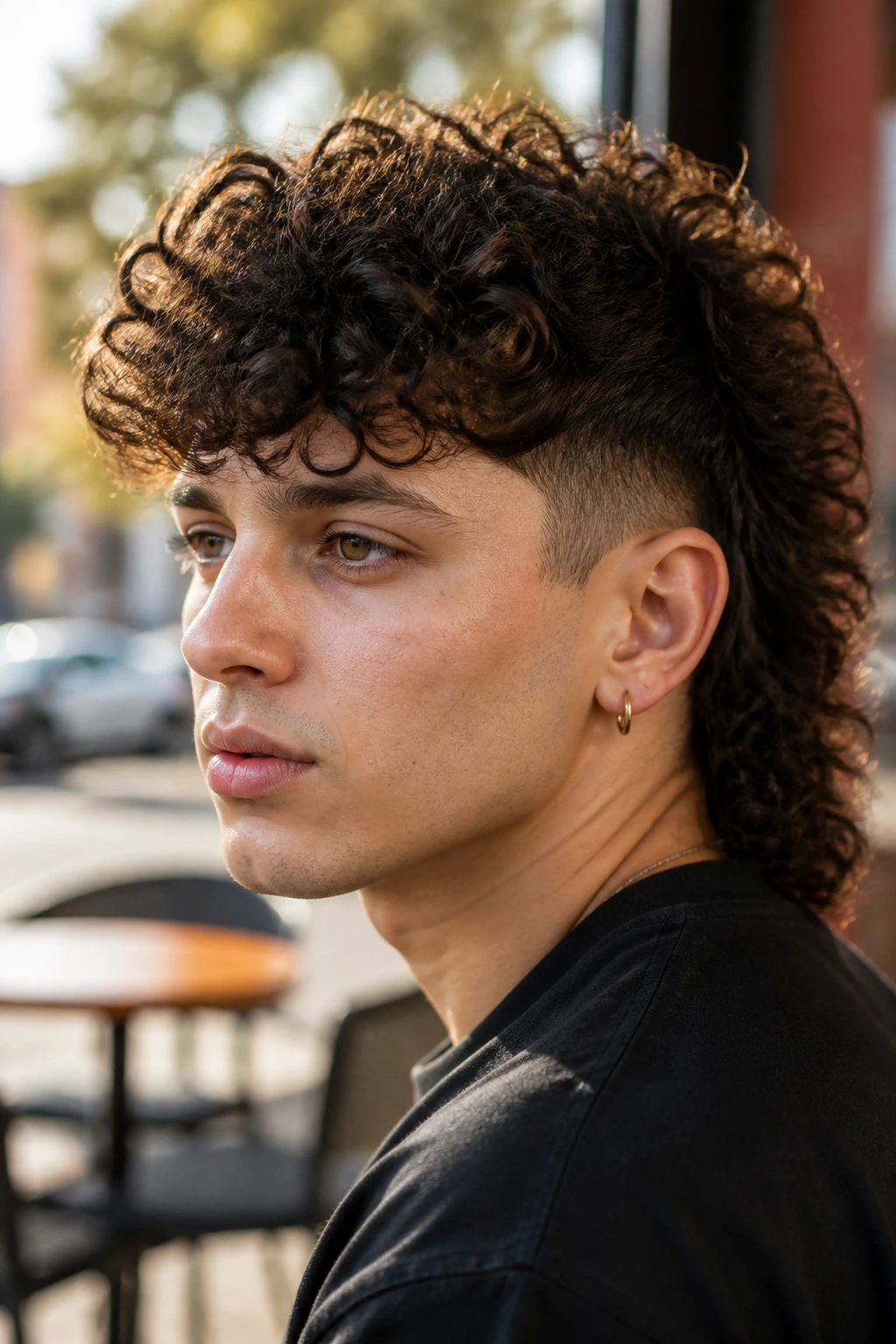
Unlike a standard undercut, this one keeps attitude in the back. The curly mullet undercut shortens the sides, keeps the top textured, and leaves extra length at the nape so the curl pattern can spill backward.
It sounds bold because it is bold. But on the right curl type, it can look surprisingly balanced. The back length keeps the silhouette moving, while the undercut removes the bulk that would otherwise make the shape feel muddy.
I’d point this one toward 3B to 4A curls, especially if the hair has enough spring to hold shape without constant help. The top and sides should be cut so the curls stack up front, then fall a little longer through the back. That long rear section is the whole point, so don’t let the barber cut it too aggressively just to make it “neat.”
The styling routine matters here. A curl cream gives the shape some softness, and a light mousse keeps the back from collapsing into fuzz. Heavy oils tend to make this style look limp, and limp is the last thing you want when the cut depends on movement.
Not everyone will love this one. Fine. Haircuts don’t have to be polite.
10. Curly Pixie Undercut
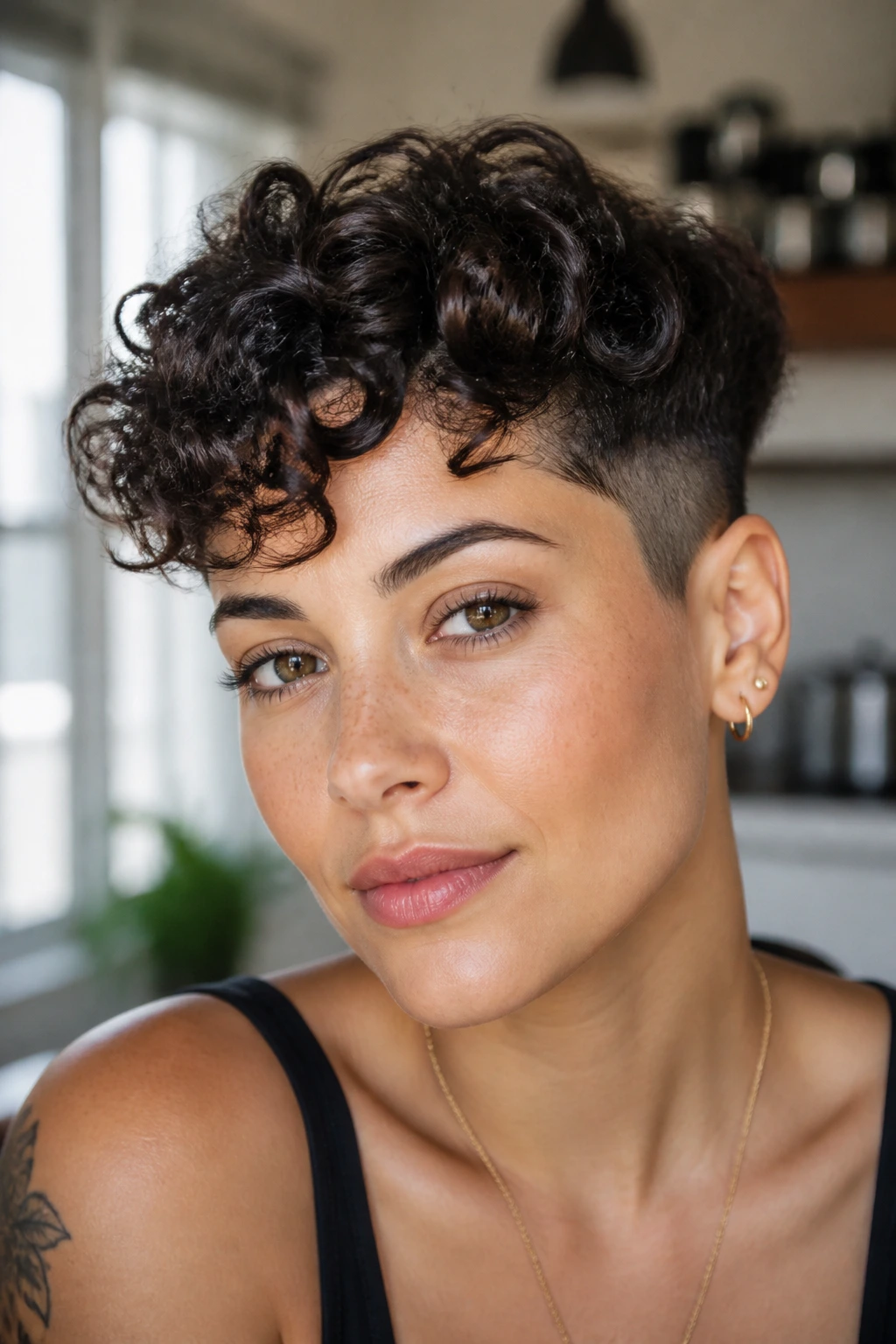
A curly pixie undercut looks light before you even style it. The sides are short, the nape is clean, and the top stays soft and textured instead of bulky.
The shape opens up the face in a way longer curly cuts sometimes don’t. Cheekbones show. Ears show a little. The neckline looks tidy. If you like a shorter cut that still keeps curl texture visible, this one does a lot with a small amount of hair.
What the top length should look like
For a pixie undercut, the top usually sits around 1.5 to 3 inches, depending on curl tightness and how much lift you want. Short coils can hold a full shape at the shorter end. Loose curls often need a bit more length so the style doesn’t look flat.
The barber should leave enough texture through the front for a small fringe or a soft sweep. Too short, and the top starts reading like a basic clipper cut. A little length in the front keeps the cut feminine, sharp, or androgynous—whatever direction you want it to lean.
This is a good choice if you want a quicker styling routine. Finger-comb in a small amount of mousse or texturizing cream, then scrunch. That’s often enough. If your hair frizzes easily, a pea-sized bit of gel on the outer layer can help, but don’t overdo it or the pixie loses its softness fast.
11. Afro Curly Undercut With a Rounded Shape
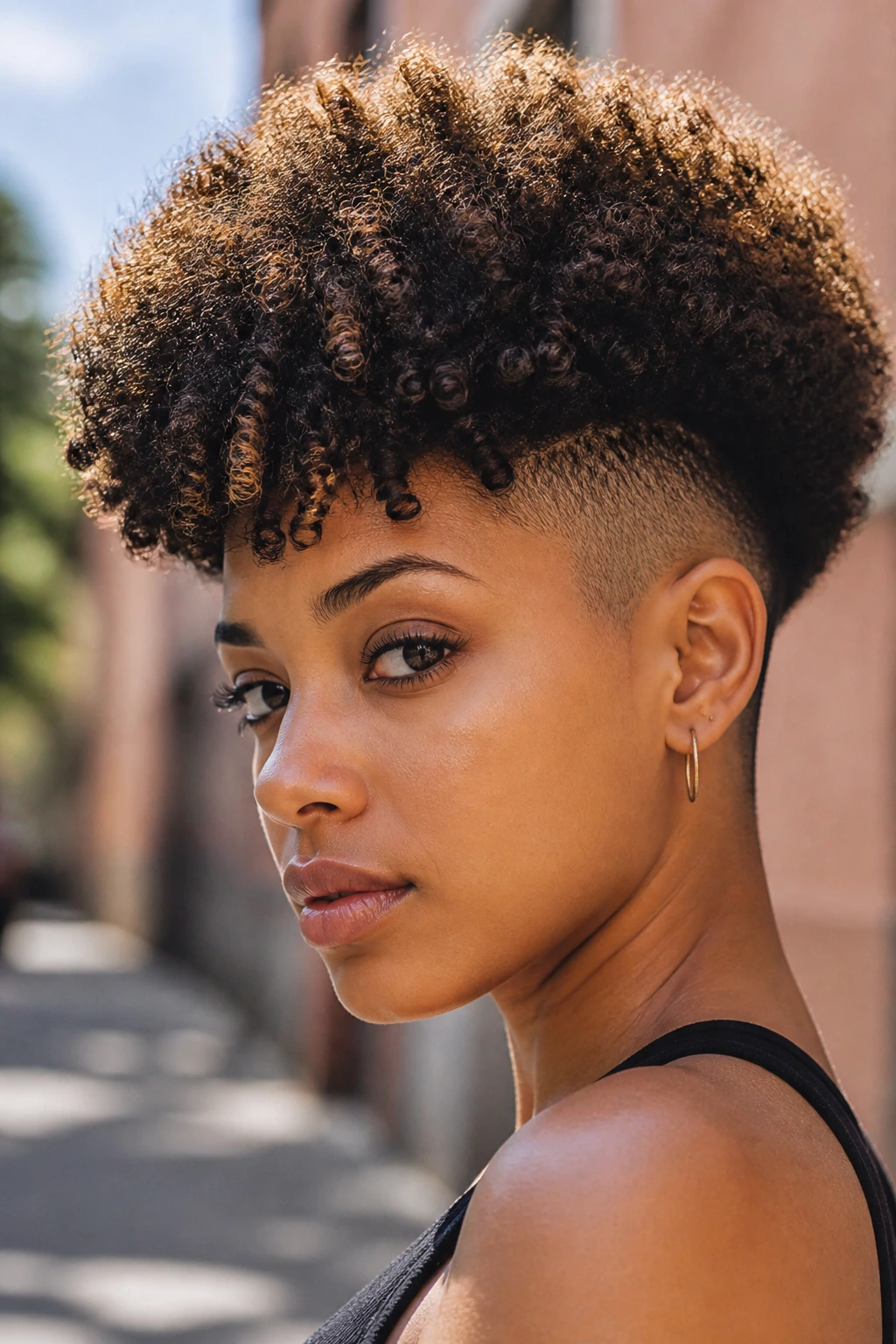
Can you keep a round afro shape and still shave the sides? Absolutely. That’s what makes this style so useful for coily hair.
The trick is to keep the top rounded and full while removing bulk underneath and around the lower sides. The silhouette stays dome-like, but it no longer feels wide or heavy near the jawline. That can make the face look more open without flattening the texture that gives the cut its life.
A barber who understands coily hair should shape the perimeter carefully instead of chasing a straight line across the top. The rounded edge matters. If they cut the top too square, you lose the soft shape that makes this style work.
Good details to ask for
- Keep the top rounded, not boxy.
- Clean up the sideburns so they don’t puff out.
- Taper the nape to prevent a bulky back edge.
- Leave enough length for twist-outs, sponge work, or a picked-out finish.
Moisture matters here more than in many other undercut styles for curly hair. Coils can shrink hard when dry, and dry hair can look dull fast. A leave-in conditioner, a cream with some slip, and a light sealant on the ends usually work better than piling on heavy butter everywhere.
I’d choose this cut if you want shape first and edge second. It’s tidy, but not stiff. That’s a nice place to live.
12. Skin Fade Curly Undercut With Short Coils
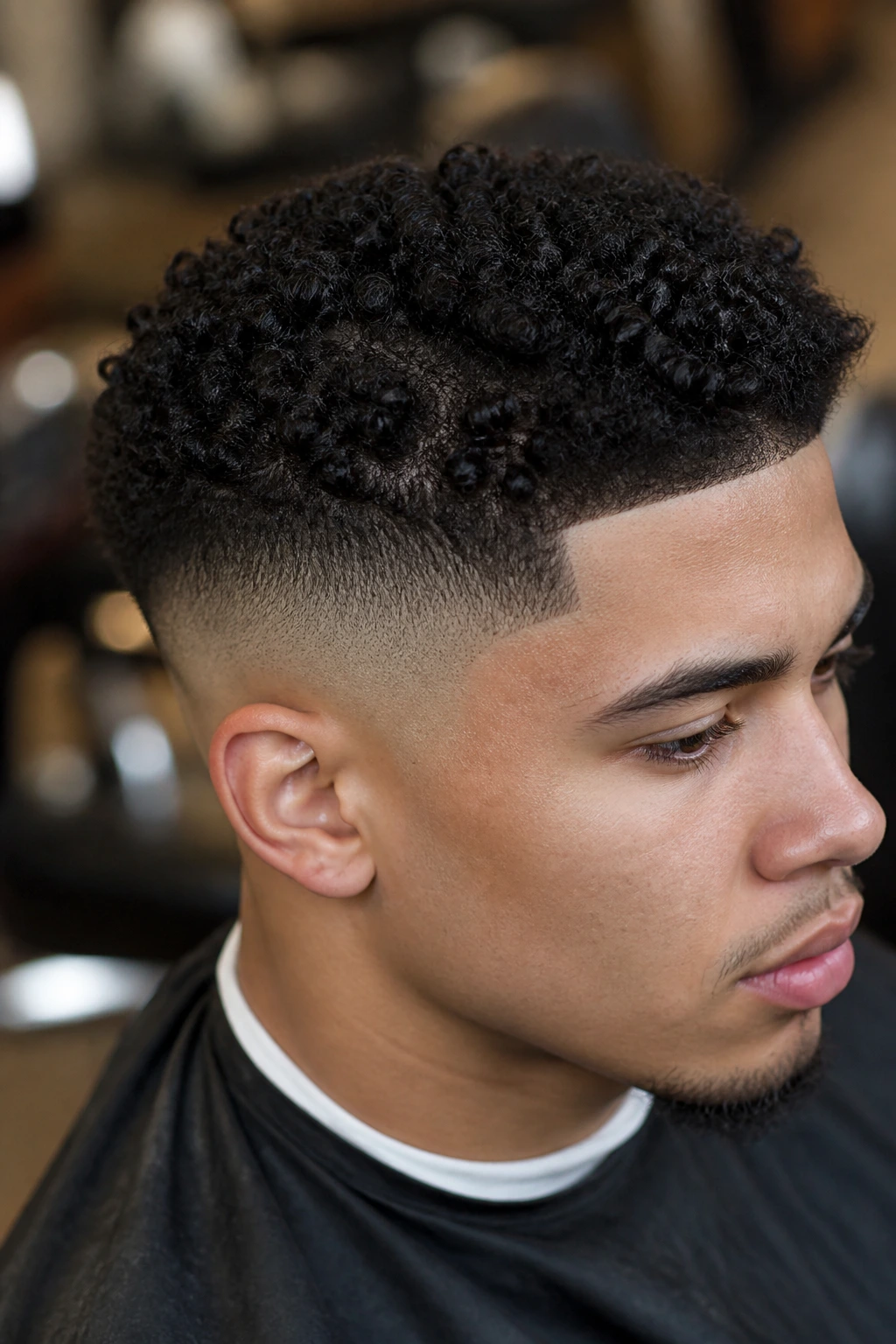
This is the sharpest version on the list. The sides are taken down to skin, the transition is tight, and the top stays short enough to show the curl pattern without dragging the shape down.
It looks clean because there’s nowhere for the haircut to hide. Every edge matters. The fade needs to be even, the line-up needs to be honest, and the top needs to be short enough that it doesn’t flop over the fade after two days.
Who should think twice
- People who hate regular barber visits.
- People whose hairline changes a lot with humidity.
- People who want a softer grow-out.
- People who do not like seeing scalp on the sides.
That last part is the big one. A skin fade grows out fast, and curly hair makes that growth line visible sooner than straight hair does. If you want the sharp look, you have to be willing to maintain it.
For the top, short coils can sit anywhere from 0.5 to 2 inches, depending on the look you want. A sponge, a twist cream, or a small amount of curl defining gel can keep the top neat without making it crunchy. If the curls are tighter, a little moisture goes farther than a lot of product.
I like this cut for people who want the haircut to feel precise every single time they look in the mirror. The flip side is obvious. It asks for upkeep, and it asks for it often.
The smartest undercut is the one that matches how you actually wear your curls. If you air-dry most days, pick a shape that still looks good when the texture loosens. If you like clean edges and do not mind the chair every few weeks, the skin fade or the line design gives you that sharper finish. If you want flexibility, the hidden undercut or the low version usually gives you more breathing room.
And if you are stuck between two options, ask the barber one plain question: what will this look like when it grows out? That answer matters more than the first-day mirror shot.
