



Curly hair changes the rules fast. A blunt cut that looks tidy on straight strands can turn into a pyramid, a mushroom, or a heavy shelf once the curls dry and spring back.
That is why layered haircuts for curly hair work so well when they’re done with a real understanding of curl pattern, density, and shrinkage. The right layers take weight out of the middle, keep the shape from collapsing at the ends, and let the curl clumps stay defined instead of fighting each other for space.
The tricky part is that curly layers are not one-size-fits-all. A cut that gives fine waves more movement can leave dense coils looking airy in a bad way. A shape that flatters a round face might feel too wide on someone with a narrow jaw. Small choices matter here — where the shortest layer starts, how much weight stays at the perimeter, and whether the stylist cuts wet, dry, or curl by curl.
So the real question is not whether curls should have layers. It’s which layered haircut gives your curls room to do their thing without turning into a mess.
1. Long Face-Framing Layers
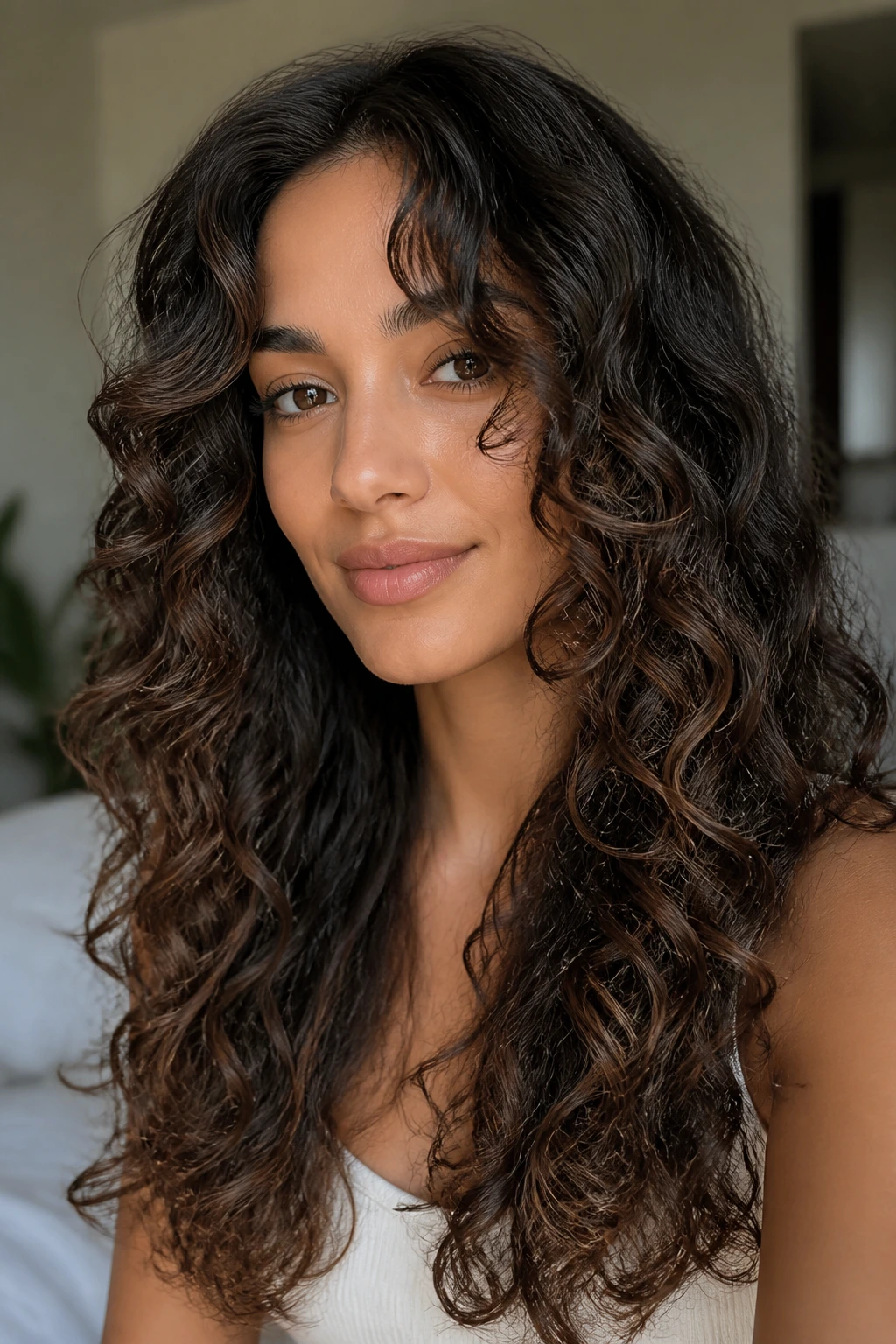
Long face-framing layers are the safest place to start if you want movement without losing the length you spent months growing. They soften the front of the hair, open up the cheekbones, and keep the back from feeling like one heavy curtain.
What I like about this shape is how forgiving it is. If your curls are looser, the front pieces can land around the chin or collarbone. If your curls are springy, those same pieces can bounce higher and still look intentional. The goal is not to chop the front short; it’s to make the front feel lighter and more alive.
Ask for the shortest layers to start below the cheekbone if you wear your hair down most days. That keeps the cut from ballooning around the face. A good stylist will also leave enough weight at the ends so the curl pattern still clumps instead of frizzing apart.
One more thing: this cut grows out nicely. That matters more than people admit. A curly cut that survives eight weeks of chaos is worth more than one that looks perfect for ten minutes in the chair.
2. Rounded Shoulder-Length Layers

Shoulder-length curls look richest when the shape is rounded instead of square. That’s the whole trick. A rounded layer pattern keeps the silhouette soft at the sides and full through the bottom, so you do not get that wide-at-the-bottom triangle look that makes so many curly cuts feel awkward.
The best version lands somewhere between the jaw and the collarbone, depending on shrinkage. It should feel open around the face, then tuck in gently at the back. The ends still need weight. If the stylist removes too much, the cut can puff out and lose its line.
What to ask for
- A rounded perimeter, not a straight line across the back.
- Layers that blend into the body of the haircut instead of sitting on top of it.
- Soft weight removal around the sides, especially if your hair is dense.
- A shape that follows your natural part, not a forced center line.
This is one of those cuts that looks calm even when the curls are doing a lot. If your hair tends to feel bulky at the shoulders, rounded layers solve that without making the whole cut feel chopped up.
3. The Curly Shag
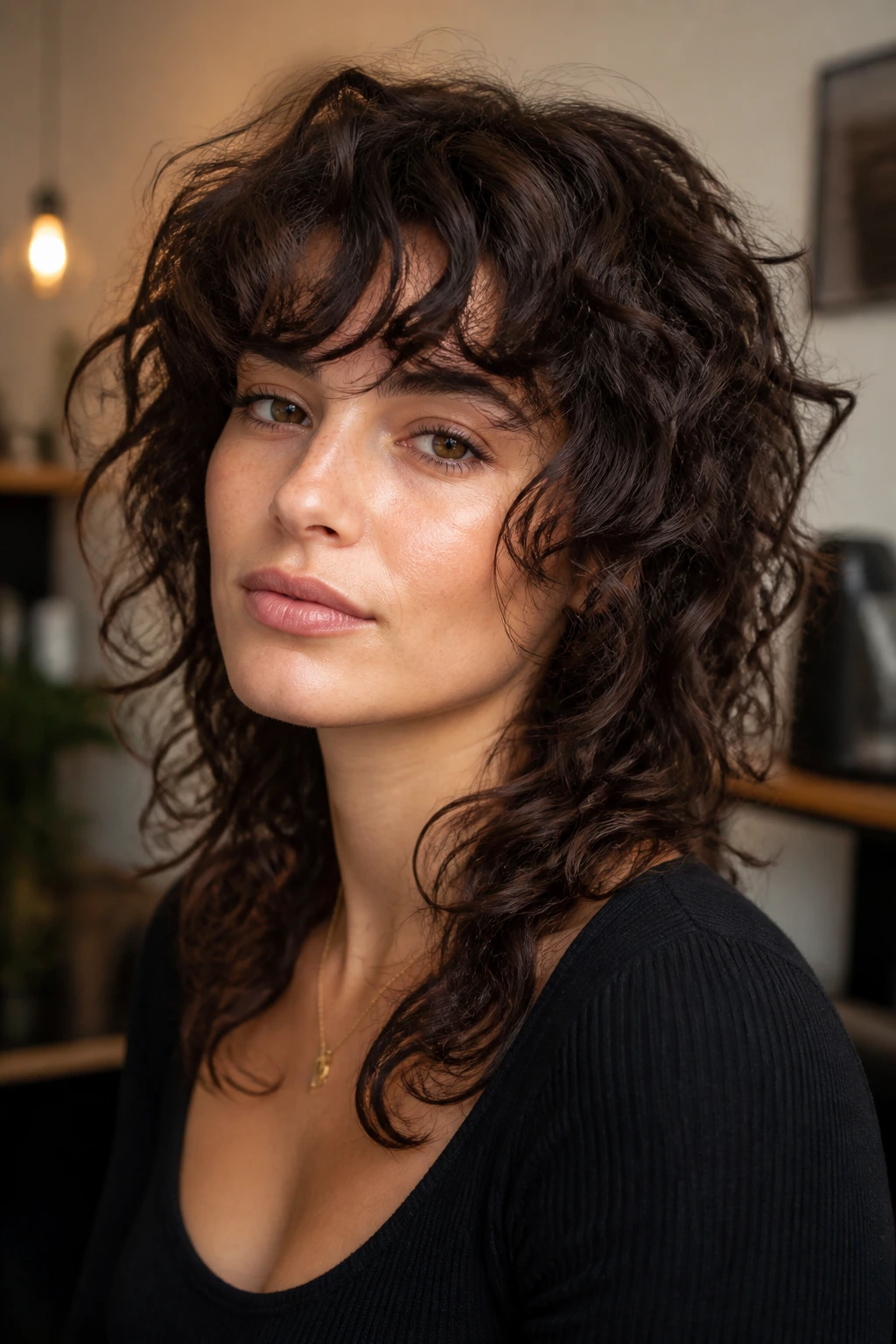
Why does the curly shag keep showing up in curly-hair conversations? Because it makes sense on curls. That’s the plain answer. The shag uses shorter crown layers, a lived-in fringe, and longer pieces underneath, which gives curls room to stack without turning into a helmet.
It suits hair that likes volume already. Fine curls can wear it too, but the layers need to stay a little longer so the top does not vanish. Thick curls usually take to this shape fast because the haircut removes weight from places that would otherwise sit heavy and flat.
Why it works
The shag lets different curls land at different lengths, which gives the whole cut a looser, airier feel. It also plays nicely with curls that form unevenly from side to side. Instead of forcing symmetry, it leans into texture. That’s the part people love once they stop trying to make every strand obey.
The one warning: do not let the cut get over-texturized. A shag should feel piecey, not ragged. If the ends start looking shredded, the style loses its shape fast.
4. The Soft Curly Wolf Cut
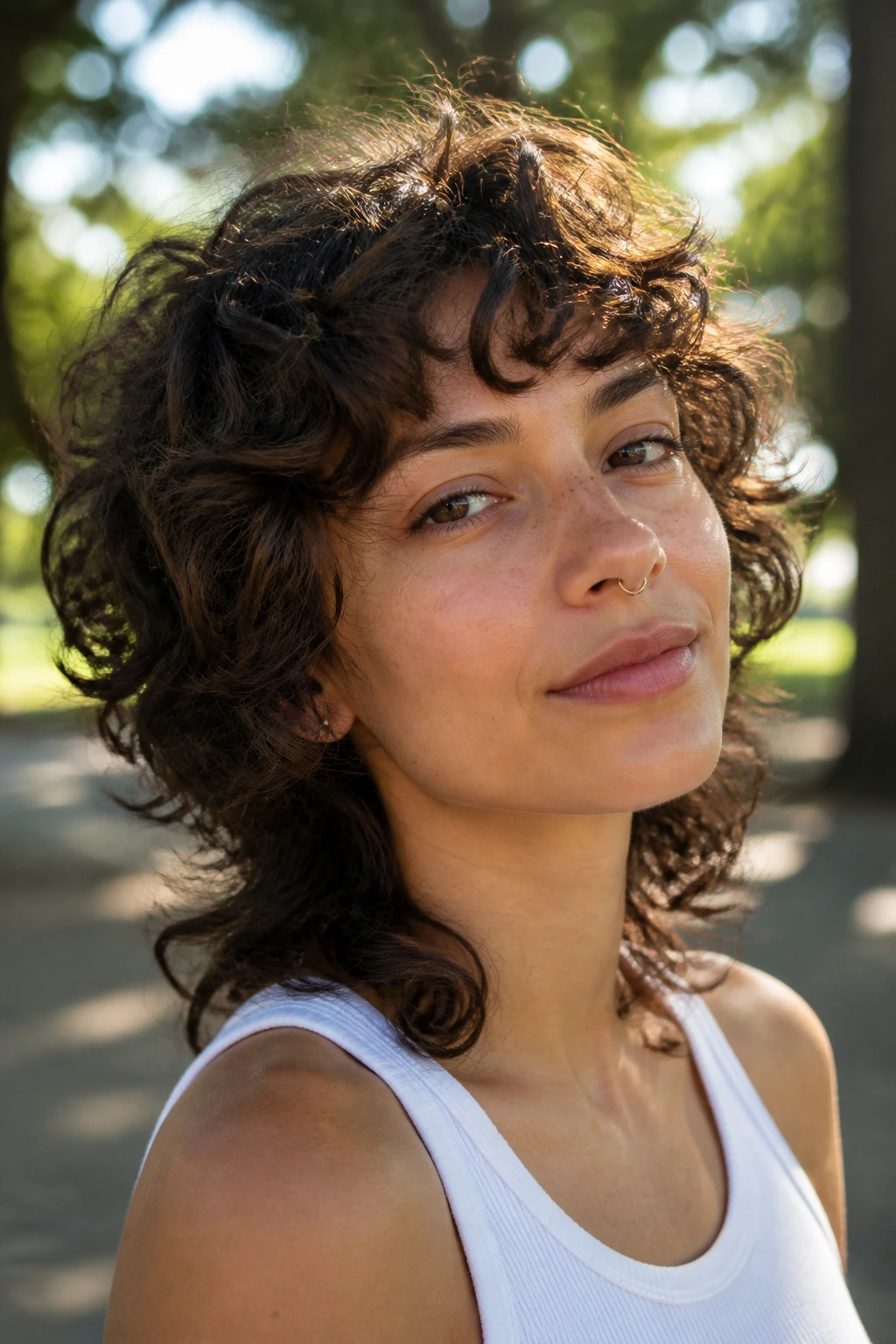
The wolf cut gets talked about like it has to look wild, but on curls it can be softer than people expect. The curly version keeps the top shorter, the sides airy, and the back longer, yet the transitions should still feel blended. Not choppy. Not hacky. Blended.
This shape is nice when your curls need lift at the crown and you do not want a standard round cut. It gives the hair a little attitude without demanding that you style it like a page from a fashion shoot. It also works well on thicker curls that go flat when they carry too much length.
If you want this cut to age well, keep the shortest pieces around the cheekbone or slightly below. Too short, and the crown can start sticking out in a way that feels dated fast. Too long, and the wolf shape disappears.
I also like this cut for people who wear clips, headbands, and claw clips a lot. The messy shape looks good when half pulled back, which saves you on days when your curls are negotiating with gravity and losing.
5. Layered Curly Bob
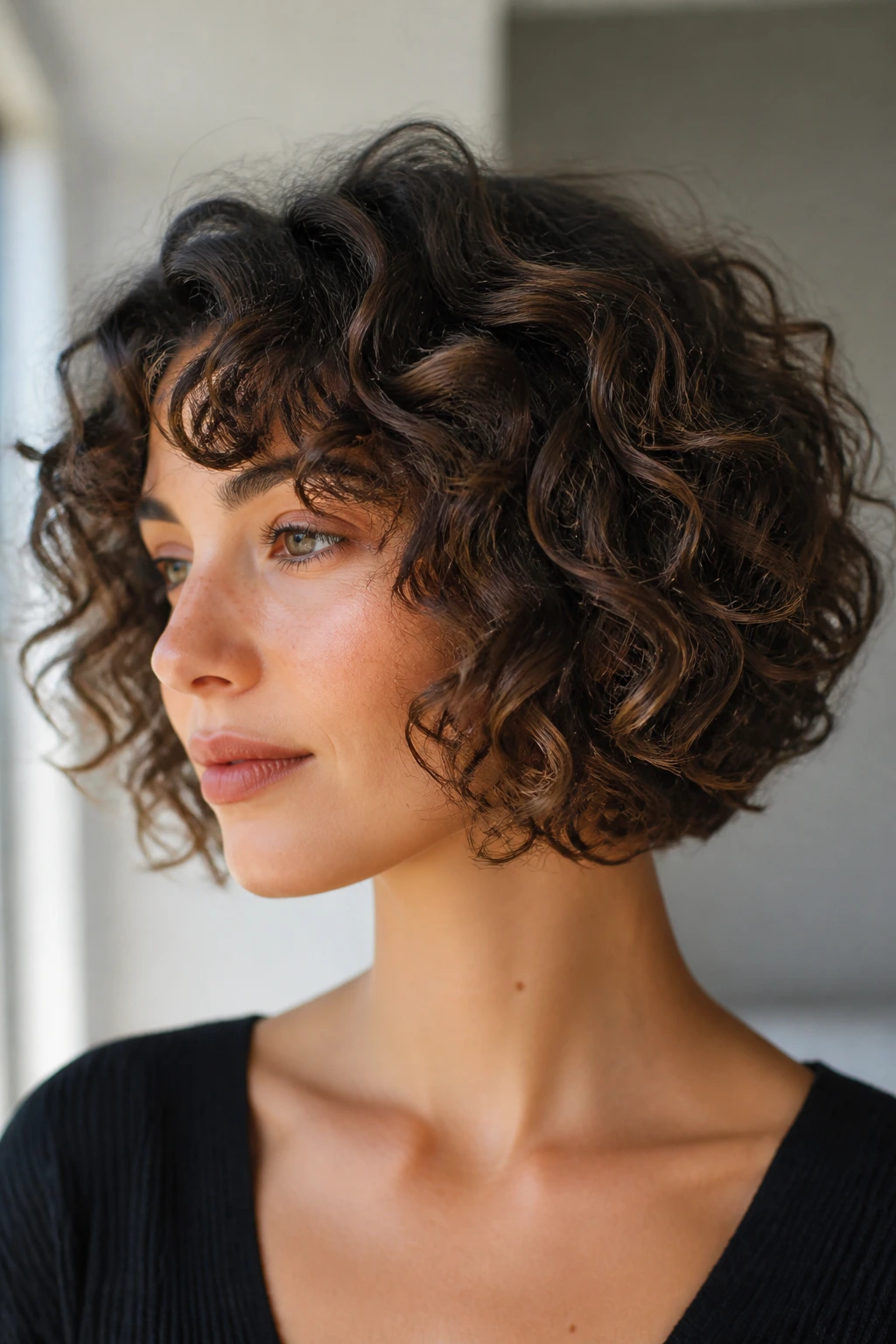
A layered curly bob is one of the best fixes for hair that has become heavy and shapeless. A blunt bob on curls can work, but it often creates a solid block. Layers break that block apart so the curls can stack with more bounce and less bulk.
The sweet spot is usually between chin and just above the shoulders, depending on how much shrinkage you get. Ringlets and loose coils can wear this cut beautifully. The perimeter should stay strong enough to hold the bob’s shape, while the interior layers keep it from feeling boxy.
What makes this bob work
- It creates lift without needing extra product.
- It keeps the neckline clean, which helps the shape read better from the side.
- It makes day-two hair easier because curls can refresh in smaller sections.
- It avoids the puffy triangle that a one-length bob can create on dense hair.
The cut is less forgiving if your ends are thin or damaged. In that case, the bob can look stringy instead of polished. So if your hair has a rough bottom edge, clean that up first before going for the bob shape.
6. The Tapered Cut for Coils
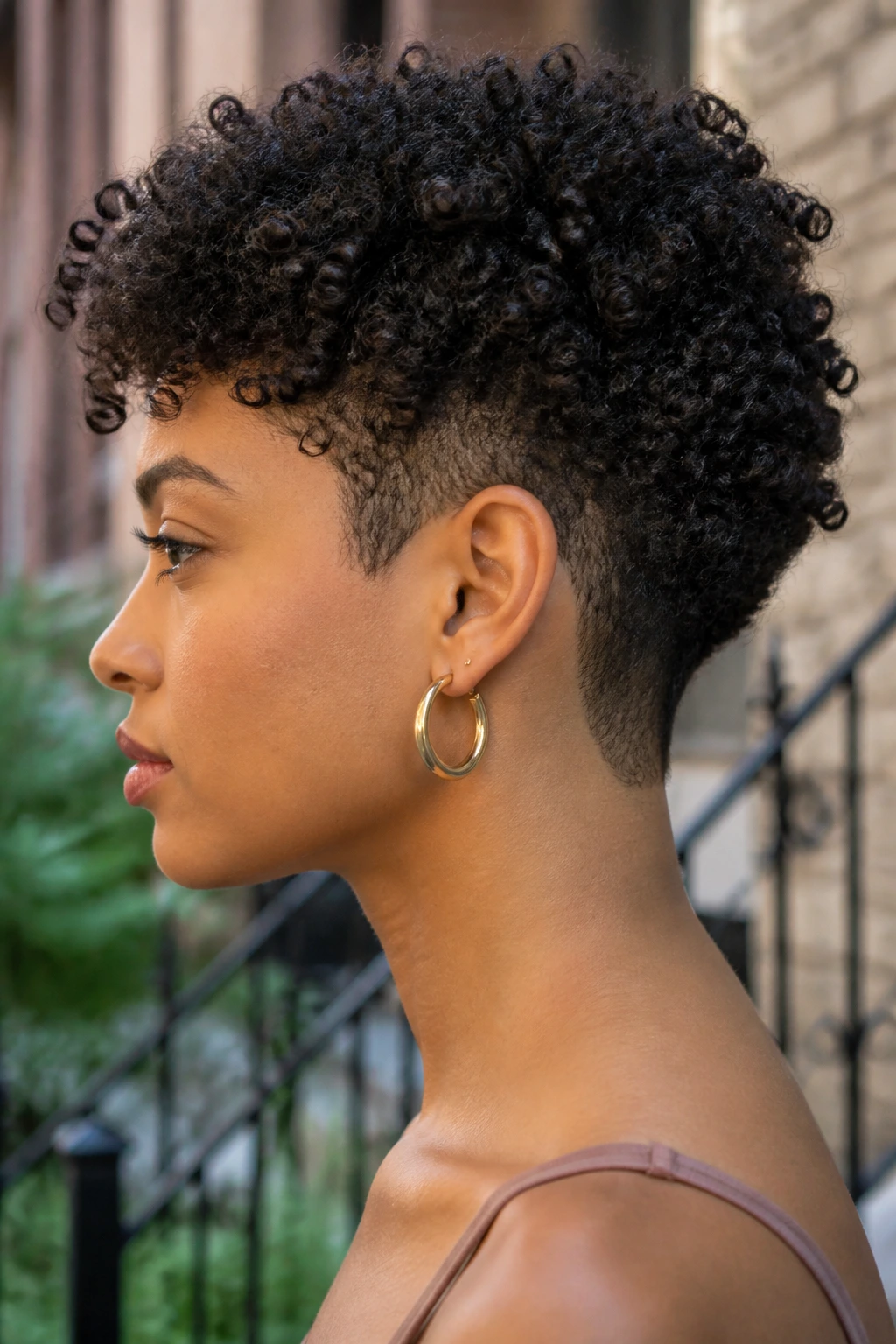
A tapered cut for coils changes the whole mood of the hair. Shorter at the nape, fuller through the crown, and shaped around the sides, it keeps dense coils from looking bottom-heavy. It also gives the neckline a cleaner outline, which makes a huge difference when the hair is very springy.
This cut is especially good for 4A, 4B, and 4C textures that shrink hard and carry a lot of volume. The taper stops the back from puffing out under collars and hoodies. The crown gets to stay proud. That balance is what makes the shape feel intentional instead of accidental.
Where it shines
- Low-maintenance mornings.
- Hot weather, when longer curls can feel heavy.
- Shorter wardrobes and high-neck tops.
- Hair that wants structure without a lot of daily styling.
The catch is simple. A tapered cut needs regular clean-up around the edges if you want it to look sharp. Let it grow too long and the shape starts to blur. If you do not want to visit the salon often, ask for a softer taper with enough length at the sides to grow out gracefully.
7. Butterfly Layers
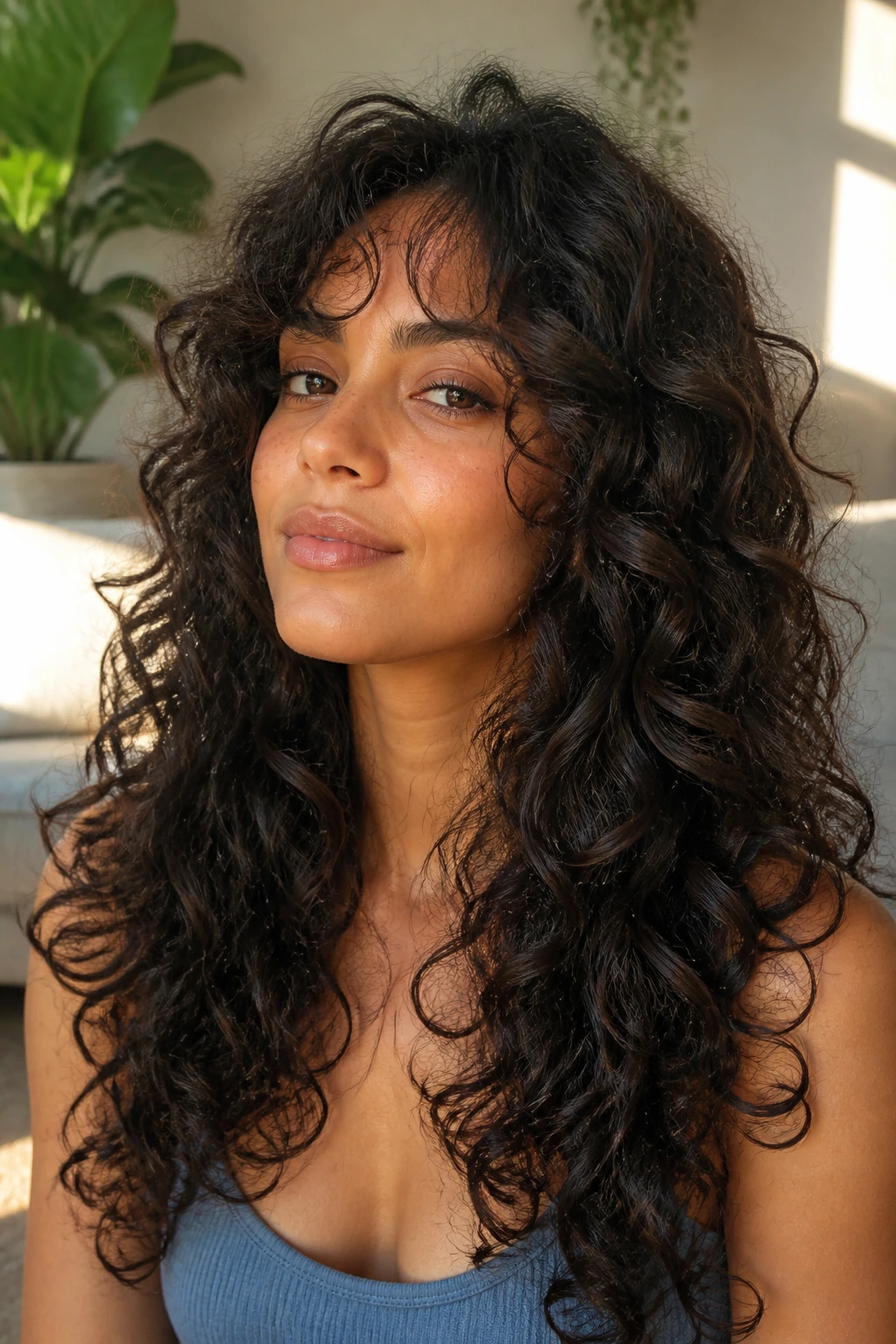
The butterfly cut gets a lot of attention because it keeps the long length while building shorter layers through the top and front. On curls, that can look fantastic when the layers are placed with care. You get lift near the face, movement through the crown, and longer pieces that still swing.
This works best when the shortest layers start low enough to avoid popping up above the cheekbones. Curls spring. A lot. So a layer that looks modest in the chair can land much higher once the hair dries. That bounce is the whole game here.
How to keep it balanced
- Keep the top layers long enough to blend into the side curls.
- Leave the bottom length strong so the haircut doesn’t collapse.
- Style the front pieces separately if they dry faster than the rest.
- Use a diffuser if your curls tend to stretch out when air-dried flat.
I like butterfly layers on long curls that feel a little sleepy at the crown. They create shape fast. But if your hair is thin through the ends, this cut can make the bottom look sparse, so be honest about density before you ask for it.
8. Invisible Internal Layers
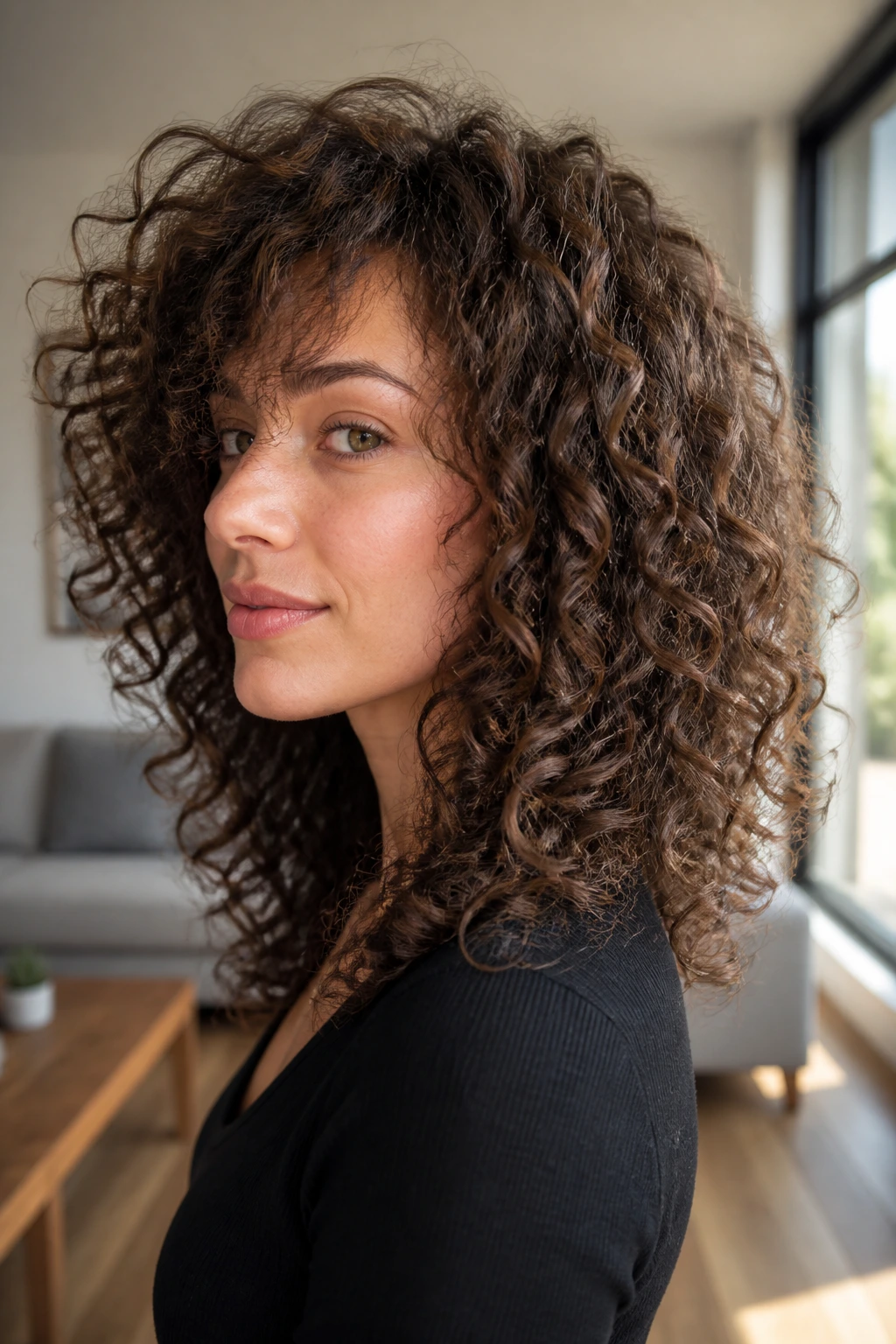
Invisible internal layers are for people who want the shape to change without looking like the haircut changed much at all. The outside line stays fairly smooth, while the stylist removes weight from inside the mass of the hair. On thick curls, that can be magic.
The cut keeps the perimeter intact, which is why it suits anyone attached to length. You still get bounce. You still get movement. You just do not carry that dense, triangular bulk that can make long curly hair feel hard to manage. The surface looks calm; the inside does the work.
This is one of my favorite solutions for hair that is full but not necessarily coarse. Coils and curls with a lot of density benefit from it, especially if the hair gets too wide at the sides. It is a smarter cut than a dramatic chop when you want to keep length and reduce puff.
The stylist has to know what they’re doing, though. If the internal layers are placed badly, the haircut can lose structure and start looking thin in random spots. This is not the place for a rushed appointment.
9. The U-Shaped Curl Cut
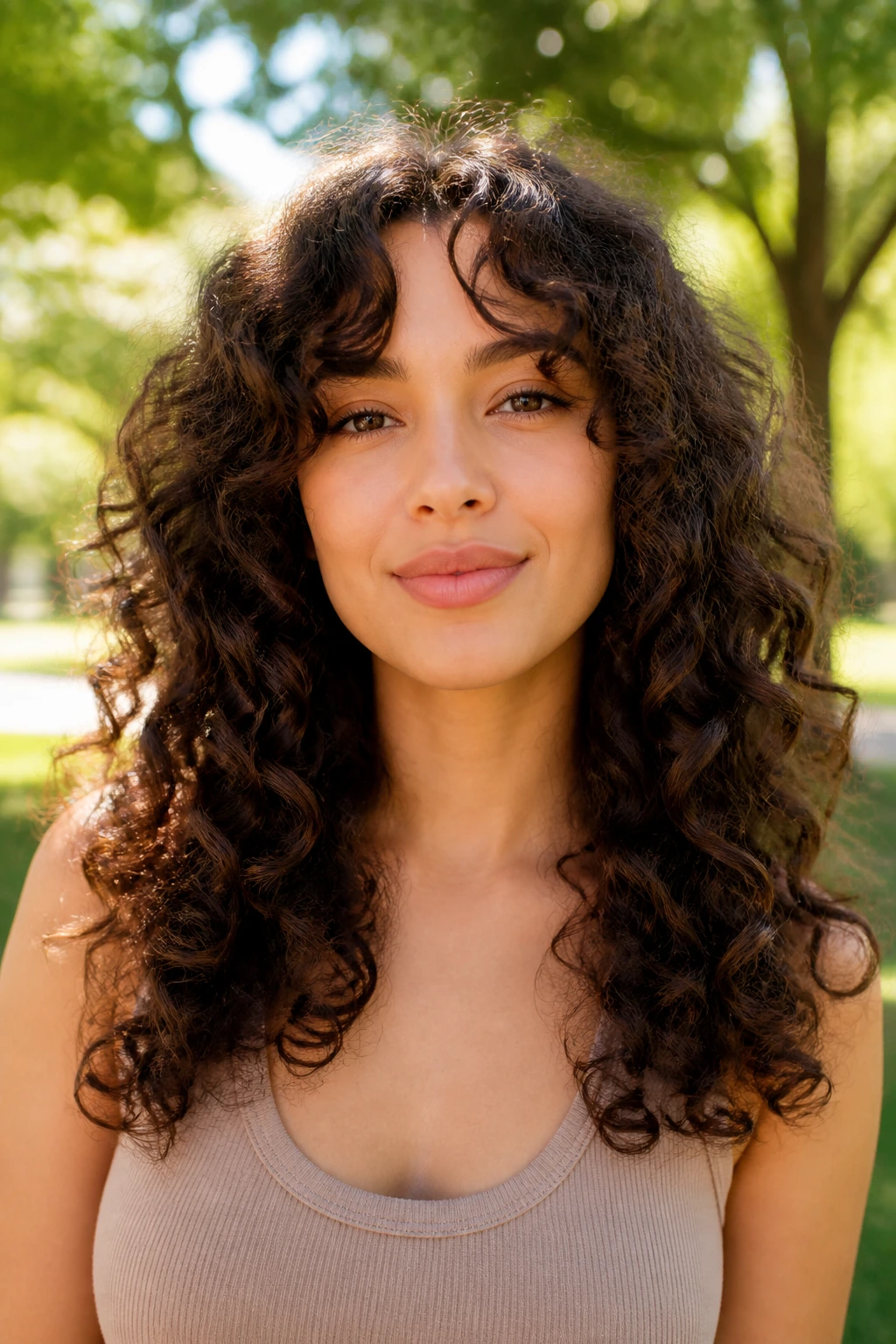
A U-shaped cut looks subtle from the front and beautiful from the back. The length curves gently upward toward the sides, which keeps the center from feeling like a hard shelf. On curls, that shape helps the hair fall in a softer cascade rather than a blunt wall.
It works well on medium to long curls that need a little movement but not a drastic change. The U shape also keeps the ends fuller than a strong V, which is useful if your curls are looser or your hair is on the finer side. The line feels easy, not severe.
This cut is especially nice if you wear your hair down more often than up. The shape shows when the curls separate and move. If you spend a lot of time in buns and claws, the difference is less dramatic, though still useful.
A small detail matters here: ask the stylist to check the back in your usual part. A U shape can look lovely from the chair and then shift once you wear your hair the way you actually live in it.
10. V-Shaped Length Layers
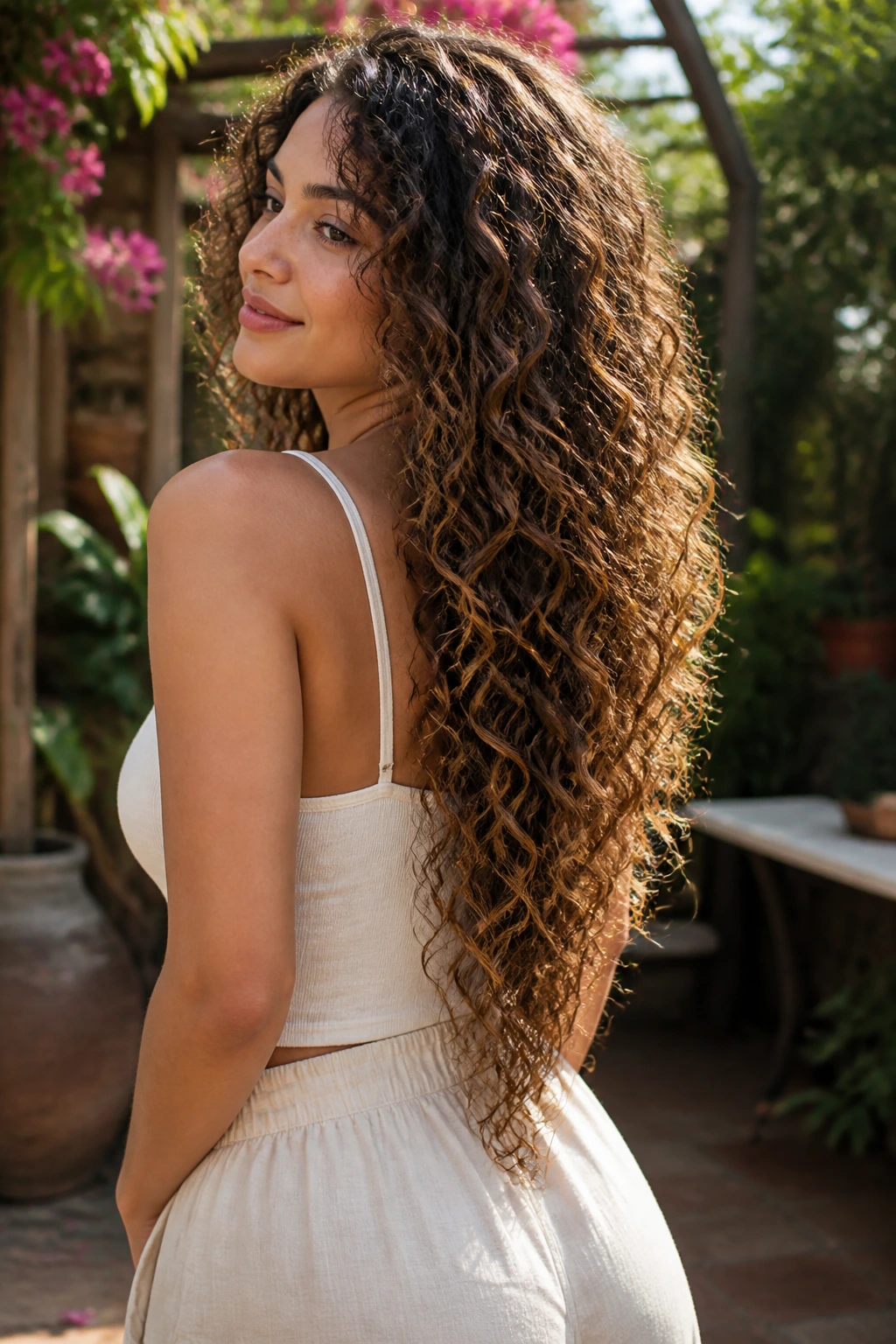
The V-shaped cut is for curls that want drama, but not chaos. The back tapers into a point, while the sides keep enough length to frame the face. Done well, it gives long curly hair a waterfall feel and makes the ends look lighter without losing the sense of length.
This shape is especially strong on dense hair. It helps a mass of curls drop in a cleaner line and keeps the bottom from looking too wide. A soft V can also make long hair look longer. That sounds obvious, but the visual effect is real when the curl pattern is healthy and well defined.
What to watch for
If your hair is fine or your ends are thin, a dramatic V can make the bottom look wispy. Keep the angle gentle. A shallow V still gives movement; it just does not shout about it.
This shape also likes hydration. Dry, frizzy ends make the point of the V look ragged. So if you choose this cut, pay attention to conditioning and trims. The shape depends on the ends staying tidy.
11. The Curly Lob with Soft Bend
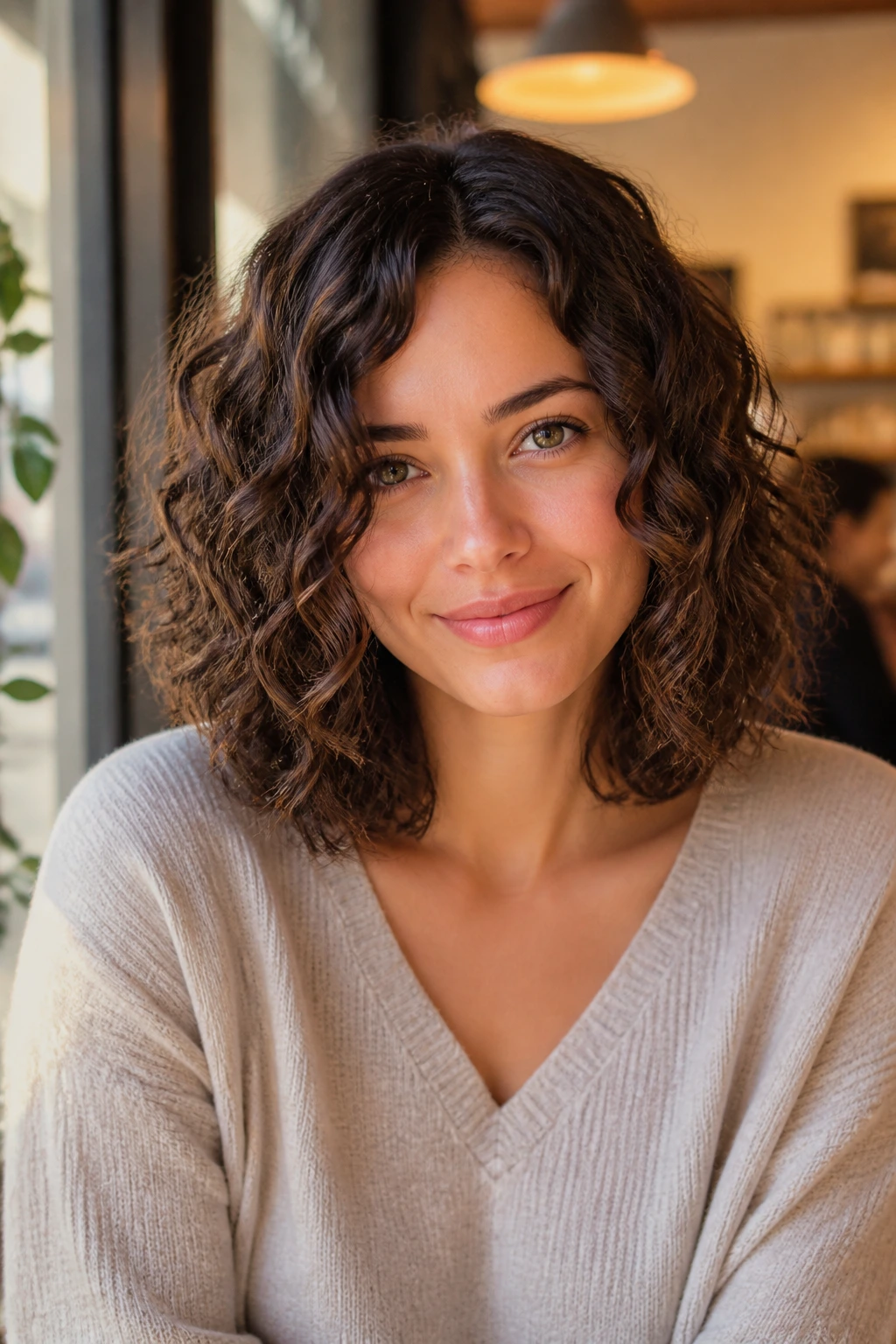
A curly lob sits in that useful middle ground between short and long. It usually lands around the collarbone, which gives you enough length for ponytails while still keeping the profile light. Add layers, and the lob stops looking like a heavy block.
I like this cut for people who want a reset without going all the way short. It gives curls space to spring, and it makes the neck area feel cleaner. It also grows out well, which is a real win if you do not want a shape that falls apart after a few weeks.
The best versions keep the layers soft and blended. Too many choppy pieces can make the lob look uneven in a bad way. The curls should move as a group, not as a pile of disconnected sections.
On day two, this haircut usually responds well to a mist bottle and a few scrunches. You do not need to soak the whole head. A little water at the top, a touch of leave-in where the curls have flattened, and the shape wakes back up fast.
12. The Curly Pixie with Crown Layers
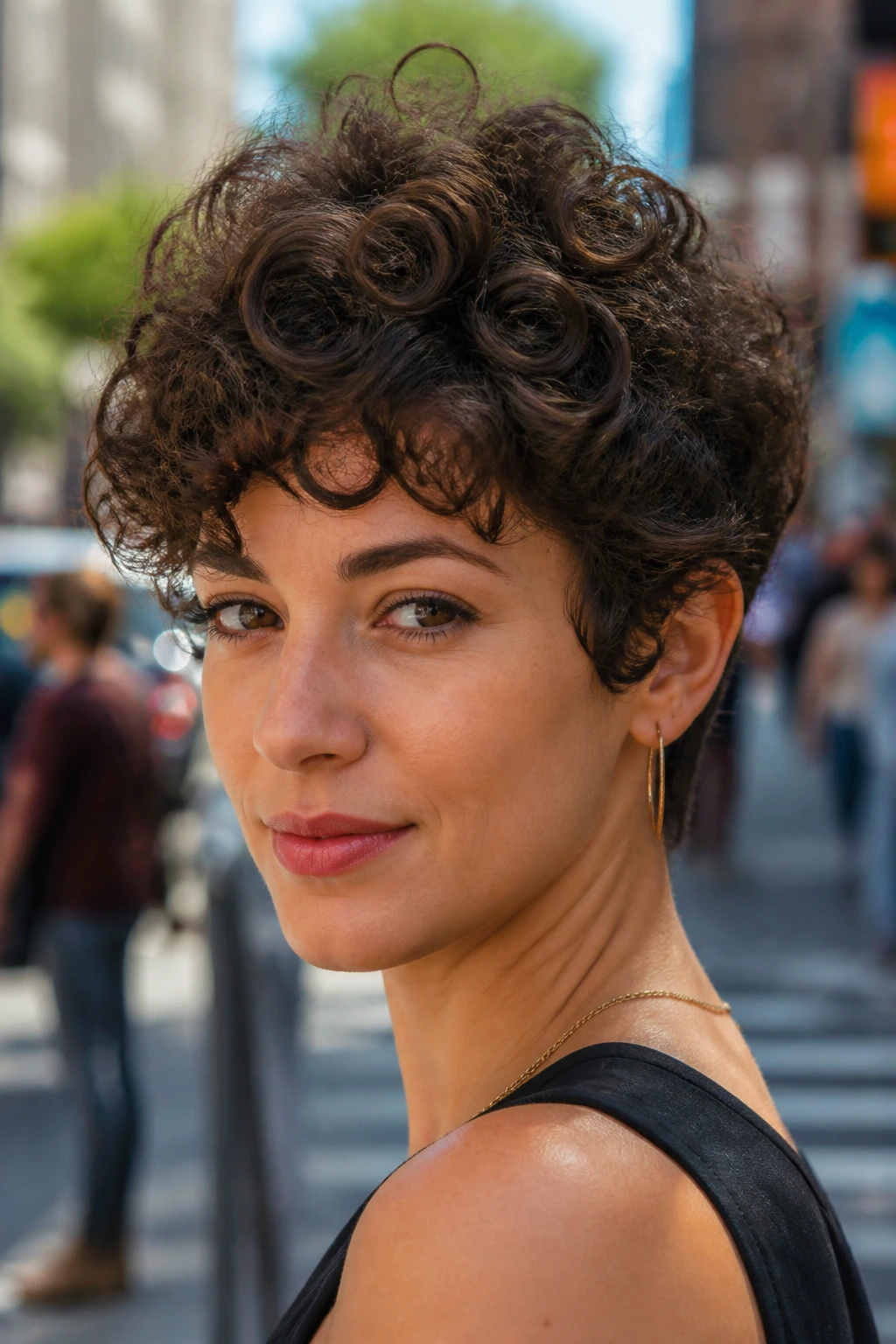
A curly pixie is not a lazy haircut. I wish more people said that out loud. It can be brilliant, but it asks for shape, upkeep, and a little attitude. The crown layers are what keep it from turning flat on top or puffy at the sides.
This cut works beautifully on people who want to show off their face and do not mind product on their fingers every morning. It suits tighter curls especially well, because the texture helps the crop look full instead of sparse. The best pixies leave enough length at the crown to create height.
Quick reality check
- The nape and sides need regular clean-up.
- The top should stay soft, not spiky.
- A small amount of cream or balm goes farther than you think.
- This cut looks best when the curls are shaped, not flattened.
If you love low-fuss styling, be careful. A pixie can still be simple, but it is not the kind of cut you can ignore for weeks and expect it to behave. The upside is that when it’s cut well, it has presence right away. No waiting around for it to “grow into” its shape.
13. The Curly Mullet
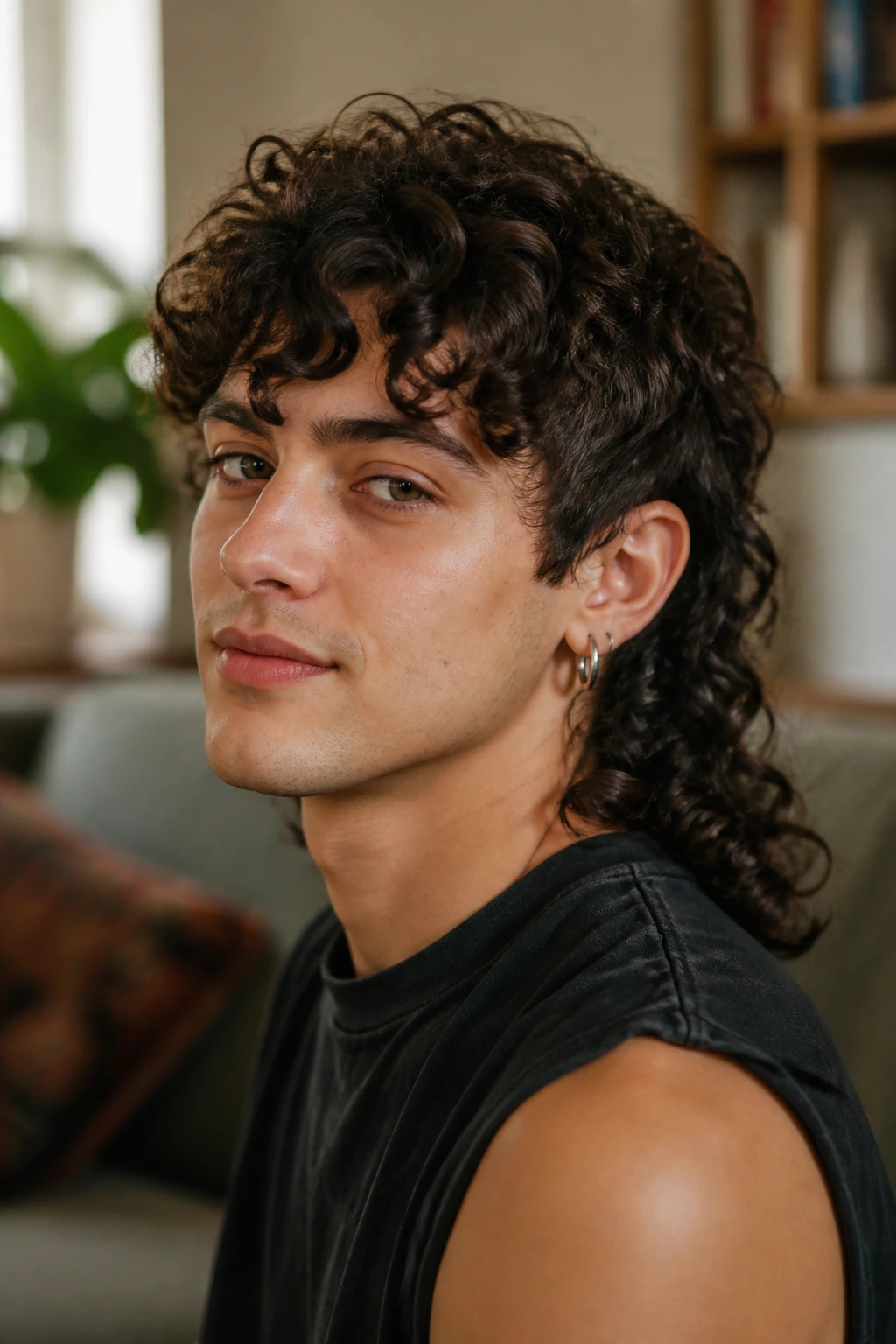
A curly mullet sounds risky until you see a well-cut one. Then it makes sense. Shorter in front and on the sides, longer in the back, it leans into texture instead of pretending curls want a tidy, even outline.
This cut suits people who like personality in their hair. It also works on dense curls that need the crown and front area opened up. The modern version is softer than the old-school one. The transition from short to long should feel blended, not like two different haircuts glued together.
The good part is movement. A curly mullet has that built-in lift that can make the hair look energetic even when you have not done much to it. The bad part is obvious: if you dislike strong shapes around the ears or neck, skip it.
I also think this cut is more wearable when the fringe is soft. Harsh bangs can make the whole style feel costume-like. Keep the front pieces loose, and the cut reads as edgy rather than theatrical.
14. Rounded Afro Layers
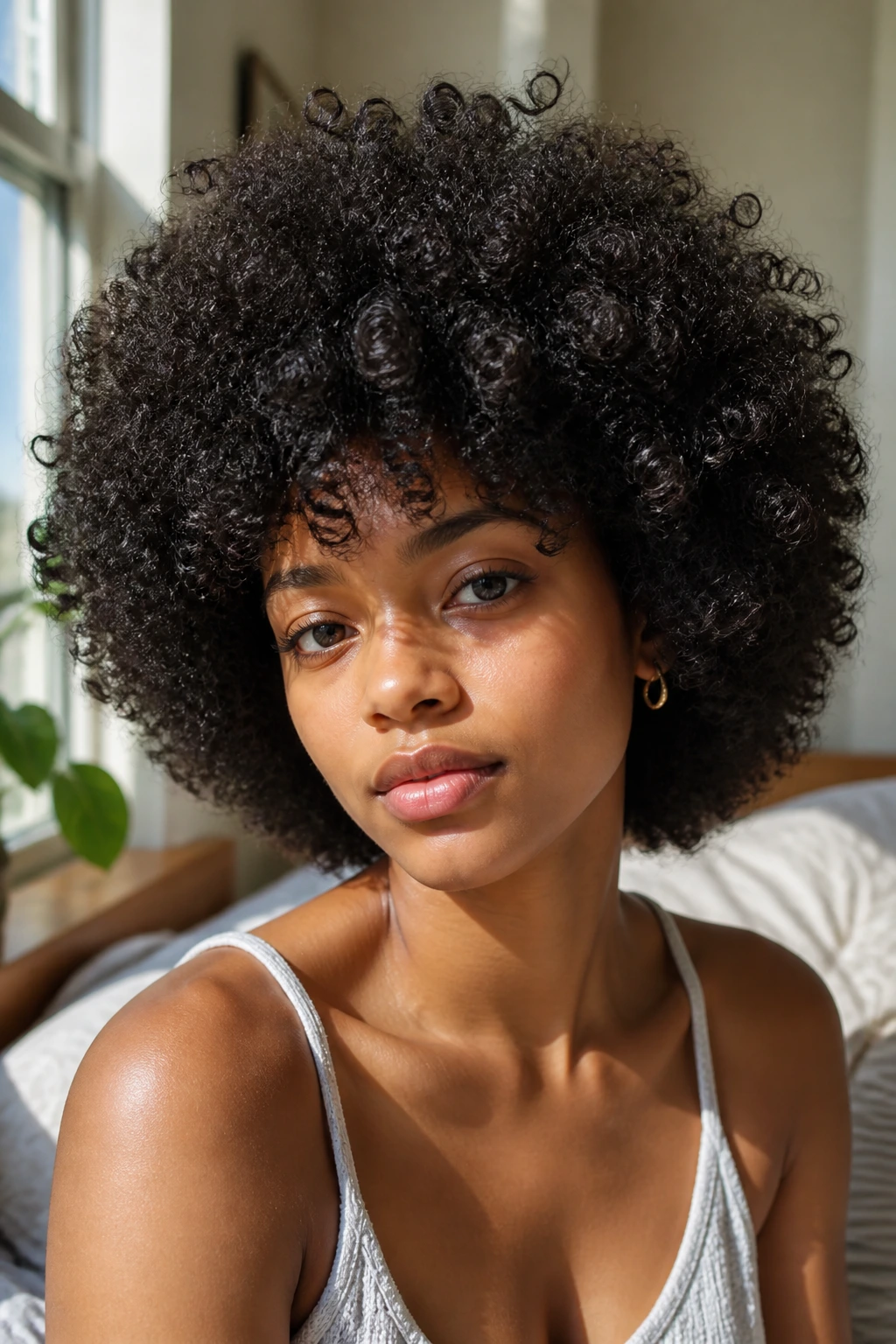
Rounded afro layers are about shape first, length second. The aim is a halo silhouette that stays full but not boxy, with layers placed to keep the overall form soft and balanced. For coily textures, that shape can make a huge difference in how the haircut sits on the head.
This is where curl shrinkage becomes part of the design, not a surprise. A good rounded cut works with the natural spring so the sides do not jut out too far and the top does not flatten. The outline should feel circular or oval, depending on the face and density.
Why round beats square
A square silhouette can make tight curls look heavy at the sides. Round layers help the shape breathe. They also keep the ends from forming a hard edge that feels too rigid once the hair dries.
This is one of the cuts where dry shaping matters a lot. The stylist needs to see how the hair actually sits in its natural state. If they cut it too wet and guess wrong on shrinkage, the final shape can end up shorter and wider than intended. That mismatch is frustrating, and it’s easy to avoid with patience.
15. The Curtain-Bang Curly Cut
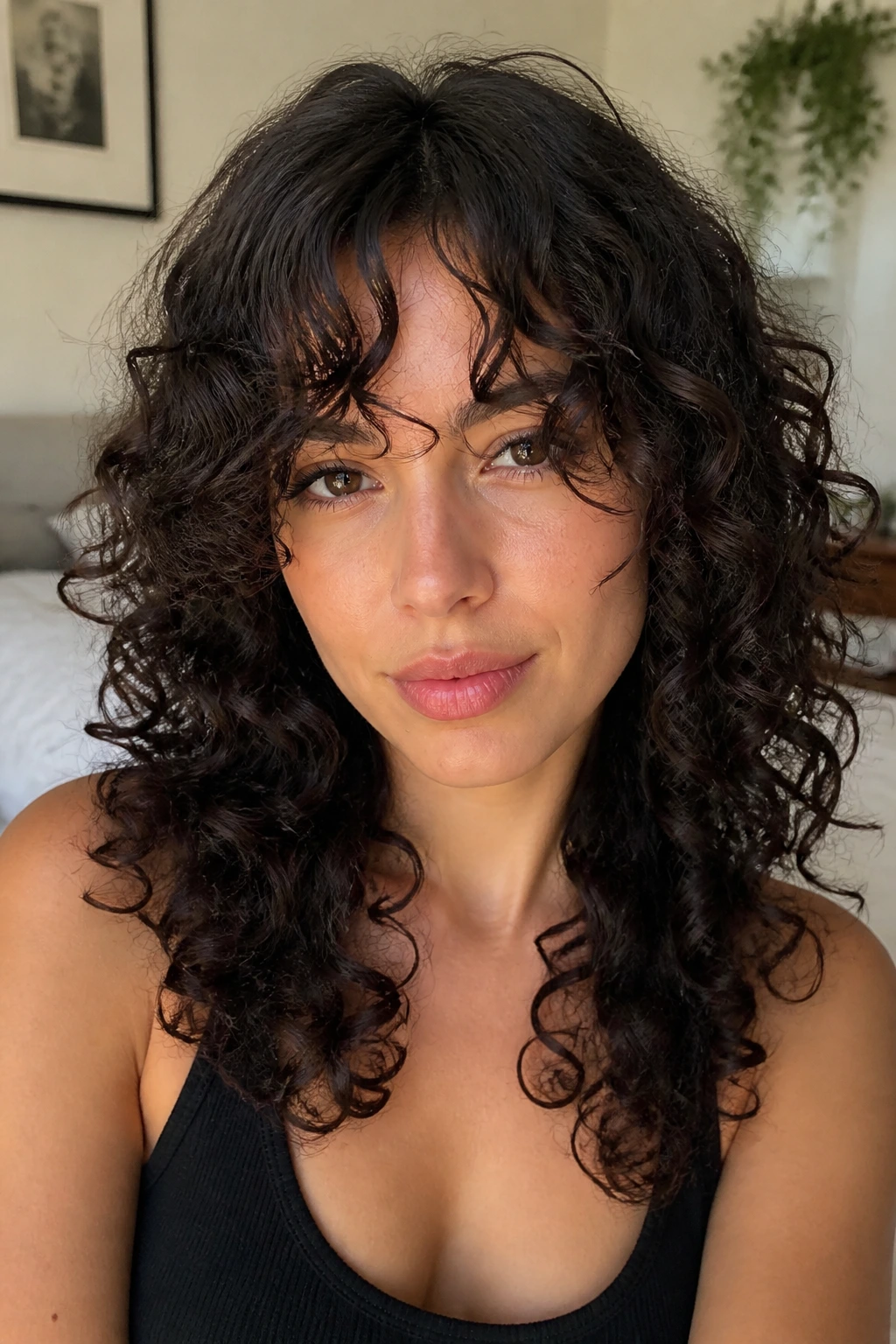
Curtain bangs on curls can be gorgeous when they’re left long enough to split and move. Too short, and they bounce up into a blunt little shelf. Too long, and they disappear into the rest of the haircut. The sweet spot is in between, with soft layers that frame the eyes and cheekbones.
This cut works well if you want the front to feel lighter without committing to a full fringe. It brings attention upward and can make a long face look softer. The bangs should blend into the side layers, not sit like a separate piece.
A stylist needs to cut these with shrinkage in mind. Curly curtain bangs often need to be longer than straight-hair bangs would be, sometimes by a full inch or more. That extra length is not wasted. It is insurance.
They also behave better when styled on damp hair with a small brush or fingers directing the split. A little gel at the front goes a long way. If you let them dry into random clumps, they can swing too far to one side and fight the rest of the cut.
16. The Side-Swept Layered Cut
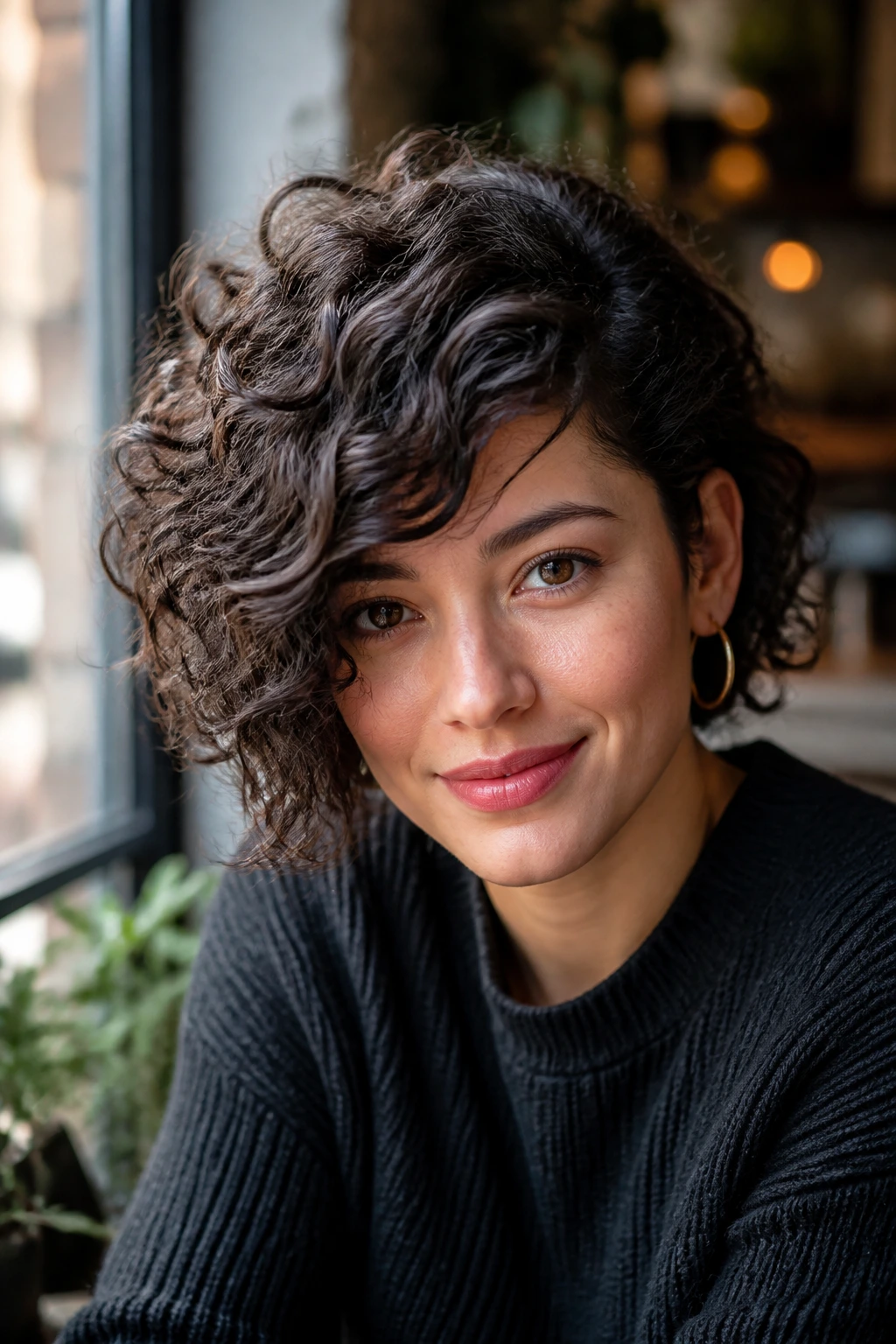
A side-swept layered cut is useful when your curls naturally prefer one direction. Instead of fighting the bend, the haircut leans into it. The front falls across the forehead on a diagonal, while the rest of the layers support that movement.
I like this option for anyone with a strong cowlick, a stubborn part, or a face shape that benefits from asymmetry. It softens one side and gives the hair a little swing. It can also make thick curls feel less heavy around the face.
This cut works especially well when the side-sweep is long enough to tuck behind the ear if you want it out of the way. That tiny bit of flexibility matters in real life. A haircut that only looks good in one position is a headache.
The biggest mistake is cutting the front too short. Side-swept curly layers need length to move. If they are chopped up, they lose the flow that makes the whole cut appealing in the first place.
17. Rezo-Style Dry Layers
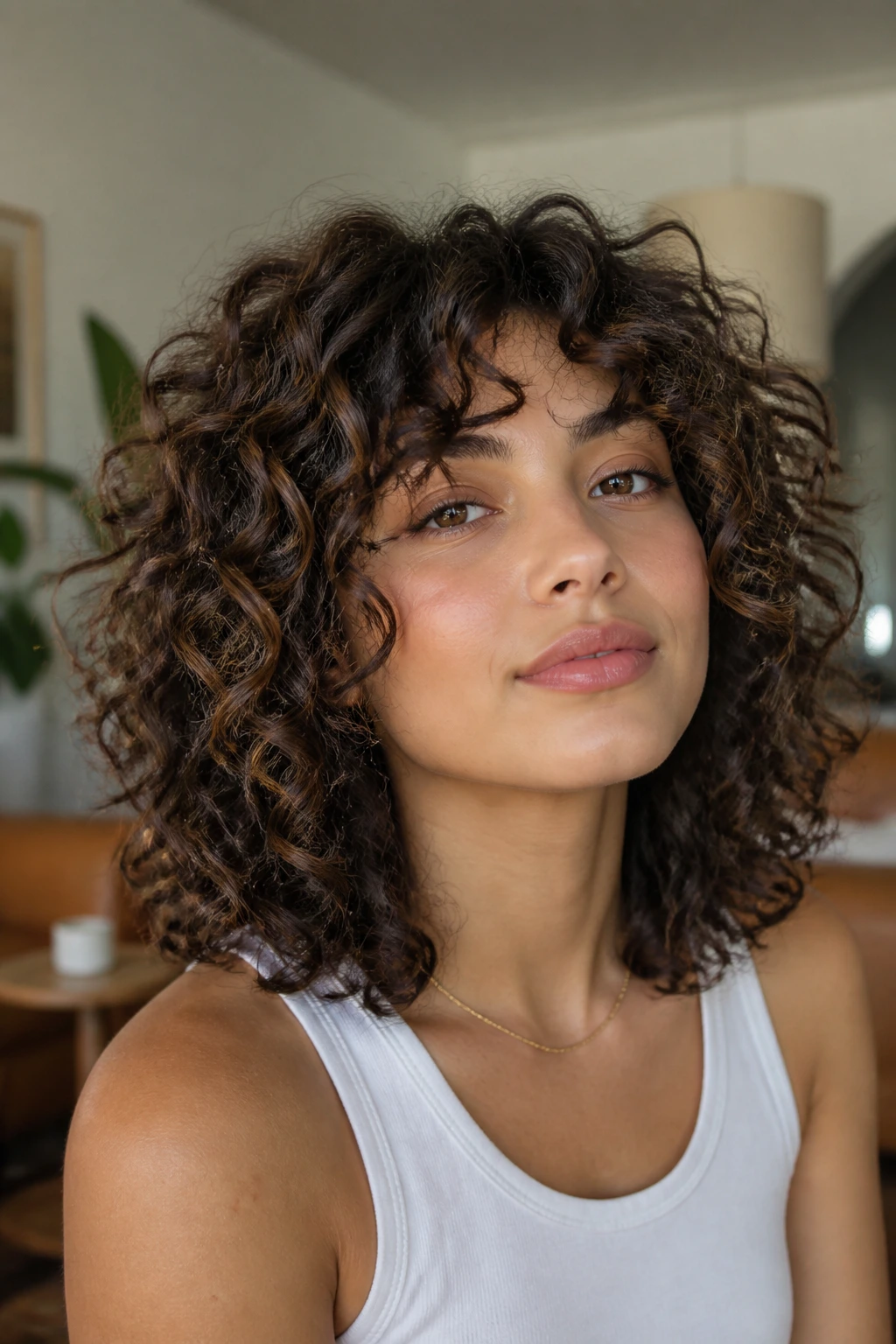
Rezo-style layers are built around balance. The hair is shaped so the length stays even around the head, while the layers remove weight in a way that keeps the silhouette from getting lopsided. On curls, that can mean a cut that looks full from every angle instead of bulky in back and flat in front.
This is a good choice if your curls do not all fall the same way. Mixed textures, mixed densities, and hair that behaves differently on each side can benefit from this approach. The shape stays even even when the curl pattern is not.
How to talk to the stylist
- Ask for balance around the head, not a blunt shape.
- Mention whether your hair gets wider at the sides or the back.
- Bring your usual part.
- Wear the same products you usually use, so the curl pattern reads correctly.
The cut depends heavily on the person doing it. A careful Rezo-style shape can be tidy, balanced, and flattering. A sloppy one can feel vague. So pick a stylist who is comfortable reading curls as they fall, not just as they look when stretched out.
18. The Deva-Cut Curl-by-Curl Shape
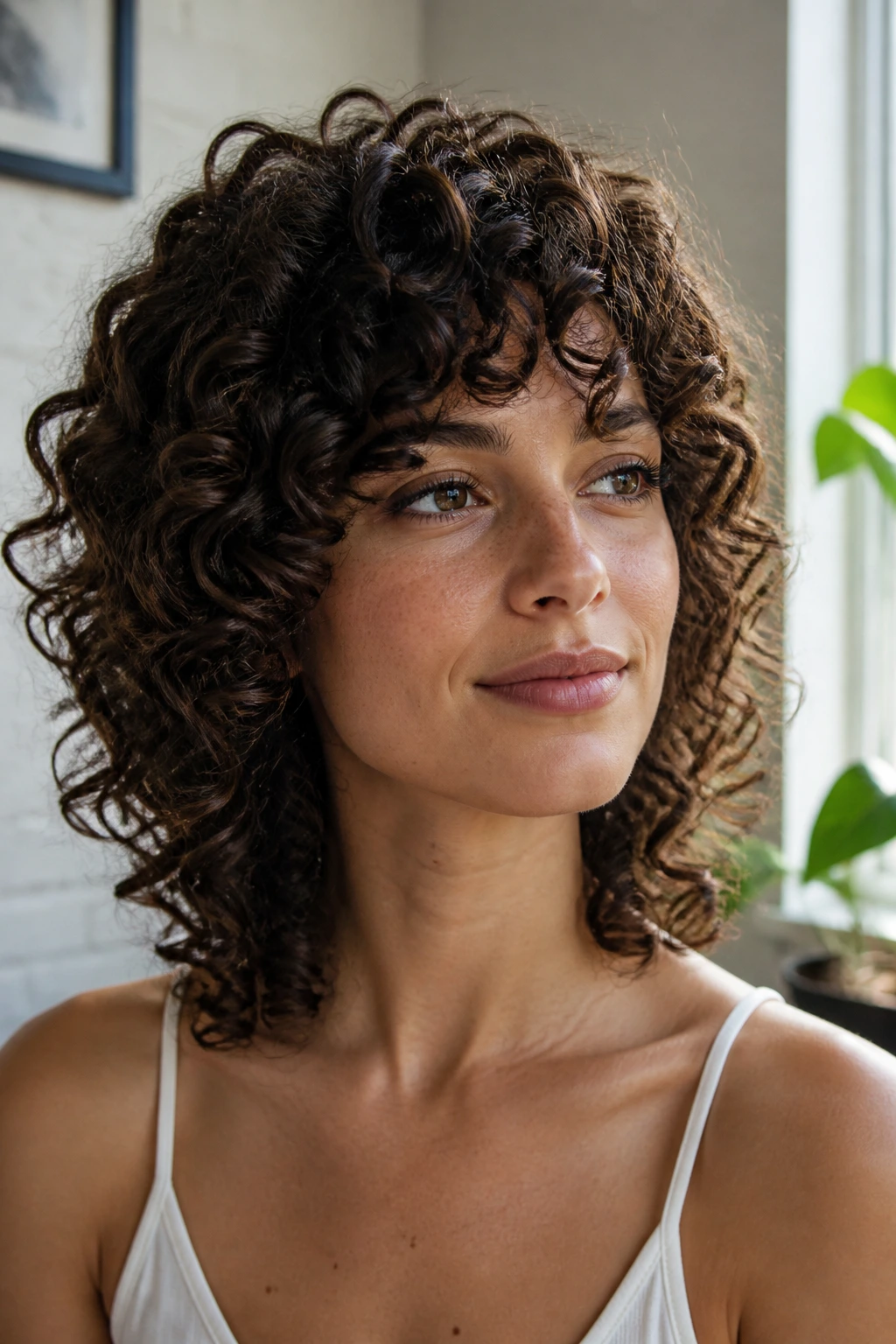
Deva-cut styling is about cutting each curl where it lives, not forcing all the strands into the same line. That is why it can be so effective on curls with uneven spring or multiple patterns in one head. The stylist sees the shape curl by curl and trims accordingly.
The result can look incredibly natural. Not perfect in a fake way — natural. A little irregular in the best sense. That’s the point of the method. It respects the fact that curls do not sit still, and it avoids the flat, one-length look that can happen with a rushed wet cut.
This cut works especially well if one side of your head behaves differently from the other. It also suits curls that form tight at the roots and looser at the ends. The shaping can make those differences feel intentional instead of random.
The caution is simple. Skill matters more than the name on the service. If the person cutting your hair does not understand your curl pattern, the technique will not save the haircut. A good curl-by-curl cut is patient. It takes time, and you can see the care in the final shape.
19. The Angled Layered Cut
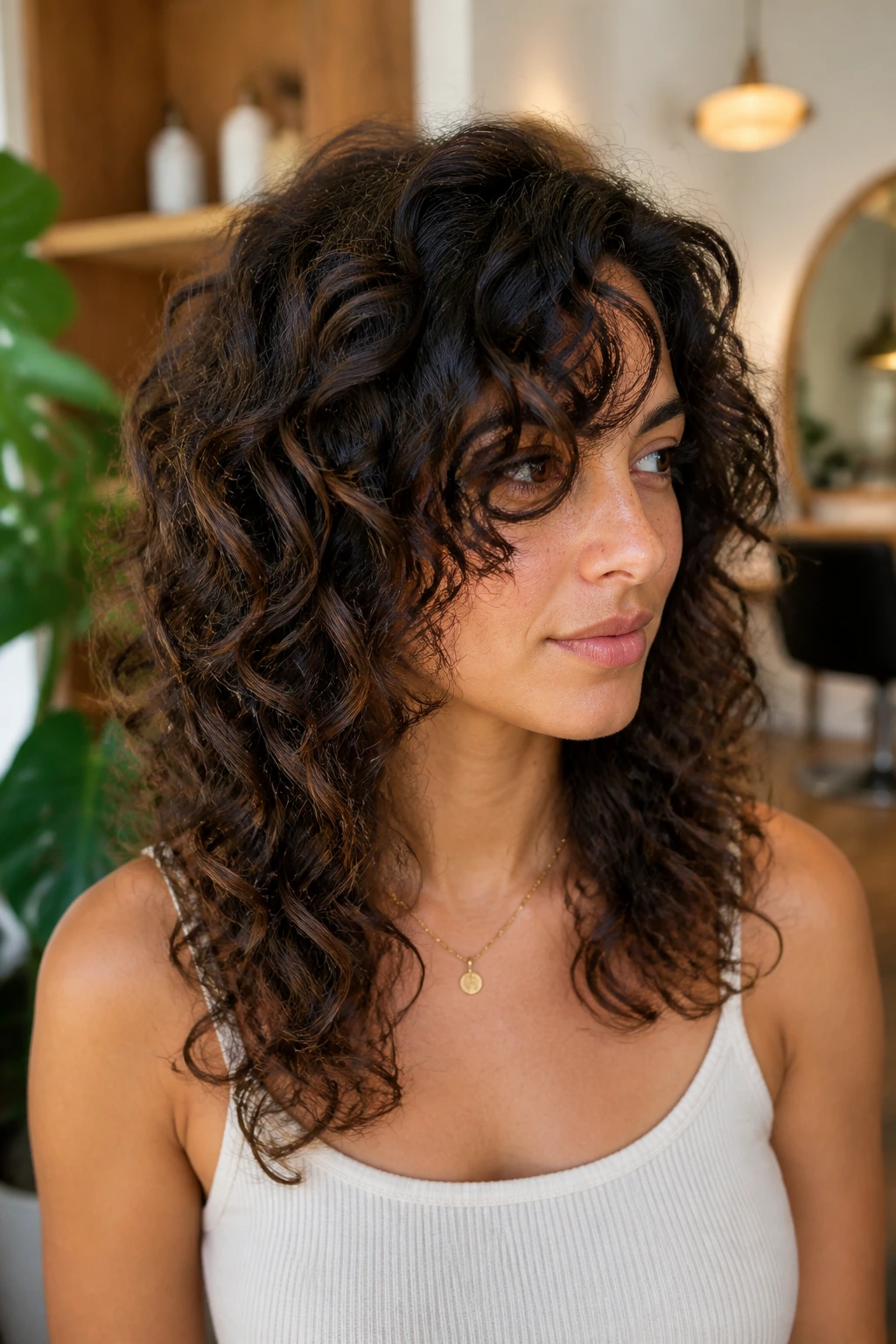
An angled layered cut gives you length in the front and a shorter feel in the back, which can be flattering on curls that need movement around the face. It has a little structure, a little edge, and enough variation to keep the shape from feeling flat.
I like this cut on medium-density curls that need lift but not too much shortness. It brings the eye downward at the front, which can make the face look longer and the curls look more deliberate. The angle should be soft enough to blend. If it gets too steep, the haircut starts to look dated fast.
This shape also works when you want your curls to show off a neckline or collarbone. The front pieces sweep forward while the back stays shorter and easier to manage. That contrast is what gives the cut its energy.
The important part is keeping the layers connected. If the front is much longer and the back is too short, the shape can feel chopped into pieces. Ask for a gradual angle and a soft interior layer pattern, not a hard line.
20. Waterfall Layers
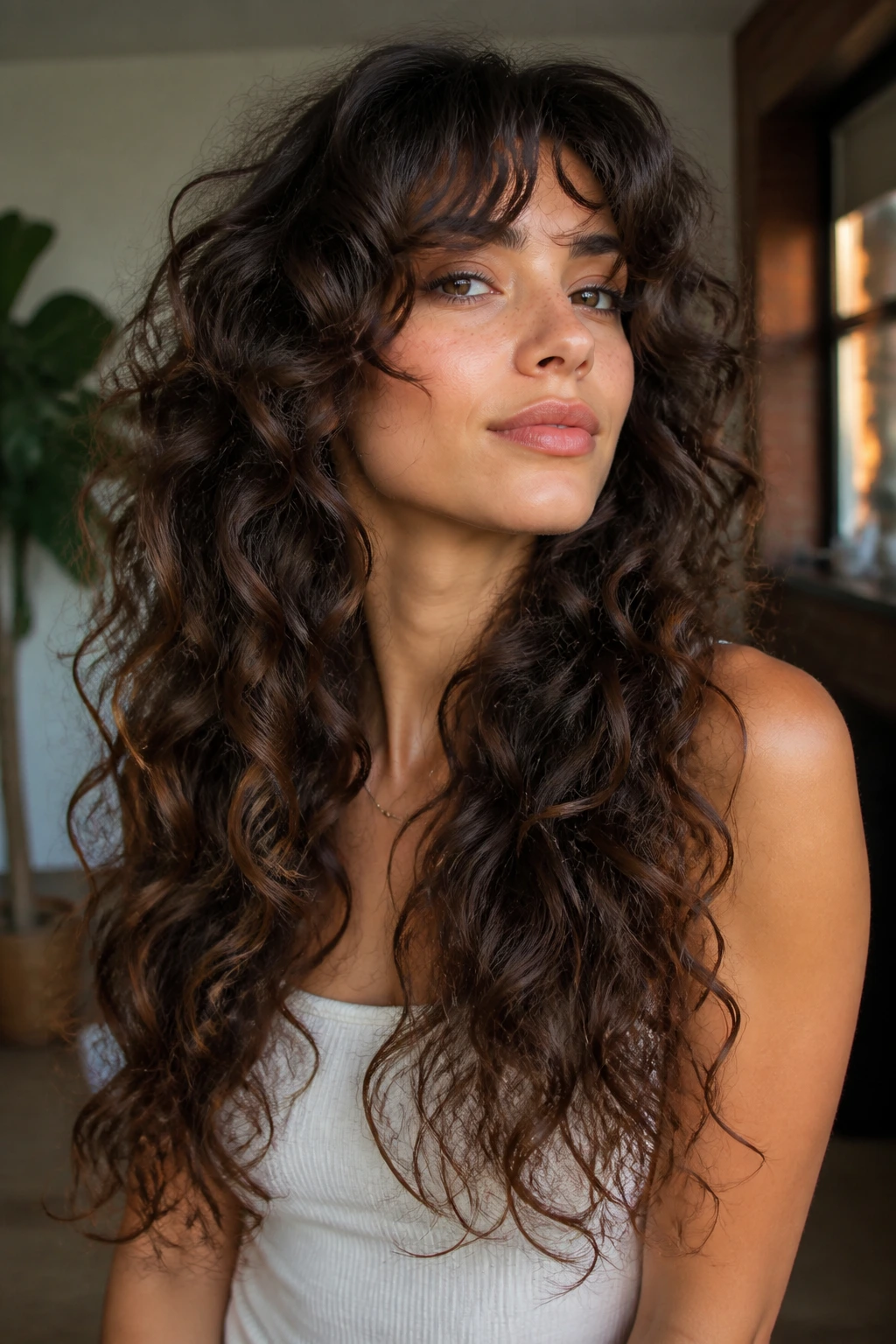
Waterfall layers are what I recommend when someone says they want movement but refuses to give up length. The layers fall in a cascading pattern from the crown down, so the curls look like they’re spilling over one another instead of sitting in a single block.
This shape flatters long curls that still have good density. It can make the hair look luxurious in a quiet way — not fussy, just full and alive. The layers should be long enough to keep the ends thick. That’s the secret that keeps the whole thing from turning wispy.
The style also gives you options. You can wear it down and let the layers show, pin some back and let the front frame the face, or pull it into a loose half-up shape that still leaves some curl texture visible. That flexibility matters more than people think.
If you want one haircut that lands between softness and structure, this is a smart finish line. It is not the loudest shape in the room. It does not need to be. When the curls are hydrated, the layers fall into place with a kind of easy rhythm that feels right without trying too hard.
