



A shoulder-length bob can look crisp in a way longer hair rarely does. The cut lands in that sweet spot where the ends brush the collarbone or skim the shoulders, which keeps the shape neat and makes styling feel manageable. If the line is cut well, it does a lot of the work for you.
What makes a clean-looking bob is not just length. It’s the balance between weight, edge, and movement. Too many layers and the shape turns soft in the wrong way. Too blunt with no thought to texture, and it can puff at the sides or kick out at the ends. The best shoulder-length bob cuts hold a clear outline, even when you air-dry them on a rushed morning.
That is the part people miss. A good bob is not about making hair smaller; it is about giving it a shape that sits well when you walk, tuck it behind one ear, or let it fall naturally.
These 15 cuts all lean into that clean, polished feeling in different ways — some are sharp and straight, some are soft and airy, and some solve real problems like bulk, flatness, or a stubborn cowlick at the hairline.
1. Shoulder Length Bob Cuts With a Blunt Edge
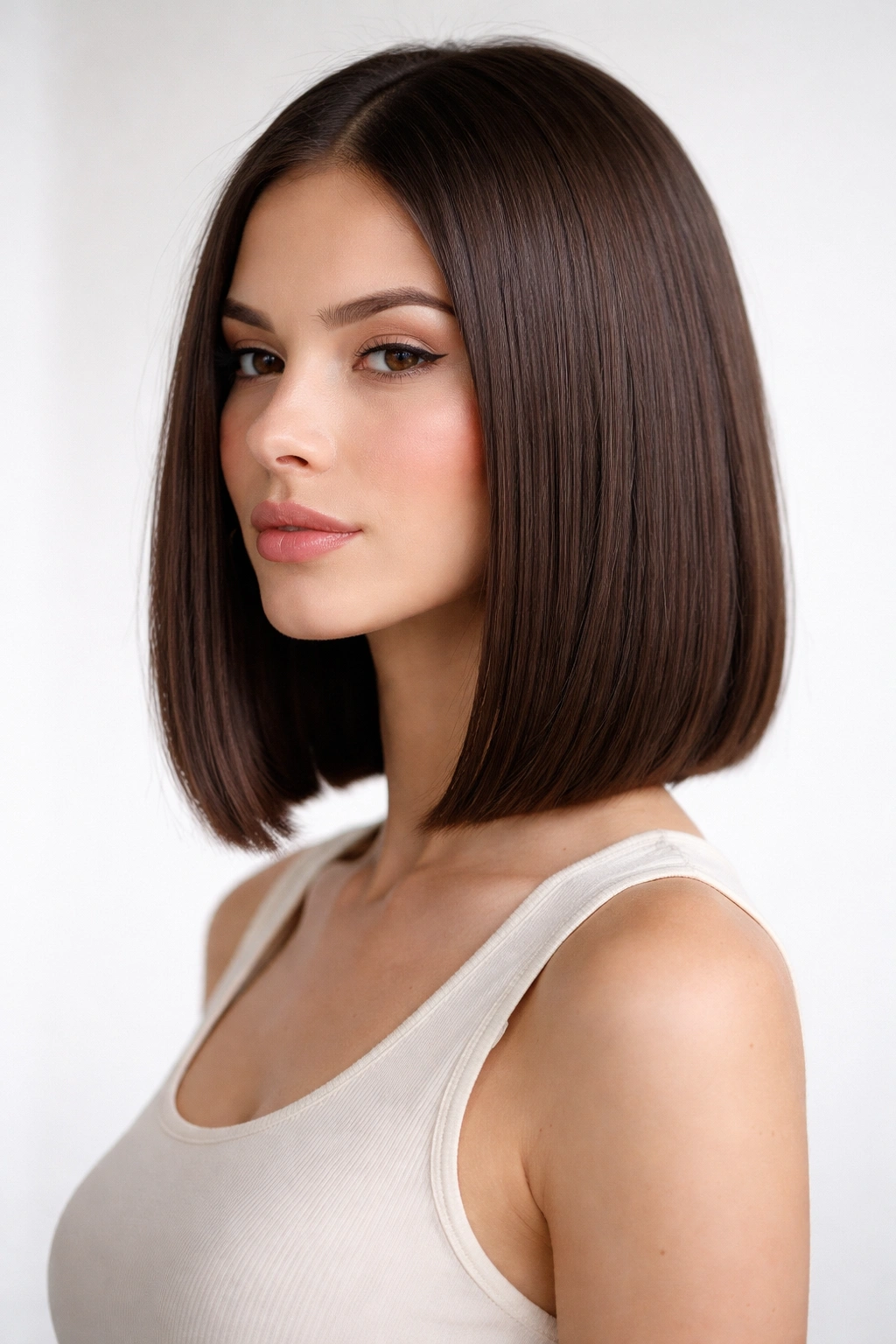
A blunt shoulder-length bob is the one I’d recommend when someone says, “I want my hair to look neat even when I do almost nothing to it.” The perimeter is cut in a straight line, so the eye sees a solid shape first. That’s what gives it that tidy, clean finish.
Why the Blunt Line Works
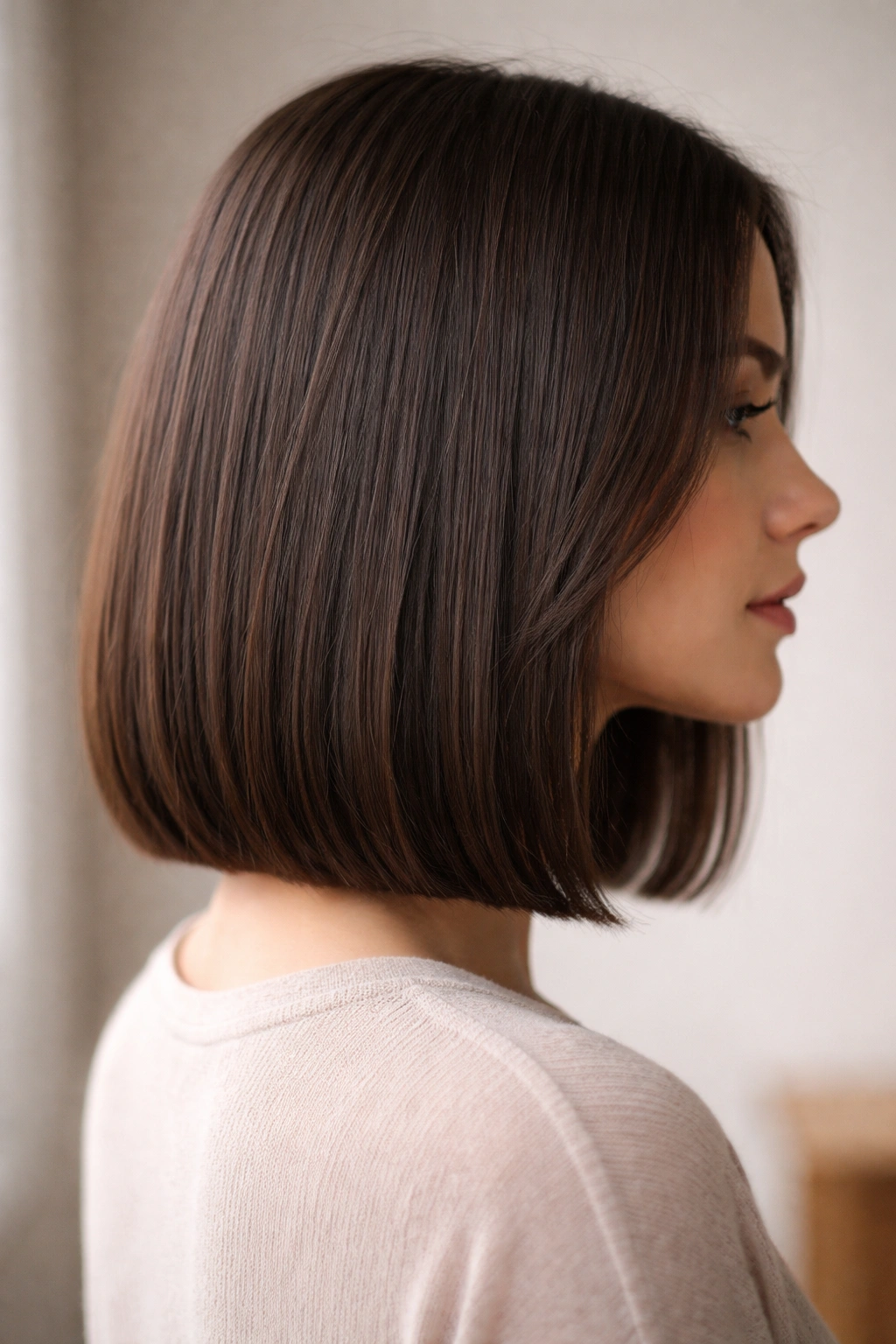
A blunt edge makes the hair look denser at the bottom, which is especially useful if the ends tend to look wispy or see-through. It also keeps the cut from spreading out too much around the shoulders. That matters more than people think, because hair that lands right at the collarbone can start flipping in odd directions if the ends are too thin.
Ask for a blunt line with only a slight internal cleanup if your hair is thick. Heavy layers will fight the point of the cut.
Best for: straight hair, fine hair, and anyone who likes a strong outline.
Styling note: a paddle brush and a quick bend under the ends is usually enough.
Watch for: a too-high blunt line if your jaw is wide or your neck is short.
Pro tip: keep the finish soft at the very ends, not razor-sharp. A tiny bevel reads cleaner in real life.
2. Shoulder Length Bob Cuts With Soft Interior Layers
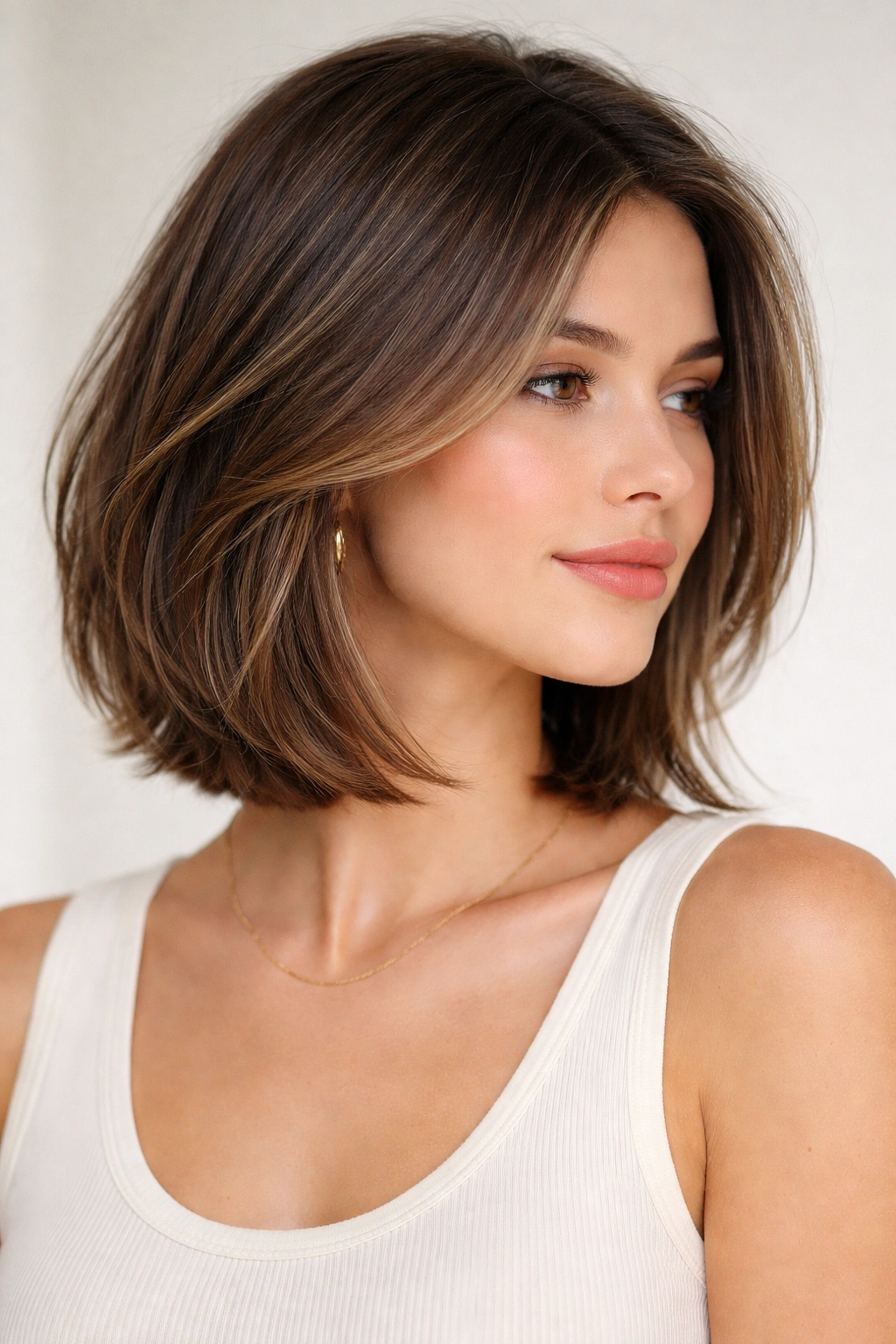
This is the bob for people who want shape, not bulk. Soft interior layers take weight out from inside the haircut while leaving the outside line clean. You get movement when you turn your head, but the silhouette still looks controlled.
That balance matters if your hair tends to feel puffy by the afternoon. A one-length cut can sometimes sit heavy through the middle, especially if you have medium-density hair that swells in humidity. Interior layers solve that without making the ends look choppy.
The trick is restraint. You want hidden layers that start low and stay soft. If the layers are too short, the shape stops looking polished and starts looking busy.
Use a round brush or a large blow-dry brush to smooth the top layer while keeping the internal movement underneath. It gives the hair a little swing. Not a lot. Just enough.
3. The Long French Bob That Grazes the Collarbone
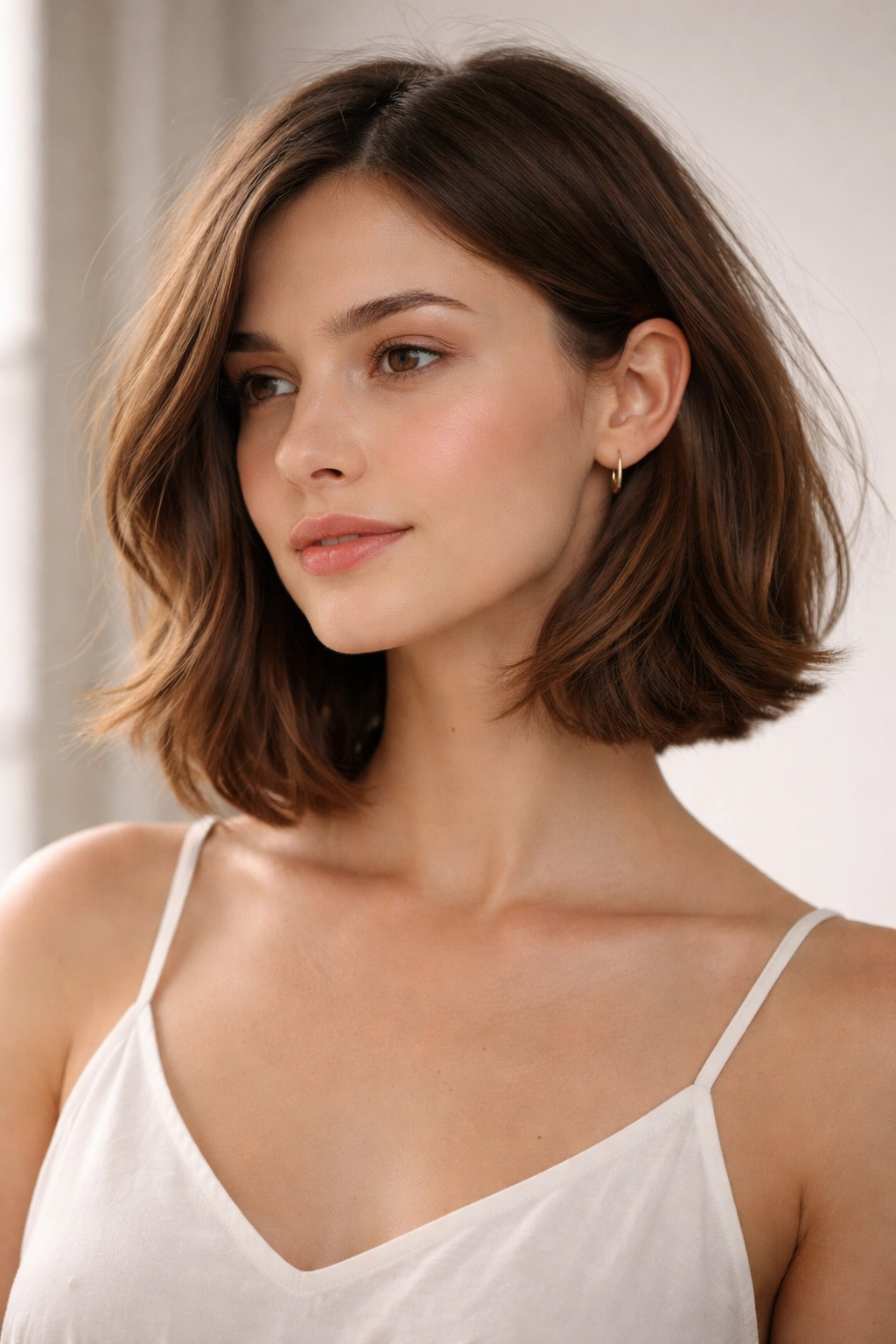
Why does the French bob keep showing up in conversations about clean haircuts? Because it has an easy shape built in. At shoulder length, it becomes a slightly longer version of that idea — a bob that lands near the collarbone and still feels chic, but less severe than a chin-length cut.
What Makes It Different
The ends should sit light, not chunky. A slight bend at the front helps the cut follow the neck and shoulders instead of sitting like a block. That small detail changes everything. Without it, the cut can look stiff; with it, the whole style feels effortless in the best sense of the word.
This version works especially well if you like air-drying. A touch of mousse through damp hair and a quick scrunch is often enough to bring out the shape. If your hair is naturally straight, a 1-inch curling iron can add a loose wave to the mid-lengths without turning the style into a curl pattern.
How to Wear It
- Part it slightly off-center for a softer line.
- Tuck one side behind the ear.
- Leave the ends a little undone, not poker-straight.
Best for: oval faces, heart-shaped faces, and hair that likes a bit of movement.
4. A-Line Bob With Longer Front Pieces
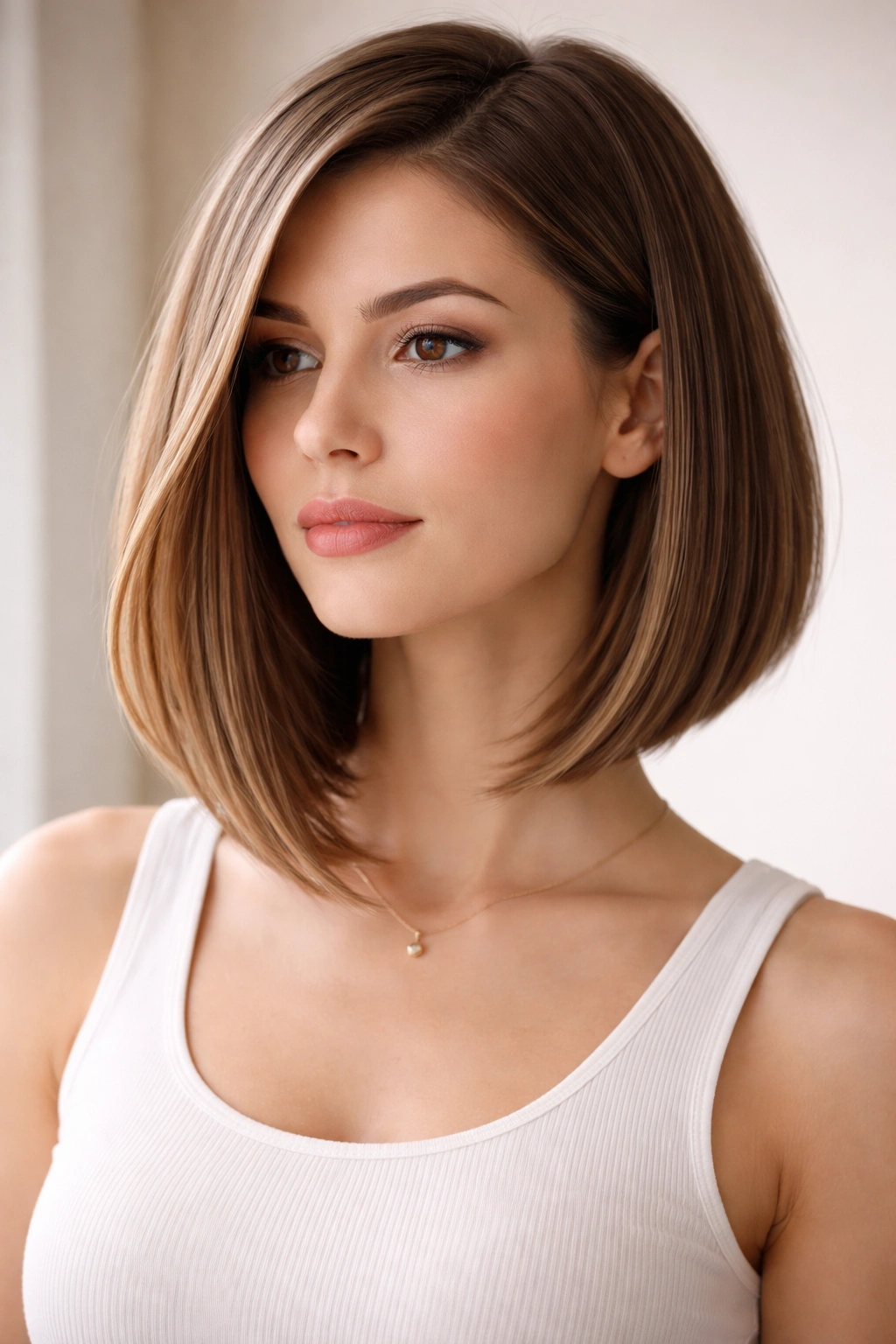
A-line bobs stay neat because the shape leads the eye forward. The back sits a touch shorter, and the front gradually lengthens as it comes toward the collarbone. That forward angle keeps the cut from feeling heavy at the shoulders.
A shoulder-length version is especially useful if you want structure without looking severe. It gives the face a clean frame and can make the neck look a little longer. That’s why this cut shows up so often on people who wear structured jackets, sharp shirts, or anything with a collar that needs room.
The front pieces should not be dramatically longer. A subtle difference — maybe 1 to 2 inches between the back and the front — is enough for most people. Push it too far and the bob starts to look like two different haircuts stitched together.
This one likes a smooth blowout. Round brush, nozzle attachment, and a little patience around the front corners. Those corners matter. They are the whole point.
5. Side-Part Bob With a Tucked Finish
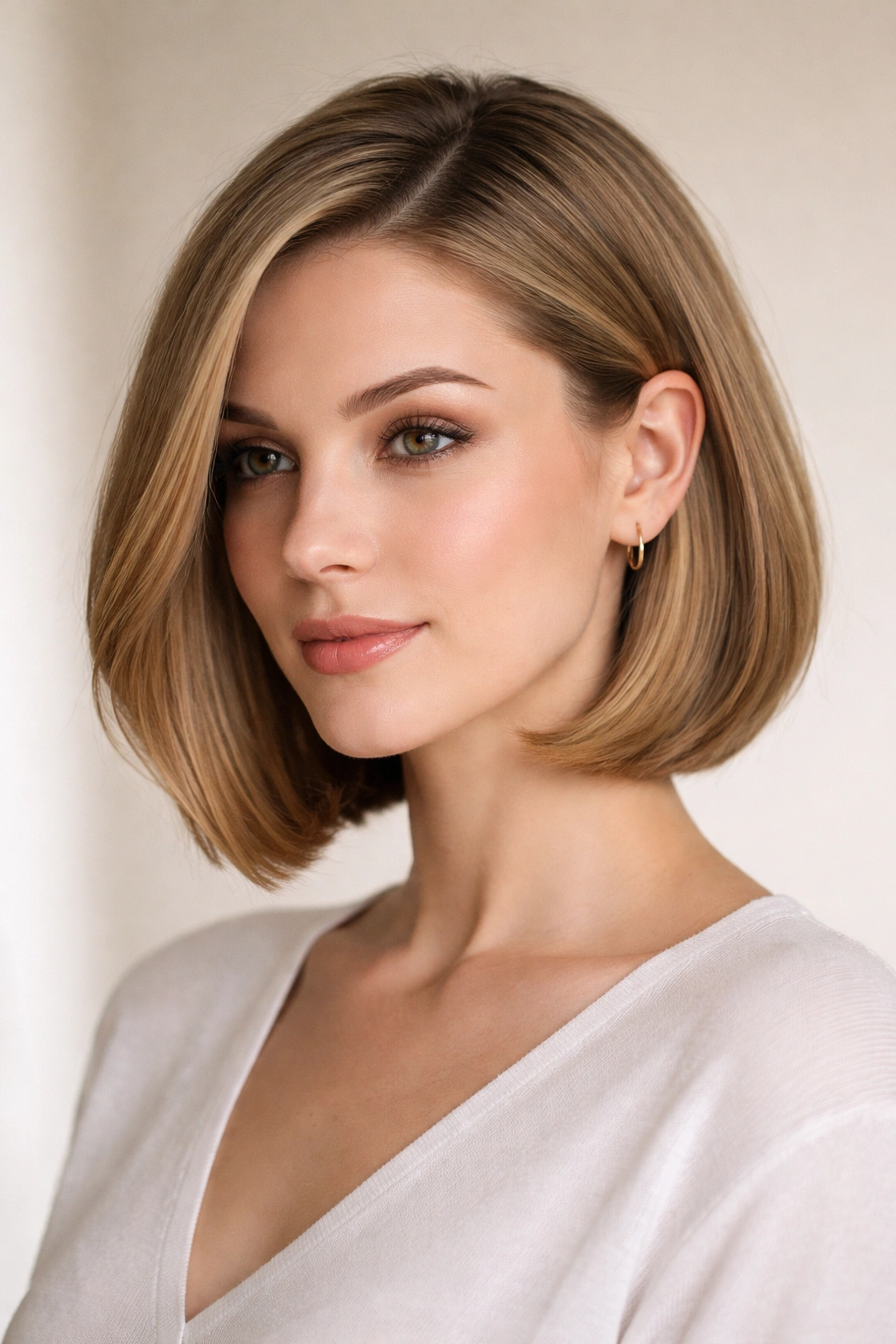
A side part gives a shoulder-length bob a cleaner look than people expect. It shifts the volume to one side, softens a strong jaw, and makes the hair feel more intentional even when the cut itself is simple. Tucking one side behind the ear sharpens the result fast.
This style is a quiet fix for hair that falls flat around the crown. The side part creates lift at the root, while the tucked side opens the face. It also works well for days when your hair has a little bend but you do not want a full wave pattern.
The finish should stay smooth near the scalp and a little freer through the ends. That contrast keeps it from looking helmet-like. I like this version on second-day hair with a light mist of water and a dab of cream through the front sections.
If you want it to look especially polished, tuck the heavier side behind one ear and leave a slim face-framing piece out on the other side. Small move. Big difference.
6. Center-Part Bob With a Soft Bend
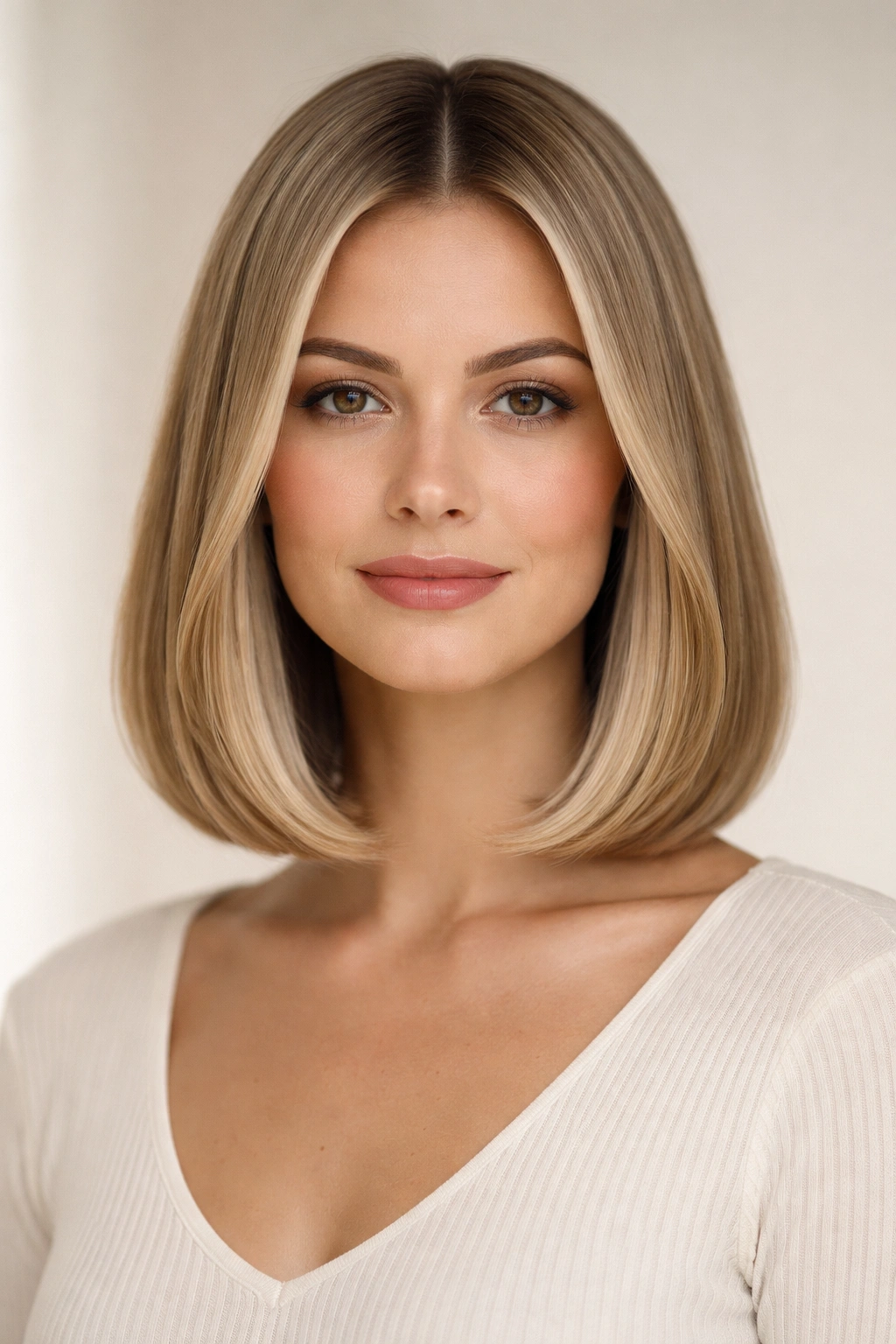
A center part can be a little unforgiving if the cut is sloppy. Done well, though, it gives a shoulder-length bob a clean, balanced shape that feels calm rather than stiff. The key is a soft bend through the ends so the hair doesn’t hang like a curtain.
The Shape to Ask For
Ask for a blunt or lightly beveled perimeter, then soften the front with a tiny inward curve. That keeps the line tidy while making the middle part more wearable. Hair that is too stick-straight down the center can look flat in a way that does nobody any favors.
What It Does Best
- Balances a wider forehead or chin.
- Keeps the cut symmetrical and neat.
- Works well with straight hair and loose waves.
- Looks polished with almost no product if the cut is precise.
A center-part bob can be a little unforgiving if your cowlick splits the hair off-center. If that happens, dry the roots in the direction you want before the rest of the hair sets. That first five minutes matters more than most people realize.
7. Wavy Bob With Invisible Layers
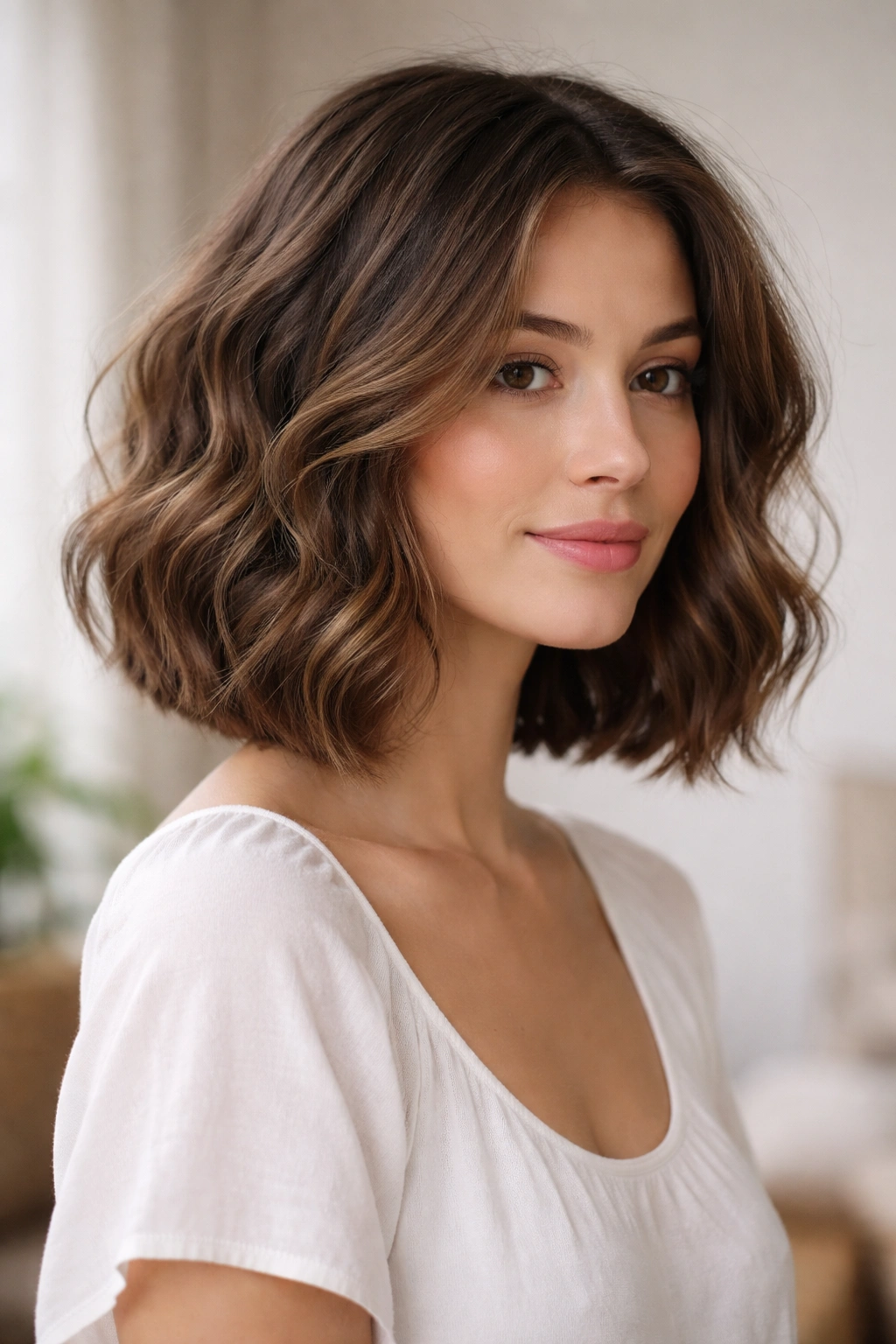
A wavy bob can still look clean if the layers stay hidden. The mistake people make is assuming every textured bob has to look messy. It doesn’t. Invisible layers allow the wave to sit on top of the haircut while the perimeter stays tidy.
This is one of the best shoulder length bob cuts for hair that naturally bends a bit but not enough to curl. The layers remove excess bulk so the wave has somewhere to move, yet the ends still fall in a clear line. That keeps the style from looking fuzzy at the sides.
The Trick With Invisible Layers
Ask your stylist to avoid short top layers near the crown. You want the shape to keep its length and polish. If the wave pattern is uneven, a little point-cutting at the ends can help the cut settle without creating a jagged edge.
Air-dry with a light curl cream, or diffuse on low heat if your hair gets frizzy. The goal is a wave you can see, not a wave that takes over the whole head.
8. Sleek Glass Bob With a Smooth Surface
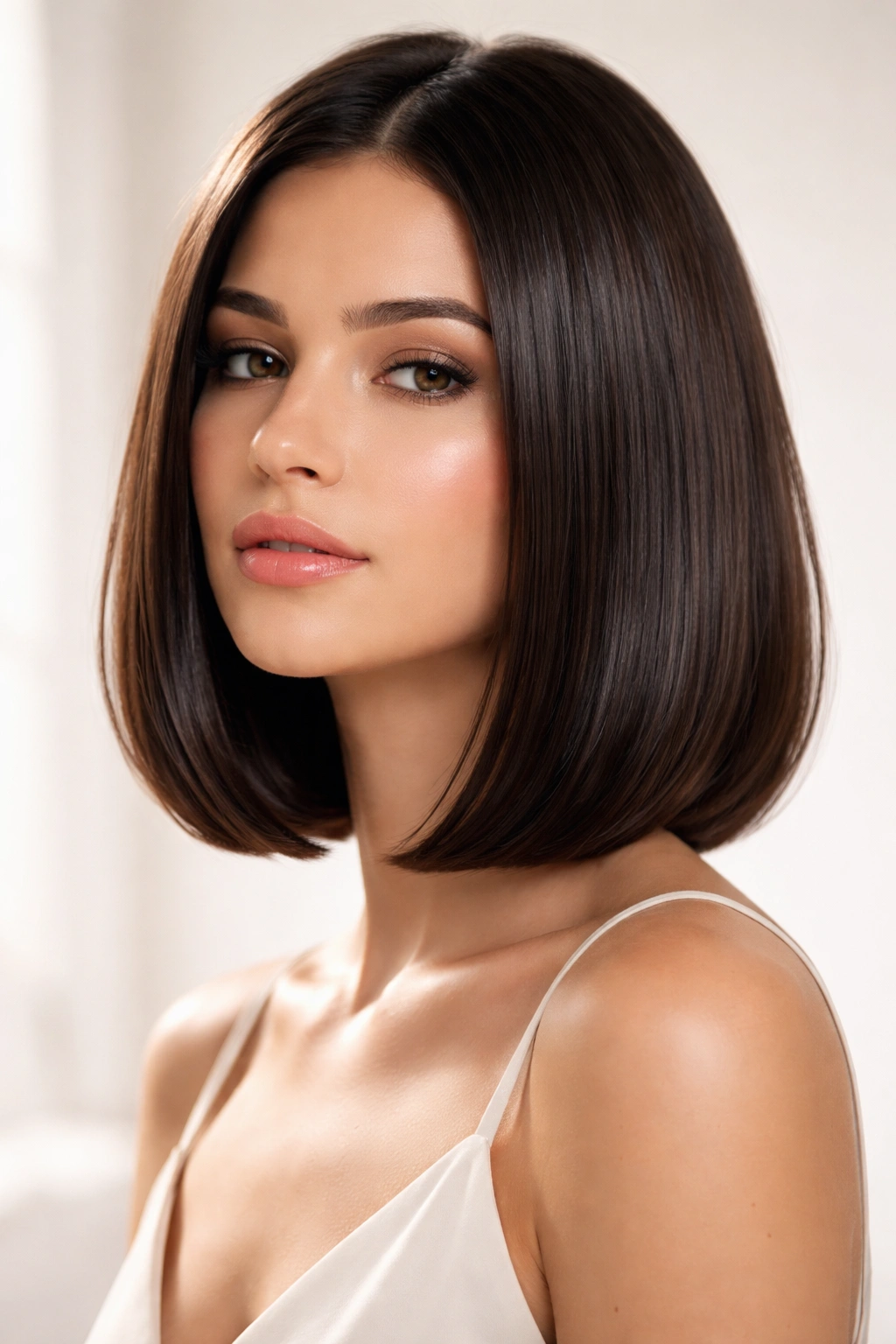
This one is all about precision. A sleek shoulder-length bob looks sharp because the surface is smooth, the ends are even, and the line sits clean against the neck and jaw. There’s no room for half-dry fuzz here. Either the hair is polished, or the cut loses its point.
The best version is cut with a gentle bevel at the tips so the ends do not poke outward after styling. Then it’s blown out with tension using a paddle brush or flat brush, followed by a light pass of a flat iron at a moderate heat setting. If your hair is fine, keep the iron around 300°F. If it’s coarse, you may need a little more heat, but never chase shine with too much temperature. That way lies dull, fried ends.
Use a pea-sized amount of serum through the mid-lengths only. Roots can get greasy fast.
This style is excellent when you want a clean look that feels deliberate. It’s not casual. That’s the appeal.
9. Choppy Bob With Piecey Ends
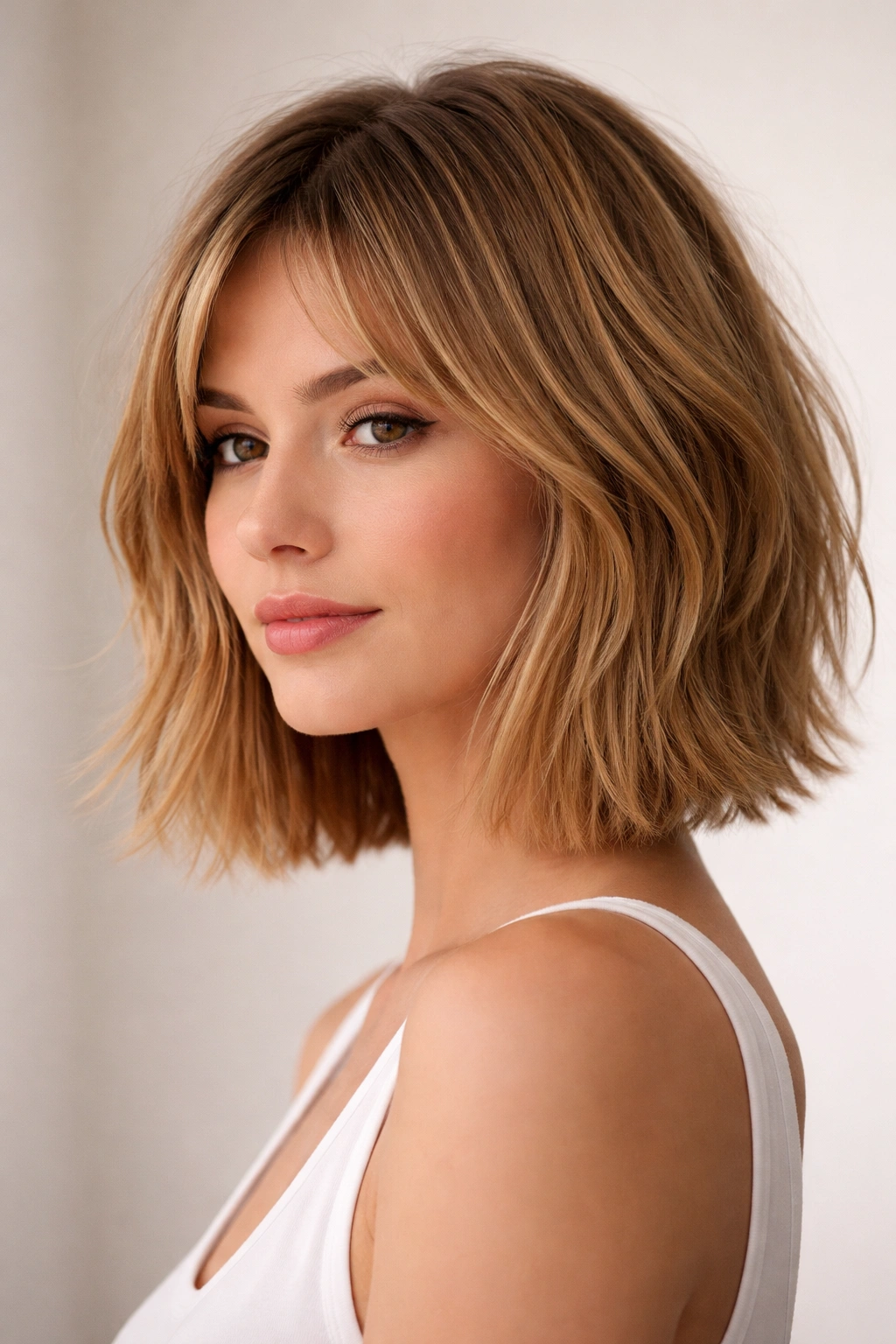
A choppy bob gives you movement, but it still can read clean if the chopping is controlled. The difference between “polished texture” and “random layers” comes down to how much weight stays in the outline. You want piecey ends, not broken ends.
What to Watch For
Choppy cuts work best when the perimeter is still mostly solid. That means the stylist should point-cut into the last inch or so rather than shred the whole shape apart. Too much texturizing, and the cut starts looking frayed at the shoulders.
This style suits people who like a bit of edge in their hair. It also helps break up very dense hair that can otherwise look boxy at shoulder length. A matte styling cream or texture spray can give the ends separation, but use a light hand. A little definition goes a long way.
- Best on medium to thick hair.
- Nice for slightly wavy textures.
- Less ideal if your hair is already dry or brittle.
- Looks strongest when the perimeter is still visible.
A clean choppy bob is controlled, not wild. That’s the part that gets lost in bad salon photos.
10. Curved-Under Bob With a Rounded Silhouette
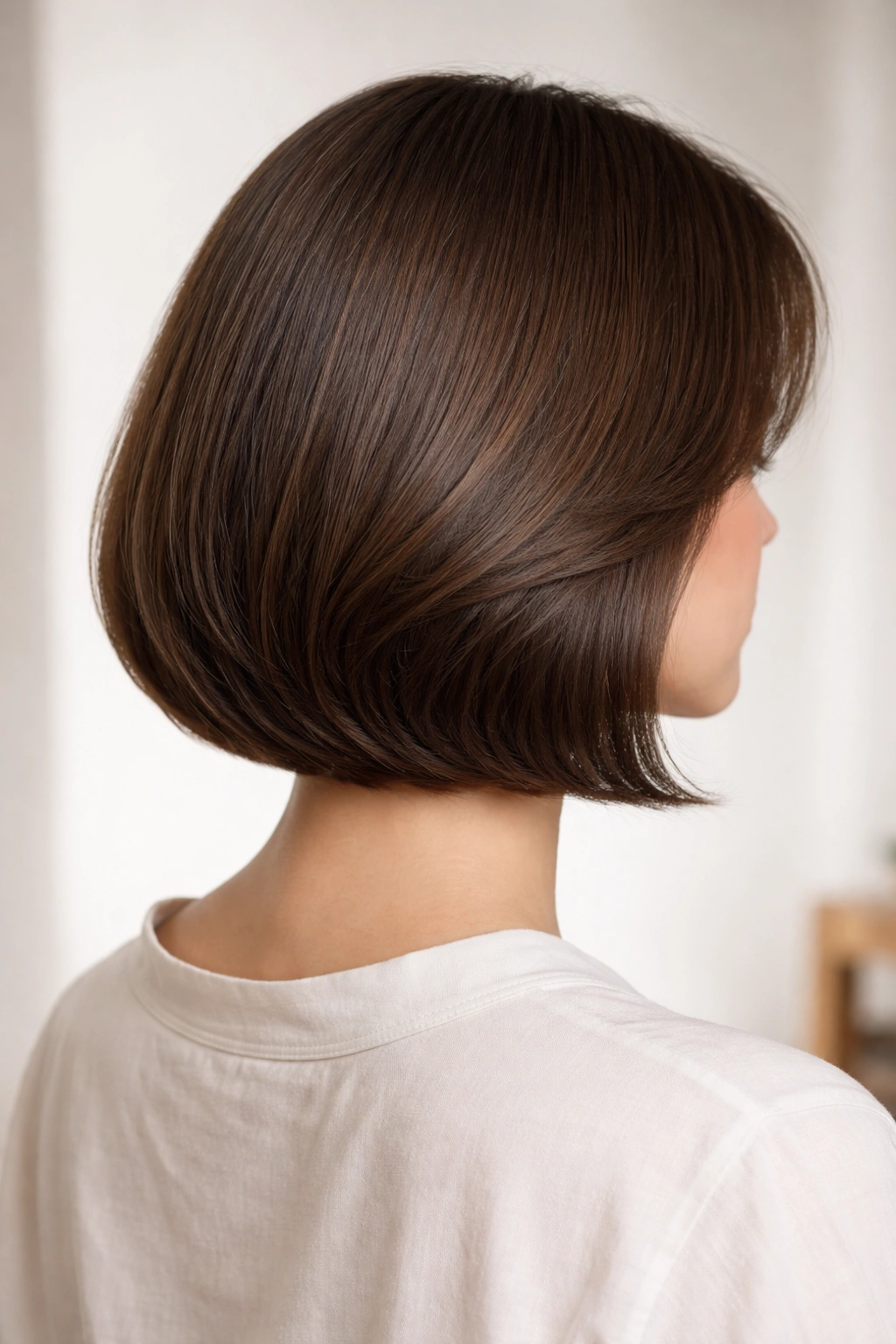
If you like your hair to look tucked in and finished, this shape is hard to beat. The curved-under bob bends inward at the ends, which makes the whole cut look neat from every angle. It has a rounded silhouette that sits close to the neck and shoulders instead of flaring outward.
This is the bob I think of for people who want a little softness but still want the edges of the cut to be obvious. It’s especially good if your hair tends to stick out at the sides after drying. A round brush and a blow-dryer nozzle help train the ends under, and a quick cool shot at the end locks the shape in place.
You do not need a dramatic curl here. A subtle curve is enough. If the ends turn too far under, the haircut can start to look dated. Keep the bend gentle and the line clean.
It has a neat, dressed-up feel even with a simple sweater. That’s a nice thing to have.
11. Shoulder Length Bob With Curtain Bangs
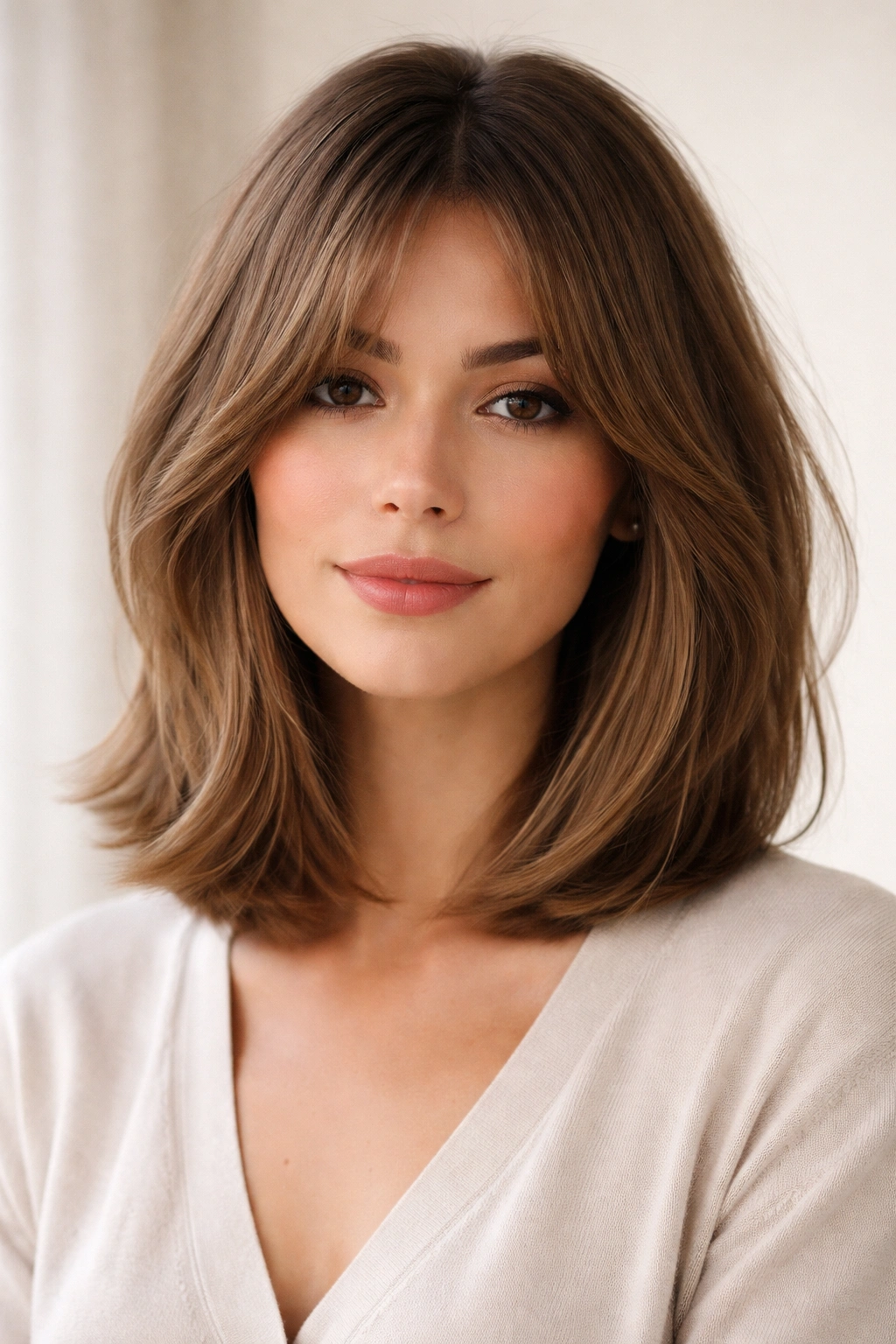
Curtain bangs can make a shoulder-length bob look finished fast. They break up the face line in a soft way and keep the haircut from feeling too blunt around the front. If you want a clean look that still has some movement near the eyes, this is a strong choice.
The bangs should blend into the front layers, not sit like a separate piece. That blend is what keeps the cut looking smooth. Too-short bangs can make the whole style feel choppy; longer curtain pieces that land around the cheekbones usually settle better with a bob at this length.
This cut works nicely with straight or wavy hair. On straight hair, blow the bangs away from the face first, then curve them back in with a round brush. On wavy hair, let them fall a little looser and avoid over-styling. A stiff fringe with a soft bob looks off.
It’s one of those cuts that reads polished even when it’s slightly undone. That’s a useful trick.
12. Shoulder Length Bob With a Side-Swept Fringe
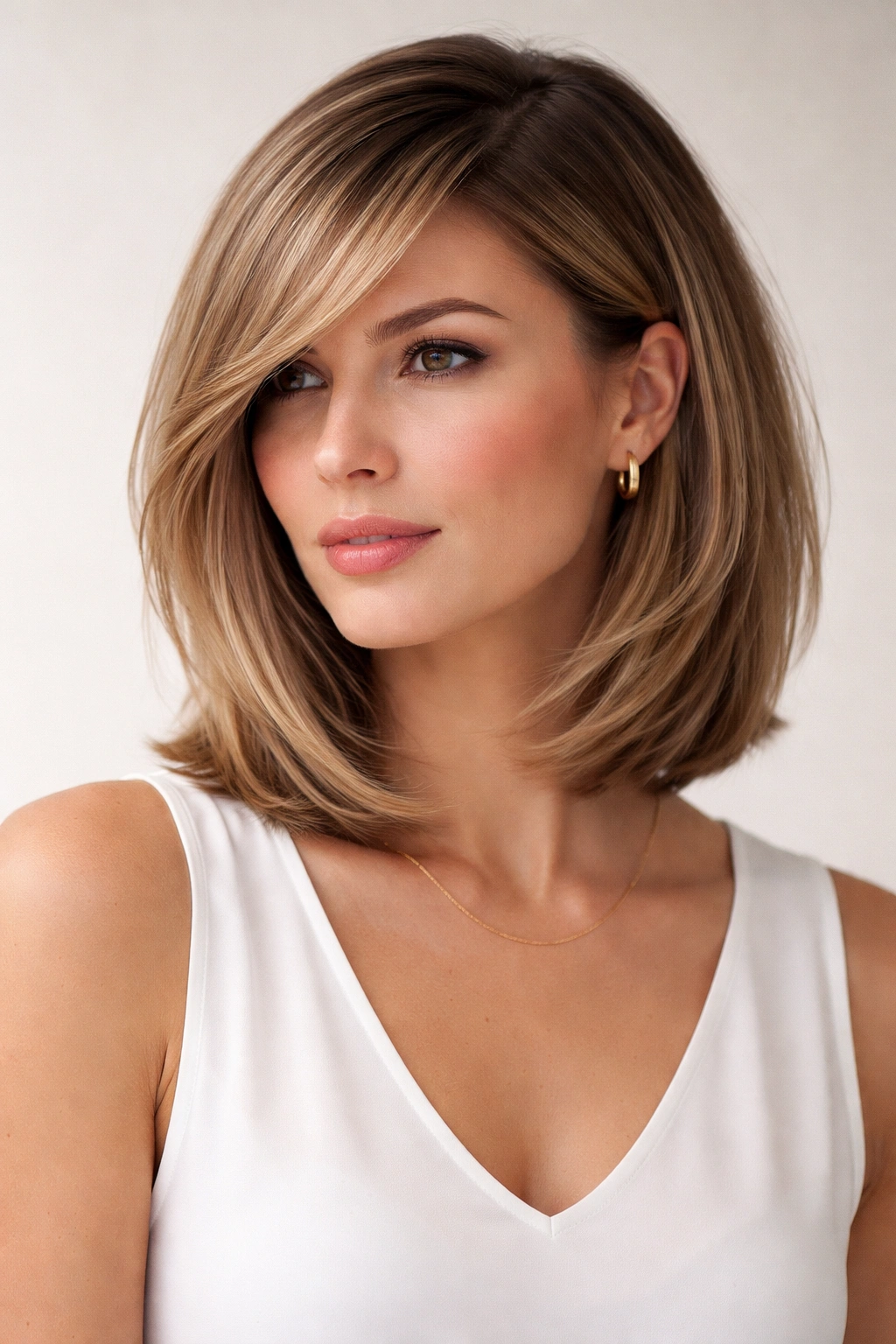
A side-swept fringe gives the bob a cleaner, more tailored line than a heavy full bang. It also solves a practical problem: some foreheads and cowlicks do not play nicely with center-parted front pieces. A side sweep lets the hair fall where it wants, but in a controlled way.
Why It Feels More Polished
Unlike blunt bangs, a side fringe keeps the forehead open and the face lighter. That makes it a good match for shoulder length hair, which already carries enough visual weight at the bottom. The result feels balanced. Not fussy. Not flat.
This cut is especially useful if you like to wear earrings, because the fringe draws the eye diagonally while the bob frames the jaw. It’s a small styling detail that changes the whole mood. The fringe should be long enough to tuck behind the ear on one side when you want it out of the way.
Use a medium round brush and dry the fringe in the direction you want it to sit. If it fights back, a tiny bit of flexible hold spray at the roots can help.
13. Dense-Hair Bob With Internal Debulking
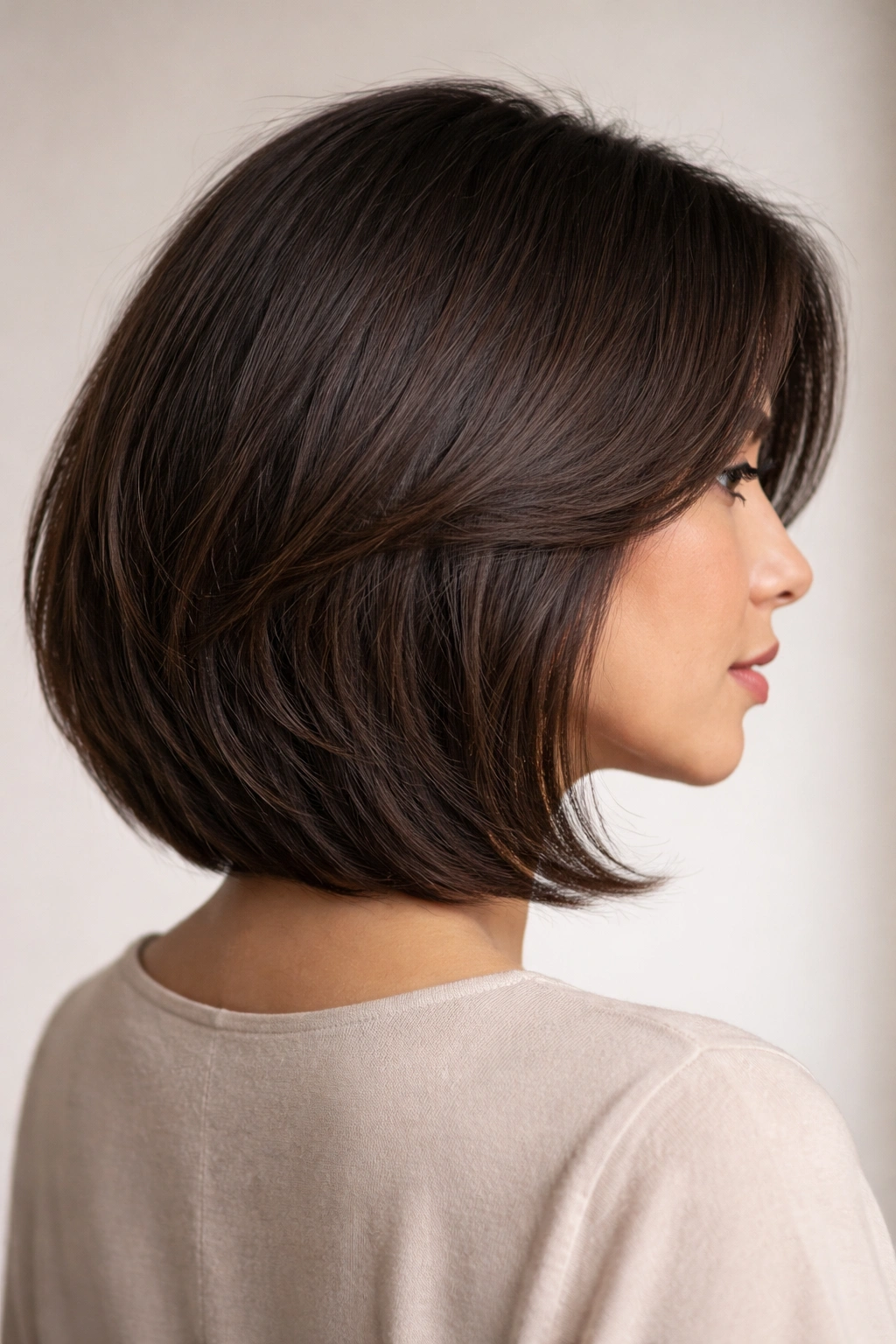
Thick hair needs a different kind of clean. If you cut it blunt all the way through without removing weight inside, the shoulders can puff, the shape can widen, and the ends start to feel bulky. Internal debulking fixes that by taking weight out from underneath while keeping the top line neat.
Where the Weight Comes Out
The best place to remove bulk is under the surface, around the mid-lengths and lower interior. That keeps the perimeter strong while letting the shape sit closer to the head. I’m not a fan of aggressive thinning shears here. They often leave thick hair with frayed ends that swell later in the day.
A good dense-hair bob should still look full. It just should not feel heavy.
- Ask for hidden internal layers, not a choppy exterior.
- Keep the length grazing the shoulders or just below them.
- Use a smoothing cream before blow-drying.
- Finish with a large brush to keep the ends from flipping.
This is one of those cuts that rewards a skilled hand. If the debulking is done badly, you’ll know by the way the hair puffs at the bottom.
14. Fine-Hair Bob With a Blunt, Lifted Base
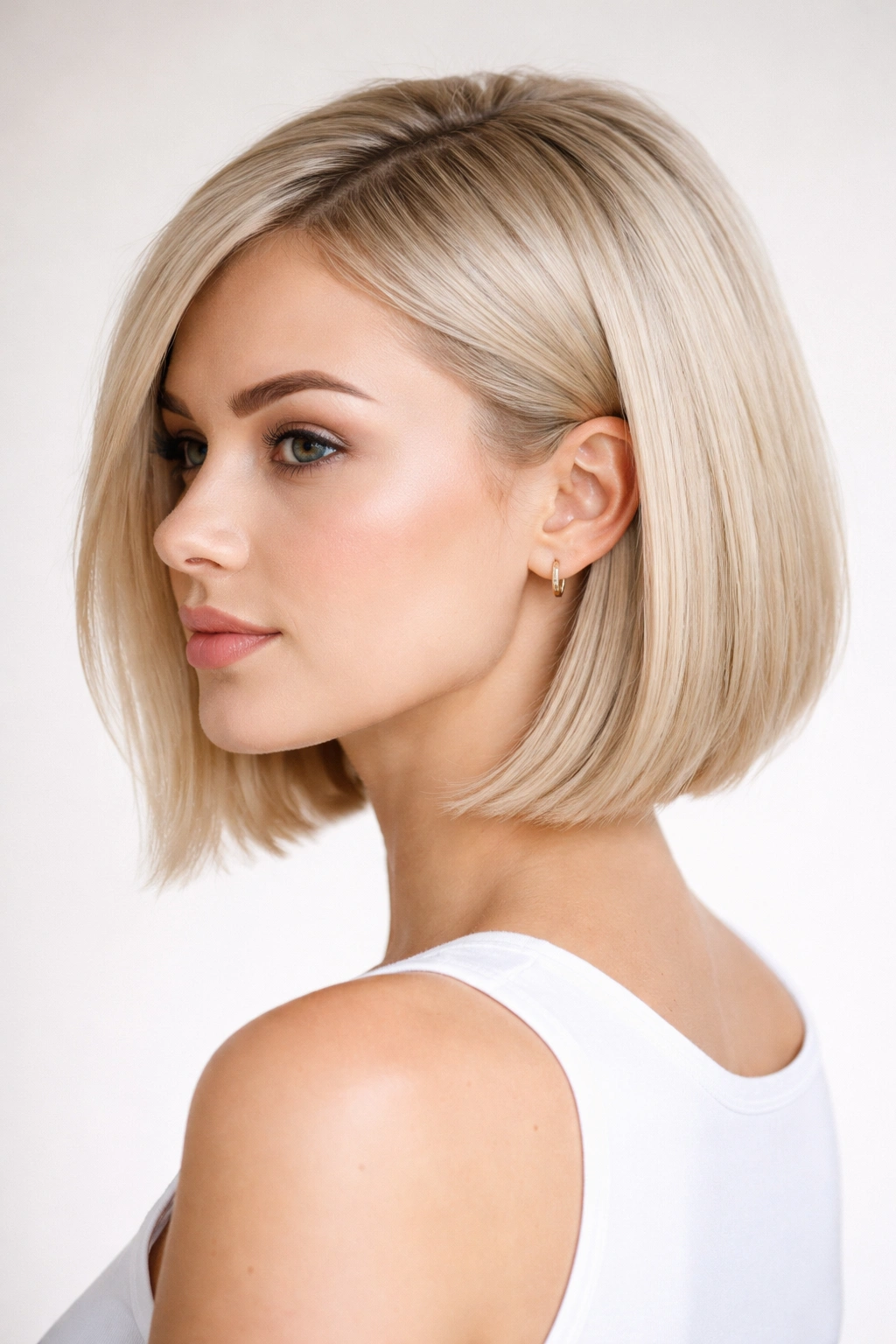
Fine hair benefits from a clean line more than almost any other texture. A blunt shoulder-length bob makes the ends look thicker, and a lifted base at the crown keeps the whole cut from falling limp by noon. The key is not to over-layer it. Fine hair can lose its shape fast.
The length should stop at a point where the hair still has enough density to hold a clear edge. For many people, that means just brushing the collarbone, not drifting much lower. When the cut gets too long, the ends spread apart and the bob stops looking crisp.
Dry the roots upward with a small round brush or a vent brush. A little root spray at the crown helps, but don’t pile on product. Fine hair gets weighed down fast, and then the clean look disappears.
This style is a quiet win. It looks simple, but the good version depends on good geometry. There’s no shortcut around that.
15. Minimal Box Bob With a Polished Finish
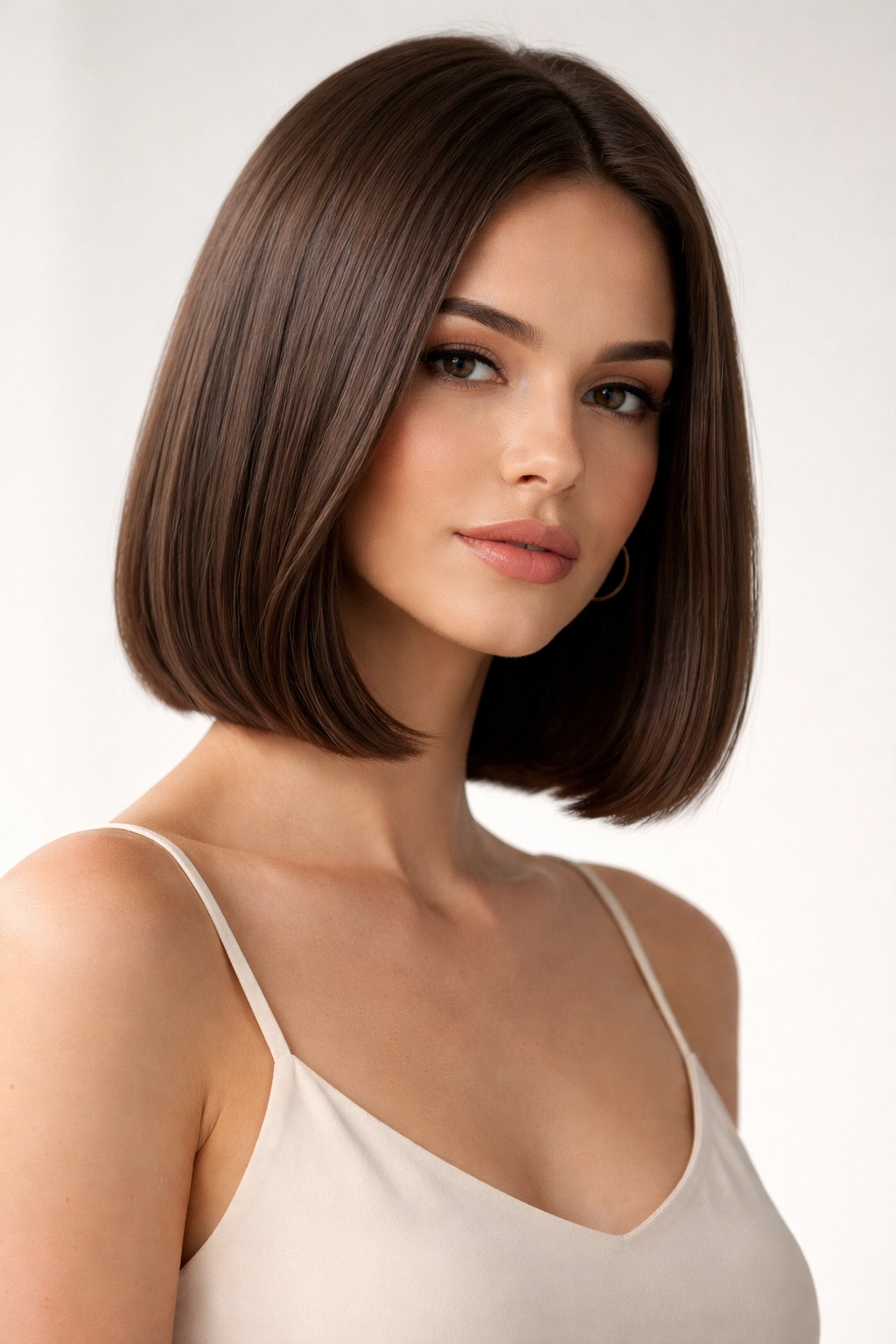
The box bob is for someone who likes a very clear shape. At shoulder length, it feels modern in a plain, restrained way — and that restraint is the whole point. The ends sit evenly, the outline is solid, and the haircut looks deliberate from every angle.
This version works best when the cut is precise and the styling stays calm. No beach wave. No messy bends. Just smooth, straight hair or a slight inward curve at the tips. If your hair naturally bends, that can still work, but the line should stay visible. The box bob loses its charm when the edges go soft and vague.
It’s a strong choice for people who like crisp clothes, structured jackets, or a wardrobe with a lot of clean lines. The haircut matches that energy. It also holds up well between salon visits because the shape is simple. Less moving parts. Less chance of it turning into something else.
If you want the neatest shoulder-length bob cuts, this is the one I’d put on the short list first.
Final Thoughts
The cleanest shoulder-length bob cuts all share the same basic idea: a shape that stays readable even when life is not perfectly controlled. That might mean a blunt line, a hidden layer, a soft curve under the ends, or a fringe that falls where it should. Different tools. Same goal.
What matters most is proportion. A bob that suits your hair texture and face shape will always look better than a trendier version that fights your natural movement. I’d take a simple, well-cut bob over a fussy one every time.
If you’re heading to the salon, bring photos that show the outline, not just the vibe. Haircuts are geometry first and mood second. Get the line right, and the rest becomes much easier.
