



The most believable afro wigs rarely look perfect. That is the whole trick.
A wig that tries too hard usually gives itself away in three seconds flat: the curl pattern is too even, the shape is too round, and the shine sits on top like plastic wrap. Real Afro texture has tiny shifts in coil size, a little lift at the roots, and ends that move instead of sitting in one frozen shape.
When people shop for afro wigs that look natural, they usually start with curl type. I’d start somewhere else. Shape comes first, then density, then lace, then color, then curl pattern — because a wig can have gorgeous coils and still read as wiggy if the silhouette is wrong. Human hair can help, sure, but a matte synthetic fiber with the right cut can also look convincing if the details are right.
The styles below lean into that logic. Some are short and close to the head, some are full and fluffy, and a few use color or parting to do the work that too much volume can’t. Texture is only half the job.
1. Tapered Coily Afro Wig
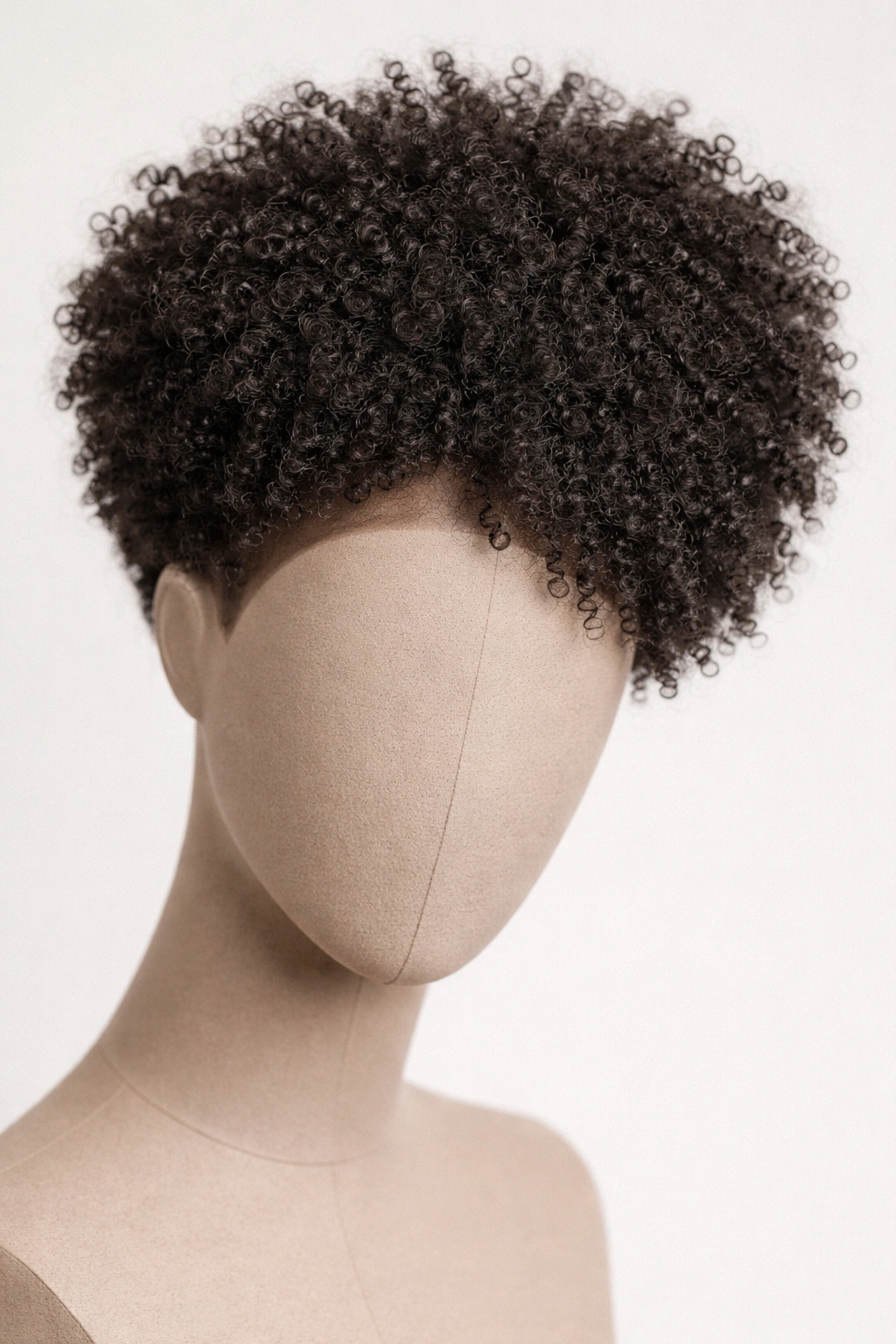
This is the wig I’d hand to someone who wants volume without the “perfect sphere” problem. A tapered afro sits tighter at the sides and back, then keeps the fullness on top and around the crown. That taper does a lot of quiet work. It makes the wig feel shaped by a head, not built by a machine.
Why It Looks Believable
The strongest version has a soft, uneven outline. Not messy. Just not too neat. Real hair rarely grows in a clean circle, and the taper mimics that without forcing the texture to do something unnatural.
Ask for a density around 120% to 130% if you want the wig to read as light and lived-in rather than puffy. A length of 6 to 10 inches on top usually keeps the silhouette crisp, while the nape and sides can stay shorter for that grown-in shape. If the cap has a tiny amount of lace at the front, even better.
- Choose a coily 4A to 4C texture with some frizz at the ends.
- Keep the outline slightly irregular around the temples.
- A soft side part or no part at all usually looks more natural than a hard center part.
- Matte fibers tend to work better than glossy ones.
Best tip: trim the perimeter a little less than you think you need. A tiny bit of irregularity sells the look.
2. Teeny Weeny Afro Wig
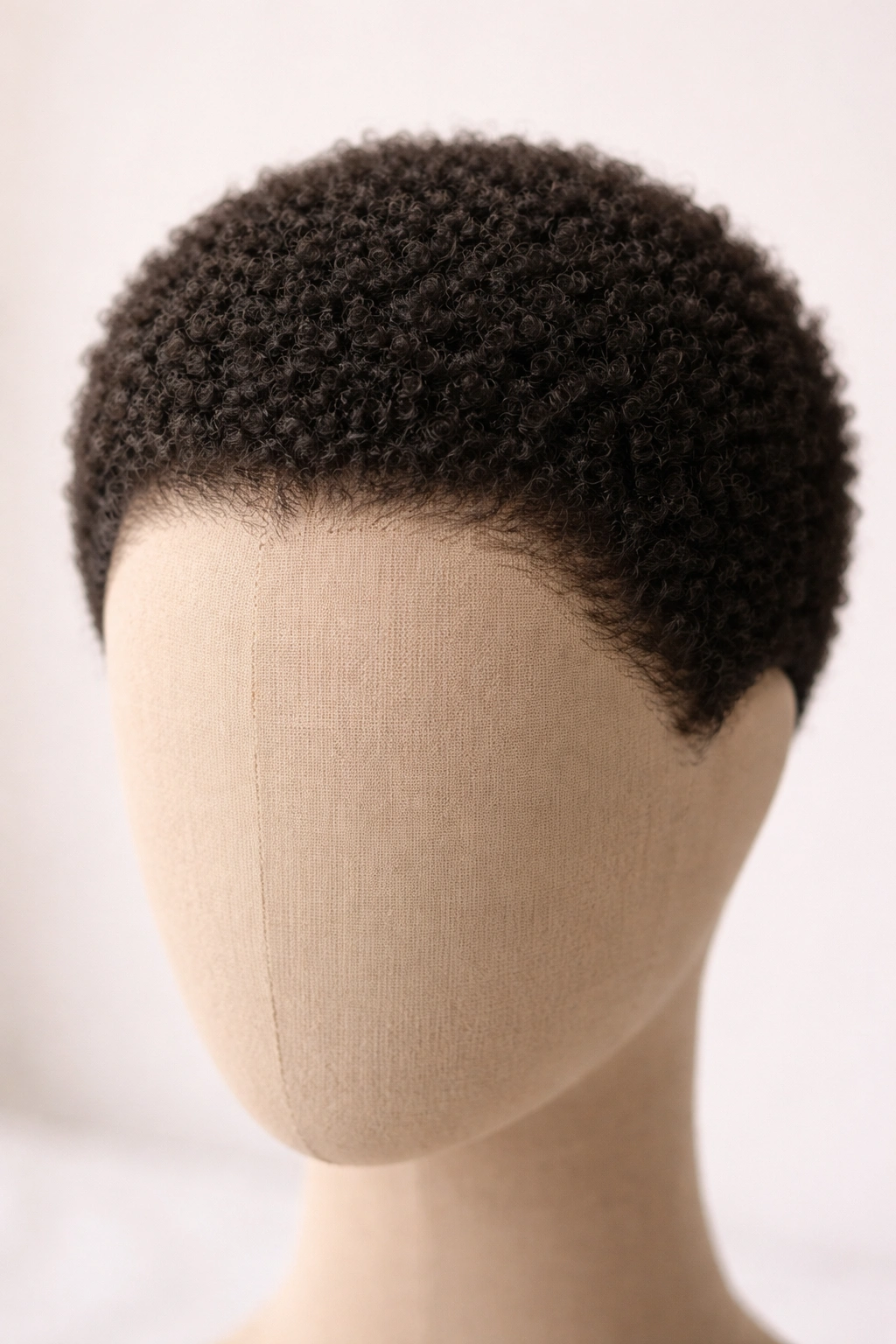
Short afro wigs often look more real than longer ones. That sounds backwards until you see them on the head. A TWA, or teeny weeny afro, sits close enough to the scalp that the lace, lace tint, and density matter more than the drama of the shape. There’s nowhere for the wig to hide, which is exactly why it can look so good.
A clean TWA works best when the texture is tight and matte, not shiny and overdefined. The curl pattern should feel like a naturally shrunken coil pattern, not little plastic springs stacked on a cap. That means a length somewhere around 1.5 to 3 inches and a density closer to 100% to 120% if you want it to echo real short hair.
Less hair. Better wig.
The nice part is that this style does not need heavy styling to look polished. A softly lifted front, a believable hairline, and a little irregularity around the crown are enough. If the wig comes with a hard, geometric edge, it will look too “done” for the look you’re after. A TWA should feel like hair that was washed, fluffed, and left to dry in place.
This is one of the smartest choices if you wear glasses, work in hot weather, or want something that doesn’t swallow your face. It reads as practical first, stylish second, which is usually where the magic is.
3. Layered Cloud Afro Wig
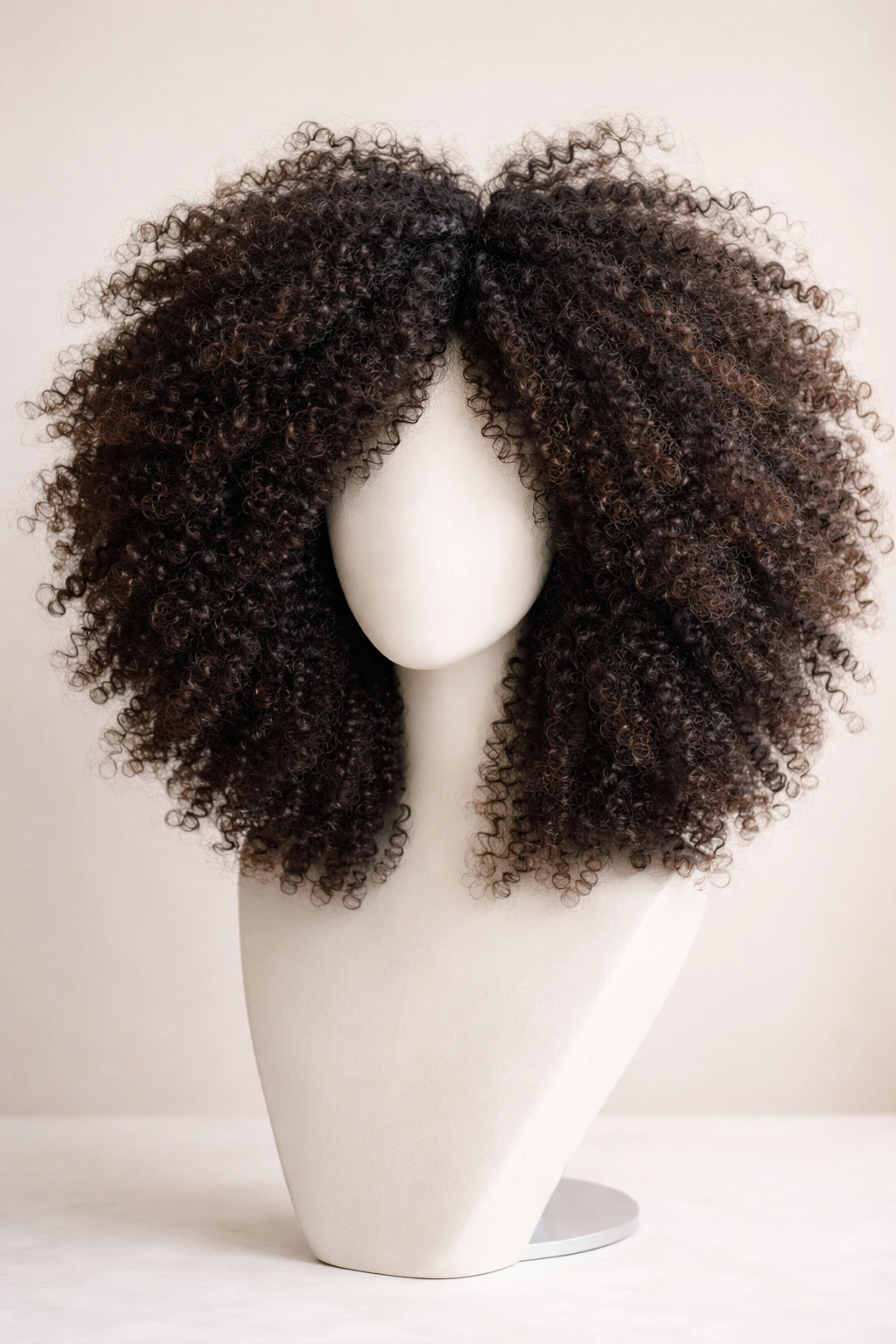
Why do some big afro wigs still look believable? Layers. That’s the whole answer.
A layered cloud afro breaks up the heavy, even shape that makes many full wigs look like a helmet. The top can stay lifted, but the outer edges should move in slightly different directions, with a few shorter pieces around the face and a softer finish near the shoulders. That variation tricks the eye in a good way. It feels like hair that has been handled, not sculpted.
What Makes It Different
The wig should not read as one giant ball. It should read as volume with air in it. Think 14 to 18 inches of texture with layers that drop by about 1 to 2 inches from the crown to the outer edges. That spread gives the hair shape without collapsing the fullness.
- Ask for a layered cut, not a blunt cut.
- Keep the roots a little flatter than the ends.
- A slightly off-center part can stop the style from feeling too symmetrical.
- A softer perimeter around the cheeks helps the wig blend into the face.
I like this style on people who want a fuller look but do not want the wig to announce itself from across the room. It has presence. It also has movement, which matters more than people think. A wig that shifts when you turn your head always looks more real than one that stays frozen.
4. Afro Puff Drawstring Wig
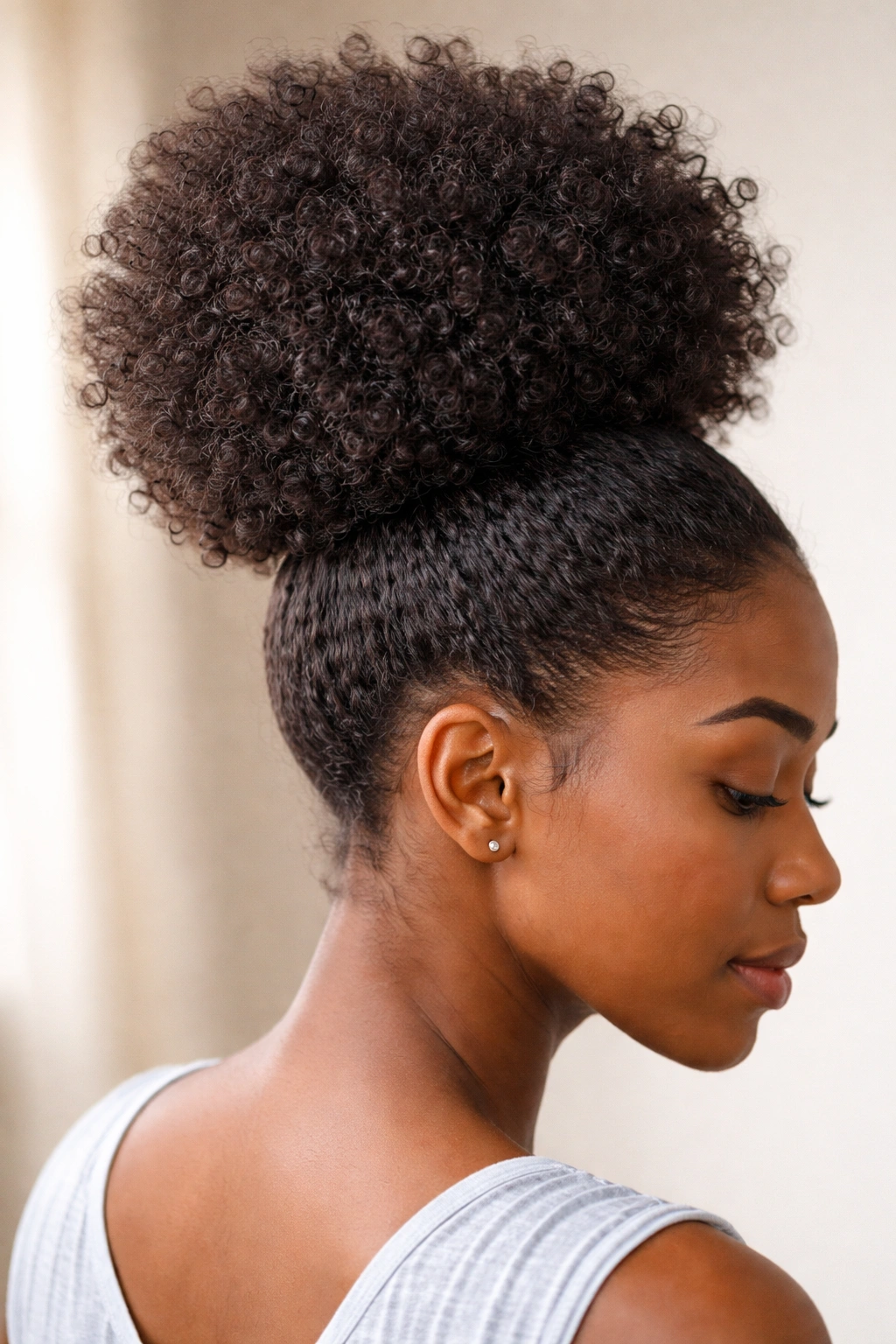
Picture this: you need your hair up, you want it to look casual, and you do not want the whole style screaming “wig.” That is where an afro puff drawstring wig earns its place.
The base hides most of the hardware, while the puff sits high enough to look playful and low-effort. That combination feels believable because a lot of real natural hair gets pulled into puffs, buns, and wraps on busy days. The look is familiar. People recognize it.
How to Keep the Puff Looking Natural
Start with a puff that has medium fullness, not a giant cotton-ball shape. The best ones have enough body to feel plush, but not so much bulk that the base disappears into fantasy. A 4×4 closure or a small, well-covered base usually works better than a heavy frontal if you want the style to stay believable.
Use the drawstring to place the puff where your own head shape makes sense. Too low and it can feel off. Too high and it starts looking theatrical. Right at the crown is usually safest. A wrap of textured hair or a matching band around the base helps hide the join, which is where cheap-looking puffs often fall apart.
- Choose a puff with soft ends, not stiff curls.
- Keep the base matte.
- Match the puff color closely to your own roots.
- Leave a little lift at the front instead of flattening everything down.
The beauty of this style is that it looks like a shortcut, and that is exactly why it works.
5. Side-Part Lace-Front Afro Wig
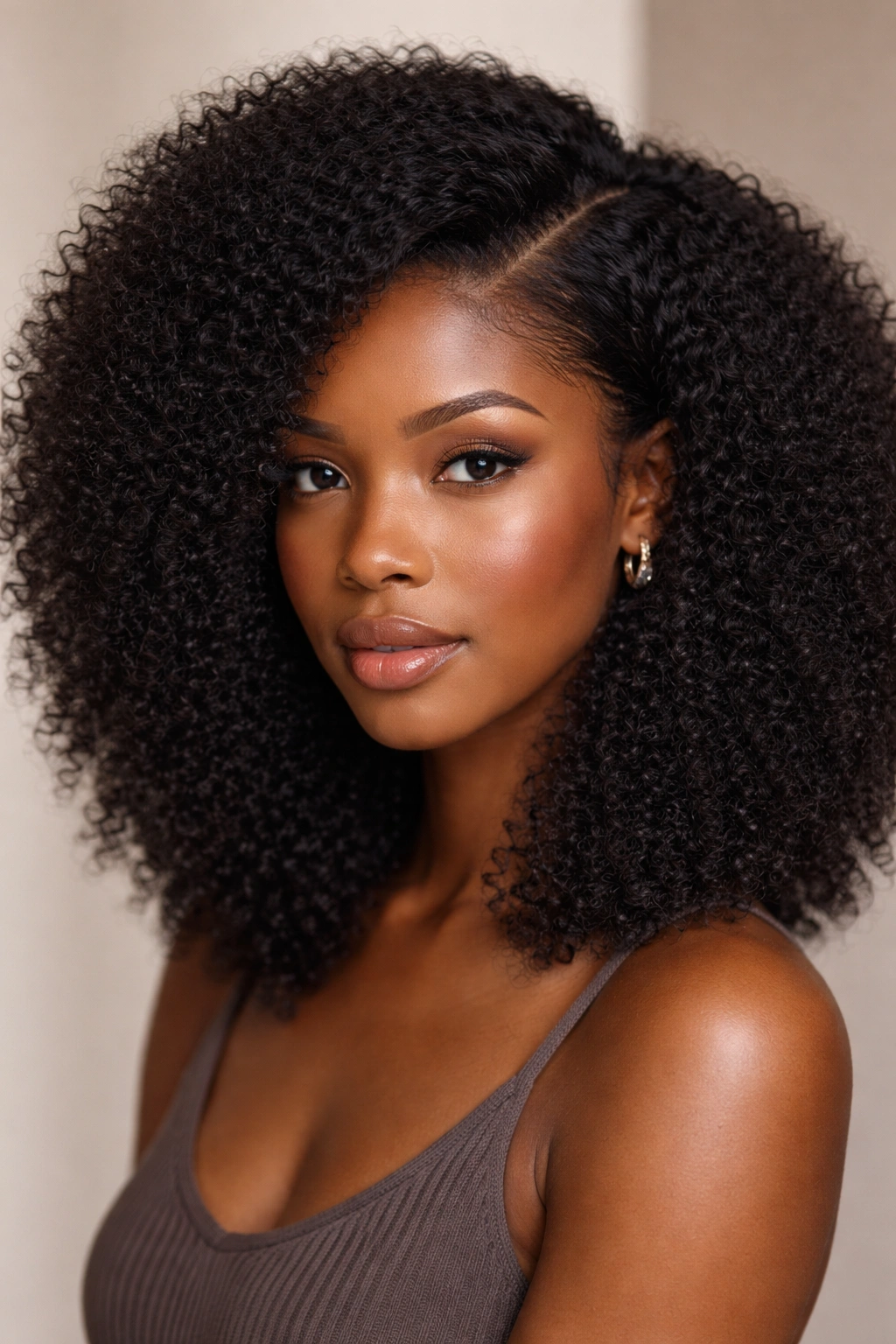
A side part does more for naturalness than most people expect.
Center parts can look clean, but they also expose symmetry fast. A side part breaks that up. It lets the hair fall in a way that feels a little more like real life, where one side always sits a touch fuller, a touch higher, or a touch more tucked behind the ear. The eye reads that imbalance as human.
A good side-part lace-front afro wig usually has enough lace — 13×4 or 5×5 gives you room to work — and a part that is visible without being razor sharp. I’d rather see a soft part line with believable scalp contrast than a deep, dark trench running through the crown. That trench is a dead giveaway.
The front edge matters here. If the lace is too pale, too shiny, or left unblended, the whole illusion falls apart even if the curls are gorgeous. A tinted lace, lightly plucked hairline, and a small amount of lift near the roots will usually do more than heavy baby hair ever will. Heavy baby hair can make a wig look staged. A small, soft edge usually looks better.
This is a good pick if you like wearing one side tucked back or letting the front fall over one eye a little. There’s a reason so many natural styles lean that way. It just looks lived in.
6. Salt-and-Pepper Afro Wig
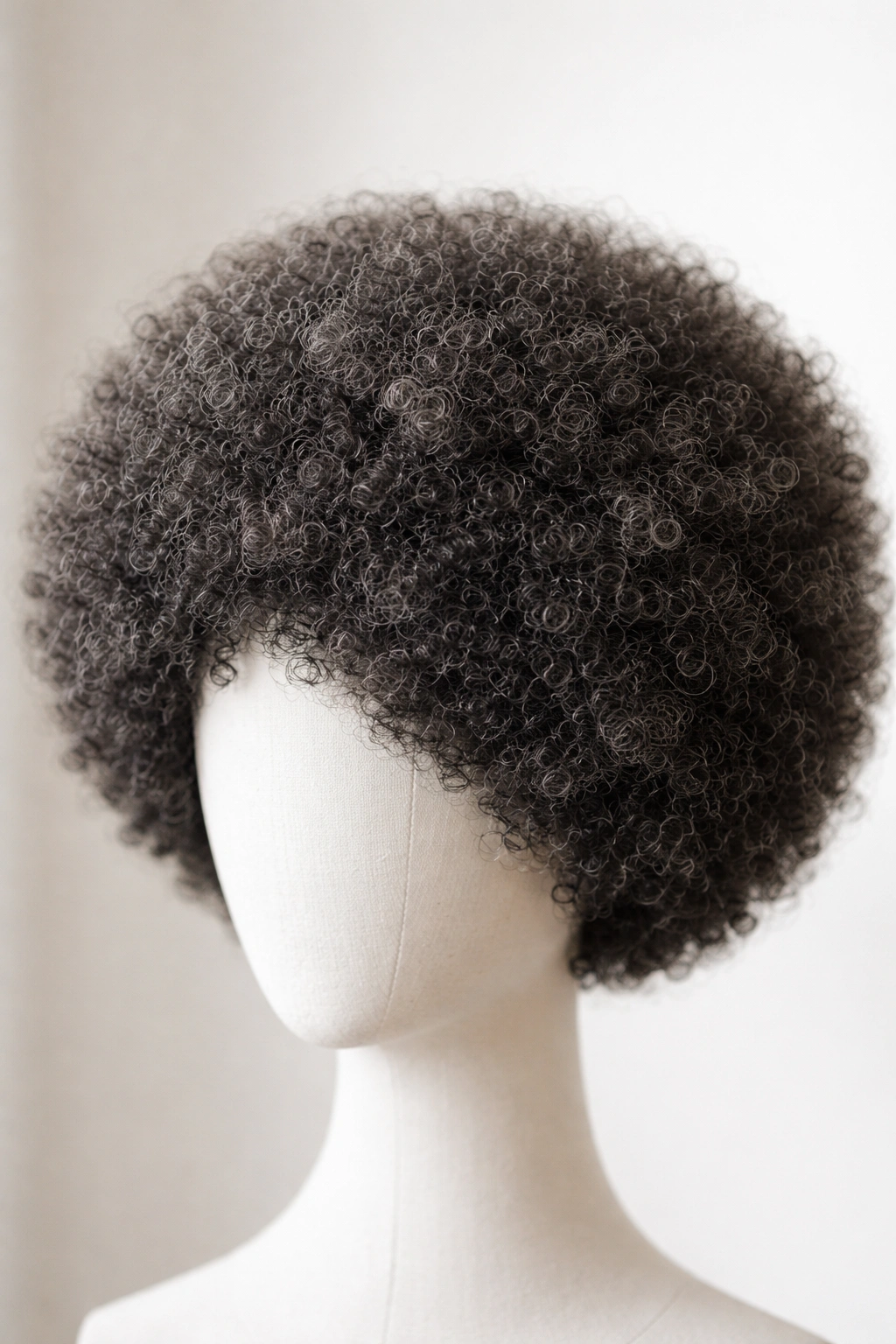
A black wig can be beautiful and still look flat. A salt-and-pepper afro adds a little noise to the surface, and that noise makes the texture feel more real.
Gray strands interrupt the uniform color field, so your eye stops seeing one solid mass and starts seeing hair. That sounds like a small thing. It isn’t. Hair almost never exists in a perfect single tone, especially once it has some age, sun, or movement in it. A mix with about 10% to 30% gray often feels much more believable than an all-gray wig or a pure jet-black one.
What I like about this look is that it gives the style a story without looking theatrical. The gray can sit near the temples, float through the crown, or pepper the ends. It should not be arranged in stripes. Stripes look fake fast. A scattered blend looks like nature did the work.
If you want a mature, polished look, this is one of the strongest options in the whole category. It can also be striking on younger wearers who want something distinctive but not flashy. The key is restraint. Too much silver turns the style into a costume. A little gray in the right places turns it into hair.
If you match the lace well and keep the density moderate, this style is one of the easiest afro wigs that look natural in daylight.
7. Blowout-Texture Afro Wig
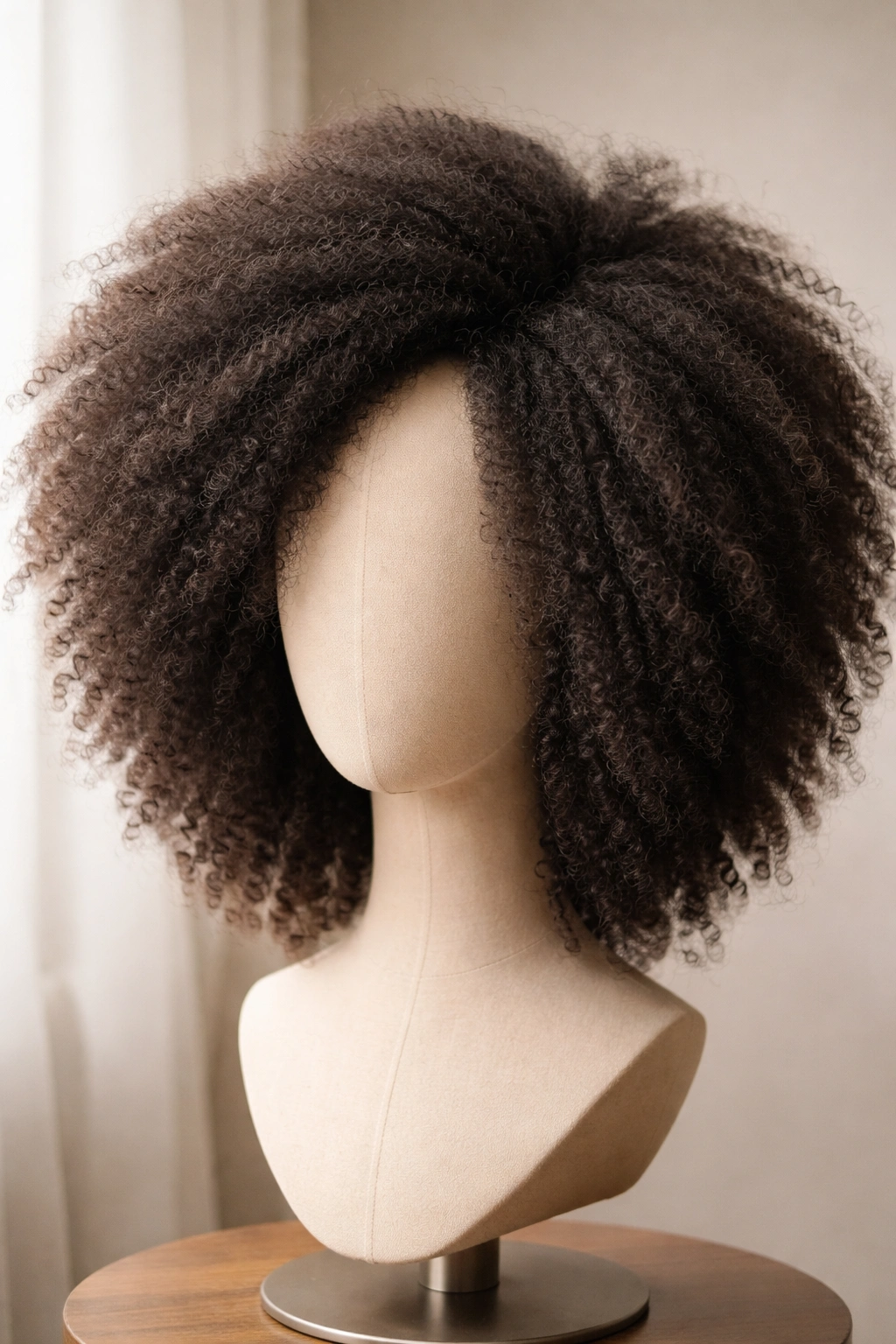
A blowout texture sits in a sweet spot that a lot of people ignore. It is not straight. It is not tightly coiled either. It looks like hair that has been stretched, fluffed, and left with a little grain in it, which is exactly why it reads so naturally.
Why It Works
Natural hair often moves through this texture after a blow-dry, a stretch style, or a careful heat pass. The pattern is familiar to the eye. There’s enough looseness to show length, but enough texture to keep the style from looking slick or flat.
A good blowout wig usually works best at 12 to 20 inches with a density around 130% to 140%. That gives you movement without overload. If the strands are too silky, the whole wig starts drifting toward straight hair with a few kinks in it, and that’s not the same thing at all.
- Look for a soft yaki or stretched-coil finish.
- Keep the crown a little fuller than the ends.
- A small amount of kink at the root makes it more believable.
- Avoid overly polished shine.
This style is especially useful if you want something between a natural afro and a stretched-out everyday look. It can sit beautifully with casual clothes because it does not demand attention. It just fits. And sometimes that is the real goal.
8. Face-Framing Curl Afro Wig
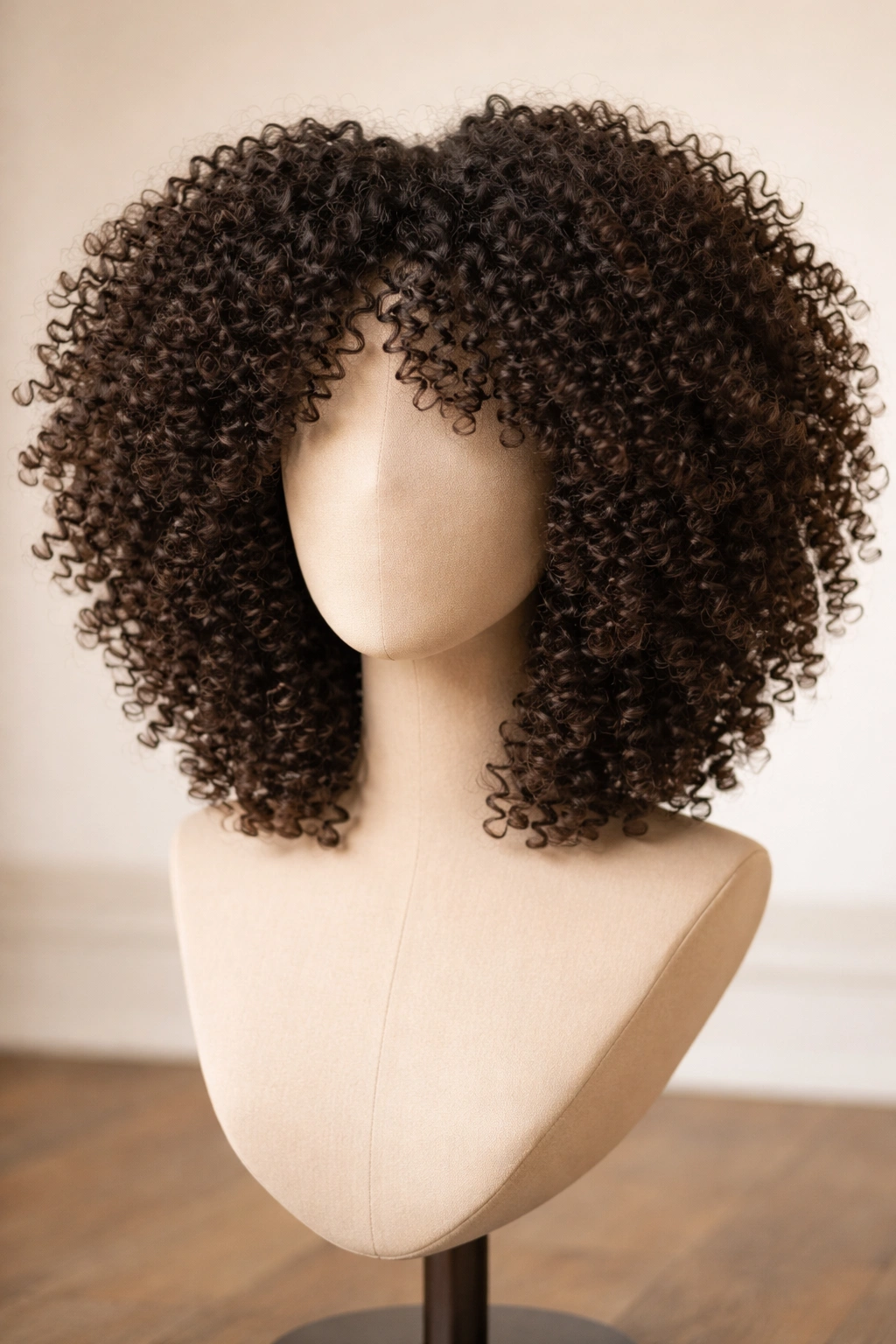
A few shorter pieces around the cheekbone can do more than another four inches of length.
That is why face-framing layers matter so much. They pull the wig closer to the face and stop the whole shape from feeling like it was dropped on top of your head. A good face-frame creates softness at the jaw, a little lift at the temples, and enough movement to keep the texture from looking dense in one block.
The best version usually starts with longer curls or coils in the back and slightly shorter pieces in the front, often about 2 to 3 inches shorter than the crown. That difference is enough to make the style breathe. Too much difference and it turns into a shag. Too little and the face-framing effect disappears.
This is one of the easiest ways to make afro wigs that look natural on camera and in real life. The front pieces break up the outline in a way that feels flattering without looking engineered. If your face is round, these layers help narrow the visual shape a bit. If your face is heart-shaped or oval, they keep the style from looking top-heavy.
I’d choose this when I want the hair to support the face rather than compete with it. That is a small shift, but it changes everything.
9. 360 Lace Afro Wig
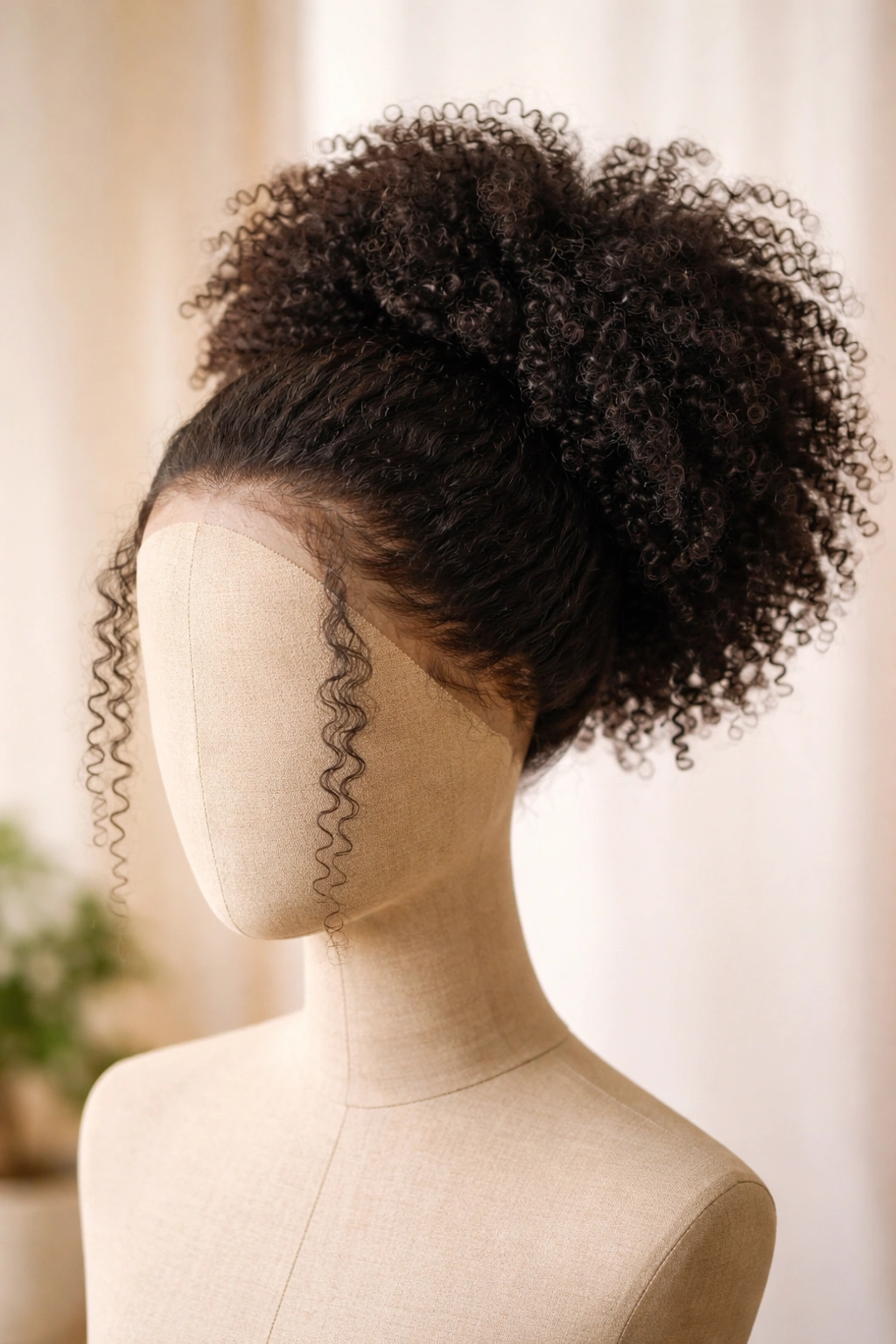
Do you wear your afro pulled back sometimes? That is the real reason to buy a 360 lace wig.
The lace goes around the entire perimeter, which means you can wear high puffs, ponytails, and updo styles without exposing a hard edge at the back. For natural-looking afro wigs, that flexibility matters because real hair does not stay in one position all day. Sometimes it is up. Sometimes it is down. Sometimes one side is tucked, and the other side isn’t.
A 360 lace unit can still look believable, but the density has to be handled with some care. If the perimeter is too thick, the edges can look bulky when you pull the hair back. If the lace is not tinted to match your skin, the whole thing will still look off, no matter how nice the curls are.
How to Keep It Believable
- Keep the perimeter lighter than the crown.
- Match the lace tint to your skin tone before styling.
- Avoid hard, shellacked edges.
- Pull the ponytail base a little higher only when the cap fits snugly.
This wig is not the simplest option, and I would not hand it to someone who wants zero fuss. But if you like changing the silhouette — down one day, up the next — it earns its keep. A style that can shift position without betraying the cap usually feels more like real hair because real hair changes shape all the time.
10. Kinky Straight Afro Wig
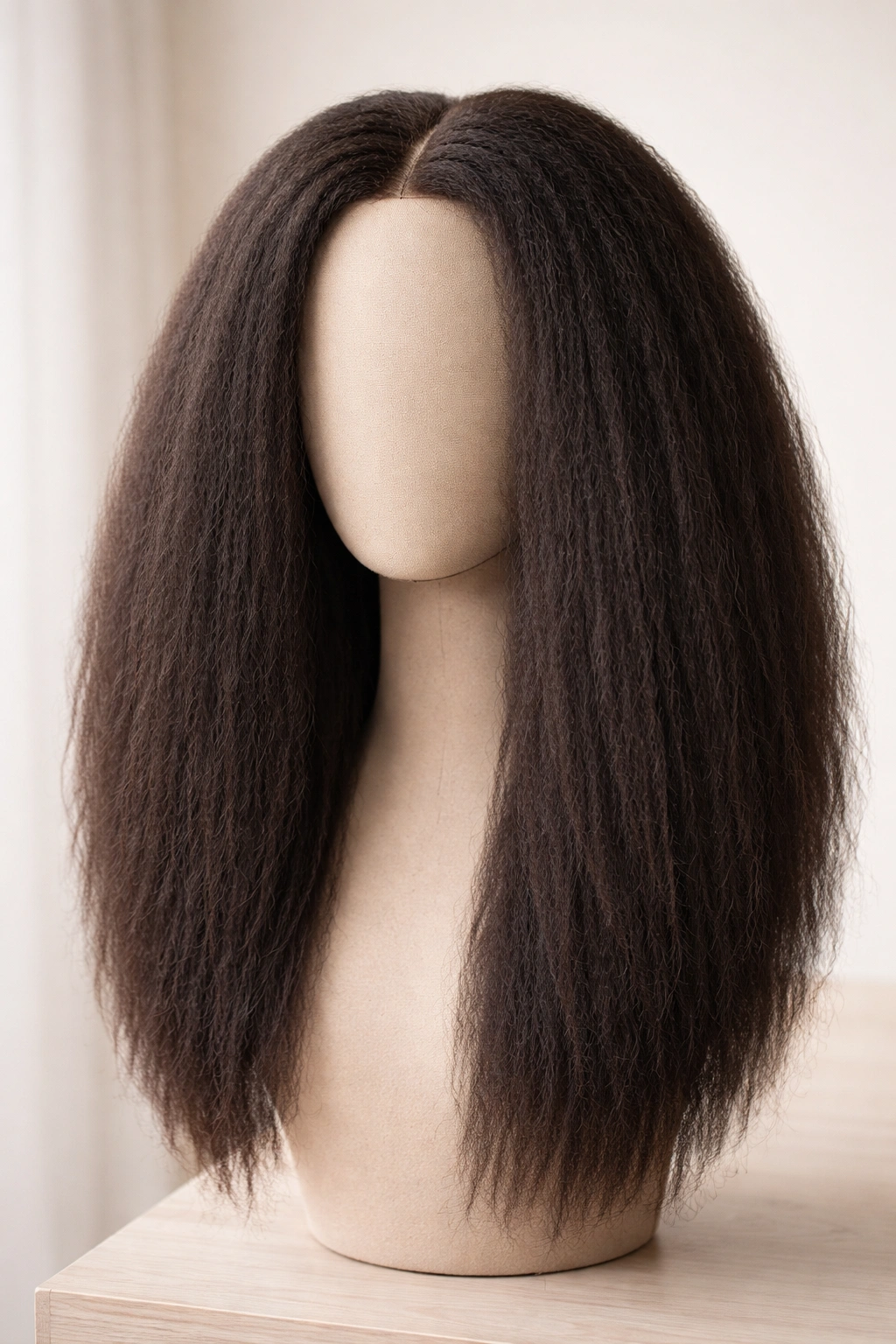
If you like texture but do not want curl definition shouting from every angle, kinky straight is the compromise.
It looks like natural hair that has been stretched, brushed out, or worn in a blowout style long enough to lose some of the coil pattern. The grain is still there. The wig is still textured. But it moves closer to a smooth silhouette, which makes it useful for people who want realism without a full afro shape.
The best kinky straight wigs usually stay away from high shine and heavy density. A middle ground of 130% to 150% density works well because you want body, not bulk. A length around 16 to 24 inches keeps the texture visible while giving you enough weight for a believable fall.
This is the one I’d choose if I wanted something that could pass as heat-stretched natural hair on a normal day. It looks good with a center part, but a slightly off-center part often looks softer. It also sits well under hats and headbands, which is useful if you like switching things up.
A lot of people ignore this texture because it is not as dramatic as a full curl pattern. That is a mistake. Quiet texture often looks the most real.
11. Micro-Coil Mini Afro Wig
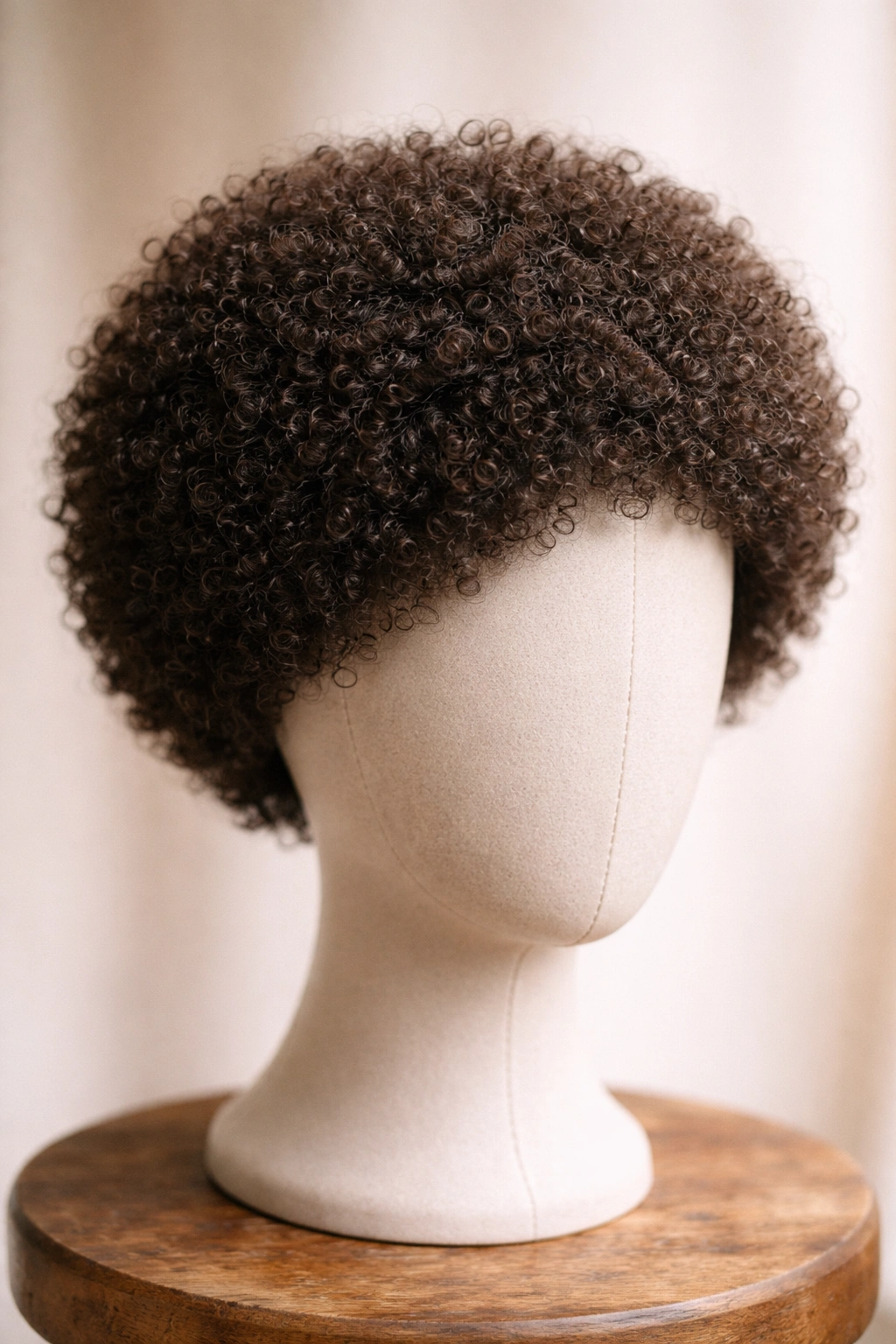
Micro-coils are tiny, dense, and easy to get wrong.
When they’re done well, they look like a tight natural coil pattern that has been cut into a small, rounded shape. When they’re done badly, they start to resemble a toy wig from across the room. The difference usually comes down to variation. Real coils are not all identical, and the best micro-coil wigs respect that.
A short-to-medium cut works best here. Too long, and the style can get heavy. Too uniform, and it gets stiff. A little movement around the crown, a softer edge at the sides, and a texture that shifts slightly from the front to the back usually make the whole thing read as more human. I’d also avoid a cap that pushes the hair too high off the head. The whole point is a compact, believable shape.
This style is a nice choice if you want noticeable texture without the width of a big afro. It frames smaller faces well, but it can also sharpen a broader face shape because the contour stays tight. The look is honest. It says texture first, drama second.
And that honesty matters. A wig does not need to be loud to be interesting.
12. Subtle Highlight Afro Wig
Caramel ribbons beat chunky blonde streaks every time.
That is my bias, and I’m standing by it. Subtle highlights are one of the easiest ways to make afro wigs that look natural because real hair is never one flat color from root to tip. Sun, styling, age, and washing all change the tone a little. A few lighter threads near the crown and around the face can recreate that without turning the whole wig into a color story.
The trick is contrast control. Aim for highlights that sit one to two shades lighter than the base color, not five. Deep brown bases can carry chestnut, copper, honey, or soft caramel beautifully. Jet black can handle soft espresso-brown strands if the placement stays broken up and random. The highlights should feel sprinkled, not painted on in big stripes.
This works especially well on layered curls or blowout textures because the color variation catches the eye as the hair moves. The wig stops looking like one block and starts looking like hair with depth. That is a small shift, but it changes the whole read.
If you want one style that sits near the top of the realism list, I’d put this and the TWA pretty high. The first is about color. The second is about shape. Both do their job quietly, and that is usually the sign you’ve picked well.
