



A razor cut bob can look light, sharp, and expensive in the best sense of the word — or it can turn fuzzy at the ends if the cut ignores texture. On Black hair, that difference matters. Density, shrinkage, curl pattern, and whether your hair has been stretched all change how a razor behaves, which is why a photo alone is never enough.
The best razor cut bob for Black women is not one single shape. It’s a family of shapes. Some look best on silk-pressed hair, some on stretched coils, some on tightly defined curls, and some on relaxed hair that wants a little swing instead of a hard edge. The trick is knowing where the razor helps and where it starts taking too much weight out of the cut.
A good razor bob should move when you turn your head. It should not look thin, scraped, or overworked. That’s the line many stylists walk with textured hair, and the styles below lean into that balance in different ways.
Some are crisp. Some are soft. A few are a little dramatic, because honestly, a bob can handle that.
1. Chin-Length Razor Bob With Feathered Ends
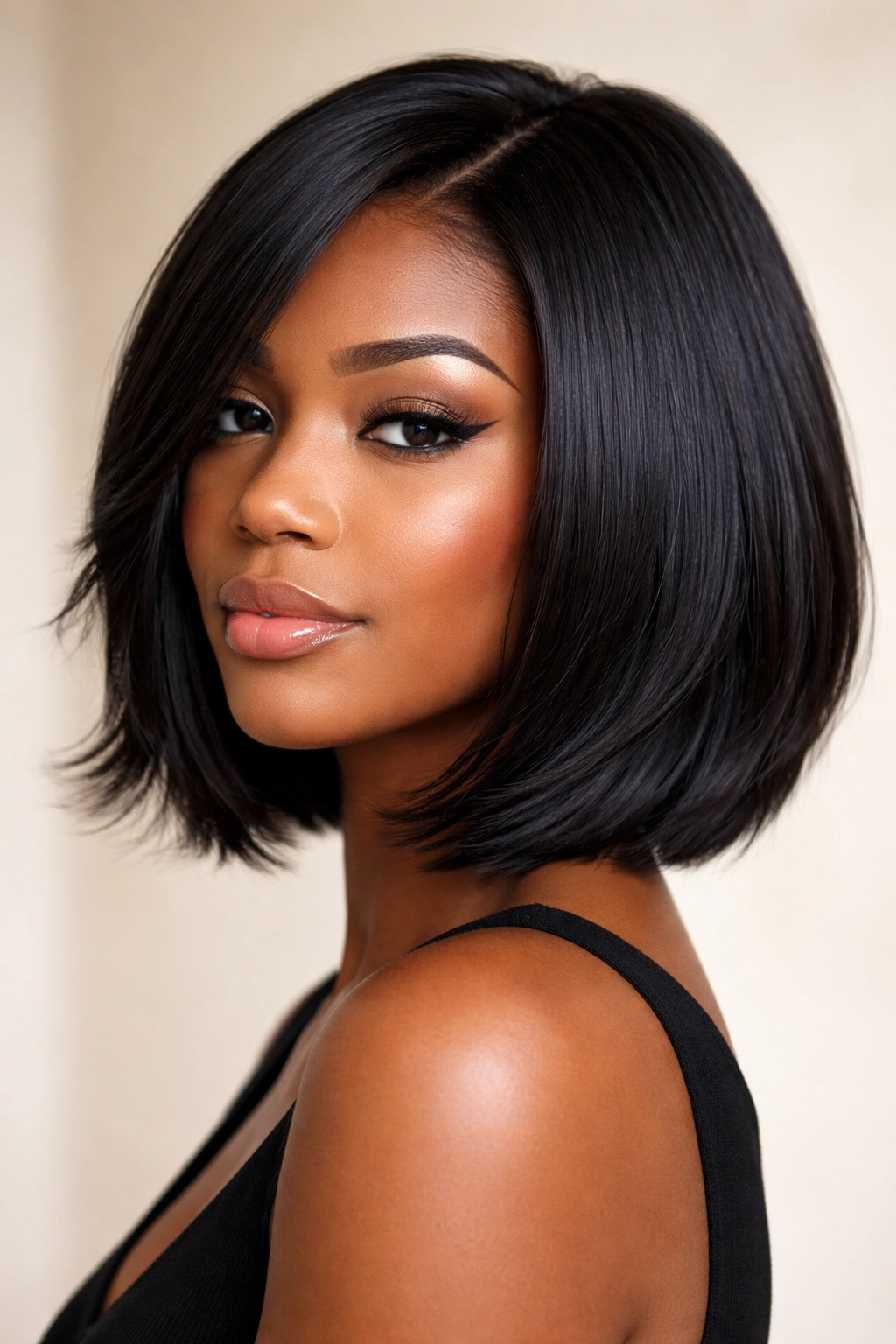
This is the bob I reach for when someone wants movement without losing the shape. Chin length is flattering because it lands right where the face starts to open up, and the razor keeps the edge from feeling heavy or boxy. On Black women with medium to high density hair, that feathered finish can make a short bob look airy instead of bulky.
Why the Feathered Ends Work
A razor takes weight out of the last half-inch or so, which matters more than people think. If the ends are too blunt on thick hair, the whole style can sit like a helmet. Feathering softens that line and lets the hair bend a little when you tuck one side behind your ear or add a side part.
This cut works best when the hair is stretched, silk-pressed, or blown out smooth before the razor touches it. If your natural curl pattern shrinks hard, ask your stylist to cut it a touch longer than chin length while it’s dry or stretched. That keeps the finished bob from bouncing up too high once it settles.
- Best face frame: jawline and oval shapes
- Best texture: medium to dense hair with some stretch
- Styling time: about 10 to 15 minutes if the shape is cut well
- Maintenance: a trim every 6 to 8 weeks keeps the ends neat
Pro tip: ask for the perimeter to stay full. Too much thinning at the bottom is what makes a razor bob look wispy in a bad way.
2. Asymmetrical Razor Cut Bob
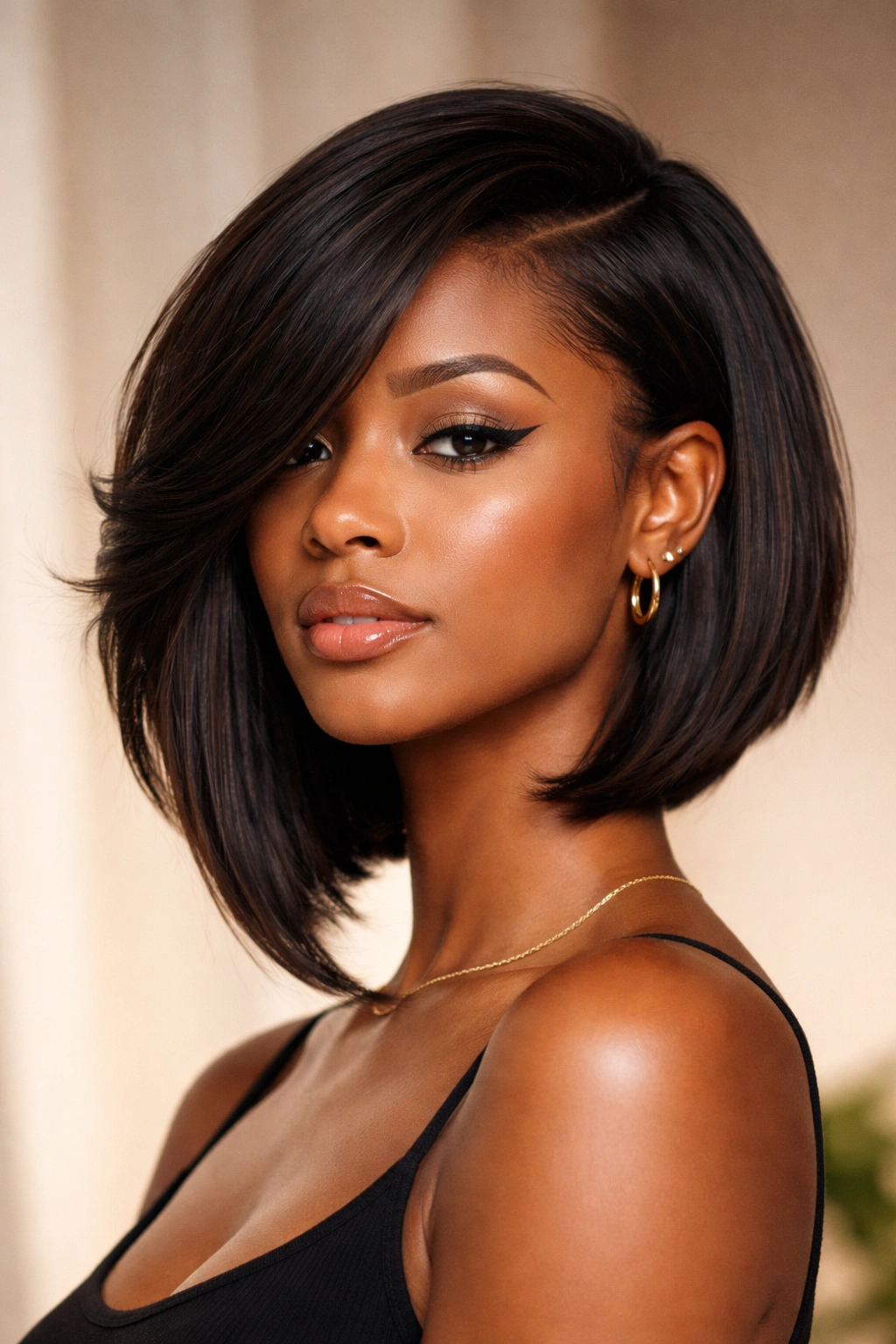
A little imbalance changes everything. An asymmetrical razor cut bob gives you shape, movement, and a bit of attitude without needing a loud color or a stacked back. One side skims the jaw while the other drops closer to the collarbone, which can lengthen the face and make the whole cut look intentional from every angle.
The thing I like about this version is that it does not need to be extreme to work. A difference of just one to three inches between sides is enough. Go much farther than that, and the haircut starts to feel like a costume unless your wardrobe and styling are on board with it.
This is especially nice for Black women who wear a side part often. The longer side can tuck behind the ear, show off an earring, or fall forward in a clean line when the wind catches it. That side-swept motion is where the razor finish earns its keep. The ends don’t look stiff. They look deliberate.
If you want this cut to flatter rather than overwhelm, keep the angle soft and let the texture do some of the work. A hard asymmetry on very thick hair can fight your head shape. A softer one, with the longest side just grazing the collarbone, gives you drama without the daily fuss.
3. Stacked Razor Bob With Built-In Lift
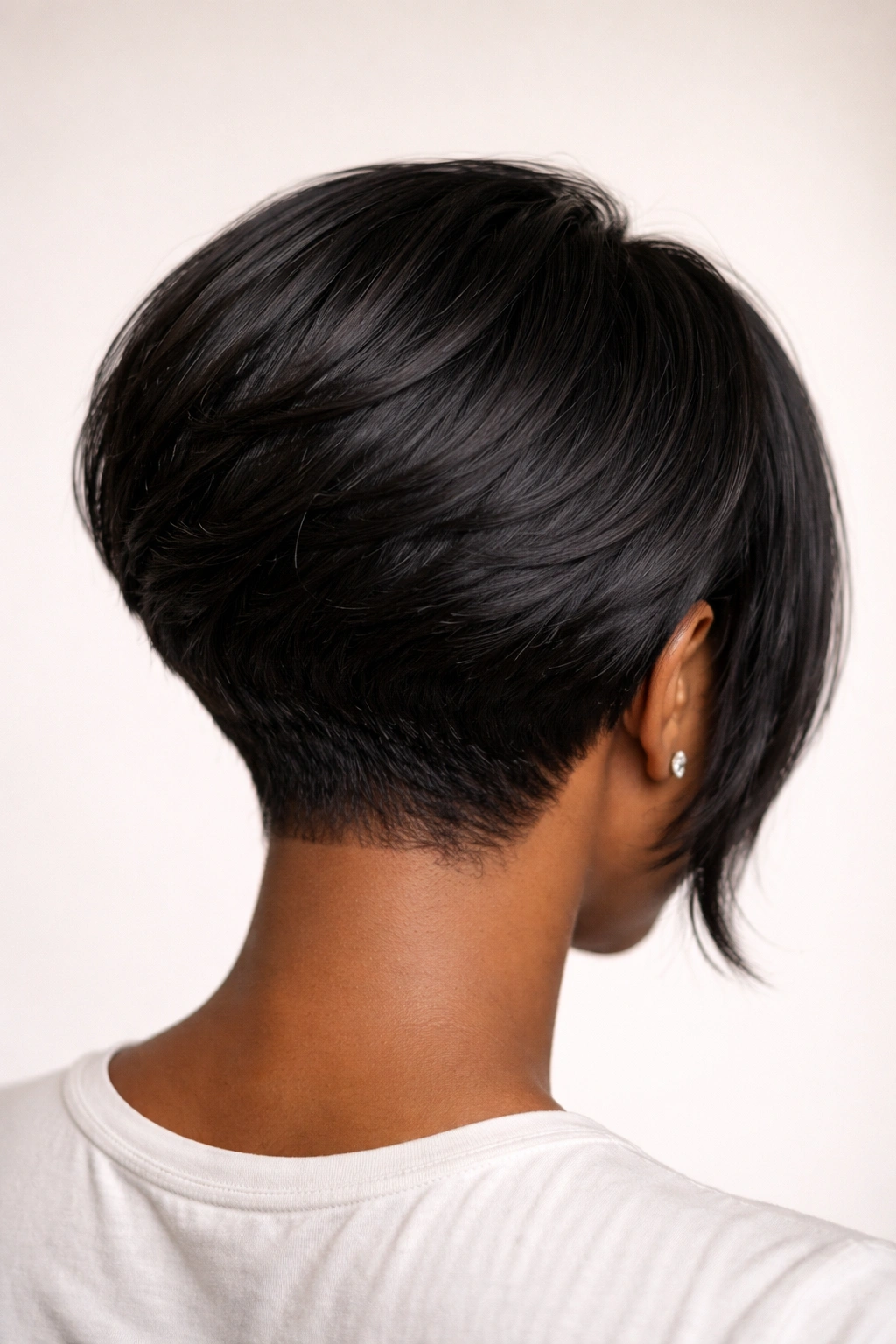
Why does the back look so full even when the hair feels light? Because the stack does the heavy lifting. A stacked razor bob builds shape through the nape, then uses shorter internal layers to create that rounded lift in the back. On dense Black hair, that can be a gift.
How to Ask for It
The words matter here. Ask your stylist for a graduated back, not a choppy one. You want clean stacking at the nape, not random short pieces that puff out in the wrong places. The razor can soften the interior so the bob still moves, but the line at the bottom should stay controlled.
- Keep the nape snug and tidy
- Leave the front longer by at least 1 inch
- Ask for soft internal removal, not aggressive thinning
- Cut it with your hair in the state you usually wear it
That last point matters more than people admit. If you wear your hair blown out, do not let someone cut it as if it will always be in a shrunken coil state. And if you usually wear curls, the opposite is true.
The stacked bob looks especially good when you want the back to hold its shape from day one to day six. It has a tidy, sculpted feel that works with hoop earrings, high necklines, and neat edges. Clean. A little sharp. No fluff.
4. Side-Part Razor Cut Bob With Face-Framing Pieces
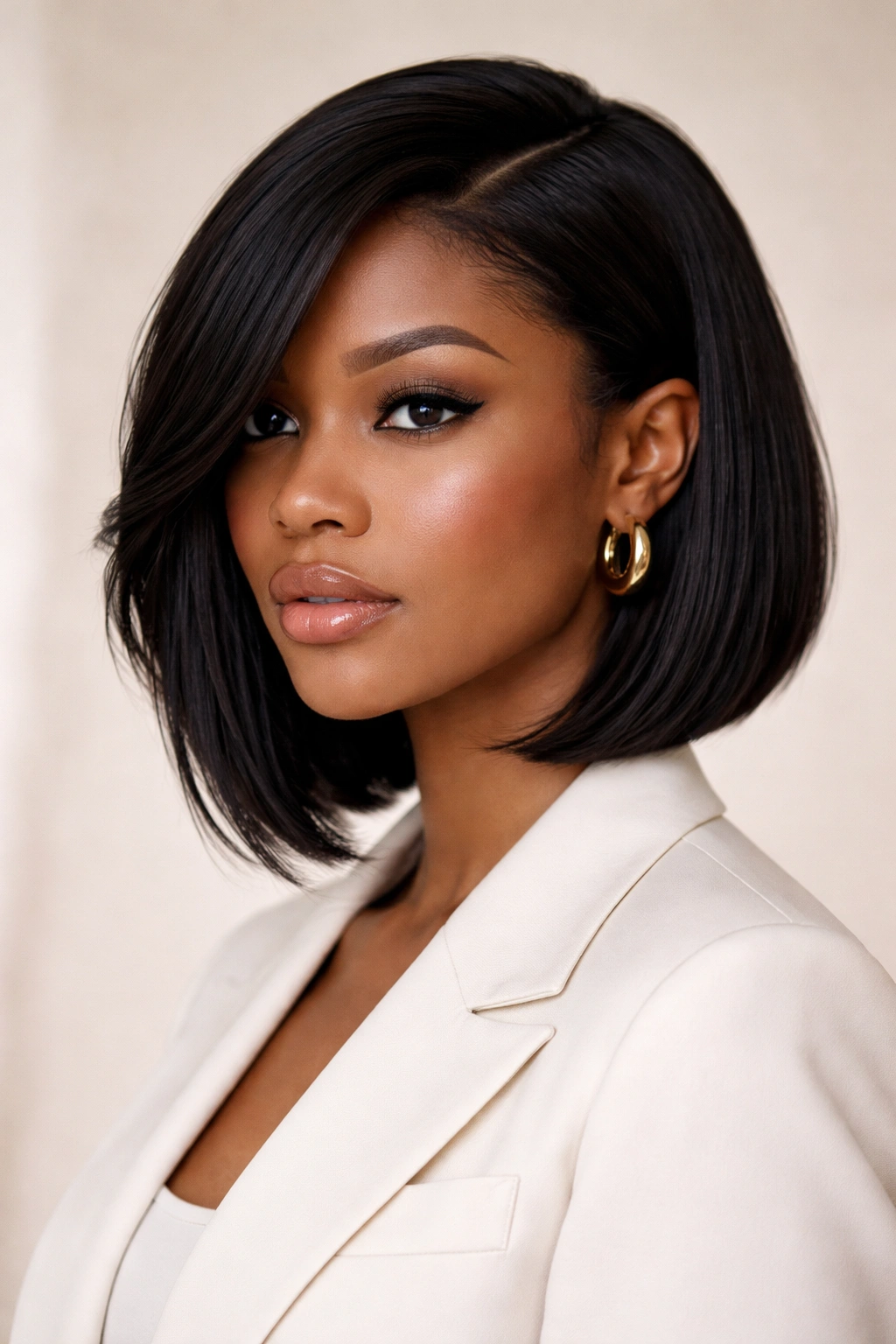
You know that feeling when a haircut needs to do something for the forehead, the cheeks, and the jaw all at once? This is the one. A deep side-part razor cut bob gives the face a diagonal line, and that diagonal is doing a lot of quiet work. It draws the eye across the face instead of stopping it.
The face-framing pieces matter more than the part itself. If the front pieces hit around the cheekbone or just below it, they soften the look and keep the bob from feeling too severe. On Black women with fuller cheeks or a broader forehead, that little drop in the front can make the cut look balanced without hiding the face.
What to Watch For
- Keep the part deep, but not so deep that the hair starts collapsing flat
- Let the front pieces land near the cheekbone or jaw
- Ask for the ends to be softened, not shredded
- Use a light wrap or banded set at night if you want the part to stay in place
This cut is one of those styles that looks polished even when the rest of your routine is simple. A good edge-up, a little shine spray, and a clean side part are enough. The razor just keeps the front from looking too blunt.
I especially like this shape on women who wear structured clothes or strong earrings. The haircut holds its own.
5. Curly Razor Bob for Natural Texture
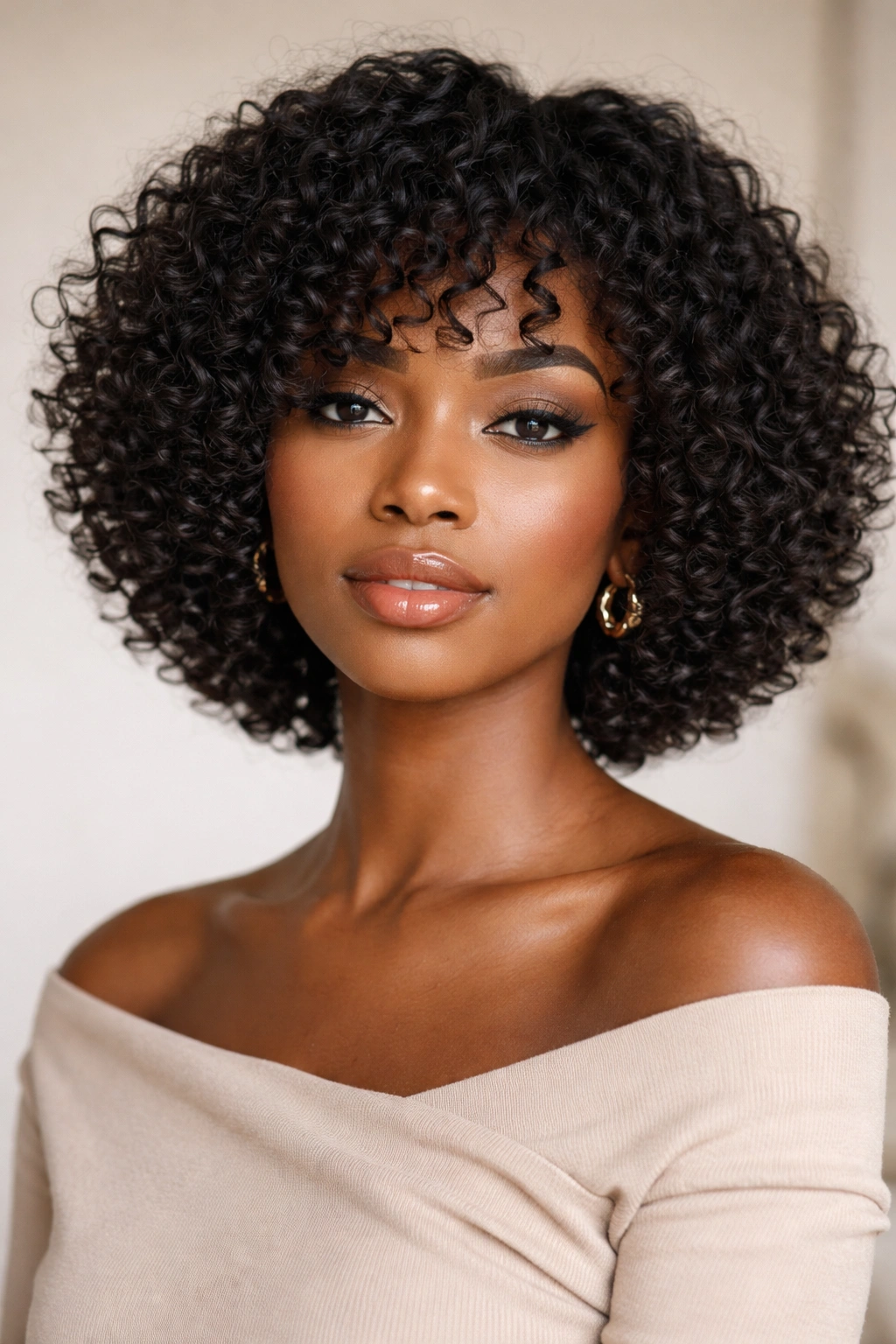
A curly razor bob is one of those styles that can look soft and expensive when it’s done right, and a little chaotic when it isn’t. That is why the stylist matters so much. On natural hair, the razor should be used with care, usually on stretched or well-defined curls, so the shape stays round and the ends do not fray out.
Shrinkage changes everything. A bob that lands at the chin when wet may sit at the cheekbones once it dries. That is not a problem if you expect it. It becomes a problem when the cut was planned as if the hair were straight. If you wear your curls every day, ask for the shape to be cut with that shrinkage in mind. Usually that means a slightly longer wet length than you think you need.
The best curly razor bob has a rounded silhouette, not a triangle. The top should not look flat, and the sides should not balloon out like a pyramid. You want the curl clumps to stay defined while the outline feels soft. That balance is a little tricky, which is why some stylists use the razor only on the outermost ends and keep the interior shaped with shears.
One honest note: if your ends are fragile, split, or super dry, a razor may be too much. In that case, a scissor-cut bob with gentle layering can look cleaner and last longer.
6. Sleek Razor Cut Bob on a Silk Press
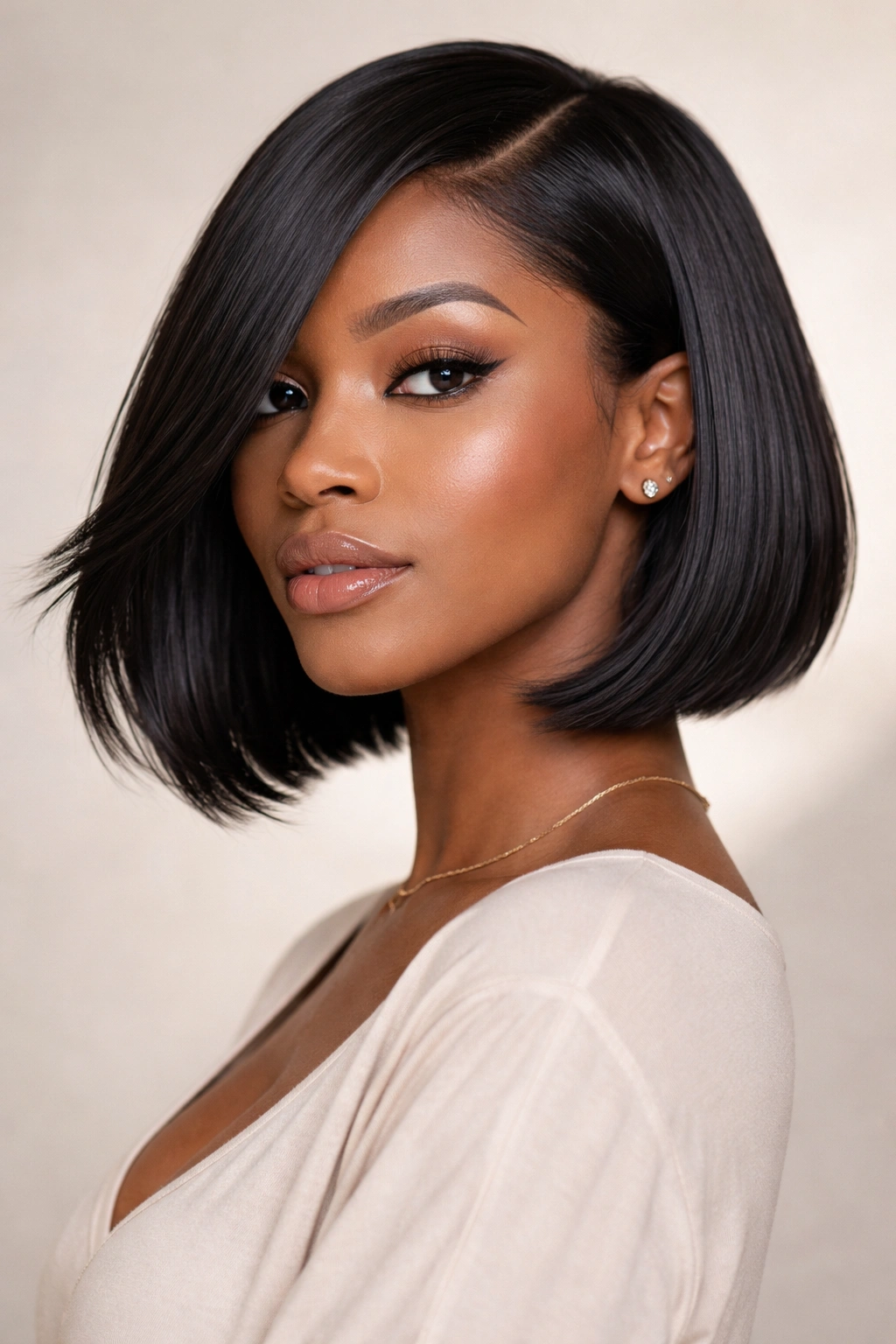
Unlike a blunt bob, this version has a little swing. The razor softens the ends just enough so the hair moves when you turn your head, but the silhouette still reads sleek and polished. For Black women who wear silk presses often, that can be the sweet spot between sharp and soft.
The big advantage here is movement. A fully blunt press can look heavy, especially on dense hair. A razor cut reduces that shelf-like feeling at the bottom without turning the bob thin. The trick is to keep the perimeter controlled and let the razor work mostly inside the shape, where it removes bulk without wrecking the line.
This style pairs well with a side part or a clean middle part. It also grows out neatly, which matters if you do not want your bob to look messy after two weeks. Heat protectant is non-negotiable, and so is wrapping the hair at night with a silk or satin scarf. If you skip that, the ends get rough fast and the whole point of the cut disappears.
If you want the cleanest result, ask for a light razor finish only on the last inch or so. That keeps the bob crisp enough for work, events, and everyday wear without looking stiff.
7. Tapered Nape Razor Bob With Sharp Neckline
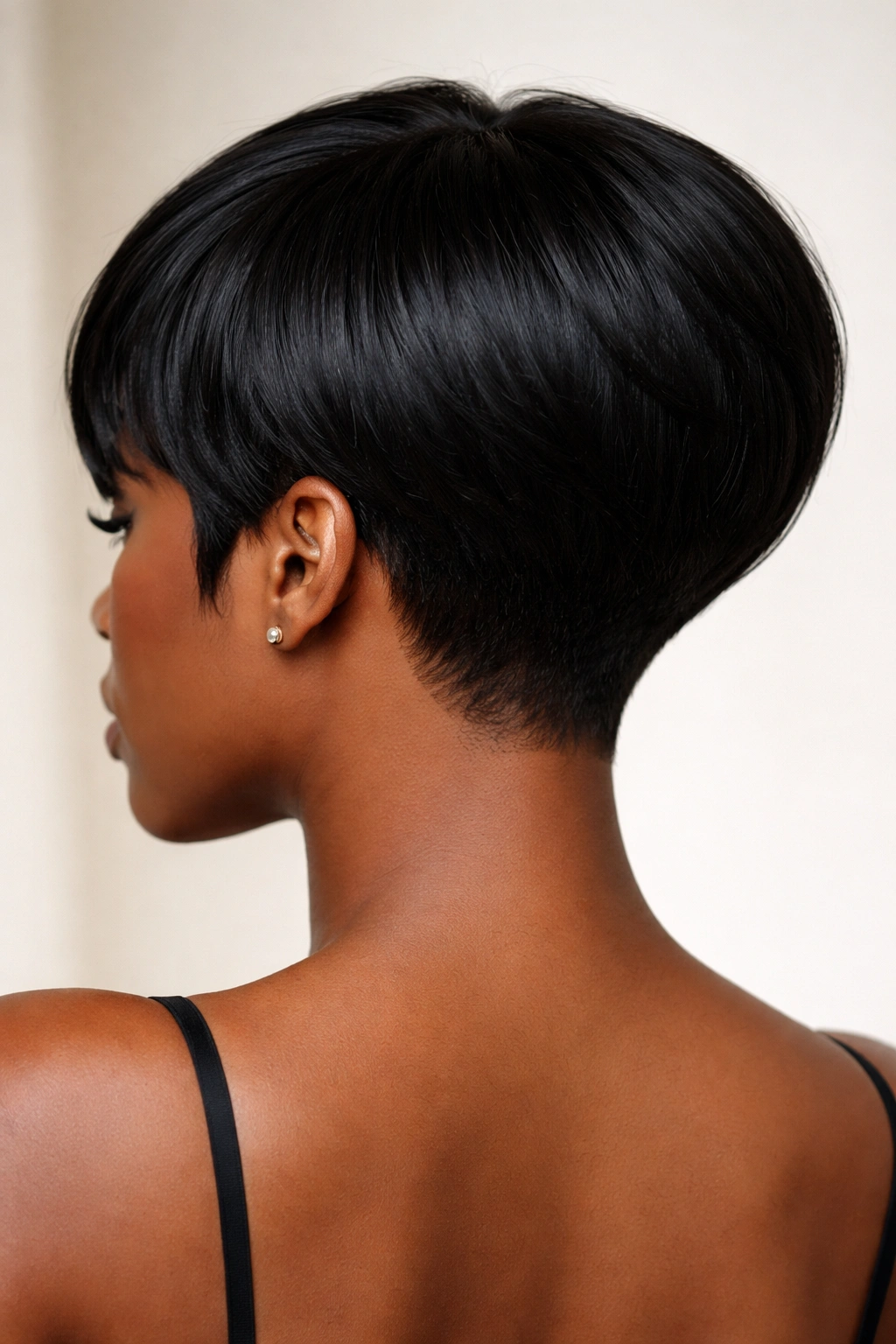
This is the cleanest bob in the bunch. A tapered nape razor bob keeps the back tight and close to the neck, then lets the top and sides breathe a little more. The shape feels neat from the side and sharp from the back, which is why it looks so good with earrings, collars, and tucked jackets.
What Makes the Nape Look Clean
The neckline has to be cut with real intention. If the nape is too soft, the entire bob loses its edge. If it’s too short and too square, the haircut can look severe. The sweet spot sits in the middle: snug at the back, smooth into the curve of the head, with a gentle taper that lifts into the crown.
A razor helps here because it softens the transition from short to long. That means the back does not look chopped, even though it is shorter than the sides. On thicker hair, this is especially useful because a straight scissor line at the nape can look bulky fast.
- Best for people who like a crisp back view
- Works well with natural hair that has been stretched
- Needs edge cleanup every 2 to 3 weeks if you want the neckline sharp
- Looks best when the crown is not over-thinned
This is one of those styles that rewards a good stylist and punishes a careless one. If the back is off, you’ll see it every time you look in the mirror.
8. Razored Bob With Full Bangs
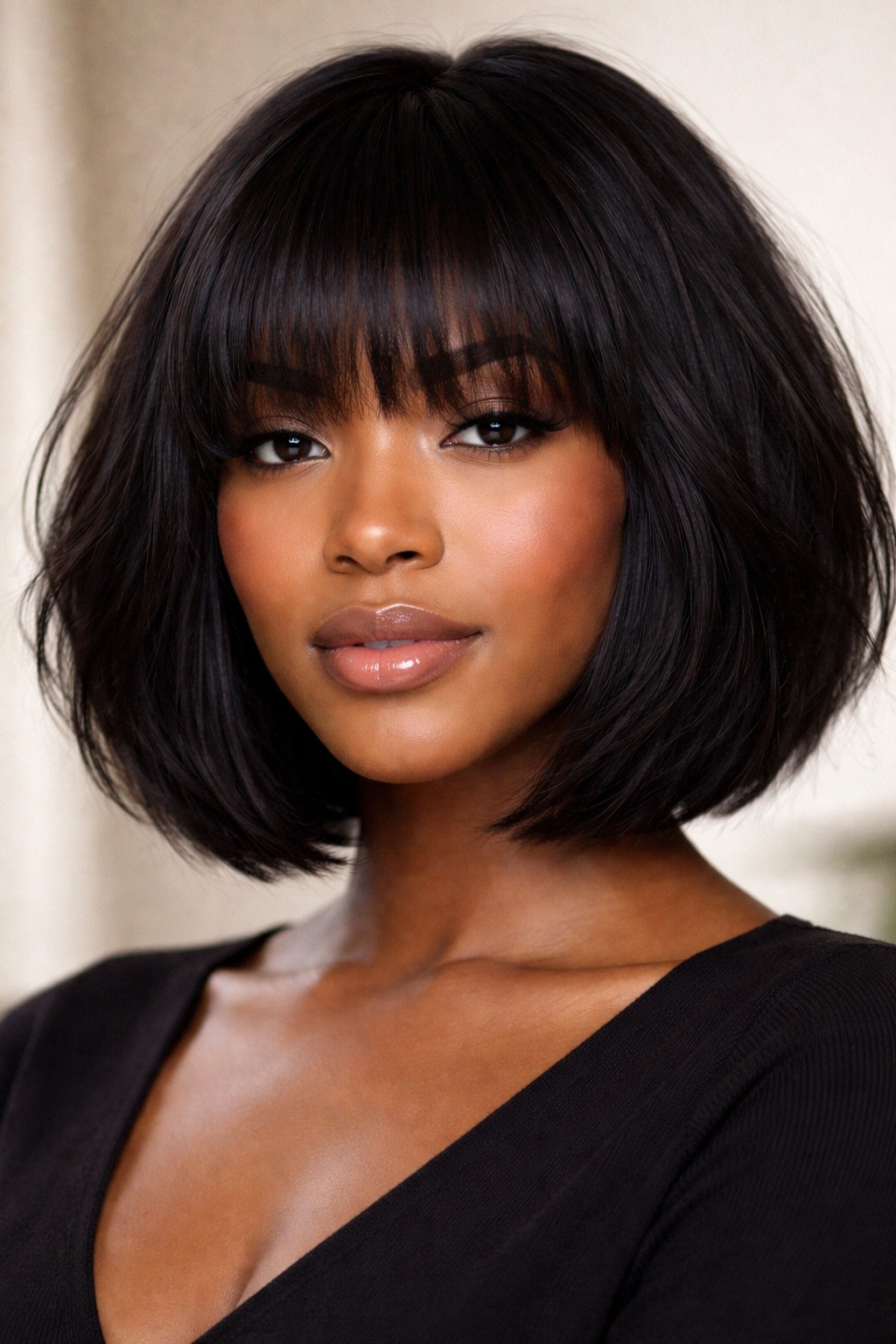
Can bangs and a razor cut bob work on textured hair? Absolutely. They just need to respect shrinkage and density. A full bang can make the bob feel fashion-forward instead of ordinary, and the razor helps the fringe blend into the rest of the cut instead of sitting there like a separate piece.
The biggest mistake is cutting the bangs too short on hair that springs up. On Black women with coils or strong bends in the pattern, bangs often need to be left longer than expected so they can settle into place after drying. If you want them to graze the brows, the cut may need to land at the bridge of the nose or even lower when wet.
How to Wear the Fringe
A full fringe can be blunt, but it does not need to be heavy. A light razor finish at the ends keeps the bangs from looking blocky. From there, you can wear them straight across, sweep them slightly to one side, or let them curve with the texture.
- Keep the fringe a little longer than you think
- Dry it in the direction you want it to sit
- Use a small round brush or brush-dryer for smoother movement
- Avoid piling on too much product near the roots
I like this cut on women who want the face to feel framed without relying on a side part. It has presence. It also makes glasses, brows, and cheekbones stand out in a way that feels direct, not fussy.
9. Flipped-End Razor Bob
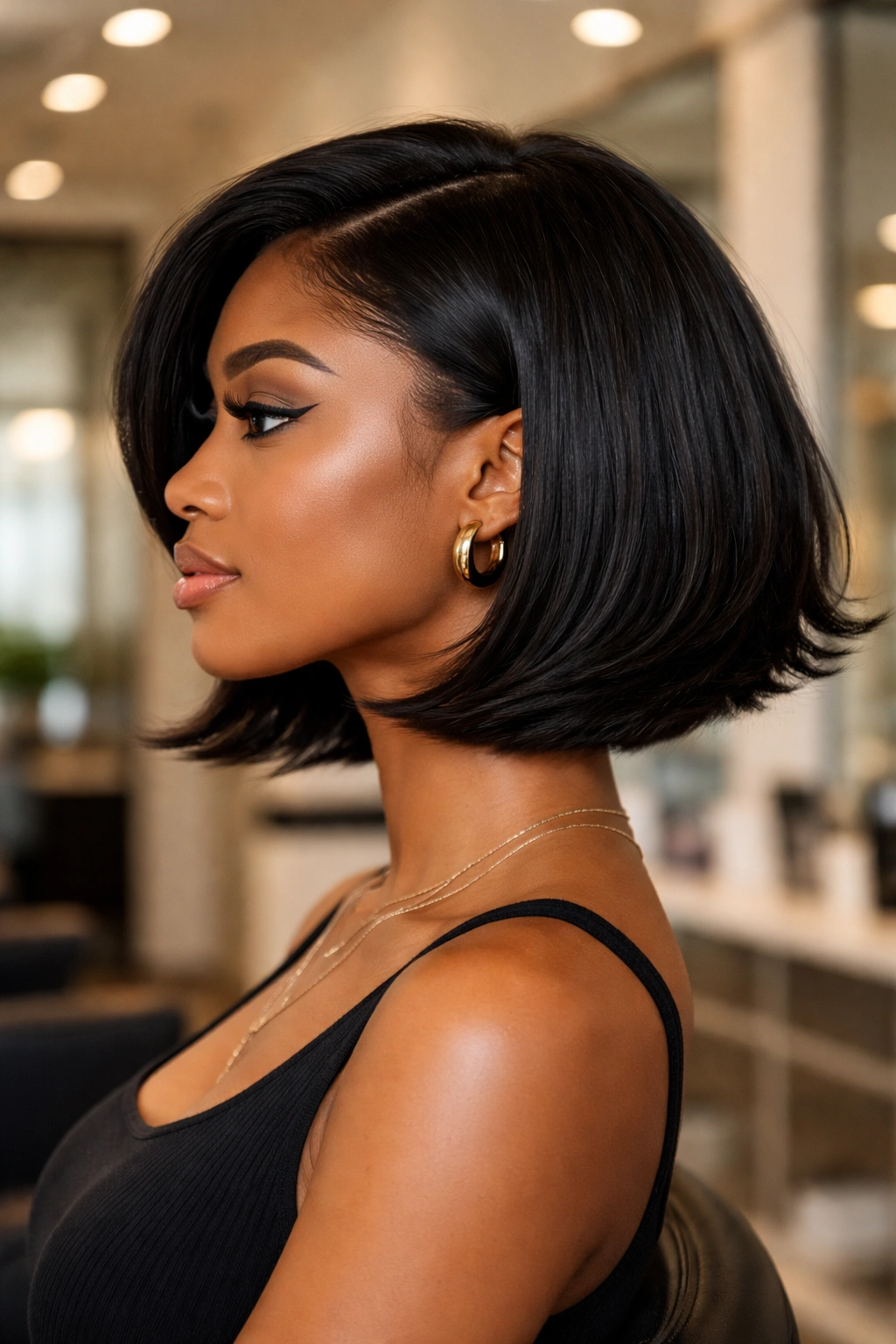
Some bobs need a little attitude at the ends. A flipped-end razor bob gives you that retro kick without turning the whole haircut into a throwback costume. The ends turn slightly outward, which opens up the neck and adds motion to an otherwise clean shape.
This works well on silk-pressed hair, relaxed hair, or blown-out natural hair that holds a set. The razor helps the ends flip instead of sitting flat and heavy. That matters more than it sounds like it should, because a blunt bob can feel almost too neat when the rest of your look has some energy.
The flip looks best when it’s subtle. A soft outward bend is chic. A giant curl at each side can get silly fast. If your hair is dense, keep the flip at the final inch or so of the hair and let the rest of the bob stay straight. That way the shape stays modern.
Key Details to Keep in Mind
- Use a round brush or a 1.25-inch curling iron for the bend
- Flip only the ends, not the whole shaft
- Part the hair off-center if you want a more relaxed result
- Keep the perimeter clean so the flip does not look messy
This is one of the easiest ways to give a bob personality without changing the cut itself.
10. Graduated Razor Lob for Longer Length
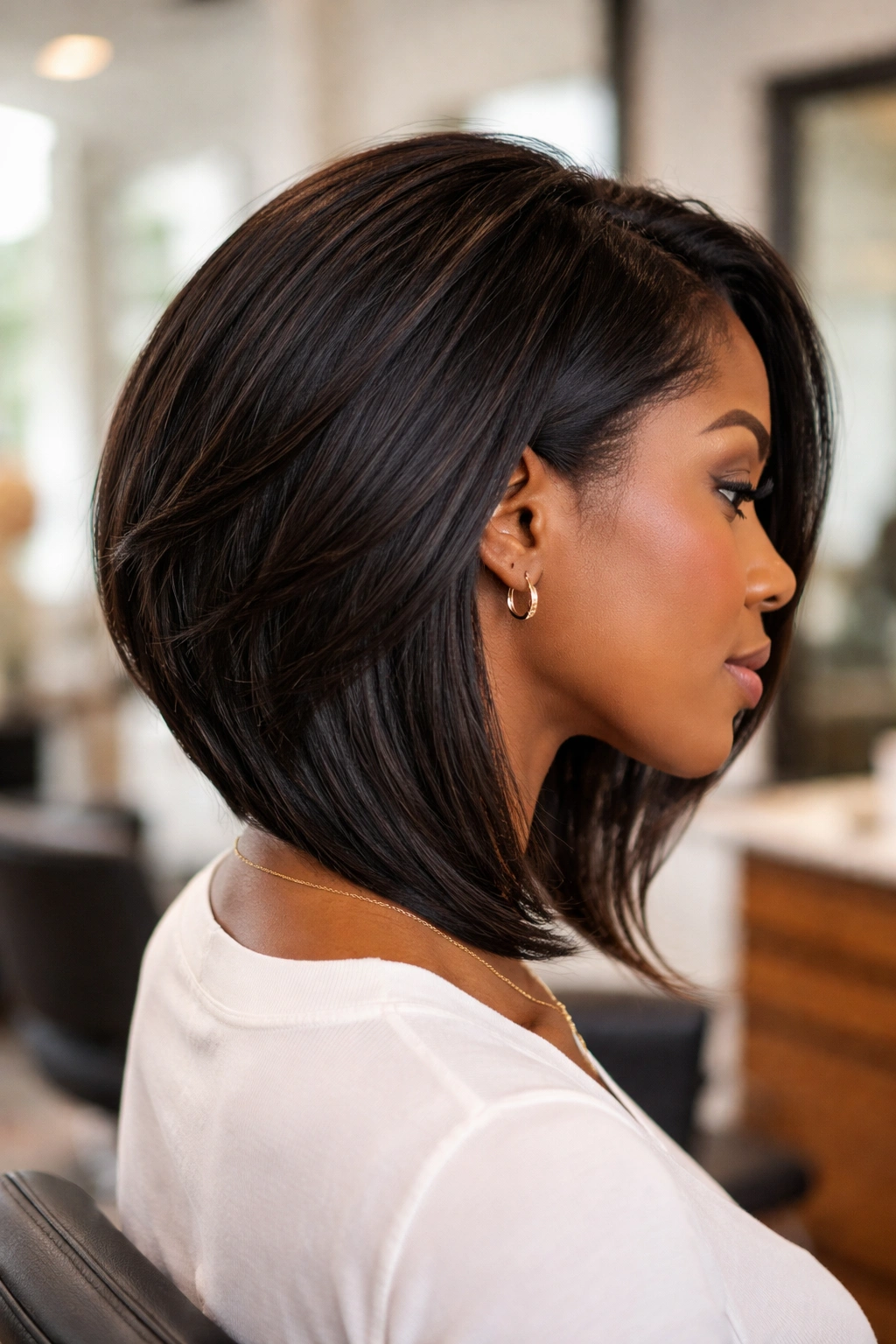
A graduated razor lob is the choice for the woman who wants the bob idea without giving up too much length. It sits closer to the collarbone, keeps the back a little shorter, and lets the front fall longer. That longer shape is forgiving, which is why so many people love it when they’re not ready for a chin-length cut.
The graduation in the back keeps the hair from looking flat. The razor finish keeps the ends from looking blunt and heavy. Put those together, and you get a style that moves easily but still feels put together. On Black women with dense hair, that weight removal matters because a long bob can otherwise sit like a curtain.
What I like most about a lob is how it behaves when you wear it tucked, half-tucked, or loose. It looks intentional with a middle part, but it also works with a deep side part if you want a little softness around the face. And if you’re growing out a shorter bob, this is the shape that makes the in-between stage look planned instead of awkward.
A graduated lob also gives you room to switch between blown-out texture and curlier styling. That flexibility is the point. Not every bob has to feel strict.
11. Razor Cut Bob With Color-Blocked Highlights
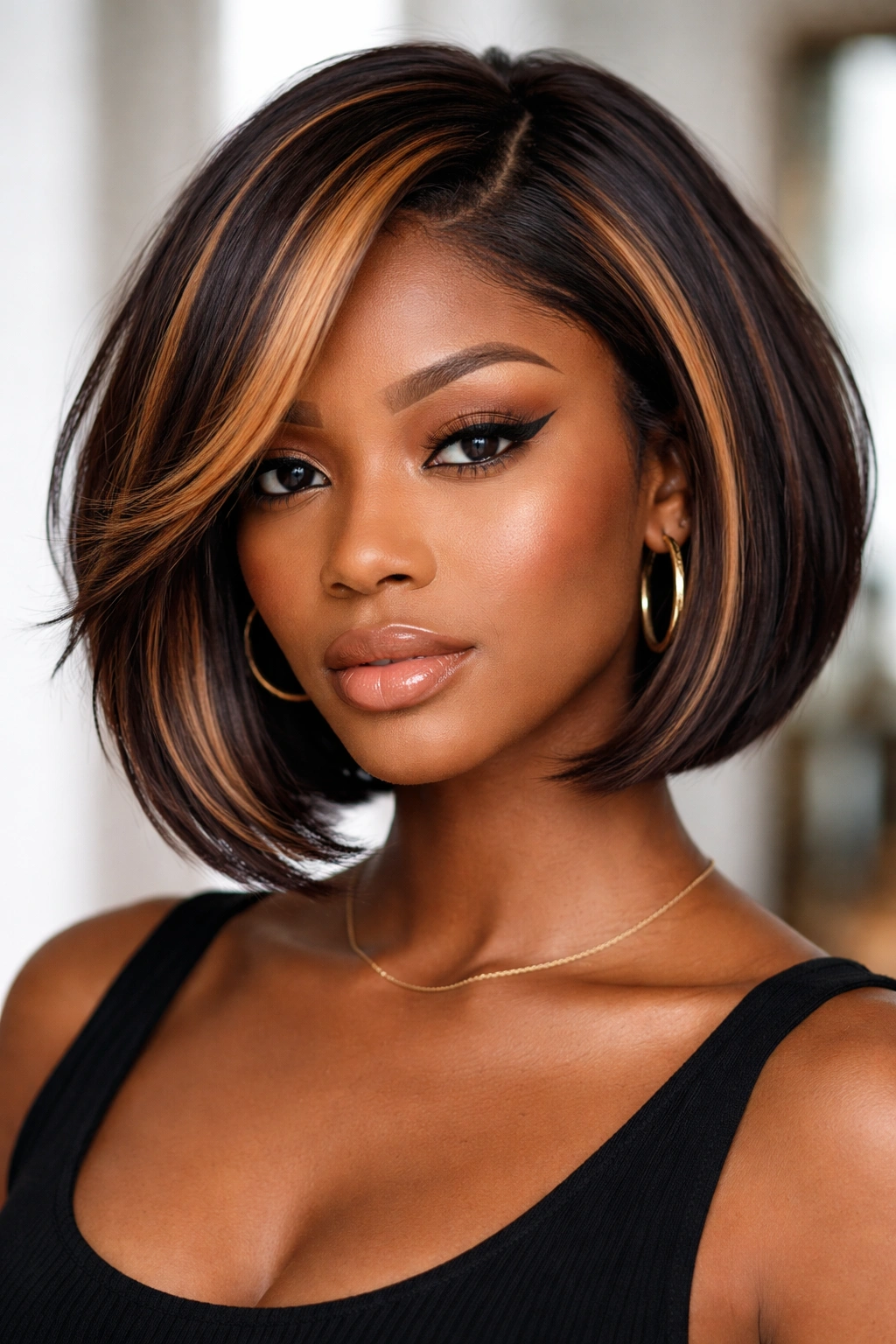
Color does half the work here. A razor cut bob with color-blocked highlights gives the haircut depth, especially when the light pieces sit along the front panels, crown, or just under the top layer. The razor softens the edges of those highlighted sections so the color blends into the cut instead of looking pasted on.
Warm tones tend to work beautifully on deeper hair because they catch the shape without fighting it. Think honey blonde, copper, auburn, caramel, or a deep burgundy if you want something richer. The haircut itself matters just as much as the color placement, though. If the bob is too blunt and the color too chunky, the whole thing can look stiff. A little razoring around the ends keeps it moving.
For Black women, the best version of this style usually puts the brightness near the face and crown, not only at the bottom. That lifts the haircut visually and keeps the bob from feeling heavy. It also helps the shape show up from the front, which is where most people see it first anyway.
If you want a stronger contrast, keep the base dark and place the lighter pieces in clean ribbons. If you want something softer, ask for blended panels with a few brighter spots around the cheekbone. Either way, the razor finish keeps the transition smooth.
12. Blunt-Looking Razor Bob That Still Moves
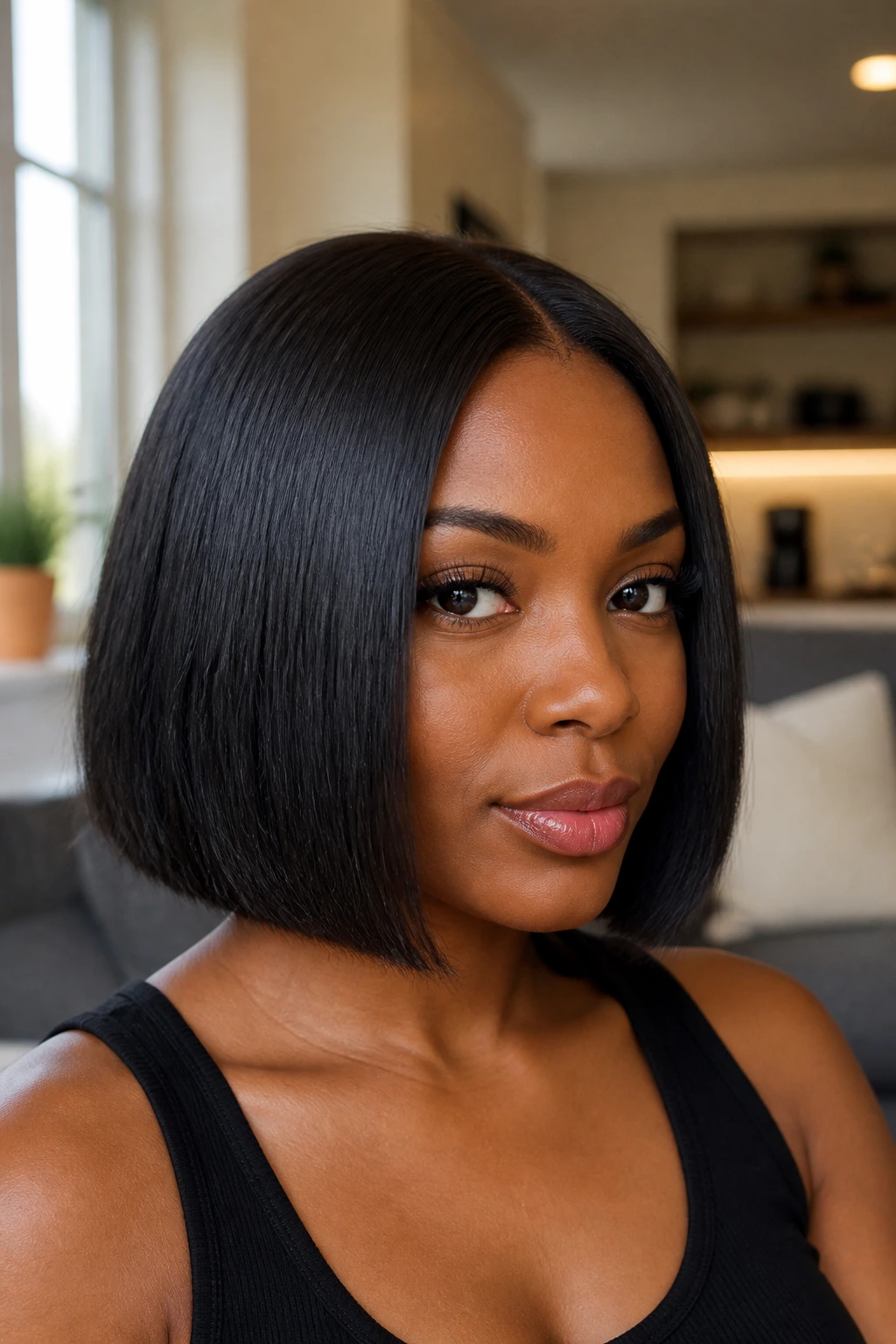
A blunt-looking razor bob is for the woman who wants polish but hates a hard edge. From a distance, it reads clean and sharp. Up close, you see the softness in the ends and the way the cut shifts instead of sitting like a block. That little contradiction is what makes it good.
Compared with a classic blunt bob, this version has more give. The outline stays straight enough to look intentional, but the internal razoring removes just enough bulk to keep the hair from puffing out. On Black hair, that matters a lot when the density is high or the ends need a little relief. You get the precision of a bob without the stiffness.
This shape is especially nice if you wear your hair pressed, relaxed, or stretched smooth on a regular basis. It also grows out gracefully, which is one reason I like it for people who do not want constant salon upkeep. Ask your stylist to keep the perimeter crisp and the interior softly carved, not thinned to the point of looking sparse.
If I had to sum up the whole category in one sentence, it would be this: the best razor cut bob on Black women respects the hair first and the trend second. That is the difference between a cut that lasts and one that looks good for exactly one photo.
