



A curly afro does not have one look. It can sit round and plush, climb high into a puff, fall into soft coils, or get shaped so neatly that the whole head looks sculpted by hand.
That flexibility is the part people miss. Length matters, sure, but shape matters more. A few inches of hair can read bold and full if the roots are lifted the right way, and longer hair can look surprisingly compact if you smooth the sides and keep the crown under control.
Shrinkage gets blamed a lot. I don’t think it deserves all that hate. Shrinkage is often the reason curly afro hairstyles look so rich and dense in the first place, and once you stop fighting it every five minutes, the styling options open up fast.
The best styles here are the ones that make the curl pattern work for you instead of flattening it into something generic. Short coils, medium stretches, longer curls — all of them can wear a good afro shape. The trick is choosing the silhouette first and the product second.
1. Rounded Curly Afro
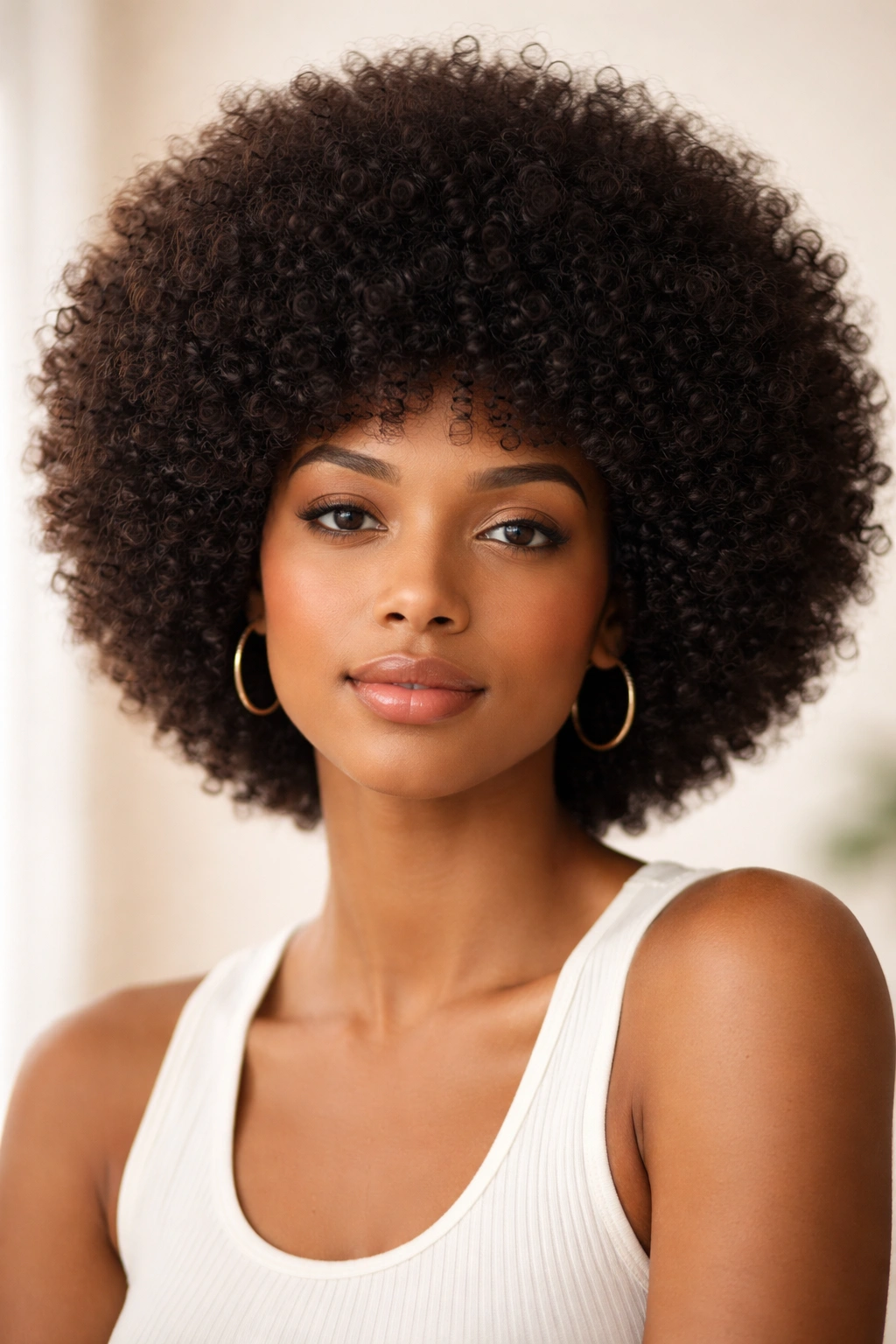
A rounded afro is the shape I reach for when I want the hair to look finished without looking fussy. The silhouette is soft and even, with the widest part sitting around the temples and crown instead of drooping at the sides. On short hair, it creates that neat cloud effect people always try to force with too much product. On longer hair, it keeps the length from falling into a triangle.
How to keep the shape round
Start with dry or mostly dry hair. A rounded afro usually holds its shape better when the curls are not too wet or heavy, because water pulls everything down and makes the outline collapse at the edges. Use a pick at the roots, then stop before you reach the ends. That’s the part people overdo.
If one side starts looking wider than the other, leave the ends alone and lift only the flatter side at the base. That little correction makes a bigger difference than pulling apart the whole style. I also like to turn the head slightly while picking so the crown gets height without creating a flat patch right in the middle.
- Use a wide-tooth pick or an afro pick with spaced teeth.
- Lift in sections instead of dragging the tool all the way through.
- Shape the silhouette from the crown outward.
- Finish with a light mist of water or leave-in, not a soak.
Best tip: keep the roots soft and the outline controlled. That’s what makes the round shape look intentional instead of puffy by accident.
2. Tapered Curly Afro
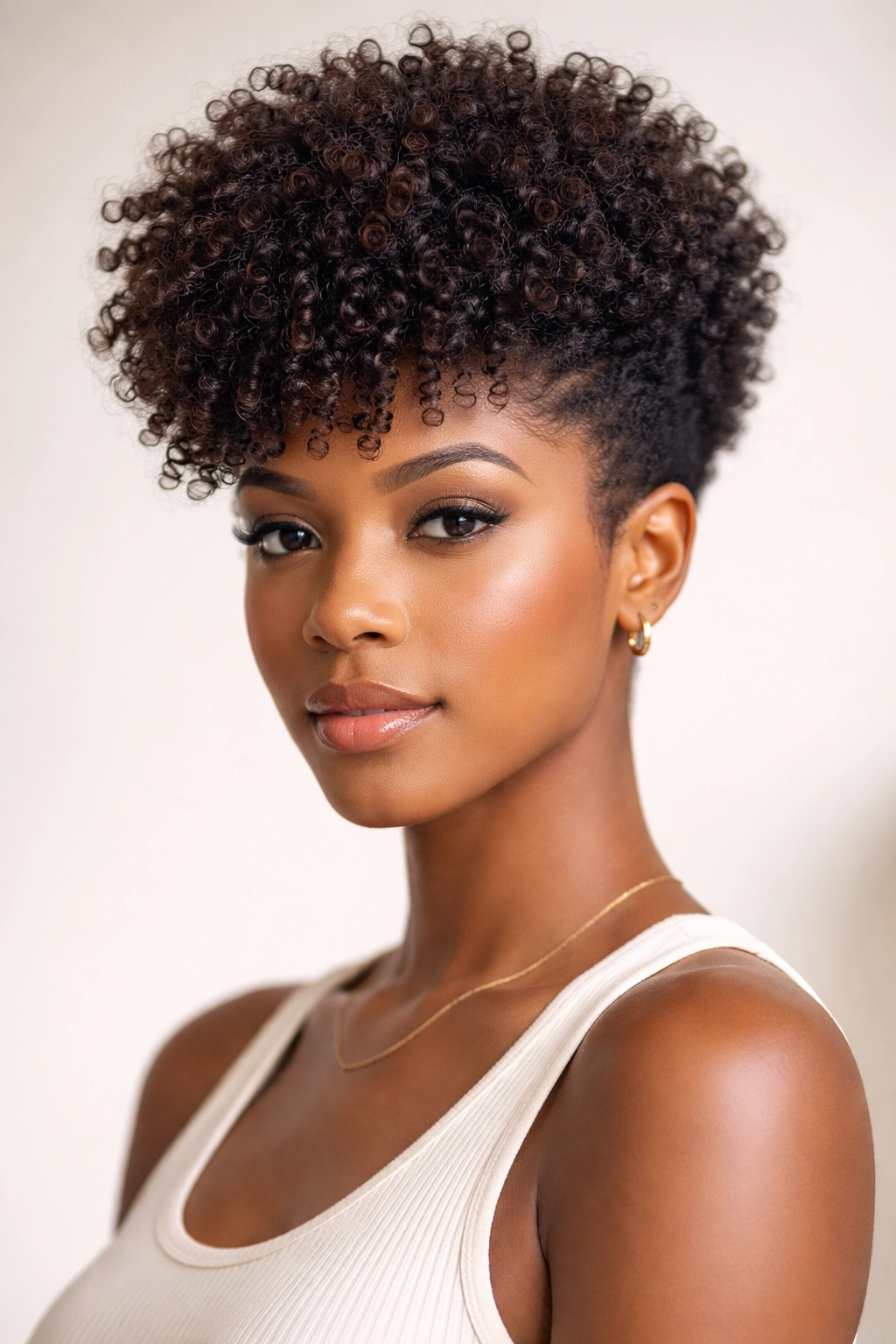
Nothing sharpens curls faster than a tapered cut. The sides and nape stay shorter, while the top keeps more length and volume, so the eye goes straight to the curl texture instead of the bulk. It’s one of the easiest curly afro hairstyles to wear if you like clean lines but don’t want the whole head clipped close.
The best tapered afros usually have a gentle fade, not a hard one. Too much contrast can make the style feel heavy on top and bare on the sides. A softer taper lets the curls feel balanced, and it works whether your curl pattern is tight and springy or looser and fluffy.
This shape also saves time. You spend less effort trying to force the sides down, and you can refresh the top with a little water and cream, then pick the crown and go. If your hair grows outward more than upward, a taper often solves the problem better than piling on gel.
A tapered afro does need upkeep. The shape looks best when the edges stay crisp and the top stays hydrated. Let it get too dry and the cut loses its clean line fast. Let it get too wet and the top slumps. There’s a sweet spot, and it’s worth learning.
3. Mini Afro With a Side Part
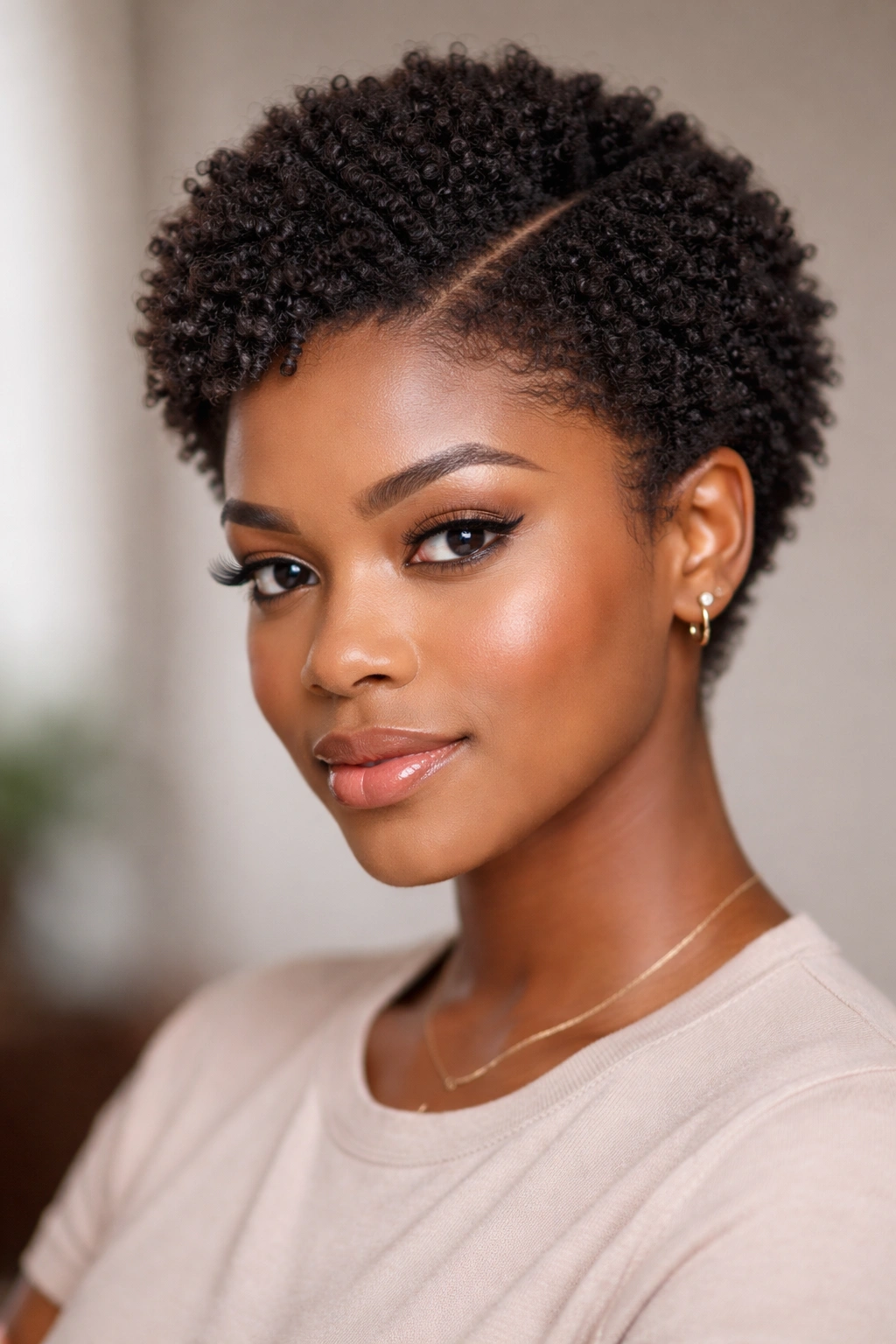
Can a tiny afro look deliberate instead of like a grow-out stage? Absolutely. A side part gives short coils direction, and direction changes everything. The part breaks up the roundness just enough to make the style feel styled, not accidental.
Why the side part helps
A side part pulls some of the weight off the center of the head. That means the hair can stand up a little more at the crown, which is useful when the length is short and every bit of height matters. It also makes the curl pattern easier to see, especially if your hair has a mix of tighter and looser coils.
The style is quick, but don’t rush the part. Use the tail of a comb and place it where your hair naturally wants to split, not where you wish it would. Forcing a part through dense coils can leave it looking jagged and dry.
How to wear it
- Part on the heavier side of your face if you want balance.
- Smooth only the part line with a little gel or edge balm.
- Pick the roots on the fuller side to build lift.
- Leave the ends alone so the curl pattern stays soft.
A mini afro with a side part works especially well on days when you want structure but not too much polish. It looks neat. It also looks like hair that knows what it’s doing.
4. High Puff
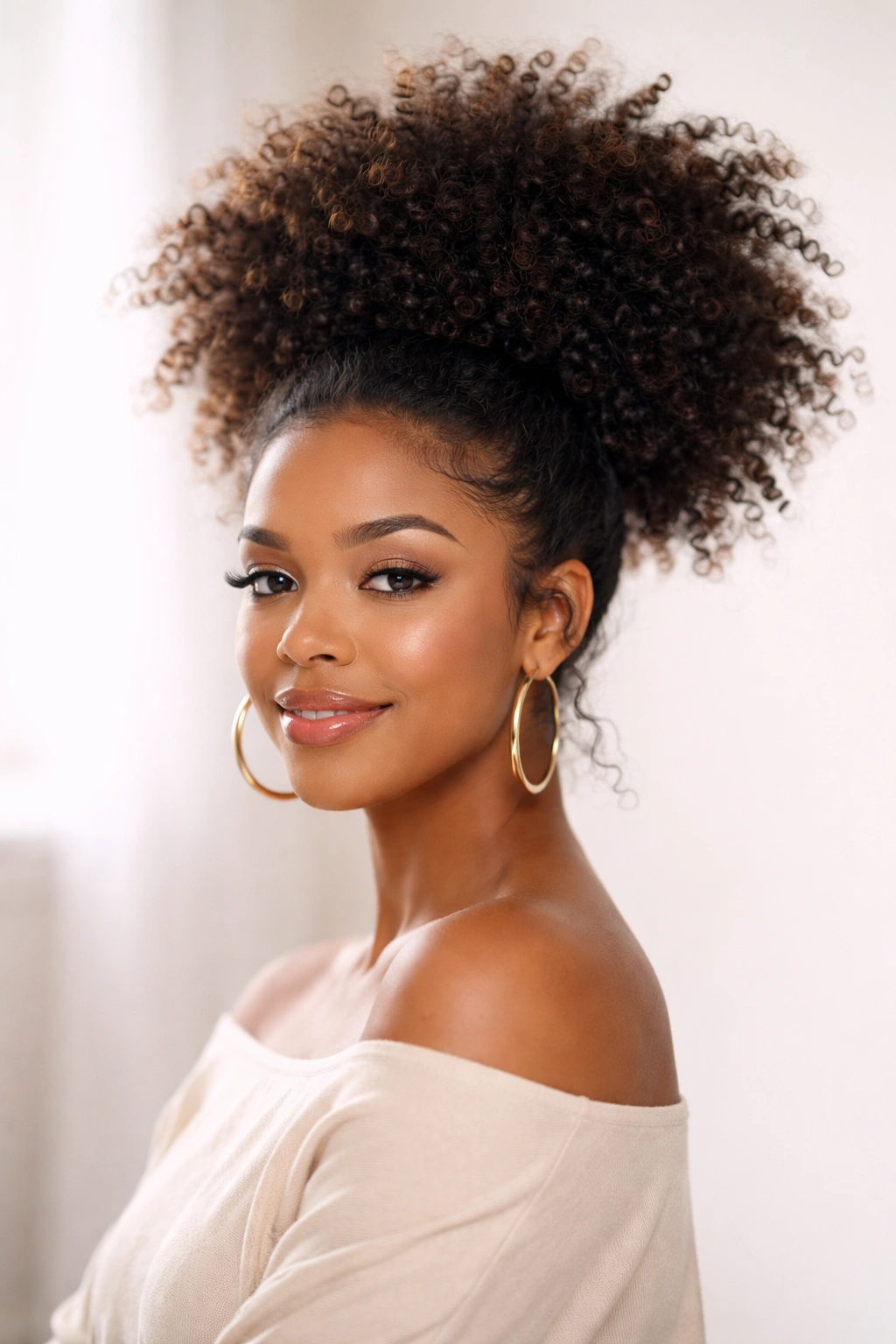
I can always tell when a high puff was thrown together badly. The front is pulled too tight, the base sits too low, and the puff itself looks squeezed into a sad little ball. Done well, though, it’s one of the easiest styles in the whole group.
Picture this: you’re late, your hair is a little off, and you need something that fixes the face fast. The high puff does that. It lifts the curls up and away from the jaw, leaves the shape open, and makes even stretched-out second-day hair look fresh again.
Use a soft brush or your hands to gather the hair at the crown, then secure it with a stretch-friendly band or satin scrunchie. Don’t yank the hair until the roots ache. The puff should sit high, but it should still look relaxed around the edges. If the front is flattened too much, the whole style starts to look stiff.
- Keep the puff centered unless your hair naturally falls to one side.
- Smooth the perimeter just enough to clean up flyaways.
- Fluff the puff itself after it’s tied.
- Use a satin accessory so the base doesn’t snag.
The best high puffs look airy, not tight. That little bit of looseness makes the style feel much more natural.
5. Half-Up, Half-Down Fro
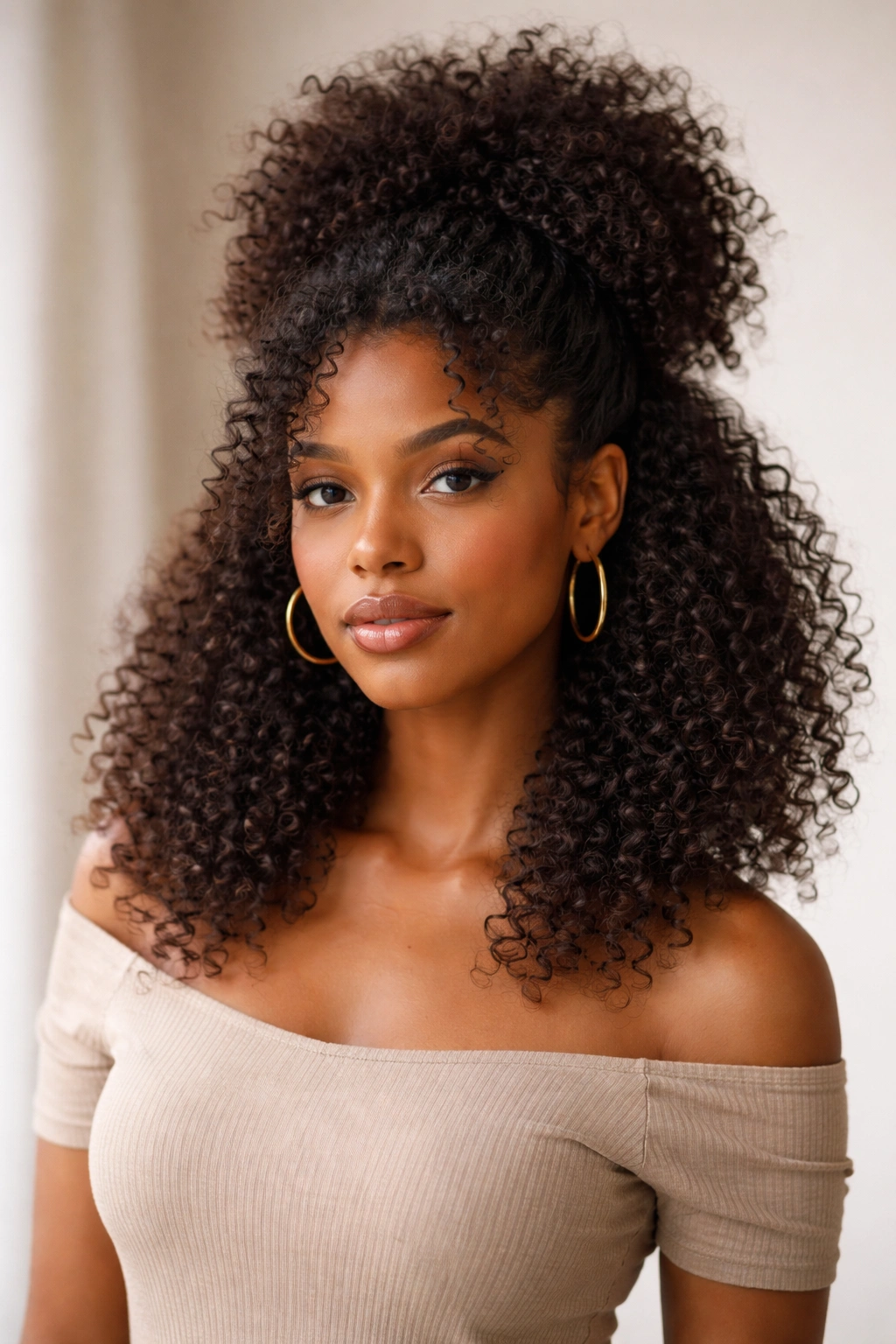
Unlike a full puff, the half-up, half-down fro keeps some curls near the face while lifting the top away from it. I like that balance. It gives you shape without hiding the texture, and it lets the hair do two jobs at once: framing and volume.
This style works especially well when the hair is shoulder-length or longer, but short hair can still pull it off with a smaller top section. The top doesn’t need to be huge. It just needs enough grip to stay in place while the rest of the curls fall freely.
What makes this shape useful is the contrast. The top section gives a clean line, while the loose bottom section keeps the afro soft. If the whole head is pulled back, the style can look too controlled. If nothing is pulled up, the shape can get heavy around the sides. Half-up styling lands right in the middle.
A small clip, a silk tie, or even a few hidden bobby pins can hold it. Keep the tension light. The goal is lift, not a headache.
6. Twist-Out Afro
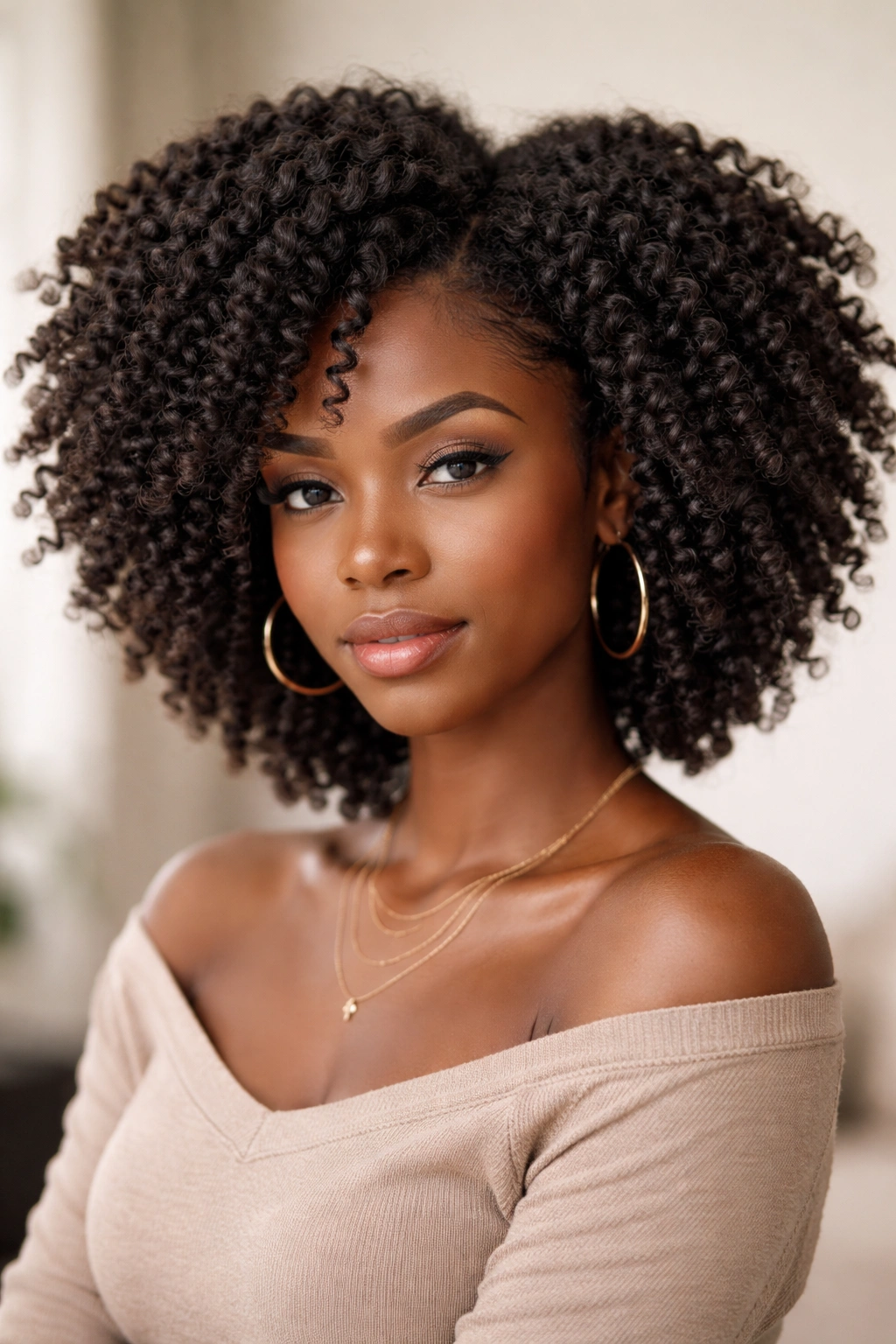
Twist-outs are the style I recommend when someone wants definition without giving up afro volume. The whole point is to stretch the curl just enough to show the pattern, then fluff it back into shape once it’s dry. That gives you movement and body at the same time, which is hard to beat.
Start on damp hair, not soaking hair. Too much water slows drying and makes the twists puff up in ways you may not want. Use a cream or custard with enough slip so the strands glide over each other, then make medium-sized two-strand twists. Small twists give tighter definition. Bigger ones make a softer, fuller pattern.
Patience matters here.
The hair has to dry all the way through before you unravel it. If the inside is still damp, the style frizzes faster and the twist pattern falls apart. Once it’s dry, coat your fingers lightly with oil and separate only as much as needed. Then lift the roots with your fingers or a pick so the style doesn’t sit flat against the scalp.
A good twist-out can last several days if you sleep on satin and keep your hands out of it. That sounds boring, I know. It still works.
7. Braid-Out Afro
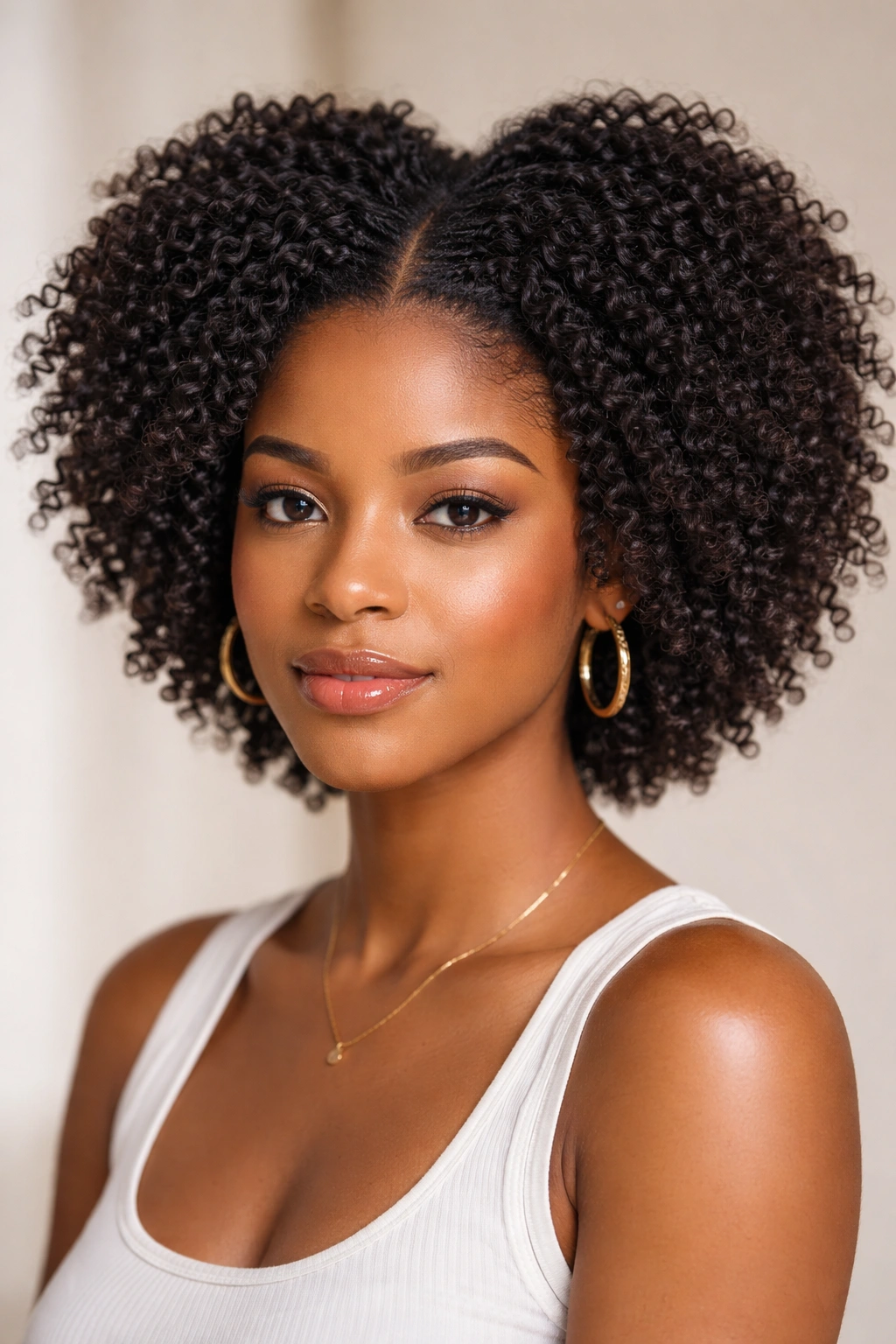
Braid-outs deserve more credit than they get. The texture they leave behind is a little different from a twist-out — flatter at the roots, more stretched through the length, and often with a zigzag or wave pattern that feels a bit more defined. If your hair tends to swell up too fast after twisting, braids can give you more control.
What makes braid-outs different
Braids compress the hair more firmly, so the pattern tends to hold longer. That makes them a smart choice for hair that frizzes easily or for styles you want to keep neat for several days. They also stretch the hair a bit more, which is handy when you want length to show without heat.
The size of the braid changes the result. Small braids give tighter texture. Medium braids make a soft wave. Large braids leave a looser bend and more fullness. If you want a braid-out that still reads as an afro, medium braids are usually the sweet spot.
- Braid on damp hair, not dripping hair.
- Let the braids dry until they feel light and cool.
- Unravel gently so the pattern stays intact.
- Separate only after you’ve checked the ends.
A braid-out is a little less fluffy than a twist-out, and that’s the appeal. It gives the hair shape, not just volume.
8. Finger-Coiled Fro
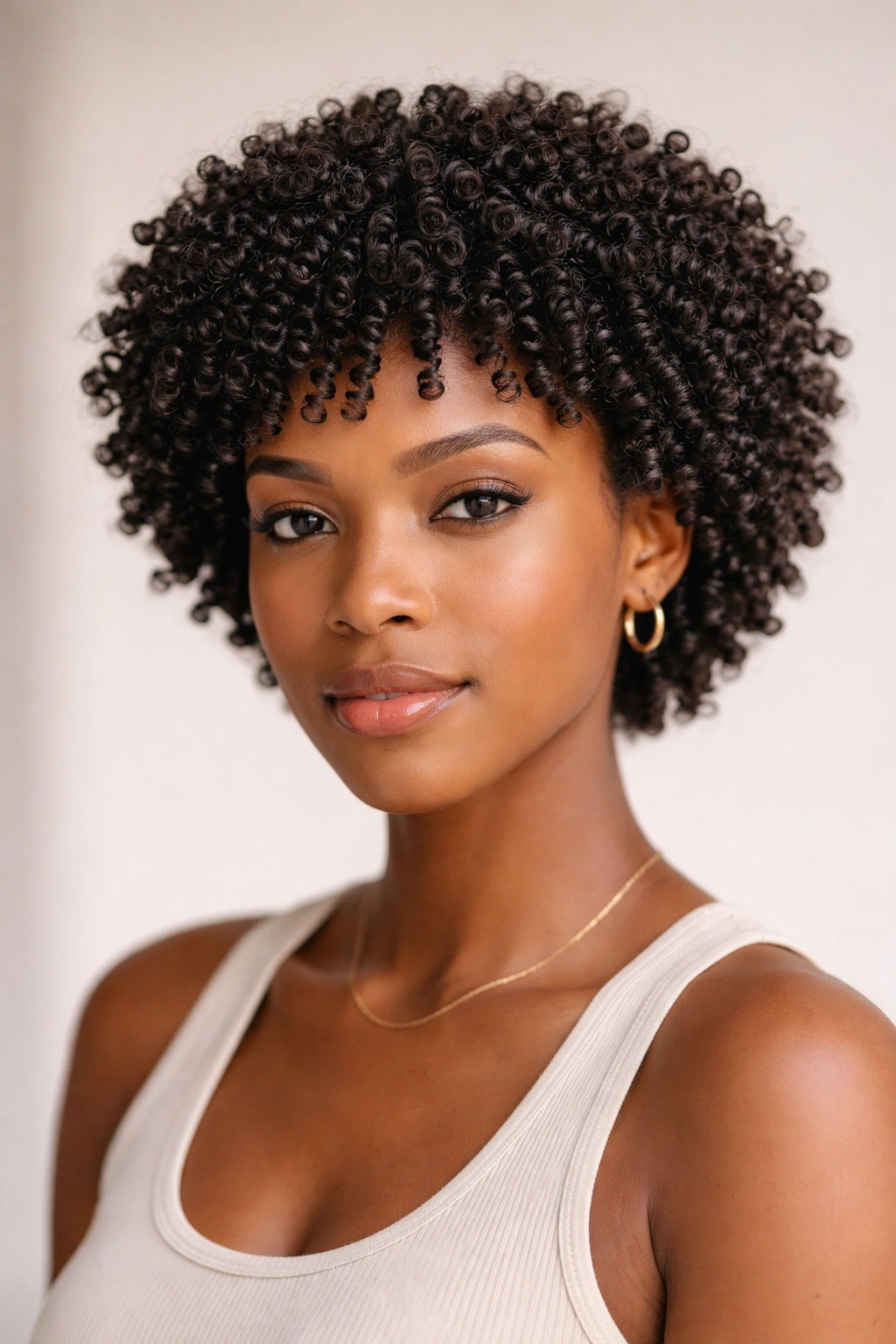
Finger coils are slow. That’s the point. They give short to medium curls a neat spiral pattern that looks deliberate from every angle, and they hold up well when you want a more sculpted afro shape. If your hair is uneven in length or the curl pattern is scattered, coils can make the whole head look more unified.
Where this style shines
Finger coils work best when you want definition that doesn’t depend on a lot of length. You can coil tiny sections on a TWA, a short afro, or the top of a longer style. The curl clumps stay separate, so the outline reads tidy instead of puffy.
Use a styling gel or curl cream with enough hold to keep the spiral from unraveling while it dries. Your fingers should glide, but not slide too easily. If the product is too slick, the coil loosens before it sets. If it’s too sticky, the strand snaps back and looks messy.
A few things help:
- Work in very small sections.
- Coil each section in the same direction.
- Dry fully before touching the hair.
- Separate only if you want a slightly fuller finish.
Finger coils are not the fastest style in the room. They do, however, make short curls look considered instead of random. There’s a place for that.
9. Frohawk
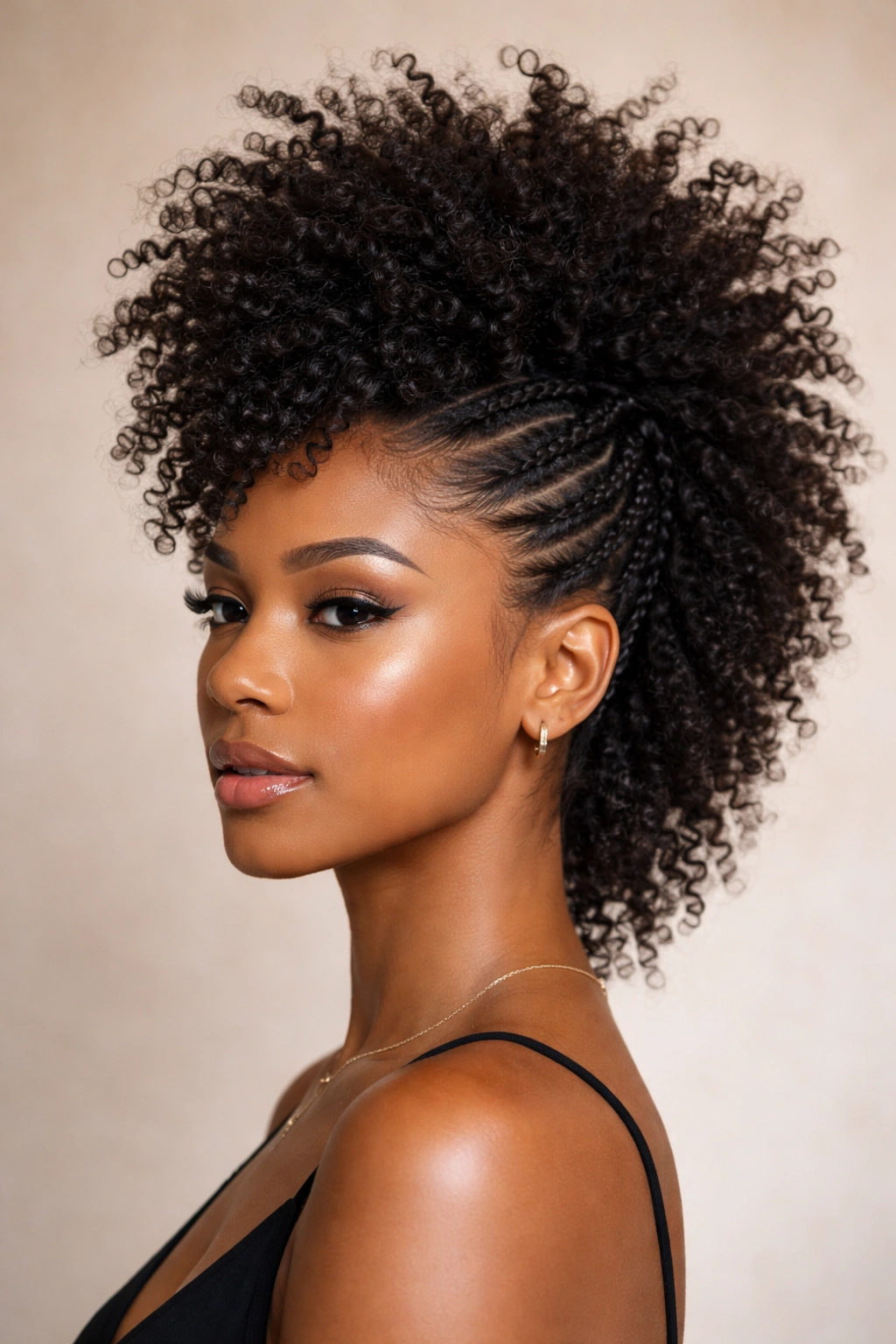
You do not need shaved sides to wear a frohawk. That’s the part people get wrong. A frohawk is really a shape trick: the sides are pushed, pinned, or braided upward so the center strip becomes the focus. It gives the hair attitude without cutting anything off.
The shape works on medium and long hair especially well, because there’s enough length to create height down the middle. But a shorter frohawk can look sharp too if the sides are tucked close with flat twists or pinned sections. The center section should stay full and soft. That contrast is what makes the style pop.
I like this one when the hair is a little uneven and doesn’t want to sit the same way on both sides. Instead of fighting that, the frohawk turns it into the style itself. Use bobby pins that match your hair color, and place them under the curls so the shape looks clean. If the pins show, the whole thing loses its edge fast.
Best of all, the style is reversible. No commitment. No cutting. Just a different way to arrange what you already have.
10. Pineapple Afro
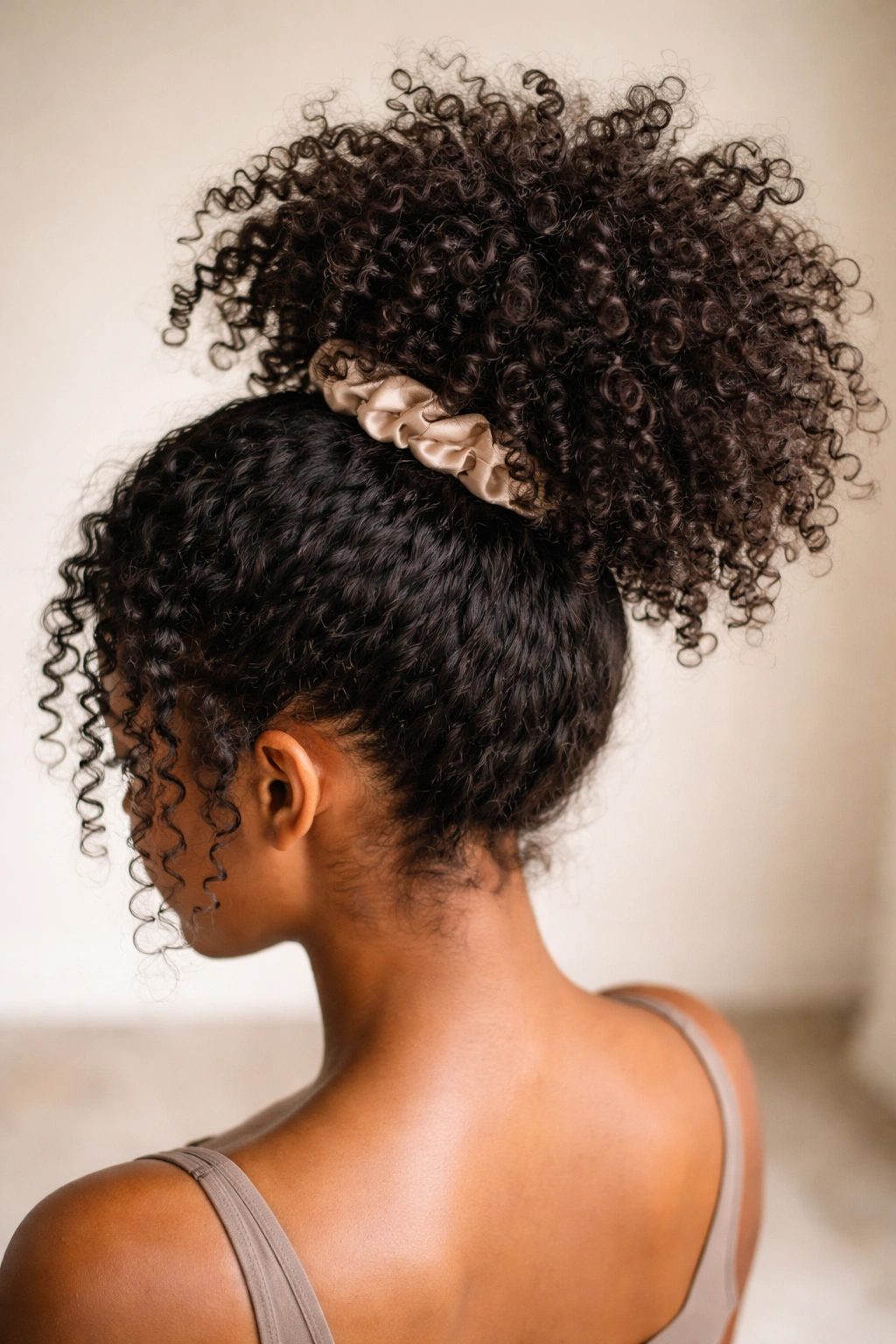
A pineapple should sit high and loose, not tight like a knot you can feel from across the room. The whole point is to gather the curls at the highest part of the head so the hair stays lifted and the ends keep their shape. It’s a sleep style for a lot of people, sure, but it can also be a daytime look when the puff is done with enough care.
How to keep it soft
Use a satin scrunchie or a soft band that won’t leave a deep crease. Pull the hair up just enough to hold it. If you yank too hard, the roots flatten and the edges start to look tired. That’s a small mistake, but it changes the whole vibe.
The pineapple works best on shoulder-length hair and longer, though shorter hair can still do a mini version that keeps the curls off the neck. When you take it down, don’t smooth everything back into place right away. Let the curls fall for a minute first. They usually settle better that way.
- Keep the ponytail high on the crown.
- Leave the ends free and curly.
- Fluff the base after release.
- Pair it with hoops or a strong lip if you want the style to read as intentional.
A pineapple is one of those styles that looks casual until you notice how much shape is packed into it.
11. Side-Swept Curly Afro
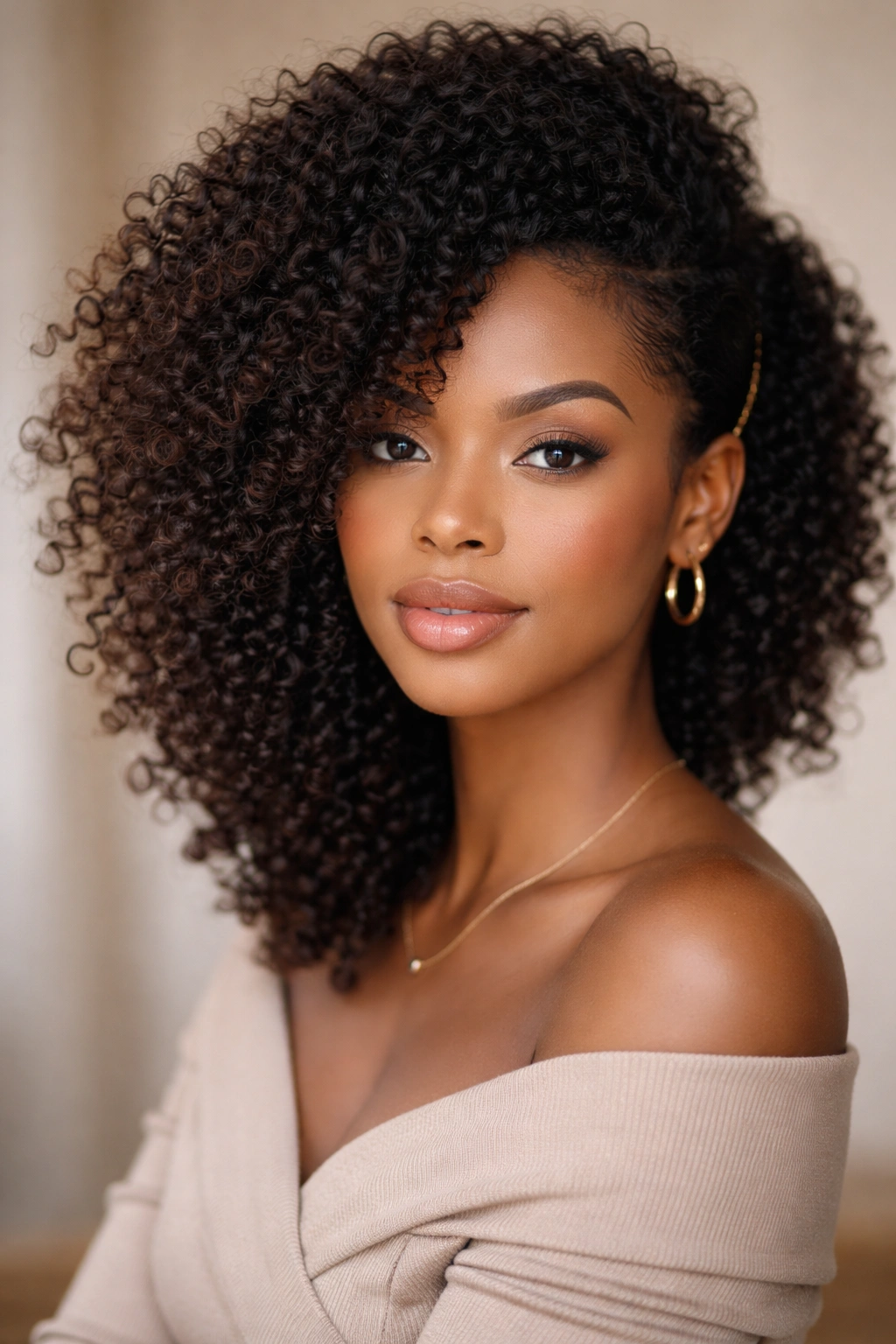
Want a little drama without spending half the morning on it? Sweep the curls to one side. That’s the whole trick, and it works because asymmetry makes the face look framed even when the styling itself is simple.
A deep side part gives one side more height and lets the other side sit close to the cheek or jaw. On shorter hair, that can create a sharper outline. On longer hair, it makes the curls fall like a soft curtain. Either way, the style feels more deliberate than a straight-down fro.
The best part is how low the effort stays. A comb, a little cream, maybe one pin behind the ear, and you’re done. If the side that’s supposed to stay tucked keeps escaping, pin it under the top layer rather than forcing more product onto it. Too much product makes the hair look wet and heavy, and that kills the movement.
One sentence says it best: direction changes everything.
This is a good style when you want curls to show but not in the same way they always do. Sometimes that small shift is enough.
12. Halo Braids With Loose Curls
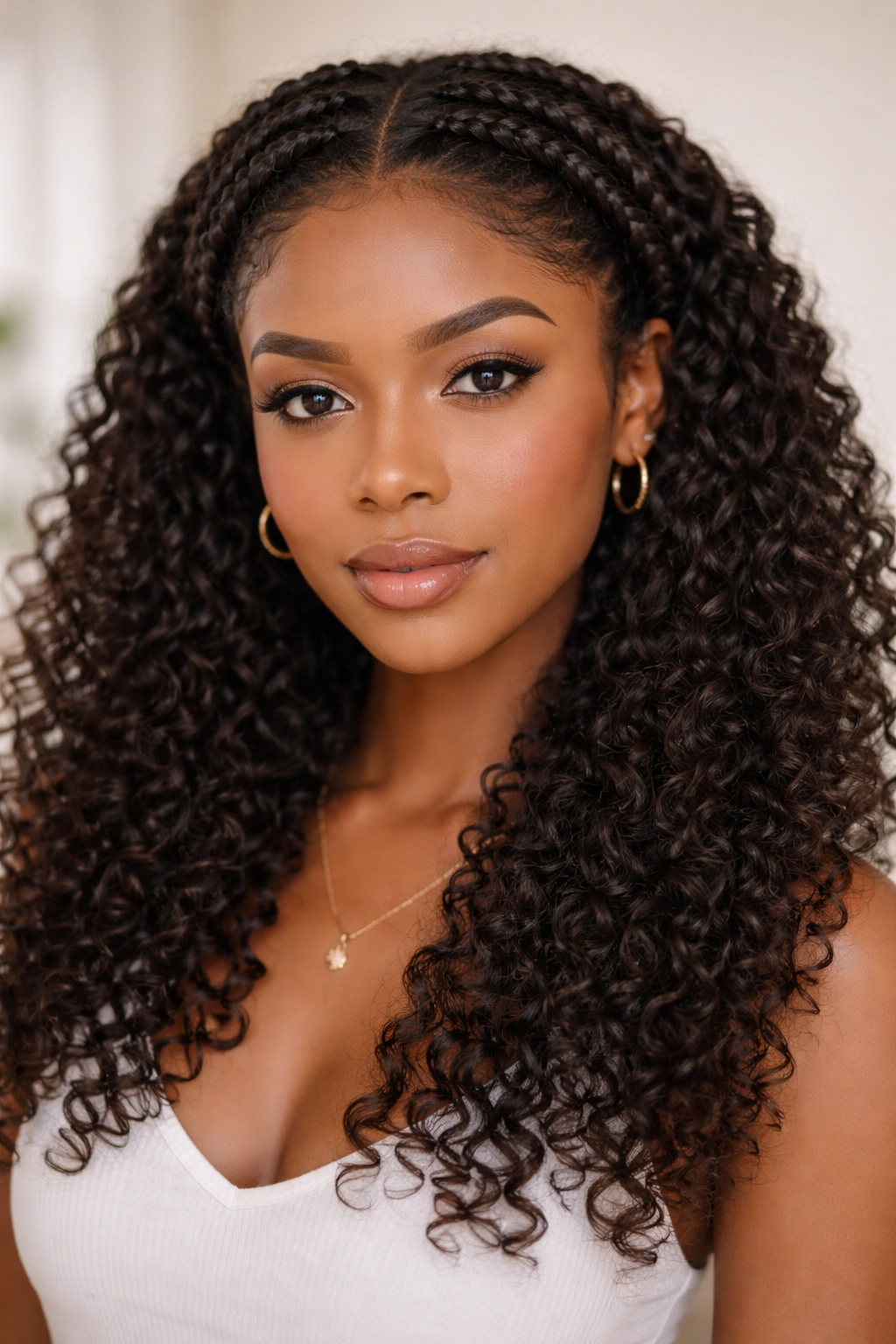
Halo braids frame the face differently from a full updo. They keep the curl texture visible around the shoulders while giving the hairline a cleaner, more finished edge. I like that balance. It’s neat without being stiff.
The usual setup is two braids or flat twists that curve around the crown, with the rest of the hair left loose in curls. That means the style works especially well on medium and long hair, though shorter hair can still fake the look with pinned twists or smaller braided sections. The main thing is placement. The braids should sit close enough to the hairline to hold the front back, but not so close that they pinch the temples.
Where to place the braids
- Start the braids about 1 inch back from the hairline.
- Aim them slightly above the ears if you want lift.
- Leave enough loose hair in the back to keep the style soft.
- Secure the ends with small clear elastics or tucked pins.
The style is one of the cleaner options on this list, and I mean that in the best way. It gives the hair a frame, not a helmet.
13. Scarf-Tied Afro
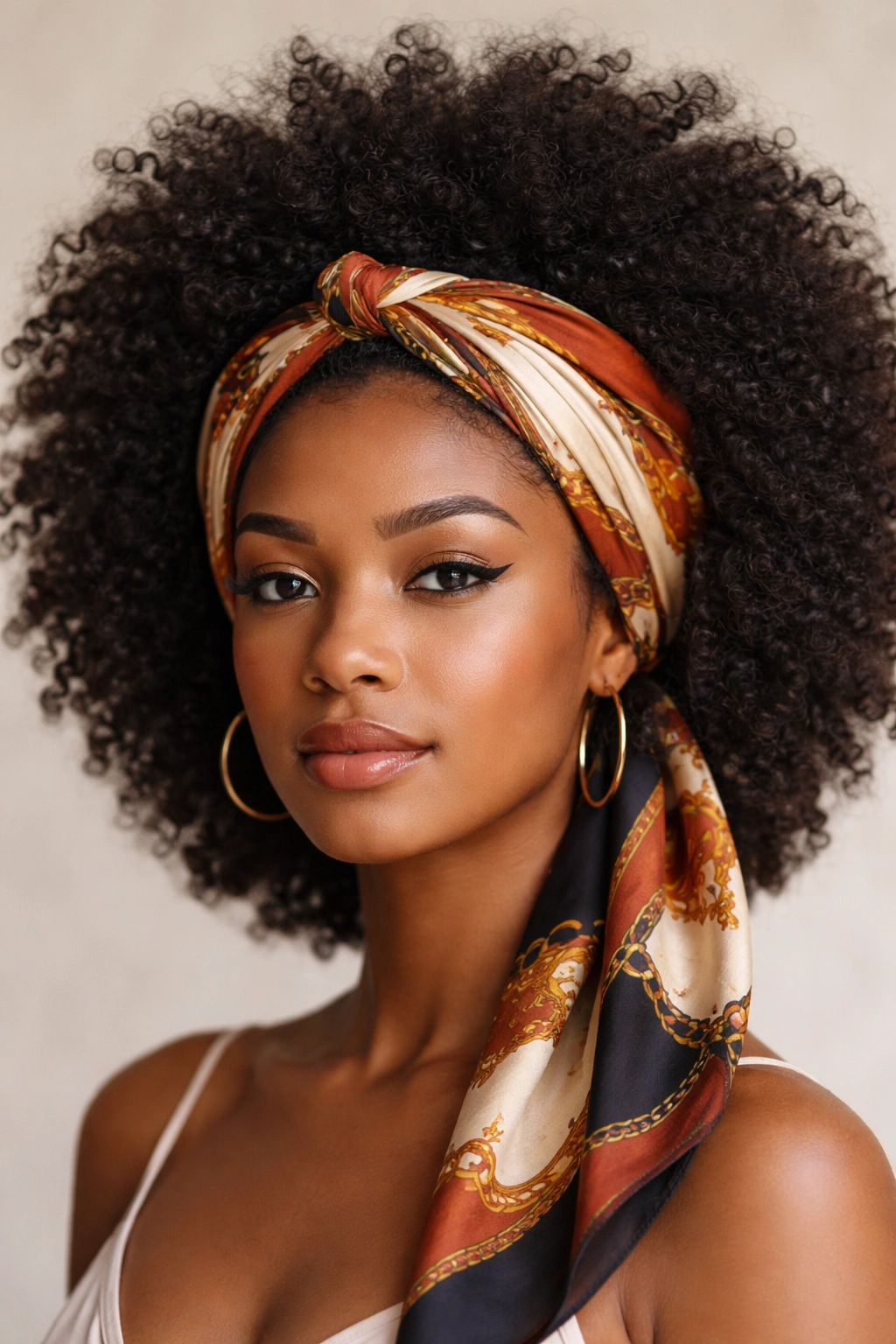
A scarf can do more than hide a rough morning. It can turn the afro into a shape with a clear focal point, especially when the hair itself is already full and you just want the top or front to feel deliberate. I use this trick when the curls need a little help settling down, but I still want the texture to stay out front.
Pick a scarf that’s wide enough to sit flat. A narrow strip digs in and creates a weird ridge across the forehead. Silk or satin is the safest bet because it slides less and keeps the hair from snagging. Tie it just above the hairline, or wrap it around the base of a puff if you want the curls to stay lifted.
The good version of this style looks relaxed, not fussy. The scarf should frame the face, not squeeze it. A printed band can carry the color of the whole outfit, which is useful on days when the hair is doing all the talking and the clothes don’t need to fight it.
It also solves a practical problem: rough edges, uneven roots, or a section that refuses to sit right. Sometimes the scarf is the simplest honest fix.
14. Defined Wash-and-Go Cloud Fro
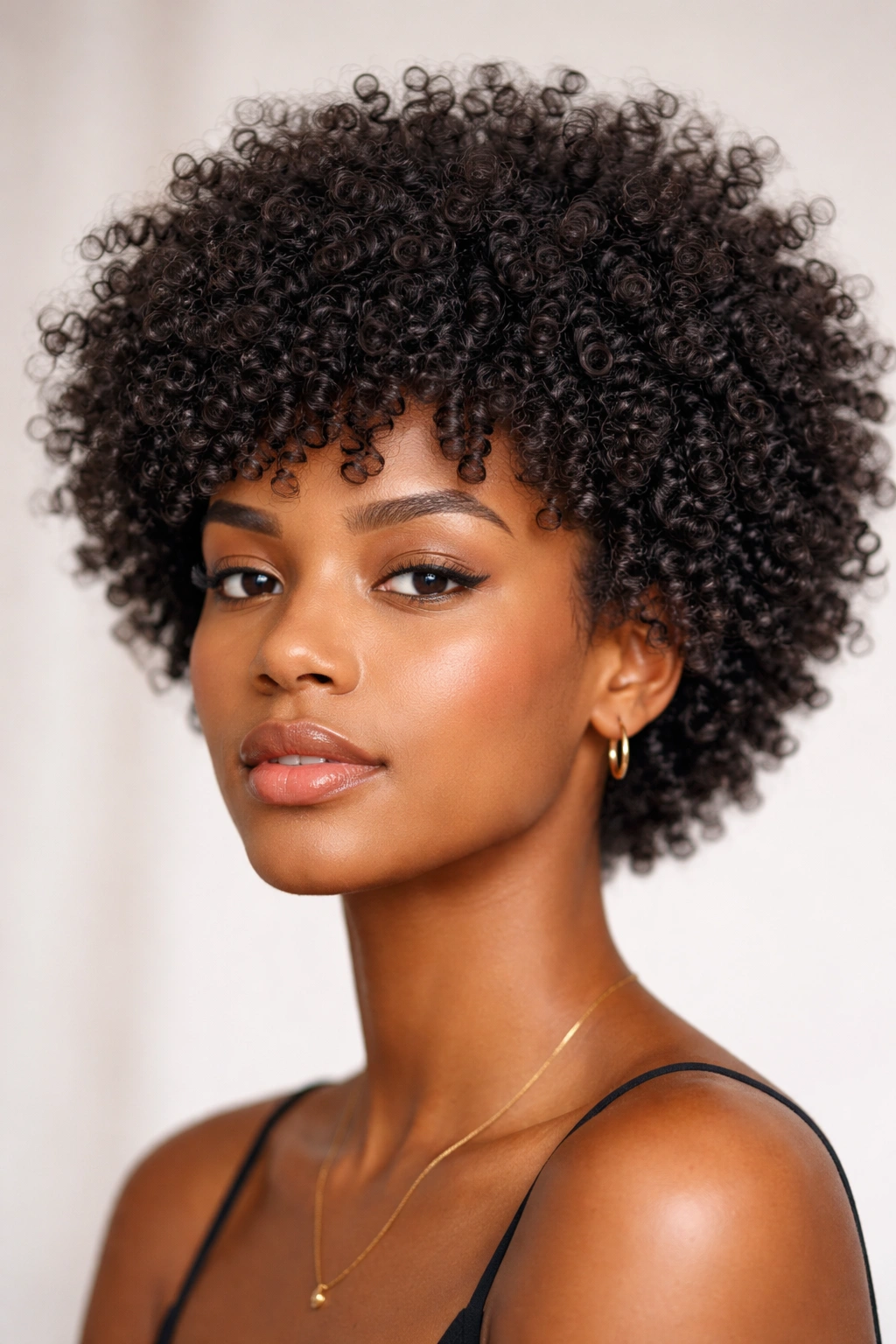
You step out of the shower, rake a little gel through soaking curls, and let the hair decide its own shape. That’s the wash-and-go cloud fro in practice. It can look airy, tight, soft, or bold depending on the product and how much you touch it while it dries.
The main job is coating each curl enough to set the shape without weighing it down. A leave-in conditioner gives slip. A gel or cream with hold keeps the curl from breaking apart too soon. If your hair is looser, you may want less product. If it’s tighter, you may need more control near the crown and sides. The goal is a defined curl that still has enough volume to read as a fro.
What to watch for
- Don’t pile on product near the roots.
- Let the hair dry fully before fluffing.
- Break the cast only when the curls feel dry and crisp.
- Diffuse on low heat if air-drying takes too long.
This style can look polished on short coils and huge on long curls. Same method, different result. That’s why I keep coming back to it.
A good wash-and-go doesn’t need a lot of touching after the first hour. The less you disturb it, the cleaner the pattern stays.
15. Stretched Curly Afro
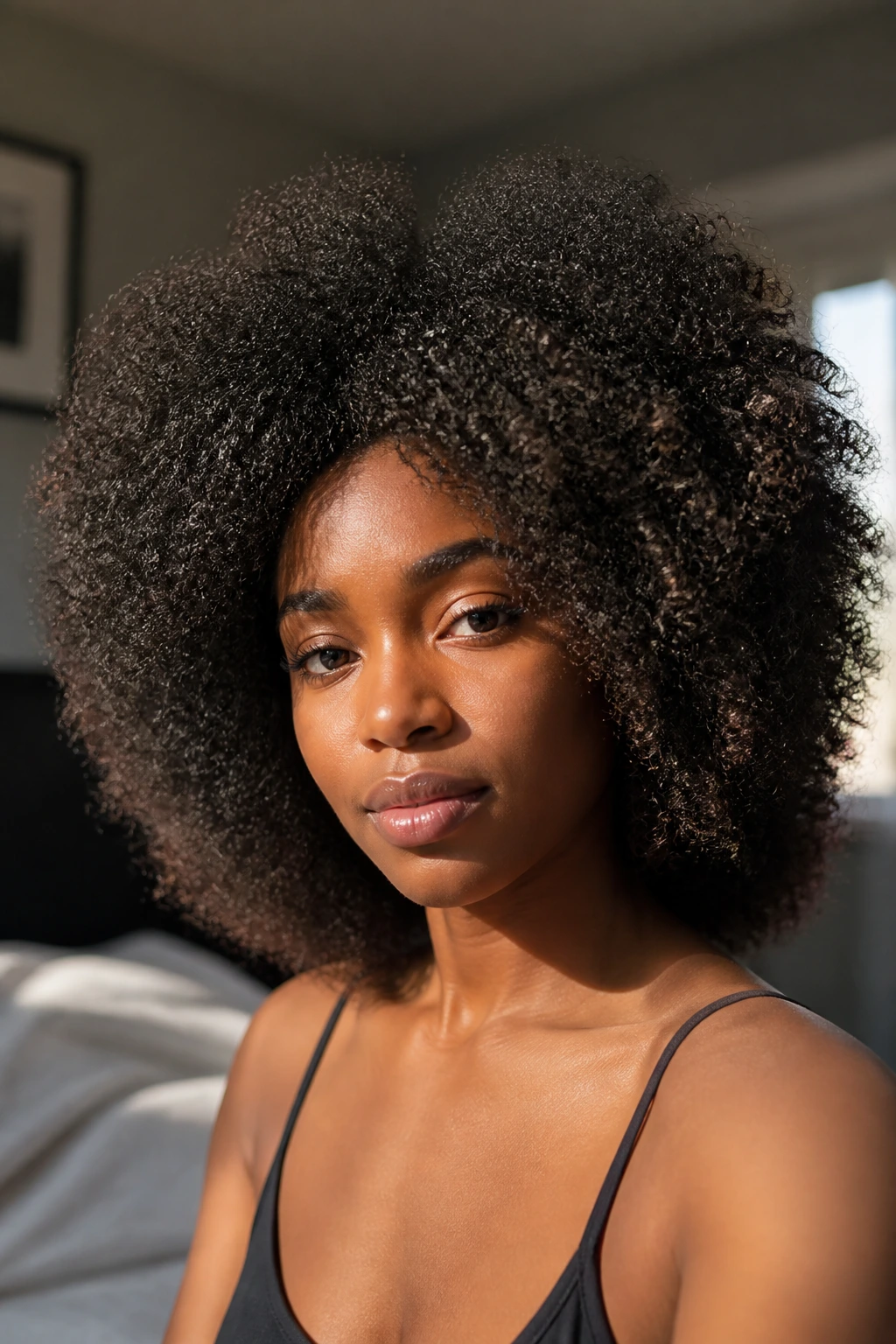
If your hair wants length, let it stretch — but not too much. A stretched afro keeps the curl texture visible while reducing shrinkage enough to show the shape. It’s one of the smartest options for anyone who likes a bigger silhouette without giving up the feel of natural hair.
Stretch without losing softness
The easiest ways to stretch curls are low-tension and low heat. Two-strand twists, banding, loose braids, and a diffuser on low all work. Heavy blow-drying can flatten the hair too far and make it look blown out instead of curly. That’s not the same style at all.
A few methods worth using:
- Twist damp hair overnight and unravel in the morning.
- Band sections from root to end with soft bands.
- Diffuse on low heat while lifting the roots.
- Separate curls only after they’re fully dry.
The nice thing about a stretched afro is that it often lasts longer than a super-defined style. It also makes parts easier to place and gives the hair more room to move. On shorter hair, stretching can make the shape feel fuller. On longer hair, it keeps the outline from turning heavy at the bottom.
If I had to pick one lesson from all of these styles, it would be this: shape beats length every time. A well-placed puff, a clean part, or a soft stretch changes the whole read of the hair faster than inches do. That’s why curly afro hairstyles stay interesting — they’re not fixed looks, they’re shape choices.
