



A bob only looks expensive when the shape has discipline. Loose ends, bulky corners, and layers that start in the wrong place can make even a fresh haircut feel heavy.
The best layered bob cuts keep a clean edge while letting the hair move. That mix is what makes a cut read as polished in daylight, not just under salon lights.
The trick is rarely length. It’s placement. A few millimeters higher or lower at the nape, a face frame that starts at the cheekbone instead of the jaw, a soft interior layer that takes out weight without wrecking the line — those tiny choices change everything.
Some of the prettiest bobs are the simplest on paper. They just sit right. And that is harder to fake than people think.
1. Blunt Bob With Hidden Interior Layers
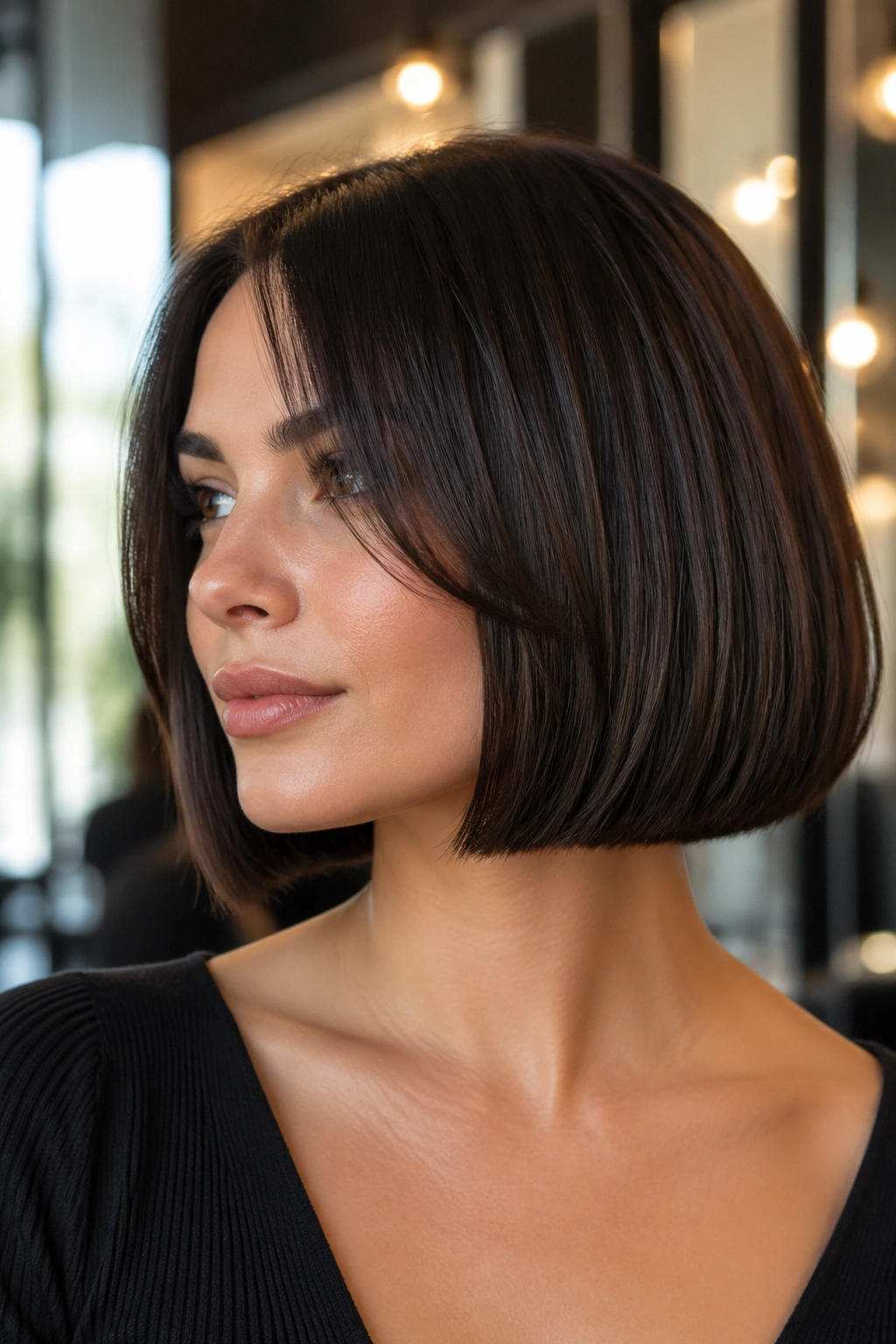
A sharp outline with hidden movement is the easiest way to make a bob look expensive. This is the haircut for anyone who loves a clean perimeter but hates the heavy, boxy feeling that can happen when the ends are all one length.
The outer line stays blunt. That’s the point. Inside, the stylist removes weight in small sections so the hair bends instead of puffing out. Fine hair gets a little lift. Thicker hair gets less bulk. The cut still looks grown-up because the edge is crisp.
What to ask for
- A blunt perimeter that sits at the jawline or just below it.
- Interior layers that start around the mid-shaft, not near the ends.
- Point-cut ends instead of a choppy razor finish.
- A light dusting of texture only inside the shape.
That last part matters. Too much thinning at the bottom can make the whole haircut look wispy. Too little and the bob sits like a block. The sweet spot is somewhere in the middle, and a good stylist usually knows exactly where that is by feel.
Best for straight to slightly wavy hair. It gives you that sleek, expensive-looking silhouette without asking for a huge amount of styling every morning. A round brush, a medium blow-dry brush, and a touch of shine serum are usually enough.
2. Angled Bob With a Clean Collarbone Line
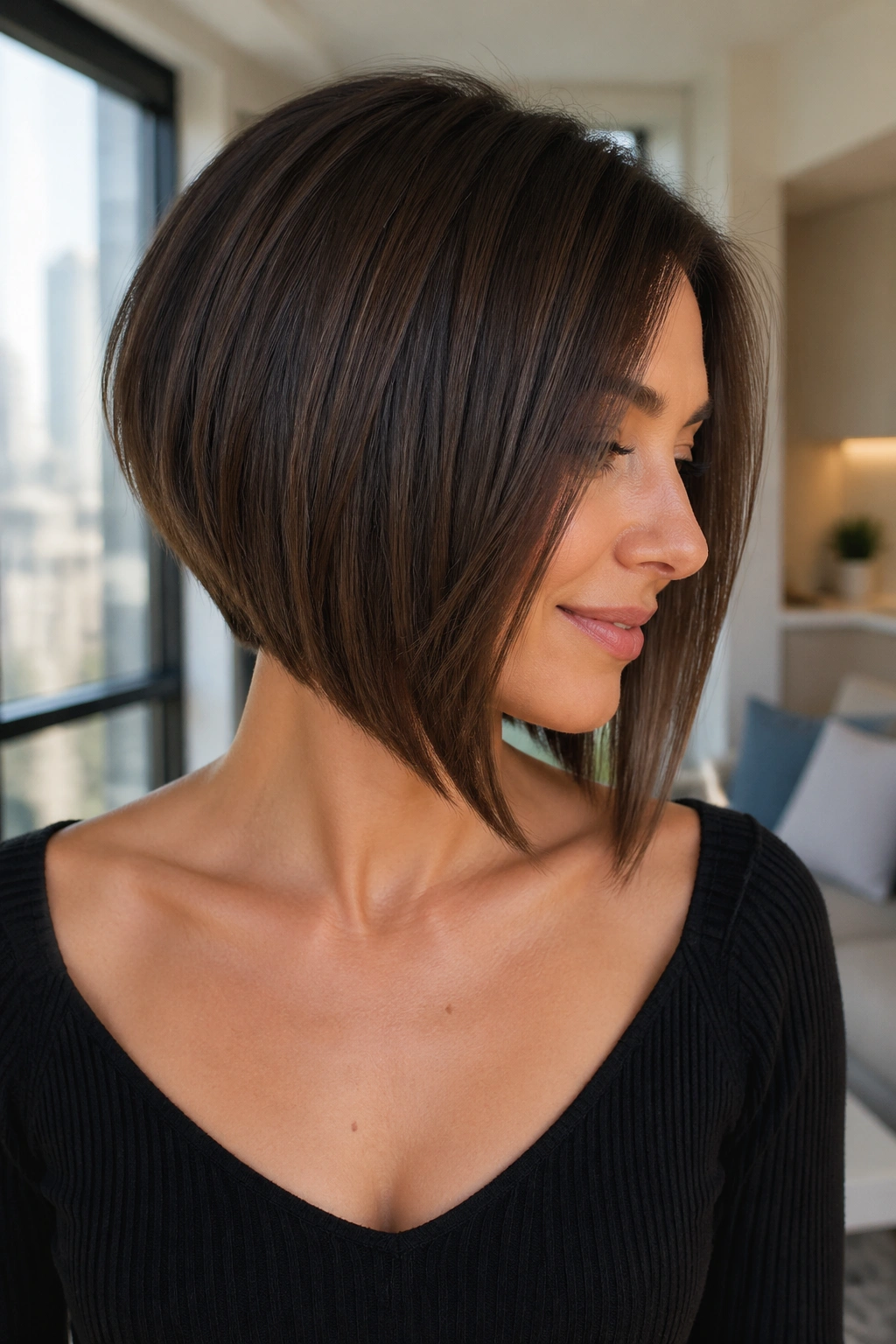
Why does an angled bob look so polished? Because the eye can read the shape instantly. Shorter in back, longer in front. Clean diagonal. No confusion. That clarity is part of the expensive look.
The angle should feel deliberate, not dramatic. If the front drops too low, it starts looking like an old-school haircut that’s trying a little too hard. If the angle is too slight, the shape loses its point and turns into an ordinary bob with no tension in the line. The nicest versions skim the collarbone in front and sit neatly above the nape in back.
This cut works well when you want your face to look a little longer and your neck a little more elegant. It also gives the hair a bit of swing when you turn your head, which sounds minor until you watch it in a mirror. Then it matters a lot.
A soft blowout sells this cut. Blow the back under with a paddle brush, then direct the front pieces forward and slightly under so the angle stays visible. Do not curl the front too tightly. You want movement, not ringlets.
A tucked side behind the ear makes the shape look even more intentional. Tiny move. Big payoff.
3. Stacked Bob With Lift at the Crown
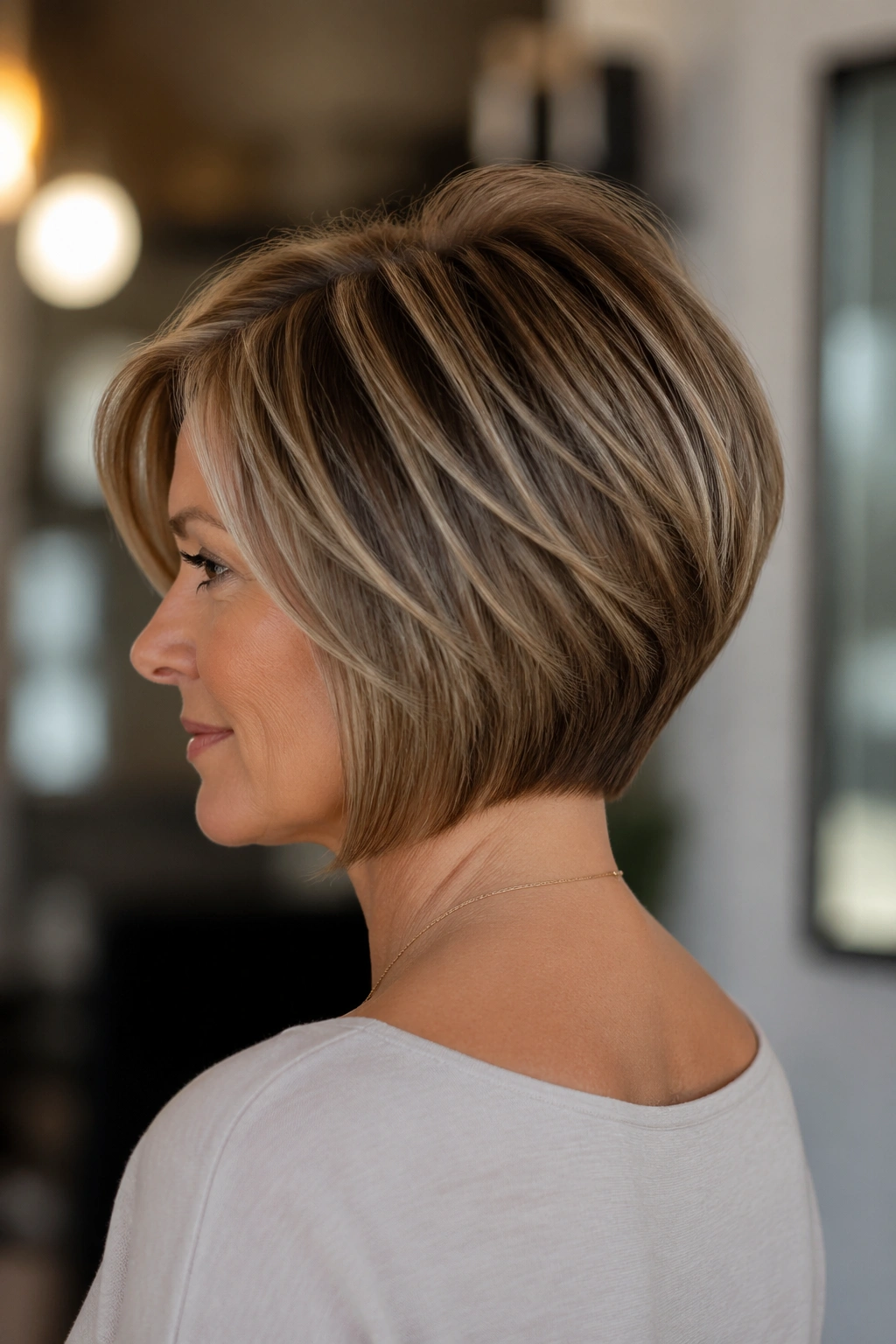
If the back of your hair goes flat by lunchtime, a stacked bob fixes the problem at the source. The cut is built with graduated layers in the back, so the shape rises at the crown and tapers neatly toward the neck.
That stacked structure is the reason this bob can look expensive. It has architecture. The head shape looks more defined, the back doesn’t slump, and the profile stays neat from morning to night. It’s a favorite for fine hair that needs body, but it can work on medium hair too if the stack is kept controlled.
The mistake people make is asking for too much height. Too much stacking can look dated, especially on thick hair. A softer, shorter graduation usually gives you the polished effect without turning the back into a mushroom. Nobody wants that.
The details that matter
- The shortest layers should sit close to the occipital bone, not halfway up the head.
- The nape should be trimmed clean so the neckline looks intentional.
- The top layers need enough length to blend, or the crown gets puffy.
- A round brush at the roots helps, but don’t overdo the flip at the ends.
This cut looks especially good with earrings and a sharp collar. The back view is part of the style, and that’s one reason it feels so tailored.
4. French Bob With Soft Airy Layers
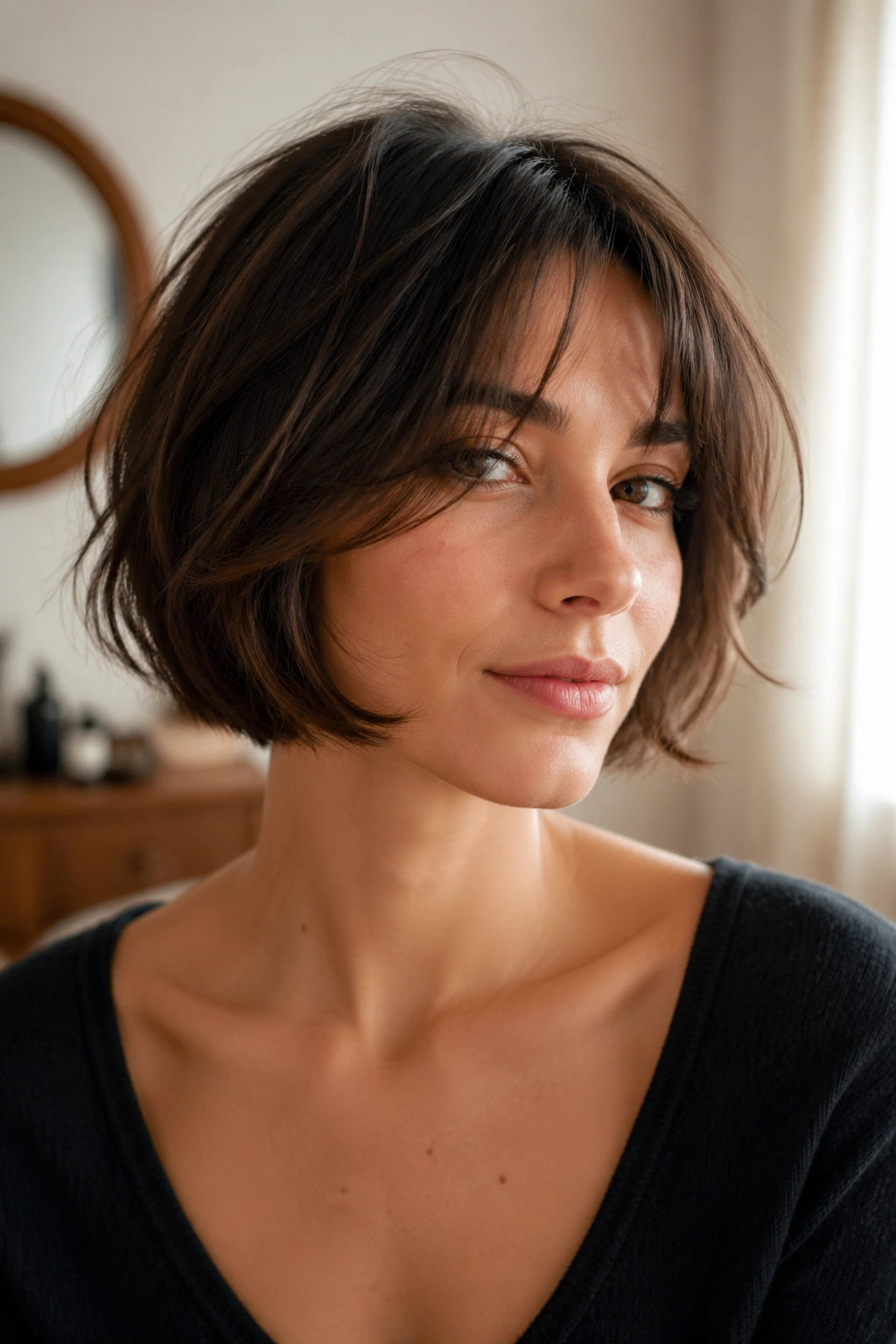
A French bob does not need to be severe. That’s the whole charm of it. The best versions land around the chin, brush the cheekbones, and carry just enough softness in the ends to keep the cut from feeling stiff.
The expensive-looking part comes from restraint. Not from fuss. A French bob with airy layers has movement, but it does not look shaggy. The line is still there. You can see the shape, and then you notice the little bend at the ends, the tiny swing around the face, the way the hair sits close to the jaw without clinging.
A micro fringe can sharpen the look, but it’s not required. A side part works too, especially if you want a little more lift at the crown. On straight hair, a quick bend with a 1-inch iron is enough. Wrap just the mid-lengths for 4 to 6 seconds, leave the ends out, and break the shape up with your fingers.
Uniform curls ruin it.
The best product here is usually a light mousse or a cream with a small amount of hold. Heavy oils and thick serums can make the cut collapse. You want touchable, not greasy. That difference shows more than people think.
5. Choppy Bob With Piecey Ends
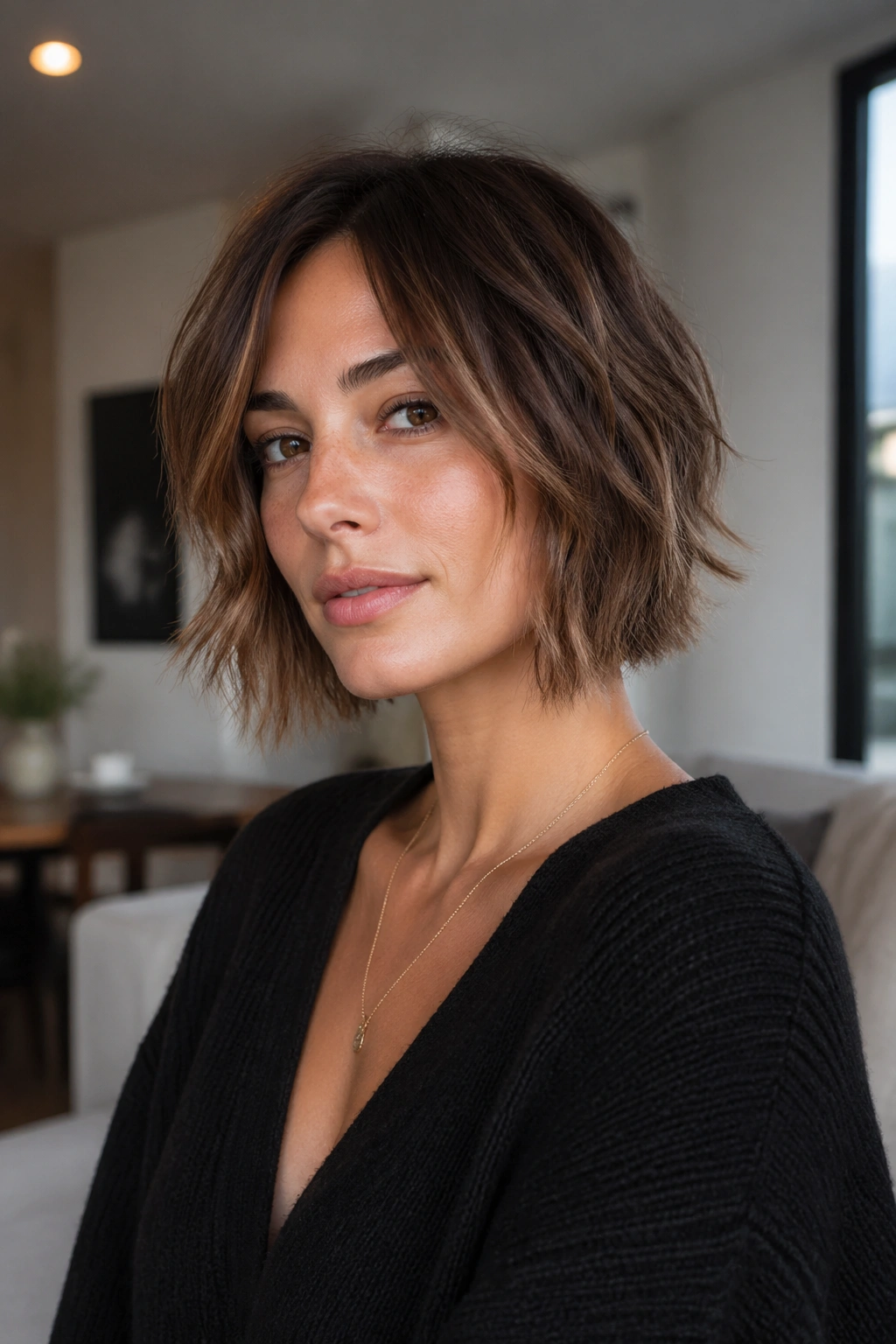
A choppy bob can look expensive when the texture is controlled instead of chaotic. That sounds picky because it is picky. The line between fashion-forward and overworked is thin here, and the best cuts stay on the polished side of it.
This version relies on soft separation at the ends. The layers are visible, but they’re not shredded. A razor or point-cut finish can help create that piecey effect, especially on naturally straight or loose-wavy hair. The shape feels modern because it moves, but the weight is still balanced enough to sit well around the face.
Unlike a sleek blunt bob, this one likes a little grit. A pea-sized amount of matte paste through the ends can define the pieces without making them crunchy. If the hair is too clean, the layers disappear. If it’s too loaded with product, the cut looks flat and greasy. Annoying, yes. Worth getting right, absolutely.
This is a good bob if your hair tends to fall flat and you want a little edge without going full shag. It’s also one of the easier cuts to refresh on dry hair. Twist 3 or 4 random sections around your finger, mist lightly, and let them set. That small bit of asymmetry is usually enough.
6. Collarbone Layered Lob With Face-Framing Pieces
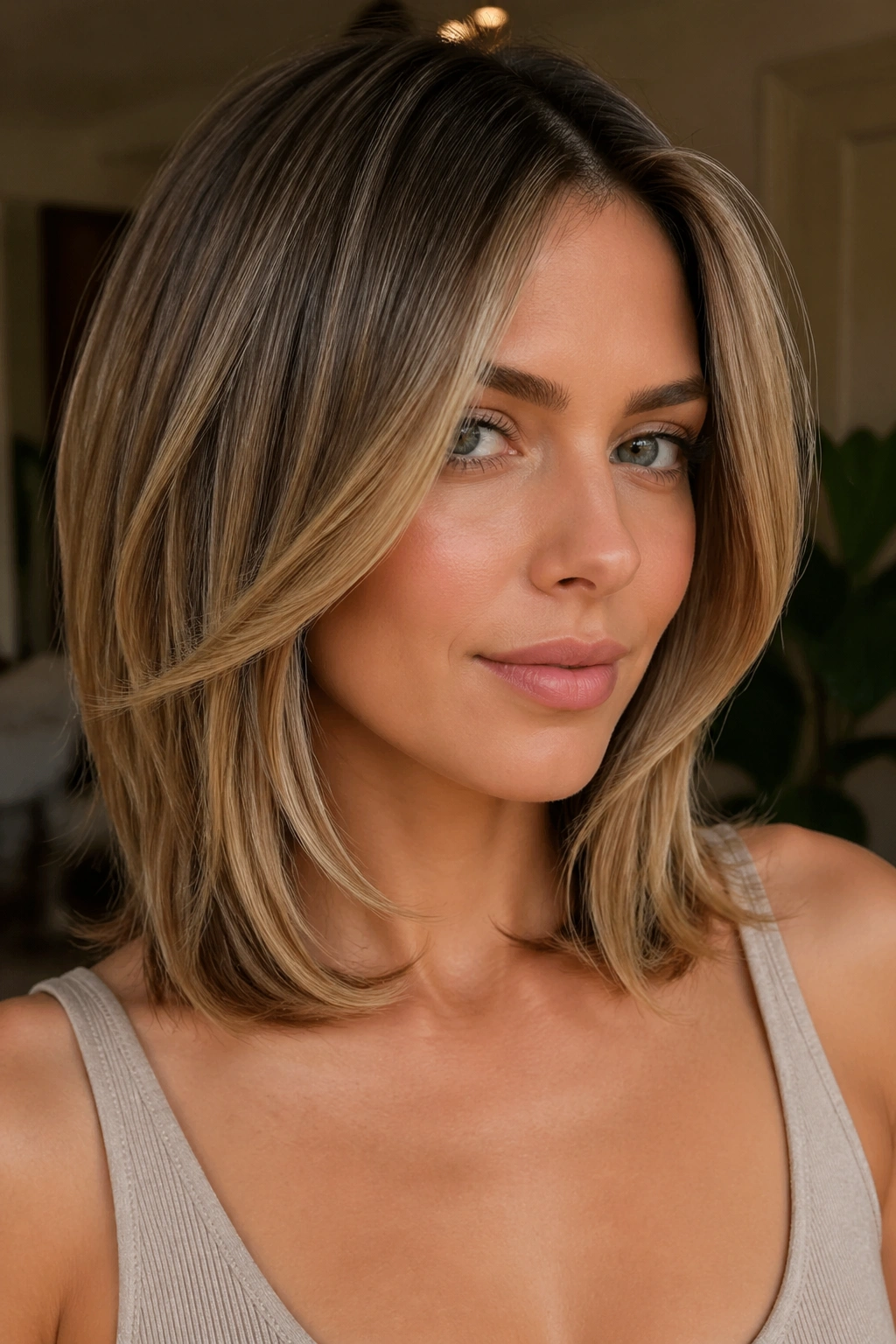
A collarbone-length bob with layers has a specific kind of softness that shorter cuts don’t always get. The hair hits that narrow space between neck and shoulder, so it moves when you walk. It brushes a coat collar. It slips into a low clip. It still looks polished when you do almost nothing to it.
That’s why this cut feels expensive. It has length, but not heaviness. The face-framing pieces matter a lot here, because they keep the front from looking blunt or boxy. The first layer usually works best when it starts around the chin or just below the cheekbone, depending on the face shape and density of the hair.
How to ask for it
- Keep the longest pieces at the collarbone.
- Cut the front so it blends into the rest of the hair, not ends abruptly.
- Remove bulk from the interior, not the perimeter.
- Leave enough length to tuck behind one ear or clip up.
A collarbone bob is the haircut I’d pick for someone growing out a shorter bob and refusing to look awkward in the process. It’s also good if you want to fake a fuller shape with a round brush and a soft bend at the ends. One pass with a large brush can do a lot here. A tiny amount of root spray helps too, but don’t pile it on.
7. Curly Layered Bob With a Rounded Shape
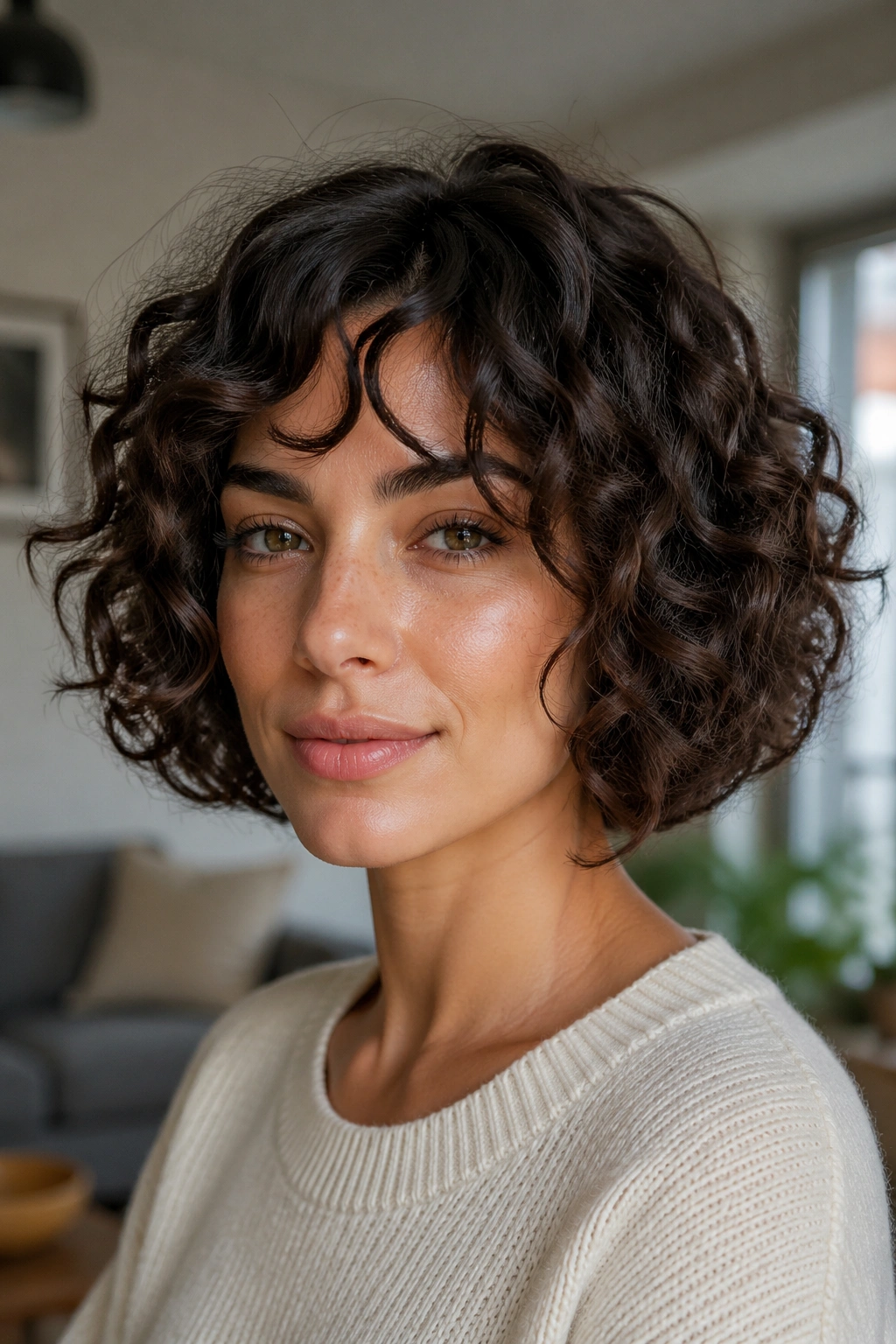
What makes a curly bob look sculpted instead of puffy? Usually, it’s the layers. Not too many. Not too high. Just enough to let the curl pattern sit in a rounded shape instead of turning into a triangle.
Curly hair needs a different plan than straight hair. If the layers are cut too short or too aggressively, the top starts standing up while the bottom shrinks. That gives you volume in the wrong place. A better layered bob follows the curl’s natural spring and removes weight where the hair actually needs it, often while it’s dry or in its natural state.
How to style it
- Apply leave-in conditioner to soaking-wet hair.
- Follow with a curl cream and a gel that gives a soft cast.
- Diffuse on low heat and low speed until the curls are set.
- Scrunch only after the hair is fully dry.
The expensive look comes from shape, not from stiffness. Curls should be soft but organized. A rounded silhouette around the jaw and cheekbones often looks far more finished than a free-for-all of layers. And please, no thinning shears on fragile curls unless someone truly knows what they’re doing. That can go sideways fast.
This cut is lovely when you want a bob with personality but still want the outline to look deliberate. It’s a sculpted shape, not a random cloud.
8. Side-Part Bob With Long Sweeping Layers
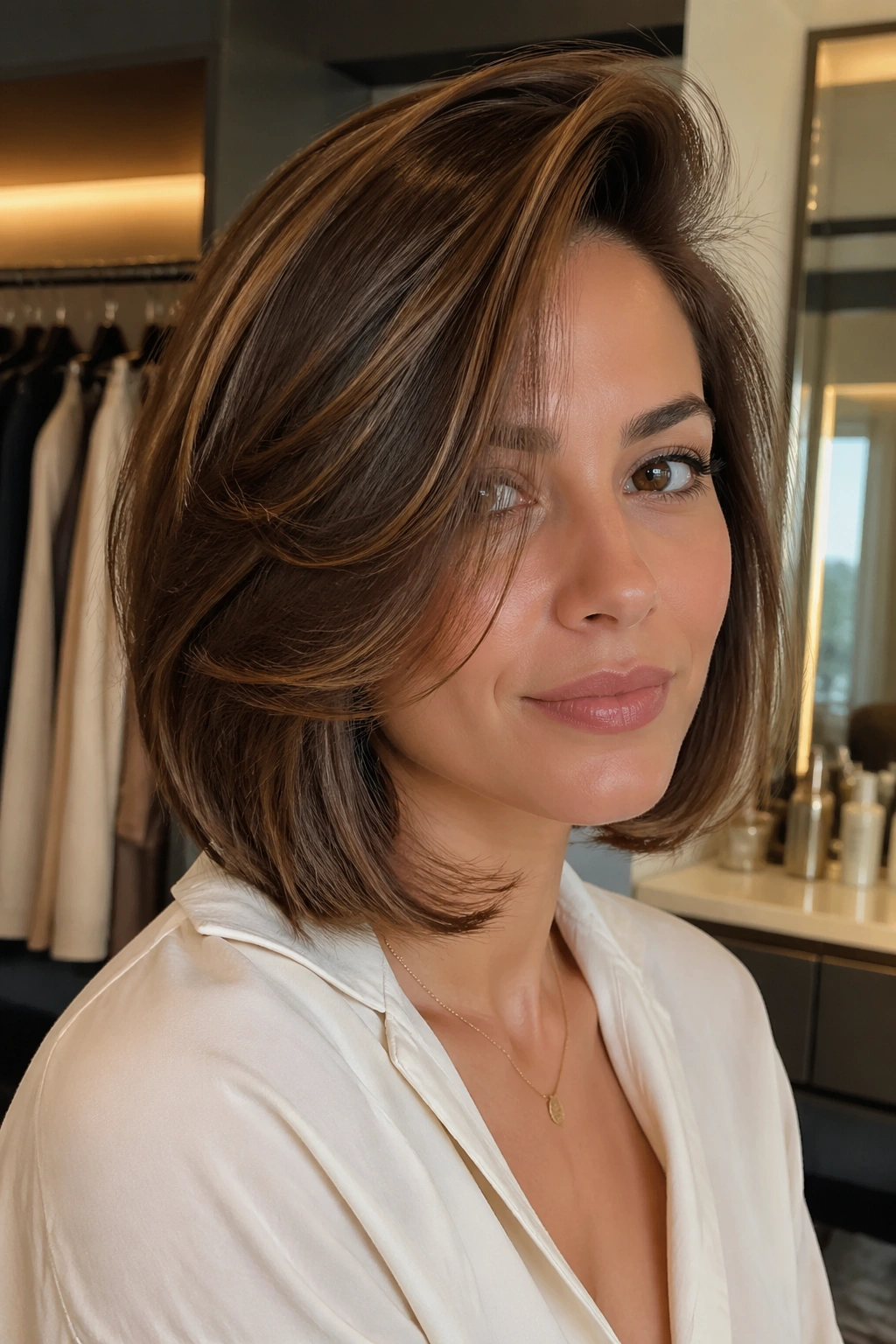
A deep side part can make a plain bob look like it belongs in a dressing room with a big mirror and good light. There’s something about the asymmetry that feels polished right away. The hair falls with more intention. The face frame opens up. The whole cut reads as styled, even on days when you haven’t done much.
The long sweeping layers matter because they keep the side part from feeling too heavy. One side carries more hair, so the other side needs length and movement to balance it out. If the front gets too short, the shape turns fussy. If the layers are too short all around, the part starts fighting the cut.
This style works especially well on round or heart-shaped faces, since the diagonal line can soften the width through the cheeks or balance a broader forehead. But the real trick is in the finish. Blow-dry the roots in the opposite direction first, then flip the part back into place. It creates lift without making the top look puffy.
A Velcro roller at the heavier side helps, too. So does a tiny tuck behind one ear. A side-part bob is one of those cuts that looks simple in photos and much richer in motion. That’s the detail people notice.
9. Razor-Cut Bob With Feathered Ends

Razor-cut bobs can look expensive fast, but they’re not forgiving. The reason they work is also the reason they can go wrong: the ends are lighter, softer, and more feathered than a scissor-cut bob. Done well, that creates movement and air. Done badly, it creates frizz and chewiness at the bottom.
This cut is especially useful on thick hair that feels too dense in a blunt shape. A razor can remove enough bulk to let the bob sit closer to the head while still keeping a soft edge. On straight hair, the feathered ends catch the light and move when you walk. On wavy hair, they give the shape a little swing that feels more relaxed than severe.
Who should skip it? Hair that’s already frizzy, fragile, or heavily damaged. A razor can make split ends look even more obvious. If the hair has a rough cuticle, the finish may look a little dry, even with product. That’s not the cut’s fault. It’s just the nature of the tool.
A heat protectant matters here, as does careful drying. Rough blow-drying destroys the point of the cut. Use a nozzle, keep the airflow moving downward, and finish with a brush or your fingers only after the hair is 80 percent dry. That keeps the ends soft instead of ragged.
10. Layered Bob With Curtain Bangs
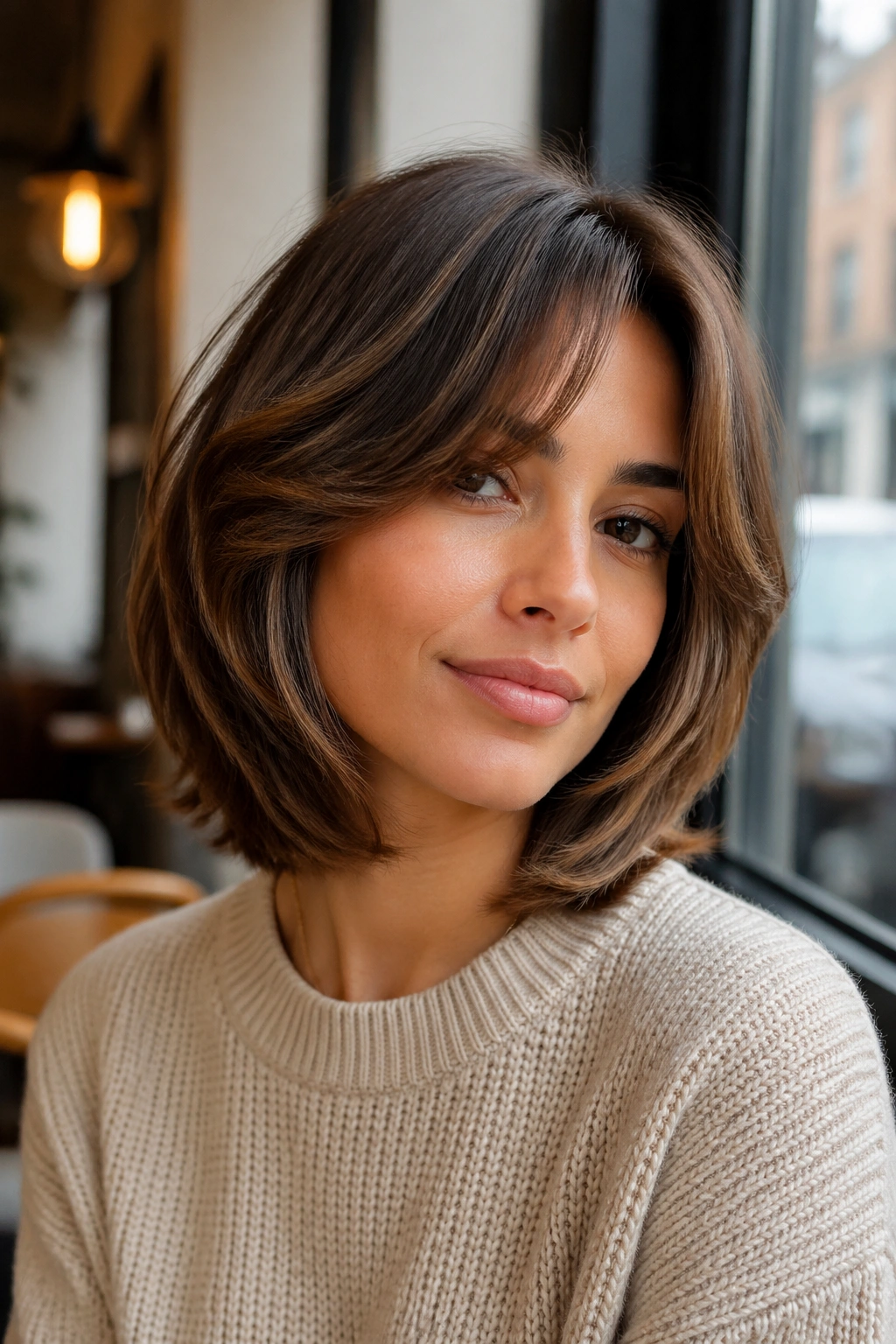
Curtain bangs change a bob faster than almost anything else. They soften the front, frame the face, and stop the haircut from feeling too strict. Unlike straight-across bangs, they blend into the layers, which is why this combo often looks more expensive and more wearable.
The bangs should be cut with enough length to sweep away from the center and fall somewhere around the cheekbones. Too short, and they fight the rest of the haircut. Too long, and they disappear into the sides. The sweet spot lets the fringe split naturally and fold into the front layers so the whole cut looks connected.
The sweet spot
- Shortest point at or just below the cheekbone.
- Longer sides that melt into the bob at the jawline.
- A soft middle part or a loose off-center part.
- Enough length to tuck behind the ears when you want them out of the way.
This style is kind to grow-out, which matters more than people admit. Bangs that blend into the cut are easier to live with than blunt fringe that needs constant trimming. A round brush and a quick bend away from the face usually does the trick. Keep the roots lifted, keep the ends soft, and don’t overbrush the fringe into a single flat curtain.
The result feels expensive because it’s layered without looking busy.
11. Inverted Bob With a Tapered Nape
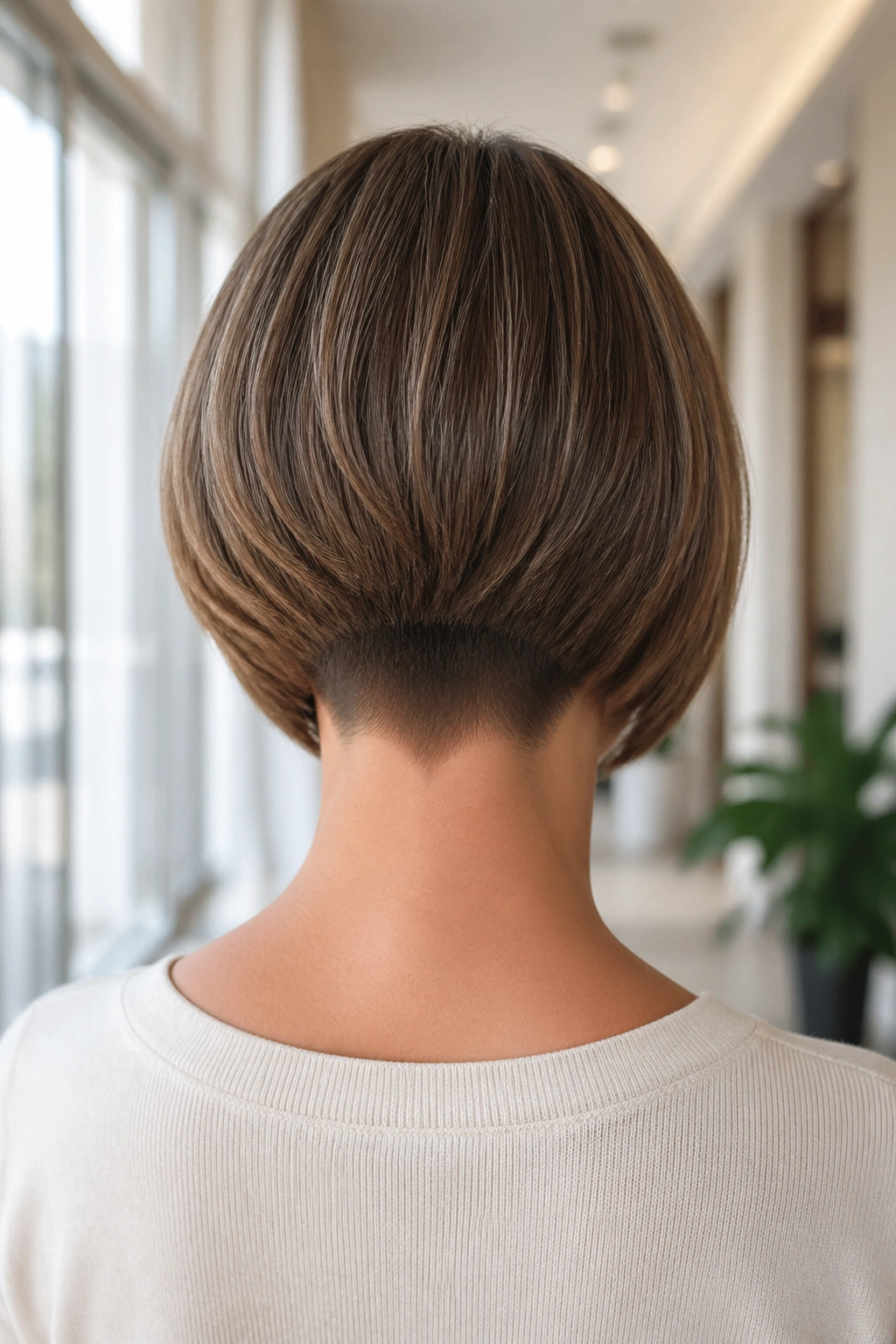
When you want the back to hug the neck and the front to swing forward, the inverted bob is the cleanest way to get there. It’s a sharper shape than most bobs, and that precision is a big part of the appeal. The back is tapered and snug. The front is longer and often grazes the chin or lower.
The expensive look comes from the neatness of the graduation. There should be no flaring at the nape, no bulky shelf under the crown, and no random short bits sticking out. If the line is smooth, the whole haircut looks tailored. A bad inverted bob looks like it was cut with a ruler and impatience. A good one looks expensive because every angle has a reason.
This cut loves shine. It also loves regular maintenance. If the neck area grows out too much, the whole silhouette loses its crisp edge. Every 6 to 8 weeks is a sensible trim window if you want the back to stay clean.
What makes it look expensive
- The nape is tight and neat.
- The angle from back to front stays smooth.
- The top is blended, not bulky.
- The front is soft enough to move when you turn your head.
A flat iron bend on the front pieces can make the shape even sleeker. Just keep the bend gentle. If the front curls too hard, the line gets noisy. This cut likes control more than drama.
12. Asymmetrical Wavy Bob With Invisible Layers
If you want one layered bob that looks finished even when it air-dries, choose asymmetry. A slight difference in length from one side to the other keeps the shape from feeling too perfect, and that tiny imbalance is what makes it look intentional instead of ordinary.
The best versions use invisible layers inside the cut, so the outside line stays smooth while the hair still has movement. Add a soft wave and the whole thing looks expensive in that low-key, flattering way that never seems to try too hard. One side might fall 1 to 2 inches longer than the other. Not enough to shout. Just enough to give the cut a point of view.
This is the bob I’d recommend for someone who wants polish but does not want to babysit their hair every morning. A light wave cream, a 1.25-inch iron, or even a quick braid-and-release routine can give the shape enough body. Don’t over-style it. The asymmetry carries a lot of the visual work.
A good asymmetrical bob looks like the haircut was designed for your face rather than pulled from a catalog. That’s why it lands so well. It has movement, a clean edge, and a small twist that keeps it from feeling predictable. And honestly, that’s the whole game with an expensive-looking bob: clean shape, smart layering, no wasted effort.
