



A good double afro puff can do what a lot of easy natural hairstyles promise and fail to deliver: it can look cute in five minutes and stay put through a full day.
The part people miss is hair length. Double afro puff styles are not only for long coils or stretched-out curls. A tight TWA can make tiny puffs. Shoulder-length hair can make two full clouds. Stretched hair can sit somewhere in the middle, which is often the sweet spot.
What changes the look is usually placement, not length alone. Move the puffs a little higher and they read playful. Set them lower and the whole style feels softer. Add a clean part, a twist base, or a scarf, and the same head of hair starts telling a different story.
That flexibility is why I keep coming back to double puffs when someone wants a style that feels easy but still looks thought out. The trick is knowing which version flatters your hair where it is, not where some photo says it should be. The ten styles below cover short, medium, and long natural hair without pretending every head needs the same setup.
1. Classic Center-Part Double Afro Puffs
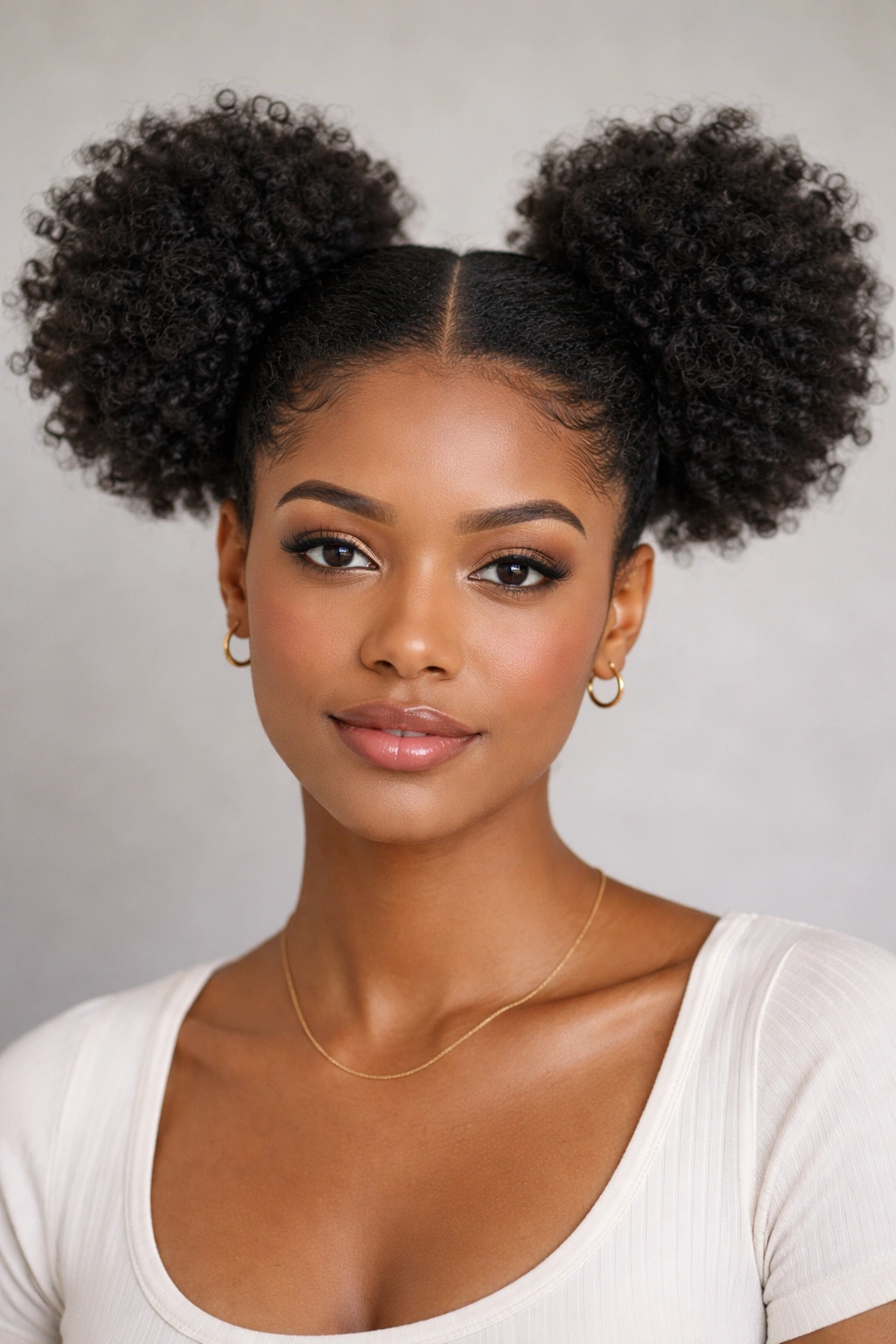
If you only learn one version, make it this one. A clean center part and two even puffs are the plain white T-shirt of natural hair styles: simple, direct, and hard to mess up when the prep is good. It works on short hair, but it really comes alive once you have enough length to let the puffs round out instead of sitting flat.
The biggest win here is symmetry. Your eyes go straight down the middle, and the style feels tidy even when the texture itself is wild and airy. On shorter hair, place the elastics closer to the crown so the puffs don’t disappear against your head. On longer hair, move the ties back a little so the curls can fan out.
How to keep the part clean
Use the tail of a rat-tail comb on damp or lightly moisturized hair, not soaked hair. Wet hair clumps and shifts, and that makes the part look crooked even when your hands were careful. A little edge control or gel along the part line helps, but don’t smear it everywhere or the style starts looking stiff.
A center part also gives you a built-in check for balance. If one puff looks fuller, don’t panic. One side is usually sitting a half-inch farther forward or the elastic is tighter than the other. That’s all it takes.
Where to place the bands
- Short hair: sit the bands just above the ears so the puffs stay visible.
- Medium hair: place them between the temple and crown for a rounder shape.
- Long hair: pull them back a touch so the length doesn’t drag the puff downward.
Best tip: fluff the puff with your fingers before you smooth the base too much. Once the base goes flat, the style loses the soft shape that makes it work.
2. High-Crown Double Puffs That Sit Up and Out
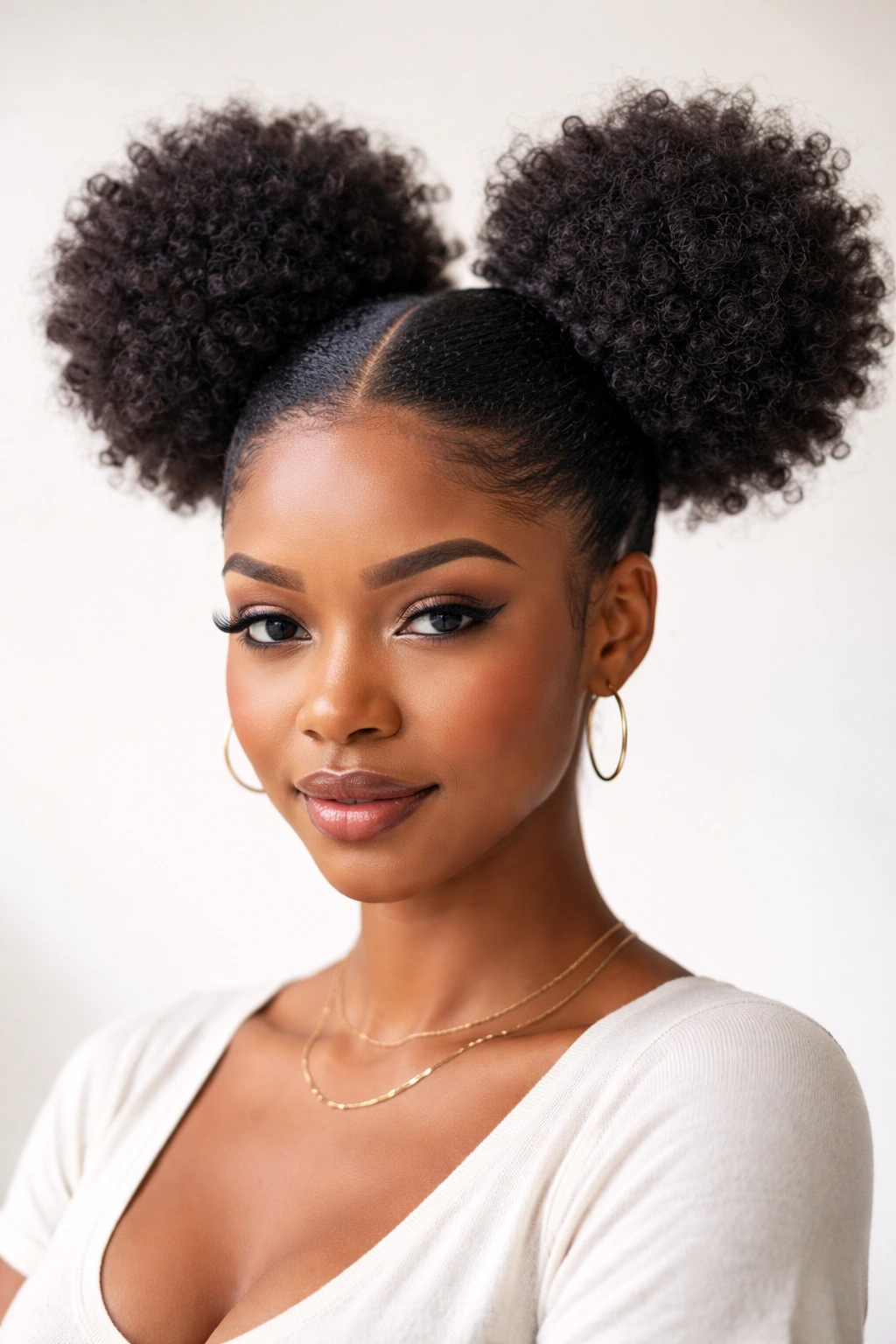
High placement changes the whole mood. Push the puffs toward the crown and they stop reading sweet or school-uniform and start looking sharp, awake, and a little bold. This is the version I reach for when I want the face to look lifted without adding extra pieces or complicated parting.
Height matters even more on fuller hair. Dense coils can eat up space fast, so a high crown puff keeps the style from spreading sideways and getting boxy. On long hair, it gives you a bigger silhouette. On shorter hair, it makes the hair look intentionally compact instead of unfinished.
Placement changes everything.
The trick is not to shove all the hair up and hope for the best. Pull the base smooth, secure it with a snag-free elastic, then use your pick or fingertips to fan the puff outward at the top. If you have a lot of shrinkage, stretch the roots a little with your fingers before you tie them down. That small move keeps the puff from looking like a tiny ball sitting too close to the scalp.
I like this style most when the hair already has some stretch from twists, braids, or a dry stretch method. You get volume without a lot of frizz around the base, and the shape reads cleaner in person. If your edges are tender, don’t yank the puffs all the way to the front hairline. A half-inch back makes the style look just as intentional and gives your scalp a break.
3. Low Nape Double Puffs for a Softer Shape
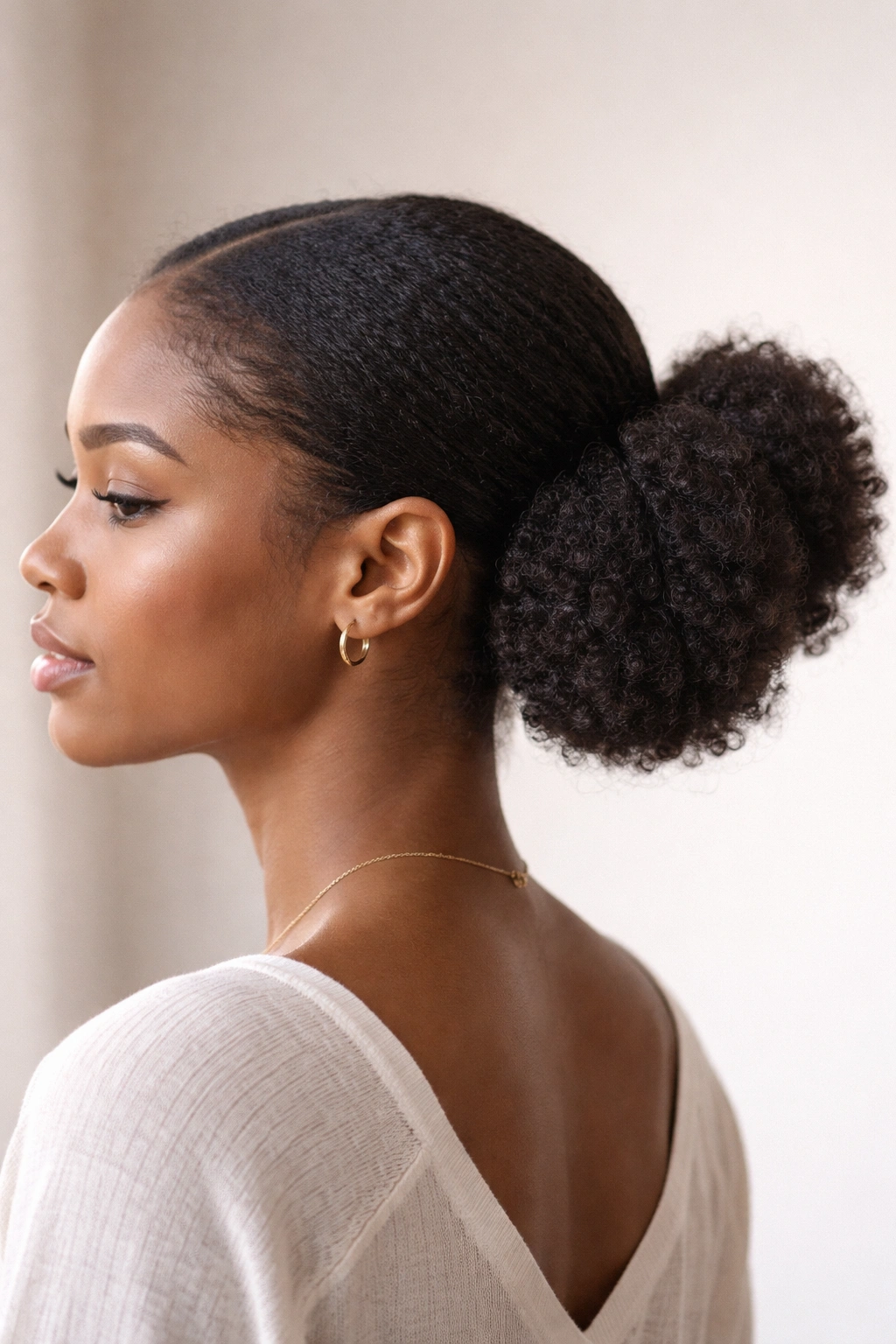
Why do low double puffs feel so different from high ones? Because the weight sits lower, and that alone changes the whole read. The style feels calmer, less top-heavy, and a little more relaxed. On days when high puffs feel like too much work or your scalp wants a break, this is the version I’d choose first.
Low placement also helps when your hair is long enough to fight gravity. Instead of stacking all that length upward, you let it pool out near the nape. That gives the puffs a softer outline, especially if the hair has been stretched or lightly detangled. If your hair is shorter, the low position can still look neat; it just gives you a more compact silhouette.
This style is quietly good for people who wear their hair out a lot. It doesn’t tug the temples as hard, and it doesn’t ask for the super-clean crown line that higher styles need. If the edges are fragile or your scalp gets sore fast, low puffs are usually the smarter pick.
A small side benefit: low puffs are easier to wear under hats and hoods. Not glamorous, sure, but useful. And useful matters.
If you want the puffs to look fuller, keep the base smooth but not flattened. Pull the hair back with your hands first, then secure it, then gently lift the puff itself with your fingers. That little sequence keeps the style from sagging at the back.
4. Side-Part Double Afro Puffs with an Asymmetrical Edge
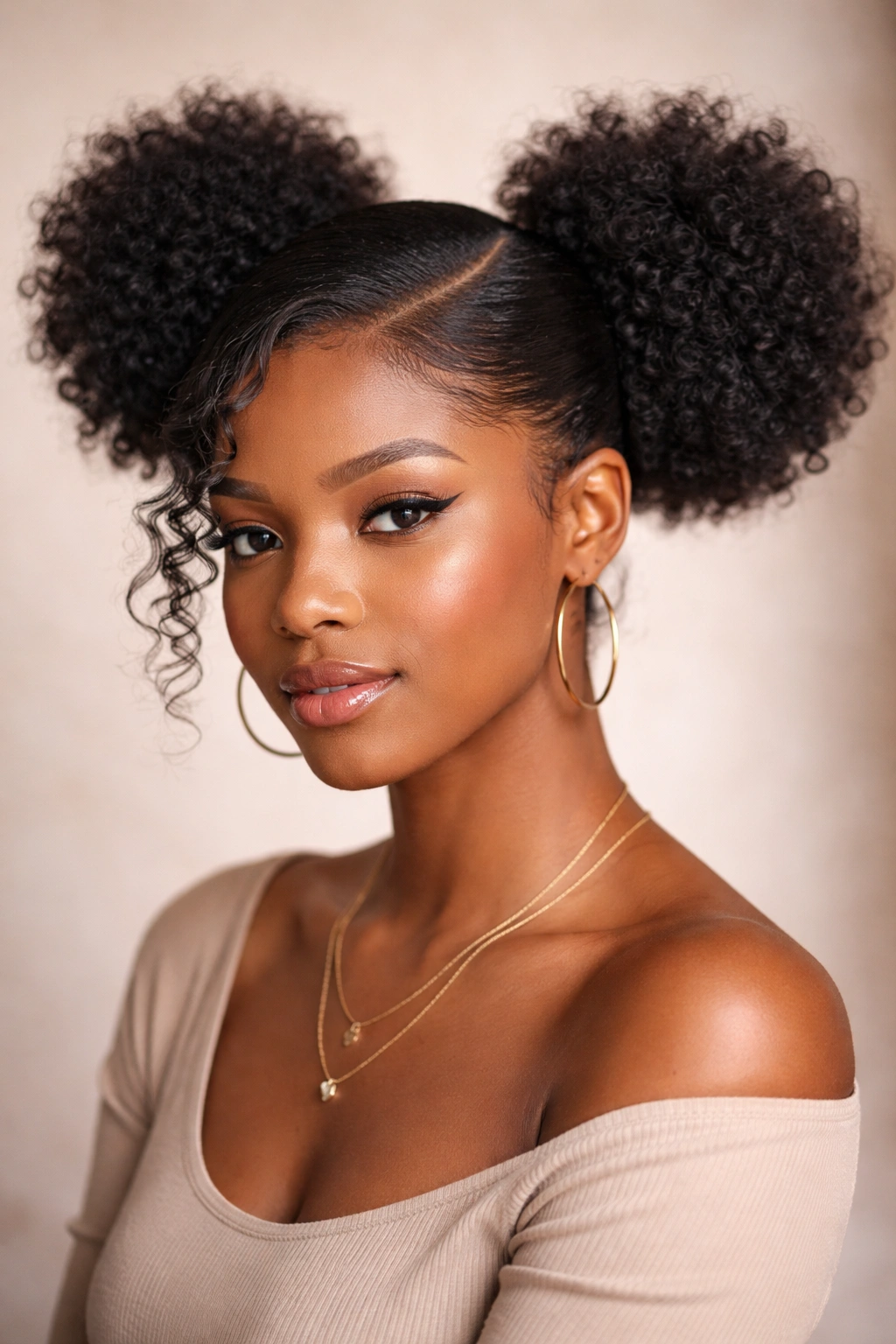
Center parts have their place, but a side part can fix a style that feels too tidy. Shift the line one to two fingers off center and the whole look wakes up. One puff gets a little more hair, the other gets a little less, and the imbalance gives the style movement before you even touch the curls.
This version is especially good when the hair has uneven shrinkage. One side often dries or fluffs up differently anyway, so instead of fighting that, let the part work with it. A deeper side part can also soften the forehead area and make the style feel less square around the face.
- A deep side part gives one puff a fuller, heavier look.
- A shallow side part is easier if your hair resists straight lines.
- A curly braid-out base makes the asymmetry look more finished.
- A small accessory near the part can keep the style from feeling lopsided in a bad way.
The part does not need to be dramatic. In fact, too much drama can make the style look accidental instead of styled. Start with a mild shift, then check both sides in a mirror before you commit to the elastics. If one puff ends up too small, move the part a half-inch and try again. That sounds fussy, but it is usually faster than redoing the whole head.
This is the version I like for people who want double puffs but don’t want them to read childish. The slight imbalance gives the style a bit more attitude. Not a lot. Just enough.
5. Mini Double Puffs for Short Natural Hair
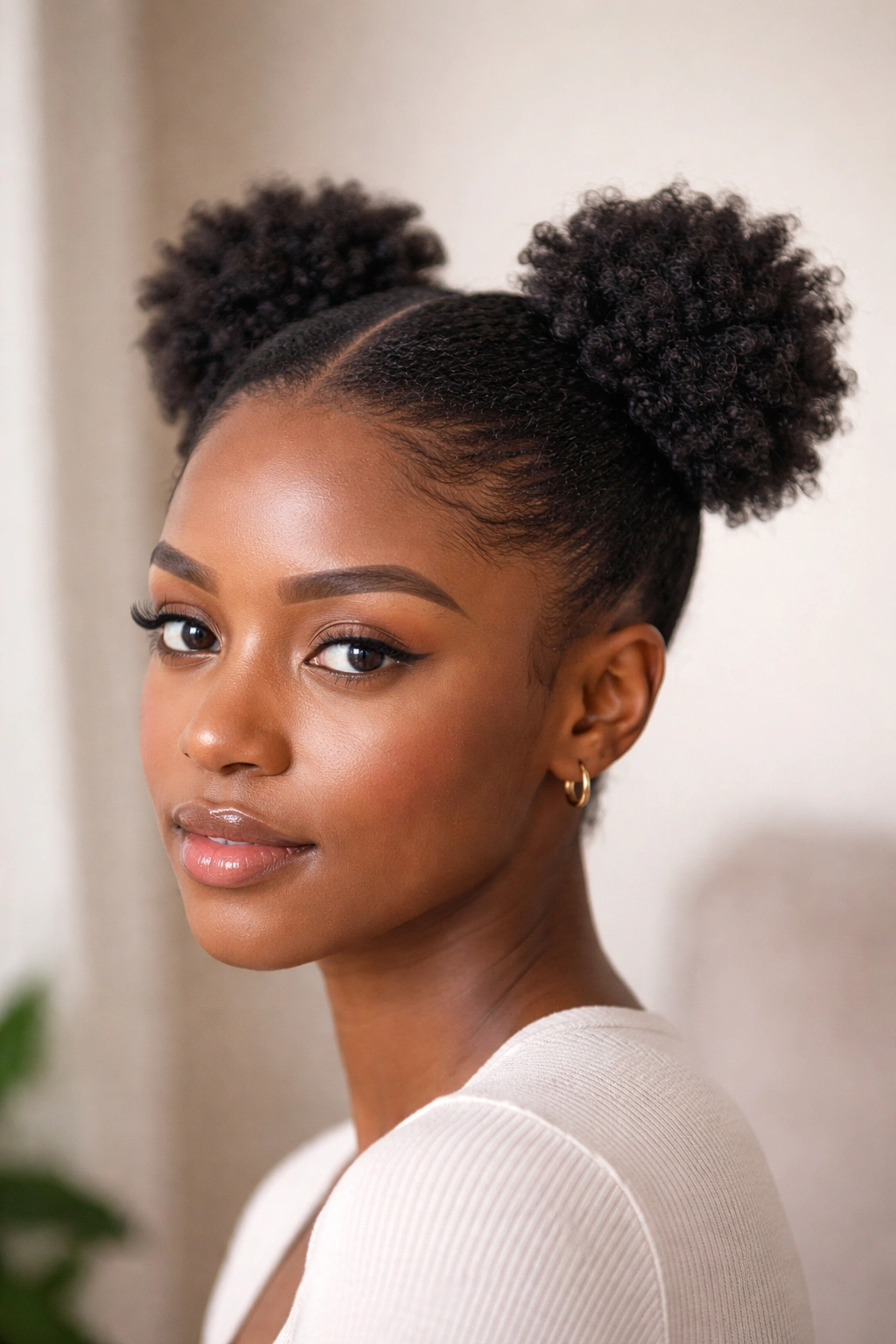
Short hair is not a problem here. It often looks sharper because the puff shape stays tight and the style doesn’t sag under its own weight. Even 2 to 3 inches of coily hair can make two small puffs if you place the bands low, keep the sections neat, and stop expecting the puff to look like a big cloud right away.
That last part matters. Tiny puffs are not a downgrade. They are their own look. If the hair is in a TWA or just past it, the puffs may sit more like gathered coils than full spheres, and that is fine. I actually like that version because it feels crisp instead of overdone.
The easiest way to get the shape is to moisturize with a light leave-in, smooth a little gel around the perimeter, then use a small elastic to gather each side without stretching the curls too hard. After that, separate the puff gently with your fingers. Don’t rake through it. That makes short hair puff out in odd places and can expose parts you meant to keep tucked.
A one-sentence rule: short hair needs a soft hand.
If the front is too short to blend into the puff cleanly, leave it alone and let it be part of the texture. Trying to force every coil into the same direction usually creates more fuzz, not less. Short double puffs look best when they feel neat at the base and naturally fluffy at the top. That balance is the whole game.
6. Stretched Double Puffs for Extra Length
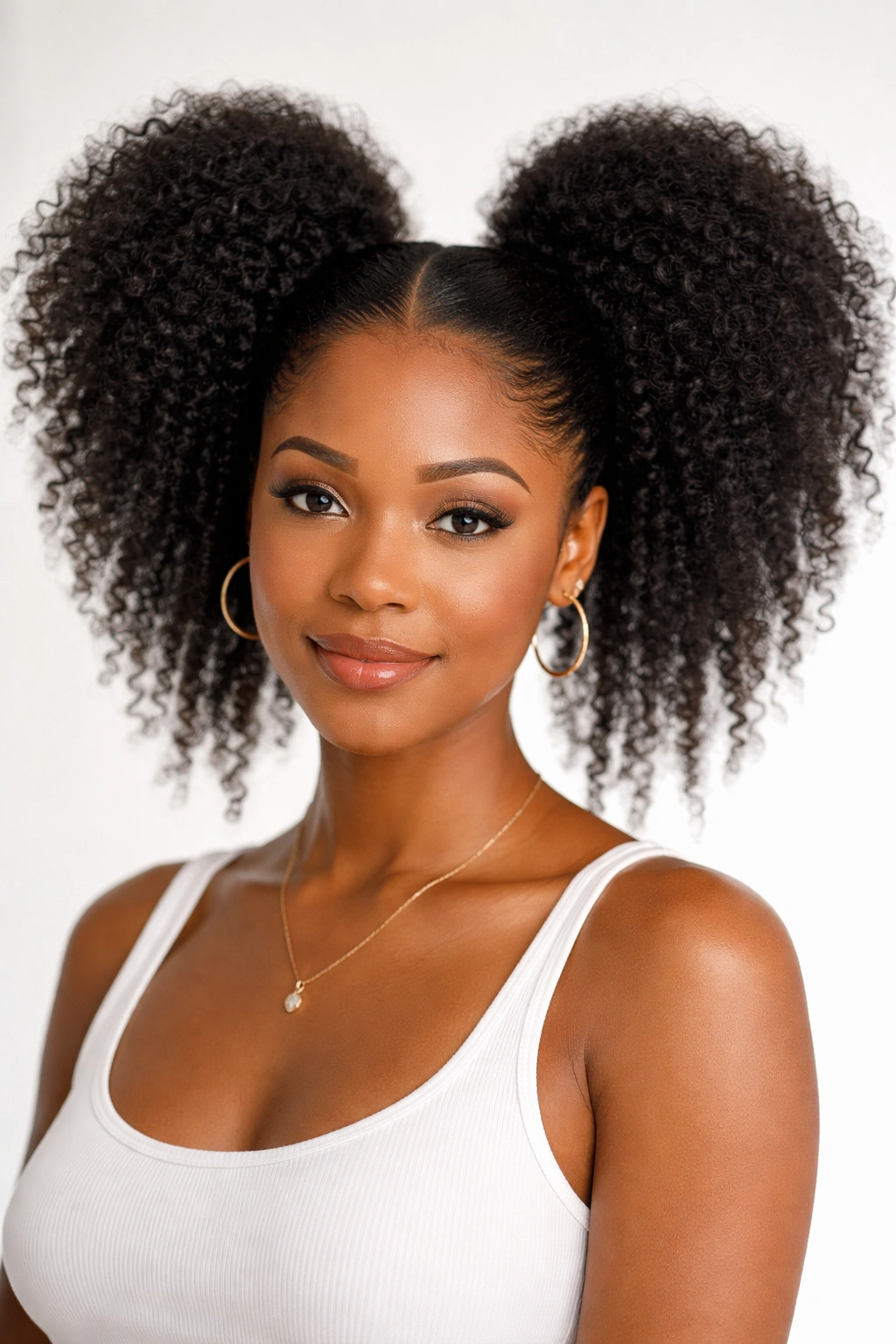
Stretching your hair does not make a double puff less natural. It just gives the style room to breathe. If shrinkage hides half your length, stretching through braids, twists, banding, or a gentle blow-dry on low heat can turn tiny puffs into fuller ones without changing the basic shape.
How to stretch without heat
- Braids overnight give the hair a soft, rippled stretch and keep the ends from tangling.
- Two- or four-strand twists are easier to take down than tight braids and still add length.
- Banding works well when the hair is thick and needs more control from root to end.
- Low-heat blow-drying with tension can help, but only if you keep the nozzle moving and use heat protection.
The nice thing about stretched hair is that it makes the puff look bigger without piling too much product at the roots. That is a mistake I see all the time. Heavy cream near the base can collapse the puff before lunch. If you need moisture, put it mid-length and toward the ends, then keep the roots light.
How to keep it fluffy, not limp
Use a pick only at the roots, not through the whole puff. You want lift, not a fluffy mess that looks separated. A little frizz is welcome here; too much oil is not. The goal is a puff that feels airy when you shake your head, not one that droops because it has been weighed down.
Stretched double puffs work especially well on medium and long hair, but short hair can use the same idea if you want a slightly fuller shape. You do not need bone-straight length. You just need enough stretch to let the puff sit up instead of bunching too tightly at the band.
7. Braided-Base Double Afro Puffs
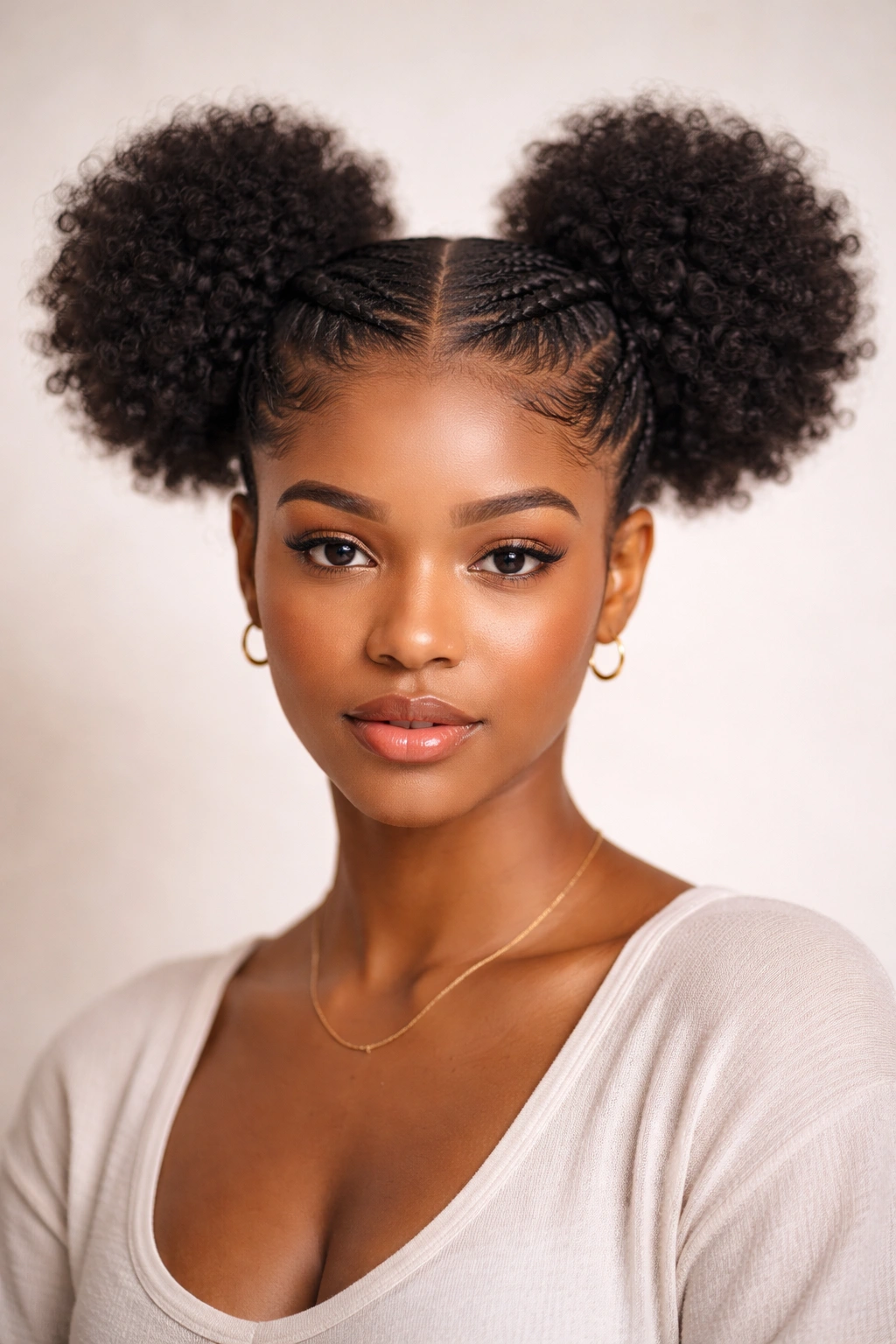
If the front of your hair frizzes up fast, braids at the base solve more than one problem. They give the style a clean frame, they help the puff hold its shape longer, and they make the whole thing look a little more deliberate. I like this version when plain puffs feel too loose around the hairline.
The braid can be simple. One braid on each side is enough. You can also do two small braids per side if your hair is thick and the front needs more control. The point is not decoration for its own sake. The braids anchor the puff so the hairline stays neat while the puff itself stays soft.
What the braids actually do
- They keep the base flatter, which helps the puff sit higher.
- They hold layers in place, useful when your hair has different lengths.
- They reduce daily touch-ups, which matters on busy mornings.
- They add texture near the part, so the style does not look plain.
The only thing I’d watch is tension. Braids can look sharp, but they should not feel tight enough to make your temples sore. If you feel pulling when you smile or lift your brows, that’s your scalp saying no. Ease up.
Braided-base puffs suit medium and long hair especially well, but they can help shorter hair too because the braid gives the front something to hold onto. If you want the style to read polished without being fussy, this is one of the strongest options. It looks like you meant it, which is half the point.
8. Twisted-Base Double Puffs with Flat Twists
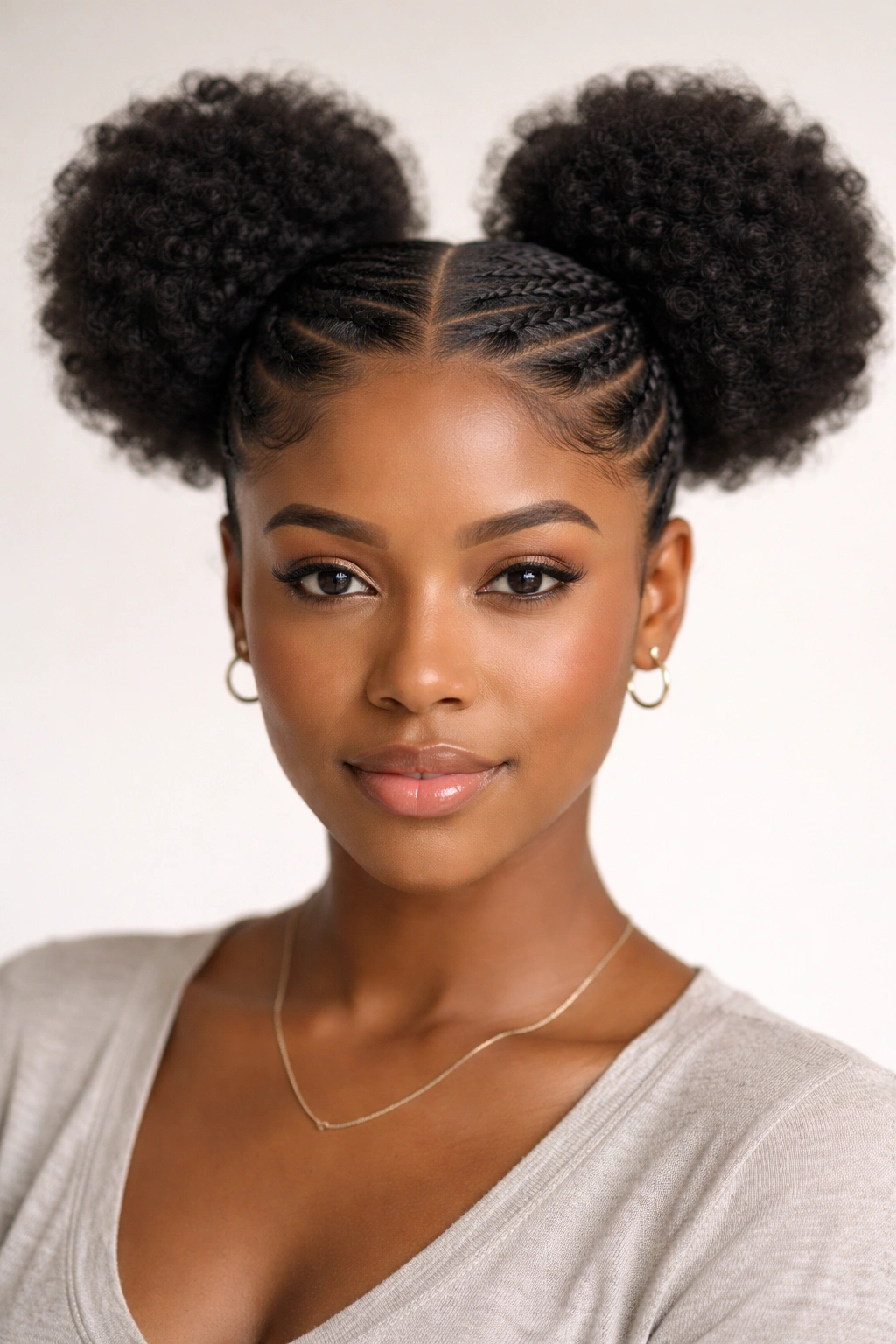
Flat twists are the gentler cousin of the braided-base puff. They lie closer to the scalp, they feel softer in the front, and they give the style a smoother line without turning the hairline into a hard border. When I want double puffs to look neat but not rigid, this is where I go.
Why flat twists change the look
Flat twists keep the front from puffing up too much before the rest of the style is ready. That matters on hair with a lot of shrinkage or layers that escape the elastic the second you stop looking at them. Twists also make the style feel a little more relaxed than braids, which is handy if your hair gets sore fast or if you just don’t want a tight front section.
The pattern itself adds detail. A pair of twists going back into each puff gives the style a little movement before the puff even starts. On medium hair, that movement helps the style look balanced. On longer hair, it keeps the front from competing with the puff volume.
A tiny amount of gel or edge control along the twist part can clean up flyaways, but keep it light. Too much product leaves the front glossy in a way that looks flat, and flat is the last thing these puffs need.
If braids feel too firm and simple puff bases feel too plain, flat twists sit nicely in between. They are neat, but they do not feel severe. That’s why they work so well for school, work, or any day when you want your hair to look planned without looking overworked.
9. Double Afro Puffs with Bangs or a Puff Fringe
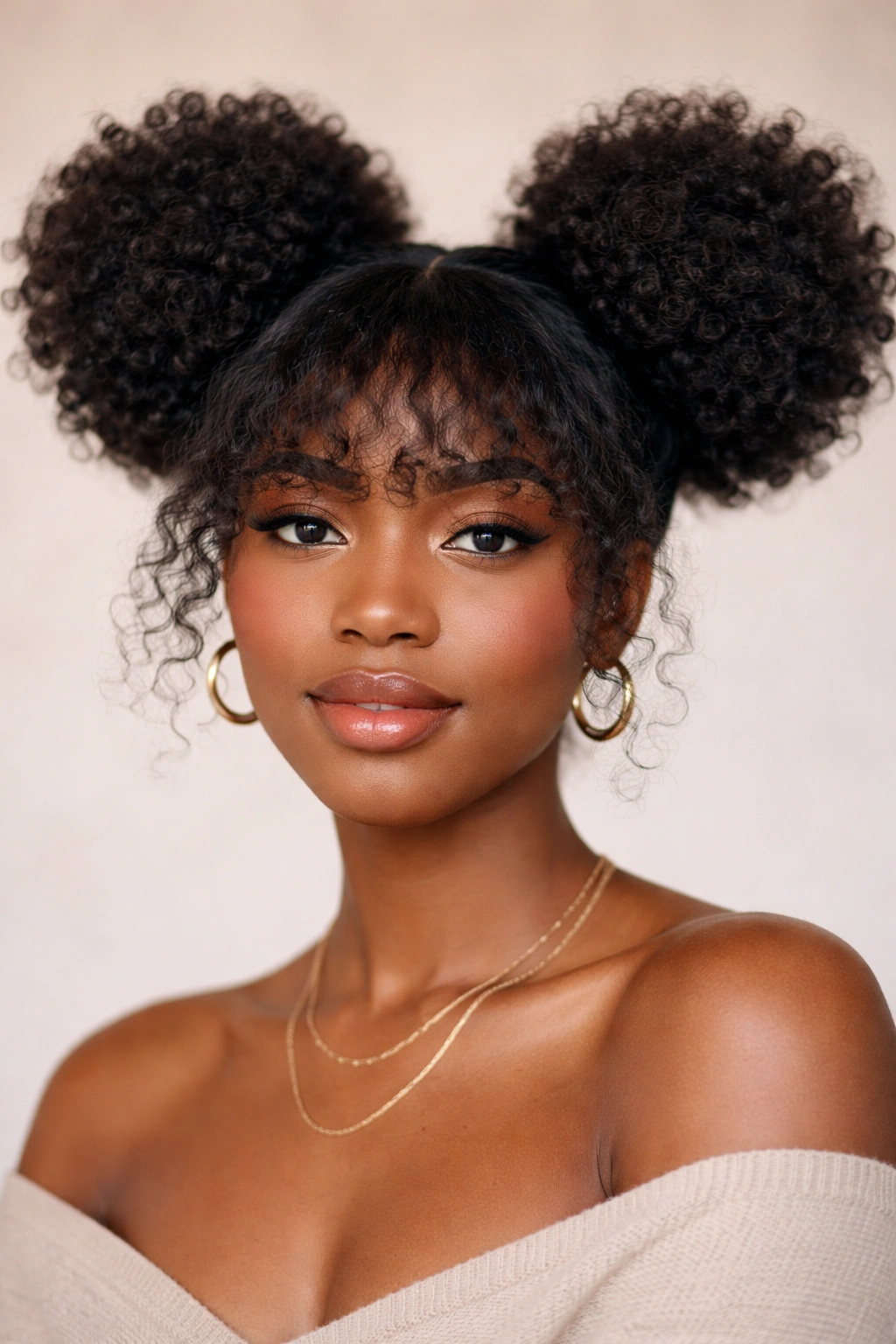
A little hair on the forehead changes everything. Leave out a curled fringe, a few twist-out pieces, or a small front section and the style stops feeling like two round shapes sitting on the head. It gains softness. It also gives shorter hair somewhere to go when the puffs themselves need more volume.
This version works especially well if your forehead tends to feel bare when all the hair is pulled back. A loose fringe breaks up the space and makes the style feel friendlier. On longer hair, it keeps the puffs from looking too heavy at the top. On shorter hair, it can be the detail that makes the whole style feel finished.
I like a fringe that still looks like hair, not a shellacked wave. Let the front section keep a little movement. Twist it lightly, coil it, or stretch it just enough so it falls where you want. If you glue it down with too much gel, the rest of the style has nowhere to breathe.
A one-sentence warning: heavy bangs can swallow the puffs.
That is the line to watch. If the fringe is too thick or too long, it steals attention from the puffs and turns the style into something else entirely. Keep the front light, keep the ends soft, and let the puff stay the main event. That balance works on short, medium, and long hair because the fringe can change scale while the puffs handle the volume.
10. Accessorized Double Puffs with Scarves, Clips, and Beads
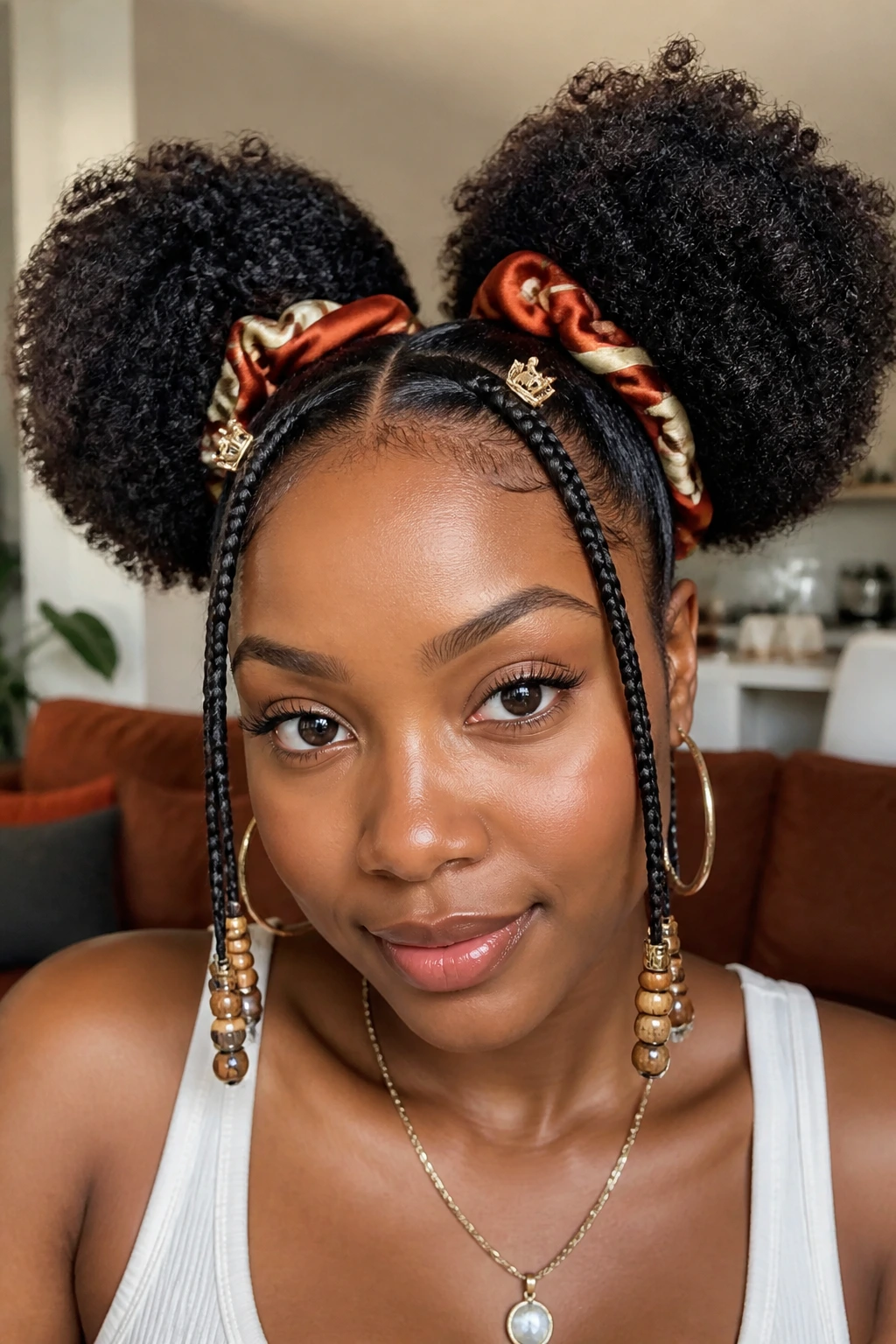
Accessories can be the difference between “I threw this up” and “I meant this.” They do not rescue a bad puff, and they should not try to. What they do is sharpen the style, break up empty space, and give the eye a place to land. A plain double puff is already good. Add one well-placed accent, and it starts to look finished.
Scarves work best when they sit at the base of the puffs or wrap the front section like a headband. Clips and barrettes are good near the part line or just above the ear, where they can catch light without taking over. Beads belong more at the ends of braids or twists leading into the puff, not stuffed randomly into loose curls. That keeps the style from looking busy.
A few clean pairings:
- Satin scarf at the base for a polished, soft finish.
- Small gold cuffs on braided or twisted bases.
- Snap clips or barrettes on one side when you want asymmetry.
- Clear or matte elastics if you want the accessories to stay quiet.
- Beads only when the puffs have enough length or a braided lead-in to support them.
One accent is usually enough. Two if you’re careful. More than that and the style starts to fight itself. I’d rather see one strong piece—say a patterned scarf with simple puffs—than six little decorations all asking for attention.
The nicest thing about this section is that it works across hair length. Short hair can use tiny clips or a scarf. Long hair can carry beads, cuffs, and larger wraps. The same basic puff stays the same, but the mood changes. That’s the real charm of double afro puff styles: once you know where to place the hair, the rest is mostly taste, and taste is easier to build than people think.
