



Tiny curls do not need to be wrestled into submission to look polished. They need a gentle hand, a clean part, and a style that respects the hairline.
Afro hairstyles for baby girls work best when they look sweet and feel soft. That sounds obvious until you see how many styles are pulled too tight, weighed down with clips, or sprayed into a stiff little helmet that lasts about as long as one nap. The advice that comes from pediatric hair care and dermatology circles tends to be refreshingly plain: keep tension low, use moisture, detangle with slip, and stop before the scalp starts complaining.
That tracks with real life. A baby’s hair can be fine, dense, coily, fluffy, patchy, or all of those at once depending on the day, and a good style has to work with that changing texture instead of fighting it. The cutest looks are usually the ones that can survive a car ride, a nap, a snack, and a sudden burst of wriggling without turning into a mess.
Softness wins here. Every time.
1. Classic Afro Puff on the Crown
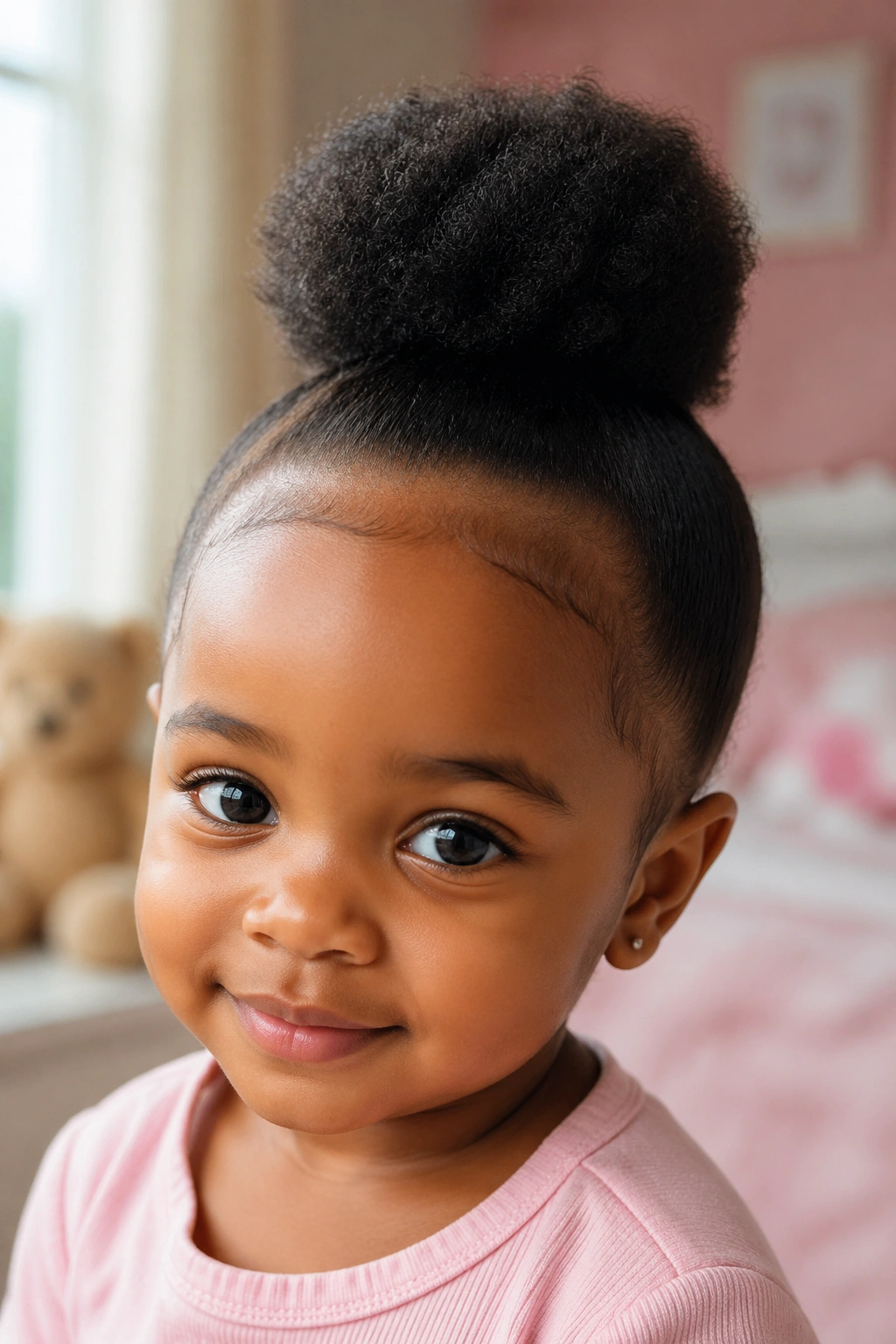
The classic puff is the style I keep circling back to when the goal is simple: make the hair look finished in under five minutes and keep the scalp calm while you do it. It sits high, it frames the face, and it works with short or medium baby hair as long as there’s enough length to gather gently at the crown.
Why It Works on a Baby Head
The shape does a lot of the work for you. Instead of chasing perfect parts or trying to smooth every curl flat, you let the hair rise where it wants to rise and secure it once with a soft band.
That matters. A baby head does not need a tight style to look neat, and this one looks tidy even when the puff is a little uneven. I actually like that about it. It feels honest.
Start with a light mist of water or a water-based leave-in conditioner, then use your fingers or a wide-tooth comb to gather the hair at the crown. If the hair is especially dry, rub a pea-sized amount of curl cream between your palms first so the ends get coated without getting greasy.
A soft bow or fabric scrunchie finishes the look, but don’t overdo the accessories. One good puff is enough.
Best tip: stop tightening the band the moment the hair lifts. If the roots flatten hard, it’s too much.
2. Two Mini Afro Puffs with Soft Parts
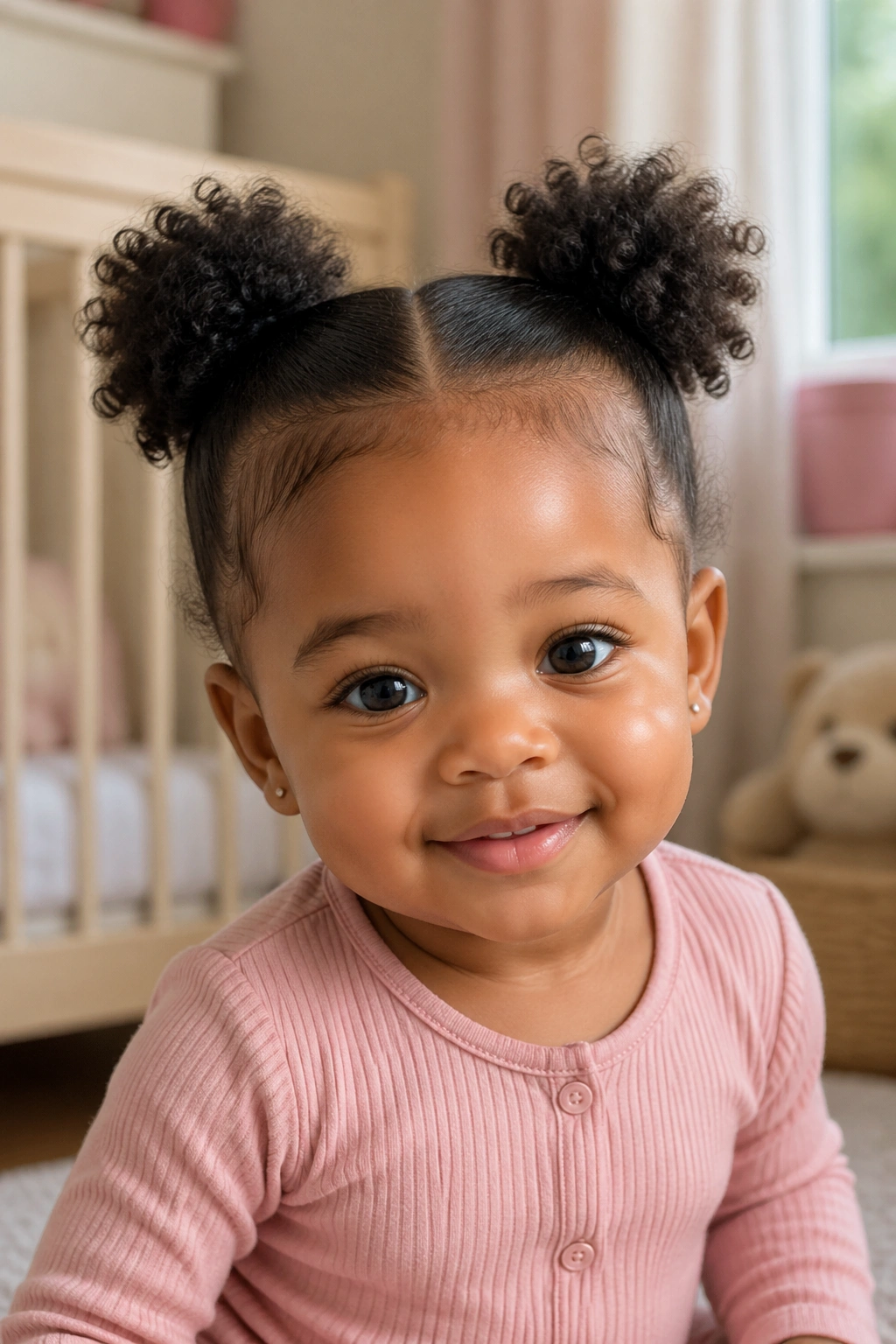
Two mini puffs solve the “one puff is too much, but the hair still needs shape” problem. They are playful without being fussy, and they suit babies whose hair is thick enough to split into two balanced sections.
This style also tends to sit well on round little faces. The puffs can sit high and a little wide, which gives a soft, sweet look without making the hair lie flat against the scalp.
Keep the parting simple. A clean middle part looks neat, but a slightly off-center part can be kinder if one side is denser than the other. Don’t chase perfect symmetry. Babies do not need architectural precision.
A small amount of leave-in and a soft brush at the root are usually enough. If the hairline is delicate, use your fingertips instead of a brush near the edges and let the curls stay fluffy instead of slicked down.
The charm here is in the balance. Two puffs feel more finished than one, but they still let the curls look like curls.
3. Side-Part Afro Puff for Baby Girls
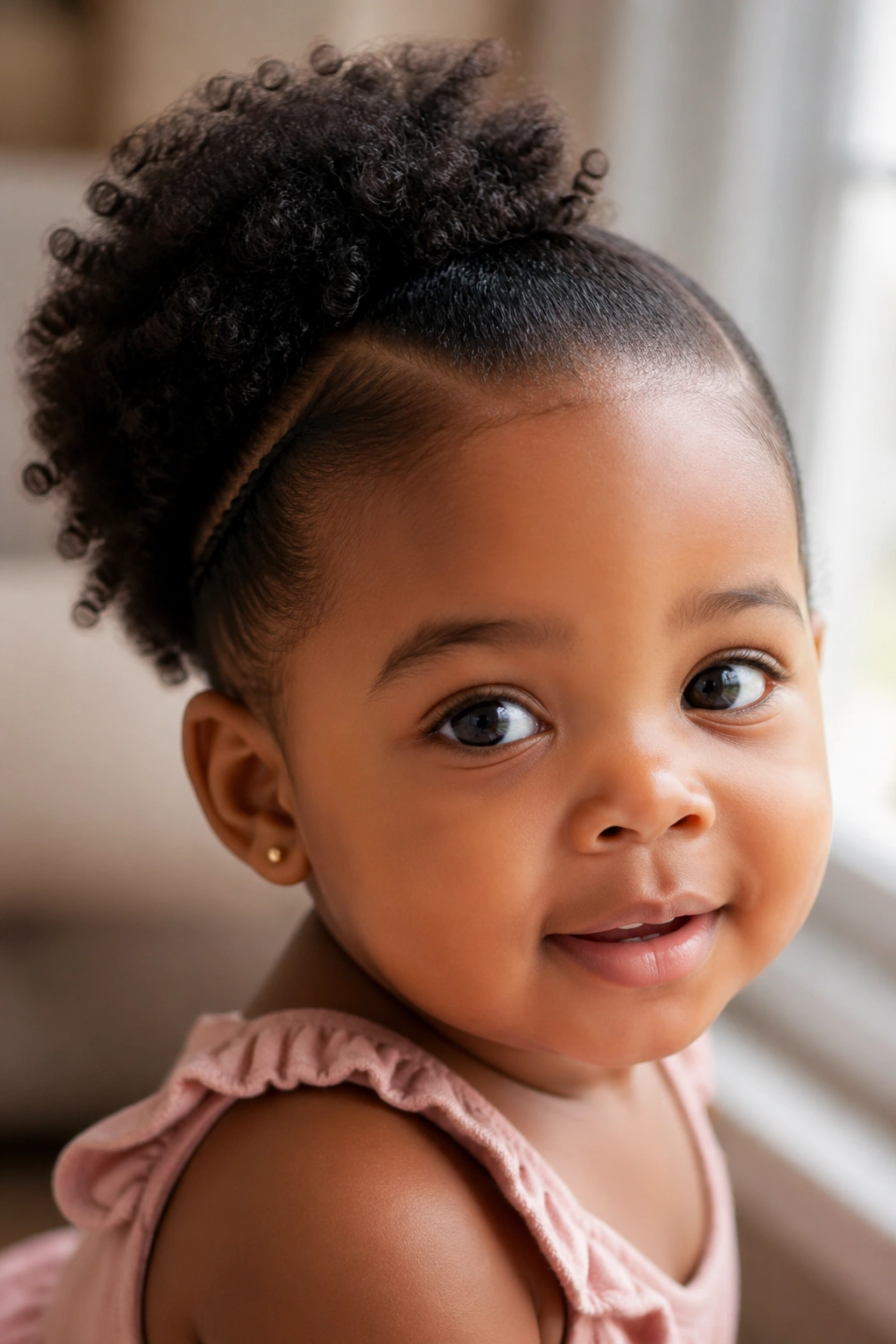
What if the puff keeps falling straight back and looking a little flat? Shift the part to the side. That tiny change gives the style shape right away, and on some babies it looks softer than a center part.
How to Style It
Use a rat-tail comb to draw a light side part from the front hairline back toward the crown. The line does not need to be sharp enough to cut glass. Clean enough is fine.
Then gather the larger section into a puff just off-center, leaving the smaller side to flow into the same band or to sit as a soft fringe near the temple. If the front hair tends to puff up, smooth only the very front with a damp brush and a dab of leave-in. Keep your hand light. The goal is control, not flattening.
This style is especially useful when one side of the hair grows in a little differently from the other. Babies are like that. Hairlines can be uneven, swirl patterns can fight the comb, and a side part often works with that, not against it.
A tiny satin bow or a fabric clip can sit above the part, but use only accessories that stay put without biting into the scalp.
4. Flat Twists Into a High Puff
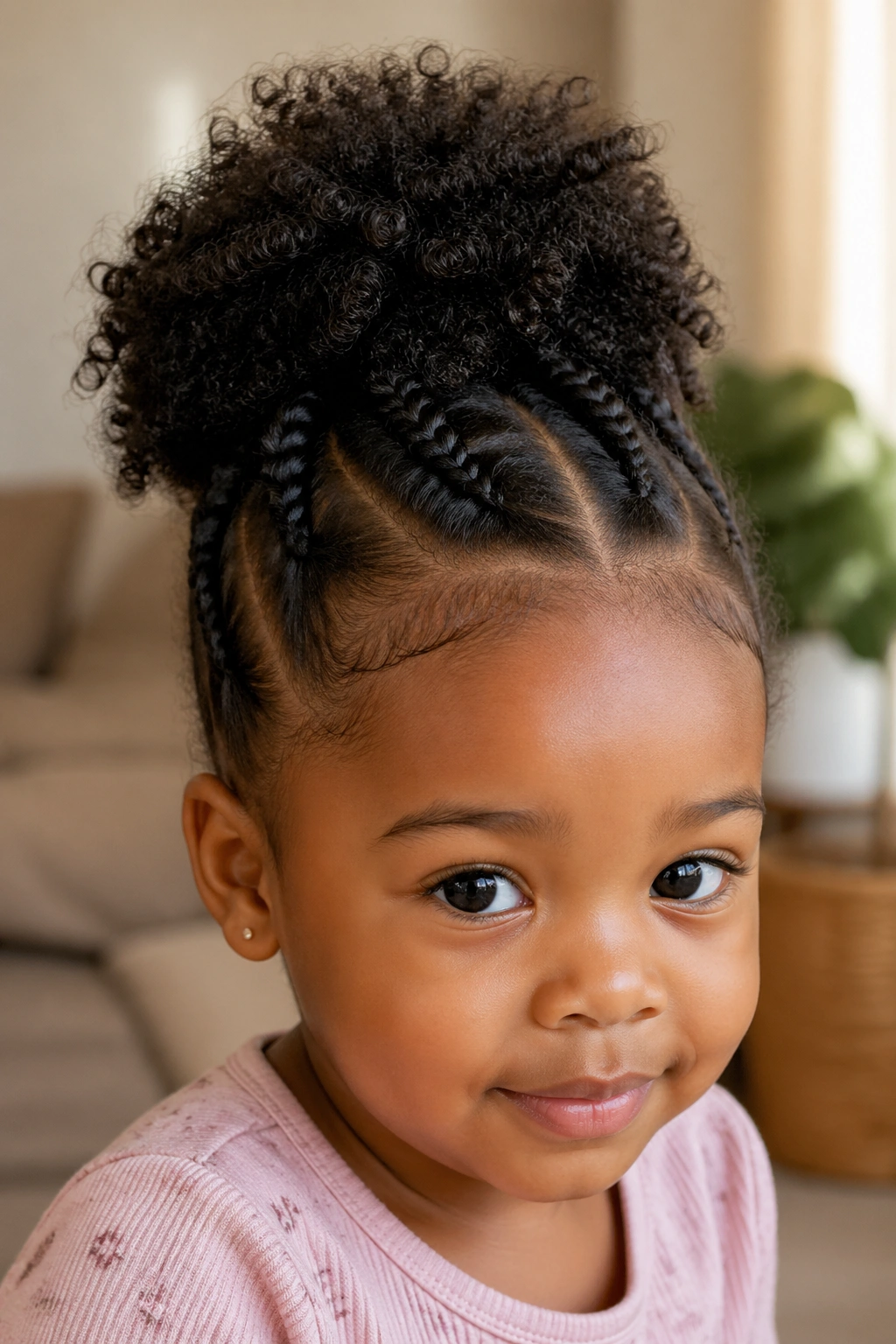
If you want a style that lasts through a long day but still looks soft and baby-friendly, flat twists leading into a puff are a smart middle ground. The front stays neat, the crown keeps its volume, and the overall shape looks more styled than a plain puff without needing a ton of work.
Picture two or four loose flat twists starting at the hairline and moving back toward the crown, where the rest of the hair gathers into one puff. That’s the sweet spot. The twists keep the front in place, and the puff gives the whole style lift.
- Best on medium-density hair that can hold a part without springing apart right away.
- Use a little water and leave-in on each section before twisting so the strands stay smooth.
- Keep the twists loose enough to move. If they make the scalp look shiny and tight, back off.
- Finish with a soft elastic at the crown and a tiny bow if you want one.
This style is one of those quiet wins. It looks like you spent a long time on it, even when you didn’t.
5. Crown Twists That Frame the Hairline
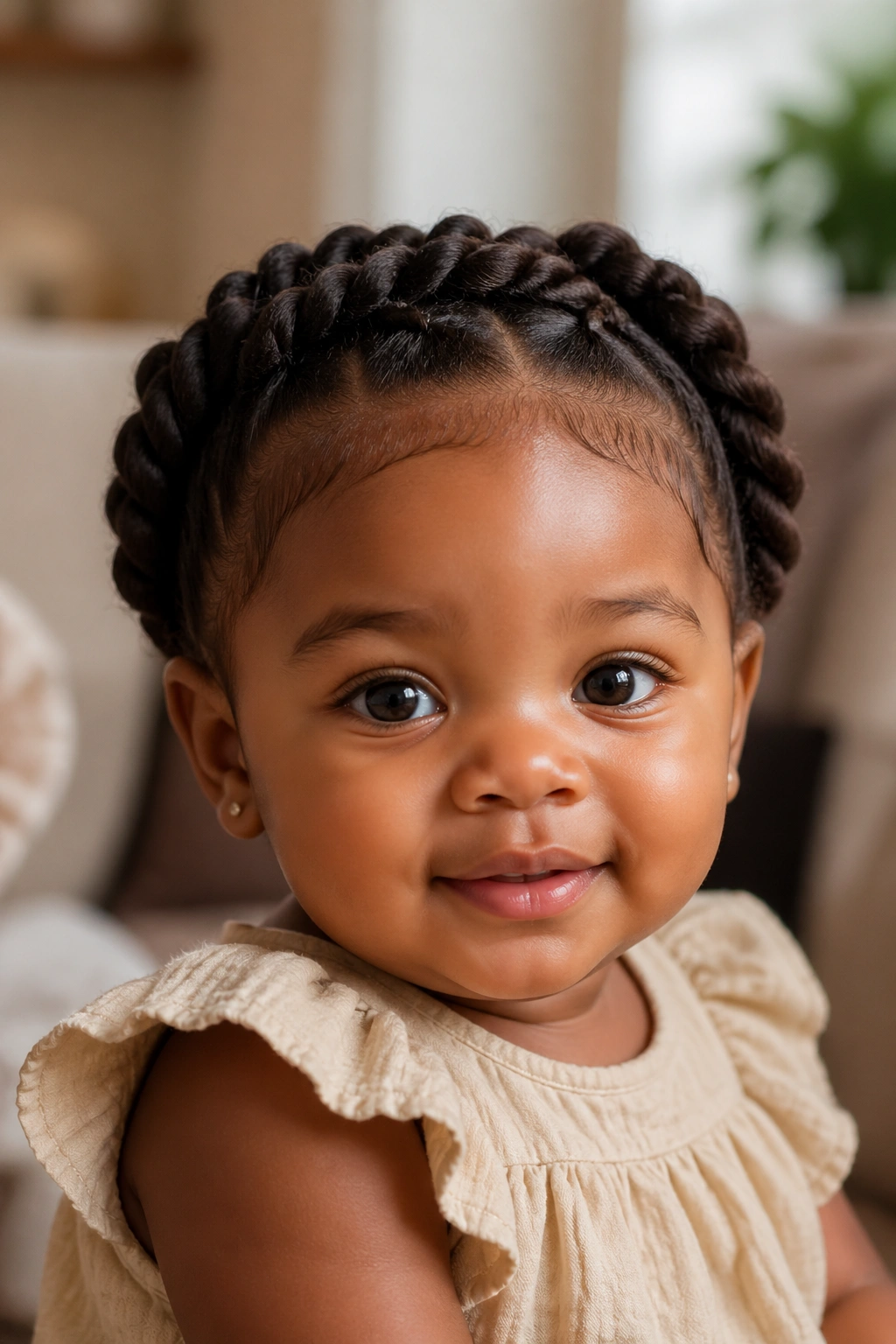
A crown style has a way of making even the simplest baby hairstyle feel special. The hair wraps around the head like a soft frame, and the face stays open and bright instead of hidden under a big pile of curls.
I like crown twists for babies with shorter hair around the edges or for parents who want something tidy without making the whole head look too busy. A pair of loose twists can travel from one temple across the top, then tuck into a small puff or a soft knot at the back. The shape is gentle. That’s the whole point.
Light hands matter here.
If you pull the sections too hard, the style stops being charming and starts feeling like a job. Keep the parts broad, use a little cream to stop frizz, and let the twists stay slightly fluffy. Perfectly slick twists on a baby can look odd anyway. A little softness reads as better care, not less.
This is also a good style for a dress-up day, a family photo, or any moment when you want the hair to look intentional without weighing the baby down with clips and pins.
6. Three Soft Mini Buns Across the Head
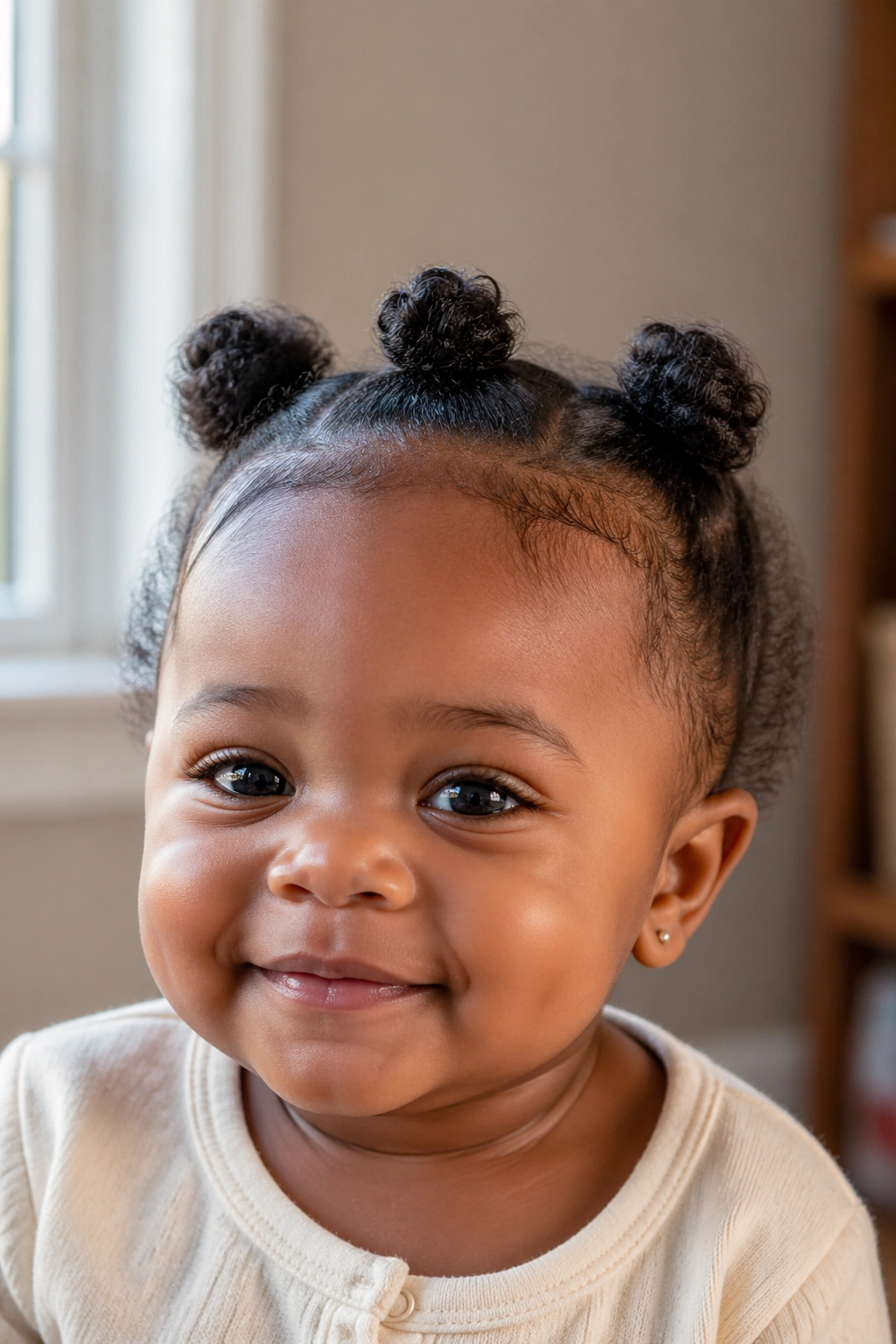
Unlike tight cornrows or tiny braids that need a long commitment, three mini buns give you shape without locking you into a heavy style. They sit neatly across the head, and they can be arranged in a line, a triangle, or a gentle arc depending on where the hair is densest.
The trick is size. Keep each bun small enough that the roots do not get stressed. Thumb-sized is a decent starting point for many babies, and sometimes even smaller is better if the hair is fine or still growing in around the edges.
Who This Style Suits
Babies with thicker coils often wear this look well because the hair has enough texture to hold a bun shape without too much product. Babies who move a lot also do well with it, since the buns stay put better than loose puffs when the day gets busy.
Use soft, snag-free elastics and leave them loose enough that the scalp does not pucker. If you need to redo one bun halfway through the day, do it. That’s part of the style, not a failure.
A small warning: skip hard clips and decorative pins unless you are watching closely. Tiny accessories look cute in photos, but they also disappear under blankets and car seats faster than you’d think.
7. Half-Up Afro Puff with Loose Curls
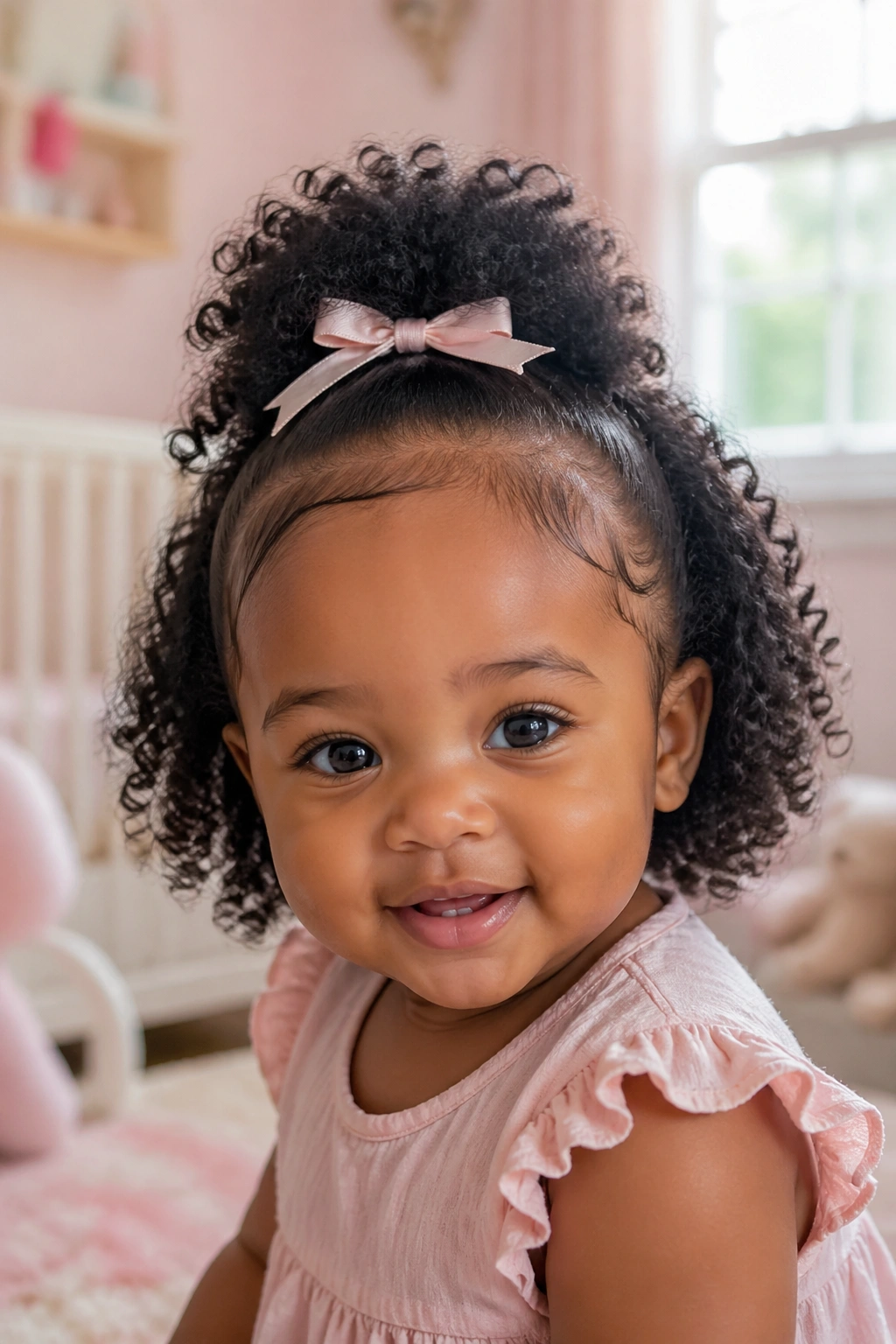
Half-up styles are a gift when the front hair needs control but the back hair still looks sweet loose. You get a puff on top, a soft frame around the face, and enough curl left down below to keep the hairstyle from feeling too “done.”
This is a good choice when the hair is long enough to gather at the crown but still short enough that a full puff feels a little bulky. The upper section creates a little height, and the loose curls underneath keep the style airy.
How to Get the Shape Right
Take a section from temple to temple and secure only the top portion into a small puff. Let the lower hair hang loose, or gently fluff it with your fingers so it sits around the cheeks and neckline. If the front curls poke forward, that’s fine. They soften the whole look.
You can part the top section with a finger or a comb, but do not make the line so crisp that it looks stiff. A baby hairstyle should still move when the baby moves.
A tiny ribbon tied around the top section is enough. No need to pile on bows, beads, or extra shine products. The hair is the decoration.
8. Frohawk Made with Soft Puff Sections
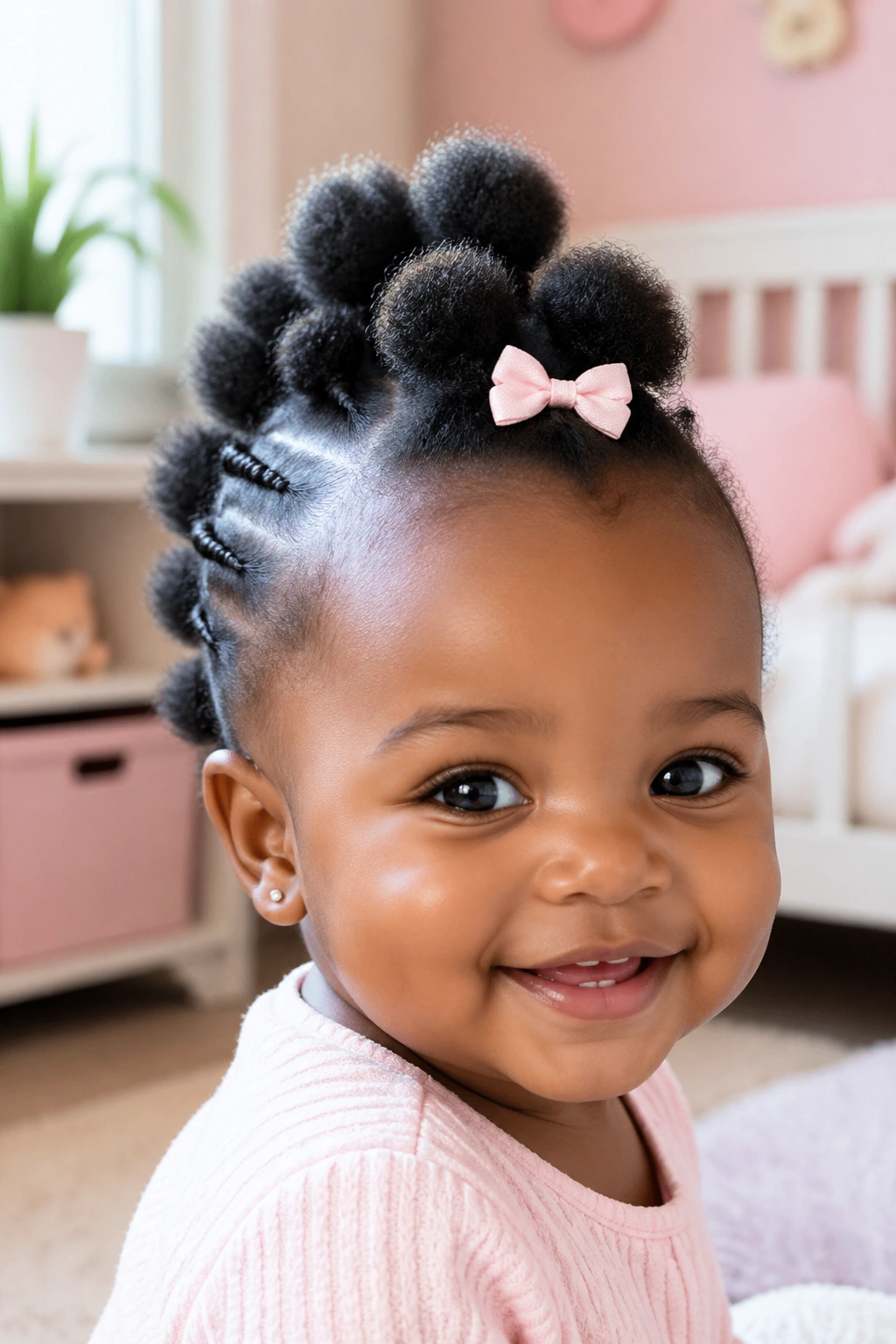
A baby frohawk is one of those styles that looks playful from every angle. The sides stay smooth or lightly twisted, while the center line of hair rises into a row of soft puffs from front to back. It has shape. It has personality. And it can be done without making the scalp feel crowded.
On a busy morning, this one earns its keep. It stays visually interesting even when one puff loosens a little, which is handy because babies do not hold still for style maintenance.
- Make the center sections broad enough that each puff has room to breathe.
- Keep the side sections low-tension; flat twists or gentle smoothing work better than hard pulling.
- Use one small elastic for each puff and stop as soon as the section sits upright.
- Finish with a tiny bow on the front puff if you want a little extra sweetness.
The frohawk gives a little edge without being harsh. That sounds funny for a baby hairstyle, but it’s true. It has shape and rhythm without making the head look overworked.
9. Zig-Zag Parts and Tiny Puff Rows
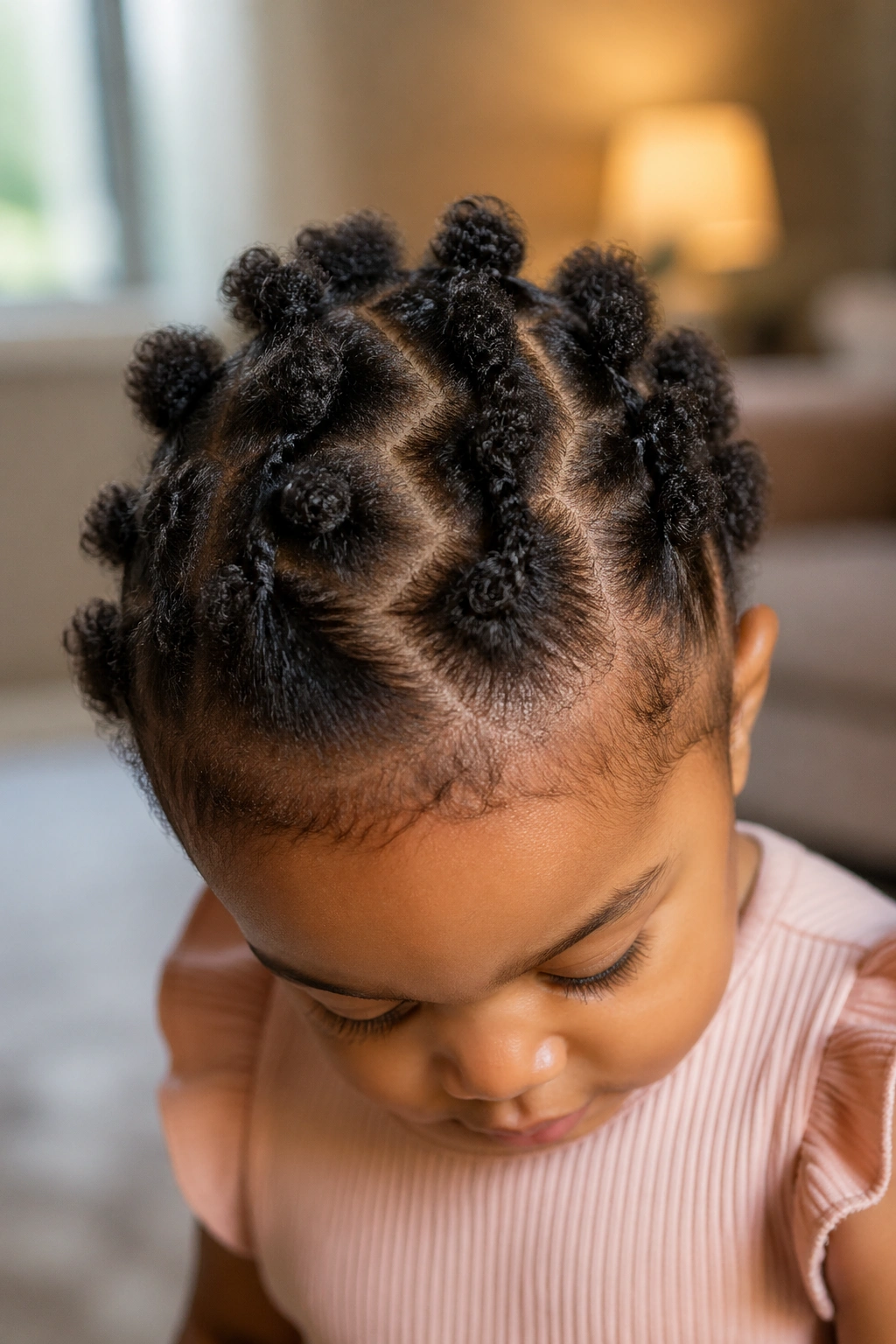
Why do zig-zag parts look so charming on little heads? Because the pattern does half the styling for you. The part itself becomes part of the decoration, and the hair does not need much else.
This style works best when the hair is dense enough to hold a visible part pattern. Use the pointed end of a rat-tail comb and keep the zig-zag broad enough to see from a normal distance. Tiny, cramped squiggles can disappear into the curls.
How to Keep the Pattern Visible
Section the hair slowly and keep each puff small, usually four to six sections total rather than a huge number of tiny ones. The point is a pretty pattern, not a full afternoon of parting.
If the hair starts to fuzz back up, that’s okay. On a baby, the style does not need to stay razor-sharp to look lovely. In fact, a little fuzz around the edges makes it feel softer and more age-appropriate.
This look pairs well with small fabric bows or no accessory at all. The zig-zag parting is already doing enough. Too many extras can make the head look busy, and busy is not the same thing as cute.
10. Fabric Headband Puff with Curly Front Pieces
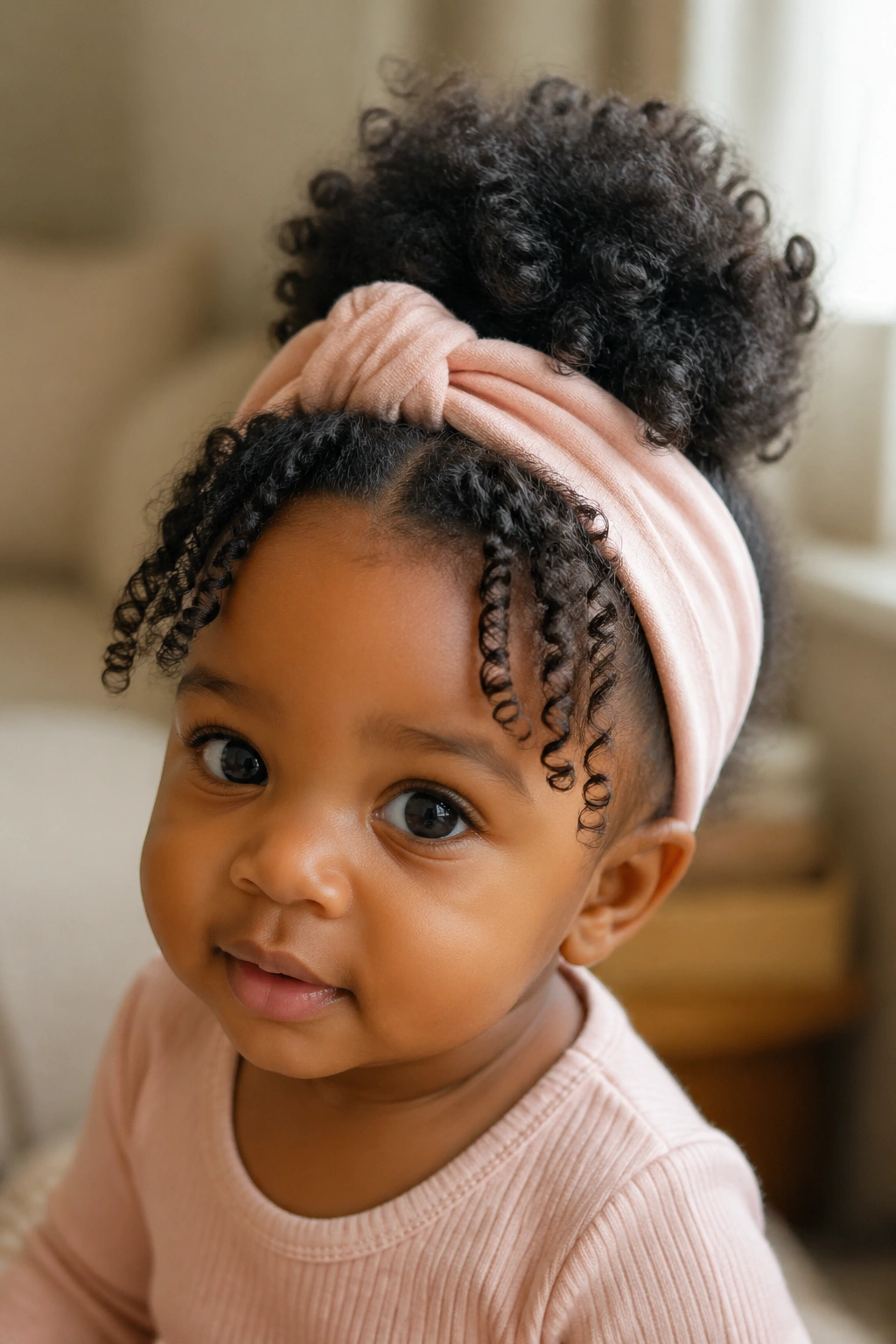
If a baby hates hair on the forehead, the headband puff is the first style I would reach for. It keeps the front back, gives the puff a clean shape, and uses the headband as a helper instead of a hard, tight frame.
Pick a soft fabric band, usually the stretchy kind that sits wide enough to lie flat without digging in. Place it behind the ears, not across them. That tiny adjustment matters more than people think, because a band that presses on the ears usually gets pulled off in minutes.
- Choose a band that stretches easily and does not snap back hard.
- Keep the puff at the crown or slightly back from the crown so it does not fight the band.
- Leave a few curls free near the temples if they want to fall forward.
- Remove the band before sleep, especially if it leaves a mark.
The best part is that this style works on hair that is still growing in around the front. You do not need perfect edges or long lengths. You just need a soft shape and a band that stays comfortable for as long as the baby wants to wear it.
11. Mini Twists Left Out at the Ends
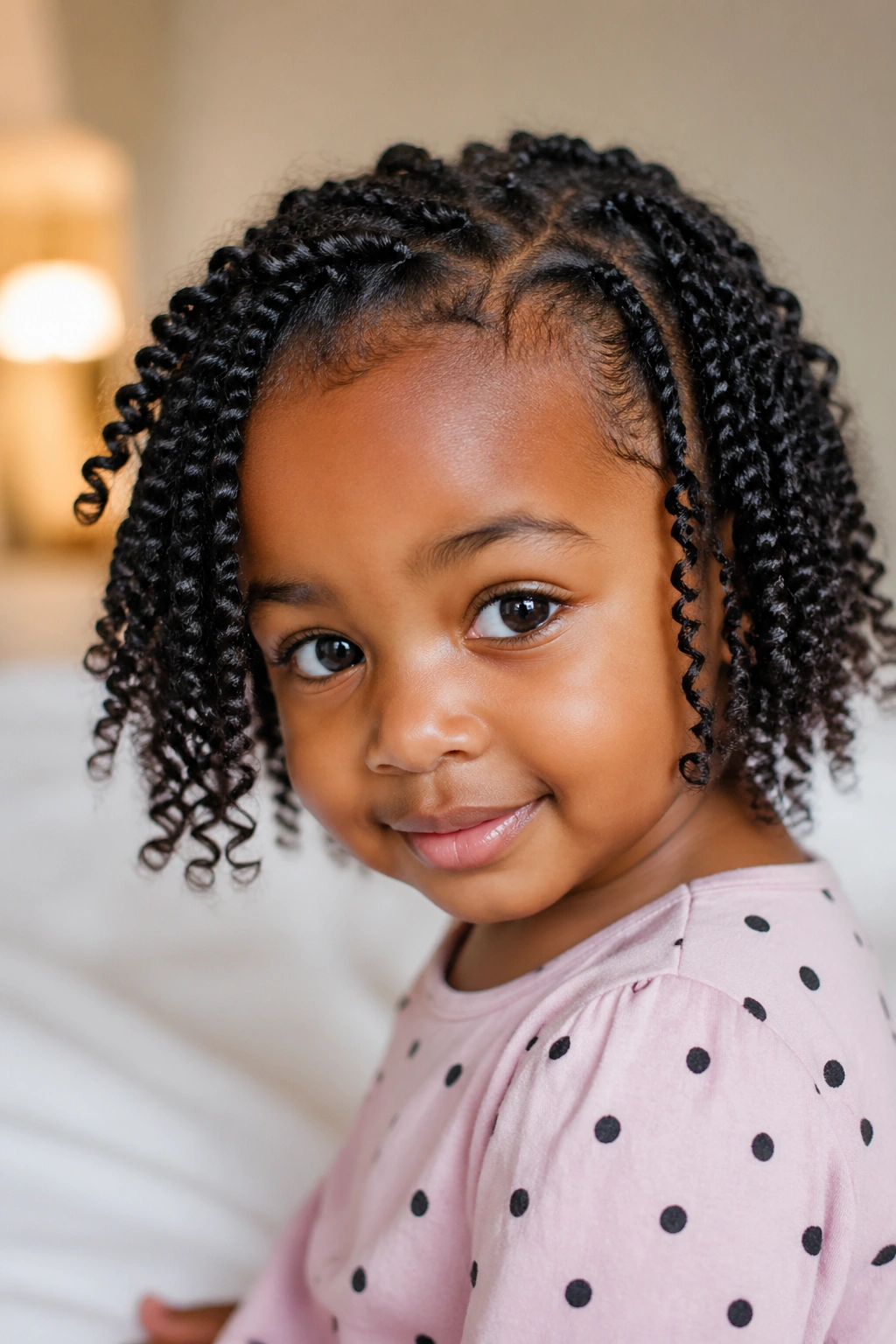
Mini twists are one of the few styles that can look neat and playful at the same time. The hair is sectioned into small twists, but the ends are left a little loose so the style keeps some bounce. That loose finish matters. It keeps the look from feeling too stiff for a baby.
Use a small amount of leave-in or curl cream on each section before twisting. A pea-sized amount is usually enough for a small section. Too much product makes the twists sticky and attracts lint, which is a headache nobody needs.
The style works especially well when the hair has enough length to twist cleanly without unraveling in five minutes. If the ends are soft and a little fuzzy, that’s fine. That softness can look adorable on a baby and keeps the twists from feeling overdone.
Mini twists also play well with sleep routines. A satin bonnet or pillowcase keeps them from frizzing out overnight, and you can refresh the ends with a tiny mist of water in the morning if needed. No drama. No heavy styling. Just a neat, calm head of curls.
12. Side-Stacked Afro Puffs with a Soft Finish
Side-stacked puffs are for the baby who looks good in a little asymmetry. One puff sits a touch higher or farther forward than the other, and the whole style ends up feeling playful instead of rigid. It is a nice option when the hair is denser on one side or when one section grows in a little faster than the rest.
I like this style because it doesn’t try too hard. The two puffs can be the same size, or one can be slightly fuller than the other. That small difference often looks more natural than a perfectly matched pair, especially on very young children whose hair is still changing day by day.
If you want the style to feel softer, leave a few curls loose around the ears and don’t flatten the front too much. A little lift near the crown and a little softness near the temples is usually enough. The hairstyle ends up looking sweet from the front and from the side, which is half the battle with baby photos.
The main thing to remember with any baby hairstyle is comfort first, then shape, then decoration. If a style feels tender when you touch the scalp, loosen it. If it leaves a mark after a short wear, redo it. The best afro hairstyles for baby girls are the ones that let the curls breathe and still make you smile when you catch a glimpse in the mirror.
