



A good half-up style has to do two jobs at once. It needs to clear your face, hold its shape, and still let the rest of your hair move. That is exactly why Bantu knot half up half down styles keep showing up on natural hair mood boards, salon chairs, and real-life wash days: they give you structure up top and texture everywhere else.
They also solve a problem that a lot of cute styles never quite fix. A full head of Bantu knots can look sharp, but it hides your length. A plain half-up puff shows your curls, though it can feel a little too easy when you want more shape. Split the difference and the whole style clicks. You get visible coils, twists, braids, or locs in the back, while the knot section gives the crown some real design.
There is one catch, and it matters. Bantu knots should feel secure, not painful. Dermatologists, including the American Academy of Dermatology, have long warned that tightly pulled styles can raise the risk of traction alopecia, especially around the hairline. If the style makes your temples throb, leaves tiny broken hairs at the edges, or hurts when you turn your head, the problem is not your scalp. The style is too tight.
Names matter too. Bantu knots come from Black African hair traditions, and wearing the style with respect means calling it what it is, not renaming it as something trendier or easier for other people to say. Once that part is clear, the fun starts—because there are far more ways to wear a half-up Bantu knot look than most people realize.
Why Bantu Knot Half Up Half Down Styles Hold Their Shape So Well
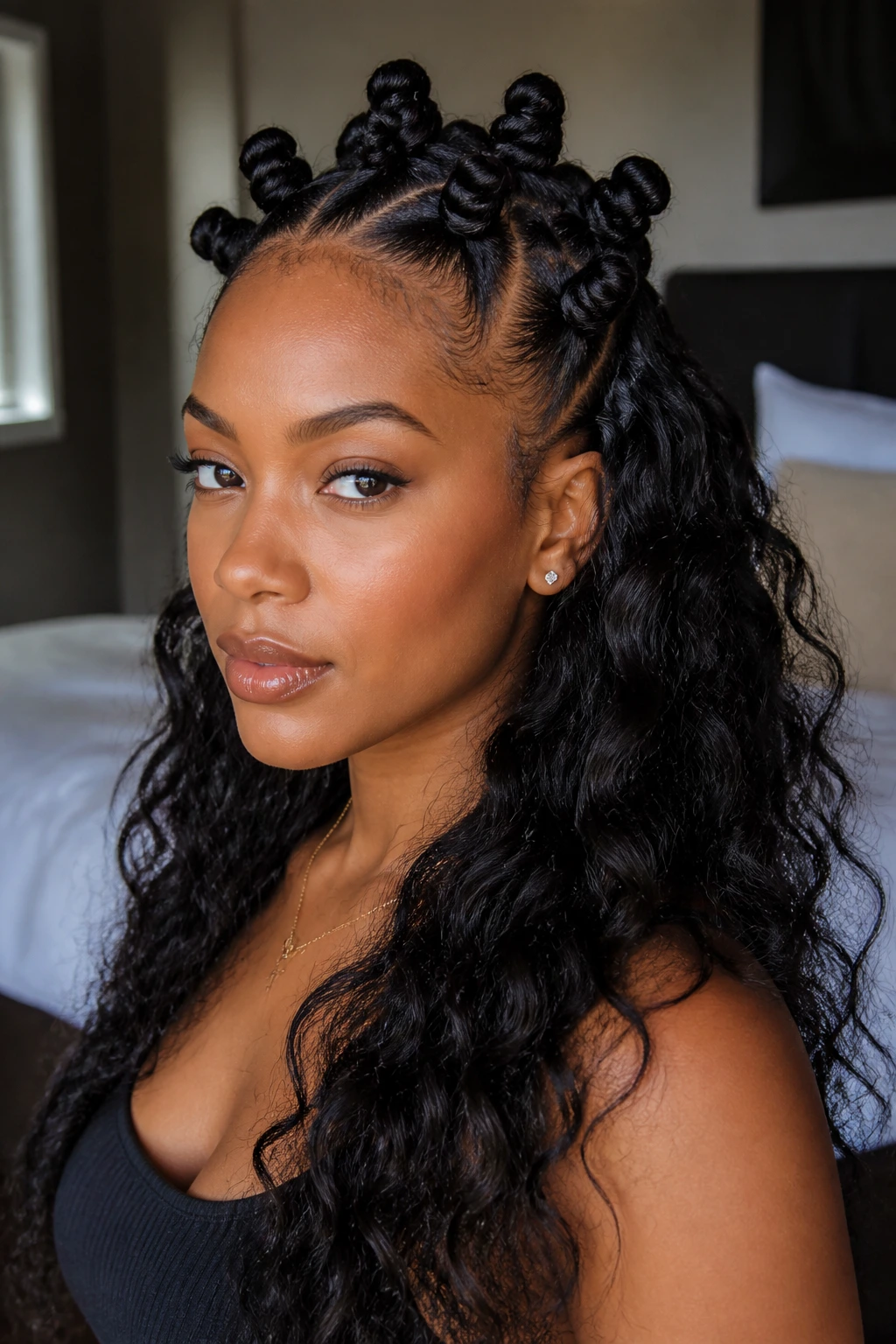
The shape works because it spreads the visual weight of the hairstyle across two zones. The knots create height and direction at the crown, while the loose section adds softness, swing, and texture lower down. Your eye reads both at once, which is why the style feels fuller than a basic half-up ponytail.
Hair texture changes the result more than people expect. On dense 4B or 4C hair, the knots can sit like neat sculpted coils, almost like little crowns. On stretched 3C curls, they look smoother and more rounded. On box braids or locs, the knots read bigger and more architectural, with stronger lines.
Length matters less than sectioning. A lot of people assume they need long hair for this style, but a solid half-up Bantu knot look can work on hair that barely reaches the nape if the top section is clean, balanced, and not overloaded. Shorter hair often looks better with two to four knots, while longer hair can carry six, eight, or even ten mini knots across the top without looking crowded.
The style also lasts better than loose half-up looks because each knot acts like an anchor point. That means fewer flyaways at the crown and less daily restyling, especially if you wrap the hair at night with a satin scarf and pineapple or braid the back section before bed.
How to Prep Hair for Bantu Knot Half Up Half Down Styles
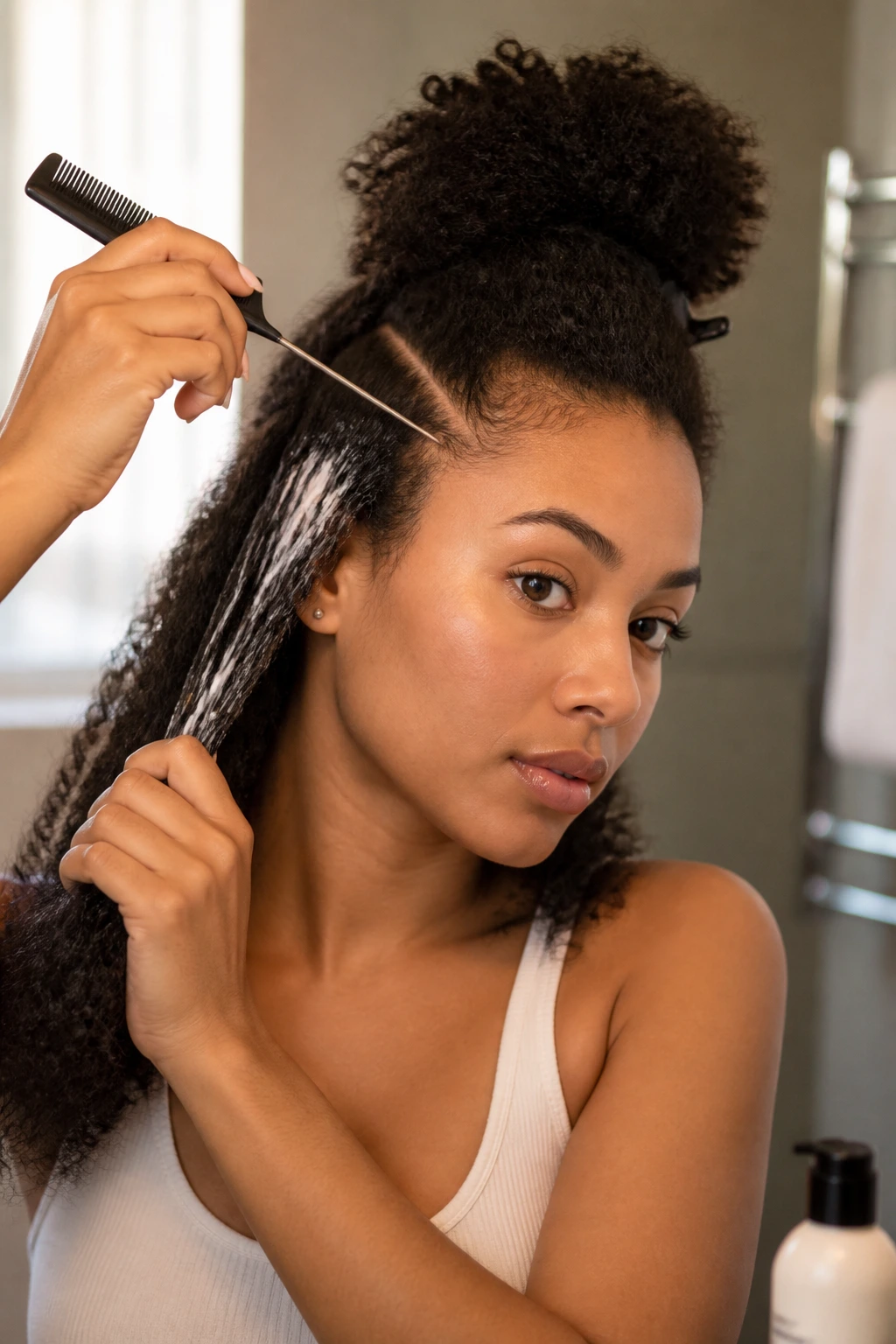
Start with hair that is moisturized but not slippery. Too much oil or heavy butter at the roots makes knots sag, and too much gel on the loose section can leave the back stiff. A leave-in conditioner, a medium-hold styling cream, and a light mousse is usually enough for most textures.
Your parting tools matter more than your products. Use:
- A rat-tail comb for clean sections
- Small snag-free elastics if you want extra grip at the base
- Two duckbill clips to separate the top and bottom zones
- A firm bristle brush for smoothing only the roots, not the full strand
- Satin scrunchies or pins for sleeping
Drying stage changes the whole mood of the style. Hair at about 70 to 80 percent dry gives you crisp knots with less frizz. Freshly washed soaking-wet hair shrinks hard and may leave the loose section much shorter than you planned. Fully dry blown-out hair gives you bigger knots and more length in the back, though it loses some of that tight coil definition.
One more thing. Do not make every knot the exact same size unless you want a strict, grid-like finish. A slight shift—smaller near the hairline, bigger toward the crown—usually looks better and feels less stiff.
1. Crown Row Mini Knots with Loose Wash-and-Go Curls
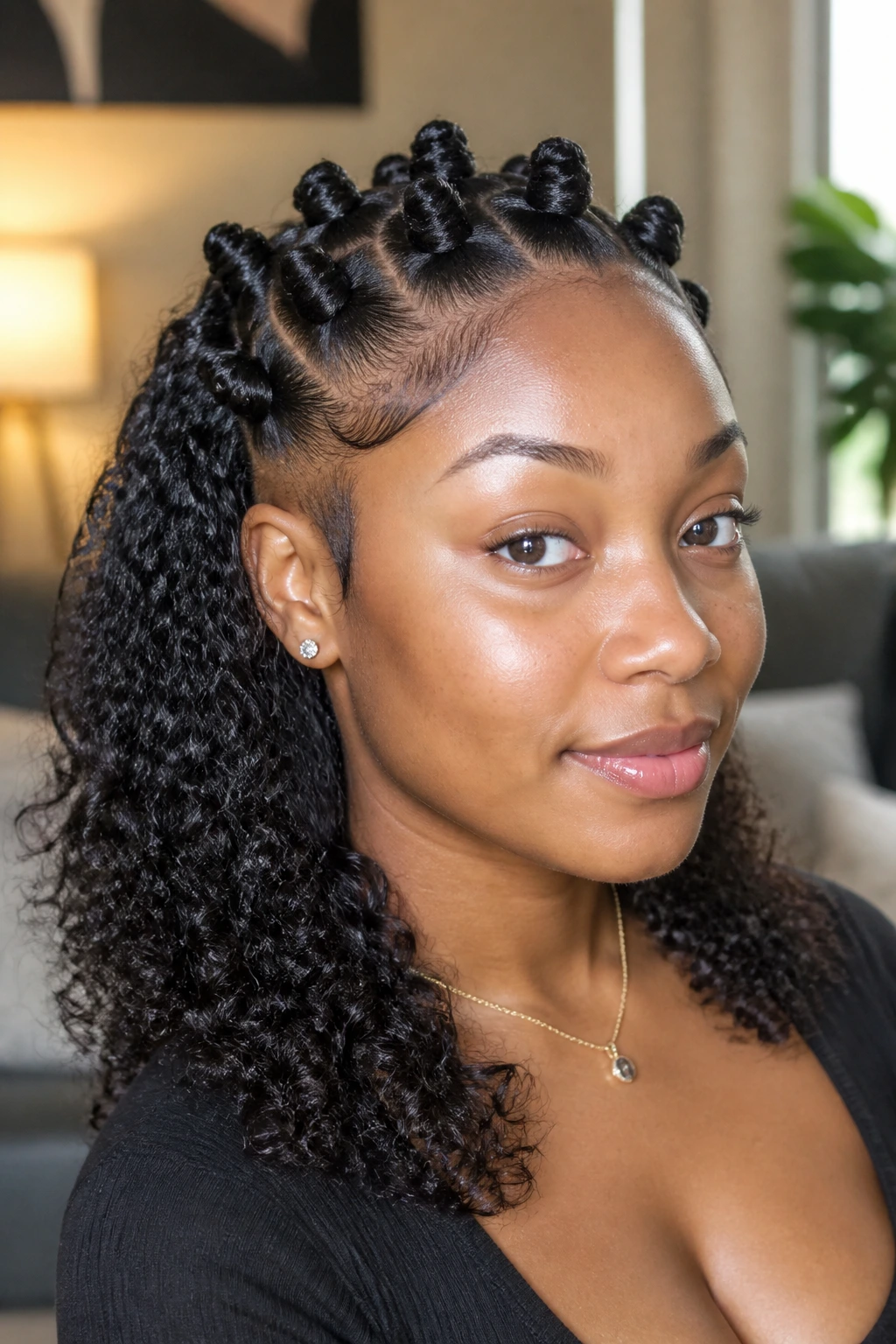
This is the style I point people to first because it makes the idea clear in one glance. A single row of five to seven mini Bantu knots across the crown gives definition up top, while a wash-and-go in the back keeps the whole look from getting too rigid.
The beauty of this version is balance. The knots sit high enough to show off the parting, but they do not eat up all the hair from the sides. That leaves a generous curtain of curls in the back, which gives the style movement when you walk, turn your head, or fluff the roots on day two.
Where it works best
Hair with strong shrinkage does especially well here because the mini knots stay compact and the back section expands into a full halo shape. If your curls clump easily with mousse or curl cream, this version gives you two textures at once without looking like two different hairstyles.
Quick setup notes
- Use 1-inch horizontal parts across the crown
- Keep the side sections soft, not tightly brushed flat
- Wrap each knot around itself two to three times, then tuck the ends
- Diffuse or air-dry the back fully before fluffing
Try this one if you want a clear Bantu knot look without losing your curl pattern.
2. Two High Knots with a Defined Curl Back
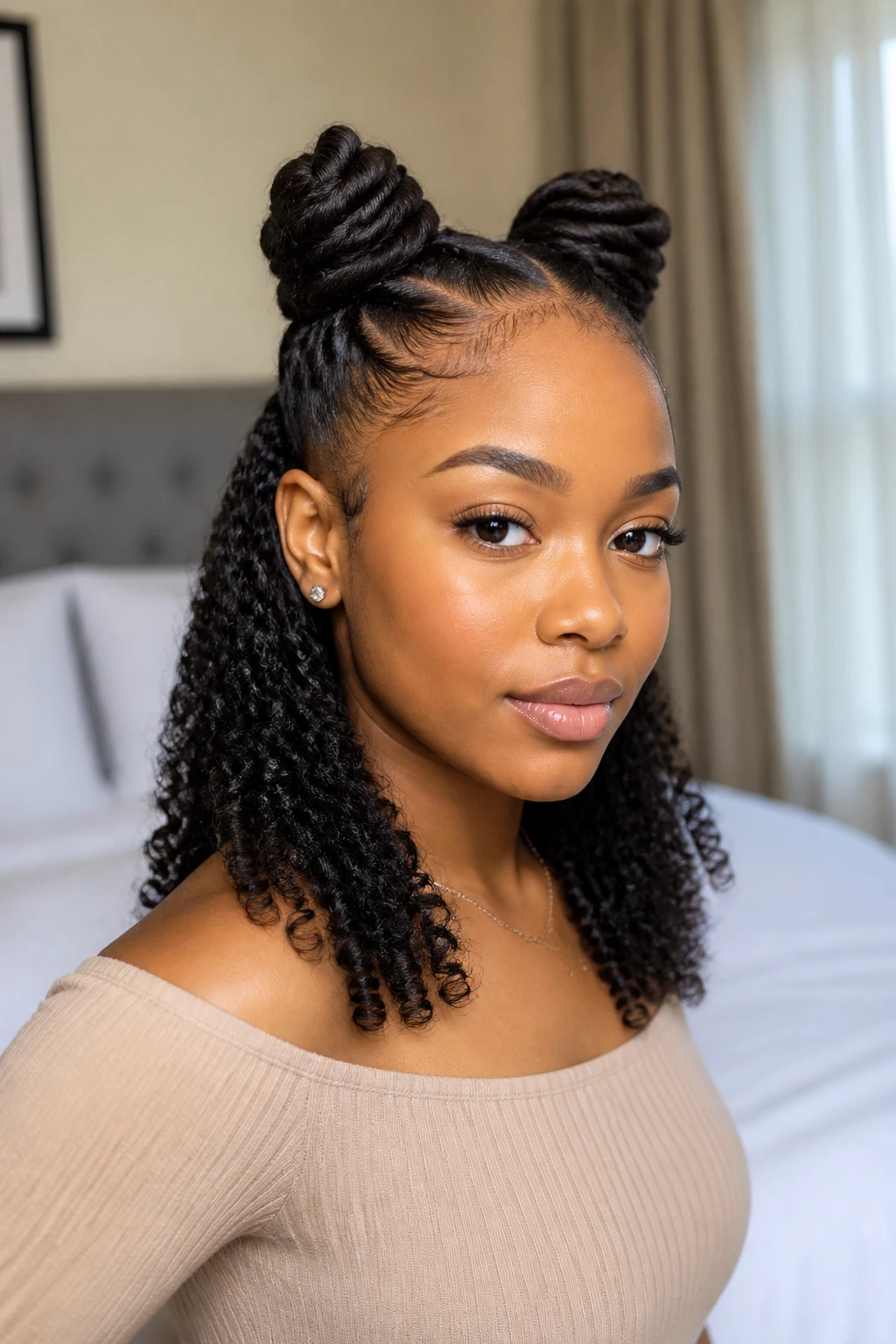
Want something bolder and faster? Go with two high knots placed above the temples, then leave the back in defined curls. It reads strong from the front and still soft from the side, which is harder to pull off than people think.
A lot of half-up looks with two top sections drift into cartoonish territory if the placement is wrong. The fix is simple: do not push the knots too far toward the hairline. Set them about 1 to 1½ inches behind the front edge, and they look intentional rather than costume-like.
The curl definition in the back does most of the heavy lifting. Tight coils make the style feel playful. Elongated curls make it look cleaner and a little dressier. You can get either finish depending on whether you air-dry, diffuse, or stretch the back section overnight in chunky braids.
And yes, this one photographs well from almost every angle—not because of some magic, but because the silhouette is easy for the eye to read. Two knots. Loose curls. Done.
3. Triangle-Part Knots with a Twist-Out Base
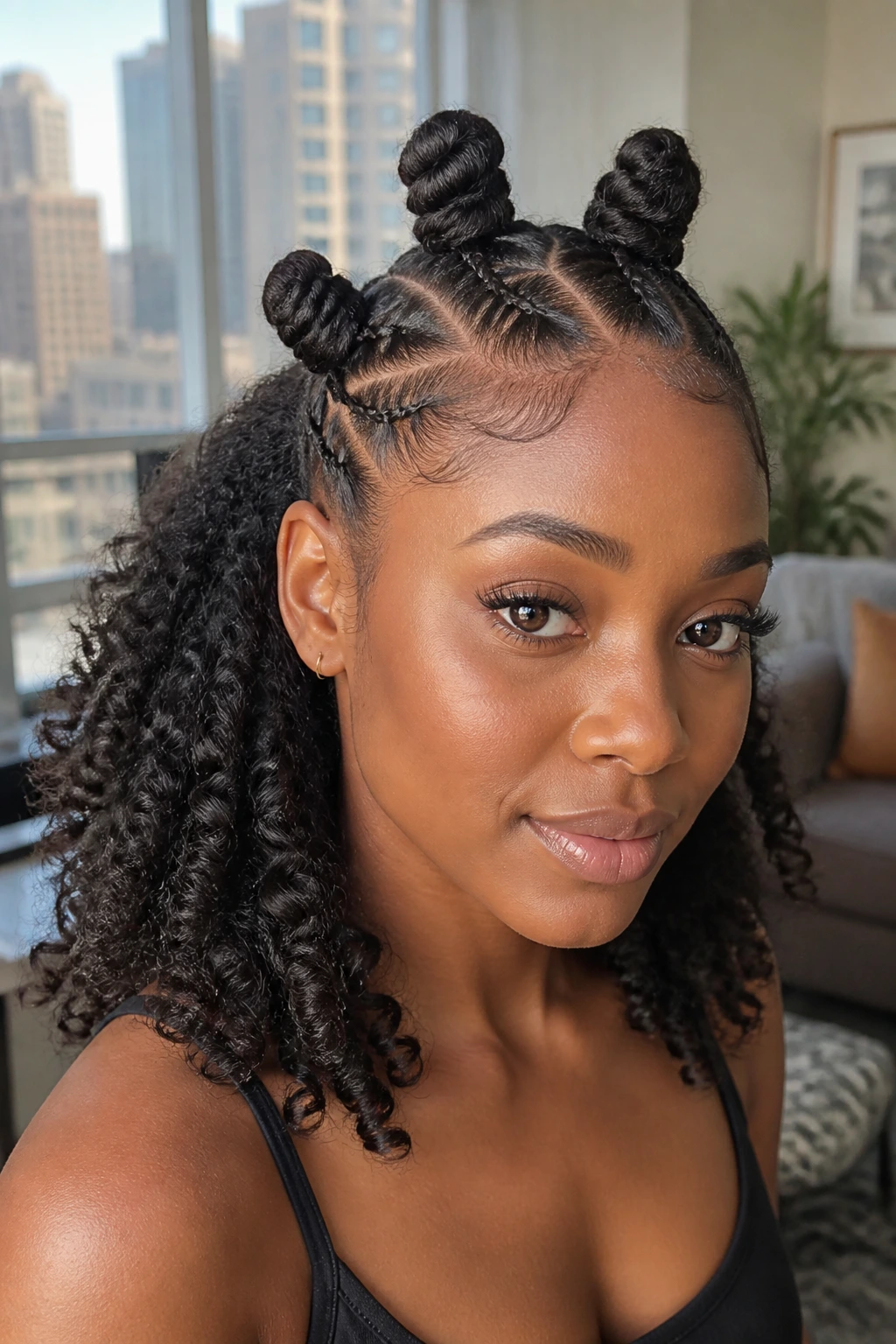
Square parts are tidy, but triangle parts give a half-up style more edge. Three or four Bantu knots sectioned with clean triangles instantly change the feel of the top half, especially when the back is a fluffy twist-out instead of a wet curl set.
Why does that pairing work so well? The geometric parting sharpens the top, while the twist-out softens the lower half. That contrast keeps the style from looking too uniform. Uniform can be nice, sure, but it can also look flat.
The texture payoff
A twist-out back gives more width than a wash-and-go. If your hair tends to dry small at the ends, this style adds visual fullness without needing extensions or teasing. Pick it when you want the hair to frame the shoulders rather than hug the scalp.
What to watch
Use a little edge control only on the parts, not on the loose section. Too much smoothing product makes the top and bottom fight each other. The whole point here is clean lines above and airy texture below.
4. Side-Swept Knot Cluster with One-Shoulder Curls
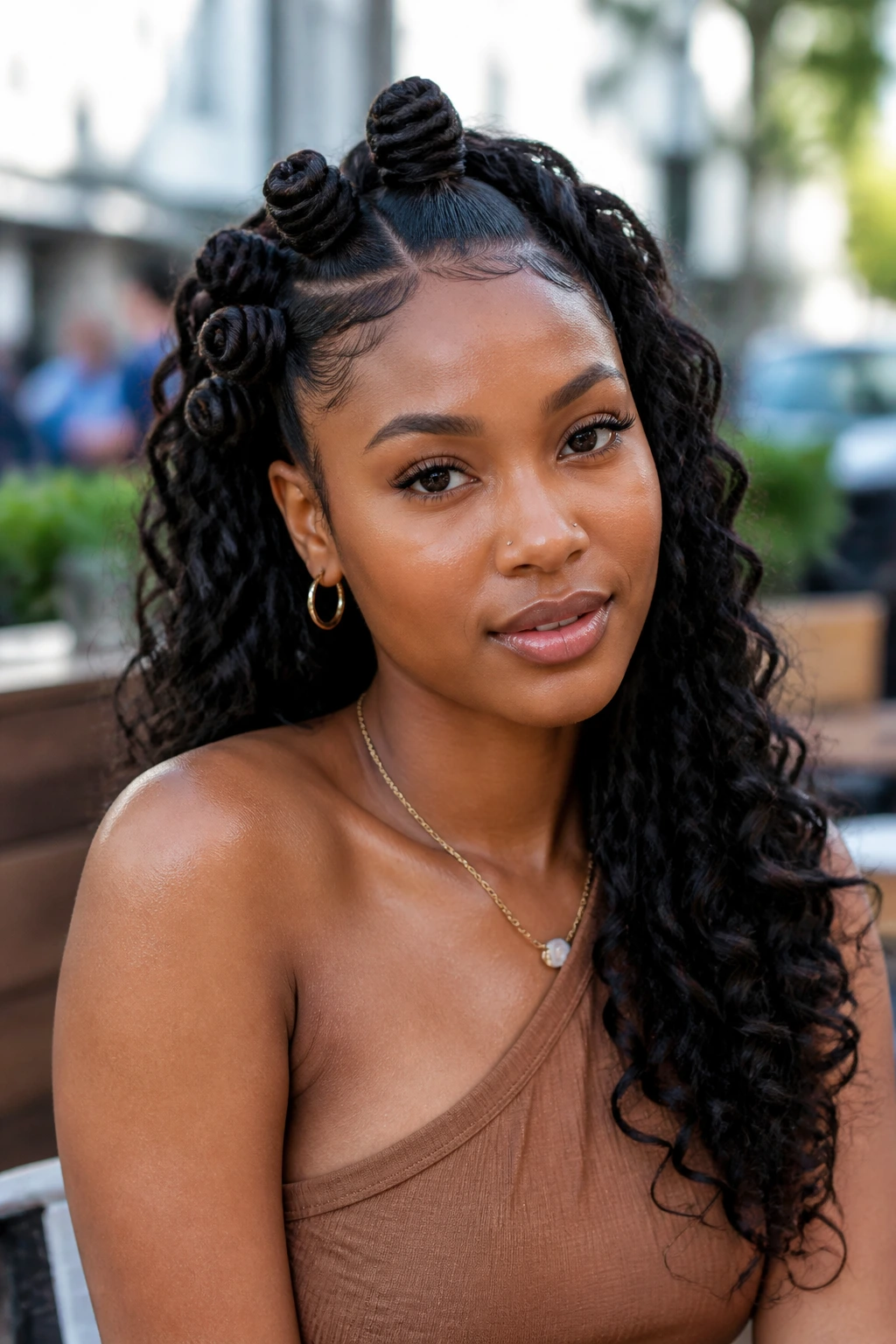
Not every half-up Bantu knot style needs perfect symmetry. A side-swept cluster of three knots—usually placed above one eyebrow and sweeping toward the crown—creates a softer, more directional shape that feels dressed up without requiring formal hair.
Picture the front view first. One side looks open and lifted. The other side carries the knot detail. Then the back drops into curls that favor one shoulder. That slight imbalance is the charm. It looks styled, not stamped out.
This version suits medium to long hair because the loose section needs enough length to drape off-center. If your curls hit at least the collarbone when stretched, you will get the effect. Shorter hair can still wear it, though the side sweep reads more as volume than length.
Use pin curls or flexi rods on the back section if you want a tighter finish. Leave it in an old braid-out if you want a looser, fuller result. Do not overbrush the top. This style needs a bit of softness near the part line or it loses its whole mood.
5. Four Square Knots over Box Braids
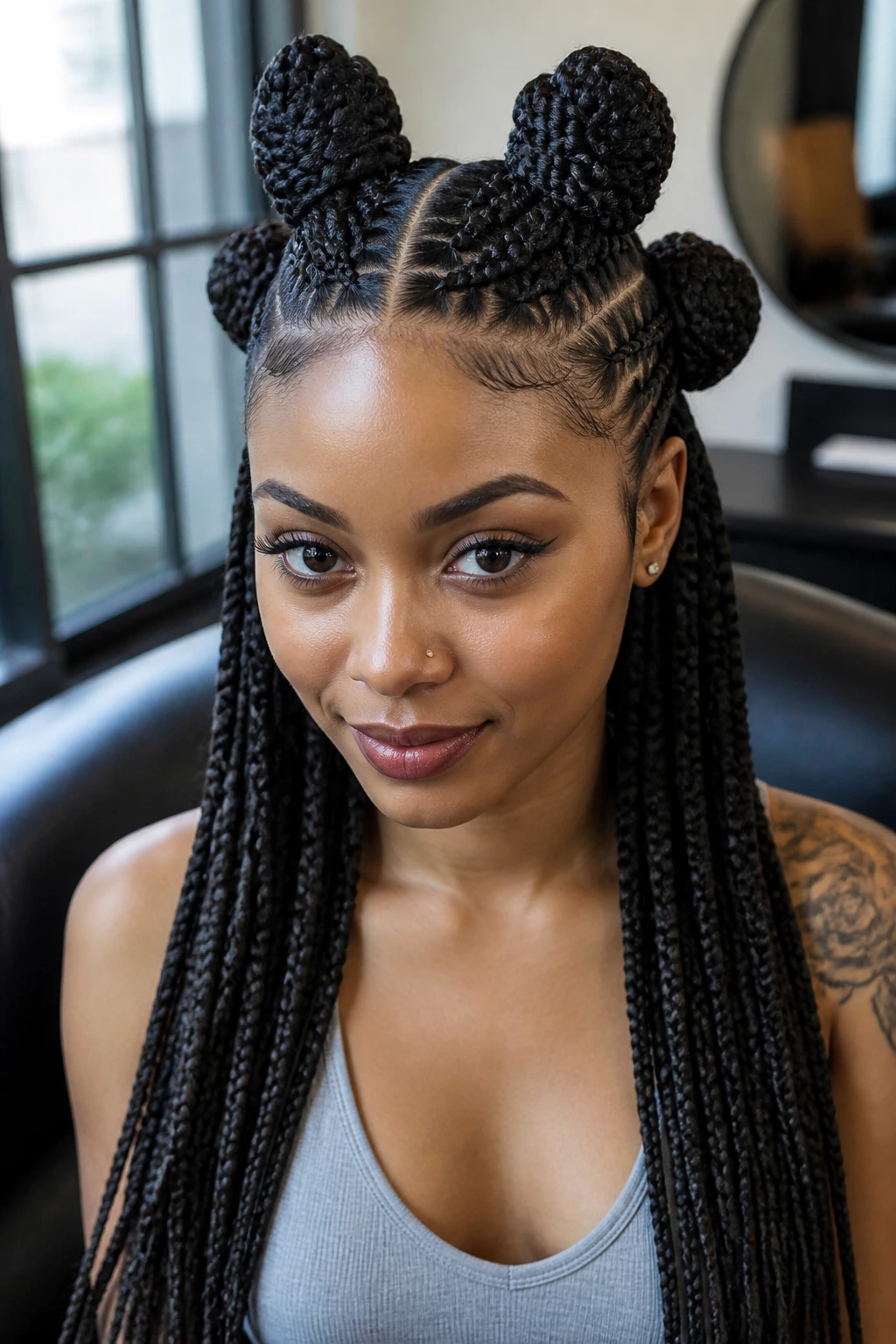
Box braids change the math. Each braid adds bulk, which means fewer knots usually look better. Four square knots—two in front, two behind—give enough structure without turning the crown into a heavy stack.
Why braided hair behaves differently
Braids hold shape longer than loose natural hair, but they also create thicker bases. If you try to force eight or ten small knots out of medium-size box braids, the roots can feel crowded and the knots may sit unevenly. Four larger sections keep the tension cleaner and the parting easier to maintain.
Smart details for this version
- Use mousse before wrapping to cut flyaways
- Secure each knot with a long pin inserted downward, not sideways
- Let the loose braids in the back hang straight or gather them loosely at the shoulders
- Add braid cuffs to only one or two front braids if you want a focal point
This is one of the easier half-up Bantu knot styles to keep for a week or more, especially if your braids were not installed too tight to begin with.
6. Jumbo Center Knots with a Soft Blowout
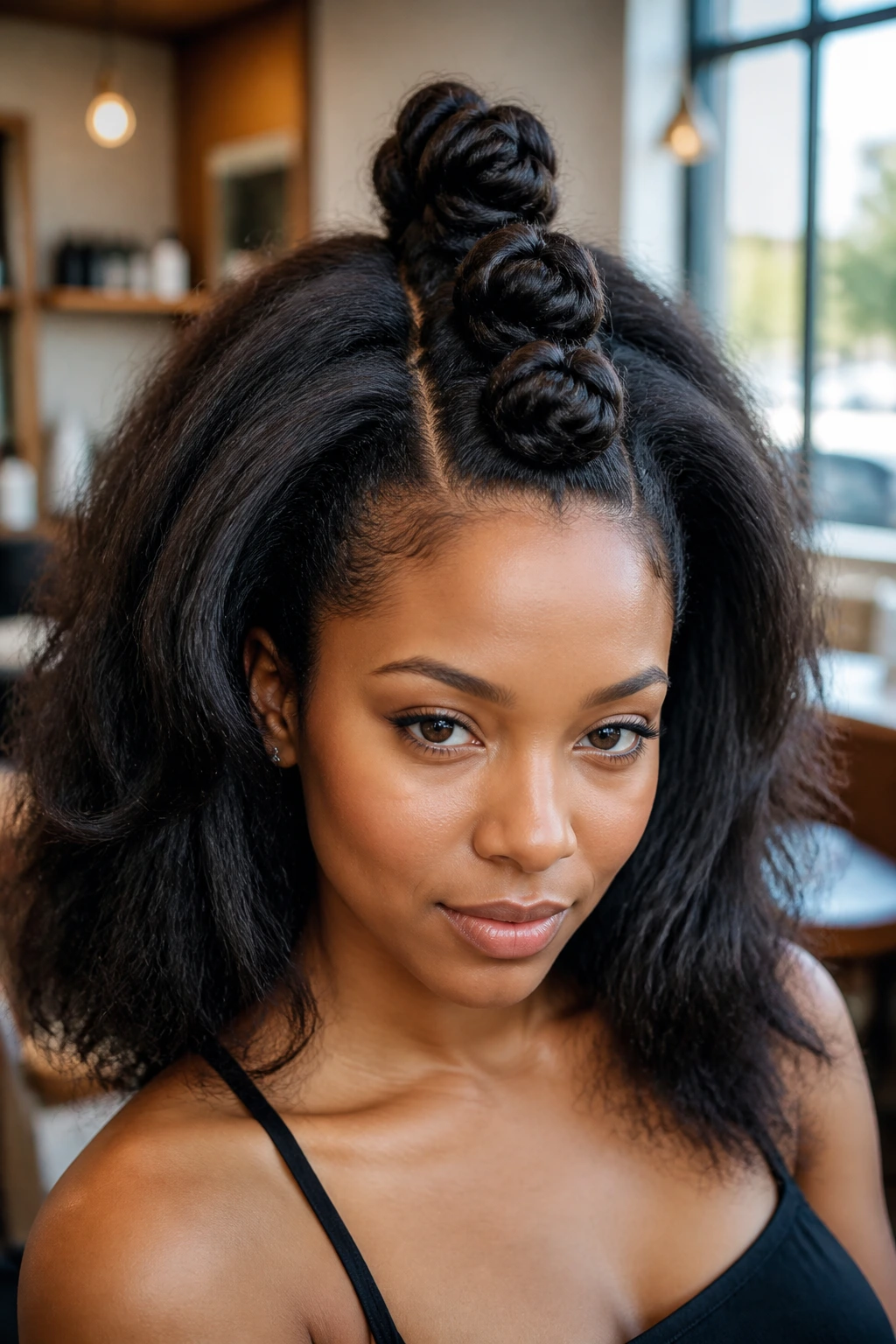
A blown-out texture gives Bantu knots a different personality. The coils are less compact, the knots sit larger, and the back falls with more swing. Two or three jumbo knots placed down the center line of the head make the most of that airy texture.
The result is fuller and a little more sculptural than a curl-based version. You see the wraps of the knot more clearly because the stretched hair creates wider loops around the base. That detail gets lost on shrunken hair sometimes.
This style works well on medium-density hair that has been dried with a comb attachment or banded overnight. You do not need a bone-straight blowout. Actually, you should not chase one for this. A slight cottony texture helps the knots grip each other.
Blown-out styles can frizz faster at the back, though. A light serum on the loose section and a satin scarf wrapped around the crown at night usually buys you another day or two before the shape starts to blur.
7. Half-Up Knots with Fulani Braids in Front
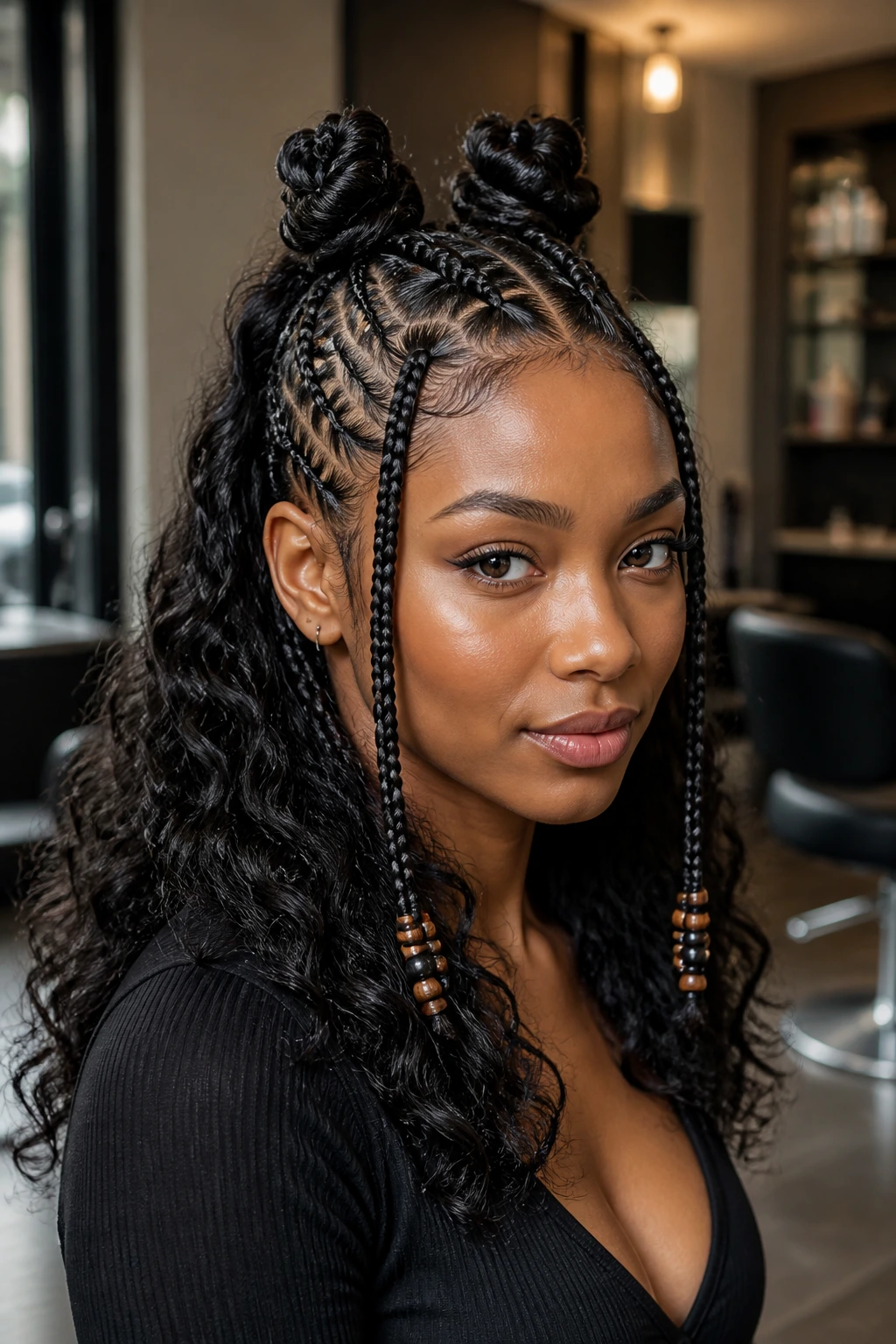
This one has more going on, and that is why it earns its place. Fulani-inspired front braids leading into two or four Bantu knots give you a hairstyle with a strong front view, not just a good profile.
The braid-to-knot transition is the trick. The front cornrows or feed-in braids draw the eye upward, then the knots take over at the crown. Leave the back in curls, loose braids, or even a stretched puffed section, and the style reads layered rather than busy.
A center braid with side braids works well if you want the forehead detail to stay visible. If you prefer less scalp exposure, keep the braid count lower—maybe three total—and make the parts curved instead of ruler-straight.
Use beads sparingly here. One or two clear beads at the ends of the front braids can be enough. Load every braid with beads and the knots start competing with the front section, which is not the point of this design.
8. Zigzag-Part Knots with a Free Afro Back
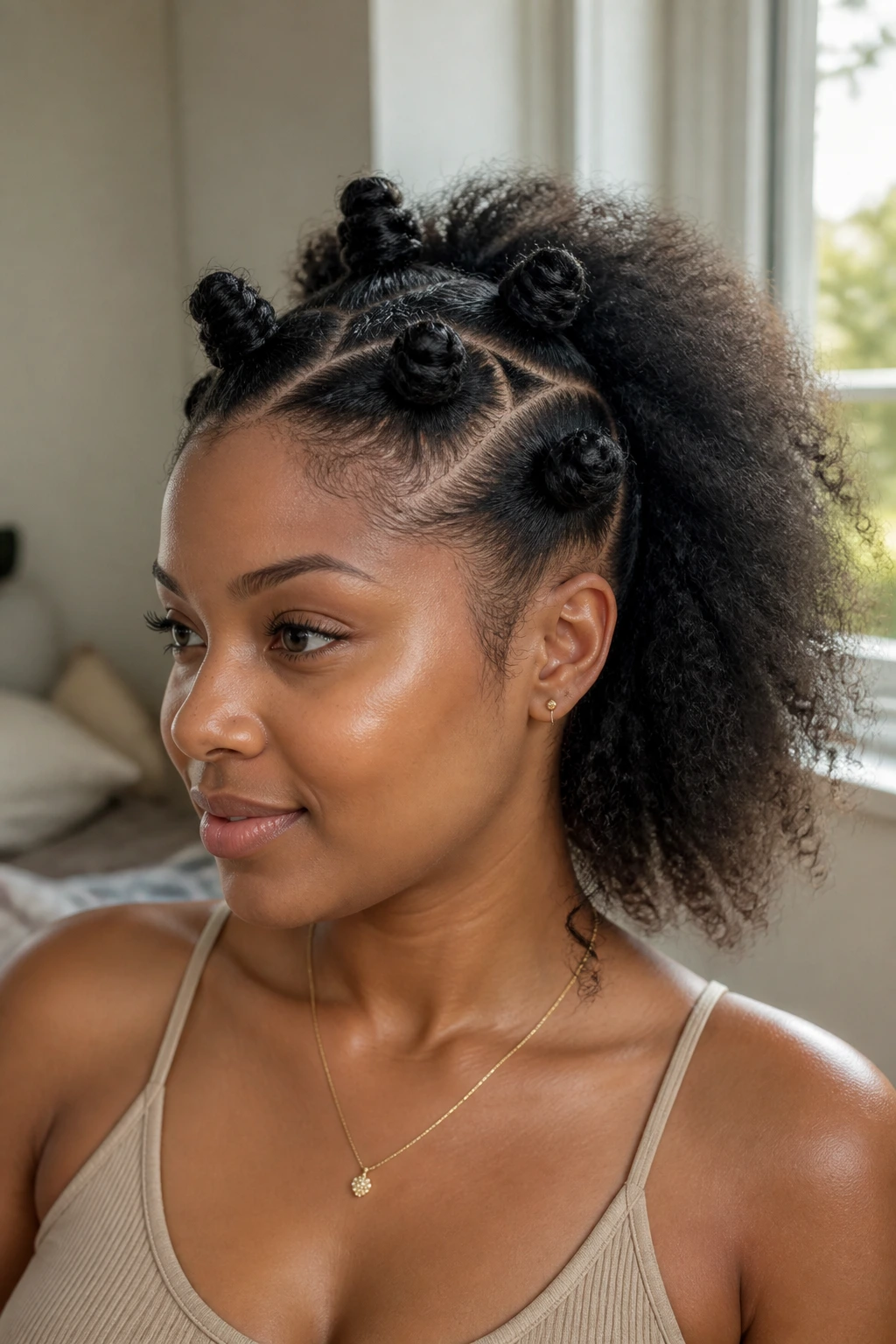
Clean straight parts are neat. Zigzags have attitude.
A zigzag part leading into four to six top knots gives the crown a sharper graphic look, and it pairs best with a back section that is left free, picked out, and not overly defined. Think soft afro shape, not polished ringlets.
Why the contrast matters
The zigzag top is already doing a lot visually. If the back is also heavily sculpted, the style can start to feel crowded. A freer afro base lets the eye rest. The shape still feels intentional because the top gives you enough structure.
Best hair prep
- Stretch the top lightly before sectioning so the part lines stay crisp
- Fluff the back with a pick only at the roots
- Keep the ends of the afro moisturized with a light cream, not grease
- Wrap a scarf around the knot section at night and sleep on a satin pillowcase for the back
This is a smart choice if you like styles that look better on day two than day one. The back gets fuller, and the top still holds.
9. Double Knots with Long Rod-Set Ends
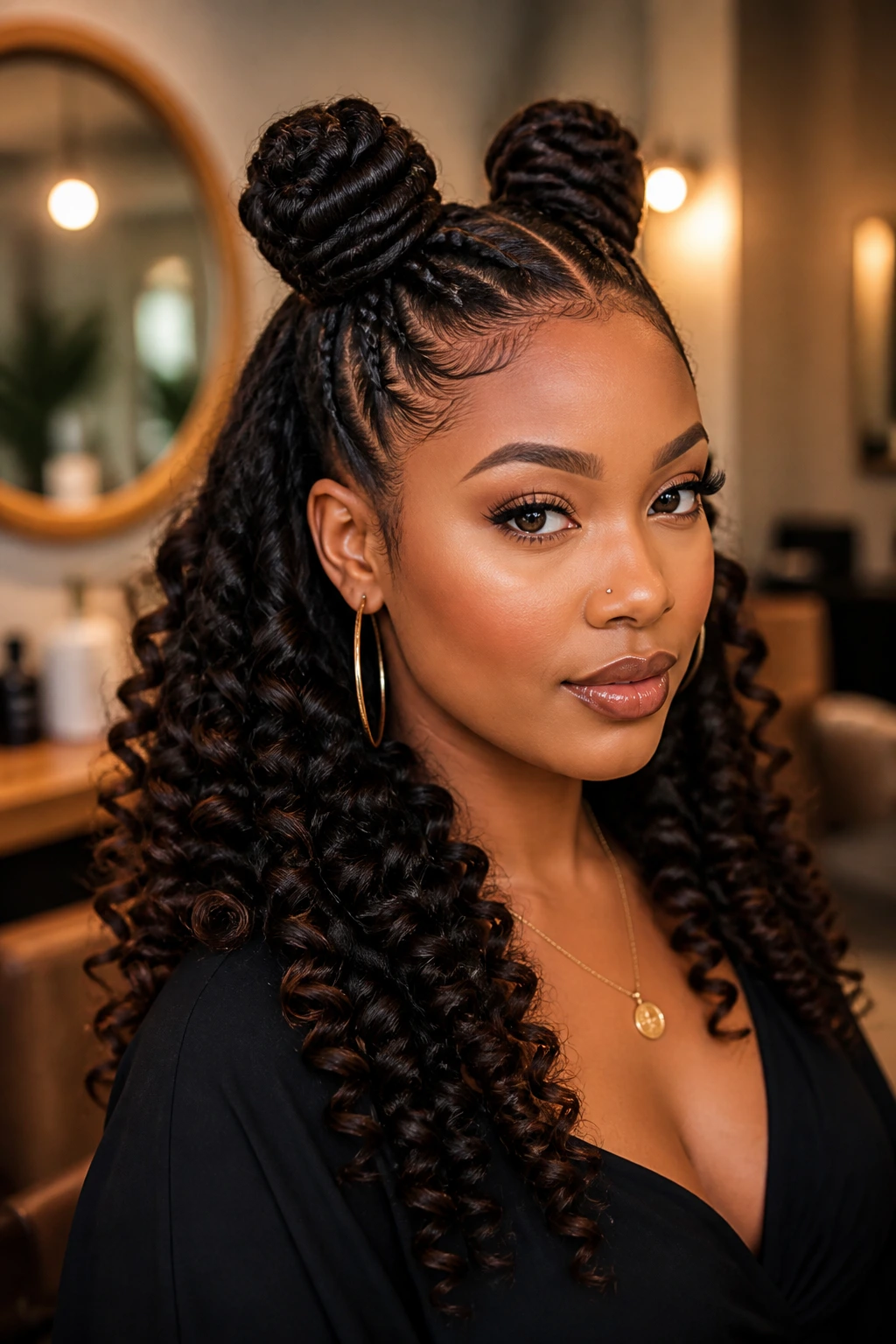
The first time you see this style done well, you notice the back before anything else. Two top knots paired with rod-set curls in the lower half create a sharper contrast between coiled structure above and springy spirals below.
Rod-set ends give more length than a standard wash-and-go and a more polished finish than a rough twist-out. If you want the loose section to fall past the shoulders in clear, even spirals, rods or perm rods are the easiest route. Use small rods for tighter springs, medium rods for a softer bounce.
Placement matters here. Keep the two knots centered and slightly back from the hairline so they frame the rod set instead of crowding it. Then separate the spirals only after the hair is fully dry. Split them too early and the back turns fluffy, which can still look good, but it becomes a different style.
This one leans dressier than sporty. Dinner, photos, a wedding guest look—it makes sense in those spaces.
10. Micro Knots Across the Hairline
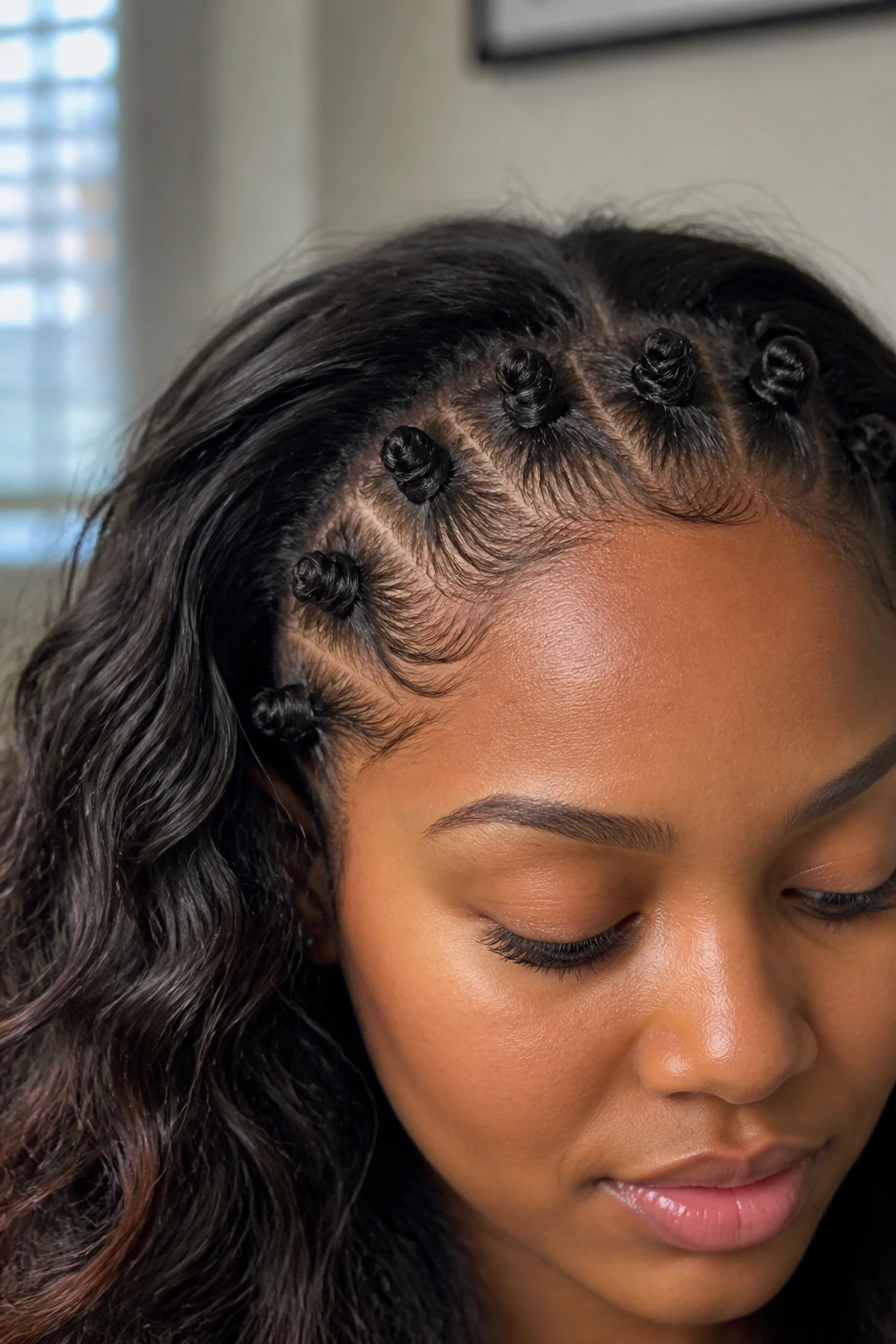
Tiny knots near the front can look incredible, but they demand patience and a light hand. Six to ten micro knots placed along the hairline and front crown create a headband effect, while the rest of the hair stays loose.
The appeal
The detail is in the scale. Small knots draw attention to the face and the parting. They work especially well if your edges are dense enough to shape softly without heavy gel, because a stiff hard hairline can make the look feel severe.
Keep the tension sane
Do not snatch these sections. Micro knots need less hair than people think. Use narrow sections, wrap them neatly, and stop as soon as the knot holds. If each mini section feels thick and heavy at the root, you took too much hair.
A little frizz is fine here. Actually, it helps. Perfectly lacquered micro knots near the front can look rigid. Slight texture keeps them rooted in natural hair rather than turning them into tiny costume spirals.
11. Heart-Part Knots with Loose Spiral Ends
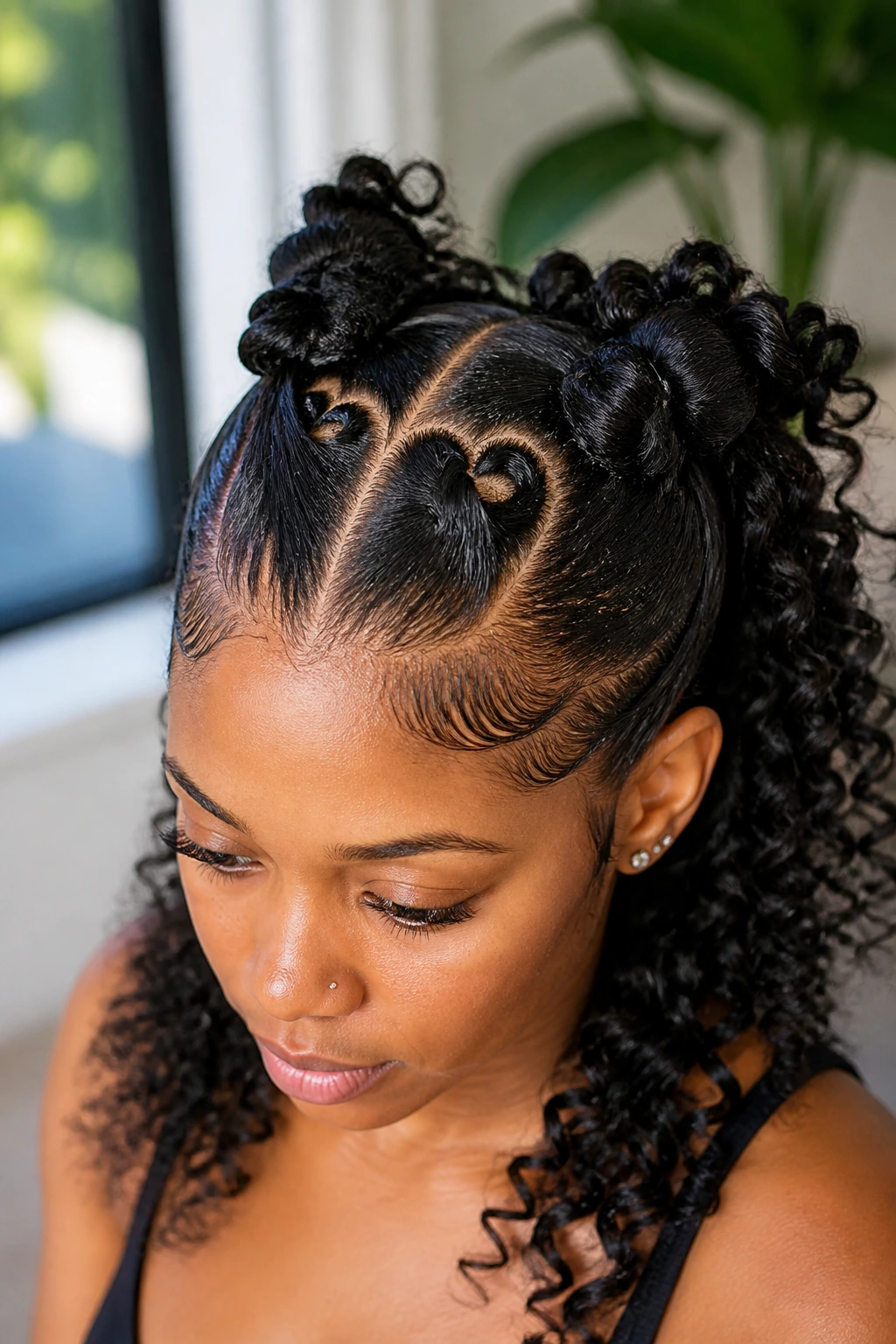
This style is playful without feeling childish when the parting is done cleanly. Heart-shaped parts feeding into two front knots give the top section a little design work, while loose spiral ends in the back keep it from reading like novelty hair.
A lot rides on the size of the heart parts. Too small and nobody can read the shape. Too large and you lose too much hair from the loose section. A heart about 2 to 2½ inches wide on each side usually lands in the sweet spot.
You do not need the back section to be fussy. A braid-out touched up with a curling wand on the ends can be enough. The point is to give the lower half a little bend and shine so it supports the detail up top.
This one is good for birthdays, vacation photos, or any day when you want the style to have a little personality before you even add earrings.
12. Half-Up Bantu Knots on Locs
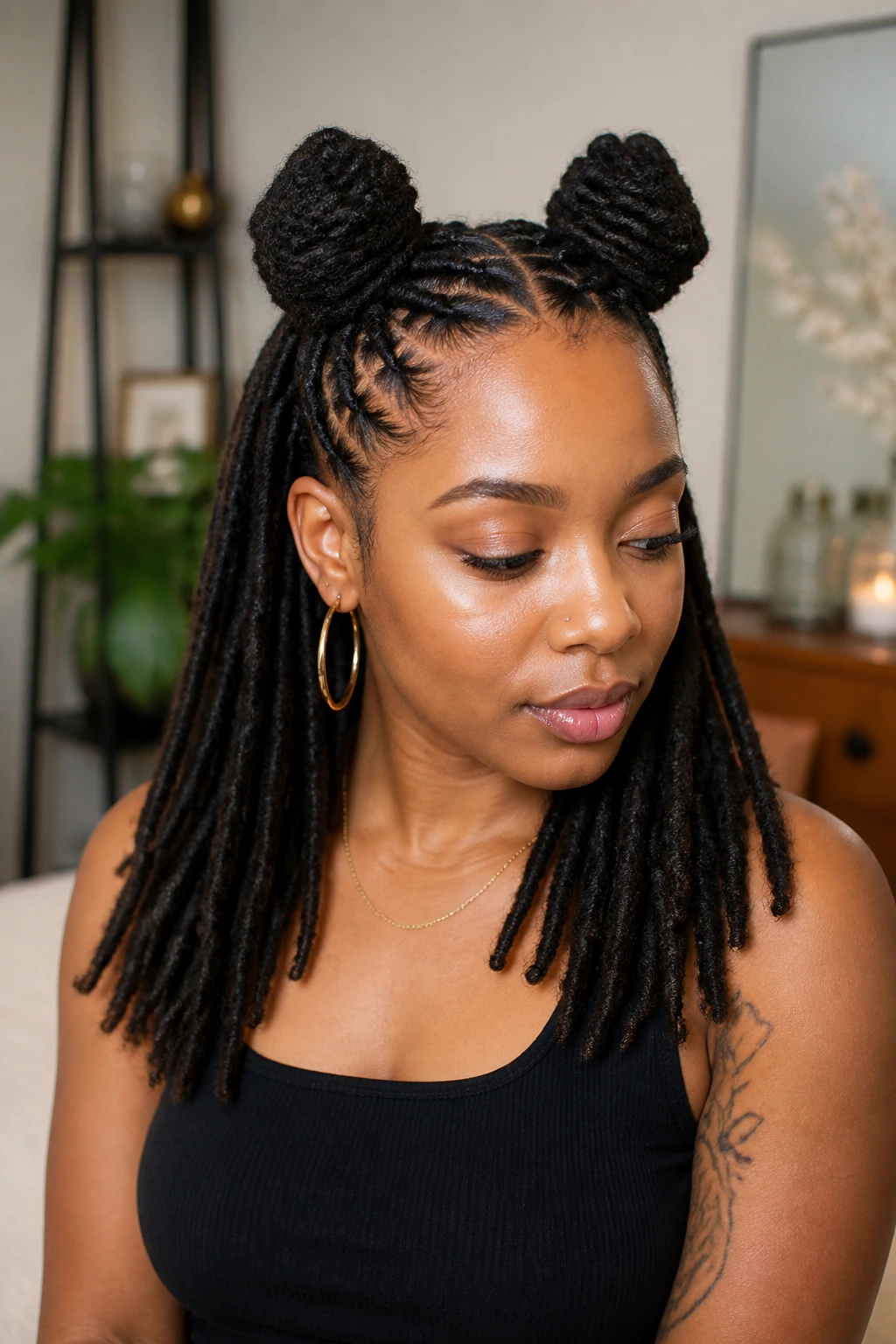
Locs make Bantu knot styling more architectural. The wraps are chunkier, the silhouette is stronger, and two to five half-up knots on locs can hold for days with almost no maintenance.
What changes with locs is weight. Fresh thick locs can feel heavy when wrapped into multiple small knots, so fewer sections usually work better. Two high knots look clean and strong. Three down the center can work on longer locs. Five is about the upper limit before the crown starts feeling loaded.
What helps locs hold
- A light spritz of rose water or aloe mist before wrapping
- Pins placed through the knot base, not through the middle
- A loose silk scarf overnight so you do not flatten the lower locs
- Palm-rolling only if the roots are already due for a refresh
This is one of the least fussy versions on the list. If your locs already have shape and the roots are not overly puffy, you can build the whole style in under 15 minutes.
13. Cornrow-to-Knot Crown with Curled Leave-Out
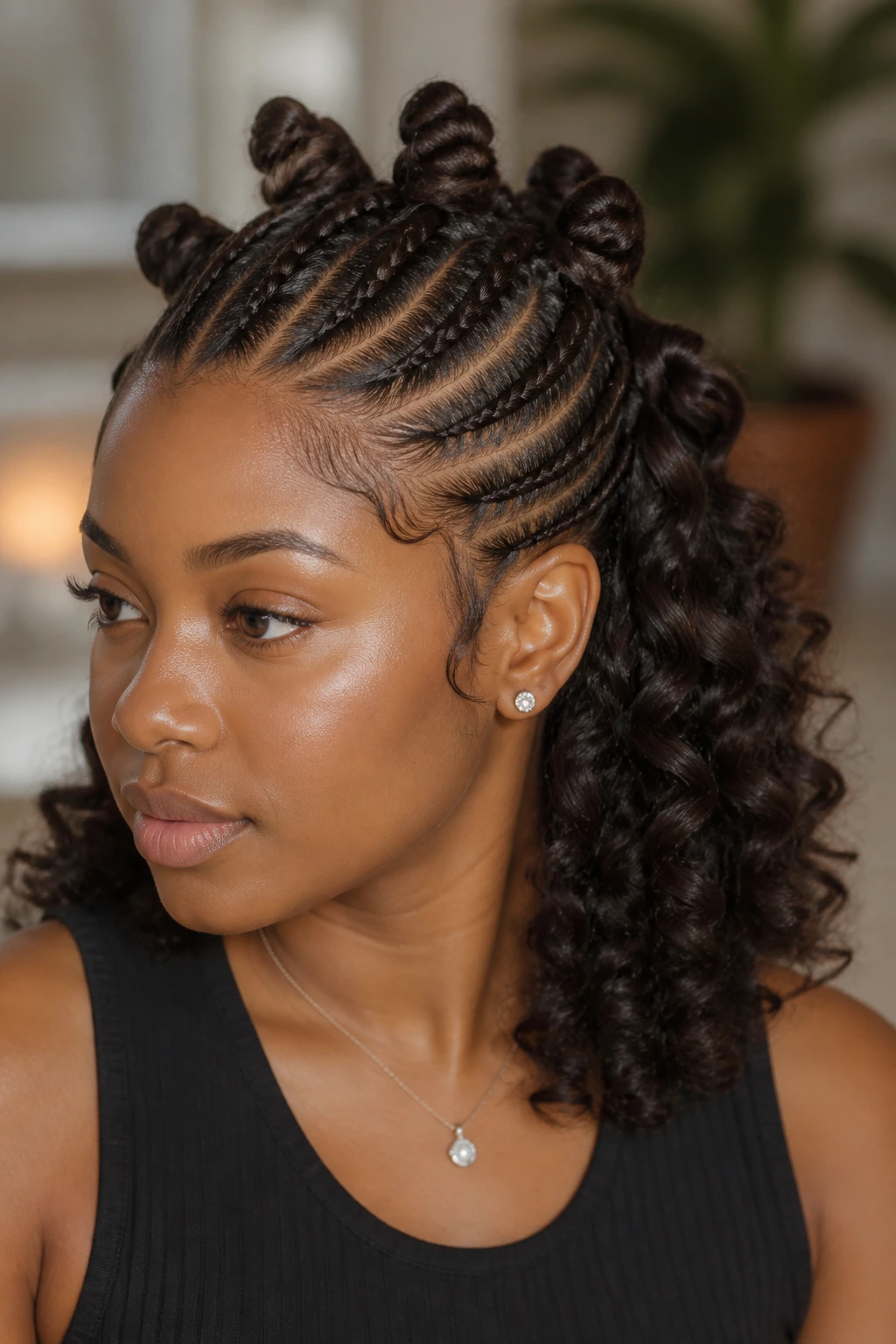
Some styles earn their keep by lasting longer. A half-up crown built from four to six cornrows that feed into Bantu knots does exactly that. The braids keep the scalp neat, the knots anchor the top, and the leave-out in the back can be curled, twisted, or blown out.
This hybrid approach is especially useful if your roots puff fast or you exercise often. A regular slicked top section may swell by day two. Cornrows keep the top clean much longer. Then the loose section gives you enough softness that the style never feels too strict.
Use this on medium or thick hair, or add braiding hair only in the cornrow sections if you need more grip. Keep the back separate from the braids until the very end so you do not accidentally pull too much hair upward and thin out the loose portion.
The style has one downside: braids can make the top read more formal. If you want to soften it, leave a few small curls out near the ears.
14. Mohawk Knots with Flat-Twisted Sides
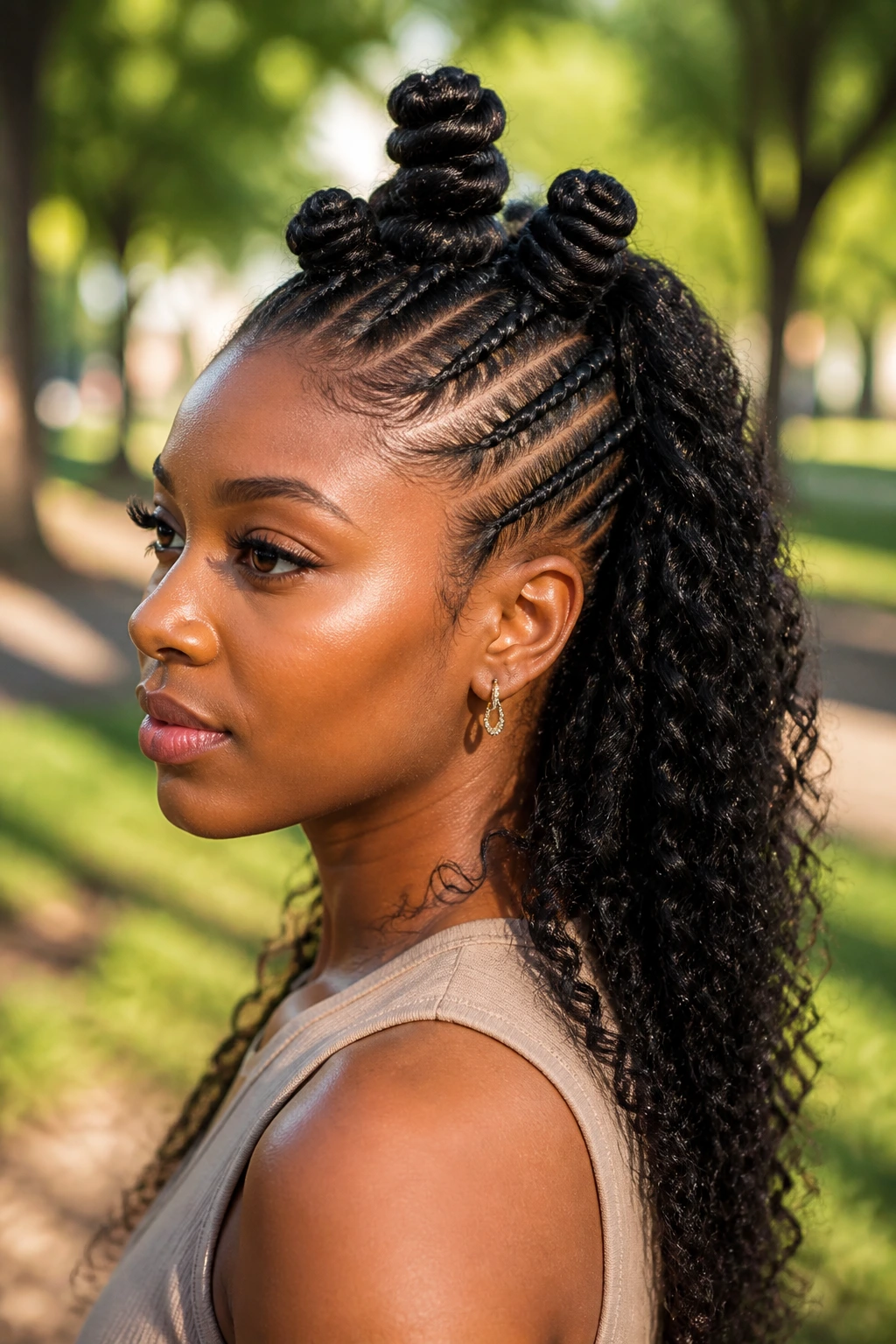
If you like shape, this is one of the strongest options in the bunch. Three to five Bantu knots running down the center in a mohawk line, with the sides flat-twisted upward, create a narrow crown that elongates the face.
It is a good choice for thick hair because the side control keeps the silhouette from spreading too wide. On a full head of dense natural hair, a standard half-up style can sometimes puff outward at the temples and get bulky fast. Flat twists solve that without shaving or cutting anything.
You can leave the back in a chunky twist-out if you want the lower half to stay full. Or keep the back stretched and slightly tucked if you want the mohawk line to stay the focus. Either way, the top line needs even spacing. Uneven gaps between the knots show up fast in this style.
This one is not subtle. That is part of the appeal.
15. Beaded Knots with a Defined Puff Back
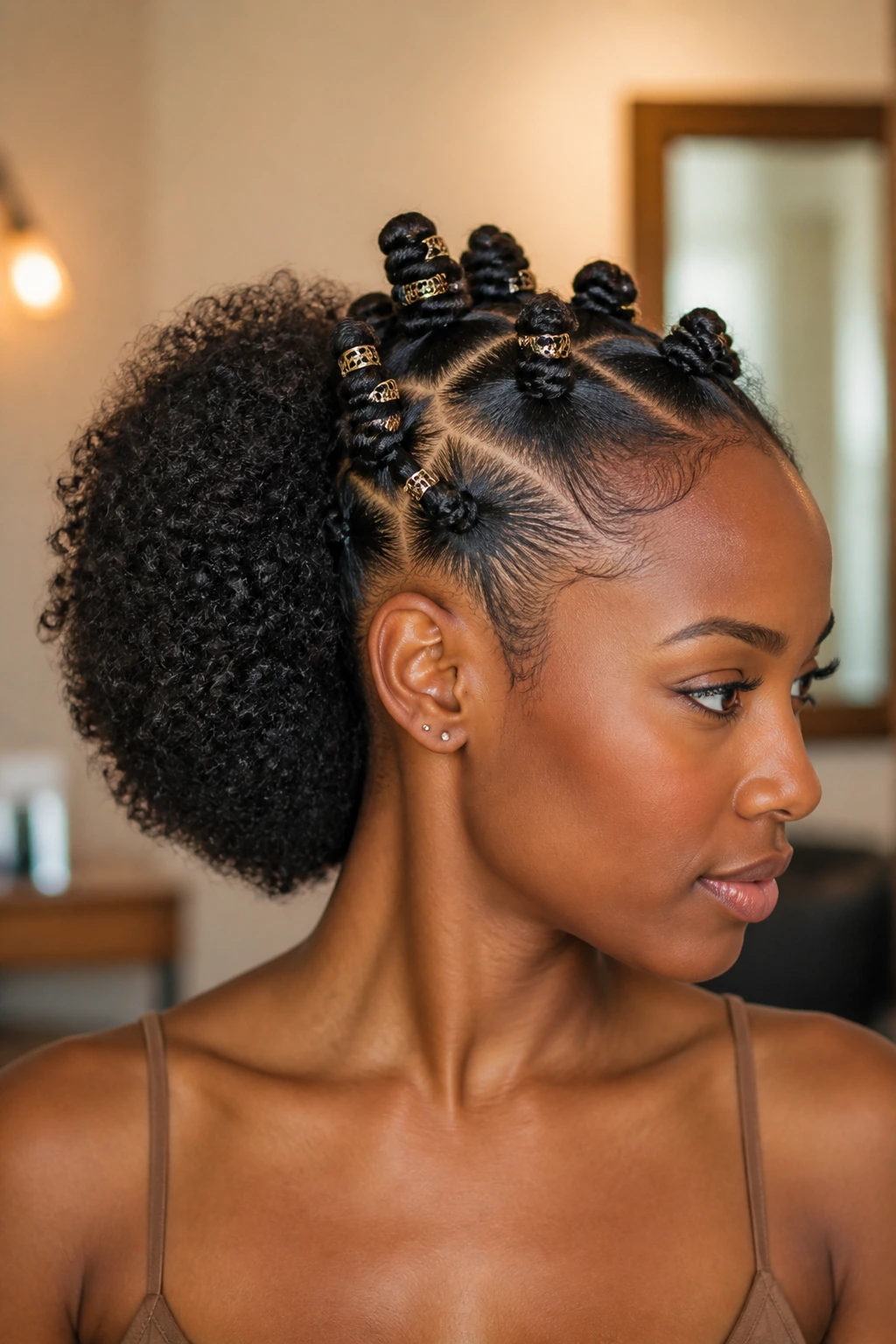
Accessories can ruin a good Bantu knot style if they are scattered everywhere. This version works because the decoration stays controlled. Add beads or cuffs to only the knots or to one narrow front section, then leave the back as a defined puff or loose curls.
How to keep it from looking cluttered
Use one metal tone. Gold cuffs plus silver wire plus clear beads plus shells is too much for a hairstyle with this much built-in texture. Pick one accent and repeat it lightly. Two cuffs on the front knot row may be enough.
Good pairings
- Wooden beads for larger knots on stretched hair
- Small gold cuffs for braids feeding into knots
- Clear beads on a single side braid if the back section is curly
- A defined puff in the back if your hair is medium length and dense
The puff-back version is especially useful when the lower half is not long enough to hang. You still get volume, but it stays controlled and rounded rather than dropping flat at the nape.
16. Low-Crown Knots with Finger Coils
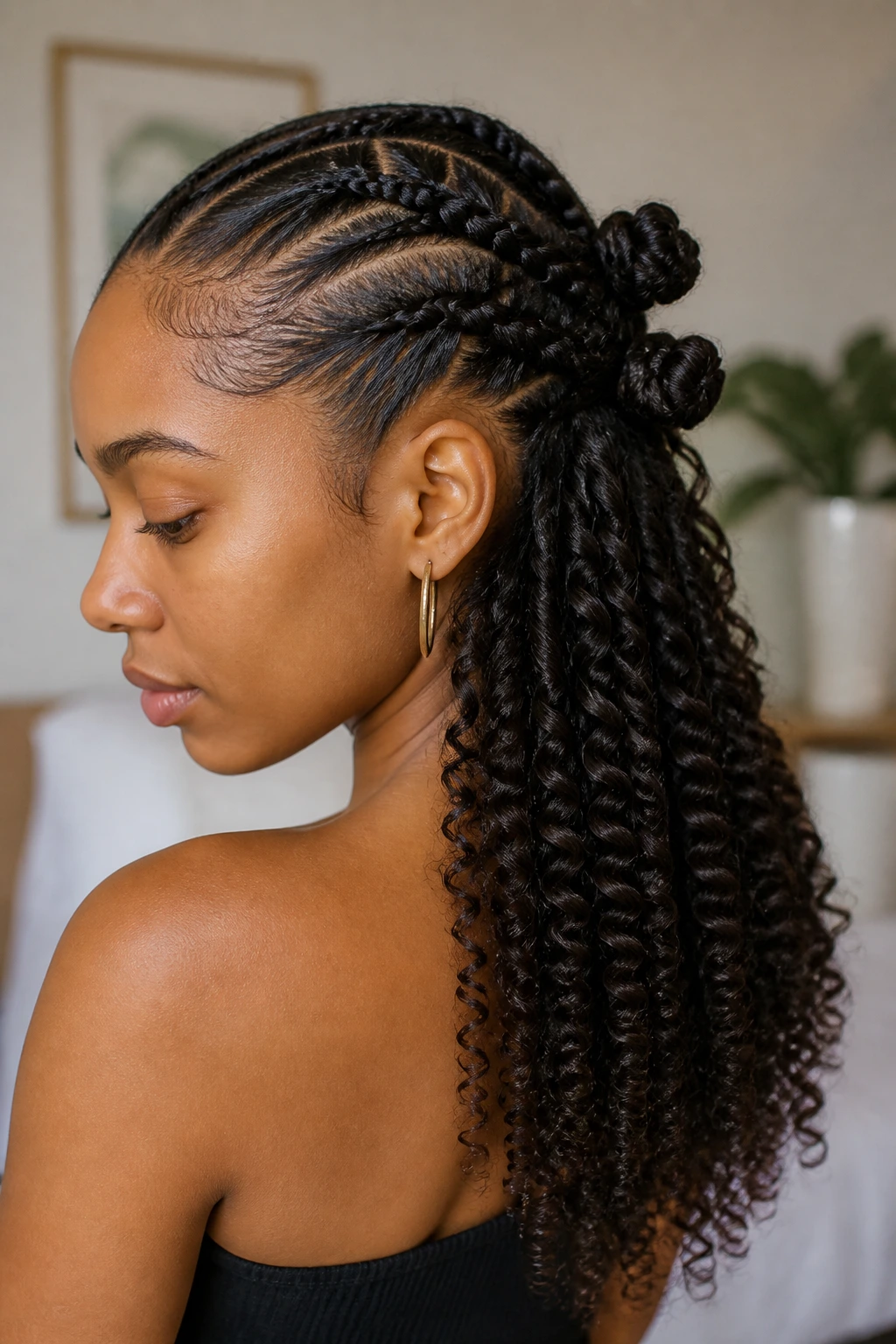
Most half-up Bantu knot styles sit high. Dropping them lower changes the whole mood. Three or four knots placed at the low crown instead of the top center create a softer profile, and finger coils in the loose section add neat texture without a full wet set.
This placement is kind to the hairline because you are not dragging the front sections straight upward. The pull is lighter, and the style often feels more comfortable by the second day. If tight high styles give you a headache, try this version first.
Finger coils in the back also give you more control than a wash-and-go. You can define the lower section in small pieces, let it dry, then separate each coil once or twice for fuller coverage. The result has a tidy, piecey finish that frames the neck and shoulders well.
A pair of long earrings works nicely here because the knots do not block the side view. Not a requirement. Still, it is the kind of hairstyle that leaves room for jewelry.
17. Marley Hair Knots with Extra Length
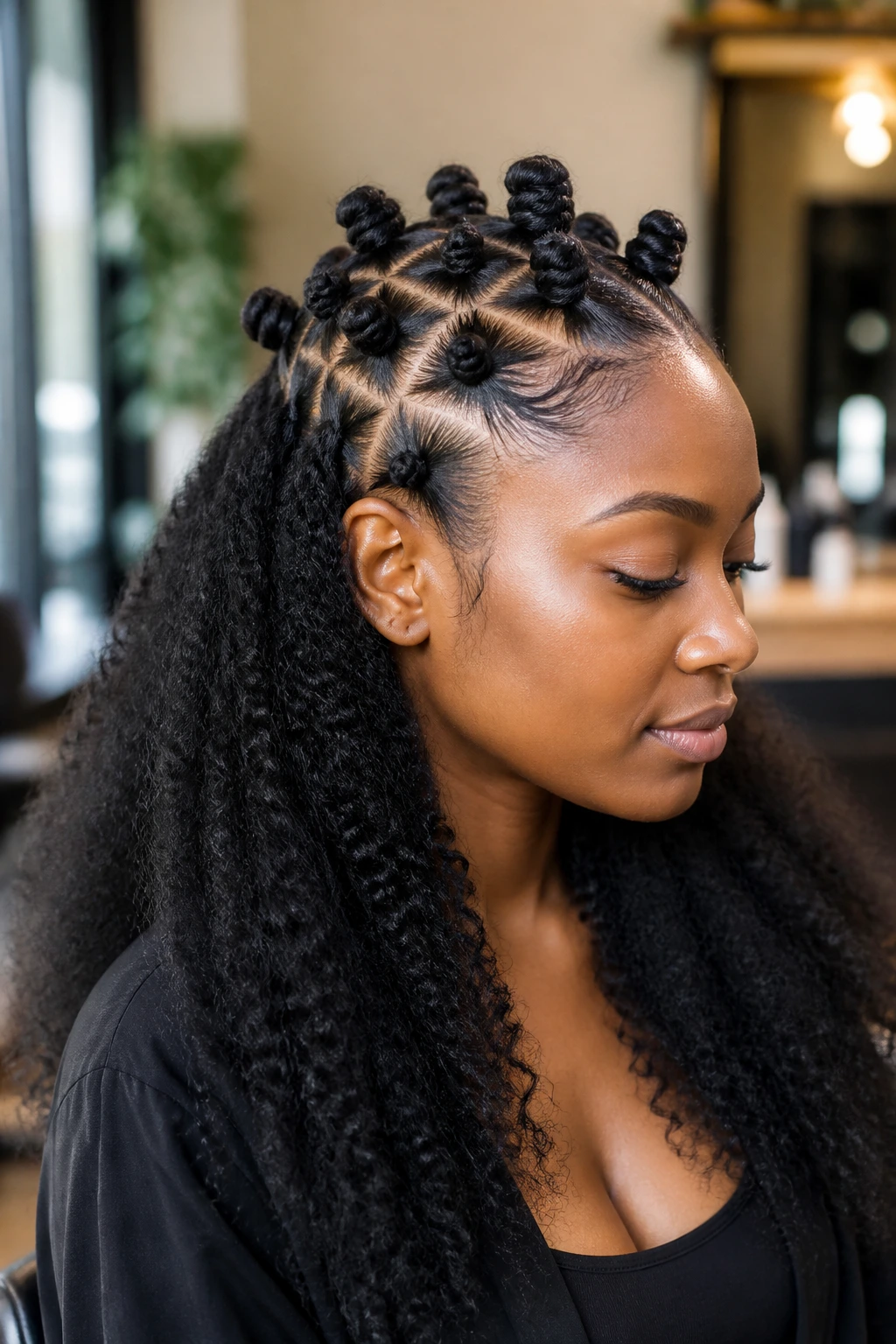
Natural hair does not always need help, but extension hair can make a style possible when your own length will not hold the shape you want. Marley hair added only to the knot sections gives fuller wraps up top while leaving the back in your own curls, coils, or stretched hair.
That split use of extension hair is smarter than adding it everywhere. The knots gain size and staying power, but the style still looks like your texture because the loose section remains untouched. Marley hair works well because its matte finish sits closer to natural blown or stretched hair than shinier synthetic blends.
Use extension hair carefully
- Match the texture first, not only the color
- Add small amounts—about the width of two fingers per knot is often enough
- Braid the base once before wrapping if your hair is silky or stretched
- Do not overload the front hairline with added hair
This is a strong option for short or medium hair that needs a bit more body at the crown.
18. Rope-Twist Knots with a Braid-Out Back
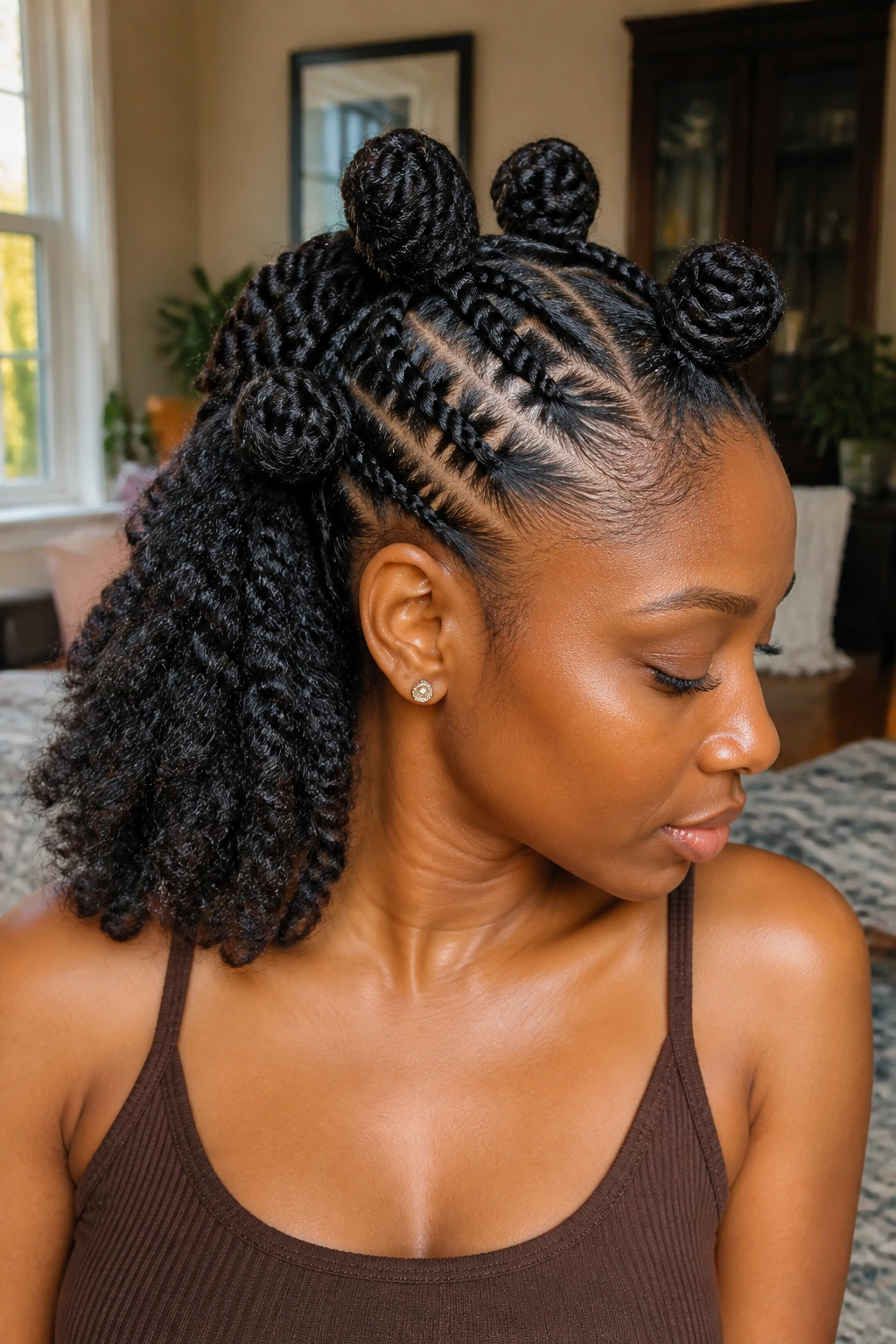
This one starts differently: instead of twisting each top section around itself from the start, make a two-strand rope twist first, then wrap that twist into a knot. The knot surface ends up more ridged and defined, which looks especially good over a fluffy braid-out back.
The texture pairing is what makes it stand out. Rope-twist knots have visible grooves, almost like little carved spirals. A braid-out has a wider, crimped texture in the loose section. Put them together and the style looks intentional from close range, not just from across the room.
You can build this on damp or dry hair, though I prefer it on lightly stretched hair because the twist pattern stays readable. Wrap too tightly and you lose the rope texture. Wrap too loosely and the knot can puff apart by evening. There is a middle ground here, and once you find it, the look is hard to beat.
Use a little foam after the knots are done, then tie a scarf around the top for 10 minutes. That small step helps the ridges stay crisp.
19. Curved-Part Knots with Face-Framing Tendrils
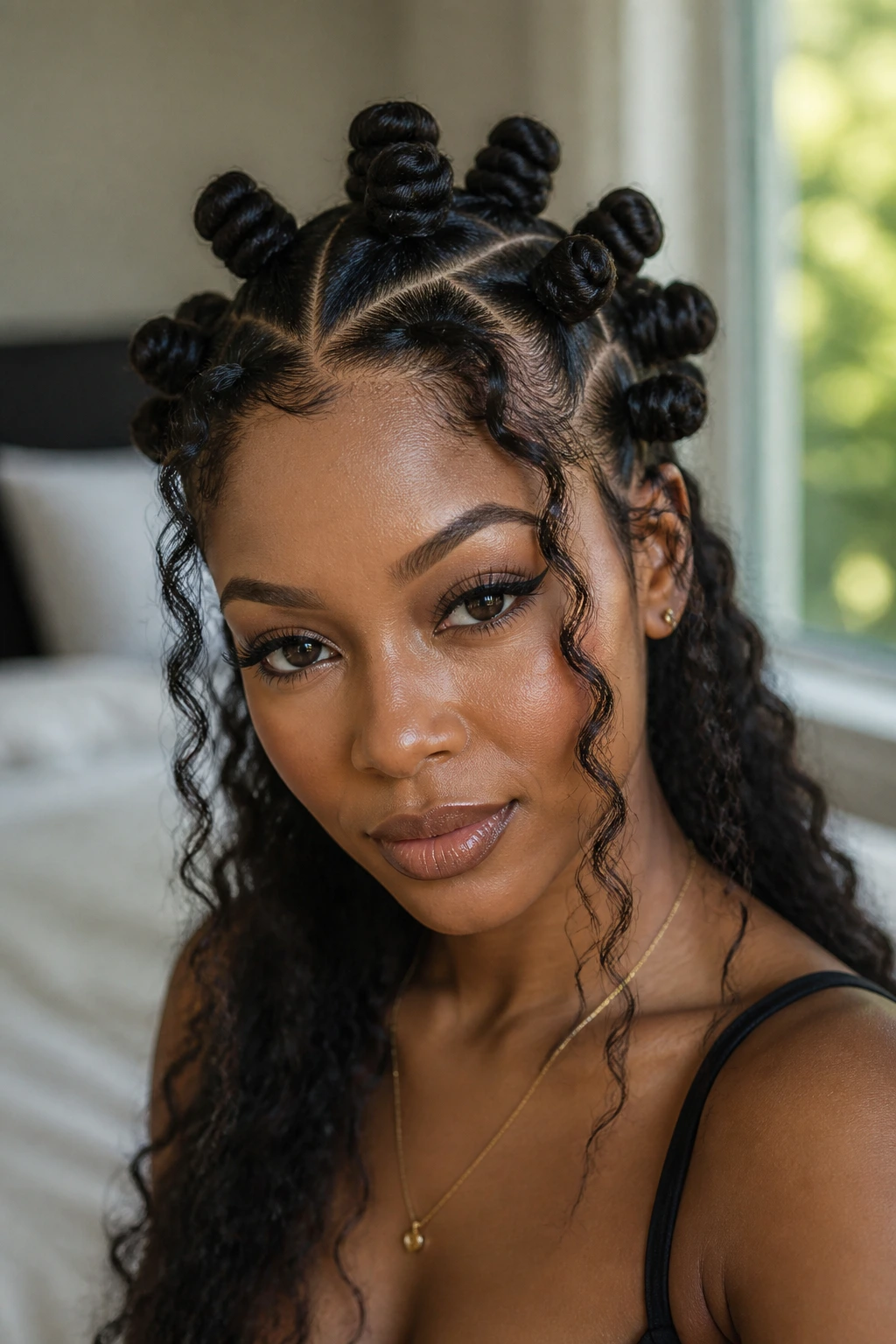
Straight parts are not mandatory. Curved parts that arc from the temples toward the crown soften the whole top section, and when you leave out two slim tendrils near the face, the style gets a less structured, more romantic finish.
This version makes sense on stretched curls, silk-pressed natural hair, or looser coil patterns where the tendrils can hold a visible bend. If the front pieces are too short or too coily, they may spring up instead of framing the cheeks. You can still wear the style—just skip the tendrils and keep the curved parting.
A curling wand on low heat can shape the front pieces if needed, though the top section should still be wrapped as true Bantu knots, not loose buns. That difference matters. The tucked ends and coiled wrap are what keep the look grounded in the style’s actual form.
This is one of the softer entries on the list, but it still has enough scalp design to feel deliberate.
20. Short 4C Half-Up Knots with a Tucked Back
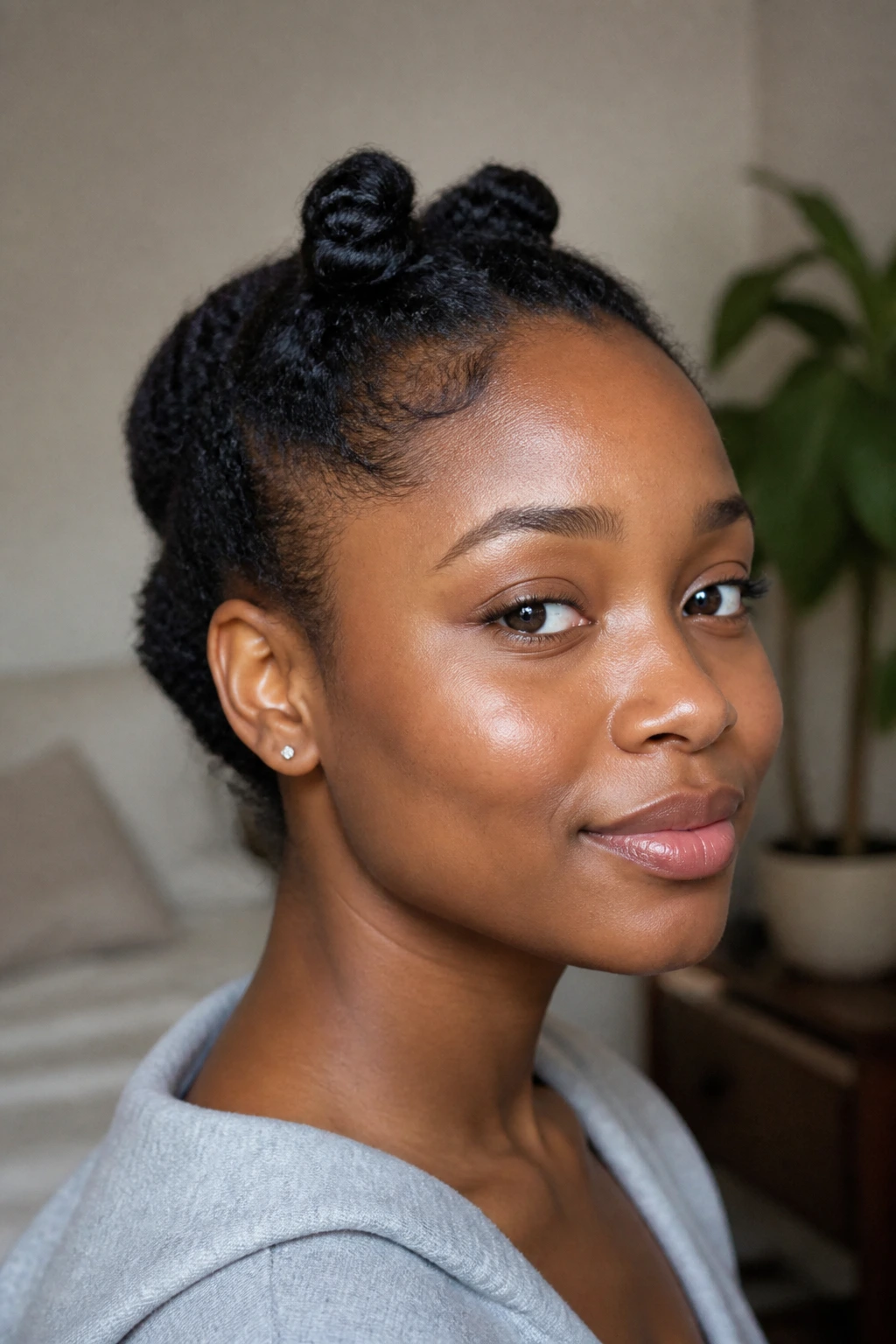
Short 4C hair does not need fake length to make this work. Two or three knots at the crown with the back softly tucked or pinned upward can create a clean half-up half-down shape even when the loose section does not hang.
What makes it work on shorter hair
The back section does not have to fall. It only has to stay visibly separate from the knot area. A tuck at the nape, a pinned mini puff, or a compact coil-out in the lower half still gives the style that split silhouette.
Helpful details
- Stretch the top with bands for 20 to 30 minutes before styling
- Use smaller knots so they do not swallow the whole head shape
- Pick the back at the roots if it looks too flat
- Skip heavy edge gel if your hairline is short or delicate
This style proves a point worth repeating: length is optional; structure is not. Clean sections and smart placement matter far more.
21. Color-Blocked Knots with Natural Roots
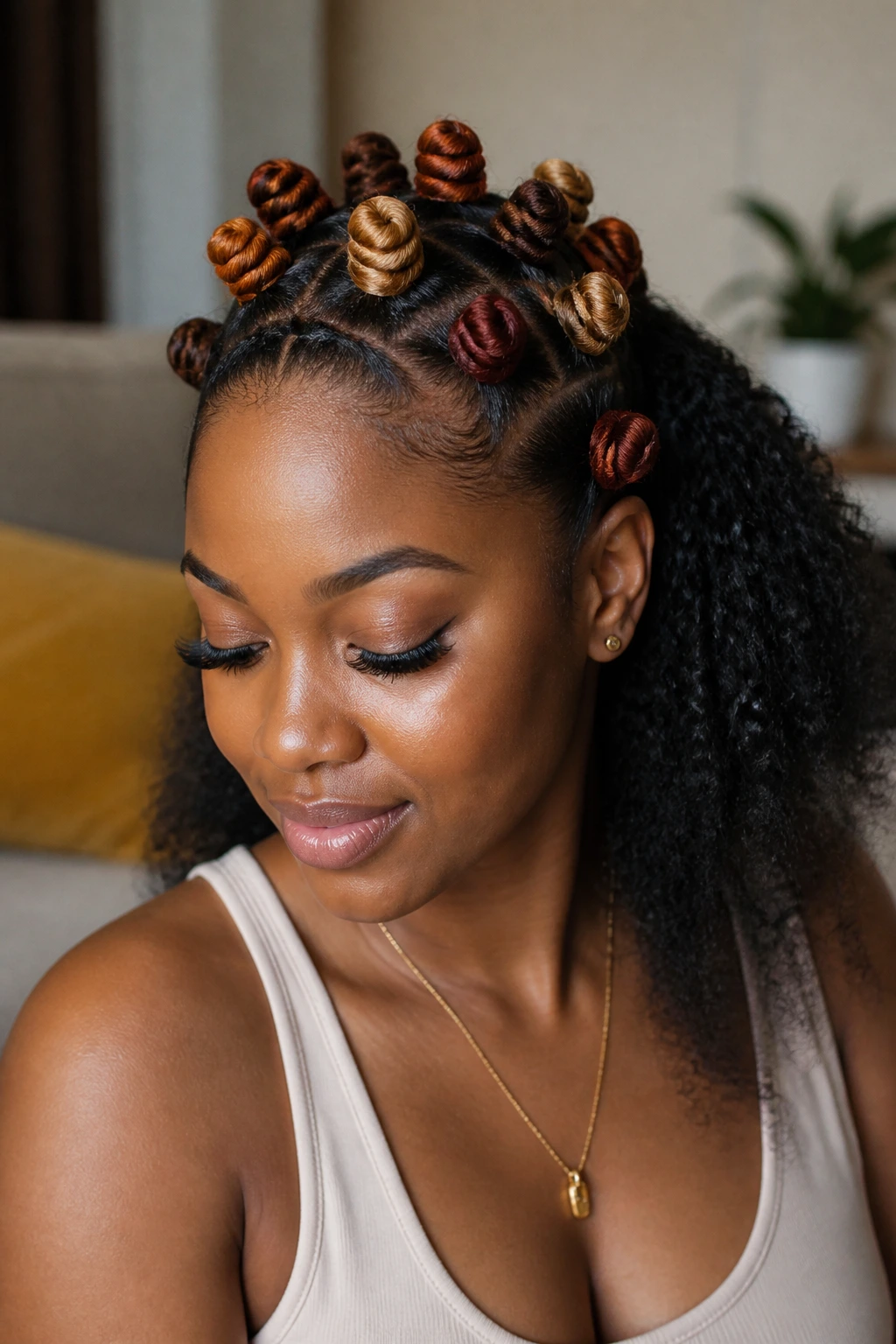
Color can do part of the design work for you. On hair with blonde ends, copper streaks, burgundy panels, or even subtle brown tips, placing the colored sections into the knots while leaving darker roots and back hair visible creates instant contrast.
The easiest version uses highlights concentrated near the front or crown. When you wrap those sections into knots, the color sits on the outer coil of each knot and makes the shape more visible. The back then reads deeper and fuller because the darker base stays loose.
This is also a smart way to wear older color. If your ends are lighter or slightly dry, tucking them into the knot sections can hide some wear while still showing the tone. Keep the back moisturized and trimmed, and the contrast looks intentional rather than patchy.
Do not force color placement if your highlights sit mostly in the lower half. In that case, reverse the logic: keep the knots darker and let the bright back section be the focus.
22. Half-Up Knots with a Full Curly Fringe
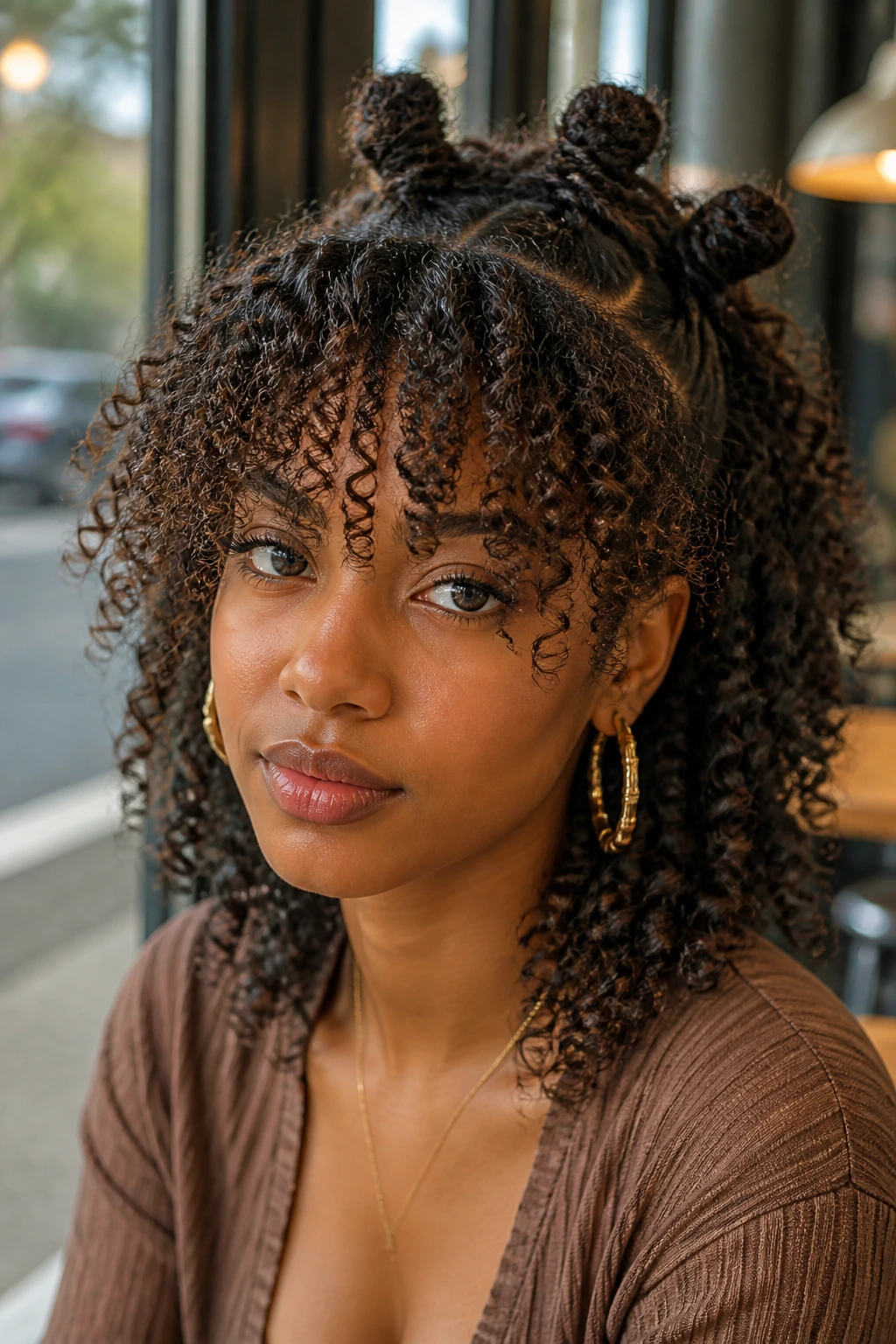
A fringe changes Bantu knots more than people expect. Leave a curly bang section free at the front, place the knots just behind it, and keep the rest down. The silhouette shifts from lifted and open to framed and forward.
This version suits oval, long, and heart-shaped faces especially well because the fringe shortens the forehead visually while the knots keep the crown from going flat. Coily bangs work best when cut with shrinkage in mind. A dry cut is safer than a wet guess here.
The trade-off
A curly fringe needs maintenance. It may need water, mousse, or finger-coiling each morning, even if the knots are still perfect. If that sounds annoying, this may not be your weeknight style.
Why people keep coming back to it
Because it looks fresh. The bangs soften the style, the knots add shape, and the back stays free. Few half-up looks carry all three at once.
23. Scarf-Wrapped Knots with Loose Ends
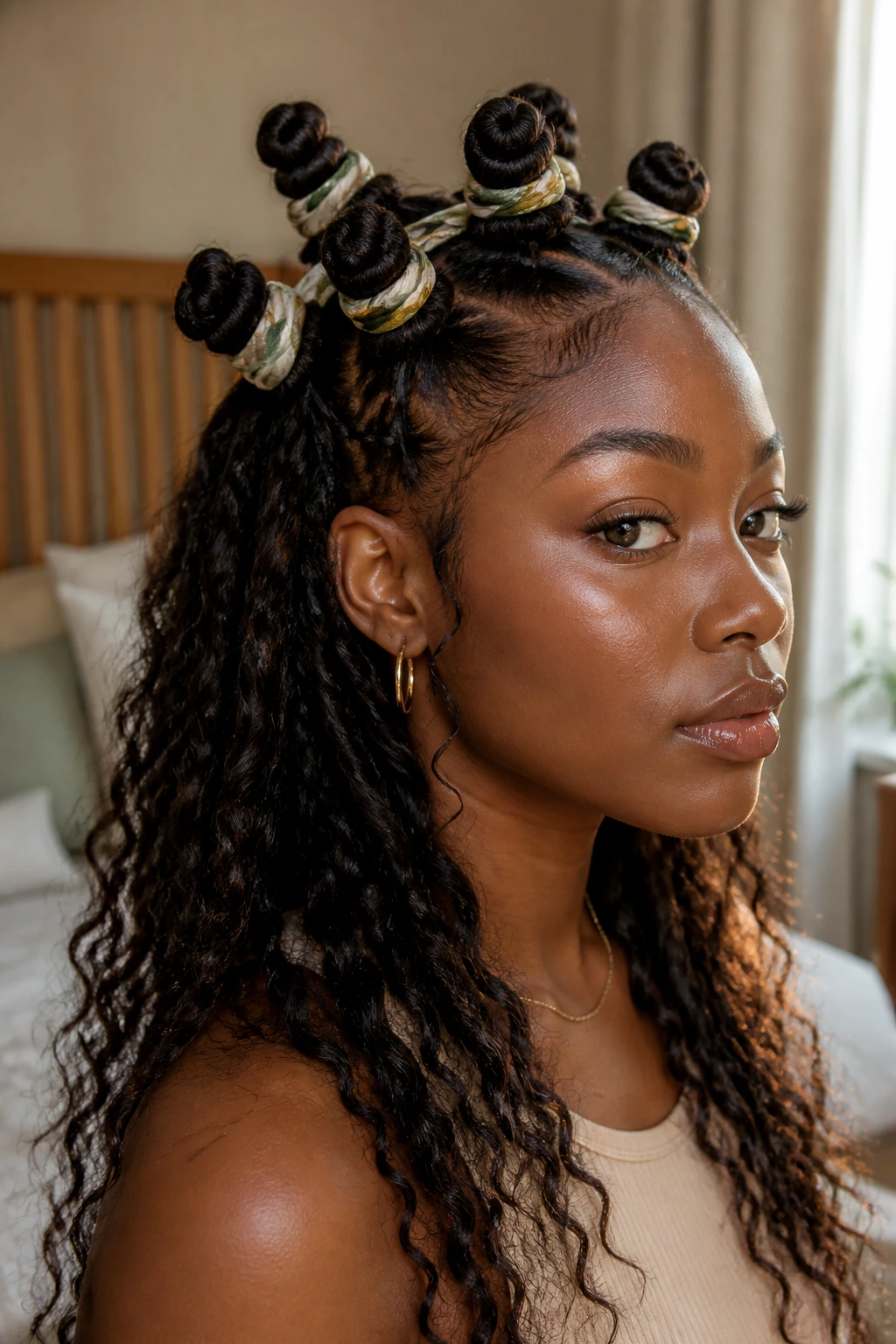
Fabric can shift the mood of the hairstyle fast. Wrap a narrow scarf around the base of the knot section or thread it through the knots, then let the lower half stay loose and textured. The scarf becomes part of the architecture, not an afterthought tied on top.
Choose a scarf no wider than 2 to 3 inches once folded. Anything thicker can swallow the knot detail. Cotton-silk blends grip better than slick satin if you are actually weaving it through the style rather than tying it around the finished section.
Print choice matters too. Small geometric prints or solid jewel tones tend to read cleaner against textured hair. Huge floral patterns can dominate the style, especially if your knots are on the smaller side.
This is a useful rescue move when the knots are a day old and not as crisp as they were. Wrap the scarf neatly, refresh the back with a little mist and fluffing, and the whole look feels intentional again.
24. Undercut Half-Up Knots with a Textured Back
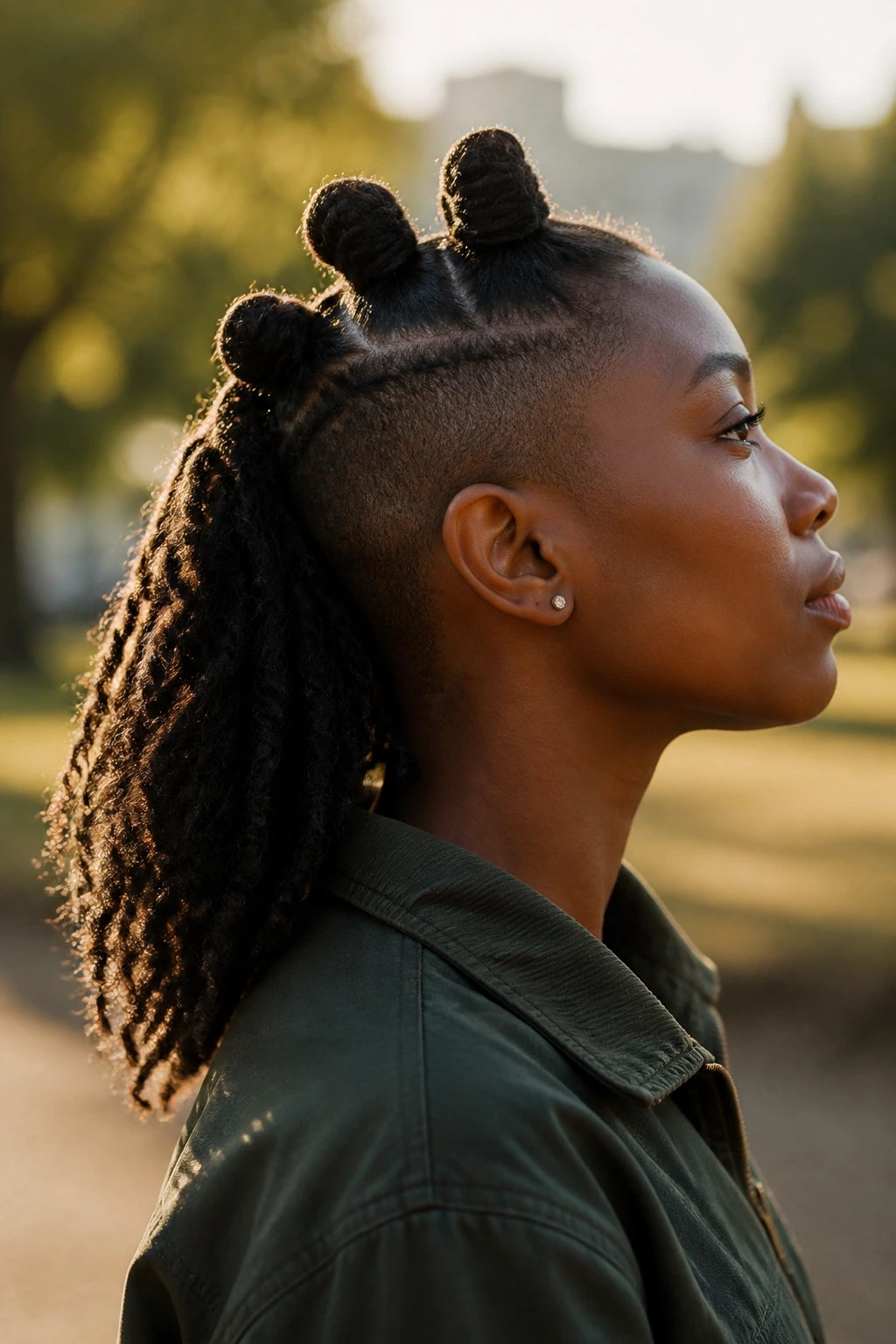
An undercut changes the profile of this hairstyle in the best possible way. With shaved or closely cropped sides and nape, the top knots appear sharper and taller, while the loose back section sits more like a central curtain of texture.
The big advantage is control. Thick hair can make half-up looks spread sideways; an undercut removes that bulk and gives the style a cleaner line. Three center knots often work best here, though two high knots can also look strong if the top section is long enough.
This style is especially striking on locs, stretched natural hair, and two-strand twists because the exposed sides make every knot placement more visible. Keep the scalp moisturized if the cut areas are close, and watch the sun if you are outdoors for hours. Shaved sections burn faster than most people remember.
It is a stronger look, no question. If you like sharp lines and want the style to read from across the room, this one does the job.
25. Soft Glam Bantu Knots for Formal Events
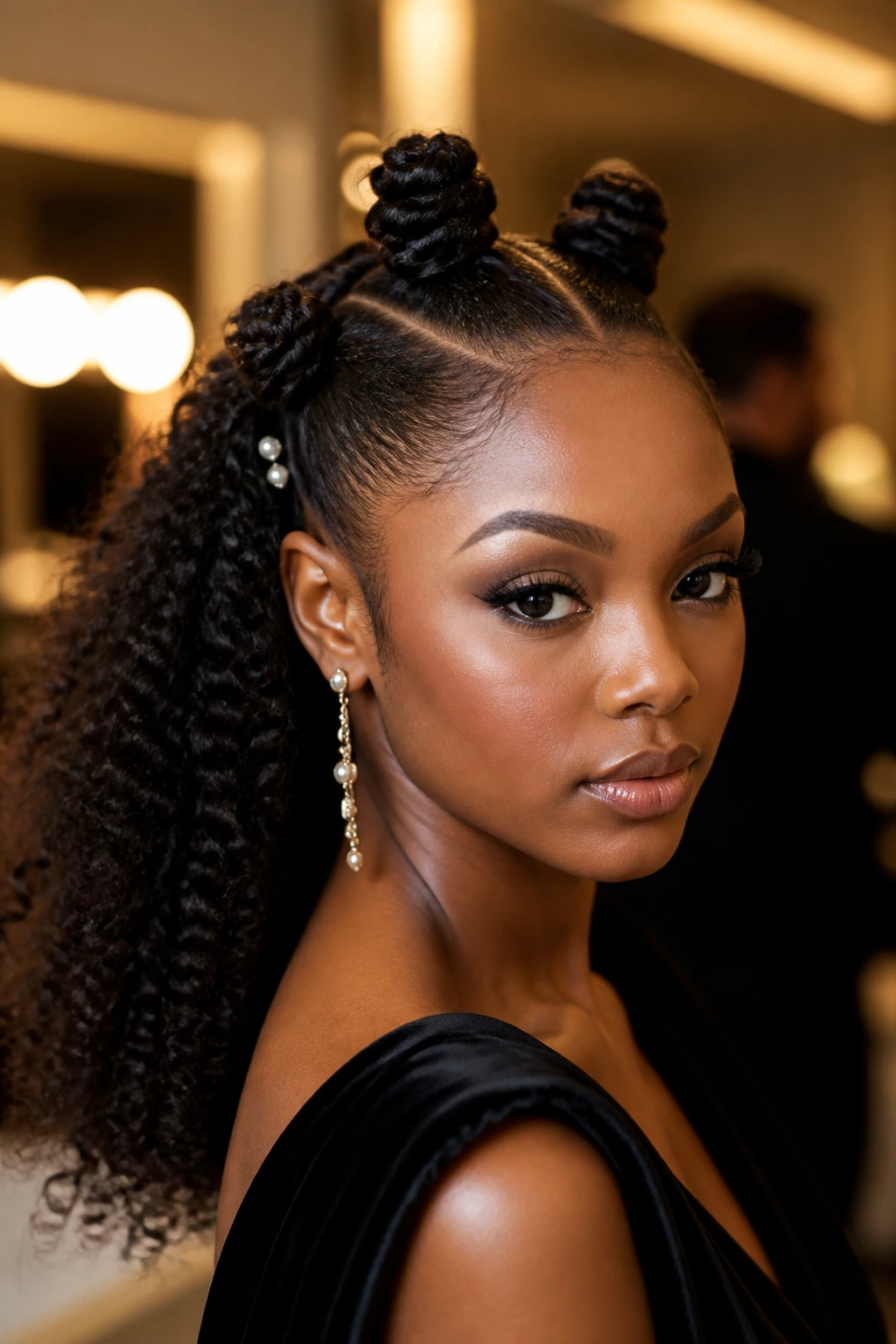
You do not need to abandon Bantu knots for a formal setting. You need to refine the finish. Use three or four smooth knots at the crown, polished edges, and a back section shaped into brushed-out curls or stretched spirals. The result keeps the identity of the style while making the whole silhouette cleaner.
The difference here is not “dressy” products. It is control. Part lines should be crisp. Flyaways around the knot bases should be tucked in. The back section should have a consistent texture, whether that means a rod set, a wand curl finish on stretched hair, or a carefully separated twist-out.
Skip oversized accessories. A few pearl pins near one knot or a slim metallic cuff is enough. The hairstyle already has structure, so your extras do not need to shout.
This is one of the few versions where a touch of shine spray makes sense. Keep it light—one pass from at least 10 inches away—so the hair catches light without looking coated.
Final Thoughts
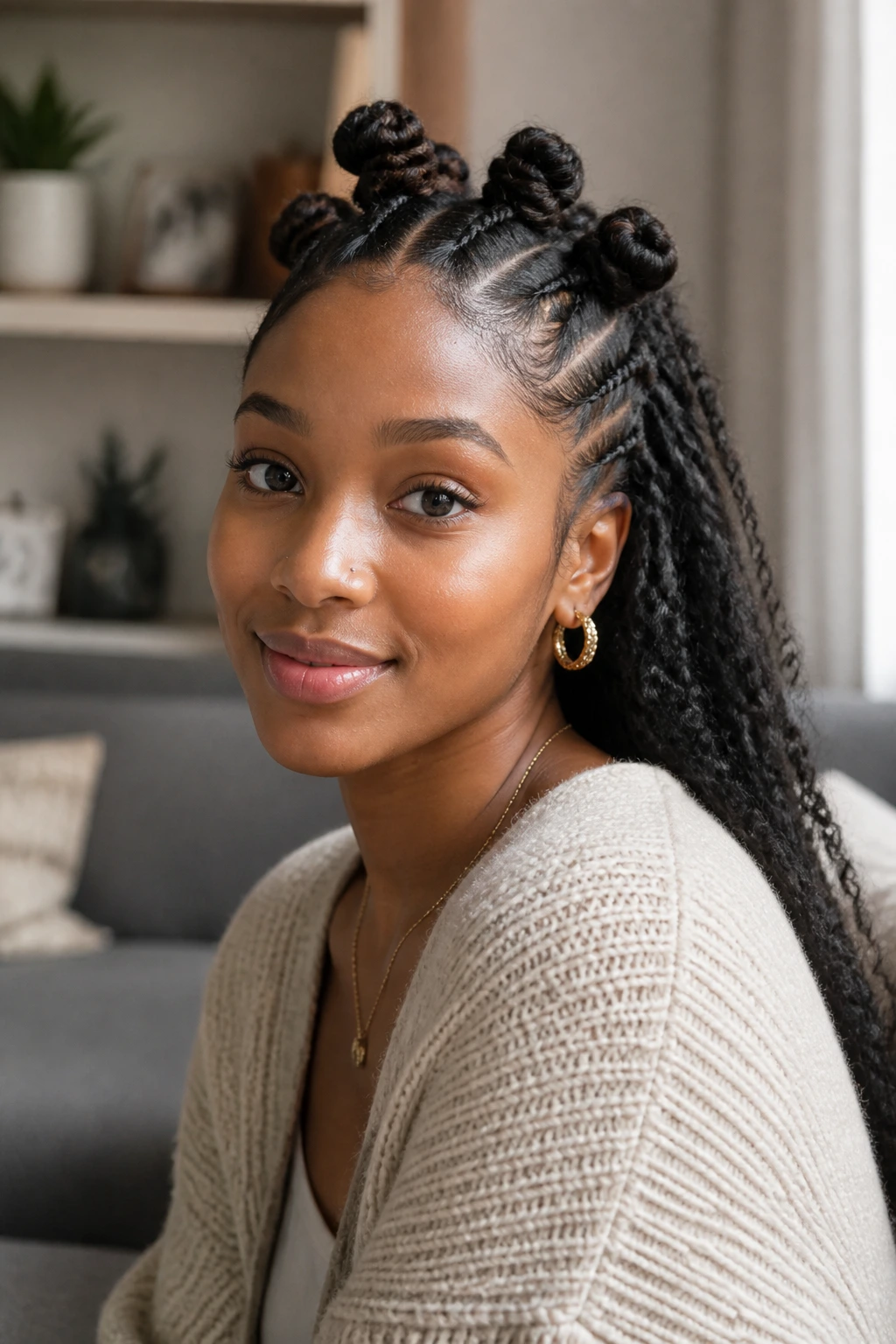
The best half-up Bantu knot style is usually the one that matches your hair’s real behavior, not the one that looked easiest on someone else. If your curls shrink hard, lean into compact knots and a full back section. If your hair stretches easily, use larger knots and let length play a bigger role. If your scalp gets tender fast, lower the placement and reduce the section size.
Start with parting and tension. Those two decisions shape almost everything that comes after. Product matters, but not as much as clean sections, balanced knot size, and a back section that actually suits your length and density.
And if a style hurts, redo it. No hairstyle earns the right to take your edges with it.
