



Bantu knots on 4C natural hair have a way of looking far more deliberate than the effort they take. That is the appeal. A few clean parts, a little moisture, and a steady hand can turn dense coils into something sculpted, neat, and frankly a little magnetic.
4C hair is made for this kind of style. The texture grips, the knots hold shape, and the shrinkage that annoys people in loose styles actually works in your favor here. The catch is product balance: too much cream makes the base slippery, too little leaves the strands rough before you even finish the back row.
There is also a lot of room to play. Tiny knots read sharp and detailed. Jumbo knots feel faster and bolder. A half-up set gives you movement, while a low row at the nape can look calm and put-together without trying too hard. Same hair, very different mood.
If your hair tends to puff up the moment you touch it, start with sections that are clean, lightly stretched, and easy to see. A rat-tail comb, a small clip, and a light hand around the roots do more for this style than any fancy jar sitting on a shelf. The smartest way to begin is with the version that suits your length, density, and patience.
1. Medium Bantu Knots on Stretched 4C Hair
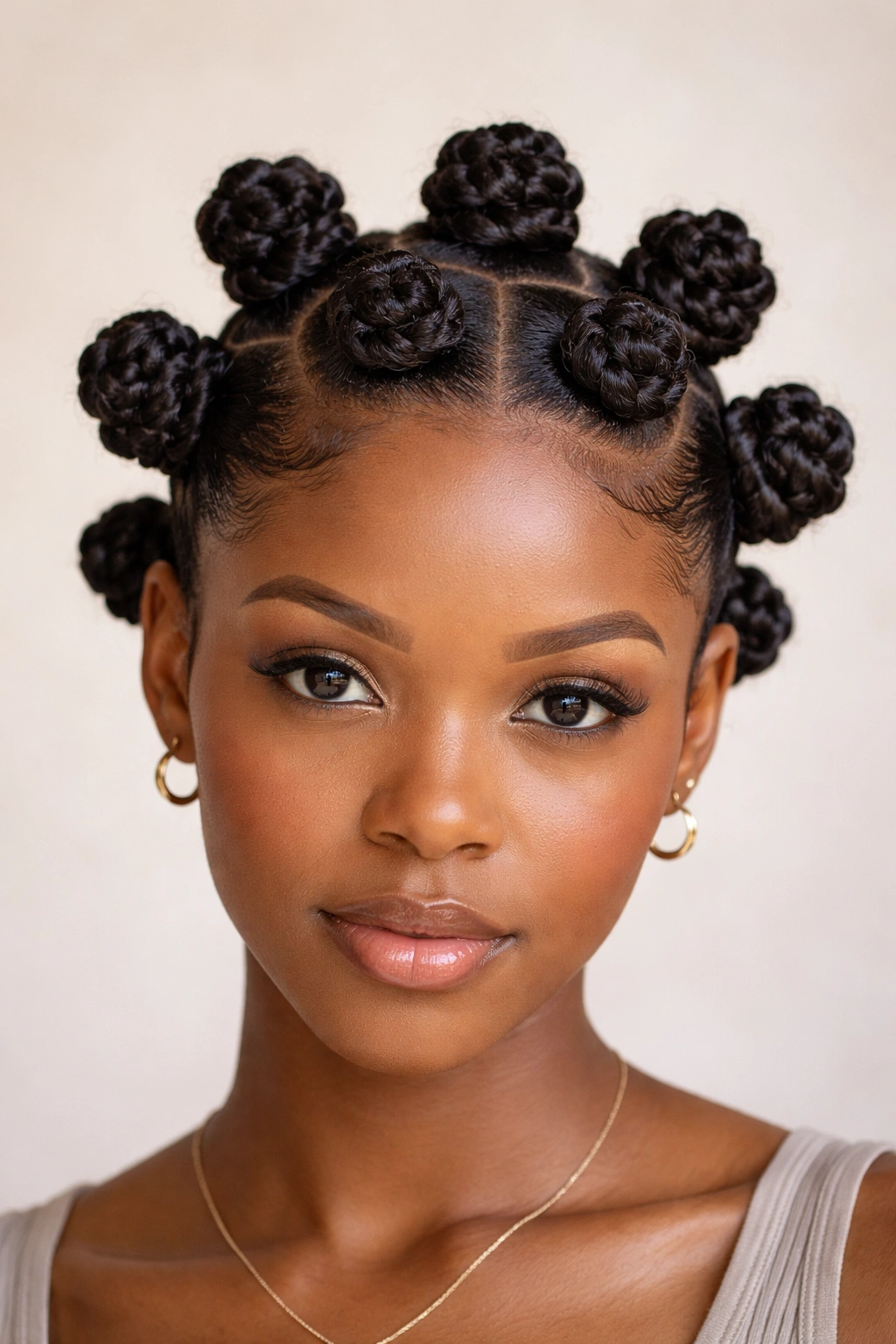
Medium knots are the sweet spot for a lot of people. They are big enough to move quickly, small enough to look intentional, and balanced enough to work whether your hair is shoulder-length or a little past that. On 4C hair, sections around 1 to 1.5 inches usually give you that neat, rounded shape without making the style feel bulky.
Why It Works on 4C Hair
Stretched hair makes the whole job easier. Shrinkage can hide your parting and make each knot collapse into the next one, so a simple banding method, twist-out base, or low-heat stretch before styling helps the knots sit where you want them. Smooth the root first, then wrap the strand around itself in the same direction every time.
- 8 to 14 knots often suit medium-density hair.
- Use a rat-tail comb for cleaner parts and fewer stray pieces.
- A small mix of leave-in conditioner, cream, and a light gel at the base usually keeps the knot from fuzzing up too fast.
Tip: Let the roots dry fully before you sleep on them. A damp center can flatten overnight and leave the knot looking tired by morning.
2. Tiny Mini Knots for a Tight, Detailed Pattern
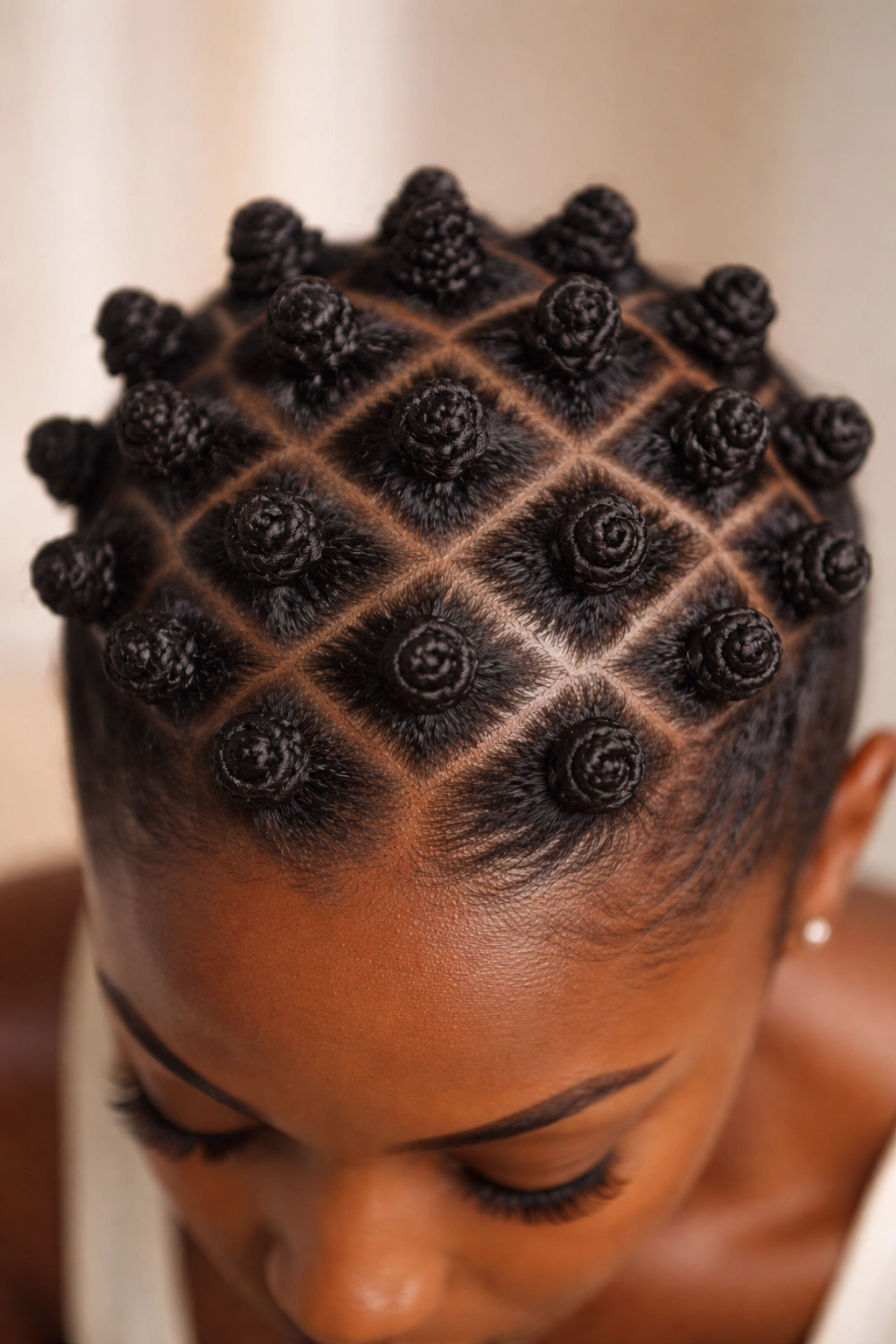
Want the sharpest knot pattern in the room? Go smaller. Mini Bantu knots on 4C natural hair create a tighter, more detailed look, and the finish can be almost jewel-like when the parts are clean. They take longer, yes, but the payoff is a style that reads polished from the front and very deliberate from the top.
Tiny sections also make a strong knot-out later. The curls that come down the line tend to be smaller and springier, which is useful if you like more definition than volume. The tradeoff is time and patience. If you rush the wrapping, the little knots start to lean, and that unevenness shows fast.
What to Watch For
The base needs enough moisture to stay flexible, but not so much that the section slips through your fingers. That middle ground matters more with mini knots than with any other size. Keep the section tension light, then tuck the ends flat against the root so the knot stays compact.
Tiny sections, big patience. That is the whole story here.
3. Jumbo Knots When You Want Speed and Shape
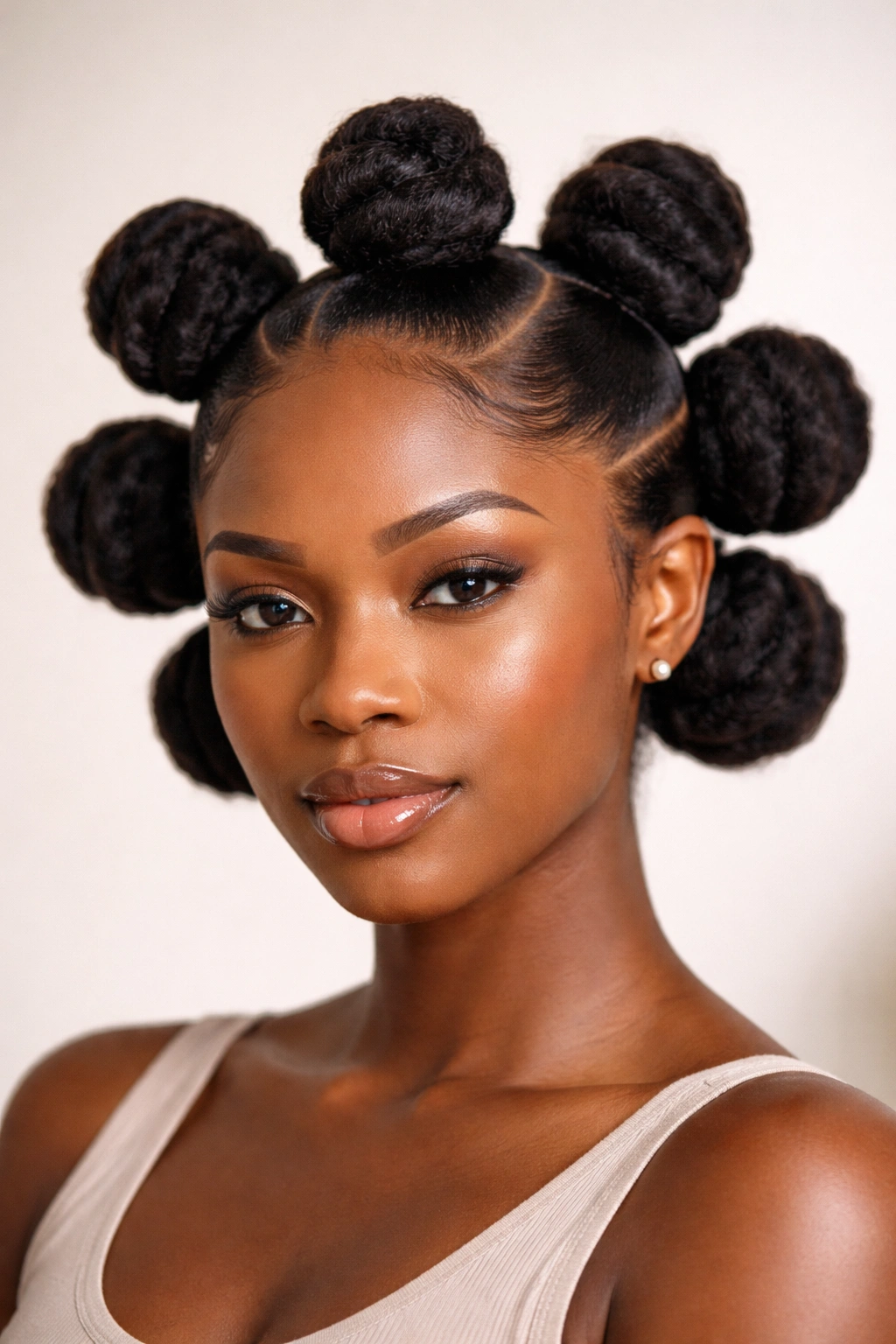
If you have thick 4C hair and not much time, jumbo knots are the practical choice. Fewer sections mean faster styling, and the larger shape gives the style a stronger silhouette. Think 6 to 10 knots, depending on density and how much hair you want to gather into each one.
The trick is making the base smooth enough that the bigger knot does not puff out at the root. A little water on the fingertips, then a touch of leave-in and gel, usually works better than loading the whole section with product. Heavy product on a jumbo knot can make the center soggy, and that slows drying more than people expect.
Quick Shape Notes
- Best for thick, dense, or shoulder-length 4C hair.
- Faster to install than mini knots.
- Gives a softer, chunkier finish that reads bold without looking fussy.
- Works well if you want a knot-out with larger, looser curls later.
A jumbo set is not shy. That is the point.
4. Half-Up Bantu Knots with Loose Length at the Back
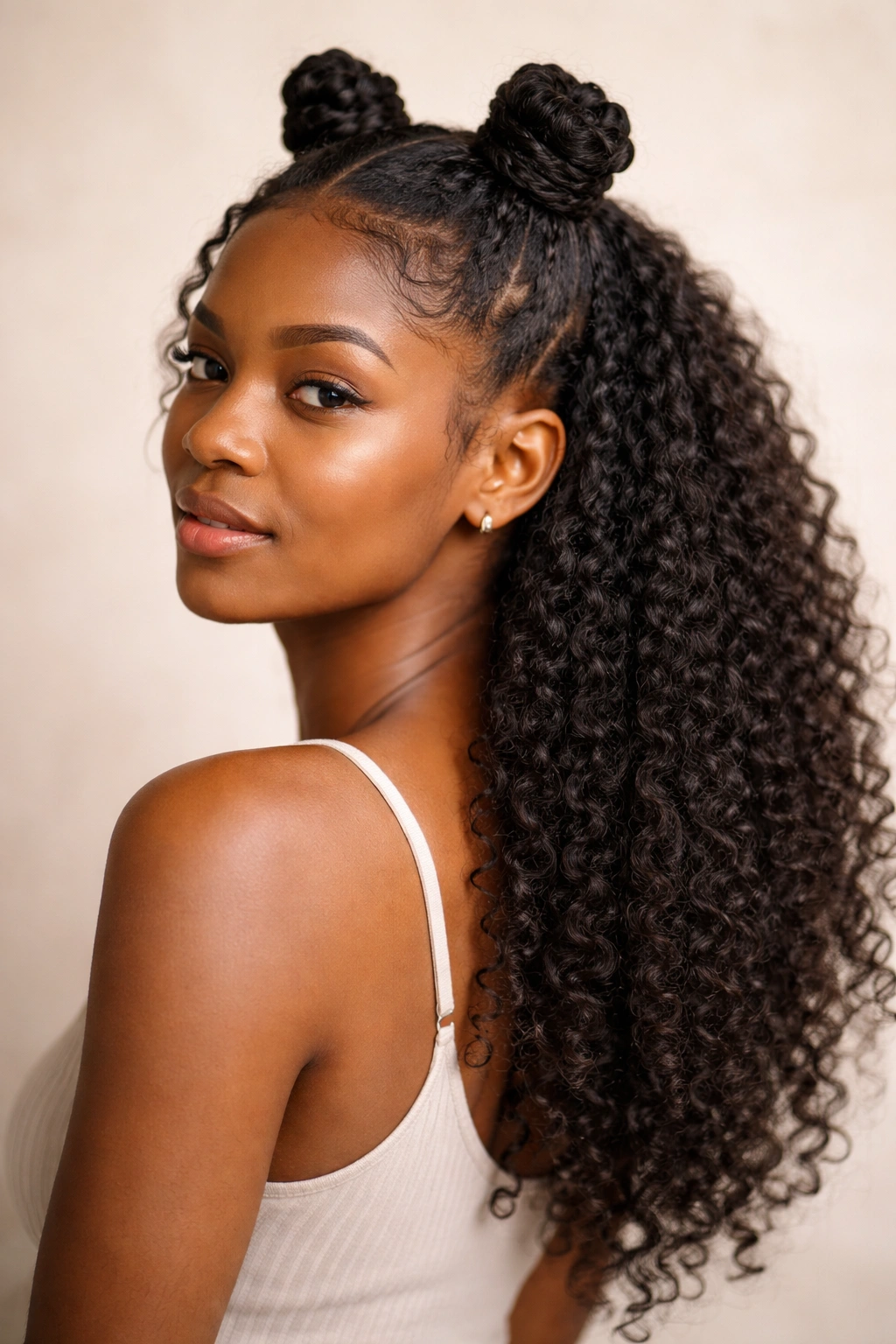
Half-up styles make Bantu knots feel easier to wear on a normal day. The top section brings the structure, while the back stays loose in twists, curls, or a stretched Afro shape. That mix gives 4C hair some movement, which is useful if you like having the face framed but do not want every strand pinned away.
This look works especially well when the hair sits at the shoulders or collarbone. You get enough length in the back to show texture, and the top knots keep the style from collapsing into a puff. A clean horizontal part across the crown makes the top section feel intentional, not accidental.
The nicest part is the balance. It can look playful without drifting into childish, and it can look dressed up if the parts are crisp and the back is smooth. A small clip at the part line or a subtle cuff around one knot is enough. No need to pile on extras.
5. Deep Side-Part Bantu Knots That Frame the Face
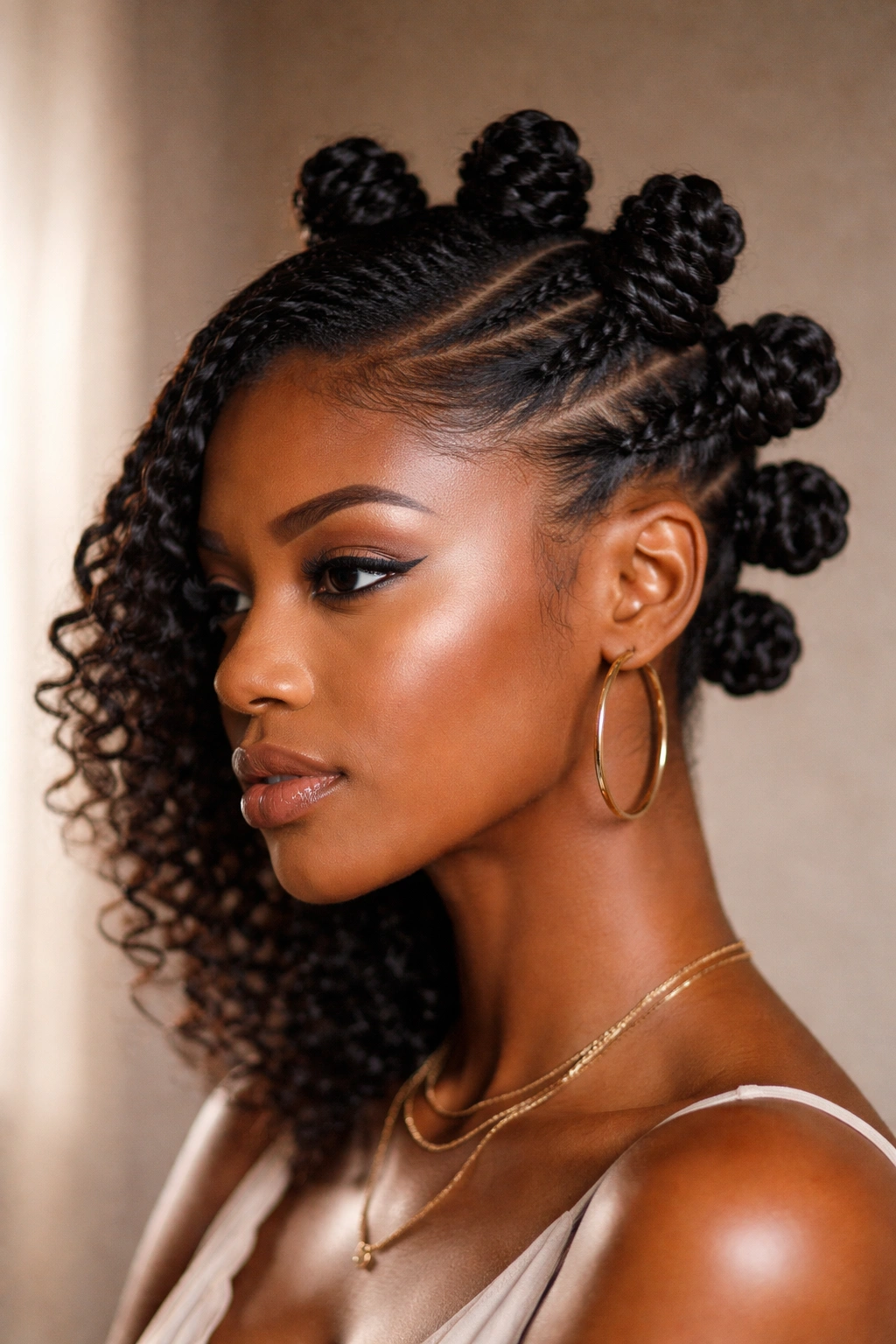
A deep side part changes the mood fast. Center parts can feel neat and symmetrical, but a side sweep gives Bantu knots more attitude and a bit of movement around the face. On 4C hair, that shift is especially nice because the coils naturally create a fuller shape on one side.
Place the part about an inch or two off center, then let the heavier side carry one or two more knots if you want the style to feel balanced instead of mirrored. That small adjustment makes a bigger visual difference than people expect. It also helps if one side of your hair grows denser or sits flatter than the other.
This version works well when you want the style to frame cheekbones or soften a strong jawline. It does not need a dramatic haircut to feel intentional. The parting does the heavy lifting.
6. Triangle-Part Bantu Knots for Crisp Geometry
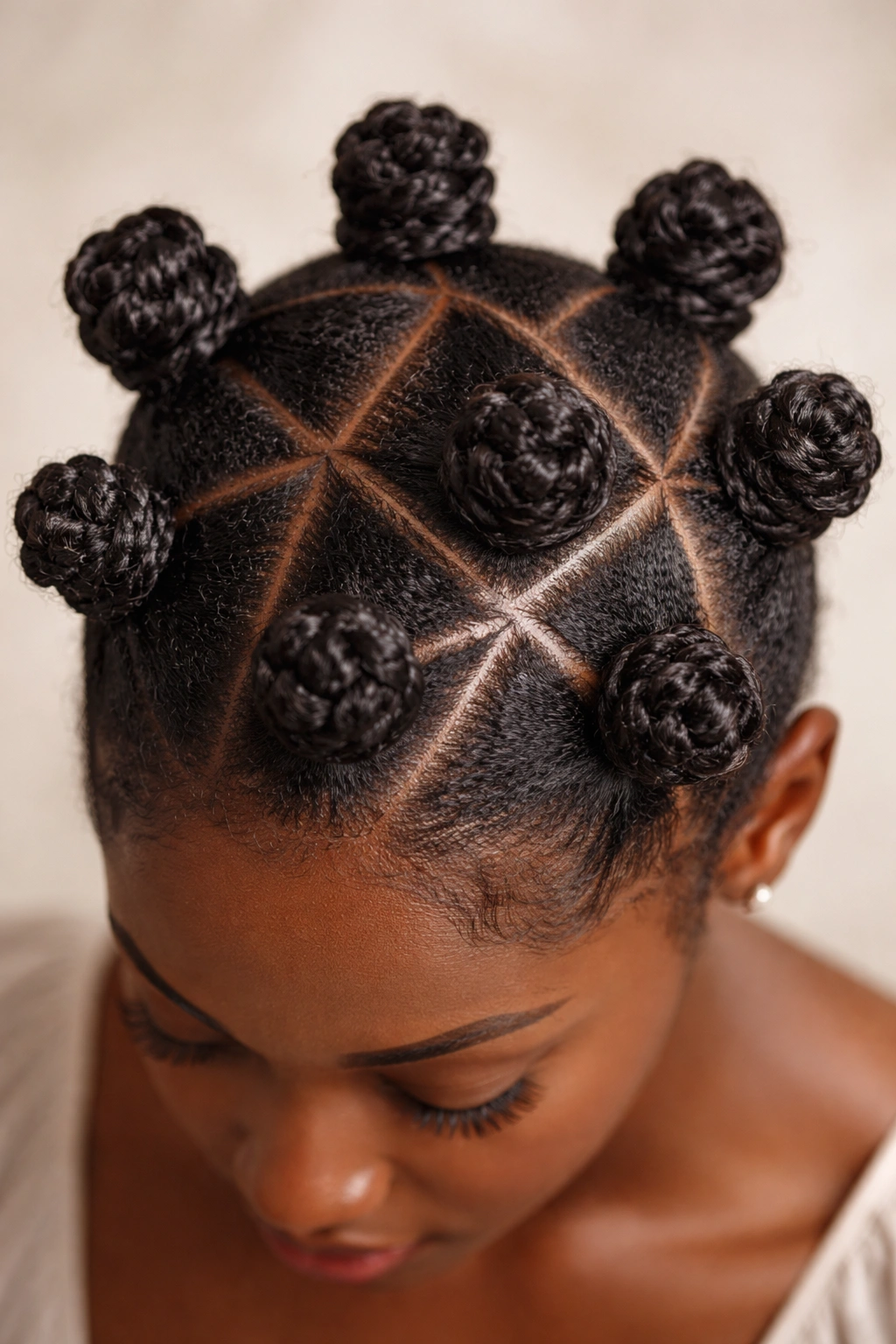
Triangle parts give Bantu knots a sharper edge. The shape catches the eye before the knots even do, which is useful if you want the style to feel neat and modern without relying on extra accessories. On dark 4C hair, those little triangles show up cleanly when the scalp is moisturized and the sections are even.
The parting takes a little more time than a plain grid, so clip the rest of the hair out of the way and work one triangle at a time. Keep the sections similar in size, or the pattern starts to look lopsided fast. A tail comb is enough. Fancy tools are not the issue here; careful parting is.
The Look in Practice
Triangle parts are especially nice on medium or small knots because the geometry stays visible. If you make the knots too large, the parting gets hidden under the bulk and the point of the shape disappears. Clean triangles, clean roots, clean finish. Simple. Sharp.
7. Center Mohawk Bantu Knots for a Sharp Silhouette
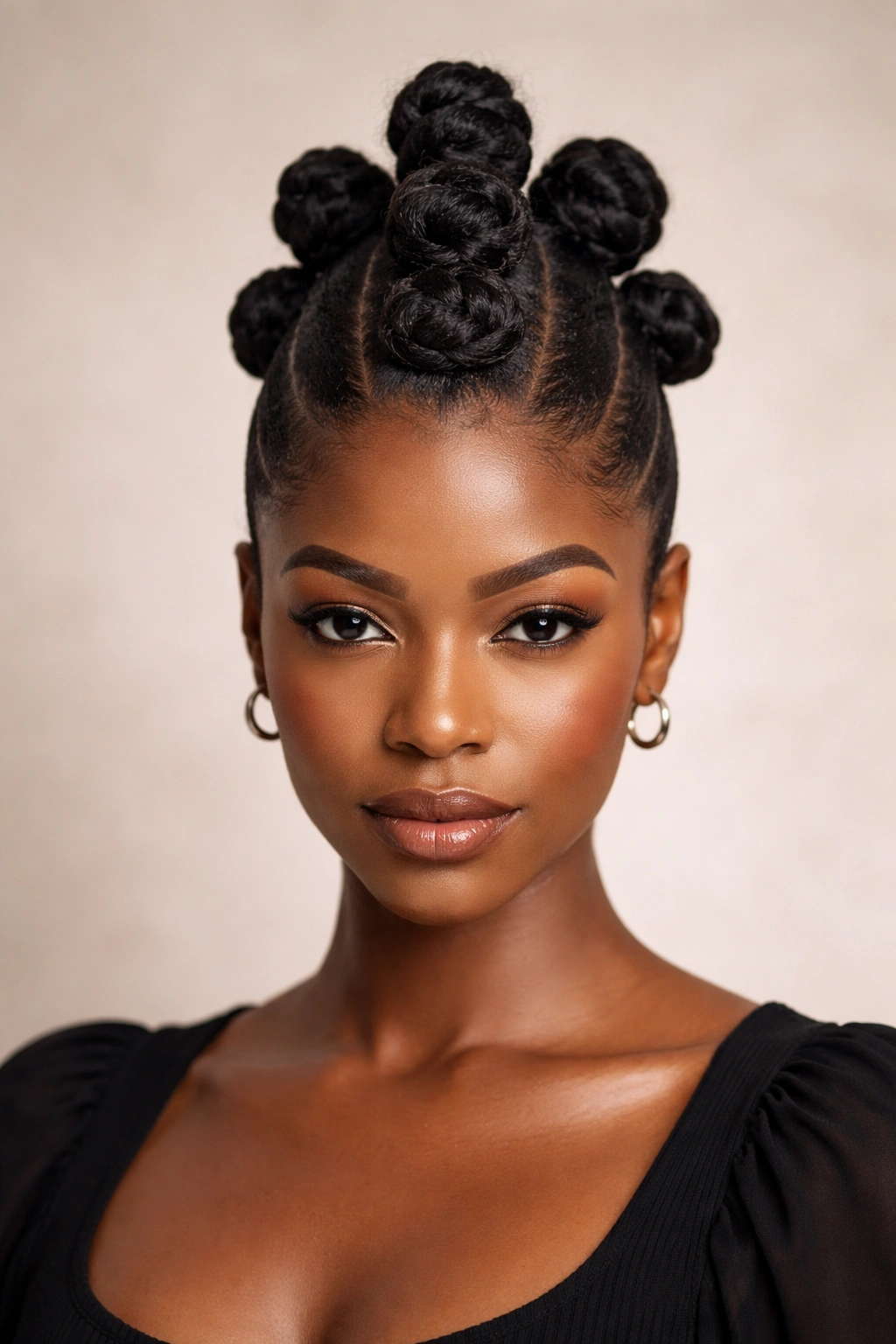
Need a style with a little bite? A center mohawk line of Bantu knots does the job. The sides can be braided down, slicked close to the scalp, or left flat while the knots run straight down the middle. That long vertical line makes the head shape look taller and the style look more dramatic.
This setup works well on 4C hair because the center section holds enough density to make each knot round and full. If the sides are very thick, keep them neat and close so they do not compete with the center row. A soft hold gel at the temples helps, but the real trick is not piling too much hair into the middle section.
The result feels confident without being busy. It is the sort of style that looks good with hoops, a bold lip, or a plain T-shirt and jeans. Either way, the silhouette does the talking.
8. Cornrow-Base Bantu Knots for Sleeker Roots
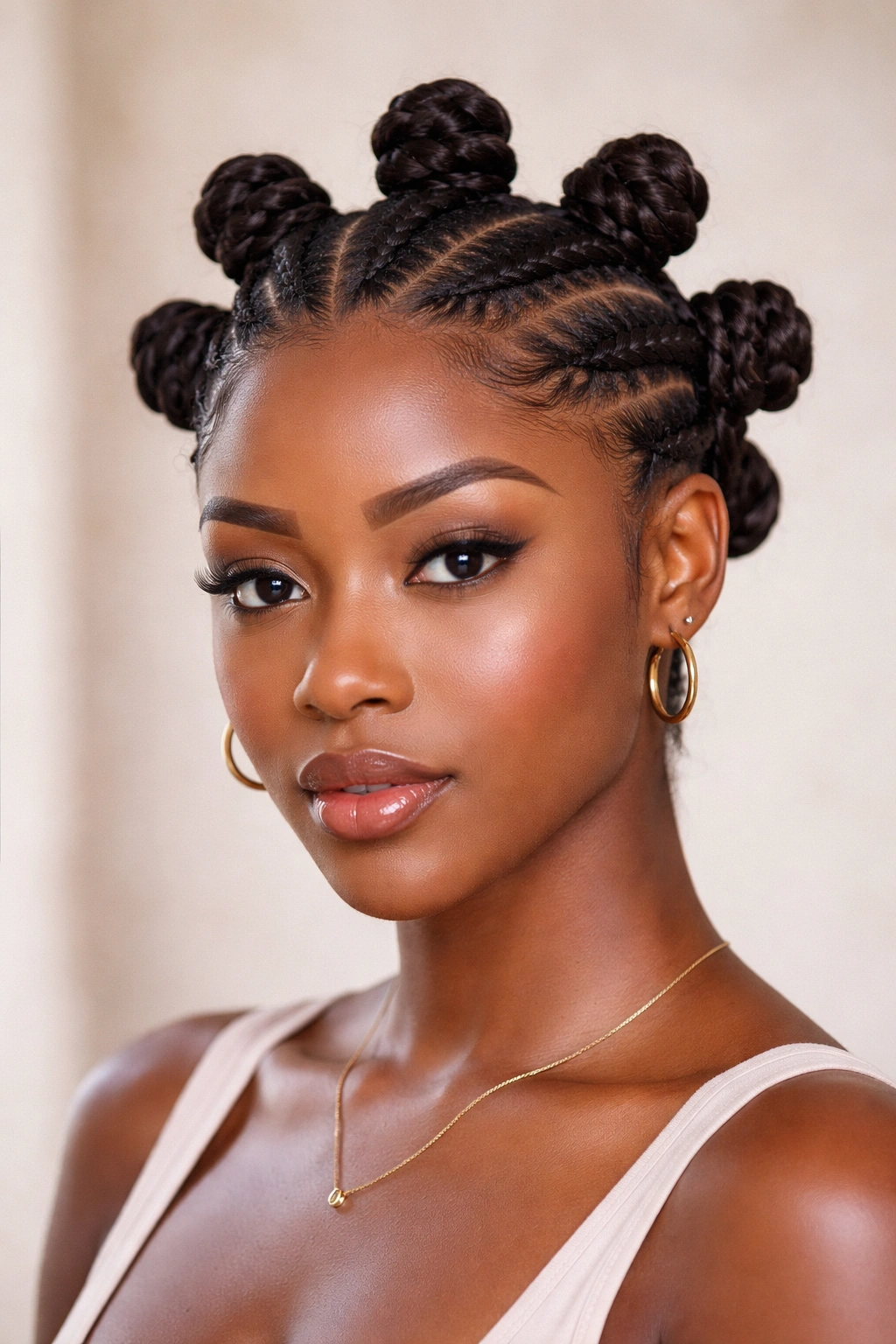
A row of tiny cornrows before each knot keeps the roots calm. That matters on 4C hair, where the texture can start puffing the moment the section is parted. The braided base lays everything down first, then the knot sits on top with a cleaner shape and less frizz around the scalp.
Why It Helps
The cornrow base also gives a little more control over thick hair. If your hair is dense, each braid acts like a guide rail, so the knot does not spread wider than you planned. That is useful when you want a polished finish and do not want to fight bulky roots.
- Best for coarse, high-density 4C hair.
- Helps hold down flyaways at the scalp.
- Works well when you need the style to last more than a day.
- Looks especially neat with a side part or triangular parting.
It takes longer, and that is the price. Still, when the roots usually refuse to behave, this method earns its keep.
9. Braid-to-Knot Ends for Shorter or Layered Hair
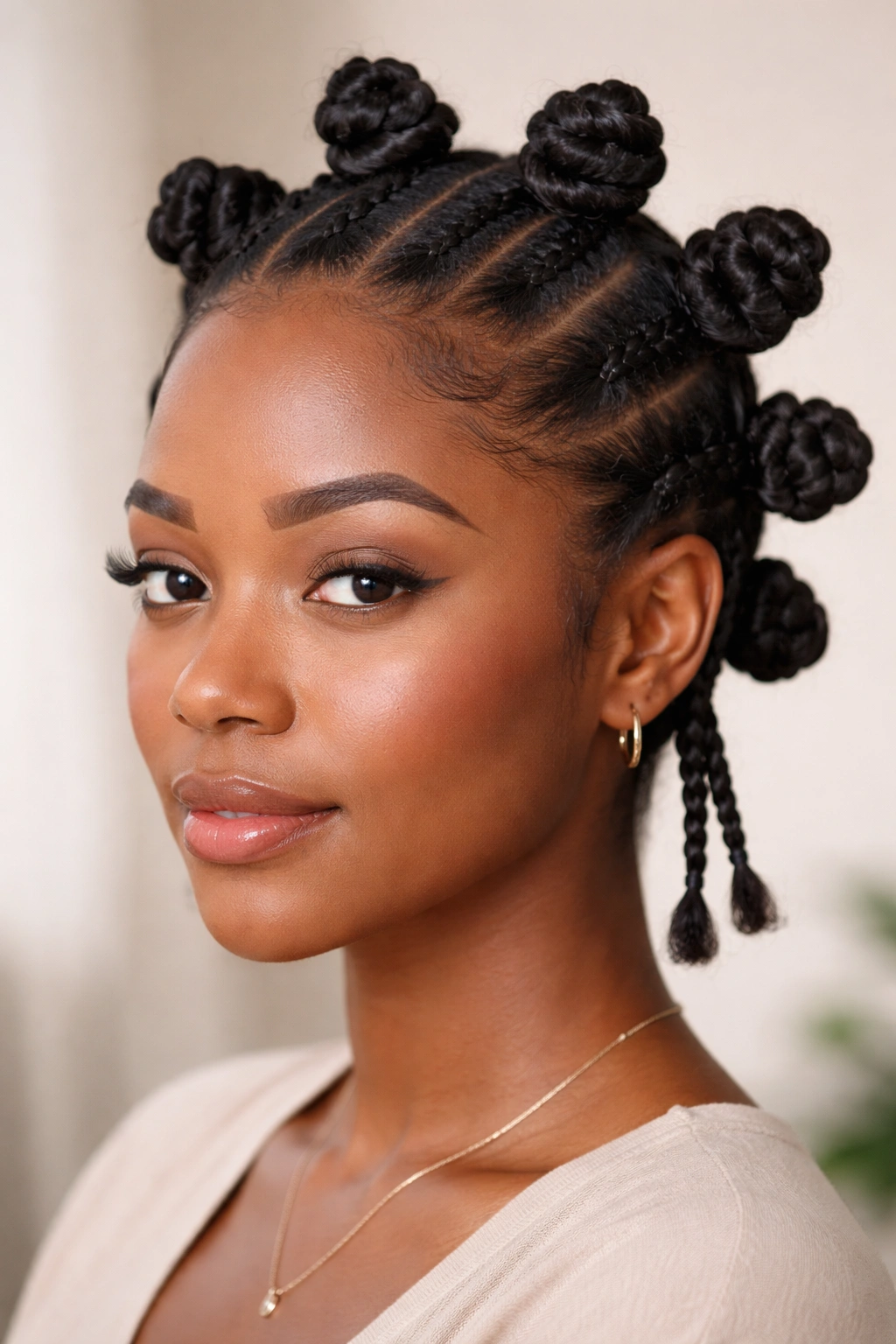
If your ends keep slipping before the knot is set, braid the last two inches first. That small move gives the hair a firmer grip and keeps layered 4C hair from unraveling while you wrap. It is especially useful when the hair is a little short or when different lengths keep poking out of the knot.
The braid does not need to be tight. Tight braids at the base can leave the scalp sore, and sore scalp is not worth a neat finish. A firm but gentle braid, then a smooth wrap around the base, is enough. The knot ends up looking more secure and often feels lighter too.
This is one of those techniques that looks minor on paper and saves you a lot of frustration in real life. Shorter hair, layered cuts, or recently trimmed ends all respond well to it.
10. Crown Bantu Knots Placed High on the Head
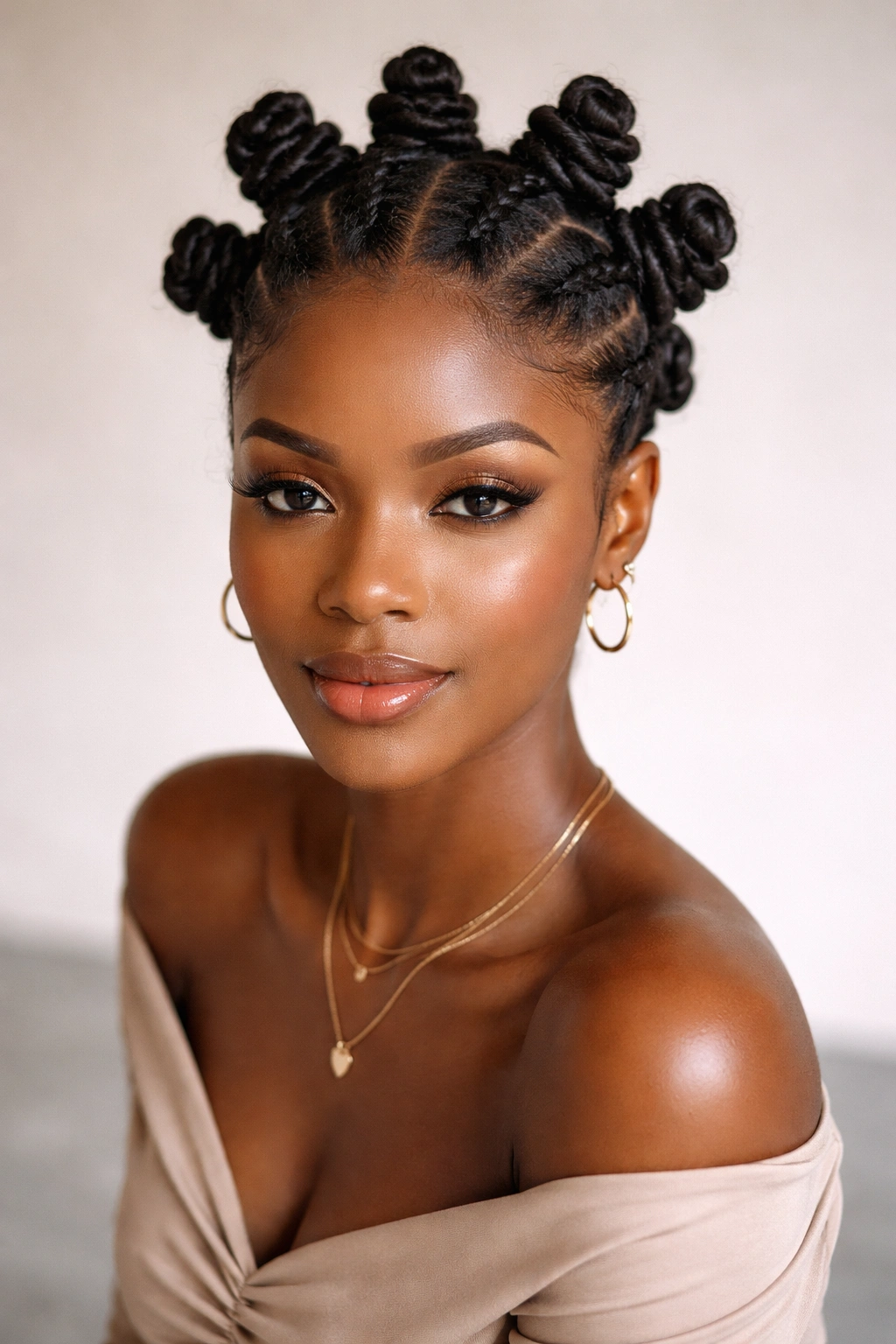
High placement changes the whole face line. When the knots sit closer to the crown, the style lifts upward and feels a little dressier, even if the sections are simple. On 4C hair, that higher position helps the knots stay visible instead of getting lost against the sides.
The back and lower sides can stay smooth, braided down, or left in a clean puff if the length allows. Either way, the eye goes up first. That makes this version a good pick when you want the style to look neat from the front and full from the top.
It also works well for people who like wearing glasses or earrings, because the higher knots keep the face open. No heavy styling needed. The placement does most of the work.
11. Low Nape Bantu Knots for a Softer Profile
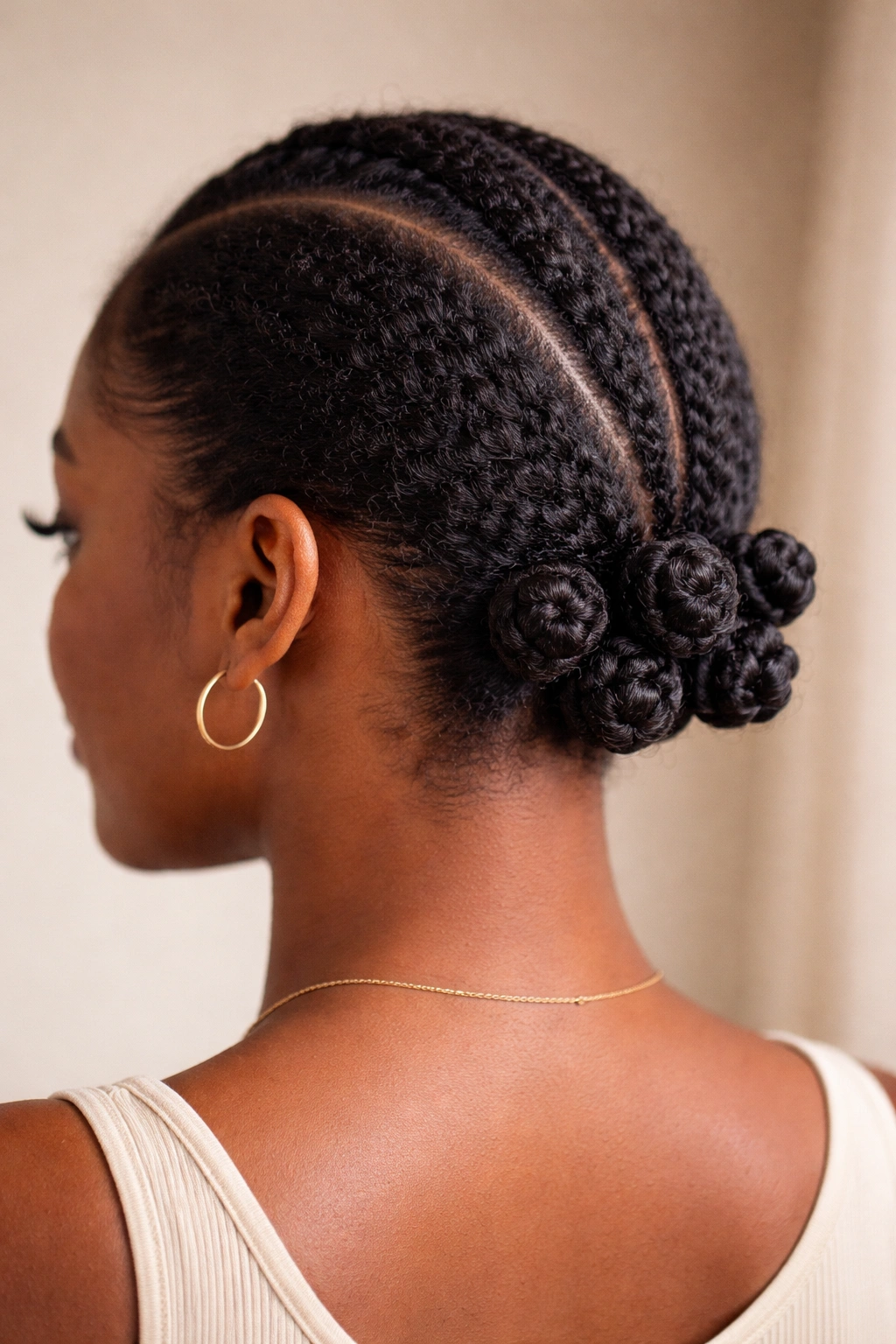
Low knots have a softer feel than crown knots. They sit near the nape, which keeps the style calm and low profile while still giving you the sculpted knot shape. That lower placement is easy on 4C hair because the hair does not need to be piled high to make an impression.
This version tends to work well for workdays, travel, and any setting where you want the style contained. The nape stays cool, the knots are easier to protect at night, and the look feels less upright than a full crown set. If you wear collars or high-neck tops, the knot line sits neatly above them.
There is also a practical upside: low placement makes it easier to pin the style later if you want to turn the knots into an updo. That kind of flexibility is hard to beat.
12. Bantu Knots with Laid Edges and a Clean Hairline
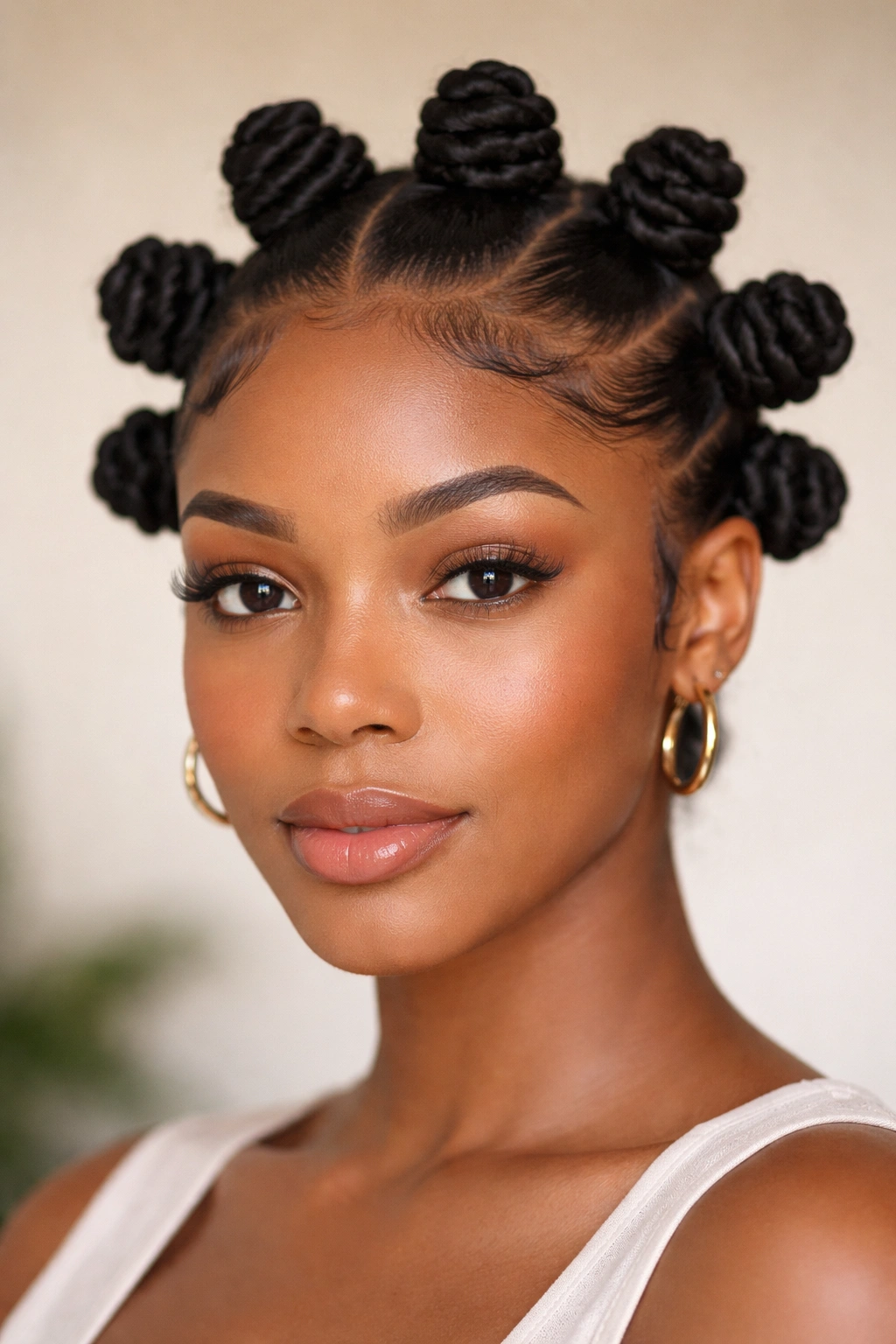
Clean edges can sharpen the whole style, but they need restraint. A light sweep of edge control around the temples and center hairline is enough on 4C hair; too much product turns the front shiny in the wrong way and makes buildup obvious by the second day. A soft brush and a small scarf held in place for ten minutes usually do more than overworking the hairline.
The best part of this look is how it frames the knots without fighting them. The knots stay textured and full, while the front reads tidy. That contrast is what makes the style feel finished.
Keep the Hairline Calm
If your baby hairs are short and sparse, do not force them into patterns they cannot hold. Guide them gently, smooth the rest of the hairline, and stop there. A cleaner front beats a stiff front every time.
13. Flat Twists in Front, Bantu Knots in Back
Flat twists in the front give you a gentle frame before the knots even start. They keep the hair off the face, add a little texture near the hairline, and make the whole style feel more layered. Behind them, the Bantu knots bring the sculpted shape that makes the look stand out.
This works well if your hair is growing out, especially around the front or temples. The twists can hide uneven lengths without pretending they are not there. The knots in back still get the spotlight, so the style never looks like you are just waiting on a trim.
It is also a comfortable set if you do not want every section pulled into a knot. The front gets relief, the back gets shape, and the style stays balanced. That mix is hard to beat on dense 4C hair.
14. Bantu Knots with Lightweight Beads and Cuffs
Accessories can change the whole read of the style, but the weight matters. On 4C hair, lightweight beads, small gold cuffs, and short string wraps work better than heavy pieces that tug at the roots. Too much weight pulls the knot line down and can make the style feel tired before lunch.
Accessories That Actually Work
- Wooden beads if you want warmth and low weight.
- Small metal cuffs for a cleaner, sharper finish.
- Thread wraps for color without adding bulk.
- A few shell pieces if you want texture, not clutter.
The trick is choosing one accent and letting it lead. Five different embellishments on one head can look busy fast. One or two, placed with care, make the knots feel finished without crowding the pattern.
15. Bantu Knots with Thread-Wrapped Color Accents
Thread wrapping gives you color without committing to dye. That matters if you want the style to stay temporary or you just like changing things often. Wrap a few knots with thin thread in rust, gold, cobalt, or forest green, and the whole set suddenly has more personality.
The wrapping should stay smooth and light. Rough yarn can catch on coily strands, and bulky thread can make the knot feel heavier than it needs to be. On 4C hair, a narrow wrap holds the shape better and keeps the coil pattern visible.
This version has a handmade feel that suits casual outfits and dressier ones too. It is a quiet way to say the style was chosen on purpose. Not loud. Just specific.
16. Asymmetrical Bantu Knots with Uneven Knot Sizes
Uneven does not always mean messy. When the knot sizes vary on purpose, the look can feel more artistic than a perfectly matched set. One side might hold three medium knots while the other carries four smaller ones, and the imbalance makes the face shape look more dynamic.
This works best when the parts are still clean. The asymmetry should happen in the size and placement, not in accidental sloppiness. If the sections are neat, the style reads confident. If they are not, the whole thing starts looking like you ran out of time halfway through.
The nice thing about asymmetry is that it gives you room to react to your hair’s natural density. If one side is fuller, let it be fuller. Pretending both sides behave the same is often a waste of effort.
17. Bantu Knots on a Tapered Cut
A tapered cut gives Bantu knots a clean shape by default. The shorter sides keep the outline neat, while the knots on top carry the visual weight. On 4C hair, that contrast can look sharp without needing a dozen accessories or a huge amount of product.
The top sections should be small enough to sit clearly above the taper, but not so tiny that they disappear into the cut. If the sides are very short, avoid heavy cream near the nape. It can make the cut look flatter than it is, and the style loses some lift.
This is a good option for anyone who likes structure. The taper gives the knots a built-in frame, which means less fuss at the parting stage and a cleaner finish all around.
18. Curved Parting Bantu Knots for a Softer Map
Straight grid parts are neat, but curved parting can feel softer and more organic. A crescent or swooping part line changes the shape of the scalp pattern and helps the style move in a different direction visually. On 4C hair, that matters because the texture already gives the knots enough edge.
How to Shape the Curve
Use the tail of a comb to trace a gentle arc instead of a hard line. Keep the curve shallow, not dramatic, or the parts can become hard to manage when you start sectioning. The knots should still fall in tidy rows even if the lines underneath bend a little.
- Good for medium to long 4C hair.
- Helps soften a square hairline.
- Makes the style feel less rigid than a straight grid.
- Looks best when the curves are mirrored loosely from side to side.
It is a small change, but it changes the whole mood.
19. Bantu Knots Set Up for a Long-Lasting Knot-Out
If the real goal is the curl pattern, this is the section that matters. A good Bantu knot-out starts before the first twist is wrapped. The hair needs to be detangled, evenly coated with a light leave-in, and separated into sections that match the curl size you want later. Bigger sections give looser curls. Smaller sections give tighter definition.
Drying matters more than people admit. On 4C hair, knots can feel dry on the outside and damp in the middle, especially if the sections were thick. If the center is not fully dry before you unravel, the curl can collapse and frizz faster than expected. A hooded dryer or a long overnight set usually helps more than rushing.
When it is time to take them down, use a little oil or serum on the fingertips and separate slowly. Pulling apart too early strips the definition right out of the curl. Patience pays here.
20. Two-Strand Twist Bantu Knots for Extra Texture
Twist-based knots give the style a different surface. Instead of the smoother rope of a braid, two-strand twists leave a softer, more textured finish that works well on 4C hair with some length. The result can feel a little looser, a little rounder, and less stiff around the ends.
That makes this version useful when the hair frays easily or when the ends want to escape the knot. A twist anchors the section without adding much tension, which is nice if your scalp prefers a gentler setup. It can also make the later knot-out look fuller, with more movement around the curl.
This is not the fastest method, but it is one of the more forgiving ones. If you like texture that still looks deliberate, twist-to-knot is worth trying.
21. Wrapped Bantu Knots into a Low Chignon
A low chignon built from Bantu knots has a dressier shape without losing the natural texture. Start with knots placed low at the back and side, then pin them inward so they gather into a tucked, rounded finish. The knots still show, but the overall silhouette becomes softer and more formal.
This works especially well for events where you want the hair off the neck. A few U-pins, a couple of bobby pins, and a firm but gentle base are enough. Do not overload the style with pins, or the back starts to feel heavy. Four or five well-placed pins can do more than a dozen crowded ones.
The result is elegant in a practical way. It looks planned, it stays contained, and it still lets the texture of 4C hair do its thing.
22. Festival Bantu Knots with Rings and String
Some styles are meant to look a little louder. Festival knots fit that idea without needing a whole lot of extra hair. Add a few rings, slim string wraps, or bright cords around select knots, and the style starts to feel playful fast. The key is to keep the accessories lightweight so the scalp does not feel dragged down by the end of the day.
Color can live in the details here. A single thread color repeated across the set often looks stronger than a random mix of too many shades. If the outfit already has a lot going on, choose one accent and keep the rest of the knots bare.
This is one of those styles where the texture and the decoration work together. The knots keep the structure. The extras keep it from looking too serious.
23. Short 4C Hair Bantu Knots for a TWA
Short 4C hair can absolutely wear Bantu knots, though the setup is a little different. On a TWA, the knots may be smaller and closer to the scalp, and sometimes the wrap is more of a tuck than a full coil around the base. The trick is to work with the length you have instead of forcing a bigger shape.
How to Make Short Hair Cooperate
A light mist of water, a little cream, and a touch of gel at the roots usually gives enough slip for the section to fold cleanly. If the hair is too short to wrap neatly, twist the section first, then tuck the end under the base as you wind. That keeps the knot anchored without creating a tiny stress point.
- Choose small sections so the hair has enough length to hold.
- Keep the parts clean and close.
- Avoid heavy product that makes short hair slip.
- Use fingertips more than a comb once the section is started.
Short hair is not a limitation here. It just asks for a different rhythm.
24. Low-Tension Bantu Knots for Sensitive Scalps
If your scalp gets sore fast, low-tension styling should be the rule, not the exception. Bantu knots do not need to be tight to stay neat. In fact, on 4C hair, slightly roomier parts and a softer wrap often last better than a pulled-back style that fights the scalp from the start.
That means avoiding hard tugging at the roots, especially around the hairline and behind the ears. Those spots tell you the truth first. If they feel tender while you are styling, the section is too tight. Back off, remake it, and keep going. A style that looks nice but hurts is not a win.
You can still get a clean finish. Use a touch of gel, smooth the base with your fingers, and stop once the knot is secure. Comfort and neatness are not opposites.
25. Bantu Knots Pinned into a Side-Swept Finish
A side-swept finish gives Bantu knots a softer, more polished shape at the end of the list. Gather most of the knots toward one side, pin a few of them low and close together, and let the line travel diagonally across the head. The profile feels elegant without turning stiff, which is a nice balance for 4C hair.
This look works well when you want the knots to feel dressy but not precious. A few hidden pins, a smooth part, and a careful sweep are usually enough. If the hair is freshly stretched, the shape holds better and the side line stays cleaner. If it is more shrunken, keep the pins closer to the scalp so the style does not puff out unevenly.
It is the sort of finish that can carry you from daytime to dinner without a full redo. And if you untuck it later, the knot-out is still waiting underneath.
