



Long hair changes the whole mood of Bantu knots. Shorter lengths can make them cute and tidy; long lengths make them sculptural. You get more height, more shape, and a lot more room to play with the parting, which is half the fun if you ask me. The tradeoff is weight. Long hair can pull at the roots if you rush the sectioning or make the bases too tight, and that’s where a lot of people get frustrated.
The good news is that Bantu knot styles for long hair are easier to customize than most people think. Once the hair is detangled, stretched a little, and divided with clean parts, the style can go sleek, playful, dramatic, or soft. One set can read polished enough for an event; another can look laid-back enough for a regular day with a hoodie and hoop earrings. That range is why I keep coming back to this style.
Long hair also gives you options that shorter lengths can’t really fake. You can stack knots high, sweep them to one side, build a mohawk strip, or leave room for a knot-out later if you want the curls and waves that show up after the set comes down. The shape matters. The parting matters. Even the size of the sections changes the whole feel.
1. Classic Full-Head Bantu Knots
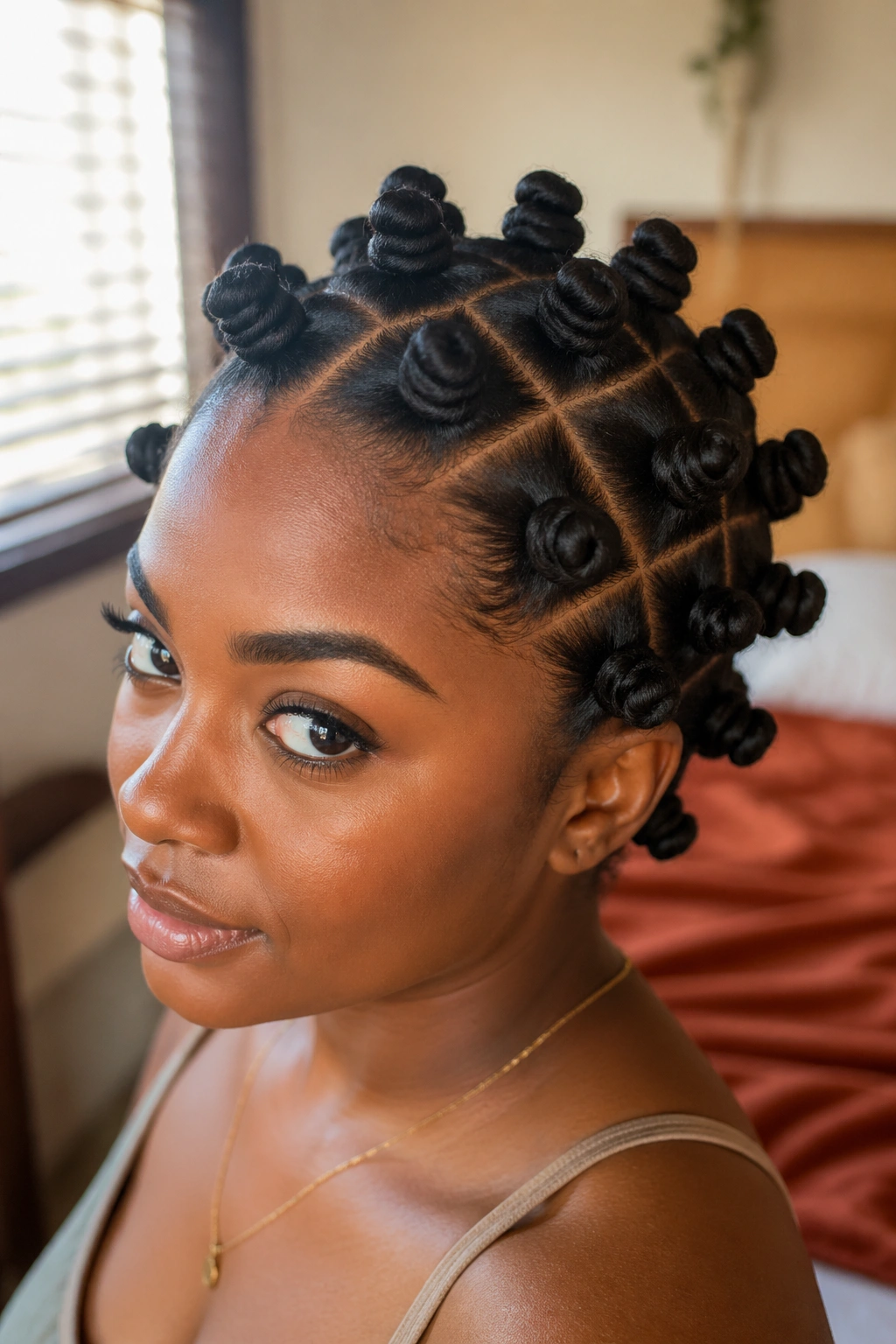
This is the version people picture first, and for long hair it works because the length gives each knot real body. Use neat 1-inch to 1.5-inch sections if you want a balanced look. Larger sections make the knots look softer and fuller; smaller ones sharpen the pattern and take longer, but they hold beautifully.
Why It Works for Long Hair
Long hair gives the knots enough mass to stand up on their own, so the style looks intentional instead of like an afterthought. The key is keeping each base smooth before you start twisting or coiling. If the roots are lumpy, the whole set shows it.
A light leave-in and a little gel at the base make the parts cleaner and help the knots stay put. I like this style when I want the scalp design to matter as much as the knots themselves. It’s straightforward, but it does not look plain.
Best for: medium to thick long hair, stretched textures, and anyone who likes a neat, all-over finish.
2. Jumbo Crown Bantu Knots
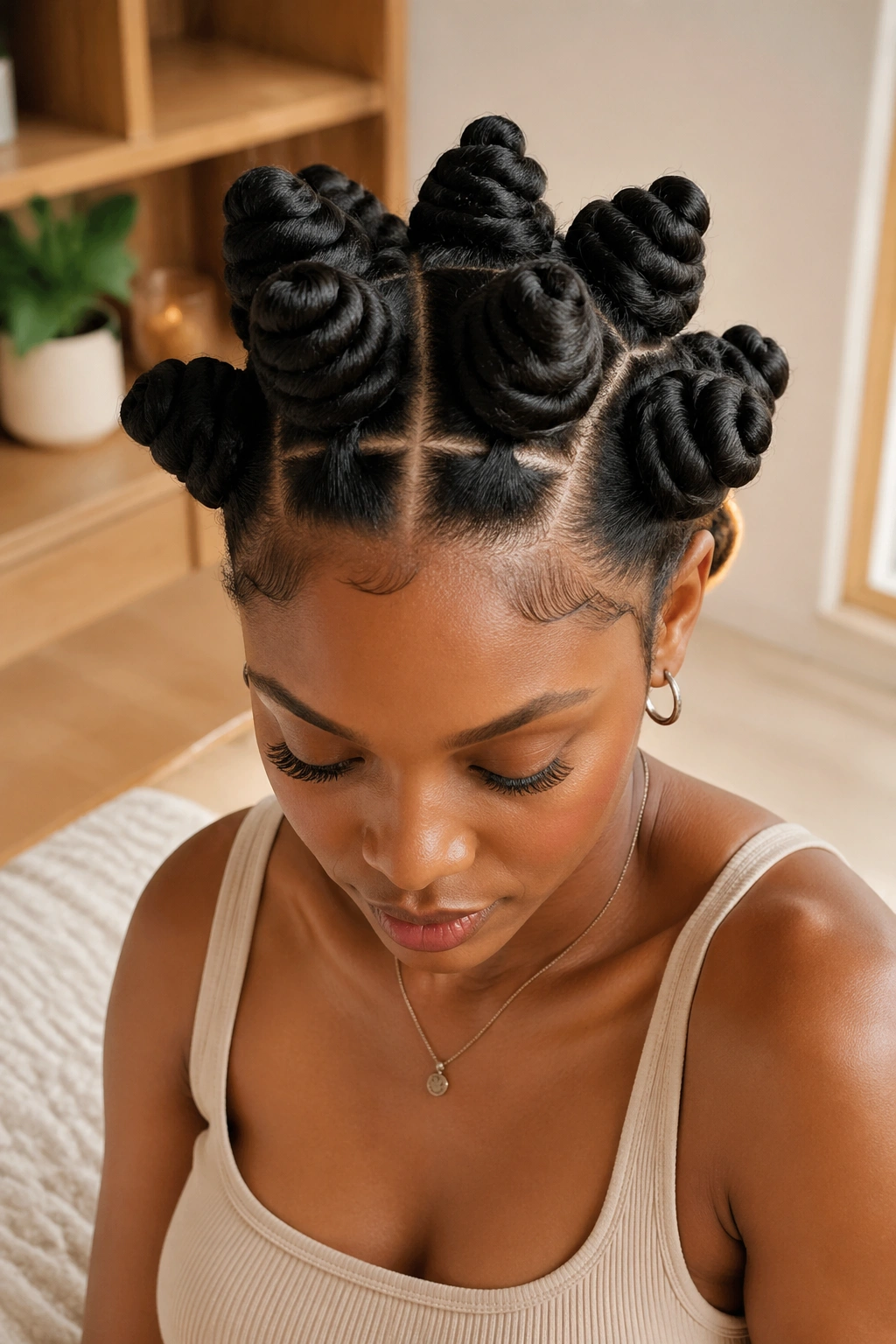
Big knots are bold. That’s the whole point. With long hair, jumbo sections around 2 to 3 inches wide create a crown-like shape that feels faster to install and easier to wear than a full set of tiny knots.
The trick is to keep the parts clean even when the sections are large. A rat-tail comb and a light hand matter more here than fancy products. Too much product can make the base slippery, and slippery bases unravel when you least want them to.
Jumbo knots suit long hair because the length helps the coiled shape look full, not floppy. They’re also a solid choice if you want a style that looks finished without spending half the day in the mirror. Fewer knots, more impact. That’s the formula.
3. Micro Bantu Knots Across the Scalp
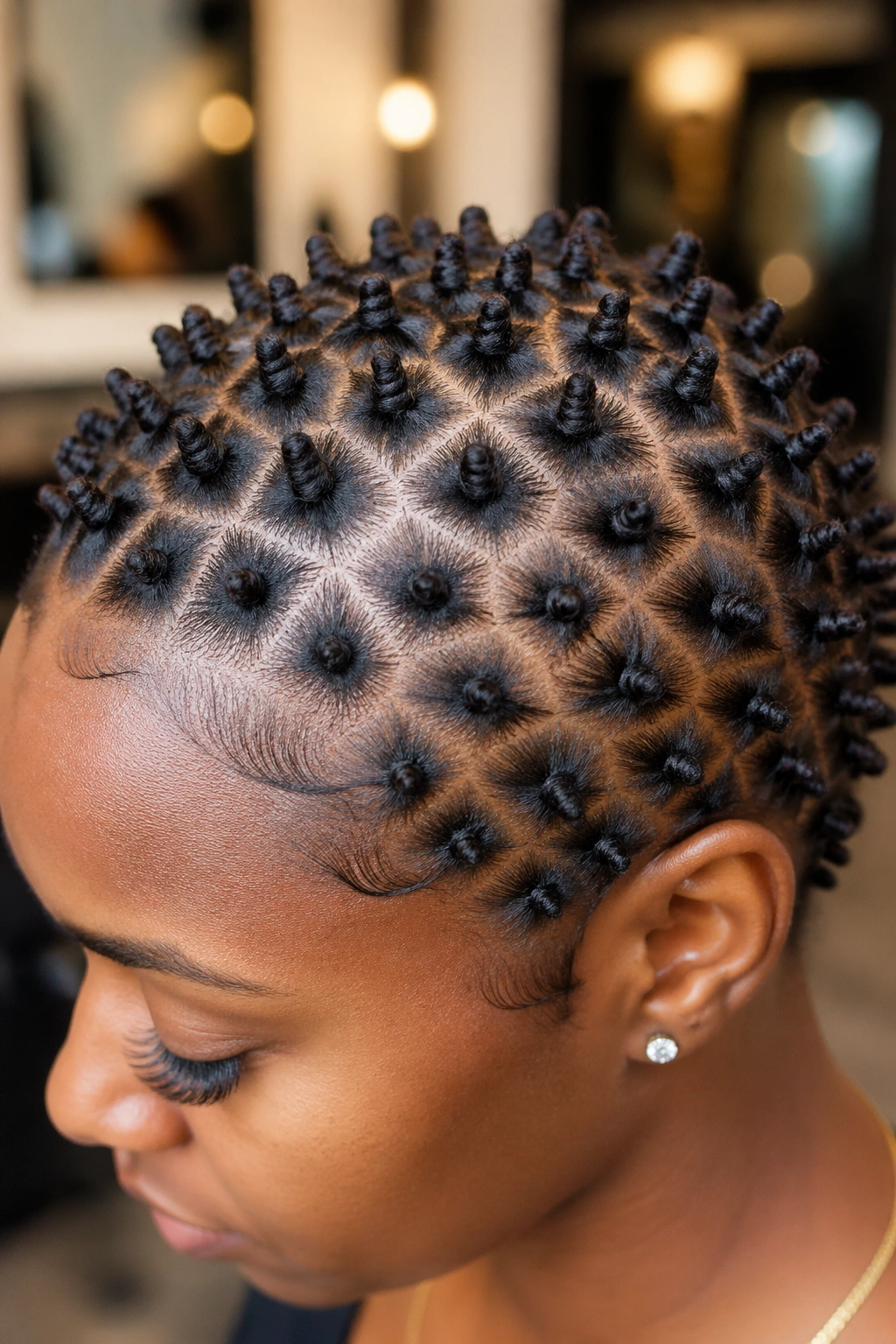
Tiny knots are not for the impatient. They can take time, and long hair makes that process even more detailed because there’s more hair to smooth into each section. Still, if you want a tight, textured look, micro knots deliver.
What Makes Them Different
The size of the parting is what changes everything. Aim for sections under 1 inch wide, then twist or coil each one close to the scalp so the knot sits compactly. Long hair gives the finished set a dense, almost beaded look.
This style is the one I’d choose when I want maximum definition and a lot of visual pattern. It also makes a strong knot-out later, since the smaller sections tend to release into tighter curls.
How to keep them neat
- Work on stretched hair so the sections stay visible.
- Clip away finished knots so you do not lose your parting map.
- Use a light gel, not a heavy cream.
- Stop if the scalp feels sore. Tight does not mean better.
4. Half-Up, Half-Down Bantu Knots
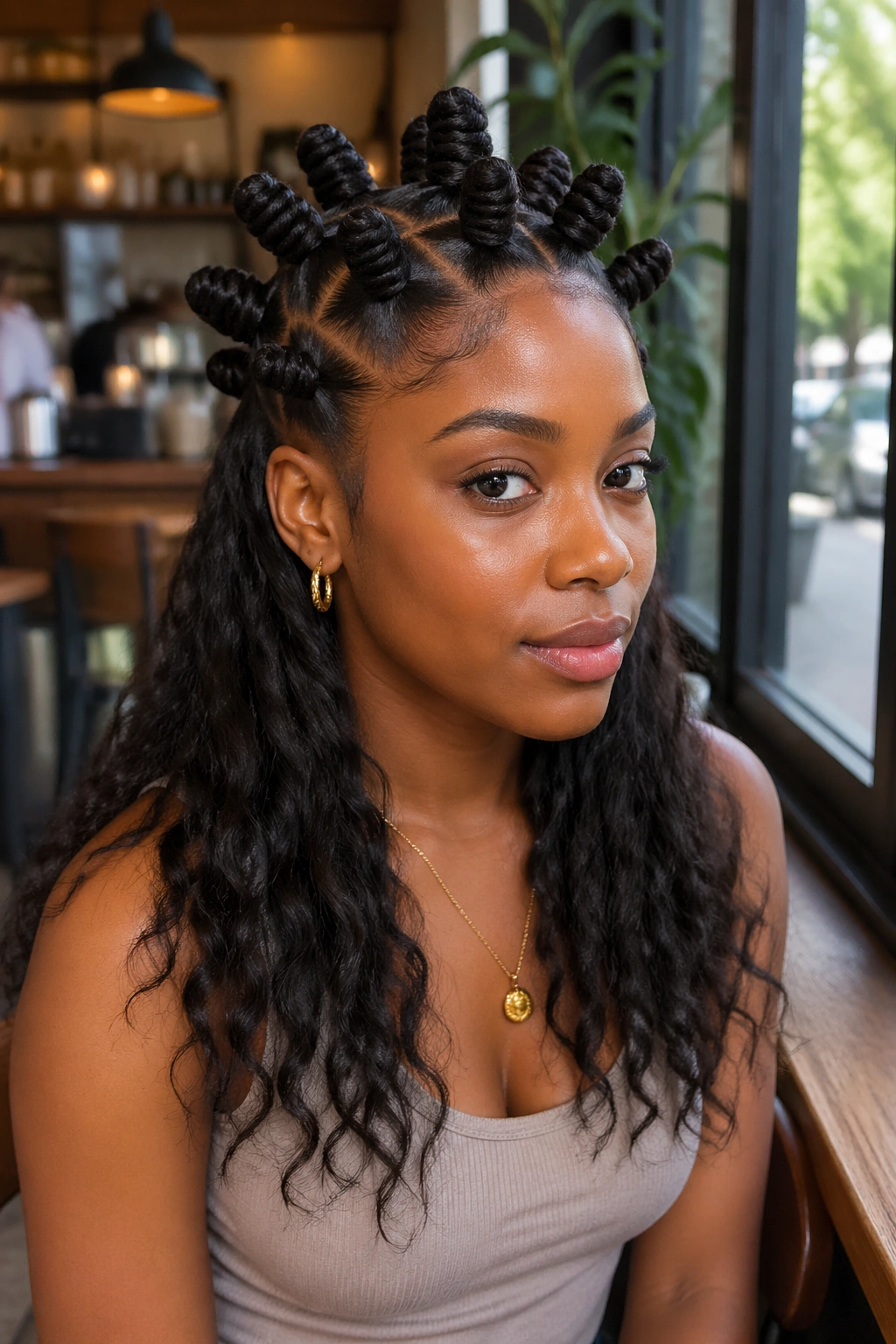
Half-up sets have a nice balance. You get the shape and polish of Bantu knots on top, while the rest of the length stays loose, stretched, braided, or curled. That contrast keeps long hair from feeling too heavy or too packed in.
This style is especially good when you want to show off length without putting every single strand into knots. It softens the look. It also saves time, which matters when you’re working with dense hair that takes forever to section.
I like this version for weekends, brunch, or any day you want your hair to look done without looking strict. If the top knots are medium-sized and the back is left with a clean finish, the whole style reads relaxed but still sharp.
5. Side-Parted Bantu Knots
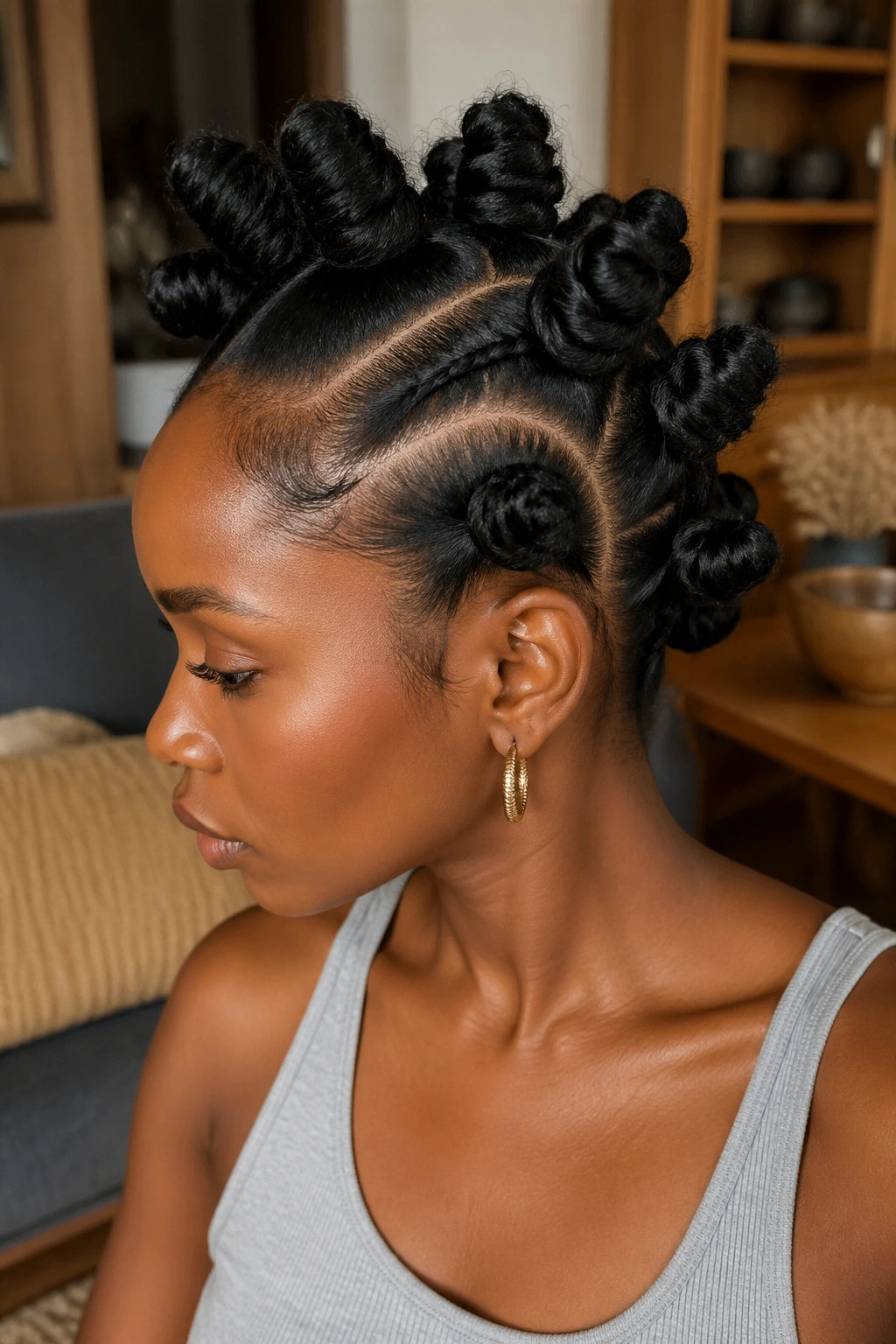
A side part changes the face of the style right away. Instead of equal rows on both sides, the part pushes the knots into a softer, more slanted shape that flatters long faces and gives round faces a bit more length.
There’s something quietly stylish about this one. It doesn’t shout. It just looks considered. Long hair helps because the extra length keeps the asymmetry from looking accidental; the knots can be slightly larger on the heavier side and a touch smaller on the side with less hair.
Use a deep side part if you want drama. Use a shallow one if you want the knots to stay balanced. Either way, the part line becomes part of the design, so take your time and make it clean. Sloppy parts ruin an otherwise gorgeous set.
6. Center-Part Bantu Knots
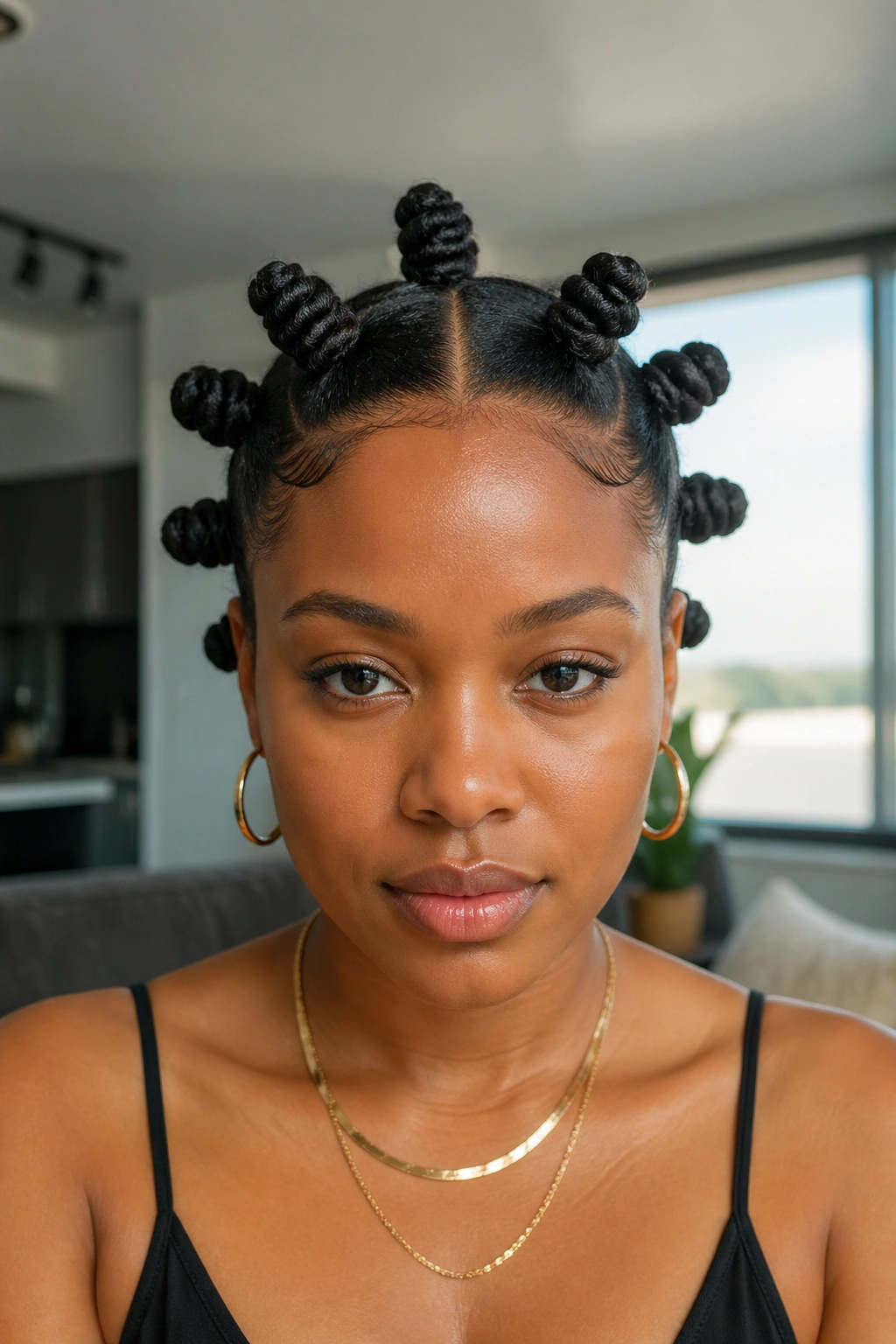
Center parts are clean, direct, and a little formal. They make long hair look organized fast, especially when the knots are lined up evenly on both sides of the head. If you like symmetry, this one scratches that itch.
The style works best when the sections mirror each other in size and spacing. A middle part with 10 to 14 medium knots can look especially polished on long hair because the length adds weight without flattening the shape. You get structure without stiffness.
I reach for this look when I want a set that feels classic and easy to read from a distance. It’s also one of the simplest ways to make the scalp parting do some of the work for you. A neat middle part does a lot. More than people think.
7. Zigzag Parted Bantu Knots
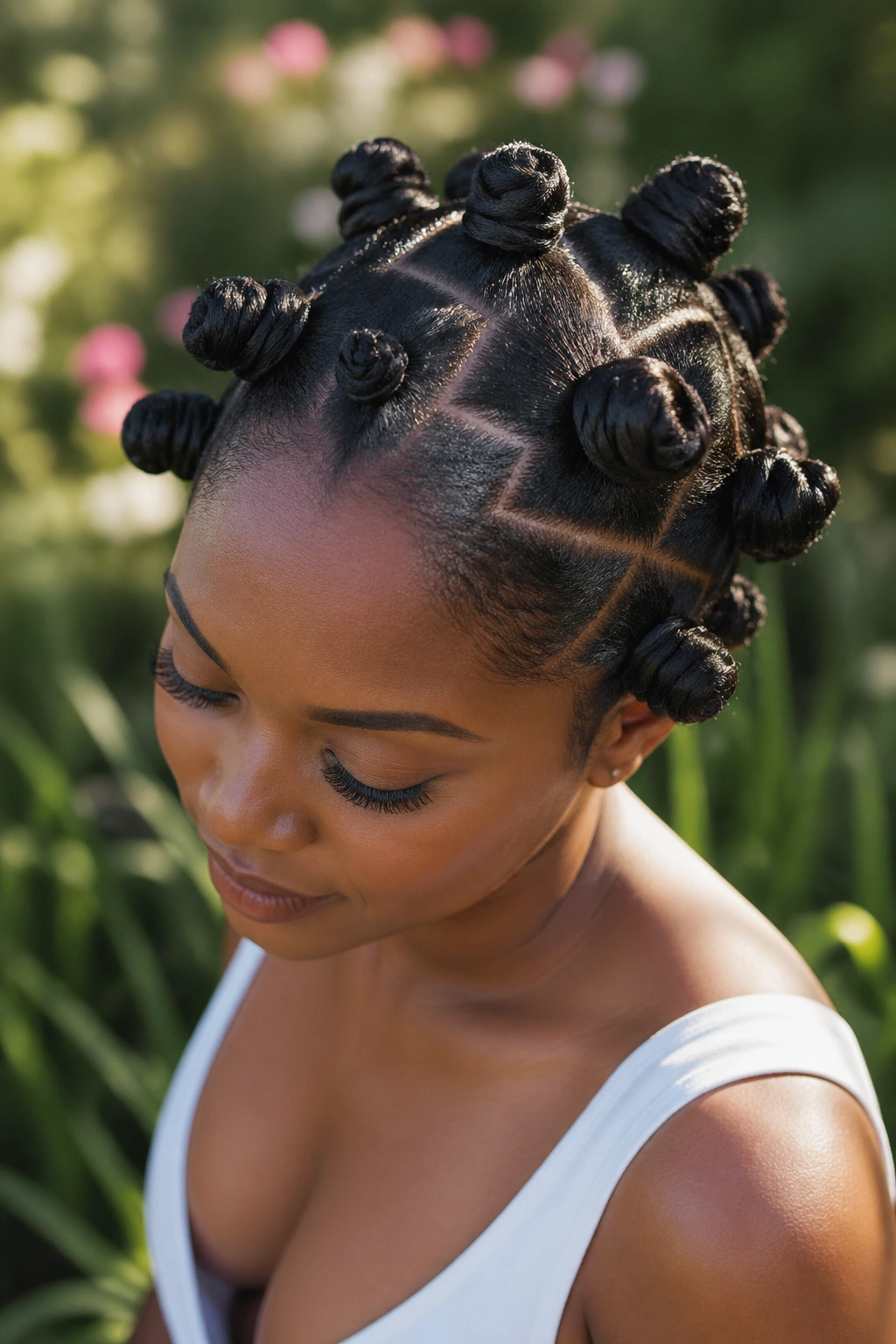
Zigzag parts are for people who enjoy a little edge in the design. The parting line snakes across the scalp instead of running straight, which makes the whole set feel more playful and less formal. On long hair, the pattern shows up clearly because there’s enough length to frame it.
Why the Part Matters
The knots themselves can be simple. The parting is what turns them into a design. Use a tail comb tip and keep the line shallow so it reads clean, not messy. A crisp zigzag needs slow hands. Rushing makes the teeth of the zigzag uneven, and that shows.
This style is a good pick when you want the hairstyle to feel personal. It is not a plain grid, and that’s the charm. If you like hair that looks like someone spent time on it, even when the knots are fairly small, this is a strong choice.
8. Mohawk Strip Bantu Knots
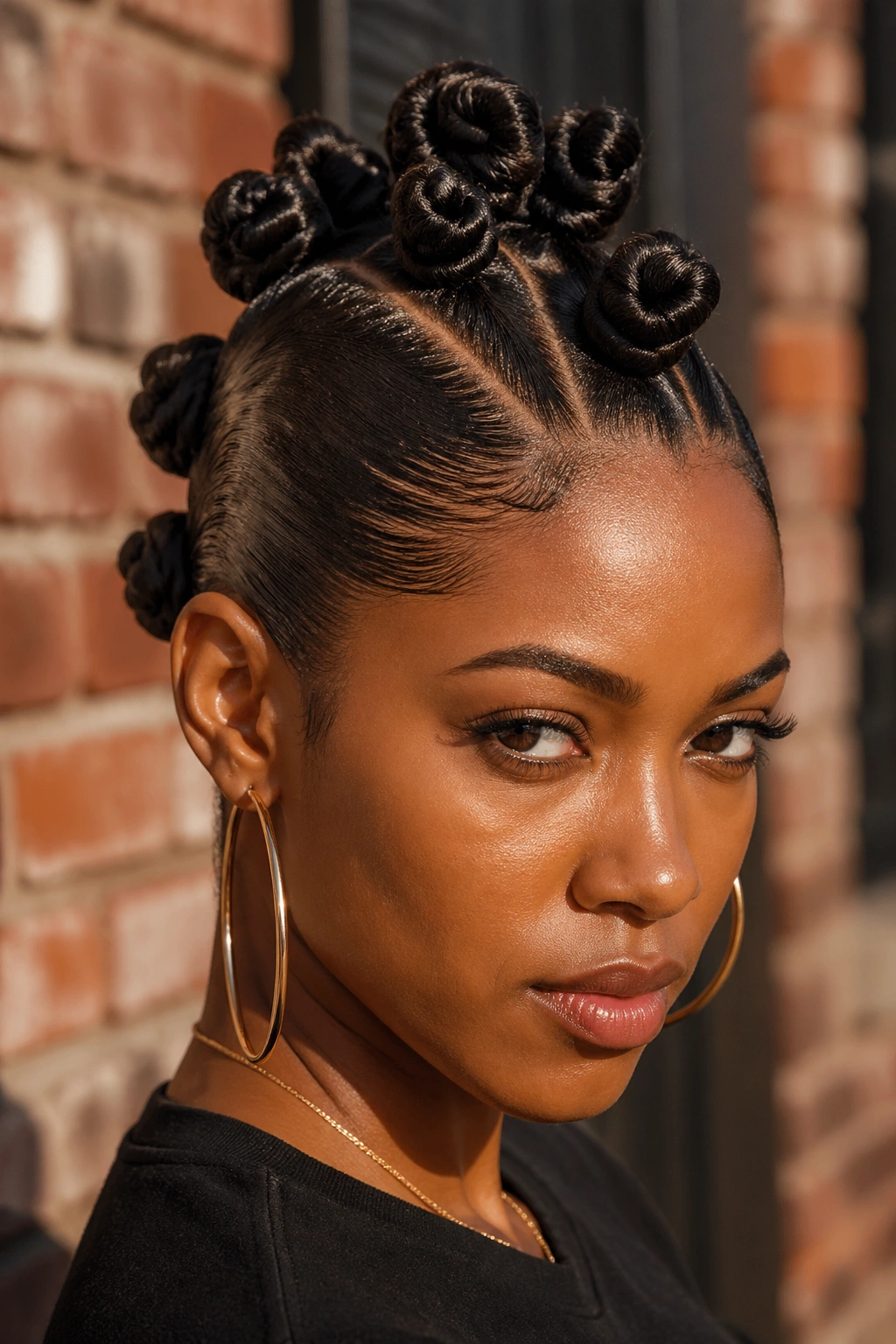
A mohawk strip gives long hair a strong center line and keeps the sides sleek, braided, or pinned. The result is bold without being bulky. It also has one big practical benefit: it reduces the amount of hair you need to knot all over the head.
That matters with long hair. A full-head set can feel heavy if you wear it too long or if your hair is very dense. A center strip of knots lets you keep the drama while easing the weight on your scalp.
I like this style with sharp parts along the sides and a little edge control at the hairline. It looks especially good if the middle knots are slightly larger than the side details. That difference helps the strip stand out instead of blending into the rest of the head.
9. Braided-Base Bantu Knots
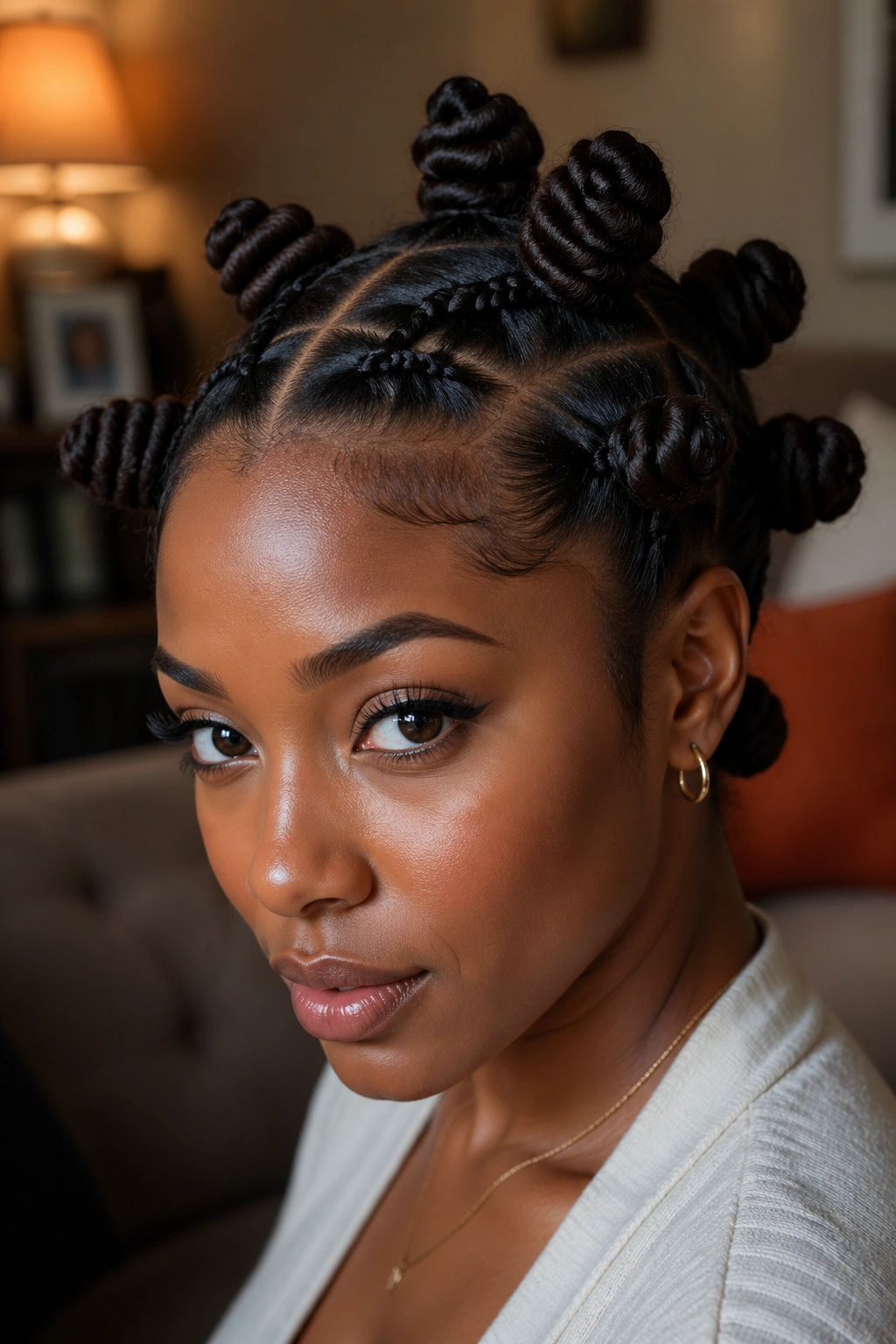
Braiding the base before you coil the knot is one of the smartest moves for long hair. It keeps the roots anchored, cuts down on slipping, and gives the style a tighter feel that lasts longer. The braid doesn’t need to be fancy. A simple three-strand braid at the root is enough.
This approach is a favorite when the hair is especially soft, very long, or freshly stretched. The braid gives the knot a spine. Without it, the base can loosen after a day or two, especially around the nape where hair tends to rub against collars.
A small detail that matters
Keep the braid short. One or two turns is enough before you start wrapping the remainder into the knot. If you braid too far down, the knot can look bulky at the base and lose its round shape.
10. Twisted-Base Bantu Knots
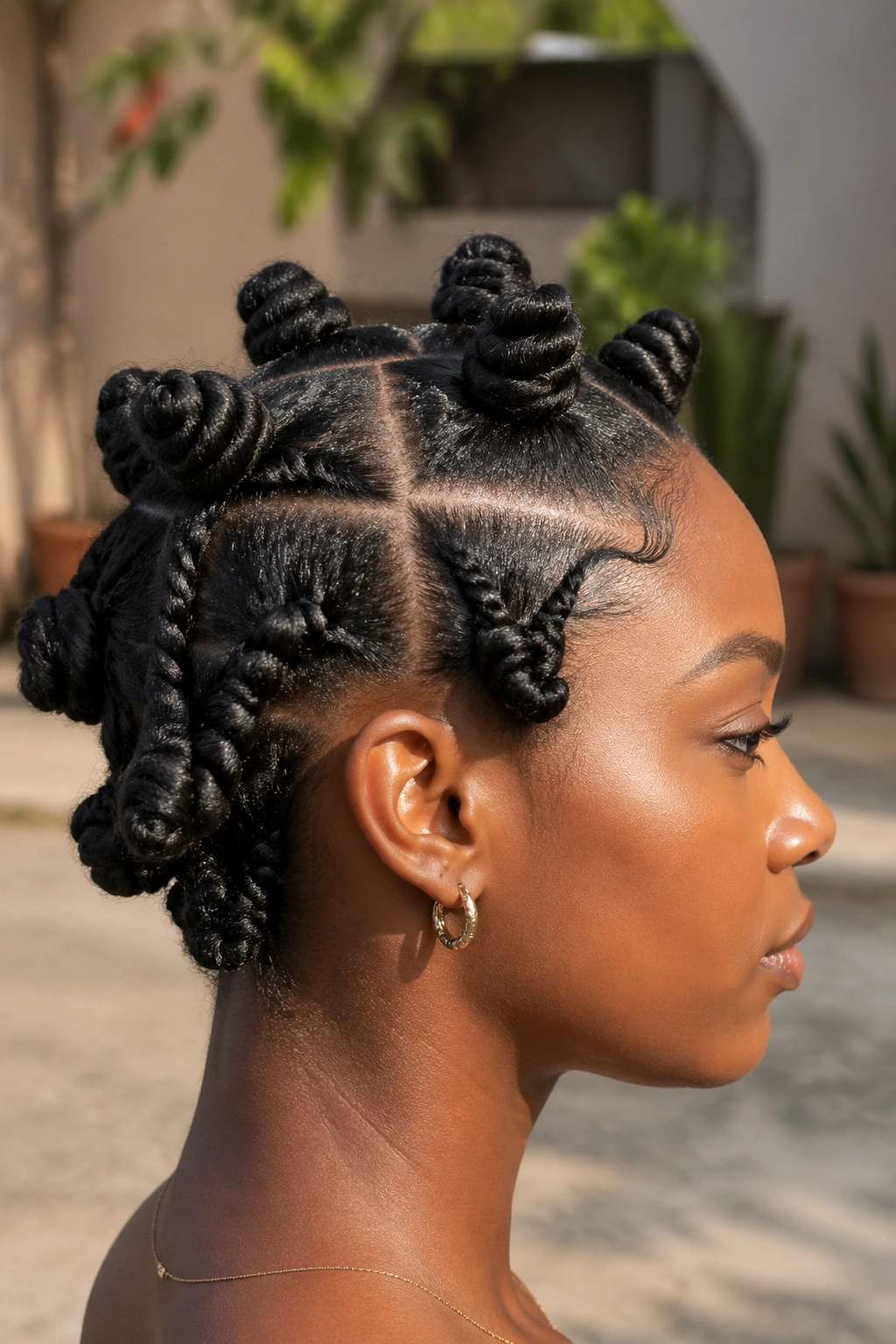
Twisted bases are gentler than braids and faster than they look. A two-strand twist at the root gives the hair a little grip, then the ends coil into the knot with less tugging. That makes this style a smart option for long hair that tangles easily.
The finish is softer than a braided base. You can see the twist pattern if you look closely, but it does not overpower the knot. That makes the whole style feel a little more relaxed and less engineered.
If you have a sensitive scalp, this version is worth trying before anything tighter. It distributes tension better, especially when the sections are medium sized. Keep the twist snug, not pulled, and the knots will sit neatly without that stiff, overworked look that nobody really wants.
11. Bantu Knots with Cuffs and Beads
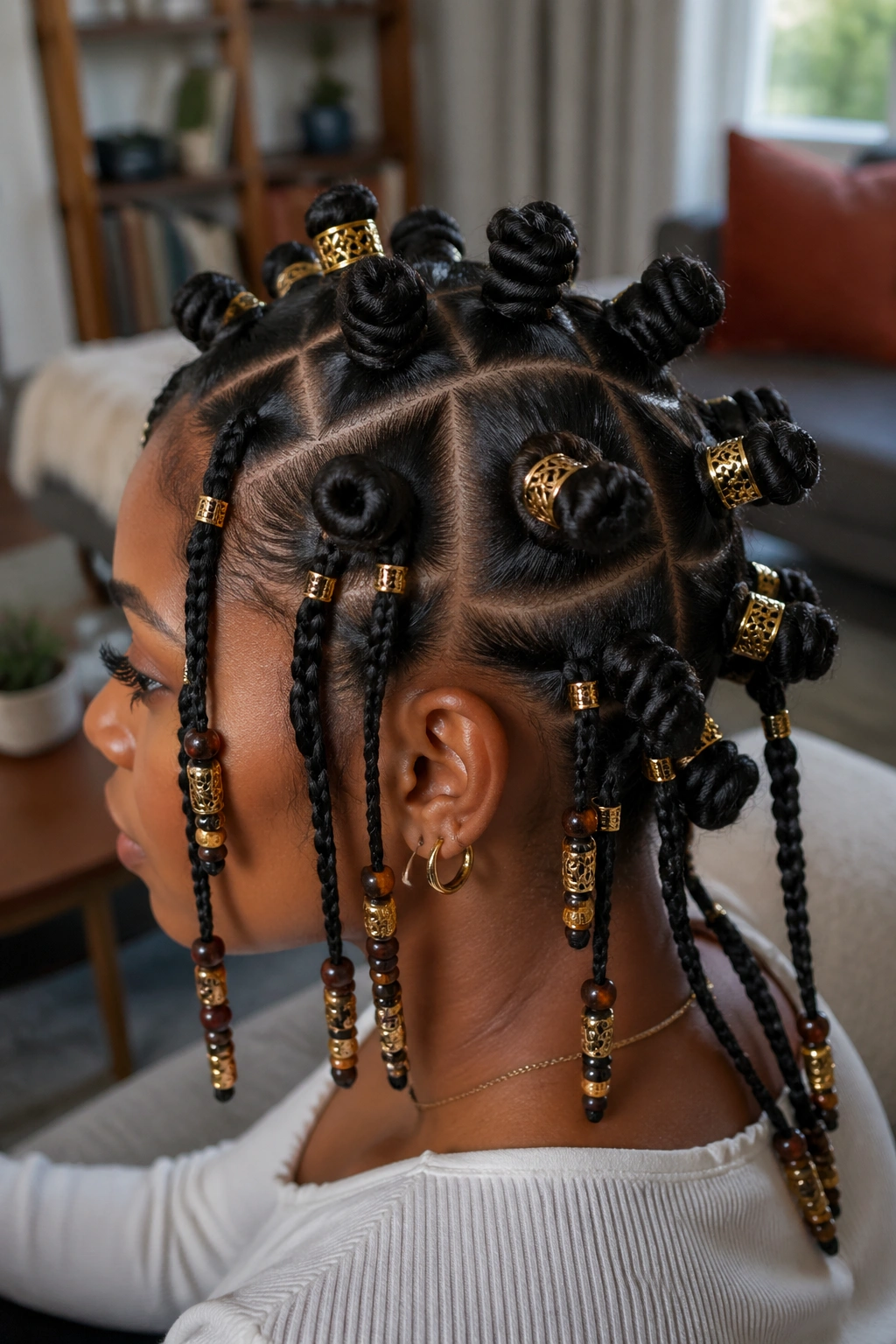
Accessories change the tone fast. Gold cuffs, wooden beads, thread wraps, or even a simple scarf tied around the base can turn long-hair Bantu knots into something that feels finished and personal. The knots themselves stay the same; the styling story changes.
This is one of those looks that depends on restraint. Too many pieces can crowd the scalp. Three or four cuffs placed in a pattern often look better than decorating every knot. Long hair gives you room for balance, so use it.
Beads work especially well on the ends of longer sections before they’re coiled. Cuffs are better for the knot base or the exposed braids underneath. Both options bring texture, and both can make a plain set look like you meant every single part of it.
12. Sleek Edge-Focused Bantu Knots
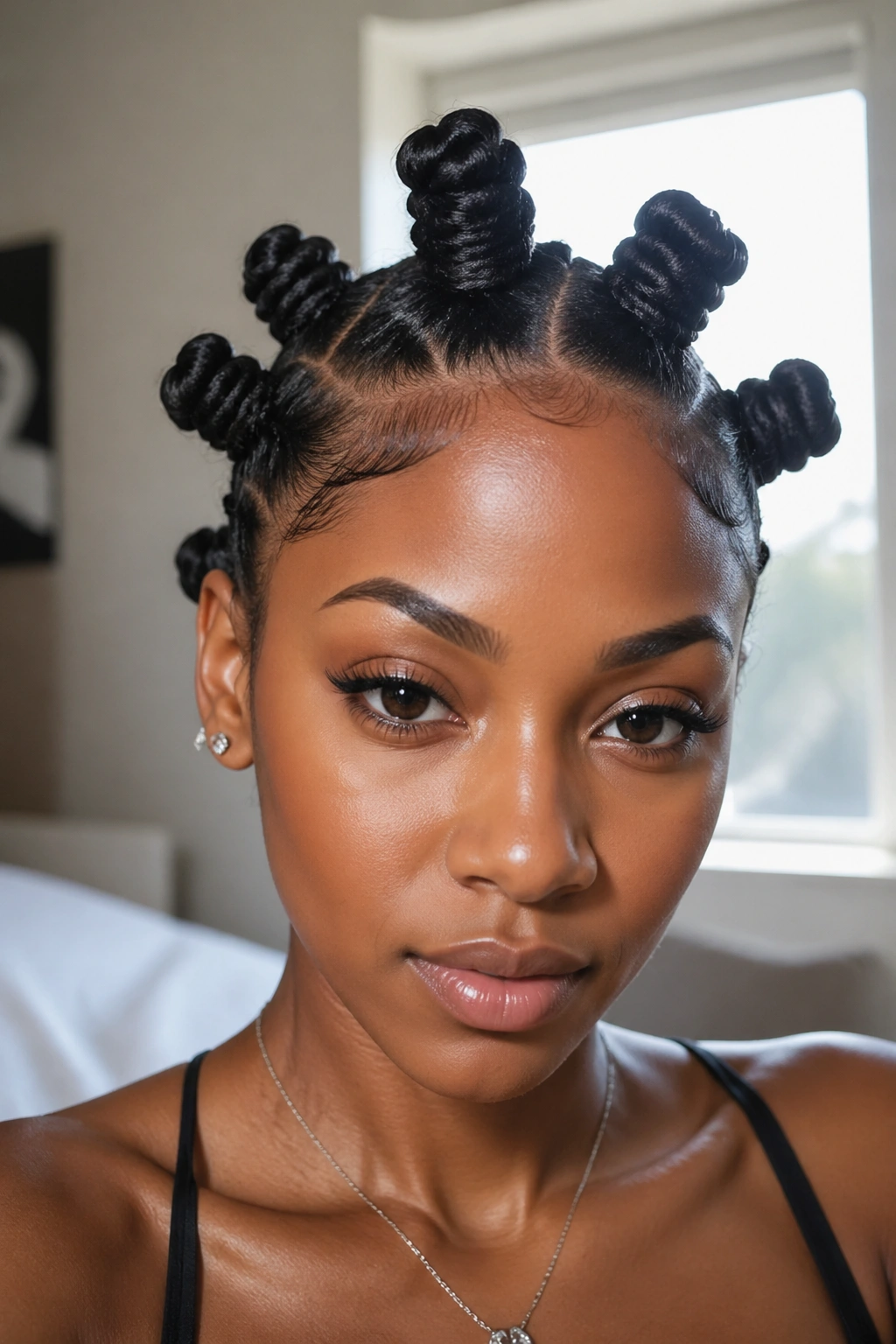
A polished hairline can carry an entire style. With Bantu knots, that slick perimeter draws the eye in before the knots even get a chance to do their work. Long hair helps because the fuller knots contrast nicely with the smooth edges.
Use edge control sparingly. A thin layer along the hairline is enough; too much makes the front look wet and stiff. Brush the edges into the direction you want, then leave them alone. Fiddling is usually what ruins the clean finish.
This style is best when you want the knots to feel sharp and intentional. It pairs well with neat parts, small to medium knots, and a smooth base around the temples and nape. The contrast is what makes it work. Sleek around the edges, sculpted in the middle.
13. Loose Face-Framing Pieces
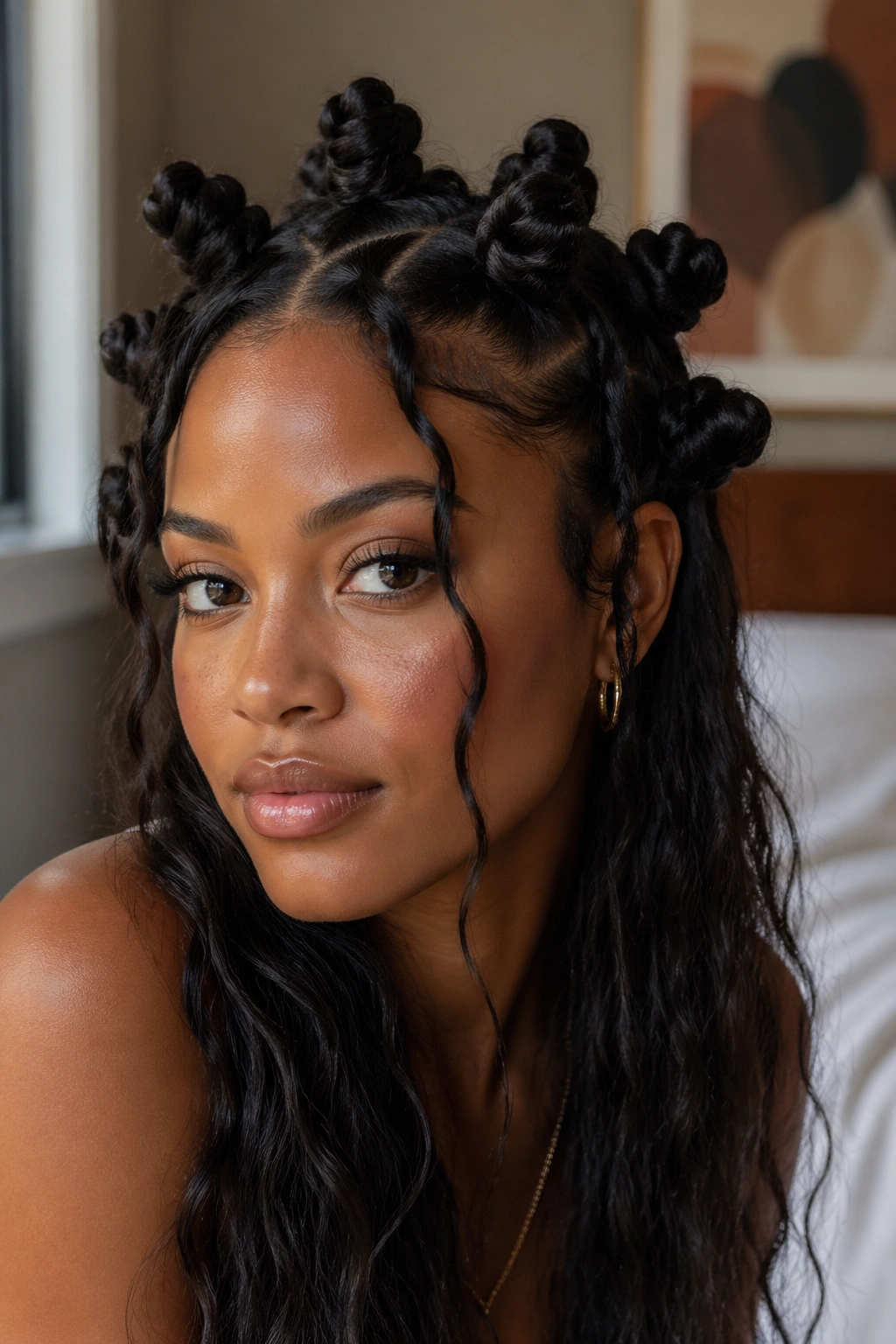
Leaving a few pieces out around the face softens Bantu knots in a way I genuinely like on long hair. The overall style stays structured, but the loose strands break up the shape and keep it from feeling too severe.
You can leave out curls, stretched pieces, or a couple of thin twists near the temples. The important part is making the choice on purpose. Random flyaways are one thing. Intentional face-framing pieces are another.
This version works nicely if you want the knots to feel a little romantic or less boxed-in. It’s also forgiving on long hair because the extra length helps those loose front sections drape nicely instead of sticking up. A small change. Big difference.
14. Knot-Out Prep Bantu Knots
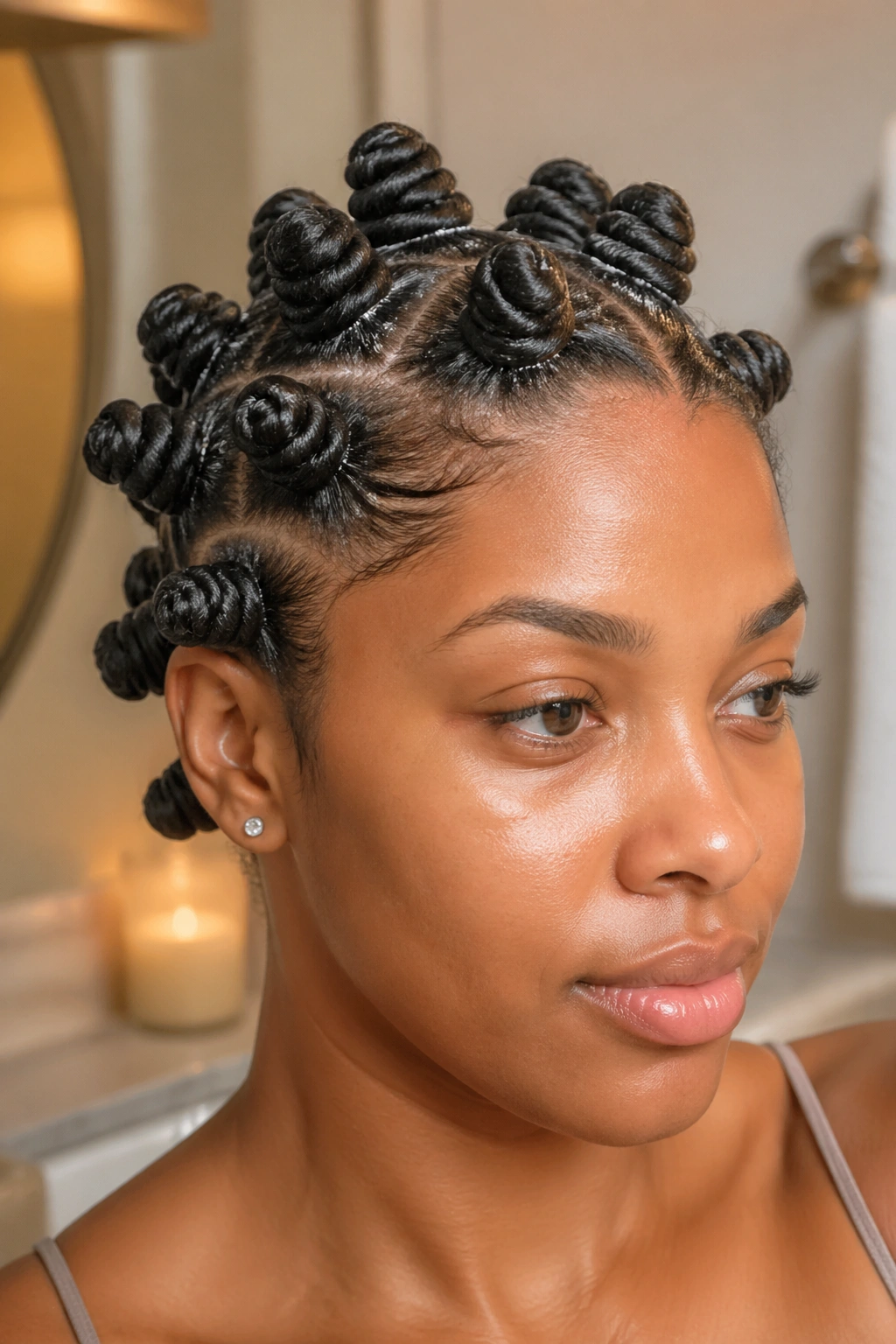
Some styles are made to be worn, and some are made to be taken down. This one is the second kind. If you want a knot-out later, long hair is a gift, because the stretched length and clean sectioning can release into dense curls or waves with a lot of shape.
How to set it up
Use medium sections, not tiny ones. Tiny knots can create too much frizz when they’re taken apart. Coat the hair lightly with leave-in and a touch of setting foam or gel, then let the knots dry fully before removing them.
The best knot-out sets usually sit overnight before coming down. If the roots are damp, the definition gets fuzzy fast. Long hair holds more moisture than people expect, so give the style time. Patient drying pays off here.
15. Triangle-Parted Bantu Knots
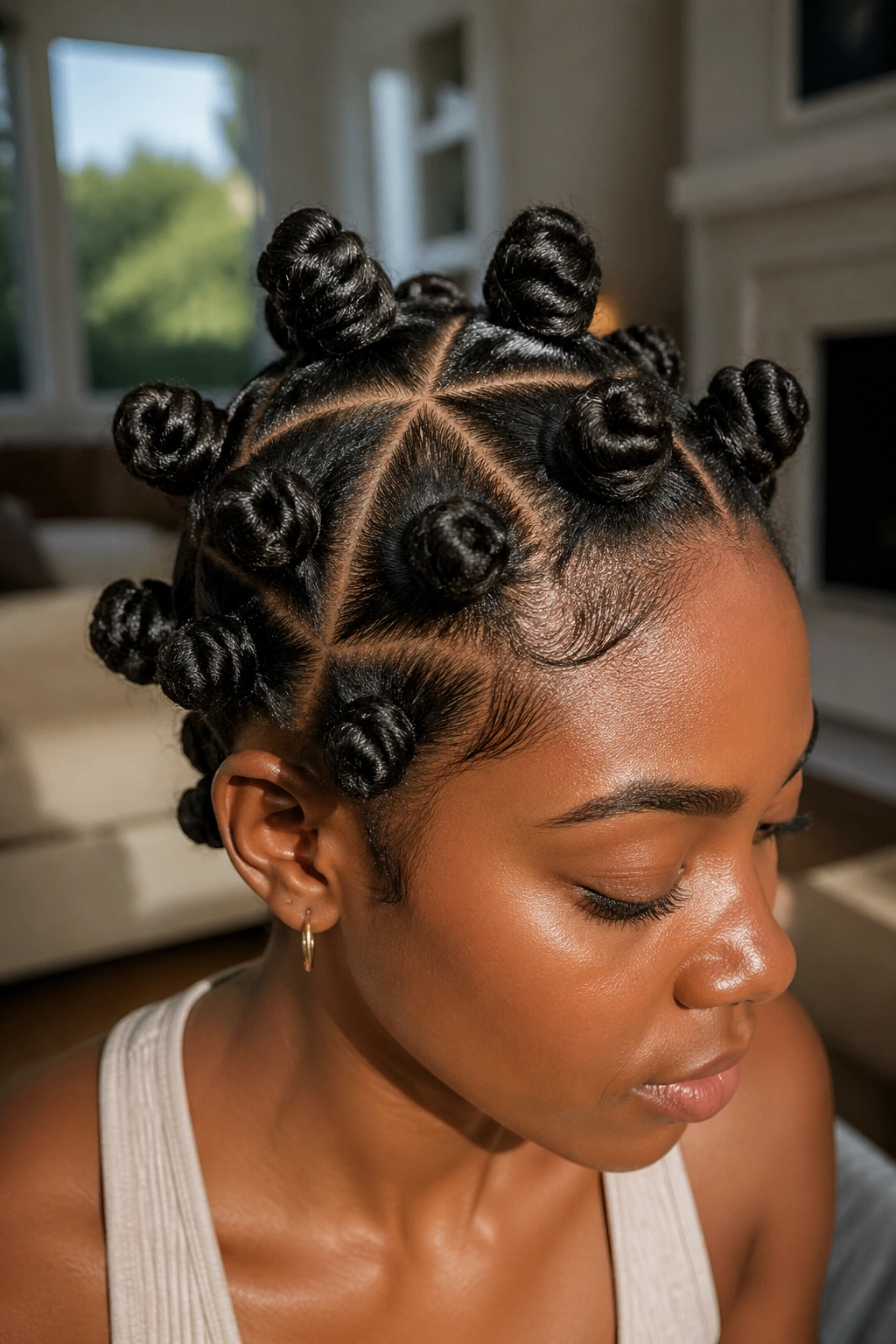
Triangle parts do more than look fancy. They break up the usual square grid and make the set feel more modern, almost geometric. On long hair, the pattern shows clearly because each section has enough size to display the shape.
This is one of my favorite ways to make Bantu knots feel less predictable. The triangles can be small and tight for a precise look, or larger for something softer. Either way, the parting line matters more than the knot size here.
What to watch for
- Keep triangle points even so the rows do not skew.
- Use clips to separate completed sections.
- Don’t overload the hair with product near the part.
- Check the back in a mirror before you start coiling.
That last one saves a lot of annoyance.
16. Crisscross Part Bantu Knots
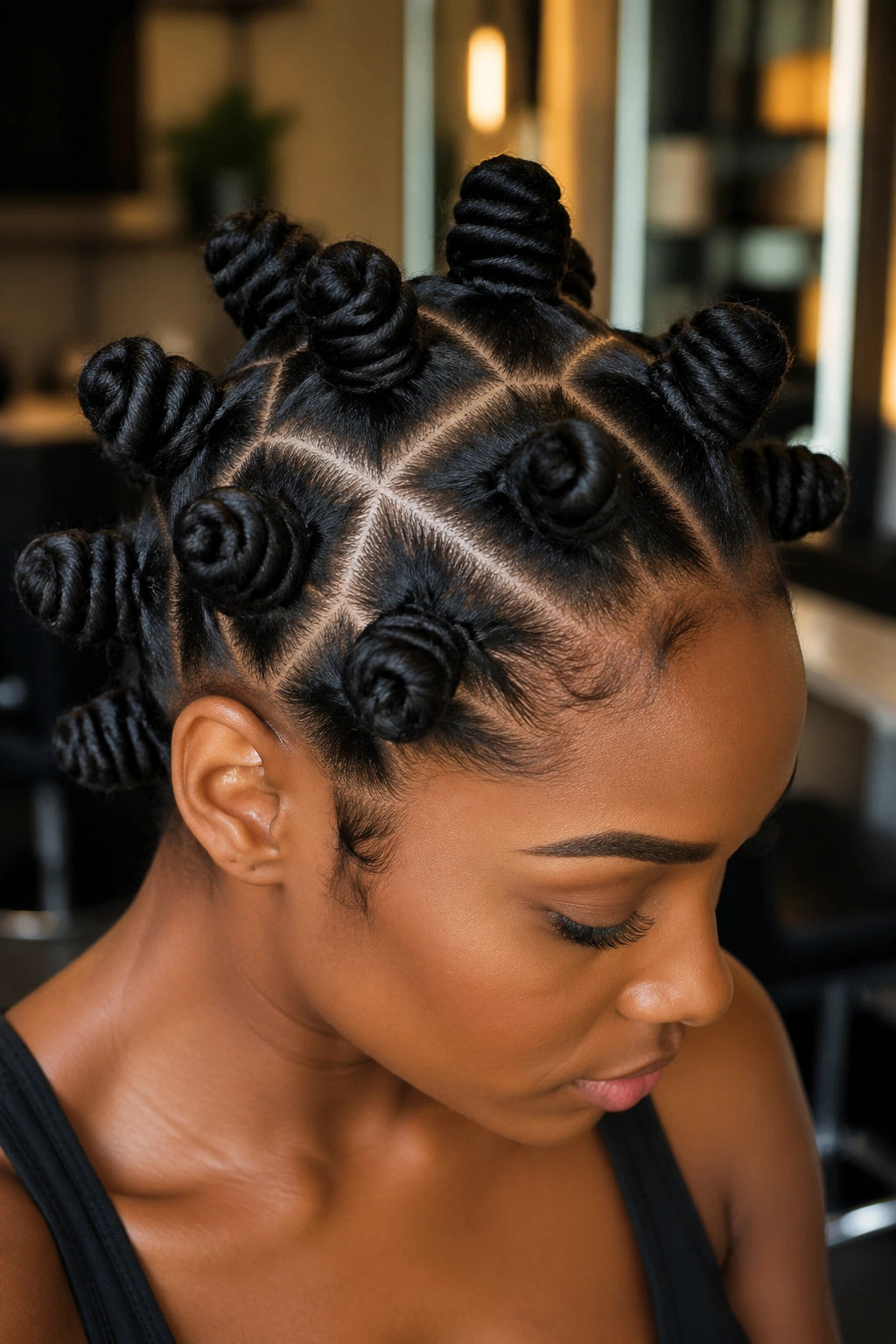
Crisscross parting takes patience, but it pays off in a sculptural way. The lines intersect, angle, and move around the scalp, which makes the style feel more built than simply sectioned. Long hair gives the look enough weight to stay visible.
This version can be a little fiddly the first time you try it. The trick is to map the parts before you start coiling, not while you’re halfway done and already losing track of your own pattern. Clean sectioning is what sells the effect.
I would use this style when the hair itself is meant to be part of the design. If you’ve ever looked at a plain grid and thought, fine, but I want more, this is your answer. It’s more work. It also looks like more work.
17. Low Nape Bantu Knots
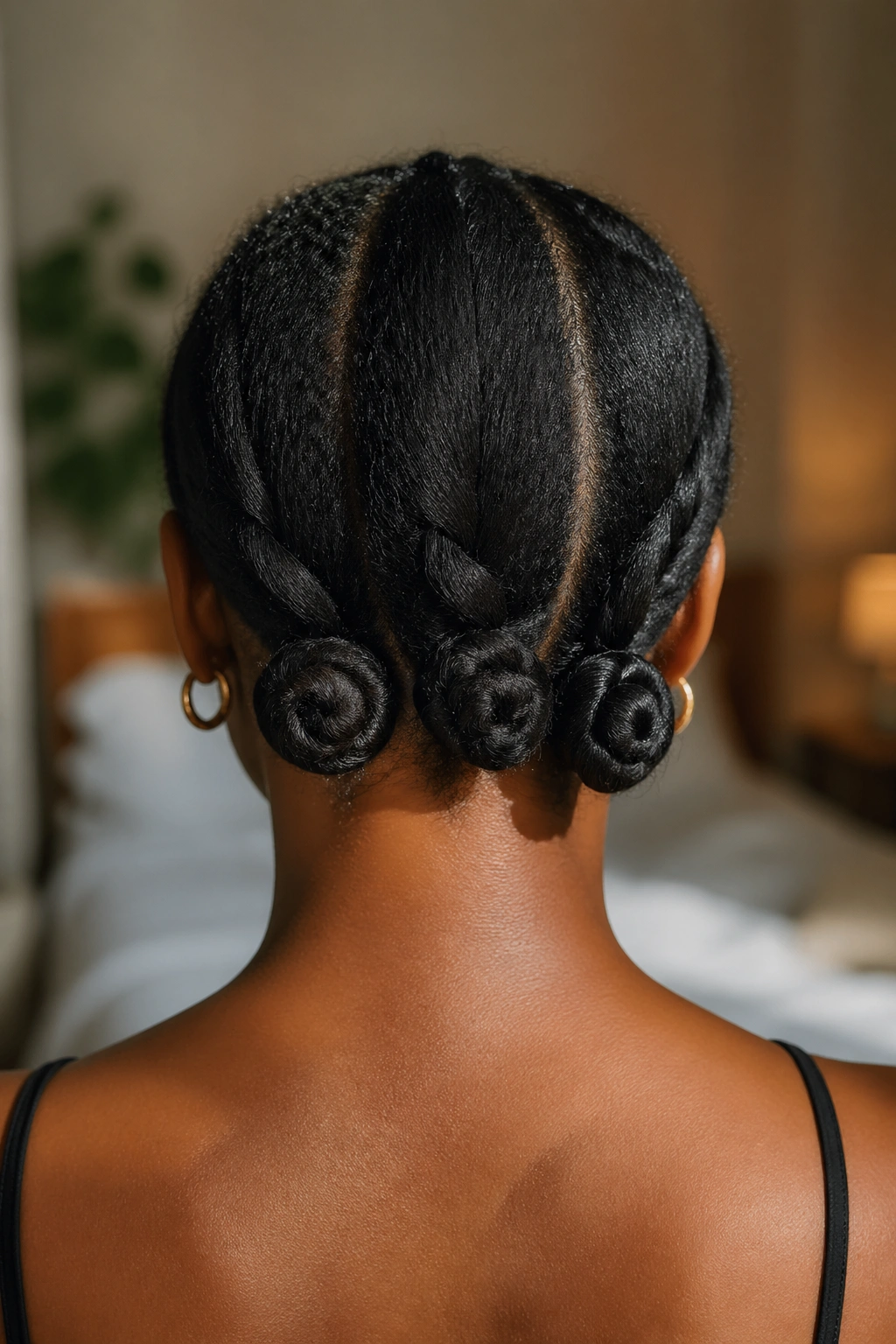
Low nape sets sit lower on the head and feel calmer than all-over knots. Instead of building height from the crown, you gather the knots near the back of the neck and let the top stay smoother. Long hair makes the low placement look rich rather than sparse.
That low positioning is helpful if you spend a lot of time in collars, scarves, or jackets. High knots can rub. Low knots tend to stay out of the way. They can also be tucked into a scarf more easily, which is useful when you want the style to hold its shape.
This is one of those looks that reads understated until you really look at it. Then the details show up: the clean nape parting, the compact coils, the way the back sits neatly against the head. Simple. But not plain.
18. High Puff-to-Knot Hybrid
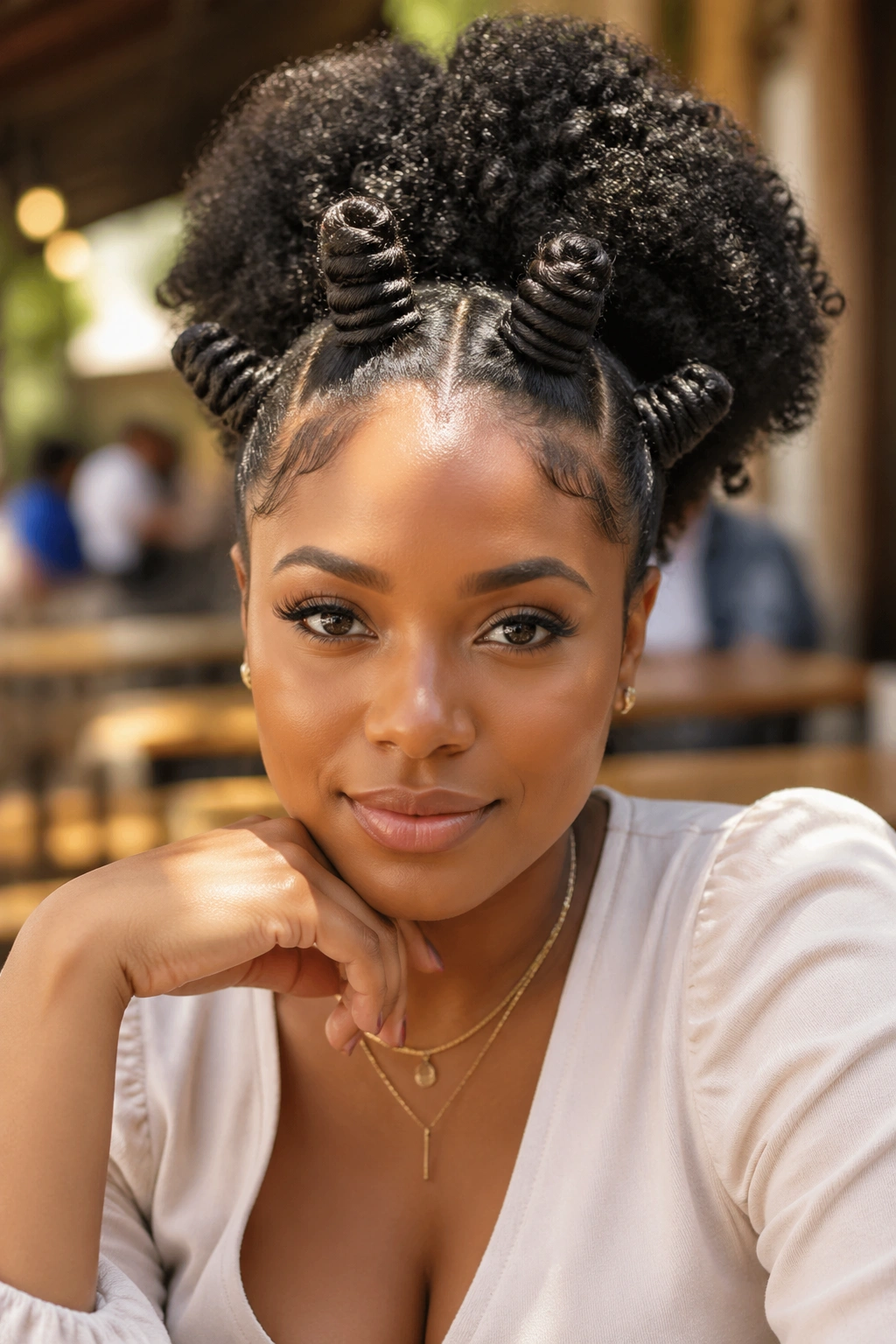
A high puff-to-knot hybrid uses the top and front sections for the knots, then leaves the back as a puff, a folded length, or a tucked section. It gives long hair a little lift without forcing every strand into a knot.
That lift matters. Long hair can weigh styles down, especially at the crown. By keeping the top knots elevated and the rest controlled but looser, you get volume where it counts and relief where it helps.
Why I like this one
It has movement. A full knot set can feel sculpted and still. This hybrid keeps some softness, which is useful if your hair is thick and you do not want the style to feel heavy by hour three. It also works nicely with statement earrings, since the shape opens up the sides of the face.
19. Flat-Twist Bantu Knots
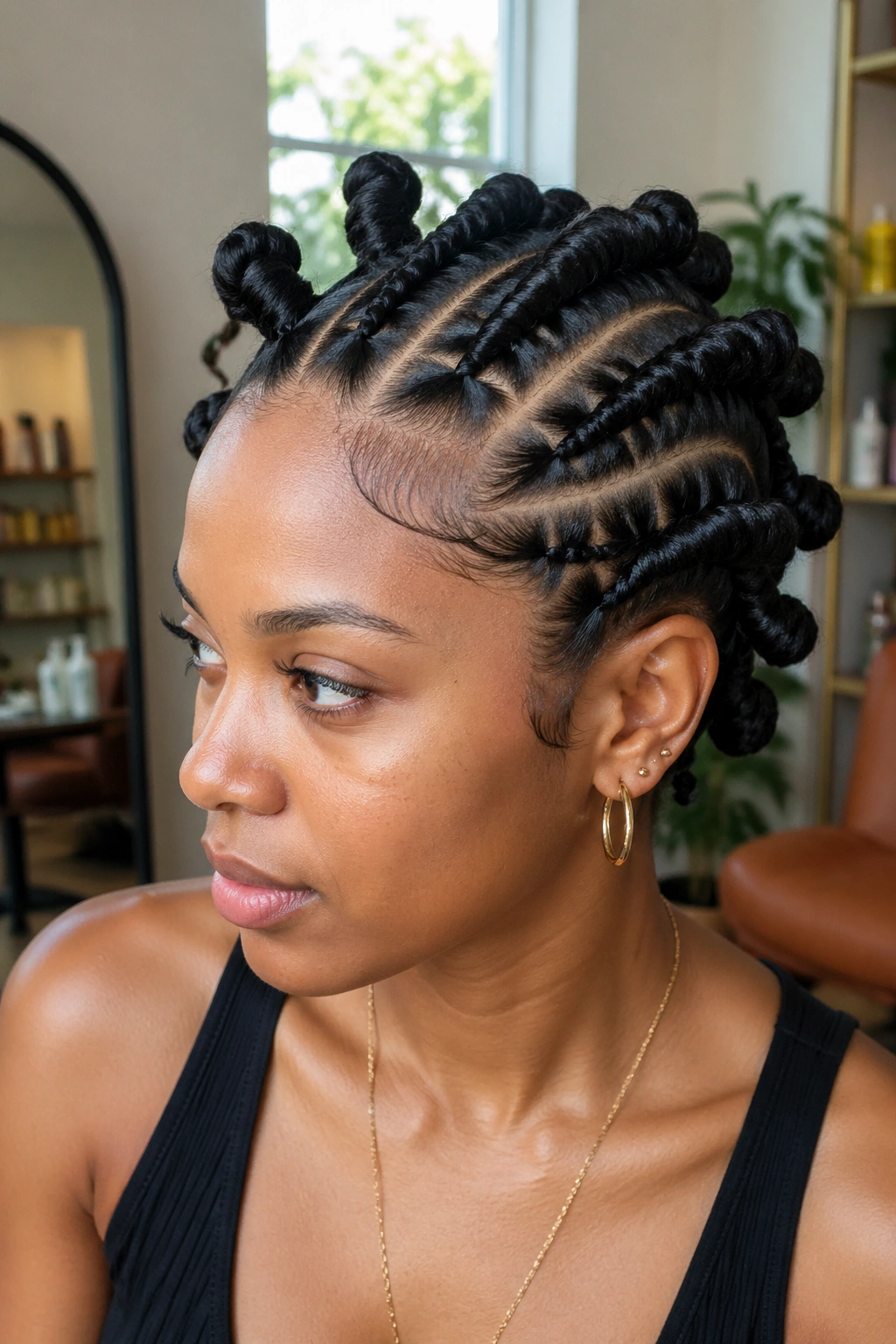
Flat twists into knots are one of the neatest options for long hair. Each row of hair is twisted flat against the scalp, then the loose ends are coiled into a knot at the end of the row. The result is smooth, low tension, and long-lasting.
This style shines when you want the scalp pattern to do the talking. The twist rows make clean lines, and the knots at the ends keep the look from feeling too plain. Long hair helps the twists stay anchored without being stretched too hard.
A practical note
Flat twists dry more slowly than plain coils. If the hair is dense, give yourself extra time before you wrap a scarf or go to bed. Damp roots plus a covered style can lead to frizz and a flat finish. Nobody loves waking up to that.
20. Sleep-Friendly Protective Bantu Knots
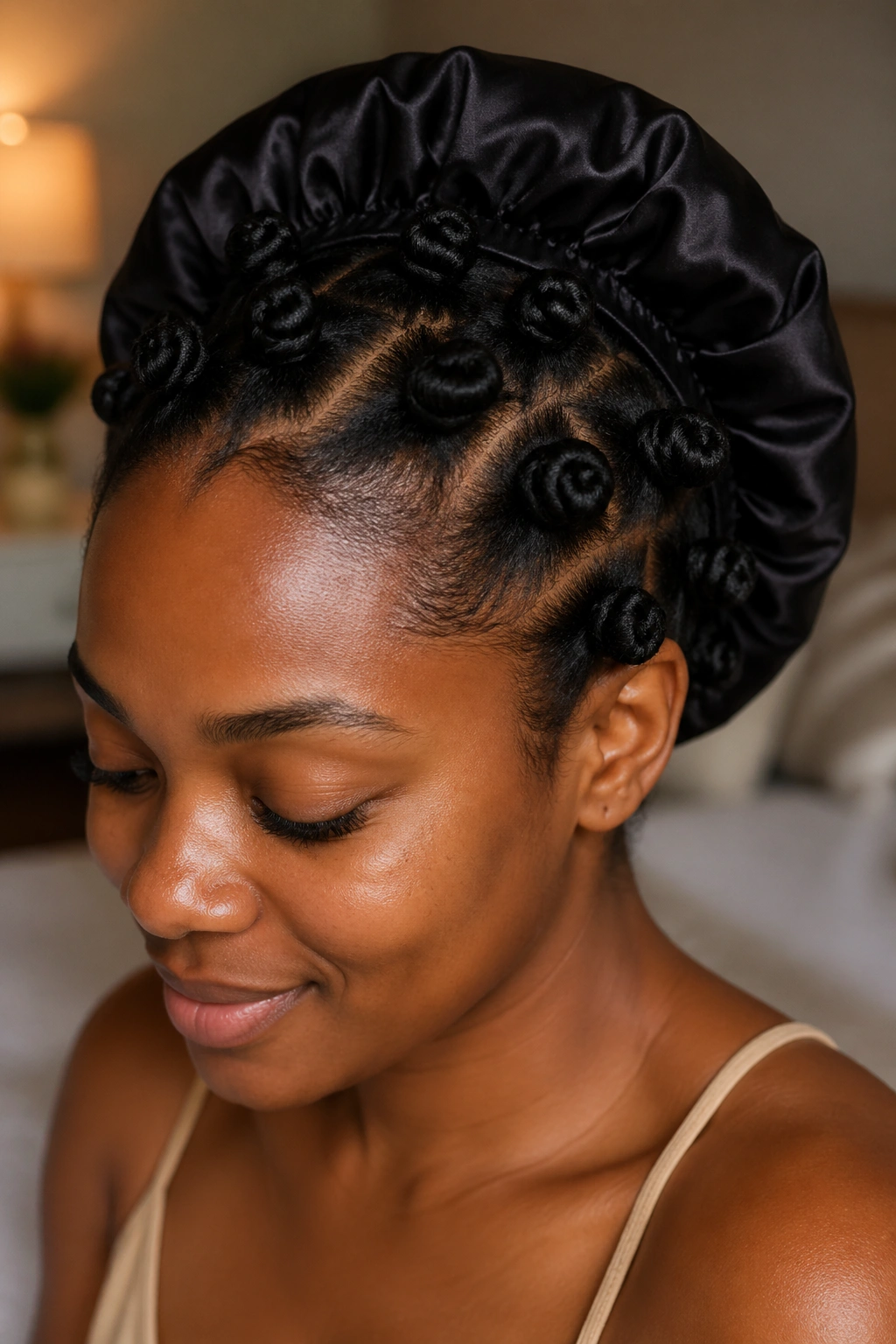
Not every set has to be showy. Some are built for wear, rest, and repeat. A sleep-friendly version uses medium or small sections, soft products, and a secure but not tight base so the style can survive friction from a pillow or bonnet.
Long hair benefits from this because the length can tangle overnight if the knots are too loose. Keep the ends tucked in cleanly. Use a satin bonnet or scarf, and if your hair is very dense, consider a second satin layer over the pillow too. That sounds fussy. It works.
The goal is simple: hold the shape without stressing the scalp. If the roots hurt by the end of the day, the set is too tight. That pain is not a sign of good styling. It is a warning.
21. Highlighted Bantu Knot Placement
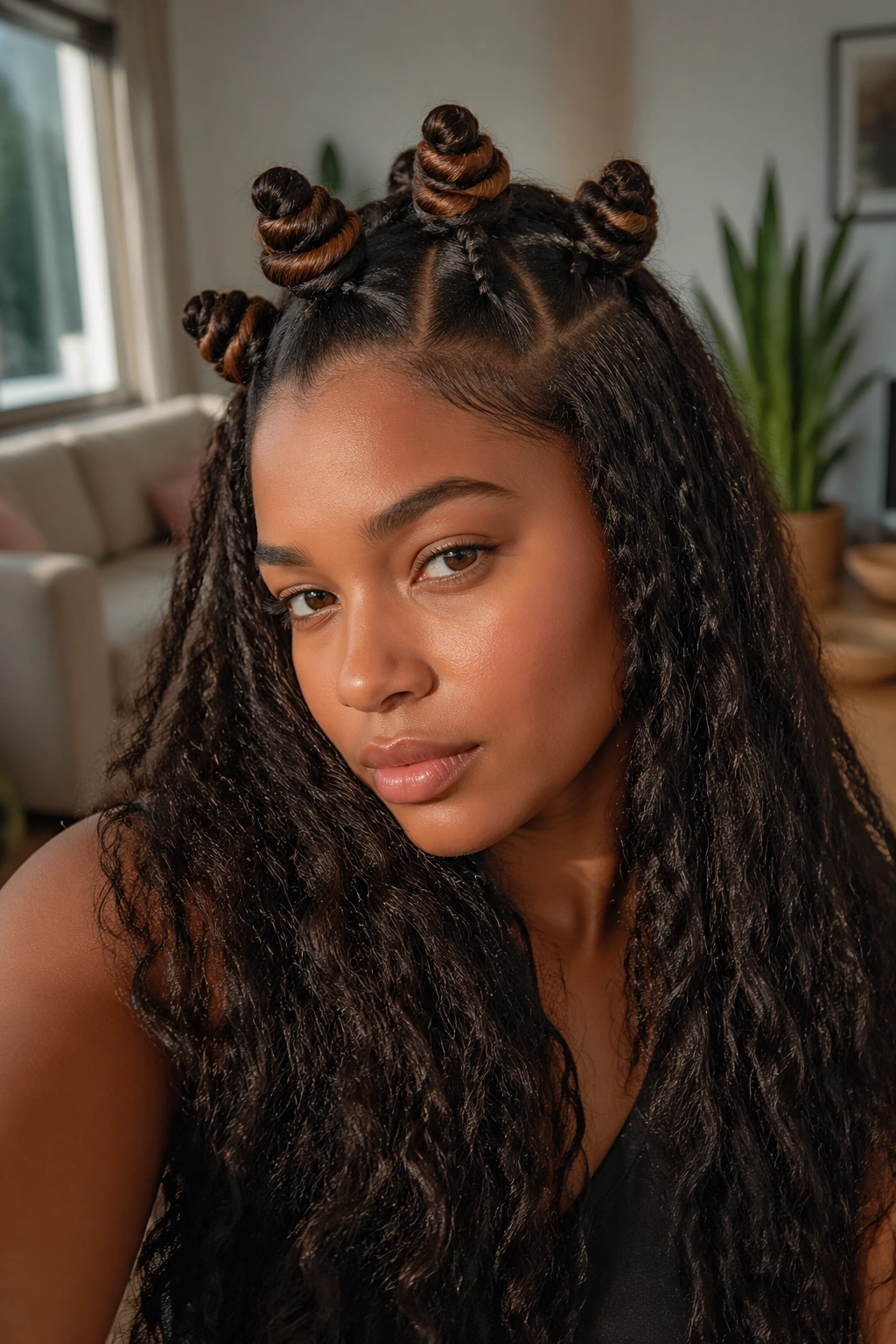
Color changes the whole vibe, even when the knot pattern stays the same. You can use lighter sections, lowlights, or a few accent strands placed in the front and crown to make certain knots pop more than the rest.
This works especially well on long hair because the knots have enough size to show the color shifts. A single lighter knot can stand out in a way that smaller hair simply can’t pull off as easily. The style gets depth without needing extra accessories.
If you already wear color, this is a nice way to show it off. If you don’t, temporary colored extensions can do the job for a special look. Just keep the added hair lightweight. Heavy extensions can tug at the base and make the knots sag by the end of the day.
22. Soft-Sculpted Romantic Bantu Knots
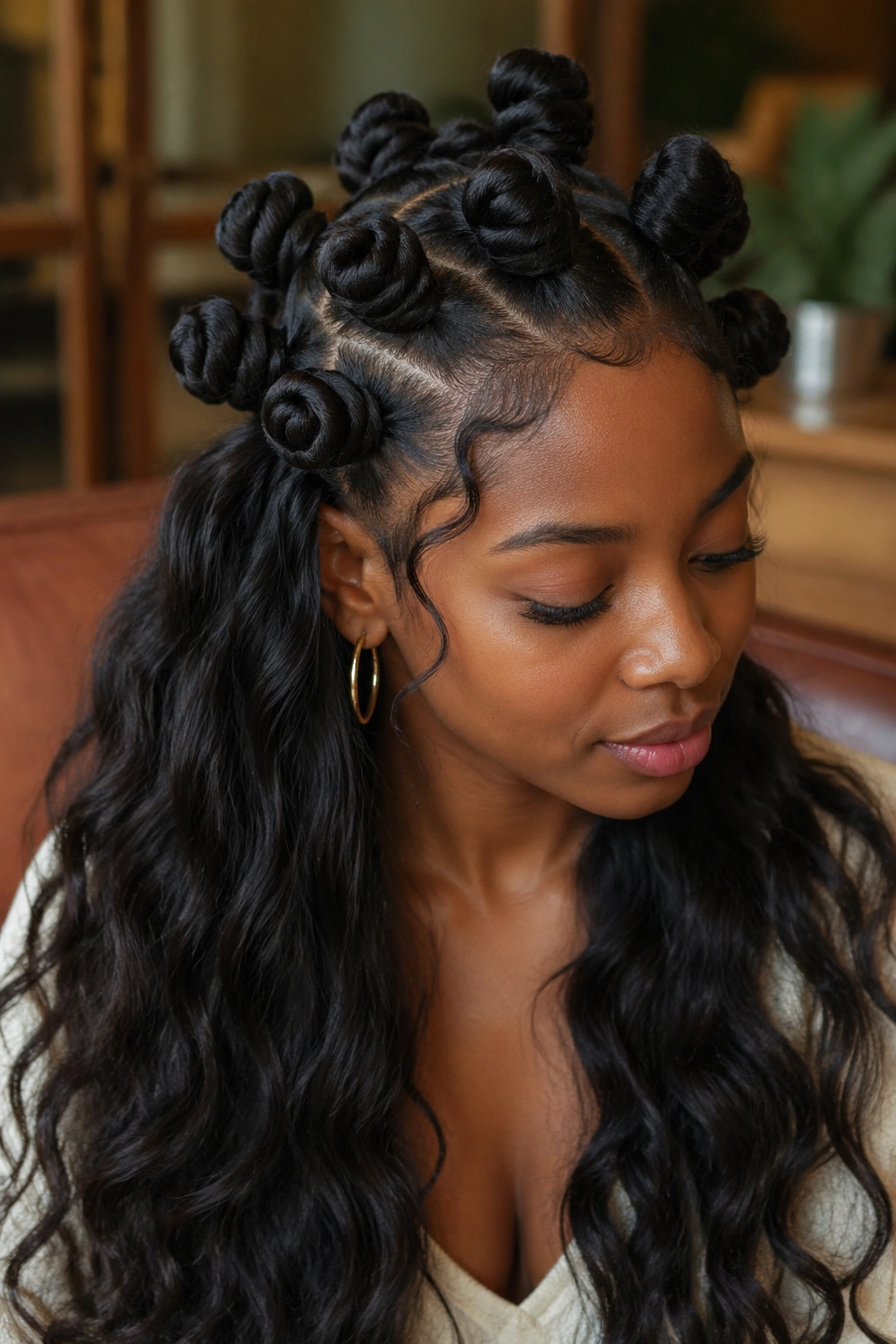
Soft-sculpted knots are rounder, looser, and a little less rigid at the edges. They still have shape, but they do not look sealed off from the rest of the hair. On long hair, that softness feels elegant in a way that stiff knot sets sometimes miss.
The main difference is tension. You don’t pull the sections as tight before coiling. You let a bit of fullness stay at the base, then shape the knot with your fingers instead of flattening it. That tiny choice changes the whole mood.
This is a good style when you want the hair to feel wearable for hours. It can handle a dressier outfit, but it doesn’t look too dressed up if you’re in a plain tee. That balance is what makes it useful.
23. Formal Side-Sweep Bantu Knots
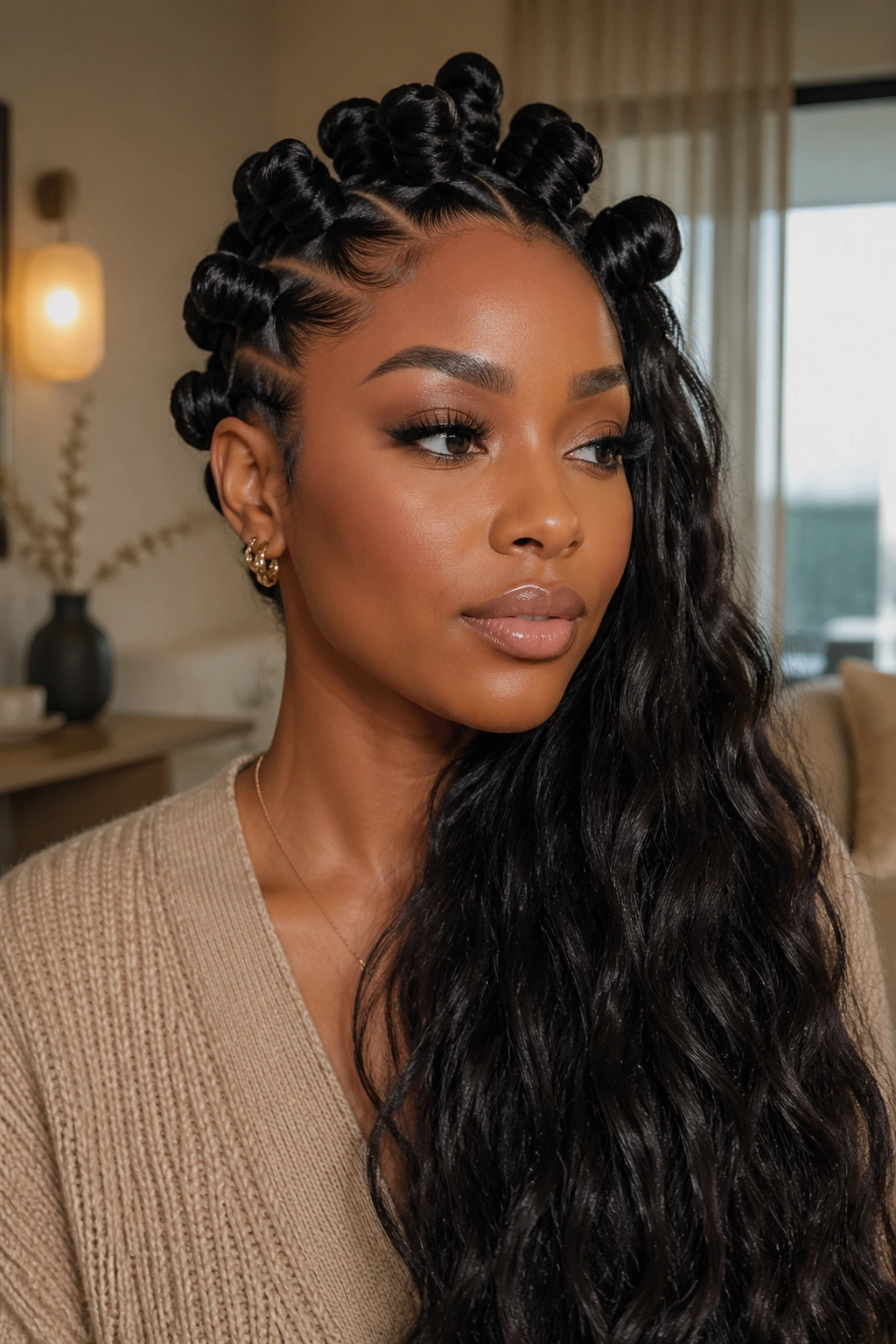
A side sweep gives Bantu knots a more polished profile, especially on long hair. The knots are arranged so the eye moves across the head rather than straight back, which makes the style feel deliberate and event-ready.
I like this version for occasions where you want structure but not severity. The sweep can be created with a deep side part, or by pinning the front section over slightly before coiling the rest. Either way, the shape should feel flowing, not forced.
Long hair helps here because the extra length lets the sweep lie smoothly without exposing too much scalp. A few tucked pins under the top layer can keep the angle clean. That small bit of hidden support makes the whole style hold better.
24. Active Day Bantu Knots
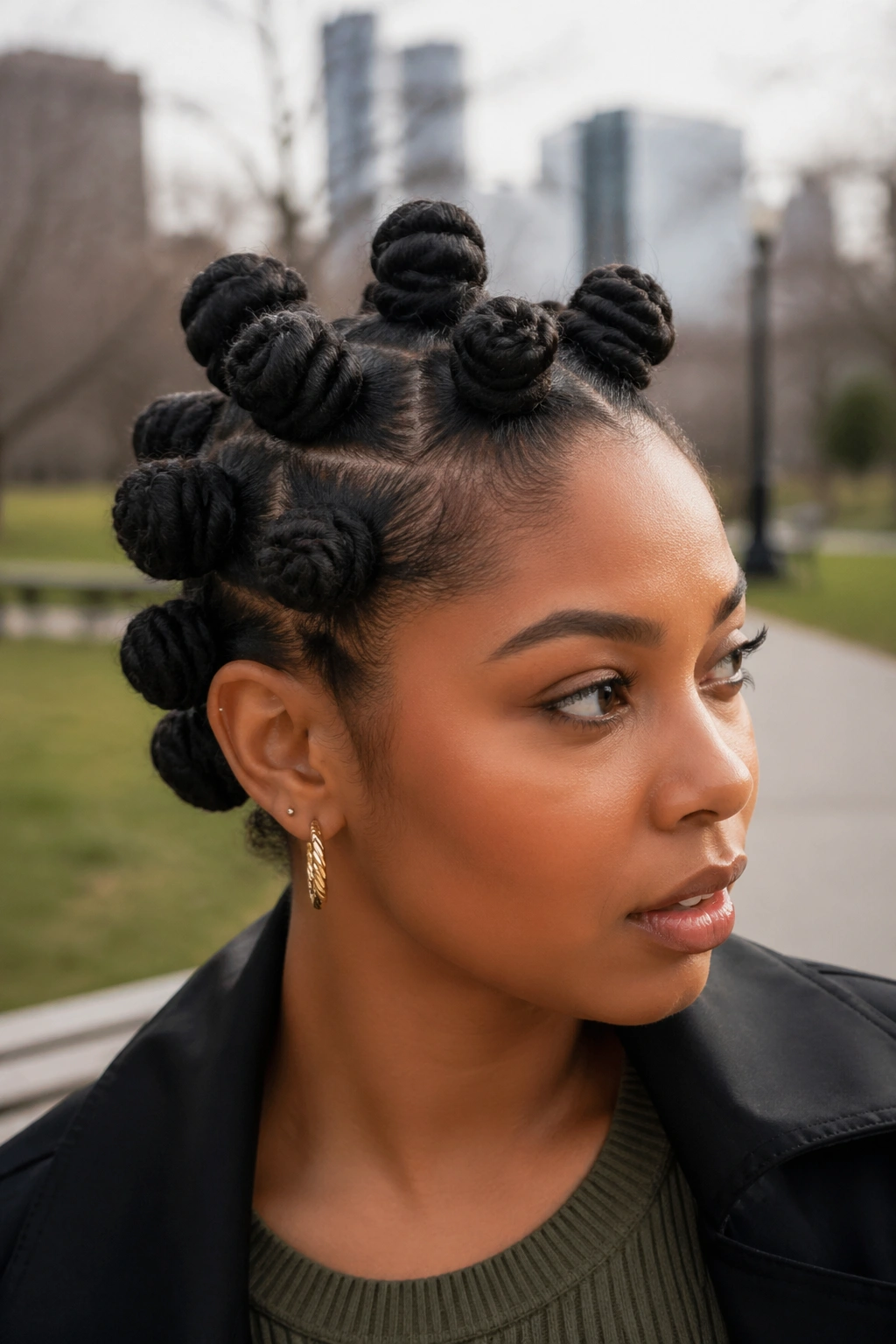
Some styles are made for movement. An active-day set keeps the knots compact, the parts secure, and the edges controlled enough that the style can handle sweat, wind, and a day of constant motion. Long hair needs this sort of practicality more than people admit.
The smart move is to keep the knots medium-sized and close to the scalp. Huge knots can bounce around. Tiny knots can be too fussy if you’re working out or rushing through a packed day. Medium usually wins because it stays in place without feeling overbuilt.
This is the version I’d choose when I want the style to hold up through errands, gym time, or a long commute. It is not the most decorative look in the bunch. It is one of the most dependable, though, and that counts.
25. Long-Wear Travel Bantu Knots
Travel changes the rules. You want a style that can survive a seatback, a nap, a bonnet, and maybe one too many changes in humidity. Long-wear Bantu knots handle that better when the sections are neat, the base is lightly set, and the knots are not oversized.
Keep this set simple. Four to eight larger knots, or a grid of medium knots, is usually enough. Too many tiny knots turn into maintenance. Too few giant ones can sag. The sweet spot sits in the middle.
The best travel knot set is the one you can refresh fast. A little water in a spray bottle, a dab of leave-in, and a satin scarf are usually enough to bring the style back to life. That is the real advantage of long-hair Bantu knots: they can look finished even after they’ve been folded, packed, and worn again.
