



A row of Bantu knots across the front and soft curls spilling through the back has a very particular energy. It looks finished, but not severe. Structured, but not stiff. That contrast is the reason this style keeps showing up on natural hair boards, in salon chairs, and at events where people want something prettier than a basic twist-out but less formal than a full updo.
The best versions of this look understand balance. The knots give shape and edge. The curls in the back keep the whole thing from feeling boxy or heavy. If the back is too flat, the style can look sleepy. If the curls are too frizzy or stretched in the wrong way, the whole thing loses that crisp front-to-soft-back contrast that makes Bantu knot hairstyles so appealing in the first place.
There’s also a practical side to it. Bantu knots with curls in the back work on a lot of lengths and densities, and they can be dressed up or down without much drama. A clean part, a little shine, and the right curl pattern in back can make the style feel polished for days. The trick is picking a version that fits your hair, your outfit, and how much time you actually want to spend in the mirror.
1. Clean Center-Part Bantu Knots With Glossy Curls
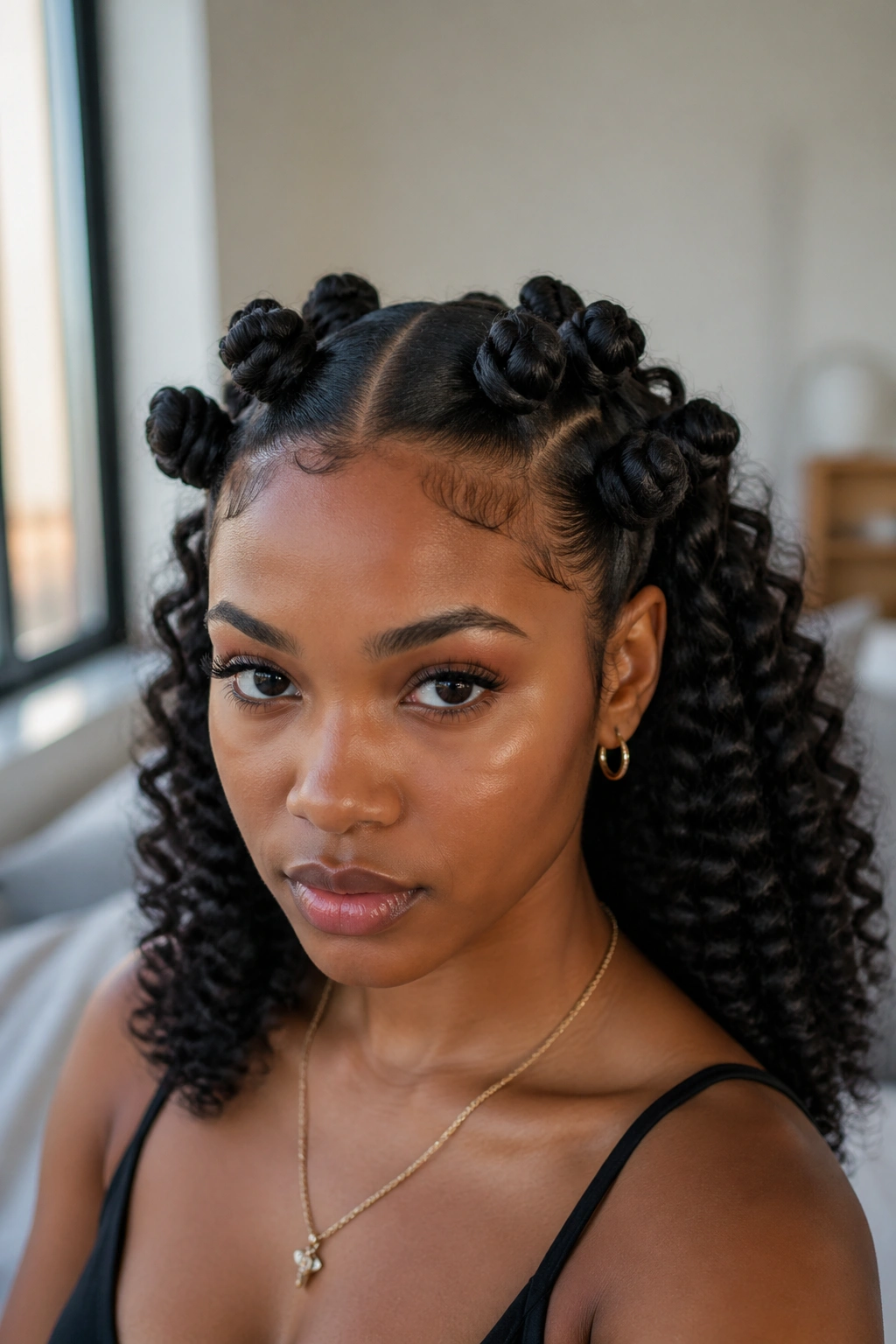
A sharp center part gives this style a calm, symmetrical look that never feels busy. The knots sit in a neat line, and the curls in the back act like a soft curtain instead of stealing attention. That’s why this version works so well when you want the hairstyle to feel controlled without looking severe.
Why the Center Part Works
The middle part pulls the eye straight down the face, which makes the knots feel intentional and tidy. It also helps the back curls fall in a balanced way, especially if your hair has enough length to rest just past the shoulders. Keep the back curls defined, not brushed out too much, or the style starts to lose its shape.
- Best on medium to long natural hair
- Looks clean with a silk press base or stretched hair
- Pairs well with hoop earrings or a simple neckline
Pro tip: A tiny bit of shine foam at the roots keeps the part crisp without making the hair hard.
2. Deep Side-Part Bantu Knots With A Soft Curl Sweep
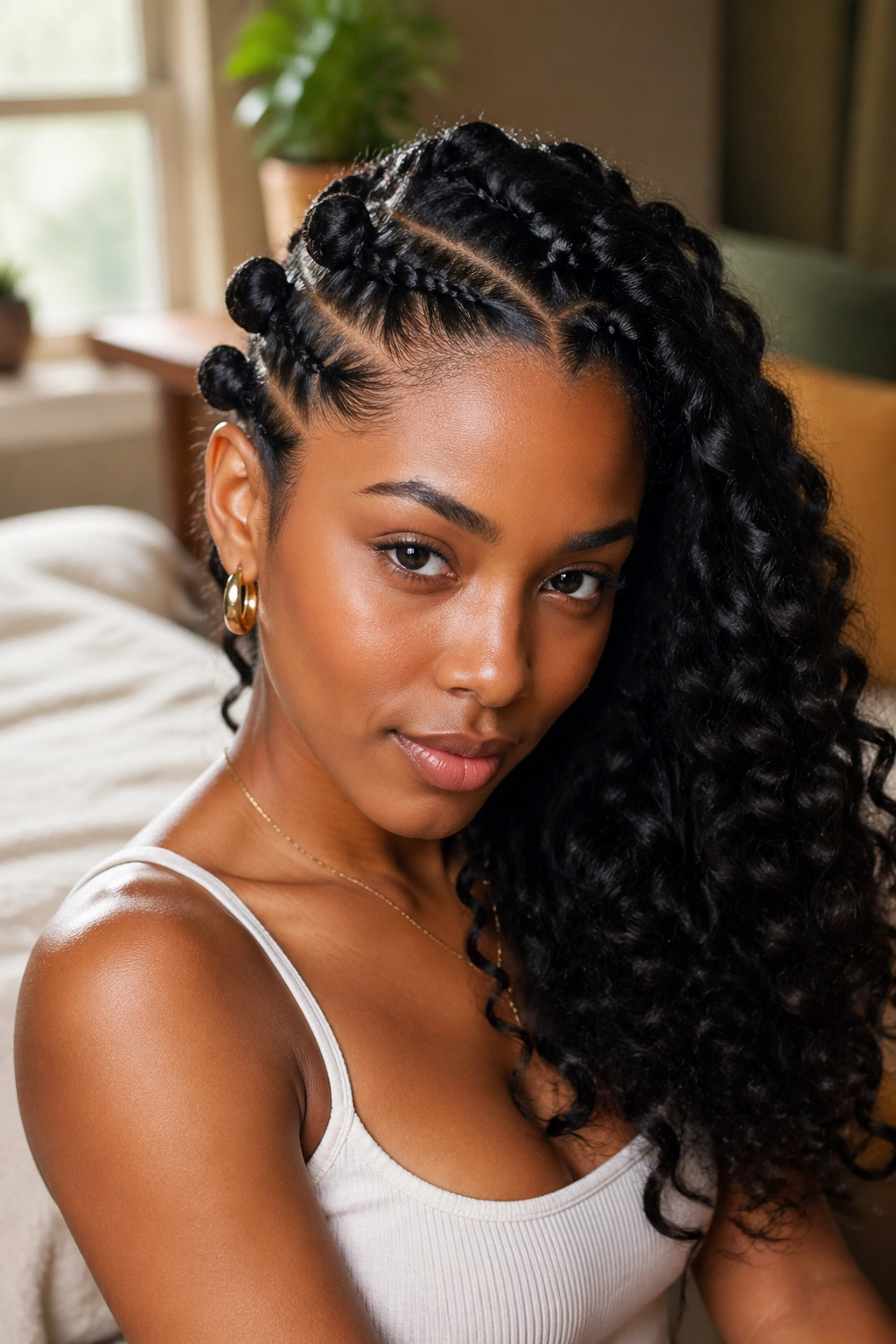
A deep side part changes the whole mood right away. The style feels softer, a little more dramatic, and less “lined up on purpose,” which is exactly why I like it. The side part lets the curls in the back fall over one shoulder or just slightly off-center, and that tiny shift makes the whole look feel more relaxed.
The front knots stay neat, but the asymmetry does the talking. If your face is round, this shape can give a nice lengthening effect. If your face is longer, the side sweep can bring more width through the cheek area. Either way, it keeps the style from looking too rigid.
You do not need a heavy part line for this one. A clean rat-tail comb part, a little mousse, and a firm set on the knots are enough. The back curls should move. That movement is the point.
3. Half-Up Bantu Knots With A Full Curl Curtain
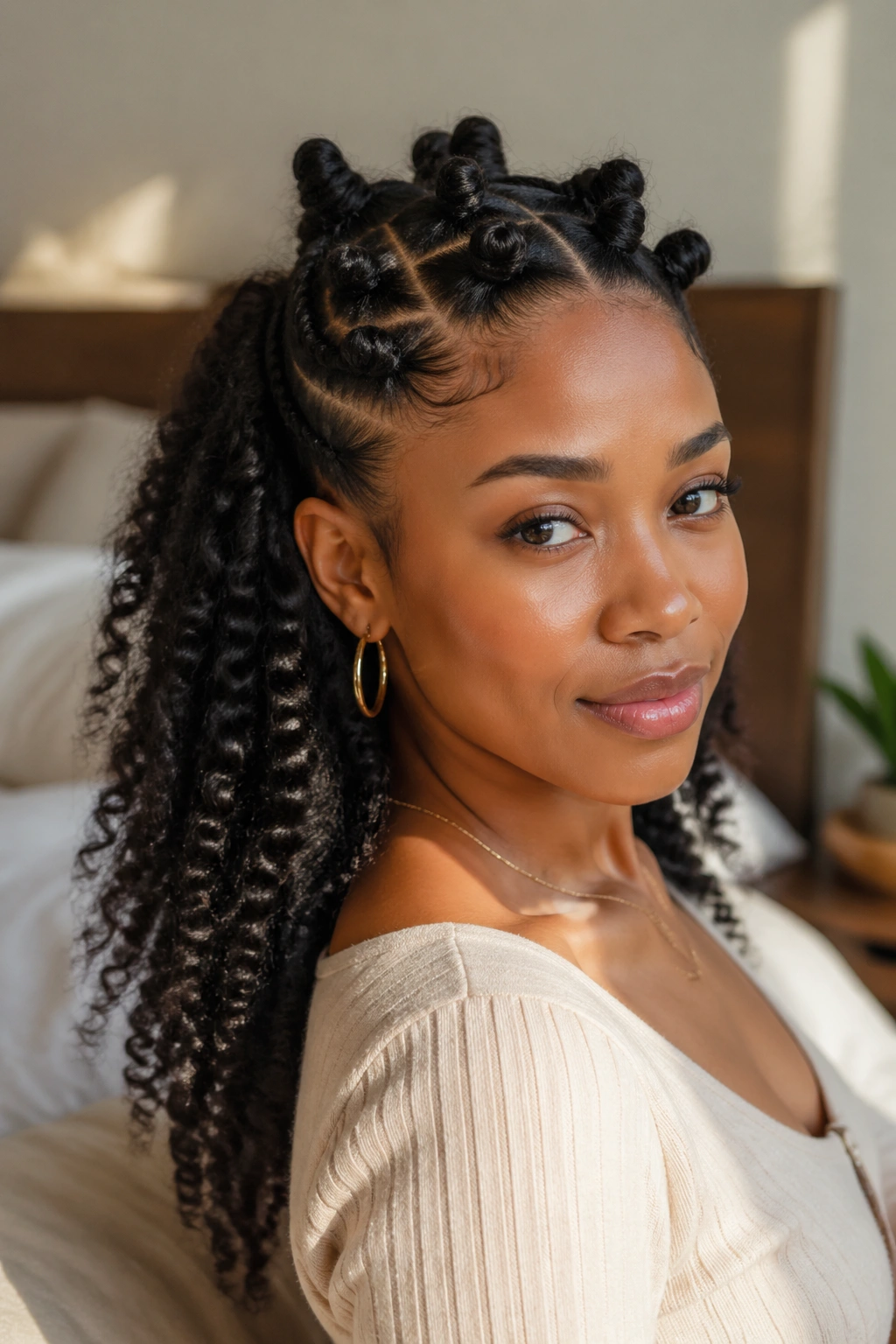
Want the front out of your face without losing the softness in back? This is the version that solves that problem fast. The top section becomes the knot zone, while the bottom stays loose enough to show off a full curtain of curls. It feels easy, but it still looks planned.
How It Wears
The half-up shape works especially well when your hair is medium length or longer, because the back curls have room to hang instead of bunching up at the nape. Keep the knots close together across the crown, then leave the lower section set on flexi rods, rollers, or a strong twist-out pattern. That back section needs definition, not fluff.
Best For
- Day-to-night wear
- Busy mornings
- Hair that tends to shrink up in full updos
A small detail matters here: make the top knots slightly tighter than the back set. That contrast helps the style read cleanly from the front and softly from behind.
4. Jumbo Bantu Knots With Thick Barrel Curls
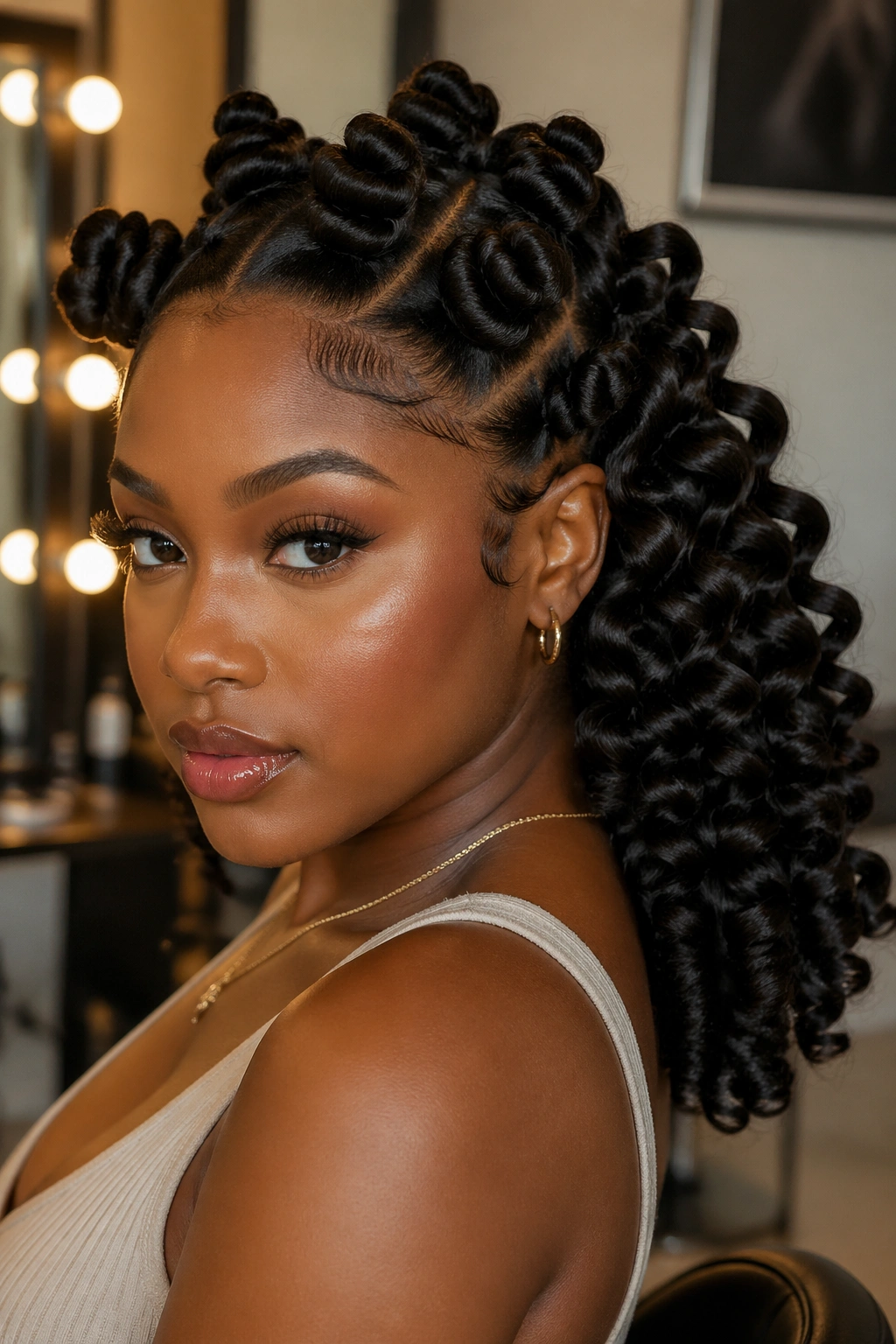
This one has presence. Big knots across the front look bold, almost sculptural, and the thick curls in the back match that energy instead of fighting it. If your hair is dense or you like styles that show up from across the room, jumbo Bantu knots with curls in the back make a strong case for themselves.
The back section should not be over-fragmented. Leave the curls thick and chunky so they hold shape and don’t disappear into frizz by the end of the day. Barrel curls, large perm rods, or stretched finger coils all work well. The key is keeping the curl size consistent enough that the back feels full, not patchy.
This style loves statement earrings, a high neckline, or a bold lip. It does not need much else. Seriously. If the knots are big and the curls are plush, the style already has enough personality.
- Use larger sections in front
- Set the back on wide rods or chunky twists
- Smooth the ends before setting to avoid fuzzy tips
5. Tiny Bantu Knots With Soft Spiral Curls
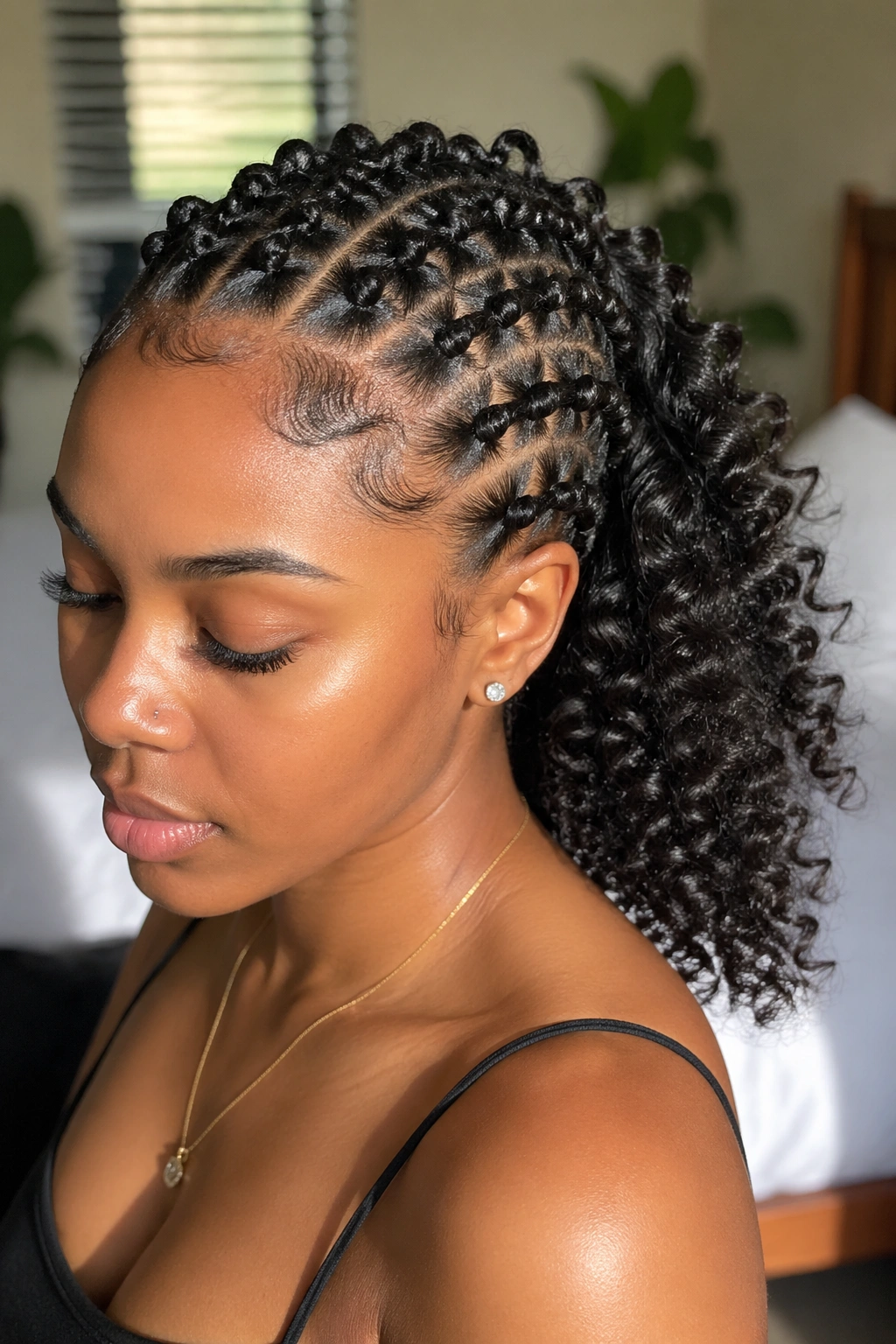
Small knots change the texture of the entire look. Instead of one obvious row of buns, you get a grid of detail across the front, almost like jewelry made from hair. The back curls should stay light and springy so the style doesn’t feel overloaded.
This version is one of my favorites for shorter natural hair and for people who like precision. Tiny knots take longer to make, yes, but they also give you more control over how the back falls. If you want the curls to sit close to the neck with a clean finish, smaller sections help.
The trick is not to let the back get too fluffy. Use a setting foam or a light curl cream, then separate only after the hair is dry. If you rush that part, the style starts to puff before you’ve even left the house.
The payoff is worth it. Small knots in front and tight spirals in back feel neat, modern, and a little bit playful.
6. Bantu Knot Mohawk With A Curly Waterfall Back
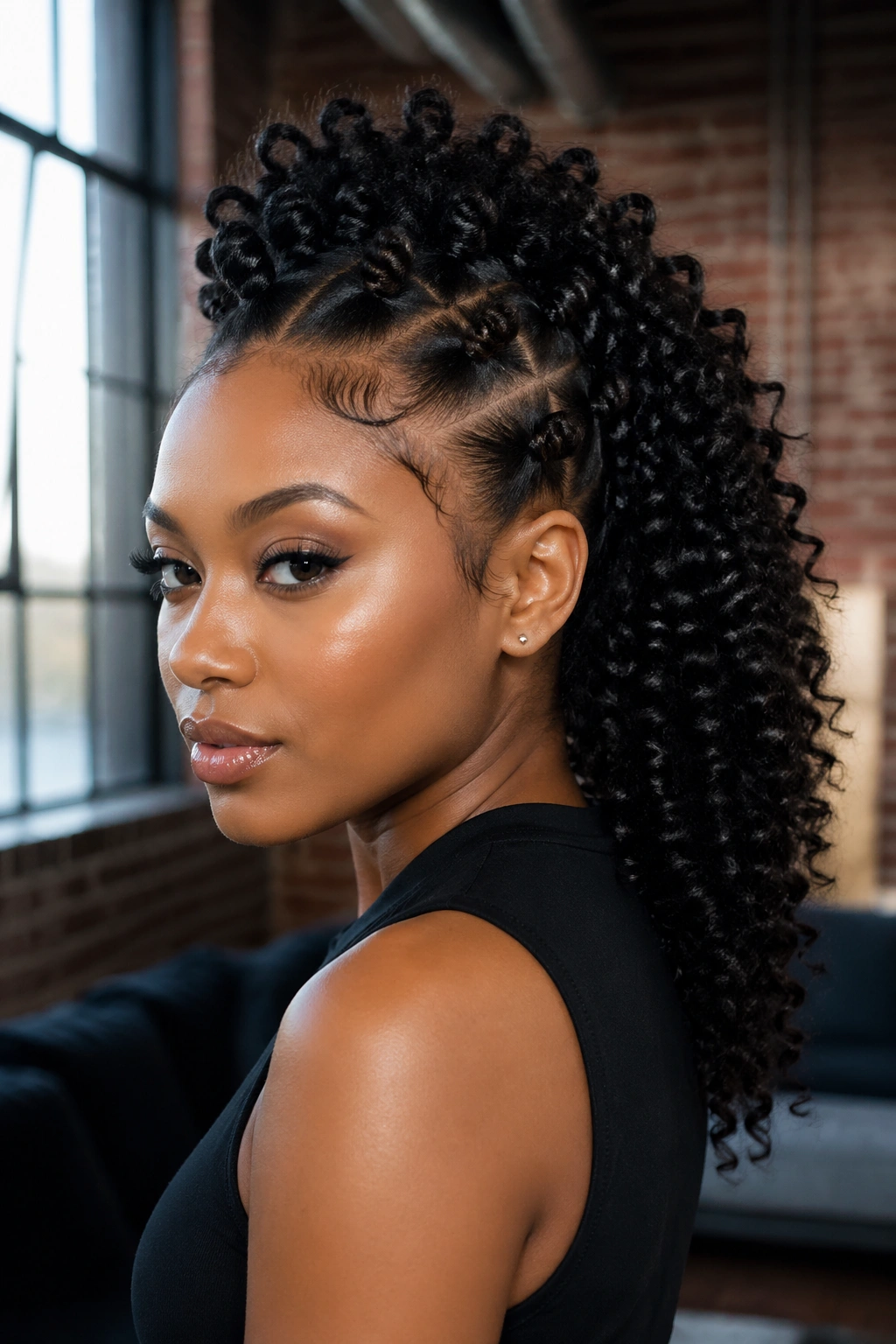
If you want drama, this is the one. A Bantu knot mohawk keeps the sides sleek or pinned back while the center line of knots leads straight into a waterfall of curls. The result has more edge than a standard full-head set, and that shape can be gorgeous on textured hair with some height.
Unlike a full spread of knots, the mohawk version gives you one clear line to follow. The eye moves from forehead to crown to back, which makes the whole style feel longer and taller. That line also leaves room for the curls to cascade without competing with the sides.
This is the style I’d choose for a concert, a fashion-forward outfit, or any day you want people to notice your hair before they notice anything else. Keep the side hair slicked but not greasy. A clean hold at the sides makes the curl waterfall in back look even fuller.
The curls can be loose, but they should not be shapeless. A little structure matters here.
7. Honey Blonde Bantu Knots With Dimensional Back Curls
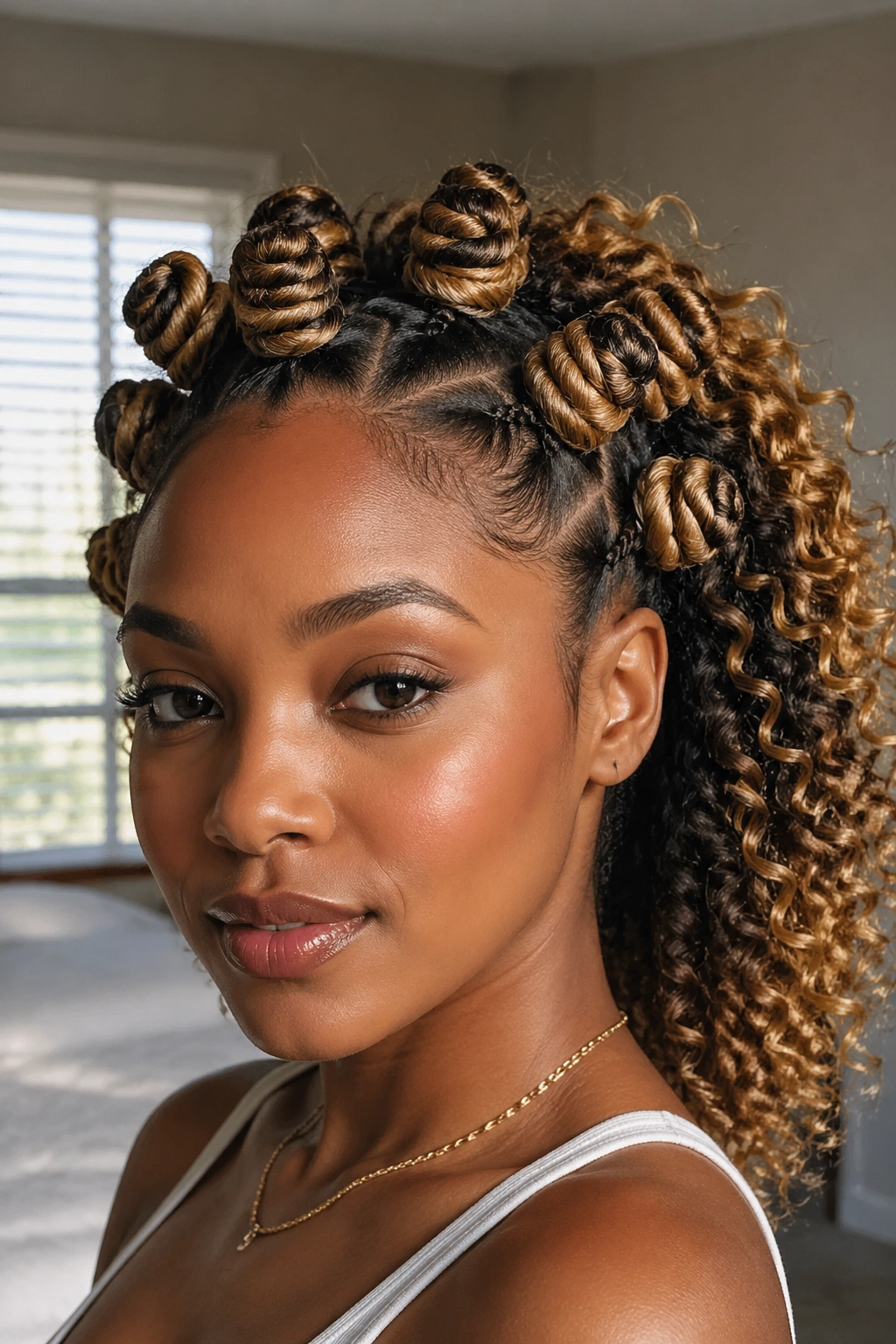
Color changes everything. Honey blonde, caramel, or light brown tones bring out the curve of each knot, and the back curls catch the light in a way that darker shades sometimes hide. The style feels warmer, softer, and a little more dimensional without needing extra accessories.
What makes this version work is placement. If the lighter pieces sit near the curls in the back, the shape looks richer and more layered. If the color is only on the knots, you lose some of that visual flow. A good mix keeps the front and back tied together.
Colored hair can dry out fast, so the back curls need a moisturizer that actually gives slip. A cream that leaves the hair bendable—not coated—is the sweet spot. Too much product and the curls go dull. Too little and the back turns frizzy.
I also like this look with a simple side part or a slight off-center crown. It keeps the color from feeling flat.
8. Knot Bun Hybrid With Long Ribbon Curls
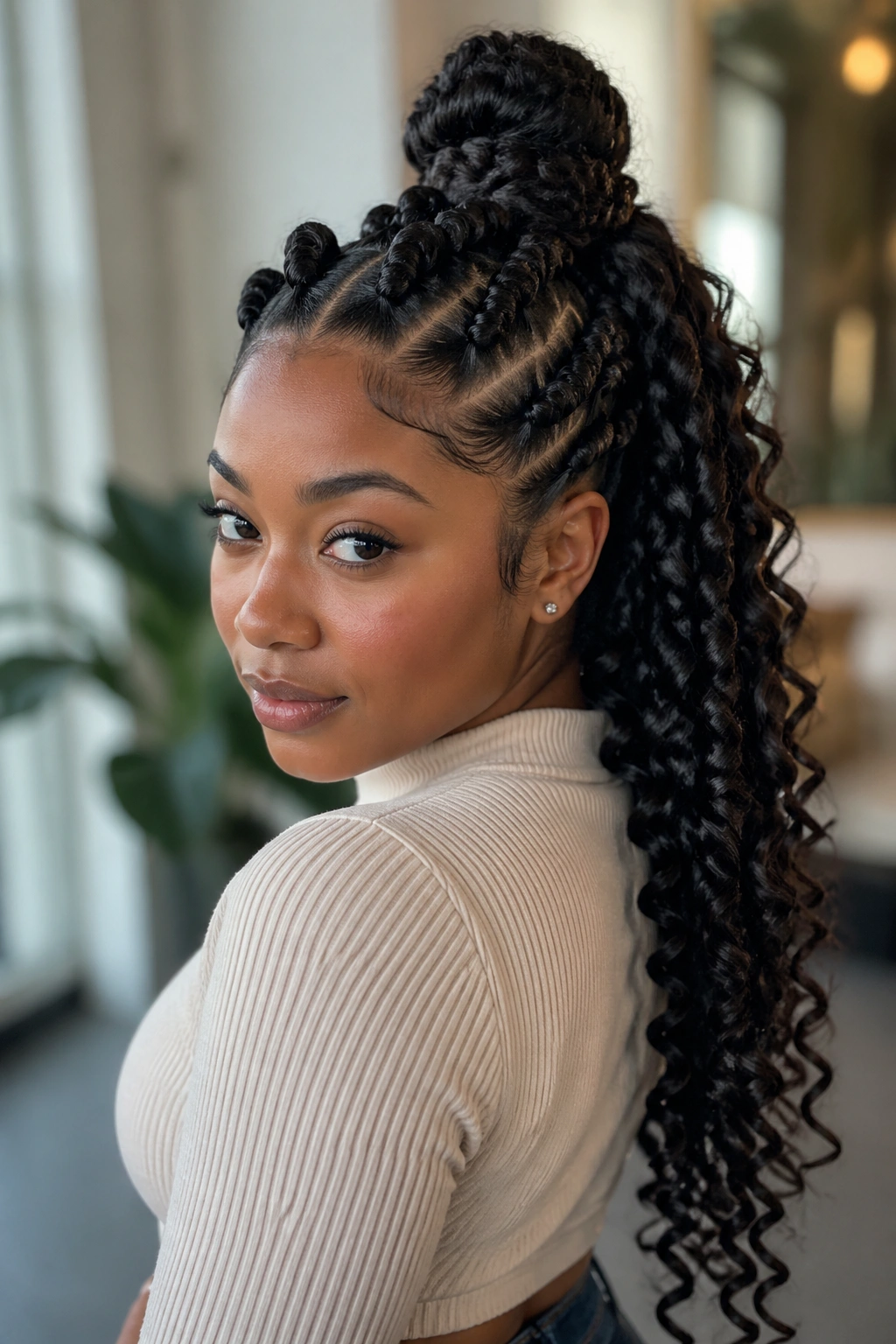
This one sits somewhere between a bun and a cascade. The front knots are gathered high enough to feel secure, then the back curls are left long and ribbon-like so the style still has movement. It’s a smart pick when you want hair off your neck but still want something softer than a full top bun.
The nice part is how balanced it looks in profile. From the front, you get structure. From the back, you get length. That makes it easier to wear with dresses, open backs, or anything with a clean neckline that deserves a little room.
Keep the back curls elongated, not chopped into pieces. The ribbon effect comes from letting the set stay intact before separating just enough for softness. And yes, this style can handle a little wind. The curls move, which is half the charm.
- Great for warmer weather or long events
- Works with medium-length stretched hair
- Looks best when the bun section is smooth and tight
9. Beaded Bantu Knots With Tapered Back Curls
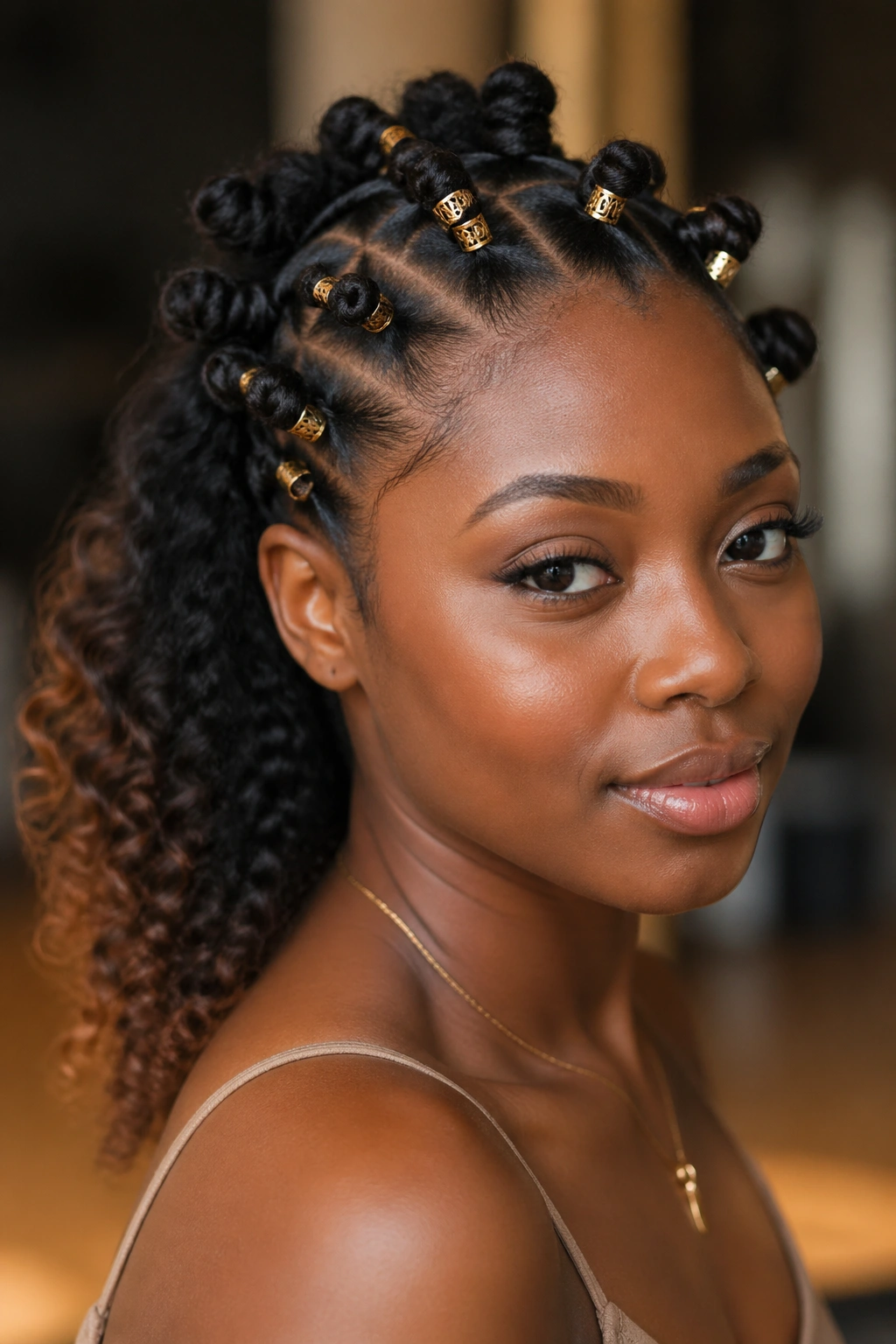
Beads change the rhythm of this hairstyle. They add sound, weight, and a little shine, which is nice if you want the front knots to feel more decorative. Paired with tapered curls in the back, the whole look becomes festive without getting messy.
This version reminds me of styles people wear when they want the hair to be part of the outfit, not just something sitting on top of it. The back curls should taper gently at the ends so they don’t look bulky next to the beads. A clean finish helps the accessories stand out instead of competing with them.
Don’t overdo the bead count. A few well-placed strands can look better than covering every section. Too many beads and the front starts to weigh down, which pulls the eye away from the curl pattern in back. That’s the trade-off people forget.
A soft gold or wood bead usually feels easier to wear than bright plastic unless you want a loud look on purpose.
10. Feed-In Braids Leading Into Bantu Knots And Curls
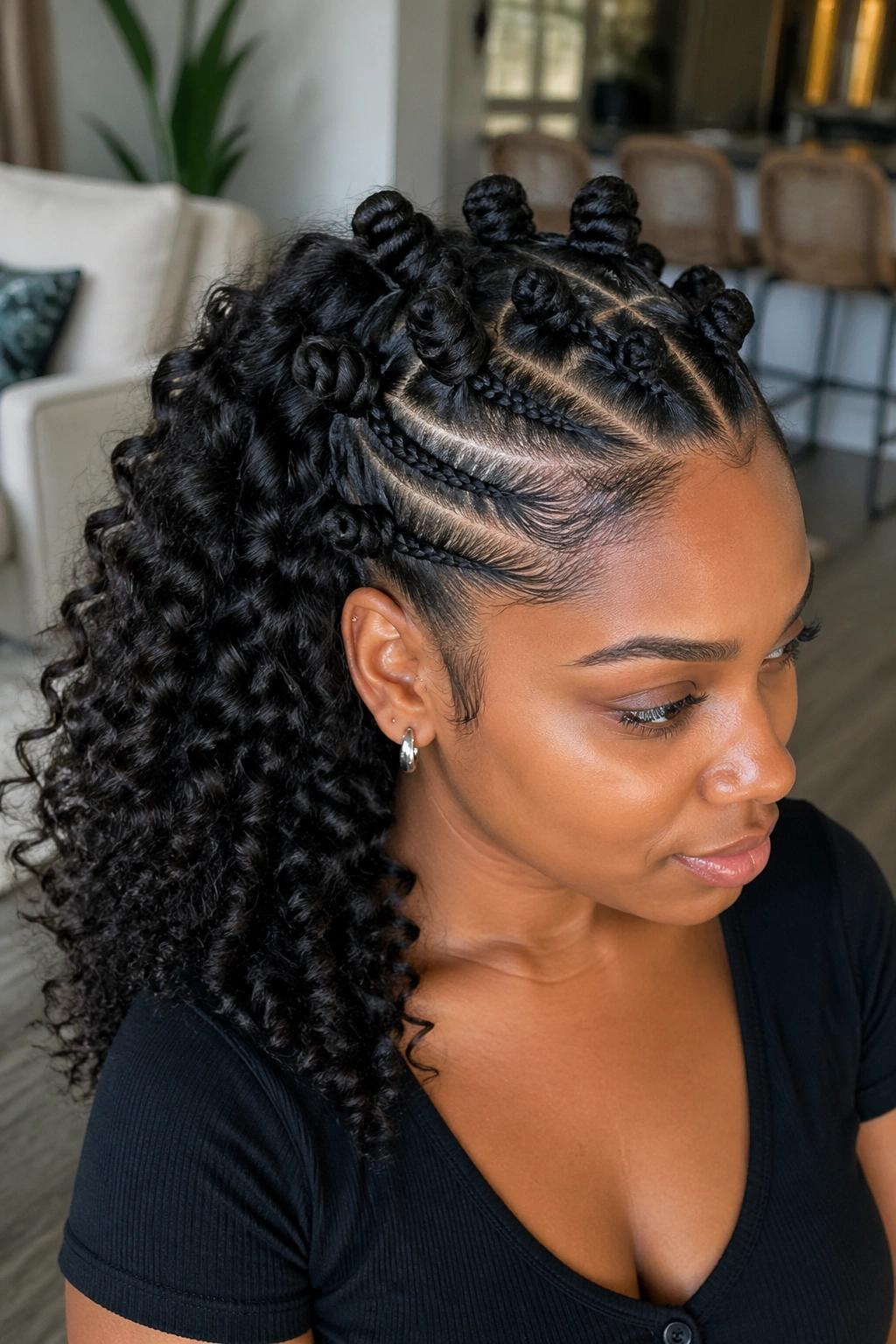
Braids give this style a cleaner base and a longer wear window. Feed-in cornrows leading into the knots make the front look crisp from the scalp out, while the curls in the back stay separate and full. If your hair is thick, this is one of the easiest ways to keep the front from getting bulky.
Why Braids Change the Shape
Braids pull the front tighter to the head, which makes the knot line read sharper. That matters when you want the back curls to be the soft part of the style. The contrast is strong, and that contrast is what keeps the look interesting.
If you like a salon finish, ask for narrow feed-in parts at the front and larger curled sections in back. The front should feel structured. The back should feel free. Those two pieces need to be different or the whole style turns flat.
A little edge control around the front hairline helps, but keep it light. Overloaded edges can make the braids and knots look stiff.
11. Sleek Edges With Airy Back Curls
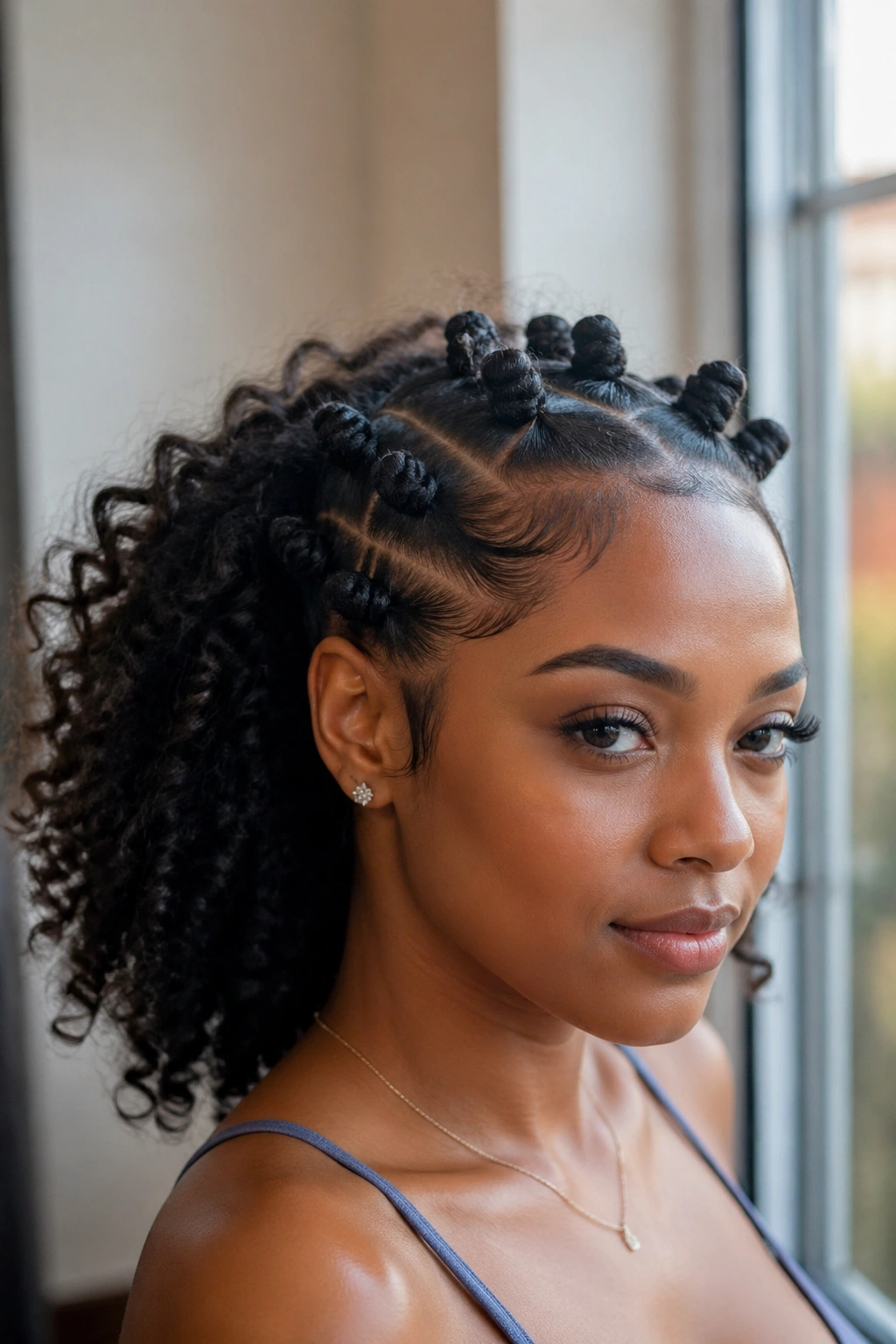
Some Bantu knot styles lean hard into shine and polish. This is one of them. The edges are smooth, the parting is sharp, and the back curls stay light enough to move when you turn your head. It sounds simple, but the difference between sleek and helmet-like is all in the product amount.
Use edge control like a border, not like frosting. A thin layer is enough to clean up the hairline. If you pack it on, the front loses texture and starts looking heavy, which makes the airy back curls feel disconnected. That’s not the look.
The back should be fluffy in a controlled way. You want lift, but not frizz. A diffuser can help if your curls are set from damp hair, though I’d still let them cool fully before separating. Warm curls get big faster than people expect.
This version looks sharp with structured clothes and plain makeup. It does not need competing details.
12. Short Natural Hair Bantu Knots With Finger Curls
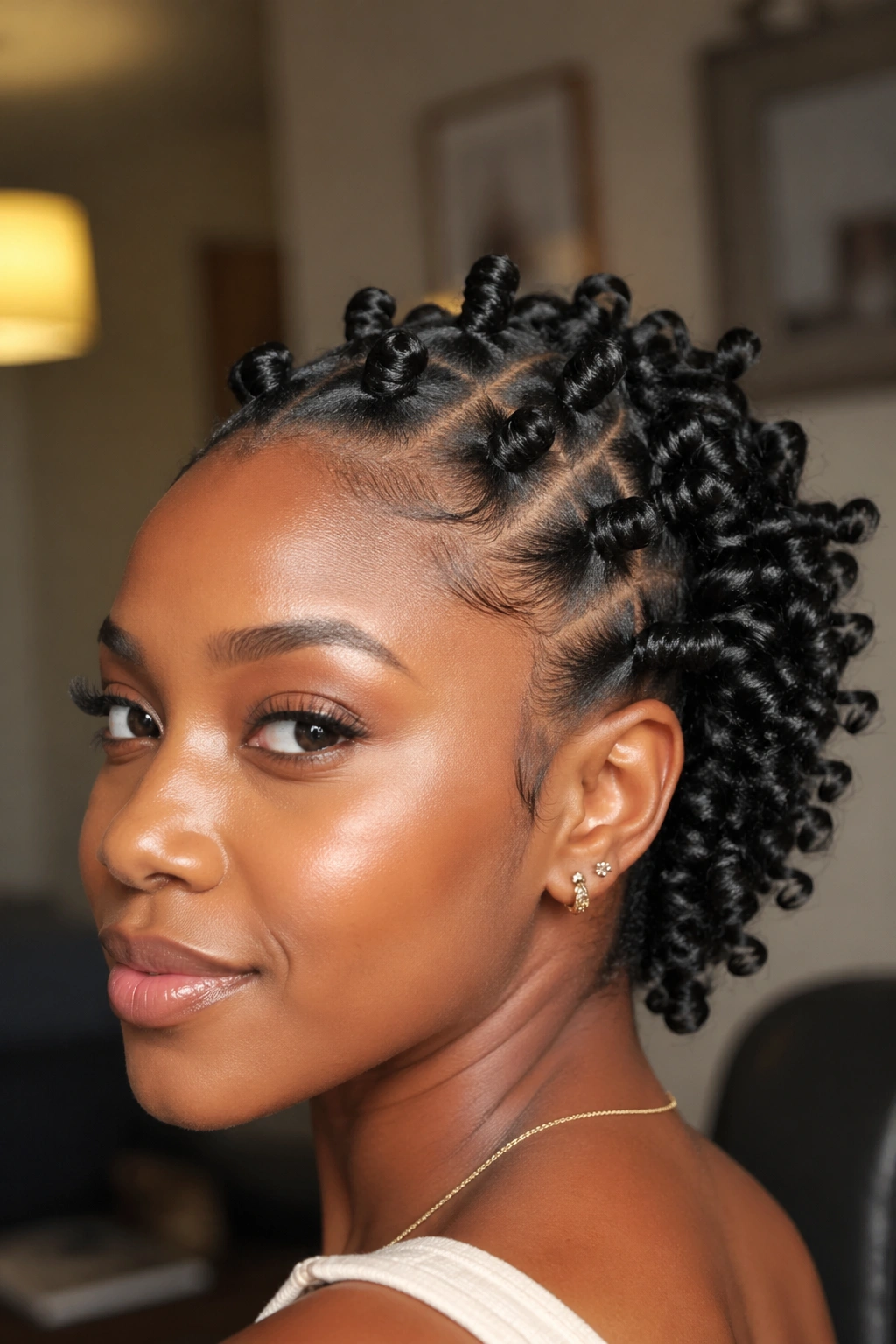
Can short hair pull off Bantu knots with curls in the back? Absolutely, and the cuter versions are often the shorter ones. The knots sit closer to the scalp, the curls at the back stay compact, and the whole style feels tidy instead of stretched thin.
What Makes It Work on Short Lengths
Short natural hair needs grip. That means the sections should be small enough for the knots to hold, but not so tiny that they unravel while you sleep. The back curls can be finger coils, small rod sets, or even a stretched twist pattern if your length is tight.
The big mistake is trying to force long-hair proportions onto short hair. Don’t. A shorter version should lean into neatness and shape, not fake length. When the back curls sit close to the neck, the style looks intentional and fresh.
This is also a good choice if you want a style that grows out gracefully. As the hair softens, the shape just gets a little fuller, not messy.
13. Shoulder-Length Bob Bantu Knots With Curled Nape
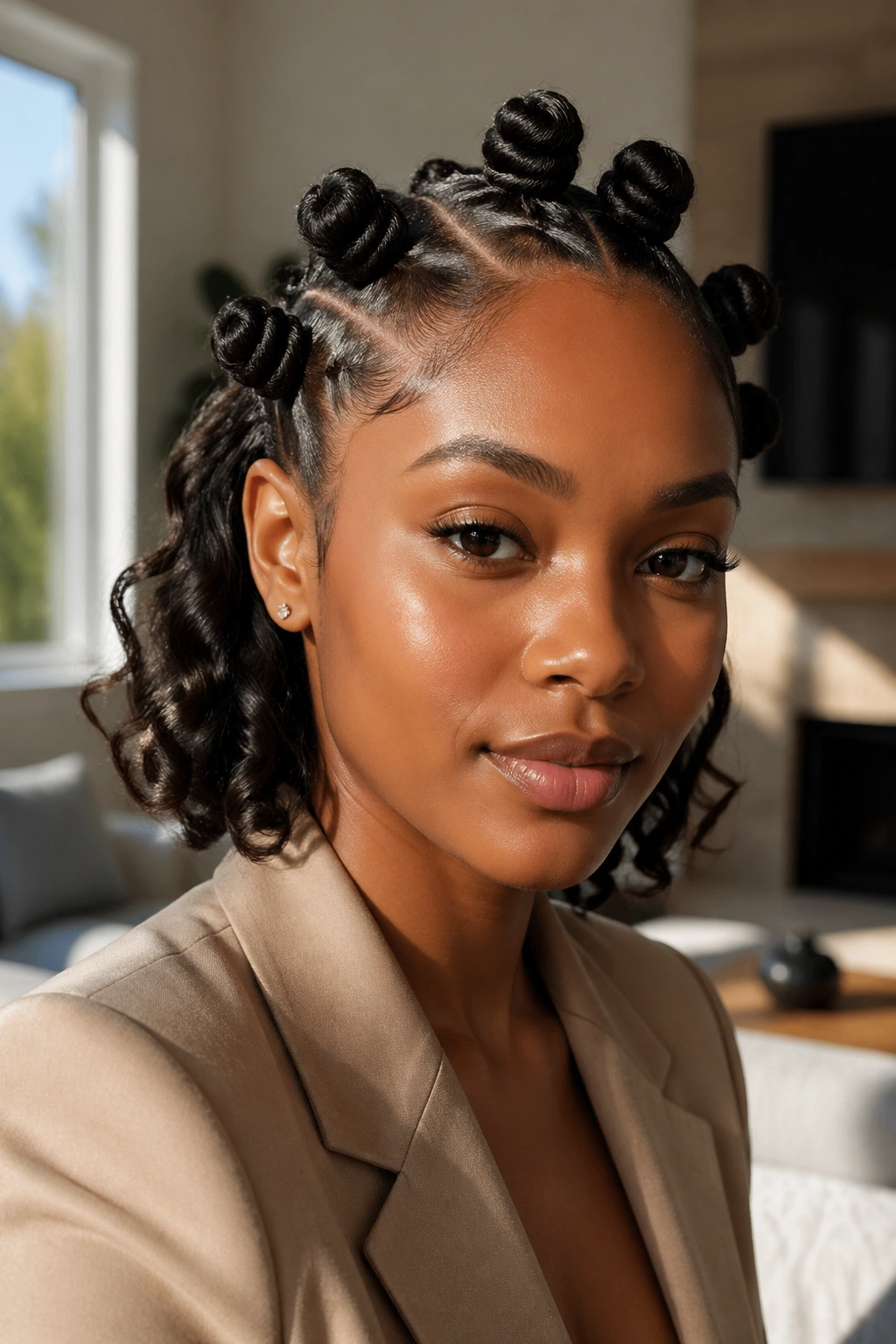
A shoulder-length bob gives Bantu knots a cleaner outline than people expect. The back curls land around the shoulders or just above them, which makes the style feel lighter and easier to wear than longer versions. It’s a good middle ground if you want movement but not a lot of bulk.
Unlike a long set, the bob version doesn’t need huge curls to look finished. The nape area can hold smaller spirals or soft bends, and that lower weight keeps the style from sagging by the third day. That’s a real advantage, not just a styling note.
If your hair tends to puff at the ends, keep the back section well-moisturized and set it on something that gives shape, like medium flexi rods. The curl pattern matters more here because the hair is sitting closer to the body.
I like this look with a blazer or a simple tee. It works both ways. Quiet, but not boring.
14. Triangle-Part Bantu Knots With Zigzag Back Curls
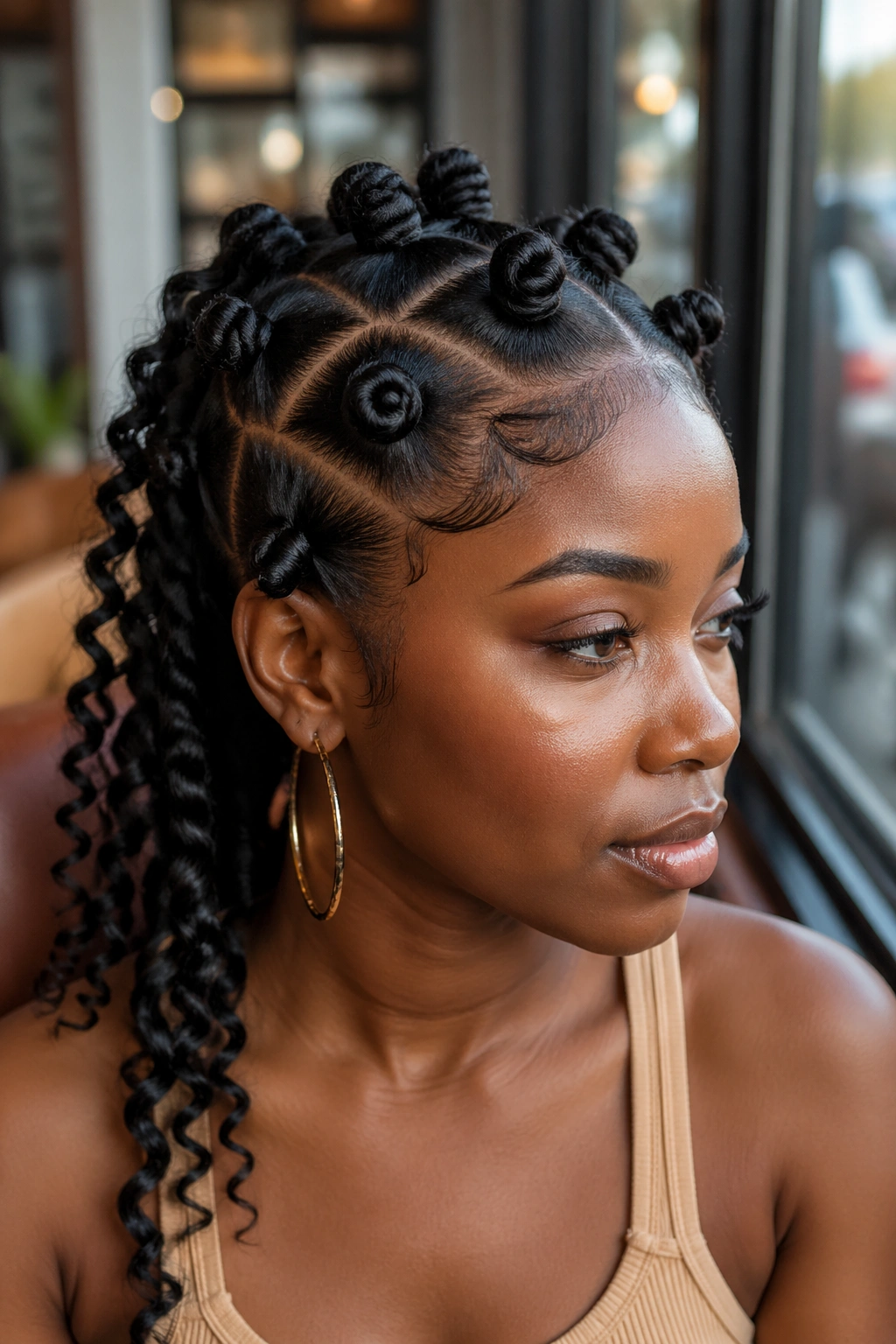
Triangle parts change the whole mood of a Bantu knot set. The scalp pattern becomes part of the style instead of hiding under it, and the back curls pick up that geometric energy. It’s the kind of detail that looks small from far away and smart up close.
The triangle shape also makes the knots feel less predictable. Rectangular parts can read tidy and classic; triangles add movement. When the curls in the back follow that same slightly offbeat rhythm, the style has a sharper edge. If you like a clean, graphic finish, this is a strong pick.
What to Ask For
- Crisp triangle parting across the front
- Medium-size knots so the shapes stay visible
- Curls in back with enough separation to show the texture
A style like this does best when the parts are neat from the start. If the sectioning is sloppy, the whole point disappears. And that would be a shame.
15. Pinned-Side Bantu Knots With Romantic Side Draping
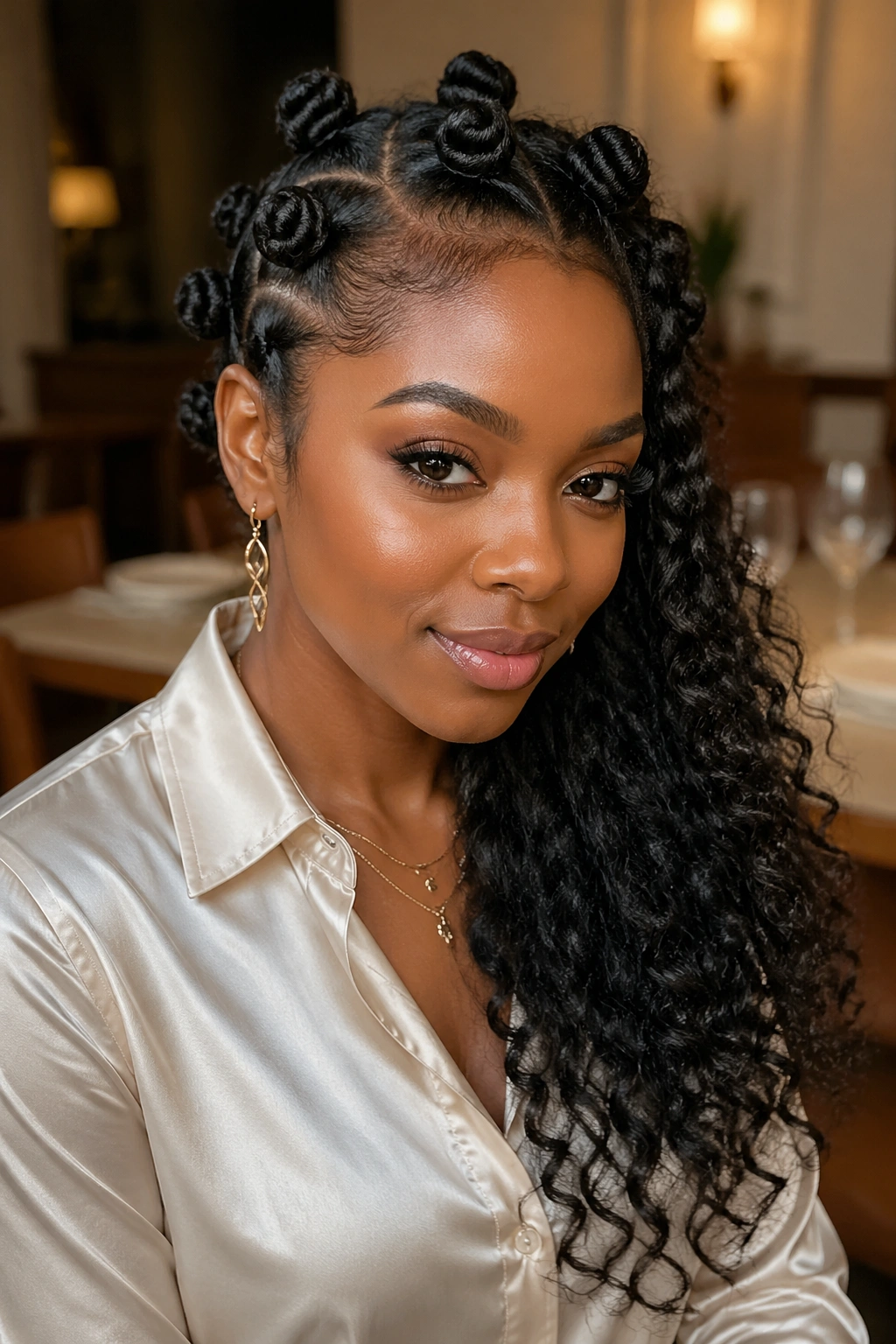
This is the version that makes room for earrings, bare shoulders, and softer makeup. One side stays more controlled, the other side lets the back curls drape gently over the shoulder. It’s elegant without trying too hard, which is rare and useful.
The pinned side keeps the face open. The draped side adds movement. That balance works especially well for dinner plans, portraits, or any setting where you want the hair to look touched, not overworked. Keep the curls near the draped side slightly looser than the ones on the tucked side. That little difference gives the style shape.
A few bobby pins hidden under the knots are enough. You do not need to pin the whole side flat. The goal is to guide the hair, not pin it into submission.
This look loves a side part and a low neckline. It’s one of the easiest ways to make Bantu knots feel softer and more dressed up.
16. Faux Loc Bantu Knots With Curly Ends
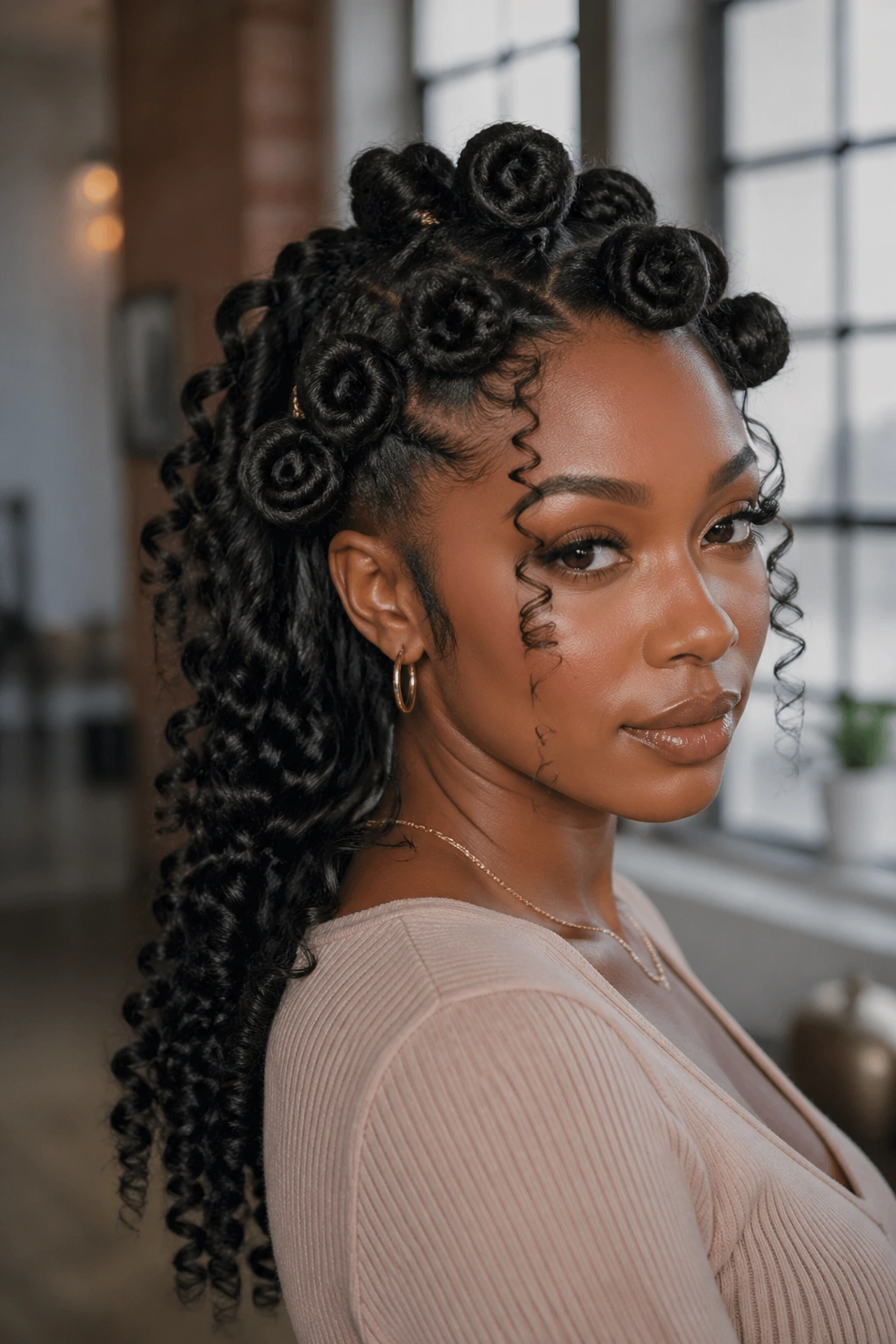
Mixing faux loc texture with Bantu knots sounds busy, but when it’s done well, it has a clean rhythm. The front knots bring the classic shape, while the back curls soften the heavier loc look and keep it from feeling too stiff. That contrast is the whole appeal.
The loc texture gives the style more grip and a little more visual weight. The curls in the back lighten that up. If every section were loc-textured, the style could start to feel dense. The curls open it back up and give your eyes somewhere to rest.
This version works best when the locs are not too thick at the root. You want the knots to sit securely without pulling. The back can be loose curls, curled loc ends, or a half-curly finish depending on how much movement you want.
It’s a smart pick for anyone who likes protective styles but still wants a little softness around the shoulders.
17. Twist-Out Back With A Knotted Crown
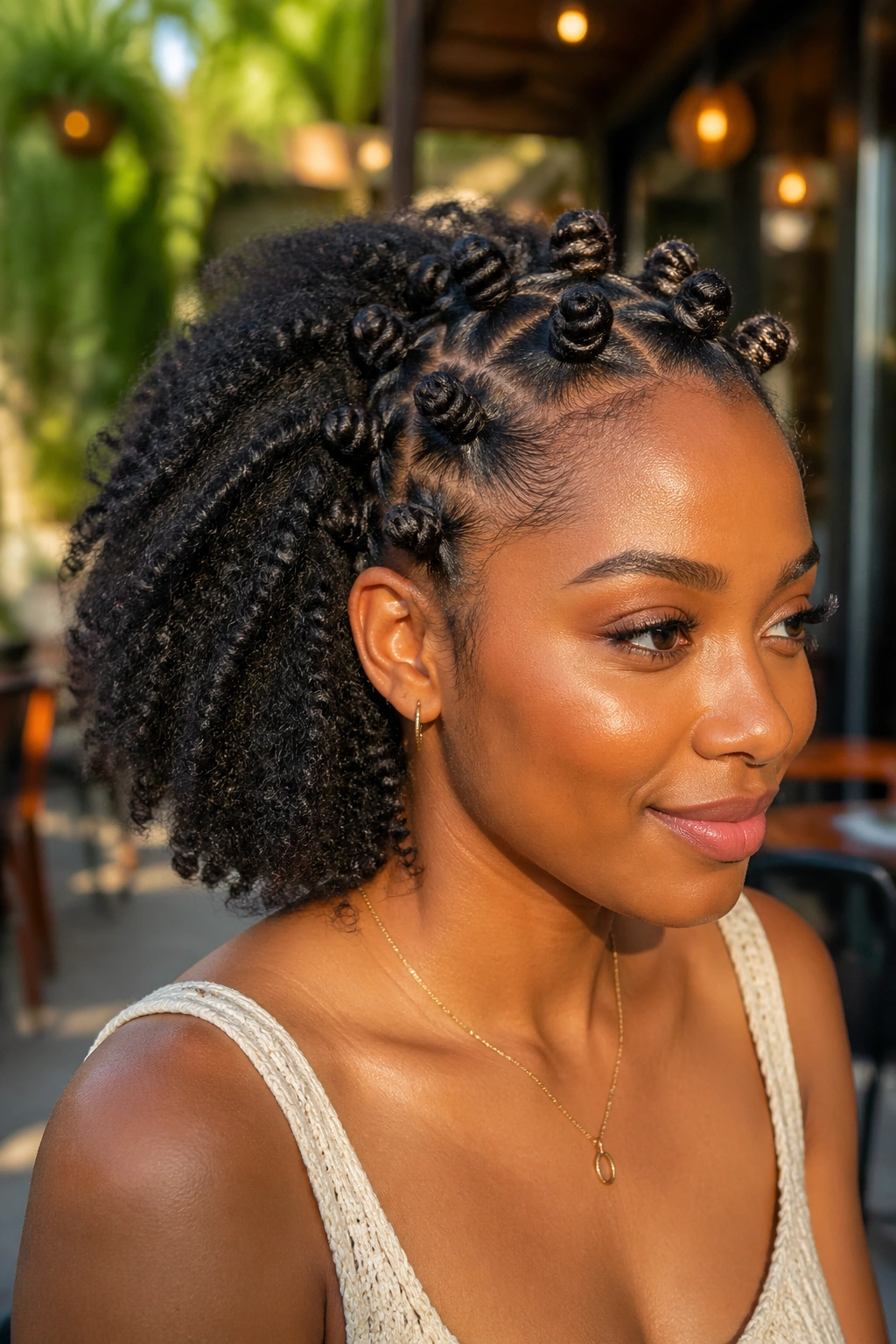
Want a little more volume in back without losing the Bantu knot shape? Use a twist-out behind the knots instead of a rod set. The result is fluffier, more lived-in, and easier to refresh if you’re not the type to baby your hair every hour.
How the Texture Changes
A twist-out gives the back a broader curl pattern, so the hair fills space faster than a tight spiral set. That can be great if your hair is medium-density or if you want the back to read fuller in photos. It also softens the difference between the knots and the rest of the hair, which some people like.
The crown still needs a clean knot pattern. That part stays crisp. The back can be just a little less precise. In this style, that looseness is the point, not a flaw.
If your hair gets puffy fast, finish the twist-out with a light cream rather than a heavy butter. Heavy products can flatten the movement and make the back look dull.
18. Gold Cuffs And Ribbon-Trimmed Back Curls
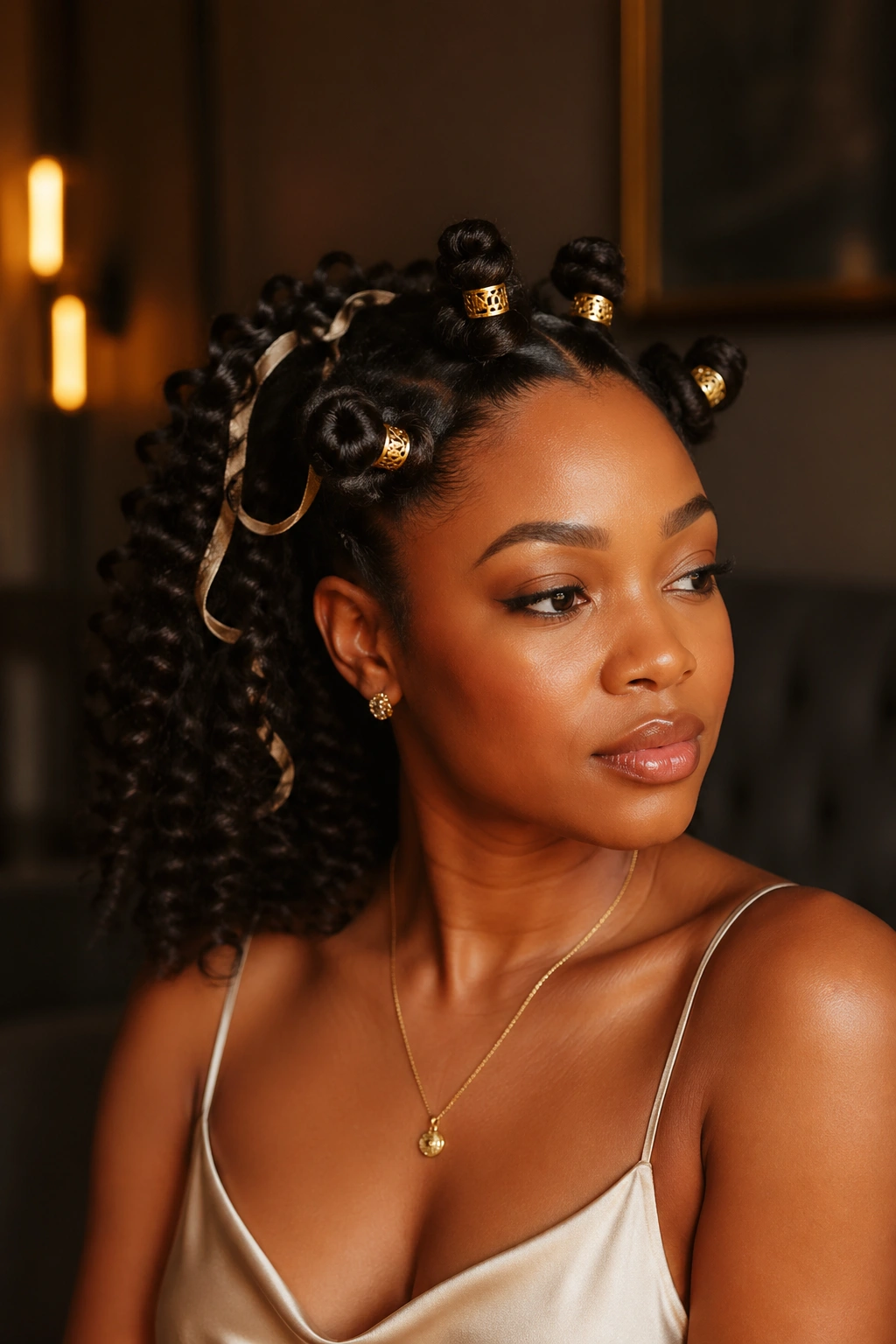
Accessories can change Bantu knots from “cute hair” into a full look. Gold cuffs on a few knots, a thin ribbon tied into one curl section, and maybe a little shine around the front can push the style into dressier territory without making it feel overdone. The back curls carry the softness, so the extras stay balanced.
Gold works because it gives the knots a point of light. Ribbon works because it interrupts the texture in a gentle way. Put both on every section and you’ll lose the effect. Use them sparingly and the style starts to feel edited.
This version is a good one when the outfit is simple and the hair needs to do more of the talking. A black dress, a plain blouse, a satin top—those all pair well because the hair brings the detail.
Keep the ribbon thin. Wide ribbon can swallow the curl pattern and look fussy. Thin is better.
19. Big Event Bantu Knots With Sculpted Back Curls
For weddings, graduations, or any event where the hair needs to hold up in photos and in person, this is the polished version worth saving. The knots are sculpted, the back curls are shaped on purpose, and the shine is controlled instead of greasy. Everything has a place.
Prep That Makes a Difference
- Set the back curls on medium rods or rollers for a defined finish
- Use a foam or setting lotion that dries firm, not sticky
- Smooth the roots before setting so the style lasts cleaner
- Let the hair dry all the way before separating anything
The sculpted look is what separates this from a casual set. You want the back curls to stay organized, even if they’re soft around the edges. A little frizz can look romantic. A lot of frizz just looks tired.
This is the style I’d pick when the outfit matters and you want the hair to look deliberate from every angle.
20. Low-Manipulation Bantu Knots With Minimal Leave-Out Curls
Sometimes the smartest version is the one that asks the least from your hair. This low-manipulation take keeps the knots neat, leaves the back curls simple, and avoids too much separating or fluffing. If you want a protective style that still has shape, this one makes sense.
The less you fuss with the curls, the longer they tend to stay defined. That’s the trade-off people ignore. Over-handling usually looks nice for ten minutes, then it starts expanding. Keep your hands off once the set is dry, and the style will often last better than you expect.
What Helps It Last
- Sleep in a satin bonnet or scarf
- Refresh the back with a light mist, not a soaking spray
- Use small amounts of product so buildup stays low
- Re-pin any loose knots before they turn fuzzy
This version is practical, not plain. There’s a difference.
21. Halo Bantu Knots With High-Volume Back Curls
A halo shape wraps the knots around the upper head like a crown, then lets the back curls explode a little with volume. It has a soft regal feel without becoming costume-like. Compared with a crown braid, the knot version reads bolder and less conventional.
The volume matters here. Thin curls would make the back disappear, and that would flatten the whole idea. Let the back have body. Let it sit around the shoulders and upper back with some lift at the roots, especially if your hair naturally shrinks.
The halo layout is also handy if you want the face fully open. No curls falling in front unless you want them there. That makes it a good choice for earrings, glasses, or a strong brow line.
I like this style most when the knots are not all the same size. Slight variation keeps the halo from looking too copied-and-pasted.
22. Tapered Cut Bantu Knots With Nape Curls
A tapered cut gives this style shape in a way longer hair never can. The sides stay close, the top has room for a knot line, and the curls at the nape bring softness where the cut starts to narrow. It looks clean from every angle, and it never feels bulky.
The texture at the back should stay close to the neck rather than floating too far away from it. That keeps the cut visible. If the curls get too wide, they start covering the taper, and then the haircut loses its shape. That’s the part people miss when they set short natural hair.
A tapered cut also benefits from a little stretch before styling. Not too much. Just enough so the knots have something to grip. A tiny bit of elongation makes the nape curls read better and keeps the overall silhouette tidy.
This is one of those styles that looks better when the lines are respected. The haircut wants to show itself.
23. Ombré Bantu Knots With Color-Blocked Back Curls
Color-blocked hair and Bantu knots have a natural chemistry. The front knots can hold one shade, while the back curls shift into a lighter or deeper tone, and suddenly the style has depth that does not depend on extra accessories. Even simple curls look richer when the color changes across the length.
The nicest ombré versions keep the transition smooth. Harsh color breaks can look flashy in a way that fights the knot pattern. A soft shift from root to end lets the curls in back feel like part of the same story instead of an afterthought.
Colored hair needs a gentler touch. That’s not optional. Use a cream that helps with slip and keep the back curls moisturized so the lighter ends don’t go dry and rough. Hair that’s been lightened tends to fray first at the ends, and that shows up fast in this style.
This look suits anyone who likes visible texture and a little color movement without wearing a full-color install.
24. Two-Strand Twist Back Under The Knots
If you want the back to feel textured without committing to loose curls, two-strand twists are a smart move. They give the rear section more control, and when they’re unraveled slightly, they create a softer version of curls that lasts longer than a fully fluffy set. The knots up front stay the main event.
Why This Combo Works
The twists hold their shape better than a loose setting on some hair types, which makes them useful for anyone whose curls fall fast. They also pair well with Bantu knots because the textures are close enough to look cohesive, but different enough to stay interesting.
Keep the twist size medium. Too small and the back can look stringy. Too big and you lose the definition that makes the style work. The sweet spot is a twist you can still separate lightly after it dries without turning the back into fuzz.
This is a good option if you like a neater finish and want the style to last through more than one outing.
25. Soft Beginner Bantu Knots With Tucked Back Curls
If you’re trying Bantu knots with curls in the back for the first time, start here. Keep the knots medium-sized, keep the back curls tucked and simple, and skip any move that feels fussy. A beginner-friendly version should look neat after one pass, not after three rounds of fixing.
The best part about this style is how forgiving it is. If the knots aren’t tiny and the back curls aren’t over-separated, you have room for the hair to settle without looking messy. That matters on real mornings, when you do not want a two-hour project sitting on your head.
My advice? Pick this version if you want the style to look clean from the front and soft from the back without fighting your texture. It’s the version that teaches you how your hair behaves in knots and curls, which is worth more than chasing a more complicated shape too soon.
Start simple. Then get bolder once you know how your hair responds.
