



Bantu knots with side braids have a nice little magic trick: they make a style look detailed without demanding a full head of perfectly symmetrical work. The knots give height and shape. The side braids pull the eye across the scalp, which keeps the whole look from feeling blocky or flat.
That’s why this combo keeps showing up in real life, not just in photos. It works on coily hair, stretched hair, and hair that’s been blow-dried smooth enough to part cleanly. It also gives you room to play — one braid, three braids, thick braids, tiny braids, neat parts, curved parts, or something a little messier if that’s more your speed.
The small stuff matters here. Clean parting, low-tension braiding, and a little moisture at the roots can make the difference between a style that sits pretty and one that starts itching by lunch. If you’ve ever worn knots that felt too tight around the temples, you already know the difference. The side braid can either soften the whole look or make it sharper, and that choice changes everything.
1. Center Row Knots With Two Clean Side Braids
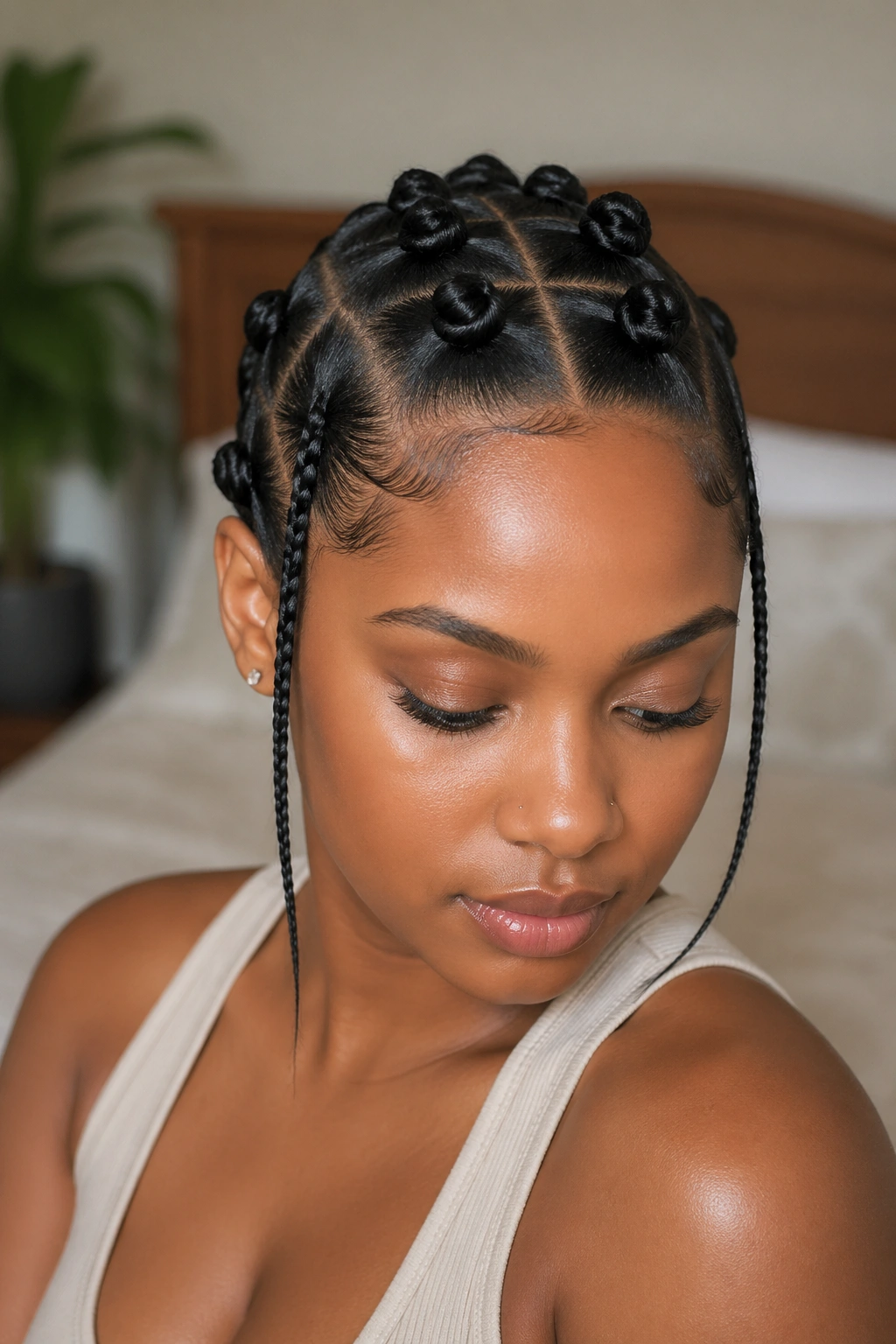
This is the version people picture first, and for good reason. A straight center row of Bantu knots gives you structure, while two slim braids on the sides keep the style balanced and neat. I like this one when the goal is polish without looking stiff.
The trick is in the size of the sections. Keep the knots medium, about the width of a thumb, and make the side braids narrow enough that they lie flat against the head. If the braids get too thick, they start competing with the knots instead of framing them.
Use a little edge control only where you need it, not all over the scalp. Too much product makes the parting look greasy fast. A light hold gel, a rat-tail comb, and a satin scarf for 15 minutes usually give the parts enough clarity to last.
2. Deep Side Part and Four Mini Knots
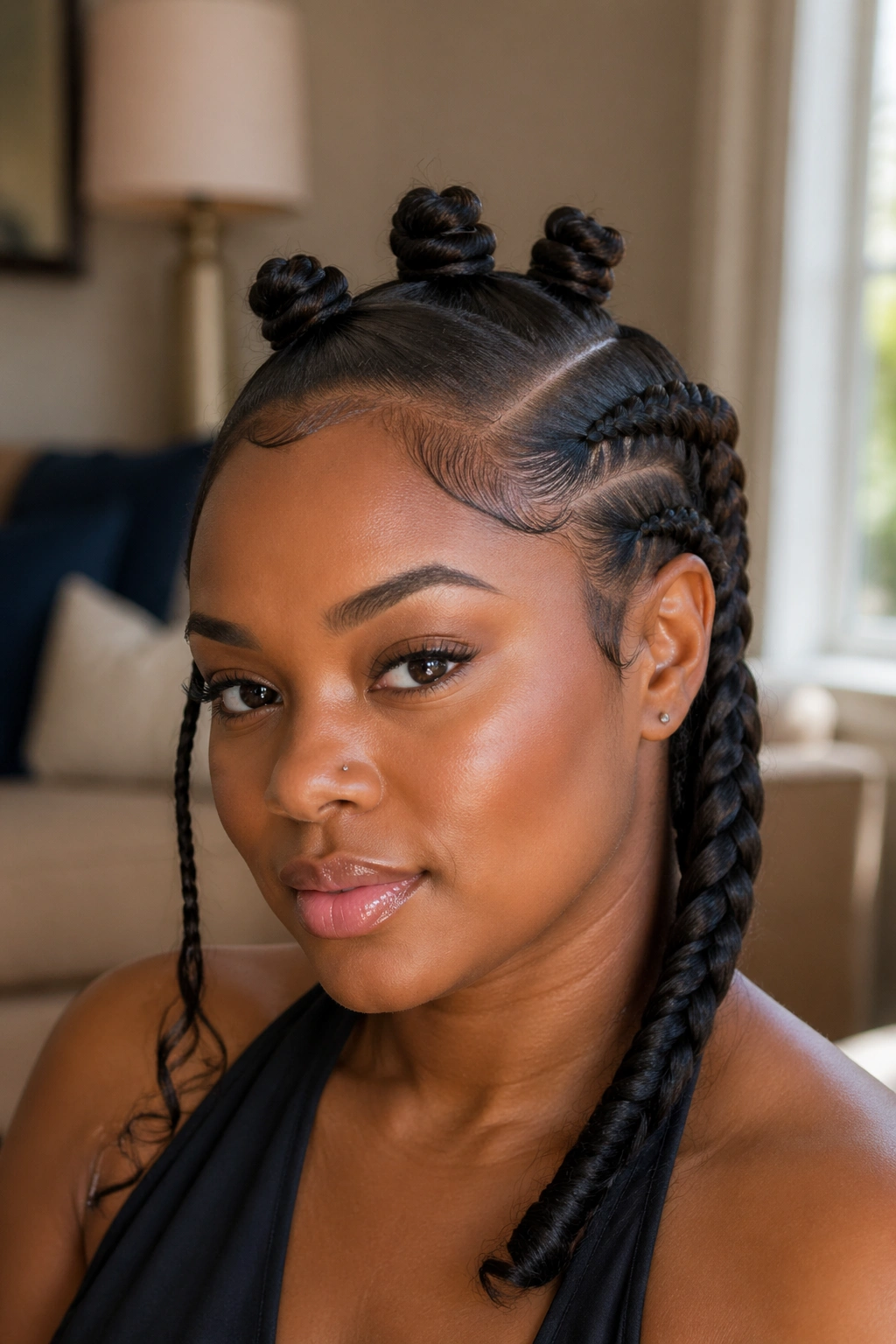
A deep side part changes the whole mood. Suddenly the style feels a little softer, a little more styled by hand, and less like you lined everything up with a ruler. That asymmetry is what gives this version its charm.
Why the Side Part Works
The braid starts on the heavier side and draws attention across the forehead before it reaches the knot cluster. That line helps if you want to slim the face a bit or break up a broad forehead. It also gives you a clean place to tuck in earrings, which sounds small until you actually wear the style.
How I’d Wear It
- Keep the knots small and tight at the crown.
- Make one side braid thicker than the other.
- Leave the braid ends long if you want movement.
- Flatten the roots with mousse instead of heavy cream.
Best for: medium to long natural hair that parts cleanly.
Watch for: too-deep parts that expose more scalp than you want.
3. Three Cornrows Feeding Into Jumbo Knots
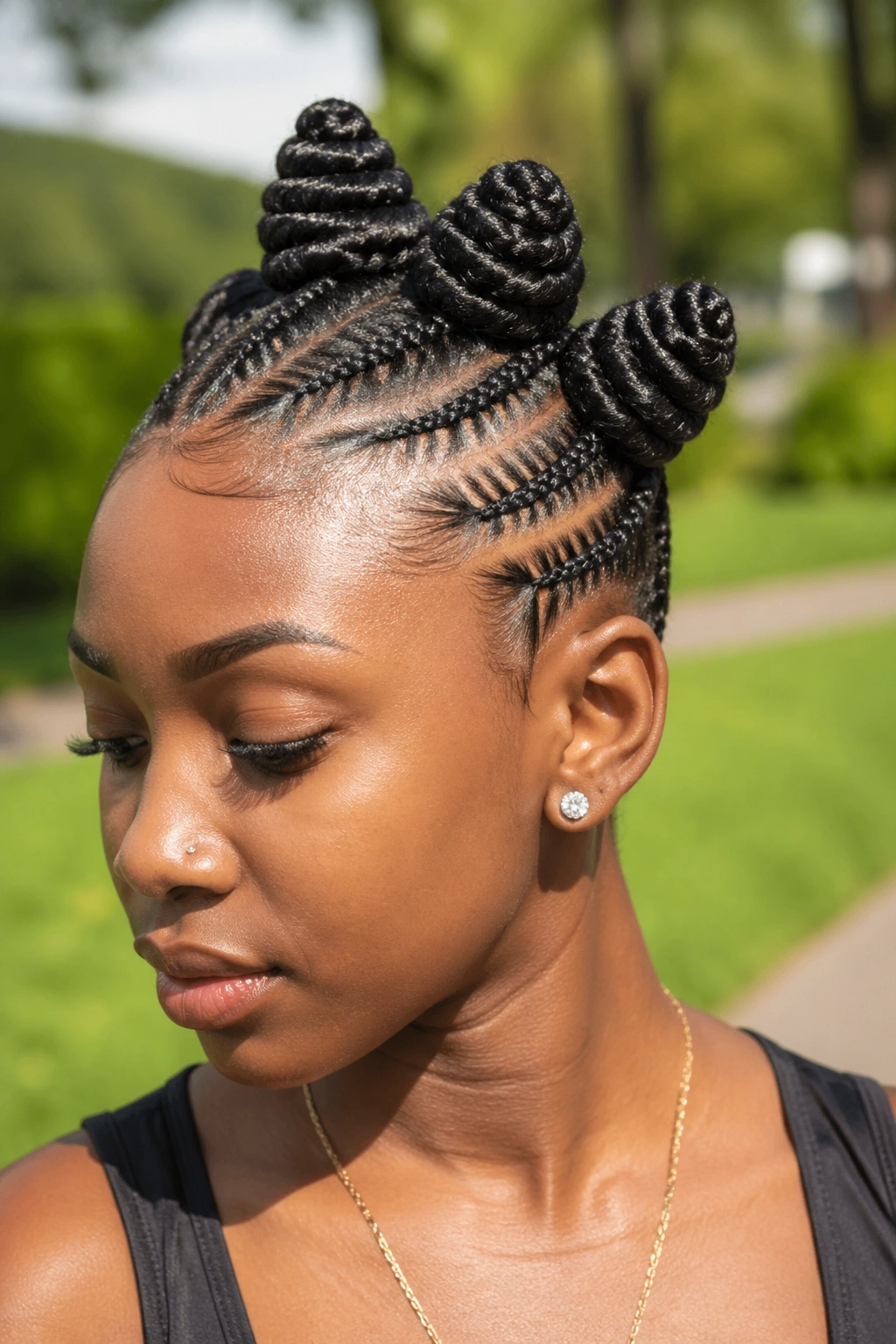
This one has attitude. Three cornrows sweep from the side into a row of larger Bantu knots, and the result feels bold without being fussy. The cornrows bring the style down to the scalp, while the jumbo knots carry the shape upward.
Big knots are not subtle. That’s the point. They show best on thick hair or on stretched hair that holds section lines well. If your hair is fine, you can still wear the look, but the knot size should be scaled back a touch so the base doesn’t look loose.
I prefer this version with a clean hairline and minimal accessories. The braid pattern already does a lot of work. Add a little shine oil only after the knots are set, not before — slick roots can make grip harder when you’re first wrapping the hair.
4. A Halo Braid on One Side and Soft Knots on the Other
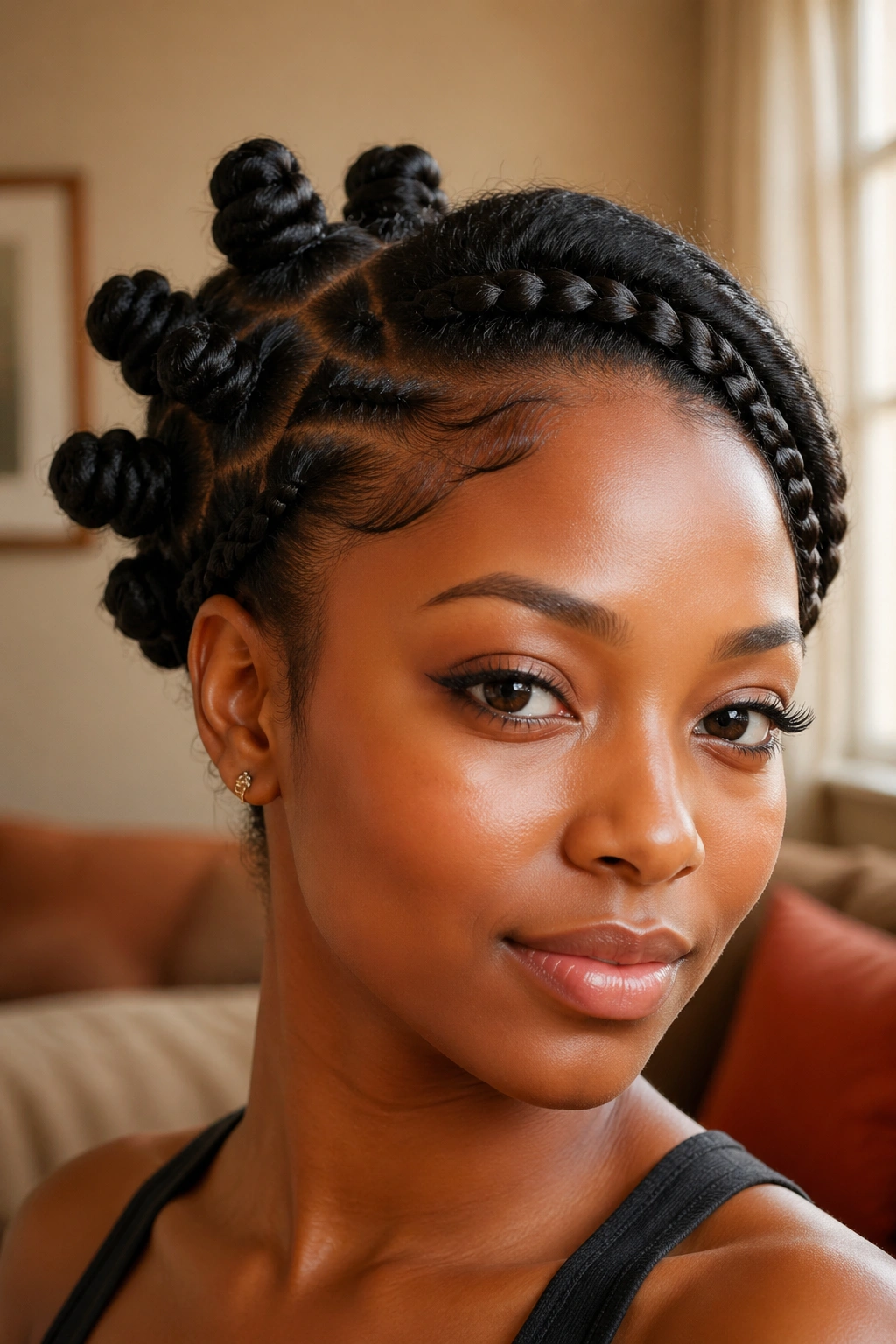
There’s something pleasing about a braid that curves around the head like a frame. Paired with soft Bantu knots on the opposite side, it feels almost romantic, but not in a sugar-sweet way. More like a style that knows what it’s doing.
This layout is handy when you want one side to do the talking. Keep the halo braid close to the hairline, then let the knots sit a little higher so the silhouette doesn’t sink into the head. The contrast between flat braiding and raised knotting gives the style depth.
A loose curl at the ends can soften the braid if you’re not after a super crisp finish. And yes, this is one of those styles that looks better when the parts are clean but not overworked. If your scalp is getting sore while braiding, stop and reset. Tension has no business being part of the design.
5. Curved Parts With Seven Small Knots
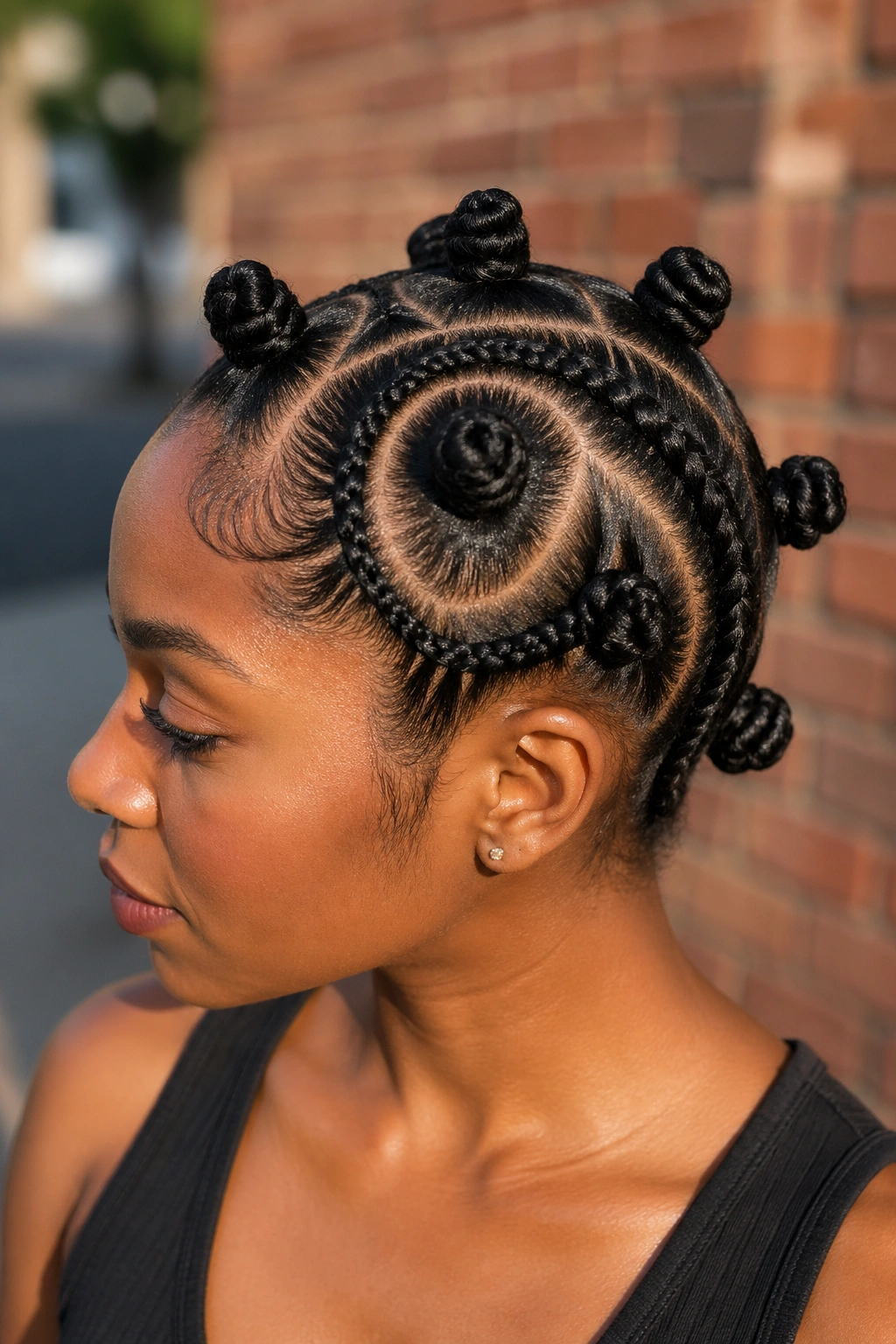
Curved parting gives this look a handmade feel. Instead of straight lines from front to back, the sections sweep in gentle arcs, and each knot seems to flow into the next one. It’s a small change, but it changes the whole face of the style.
What Makes It Different
The side braid can follow the curve instead of fighting it. That’s where the style gets interesting. A braid that bends with the part looks softer than one that runs rigidly down the side, especially on hair that has a lot of natural density.
I’d keep the knots small here, almost fingertip-sized, because the curves already add visual weight. Too many large knots can crowd the scalp. Seven is a sweet spot for this layout, though you can adjust that number depending on how much hair you have and how full you want the crown to look.
Use a light foam wrap mousse after the sections are formed. It helps the curved parts stay visible, and it dries with less flaking than thick gel.
6. Low Side Braids Anchoring Nape Knots
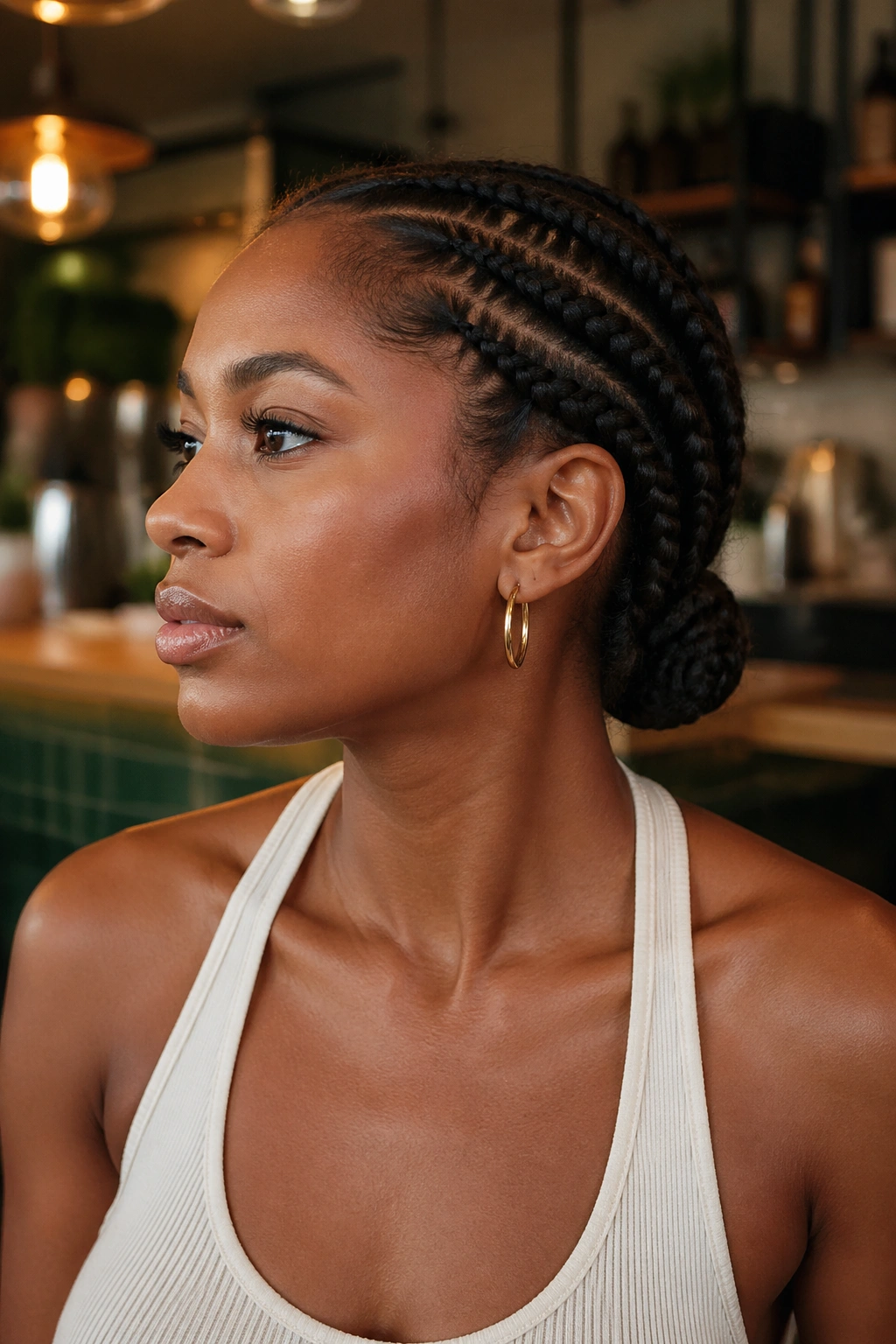
This is the quiet one. The side braids sit low, almost at ear level, and they lead into knots that sit closer to the nape than the crown. The effect is controlled and clean, which makes it a smart pick for work, errands, or any day when you want your hair out of the way without looking plain.
Low placement changes the weight of the style. Instead of all the volume sitting high, it drops the eye downward and makes the neckline look longer. That can be flattering on its own, but it also makes scarves and collars sit nicely around the style.
Keep the knots tight enough to hold, but not so tight that the crown feels pulled back. A soft brush and a light spray of water before sectioning help if your hair is dry and snappy. Dry hair fights part lines.
7. A Feed-In Braid Accent Beside a Full Knot Grid
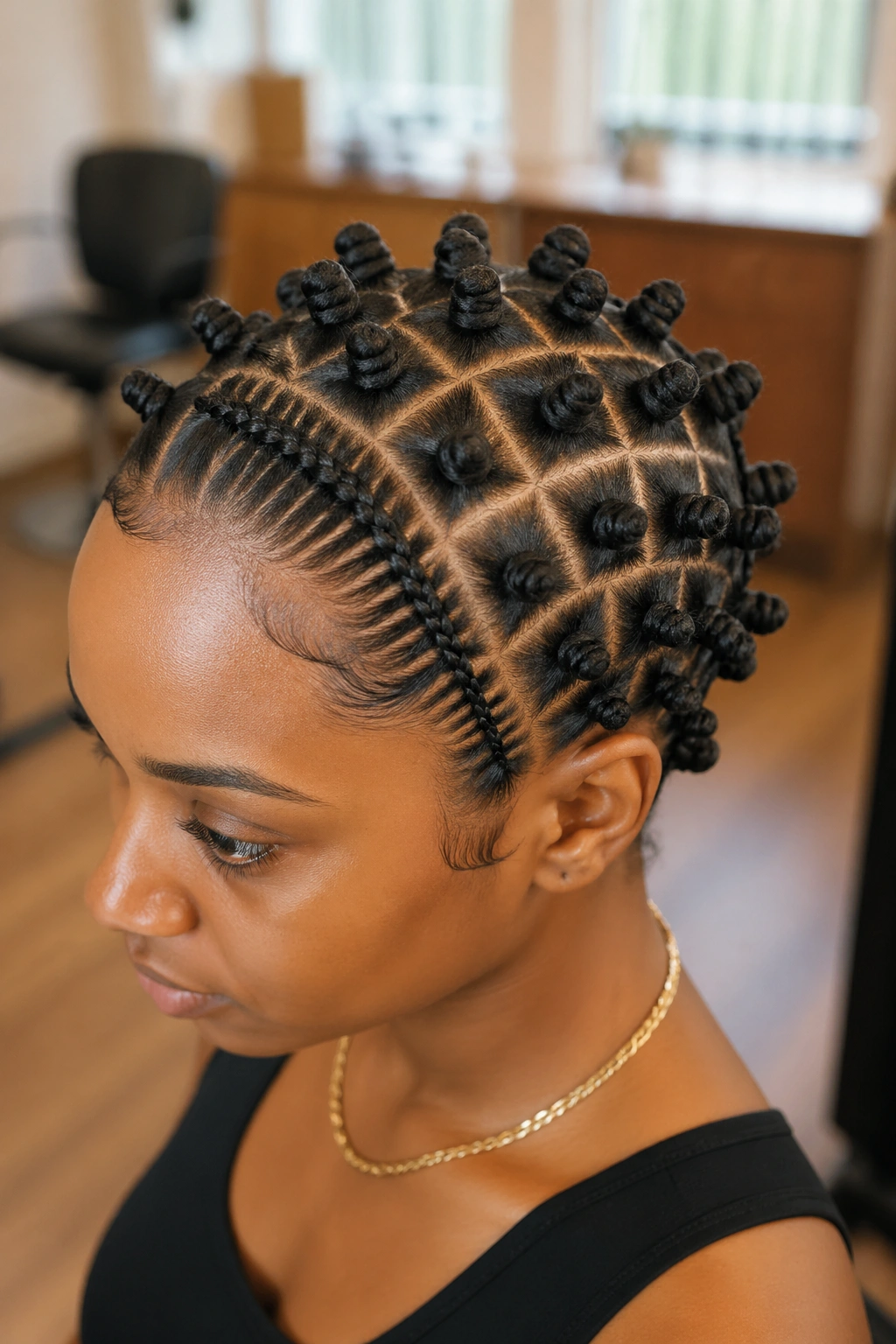
A single feed-in braid can do a lot of heavy lifting when the rest of the style is a grid of Bantu knots. It adds a sleek line without stealing the show. That’s the whole appeal.
Feed-in braids work best when the braid starts tiny at the hairline and gradually gets fuller. You can see the handoff happen, which gives the style a smooth look instead of a hard start. On natural hair, that gradual build also feels gentler than a thick braid dropped on top of the scalp all at once.
This version is good if you like detail but don’t want a crowded head. The knot grid can be medium or small, depending on your hair density. I’d keep the braid side clean and the knot side slightly fuller — that imbalance makes the style look intentional instead of accidental.
8. Zig-Zag Parting and Tiny Side Braids
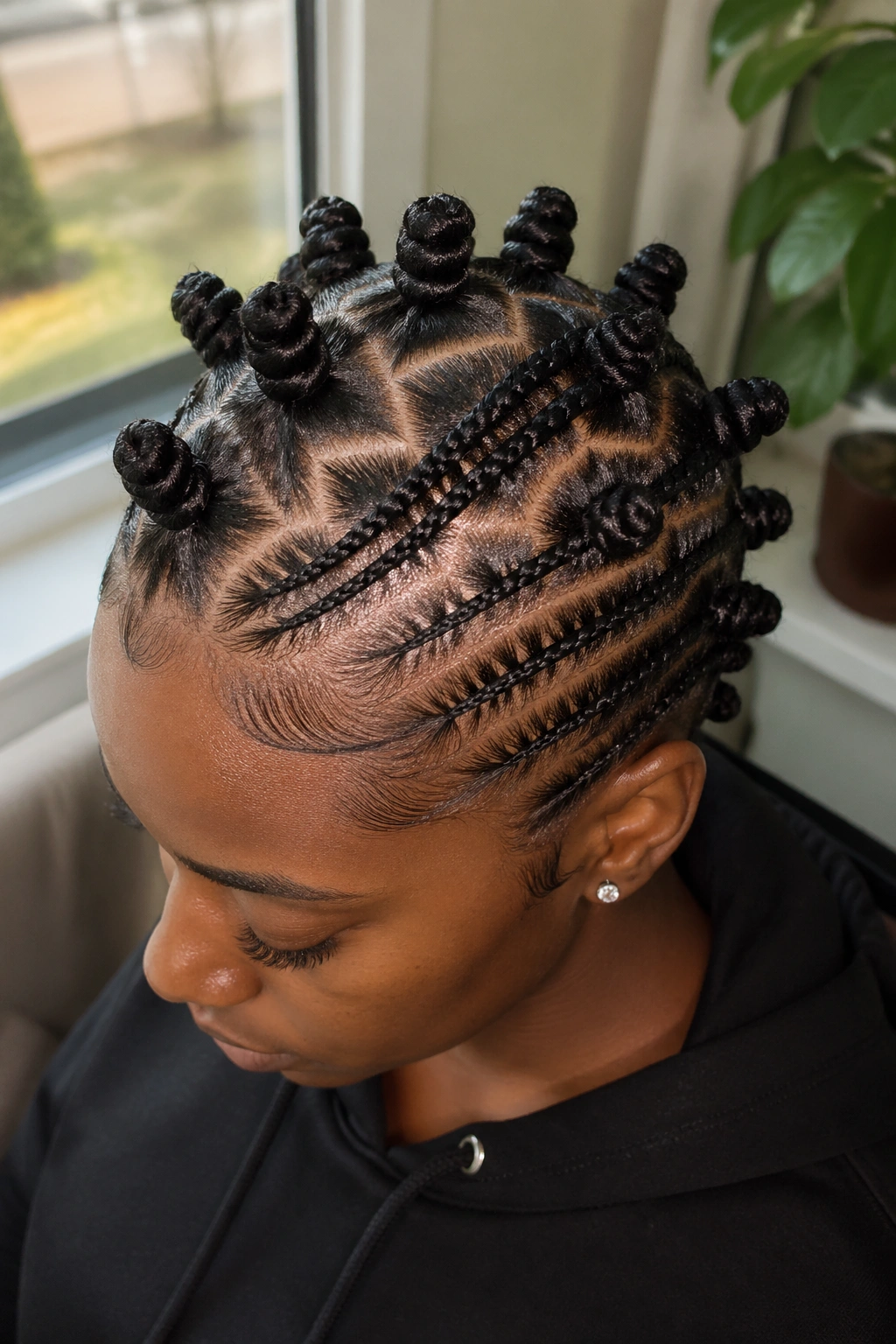
Straight parts are safe. Zig-zag parts are more fun. They bring a little edge to Bantu knots with side braids, and they make even a small style feel more dressed up.
The Shape of the Style
The side braids follow the zig-zag lines instead of smoothing them out. That preserves the shape and keeps the style lively. Tiny knots across the top make the scalp pattern stand out more, especially if your hair is dark and the parts are neat.
This is a good style for people who like their hair to look decorated without adding accessories. The pattern itself is the decoration. Keep the braids skinny, though. A thick braid can overwhelm the zig-zag and make the design look busy.
A rattail comb with a fine point matters here. So does patience. Zig-zag parting takes longer than straight parting, and if you rush it, the lines wobble. Wobbly parts are hard to hide later.
9. Oversized Side Braid With Chunky Knots
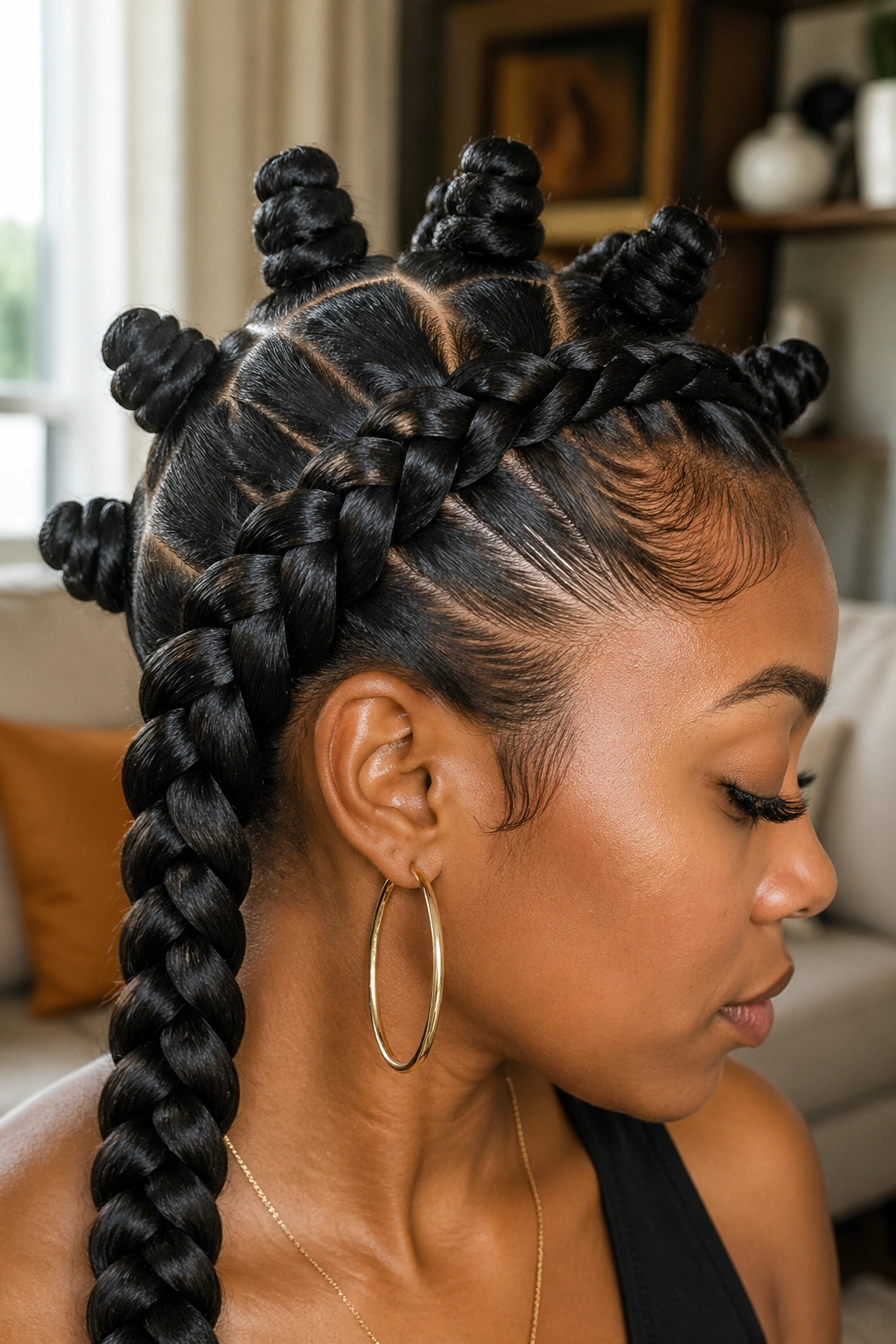
Sometimes the braid should be the star. In this version, a wide side braid runs along the hairline, and chunky Bantu knots sit off to the other side or across the crown. It has more body, more drama, and a little more weight in the front.
Chunky knots work well on thick, coily hair because the texture supports itself. If your hair is finer, you can still get the look by using a fuller braid and slightly looser knot wrapping. Just don’t stretch the sections too far. Thin hair wrapped too hard tends to look flat once it’s pinned down.
This is a good style for a day when you want to look like you meant business. It pairs nicely with hoops, bold brows, and a plain shirt. Funny how a hairstyle can do half the outfit work for you.
10. Small Knot Grid With Loose Braided Tail
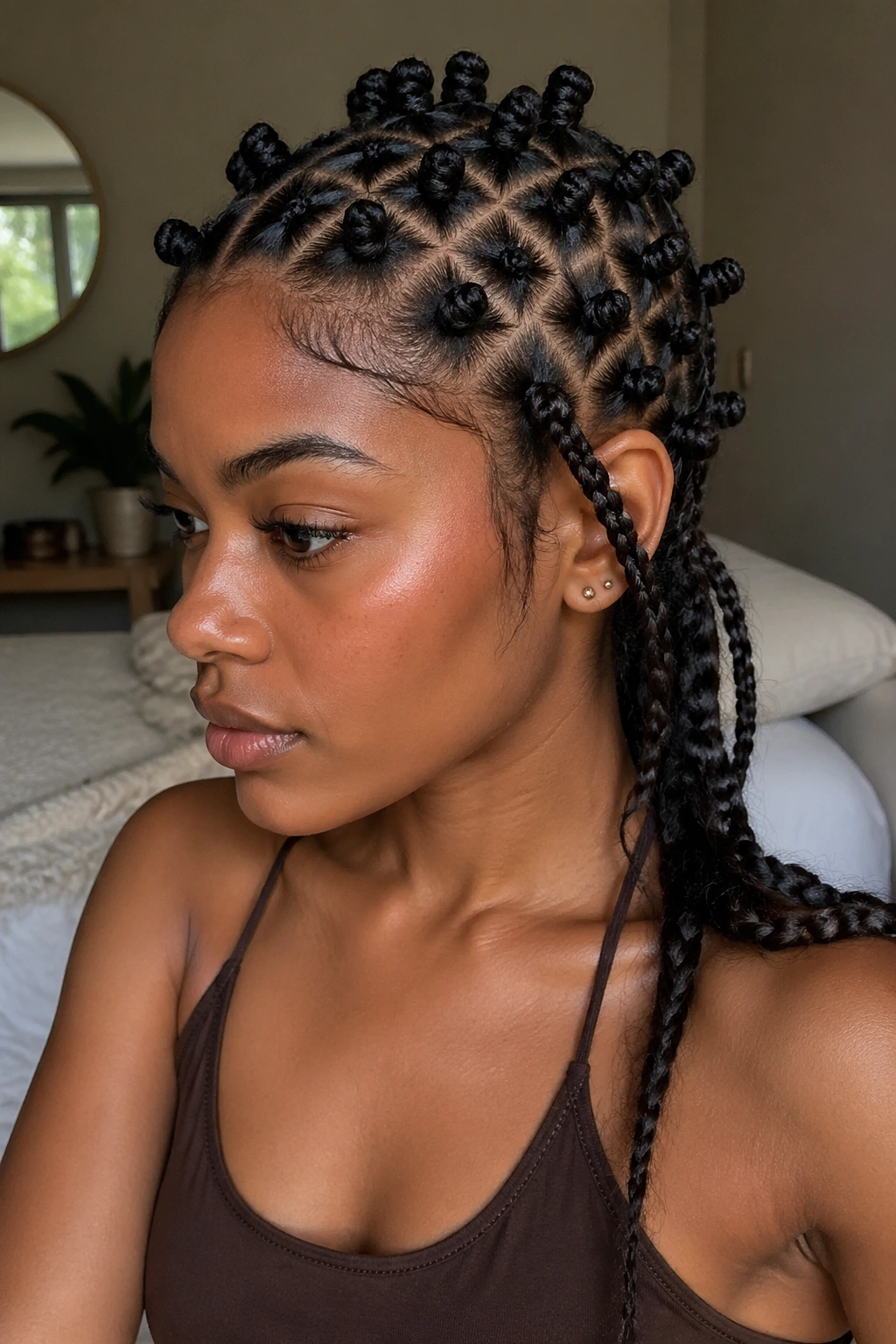
Not every braid has to end neatly tucked away. A loose braided tail gives the style a bit of movement, especially when the knots are small and close together. The result feels lighter than a fully pinned-up look.
The idea is simple: create a tight grid of tiny Bantu knots, then let one side braid continue past the knot cluster and hang free. If your hair takes curl well, the loose tail can pick up a bend and look even better by the end of the day. If it stays straight, that’s fine too. Straight ends against textured knots can look sharp.
I’d keep the loose braid thin and smooth. A braid that’s too thick turns the whole style bottom-heavy. A little oil on the ends helps, but only a drop or two. You want movement, not limpness.
11. Long Hair With Extended Side Braids
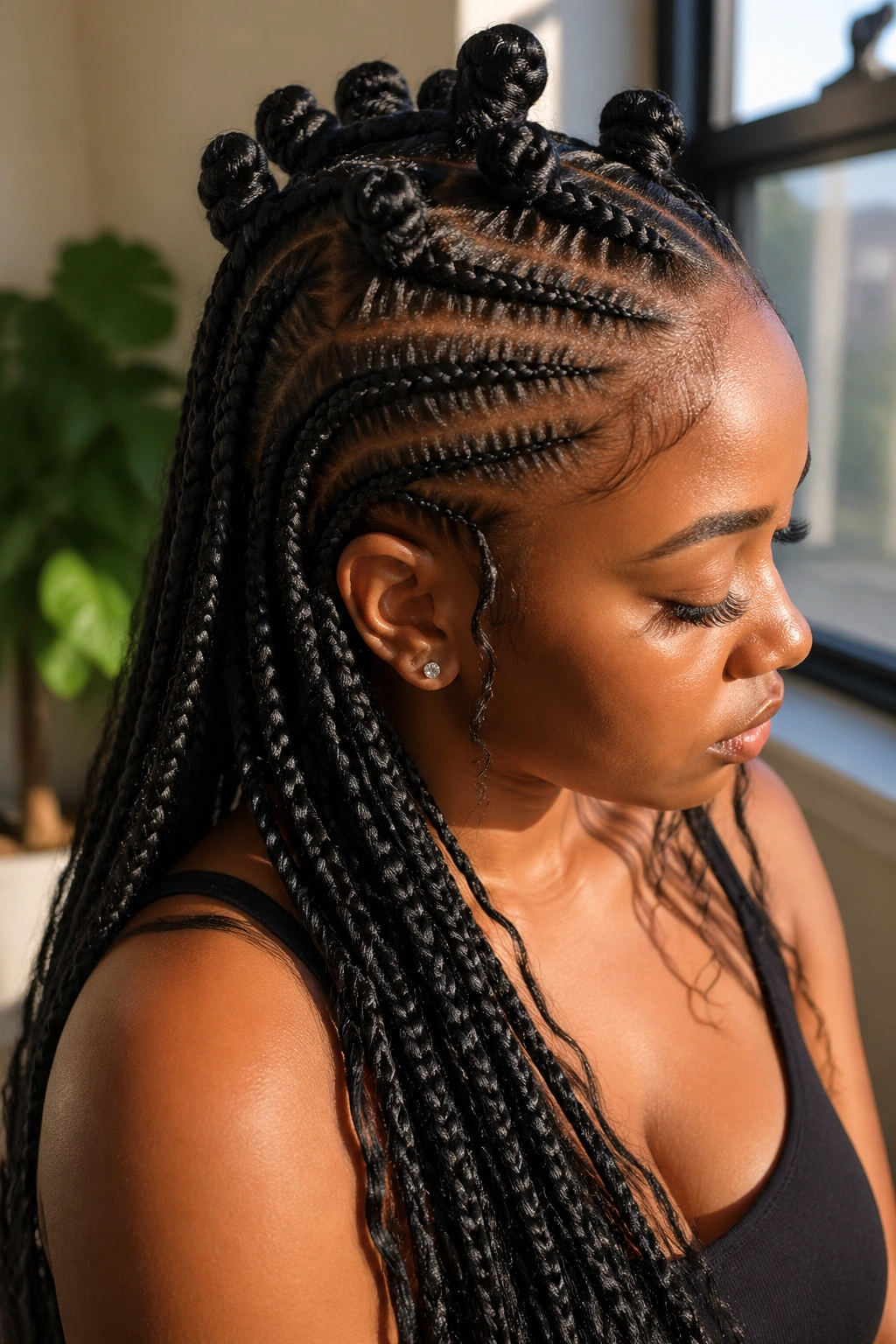
Long hair changes the whole equation. You have more length to work with, which means the side braids can run farther down the head and the knots can sit higher without losing balance. The style ends up looking layered in a way shorter hair sometimes can’t quite match.
If your hair is stretched, the knots will usually sit more cleanly and hold their shape longer. That’s one reason this version looks so neat on blown-out or band-stretched hair. The sections wrap easier, and the side braids stay flatter against the scalp.
Longer braids also give you room to play with thickness. You can do one wide braid and one narrow braid, or two mid-size braids for symmetry. Either way, the key is keeping the knot sizes consistent so the style doesn’t drift off balance halfway through the head.
12. Short Natural Hair With Tiny Braids and Close Knots
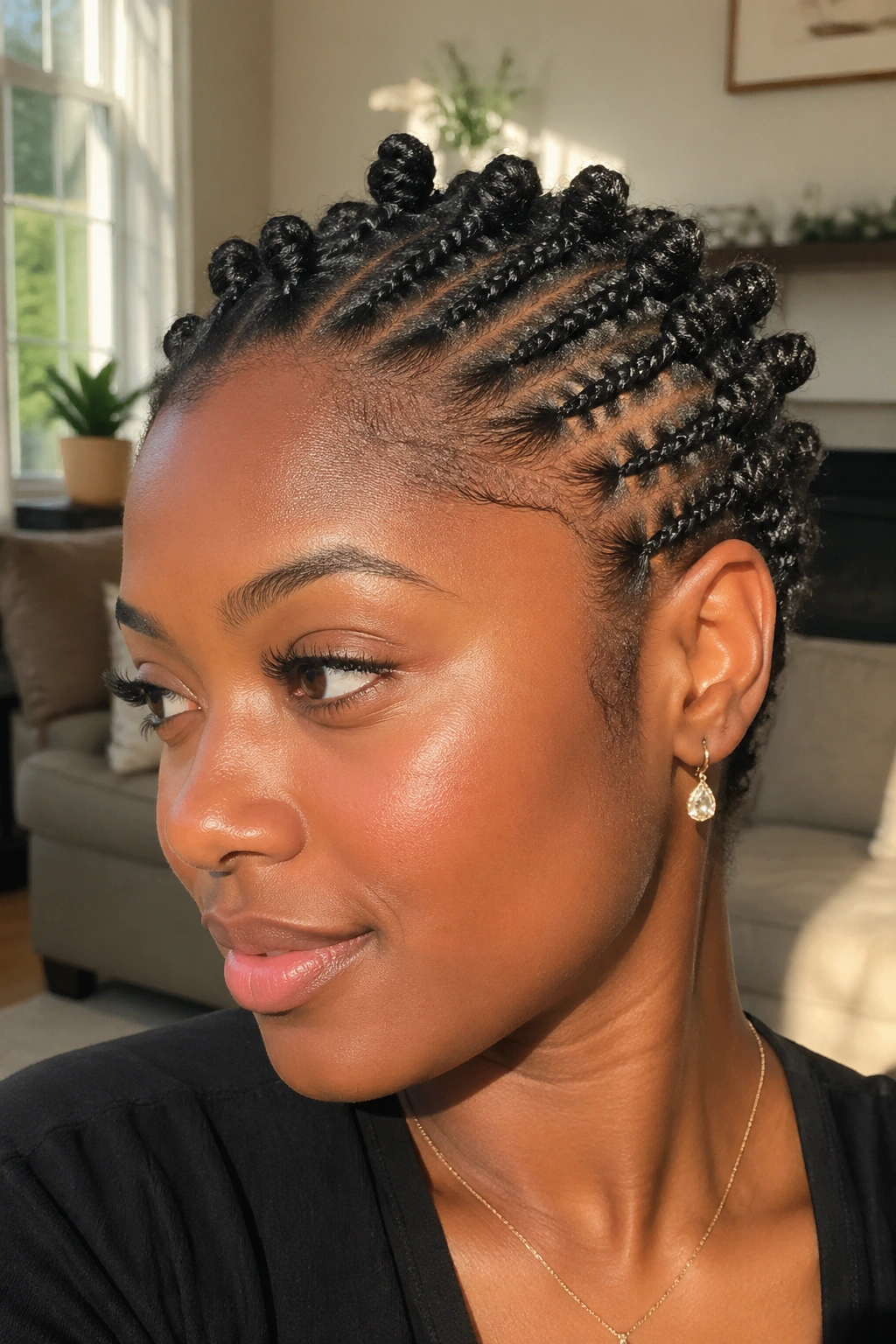
Short hair can absolutely wear this look. It just needs smaller sections and a lighter hand. Tiny side braids on short natural hair give the style enough detail without asking the hair to do more than it can comfortably hold.
The knots should sit close to the scalp and be wrapped snugly, but not pulled tight. Short hair has less length to anchor itself, so over-tight wrapping often shows up as little bumps or slips. I like using a touch of gel on the root, then a satin scarf while the sections set.
This style is especially good if you want your hair protected but still visible. The knots sit like little sculpted pieces, and the braids make the edges look finished. Short hair does not mean a small idea. It just means a cleaner one.
13. Beaded Side Braids and Neat Knots
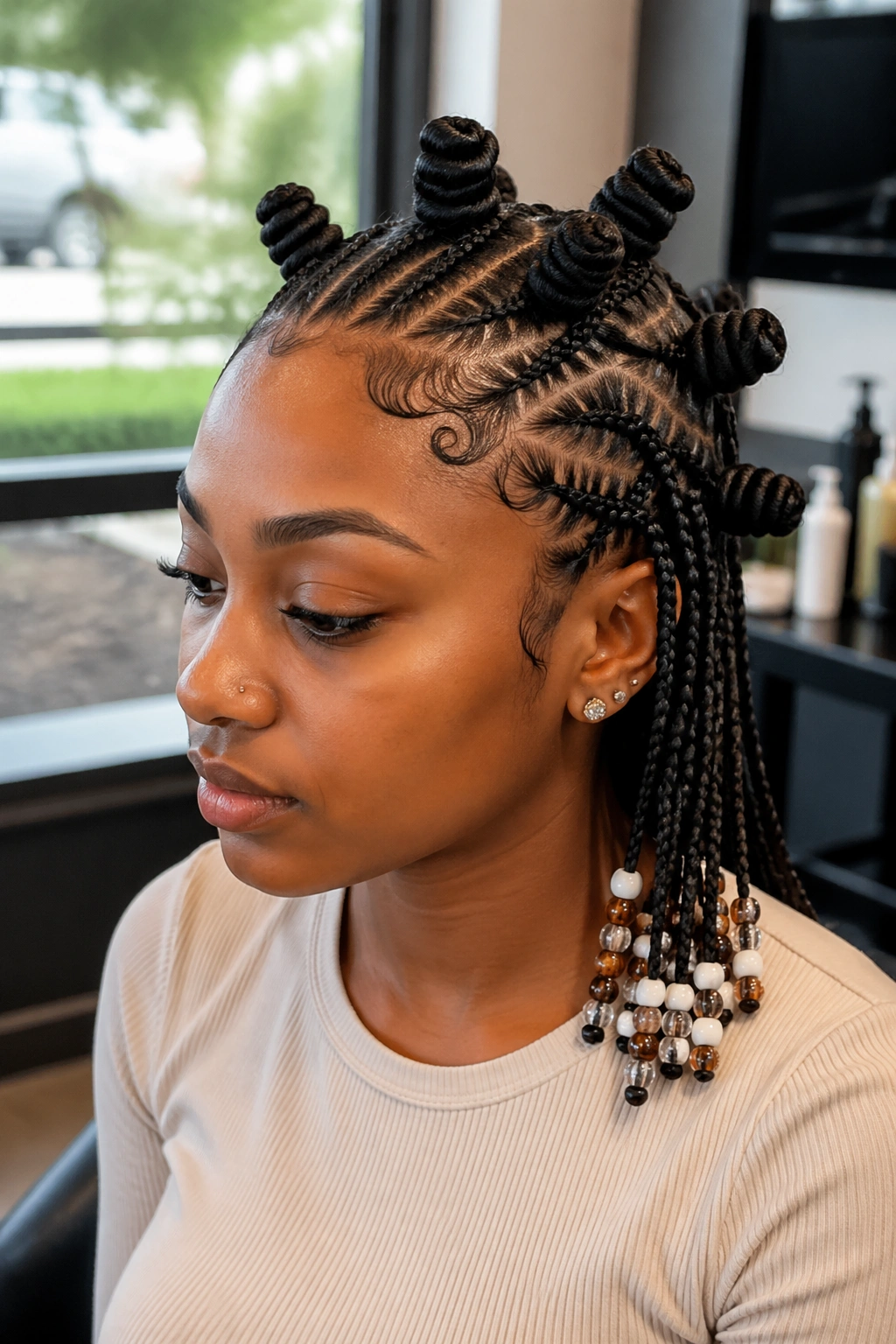
Beads change the personality of side braids fast. Add a few to the end of each braid, and suddenly the style feels more playful, more tactile, and a bit more personal. The Bantu knots stay the main shape, but the beads give the braid line a little weight and sound.
What to Keep in Mind
- Use lightweight beads if the braids are short.
- Place heavier beads lower, not near the scalp.
- Match bead color to your outfit or hair cuffs.
- Seal the braid ends well so the beads do not slip.
This version works best when the rest of the style stays simple. The beads should be a detail, not a distraction. If you add too many accessories, the knots disappear visually, and that’s a waste. A clean part, a few polished beads, and a good braid line usually do enough.
14. Colored Extensions Woven Into the Side Braids
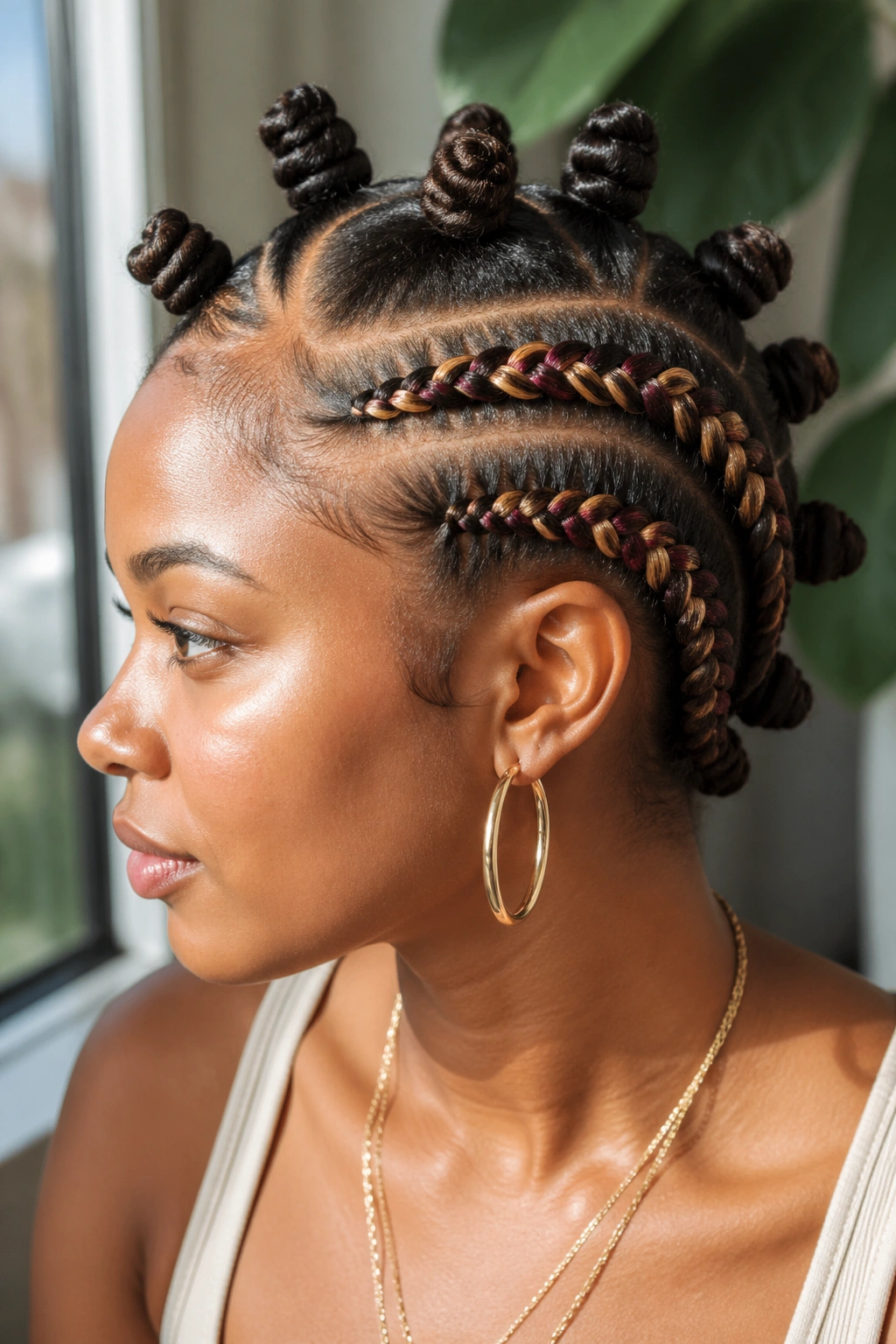
Color in the side braids can change the whole read of the style, even if the knots stay natural-colored. Warm honey, copper, burgundy, or soft blonde tones all show up nicely against dark hair. The contrast is the point.
You do not need a full head of color to get this effect. Just feed a few pieces of extension hair into the braid or wrap the braid with colored synthetic hair for a streaked look. That’s a lot easier on the scalp than coloring your own hair, and the style still gets its visual punch.
I like this version when the knots are kept medium-sized and the braid is the only place where color appears. It keeps the design from tipping into chaos. If the color is bright, let the parting stay clean and the knot size stay even. Otherwise the eye has nowhere to rest.
15. Half-Up Knots With Braids Along the Hairline
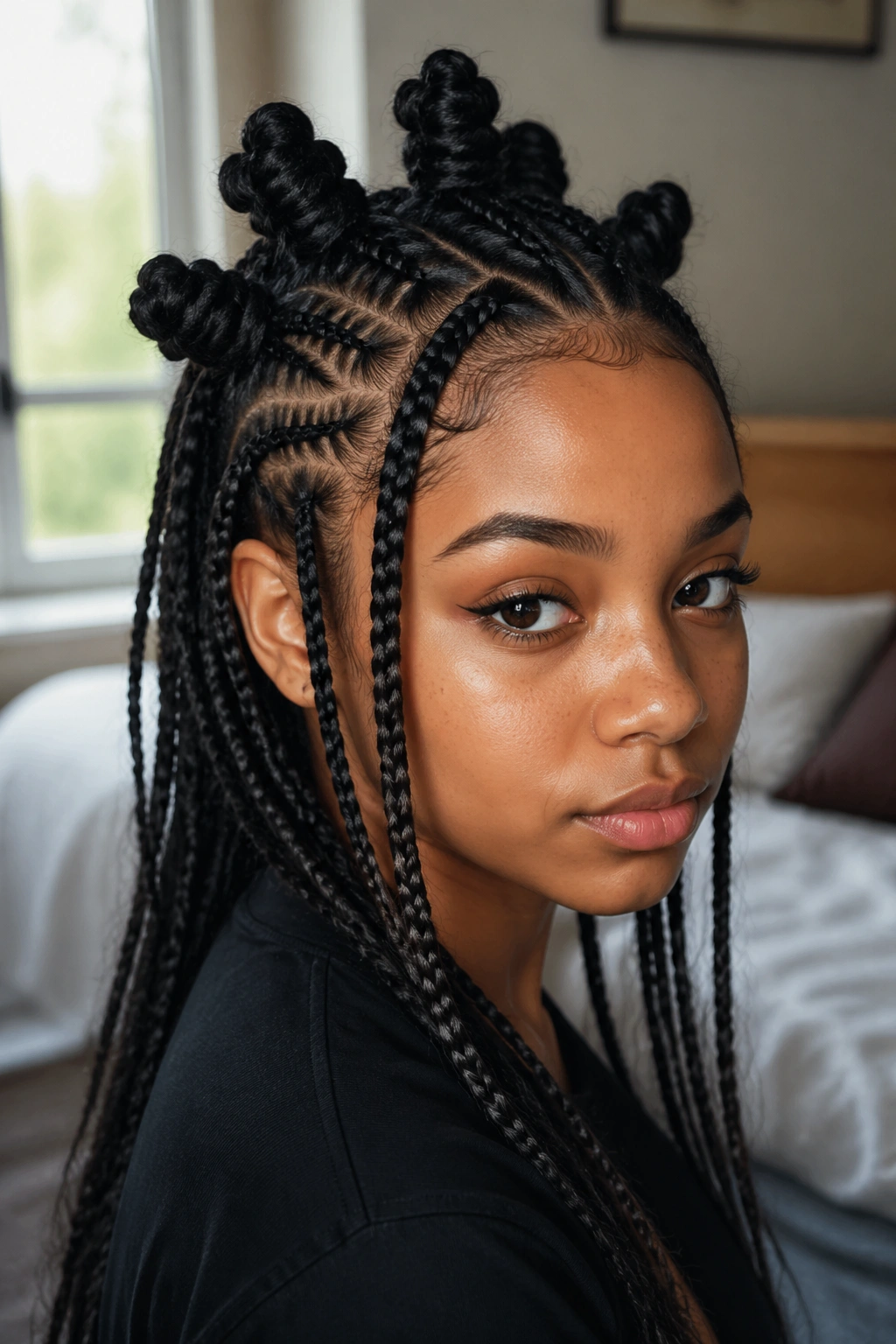
Half-up styles are underrated here. They let the knots sit on the crown while the rest of the hair stays free, and the side braids run along the front like rails. The effect is softer than a full updo and easier to wear for long stretches.
This version is smart if you want to show off length. The front braid section creates structure near the face, while the loose back section keeps the style from feeling heavy. It also works well on hair that’s freshly stretched but not fully blown out. You get enough grip for the knots without giving up texture.
A little mousse at the crown helps the half-up section stay neat. If you leave the back loose, pick a direction for the texture — twist it, braid it, or let it hang. A style like this gets messy only when no one makes a decision about the back.
16. Office-Ready Smooth Parts and Low-Tension Cornrows
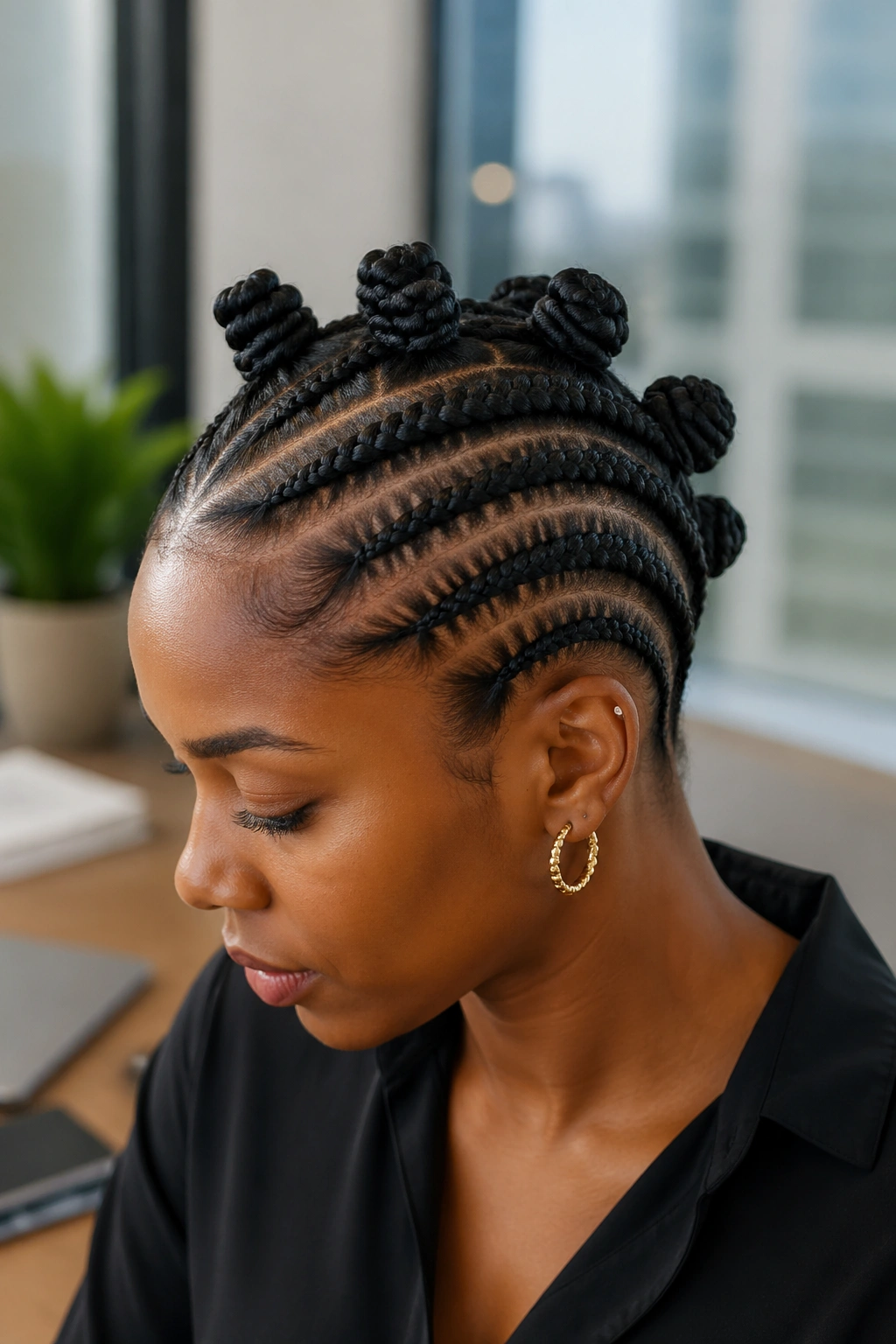
If you want a cleaner, more polished version, this is the one. Smooth parts, low-tension cornrows, and evenly spaced knots make the whole style feel deliberate in the best way. Nothing pokes out. Nothing fights the shape.
The side braids should lie flat and stay close to the scalp. Cornrows do that better than loose braids when you need the hair to sit under a hat, a hood, or a scarf. The knots can be medium and uniform, which keeps the line of the style tidy from every angle.
I’d avoid heavy oils at the roots here. They soften the hold and make the parts collapse sooner. A light gel, a small brush for flyaways, and a silk scarf at night are usually enough. Boring? Maybe. Effective? Absolutely.
17. Festival Style With Shells, Rings, and Curved Braids
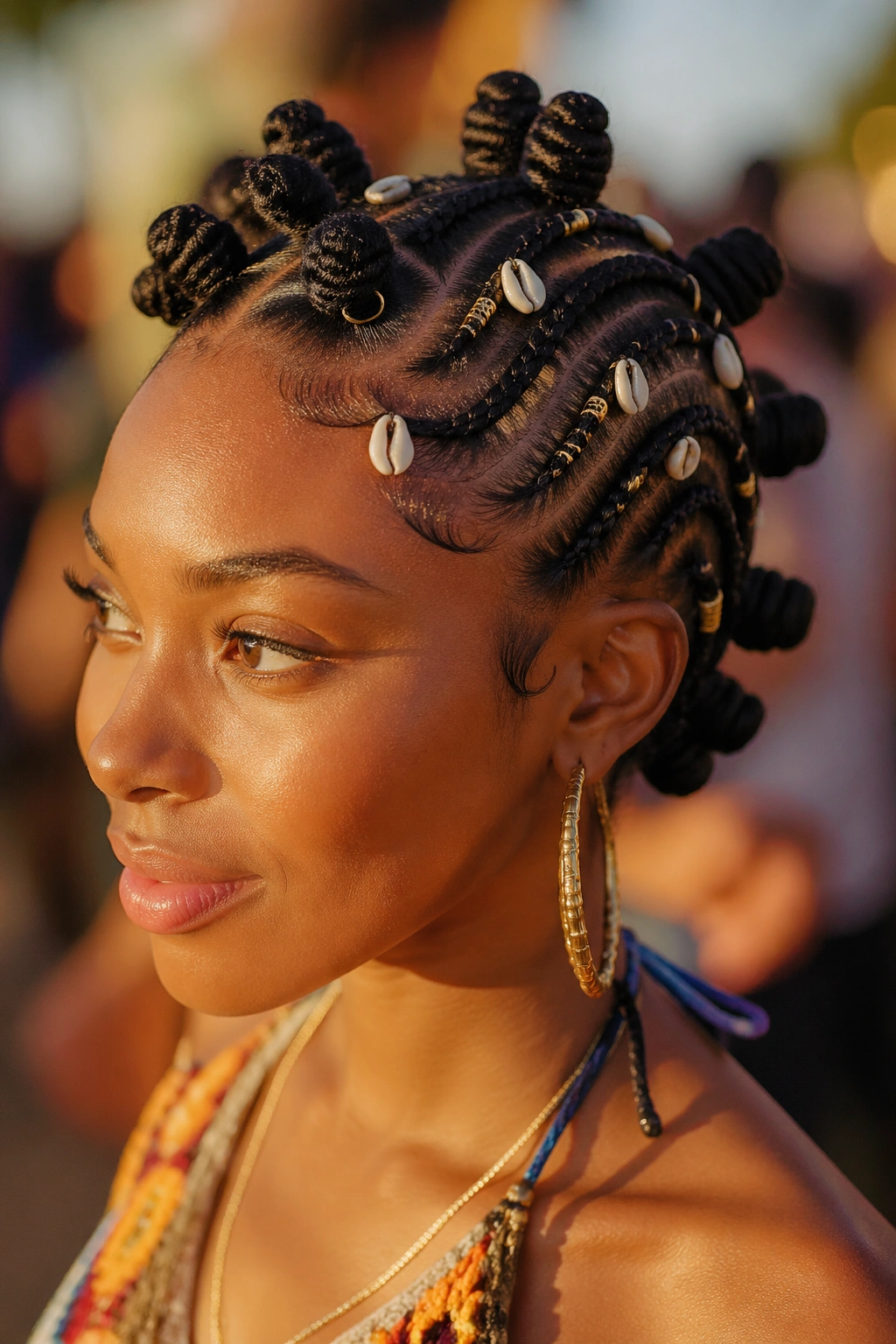
Some styles are meant to move around a little. This is one of them. Curved side braids, scattered shell details, and a row of Bantu knots give you a look that feels a bit more dressed up than everyday hair, but still grounded in texture.
The accessories matter because they should follow the braid line, not fight it. Place rings or shells where the braid bends naturally, then leave the knots clean. If you load the knots with too much ornament, the shape gets lost.
This is the kind of style that works well when your outfit is simple. Linen, denim, a plain dress, even a clean T-shirt — all of them let the hair do the talking. Let the parts breathe. Don’t crowd them with too many extras.
18. Kid-Friendly Soft Parts and Gentle Braid Lines
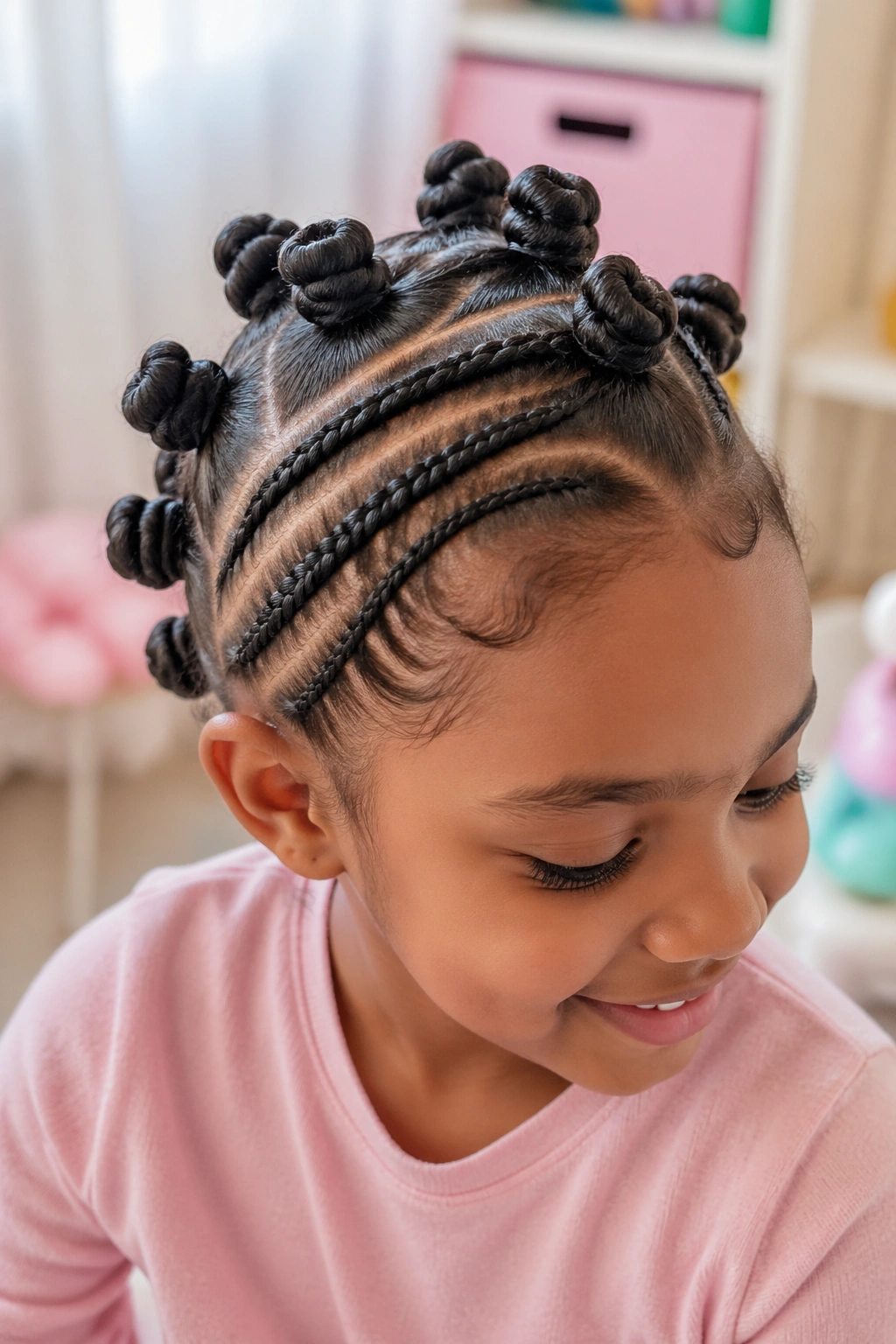
For kids, gentle matters more than dramatic tension or perfect symmetry. Soft parts, low-pull side braids, and smaller knots usually hold up well without making the scalp miserable by midday. That balance is the whole game.
What Makes It Comfortable
A soft braid line at the side keeps the hair out of the face, and the knots can be spaced far enough apart that they don’t tug at the roots. Using a leave-in conditioner before parting helps the hair slide under the comb instead of snapping at dry ends. A tiny bit of gel at the front is enough.
I’d also keep the accessory count low. A few beads or colored elastics are fine. Too many pins and cuffs turn the style into a handling problem. For a child, the best version is the one that survives playtime and a nap without falling apart.
19. Thick Side Cornrow and Temple Knots
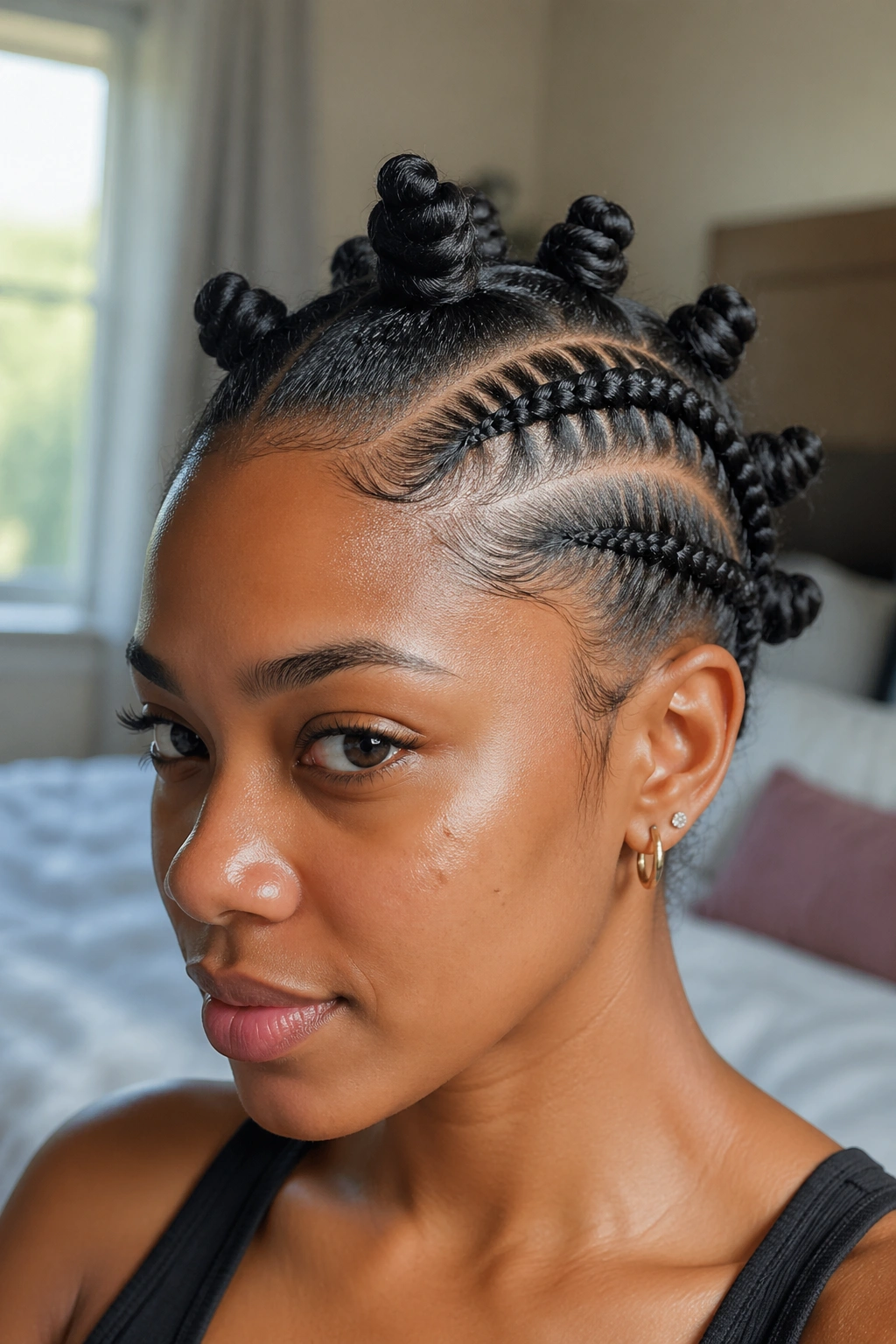
A thick side cornrow can anchor a whole knot set. It gives the style a firm line across the scalp and makes the knots look even more sculpted by comparison. This is one of my favorites when the goal is contrast.
The cornrow should start near the temple and sweep back with a clean arc. Then the knots sit beside it, either in a row or clustered just off-center. The weight of the braid keeps the front tidy, while the knots add height near the top of the head.
This style is strong on thick hair because the texture supports the braid cleanly. On finer hair, keep the cornrow narrow enough that it doesn’t slip or flatten out. A braid that’s too thick can pull the eye away from the knots entirely. The whole point is for them to work together.
20. Braids on One Side and Twists on the Other
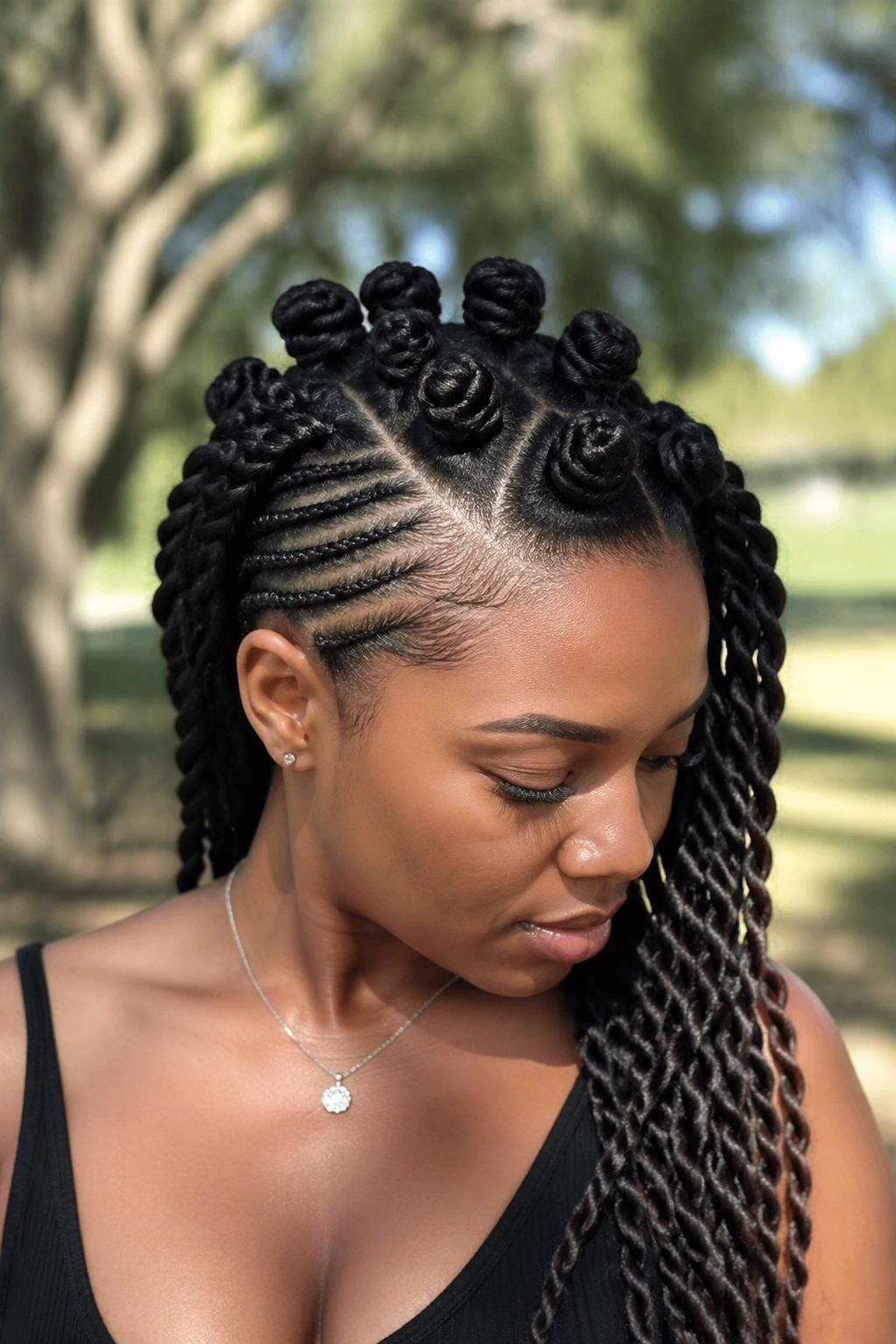
Mixing braid types is a smart way to keep a style from feeling too uniform. One side can hold flat braids, while the other side uses two-strand twists that lead into the knots. The difference in texture gives the style a little extra life.
Twists are softer than braids, so this version works well when you want the hairline to feel less rigid. It also suits people who don’t like the look of a fully braided side because twists sit with a looser bend. The Bantu knots stay as the center of the design, which keeps the look grounded.
Use the same parting precision on both sides so the mixed textures do not look accidental. Different texture does not mean sloppy structure. That would be a mess.
21. Slicked Edges and Four Tiny Knots for a Clean Finish
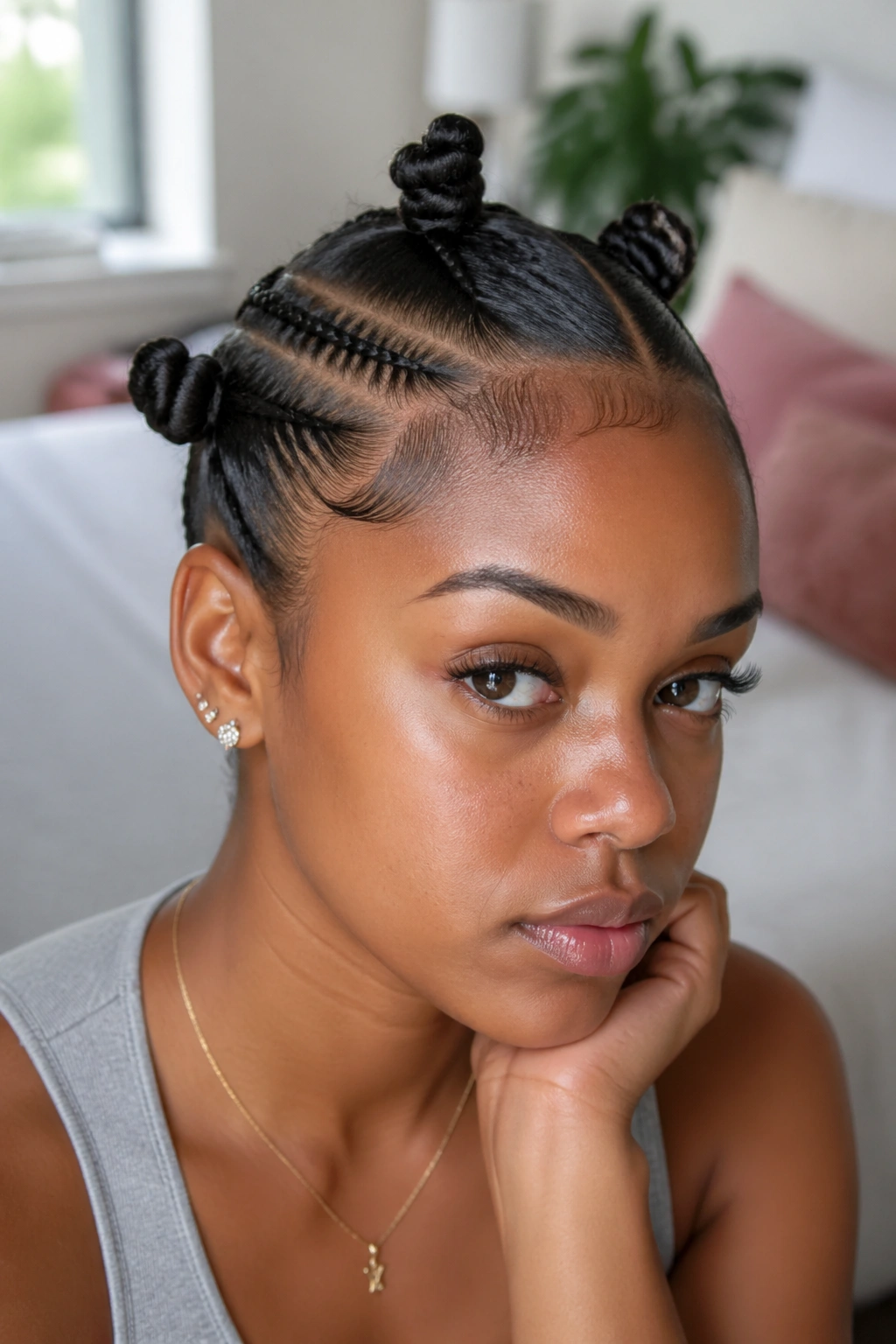
This is one of those styles that looks simple until you look closely. Four tiny knots, precise side braids, and a carefully smoothed hairline create a very clean finish. The style depends on restraint.
Edges should be brushed flat with a soft brush, then set with a little edge control only where necessary. You do not want a helmet. You want a clean frame. The side braids can stay slim and close to the head so the knots remain the main visual point.
Tiny knots are a nice choice if your face is already busy with makeup, glasses, or earrings. The hair stays neat without competing. A lot of people overbuild this kind of style. Fewer sections often look better. Less can be more, but only if the parts are crisp.
22. Big Knot Statement With a Single Side Braid Rope
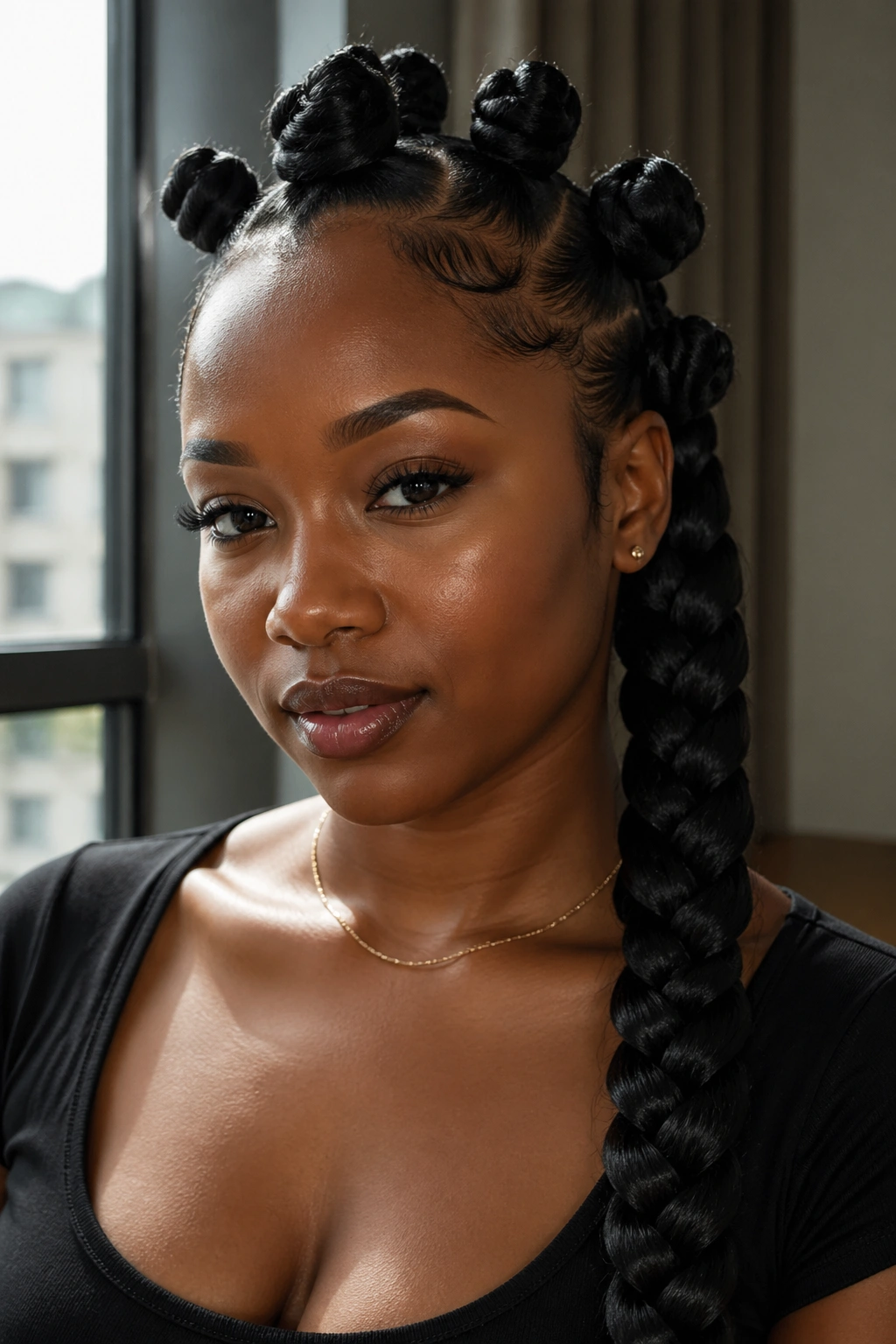
Sometimes one braid is enough. A single side braid, especially if it’s thick and rope-like, can offset a row of big Bantu knots and make the style look bold without adding clutter. I like this for thicker hair or for anyone who wants fewer moving parts.
The braid should feel intentional and heavy enough to hold the eye. Then the knots can sit opposite it in a line or loose cluster. The contrast does most of the work. You do not need extra accessories here.
This look feels strongest when the knot size and braid thickness are both on the larger side. Tiny braid, giant knot? That can look mismatched. Keep the scale related so the style reads as one idea, not two fighting ideas.
23. Sleep-Ready Knots With Satin and Mousse
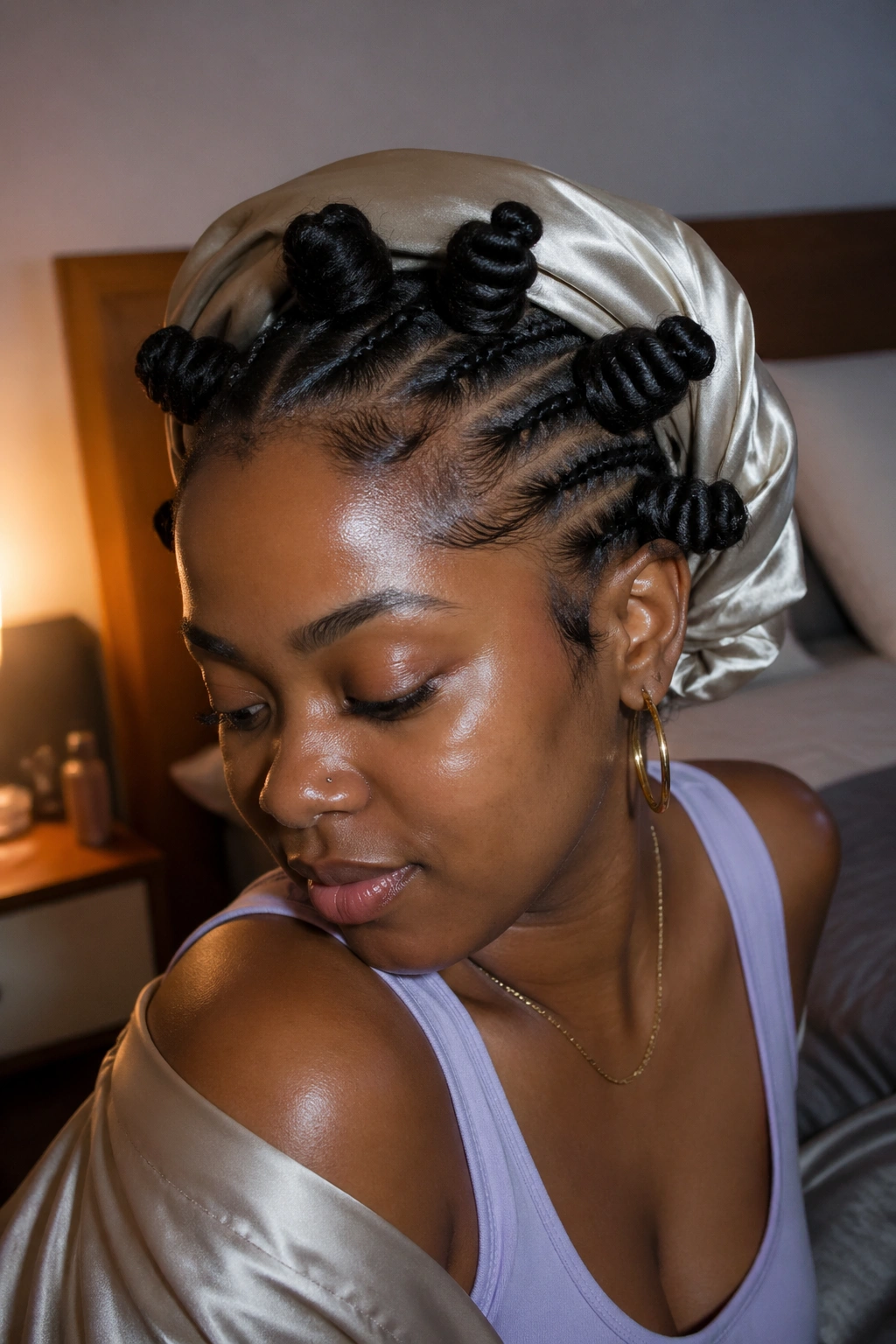
Some styles are made to be worn, then worn again. This version is about longevity. A medium knot set, side braids that lie flat, and a mousse finish can help the style hold shape through sleep, wind, and a full day of moving around.
The Routine That Helps
- Wrap the hair with a satin scarf before bed.
- Keep a small spray bottle of water for reshaping parts.
- Smooth frizz with foam, not thick cream.
- Re-pin any loose braid ends before they puff up.
I like this version for busy weeks because it doesn’t demand constant fixing. The knots stay visible, the braids stay tucked in, and the style still looks decent on the second or third wear if you protect it at night. That said, if the scalp starts to feel dry, stop layering products. A little water and a scarf can do more than half a jar of grease.
24. Romantic Curved Parts With Face-Framing Braids
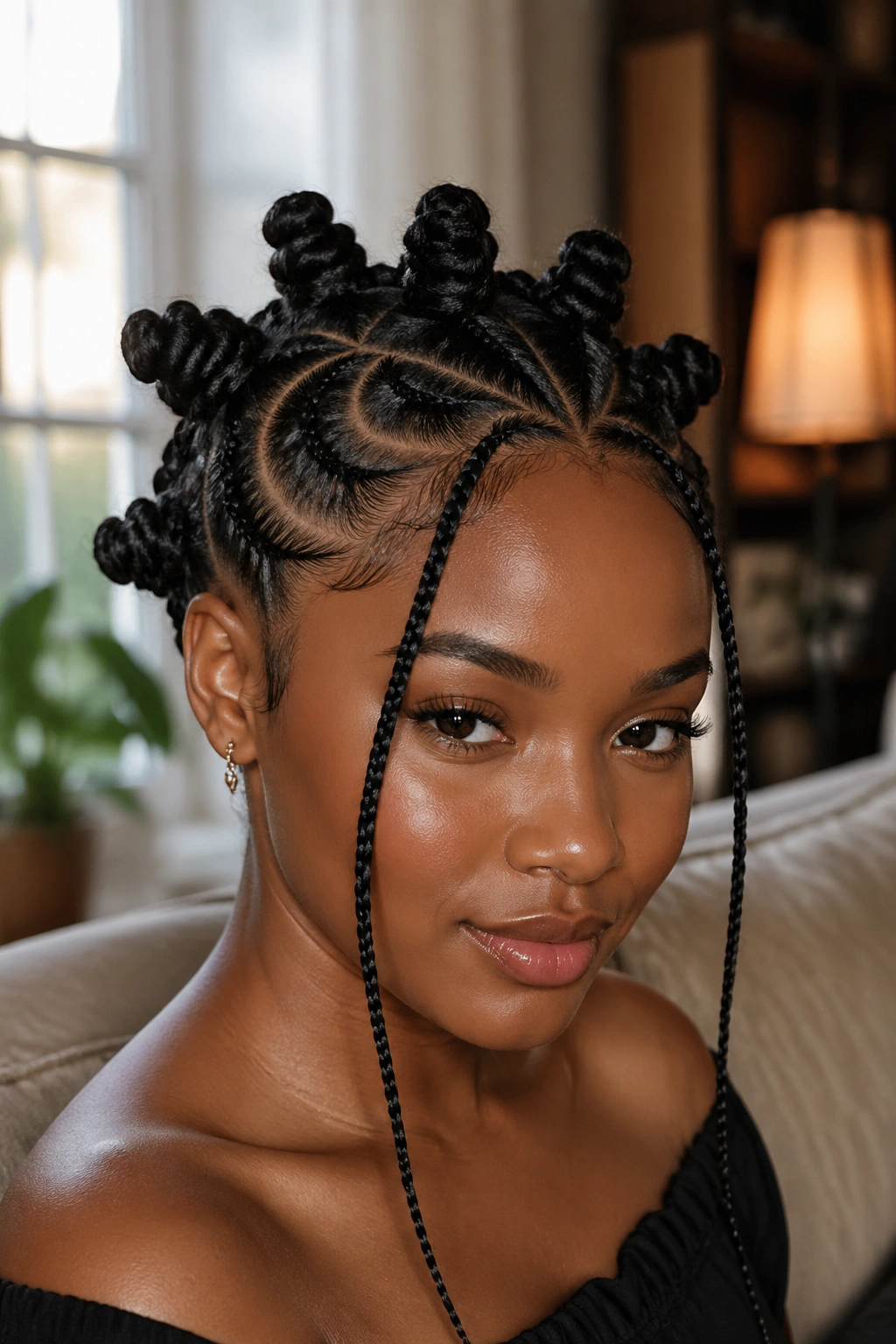
Curved parts around the face soften the whole style. Add two face-framing side braids, and the Bantu knots start to feel less severe, less geometric, and a bit more fluid. It’s a good look when you want the structure of knots but not the hard edge.
The braids should start near the temples and arc back gently, almost like they’re tracing the hairline. That line flatters a lot of face shapes because it doesn’t chop the forehead in half. Keep the knots moderate in size so the style stays balanced.
A soft finish matters here. A light oil on the braid lengths, a little sheen spray on the knots, and no heavy buildup at the roots. Shine is nice; buildup is not. Those two things are not the same, even though people keep treating them like they are.
25. Everyday Knots With Simple Side Braids
This is the one you reach for when you want the style to make sense on a random Tuesday. Medium knots, two simple side braids, clean parts, and no extra drama. It still looks styled, but it doesn’t feel precious.
The charm is in how easy it is to repeat. You can wear it to work, to school pickup, to brunch, or just because your hair needs to stay put for a while. If your hands are steady and your parting is decent, you can do this at home without turning the bathroom into a scene.
Keep the braid tension light and the knot wrapping consistent. That’s enough. A style like this doesn’t need a hundred extras to look finished, and honestly, that’s why it gets worn so often. Clean parts, honest shape, and a braid that frames the face without shouting — that’s the whole thing, and it’s enough.
