
Blonde Bantu knot styles have a way of looking polished even when the rest of the outfit is plain. That’s part of the charm. The knots themselves are small, sculptural, and a little unexpected, and the blonde color turns every part line and every twist into something people notice from across the room.
What makes them work so well is contrast. Honey blonde softens the shape. Platinum makes it sharper. Caramel blonde gives the style depth, especially when the roots stay a shade darker. On textured hair, that color shift matters more than people think, because the geometry of the knots is already doing a lot of visual work.
A neat set of Bantu knots can look sweet, bold, edgy, or even dressy, depending on the size of the sections and how close the knots sit to the scalp. Blonde hair makes sloppiness show faster, though. If the parting is crooked or the base is fuzzy, you’ll see it right away. That’s not a flaw. It’s just the reality of a style that puts shape front and center.
The best part is how flexible the look is. Short hair, long hair, natural hair, stretched hair, braid extensions, locs — there’s a version of blonde Bantu knots for all of it. Start with the cleanest shape first, and the rest gets easier.
1. Honey Blonde Bantu Knots with a Center Part
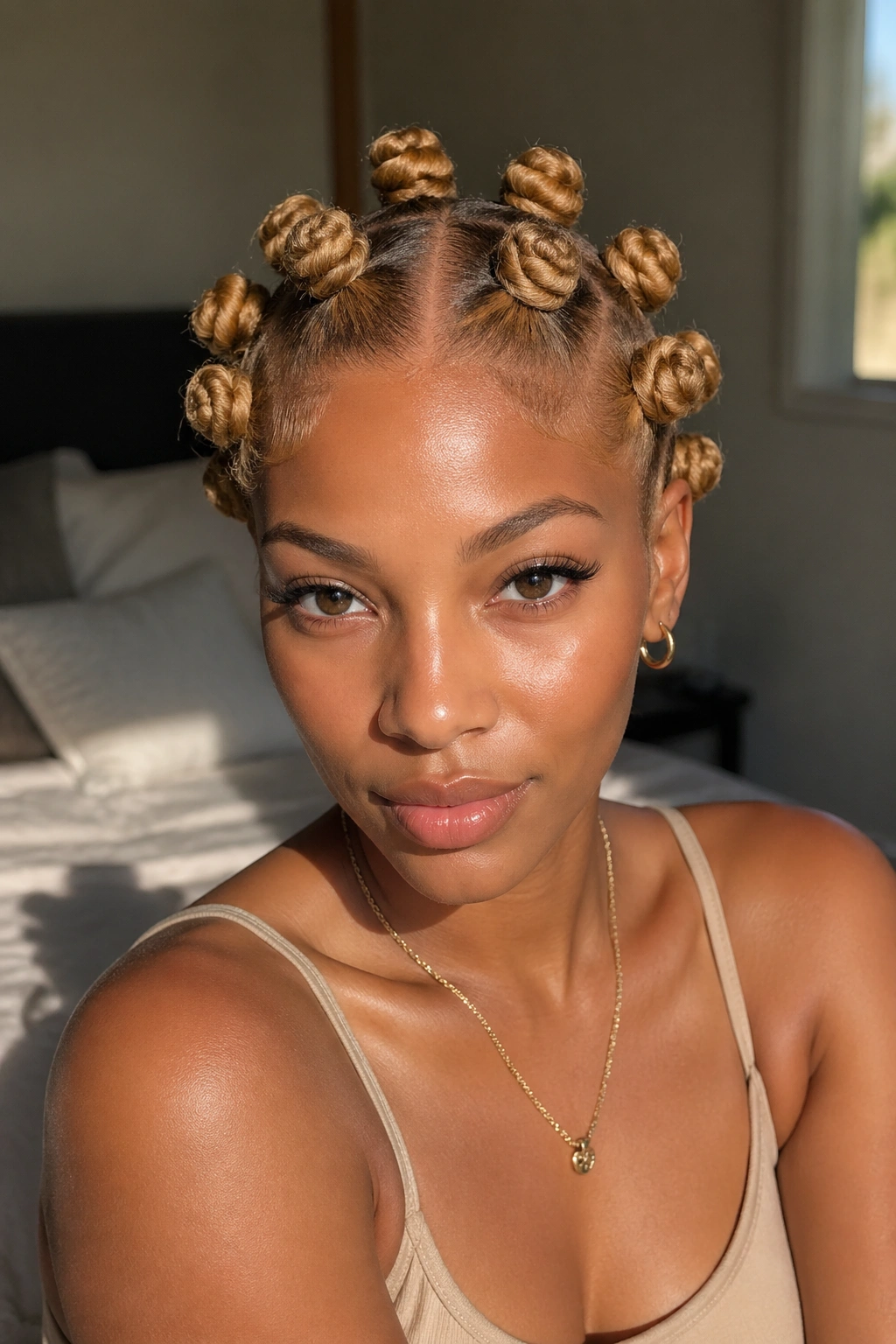
Honey blonde is the color I reach for when I want the knots to feel soft instead of severe. The shade sits in that warm middle ground, so the style reads bright without turning icy or harsh. A straight center part makes the whole thing feel calm and balanced, which is a nice counter to the rounded shape of the knots themselves.
Why this version works
The center part gives the eye a clear path, and that matters when the hair is already doing a lot. On medium-density hair, 10 to 12 small knots usually look neat without crowding the scalp. If the sections are about half an inch wide, the finish stays tidy and the honey tone still shows up clearly between the parts.
This is the kind of style that looks especially good with clean edges and a little sheen at the roots. Keep the shine light, though. Too much product makes blonde hair look greasy fast.
Best for: people who want a soft, symmetrical look that still feels styled.
Wear it with: gold hoops, a neutral blouse, or a glossy lip. The color does enough on its own.
2. Platinum Blonde Statement Knots
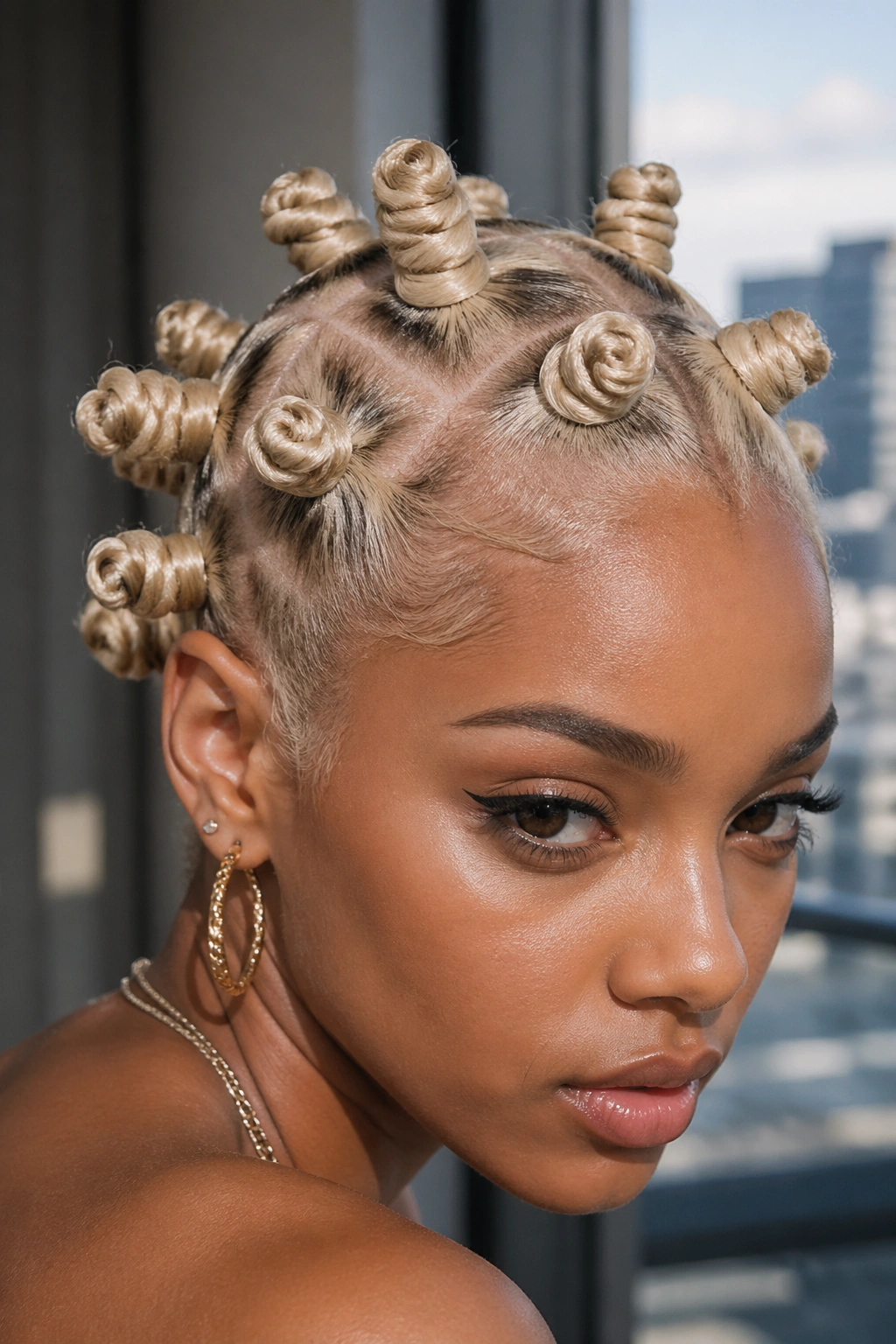
Platinum blonde Bantu knots do not whisper. They walk in and take over the room. The color is bright enough that even a simple knot pattern feels graphic, almost editorial, and that makes it a strong pick if you want the hairstyle to be the main event.
What keeps this look from feeling too stark is the parting. Crisp squares or narrow rectangles give the knots structure, and that structure matters when the color is this light. A soft, blurry part can make platinum look unfinished. Clean lines make it look intentional.
What to ask for
- Very neat parting with a tail comb
- Small to medium sections so the knots hold their shape
- Low-shine styling foam to keep flyaways down
- Satin wrap at night because platinum shows frizz fast
This one suits people who like sharp contrast. It’s bold. It knows it.
3. Caramel Blonde Ombre Bantu Knots
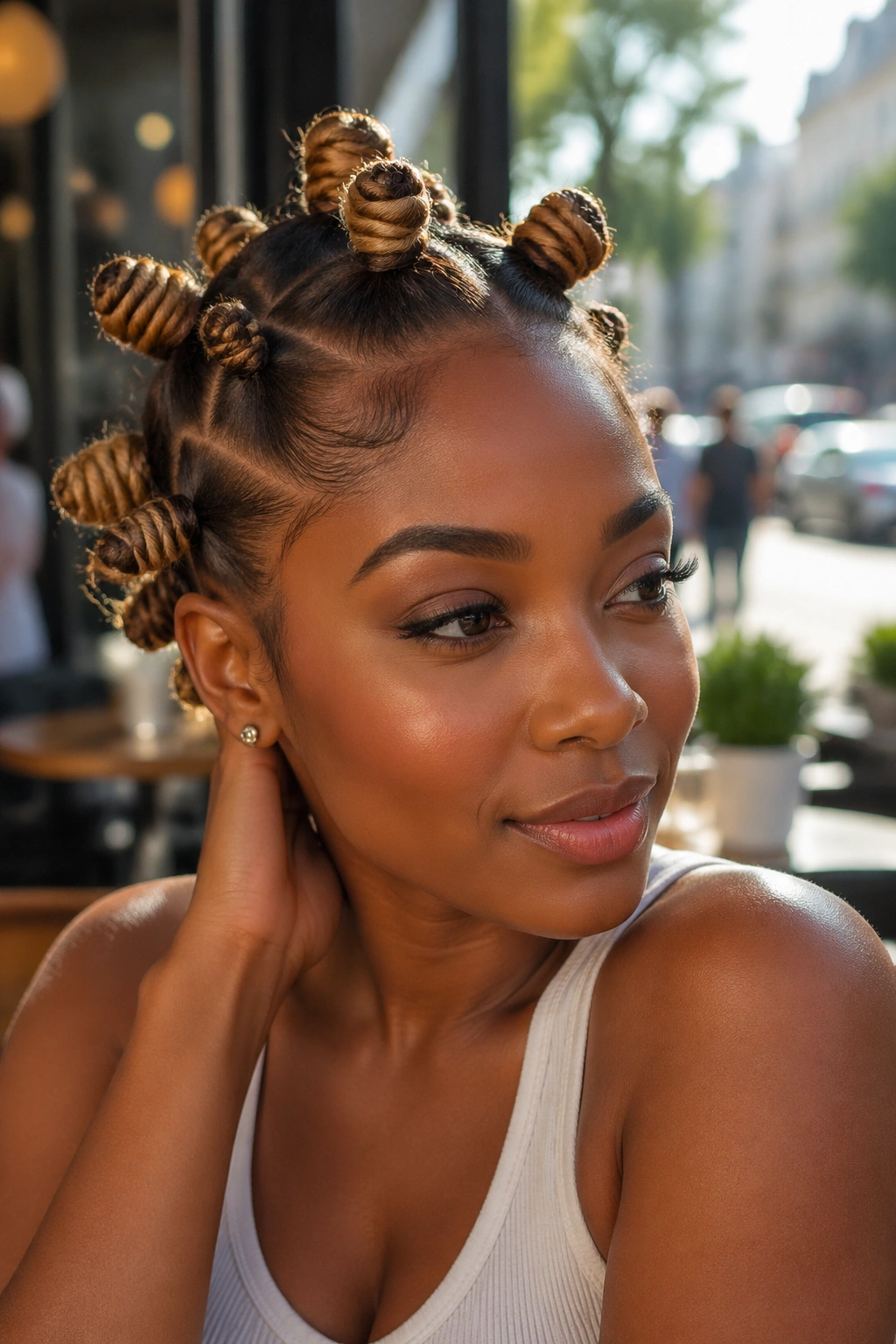
Caramel blonde ombre knots are for the person who wants dimension without going full bright at the scalp. The darker root melts into lighter ends, and that gradient makes the knots look deeper and fuller than a single flat shade ever could. It’s an easy color choice if you want the style to grow out gracefully.
The ombre effect also hides one of the common annoyances with blonde styles: root visibility. Instead of fighting regrowth, you let it become part of the look. That’s a smart move. It buys you more wear time and makes the style feel less precious.
A style like this works especially well when the knots are placed in even rows of 8 to 14, depending on hair density. The color shift does the visual lifting, so you do not need a pile of tiny sections to make it interesting.
4. Sleek Blonde Knots with Braided Roots
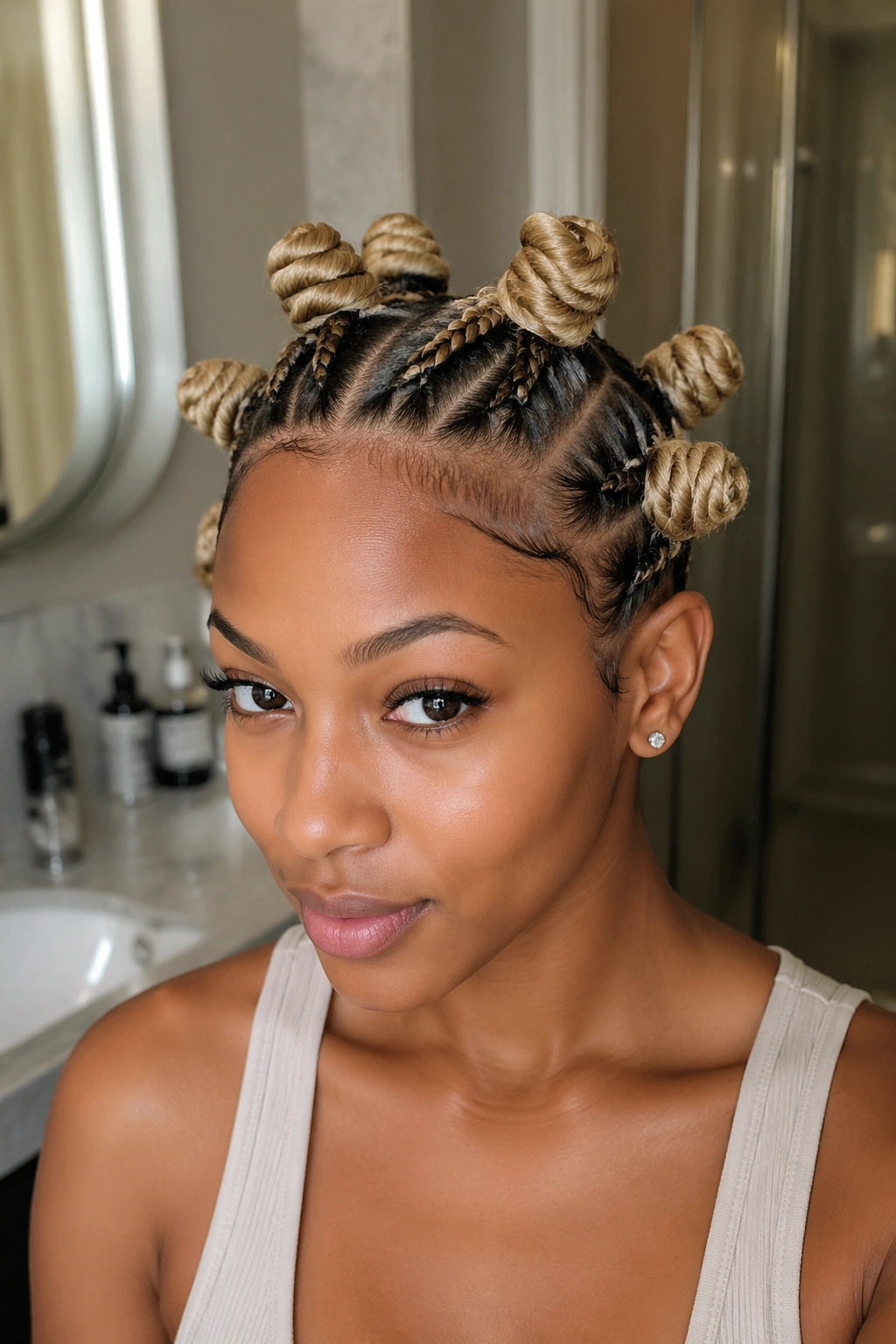
Braided roots change everything. They pull the style closer to the scalp, which makes the blonde knots look tighter, cleaner, and a little more structured than loose-parted versions. I like this look because it gives you two textures at once: the neat braid at the base and the rounded knot sitting on top.
It’s a strong option if your hair tends to puff up at the roots. The braids hold the shape down and help the parts stay visible for longer. That means less daily fuss, which is a relief when you’re wearing a light shade and every frizz halo shows up on camera.
What makes it different
- The braid base gives extra grip and longer wear
- The knots sit slightly higher, so the style looks more sculpted
- Blonde colors show the braid pattern in a way dark hair often doesn’t
- A small amount of mousse at the roots keeps the base smooth
This is the one I’d pick for a week when you want your hair to look deliberate, even on day four.
5. Side-Swept Blonde Crown Knots
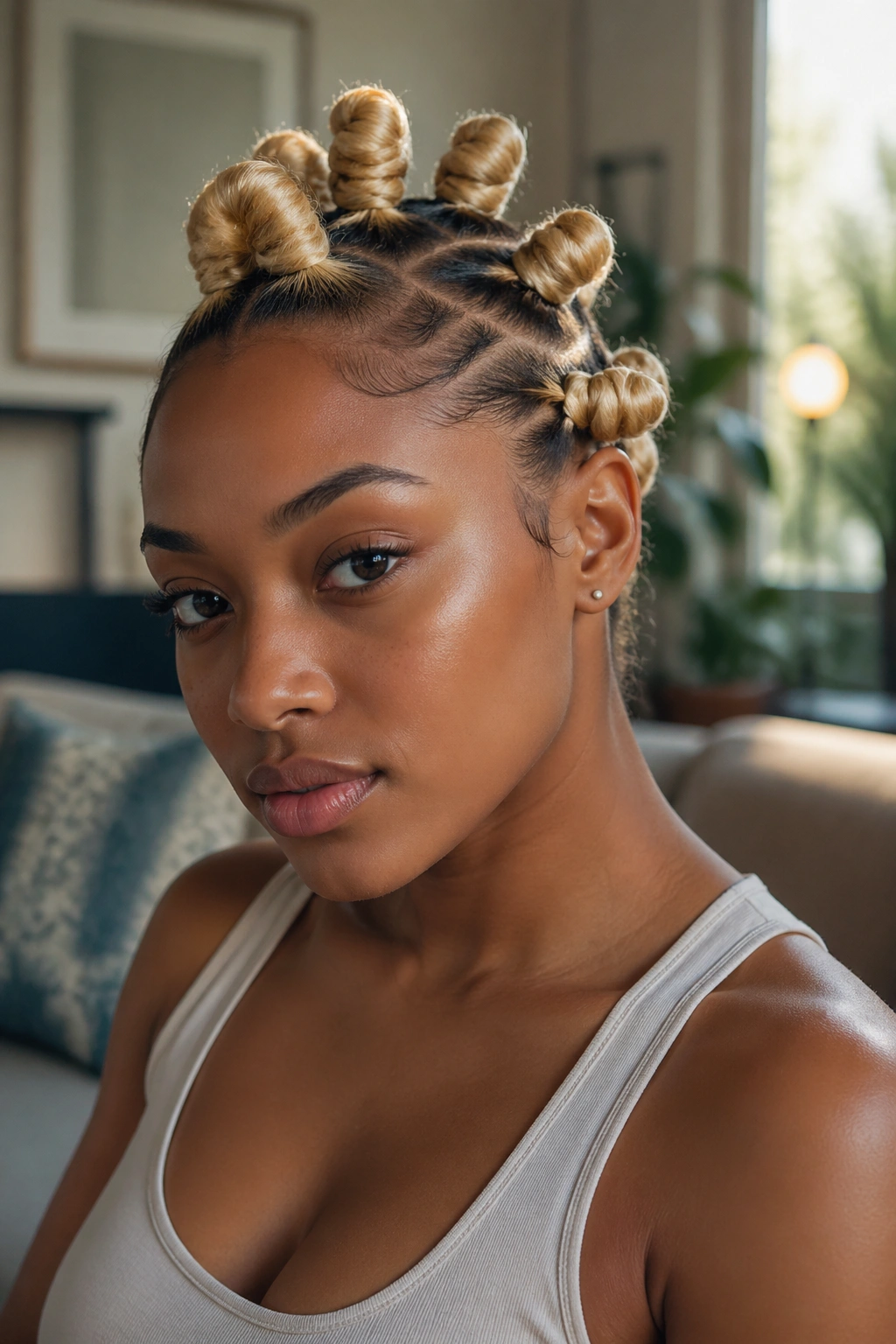
A side-swept crown arrangement gives blonde Bantu knots a softer mood, almost like the style is leaning into the shape of your face instead of sitting straight on top of it. The off-center placement creates movement right away. That’s useful if you don’t want the strict symmetry of a middle part.
The crown effect comes from placing the knots in a curved line across the top and letting the heavier side carry the visual weight. It works especially well when the sections near the temple are slightly smaller than the ones toward the back. That little size shift helps the style sit naturally.
The result feels flattering without trying too hard. And no, that does not mean it is boring. It means the silhouette has a bend in it, which is often what makes a hairstyle feel human instead of rigid.
6. Curl-Setting Blonde Knot-Out Style
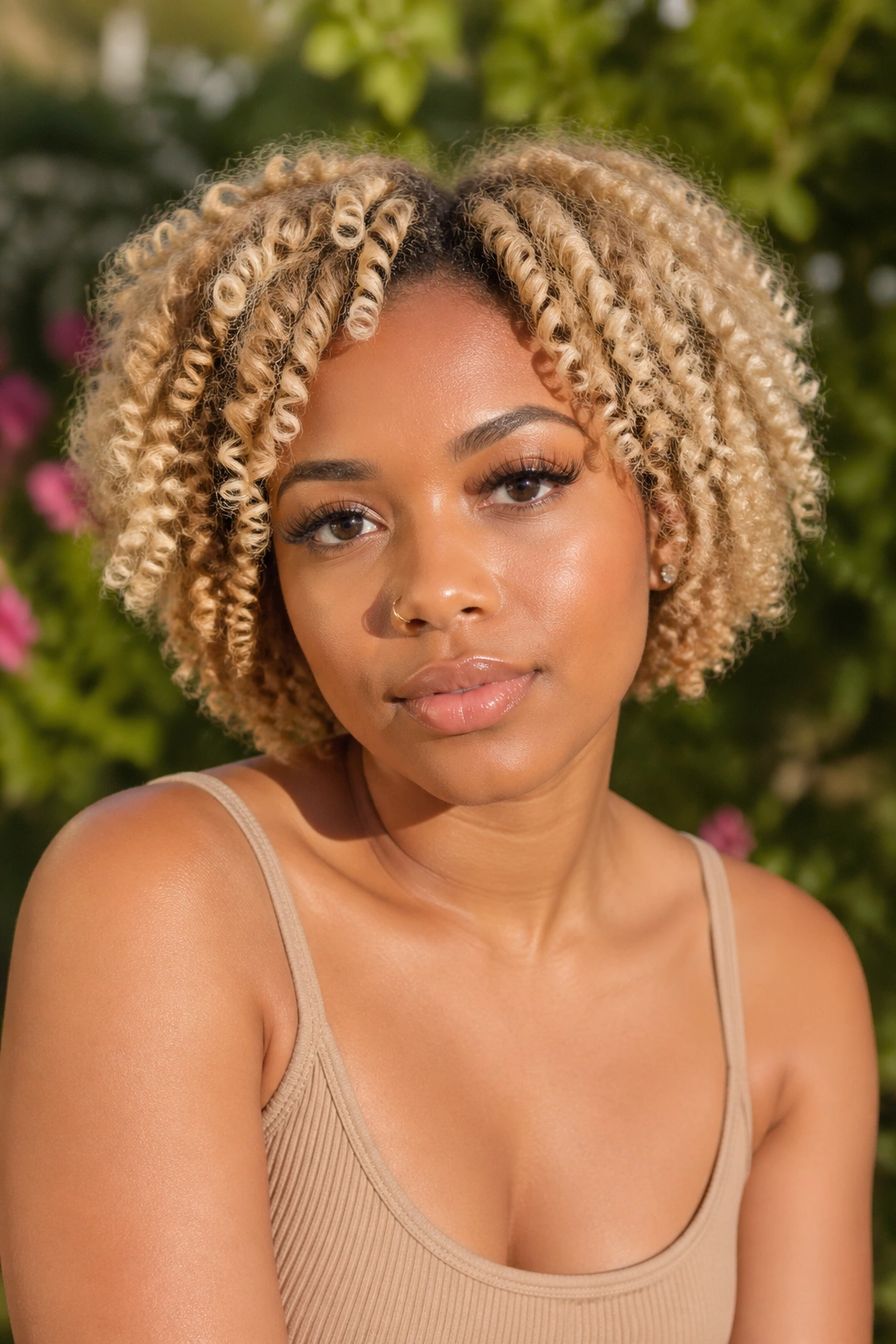
This one is a little sneaky. You wear the knots for a day or two, then take them down and let the blonde curls do the talking. The knots are really the setup, and the knot-out is the payoff. That makes the style useful if you want two looks from one set.
How to get the most from it
The smaller the knots, the tighter the resulting curl. If you use 14 to 20 mini knots, you’ll get more definition and less loose wave. Bigger sections give you fluffier movement, which can be pretty, but it won’t look as crisp.
Blonde shades show curl pattern beautifully because light catches the bends. A little setting mousse or foam on damp hair helps the knots dry with more shape. Let them dry fully. Seriously. Taking them down too soon flattens the whole thing.
Best for: people who like a style that changes over time instead of staying locked in one look.
7. Jumbo Blonde Bantu Knots
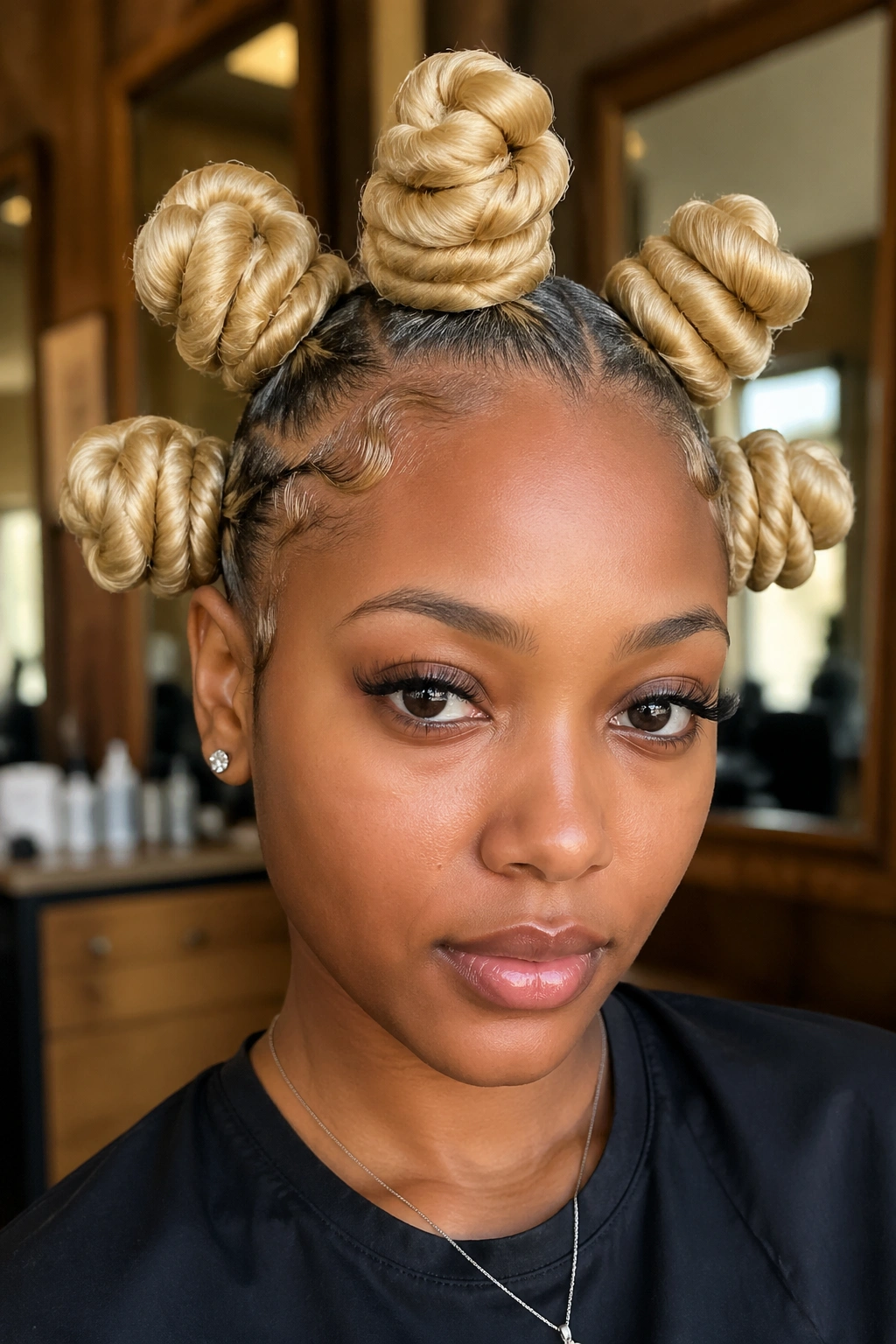
Jumbo knots are bold in the simplest possible way. Fewer sections, bigger coils, more visual presence. That’s the whole deal. The blonde color makes the large shapes look even more deliberate, almost like a sculpted crown rather than a standard protective style.
This version works best when the hair is medium to long and has enough density to fill out the knots without making them sag. If the sections are too heavy, the knots can slump by the second day. So you want size, but not so much that the shape loses lift.
The nice thing about jumbo knots is speed. You’re not sitting there making twenty tiny sections. You’re creating a few strong shapes and letting the color do the rest. It’s practical, and I think that matters more than people admit.
8. Half-Up Blonde Bantu Knots
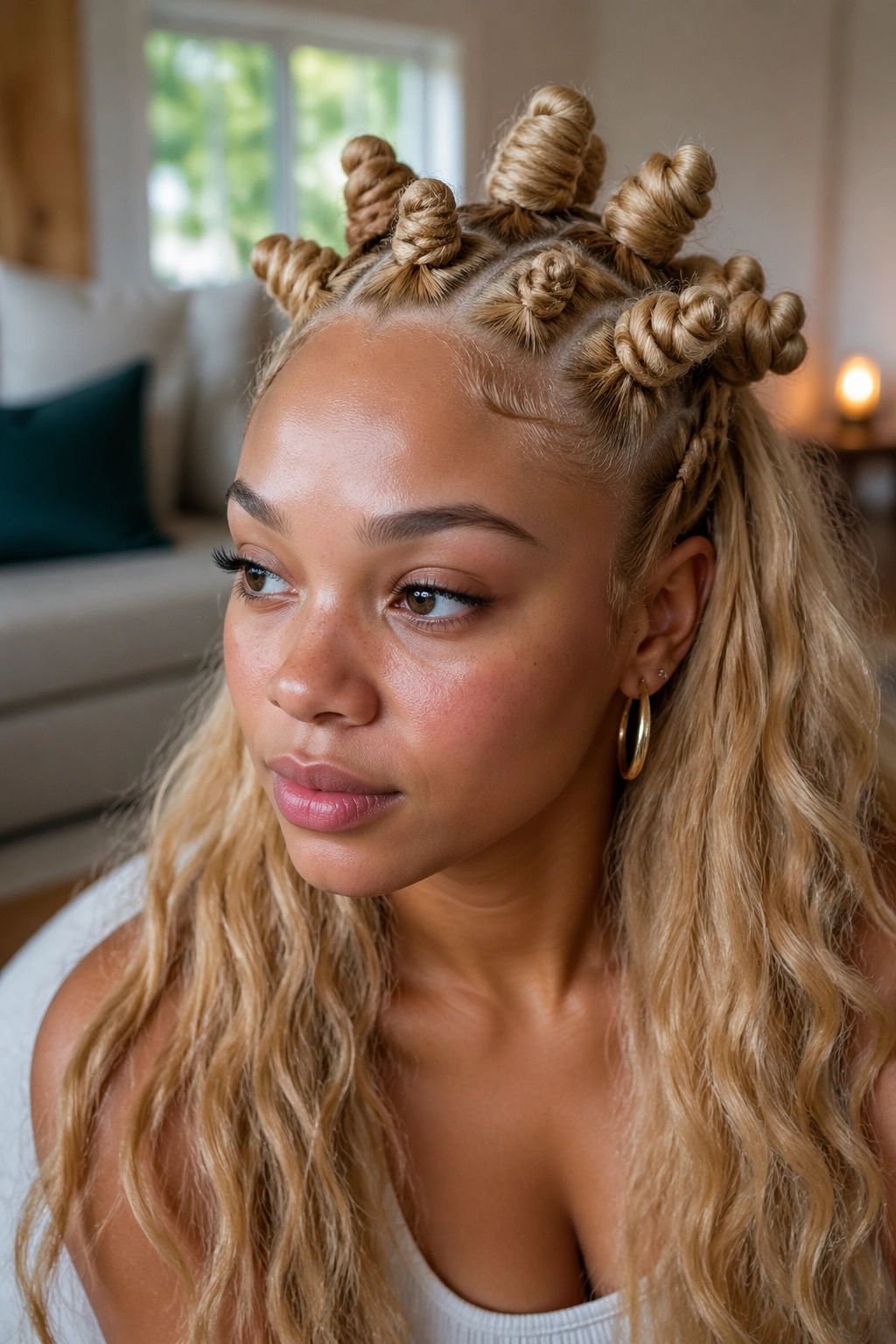
Half-up Bantu knots are easy to live with. The top section gets the knotted treatment, while the rest stays loose, braided, curled, or stretched. That split makes the style feel lighter on the head, which is useful if you like volume but not full coverage.
This is a good choice when the blonde tone is especially bright, because the loose lower section softens the overall effect. A full head of platinum knots can feel intense. Half-up gives your eyes somewhere to rest.
I also like this version for mixed textures. The top can be smooth and neat, while the lower section keeps its own movement. It feels less formal than a full set of knots, and that makes it easier to wear with jeans, a blazer, or an oversized tee.
9. Blonde Knots with Feed-In Braids
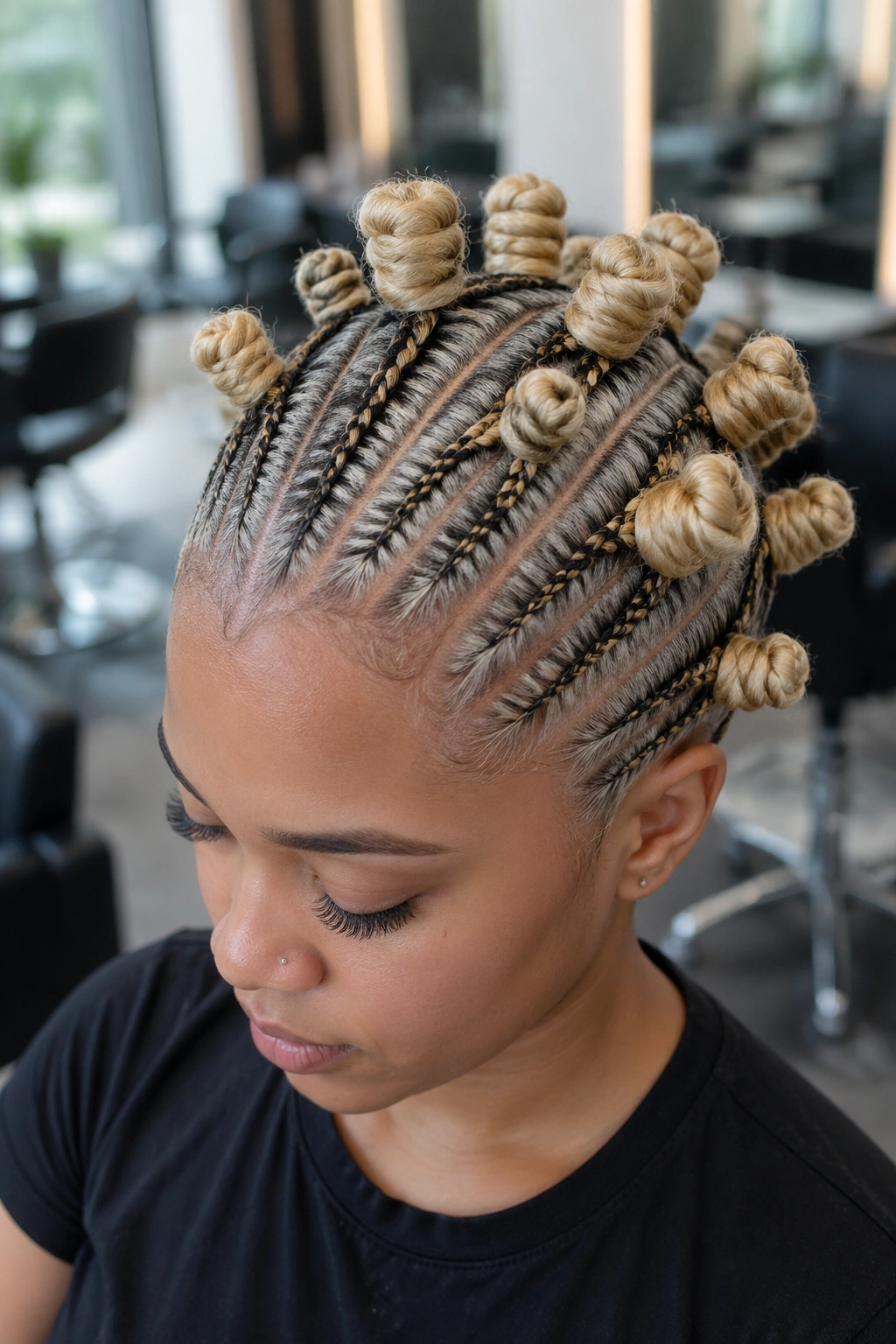
Feed-in braids at the root make the style look cleaner and more intricate, even before you reach the knot itself. That’s the appeal. The braid starts small, then gradually takes in more hair, which makes the transition into the knot look smooth instead of bulky.
Where this style shines
- The base looks neat for longer
- The knots can sit closer together without crowding
- The added braid detail makes blonde hair look more textured
- It’s easier to frame the front with a few narrow feed-in rows
This one is especially good if you like styles that look planned from every angle. The top view is sharp. The side view is sharp. Even the back has structure. Not every knot style does that.
10. Zigzag-Part Blonde Knots
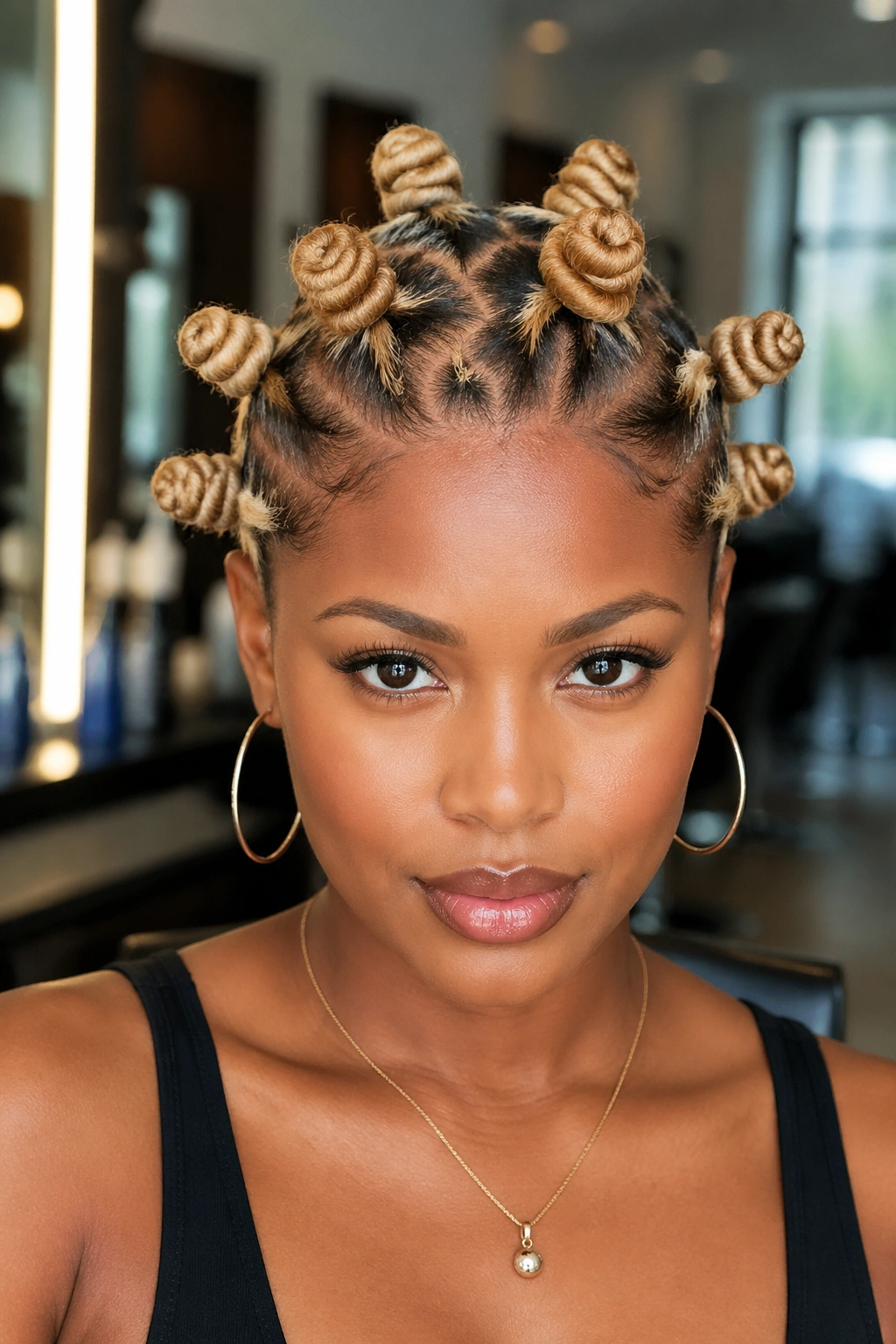
Zigzag parts are for people who want the scalp design to matter as much as the knots. A straight part is clean, yes, but a zigzag line brings movement before the hair is even twisted. On blonde hair, that pattern stands out fast.
The key is keeping the zigzag crisp enough to read from a distance. If the line is too soft, the effect disappears. If it’s too sharp, it can look busy. The sweet spot is a steady, controlled bend that travels across the scalp in a clean rhythm.
This style feels playful without being childish. That balance is hard to get, and zigzag parting does a lot of the work for you. It’s the kind of detail that turns a familiar hairstyle into something people actually ask about.
11. Golden Blonde Knots on Short Hair
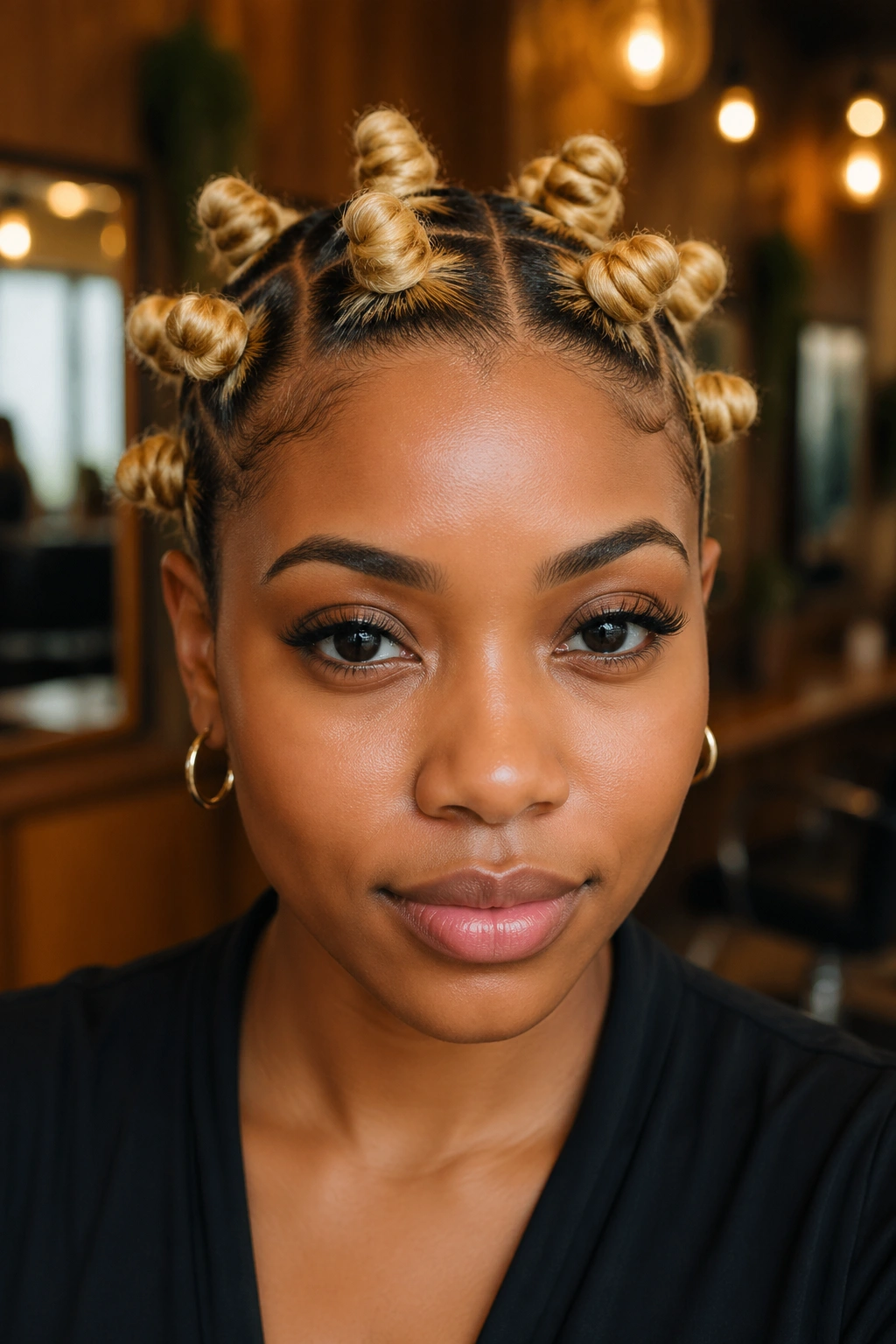
Short hair changes the whole mood. The knots sit closer to the scalp, the silhouette looks rounder, and the style suddenly feels compact and chic instead of oversized. Golden blonde is a smart shade here because it warms up the shorter shape and keeps it from looking too severe.
On cropped hair, the sections need to be smaller and the roots need to be secure. Otherwise the knots can loosen too quickly. A little holding gel at the base goes a long way, but don’t drown the hair in it. Short hair shows buildup faster than long hair does.
This is a good example of a style that proves length is not the point. Shape is. And when the shape is clean, blonde Bantu knots on short hair can look unexpectedly polished.
12. Two-Tone Blonde Bantu Knots
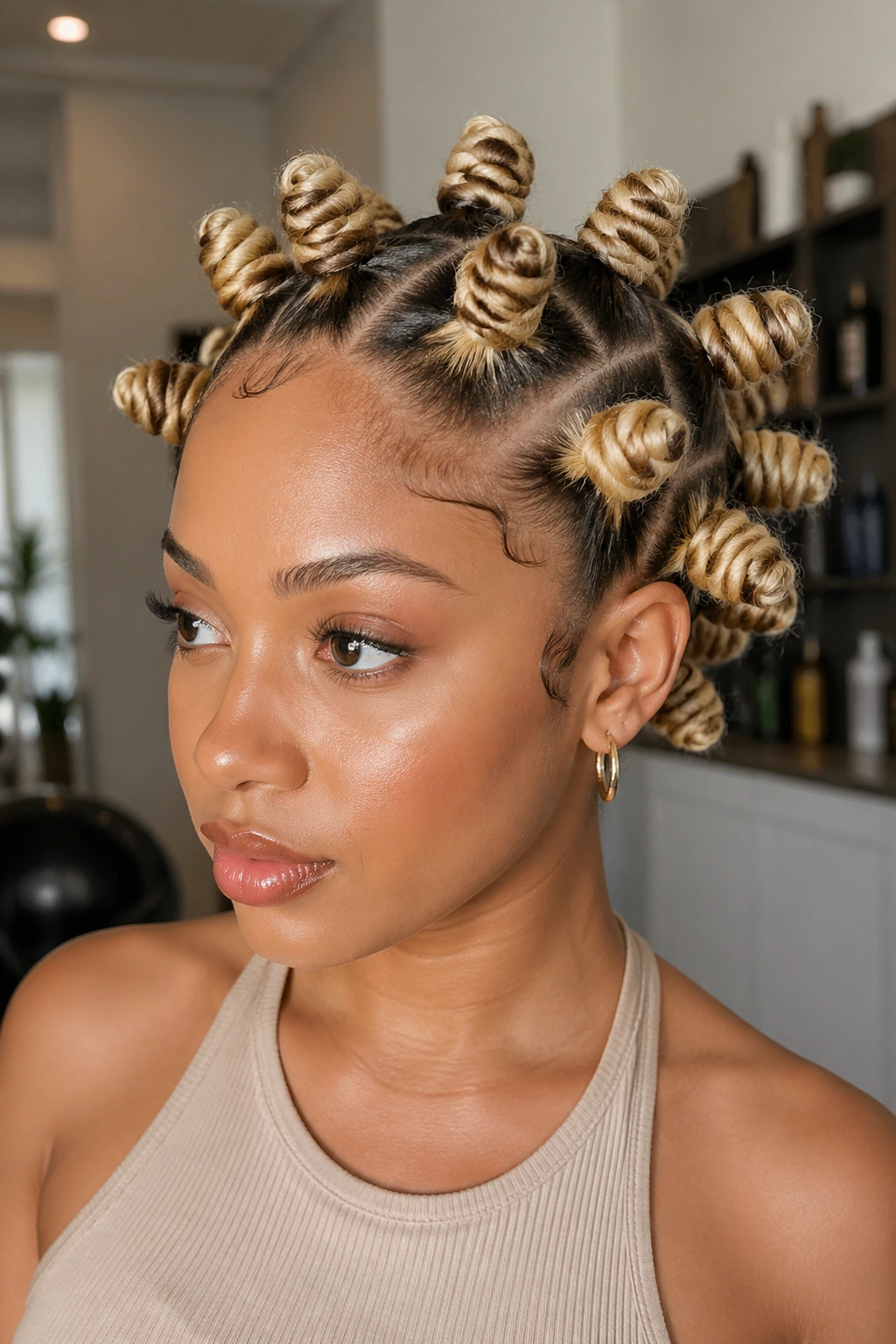
Two-tone knots work because contrast gives the eye something to follow. Maybe the roots are a sandy blonde and the knots finish in a lighter champagne shade. Maybe you pair honey with ash. Either way, the difference between the tones makes each knot feel more dimensional.
The trick is not to choose two colors that fight each other. You want either a soft shift or a deliberate contrast. If the tones are too close, the effect disappears. If they clash too hard, the style can feel busy in a way that’s hard to control.
I like this version when someone wants color to do the talking without adding accessories. The knots already have shape. The two-tone color gives them depth, which is often enough on its own.
13. Blonde Bantu Knot Bob
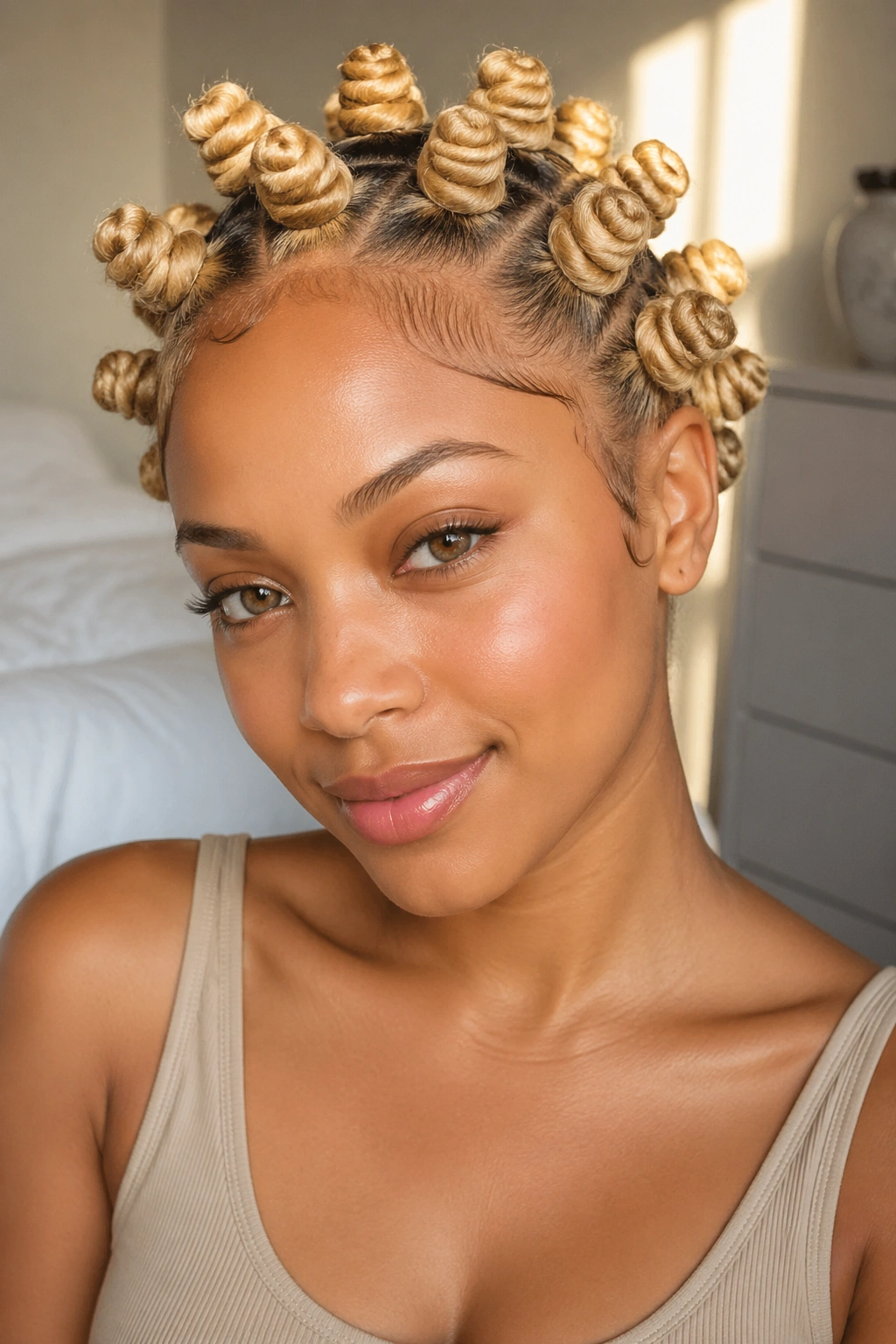
A Bantu knot bob has a tidy, rounded feel that works beautifully with blonde color. The knots sit around the head like a compact halo, and the overall shape feels balanced, almost architectural. There’s something satisfying about that line. It’s neat without being stiff.
Why the bob shape works so well
Because the length is shorter, the knots stay close together and don’t drag the silhouette down. That makes the style feel lighter, both visually and physically. If the sections are kept uniform — about ¾ inch to 1 inch wide — the bob reads as a single shape instead of a collection of separate pieces.
Blonde helps the bob version look brighter and more defined around the edges. A little shine spray on the finished knots is enough. Too much, and you lose the crispness.
It’s one of those styles that looks even better when the neckline is clean and the outfit is simple. No need to overthink it.
14. Micro Blonde Bantu Knots
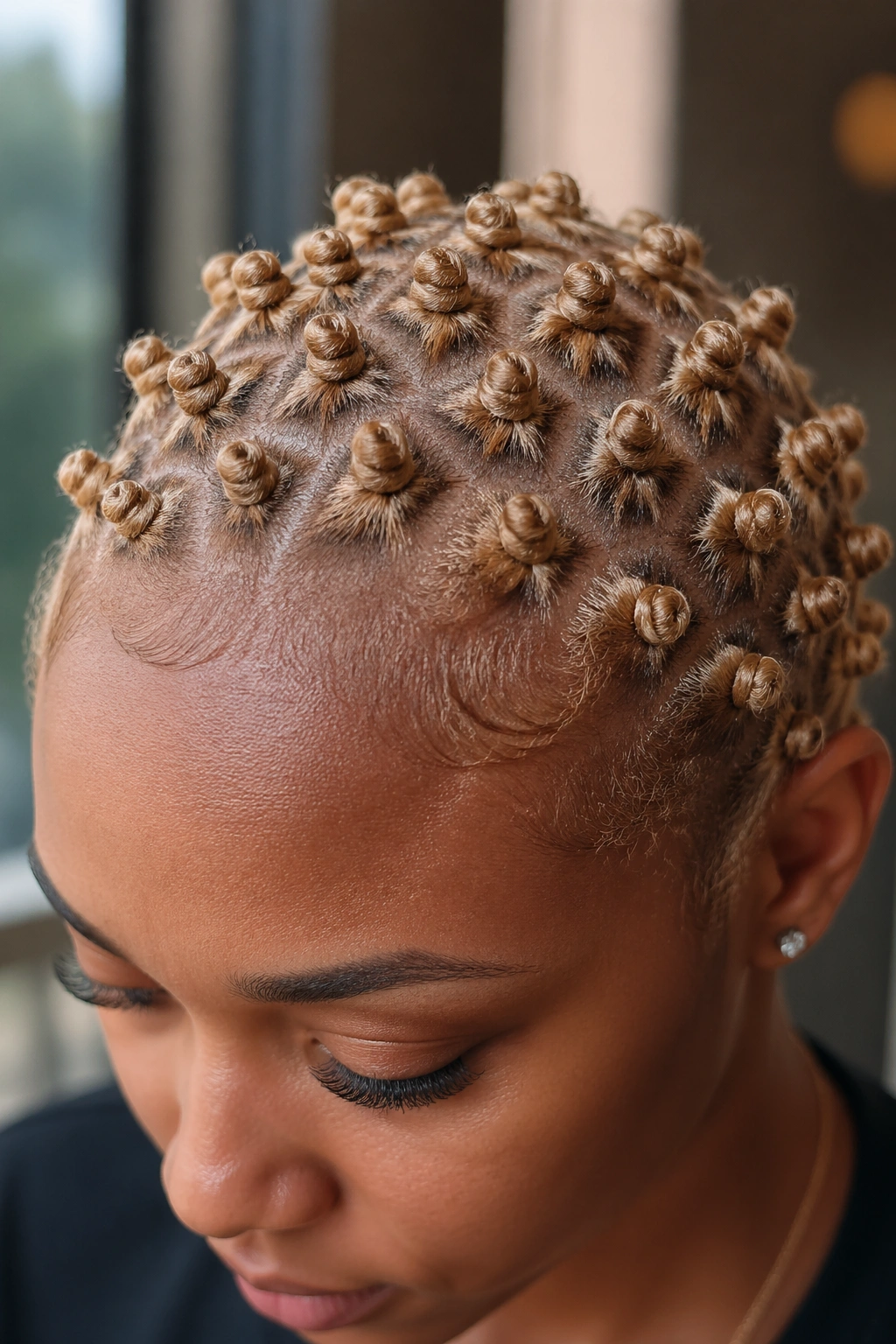
Micro knots are tiny, precise, and a little obsessive in the best way. You need patience for them. Plenty of it. But the payoff is a head full of small, detailed shapes that make blonde hair sparkle because each little coil catches light differently.
They work best on hair that can be sectioned finely without frizzing out before you finish the row. If the hair is too thick or too layered, the sections start swelling while you work, and the neat line disappears. That is the frustration with micro styles. They demand discipline.
Still, the effect is worth it. Micro blonde Bantu knots look intricate from every angle, and the smaller scale makes the color feel more textured. It’s not the easiest look, but it has a kind of precision that bigger knots can’t mimic.
15. Blonde Knots with Beads and Cuffs
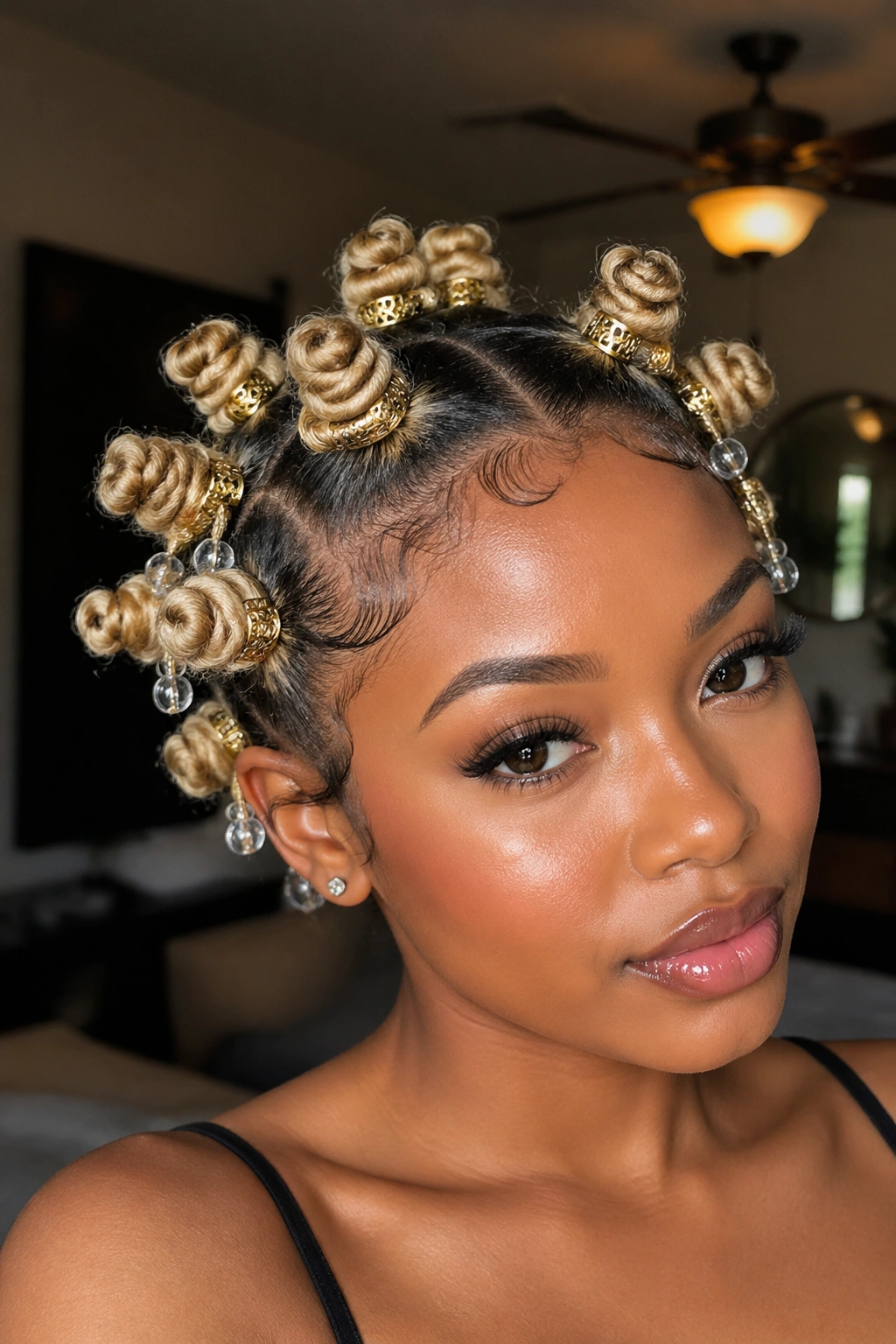
Accessories change the tone fast. Add a few gold cuffs or clear beads, and the knots stop reading as purely sculptural and start feeling dressed up. Blonde hair is a good base for this because metallic pieces stand out without competing with the color.
What to keep in mind
- Use small cuffs on the front sections so the look does not get heavy
- Put the brighter accessories toward the front if you want them visible in photos
- Mix bead sizes only if the parting is clean
- Keep the knot size consistent so the accessories feel intentional, not random
This is a style that works when you want the hair to look finished all on its own. No extra styling beyond that. The beads do the talking.
16. Blonde Knots with Tapered Sides
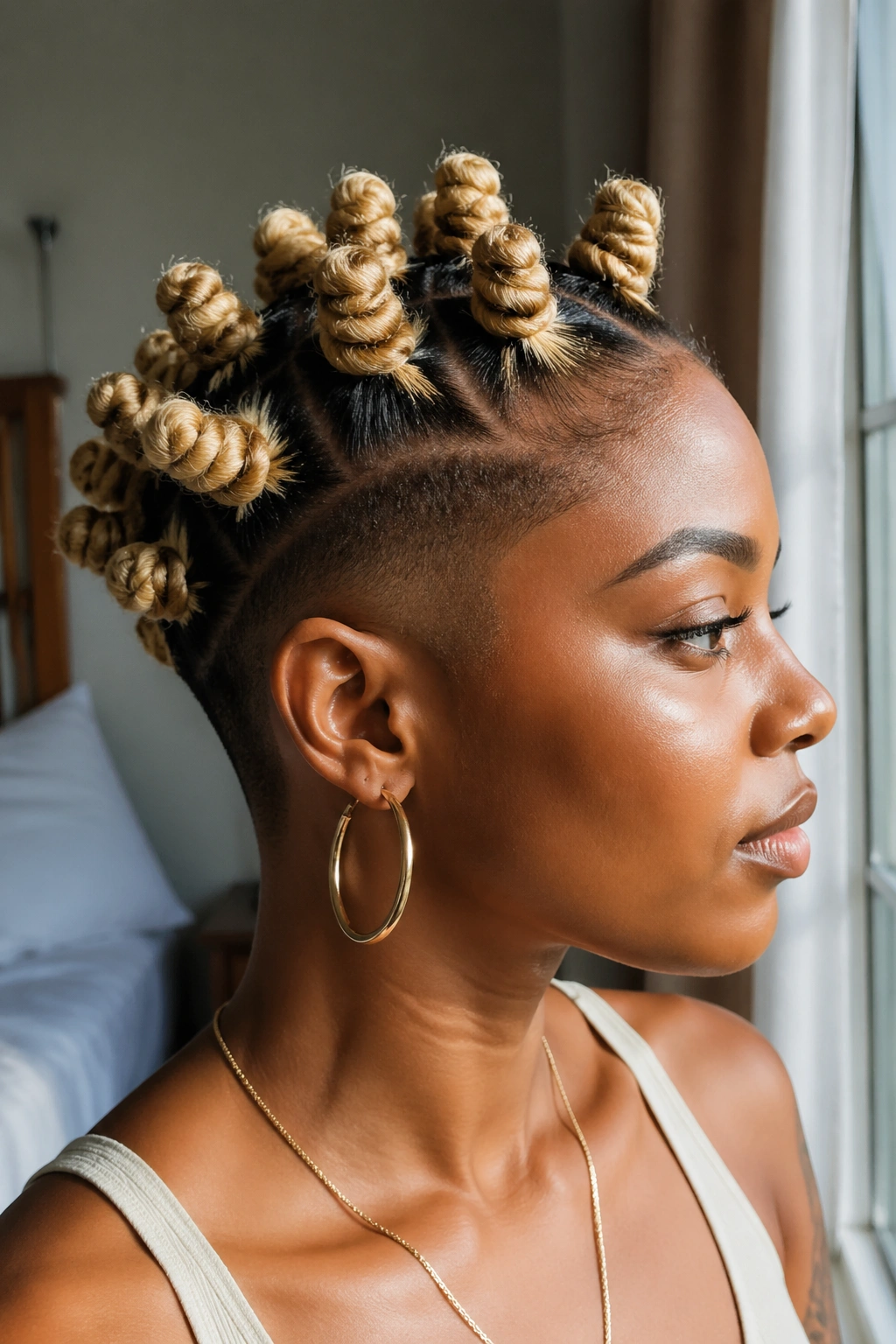
Tapered sides sharpen the whole silhouette. You get height on top, tightness on the sides, and a shape that feels more modern than a full round knot set. Blonde color makes the contrast even stronger because the lighter top area sits against a cleaner, darker or closely cropped side.
This one is especially nice if you like a bit of edge without going full mohawk. The taper keeps the profile narrow, which helps the knots sit up instead of spreading outward. That shape is flattering on a lot of face types because it lengthens the line of the head.
A lot of people think tapered styles are all attitude and no softness. I disagree. With the right blonde tone, they can look refined. Not delicate. Refined.
17. Blonde Knot Mohawk
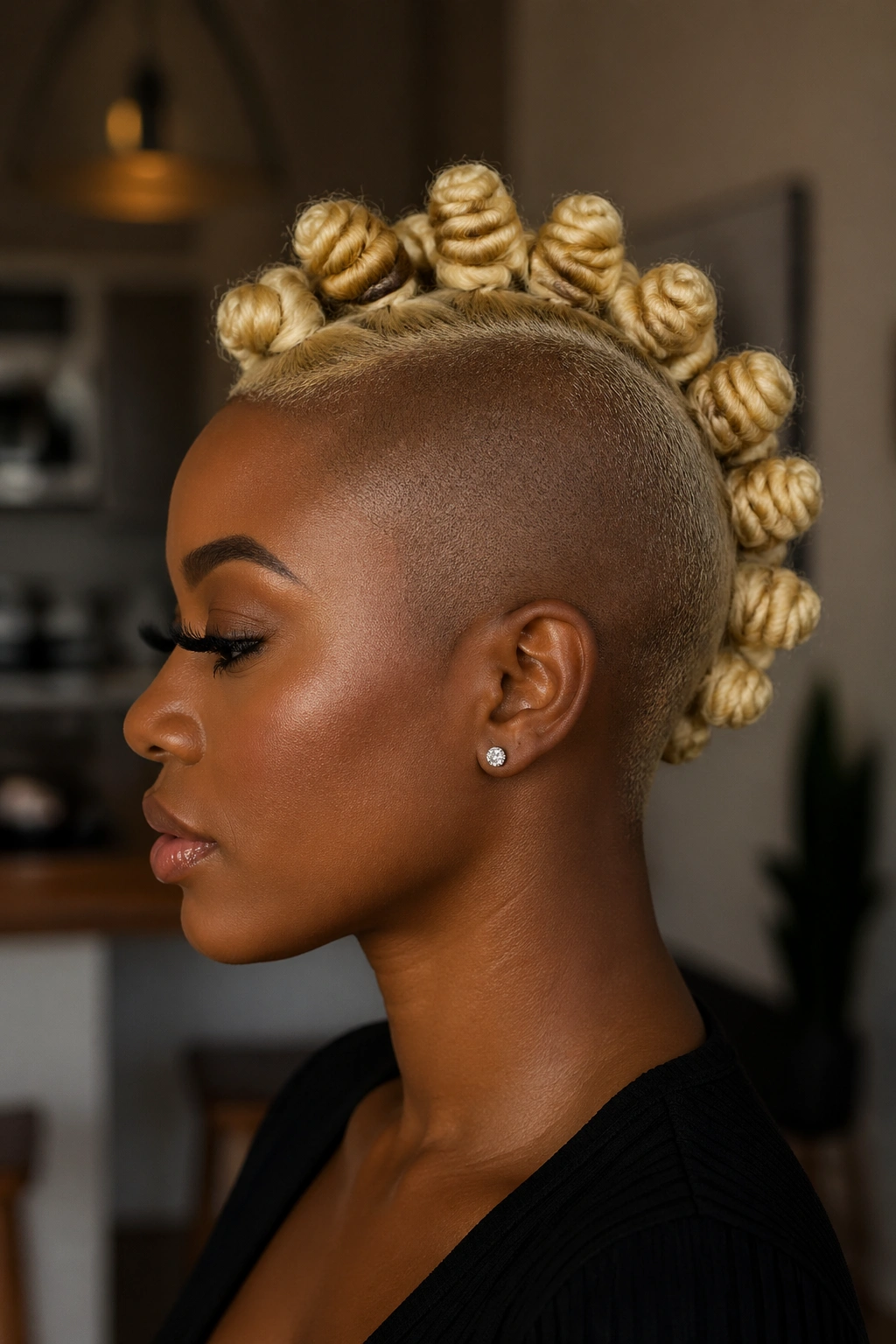
The blonde knot mohawk is for the days when subtlety is not the goal. All the knots live in a central strip, and the sides are slicked down, braided, or shaved short enough to disappear from the main silhouette. That creates a strong line from forehead to nape.
The blonde color makes the center strip pop even harder, which is why this style looks so striking in profile. The shape is already bold. Blonde just adds brightness to the edge of it. You can keep the knots small for a tighter ridge, or go bigger if you want more height.
It works best when the side finish is clean. Any puffiness on the sides steals from the mohawk shape. Keep the contrast sharp, and the whole thing lands exactly where it should.
18. Honey-to-Butterscotch Blonde Knots
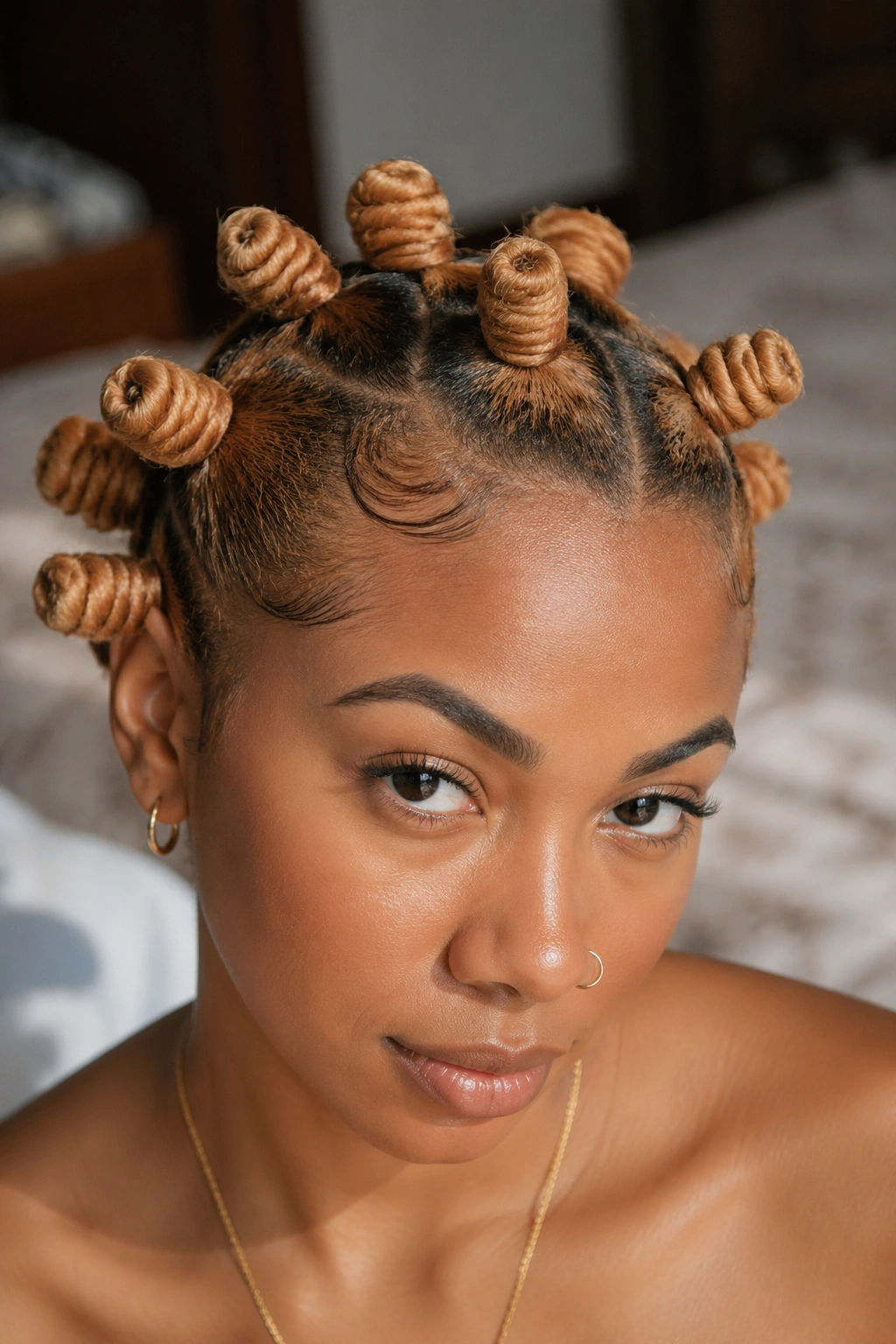
Honey-to-butterscotch blonde is softer than platinum, richer than plain honey, and warmer than ash. That middle zone gives the knots a lived-in feel. The style doesn’t scream for attention. It catches it quietly, which is often better.
What I like here is the depth. The slightly darker notes near the roots and the warmer lighter notes through the knots make each section look fuller. That’s useful if your hair is fine or if you want the knots to appear a little plumper.
This color story also works across a lot of skin tones because it doesn’t lean too cool or too yellow. It sits in a broad, flattering range. Not flashy. Just easy to wear.
19. Blonde Knots with Rope-Twist Roots
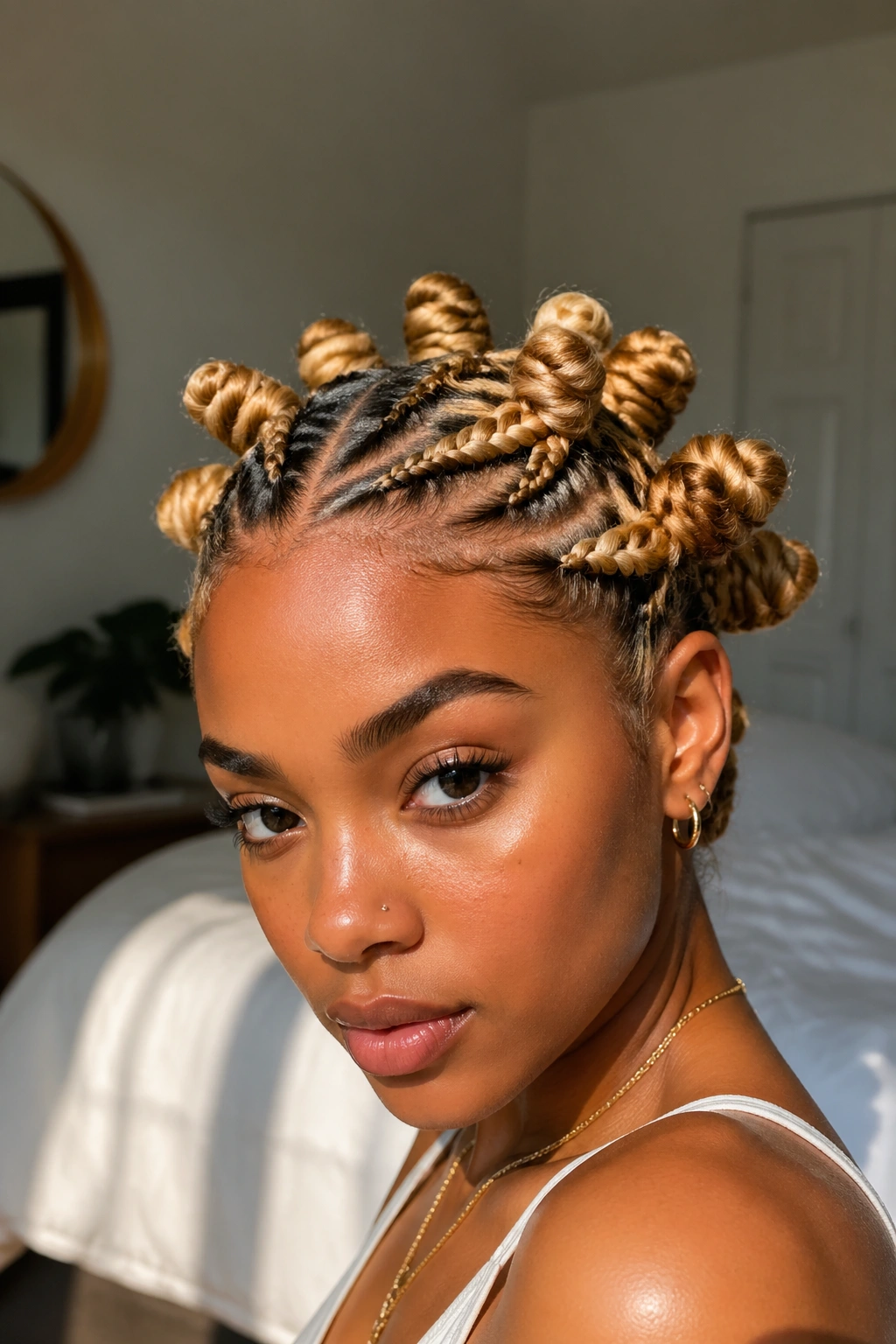
Rope-twist roots change the base texture before the knot even starts. Instead of a flat or braided entry, the hair twists into a little rope-like line that feeds the knot. That extra texture makes the style feel more layered and less rigid.
The appeal in one sentence
The twist at the base gives the knot more movement.
That’s the main point. It’s a small shift, but it changes how the whole style sits on the head. Blonde hair makes the twist pattern easier to see, which is nice if you like detail but don’t want to add accessories or bright parts.
Use this version when you want the style to look handcrafted. It has a slightly softer edge than braid-based roots, and that softness pairs well with warm blonde shades.
20. Scalp-Art Blonde Bantu Knots
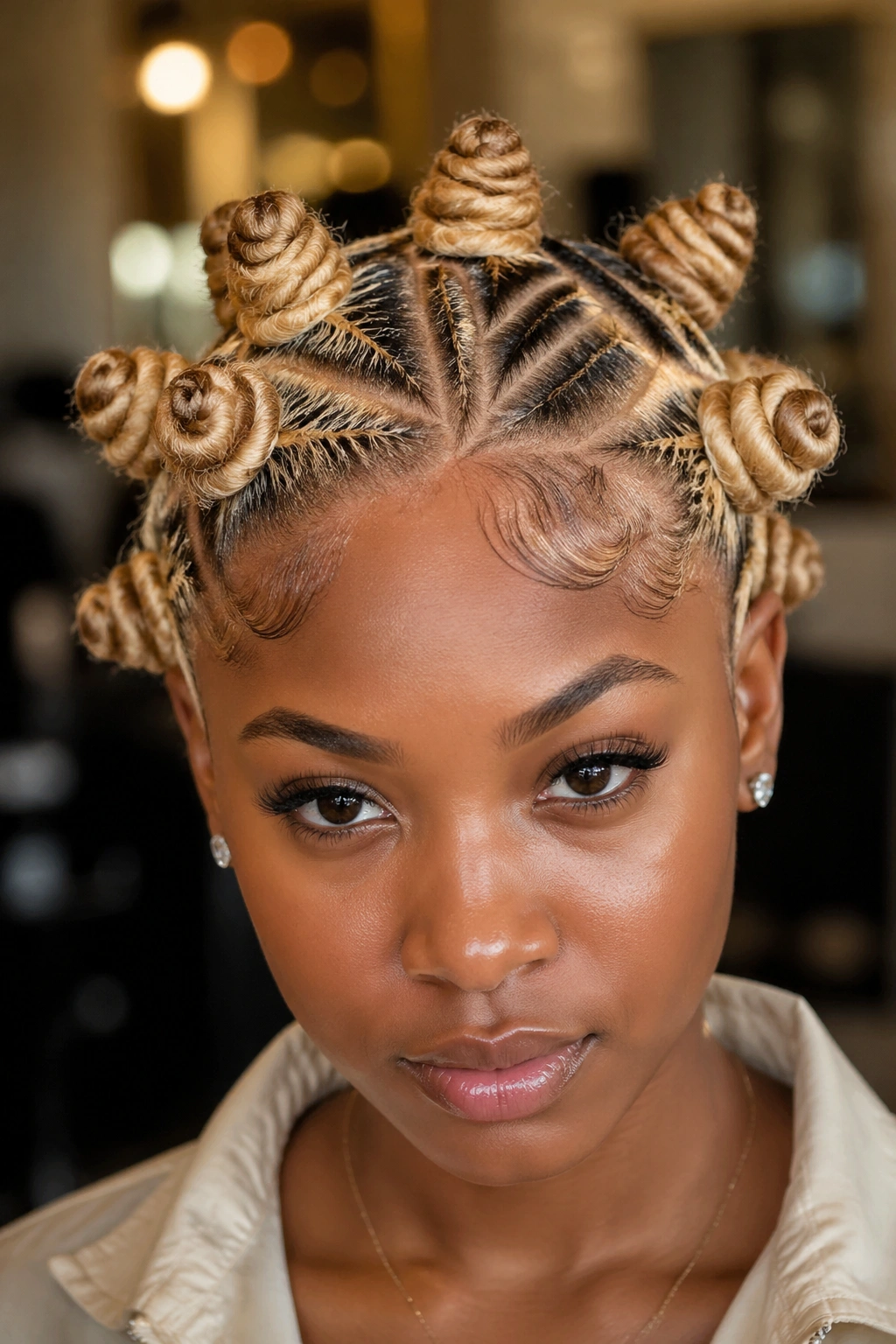
Scalp art is where the style starts acting like design work. Curves, loops, and geometric parting patterns turn the scalp into part of the look, not just the foundation under it. Blonde hair makes every line visible, which means the pattern matters just as much as the knots.
A style like this needs a steady hand. The parts have to hold their shape while you work, and the sections need enough uniformity that the pattern doesn’t collapse halfway across the head. If one side has cleaner lines than the other, everyone notices. Blonde doesn’t let you cheat.
The payoff is huge, though. This is one of the few knot styles that can look elaborate before the first knot is even finished. The hairline becomes part of the art.
21. Blonde Bantu Knots on Locs
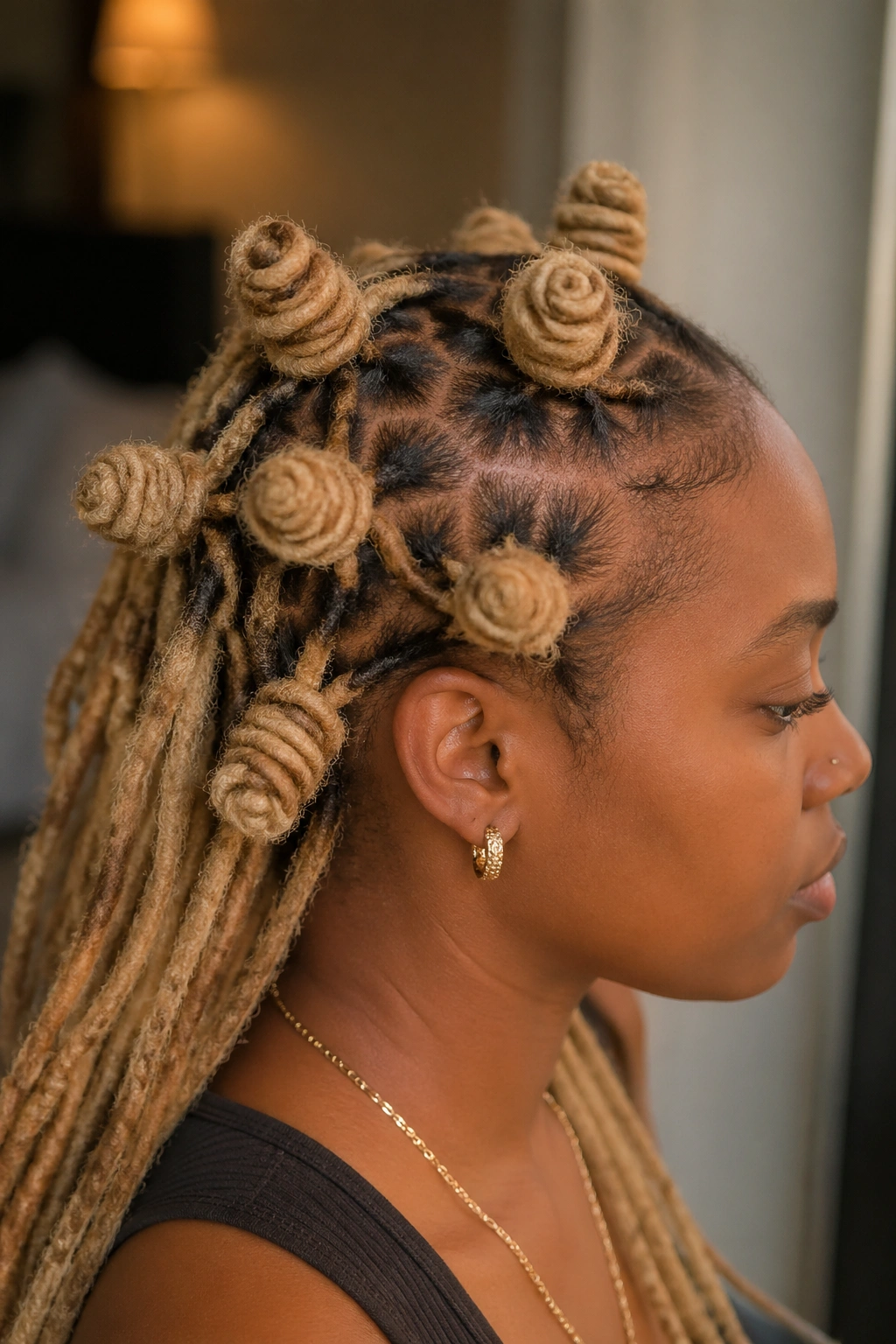
Locs bring their own texture to the party, and that changes the entire feel of blonde Bantu knots. The knots can be made from matured loc sections, wrapped locs, or a combo of locs and added blonde hair, depending on the length and weight. The result is chunkier and more grounded than a knot style on loose hair.
This is one of those looks that carries weight well. Literally. Locs already have structure, so the knots often hold their shape with less fuss than loose hair would need. Blonde adds brightness without erasing the texture underneath.
If you like hair that tells a story, this version has a lot going on. The pattern is still the same Bantu knot idea, but the texture makes it feel completely different.
22. Blonde Knots with Curly Ends
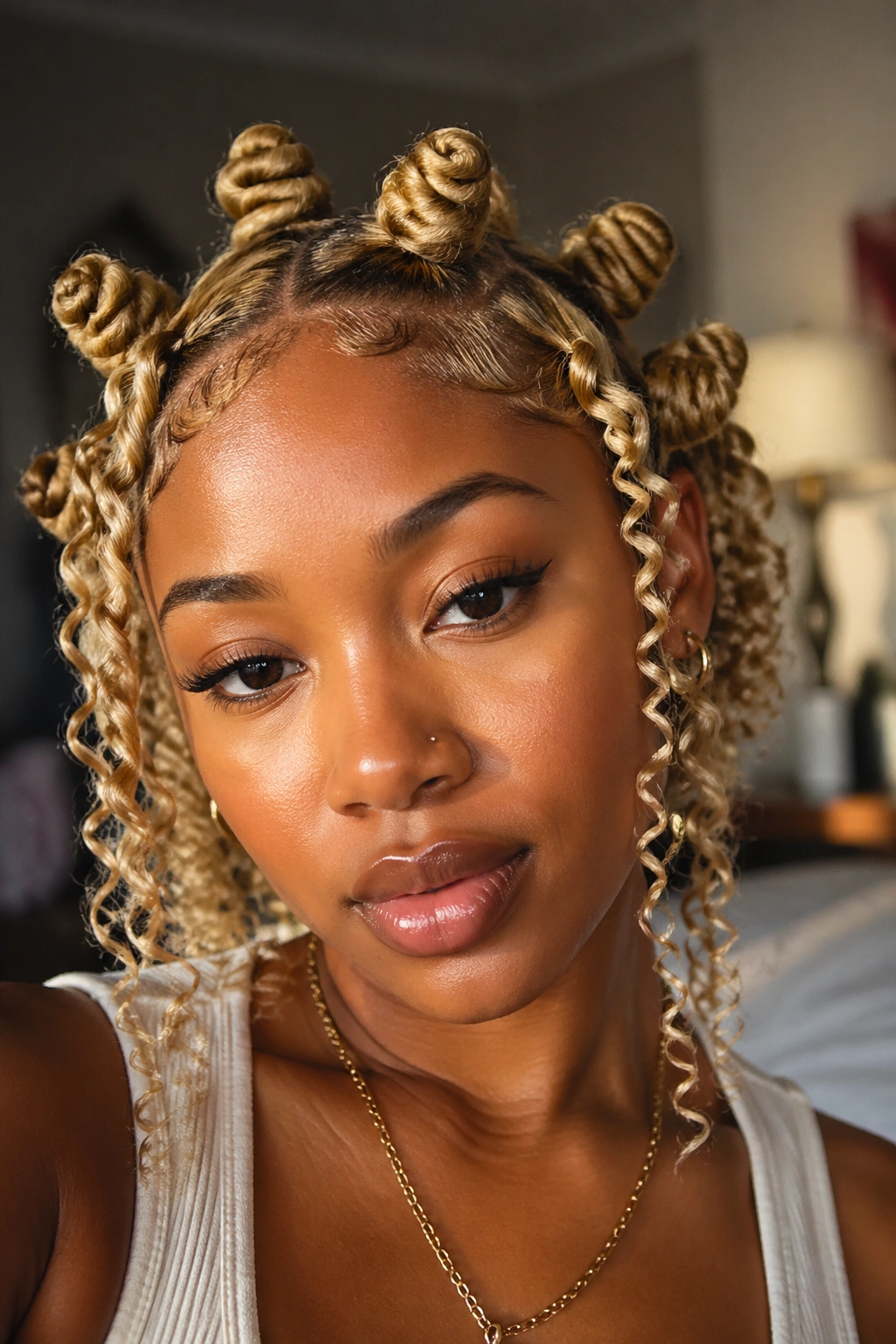
Curly ends give the knots a little softness at the edge, which can be a relief if you do not want every piece locked into a hard round shape. You can leave small ends out, twist them for a loose finish, or unravel the knots later and let the curls spill down.
The blonde color helps the curls read clearly. Even a small curl at the end of each section shows movement, especially if the shade is warm and dimensional. That makes this version feel a bit more relaxed than a fully sealed knot.
It’s a good middle ground between protective styling and a more decorative finish. You still get the sculpted knot shape, but the curls keep it from feeling too strict.
23. Blonde Knots Gathered into a Low Bun
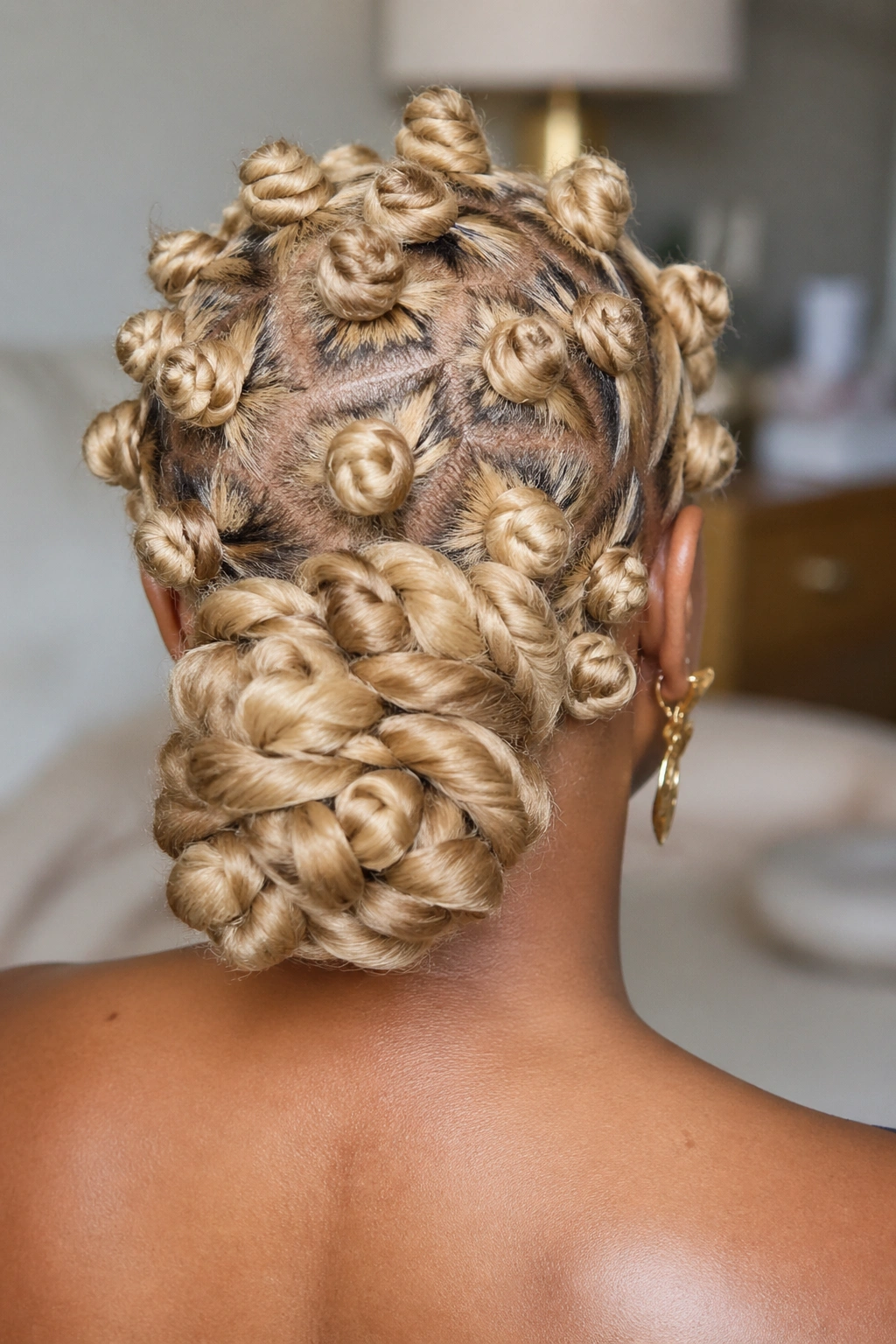
A low bun finish gives blonde Bantu knots a more dressed-up shape. Instead of letting the knots sit all over the head, you gather the finished sections toward the back or nape and pin them into a lower profile. The effect is neater, softer, and easier to pair with formal clothes.
How it changes the mood
- The silhouette drops lower, which feels calmer
- The back of the head becomes the focal point
- It works well with side parts or clean center parts
- A few tucked pieces can make the bun look fuller without adding bulk
This is the sort of style I’d wear to a dinner or a dressy event when I want something different from a plain bun. The blonde color keeps it from looking flat. The knot texture keeps it from looking boring.
24. Blonde Knots for Dressier Updos
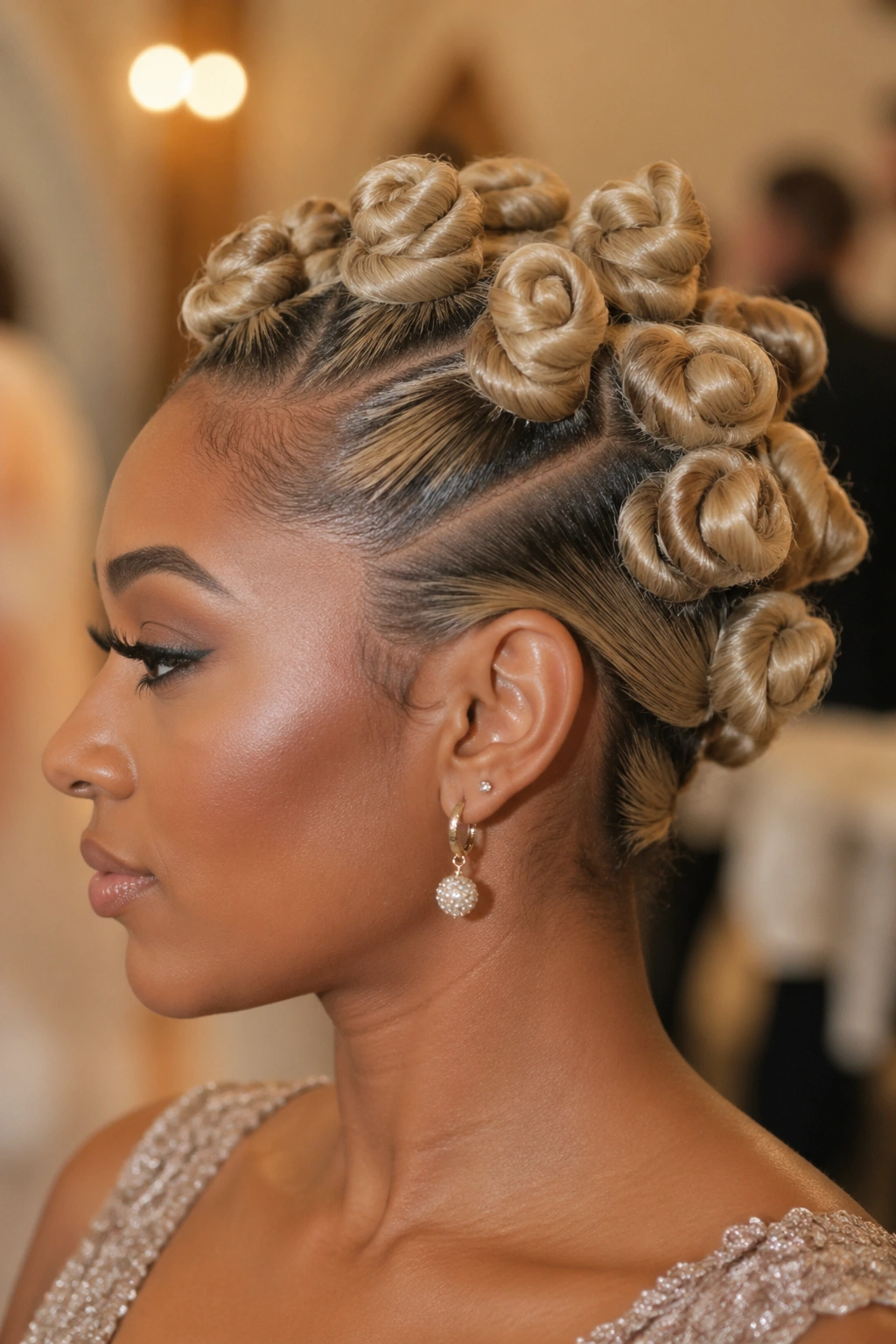
There’s a sweet spot between playful and elegant, and this is it. With blonde Bantu knots, you can pin, tuck, and shape the sections into an updo that reads polished without losing texture. It feels more deliberate than letting the knots hang freely, which makes it easy to wear with a structured dress or a sharp collar.
The trick is to keep the base smooth and the knot placement tight to the scalp. If the style starts floating away from the head, it stops looking refined. A few discreet pins can fix that. Use them under the knot, not on top where they’ll show.
This look is especially good when the blonde shade has dimension. A flat color can make the updo feel one-note. A warm blend gives the shape more depth, and depth is what makes updos interesting.
25. Deep Side-Part Blonde Bantu Knots
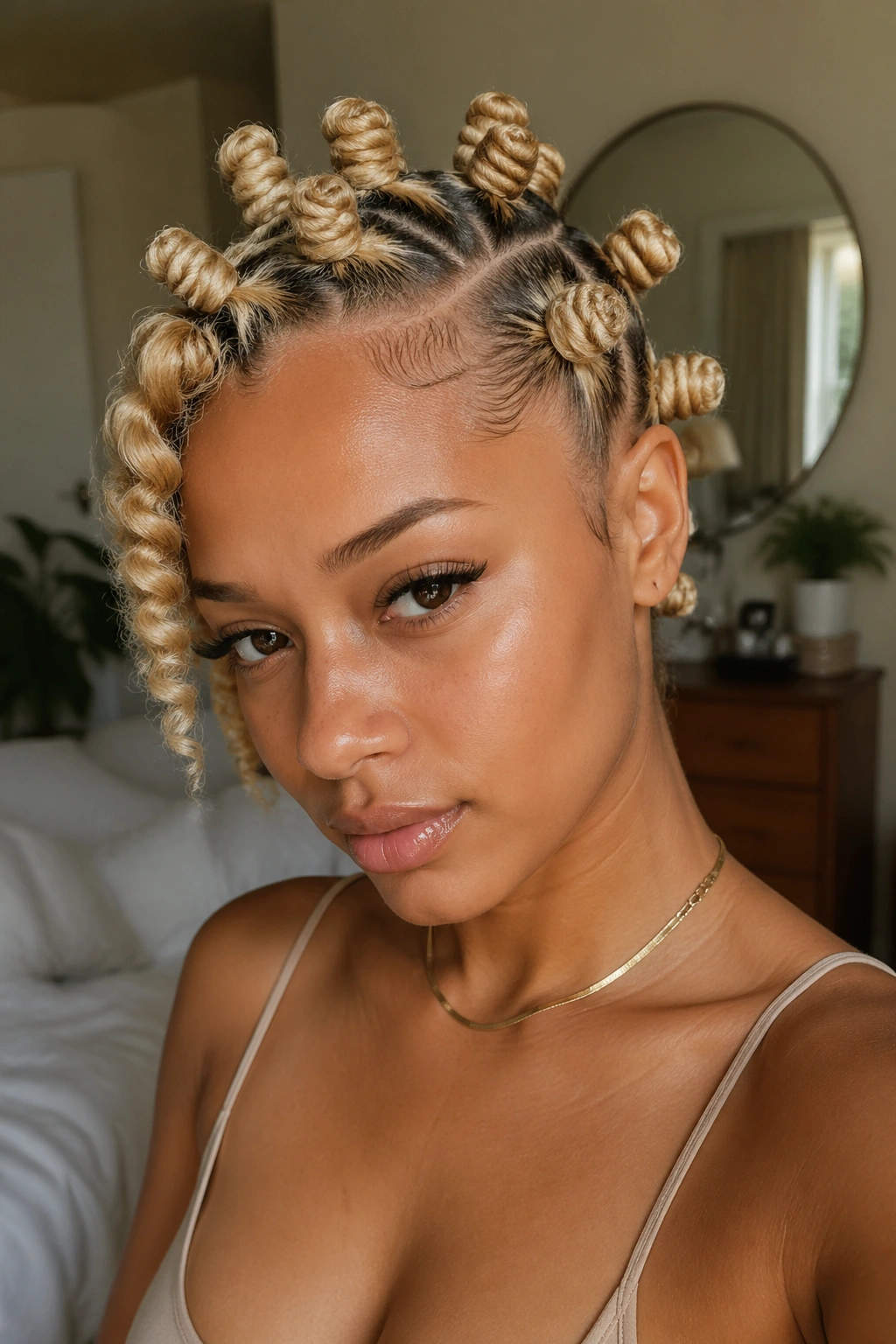
A deep side part changes the whole energy of the style. The knots still sit in their rounded rows, but the off-center line pulls the eye sideways first, which makes the look feel less predictable. On blonde hair, that parting is extra visible, so the shape has room to breathe.
The best thing about this version is how flattering it can be around the face. The heavier side gives a little softness near the forehead, while the lighter side opens things up. It is a small adjustment, but it shifts the mood from symmetrical to flattering in a way that feels effortless.
If you like your blonde Bantu knot styles with a bit more movement than a straight center part, this is the one to keep in your back pocket. It looks good from the front, and the profile has enough contrast to stay interesting.
Final Thoughts
The strongest blonde Bantu knot styles are the ones that respect shape first and color second. If the parting is clean and the sections make sense, the blonde shade can do almost anything you ask of it — soften, sharpen, brighten, or turn the whole style into something a little more dramatic.
I’ve always liked how forgiving the look can be when the palette is chosen well. Honey and caramel are easier if you want warmth. Platinum and ash are better when you want the knots to look graphic. The style itself stays the same. The mood changes fast.
Pick the version that matches your hair length, your patience, and how much attention you want that day. Then keep the parts neat, the roots smooth, and the finish light. That’s where the style starts to shine.