



Quick weave Bantu knot styles can look polished or a little chaotic from the same chair, with the same hair, and sometimes even with the same stylist. The difference usually comes down to three things: how flat the foundation sits, how clean the parting is, and whether the knots are sized with intent. If those pieces are off, the whole style starts to feel bulky fast. If they’re right, the look has that neat, sculpted finish people notice across a room.
I’ve always liked this family of styles because it gives you room to play. A quick weave base can stay sleek and protective while the knot pattern does the talking. Some versions feel soft and easy, like something you could wear to brunch without thinking about it too much. Others lean sharp and graphic, with parts so crisp they almost look drawn on.
The smartest versions of the style respect the head shape instead of fighting it. A center part can calm a strong knot grid. A side sweep can soften a wide forehead. Bigger knots change the whole mood. Smaller ones do, too. Tiny detail. Big payoff.
And that’s the fun part here: you are not stuck with one look. The 25 styles below range from clean and minimal to bold and decorated, with enough variety to help you choose something that fits your face, your time, and how much attention you actually want the hair to get.
1. Classic Center-Part Knots
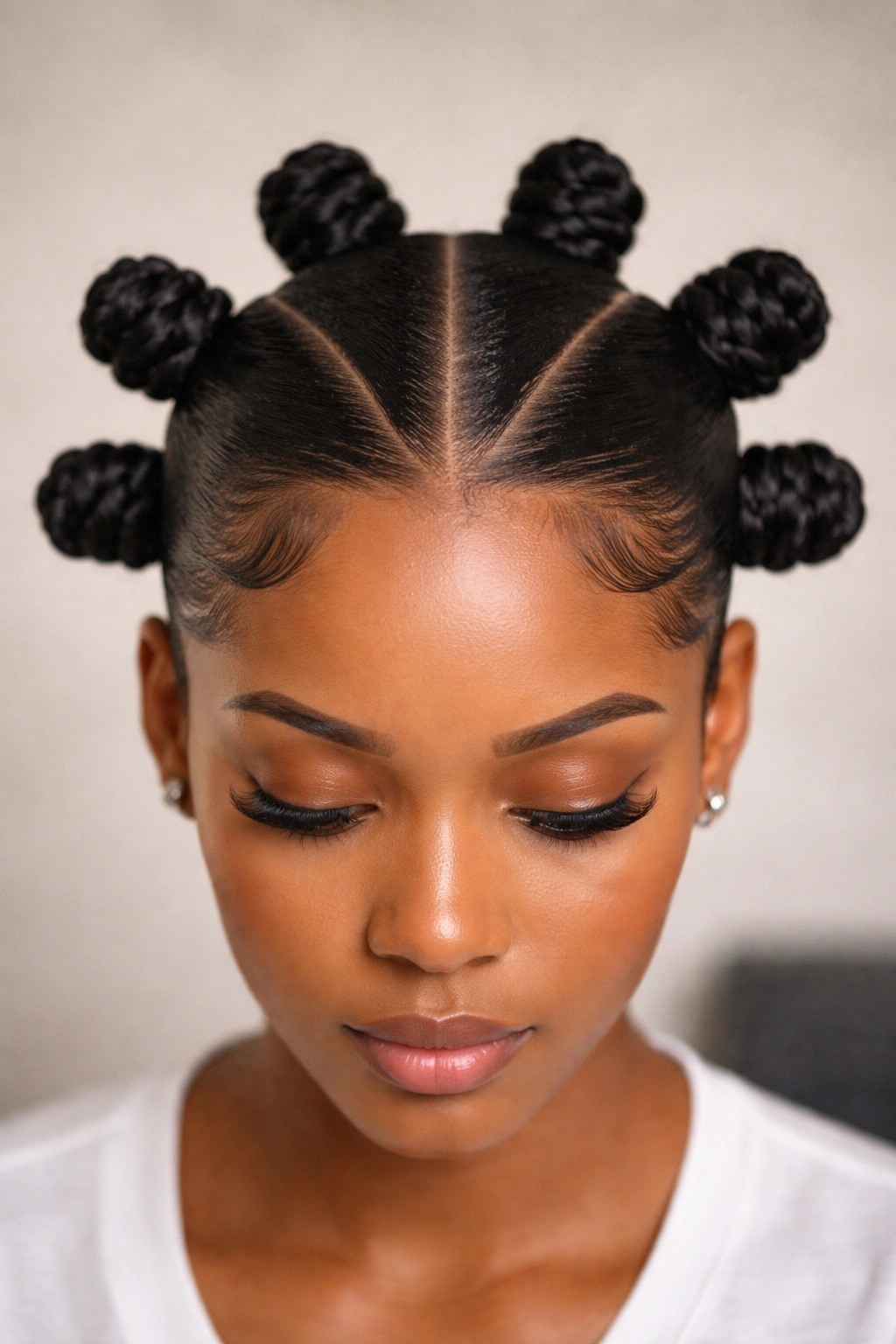
This is the version I’d hand to someone who wants the cleanest possible starting point. A straight center part gives the eye a place to land, and it makes the knot pattern look balanced even when the rest of the style stays simple.
Why it stays flattering
The middle line creates symmetry, which helps the knots sit evenly on both sides of the head. On a quick weave base, that matters more than people think, because a slightly lopsided foundation shows up fast once the hair is sectioned. Keep the parts about 1 to 1.5 inches wide if you want the knots to read clearly without looking crowded.
- Best for oval, heart, and longer face shapes
- Works well with medium-sized knots
- Looks especially neat when the front hairline is laid flat first
Tip: Make the front two knots a touch smaller than the rest. That keeps the hairline from looking heavy.
2. Deep Side-Part Knots
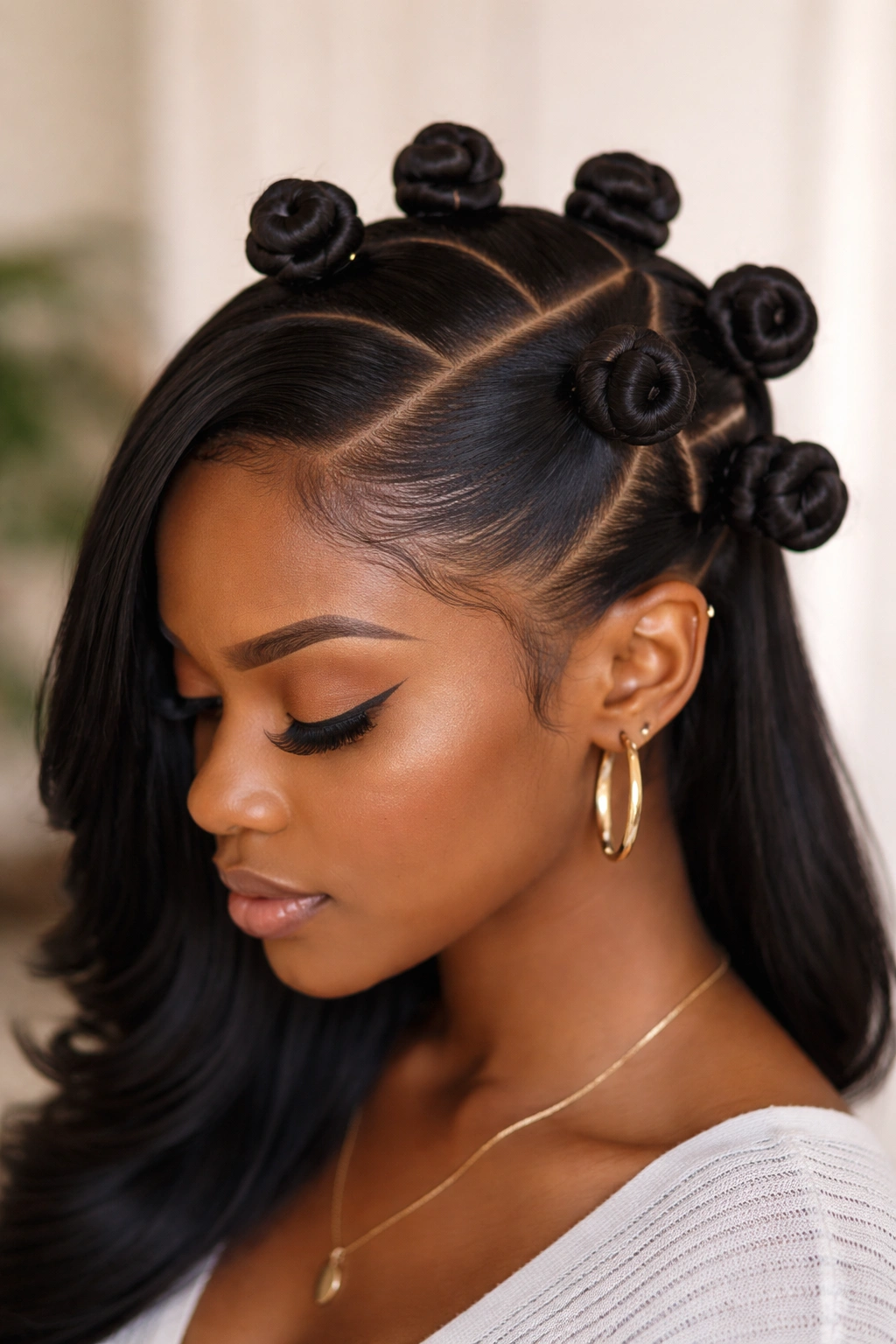
A deep side part changes the whole mood in one move. The style gets softer, a little more dramatic, and a lot easier to wear if you like hair that sweeps across the face instead of sitting straight on it.
The off-center part is useful when you want the quick weave to feel less rigid. It also helps if one side of your face carries more width or if you usually reach for side-swept styles anyway. The knots can stay the same size, but the way your eye moves across them changes completely. That is the magic here.
I like this look with a clean 60/40 split rather than an extreme side part. Too far over, and the knot distribution can feel awkward. Too close to the center, and you lose the point. Keep one side a little fuller, and let the other side taper naturally.
3. Half-Up Bantu Knot Crown
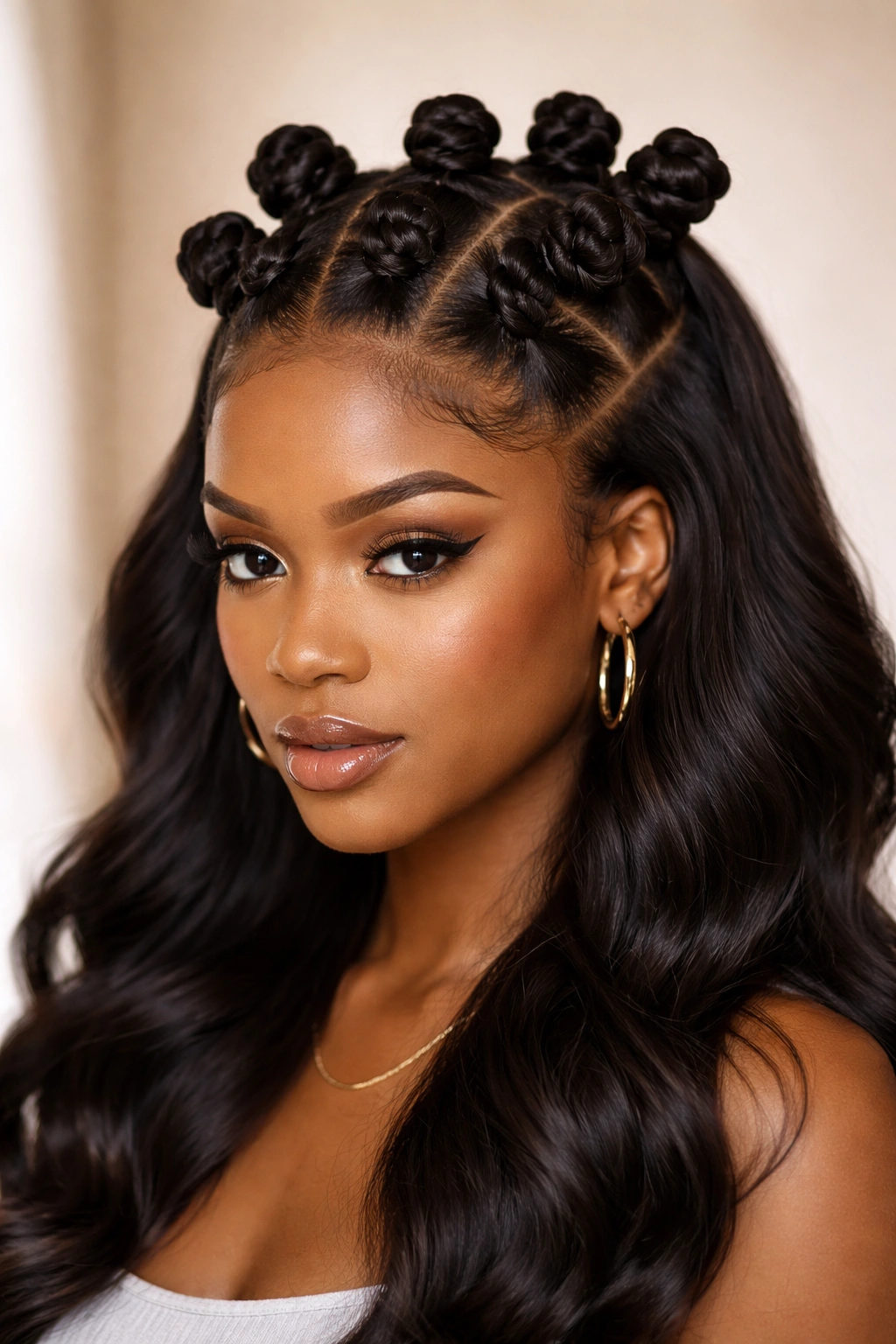
A half-up knot crown gives you the polish of Bantu knots without putting every strand into the pattern. The top section carries the detail, while the back stays loose, curled, or tucked into the weave for movement.
That contrast is what makes the style work. The top half gives structure. The lower half keeps the look from feeling stiff. If you want hair that can still move when you turn your head, this is one of the easiest ways to get there.
How to wear it
Keep the knots concentrated from the hairline to just above the crown. Below that line, leave the weave smooth or set it in loose waves. The transition should feel intentional, not chopped in half. A little mousse on the lower section helps blend everything so the style reads as one look, not two separate ideas fighting for space.
4. Jumbo Statement Knots
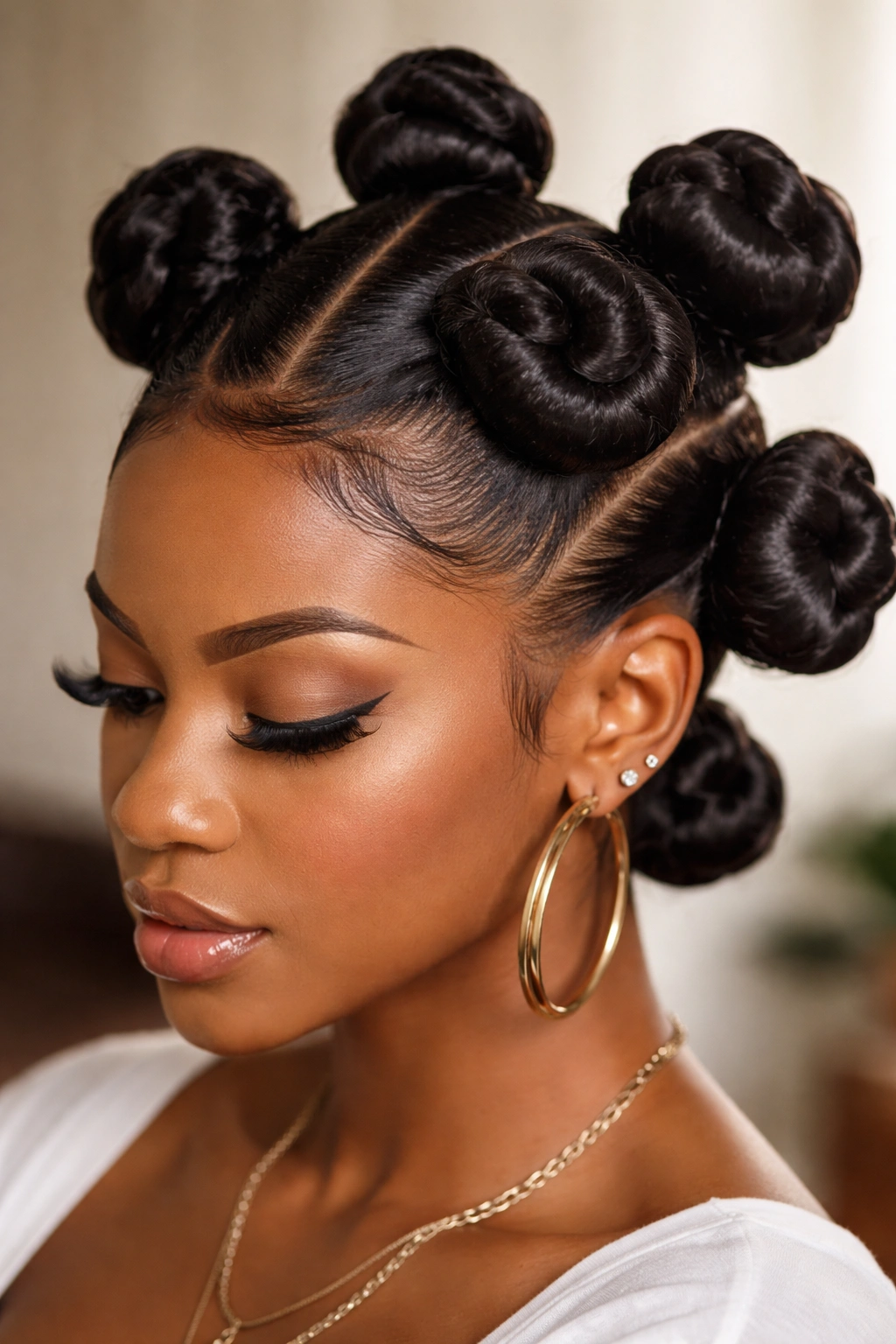
Big knots make no effort to hide themselves. They sit there like design objects, and that is exactly why some people love them. If you want the style to read bold from across the room, larger sectioning does the job fast.
The practical upside is install time. Fewer knots means fewer parts, and that can make the style feel lighter on the scalp. The tradeoff is that jumbo knots need more precision at the base, because sloppy parting shows up quicker when every knot is bigger. A clean quick weave foundation helps a lot here.
- Use 6 to 8 large sections for a full-head look
- Keep each knot round, not flattened
- Pair with hoop earrings or a strong lip if you want the hair to feel balanced
One caution: giant knots can swallow a narrow face if the sections get too wide. Keep them chunky, not cartoonish.
5. Mini Precision Knots
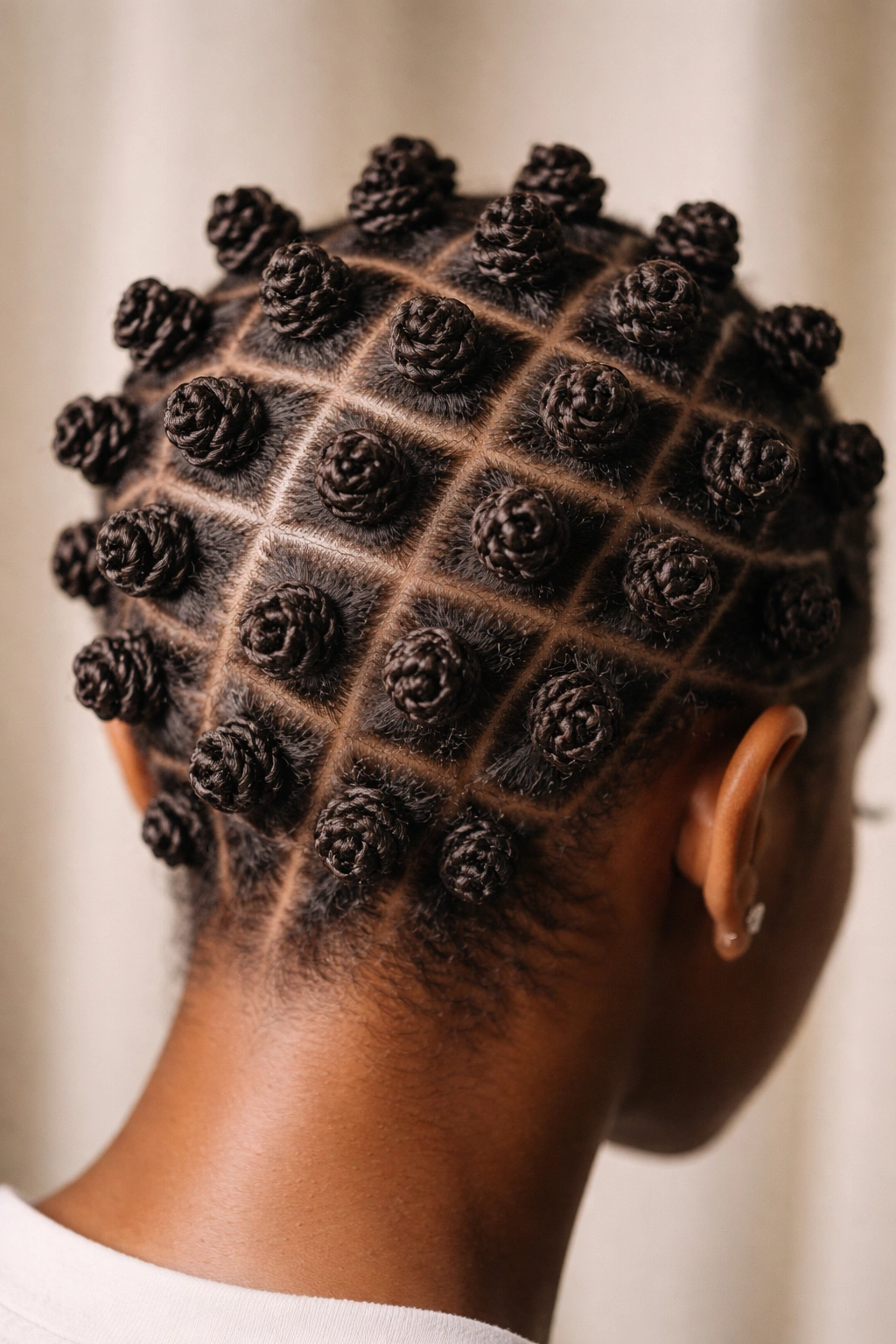
Tiny knots are a different animal. They take more time, more patience, and a steadier hand, but the finish is crisp in a way bigger knots can’t quite match. The whole style reads finer, neater, and a little more delicate.
That makes this version useful when you want the quick weave to look detailed rather than loud. The smaller parting grid gives the scalp a patterned look, and the knots themselves sit closer together. You get texture without bulk. You also get a cleaner silhouette if your face shape already carries a lot of width.
I’d reach for this when I wanted the style to last longer between touch-ups. Smaller sections usually hold their shape well, though they do ask for more careful nighttime wrapping. A satin scarf is not optional here. It’s the difference between tidy knots and fuzzy little bumps by morning.
6. Mohawk Row Knots
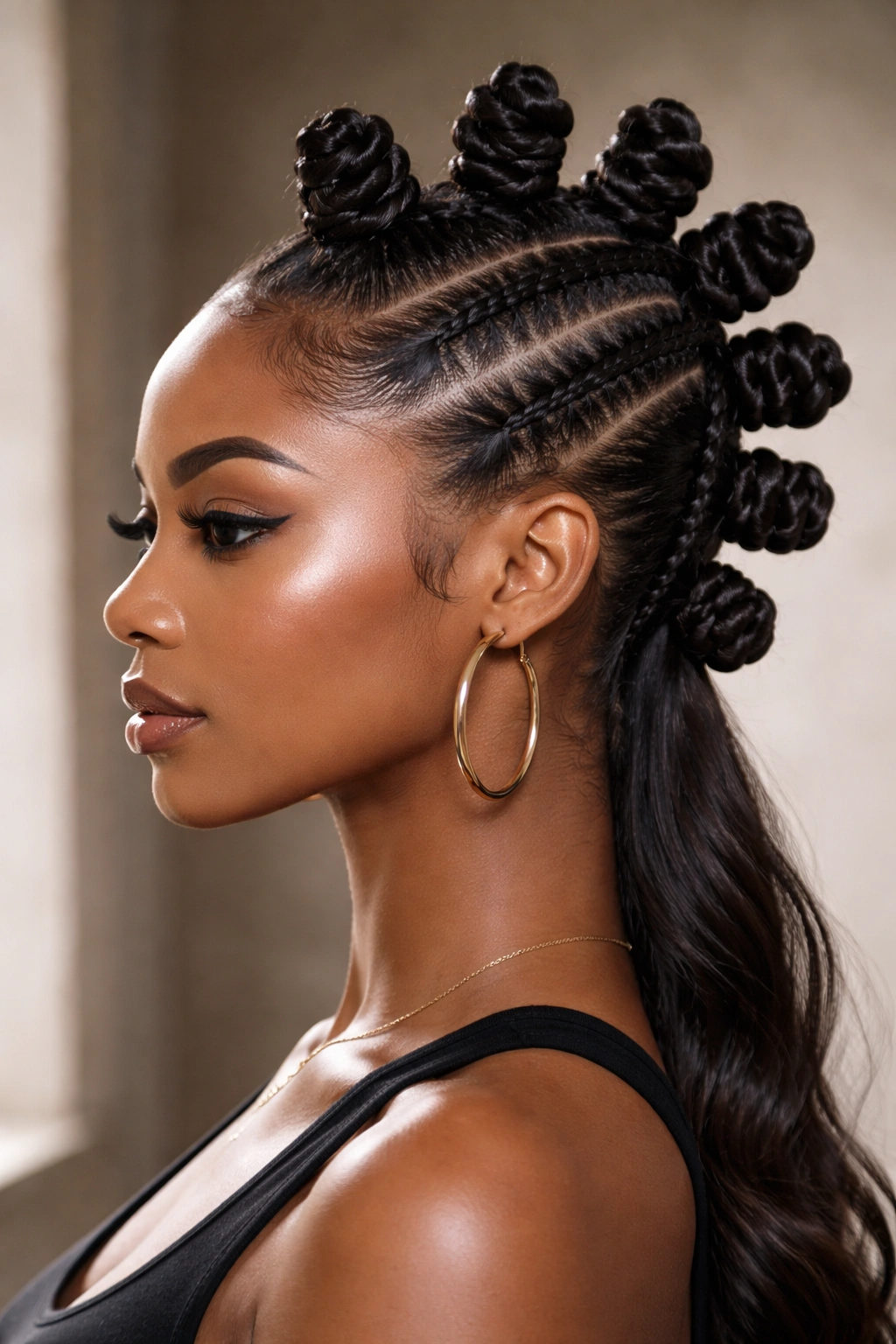
A mohawk row turns Bantu knots into a profile statement. The knots sit in a central line from front to back, while the sides stay slicked down, braided in, or tucked flat against the quick weave base.
That strong middle strip gives the style real height. It also helps if you like angular makeup or a sharper wardrobe, because the hair has the same kind of energy. Clean. Focused. Slightly bold without needing extra color or accessories.
If your face tends to look softer and you want more edge, this is a good place to start. Keep the side sections close to the scalp so the row stays the star. A little gel at the sides, then a soft brush over the top, keeps the line neat. And if the row feels too severe, the fix is simple: make the central knots a bit rounder and leave the back section less tight.
7. Low-Nape Sleek Knots
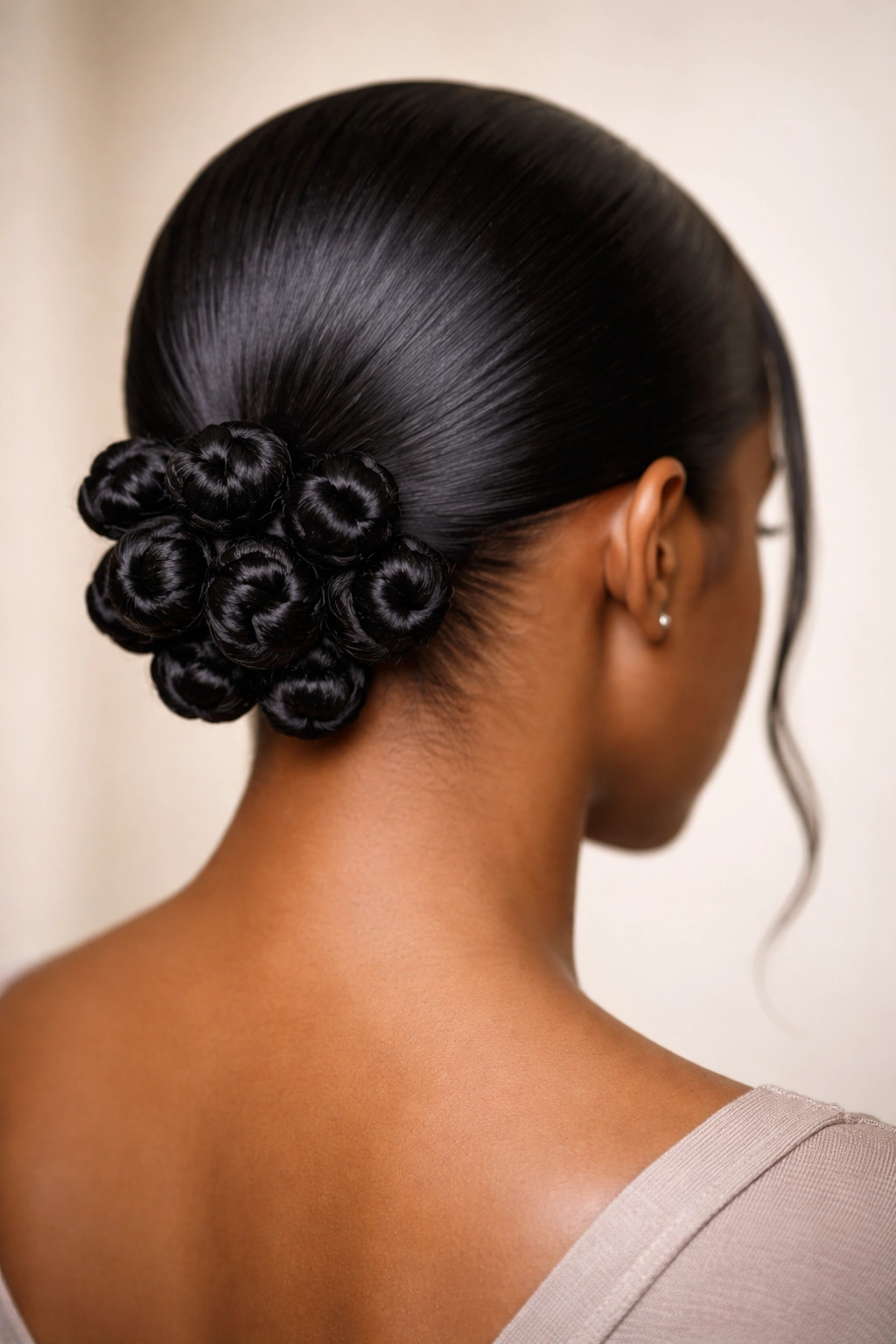
A low-nape knot set shifts the weight of the style downward, which gives the whole look a calmer, more mature feel. Instead of stacking the hair high, you place the knots closer to the neckline and keep the crown smooth.
There’s something nice about that restraint. It lets the quick weave base stay glossy and flat on top, while the knots form a neat cluster near the back. The style works especially well when you want earrings, makeup, or a neckline to stay visible. It doesn’t crowd the face.
What makes it feel polished
The crown should look brushed, molded, and held in place before the knots are formed. If the top puffs up, the whole style loses its clean line. Use a light foam or setting lotion to keep the front flat, then secure the knots low enough that they skim the nape instead of sitting on the back of the head like a crown you forgot to place.
8. Triangle-Part Knots
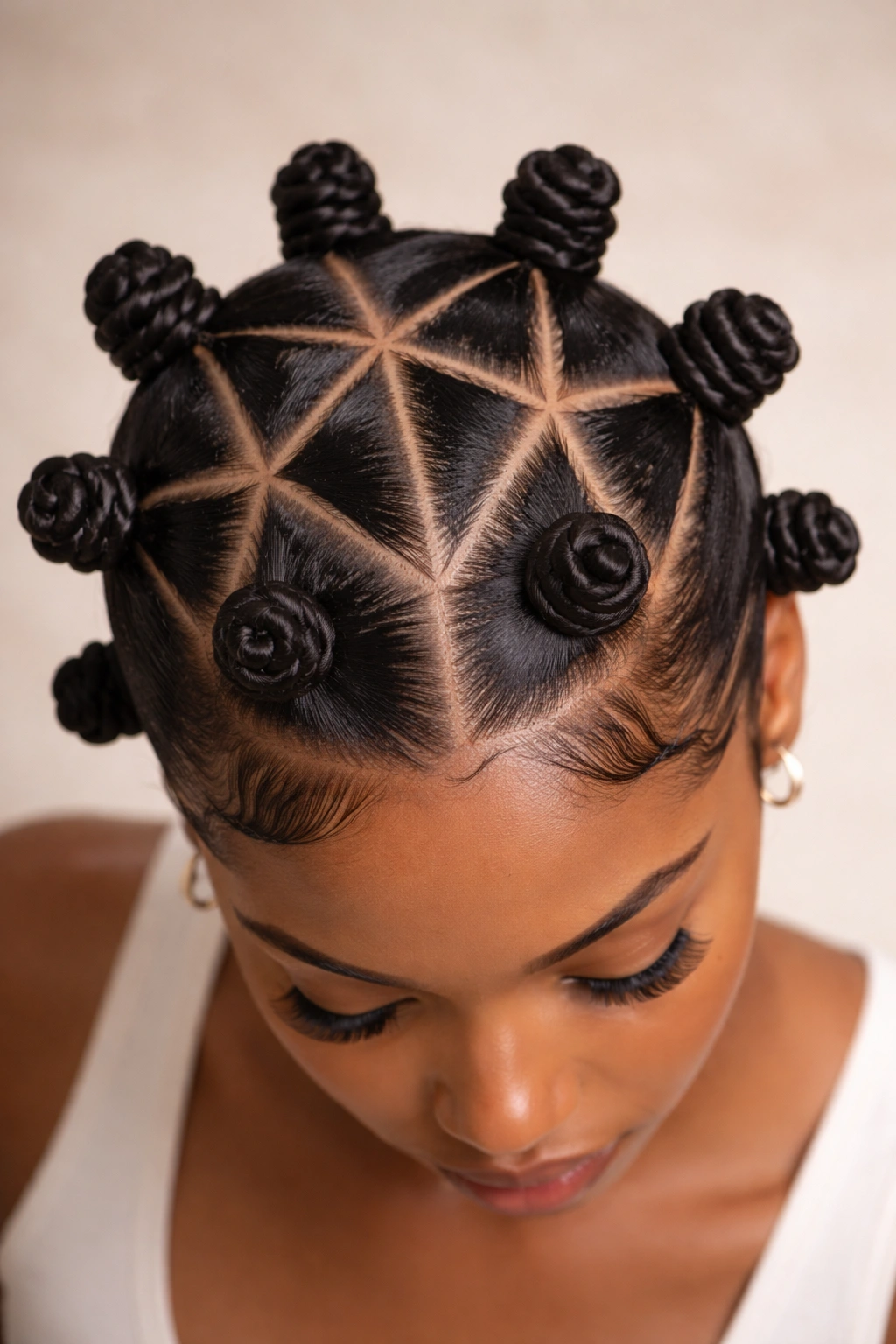
Triangle parts do a lot of visual work for almost no extra hair. The shape is the point. Even if the knots themselves are simple, the parting makes the style look intentional.
That sharp geometry is a good match for a quick weave because the base can already be smooth and controlled. Once the sections are carved out, the triangles sit like little markers across the scalp. It’s neat, but not boring. And if you’re the kind of person who likes seeing the sectioning as part of the hairstyle, this one lands beautifully.
Key details
- Part triangles around 2 to 2.5 inches wide for medium knots
- Keep the lines crisp with a rat-tail comb
- Use a small amount of shine spray, not heavy oil, so the scalp stays visible
Best with: simple earrings, solid-color outfits, and a clean hairline. Too many extras start fighting the part shape.
9. Zigzag-Part Knots
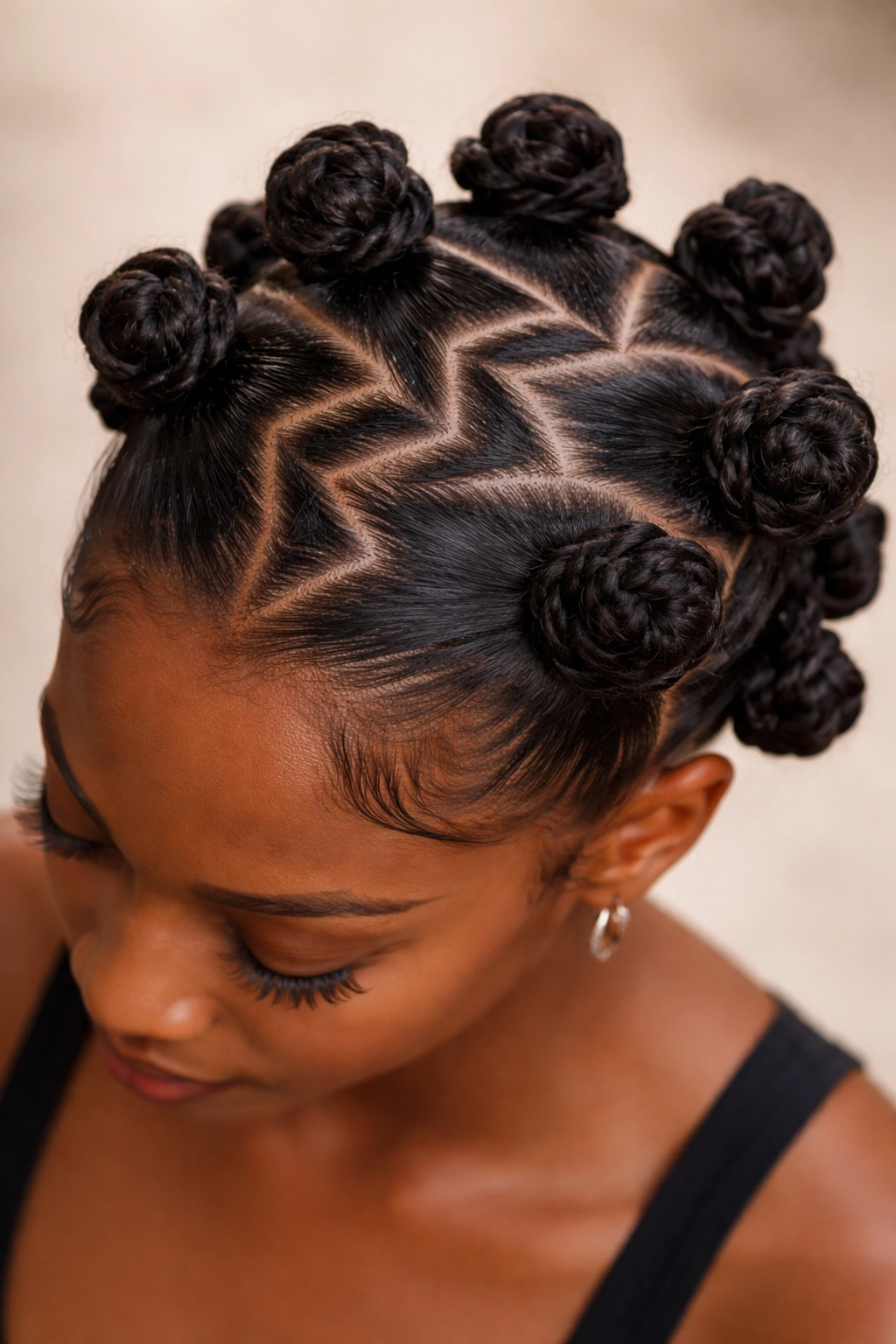
A zigzag part adds a little attitude before you even reach the first knot. The pattern moves across the scalp in broken lines, which makes the whole style feel less formal and more playful.
What I like here is the sense of movement. Straight parts are neat, yes, but zigzags have a bit of swagger. They also distract the eye from any tiny imbalance in the weave base, which is useful if the install isn’t glass-smooth everywhere. The part shape becomes the feature.
Keep the knots themselves fairly simple. That’s the trick. If the sections are already doing a lot, the knot shape should stay round and controlled. Too many competing details and the style starts to look busy. One bold choice is enough.
10. Two-Tone Color-Block Knots
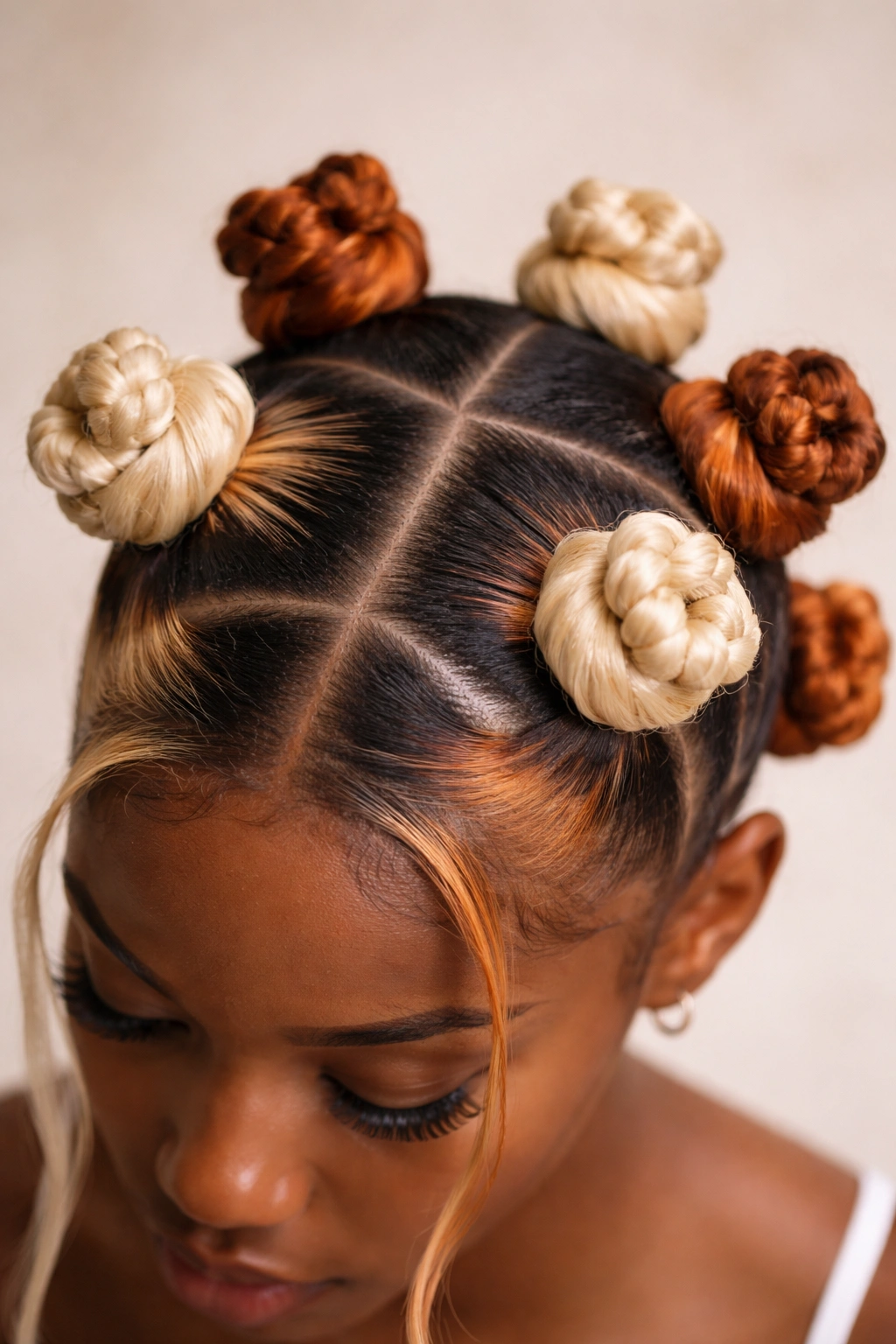
Color-blocking works because the knot shape already gives you texture, so the color change has a clean surface to sit on. A dark root with lighter lengths is the easiest version, but alternating shades across different knots can be striking too.
The safest approach is to make one color dominant and let the second one act like punctuation. If both shades scream at the same level, the eye has nowhere to rest. That’s when the look stops feeling styled and starts feeling random. Keep the contrast deliberate. That’s the whole game.
This style loves warm browns, honey tones, soft auburn, and deep espresso combinations. If you want something louder, a black-and-copper pair can be sharp. If you want it smoother, stay inside one color family and vary the depth by a shade or two. The quick weave base holds the color story together.
11. Face-Framing Highlight Knots
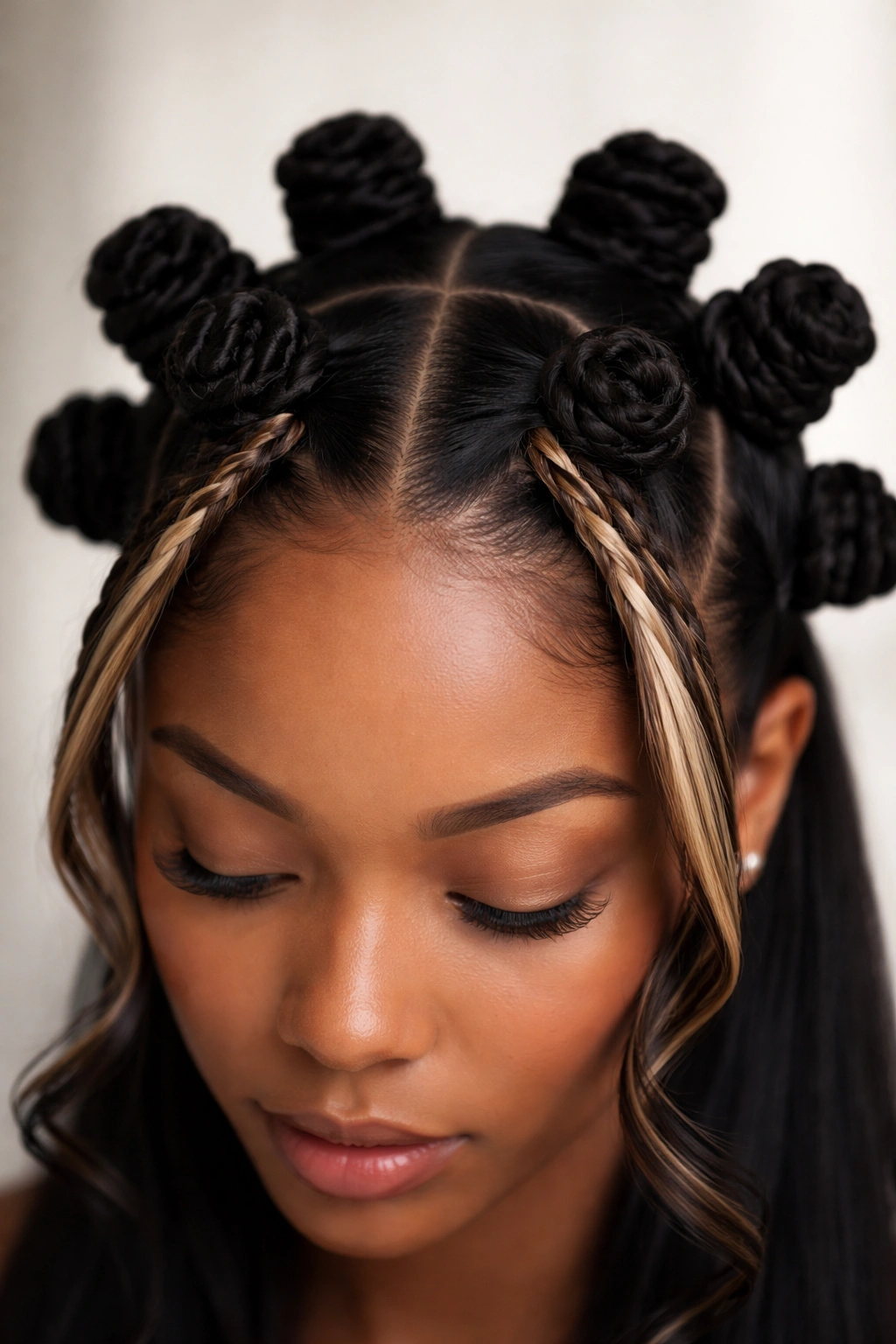
Not every knot needs to be colored. Sometimes the smartest move is to brighten just the front row and leave the rest alone. That keeps the style dimensional without turning the whole head into a color project.
A few lighter knots near the temples or the front part line can pull attention toward the eyes. That’s a nice trick if you wear your hair up a lot and want the style to soften your face a bit. It also keeps maintenance easier, because the color placement is concentrated where people notice first.
Placement that works
Put the lighter pieces where the knots naturally catch the eye: both sides of the part, the front corners, or the top row near the hairline. Avoid scattering highlights everywhere. The point is to frame, not flood.
12. Accessory-Heavy Knots
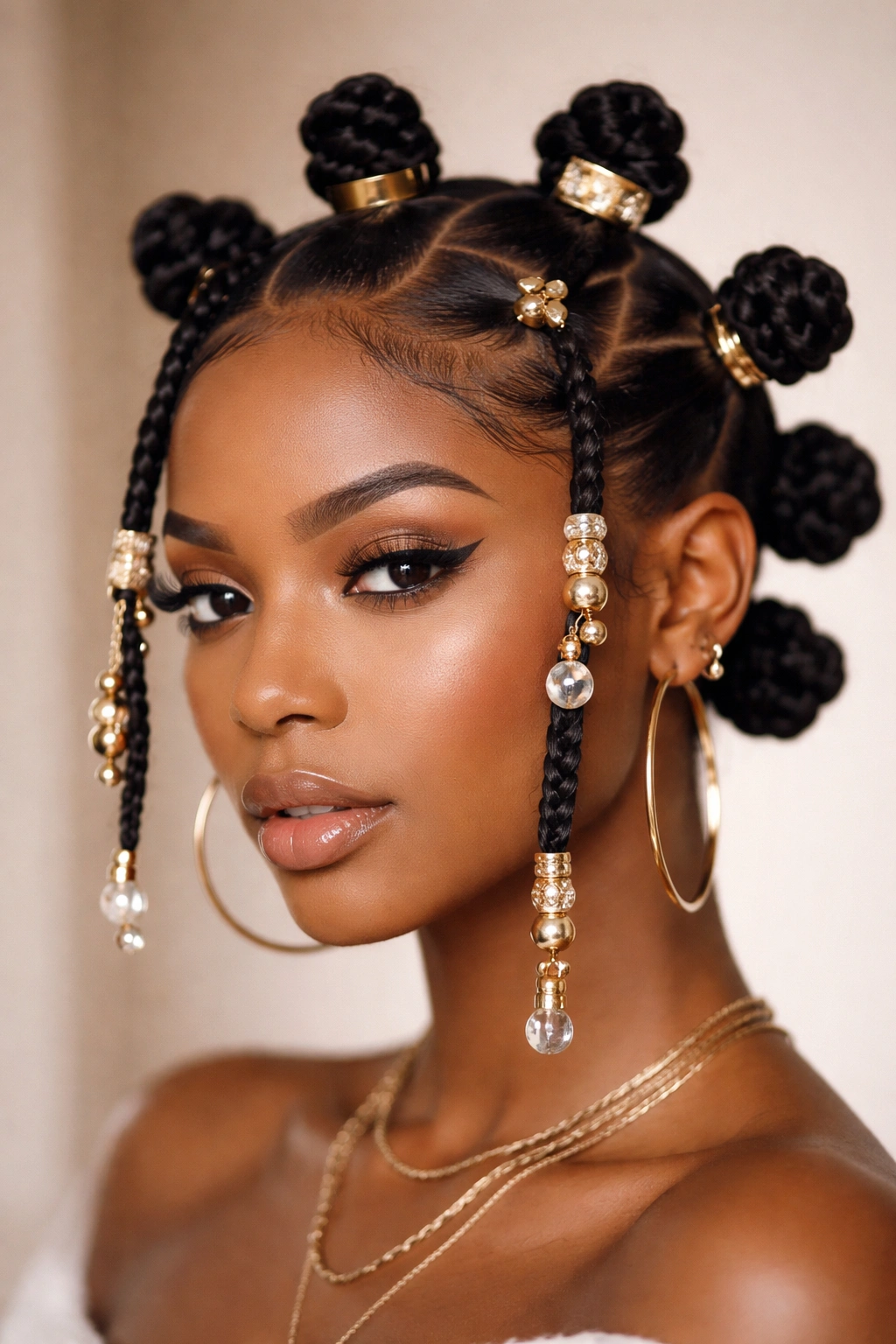
Beads, cuffs, cords, rings, tiny shells — the accessory lane can go one of two ways: sharp or cluttered. The difference is restraint. Two or three accents usually look stronger than covering every knot with hardware.
I like this style when the knots themselves are fairly simple and the accessories carry the personality. A gold cuff on the front knot. A wrapped string near one temple. Maybe one shell detail at the back. That’s enough. The hair should still look like hair, not a craft drawer.
If the quick weave base is sleek, the accessories stand out more because the surface around them is quiet. Keep the rest of the look plain and let the pieces do their job. Too many extras tug the style off balance, and then you spend the day adjusting them instead of enjoying the hair.
13. Bob-Length Knot Set
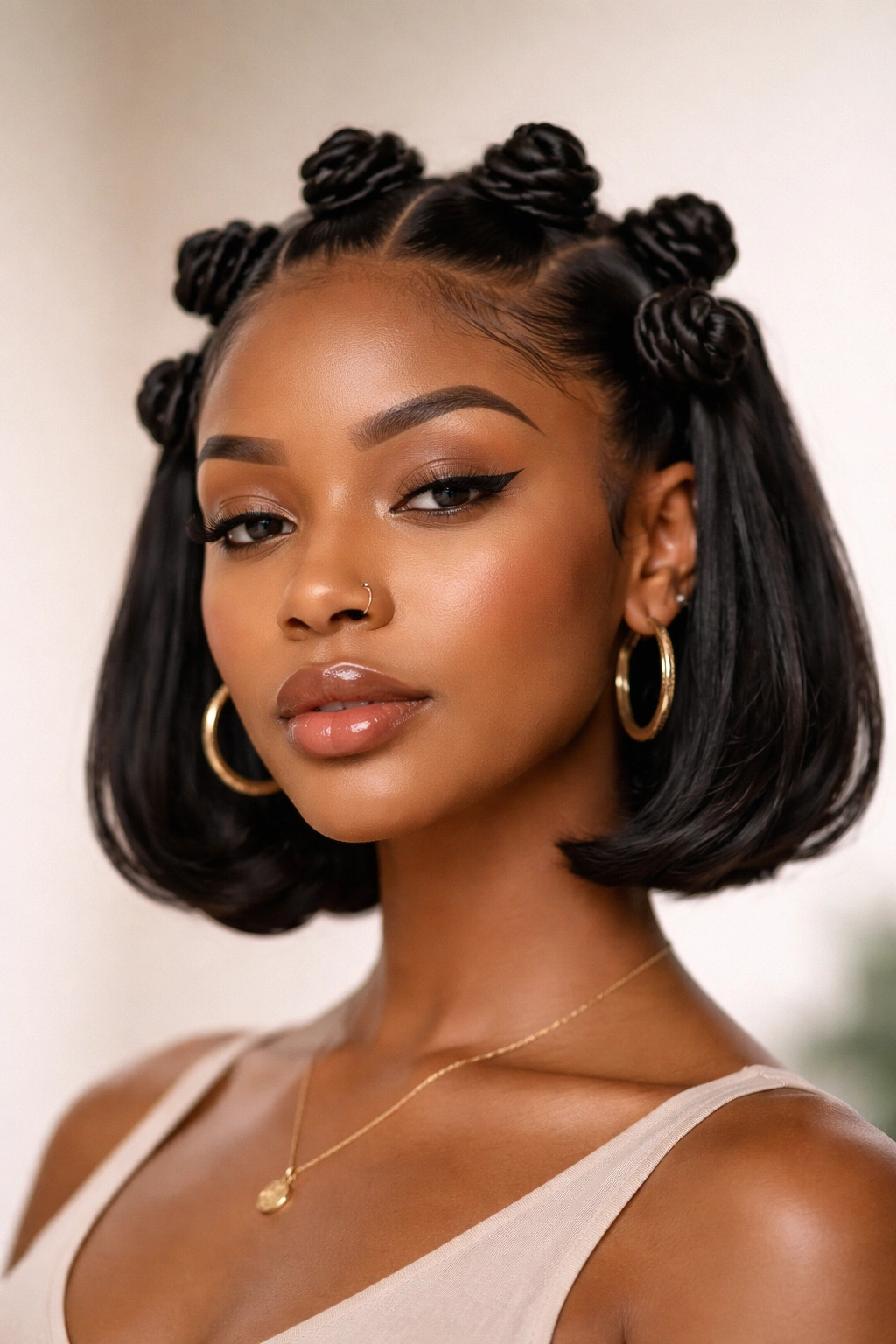
A bob-length knot set has a neat little charm to it. The ends sit closer to the jawline, which makes the style feel lighter, airier, and easier to manage than a longer knot arrangement.
This is a good choice when you want the Bantu knot look without a lot of extra hair hanging around your shoulders. Shorter length also means the knots show off their shape better. There’s less visual noise. Just structure.
I’d use this cut when the quick weave itself is meant to feel tidy and wearable, not dramatic. It works for workdays, dinners, and low-key events where you still want hair that looks put together. A chin-length finish also keeps the neckline open, which is useful if you wear collars, scarves, or statement earrings.
14. Extended Knot Coils
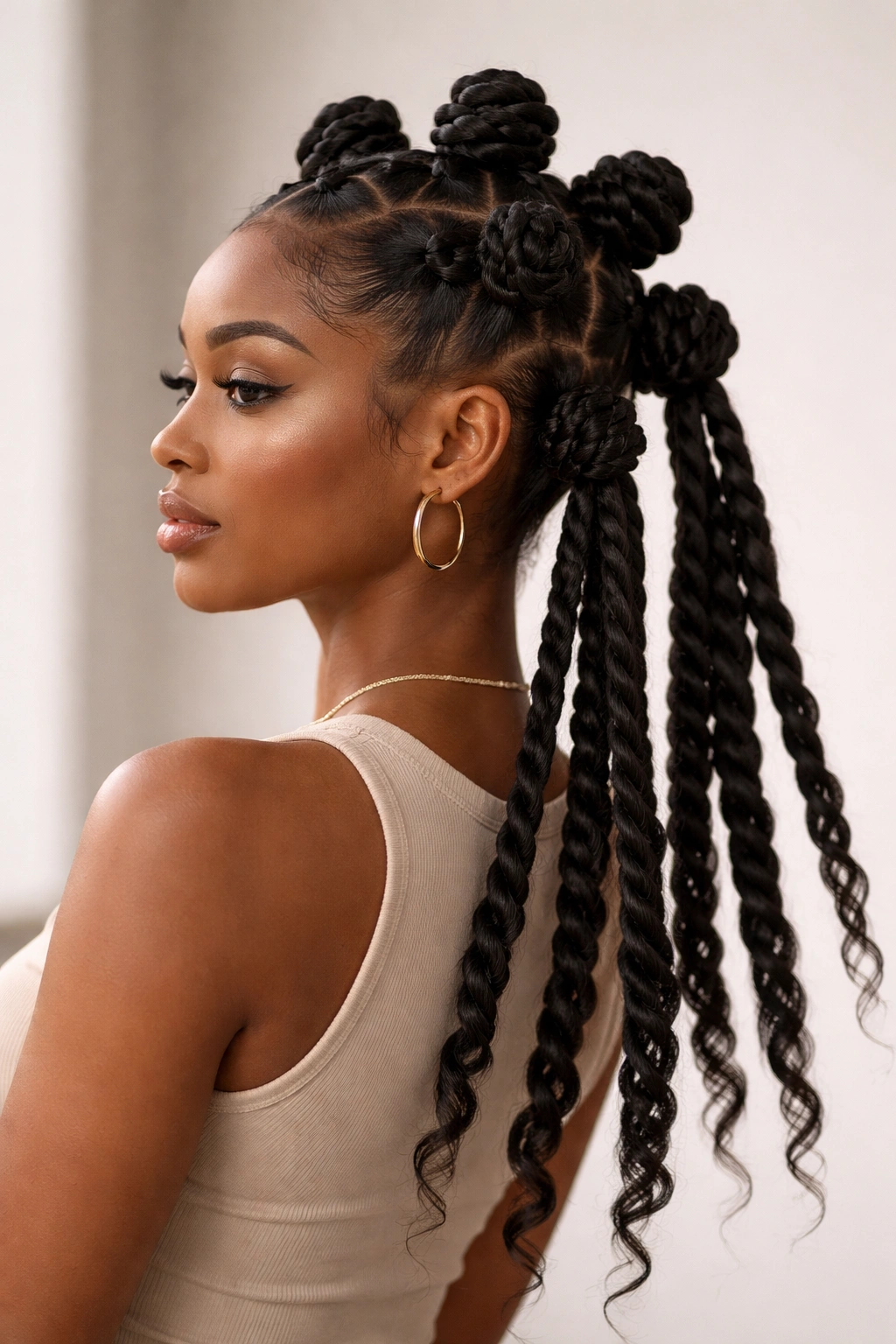
Extended coils are for the person who wants a softer silhouette and does not mind a little movement at the ends. The knots are still Bantu knots, but the tails are left longer or wrapped in a way that gives them a stretched, rope-like finish.
The look changes because the eye follows the coil shape after the knot itself. Instead of stopping at the bump, you get a small trail of texture. That can make the style feel more relaxed and less compact. It also works well on longer quick weave lengths, where the hair would otherwise sit unused.
How it reads visually
Compared with a tight knot, this version has more length and a slightly looser rhythm. It’s nice on thicker installs because the extra coil helps break up the bulk. If you want the hair to feel sculpted but not rigid, this is the lane.
15. Knot-and-Curl Mix
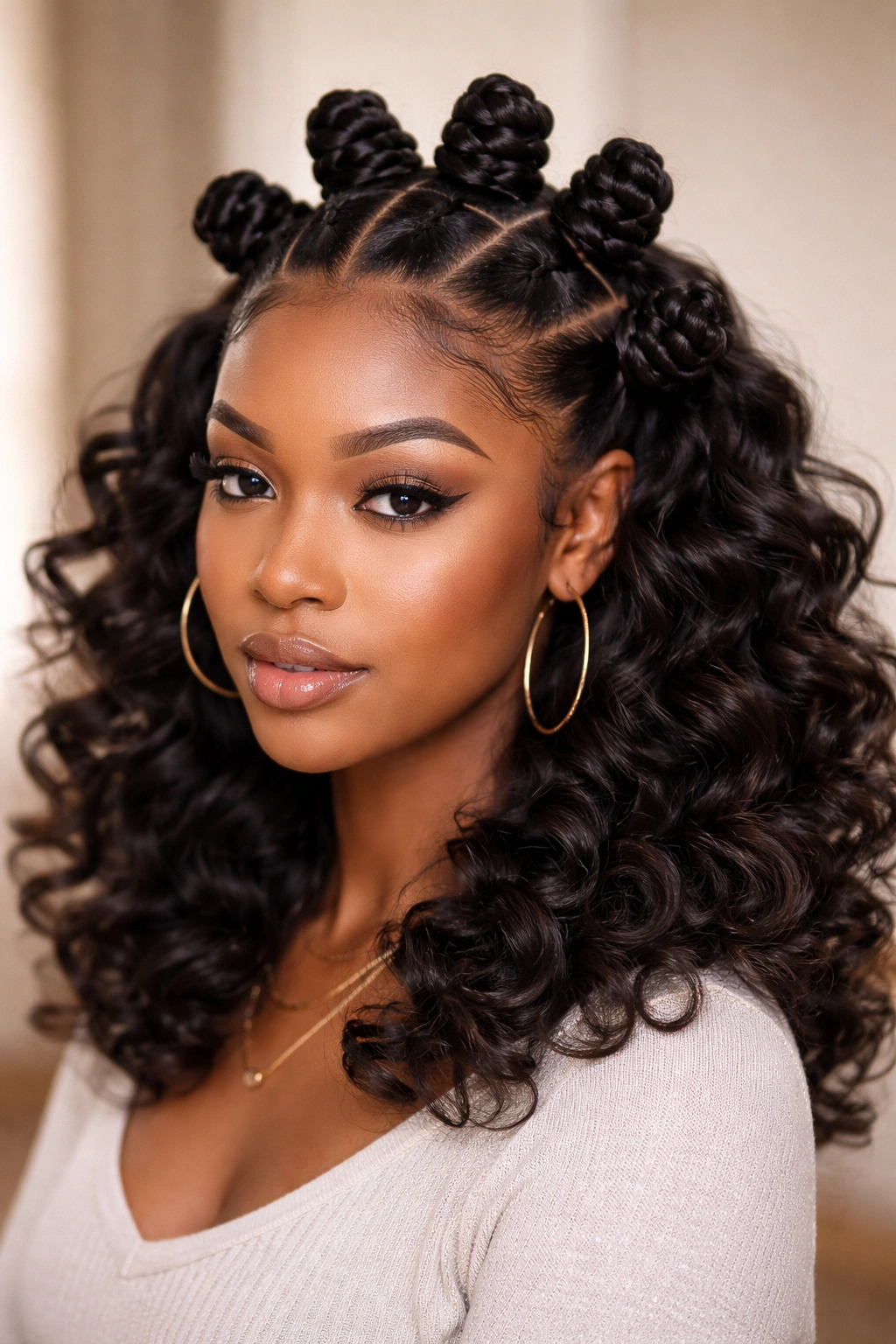
A knot-and-curl mix gives you the best part of two textures: the shape of Bantu knots and the softness of curls around them. The result feels less severe than a full-head knot set and a little more romantic than a plain curl style.
This is a strong pick when you want movement near the shoulders or at the perimeter of the style. The knots bring structure to the top, while the curls soften the edges. A flexi rod set or a curling wand can help shape the loose sections before they’re blended into the weave. Keep the curl pattern consistent, or the style starts to look chopped up.
I like this one because it refuses to be one-note. The knots make it interesting. The curls keep it wearable. That’s a solid combination.
16. Crisscross Grid Knots
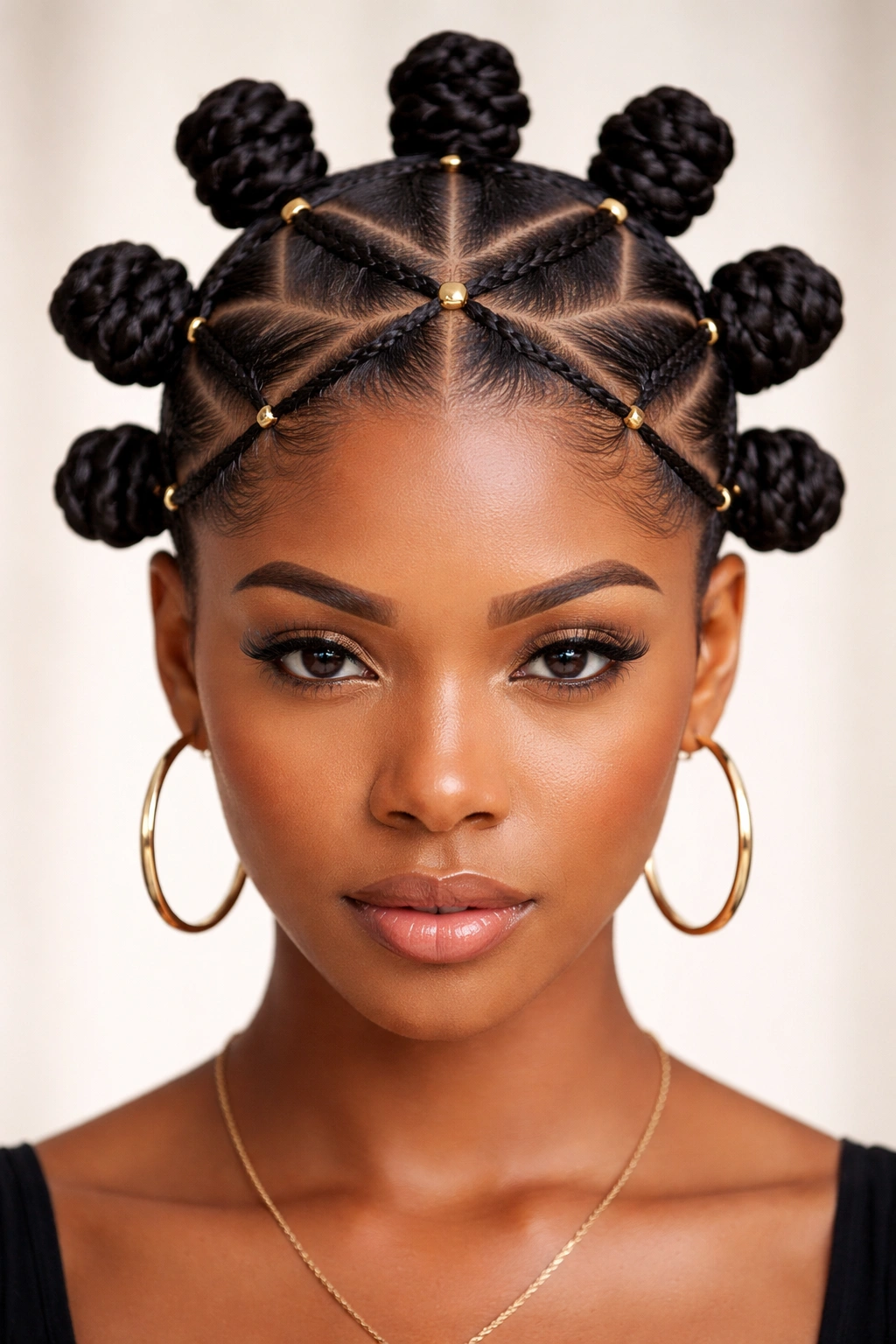
A crisscross grid is one of those styles that looks more complicated than it really is, which is a nice trick to have. The part lines intersect in an X-like pattern, and the knots sit at the joins or just off them, creating a webbed effect across the scalp.
The visual strength comes from the parting map. The knots matter, sure, but the grid is what makes people look twice. If your quick weave foundation is flat and the lines are sharp, the whole head takes on a tailored feel. It’s almost architectural.
What to watch for
- Keep the crossings even so one side doesn’t look heavier
- Use a fine comb for the part lines
- Don’t overload the style with extra accessories; the grid already does enough
Best for: someone who likes precision and doesn’t mind spending extra time in the chair.
17. Diagonal Sweep Knots
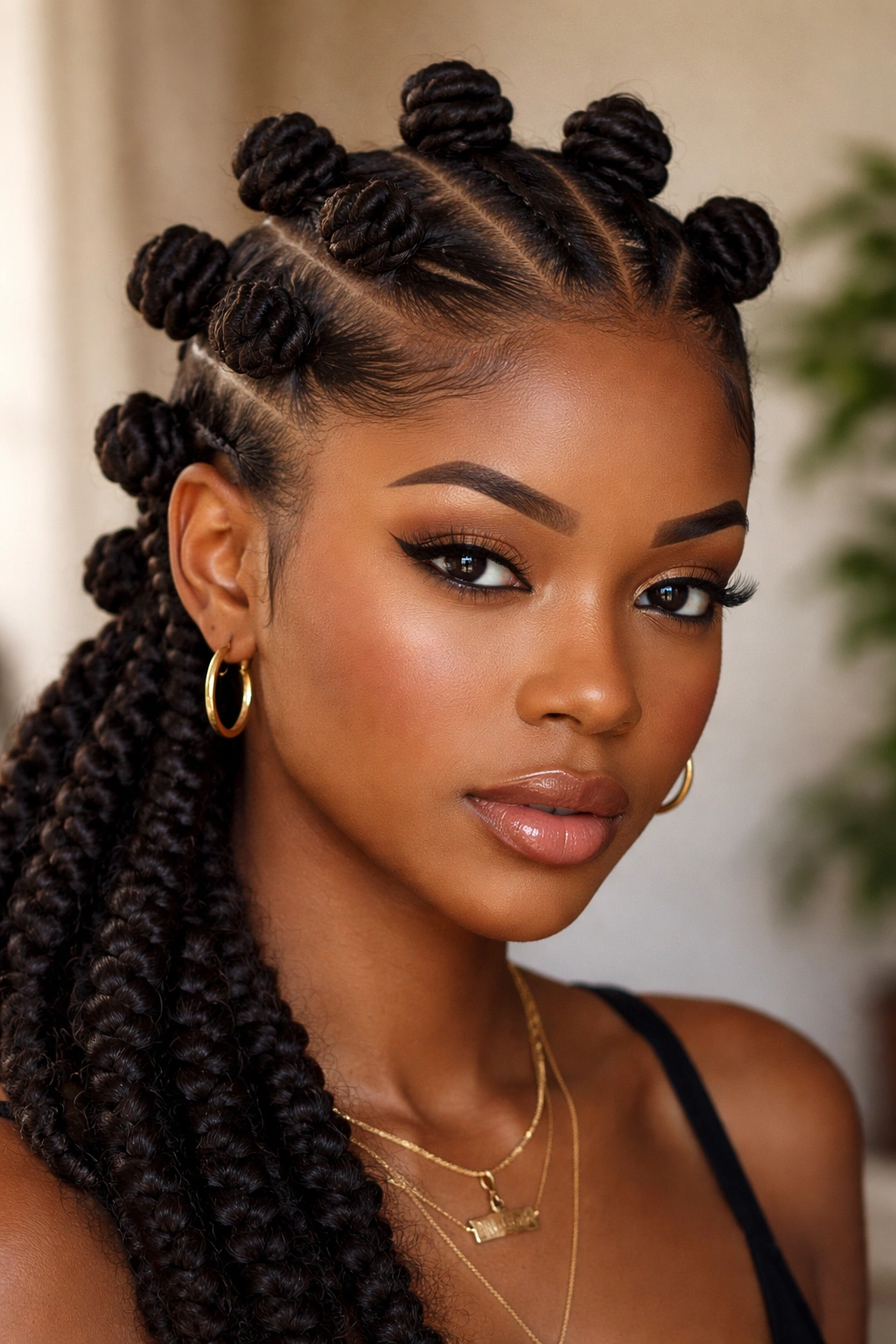
Diagonal parting gives the style a sense of motion before the knots even start. The rows move from one side of the head toward the other instead of running straight back, and that small shift changes the whole feel.
There’s a reason this works so well on rounder face shapes. Diagonal lines lengthen the look of the head a bit, and they stop the style from feeling boxy. The knots can stay compact, or they can get a little larger near the back to finish the sweep. Either way, the direction does the work.
If you like hair that feels a bit less expected, this is a good choice. It’s still neat. It’s just not stiff. And that matters.
18. Sleek Bun with Front Knots
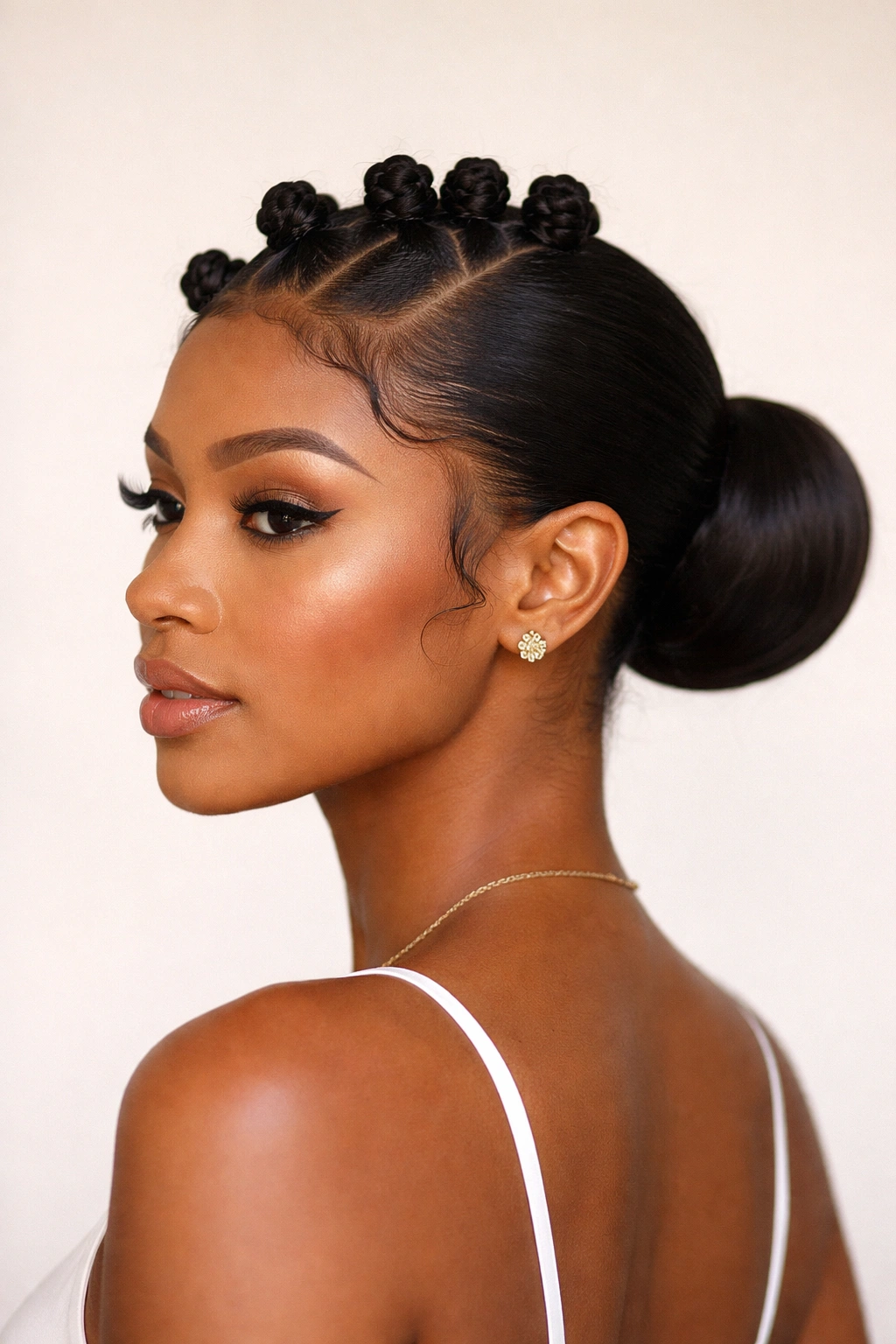
Why choose between a knot set and a bun when you can have both? This hybrid style keeps a small row of front knots visible while the rest of the hair gathers into a smooth low bun or tucked roll at the back.
The front detail makes the style feel playful. The bun keeps it polished. That balance is useful for formal events, office settings, or any day when you want your hair to behave but not look boring. The bun should sit low and clean so it doesn’t steal attention from the knots.
A quick weave base makes this easier because the hair can be molded flat before the knot placement starts. If the top is swollen, the bun loses its sleekness. Brush it down, set it lightly, and keep the shape compact. Simple. No drama.
19. Tapered Back Knots
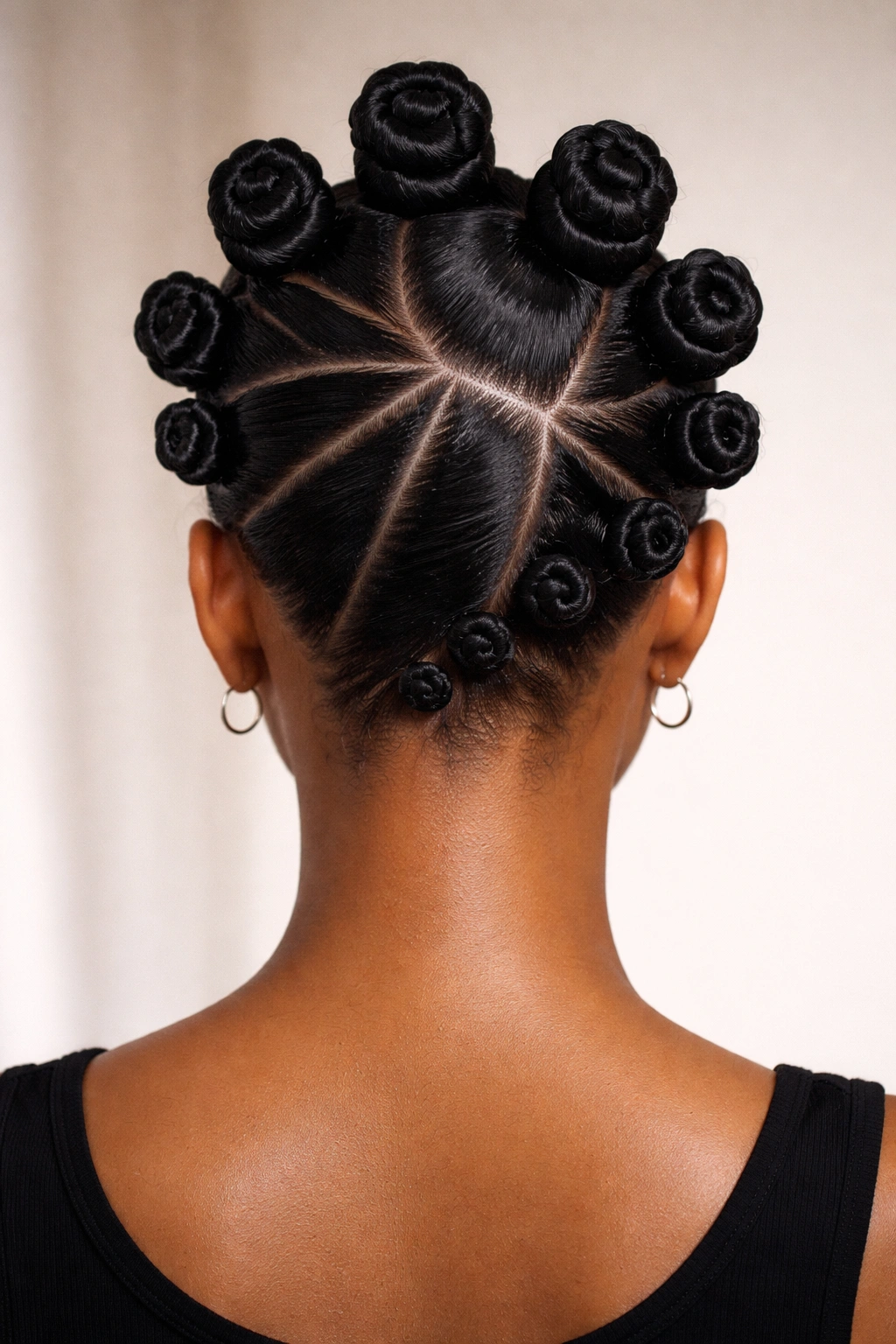
A tapered back means the knot sizes shift as they move toward the neckline. Larger knots can sit near the crown, then narrow gradually as they move down. Or you can flip that and make the back smaller for a tighter finish. Either way, the silhouette gets a little more shape.
That taper keeps the style from looking like one solid block. It gives the back of the head a curve, which is especially nice when the quick weave length is short or medium. The neckline stays cleaner, and the style feels more tailored from the side.
I like this style when the front is busy but the back needs to stay neat. It gives the eye a place to rest. That matters more than people admit.
20. Wide-Spacing Scalp-Friendly Knots
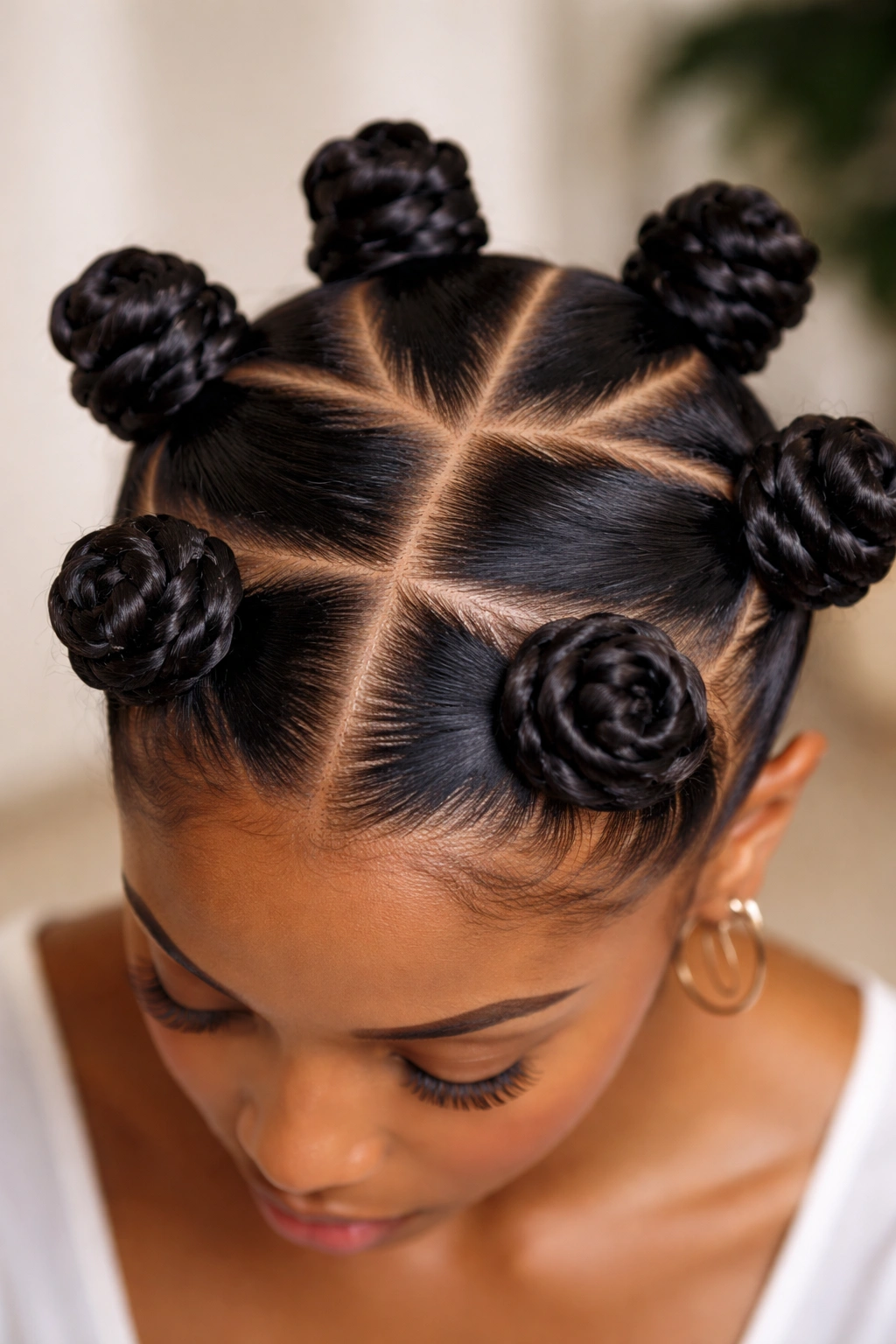
If your scalp hates tension, this is the one to pay attention to. Wide spacing means fewer knots, larger parts, and more breathing room between each section. The style still looks intentional, but it doesn’t crowd the head.
That open space is the whole appeal. It gives the parting room to show, reduces the visual weight, and makes the quick weave feel less packed. I would not call it lazy. I’d call it smart. Sometimes the nicest hair is the style that leaves a little air around it.
- Good if you prefer lighter installs
- Better for long wear than tight, dense knot grids
- Easy to decorate with a single cuff or wrap
One honest note: if you love a full, busy look, this may feel too airy for you. That’s fine. Not every head needs filling up.
21. Bright Pop-Color Knots
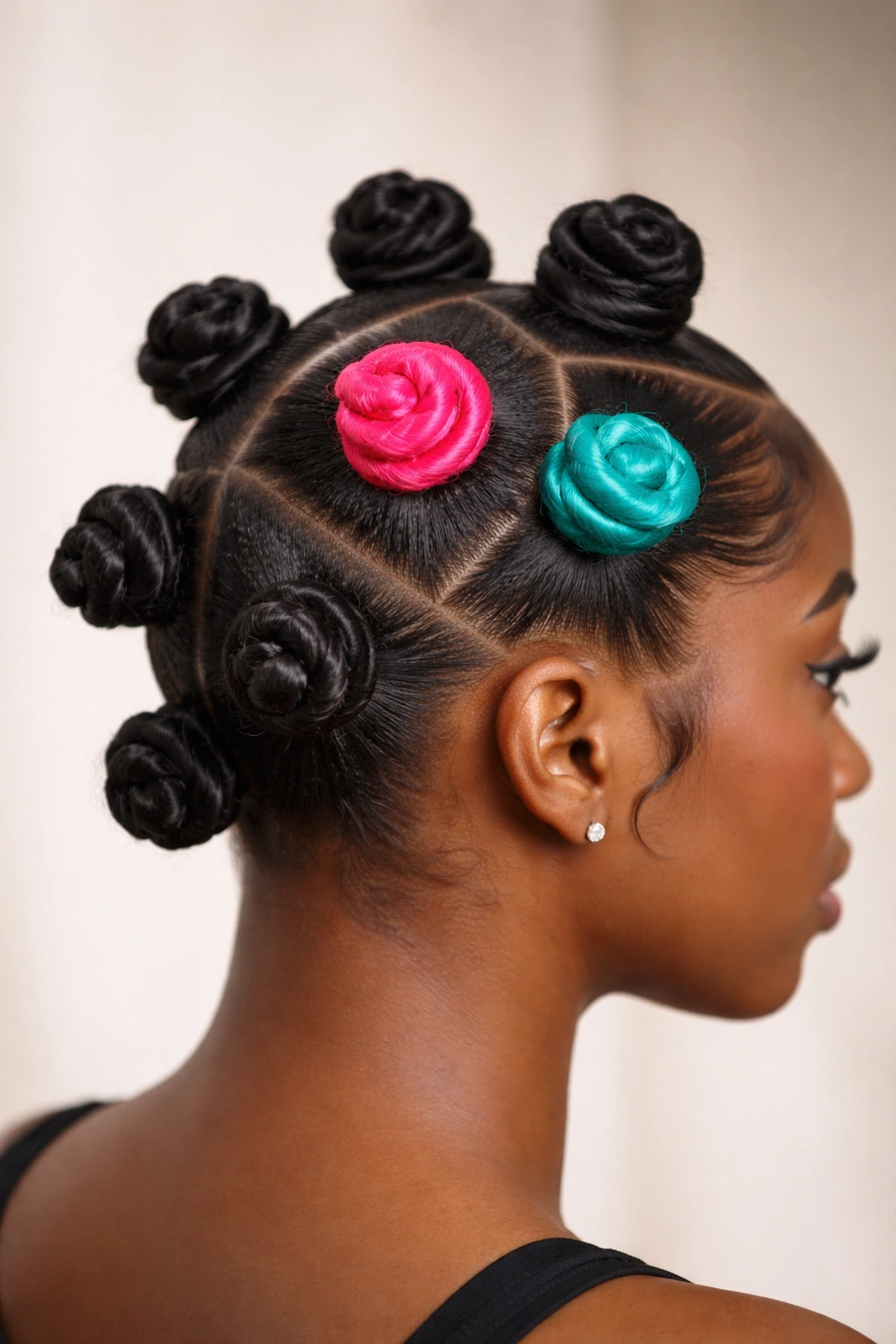
A pop of color can wake the whole style up, even if the rest of the weave stays dark and quiet. A few bright knots — copper, burgundy, blue-black with a vivid accent, or even a single streak of red — can make the design feel alive without turning it into a costume.
The trick is to keep the pop contained. One or two accent knots, or one front row, is usually enough. If every section gets loud, the color starts to compete with the knot shape. I’d rather see one deliberate flash than twenty places trying to shout at once.
This works best when the base color is calm and the parting is neat. Then the color has a clean frame. Otherwise, it just looks busy. And busy is not the same as interesting.
22. Soft Romantic Small Knots
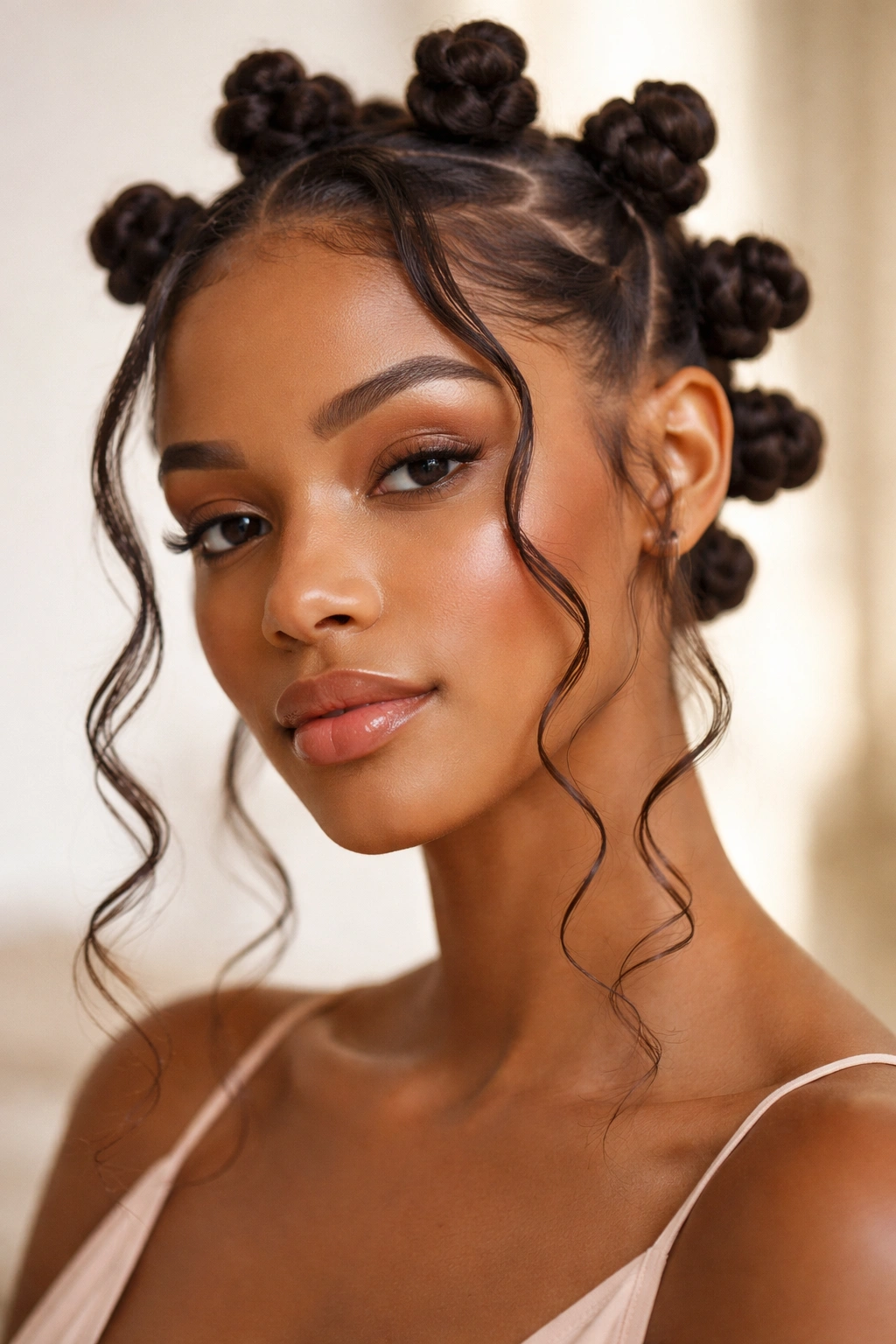
Small knots can be softened on purpose, and that’s where this style gets its charm. Instead of making the knots sharp and severe, you round them out a little and let a few face pieces stay loose.
That gentle finish makes the style feel less formal than a strict grid. It’s a good choice if you like hair that moves when you talk or turn your head. The knots still carry the structure, but the edges feel relaxed. I reach for this kind of look when I want the hairstyle to feel friendly rather than high-impact.
A little sheen spray helps here, but don’t drench the hair. You want the knots to look clean, not wet. Soft is the point.
23. Visible Scalp Grid Knots
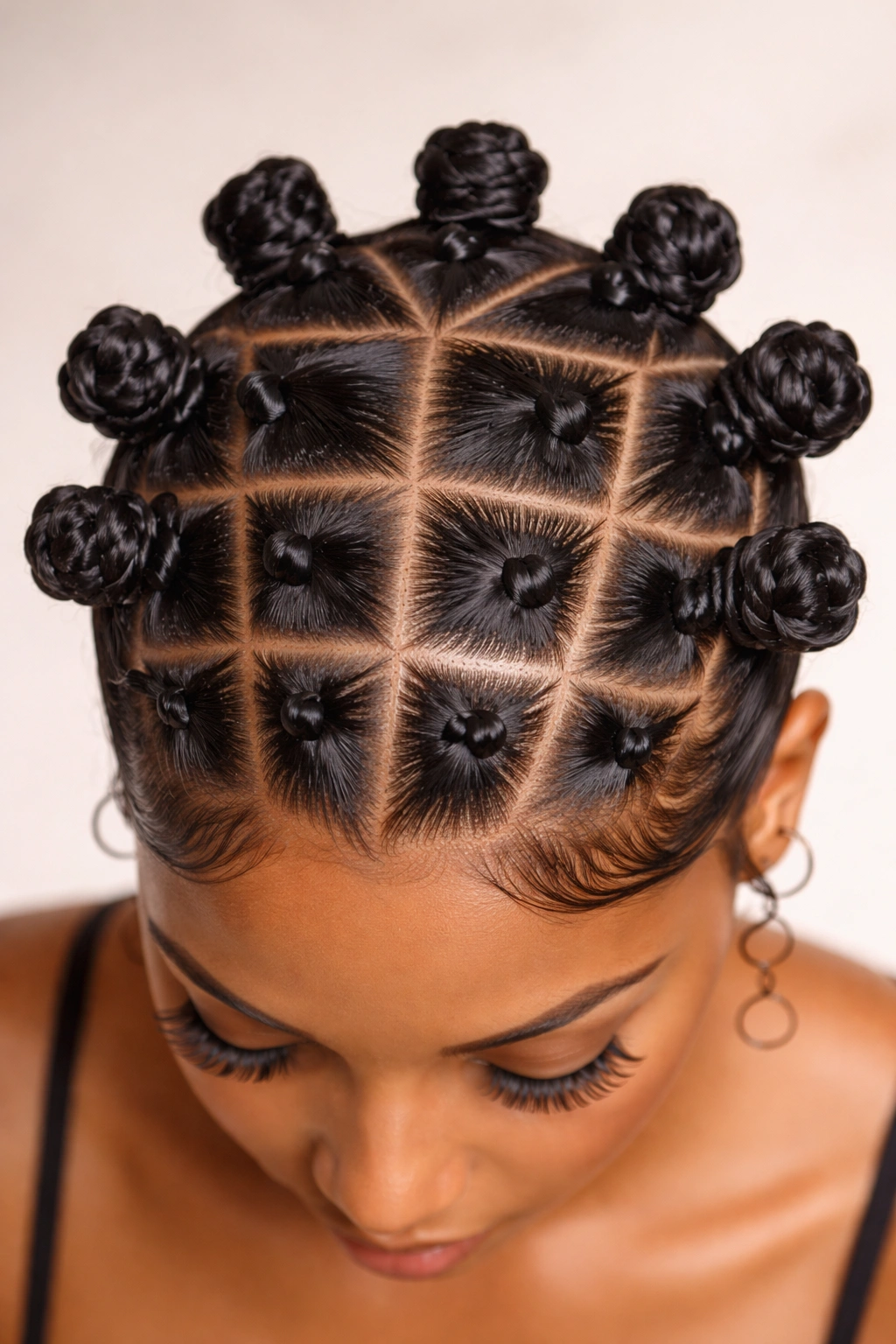
Some styles hide the parting. This one shows it off. The grid becomes part of the design, which makes the quick weave base look extra tidy when the sections are crisp and evenly spaced.
That visible scalp pattern works best when the install is fresh and the lines are sharp. The knots act like punctuation marks across the head. They don’t need to be huge. They just need to sit cleanly enough that the geometry reads. If you like detail, this is a very satisfying style to wear.
A light foam or setting wrap before the knots are formed can help the base stay smooth. Keep the scalp visible, not greasy. That’s the balance.
24. Low Puff Hybrid Knots
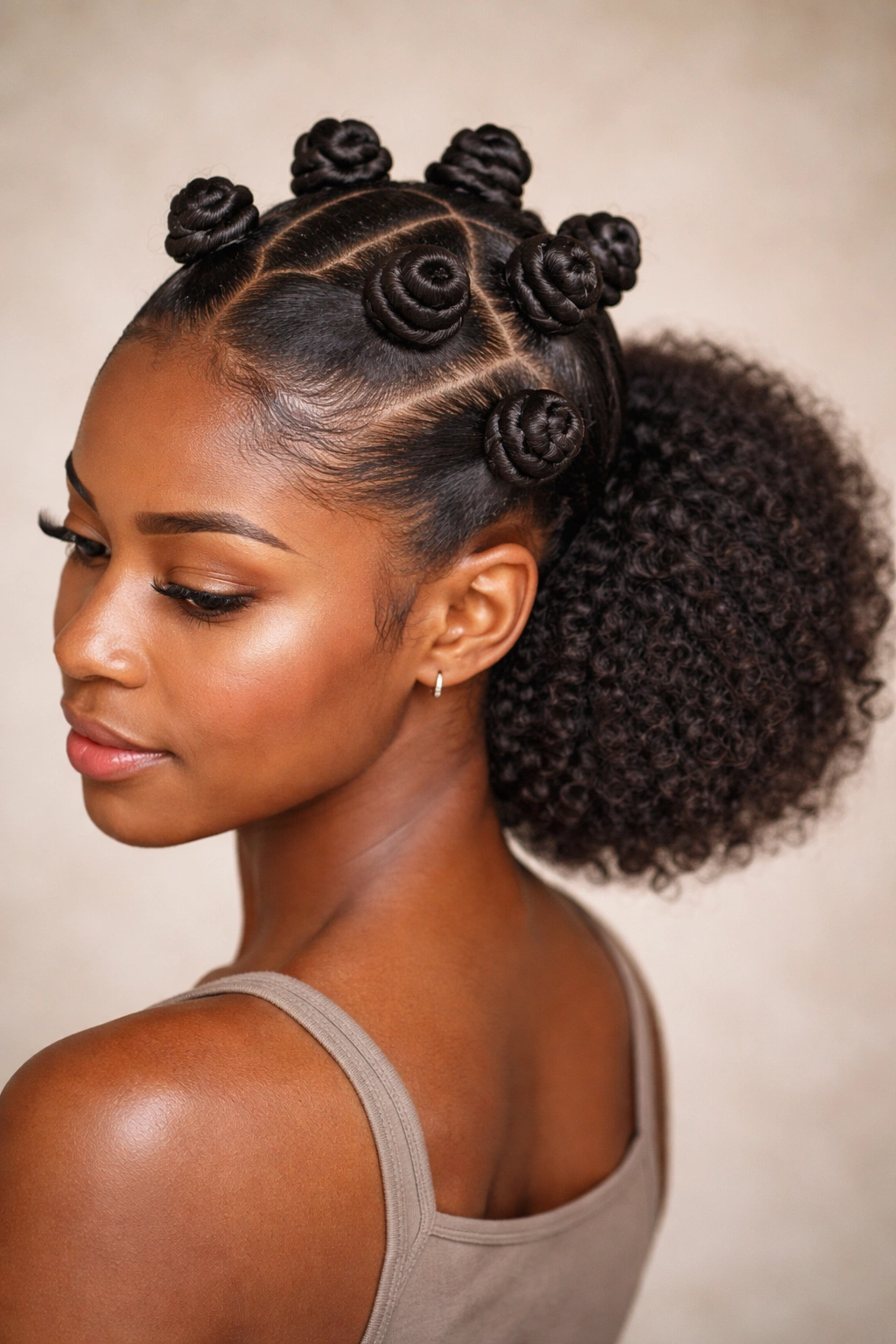
This one has a little personality. The front or crown carries the knots, while the back gathers into a low puff or a rounded textured finish that keeps the look soft.
Why the mix works
The knots give you shape up top. The puff keeps the style from feeling too locked in. It’s a good option when you want some natural texture to show without giving up the structure of the quick weave. The two pieces meet in a way that feels casual but not sloppy.
- Best if you like a softer silhouette
- Works well with medium-to-long quick weaves
- Looks good with face-framing tendrils or curled ends
Tip: Keep the puff low and loose. If it sits too high, the style starts to fight itself.
25. Five-Knot Minimal Set
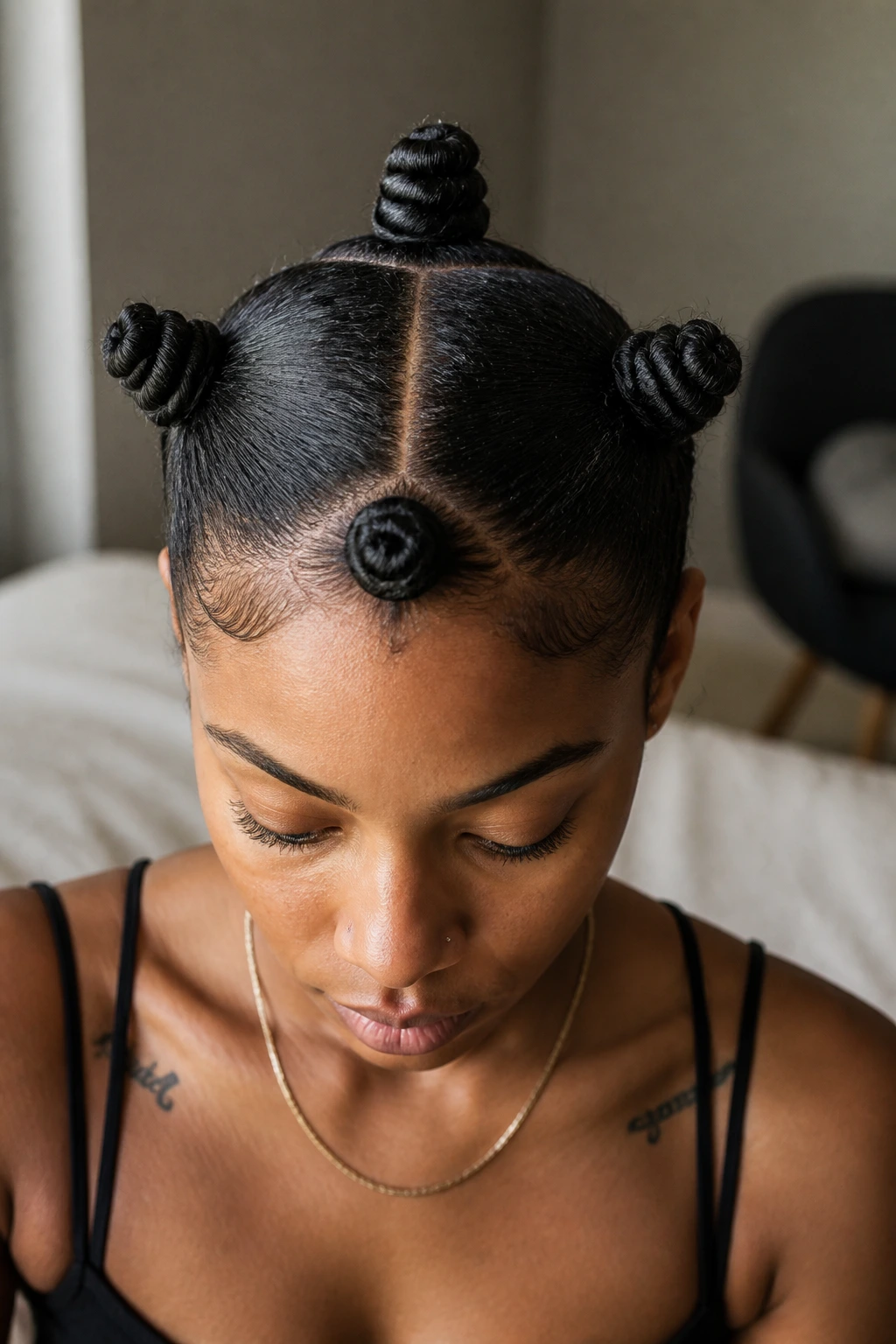
Sometimes five knots are enough. Not every look needs a full grid, and not every day calls for a crowded scalp pattern. A minimal set gives you just enough texture to make the style read as deliberate, while leaving most of the hair smooth and easy.
This version is especially nice if you’re testing quick weave Bantu knots for the first time. You get the shape, the parting, and the rhythm of the style without committing to a full install that takes forever to finish. It also wears well with simple clothes. No extra noise. Just clean lines and a few well-placed knots.
A style like this usually looks best when the base is flat and the parts are precise. Keep the knots evenly spaced, let the finish stay calm, and let the shape do the heavy lifting. That’s often enough.
