



Straight hair has a timeless sophistication that only grows more elegant as you age. There’s something inherently polished about a sleek, well-maintained style—it frames the face beautifully, requires less daily fussing than textured styles, and projects confidence without demanding constant touch-ups or heat styling. Women over 40 have earned the wisdom to know what actually works, and many find that straight hair styles offer the perfect balance of low-maintenance glamour and age-appropriate chic.
The challenge isn’t finding a straight hair style—it’s finding the right straight hair style for your face shape, lifestyle, and the way your hair actually behaves. A cut that’s stunning on someone at 25 might feel heavy or dated on a woman over 40, and conversely, some of the most flattering cuts for mature women would have looked too conservative a decade earlier. The best straight hair styles for this stage of life focus on movement, dimension, strategic length, and subtle details that enhance rather than fight the natural changes that come with aging—like caring for delicate skin rather than masking it.
These 20 straight hair styles are chosen specifically for women over 40 who want to look current, feel confident, and spend minimal time in the styling chair while still looking polished every single day. Each offers a different way to wear your straight hair depending on your daily routine, face shape, and personal style.
1. Classic Lob (Collarbone Length)
A lob—that sweet spot between a shoulder-length cut and a true bob—is the Swiss Army knife of straight hair styles for women over 40. This length sits right at the collarbone, a flattering position that creates instant lift and appears to lengthen the face while being practical enough for everyday wear. The straight lob can be worn tucked behind the ears for a polished look or loose and flowing for a more relaxed vibe.
Why This Works at 40-Plus
The collarbone length creates visual balance without adding bulk around the face, which is exactly what mature skin tone and facial structure benefit from. It’s long enough to be versatile and forgiving on bad hair days, but short enough that it doesn’t require constant layers or maintenance to look current.
How to Wear It
- Style it straight and tucked behind one ear with a deep side part for office-ready polish
- Leave it down and straight for everyday ease—it won’t pool around your shoulders like longer hair
- Add a subtle blowout bend at the ends for movement without committing to waves
- Wear it half-up with a sleek low ponytail to showcase bone structure and see your face clearly
Pro tip: Ask your stylist for a subtle swing cut so the front layers taper slightly shorter—this creates an illusion of movement even on completely straight hair and prevents the “blunt plank” effect that can look harsh at this age.
2. Sleek Straight with Minimal Layers
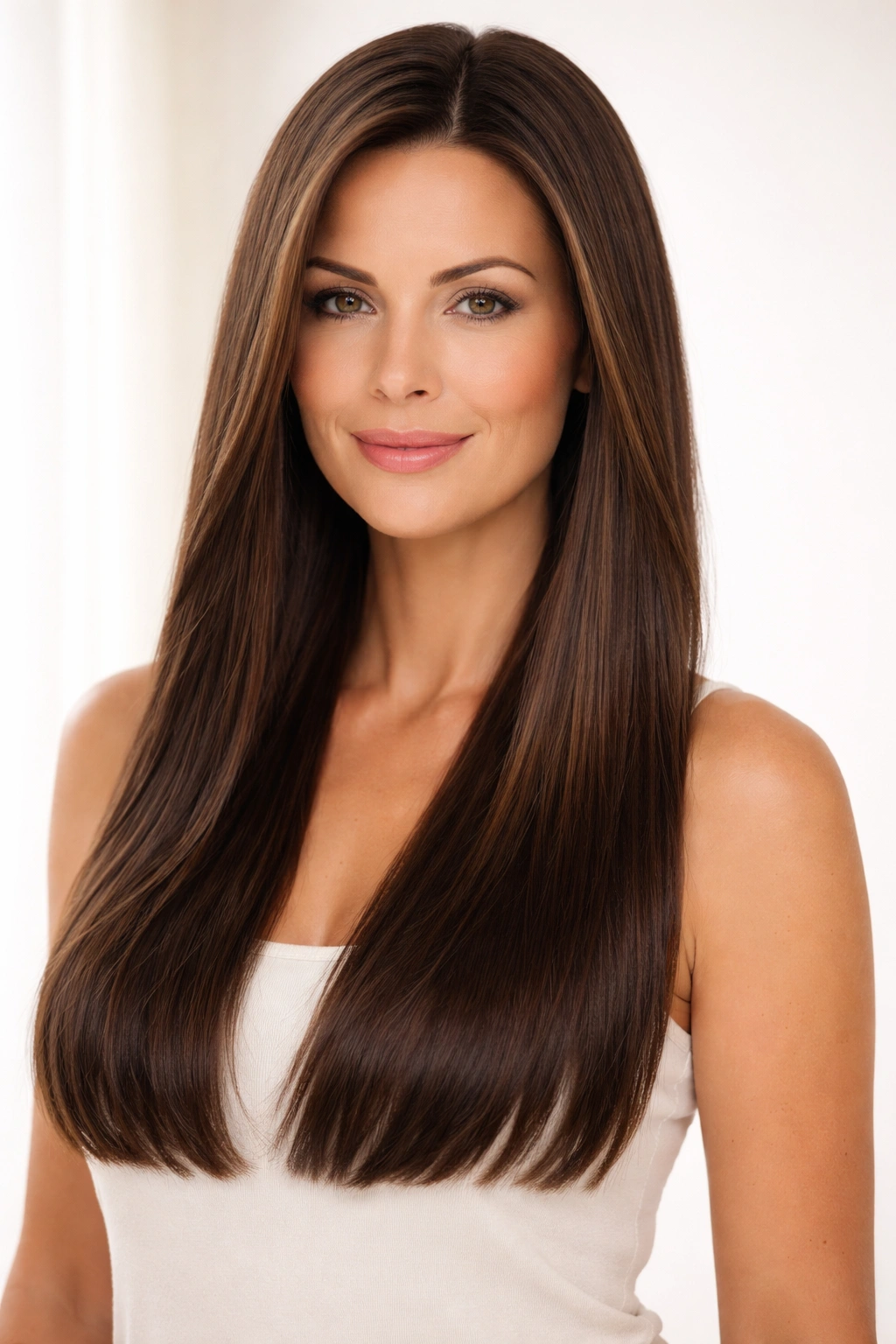
This is the Audrey Hepburn approach—long, perfectly straight, with barely-there layers that serve only to remove bulk and create a subtle shape. The cut is deceptively simple, which means everything depends on hair health, precision of the cut, and consistent maintenance. Worn completely straight with a deep side part or center part, it communicates quiet confidence and elegance.
Why It’s Flattering for Mature Women
Minimal layers mean minimal styling, which is genuinely easier to manage weekly. The sleek surface reflects light beautifully, which can help tone look brighter and more even. Long straight hair frames the face and draws the eye downward, which is generally more flattering than shorter styles that sit right at the jawline where texture and skin changes are most visible.
Styling Essentials for This Look
- A smoothing serum or anti-frizz cream is non-negotiable—straightness requires no-frizz control
- A quality flat iron (kept at 350-375°F for mature hair prone to damage) for smoothing after washing
- A side part, consistently the same side, to create visual habit and intentional asymmetry
- Occasional blowout appointments to maintain the sleekness between styling
Worth knowing: This style shows every hair in less-than-perfect condition. If your hair tends toward dryness, monthly deep conditioning treatments aren’t optional—they’re essential.
3. Long Straight Hair with Deep Side Part
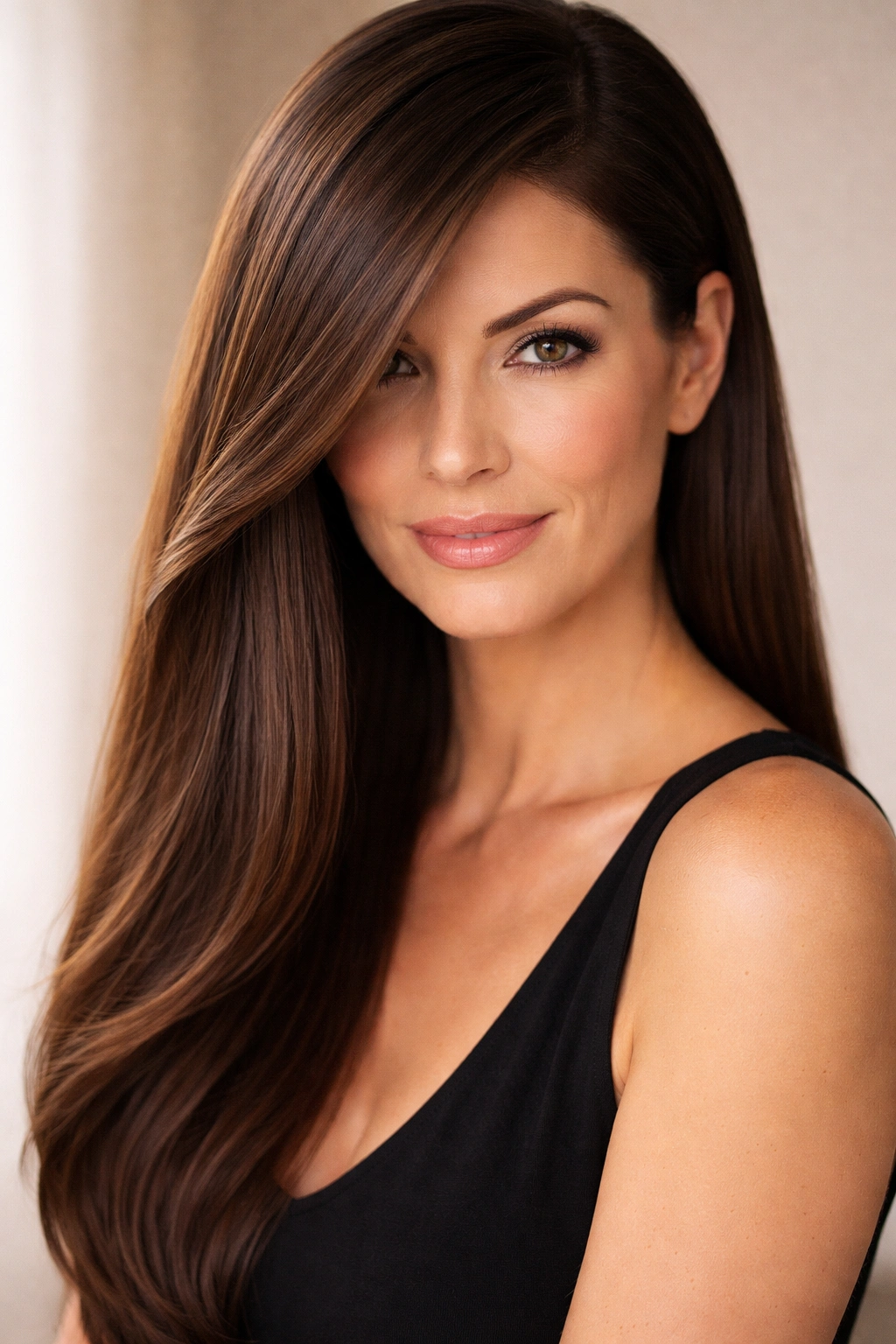
Long straight hair doesn’t have to feel young or trendy—it can be incredibly sophisticated depending on how you wear it. A deep side part (starting at one temple and sweeping dramatically to the other side) creates face-framing asymmetry that is more interesting than a center part. Combined with straight, healthy-looking hair, this creates the impression of intentional elegance rather than “I haven’t gotten a haircut in two years.”
Why This Style Works for Older Women
A deep side part naturally draws attention to the side of the face that’s most visible, which means you can position it strategically—if one side of your face is your “better side,” let that be your visible side. The part itself creates a horizontal line that can help rebalance face proportions and creates subtle shadowing that adds dimension.
How to Make It Look Current
- Invest in a professional blowout every 2-3 weeks to create a smooth foundation and reinforce the part direction
- Use a texturizing spray (not heavy oils) to add grip and prevent the side-swept hair from falling flat
- Layer the underneath slightly so the part appears fuller and more intentional
- Wear it fully down most days, but occasionally sweep it into a low side-ponytail to show the sides of your face
Insider note: If your hair naturally falls the opposite direction of where you want the part, a quick spritz of dry shampoo on the underside of the part the night before helps train hair to fall the right way.
4. Straight Chin-Length Bob
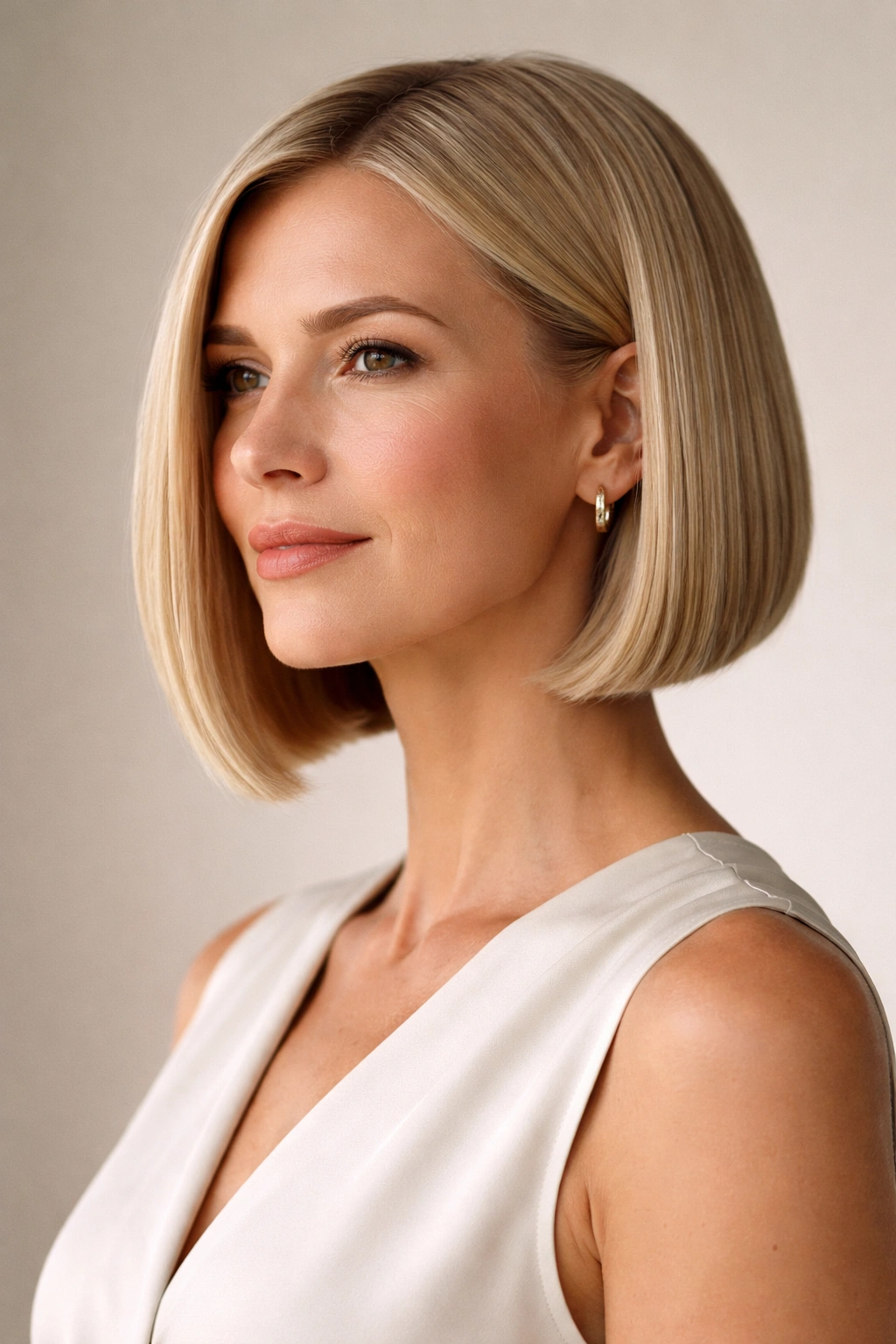
The chin-length bob—sometimes called a jaw-length bob—is having a moment of maturity and elegance. At this exact length, the style sits where it can either tuck behind the ears (looking polished and intentional) or frame the face (looking softer). Worn completely straight, the blunt line of a chin-length bob reads as modern and deliberately styled, not dated.
Why Women Over 40 Love This
A well-cut straight bob feels substantial without being heavy. It’s short enough to look fresh and intentional, but long enough that it doesn’t require weekly trims to maintain shape. The length is also flattering for most face shapes—it sits just long enough to avoid that “too short and pinched” feeling and creates a nice visual frame.
Styling Tips for Success
- A slight textured crop at the tips (not a blunt line) prevents that plastic, severe look
- Tuck it behind your ears with a headband or clip for meetings and important occasions
- Pair it with a side part rather than center for more dimension and movement
- Use a lightweight volumizing mousse on roots while blow-drying to prevent flatness at the crown
Key feature: The precision of a bob is either an asset or a liability—if you’re not willing to get it trimmed every 4-6 weeks to maintain the line, this style isn’t the one. The moment the ends start to fray or separate, a bob looks neglected rather than chic.
5. Straight Hair with Dimensional Highlights
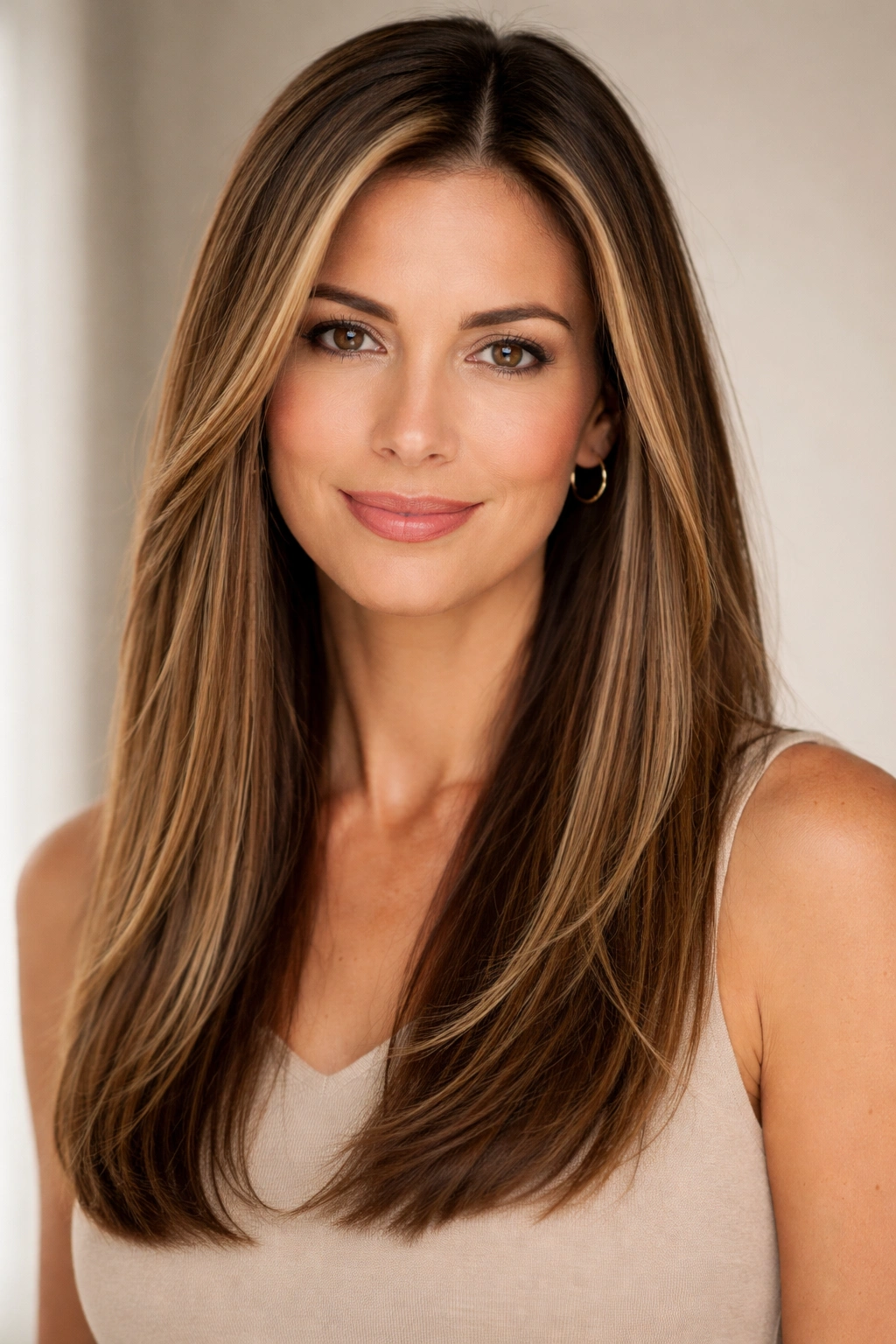
Straight hair shows color work beautifully, and dimensional highlights are one of the most effective tools for making straight hair look thicker, younger, and more visually interesting without changing the cut itself. Subtle highlights in shades just a bit lighter than your base color create the illusion of movement and catch light in ways that a single solid color cannot.
Why This Enhances Straight Styles
The key word is dimensional—not chunky, not striped, but carefully placed lighter pieces throughout that mimic how naturally lighter hair would look with sun exposure. This breaks up a potentially flat, one-dimensional appearance and adds depth that flatters mature skin tone.
How to Apply This to Your Straight Style
- Ask for balayage or handpainted highlights rather than traditional foil highlights—they look more natural and intentional
- Place lighter pieces around the face and through the crown to brighten
- Keep the base color warm and rich; let the highlights be the brighter ones
- Refresh every 8-10 weeks rather than every 4-6 weeks to avoid a striped appearance
Real talk: If your hair is fine or prone to breakage, be cautious with highlights. The chemical process weakens hair, and fine hair can show that weakness more obviously. If you choose color, make sure your stylist is using a gentler processing method and you’re doing monthly protein treatments.
6. Straight Hair with Blunt Bangs
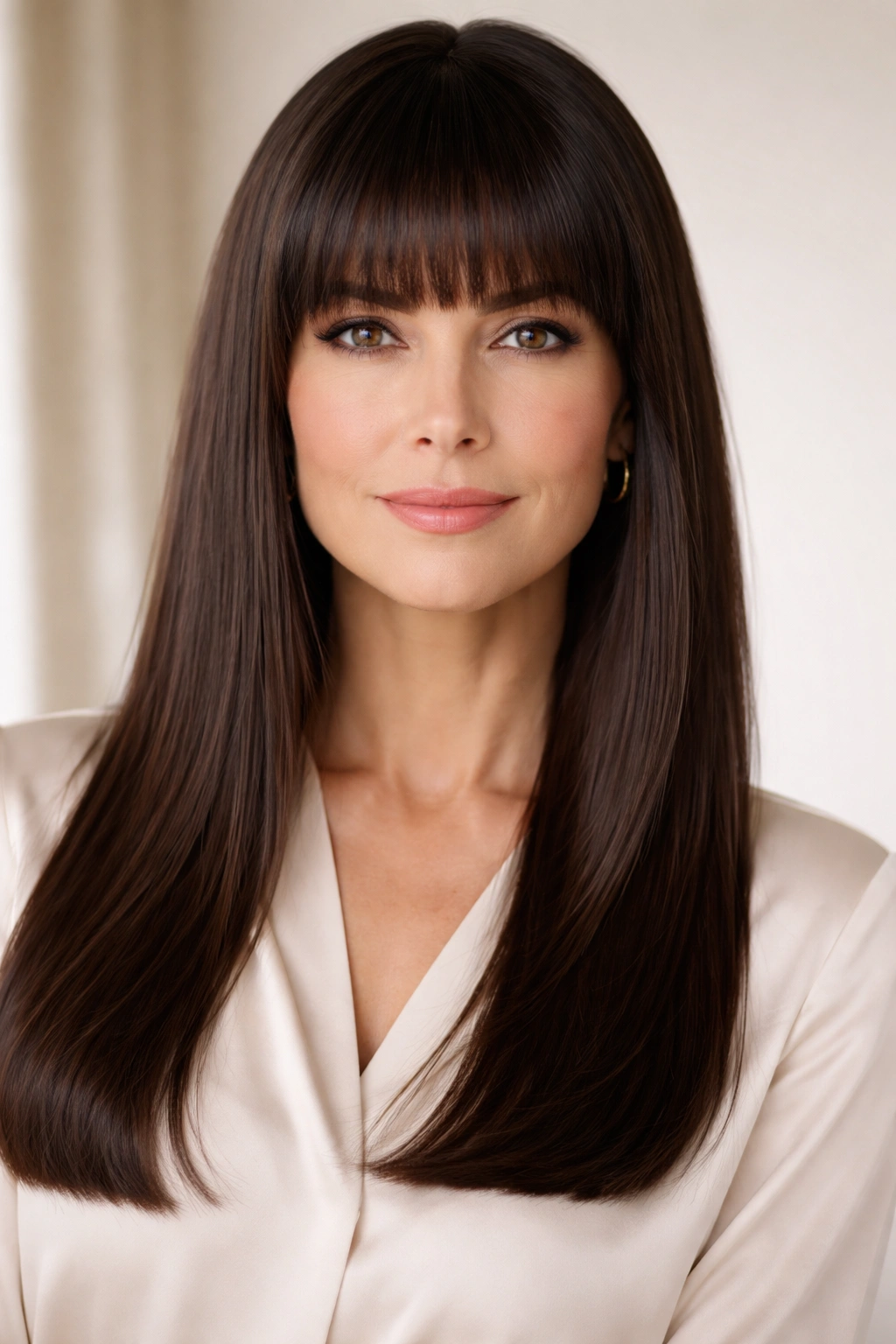
Blunt straight-across bangs paired with longer straight hair is a bold move, but it’s one of the most effective ways to minimize the appearance of forehead lines and draw attention to the eyes. Blunt bangs work best when your hair is naturally straight or you’re willing to straighten them daily; they look sculptural and intentional on straight hair but bedraggled on wavy hair.
Why Bangs Can Be Age-Appropriate
Many women assume they should avoid bangs after 40, but the opposite is true—blunt bangs can be incredibly flattering if they’re the right length and paired with the right cut. They work by drawing the eye up to your eyes rather than scanning your entire face, and they can actually minimize forehead lines rather than emphasize them.
How to Style and Maintain Bangs
- Have them cut just barely above the brow for maximum flattery; too short looks severe, too long defeats their purpose
- Straighten them every morning (they’re the first thing to curl or flatten depending on humidity)
- Get them trimmed every 3-4 weeks—blunt bangs show growth and imprecision immediately
- Pair with longer straight lengths for balance; bangs alone without length can look heavy
Essential tip: Blunt bangs are not forgiving on a bad hair day. Commit to straightening them every morning, even if the rest of your hair gets a second-day spray treatment. If you’re not willing to do that, this style isn’t realistic.
7. Asymmetrical Bob
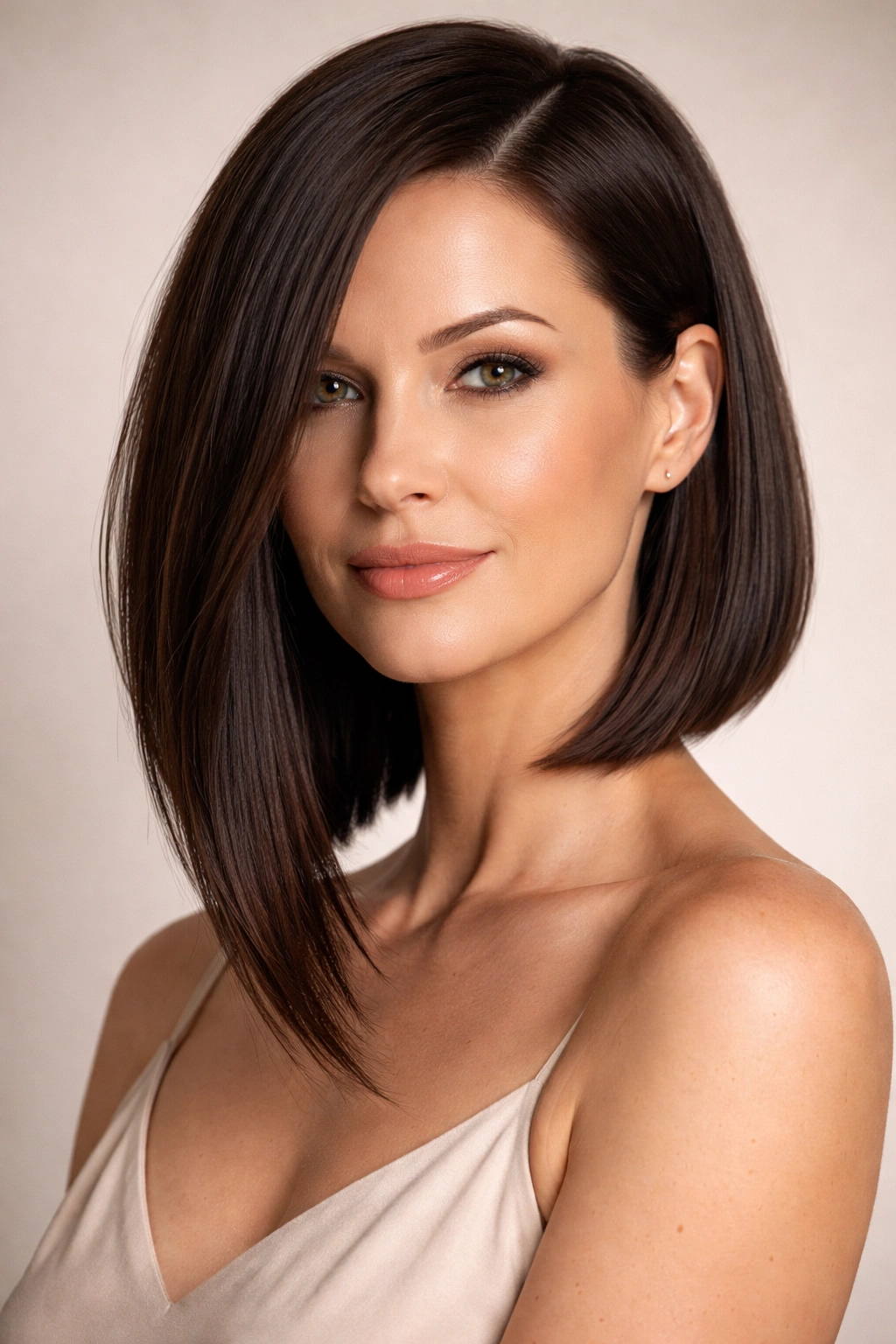
An asymmetrical bob—where one side is noticeably shorter than the other—is an incredibly sophisticated choice for women over 40 who want to look current and intentional. One side might hit at the chin while the other reaches the shoulder, creating dynamic movement and visual interest without any actual texture or layers needed.
Why It Works for This Age Group
The asymmetry itself creates a focal point and interest that compensates for potentially less dramatic features or less volume than younger hair. It signals that you’re styling intentionally and have opinions about how you want to look, which reads as confidence and maturity.
How to Make It Work
- Keep both sides straight and sleek; any texture or layers will muddy the dramatic asymmetry
- Wear it with a deep side part on the shorter side for maximum impact
- Style the longer side to tuck behind the ear or sweep back to show the contrast
- Use a round brush to create a subtle bounce or bend at the ends of the longer side
Key consideration: This style requires the same regular trims as any bob to maintain the intentional asymmetry. The moment it grows out unevenly or the line softens, it stops looking modern and starts looking like you’re past due for a cut.
8. Straight Hair with Soft End Texture
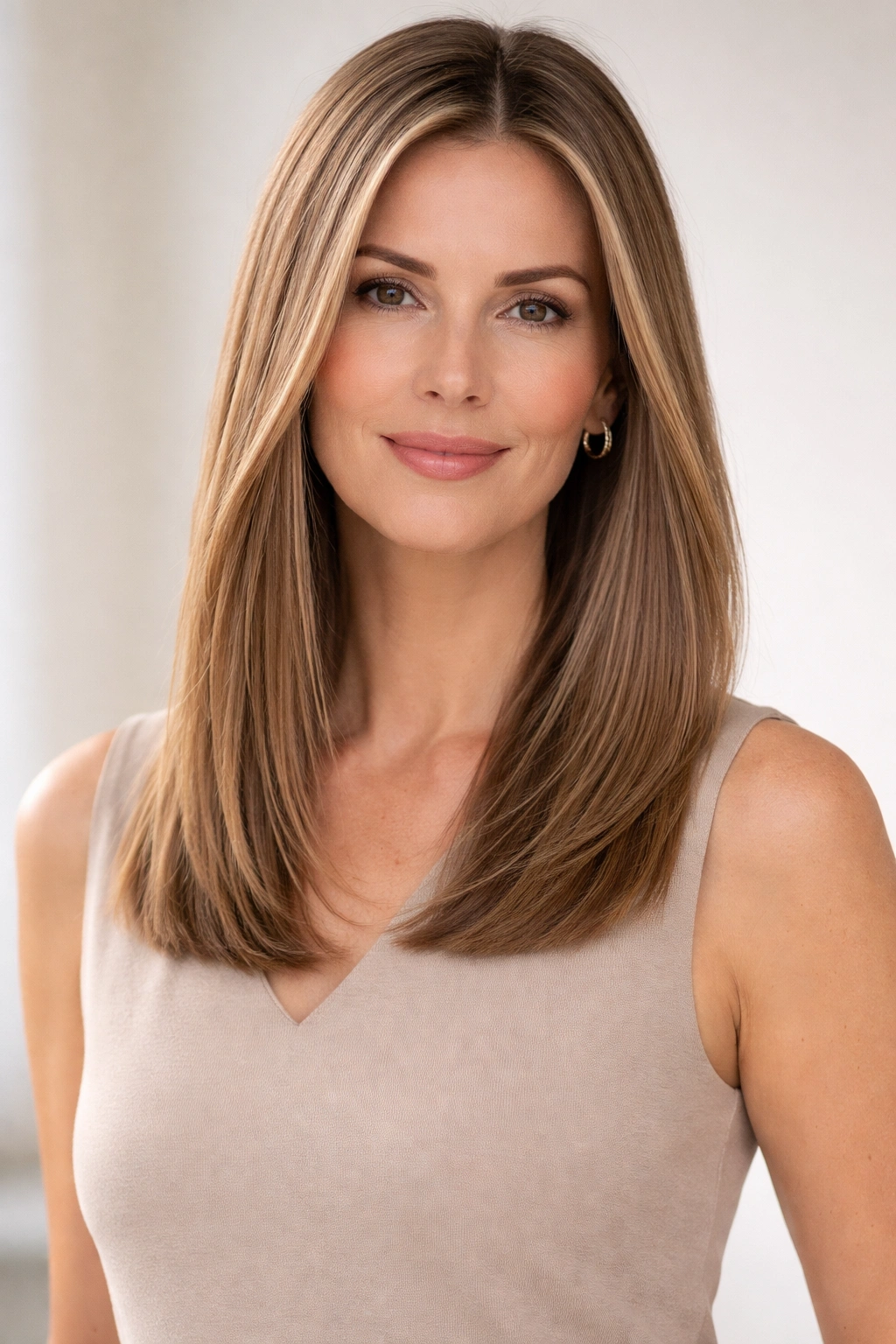
This is a middle-ground style—straight through the mid-lengths with just the tiniest bit of texture, bend, or wave at the very ends. It gives the visual impression of movement without requiring waves throughout the whole head, and it’s achieved either through a texturized cut or a quick wave-only styling technique that takes 30 seconds.
Why This Flatters Mature Hair
Adding just a kiss of texture at the ends prevents the “blunt plank” visual that can look severe, adds movement without adding frizz (since the straight part isn’t disturbed), and creates an illusion of thickness. For women whose hair is fine or less voluminous than it used to be, this creates softness without sacrificing sleekness.
How to Style It
- Blow-dry the hair completely straight, then use a 1-inch curling iron on just the bottom inch to create a subtle flip or wave
- Use a texturizing spray or dry shampoo on the ends (not throughout) to add grip and prevent the ends from looking thin
- Keep the ends regularly trimmed every 4-6 weeks to prevent splits from making them look wispy or fried
- Pair with layers through the crown to add volume where you need it most
Pro tip: If you’re heat-styling the ends daily, use a heat protectant spray first and invest in a good deep conditioner for ends. The texture will only look good if the ends are in good condition.
9. Straight Hair with Crown Volume
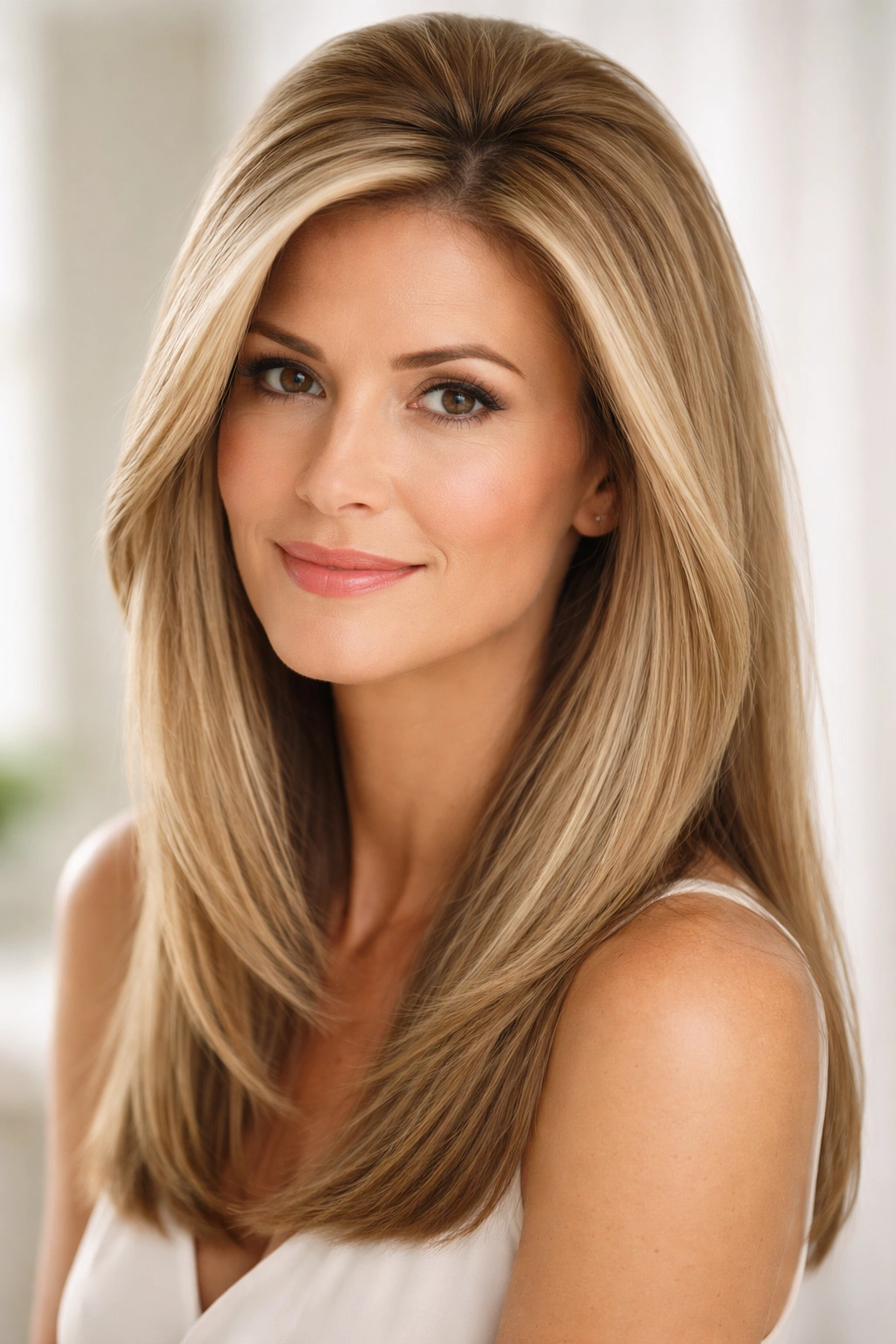
Many women over 40 experience some loss of thickness or volume at the crown, even if the rest of their hair is full. A strategically cut style that adds intentional volume at the crown—through longer layers at the crown, a shorter length overall that makes hair appear fuller, or texture and choppy layers positioned specifically at the top—can transform the way a straight style looks.
Why Crown Volume Matters
Volume at the crown creates the illusion of a lifted face and better proportions. It also makes hair look thicker overall, which reads as younger and healthier. A flat crown can make the face appear heavier and draw attention downward, while crown volume lifts everything up.
Techniques for Adding Crown Volume
- Ask for layers that start at the crown and gradually lengthen toward the ends
- A choppy, textured crown with smoother straight ends below creates intentional dimension
- Blow-dry using a root-lifting spray and a round brush to maximize natural volume potential
- Use volumizing mousse or dry shampoo at the roots while hair is still damp
Worth knowing: Some of this is a styling technique and some is a cut technique. Talk to your stylist about both—the cut sets you up for success, but how you blow-dry it is what brings that potential to life daily.
10. Shoulder-Length Straight with Subtle Dimension
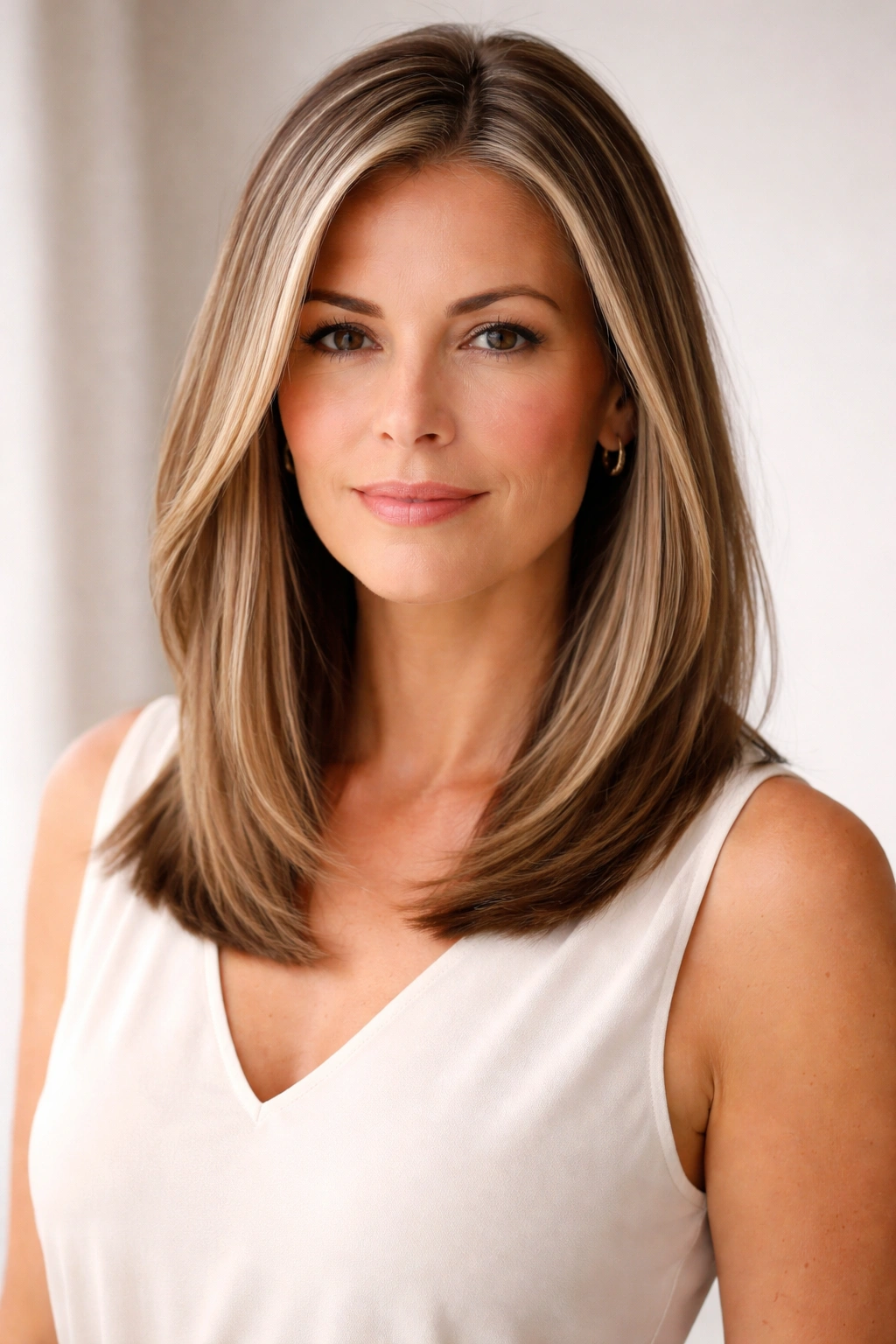
Shoulder-length hair is an underrated sweet spot for women over 40—it’s long enough to feel feminine and have options for styling, but short enough to avoid looking dated or requiring constant maintenance. When worn completely straight but with subtle variations in tone or slight layers, it feels modern and effortless.
Why This Length Works
Shoulder-length hits right at the collarbone area where the proportions of an adult face are usually most balanced. It’s long enough to be tied up easily (for days when you’re not feeling your hair), but short enough that you don’t have the weight pulling down on your scalp. It’s also a length where natural texture or slight movement can be intentional rather than accidental.
Styling Approach
- Wear it completely straight with a center or deep side part for polish
- Subtle highlights or color throughout prevent a flat, single-dimensional appearance
- A light texturizing at the very ends (through your stylist’s cut or your blow-dry) adds movement without frizz
- Pin it half-up with a sleek low clip for casual days or to show your face clearly in photos
Insider note: This length photographs beautifully and doesn’t photograph as easily as shorter lengths. If you’re someone who has video calls regularly or takes a lot of photos, shoulder-length straight hair usually looks good on camera.
11. Straight Hair with Intentional Side Sweep
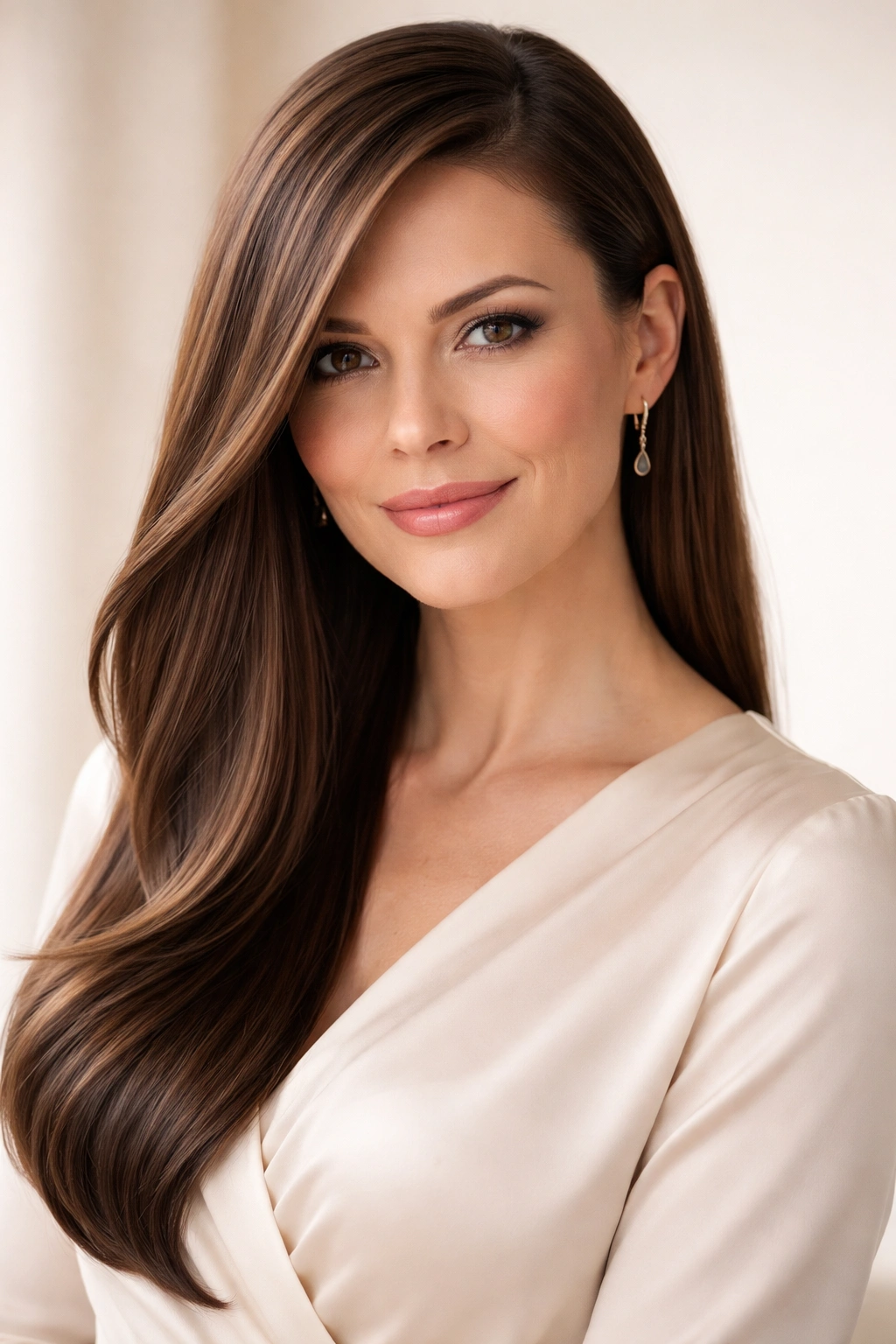
A side-swept style takes a simple straight cut and adds sophisticated dimension through how you part and wear it. Rather than a blunt center part, sweeping the hair to one side from a deep side part creates an asymmetrical silhouette that’s more interesting and flattering for most face shapes.
Why the Sweep Matters
A side sweep creates an elongating line and provides strategic coverage in a way a center part doesn’t. If you’re conscious about forehead lines or asymmetries in your face, the side sweep naturally addresses those concerns while looking intentional rather than hiding.
How to Perfect the Sweep
- Have your stylist cut a deep side part into your hair (train the hair to fall that way naturally)
- Use a round brush and blow-dryer to set the sweep while hair is still damp
- A light texture spray helps the swept side stay in place without looking stiff or sprayed
- Keep your longer side slightly longer than the short side to make the sweep more dramatic
Key feature: The swept side should frame your face, not cover it. The goal is to draw attention to your eyes and cheekbones, not to hide them under a curtain of hair.
12. Minimalist Chin-Length Cut
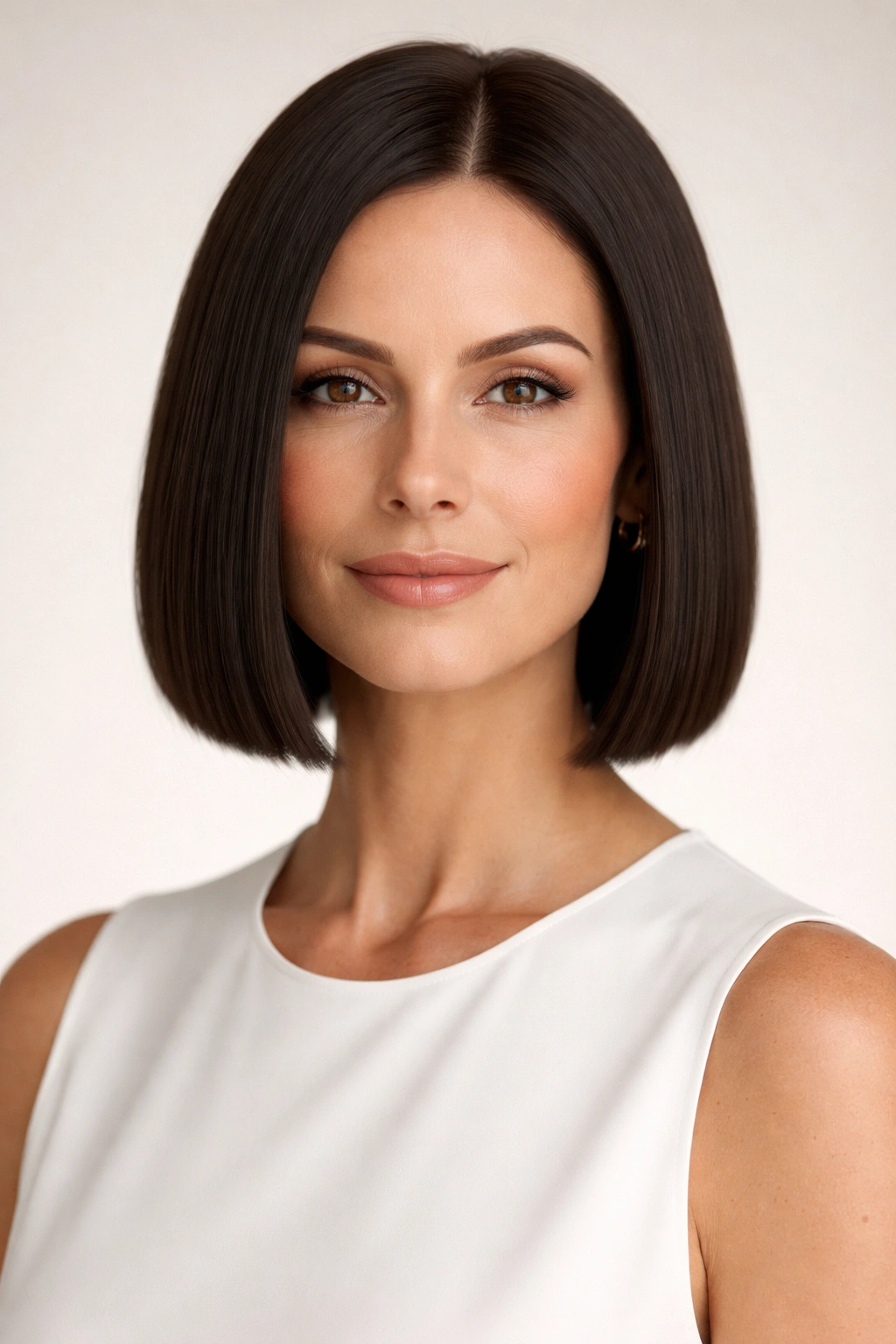
Sometimes the most elegant style is the simplest one—a precise chin-length bob with no layers, no texture, no dimension. Just a blunt line at chin length, worn straight and sleek. This is the modern take on the timeless bob, and it reads as intentionally minimal rather than unsophisticated.
Why Minimalism Works for This Stage
At 40-plus, you’ve presumably developed enough personal style that you don’t need visual clutter to express yourself. A minimalist cut actually communicates confidence and clarity. It also means you’re not constantly styling or fidgeting—you wash it, brush it, and go.
How to Keep It Looking Intentional
- The cut itself must be perfectly precise—any bluntness or unevenness reads as neglect
- Trim every 4-6 weeks without fail to maintain the line
- Pair with a glowing skin care routine, since there’s nothing to hide behind
- Use a smoothing serum to make the hair shine; shine and health replace visual texture
Essential note: A minimalist cut is actually the hardest to pull off because there’s nowhere to hide. If you’re not willing to maintain it impeccably and keep your skin looking its best, choose a style with more dimension or layers that provide forgiving coverage.
13. Long Straight with Layers Throughout
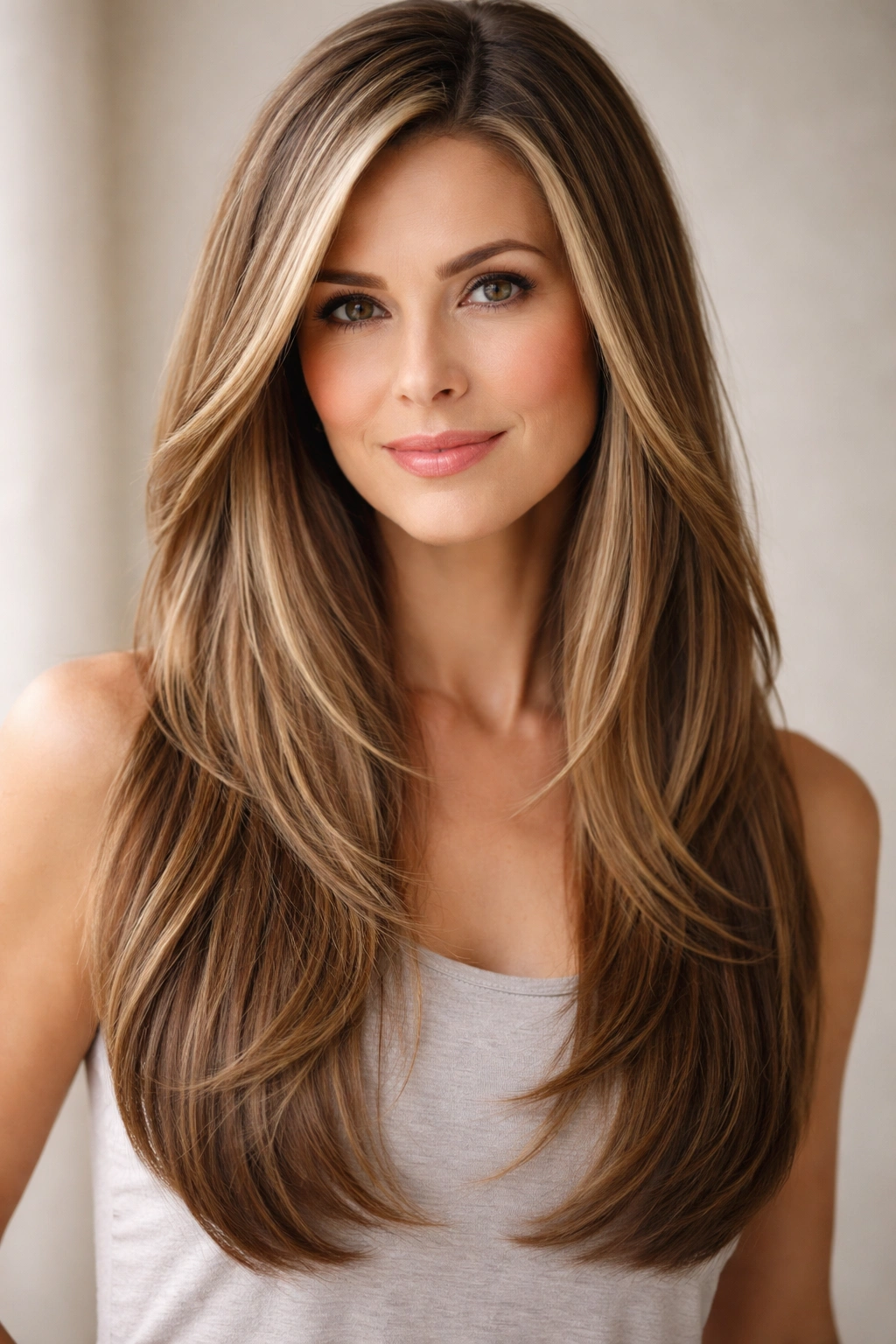
Layers throughout a longer straight style serve a specific purpose: they create movement and thickness without requiring waves or texture. Rather than layers only at the face (face-framing layers) or choppy layers at the crown, this approach layers the entire head subtly, so when you straighten the hair, the different lengths create subtle movement and visual depth.
Why Throughout-Layering Works
Layers throughout prevent that flat appearance that long straight hair can sometimes have. They also increase the illusion of thickness—more individual pieces of hair visible means the overall appearance is fuller. For women whose hair has become finer, this is a game-changer.
How to Style It
- Blow-dry with a smoothing serum and flat iron to create the sleek base, then the layers create movement naturally
- The different lengths will catch light and create subtle shadow and depth
- Pair with a side part rather than center to maximize the layering effect
- This style works beautifully in ombré or balayage color because the layers amplify the color dimension
Pro tip: Avoid asking for “choppy” layers, which can look too textured and young. Instead, ask for “blended layers” or “seamless layers” that are stacked subtly rather than creating obvious lines or texture.
14. Sleek Straight with Deep Side Part and Tucked Sides
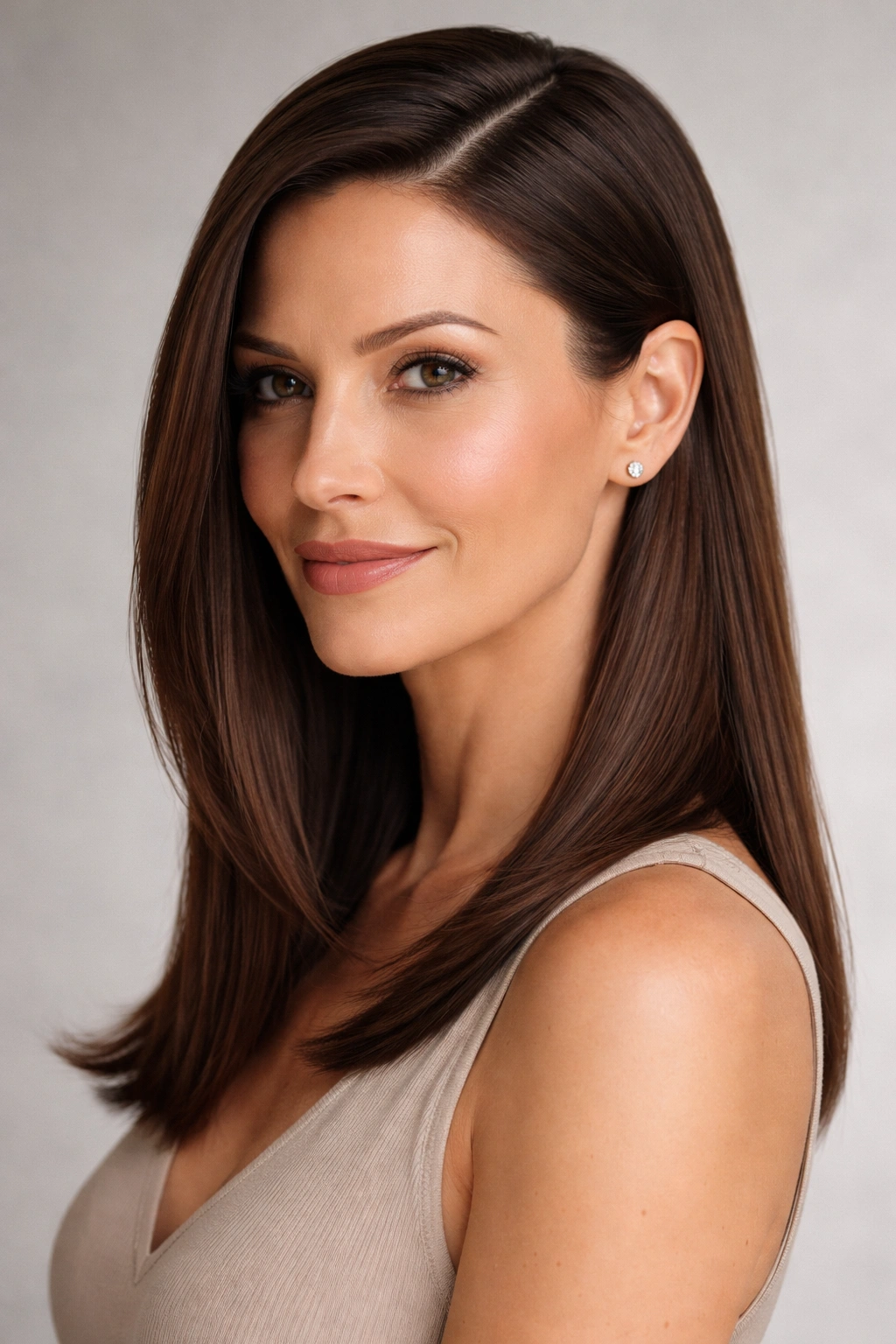
This is a variation on the sleek straight style but with a specific styling approach: wear it tucked behind your ears on both sides, creating a severe, sculpted look that shows your face and bone structure clearly. This is the style of choice for women who want to showcase their face unobstructed and aren’t concerned about covering lines or asymmetries.
Why It Works for Confident, Secure Women
This style says “I’m comfortable in my own skin and I want you to see it.” It’s not about hiding anything; it’s about showcasing. For women over 40 who have invested in good skin care, this is the ultimate power move.
How to Make It Work
- You need fairly long hair to tuck behind the ears and have enough length below that point to feel intentional (shoulder-length minimum)
- A volumizing mousse at the roots helps the hair behind the ears look substantial rather than plastered
- Secure with a small clear elastic or bobby pins hidden underneath so it looks like it naturally stays tucked
- Wear with confidence and good lighting (it shows everything)
Honest note: This look isn’t forgiving. If you have fine hair, thinning, or are self-conscious about your face, this style will amplify those concerns. It’s for women who genuinely want to showcase their face and aren’t worried about coverage.
15. Shoulder-Grazing Straight Cut with Movement
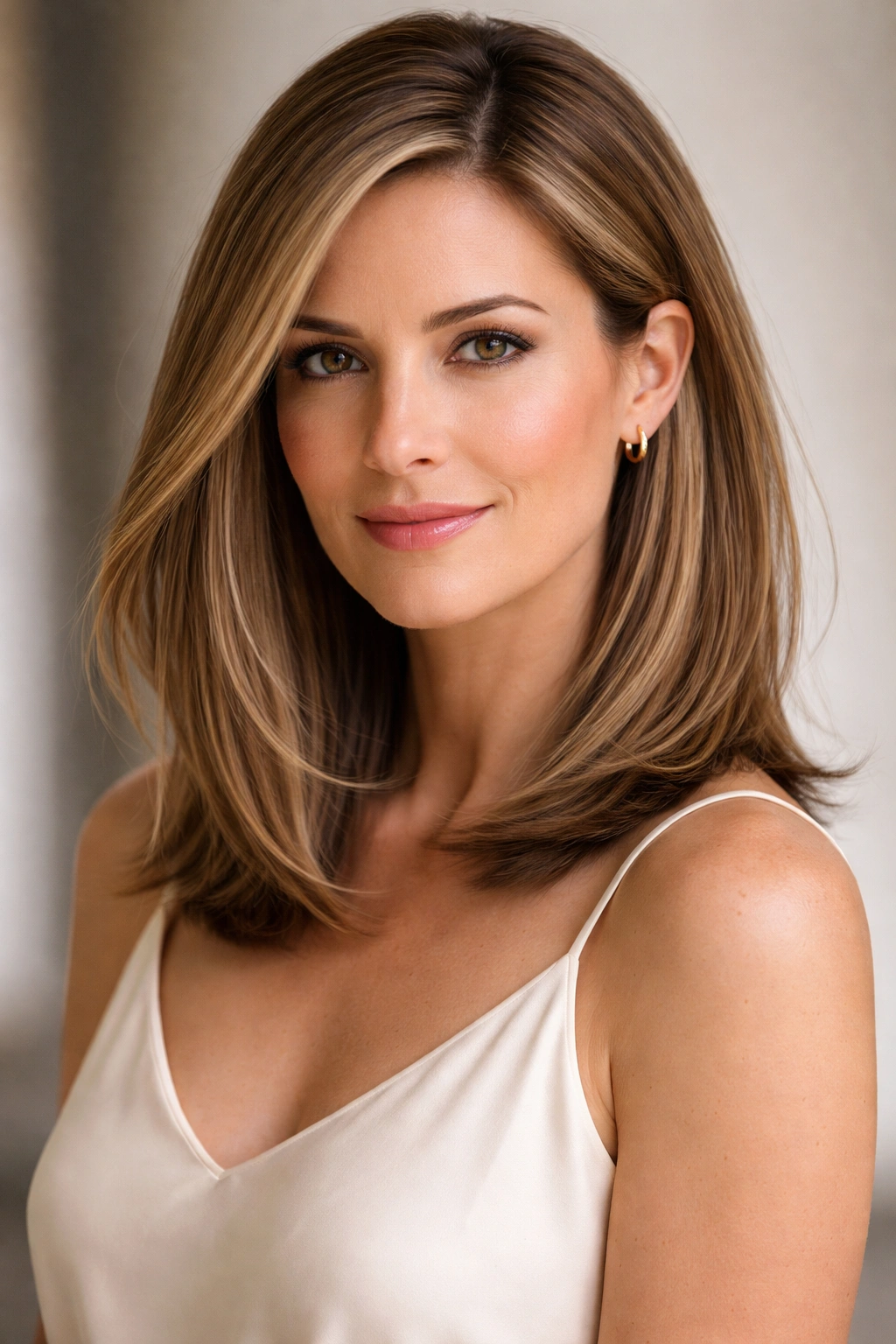
A slightly longer bob that grazes the shoulders offers a middle ground—longer than a traditional chin-length bob, but shorter than shoulder-length. When worn straight with just a touch of movement at the ends, it’s contemporary and flattering.
Why This Length Is Underrated
The shoulder-grazing length is long enough to feel feminine and soft, but short enough to avoid looking dated or requiring constant maintenance. It also frames the shoulders in a flattering way and hits at a proportionally balanced point on most bodies.
How to Style It
- Blow-dry straight with a round brush for subtle movement at the ends
- A deep side part creates more visual interest than center
- Tuck it behind one ear for asymmetrical polish, or wear it down and full
- Layer it subtly through the crown for volume without texture
Key feature: This length bridges the gap between “I want it short and current” and “I want it long enough to wear up.” It works for both philosophy.
16. Straight Hair with Face-Framing Layers
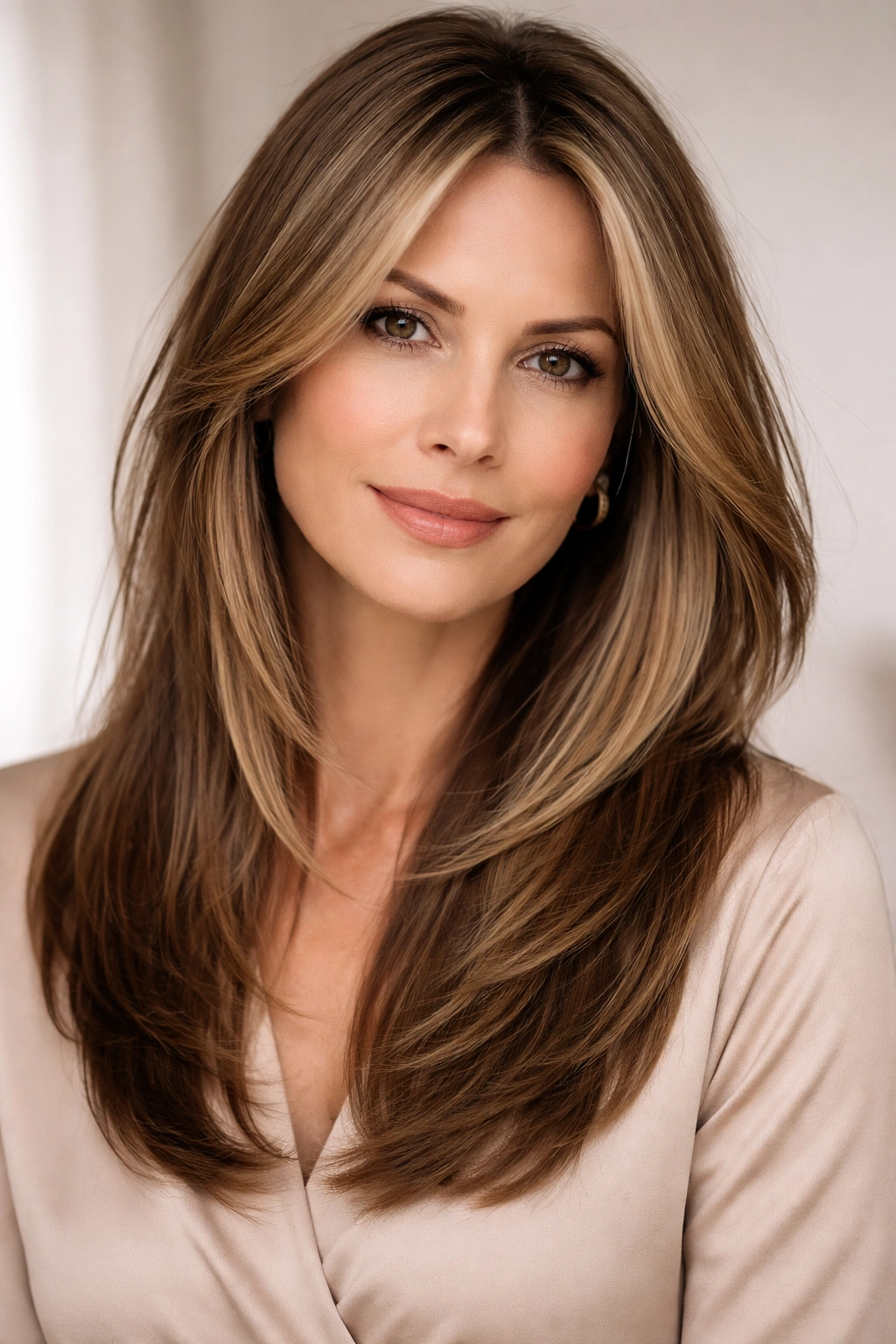
Face-framing layers are shorter pieces positioned around the face that frame and flatter while the rest of the hair remains longer and straighter. This is an excellent choice for women who want movement and softness around the face but don’t want their entire head to be choppy or textured.
Why This Approach Works
Face-framing layers give you the visual and practical benefit of shorter pieces (movement, shape, framing) without the commitment of a full shorter cut. They create softness around the face while the longer lengths underneath remain sleek and substantial.
How to Wear Face-Framing Layers
- Ask for longer layers that start just below the ears, not too-short baby-face layers
- Wear them down to frame the face, or pull them back to show the bone structure
- Blow-dry these pieces slightly away from the face to create movement outward
- The longer pieces underneath can be kept completely straight for contrast
Pro tip: Face-framing layers photograph beautifully and work especially well if you’re frequently on video calls or taking selfies. They add dimension and softness without being high-maintenance.
17. Minimalist Straight with Neutral Color
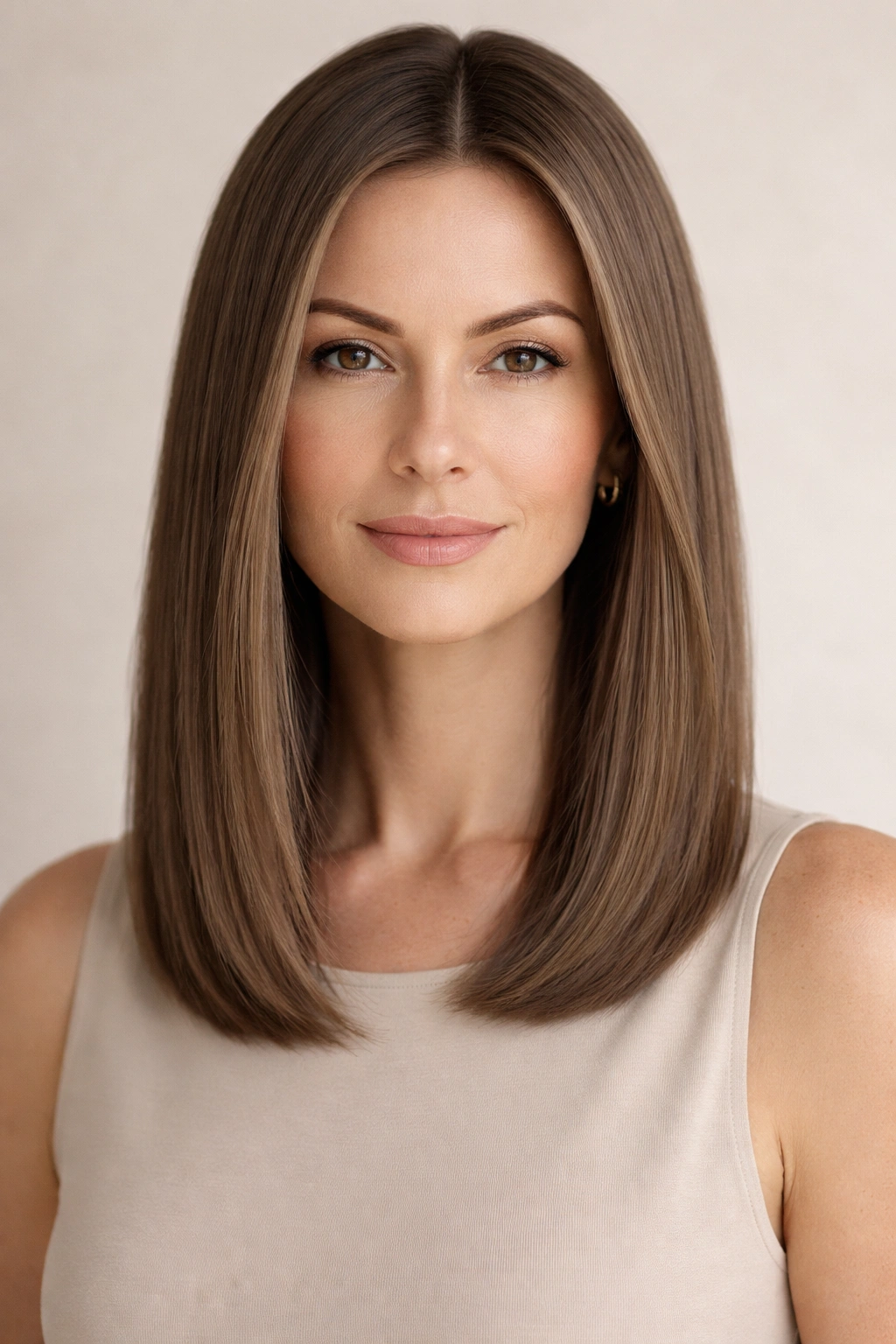
Taking the minimalist approach further, some of the most elegant straight hair styles for women over 40 pair a simple, precise cut with a neutral color—think ash brown, cool blonde, or warm brunette without highlights or dimension. The entire look is about simplicity and letting quality shine through.
Why Neutral is Timeless
A true neutral color is the opposite of trendy; it’s the baseline of chic. Without the distraction of highlights or color dimension, the focus is on cut quality, hair health, and your face itself. This approach works for women confident enough to let their features (rather than hair color) be the main event.
How to Maintain This Look
- Choose a color that complements your skin tone at rest (no special lighting or makeup required to work)
- Trim every 4-6 weeks to maintain the cut’s precision
- Invest in a color-depositing conditioner to maintain the color between salon visits
- Keep hair very healthy—the neutral color shows every bit of dryness or damage
Worth knowing: This approach requires either a willingness to accept your natural gray (if you’re going that direction) or consistent color maintenance every 6-8 weeks. There’s no in-between with a true neutral.
18. Straight Hair with Soft Highlights
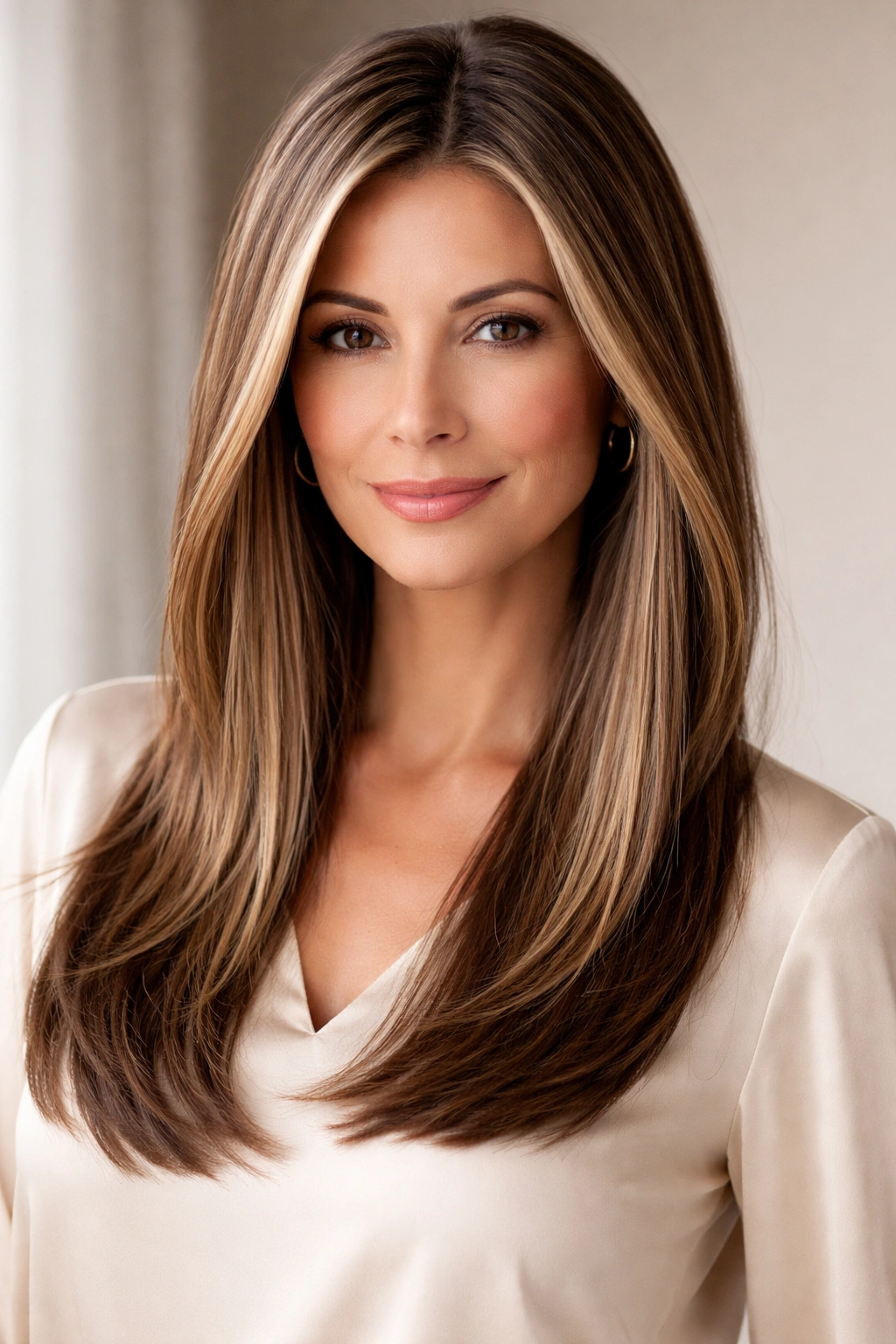
Unlike dramatic dimensional color, soft highlights are subtle, closer to your natural color, and designed to look like natural light rather than intentional color placement. This approach adds dimension without looking like a “highlight job” and works beautifully on straight hair.
Why Soft Highlights Enhance Straight Styles
The slight color variation catches light and adds depth, making straight hair look thicker and more interesting without the high-maintenance appearance of darker or more dramatic color. They also tend to be gentler on hair since they’re placed less frequently and in less intensive patches.
How to Apply Soft Highlights
- Ask for a “shadow root” or “soft balayage” rather than traditional foils
- Keep the highlights within 2-3 shades of your natural color
- Focus the highlights on the crown and around the face for maximum flattering effect
- Refresh every 10-12 weeks rather than every 6-8 weeks
Real talk: Soft highlights are one of the most forgiving color techniques because they’re subtle enough that grow-out is barely noticeable. This makes them perfect for women who want color but not constant salon visits.
19. Straight Hair with Dimensional Color
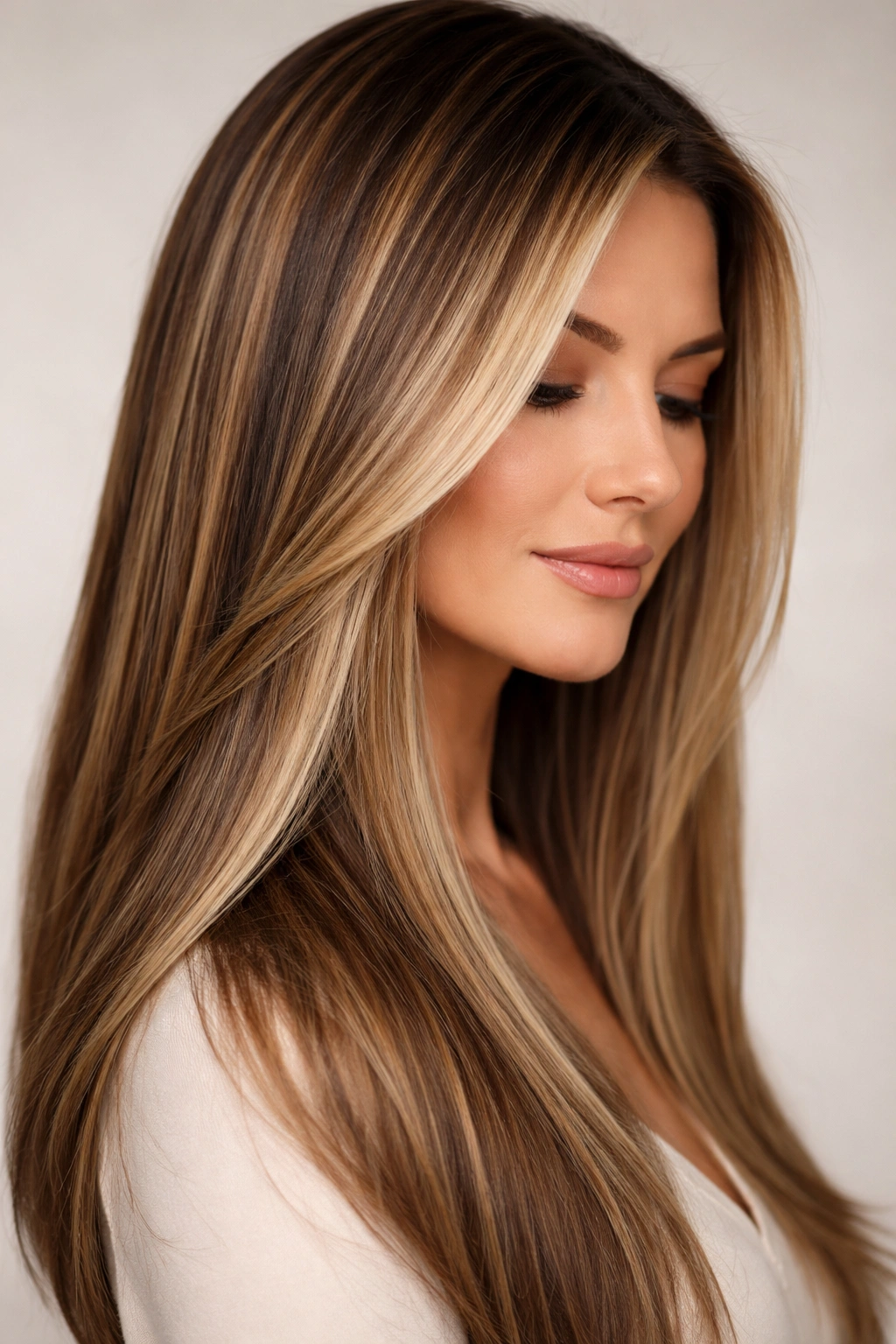
A step beyond soft highlights, dimensional color involves multiple shades throughout the hair—darker roots, mid-tone base, lighter pieces—creating the illusion of depth and movement. On straight hair, dimensional color is incredibly effective because the straight surface shows off the color work.
Why Dimension Matters
Multiple colors work together to create visual thickness and interest. If you have fine or thinning hair, dimensional color is one of the most effective illusions available. It also makes straight hair appear to have more texture and movement than it actually does.
How to Get Dimensional Color Right
- Work with a colorist experienced in dimensional work; this isn’t a DIY project
- Ask for placement that emphasizes the crown and face-framing pieces
- Keep the color relatively harmonious (not high-contrast) for a sophisticated look
- Invest in color-protecting shampoo and conditioner—the process damages hair, and good products help maintain both color and health
Pro tip: Dimensional color requires 8-10 week maintenance appointments, which is an investment of time and money. Only choose this if you’re willing to commit to the maintenance cycle.
20. Straight Bob with Tucked Sides
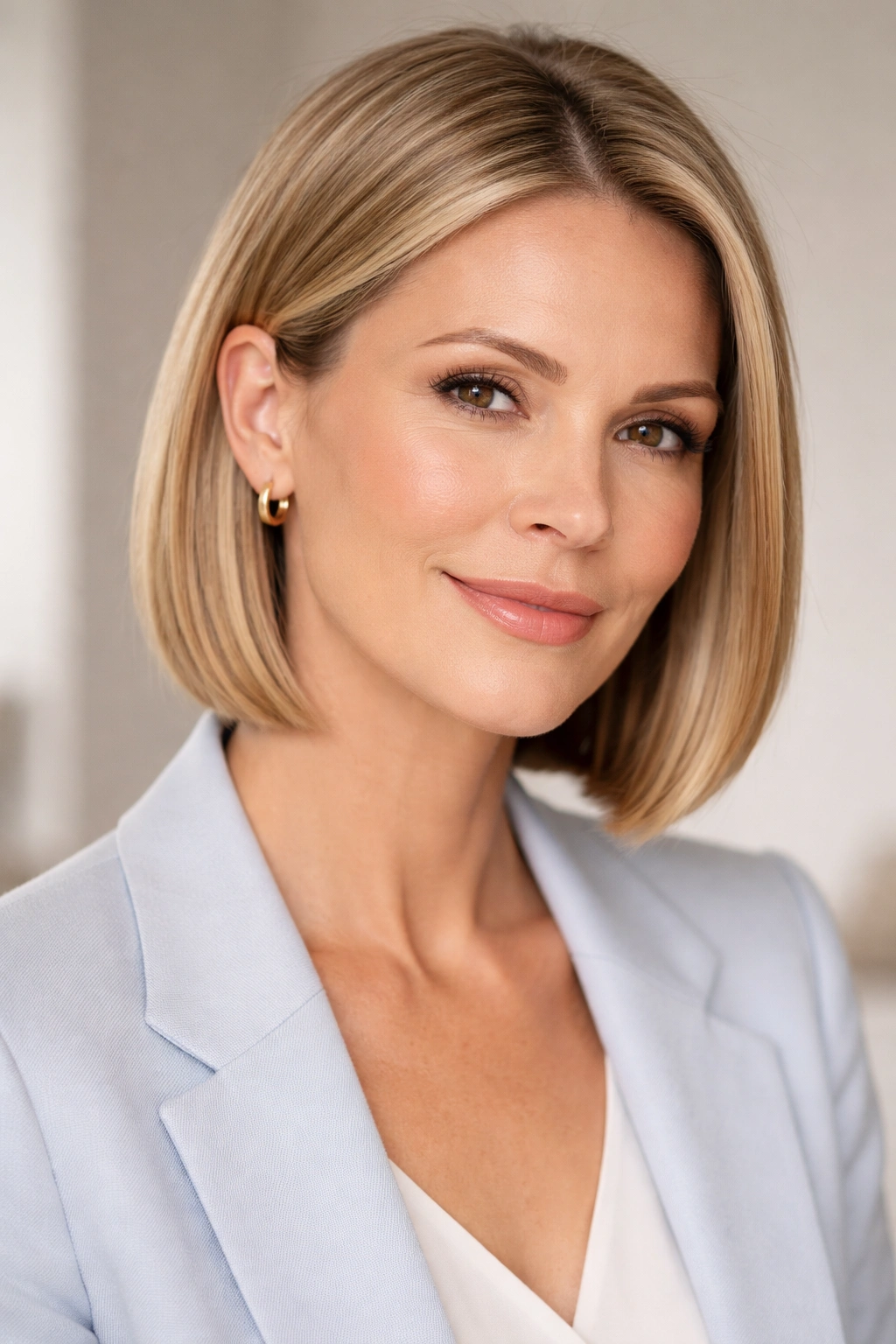
A straight bob styled with the sides tucked or pinned behind the ears is simultaneously polished and soft. It’s the same cut as a traditional bob, but the styling transforms it into something more intentional and sophisticated.
Why Styling Creates Variation
This proves that sometimes you don’t need a different cut—you need a different styling approach. The same bob can be worn down and soft (everyday) or tucked and sculpted (polished and meeting-ready). It’s practical versatility.
How to Perfect the Tuck
- Use small, discreet bobby pins or claw clips to secure the sides
- Keep the tucked hair smooth and sleek to the head; no flyaways or texture
- The face should be fully visible, creating that sculpted, polished effect
- Pair with good lighting and a glowing complexion to make the look work
Key feature: This styling works best on a bob that’s slightly longer—chin-length or longer—so you have enough hair to tuck without it looking too short or severe.
Final Thoughts
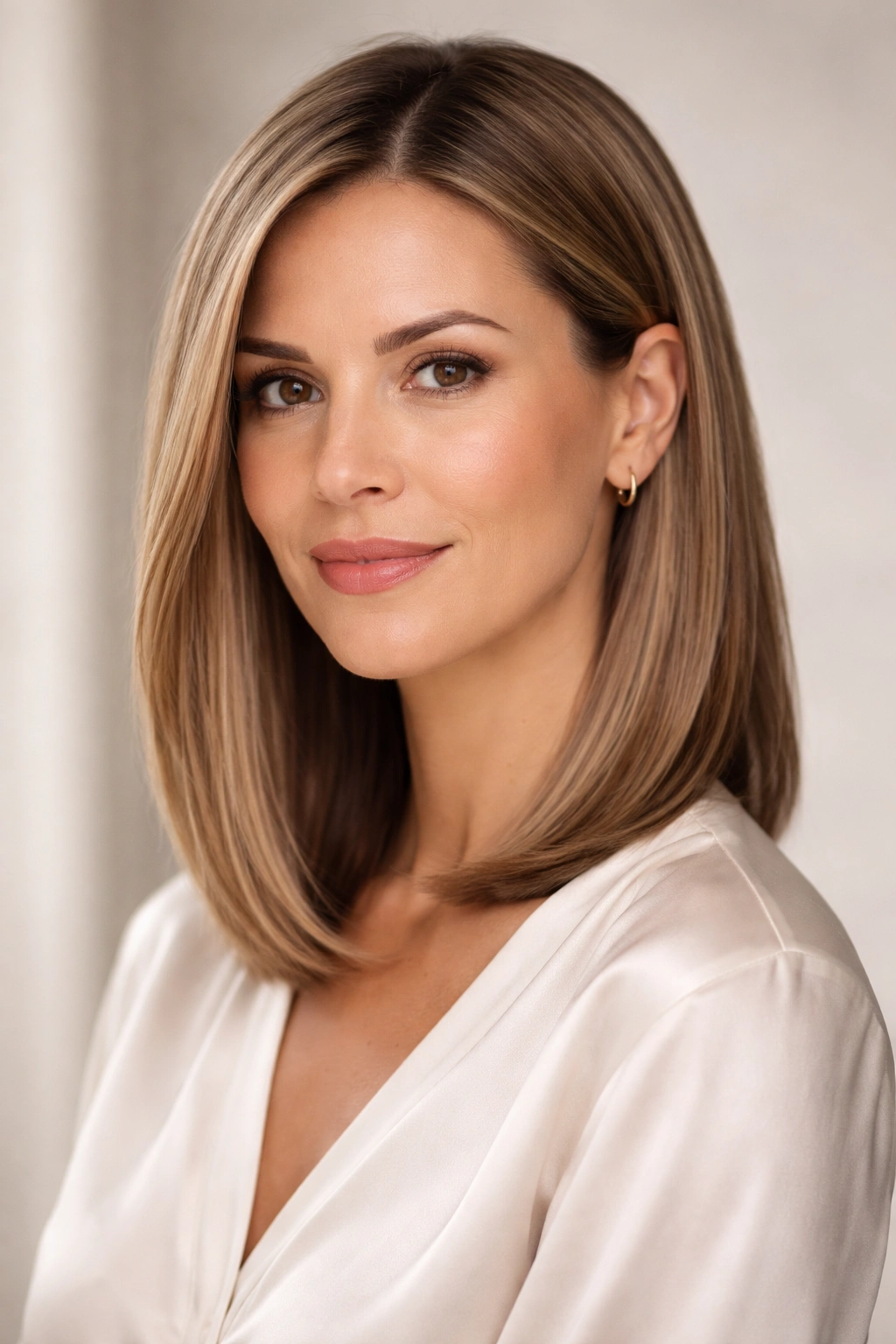
The best straight hair style for you isn’t about what looks good on someone else or what’s trending—it’s about what aligns with your lifestyle, your face shape, your hair’s natural characteristics, and honestly, how much time you want to spend styling. A woman over 40 has usually figured out what she actually likes versus what she thinks she should like, and that clarity is your superpower when choosing a hairstyle.
The styles in this list all share something in common: they’re sophisticated without trying too hard, they’re current without being trendy, and they work with mature hair rather than fighting against its natural texture or density changes. Some require monthly trims, some require color maintenance, and some require heat styling—be honest with yourself about what you’ll actually do consistently. A perfectly maintained minimalist cut that you visit the salon for every four weeks beats an elaborate layered style you’ll neglect because it’s too much work.
Straight hair at any length is your canvas. Whether you choose a sharp bob, long sleek lengths, or anything in between, the key is making sure the cut, color, and styling approach all feel like genuine choices rather than compromises. When you find the right style, you’ll know it immediately—because you’ll look forward to doing your hair rather than dreading it.
