



Straight hair has this incredible advantage when it comes to color — it showcases every nuance of a shade without the diffusion that waves and curls create. When you go ginger, this clarity becomes your superpower. The rich warmth, the dimensional play of light, the way a true ginger tone can completely transform your complexion — all of it lands with stunning impact on a smooth, sleek canvas. Whether you’re drawn to the understated elegance of honey-toned gingers or the bold drama of deep coppers, there’s a ginger shade that will feel authentically you.
The beauty of ginger as a color family is that it spans an enormous range. It’s not just one flat red-orange tone — it’s an entire spectrum that moves from buttery golden honey on one end to nearly-black mahogany on the other. Your skin tone, eye color, lifestyle, and maintenance commitment should all influence which ginger direction makes sense for you. And here’s what matters for straight hair specifically: these shades need the right cut and styling strategy to avoid looking flat or one-dimensional. The good news is that straight hair’s natural shine and movement (yes, straight hair moves — just differently than curls) work beautifully with ginger tones when you know how to work with your texture.
This guide walks you through ten distinctly different ginger hair ideas, each suited to different skin tones, undertones, and lifestyles. Some are bold statements. Some are subtle and sophisticated. All of them look their absolute best on straight hair when done right.
1. Copper Ginger
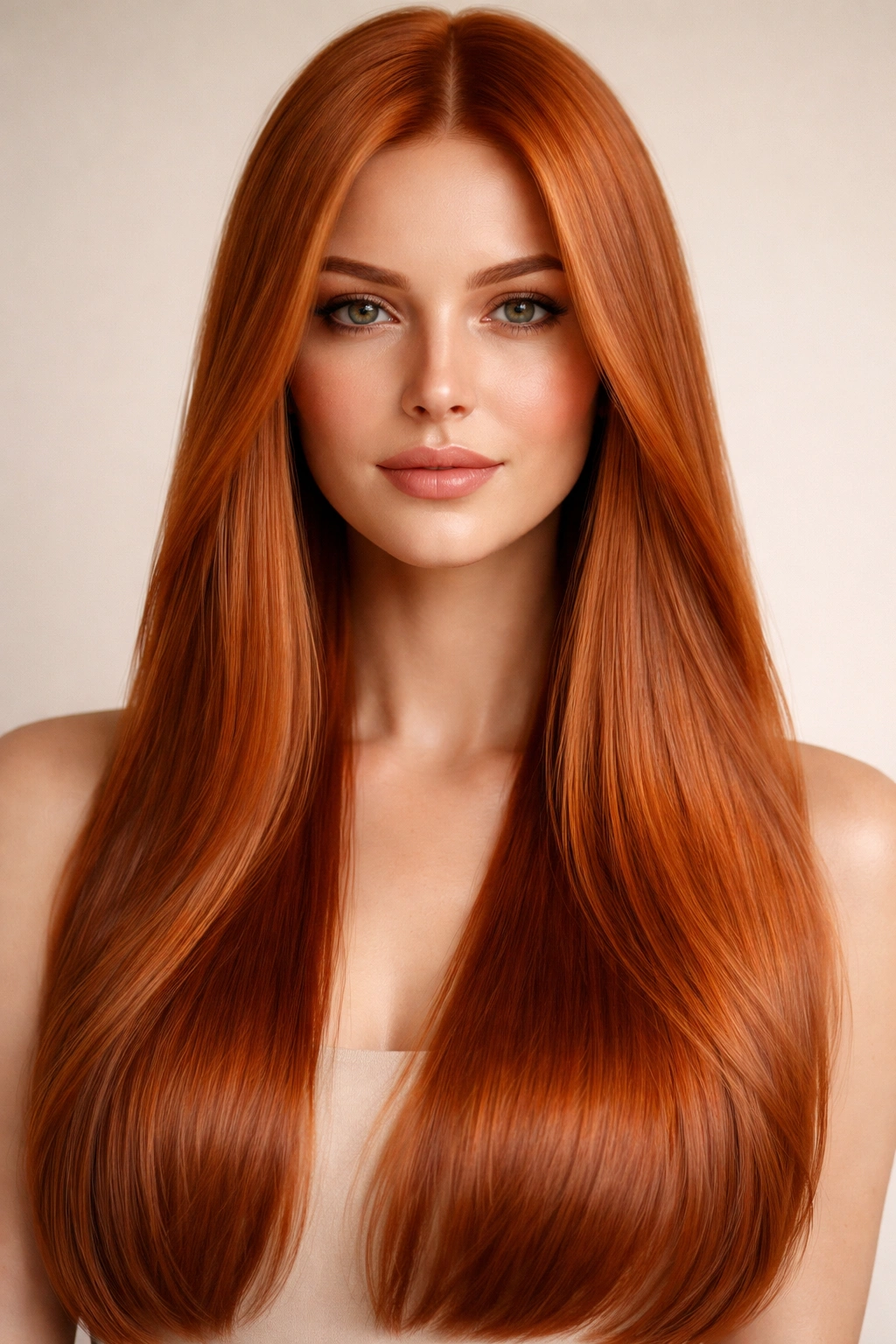
Copper ginger is the extrovert of the ginger family — warm, bright, and impossible to ignore in natural light. This shade sits somewhere between a true red and a warm orange, leaning heavily toward that metallic copper penny tone that catches light like it’s been polished. It’s bold enough to feel like a real transformation, but it’s still undeniably ginger rather than a pure red or orange, which gives it sophistication alongside its vibrancy.
Why Copper Works Beautifully on Straight Hair
The reason copper ginger particularly shines on straight hair is how the shade plays off a smooth surface. Straight hair naturally reflects light evenly across the entire strand, which means that coppery shimmer gets distributed uniformly rather than getting broken up by texture. The reflectivity of straight hair amplifies the metallic quality that makes copper so striking. This shade sits best on warm or olive skin tones, especially if you have golden or warm undertones in your complexion. If you have cooler undertones, copper ginger can still work, but you’ll want to lean toward the deeper, less bright versions of the shade.
What You Need to Know About Copper Maintenance
- Fading timeline: Copper ginger typically holds its brightness for 4-6 weeks before beginning to fade toward a softer, warmer blonde-gold. This isn’t necessarily bad — many people love the faded version — but if you want maximum vibrancy, you’ll need touch-ups every 4-5 weeks
- Shampoo matters: Sulfate-free shampoo is non-negotiable. A color-safe shampoo formulated specifically for warm tones will preserve brightness far longer than a standard formula
- Toning as maintenance: Purple or blue-toned shampoos will actually turn copper ginger muddy and ashy. Instead, invest in a color-depositing shampoo in copper or golden tones to refresh warmth between colorings
- Sun exposure impact: Copper can fade slightly faster in intense sun, so UV protection spray before outdoor activities extends vibrancy
The commitment level for copper ginger is moderate-to-high — it’s not the easiest shade to maintain, but it’s far from impossible. If you’re someone who enjoys frequent hair maintenance and loves a bold look, copper ginger could be your signature.
Pro tip: Copper ginger pairs beautifully with deeper eyebrows (don’t go too light with brow color, as it can wash out your face) and warm-toned makeup with bronze or warm gold accents.
2. Burnt Orange Ginger
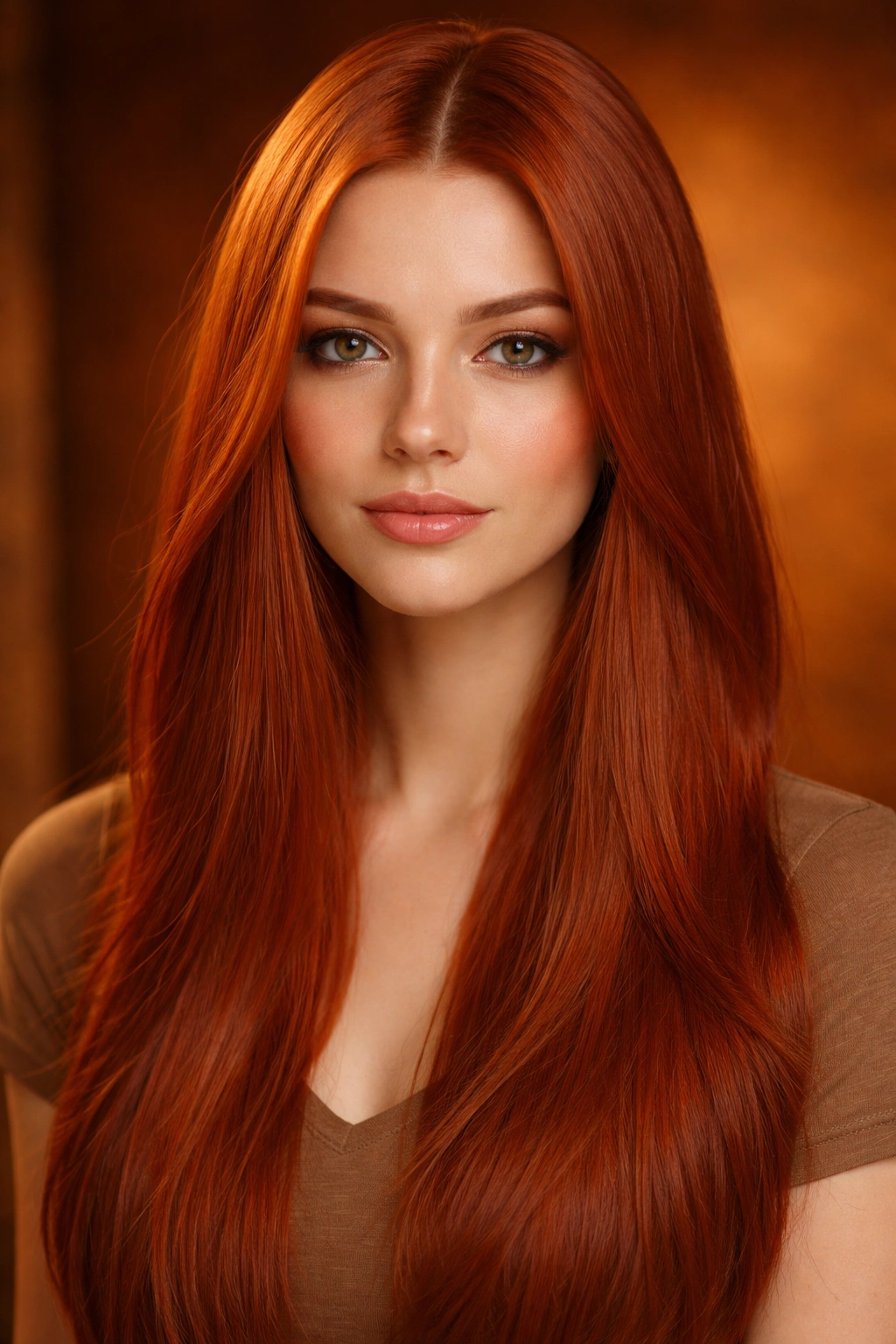
Burnt orange ginger is the moody, sophisticated cousin of bright copper. Instead of a shiny, metallic tone, burnt orange reads as a deeper, slightly more muted warmth — think autumn leaves at peak color rather than a brand-new penny. This shade has enough depth to feel grounded and mature, while still being unmistakably ginger and warm.
How Burnt Orange Complements Different Skin Tones
Burnt orange ginger is remarkably inclusive when it comes to skin tone compatibility. It works on warm skin tones (obviously), but it’s equally stunning on olive skin tones because the earthiness of the shade complements the complexity of olive undertones. Even cooler-toned skin can wear burnt orange ginger successfully, especially if you have fair or pale skin — the warmth of the shade will brighten your complexion without clashing. On deeper skin tones, burnt orange ginger creates a rich, luxurious effect that feels premium and intentional. This is one of the most adaptable shades in the ginger family, which is part of what makes it so popular.
The Straight Hair Advantage with Burnt Orange
Straight hair’s ability to reflect light uniformly means burnt orange reads with maximum warmth and clarity. The shade doesn’t get broken up by waves or curls, so every inch of your hair reads as that rich, coordinated tone. This creates a polished, cohesive look that feels intentional and well-executed — exactly what you want when you’ve committed to a significant color change.
Real-World Longevity and Upkeep
- Color hold: Burnt orange typically lasts 5-8 weeks before noticeable fading. It’s more stable than bright copper because the depth helps it resist fading
- Root growth visibility: Because burnt orange is darker than lighter gingers, regrowth becomes visible faster. If you have dark roots naturally, you might touch up every 6-8 weeks; if your roots are significantly lighter, you’ll likely want to retouch closer to every 4-6 weeks
- Styling with straight hair: Burnt orange ginger looks stunning sleek and polished with a flat iron, but it’s equally gorgeous with loose, lived-in waves created with a curling iron or waver. The versatility is part of the appeal
- When fading becomes beautiful: As burnt orange fades, it softens into a warm, honeyed tone that many people find they actually prefer to the original color. Embrace this transition rather than fighting it
3. Rose Gold Ginger
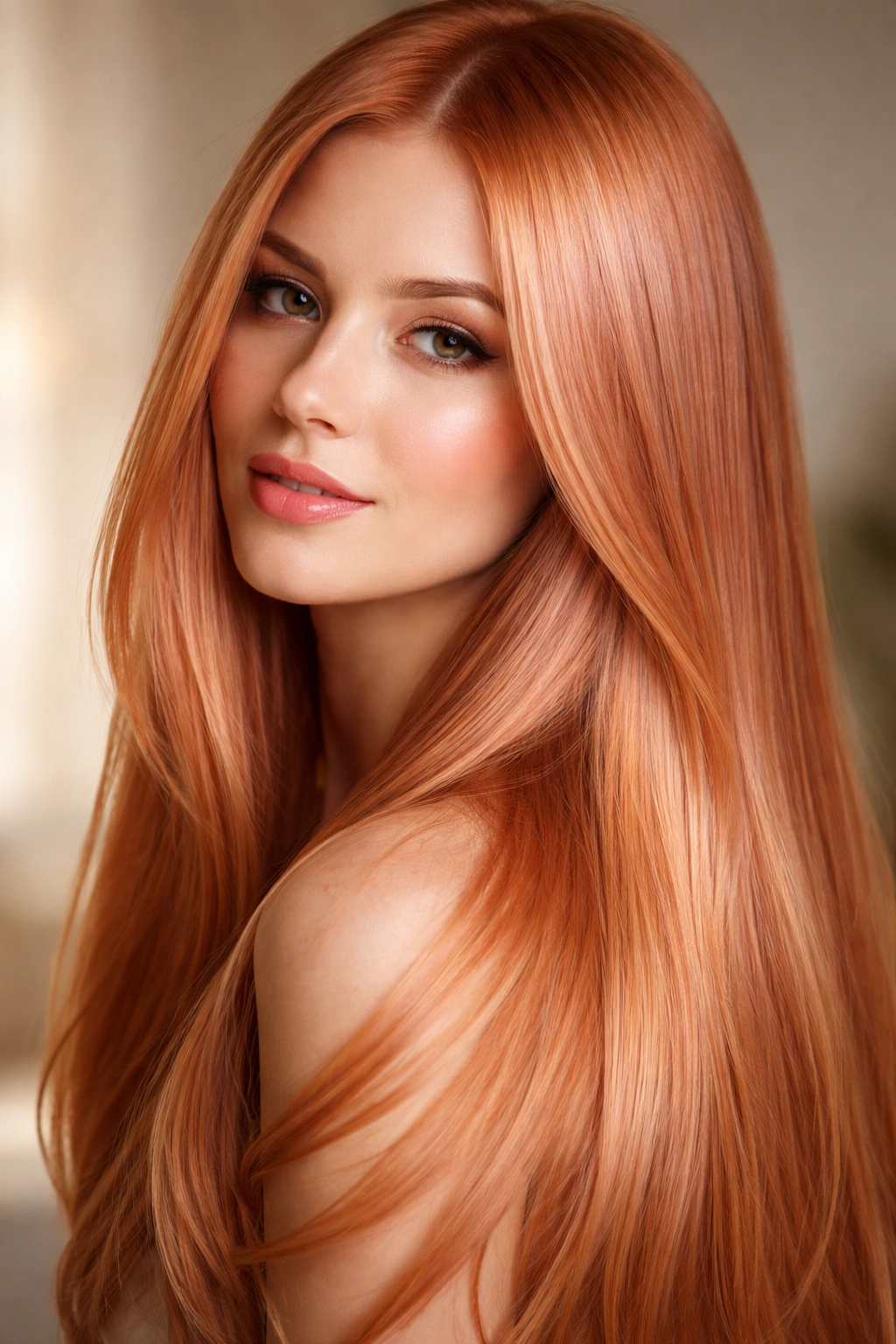
Rose gold ginger occupies a uniquely magical space — it’s ginger enough to feel like a warm, dimensional color, but it’s cool-toned enough to appeal to people who normally gravitate toward cooler shades. This shade combines the warmth of ginger with subtle rosy, peachy, or mauve undertones that create an almost iridescent effect in certain lighting. It’s less orange than traditional ginger and more of an elevated, fashion-forward interpretation of the color family.
The Science Behind Rose Gold on Straight Hair
Rose gold works particularly well on straight hair because the smooth surface creates a mirror-like finish that makes those rosy undertones shimmer. When light hits rose gold ginger on straight hair, you get this beautiful interplay of warm and cool tones that creates depth without requiring texture. The shade appears to shift slightly depending on the lighting — indoor tungsten light brings out the warmth, while natural daylight brings out the rosier, cooler notes. This dimension is part of what makes rose gold so compelling, and straight hair showcases it beautifully.
Who Rose Gold Ginger Suits Best
Rose gold ginger is especially stunning on fair skin with cool or neutral undertones, and it’s breathtaking on deeper skin with cool undertones. The rosy notes complement cooler skin tones in a way that traditional ginger sometimes doesn’t. If you have warm skin but you prefer cooler-toned makeup and jewelry (silver, cool gold, rose gold), rose gold ginger can actually bridge that gap beautifully. This is a shade for people who want to go ginger but aren’t entirely sure about full warmth — rose gold offers the best of both worlds.
Maintenance and Color Longevity
- How long it lasts: Rose gold typically holds well for 6-8 weeks before the rosy tones begin to fade, leaving more of a warm ginger or honey tone behind
- The fading journey: As rose gold fades, it becomes progressively warmer and more traditionally ginger. This fade pattern is actually quite beautiful — you get multiple color versions from one appointment
- Preserving the rosiness: Use a color-depositing conditioner in rose gold or peachy tones to maintain the cool rosy notes. Apply it as a mask for 10-15 minutes once weekly
- What kills rose gold fast: Direct sunlight exposure and hot water both accelerate fading in rose gold specifically. Cooler water temperatures help preserve the rosy undertones
4. Deep Mahogany Ginger
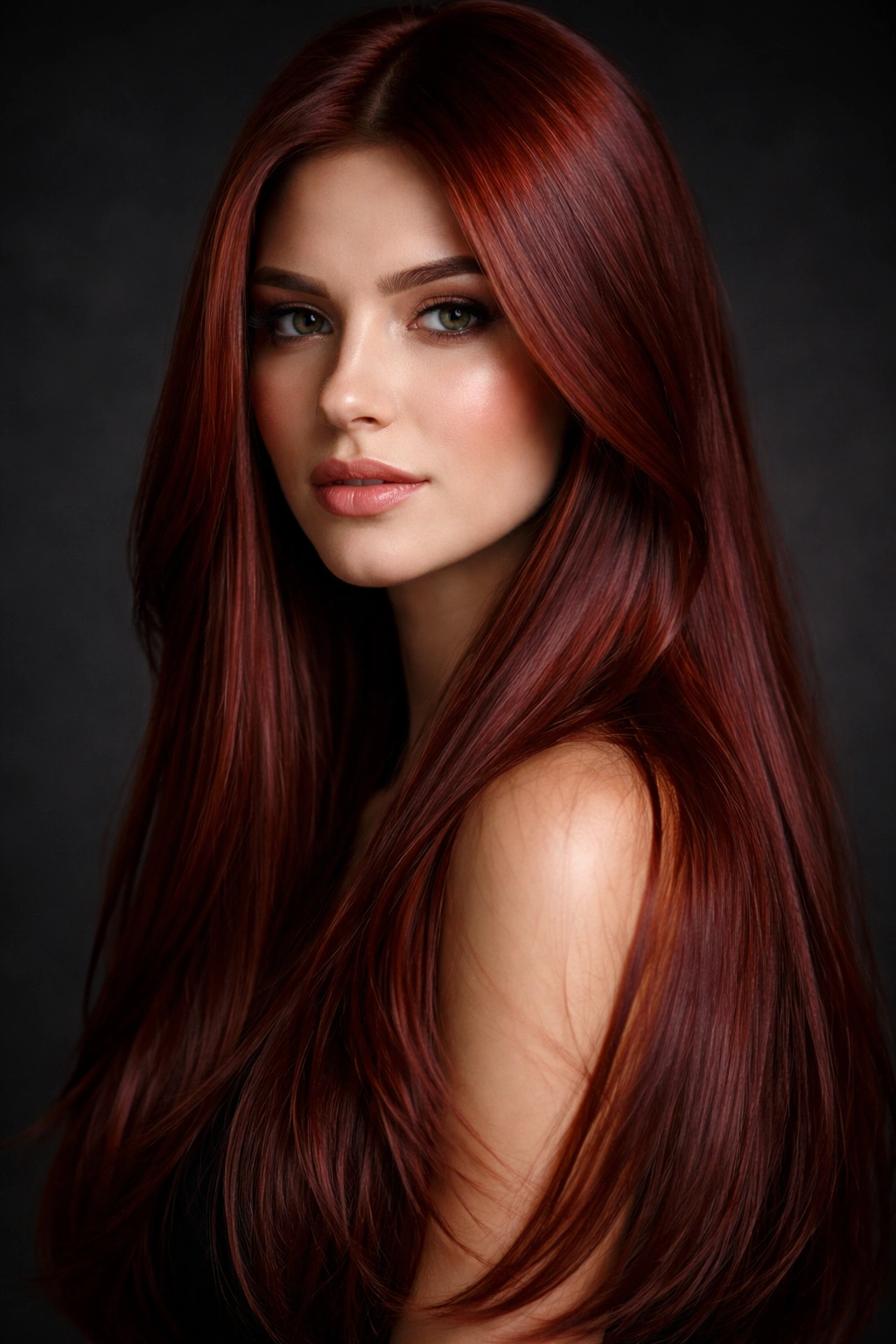
Deep mahogany ginger is the rich, luxurious end of the ginger spectrum — it’s almost as much burgundy as it is ginger, sitting in that gorgeous space where warm and cool begin to blur together. This shade has real depth and sophistication; it reads as ginger in most lighting but can show burgundy or wine notes in certain settings. On straight hair, this creates a seriously elegant, high-impact look.
Why Deep Mahogany Commands Attention
Mahogany ginger on straight hair has a jewel-tone quality — it catches light without being loud about it. The shade feels intentional and curated, like you made a sophisticated choice rather than just grabbing a trendy color. Because it’s darker than lighter gingers, it works across a broader range of skin tones than some other shades. Fair skin tones look luminous against mahogany’s richness. Warm skin tones find this shade incredibly flattering because it echoes their natural warmth at an elevated level. Olive and deeper skin tones look absolutely stunning — mahogany ginger on darker skin has a luxurious, almost jewel-like quality.
The Practical Reality of Deep Mahogany
- Commitment level: Darker colors fade more slowly than lighter ones, which means mahogany ginger typically holds color for 7-10 weeks before noticeable fading
- Root blending: Because mahogany is darker, dark or medium roots actually blend reasonably well during the grow-out phase. This makes it one of the more practical darker ginger shades from a maintenance standpoint
- Straight hair creates maximum depth: Straight hair’s reflective surface makes mahogany ginger appear deeper and richer than it might on textured hair. This depth is a major selling point of the shade
- Color and cut synergy: To really showcase mahogany ginger on straight hair, you want either a sleek, polished style or a cut with subtle layers that catch light. A totally blunt, one-length cut can occasionally read a bit heavy with a dark shade — layers create movement and lightness
5. Strawberry Ginger Blonde
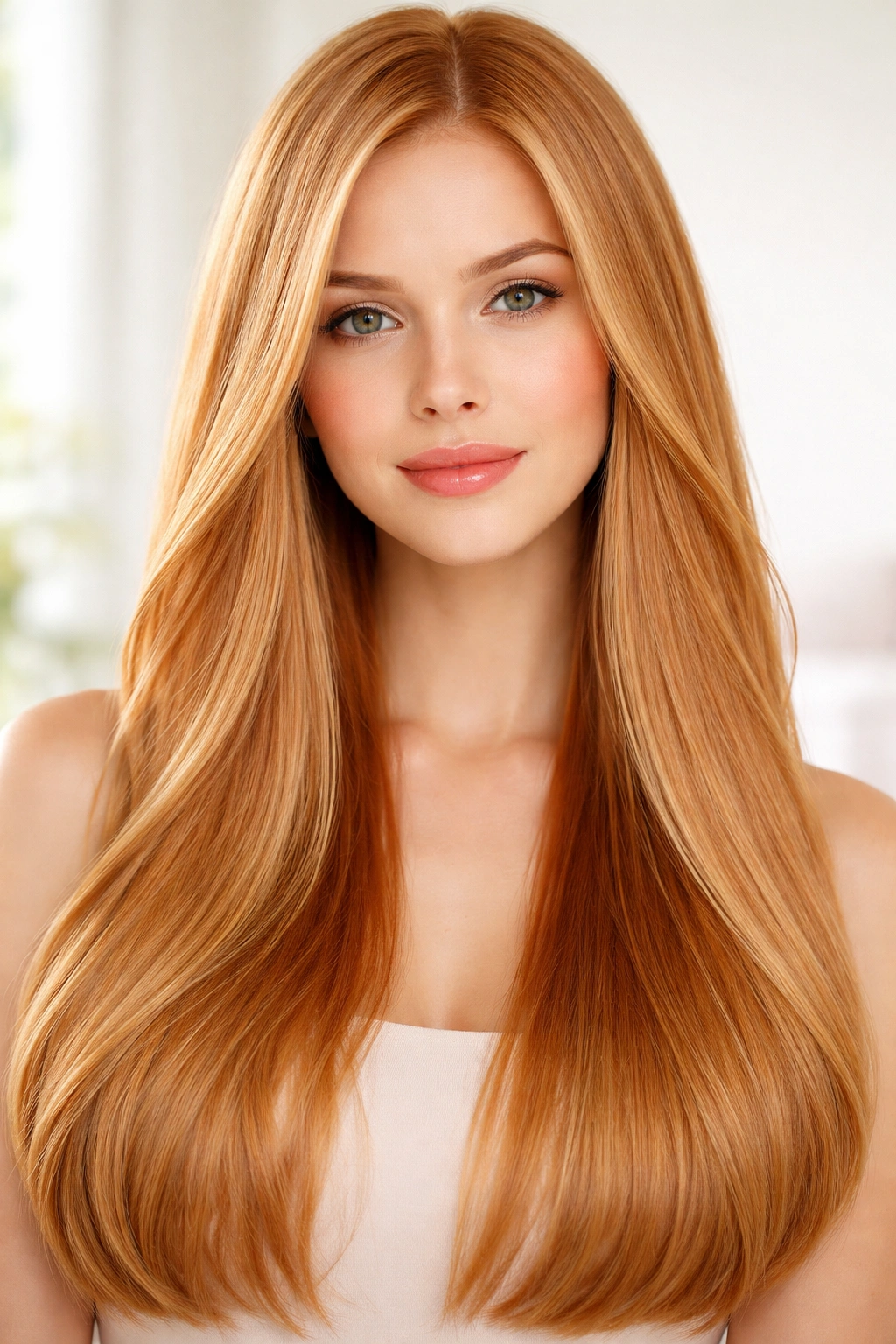
Strawberry ginger blonde is ginger’s lighter, breezier sibling — it’s the choice for people who want obvious warmth and the ginger family’s charm but prefer a lighter overall tone. This shade blends strawberry red and peachy-blonde tones into something that reads as ginger but with significant lightness and brightness. It’s less of a complete transformation than some deeper gingers and more of an enhanced, warmth-boosted version of blonde.
The Appeal for Straight Hair in Particular
On straight hair, strawberry ginger blonde has this beautiful, effortless quality. The shade catches light in a way that makes hair appear thicker and shinier than it might with a flat blonde or a darker ginger. The lighter tone feels more summery and accessible while still delivering the warmth and dimension that ginger brings. This is a shade for people who want noticeable color but don’t want to look entirely different — it reads more as “I went to the beach and came back with dimensional blonde” than “I’m wearing a completely new color identity.”
Practical Considerations for Strawberry Blonde Ginger
- Maintenance frequency: Lighter gingers fade somewhat faster than deeper tones, so you’re looking at touch-ups every 4-6 weeks to keep the warmth fresh
- Brassiness management: As strawberry ginger blonde fades, it can develop brassy, yellow tones if you’re not careful. A violet or cool-toned shampoo once or twice weekly keeps brassiness at bay
- Damage risk: Achieving strawberry ginger blonde from darker hair requires significant lightening, which carries bleach damage risk. If your hair is already compromised, you may need to build toward this shade over multiple sessions
- Styling versatility: This shade looks stunning with virtually every style — sleek and straight for a polished look, textured waves for something more relaxed, or even a blowout for volume and shine
- The straight hair showcase: Straight hair makes the peachy, strawberry tones in this shade absolutely glow. There’s a clarity to the color on straight hair that adds sophistication
Worth knowing: If you have very dark natural hair, achieving a true strawberry ginger blonde might take multiple sessions. Planning out a color journey with your stylist is smarter than trying to rush the process, which risks serious damage.
6. Spiced Ginger Ombre
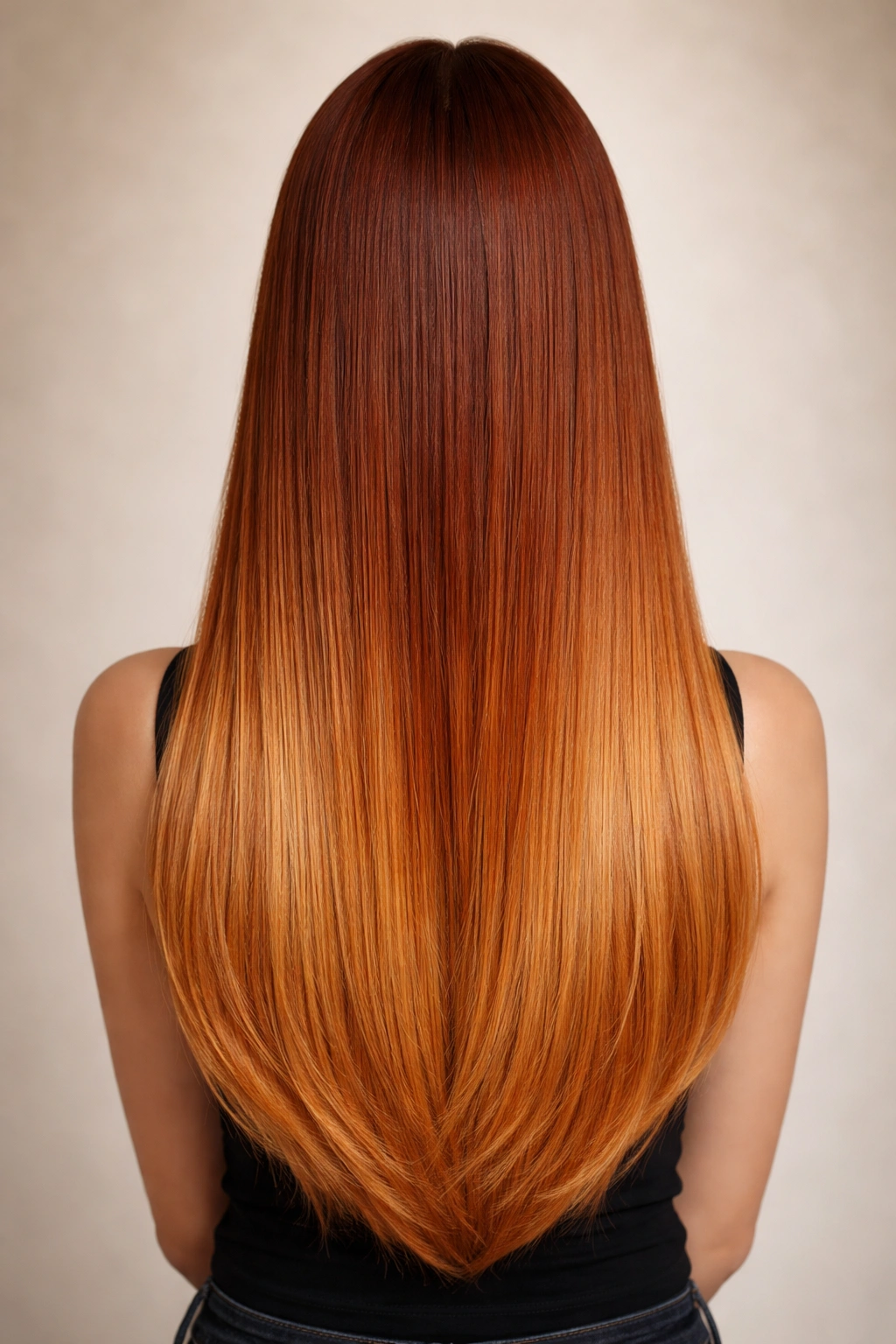
Spiced ginger ombre takes the ginger color family and adds intentional dimension through an ombre gradient — darker at the roots, progressively lighter toward the ends, with warm spiced ginger tones throughout. This isn’t a root shadow; it’s a full dimensional shift that creates depth and movement while keeping everything in the ginger family.
Why Ombre Transforms Straight Hair
Straight hair is actually ideal for ombre because the smooth texture allows for clean, intentional color transitions. An ombre on textured hair can sometimes read muddy or unclear, but on straight hair, the gradient is crisp and obvious. The darker roots provide an anchoring effect that makes the lighter ginger ends pop even more. This creates visual dimension and can actually make straight hair appear to have more movement than it does, because the color variation implies texture and flow.
Design Strategy for Spiced Ginger Ombre
- Root placement: The transition typically begins around chin-length to bra-strap length. Shorter placements (higher up the hair) create a more dramatic effect; longer placements feel more blended and natural
- Color choice for roots: Most people choose either their natural color or a warm brunette for roots, then transition into copper, burnt orange, or honey ginger tones toward the ends
- Straight hair and blend: Because straight hair is smooth and reflective, a well-executed ombre on straight hair actually blends more smoothly than you might expect. The transition isn’t harsh or obvious — it’s gradual and intentional
- The ginger throughout: Even though the roots are darker, ginger warmth should be present throughout the entire ombre so it reads cohesively as a ginger color treatment, not just as basic root shadow with blonde ends
Maintenance and Touch-Up Reality
- Root regrowth visibility: Ombre actually hides root regrowth better than a single-process color because dark roots are part of the design. You can typically stretch 8-10 weeks between appointments
- Fading pattern: As ombre fades, the ends fade faster than the roots, which actually enhances the ombre effect. You can often stretch appointments longer with ombre than with a single color
- Refresh strategy: Instead of full recoloring, many stylists can refresh just the lighter ends and blend them back to your roots, which is less damaging and less expensive than redoing the entire ombre
7. Golden Honey Ginger
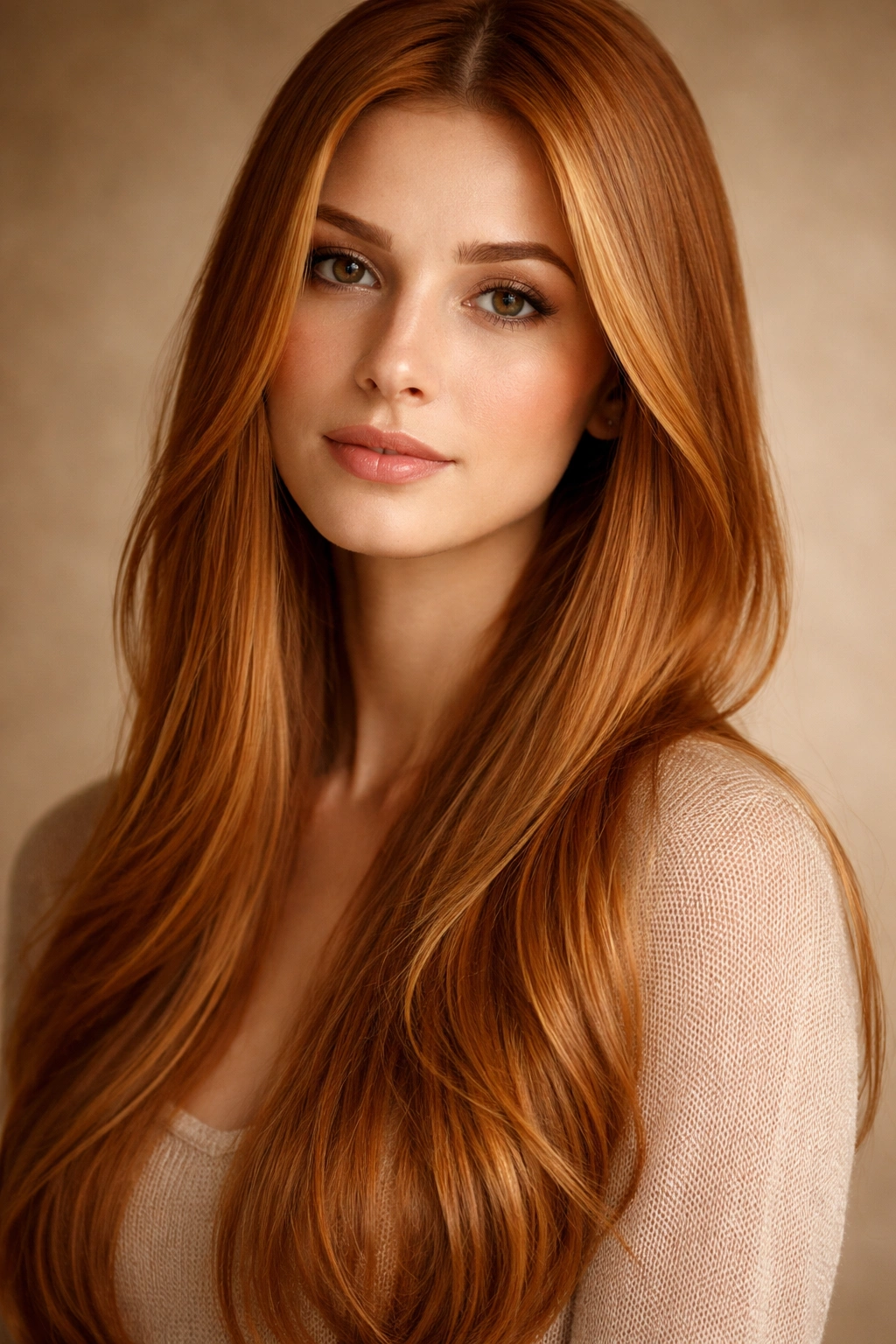
Golden honey ginger is the warm, approachable, almost universally flattering end of the ginger spectrum. This shade feels less like a statement and more like an elevated, warmer version of what you already are. It’s honey-blonde with enough ginger warmth to feel like a deliberate color choice, or it’s ginger light enough to read as a dimensional, sun-kissed blonde. The definition of golden honey ginger is a bit fuzzy, which is actually its greatest strength — it works across virtually every skin tone and style preference.
The Universal Appeal
Golden honey ginger works because it echoes natural human hair color possibilities. Fair skin looks sun-kissed and radiant. Warm skin tones look their most vibrant and luminous. Olive skin appears glowing and rich. Deeper skin tones get a stunning, luxurious warmth that’s incredibly flattering. Even people with cooler skin tones often find golden honey ginger works for them because it’s warm without being overwhelming — the honey notes tone down the intensity of pure ginger warmth.
Straight Hair as the Perfect Canvas
On straight hair, golden honey ginger has this effortless, luminous quality. The shine of straight hair amplifies the honey and warmth, creating a glowing effect that’s really quite stunning in natural light. The shade appears to have subtle dimension even if it’s a single-process color, because the warmth and lightness create visual interest. For people who are slightly nervous about going full ginger, golden honey is the perfect entry point — it delivers warmth and dimension without the drama.
Maintenance is Surprisingly Low-Key
- Color hold: Golden honey is remarkably stable, often holding well for 8-10 weeks before noticeable fading. The lighter tone means fading is less obvious than with darker shades
- Brassy yellows: This is the main maintenance consideration. A violet or purple shampoo once or twice weekly prevents yellowing as the shade fades
- Growth blending: Regrowth tends to blend reasonably well with golden honey, especially if your natural color isn’t dramatically cooler. You can often stretch appointments to every 10-12 weeks
- Styling ease: This shade looks great virtually every way — sleek straight, textured, wavy, whatever. It’s one of the most style-versatile gingers because it reads well in any context
Pro tip: Golden honey ginger pairs beautifully with a blowout or a soft wave style that enhances the shine. The reflectivity of straight hair means this shade gets better the shinier your hair is.
8. Dark Chocolate Ginger
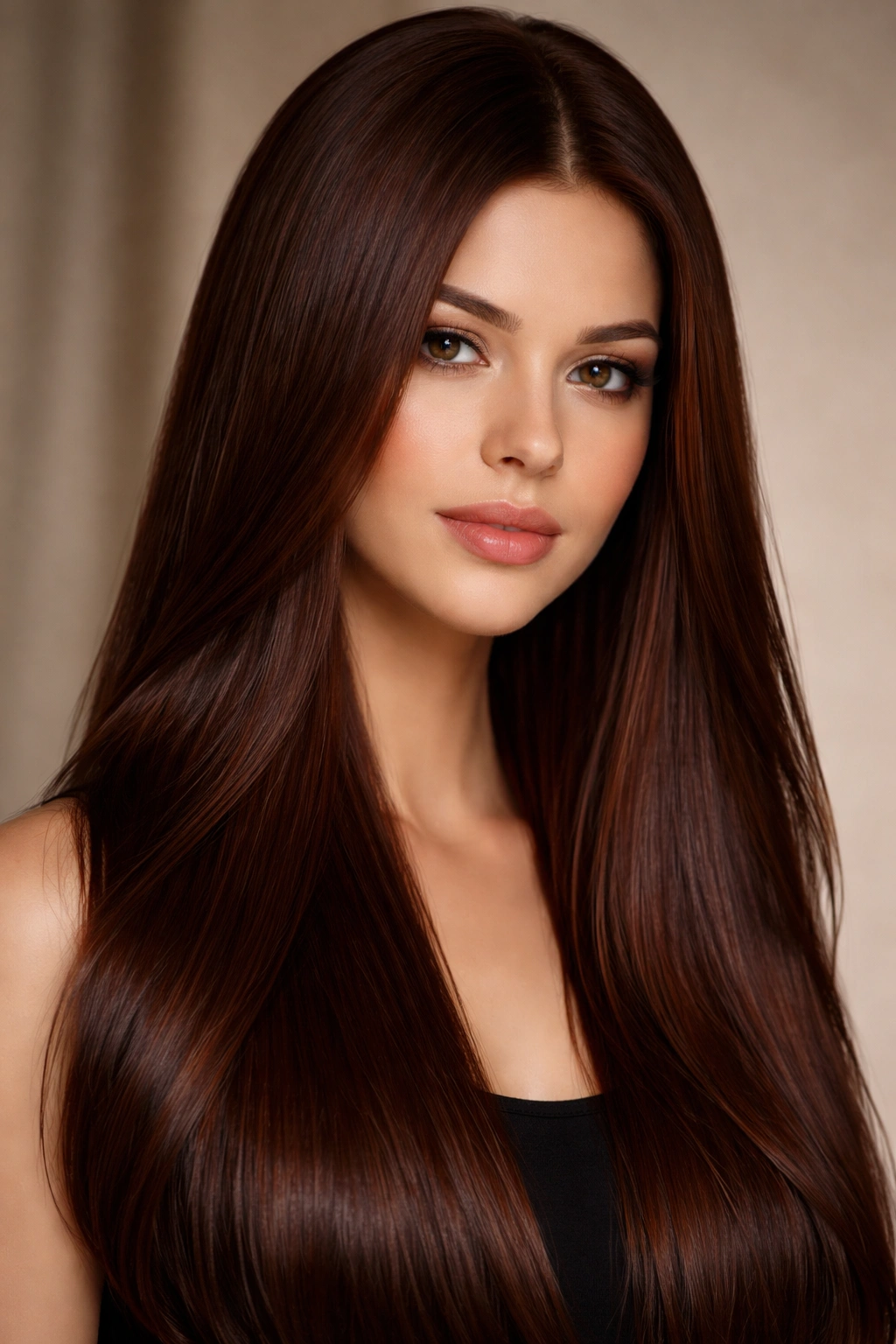
Dark chocolate ginger is the unexpected entry on this list — it’s barely ginger at all in some lighting, reading almost as a rich, dark chocolate brown instead. But in sunlight or bright indoor light, you catch those subtle ginger and warm mahogany undertones that make it unmistakably part of the ginger family. This is a shade for people who want the warmth and richness of ginger but prefer a darker, more subtle overall look.
Who Dark Chocolate Ginger Suits
This shade is particularly stunning on deeper skin tones, where it creates a luxurious, rich effect. On medium skin tones, it reads as a sophisticated warm brown with ginger highlights. On fair skin, dark chocolate ginger creates a striking contrast that can be absolutely gorgeous, especially if you have fair skin with warm undertones. The shade has an almost mysterious quality — people won’t immediately recognize it as “ginger” in all lighting, which appeals to some people who want the warmth without the obvious color statement.
Why It Works on Straight Hair
Straight hair reflects light in a way that makes dark colors appear slightly lighter and shinier than they would on textured hair. This means dark chocolate ginger on straight hair actually reads with a bit of visual lightness and shine, preventing it from looking flat or heavy. The warmth is visible without being obvious, and the shade has a polished, sophisticated quality on smooth hair.
Practical Advantages of Choosing Dark
- Longevity: Dark colors hold longer than light colors. You’re looking at 10-12 weeks before noticeable fading, which is excellent longevity
- Regrowth invisibility: Dark chocolate ginger actually hides regrowth beautifully, especially if your natural color is medium to dark. You might only need appointments every 12-14 weeks
- Damage consideration: Achieving this shade from lighter hair requires less lightening than lighter gingers, which means less damage risk overall
- Styling flexibility: Dark chocolate ginger looks stunning in virtually every style, though it particularly shines with sleek, polished straight hair that shows maximum shine
9. Auburn Ginger
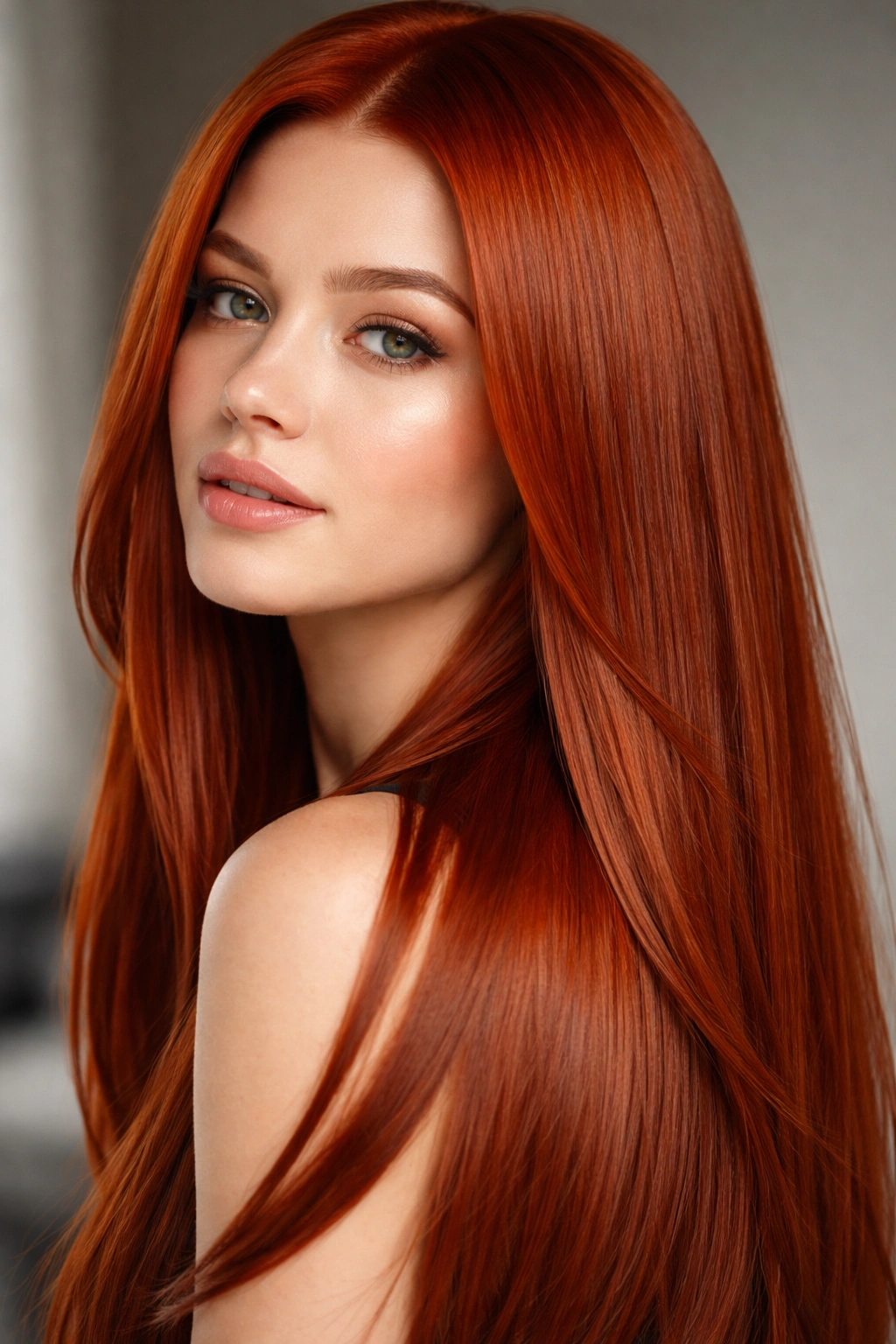
Auburn ginger is the classic, timeless version of ginger hair — it’s what most people think of when they imagine “ginger” as a color. This is a shade with true red tones (not orange, not copper, but actual red), combined with ginger warmth. It’s bold, it’s striking, and on straight hair, it’s absolutely stunning. Auburn is the most “obviously ginger” option on this list — there’s no ambiguity about the color choice.
The Boldness of Auburn on Straight Hair
Auburn on straight hair is a statement. This shade doesn’t whisper — it announces. The clarity of the color on a smooth, reflective surface means auburn reads with maximum impact. The red tones are obvious, the warmth is obvious, and the color transformation is obvious. If you’re going ginger, auburn is the most unambiguous choice. It’s for people who are ready to fully commit to a new color identity and want that commitment to be visible.
Who Auburn Ginger Flatters Most
Auburn works beautifully on fair and medium skin tones, especially if you have warm or golden undertones. On cooler skin tones, auburn can be trickier — some people find it clashes with cooler undertones, though others style makeup and clothing around auburn to make it work. On deeper skin tones, auburn creates a rich, luxurious effect that’s absolutely striking. The key is being honest about your skin tone and undertones; if warm reds don’t generally flatter you, auburn might not be your ginger — copper or mahogany might be better choices.
Auburn Maintenance and Reality
- Fading timeline: Auburn typically fades to a warmer, more golden tone within 6-8 weeks. The red tones fade faster than the underlying ginger warmth
- Toning for longevity: Purple shampoo will actually turn auburn muddy. Instead, invest in a color-depositing shampoo in red or warm tones to maintain vibrancy
- Straight hair’s reflection: Straight hair makes auburn appear even richer and deeper than it is. The smooth surface creates that jewel-like quality that makes auburn so appealing
- Commitment level: Auburn requires intentional maintenance because fading is relatively noticeable. Appointments every 5-6 weeks keep auburn looking its best
10. Red-Toned Ginger Balayage
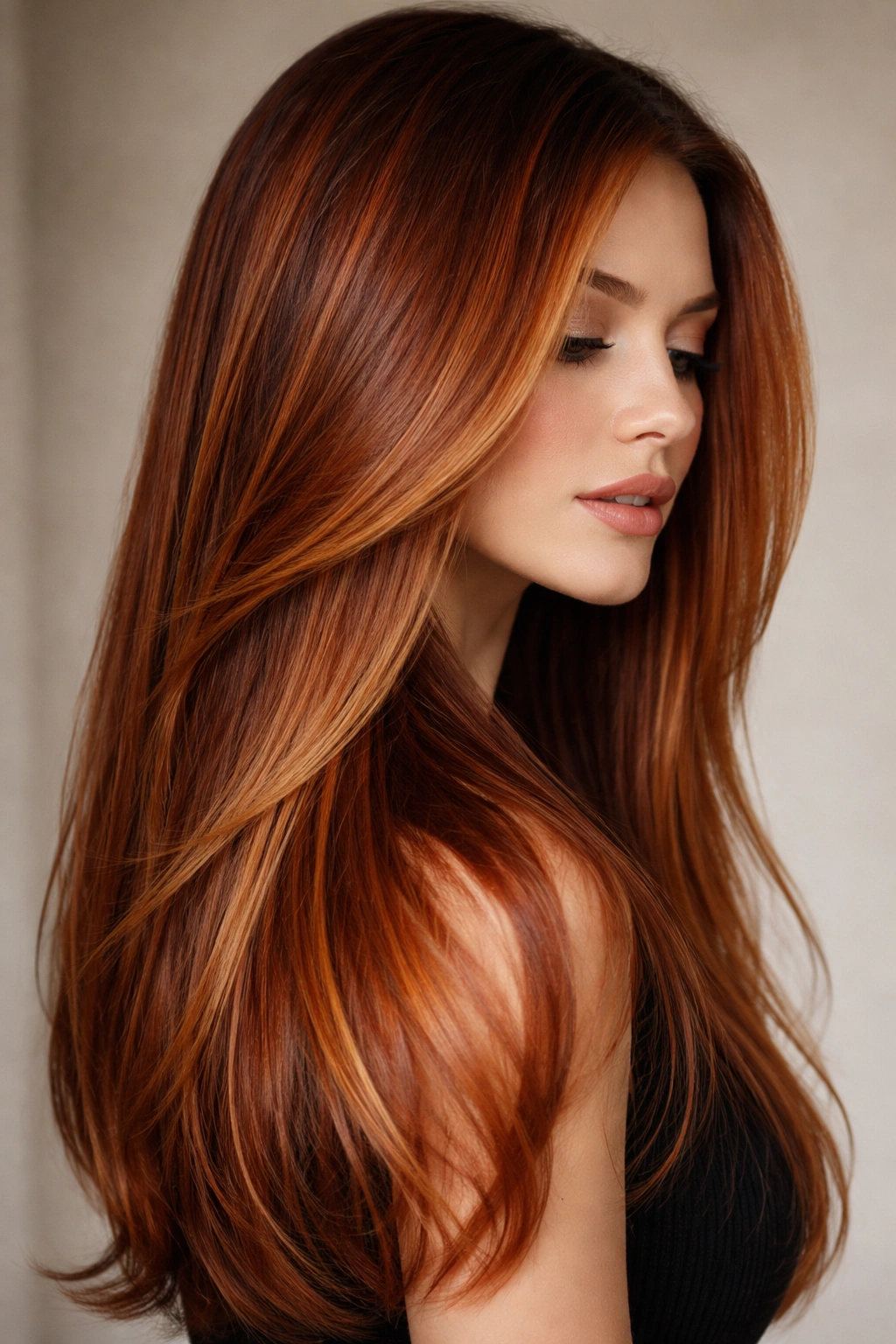
Red-toned ginger balayage is the hand-painted, artistic approach to ginger hair. Instead of a structured ombre, balayage creates seemingly random, sun-kissed placement of lighter ginger tones throughout darker roots and mid-lengths. This technique creates dimension and movement while maintaining the ginger warmth throughout. On straight hair, a well-executed ginger balayage looks intentional and sophisticated.
The Artistry of Balayage on Straight Hair
Balayage is actually easier to execute on straight hair than on textured hair because the stylist has a smooth canvas and can see exactly where each placement lands. On straight hair, balayage creates visual movement and dimension without requiring the hair itself to have texture. The lighter ginger tones seem to float through the darker base, creating depth and interest. This is particularly stunning on longer straight hair where the color variations are really visible.
Balayage vs. Other Dimensional Techniques
Unlike ombre, which has a defined line of demarcation, balayage is softer and more irregular. Unlike highlights, which are linear and organized, balayage is painterly and organic-looking. For ginger hair specifically, balayage allows you to combine multiple ginger tones (maybe copper on some pieces, honey on others, burnt orange somewhere else) while keeping the overall look cohesive and intentional. This is the most artistic, customizable ginger approach.
Maintenance and Longevity Advantages
- Longer appointment spacing: Because balayage is dimensional rather than a single color, regrowth blends in naturally. Many people can stretch appointments to 12-16 weeks
- Fading looks intentional: As balayage fades, it becomes progressively lighter and more blonde. This fade pattern looks like a natural progression rather than a problem, so many people actually love how it evolves
- Damage distribution: Because only certain sections are lifted and processed rather than the entire head, balayage is often less damaging than full-head color, allowing for easier maintenance and healthier hair overall
- Styling versatility: Red-toned ginger balayage looks stunning in every style — straight and sleek, textured waves, or anything in between. The dimension works with virtually every presentation
Getting Balayage Right
- Stylist experience matters: Balayage is an artistic technique. Finding a stylist who specializes in it and has a portfolio of ginger balayage work is important for getting the effect you want
- Straight hair showcase: The smooth surface of straight hair means balayage is particularly visible and impactful. Every placement reads clearly, which is why you want a skilled hand doing this work
- Customization possibility: You can request where you want lighter tones (face-framing, ends, scattered throughout) and which ginger shades you prefer in those placements. Work closely with your stylist to create exactly what you envision
Final Thoughts
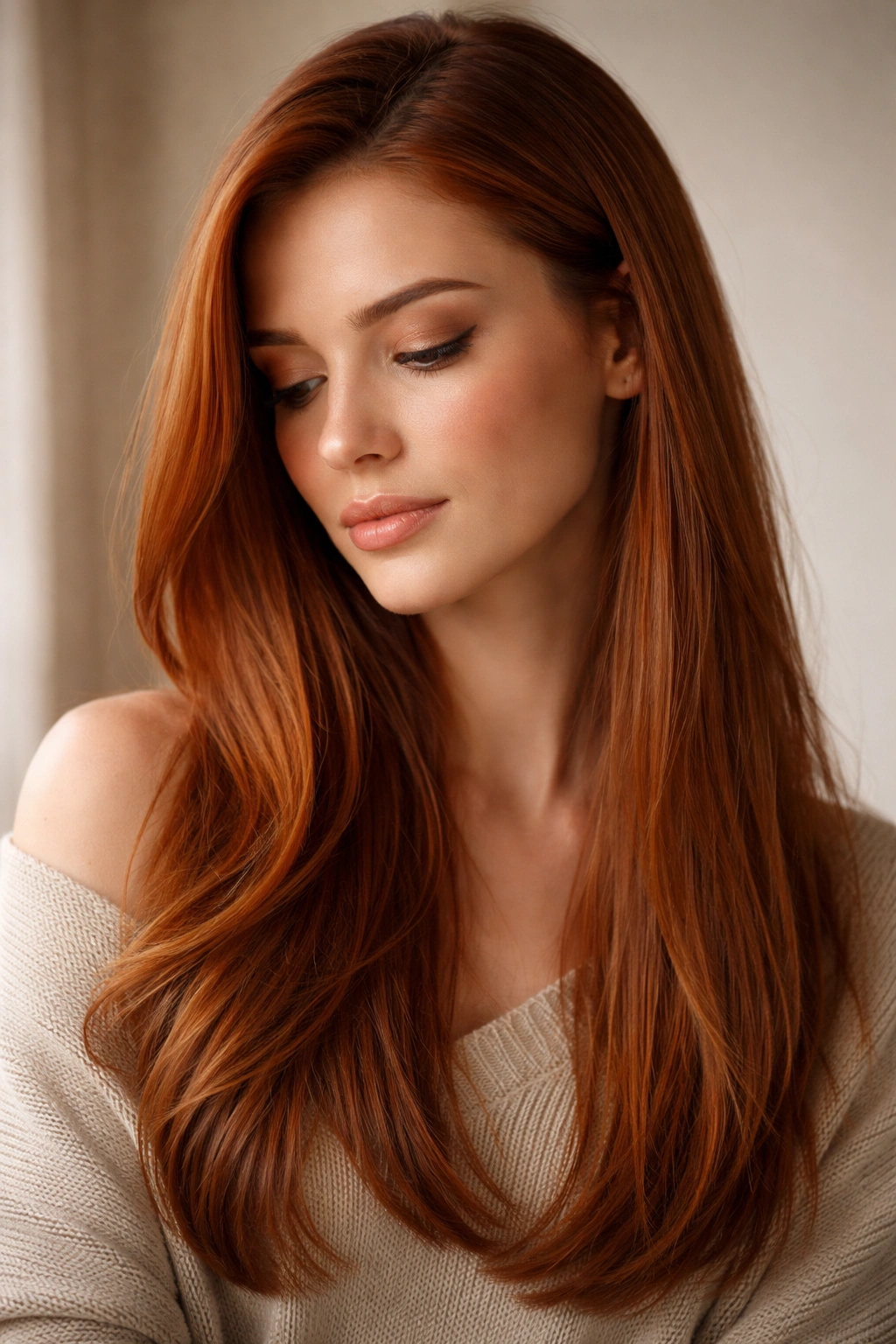
Choosing a ginger shade for straight hair is genuinely exciting because straight hair showcases these warm, dimensional colors so beautifully. The clarity, shine, and reflectivity of straight hair amplify everything that makes ginger colors special — the warmth, the dimension, the way light plays across the strands.
Your choice comes down to three questions: How much maintenance are you willing to do? How bold do you want to feel? And which shades complement your skin tone and undertones? There’s truly no “best” ginger — there’s only the ginger that’s right for you at this moment in time. If you’re drawn to rich depth, mahogany and auburn deliver. If you want warmth with approachability, golden honey and rose gold are your answers. If you’re ready for maximum impact, copper and bright ginger make the boldest statements.
The wonderful thing about being committed to straight hair is that your color work will look polished and intentional no matter which shade you choose. Straight hair is the perfect vehicle for ginger — it showcases every warmth, every tone, and every carefully chosen highlight. Trust the process, commit to maintenance, and get ready for one of the most transformative hair changes you can make.
