



Straight hair has a natural elegance that works beautifully with countless styling options, and Asian women have perfected some of the most striking straight hairstyles in the world. The texture of straight hair — particularly the sleek, glossy quality common in Asian hair types — takes on a sophisticated polish when styled with intention. From chin-length bobs to floor-grazing lengths, straight styles can range from minimalist and understated to layered and dynamic, making them adaptable to nearly any face shape, lifestyle, or personal aesthetic.
What makes Asian straight hairstyles so distinctive is how they prioritize texture, movement through layering, and the interplay of length. Many of these styles lean into the natural shine and smoothness of straight hair rather than fighting against it, creating looks that feel both effortless and meticulously crafted. The right cut can completely transform how straight hair moves, where it falls, and how it frames the face — which is why choosing the right style matters so much.
Whether you’re looking to refresh your current length, experiment with bangs for the first time, or completely reimagine your look, these ten hairstyles represent some of the most flattering, versatile, and genuinely wearable straight styles for Asian women. Each one works with different hair textures within the straight category, suits various face shapes, and can be customized to match your personal style and maintenance preferences. Let’s explore each one in detail.
1. Straight Blunt Bob with Layers
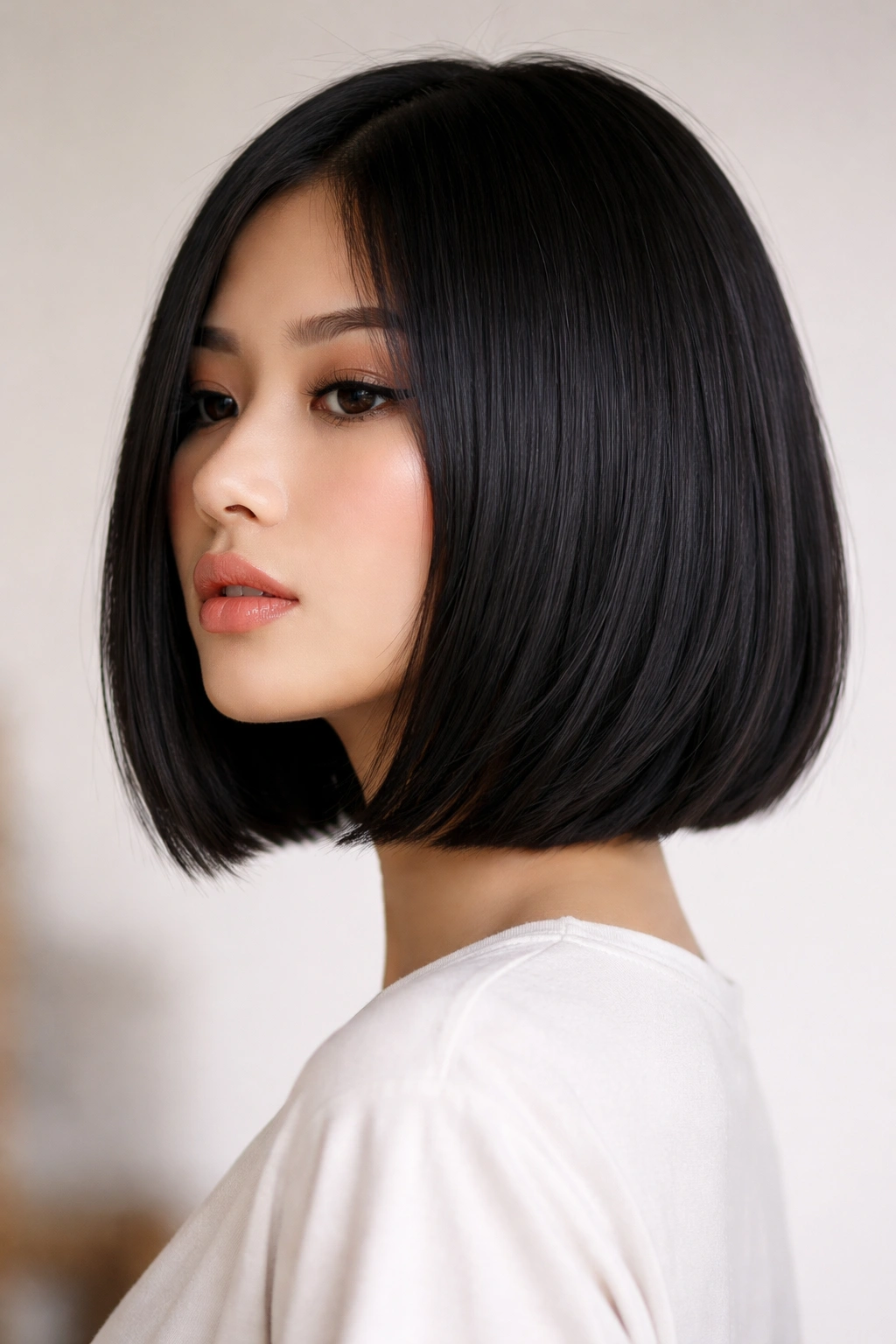
A blunt bob is the foundation of modern straight hairstyles, and when paired with subtle layering, it becomes incredibly dynamic. This style typically hits at chin length or just below, creating a perfectly straight line when worn down while the layers inside add movement and prevent the style from feeling too heavy. The blunt exterior creates a sleek silhouette that’s instantly polished, while the internal layers ensure the hair moves naturally rather than swinging as one thick sheet.
Why It’s Perfect for Straight Hair
The blunt bob works exceptionally well on straight hair because it showcases the natural smoothness and shine that makes this texture so striking. Asian hair often has a naturally dense quality, and the blunt cut shows off that density beautifully while the layers prevent bulk. The style sits right at a flattering length for most face shapes — long enough to avoid a severe look, but short enough to feel fresh and modern.
Key Features to Ask Your Stylist For
- Blunt front edges that hit at or slightly below the jawline for maximum frame effect
- Subtle internal layers throughout (not choppy, but enough to create movement and texture)
- Slightly longer pieces around the face to soften the overall look and suit most face shapes
- A light texturing technique on the ends to prevent that harsh, blunt edge from feeling too sharp
- Minimal styling required — this cut should look good with just air-drying or a quick blow-dry
Pro tip: If you have a rounder face, ask your stylist to keep the front pieces slightly longer than the back layers, which creates a subtle lengthening effect without compromising the blunt bob aesthetic.
2. Long Straight Hair with Center Part
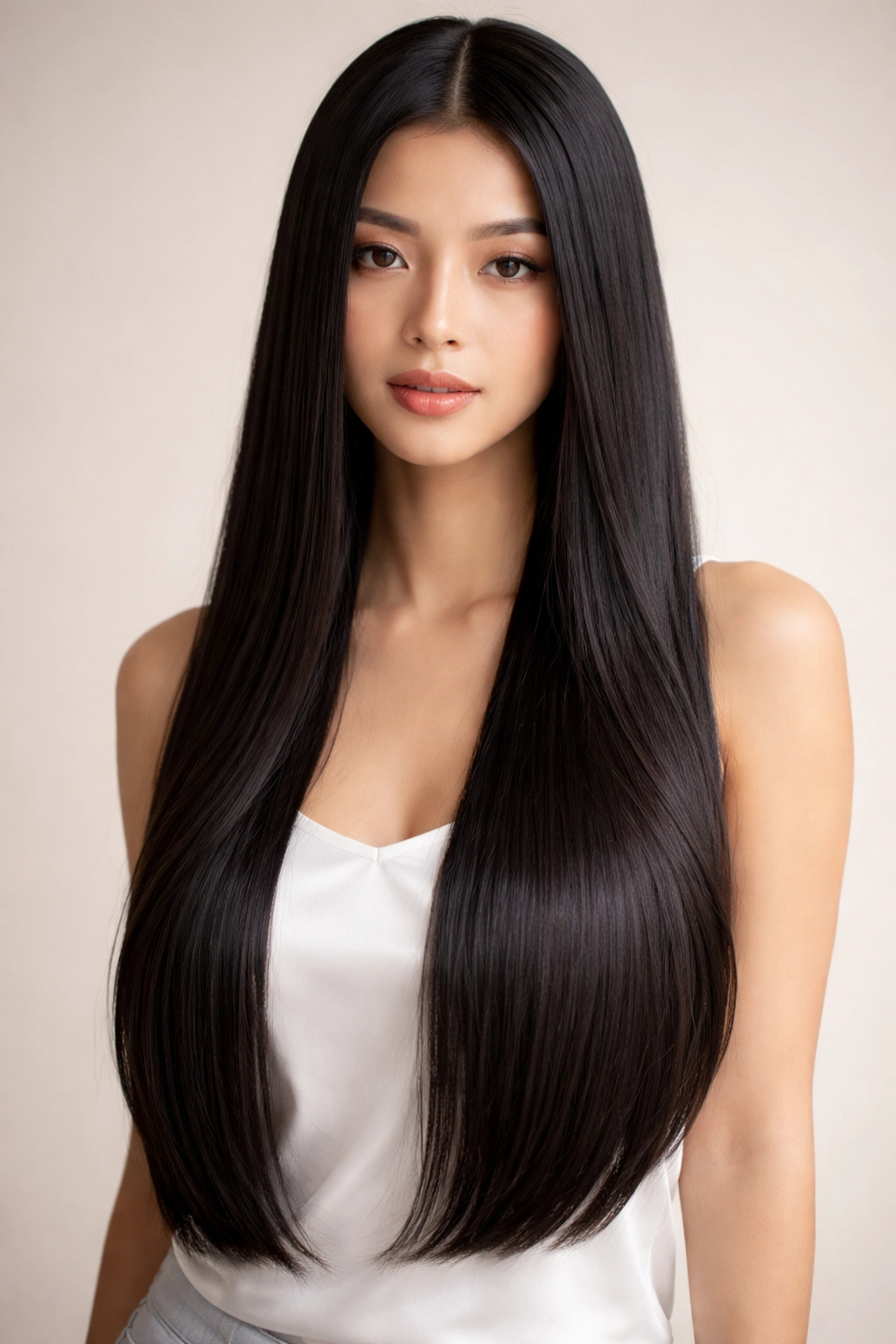
Long, straight hair parted down the center is a timeless style that works beautifully on Asian women, particularly when the hair extends past shoulder length. The center part naturally creates a balanced, symmetrical frame for the face and plays up the shine and smoothness that straight hair does so well. This style requires minimal styling but rewards regular maintenance with deep conditioning and shine-boosting treatments.
Why This Style Never Goes Out of Fashion
There’s a reason this look has remained popular across decades and cultures — it simply works. The center part elongates the face, creates a harmonious balance, and the straight length showcases healthy hair in the most honest way possible. For Asian women, this style honors the natural texture and takes advantage of hair that naturally sits smooth without constant frizz management. The simplicity is actually its strength — this style looks expensive and well-maintained because there’s nowhere to hide imperfections, which motivates regular trims and good hair care.
How to Make It Look Its Best
- Keep the length below shoulder for maximum impact and that coveted “long and lean” silhouette
- Trim every 6-8 weeks to maintain straight, healthy ends without split ends creeping up
- Use a shine serum or lightweight oil on the lengths (avoid the roots) to maximize that glossy finish
- Consider a very subtle long-layered texture — just enough movement to prevent the style from feeling flat or heavy
- Style with a round brush and blow dryer for extra smoothness, or let it air-dry for a more undone vibe
Worth knowing: This style looks best when your hair is genuinely healthy and well-maintained. If you’re not ready to commit to regular trims and conditioning, a slightly shorter length or more pronounced layers might serve you better.
3. Straight Hair with Curtain Bangs
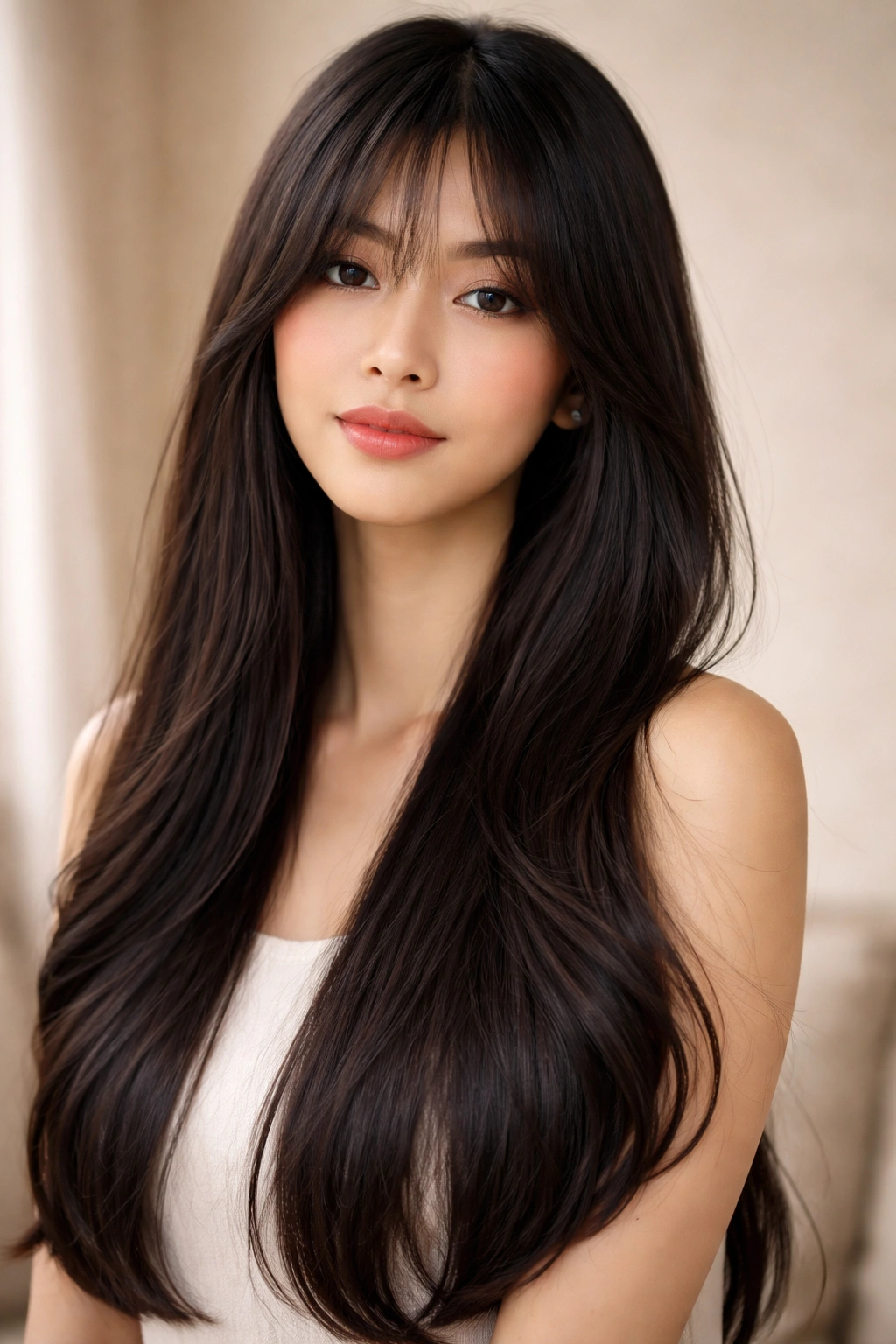
Curtain bangs have made a major comeback, and they’re particularly flattering on straight hair because they create softness around the face without requiring the kind of frequent styling that other bang styles demand. These bangs part down the middle and sweep gently to each side, framing the face beautifully while remaining functional and easy to manage. They work at virtually any length — from shoulder-length to waist-length — making them an excellent option for anyone curious about bangs without committing to a full-coverage style.
What Makes Curtain Bangs Work on Straight Hair
Unlike blunt bangs that require daily styling to look intentional, curtain bangs work with straight hair’s natural texture and actually look better slightly undone. They soften angular face shapes, add dimension to round faces, and create a gentle frame that feels modern without being trendy in a way that dates quickly. The angle of the bangs means they’re easy to tuck behind the ears on days you want a different look, giving you versatility within a single cut.
How to Style and Maintain Them
- Ask your stylist to point-cut the ends rather than create a blunt line — this gives them a softer, more feathered appearance
- Blow-dry them gently while they’re damp to set the slight curve away from the face (or let them air-dry for a more relaxed look)
- Plan for occasional trims every 4-6 weeks as they grow longer, since they do fall into your face unlike other bang styles
- Use a lightweight styling cream or texture spray if you want to enhance the feathered movement
- These work beautifully with both center parts and side parts, so you can change your look without changing your cut
Pro tip: If you have a longer face or high forehead, curtain bangs will be especially flattering because they break up vertical length and soften the upper part of your face.
4. Sleek Low Ponytail
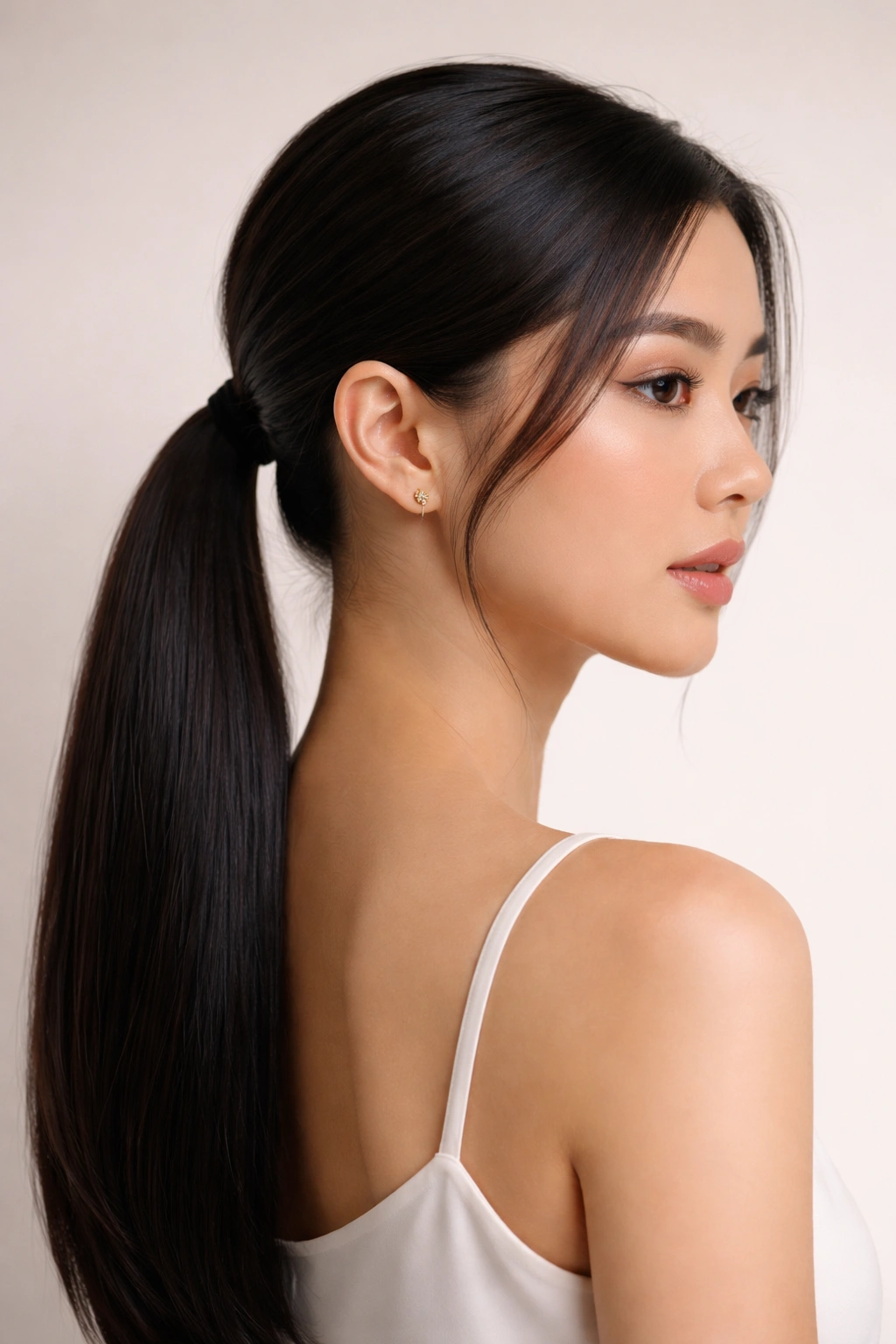
A sleek low ponytail is the sophisticated workhorse of straight-hair styling — it’s polished enough for professional settings, casual enough for everyday wear, and can be executed in under two minutes once you get the technique down. The key to making this style work on straight hair is keeping it smooth and tight, which showcases the natural texture and shine while creating a refined aesthetic. Placing the ponytail lower (at the nape of the neck rather than the crown) makes it feel more grown-up and elegant.
Why Low Ponytails Look So Good on Straight Hair
Straight hair’s natural smoothness makes creating a perfectly sleek ponytail far easier than with textured hair, and when executed well, it looks effortlessly expensive. The style works with virtually every face shape because you’re not pulling hair back from the face in a way that exaggerates features — instead, you’re simply gathering length efficiently. For Asian women with straight hair, the smooth finish and visible scalp line create a polished, intentional aesthetic rather than an accidental or undone one.
How to Create the Perfect Sleek Low Ponytail
- Start with clean or second-day hair (too clean can actually be slippery and harder to control)
- Use a fine-tooth comb to smooth any flyaways and create a clean base at the nape of your neck
- Apply a tiny amount of gel or smoothing serum to the combed-back hair to keep it in place
- Secure with a small elastic, leaving a small section of hair in front to wrap around the base
- Wrap that section around the elastic and pin it in place with a bobby pin for a finished, polished look
- Consider adding a sleek hair clip or decorative elastic to elevate the style for special occasions
Real talk: The sleeker you want the ponytail, the more you need to invest in smoothing products. A light gel works better than heavy pomade for straight hair, as it provides hold without creating that weighed-down appearance.
5. Straight Hair with Side Bangs
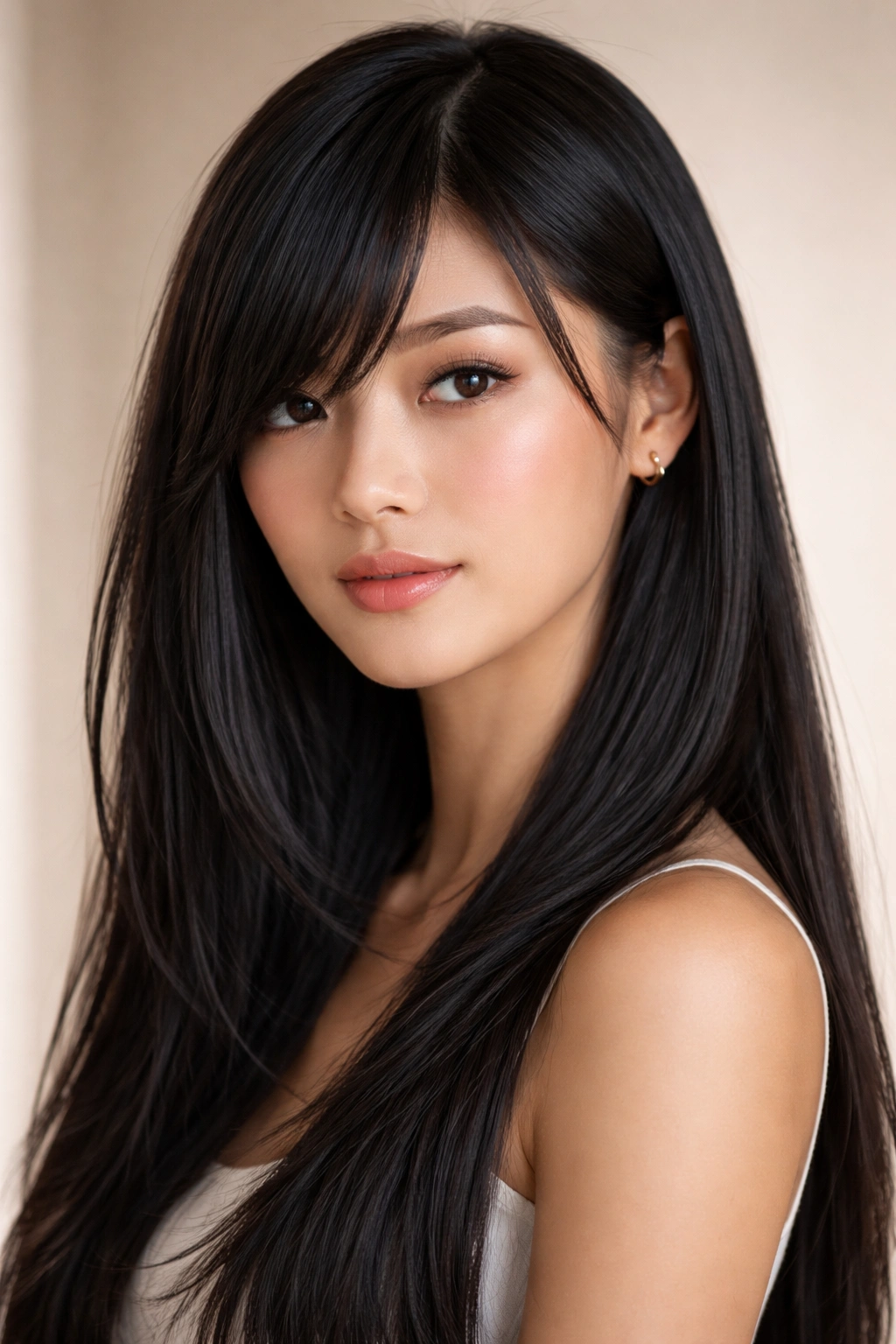
Side bangs create an entirely different vibe from center-parted curtain bangs — they’re more playful, slightly edgier, and create beautiful asymmetrical framing for the face. This style works especially well on straight hair because the clean lines of side-swept bangs create a striking visual impact when they’re smooth and polished. The bangs typically start longer at one side and angle down to shorter on the other, creating movement and dimension that feels deliberate and fashion-forward.
What Side Bangs Do for Different Face Shapes
Side bangs are genuinely flattering across multiple face shapes because the asymmetry breaks up both roundness and length. They add width to narrow faces, create a softening angle for square faces, and draw the eye outward on longer faces. For Asian women, side bangs offer a way to experiment with fringe while maintaining the modern, polished aesthetic that straight hair does so well. They’re less severe than blunt bangs and less romantic than curtain bangs — sitting right in that middle ground of contemporary and wearable.
Styling Side Bangs Successfully
- Ask for a longer, more subtle angle rather than an extreme slant — this is easier to grow out and style on regular days
- Use a round brush and blow dryer to create a slight bend in the bangs so they move with your hair rather than fighting against it
- Blow-dry them away from your face on bad-hair-days to make them feel intentional rather than accidental
- Use a light smoothing serum to enhance shine and control any tendency to separate
- These pair beautifully with either a side part or a middle part — experiment with both to see what feels right
- Plan for trims every 4-6 weeks to maintain the shape as the bangs grow out
Worth knowing: If you’ve never worn bangs before, side bangs are actually a lower-commitment place to start because they’re easier to style away from your face than blunt bangs if you decide you don’t like them.
6. Half-Up Half-Down Straight Style
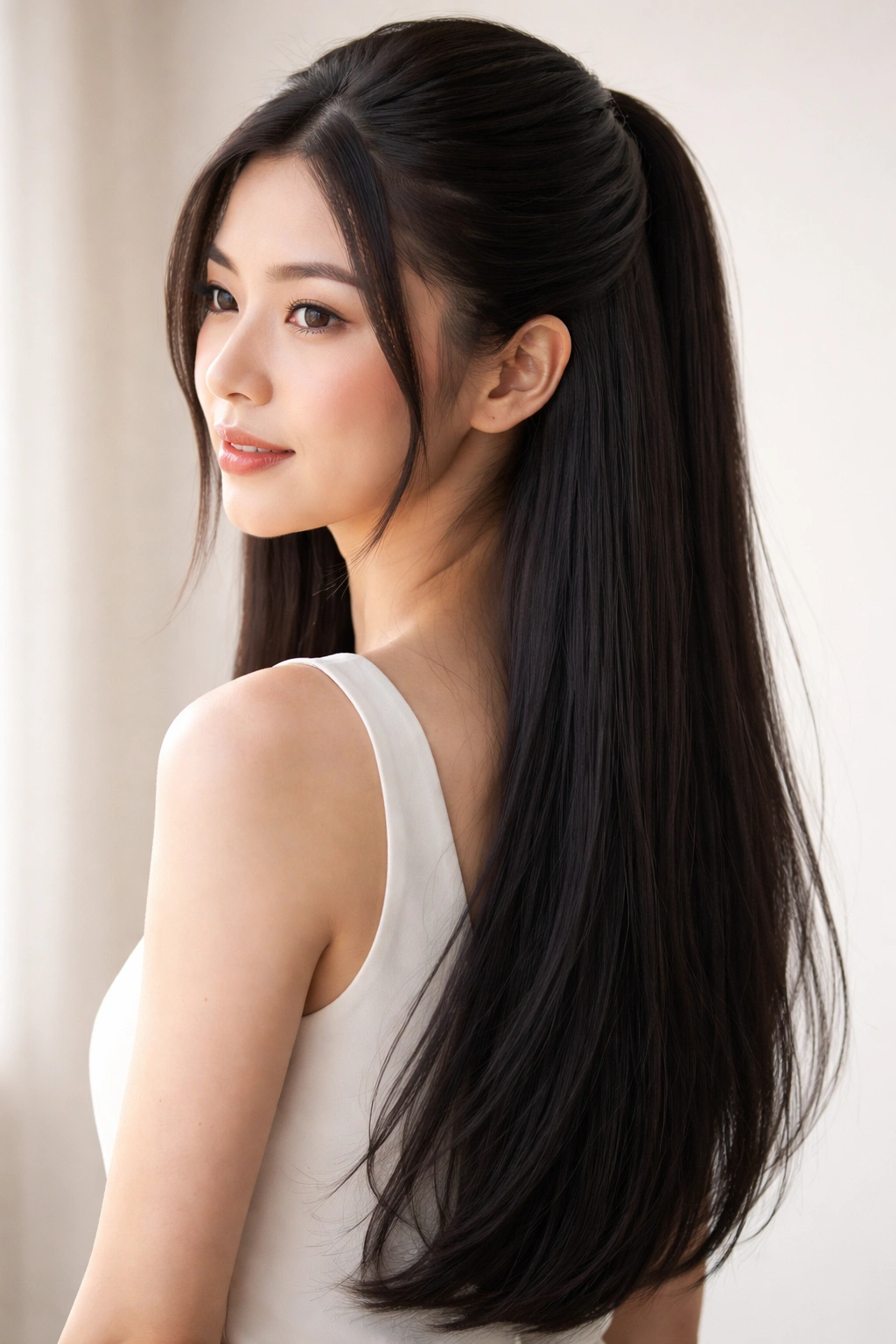
The half-up half-down style bridges the gap between wearing your hair fully down and pulling it back completely, making it ideal for days when you want to keep hair out of your face without committing to a full ponytail. When executed on straight hair, this style is particularly striking because the contrast between the smooth, polished upper section and the flowing lower section creates visual interest and movement. It’s practical for warm days, formal occasions, or simply when you want a style that feels special without being complicated.
Why Half-Up Styles Work Beautifully on Straight Hair
The sleekness of straight hair means you can create a perfectly smooth upper section that looks intentional and polished rather than messy. The style offers multiple execution options — from a simple clip to a twisted section to a braided portion — so you can adjust the elegance level based on the occasion. Asian women’s naturally thick, straight hair looks particularly voluminous when worn half-up half-down because the gathered section creates density at the crown while the length flows freely.
Different Ways to Create the Half-Up Half-Down Look
- Classic half-up: Gather the top section from ear to ear, secure with an elastic or clip, and leave the lower half flowing
- Twisted version: Twist two sections from each temple and secure them together at the back for a more textured, romantic feel
- Braided option: French braid or Dutch braid two sections from the temples and secure them together — this feels more formal and intricate
- Sleek pulled-back: Use gel to create a smooth, polished upper section with zero flyaways, creating maximum contrast with the free-flowing lower half
- Side-gathered: Pull the half-up section slightly to one side rather than centering it for an asymmetrical, modern feel
Pro tip: This style works best when your hair has some length — ideally shoulder-length or longer — so there’s enough hair in the bottom section to feel substantial and beautiful.
7. Straight Hair with Micro Bangs
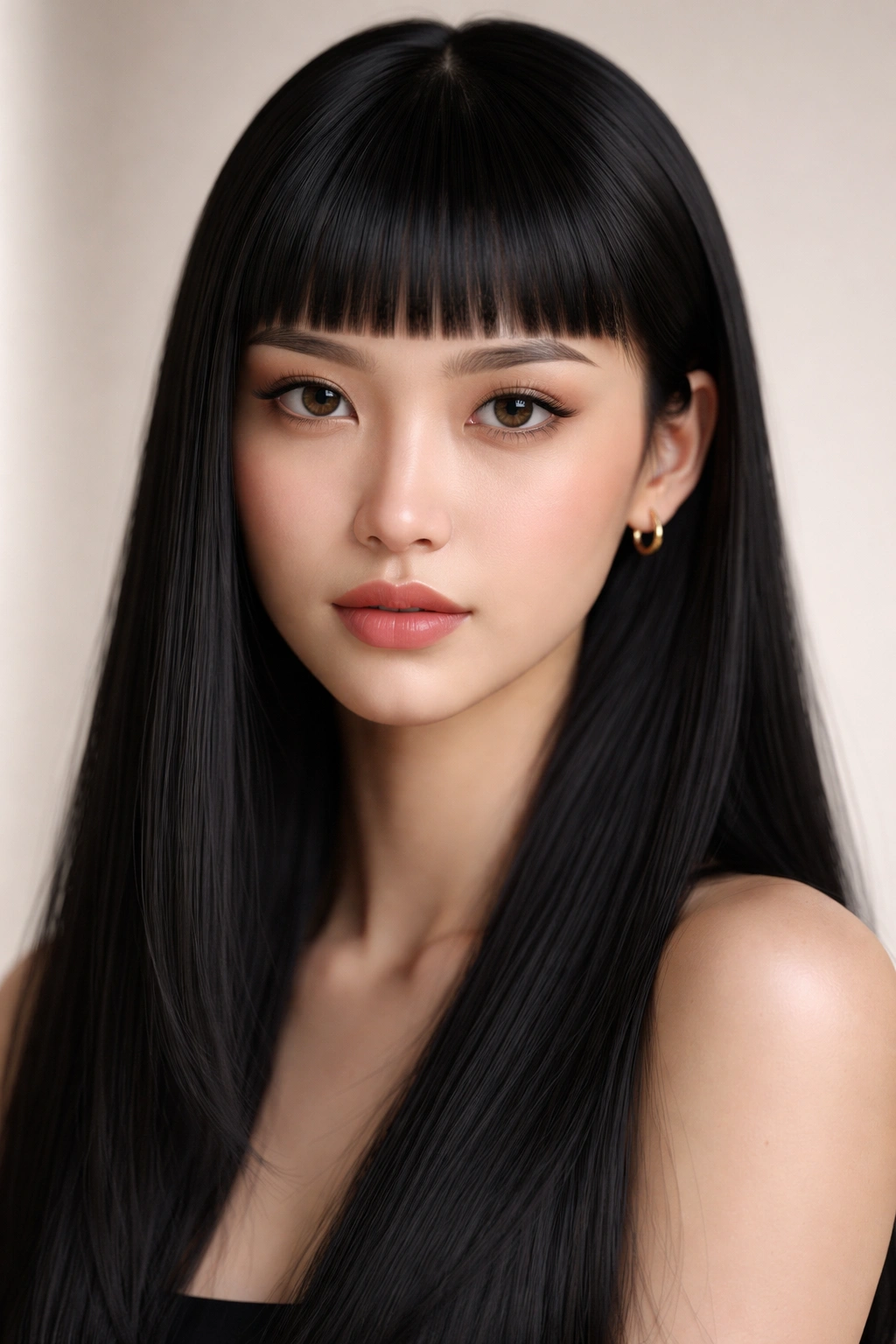
Micro bangs (also called French bangs) sit much higher on the forehead than traditional bangs, typically just a few inches below the hairline, creating a bold, editorial aesthetic that’s undeniably striking. This is a statement style that requires confidence and commitment, but when worn with straight hair, the effect is utterly polished and intentional. The short length means they require regular trims (every 3-4 weeks) to maintain the crisp, precise look, but for those willing to commit, they’re transformative.
Who Micro Bangs Suit Best
Micro bangs work most flatteringly on people with larger foreheads, as they draw attention to the upper face rather than emphasizing what’s below. They suit face shapes that are longer or more angular, as they break up vertical length and add a playful element. Asian women with straight hair can absolutely pull off this look, and the high placement actually showcases the face beautifully while the short length never interferes with eyesight or requires constant styling out of your way. This is a fashion-forward style that signals you’re willing to take risks with your appearance.
How to Make Micro Bangs Work Long-Term
- Invest in a good stylist who can execute the precise cut — this isn’t the place to save money
- Commit to every-3-to-4-week trims to keep them looking sharp and intentional rather than grown-out and sloppy
- Use a light-hold styling cream or smoothing serum to keep them perfectly straight and smooth
- Pair them with a sleek ponytail, a center part, or a side part — the style looks best when the rest of your hair is equally polished
- Be prepared for this to be a conversation-starter; it’s a bold choice and people will notice
- Consider the styling commitment before committing — if you travel frequently or can’t do trims regularly, save this style for a different time
Real talk: Micro bangs are a commitment in terms of both styling and maintenance. They look amazing when maintained perfectly but can read as unkempt very quickly as they grow out. Make sure this is a style you genuinely love before taking the plunge.
8. Long Waist-Length Straight Hair
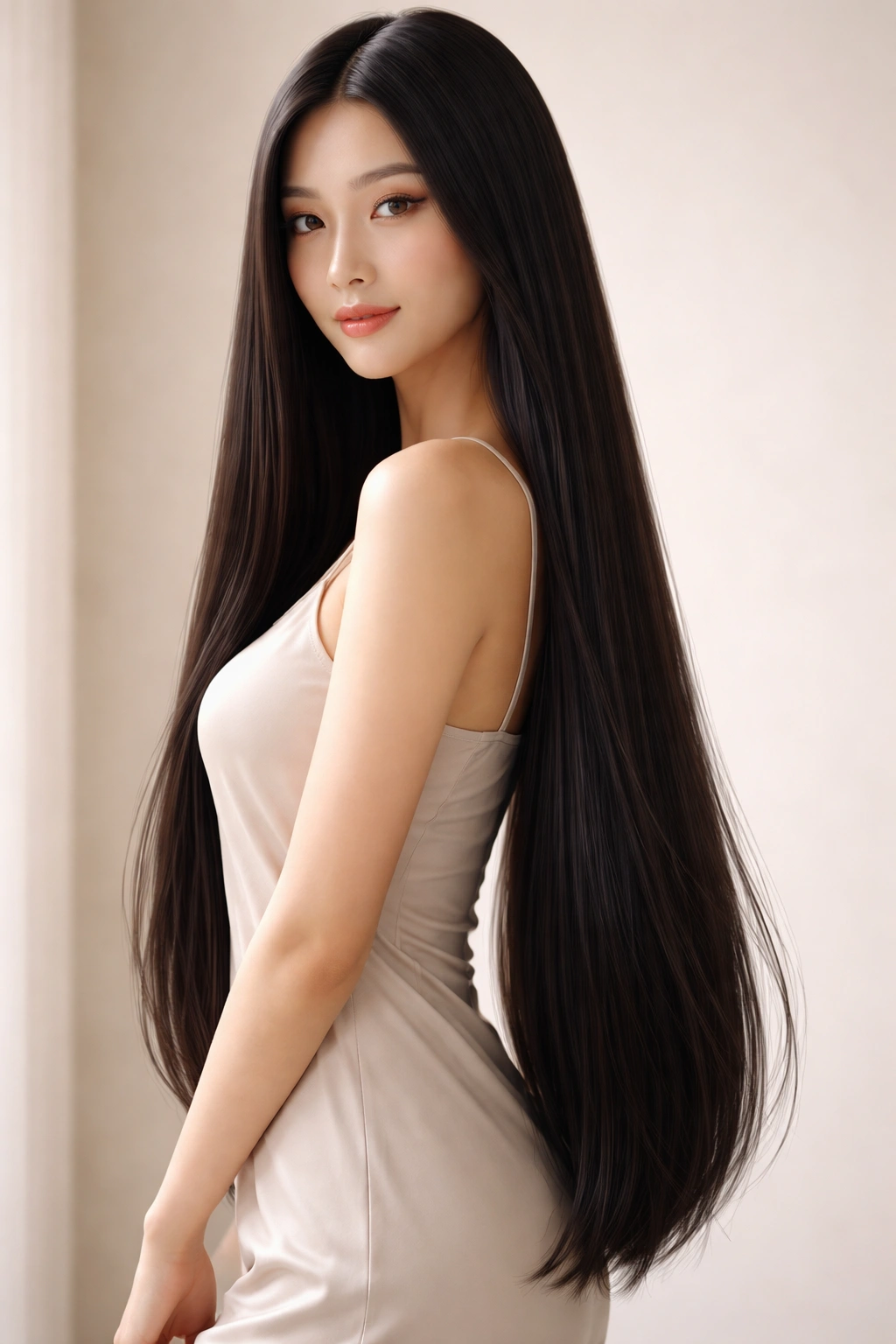
Long, straight hair that extends to the waist or beyond is the ultimate expression of straight-hair beauty — it showcases length, shine, and the natural texture in the most dramatic way possible. This style requires minimal cutting (mostly just maintaining healthy ends) but significant commitment to conditioning and maintenance. For many Asian women, this is the length they can actually achieve because of naturally thick, straight hair that grows healthily, making it an accessible dream-length style.
The Appeal of Waist-Length Straight Hair
There’s an undeniable romance and elegance to very long, straight hair — it creates an impression of femininity, health, and intentional beauty that shorter styles simply can’t replicate. The style works for virtually any occasion, from casual and undone (air-dried and tousled) to formal and polished (blow-dried straight with a deep side part). The length gives you styling flexibility — it can be worn down, half-up, in an elaborate braid, or in a sleek ponytail depending on your mood and the occasion.
How to Grow and Maintain Waist-Length Straight Hair
- Trim every 8-12 weeks to remove damaged ends and keep the overall look healthy and intentional, not straggly
- Deep condition weekly or bi-weekly to keep the lengths hydrated and prevent that dry, straw-like texture that comes with very long hair
- Use a lightweight, hydrating leave-in conditioner on the ends to combat dryness and frizz
- Sleep on a silk or satin pillowcase to reduce friction and breakage overnight
- Avoid excessive heat styling — embrace air-drying and natural texture when possible to prevent damage
- Consider protective styling (braids, buns) for extended periods to reduce friction and breakage
- Use a wide-tooth comb rather than a brush to detangle, working from the ends up to avoid pulling and breaking strands
Worth knowing: Waist-length hair requires genuine commitment to maintenance. If you’re not prepared to deep condition regularly and get frequent trims, you’ll end up with long hair that looks damaged rather than luxurious.
9. Straight Lob with Layers (Long Bob)
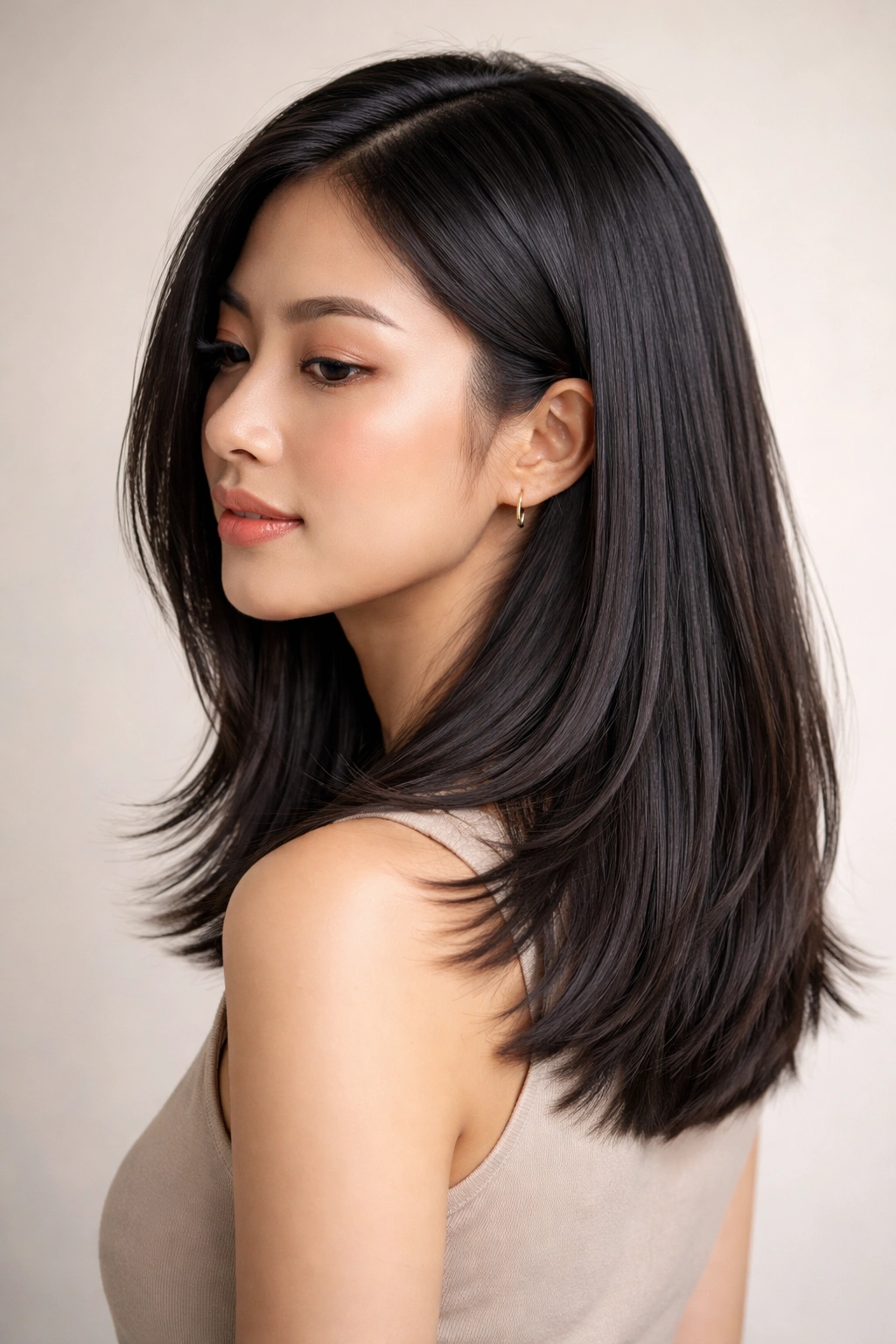
A straight lob (long bob) sits somewhere between shoulder-length and mid-back, hitting roughly at the mid-back or just below shoulder length — it’s the perfect sweet spot for people who want length without the extreme commitment of waist-length hair. Layering throughout the lob creates dimension and movement while maintaining the straight aesthetic, making it one of the most versatile cuts for straight hair. This length is particularly flattering on Asian women because it’s long enough to showcase the natural shine and smoothness but short enough to feel contemporary and manageable.
Why the Straight Lob Works So Well
The lob offers the best of both worlds — you get substantial length and the ability to style it down in a sleek, polished way, but you also have enough structure from layering to prevent it from feeling flat or heavy. The style can be worn completely straight and smooth for a modern look, or the layers can be enhanced with a round brush for movement and dimension. It’s professional enough for work, casual enough for everyday wear, and elegant enough for special occasions, making it genuinely wearable across all areas of your life.
How to Get the Best Straight Lob
- Ask your stylist for layers throughout (not just on the ends) so the style has movement and texture
- Request longer layers around the face to create a flattering frame and movement around your cheekbones
- Keep the overall length at least mid-back or just touching the shoulders so it reads as “lob” rather than simply “medium-length hair”
- Subtle face-framing is better than dramatic choppy layers — this keeps the style looking sophisticated rather than trendy
- Ask about a subtle long-layered texture (not blunt ends) to make styling easier and the overall look more dynamic
- Plan for trims every 6-8 weeks to maintain the shape and keep the layers from becoming too choppy
Pro tip: The lob is the most forgiving length for growing out a shorter cut or transitioning away from a previous style — it’s long enough to feel like a fresh start but short enough that you don’t have to wait years to see results.
10. Straight Hair with Shag Layers
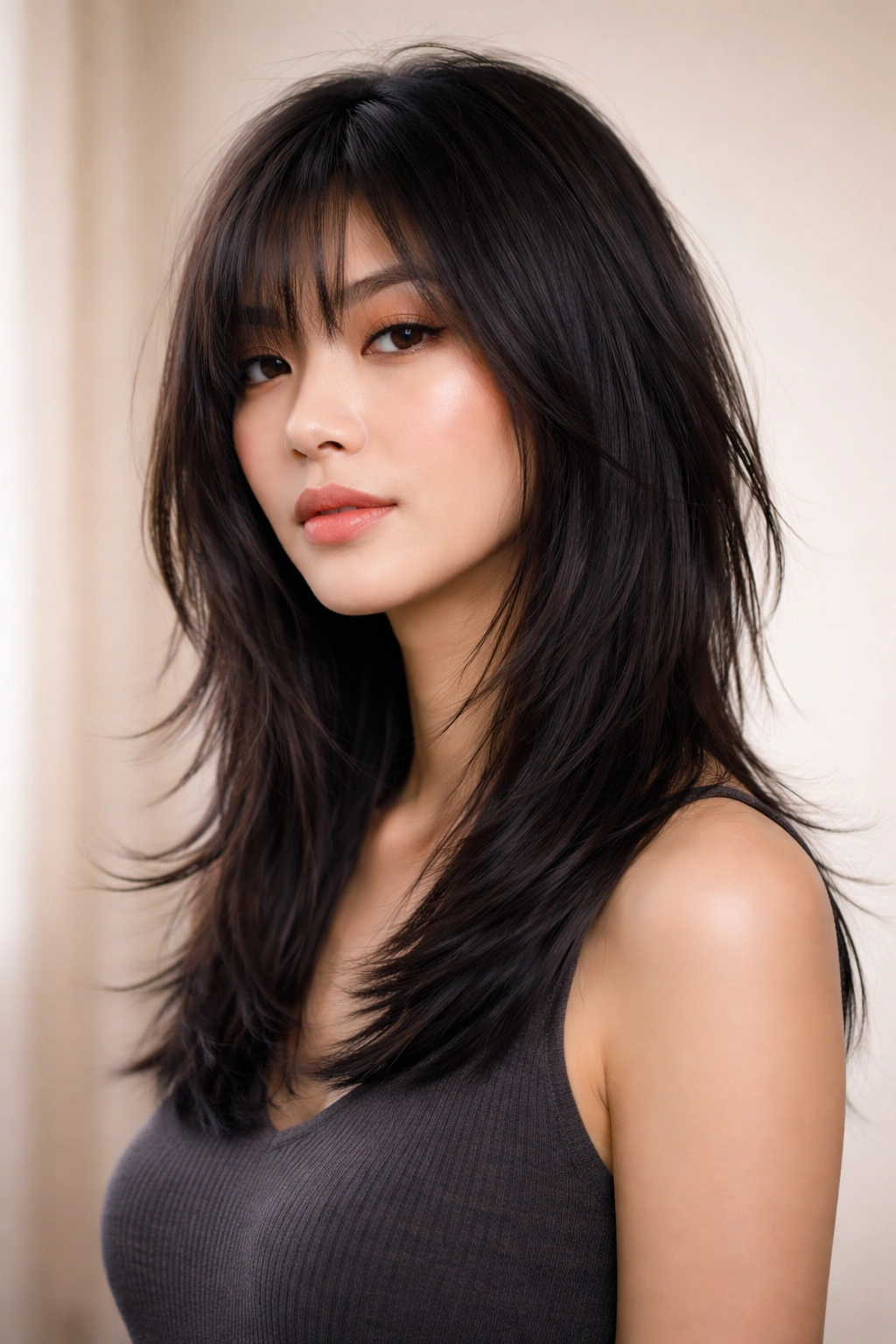
A shag cut is a bold, rock-and-roll alternative to traditional layering, featuring choppy, textured layers throughout the hair that create movement and an intentionally undone aesthetic. On straight hair, shag layers actually work beautifully because the straight texture prevents the layers from becoming too chaotic or frizzy, while the choppy cuts create the movement and dimension that make the style interesting. This cut works at virtually any length but looks particularly striking when executed on shoulder-length or longer straight hair.
What Shag Layers Bring to Straight Hair
Shag layers add an element of edge and personality to straight hair — they prevent the style from feeling too polished or one-note while maintaining the sleek texture that makes straight hair so striking. The choppy, textured cuts create natural movement that straight hair doesn’t always have on its own, making the style feel more dynamic and less flat. For Asian women with very straight, thick hair, shag layers can actually help the hair feel lighter and bouncier without requiring aggressive texturizing treatments.
How to Style Straight Hair with Shag Layers
- Blow-dry with a round brush, directing the layers outward to enhance movement and dimension
- Use a light texturizing spray to enhance the choppy texture and add grip to the layers
- Tousle gently with your fingers while the hair is still damp to encourage natural movement
- You can style these sleek and polished for a more modern take, or messy and undone for a more rock-and-roll aesthetic
- These layers look beautiful in half-up styles where the choppy texture is visible
- Pair with a side part for maximum edge or a center part for a more balanced look
- Shag layers work beautifully with both subtle face-framing curtain bangs and more dramatic micro bangs
Real talk: Shag layers require more styling than a sleek straight cut — you’ll need to blow-dry or at minimum tousle them damp to get the full effect. If you prefer wash-and-go styling, a traditional straight cut with subtle layering will serve you better.
Final Thoughts
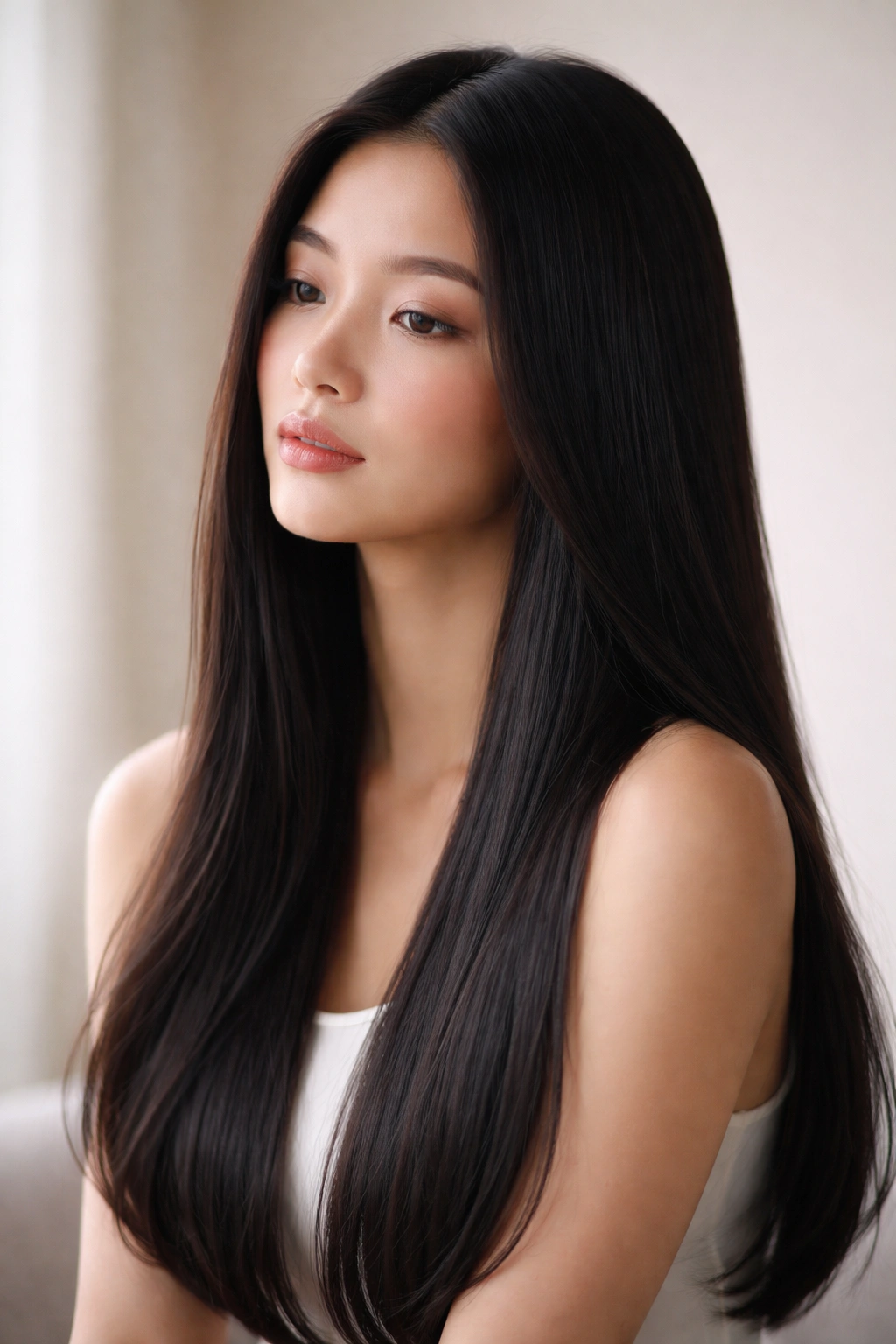
Straight hair is genuinely one of the easiest hair types to style elegantly, and these ten hairstyles showcase just how versatile straight hair can be. Whether you choose a bold, statement-making shag, a romantic long length, or something as simple and timeless as a center-parted straight style, the key is finding a cut that suits your face shape, matches your lifestyle’s styling demands, and makes you feel confident and beautiful.
The most important factor in any of these styles isn’t the cut itself — it’s maintenance. Straight hair shows everything: healthy ends, split ends, oil, dryness, and styling effort (or lack thereof). Committing to regular trims every 6-8 weeks, deep conditioning weekly, and using quality styling products will transform any of these cuts from merely acceptable to genuinely stunning. The good news is that straight hair responds quickly to good care, so small investments in maintenance pay off immediately and visibly.
Consider your lifestyle, your daily styling tolerance, and your long-term hair goals before choosing your next style. If you love simple, low-maintenance aesthetics, a long straight length with minimal layering is perfect. If you want to feel polished and intentional every single day, a blunt bob or lob gives you structure and shape. If you’re ready for something bold and fashion-forward, a shag or micro bangs signal confidence and style. Whatever you choose, own it completely — that’s what makes any hairstyle truly beautiful.
