

Curtain bangs have made a major comeback, and if you have straight hair, you’re in an ideal position to rock this flattering, face-framing trend. Unlike wavy or curly hair that can make curtain bangs look voluminous or soft by default, straight hair gives you complete control over the texture, thickness, and exact shape you want. The sharp lines of straight strands actually showcase the deliberate design of curtain bangs—that intentional sweep, the precise parting, the clean layers—in a way that feels both modern and polished.
The best part about curtain bangs on straight hair is the versatility. You can style them sleek and sophisticated for professional settings, tousle them for a casual weekend vibe, or blow-dry them with a round brush to add subtle movement. Whether you’re drawn to dramatic, statement-making bangs or whisper-soft, barely-there fringe, there’s a curtain bang style that will complement your straight hair’s natural characteristics and enhance your overall look.
The key to finding your perfect curtain bangs style lies in understanding what works with your face shape, hair density, and lifestyle. Some styles demand daily styling and maintenance, while others are more forgiving if you’re short on time. Let’s explore ten distinct curtain bang styles that look stunning on straight hair, each with its own personality and practical considerations.
1. Classic Center-Parted Curtain Bangs
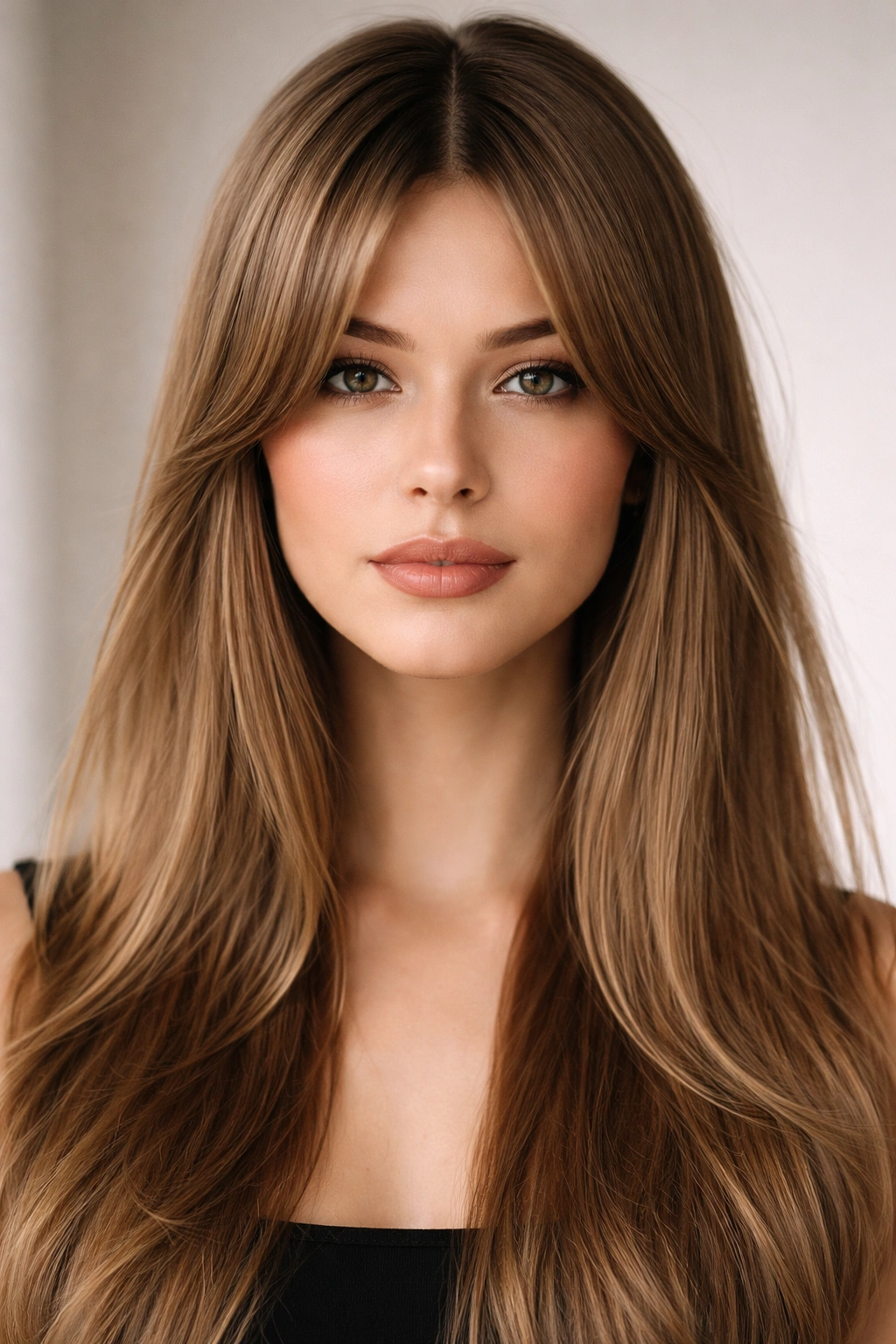
This is the foundational curtain bang style—the one that defined the trend when it resurged in popularity. Classic center-parted curtain bangs sit at eye level, part precisely down the middle, and sweep gracefully away from the face in two even, symmetrical sections. On straight hair, this style creates clean, sharp lines that frame the face with architectural precision. The bangs typically fall to about cheekbone length, creating that signature “curtain” effect that gives the style its name.
Why This Style Flatters Straight Hair
Straight hair’s naturally smooth texture means your center part will stay exactly where you want it without any frizz or waviness disrupting the line. The bangs catch light evenly across both sides, creating a balanced, intentional look that feels both modern and timeless. If your hair has any natural shine, center-parted curtain bangs will showcase it beautifully because the light plays across the clean surfaces of each bang section.
How to Style and Maintain It
- Use a blow dryer with a concentrator nozzle to direct each section away from your face as you dry
- A light touch of smoothing serum on damp bangs prevents any flyaways during styling
- The center part requires regular upkeep—aim for a trim every 4-6 weeks to maintain sharp lines
- You can wear it sleek for professional situations or piece it out with your fingers for a more relaxed vibe
Pro tip: Blow-dry your bangs in the direction you want them to sit—if you always dry them to the left first, they’ll naturally want to go that direction, making daily styling effortless.
2. Wispy Feathered Curtain Bangs
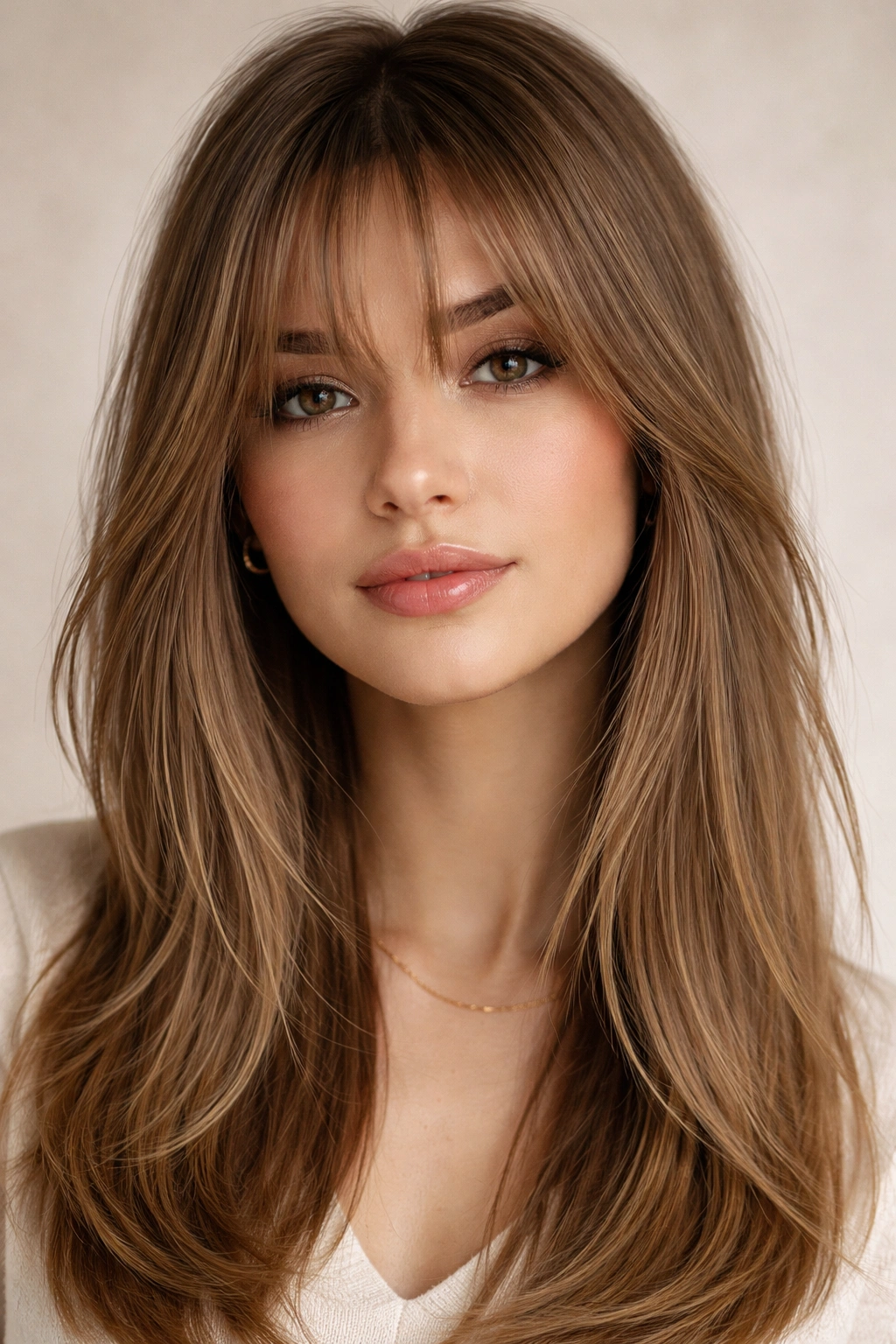
If you want all the curtain bang appeal without the heavy, blunt appearance, wispy feathered bangs deliver movement and softness. This style uses point-cutting and layering techniques to create texture throughout the bang section, so instead of one solid line of hair, you get dozens of tiny, delicate strands that graduate in length. The overall effect is lighter, more romantic, and far more forgiving if you miss a styling day.
What Makes Wispy Bangs Different
The feathered texture means that even on straight hair, you get the illusion of movement and dimension without any actual waves or curls. Each small layer catches light differently, creating subtle highlights and depth. This style works beautifully whether you want to style your bangs with precision or let them fall naturally—they look intentional either way, which is a huge advantage over blunt styles that demand daily attention.
Styling Tips for Maximum Softness
- A round brush and blow dryer create gentle waves through the layers
- Texture spray applied to damp bangs gives them grip and prevents them from looking too flat
- The graduated layers mean you can tuck sections behind your ear for a different look without restyling your entire bang
- These bangs actually improve with a bit of texture—perfectly smooth might look too severe
Worth knowing: Wispy bangs need trimming more frequently than blunt styles, usually every 3-4 weeks, because the texture becomes less defined as they grow.
3. Blunt, Thick Curtain Bangs
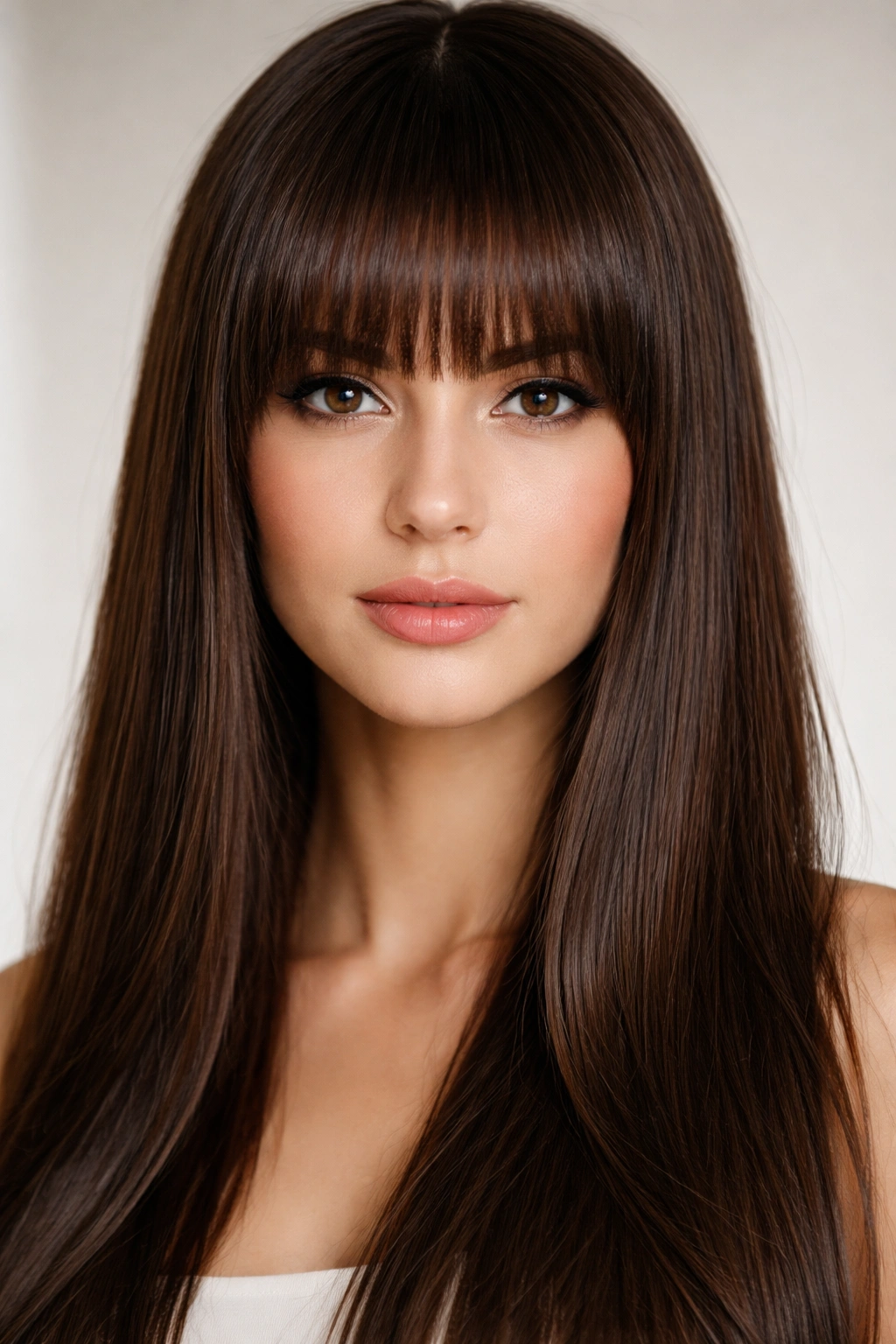
For those who want to make a bold, confident statement, thick blunt curtain bangs command attention. This style uses minimal layering—sometimes none at all—so every strand sits at nearly the same length, creating a solid, weighted line across your forehead. They typically end just below the eyebrows or at cheekbone length and part down the center, but the density is what sets this style apart. You need naturally thick hair or excellent styling technique to pull this off successfully.
The Impact of Density on Straight Hair
Thick bangs create an immediate visual frame that draws attention to your eyes and cheekbones. On straight hair, the heaviness of blunt bangs creates a sophisticated, almost editorial look. The density also means these bangs don’t look wispy or thin even if they’re slightly overgrown—they maintain their visual weight and intentionality. This style absolutely requires commitment to regular trims, though, because overgrown thick bangs can quickly look unkempt.
Maintenance and Daily Styling
- Blow-dry with a paddle brush to keep them flat and smooth against your forehead
- A light straightening iron can tidy up any slight bends or creases from sleeping
- Schedule trims every 3-4 weeks—thickness shows overgrowth immediately
- Anti-frizz products are essential since any texture disrupts the blunt line
- These bangs work best on people who enjoy a polished, put-together aesthetic
Insider note: Blunt curtain bangs photograph incredibly well and photograph incredibly well, which is perfect if you’re drawn to them for style inspiration on social media. Just know that the real-life maintenance is more demanding than a quick photo suggests.
4. Longer, Swooping Curtain Bangs
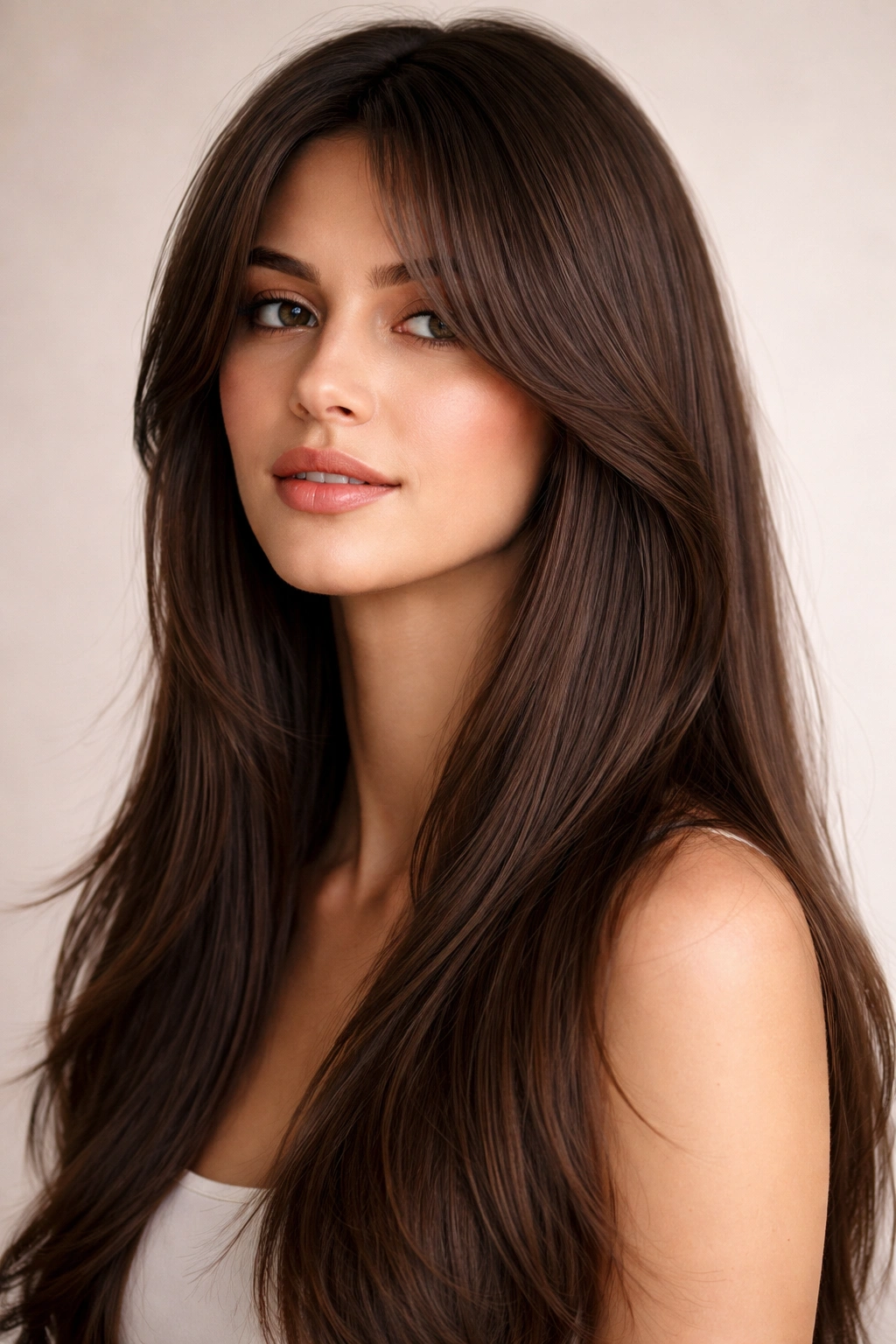
Instead of stopping at cheekbone length, longer curtain bangs extend down past the jawline, sometimes even grazing the collarbone. These create a dramatic, sweeping silhouette that elongates the face and offers more styling flexibility than shorter versions. The longer length also means they blend seamlessly into the rest of your hair, creating one cohesive, flow-focused shape. This style suits people who want curtain bangs without a super-defined break between the bangs and the rest of their length.
How Length Changes the Aesthetic
Longer curtain bangs feel less “bang-heavy” than shorter styles because the eye doesn’t catch them as a distinct unit. Instead, they read as intentional layers that happen to frame your face. On straight hair, the length shows off the clean lines beautifully—there’s no distraction or texture hiding the shape. This style is also forgiving because the longer length means overgrowth is less obvious; they can go 6-8 weeks between trims if needed.
Styling for Soft Sweep and Movement
- A blow dryer and round brush create a gentle curve away from the face
- Curling the ends slightly with a 1.25-inch barrel curling iron adds dimension
- Texturizing spray enhances the separation between bang sections
- You can tuck longer bangs behind your ears for completely different looks throughout the day
- Straight hair shows off the sweep beautifully with minimal effort
Pro tip: Longer curtain bangs work especially well if you have fine or thin hair, because the extended length distributes the visual weight across more area rather than concentrating it all on your forehead.
5. Textured, Choppy Curtain Bangs
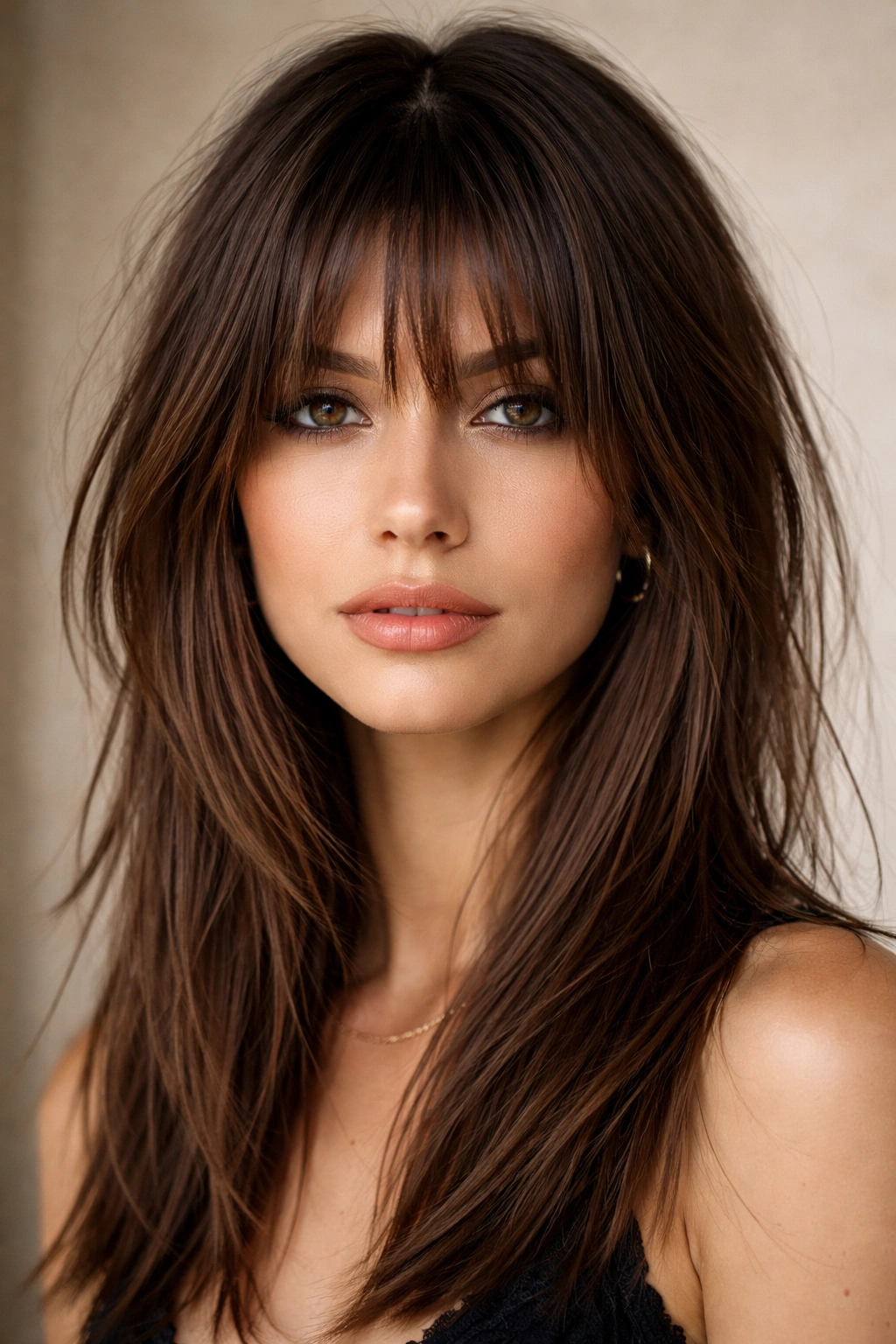
This style embraces intentional choppiness and irregular length within the bang section. Instead of smooth, uniform lines, textured curtain bangs feature deliberately short and long strands mixed together, creating a rock-and-roll, undone energy. The technique uses sharp, choppy layers and point-cutting to create visual interest. On straight hair, each chopped strand reads clearly, so the texture really shows—you’re not relying on natural waves or curls to create the effect.
Why Straight Hair Showcases Choppy Texture Best
The clean lines of straight hair make every strategically placed short strand visible and intentional-looking. You get maximum texture definition without any fuzziness or undefined waviness. This style feels edgy and current while still being undeniably face-framing. The irregularity actually makes it more forgiving than blunt bangs—slight overgrowth reads as part of the intentional messiness rather than as neglect.
Styling to Enhance the Chop
- Blow-dry with your fingers for a piece-y, separated look
- Texturizing spray is almost essential to enhance the chopped effect
- A light smoothing serum prevents frizz while keeping texture visible
- Tousling with your hands before blow-drying creates dimension
- These bangs actually look better with a slightly undone vibe than perfectly polished
Worth knowing: This style demands a skilled stylist who understands how to cut choppy texture in straight hair. A mediocre cut will just look uneven rather than intentionally textured.
6. Micro Curtain Bangs (Short Version)
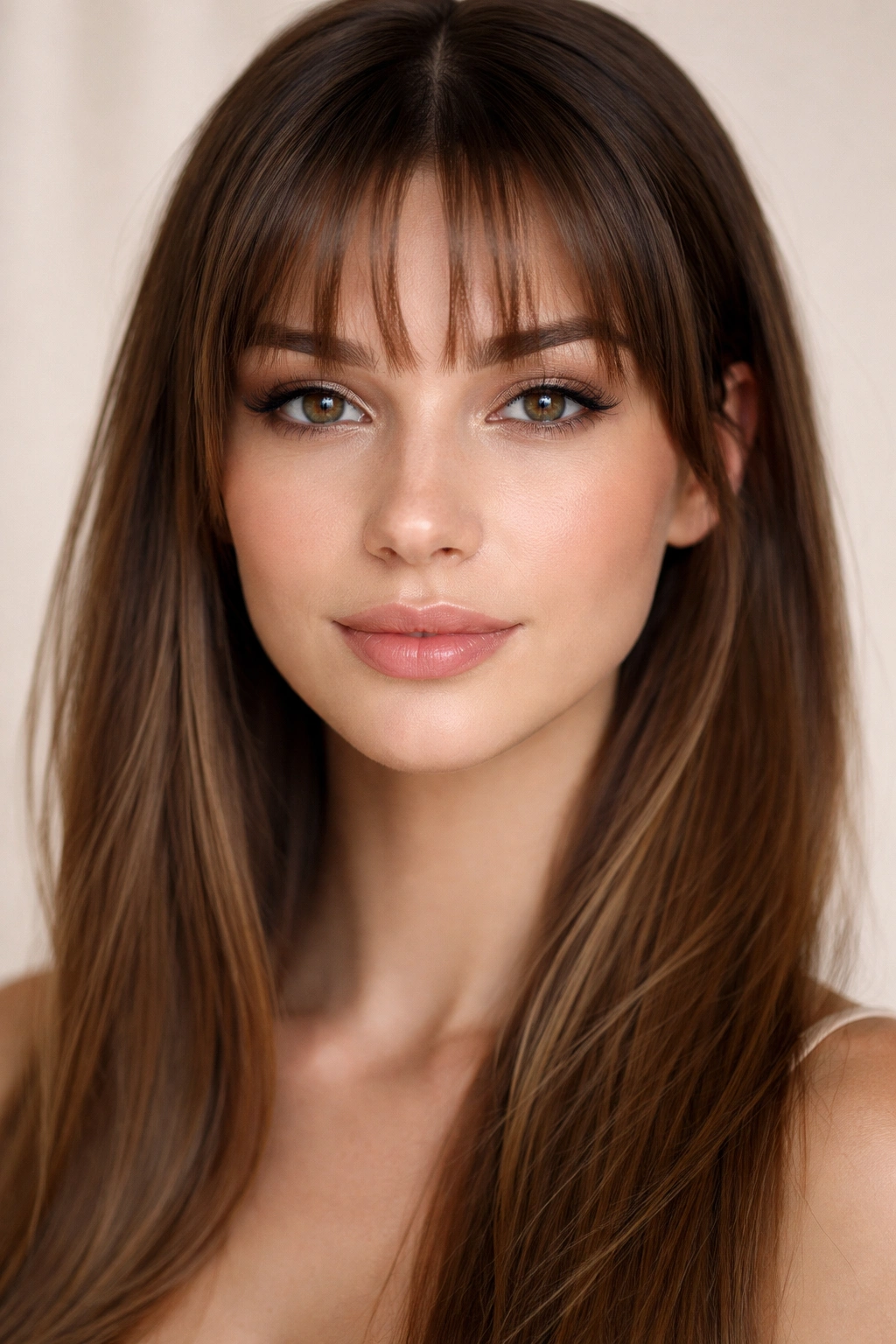
For those intimidated by traditional bang length, micro curtain bangs offer a low-commitment way to try the trend. These sit much higher on the forehead, usually hovering just an inch or two below the hairline or right at the eyebrow. They still create the signature center part and sweep to the sides, but the shorter length makes them far less dramatic and much easier to grow out if you change your mind. Many people find them less noticeable day-to-day but still impactful in photos and closer interactions.
The Low-Commitment Appeal
Starting with micro curtain bangs is a smart strategy if you’re unsure whether the style will suit you. The short length means they don’t cover much of your face, so they complement almost any face shape and feature. On straight hair, you can style them smooth and polished or slightly textured—either way, the short length keeps them looking intentional rather than accidental. They also allow more flexibility in how you style them; you can push them to the side completely and they’ll blend in rather than looking like neglected bangs.
Growing Out and Styling Options
- These bangs can stay sharp-looking through 5-6 weeks of growth
- You can completely part them to the side without it looking awkward, since they’re so short
- Styling is minimal—most people just blow-dry them straight
- If you decide you don’t want them, they’re painless to grow out in just a few weeks
- They’re a great option for people with cowlicks or stubborn hair that doesn’t always cooperate
Insider note: Micro bangs are surprisingly popular among people with mature hairlines or anyone who wants to frame their face without covering a large area. They’re also fantastic for athletic people who don’t want bangs in their eyes during workouts.
7. Curtain Bangs with Integrated Layers
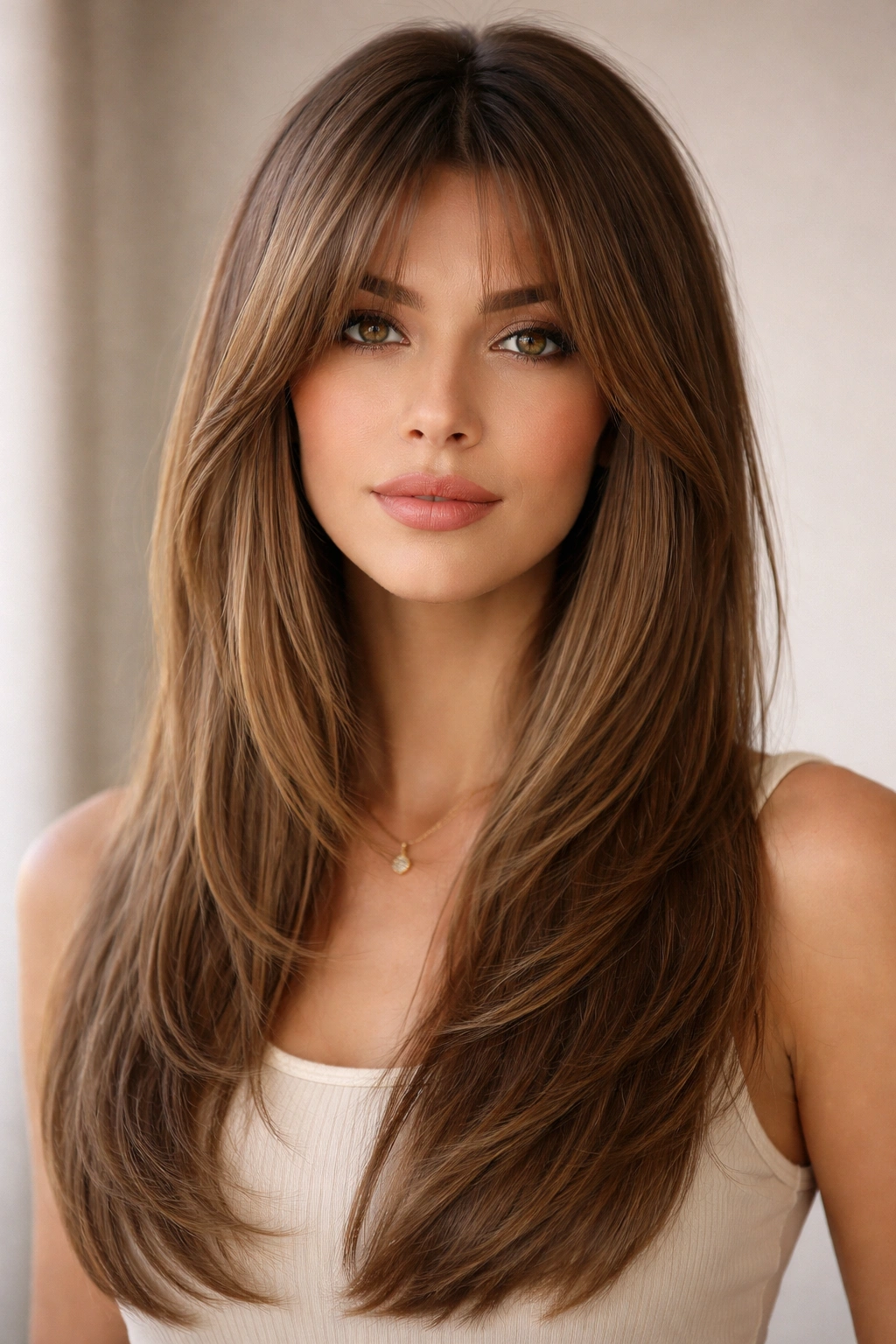
This style treats your curtain bangs as part of a cohesive, layered cut rather than a distinct fringe unit. The bangs begin the layering process that flows throughout your entire head, creating seamless movement from the shortest pieces (the curtain bangs) down to the longest layers. On straight hair, you can see each layer as a distinct line, which creates visual depth and movement even without waves or curls. This approach feels more modern and intentional than treating bangs as something separate.
How Layering Changes the Whole Silhouette
When your curtain bangs are integrated into a layered cut, the focus shifts from “statement bangs” to “intentional, directional shape.” The bangs become part of the overall design rather than a standalone element. This works beautifully on straight hair because each layer reads clearly and creates actual structure. The movement isn’t relying on natural texture—it’s built into the cut itself.
Styling a Layered Curtain Bang Situation
- Blow-drying creates separation between layers, showing off the cut’s architecture
- Round brush styling emphasizes the flow from top to bottom
- Straight hair actually needs a bit of texture spray to prevent all layers from sticking flat
- The layers allow you to style bangs sleek or tousled depending on your mood
- Regular trims every 4-6 weeks maintain the layer definition
Pro tip: Ask your stylist to point-cut the ends of your layers rather than blunt-cutting them. This creates softer movement on straight hair while still maintaining clean lines.
8. Thick, Bold Curtain Bangs with Volume
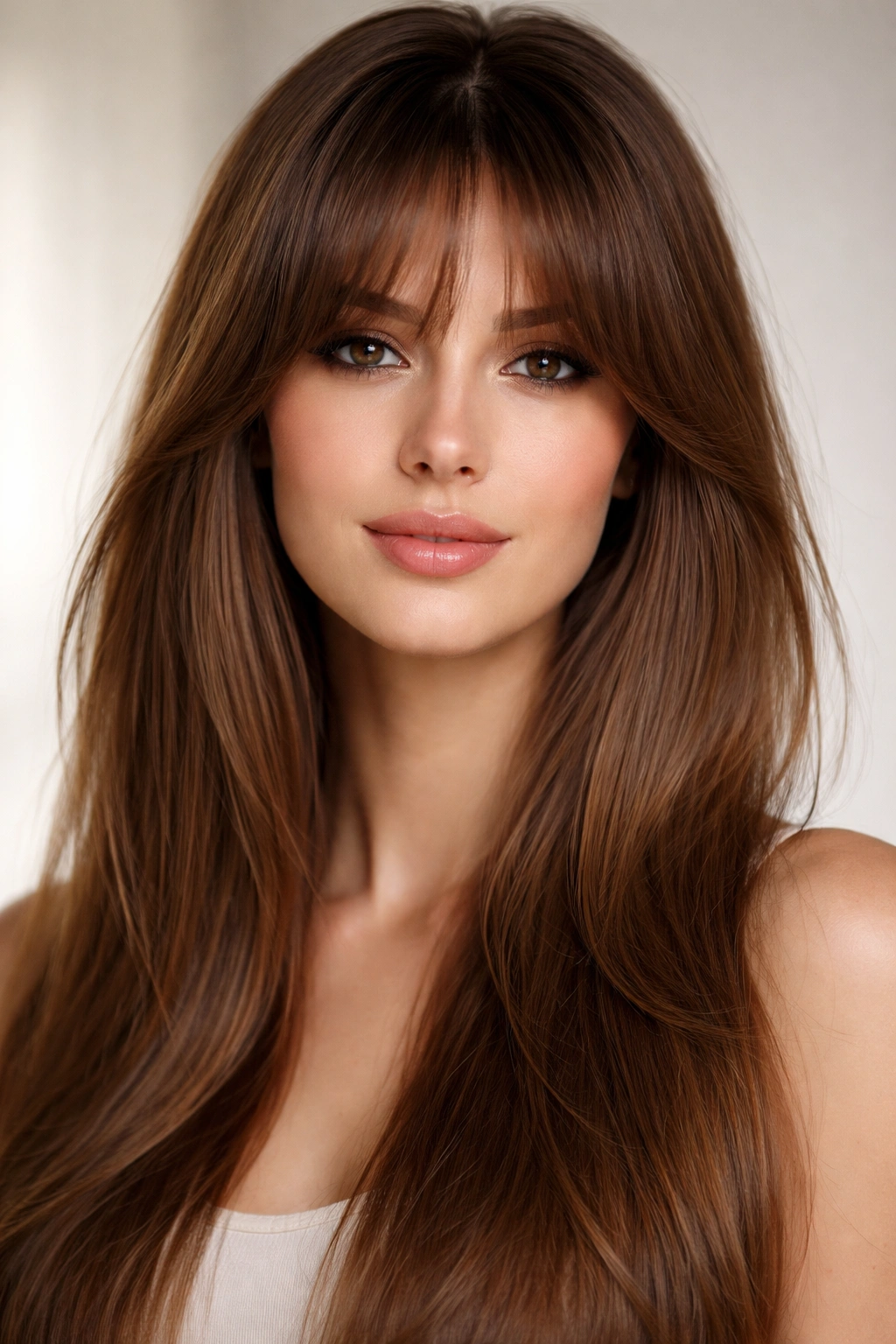
This style combines the density of thick curtain bangs with intentional volume and movement. Rather than lying flat against your forehead, these bangs are styled with blow-dry techniques and products to create height and a gentle curve away from the face. The thickness remains, but instead of a heavy, serious aesthetic, the volume creates something more approachable and dynamic. This style requires some styling commitment but offers serious impact.
Building Volume Into Straight Hair
Creating volume on naturally straight hair requires the right technique and products. You’ll blow-dry with your head tilted back or upside down to lift the roots, then use a round brush to shape the bangs as they cool. Texturizing spray or volumizing mousse applied to damp hair before blow-drying is essential. The result is bangs that still feel thick and present but also have movement and dimension rather than lying flat.
Daily Styling Requirements
- Blow dry bangs with your head tilted back for root lift
- Use a round brush to create gentle curves as hair cools
- Texturizing spray applied before blow-drying helps hold volume
- These bangs look best when slightly tousled rather than perfectly smooth
- Budget 5-10 minutes daily for styling if you want to maintain the volume effect
Worth knowing: This style demands engagement with your bangs every morning—you can’t just wake up and expect them to look good. If you prefer lower-maintenance styles, thick blunt bangs that lie flat might suit you better.
9. Soft, Wispy Side-Swept Curtain Bangs
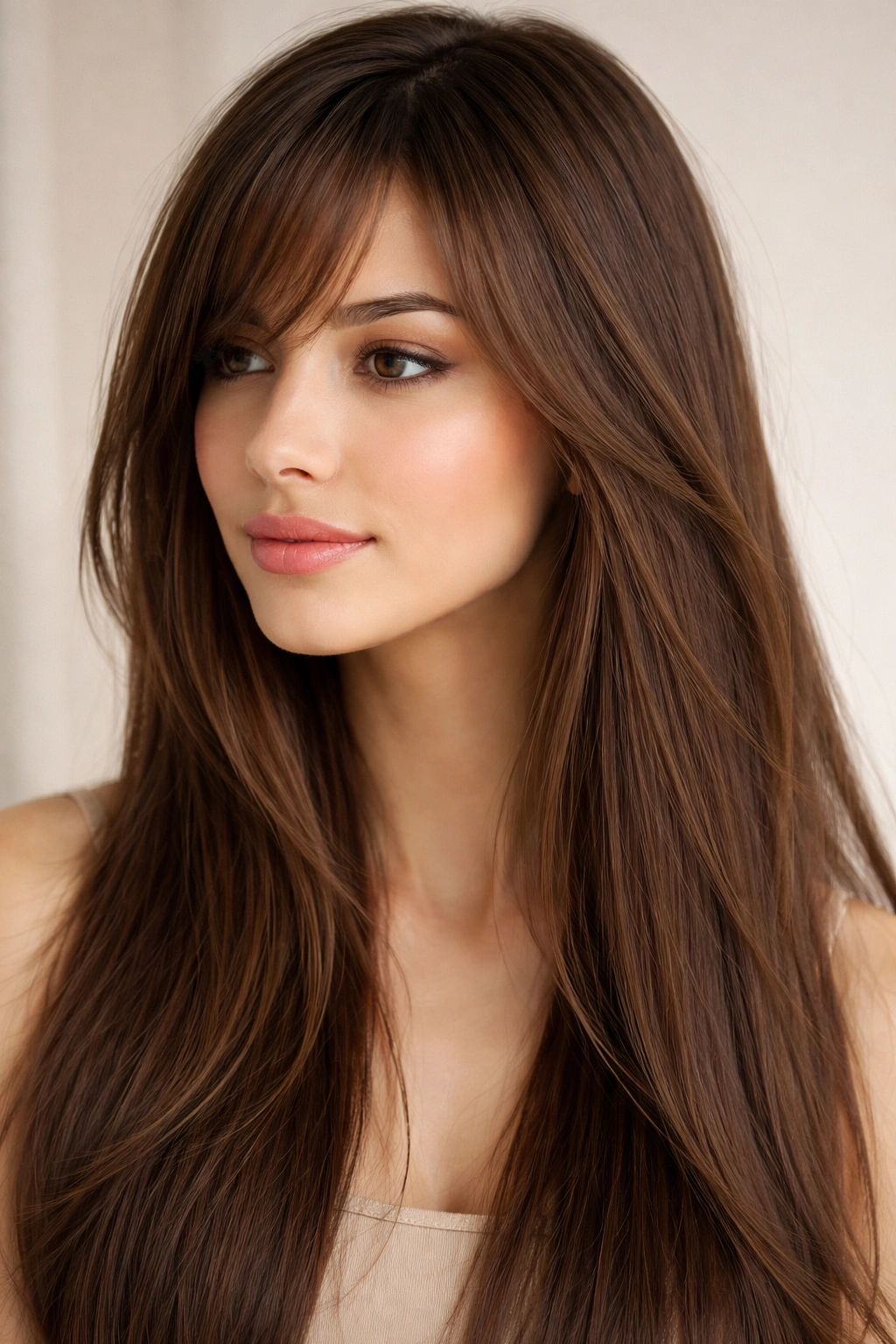
Instead of parting your curtain bangs straight down the center, side-swept bangs begin on one side and sweep dramatically across the forehead to the other side. This creates an asymmetrical, romantic silhouette that’s less structured than center-parted styles. The wispy, layered texture makes these bangs feel soft and approachable. On straight hair, the side-swept direction becomes part of the intentional shape—you can see exactly how the stylist cut and directed them.
Why Side-Swept Works on Straight Hair
The movement of side-swept bangs is built into the cut direction rather than relying on natural wave or curl. On straight hair, this means the sweep is clear and precise. The asymmetry flatters people who prefer an off-center part or anyone who wants bangs that feel less structured and more romantic. Side-swept bangs also have the advantage of working even if you naturally part your hair to one side—they’ll cooperate with your hair’s natural tendencies rather than fighting against them.
Styling and Daily Maintenance
- Blow-dry in the direction of the sweep while hair is damp for best results
- The wispy texture means you can let these bangs air-dry and they’ll still look intentional
- A light texturizing spray enhances the separated, feathered effect
- You can push them completely to one side or part them more toward center depending on your mood
- These bangs work even with slightly less frequent trims than blunt styles
Pro tip: If you have a natural cowlick or your hair naturally wants to part one direction, choose a stylist who will cut your side-swept bangs in a way that cooperates with your hair’s growth pattern rather than fighting it.
10. Curtain Bangs with Face-Framing Highlights
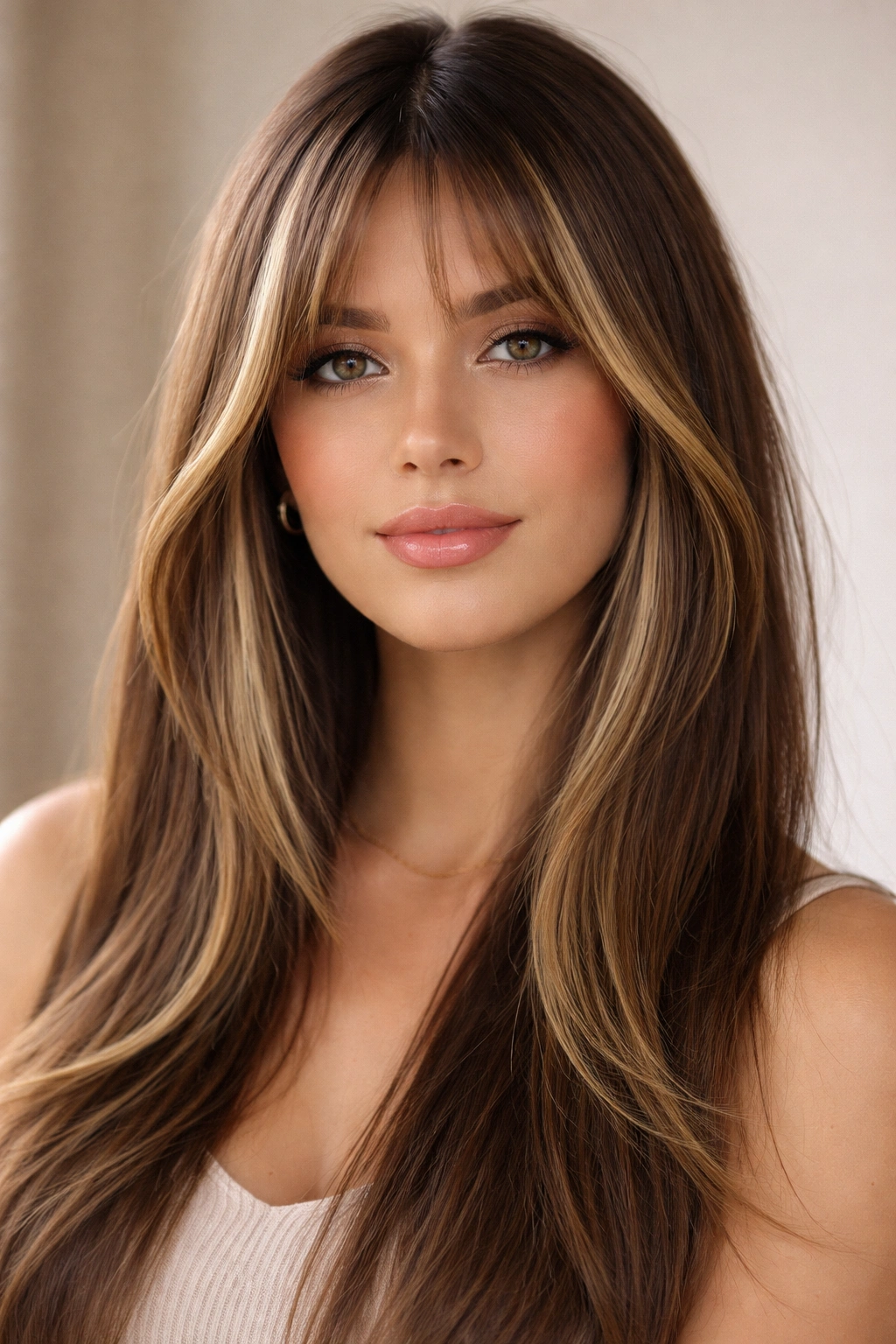
This final style isn’t just about the cut—it’s about combining curtain bangs with strategic color placement. Bright, dimensional highlights positioned along the bang sections and face-framing layers create visual dimension that enhances the overall style. On straight hair, highlights read with crystal clarity; there’s no texture diffusing the color, so the placement has maximum impact. This approach transforms curtain bangs from a shape into a complete color and shape statement.
How Color Amplifies the Curtain Bang Effect
Strategic highlights in the bang area create an almost sun-kissed effect that makes the face-framing feel intentional and expensive-looking. Even subtle color changes read clearly on straight hair, making this approach perfect for people who want to enhance their bangs without dramatic color commitment. The highlights draw the eye to your face and the framing effect of your bangs while adding dimension that makes straight hair look more vibrant.
Color and Cut Maintenance
- Touch up roots every 4-6 weeks to keep highlights looking bright
- Trim bangs every 4-6 weeks to maintain the cut’s shape
- Purple or blue-toning shampoos keep blonde highlights from turning brassy
- Semi-permanent color in highlighted sections can be refreshed between appointments
- The combination of highlights and bangs requires coordination with your stylist for best results
Insider note: This style works particularly well if you naturally have darker hair and want to add highlights—the contrast between dark base and bright highlights becomes even more striking with the face-framing placement of curtain bangs.
Final Thoughts
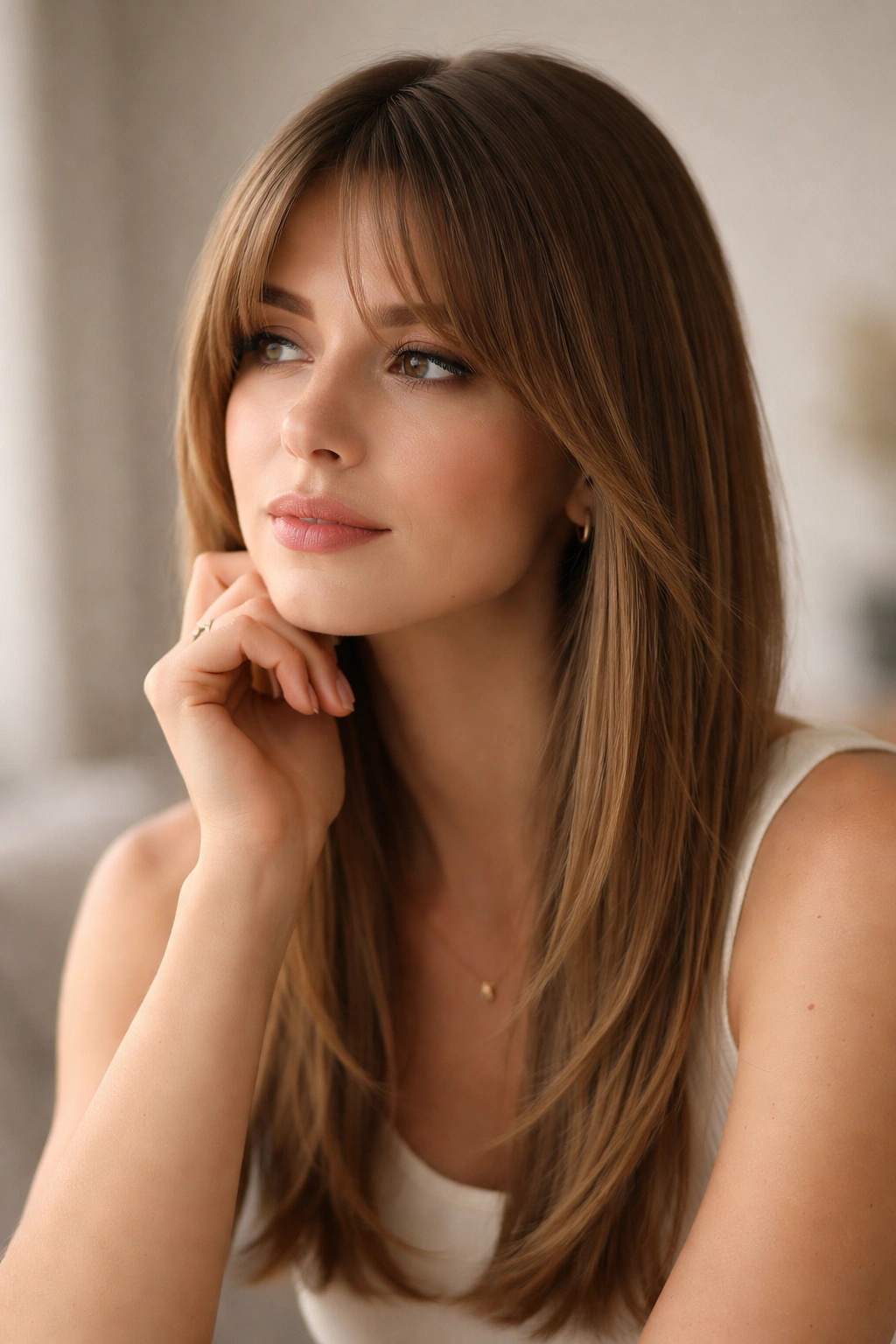
Finding your perfect curtain bang style for straight hair comes down to honestly assessing your lifestyle, styling commitment level, and what aesthetic speaks to you. If you’re the type who enjoys a polished, put-together look and doesn’t mind daily styling, thick blunt bangs or high-volume styles deliver serious impact. If you prefer something lower-maintenance that still reads as intentional and current, wispy feathered bangs or longer swooping styles offer that flexibility.
The beauty of curtain bangs on straight hair is that your stylist has a clean canvas to work with. There’s no texture to work around or waves to account for—just precise lines and the exact length you request. This means you have the freedom to choose based on style preference and lifestyle rather than what your natural hair texture allows. Start with a consultation where you show references and discuss your daily styling habits. A good stylist will help you pick the version that will actually make you happy to wake up and style every morning.