



If you’ve been scrolling through hair inspiration lately, you’ve probably noticed the jellyfish cut popping up everywhere. And honestly, there’s a good reason—this layered, voluminous style has a unique ability to work with naturally straight hair in ways that feel modern and intentional rather than accidental. The cut gets its name from that distinctive silhouette: longer, flowy layers on top that create movement and dimension, while the underneath is significantly shorter and textured, creating that jellyfish-tentacle effect when you flip your head or move.
The beautiful part about the jellyfish cut for straight hair? It addresses one of the biggest styling frustrations people with straight hair face: flatness and lack of texture. Because straight hair doesn’t naturally hold waves or curls, it can sometimes look one-dimensional, even when it’s healthy and shiny. But a well-executed jellyfish cut uses strategic layering and length variation to create the illusion of texture and movement without requiring you to curl or wave your hair every single time you style it. That said, not all jellyfish cuts are created equal, and the specific variation you choose should match your hair thickness, face shape, lifestyle, and how much styling effort you’re willing to put in.
What makes this cut so adaptable is that there are multiple approaches to achieving that jellyfish silhouette. You can go subtle or dramatic, incorporate bangs or skip them entirely, adjust where the layers fall, and play with how much texture the stylist adds to the shorter layers underneath. Each variation brings its own personality and styling requirements, which is exactly why this cut has become such a versatile choice for straight-haired clients across all ages and hair types.
1. Classic Wispy Jellyfish with Soft Layers
This is the purest expression of the jellyfish cut—the version you’ll see in most reference photos that made this style go viral. The top layer is significantly longer, reaching somewhere between shoulder length and mid-back, while the underneath is cut quite short—usually somewhere between chin length and shoulder blade height. What makes this version “classic” is the gentle, graduated approach to the layering: the transition from short to long isn’t abrupt or heavily choppy, but rather flows in a soft progression that creates natural-looking dimension.
Why This Works for Straight Hair
The soft layering on this cut creates subtle movement and prevents that flat, single-length look that straight hair can sometimes fall into. Because the layers are graduated rather than heavily textured, this version feels more refined and less obviously cut, which works beautifully if you prefer a more polished aesthetic. The longer top layers provide visual weight and interest, while the shorter underneath removes bulk without creating the extreme contrast that can sometimes look harsh on straight hair.
What to Expect Styling-Wise
- Naturally falls into place with minimal effort on most straight-haired people—even without heat styling or product
- Works well with simple blow-dry routines or air-drying, though blow drying creates more intentional movement
- The longer top layers can be styled straight, slightly curved inward, or with subtle waves depending on your mood
- Requires regular trims (every 6-8 weeks) to maintain the graduated effect as it grows out
- Works across all straight hair textures, from fine to thick
Worth knowing: This cut can look slightly longer and thinner than you might expect on finer hair types, so if you have thin straight hair, ask your stylist about adding slightly more texture to the shorter layers to create the illusion of density.
2. Textured Jellyfish with Choppy Layers
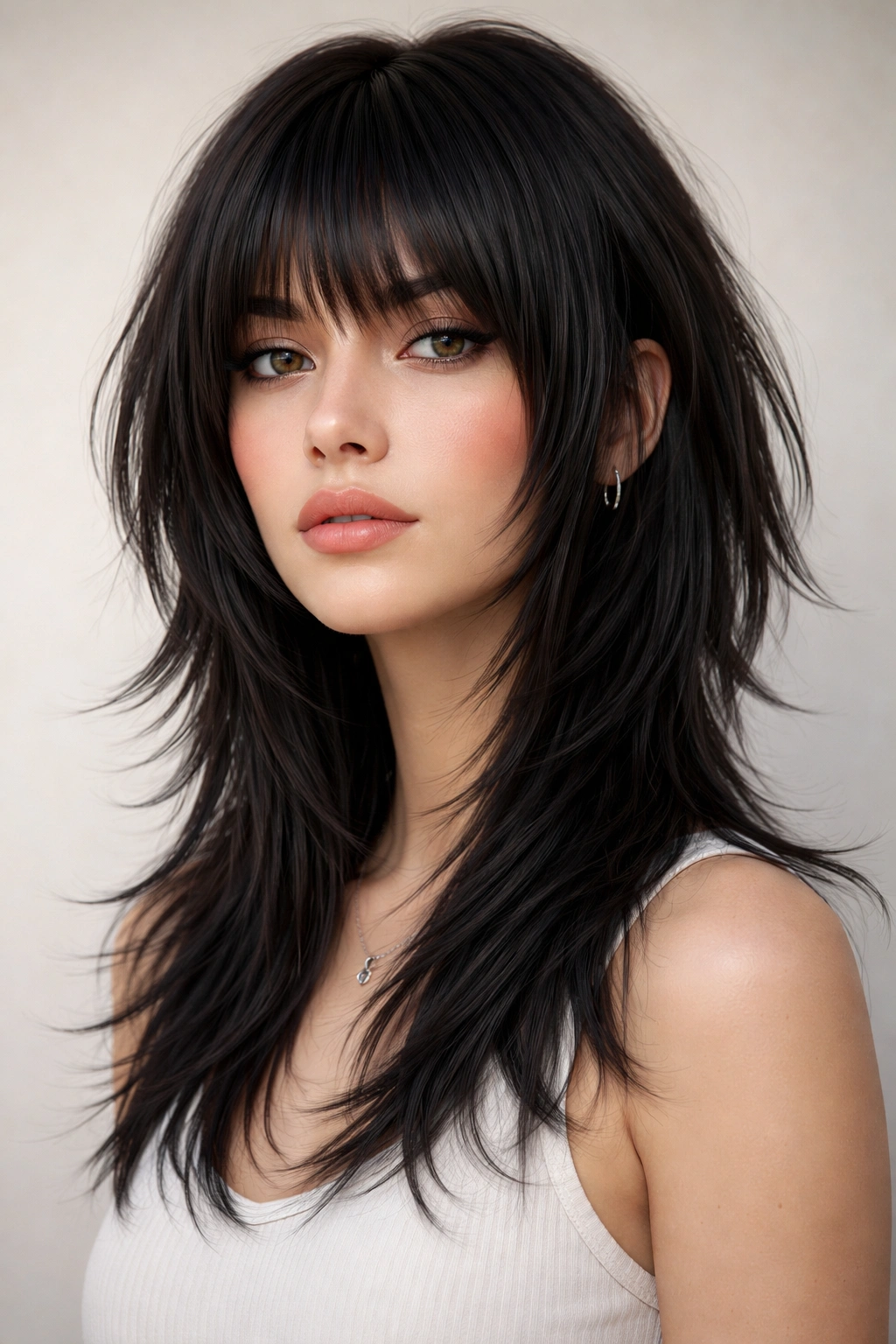
For people who want more movement and texture built directly into the cut, this variation takes the jellyfish silhouette and adds intentional choppiness throughout. The layers are more pronounced and irregular—some slightly longer, some slightly shorter—creating a deliberately piecey, textured appearance. The underneath is choppy and fragmented rather than smooth, giving you built-in texture that doesn’t rely entirely on styling products or heat tools.
Why This Variation Stands Out
This cut is the answer for straight-haired people who feel like their hair looks too sleek or flat no matter what they do. By cutting texture directly into the shape, you’re creating movement at the hair-cutting level rather than relying on styling techniques to add it afterward. This also means the cut photograph really well—that textured, dynamic quality comes through immediately, even in simple lighting.
Styling and Maintenance Details
- Requires a lightweight texturizing product (texturizing spray, sea salt spray, or dry shampoo) to really showcase the choppy layers
- Blow-drying with a round brush or diffuser attachment helps enhance the movement the cut creates
- The choppy nature means your hair will look intentionally undone, which some people love and others might not be drawn to
- Styling commitment is moderate—you can wear it without products, but it looks best with a little texture and definition added
- Trims every 5-7 weeks help maintain the choppy shape as the hair grows
Pro tip: If you have straight hair that’s resistant to holding texture, ask your stylist to use point-cutting or texturizing shears rather than straight razor cutting—this creates more grip in the hair and helps products hold better.
3. Jellyfish with Blunt Bangs
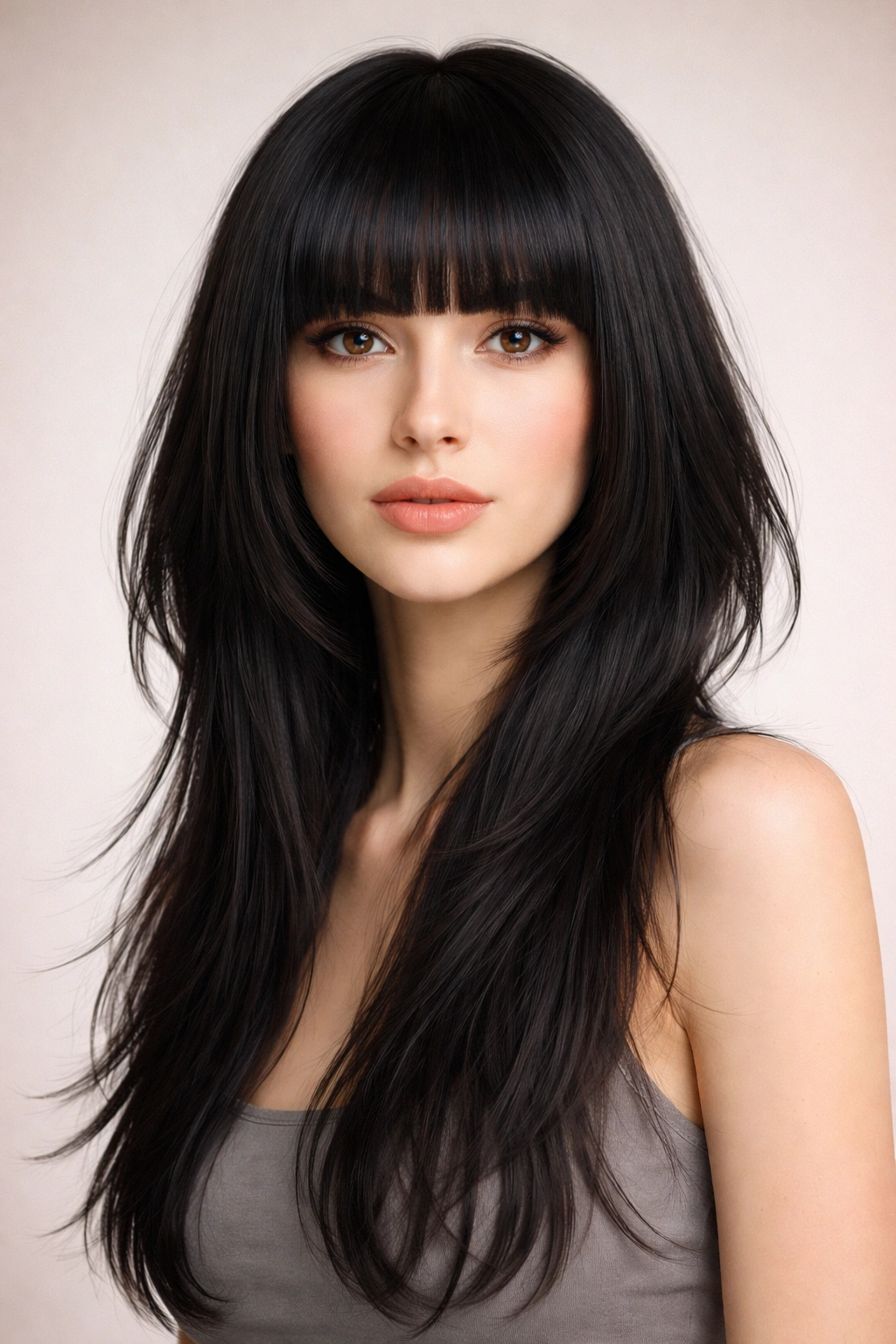
This version pairs the jellyfish silhouette with blunt, full-coverage bangs that sit around eyebrow length or slightly longer. The bangs create a bold frame for the face while the layered underneath still provides that signature jellyfish effect. It’s a more avant-garde take on the cut that makes a stronger statement than the classic version.
What Makes This Cut Distinctive
The blunt bangs transform the overall energy of the jellyfish cut from soft and subtle to intentional and fashion-forward. They create a beautiful frame for the face—especially if you have a longer face shape or want to draw attention to your eyes. The contrast between the blunt, severe bangs and the softer, layered rest of the hair creates visual interest and prevents the whole style from feeling too uniform.
Practical Considerations
- Blunt bangs on straight hair look crisp in the best way—they’re one of the few hairstyles where straight hair texture is an actual advantage rather than a challenge
- You’ll need to trim bangs every 2-3 weeks to maintain the blunt line, as straight hair makes it obvious when they’re growing out
- Styling is straightforward: blow-dry the bangs downward with a round brush or flat iron if you want them perfectly straight, or let them air-dry for a softer, slightly curved look
- The bangs can be worn over the eyes, swept slightly to one side, or pinned back for variation
- This cut suits most face shapes, though people with very round faces might prefer a slightly longer bang length to create the illusion of more face length
Worth noting: Blunt bangs paired with straight hair means any damage or breakage at the bang line is immediately visible, so keep them healthy with regular deep conditioning and be gentle when blow-drying.
4. Jellyfish with Wispy Side-Swept Bangs
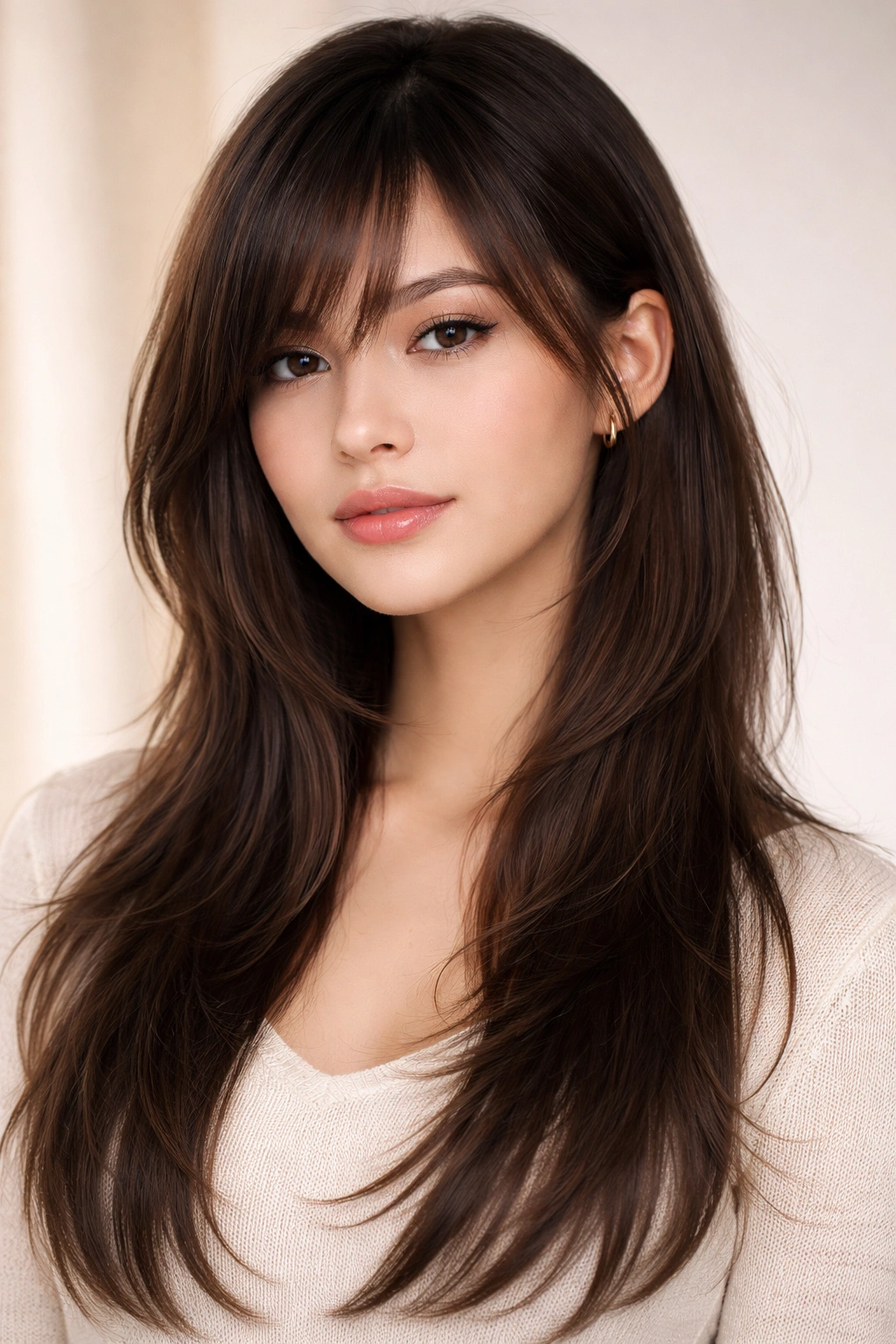
If you want the frame of bangs without the commitment of maintaining blunt ones, this variation offers wispy, side-swept bangs that blend seamlessly into the rest of the layered cut. The bangs are longer and lighter than blunt bangs—they might be incorporated into the longer top layers rather than cut as a separate section—creating a softer, more romantic approach.
Why This Works Well for Straight Hair
Wispy bangs on straight hair create a sophisticated, lived-in quality without looking messy. They skim the face rather than sitting heavily against it, which works beautifully if you prefer a more delicate aesthetic. The side-sweep also means you have flexibility: wear them swept to one side for fullness, blow-dry them forward for more coverage, or pin them back if you want to change the look without getting a trim.
How to Style and Maintain
- Wispy bangs blend into layers naturally, so this cut doesn’t require the frequent bang trims that blunt styles do
- Blow-dry with a round brush swept to one side, or allow them to air-dry with their natural texture
- Texturizing spray can add softness and prevent the bangs from looking too severe against your face
- The underneath layers can be blown dry straight or with a slight wave for dimension
- Trims every 6-8 weeks maintain the wispy effect as the bangs grow
Quick facts about this style:
- Works well for people who’ve never worn bangs before—easier to transition out of if you decide bangs aren’t for you
- Creates a more romantic, less edgy vibe than blunt bangs
- The side-sweep draws attention to one side of the face, flattering if you have an asymmetrical face shape you want to balance
5. Jellyfish with Long, Straight Underneath Layers
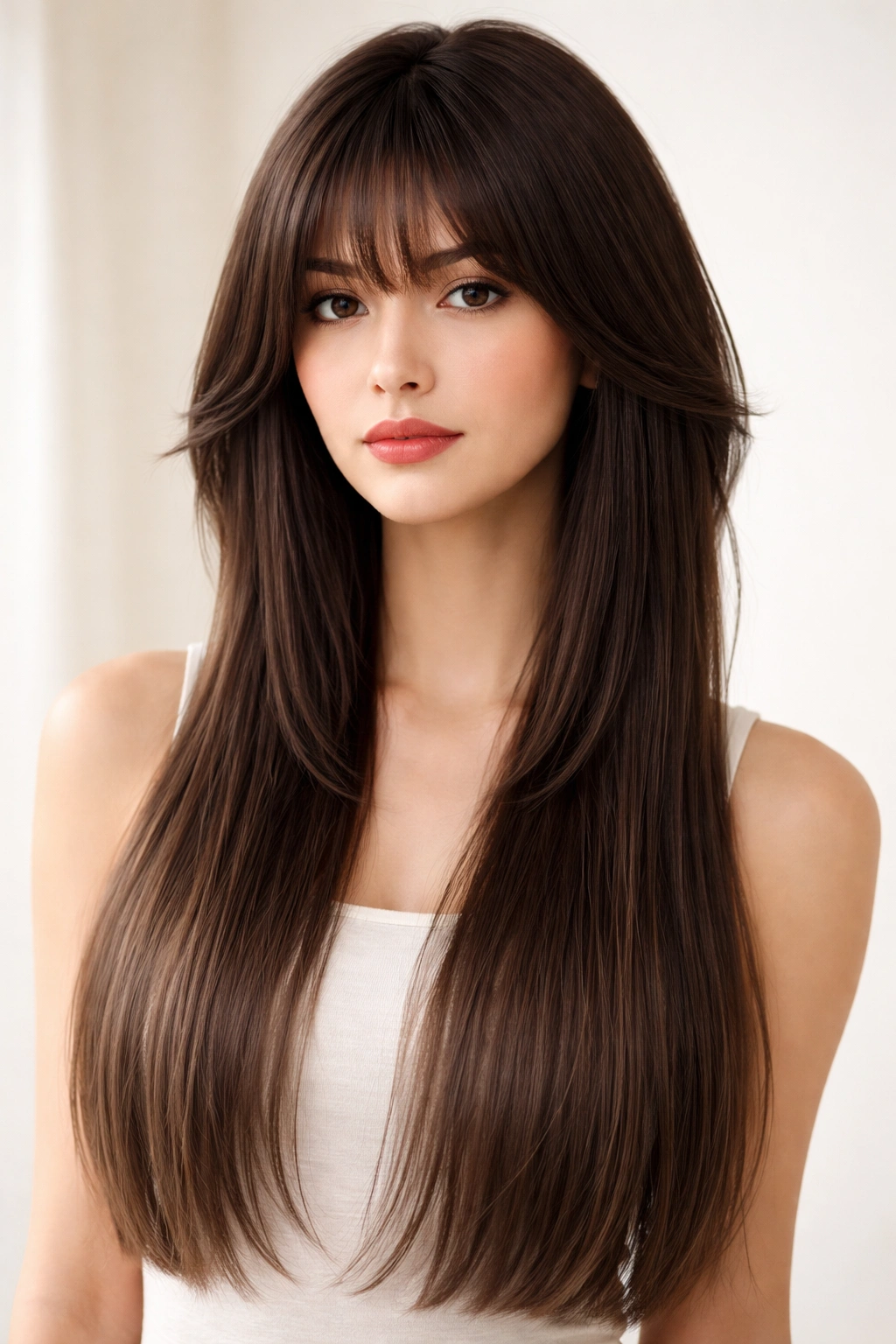
This variation takes the jellyfish concept but softens the contrast between top and bottom. Instead of a dramatically short underneath, you’re working with longer, straighter underneath layers—maybe only 3-4 inches shorter than the longest top layers. This creates a more subtle jellyfish effect that reads as modern layering rather than an extreme cut.
What Makes This Version More Wearable
This is the “everyday” jellyfish for people who want the benefits of the cut without the dramatic shape change. The more subtle length variation means there’s less obvious texture difference, fewer pieces sticking out at odd angles, and a more cohesive overall silhouette. It still creates dimension and movement, but in a quieter way that works across more professional and conservative settings.
Styling Approach
- This cut truly shines with minimal styling—straight hair looks polished and intentional without any heat tools
- Air-drying works beautifully; the layers dry in a naturally voluminous way without looking choppy
- Blow-drying straight creates a sleek, put-together appearance; blow-drying with slight curves adds softness
- Less product-dependent than other jellyfish variations—you can style this daily without product, though texturizing spray enhances movement
- Very low-maintenance trim schedule: every 8-10 weeks is often sufficient since the shape isn’t as intricate
Pro tip: This cut actually improves as it grows out. After your first trim, let it grow 6-8 weeks before the next cut—you’ll find a sweet spot where the layers are longer and even more voluminous than immediately after the initial cut.
6. Jellyfish with Extreme Volume at the Crown
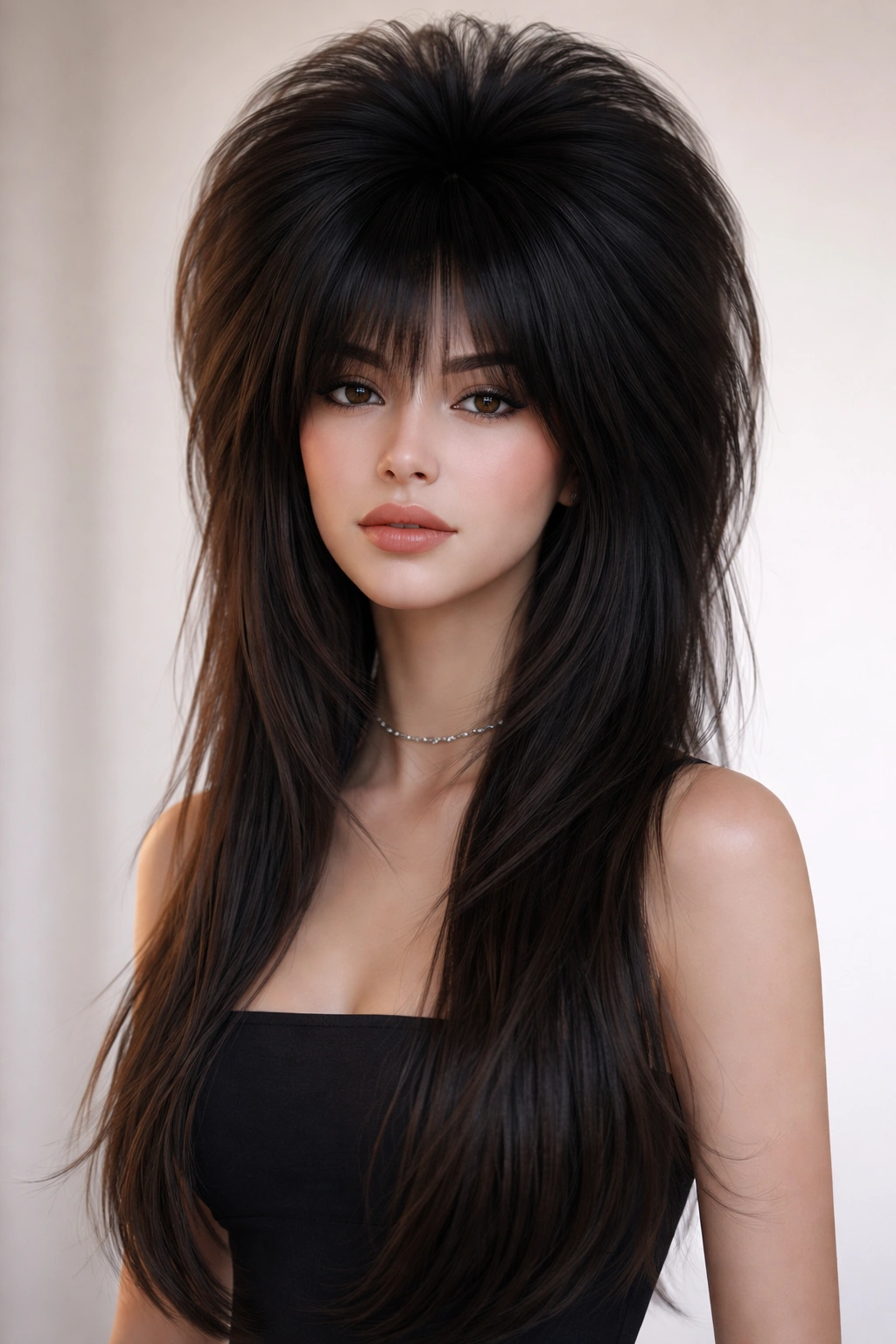
This version maximizes layering at the crown and upper head while gradually transitioning to longer, straighter lengths toward the mid-lengths and ends. The result is explosive volume at the top that makes the silhouette feel wider and more dramatic, while the tapered underneath prevents the back from feeling too heavy.
Why This Approach Creates Impact
If you have straight hair that sits flat against your head no matter what you do, this cut works specifically to solve that problem. By layering heavily at the crown, you create distance between each section of hair, which makes the whole head look fuller and more voluminous. This cut is especially flattering for people with longer faces, since the horizontal volume at the crown helps balance vertical length.
Real-World Styling
- Requires blow-drying to look its best—air-drying won’t create the crown volume naturally
- Use a blow dryer with a concentrator nozzle and blow-dry roots upward and backward to maximize crown height
- A volumizing spray or lightweight texturizing product at the roots helps sustain volume throughout the day
- The longer underneath lengths still style effortlessly, so you’re not dealing with high-maintenance choppy pieces everywhere
- Trims every 6-8 weeks maintain the voluminous shape
What to watch for: If you have very fine, thin hair, extreme crown layering can sometimes backfire and make hair look sparse rather than voluminous. In that case, ask your stylist for moderate crown layering instead of extreme.
7. Jellyfish with Curtain Layers and Center Part
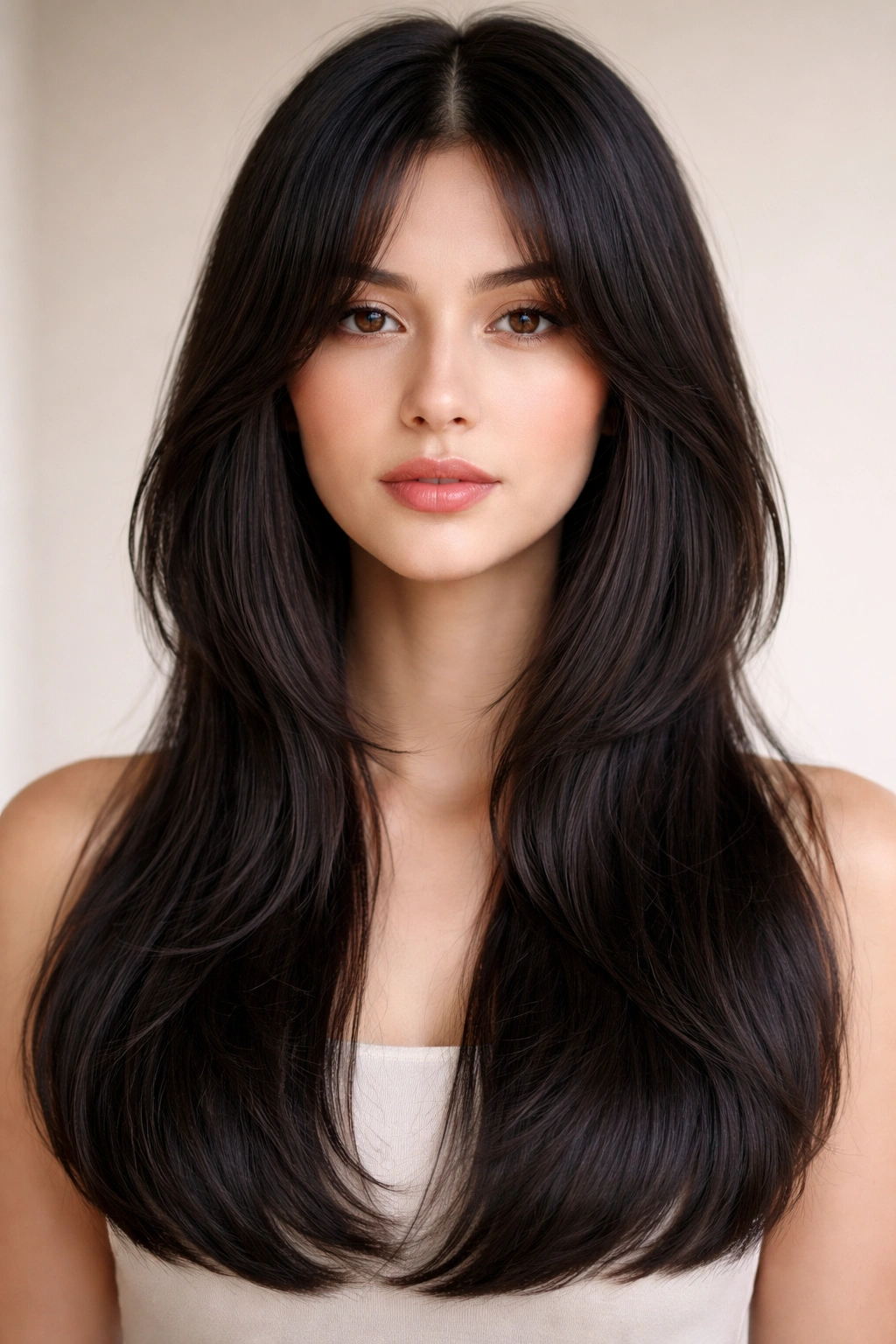
This variation combines the jellyfish silhouette with soft curtain layers that frame the face on both sides, usually styled with a center part. The layers are designed to curve slightly inward toward the face rather than fall straight, creating a gentle, face-framing effect while still maintaining that shorter underneath for the signature jellyfish shape.
The Appeal of This Combination
Center-parted, curtain-layered hair has a timeless, sophisticated quality that works across age ranges and personal styles. Paired with the jellyfish’s voluminous underneath, you get a cut that feels both classic and modern. The face-framing layers draw attention to the eyes and cheekbones, while the volume throughout prevents the look from feeling flat or severe.
How to Wear and Maintain This Cut
- The curtain layers work beautifully with straight hair that has natural movement or slight waves—air-drying often creates soft curves naturally
- Blow-dry with a round brush to enhance the inward curve of the layers, or flat iron for a sleeker, straighter version
- A center part is easy to maintain: just blow-dry or part your hair with a comb when it’s wet
- The overall cut feels polished and intentional even without heat styling, though blow-drying elevates it
- Trim every 6-8 weeks to maintain the curtain shape and shorter underneath
Quick facts:
- Creates a younger, softer aesthetic than other jellyfish variations
- Works beautifully with face-framing color or highlights, which emphasize the layers
- The inward curve of the layers can create a slimming effect on wider face shapes
8. Jellyfish with Razor-Cut Texture Throughout
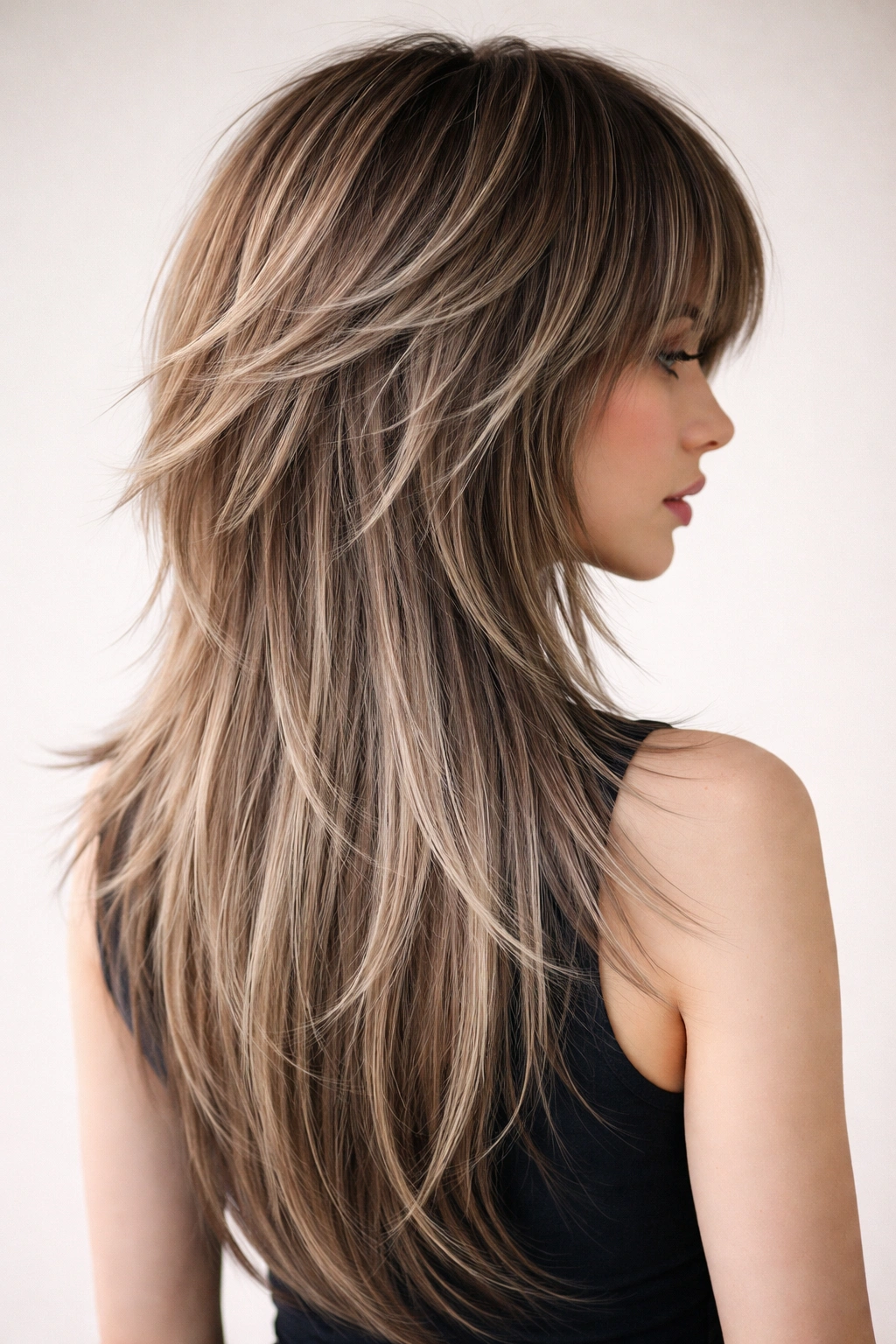
This is the version for people who want maximum texture and movement without restraint. The entire cut—top layers, shorter underneath, everything—is cut with a razor rather than scissors, creating pieces throughout rather than solid, blunt lines. This gives you a shaggy, intentionally textured appearance that reads as cool and effortlessly stylish.
Why Straight Hair Benefits From Razor Cutting
Straight hair can sometimes look severe or blunt when cut with traditional scissors alone. Razor cutting breaks up those blunt lines and creates natural-looking graduation and texture. On straight hair, razor-cut pieces create movement and dimension that’s visible even without styling, and with texturizing products, they look absolutely dynamic.
The Reality of Styling This Cut
- Definitely requires styling products—sea salt spray, texturizing spray, or light styling cream to really show off the razor-cut texture
- Blow-drying is highly recommended to direct the texture and prevent the pieces from looking matted or undefined
- The shaggy, textured quality reads best with slightly undone styling—don’t aim for polished perfection
- You’ll love this cut if you enjoy the “I woke up like this but actually I spent 10 minutes on my hair” aesthetic
- Trims every 5-6 weeks keep the razor-cut texture sharp and prevent the cut from growing out into a formless, overgrown appearance
Worth knowing: Razor cutting is more aggressive on the hair and can increase frizz and breakage compared to scissors, especially on bleached or color-treated straight hair. Make sure you’re deep conditioning regularly and using a heat protectant if you blow-dry frequently.
9. Jellyfish with Subtle Grading (No Heavy Layers)
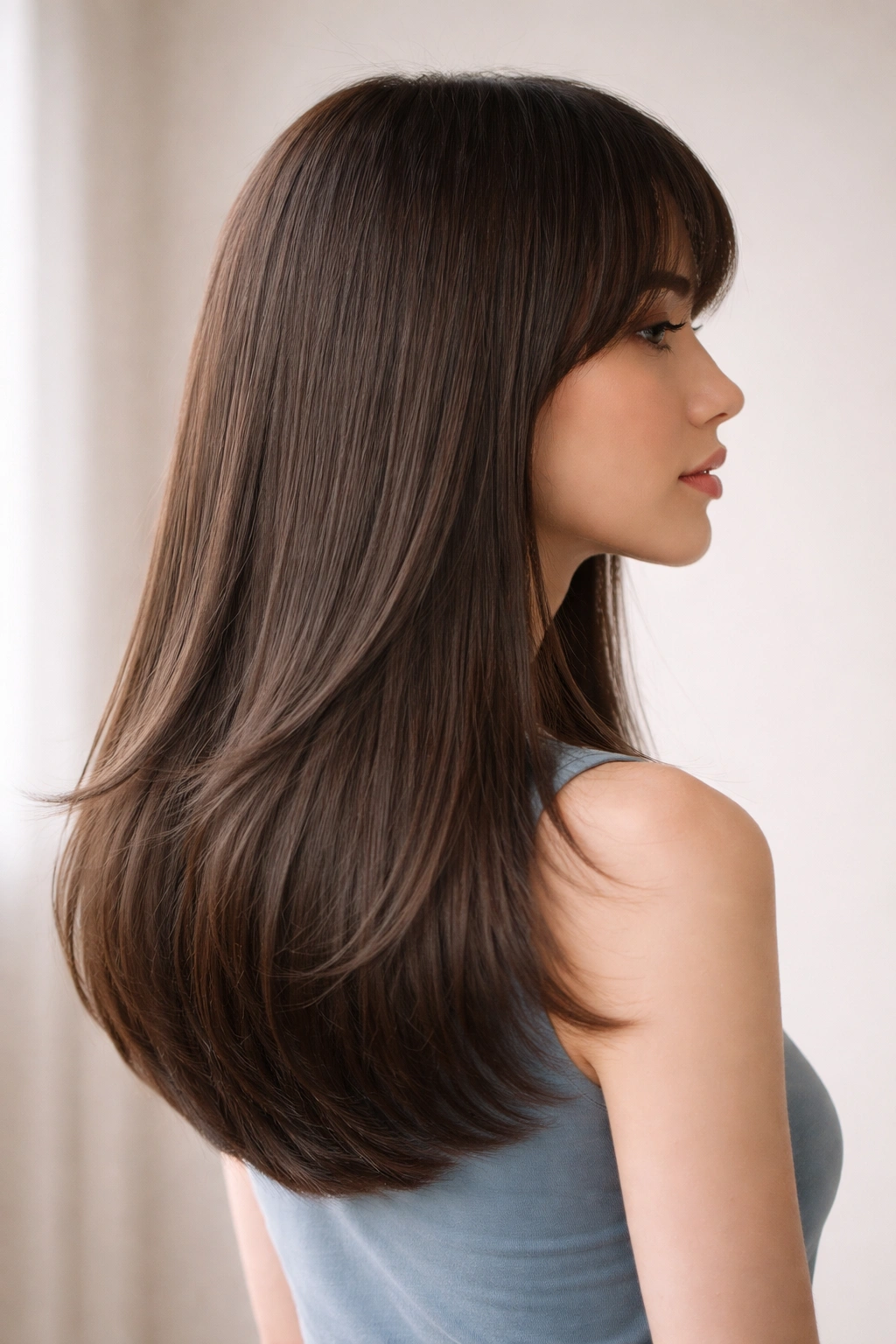
This refined version takes the jellyfish concept but removes the choppy or heavily layered element. Instead, you’re working with subtle, gentle grading that creates the silhouette without obvious layer lines. The cut looks almost like a standard long haircut at first glance, but the graduated length creates that signature jellyfish dimension.
What Makes This Approach Special
If you love the idea of a jellyfish cut but worry that obvious layers might not suit your lifestyle, work environment, or personal style, this version bridges that gap. The subtle grading means the cut reads as sophisticated and subtle rather than trendy or high-maintenance. You get the volume and shape benefits without the obvious texture.
Styling and Care
- This cut looks effortlessly polished with minimal styling—air-dry for a natural look or blow-dry for intentional movement
- Straight hair shows off the grading beautifully, especially when blown dry smoothly
- No special styling products required, though a light texturizing spray can emphasize the dimension if you want it
- Very wearable in professional settings where more textured or obviously layered cuts might feel out of place
- Trims every 8-10 weeks maintain the subtle grading
Pro tip: Ask your stylist to use a combination of scissors and point-cutting rather than razor cutting for this version. This creates grading without the texture that razor cutting adds, giving you a more refined final result.
10. Jellyfish with Heavily Textured Bangs and Choppy Underneath
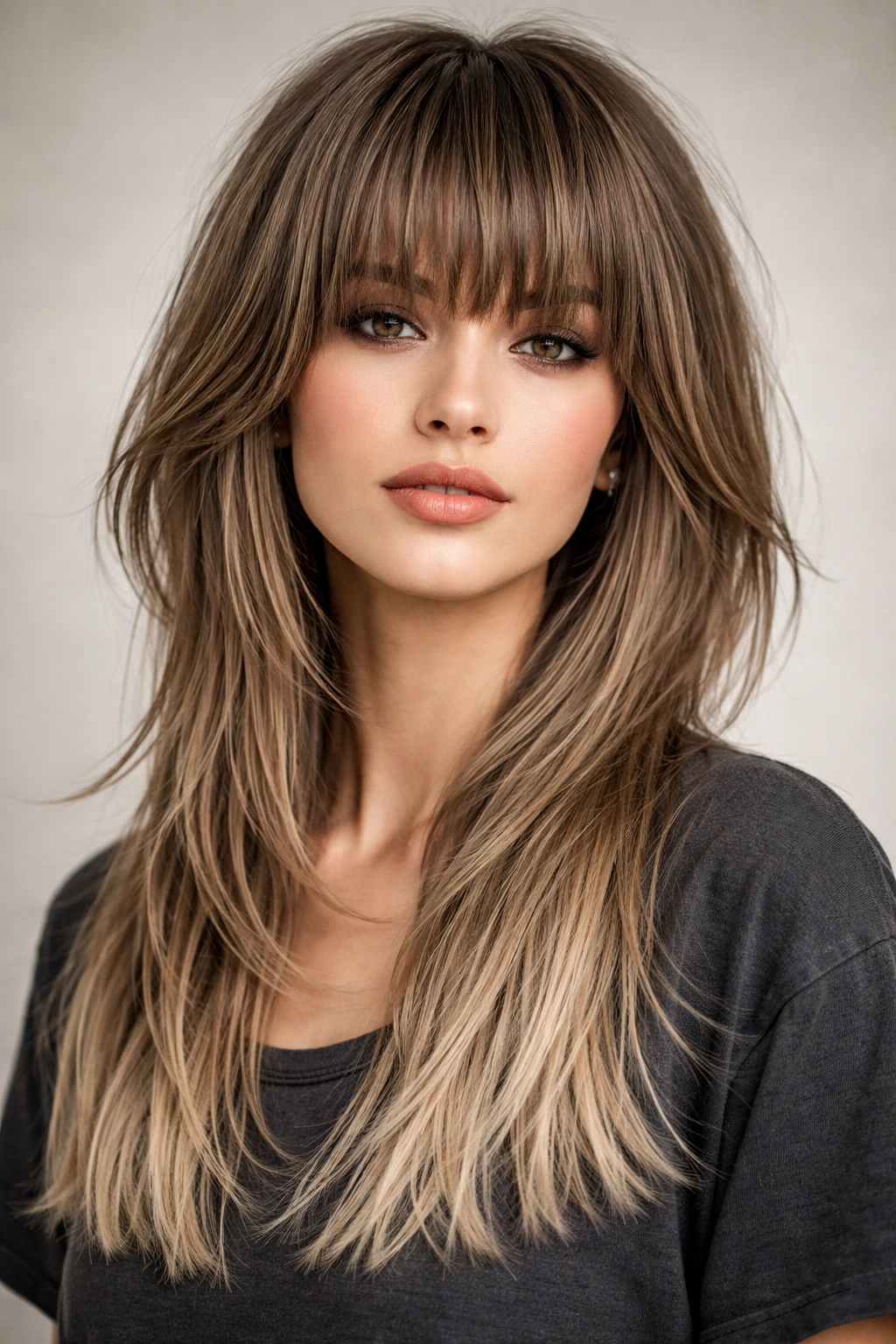
This is the most fashion-forward interpretation: textured, choppy bangs that are clearly a separate element from the rest of the cut, paired with an aggressively choppy, textured underneath. The longer top layers remain relatively smooth and intentional, but everything else is deliberately fragmented. It’s edgy, modern, and absolutely makes a statement.
The Bold Energy of This Variation
This cut is unapologetically trendy and requires confidence to pull off. The combination of textured bangs and choppy underneath creates a visually complex silhouette that demands attention. It’s the jellyfish cut for people who want their hair to be a focal point of their appearance rather than a background element.
Maintenance and Styling Reality
- This is the highest-maintenance version of the jellyfish cut in terms of styling
- Bangs need trimming every 2-3 weeks to maintain the textured, choppy appearance
- Blow-drying with texturizing products is practically essential to make this cut look intentional rather than messy
- Sea salt spray, dry shampoo, or texturizing mousse become part of your regular styling routine
- Trims every 4-6 weeks keep both the bangs and the choppy underneath sharp and defined
- This cut looks noticeably different if you wear your hair fully air-dried versus blow-dried with product
Quick facts about this cut:
- Works beautifully with bold color, especially multi-dimensional shades that emphasize the texture
- Suits people with confident personal style who enjoy trend-forward hair
- The textured bangs can feel edgy or playful depending on how you style the rest of your hair
- Transition in or out of this cut requires patience, as the textured bangs need to grow out substantially before they can be incorporated into longer layers
Final Thoughts
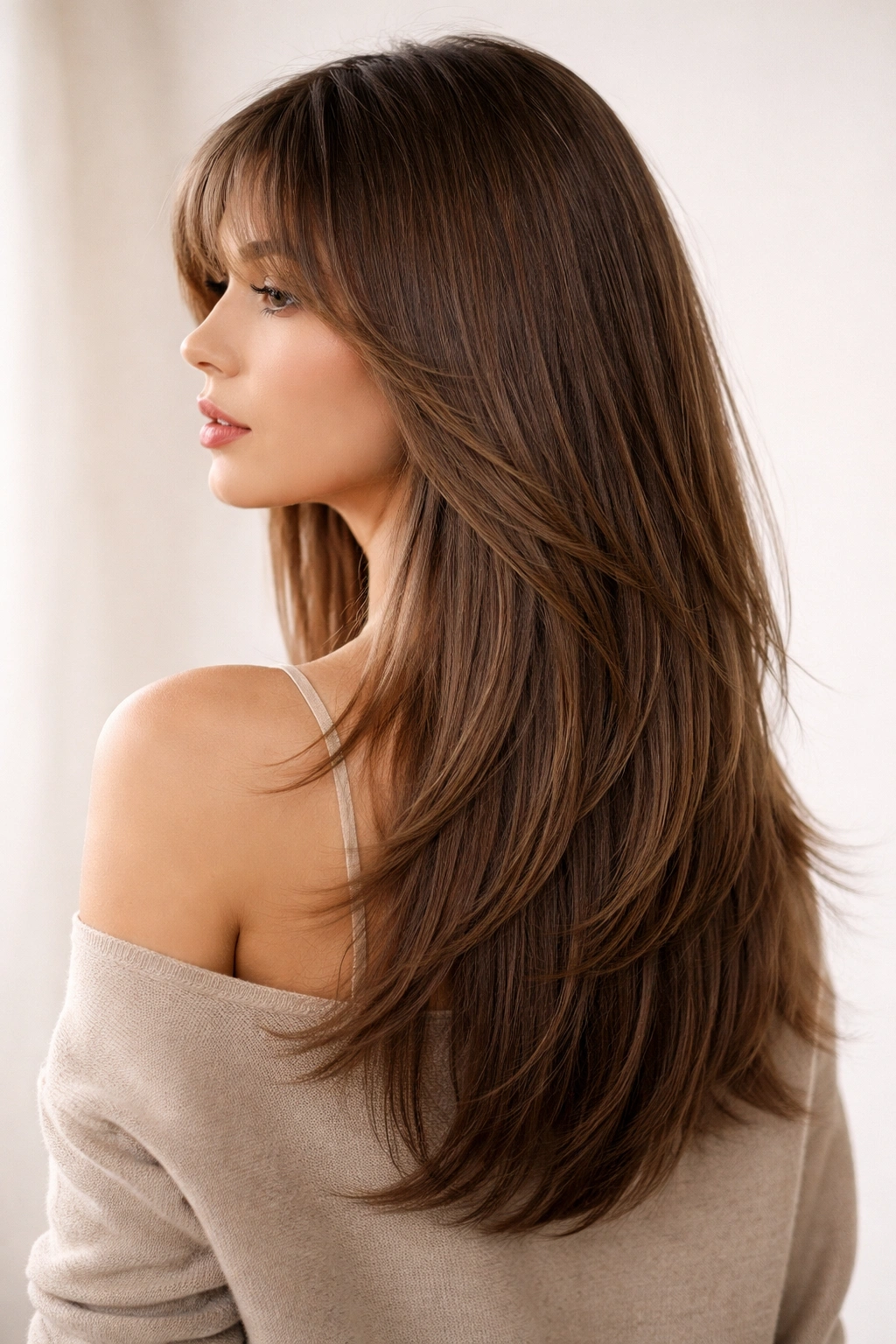
The jellyfish cut has earned its popularity because it genuinely solves real problems for people with straight hair—it creates dimension and movement without requiring you to curl or wave your hair daily, and it works across multiple styling preferences, from ultra-polished to intentionally undone. The ten variations covered here represent the full spectrum, from subtle and professional to bold and fashion-forward.
The key to choosing your jellyfish variation is understanding your lifestyle, how much styling time you’re willing to invest, and what overall aesthetic appeals to you. The classic wispy version offers timeless appeal with minimal maintenance. The textured and choppy versions create visual drama and require styling products and heat tools. The versions with bangs make bolder statements and demand more frequent trims. And the subtle, graded versions bridge the gap between a dramatic layered cut and something more refined and understated.
Straight hair is actually the ideal texture for showing off a jellyfish cut because the clean lines and dimension are immediately visible without the distraction of natural curl or wave. Work with a stylist who understands how to cut for straight hair specifically—ask about point-cutting, texturizing shears versus straight razors, and how they’d approach each section. Bring reference photos of the exact variation you’re drawn to, discuss your styling habits honestly, and don’t hesitate to ask how often you’ll need trims to maintain the shape. With the right cut and a few minutes of styling effort a few times a week, you’ll have a hairstyle that looks intentional, modern, and perfectly suited to straight hair.
