



Blonde hair paired with straight styling offers a timeless appeal that flatters a range of face shapes and skin tones. The contrast between fair hair color and sleek, geometric lines creates a polished, intentional look—whether you’re going for effortlessly chic or deliberately editorial. The best part? Straight hair is genuinely versatile when you know how to leverage different cuts, lengths, and styling techniques to match your face shape, lifestyle, and personal aesthetic.
The key to finding your blonde straight hair look isn’t just about picking a style you’ve seen in a magazine. It’s about understanding how length, texture at the ends, placement of layers, and color dimension work together to frame your features and suit your daily routine. A look that photographs beautifully at a salon might feel high-maintenance at home if you don’t know the styling shortcuts. This guide walks you through ten distinct blonde straight hair looks—each one capable of transformation—so you can identify the cut, length, and approach that actually works with your hair type and lifestyle.
Whether you have naturally straight hair or you’re willing to spend time with a straightening iron, these looks range from wash-and-wear minimal to deliberately statement-making. Most can be achieved with basic styling tools and a good blow-dry technique. The styling commitment varies too: some of these looks improve with daily attention, while others thrive on day-old, lived-in texture.
1. Long Sleek Straight with Invisible Layers
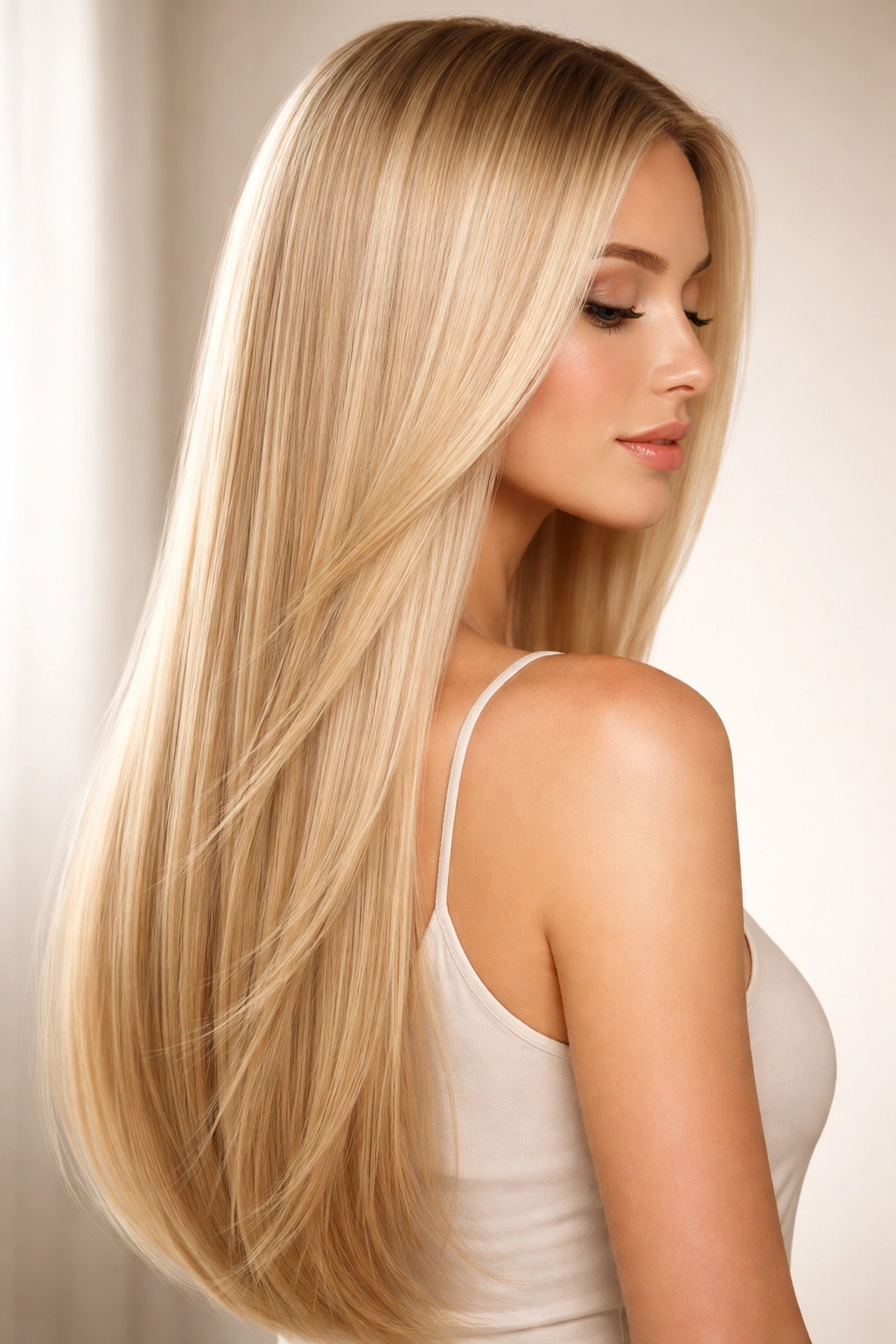
Long, glossy straight hair in blonde is an iconic look, but the real secret is invisible layering that removes bulk while keeping the blunt effect that makes straight hair striking. Invisible layers are feathered so subtly throughout the length that you only notice them when the hair moves—they add movement and prevent that ultra-heavy, helmet-like appearance that thick straight hair can sometimes take on.
Why This Look Works
Invisible layers keep your long straight hair looking bouncy and intentional rather than flat and weighed down. The layers are cut at angles inside the hair rather than creating visible lines on top, which means your silhouette stays sleek while the interior structure does the work of adding dimension and flow. This is especially important if you have thick, dense straight hair—the layers prevent the ends from looking blunt and tired after a few months of growth. A blonde color with subtle dimension (think honey highlights woven through a lighter base) catches light differently at each layer, making the style feel alive rather than flat.
How to Style and Maintain
- Apply a heat protectant spray from roots to ends before blow-drying, then use a paddle brush to smooth the hair straight with your blow dryer on a medium-high setting
- For extra shine, finish with a quick pass of the blow dryer on cool setting to seal the cuticle
- Use a smoothing serum or anti-frizz cream on damp hair before blow-drying for a polished finish
- Trim every 6-8 weeks to maintain the blunt ends and keep the invisible layers fresh
- On day-two hair, a light texturizing spray adds grip without making the look intentionally tousled
2. Blunt Bob in Platinum Blonde
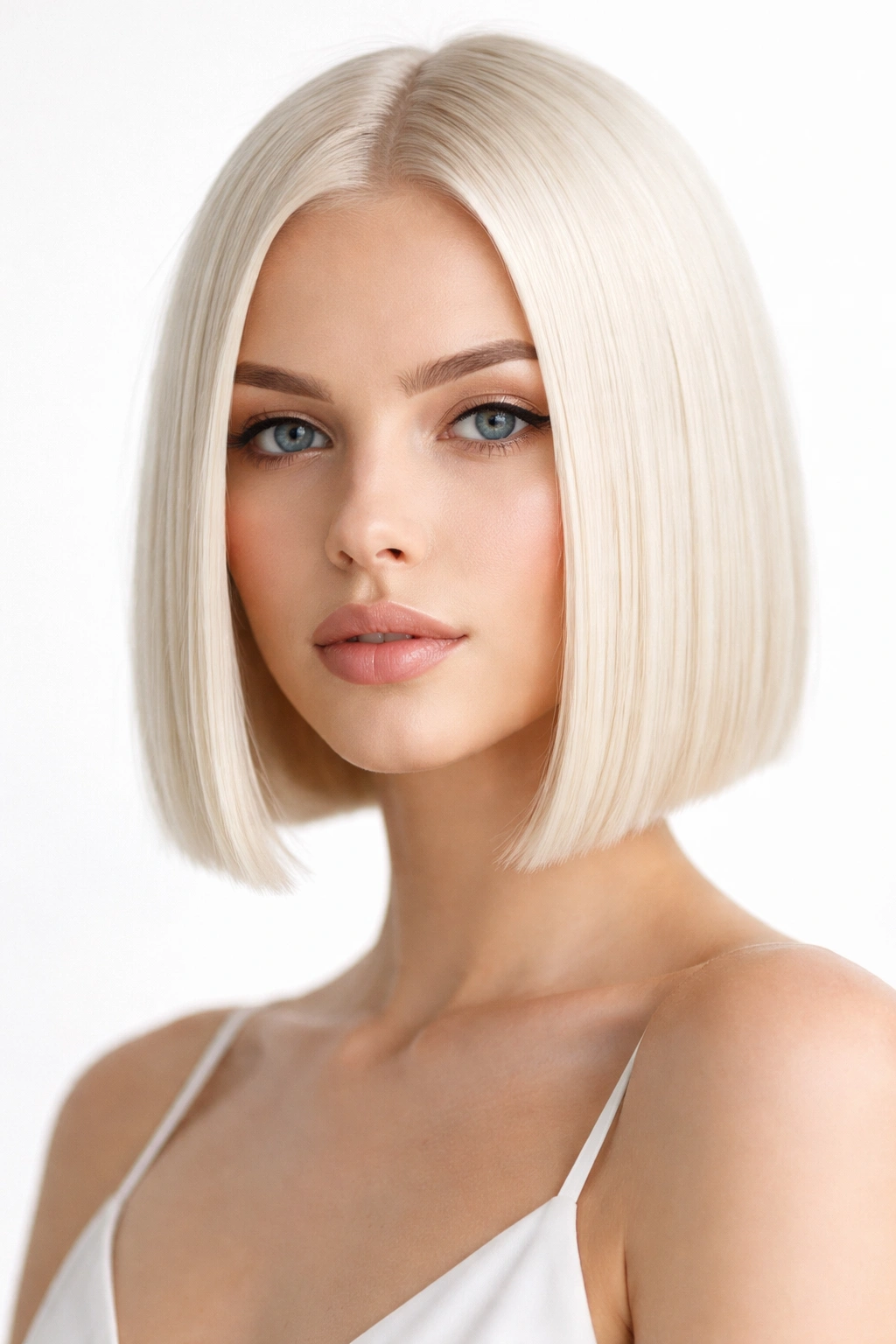
A blunt-cut bob sits right at or just below the jawline, with no layers and zero graduation—the entire perimeter is the same length, creating a sharp, geometric silhouette. In platinum blonde, this look reads as very intentional and fashion-forward. The severity of the cut is what makes it work; any waviness or loss of shape diminishes the impact, so this look demands either naturally straight hair or serious styling commitment.
The Power of Geometric Precision
The blunt bob’s appeal lies entirely in its lines and the precision of the cut. Platinum blonde amplifies this because the color is bold enough to support the architectural feel of the style. The cut should be so sharp that even the weight of the hair at the ends creates a clean line parallel to your jawline. This look suits oval, square, and heart-shaped faces particularly well because the blunt horizontal line either balances or intentionally complements your face shape. The shortness also means your features and bone structure become the focal point rather than the hair itself.
Styling Requirements and Frequency
- Blow-dry with a paddle brush, always in the same direction (down and slightly under at the ends)
- Use a lightweight smoothing balm to keep flyaways minimal
- Trim every 4-6 weeks without fail—blunt bobs don’t grow out gracefully; they become shapeless quickly
- Consider using a straightening iron if your hair has any natural wave, even slight
- This look requires daily styling; there’s no “wash and go” version that looks intentional
3. Long Straight Hair with Face-Framing Layers
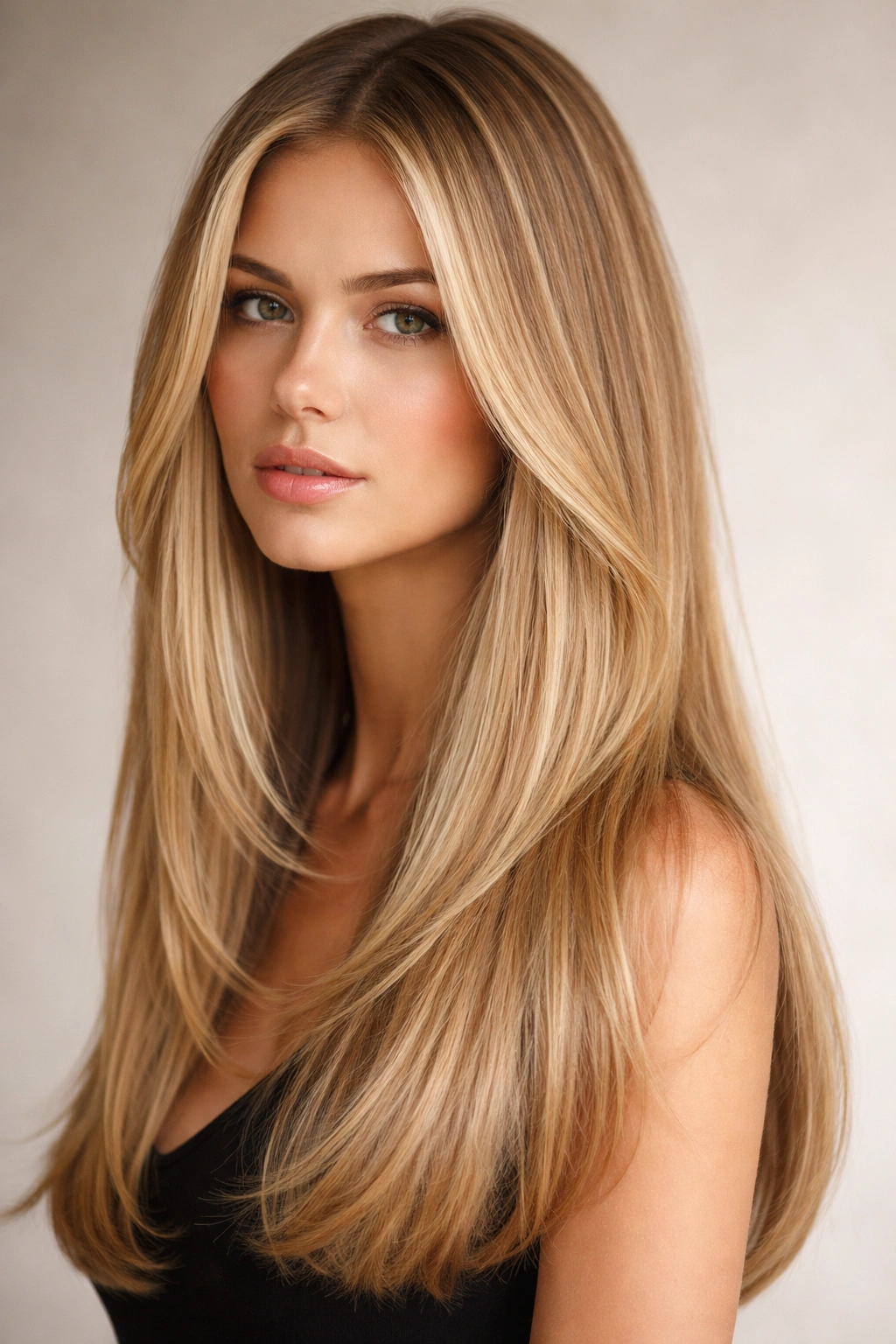
Face-framing layers start around cheekbone height and taper gradually as they move toward the back, creating movement around your face while keeping length in the back. These layers are visible (unlike the invisible layers in look #1)—they’re meant to be noticed because they create dimension and softness around the facial features. This approach works especially well if you have a longer face, strong jawline, or want to soften angular features.
Why Face-Framing Layers Flatter
Layers positioned to frame the face create the optical illusion of width across the cheekbones and around the eyes. Because they’re closer to your face, they catch light and create movement that draws attention upward to your eyes and bone structure. For blonde hair, face-framing layers mean you can play with subtle color placement—slightly warmer honey tones in the shorter front pieces, cooler ash tones in the longer back layers, creating depth that a single blonde shade can’t achieve alone. The movement in these shorter pieces also makes the style feel more effortlessly textured, even when styled completely straight.
Cutting and Styling Approach
- Ask your stylist for layers that start at the cheekbone and gradually extend back; the front pieces should be noticeably shorter than the back
- Blow-dry the face-framing pieces forward and slightly away from the face to maximize the softening effect
- Use a curling iron or straightening iron on the shortest pieces to create a subtle bend away from the face (even slight movement improves the framing effect)
- These layers need trimming every 8-10 weeks to maintain definition around the face
- This look works beautifully with minimal daily styling—the layers do the visual work even when the hair is completely straight
4. Straight Hair with Curtain Bangs
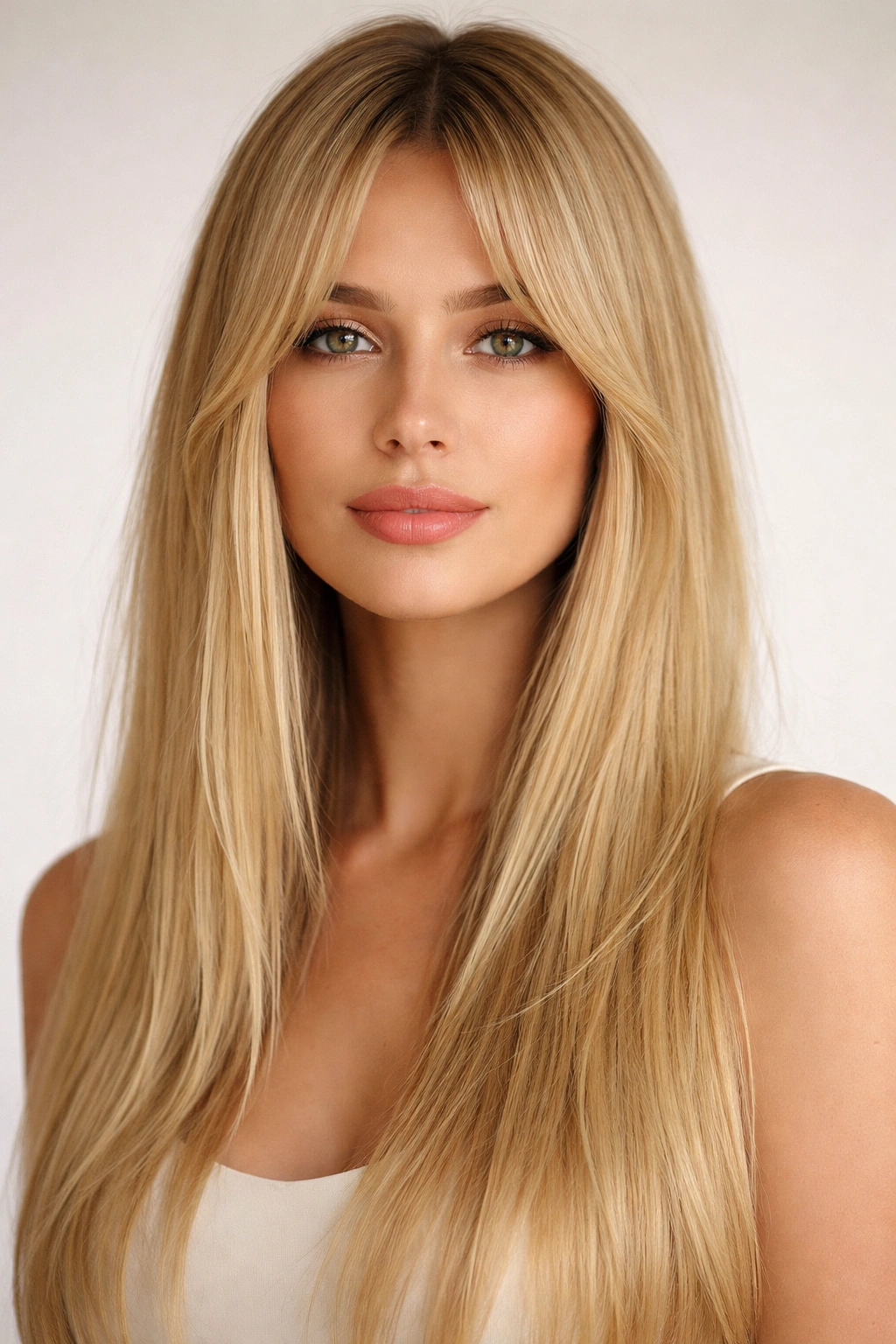
Curtain bangs sit at about chin length, parted down the middle, and sweep away from the face on either side. They work with longer straight hair to create a soft frame around the face while maintaining the length you want in the back. Curtain bangs have a distinctly retro-modern feeling, especially paired with blonde hair and a middle part—they evoke a relaxed, intentional aesthetic that doesn’t feel overly styled.
The Magic of Curtain Bangs with Straight Hair
Curtain bangs work specifically well with straight hair because the geometric lines of the cut show clearly against the smooth surface. The angle at which they fall away from the face creates an instant softening effect around cheekbones and jawline without requiring actual curls or waves. When you wear them completely straight, they feel modern and clean. The middle part that curtain bangs require also tends to be flattering across multiple face shapes because it doesn’t emphasize width or height the way a side part or no part might. In blonde, the simplicity of straight curtain bangs against a smooth blonde base feels almost Scandinavian in its minimalism.
How Curtain Bangs Change Your Daily Routine
- Blow-dry the bangs with a round brush, sweeping them away from the center part on either side
- On non-wash days, use a flat iron to re-straighten the bangs and refresh the center part
- The shorter pieces need trimming every 6-8 weeks or they become too long and stop framing the face
- This look pairs beautifully with straight hair at any length, but looks especially striking on hair longer than shoulder-length
- Curtain bangs can hide a wider forehead or soften a strong brow bone, making them flattering for multiple face shapes
5. Honey Blonde Straight Hair with Subtle Dimension
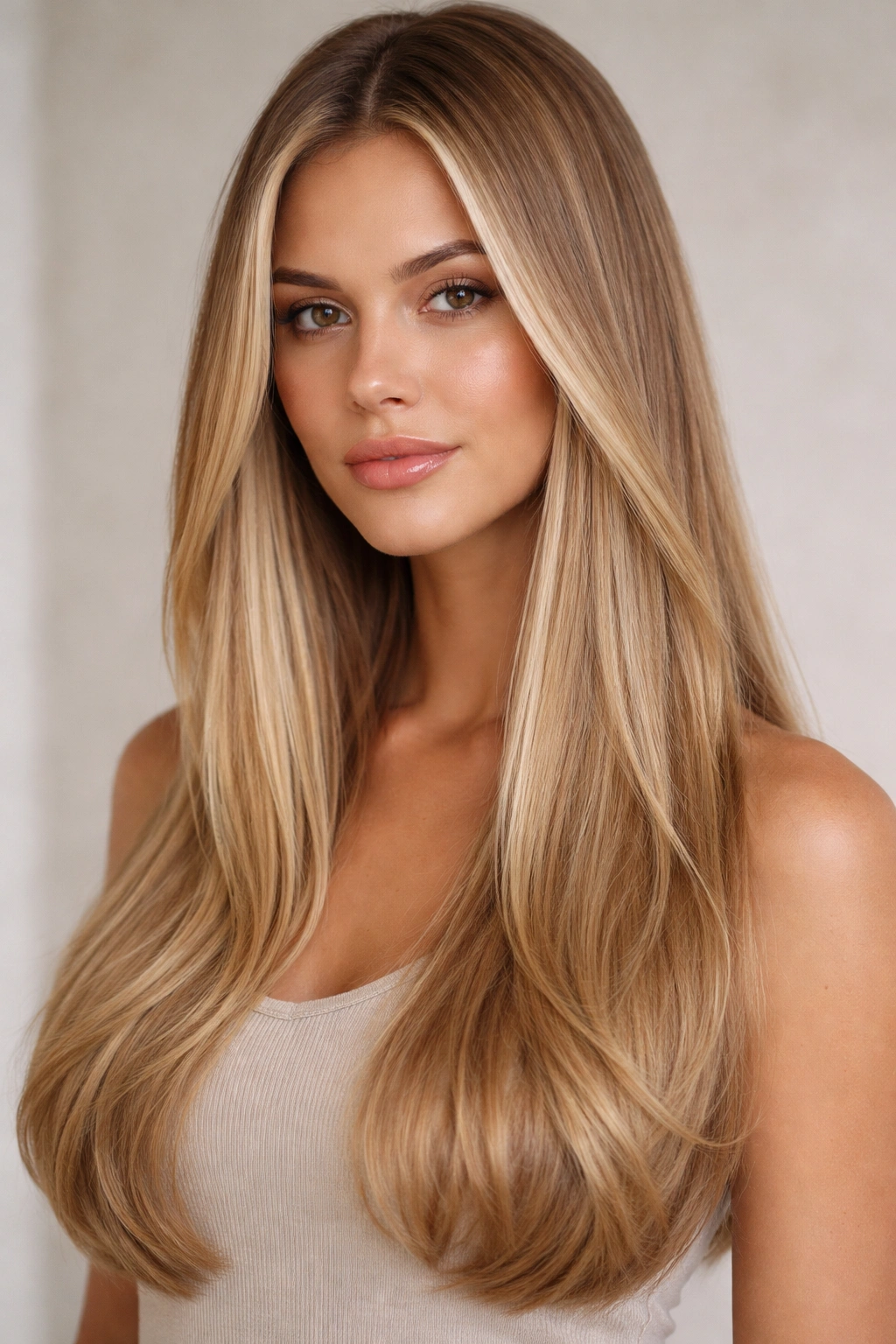
Rather than a flat, single-shade blonde, this look incorporates dimension through multi-tonal blonde coloring—perhaps a warmer honey or caramel base with cooler platinum or ash-blonde highlights woven throughout. On straight hair, the dimension is especially visible because the smooth surface shows every color shift clearly. The color creates visual interest that a single blonde shade might not achieve, while the straight styling keeps the overall look polished and intentional rather than chaotic.
Why Dimension Works on Straight Hair
Straight hair is an excellent canvas for dimensional color because it doesn’t diffuse or blend colors the way texture does. Each tone reads distinctly, creating depth that makes the hair appear thicker and more dimensional. Honey tones warming through caramel and chocolate-blonde shadow roots ground the style and create an illusion of movement. Lighter platinum or ash tones placed through the mid-lengths and ends catch light dramatically. This interplay between warm and cool tones is what keeps the look from feeling flat or one-dimensional.
Coloring and Maintenance
- Dimensional blonde requires a professional application to place warm and cool tones strategically
- Root shadow (darker tones through the first inch or so of roots) is essential for low-maintenance upkeep and a modern appearance
- Touch-ups every 6-8 weeks maintain the dimension without a full re-color each time
- Use color-safe, sulfate-free shampoo and conditioner to prevent tone from washing out
- Purple-toning shampoo used once weekly helps cool blonde tones and prevent brassiness
- The straight styling means the dimension is the star—keep the cut simple so color remains the focus
6. Platinum Blonde Long Straight with Blunt Ends
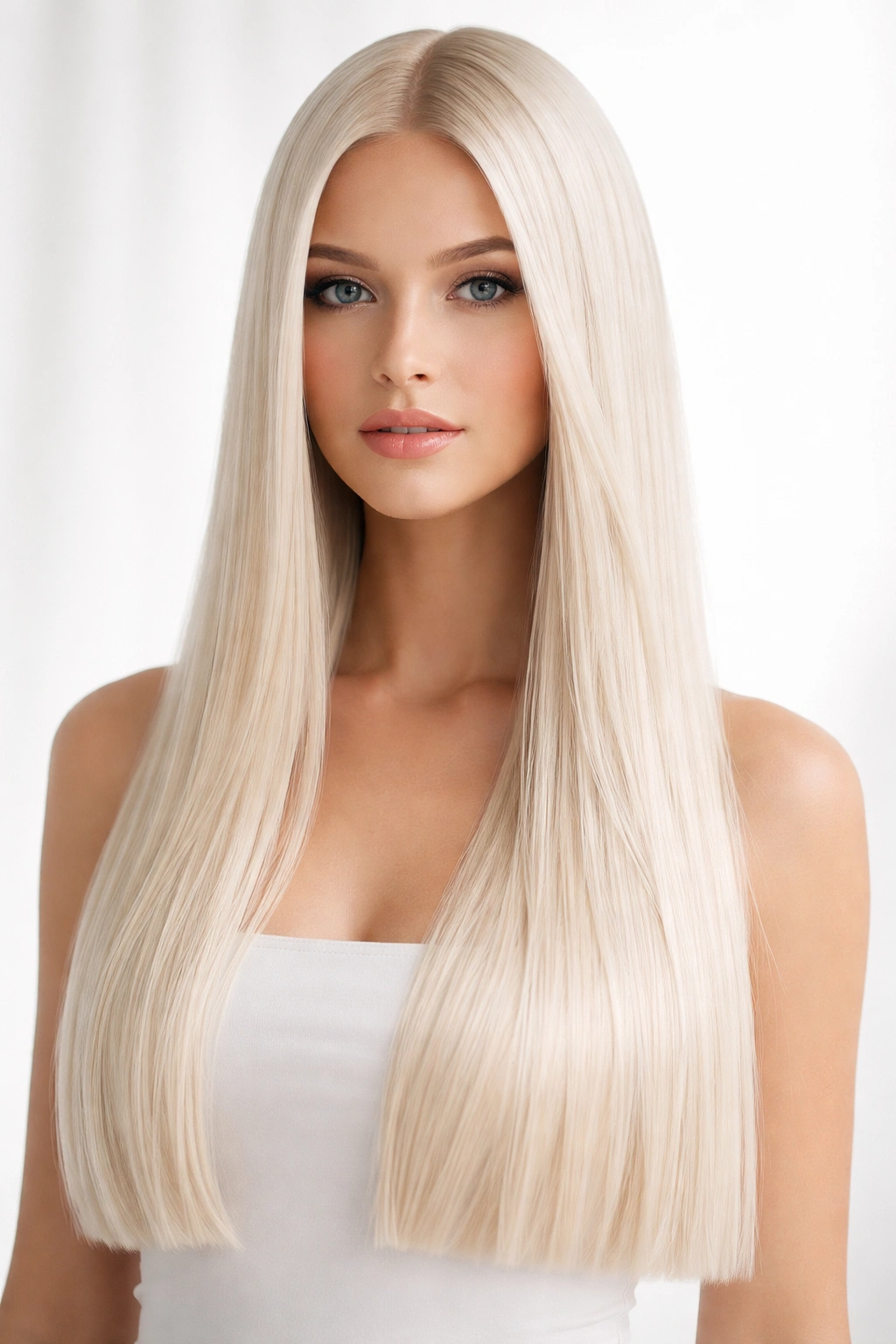
This is the iconic look of straight blonde hair taken to its most dramatic extreme: platinum or icy blonde, length past the shoulders, with absolutely blunt, even ends. No layers, no texture, just pure sleek length and color contrast. This look is statement-making and requires a very specific aesthetic preference and styling commitment, but when it works, it’s undeniably striking.
The Confidence Required
Long, platinum straight hair with blunt ends reads as very intentional and confident. It’s not a timid choice. This look suits people who are willing to be visible and noticed. The platinum color amplifies the look’s boldness—it’s not a soft, subtle blonde but a cool, icy tone that photographs dramatically and reads as fashion-forward. This is the look you see on editors, stylists, and people who make their appearance a deliberate statement. It requires commitment because it needs regular trims (every 6-8 weeks) to keep those blunt ends sharp, and it demands daily styling to maintain the sleek appearance.
Styling and Color Maintenance
- Blow-dry with a paddle brush for maximum smoothness, using a cool shot at the end to seal the cuticle
- A lightweight smoothing cream applied to damp hair before blow-drying prevents frizz
- Use a straightening iron as a touch-up tool if any waves emerge during the day
- Purple-toning shampoo is non-negotiable with platinum blonde to prevent brassiness and yellowing
- Color touch-ups every 4-6 weeks keep the platinum true; it fades noticeably over time
- Invest in a quality heat protectant spray used every single time you style
7. Shoulder-Length Straight Cut with Subtle Texture at the Ends
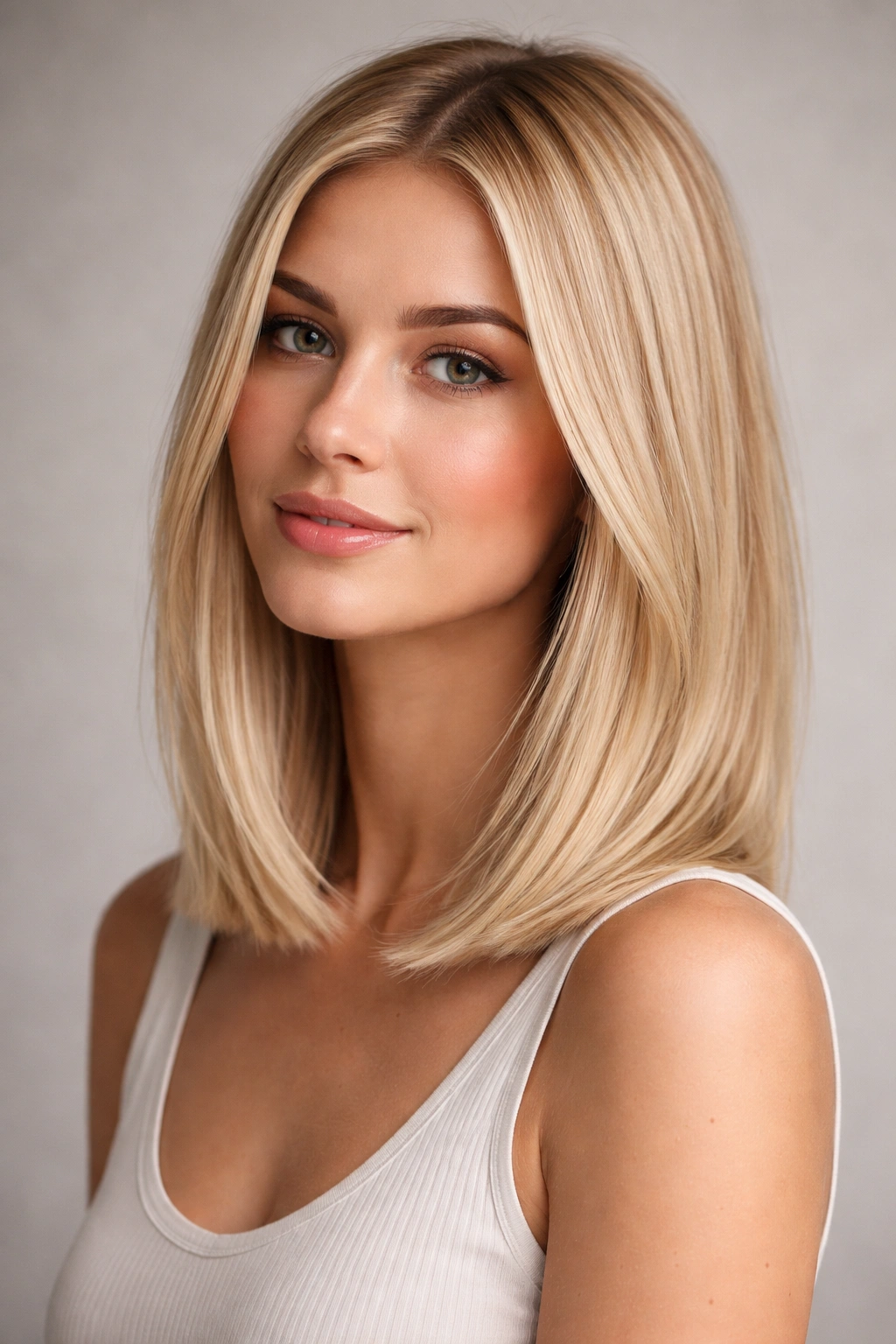
This look hits right at the shoulder, with a simple, clean cut that includes very subtle point-cutting or micro-layering at the ends. The texture is minimal—just enough to prevent the blunt-end heaviness while keeping the overall silhouette sharp and intentional. This length is the sweet spot for many people: long enough to feel feminine and versatile, short enough to be manageable and easy to style.
Why Shoulder-Length Works for Straight Hair
Shoulder-length straight hair is wonderfully practical because it’s not so long that it needs constant styling attention, but it’s long enough to braid, twist, or style up. The subtle texture at the ends prevents the look from feeling severe while the overall straightness keeps it feeling polished. This length also suits a wider range of face shapes than very short or very long hair does. For blonde hair, shoulder-length feels fresh and modern—it’s become a default length for people seeking a balance between statement and practicality.
Achieving the Right Texture
- Micro-layers or point-cutting create texture without visible lines; ask your stylist specifically for this technique
- Blow-dry straight with a paddle brush for a smooth base, then use a straightening iron on the bottom inch of ends to create just a hint of bend or texture
- A light texturizing spray applied to dry hair adds invisible grip and texture without disturbing the straight aesthetic
- Trim every 8 weeks to keep the texture and shape fresh
- This length works beautifully with a side part, a middle part, or worn tucked behind the ears
8. Short Straight Blonde Pixie or Crop
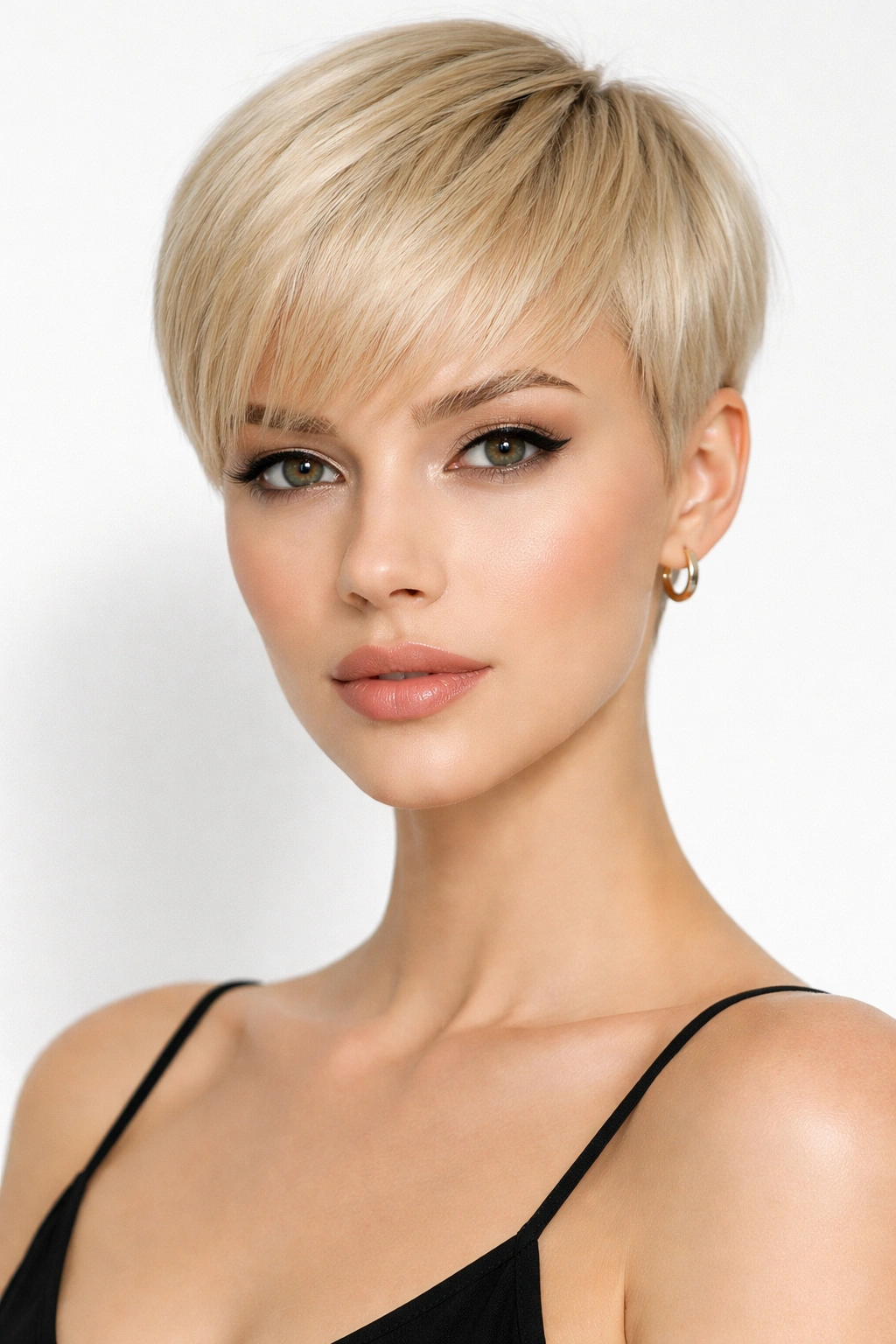
For the daring, a short straight cut—anything from a pixie to a modern crop that sits an inch or two longer on top—is the ultimate low-maintenance look for straight hair. Blonde is especially striking on very short hair because the color becomes the primary visual element. This look reads as confident, modern, and intentional; it’s the opposite of hiding in your hair.
The Minimalist Appeal
Very short straight hair in blonde is about pure simplicity. There’s no hair to hide behind, no styling tricks to cover up, just clean lines and color. This look suits people with strong bone structure, confidence, and an appreciation for minimalism. Maintenance-wise, it’s actually less demanding than you might think—you need a trim every 4-6 weeks to keep the shape sharp, but daily styling is minimal. A quick blow-dry with your fingers while applying a small amount of styling cream is typically all that’s required.
Styling Short Straight Hair
- Use a texture paste or matte pomade applied to the roots and through the mid-lengths to add grip and definition
- A light blow-dry with your fingers works better than a brush; short hair doesn’t need paddle-brush smoothing
- Avoid heavy smoothing products that can make short hair look slick and flat; instead use matte, light-hold options
- The color becomes central, so considering a dimensional blonde (rooted, warm, cool-toned) adds interest that length might provide
- This look is genuinely wash-and-go once you find the right styling products
9. Long Straight Hair with Deep Side Part
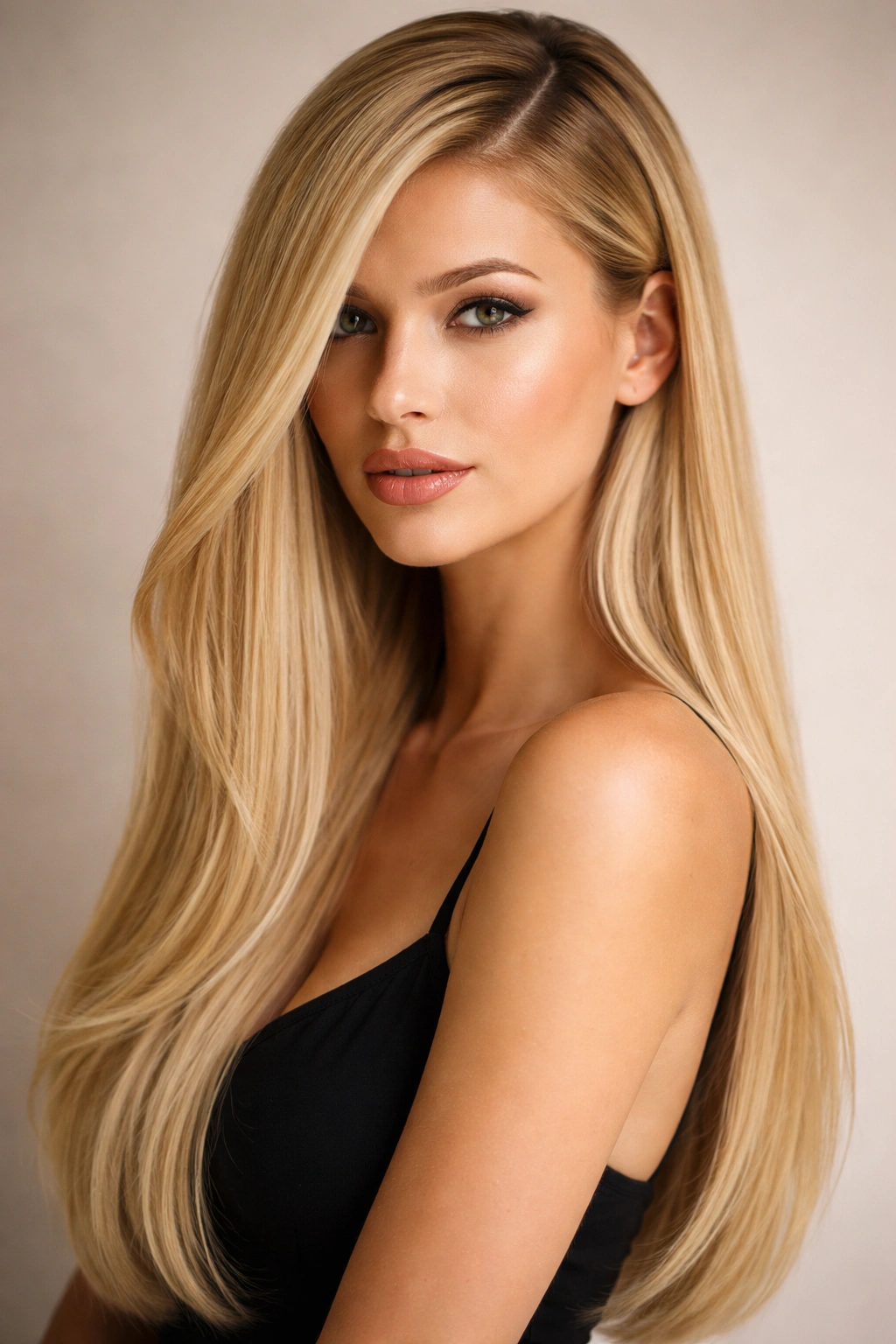
A deep side part—where the part is positioned significantly off-center, creating volume on one side and a sleeker, more dramatic line on the other—completely changes the way you perceive straight hair. In blonde, this creates visual asymmetry that can be exceptionally flattering because the side with more volume appears fuller and more dimensional. The side with less volume on top can actually elongate the face and create a slimming effect.
Strategic Visual Benefits
A deep side part is exceptionally flattering because it creates movement and interest within the constraints of straight hair. The asymmetry is inherently more interesting than a center or even side part. Blonde hair amplifies the effect because the lighter color catches light differently on the fuller side, creating dimension and movement. This part placement works especially well for people with wider faces or those seeking to create the illusion of more height and length. The deeper the part, the more dramatic the effect.
Achieving the Look
- Blow-dry your hair with a round brush, directing volume away from where your part sits
- Use a fine-toothed comb to create a clean, precise part line from your hairline back
- A texturizing or volumizing spray applied to the roots on the fuller side enhances the effect
- Blow-dry the fuller side with the dryer angled upward to maximize volume
- On the sleeker side, smooth everything down with a paddle brush and flat iron
- This look adapts beautifully to second-day hair as natural oils add smoothness to the sleeker side
10. Straight Blonde Hair with Razor-Sharp Undercut Detail
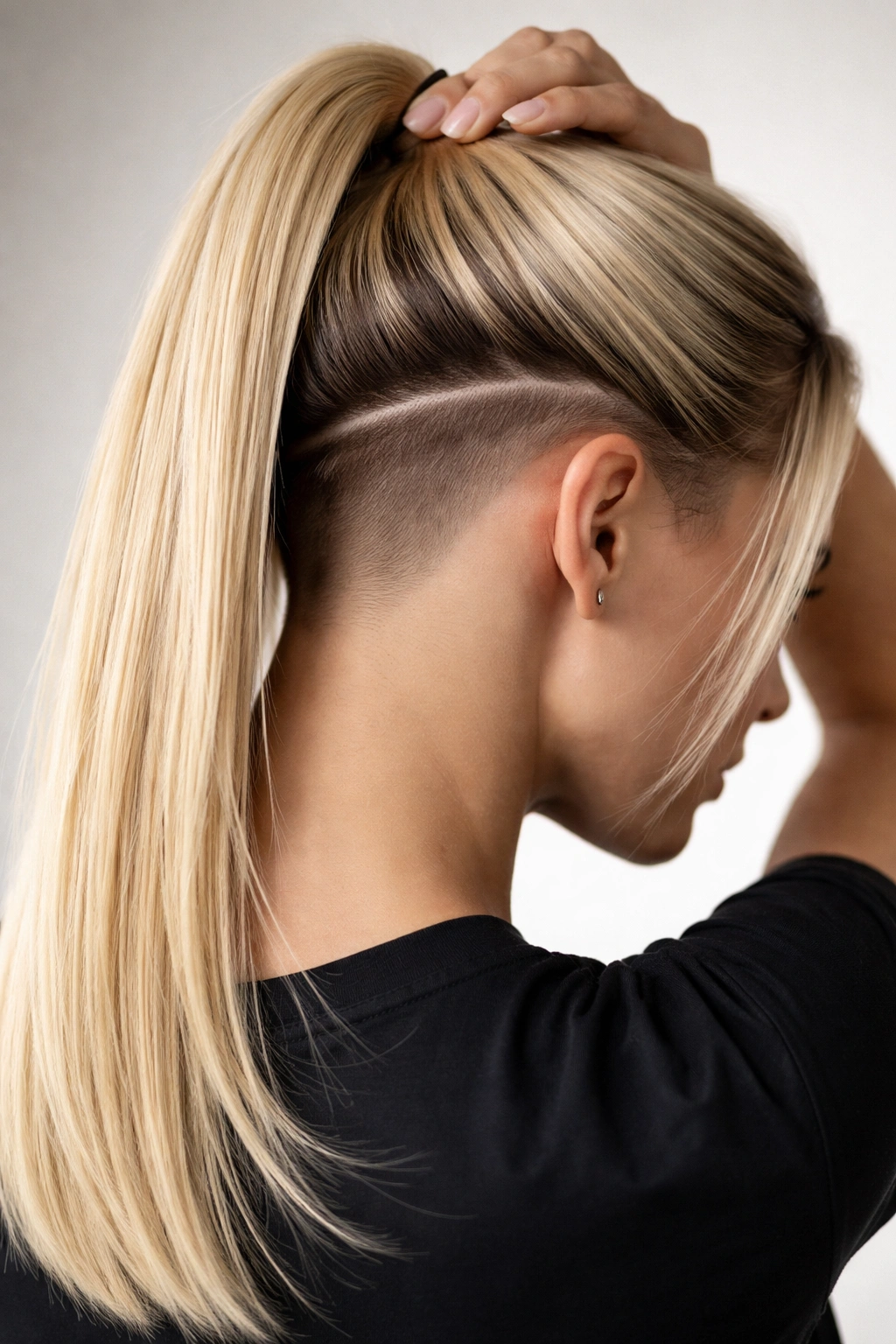
An undercut—where the hair underneath or on the sides is cut significantly shorter than the top layer—is a modern, fashion-forward approach to straight hair. When done subtly, it adds an unexpected textural element that breaks up the uniformity of very straight, long hair. When done boldly, it’s a statement. For blonde hair, an undercut can be hidden completely when worn down, revealing an edgy surprise element when styled up or swept to one side.
Modern Edge with Strategic Subtlety
An undercut on straight blonde hair works because it’s hidden when the hair is worn down but creates visual interest when you style the hair up, back, or in certain configurations. The contrast between the neat undercut and the straight length on top creates a deliberately modern aesthetic. For people who love the look of long, straight hair but want something unexpected underneath, an undercut delivers exactly that. The undercut can be positioned on the back of the head, on the sides, or even as a thin line at the nape—each creates a different visual impact.
Cut Maintenance and Styling
- The undercut section needs trimming every 4-6 weeks to maintain clean edges
- The longer top section can go longer between cuts (8-10 weeks) because its length disguises growth
- Wear the hair down in a sleek straight style for the classic look, then reveal the undercut with an updo or side-swept style
- Consider adding subtle design lines or fading within the undercut for extra visual interest
- Platinum or icy blonde works particularly well for undercuts because the color contrast makes the detail even more striking
Final Thoughts
The right blonde straight hair look is the one that aligns with both your face shape and your real-world styling capacity. Sleek, straight blonde hair photographs beautifully and projects polish and intention, but the look that works best is the one you’ll actually maintain. Some of these styles ask for frequent trims, regular color touch-ups, and daily heat styling. Others are genuinely low-maintenance once the cut and color are established.
Consider your daily lifestyle honestly. If you spend thirty minutes daily on hair, a platinum blunt bob with invisible layers might be perfect. If you prefer a faster routine, a shoulder-length cut with subtle texture at the ends and a dimensional honey blonde color requires less frequent upkeep and less daily styling time. The cut should work with your hair’s natural texture, not against it—even if you have naturally straight hair, a cut that respects your hair’s density and growth pattern will always look better than one that fights it.
Dimension in color creates visual interest that a single shade might not achieve, and on straight hair, this dimension reads especially clearly. Work with a stylist who understands your lifestyle and face shape, and don’t be afraid to bring multiple image references. The best result comes when you and your stylist share a clear vision of what success looks like for your hair and life, not just what looks stunning in a photograph.
