



Round faces have a beautiful natural softness, but finding the right haircut is key to creating the illusion of more angular, defined features. The goal with straight haircuts for round faces is to add vertical lines and length that visually elongate the face while avoiding styles that emphasize width across the cheeks and jawline. Blunt, geometric cuts and longer straight styles tend to work exceptionally well because they create clean lines and draw the eye up and down rather than across. The good news? Straight hair is incredibly versatile, and when cut strategically, it becomes one of your best tools for flattering a round face shape.
Whether you’re drawn to bold, blunt styles or softer, layered options, there’s a straight haircut that can work beautifully with your face shape. The key is understanding which cutting techniques and lengths complement round features best, and how to work with your straight texture to create the most flattering frame. Let’s explore the best straight haircuts designed specifically to balance and enhance a round face.
1. The Long Straight Lob with Blunt Ends
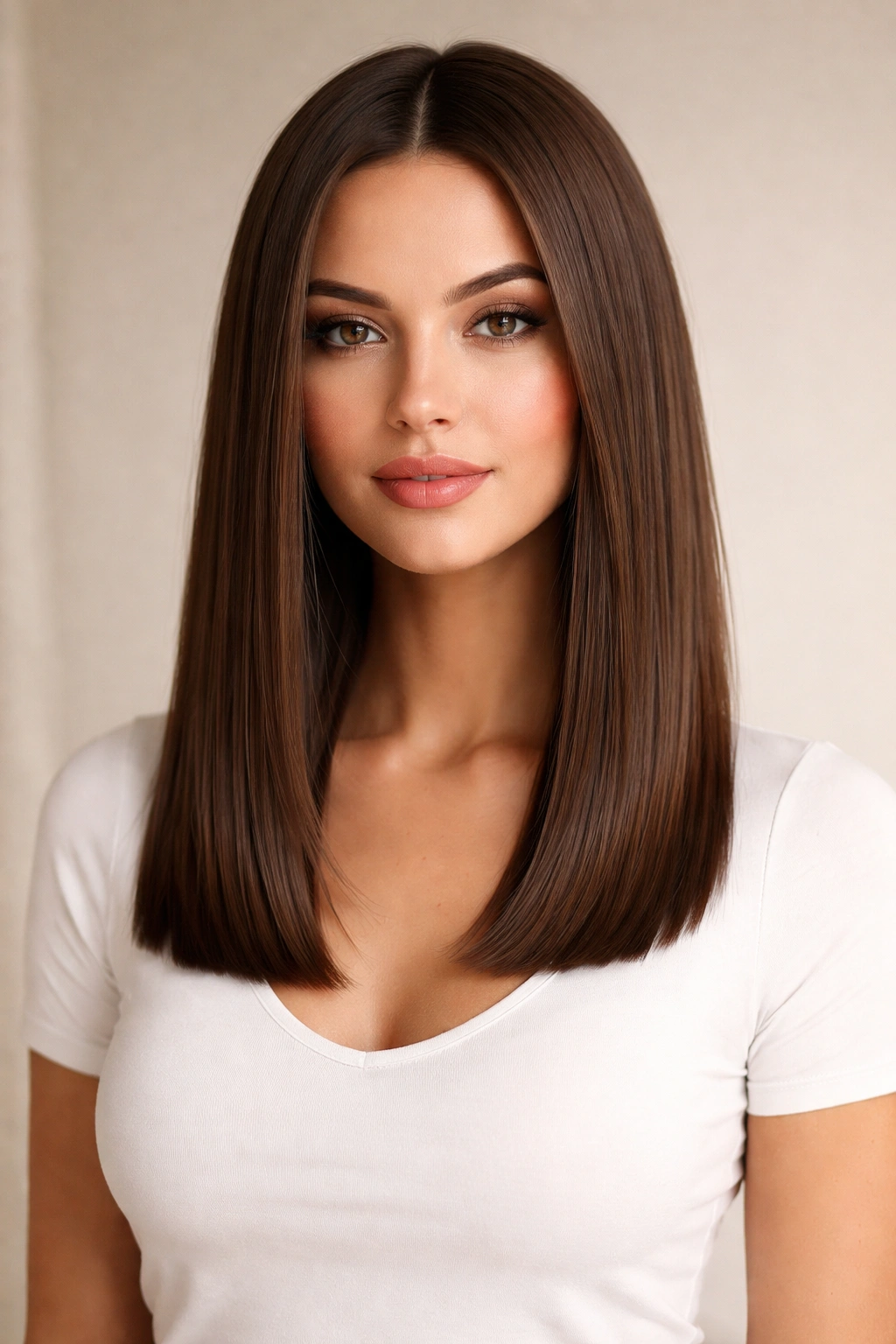
A long straight lob—that sweet spot between shoulder-length and mid-back length—is one of the most flattering cuts for round faces. The extended length creates a vertical line that naturally elongates your face, while the blunt, straight-across ends give you a modern, polished look that feels intentional and sharp. This style works particularly well because the weight sits below your cheekbones, drawing attention downward and away from the widest part of your face.
Why This Cut Works for Round Faces
The lob’s length is the magic ingredient here. By extending past your shoulders, it creates a strong vertical element that counteracts the horizontal roundness of your face. Blunt ends amplify this effect—they’re decisive and geometric, creating clean lines that feel more angular. The straight texture means no curl or wave to add volume at the sides, which could emphasize roundness. When you run your hands through a straight lob, it falls in a sleek column that frames your face without hugging it.
How to Request It and Style It
Ask your stylist for a lob that hits between your collarbones and mid-chest, with sharp, blunt ends. Specify that you want it cut straight across the bottom with no layers or texture—the bluntness is essential to the effect. The back should be even or very subtly longer than the front. Style it with a deep side part or center part, which adds more visual interest and breaks up facial width. You can wear it down sleek or pull it back into a low ponytail for a different vibe.
Pro tip: Get your lob trimmed every 6-8 weeks to maintain that crisp blunt line. As soon as ends start looking wispy or uneven, the flattering effect diminishes.
2. Straight Hair with Full Blunt Bangs
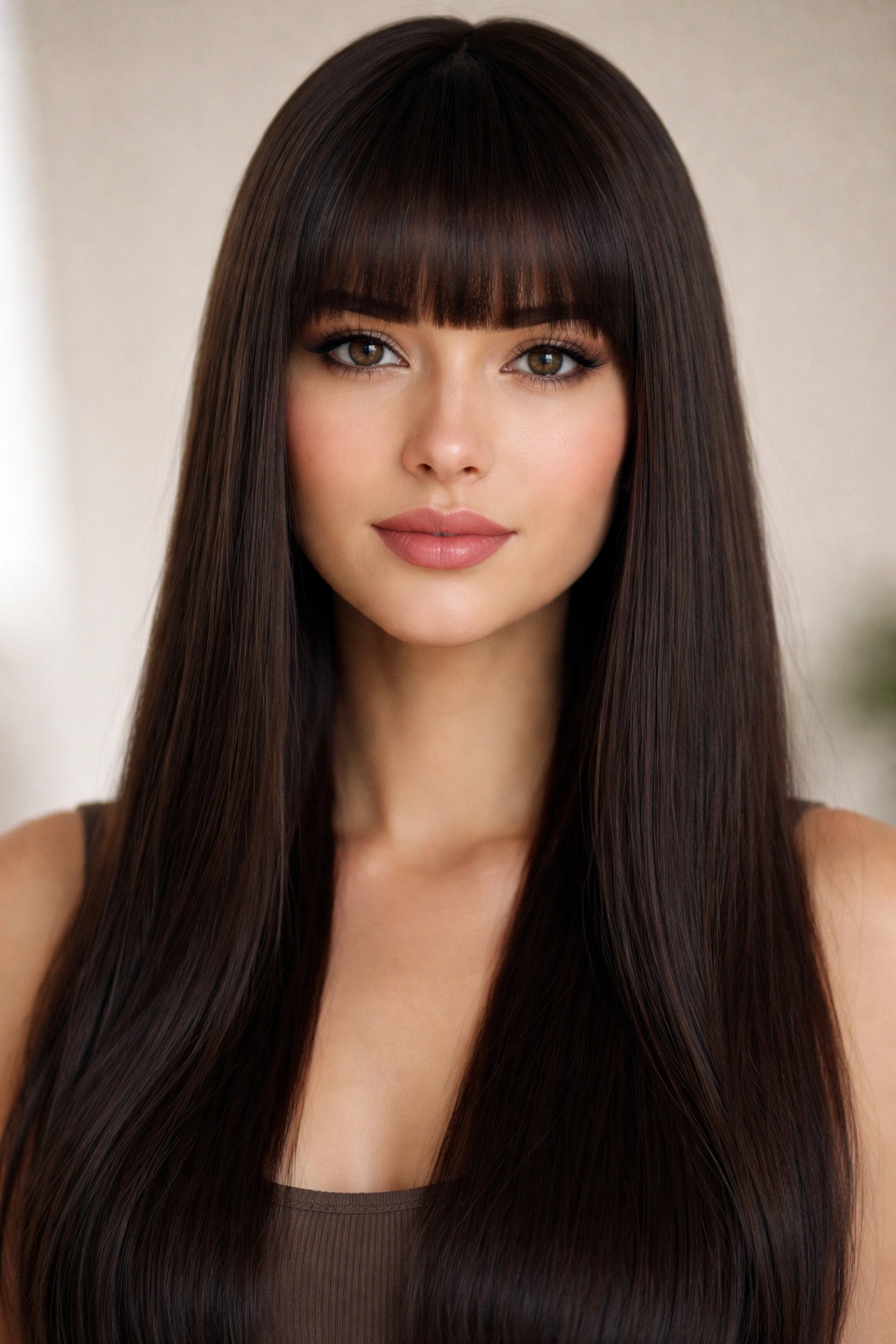
Full blunt bangs paired with straight hair create an immediate optical illusion that makes your face appear longer and narrower. The horizontal line of the bangs sits on your forehead, drawing attention upward and creating a frame that breaks up facial width. This is a bolder choice that definitely makes a statement, but for round faces, it’s remarkably effective. The bangs need to be blunt and straight—any texture or layers will soften the effect and reduce the flattering impact.
The Psychology Behind the Look
Blunt bangs work for round faces because they create a strong horizontal line at the top of your face, which paradoxically makes the overall face appear longer. Combined with straight hair that falls vertically down the sides, you get both a horizontal and vertical structure that feels more balanced and less round. The bangs also have the practical benefit of drawing the eye to your eyes and forehead rather than your cheeks and jawline.
Styling and Maintenance Requirements
Blunt bangs demand commitment. They need to be trimmed every 3-4 weeks to stay sharp and flattering, otherwise they start to look shaggy and lose their defining power. Wear them with hair pulled back in a sleek ponytail sometimes, which emphasizes the bangs’ geometry. Pair full bangs with a longer straight cut (at least shoulder-length or longer) for the best effect—short hair with blunt bangs can sometimes emphasize roundness rather than minimize it.
Worth knowing: Blunt bangs work best with a center part or deep side part. Avoid middle parts that might make bangs feel heavy across the center of your face.
3. Straight Hair with Sideswept Bangs
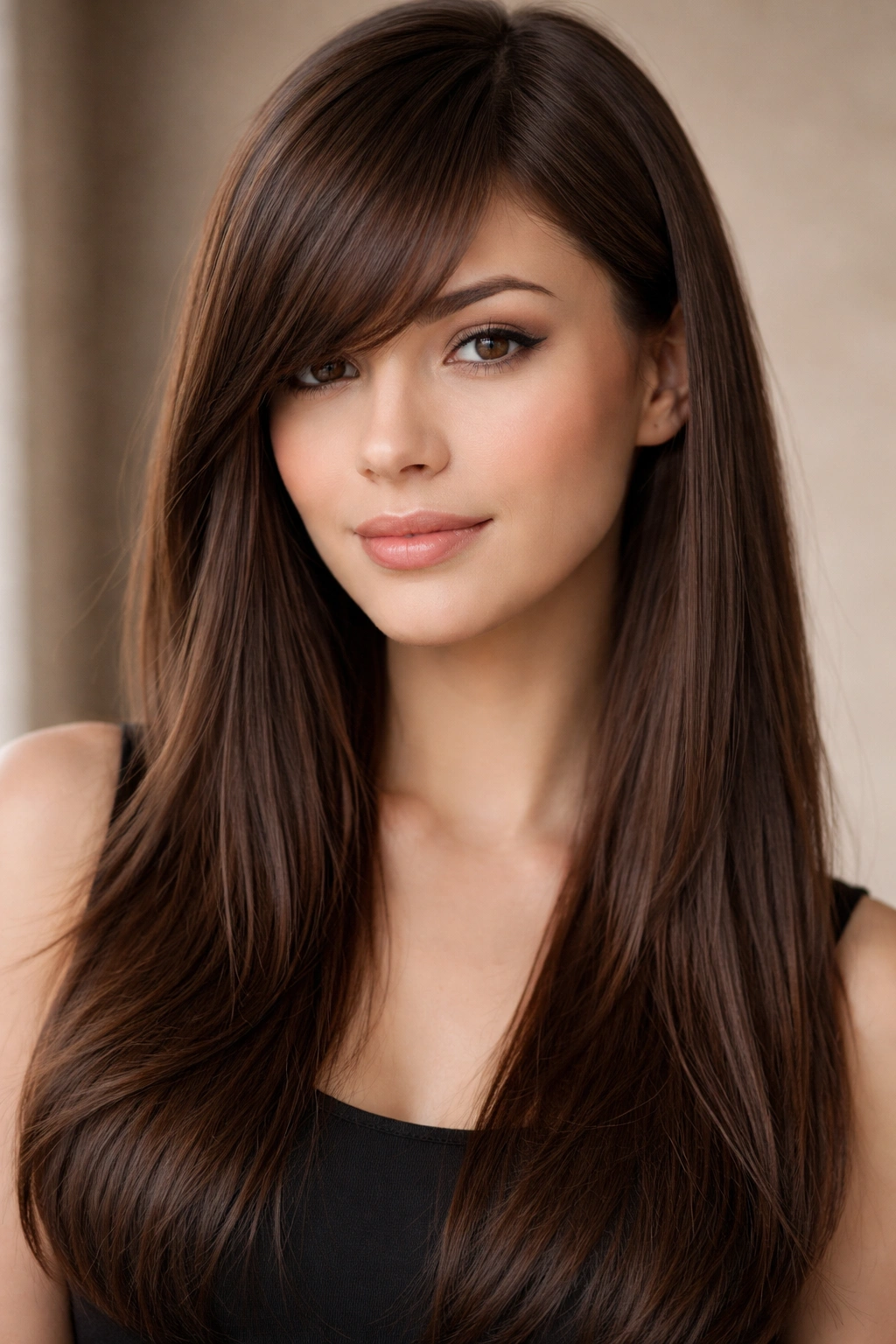
If full blunt bangs feel too extreme, sideswept bangs offer a softer, more versatile option that still flatters round faces beautifully. These longer bangs sweep across your forehead and create a diagonal line that visually lengthens your face. The asymmetry of a sideswept bang prevents your face from looking perfectly round—the angle alone creates the illusion of more structure and dimension.
How Asymmetry Flatters Round Features
Asymmetrical elements are inherently flattering for round faces because they break visual repetition. A sideswept bang creates a diagonal line across your forehead, which is more interesting than a straight horizontal. This subtle asymmetry carries visual weight to one side, which makes the face appear less circular overall. The angle draws the eye across your face rather than straight down the center, subtly elongating your perception of your face shape.
Best Length and Styling
Sideswept bangs should be long enough to blend into the rest of your hair as they extend to the side—typically they reach somewhere between your cheekbone and jawline. Pair them with a straight cut that’s at least shoulder-length, and wear them with a deep side part that extends the bang’s angular line. You can also tuck sideswept bangs behind one ear, which creates another line and adds visual interest.
Pro tip: Sideswept bangs are more forgiving than blunt bangs and need trimming less frequently—usually every 6-8 weeks—because they blend into your hair as they grow out.
4. The Straight Shag Haircut
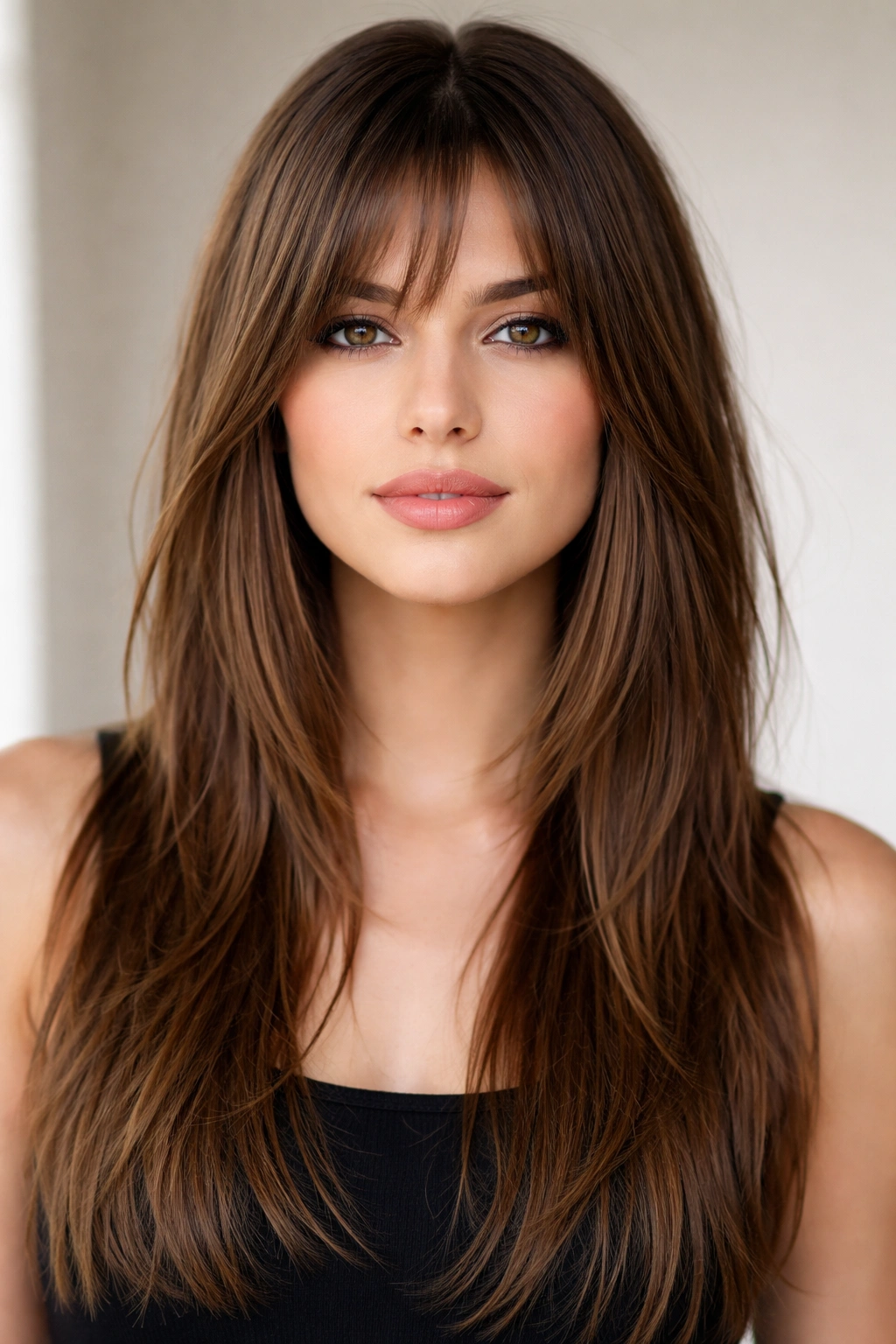
A straight shag might seem counterintuitive for a round face, but when executed correctly, it’s surprisingly flattering. The key is keeping the overall shape long enough to elongate and using strategic layers that create vertical movement without adding bulk at the cheeks. Modern straight shags lean into texture and definition rather than the feathered, fluffy shags of the past, and this contemporary version works beautifully on round faces.
Why Modern Straight Shags Work
A properly cut straight shag on a round face uses longer layers that elongate while shorter layers around the crown add subtle texture and movement. The straight texture means the layers fall cleanly and vertically rather than flipping out or curving inward at the ends. This creates a sophisticated look that’s less about bulk and more about clean geometric structure. The layers also break up potential roundness by creating line and definition at strategic points.
Cutting and Maintenance Details
Request a shag that’s longer in the front—at least shoulder-length—with subtle, face-framing layers that start around your cheekbones or lower. Keep the back longer so the overall silhouette remains vertical. Ask for layers that are relatively close together in length rather than choppy or drastically different, which keeps the sophisticated, sleek feel. Style with a side part and blow-dry straight for the best effect. Shags need trimming every 6-8 weeks to keep layers from looking overgrown.
Worth knowing: A shag only works if your straight hair is genuinely straight. If you have natural texture or wave, the layers can make hair look frizzy or chaotic. Make sure you’re able to maintain a smooth, straight style regularly.
5. Geometric Blunt Cut with Sharp Angles
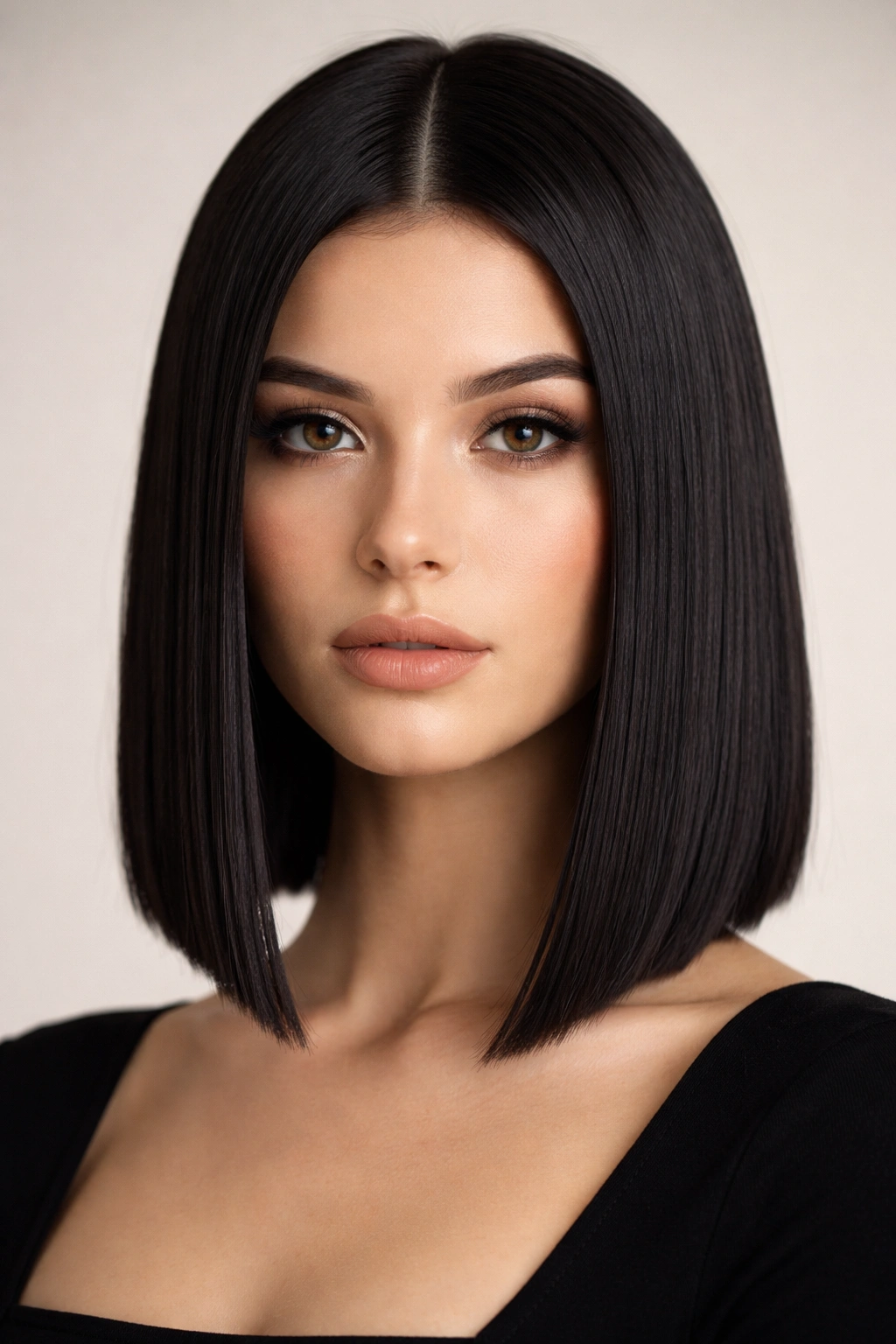
A geometric blunt cut is architectural and modern—think clean lines, precise angles, and zero softness. This style works exceptionally well for round faces because every element is intentionally angular. The cut typically features a blunt bottom line and may include angled sides that taper toward the face, creating sharp definition rather than soft framing. It’s a statement cut that requires confidence, but the geometric precision is incredibly flattering for softening the roundness of your face.
The Math Behind the Flattery
Geometric cuts work by introducing angles and sharp lines that contrast with the natural roundness of your face. A blunt bottom line (whether it’s at chin-length, shoulder-length, or longer) creates a strong horizontal that feels intentional. Angled sides that are shorter in front than in back create a subtle forward momentum that visually lengthens. Every straight line and angle you introduce creates visual structure that balances facial roundness.
Styling This Precision Cut
Geometric cuts look best when styled sleek and straight—any waviness undermines the sharp lines that make the cut flattering. Blow-dry smooth and use a flat iron if needed to ensure every line is clean. Wear your hair down and loose, with a deep side part or center part, to show off the precision. Avoid updos, which might hide the angles you paid for. These cuts need trimming every 4-6 weeks to maintain crisp edges.
Pro tip: Ask your stylist to point out exactly where your angles are and how to style them best. Understanding the architecture of your cut helps you recreate the look at home and appreciate what makes it work.
6. Long Straight Hair with a Deep Side Part
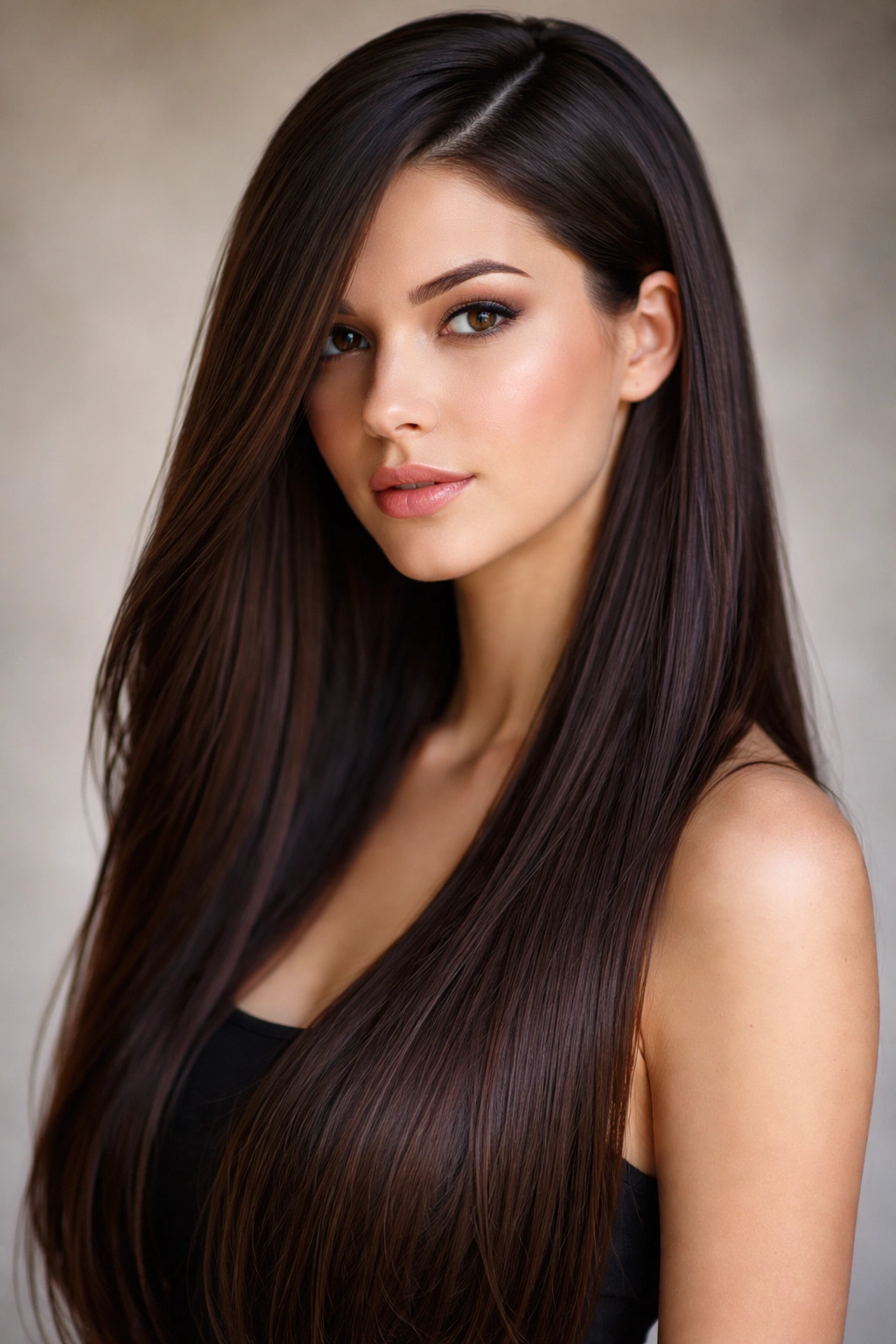
Sometimes the simplest approach is the most effective. Long, straight hair with a deep side part is endlessly flattering for round faces because it creates both length and asymmetry. A deep side part naturally creates a diagonal line across your head that visually breaks up facial roundness, while the length elongates everything. This style requires minimal styling and works for countless occasions, making it practical as well as flattering.
Why the Side Part Is Key
A deep side part is crucial to this style’s success. A middle part can emphasize facial roundness by drawing attention straight down the center of your face, but a side part immediately creates asymmetry and visual interest. The hair on one side of the part sweeps across your forehead and creates an angle. The longer hair on the other side falls freely, creating a vertical line. Together, these elements make your face appear less round and more dimensional.
Length and Maintenance
Aim for hair that’s at least shoulder-length, ideally longer (mid-back or longer works beautifully). Keep your straight texture sleek by blow-drying smooth or occasionally using a flat iron. The side part should start high on one side of your head and curve gently to the opposite side of your part line—not an extreme zigzag, just a natural, sweeping diagonal. Trim every 8-10 weeks to keep ends looking healthy and fresh.
Worth knowing: Your face will look most elongated when the side part is deep—starting almost at your temple rather than at the crown. Experiment with different part placements to see what feels best for your face shape.
7. Straight Micro Bangs with Long Hair
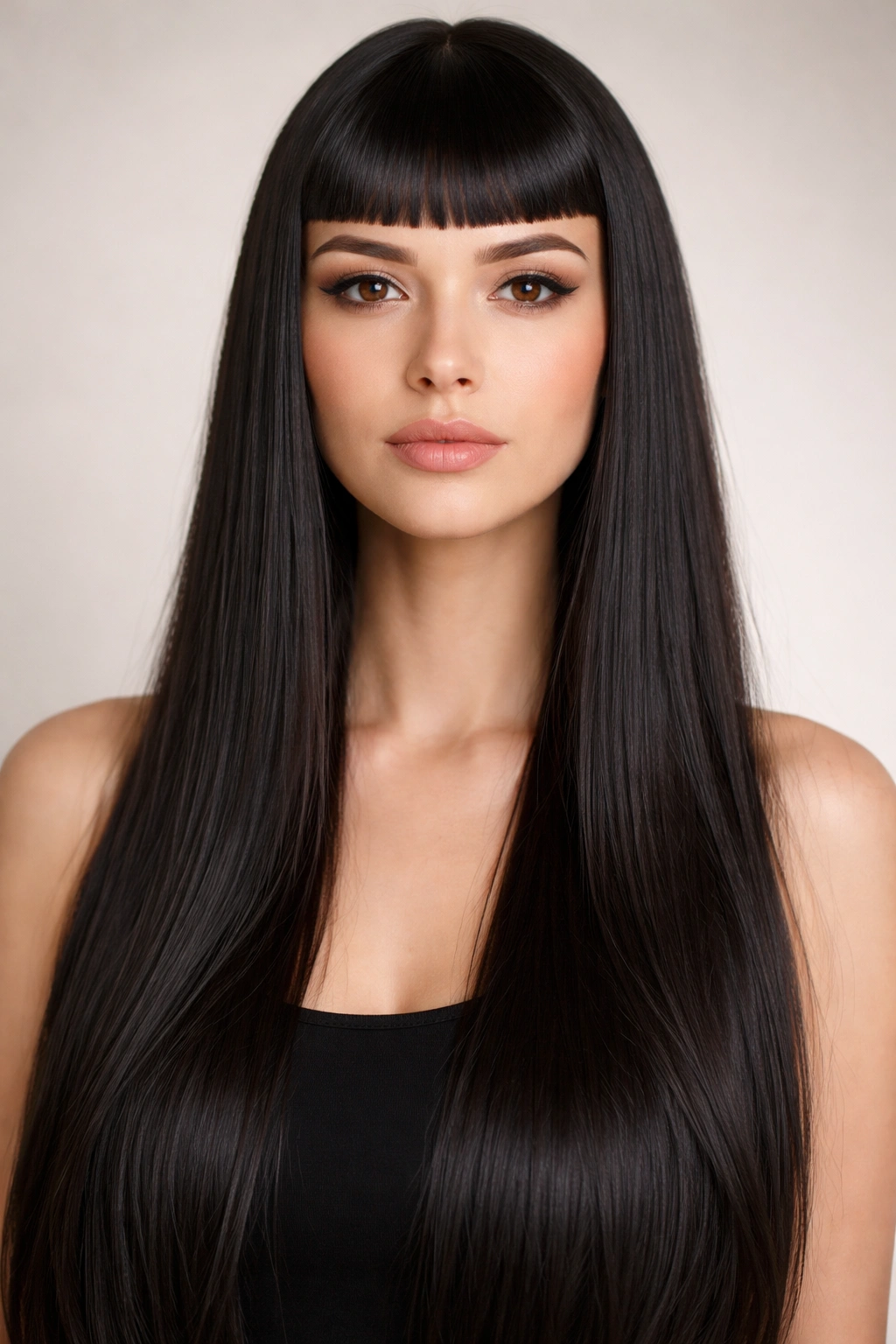
Micro bangs—very short, chin-length bangs that sit just above your eyebrows—create a striking, fashion-forward look that’s surprisingly flattering for round faces. They draw attention upward to your eyes and forehead while the rest of your hair falls long and straight below. The short-to-long contrast creates visual drama and makes your face appear more angular and defined.
The Bold Appeal of Micro Bangs
Micro bangs are a confident choice that instantly elevates your whole look. They sit high on your forehead, which draws attention upward and away from the cheeks and jawline. The shortness is decisive and geometric, creating a sharp horizontal line. When paired with long straight hair, this creates maximum contrast—short and angular on top, long and vertical below—which is incredibly flattering for round face shapes.
Styling and Commitment Level
Micro bangs require regular maintenance. Trim every 2-3 weeks to keep them at the right length and prevent them from drooping into your eyes. Style them swept to the side occasionally for variety, or wear them straight across. They pair best with a center part or deep side part and long straight hair. You can also tuck micro bangs back with a headband or hair clips for a different vibe.
Pro tip: Micro bangs aren’t forgiving if your hair grows fast or you can’t commit to frequent trims. Make sure you’re genuinely ready for the maintenance before going this short.
8. Shoulder-Length Straight Cut with Face-Framing Layers
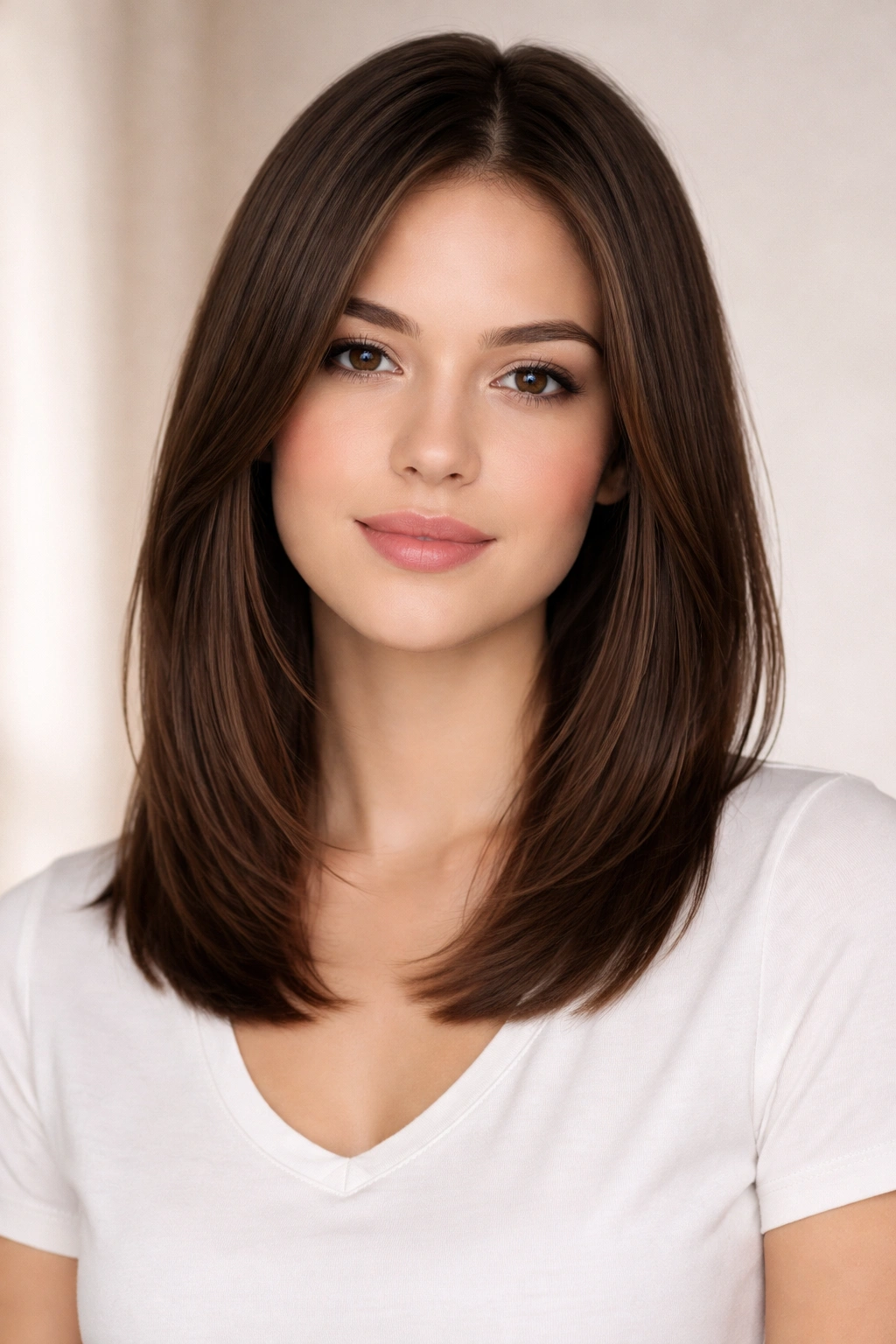
A shoulder-length straight cut with subtle face-framing layers offers the perfect balance between sleekness and softness. The shoulder-length hits at the ideal point to elongate without being too short, while delicate layers around the face add dimension and prevent the cut from feeling blunt or severe. This style is flattering for round faces because it creates vertical lines while the subtle layers break up potential width.
Strategic Layer Placement
The layers in this cut are crucial. They should start around your cheekbones and extend down, creating a frame that guides the eye vertically down your face rather than across it. The layers shouldn’t be chunky or dramatic—they’re subtle enough that they blend seamlessly into the rest of your hair when worn down. The overall silhouette remains sleek and straight, but the layers add visual interest and prevent the cut from emphasizing roundness.
Daily Styling and Upkeep
This style is wonderfully low-maintenance. Blow-dry straight or leave to air-dry for a slightly textured look. Wear with a side part or center part depending on what feels best. The shoulder-length is versatile enough to wear down or pull back into a ponytail or low bun. Trim every 6-8 weeks to maintain the shape and keep face-framing layers looking intentional rather than grown-out.
Worth knowing: Ask your stylist to point out where your face-framing layers are and how they’re meant to curve around your face. Understanding the shape helps you style more effectively.
9. Straight Hair with a Longer Layered Texture
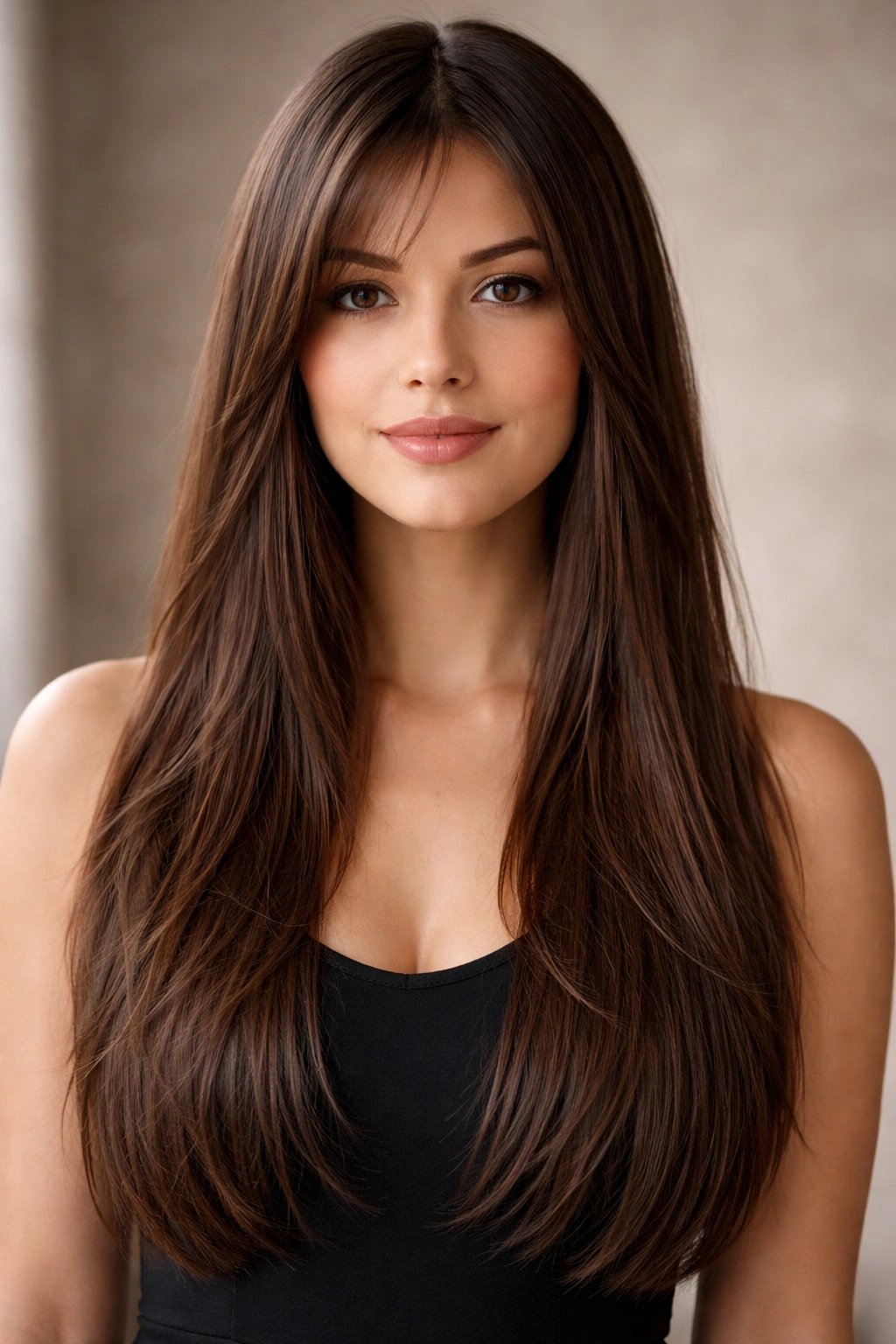
If you want texture without shag-like choppiness, a longer layered straight cut offers a middle ground. The layers are closer together and more subtle than a shag, creating a more refined, polished appearance while still adding movement and visual interest. This style works for round faces because the layers create vertical lines and dimension without adding volume where it isn’t needed.
Refined Versus Choppy Layers
The difference is in the spacing and length variation. Refined layers have layers throughout that are closer together—maybe 1-2 inches apart—creating a sense of gradual movement rather than dramatic choppiness. This approach adds texture and eliminates any bluntness while keeping the overall silhouette elongated and sleek. It’s less dramatic than a shag but more interesting than a blunt, one-length cut.
Best Length and Styling
Request layers that start around mid-chest or lower, so the overall length remains elongating. The layers should gradually get slightly shorter toward the face, framing your features. Straight hair with this layering looks best when blow-dried smooth or styled with a flat iron for a polished finish. Wear with a side part to maximize the flattering effect. Trim every 6-8 weeks.
Pro tip: This style is particularly flattering if you pair it with a rich, shiny hair gloss or toner. The reflection and shine emphasize the straight texture and make layers look intentional and expensive.
10. Blunt Mid-Length Straight Cut with Minimal Styling
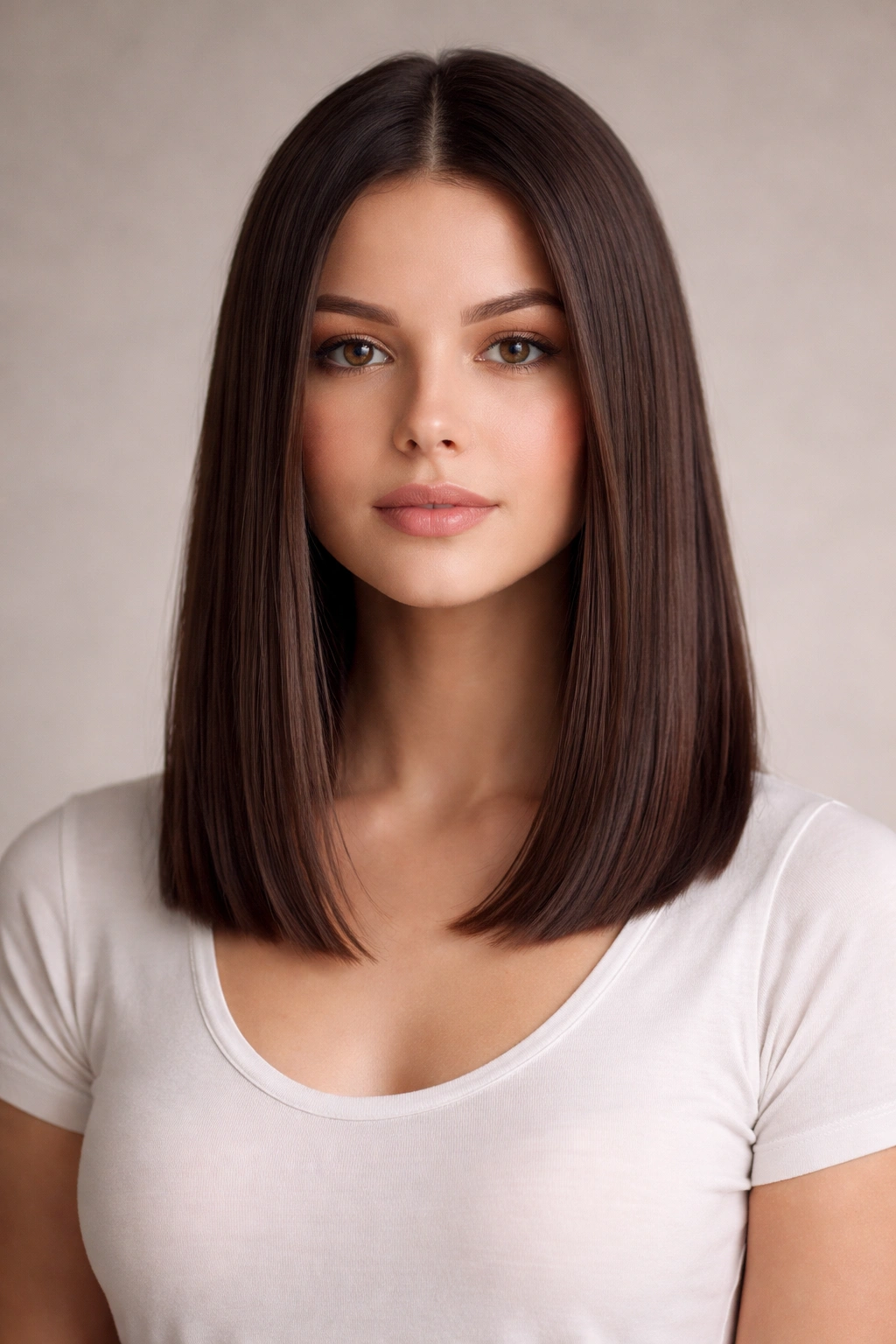
A blunt mid-length cut—hitting around collarbone or slightly longer—in perfectly straight hair is a classic choice that never looks dated. This cut is refreshingly simple and relies on the purity of the straight lines and the perfect blunt ends to create its flattering effect. For round faces, the mid-length creates enough elongation while the blunt edges add geometry and definition.
Why Simplicity Works
There’s power in simplicity. A well-executed blunt cut needs no layers, no bangs, no complicated styling—just beautiful straight hair with a perfectly blunt line at the bottom. This geometric simplicity is incredibly flattering for round faces because the straight line is decisive and creates visual structure. The mid-length hits at a point that elongates without being dramatically long, making it wearable for various lifestyles and occasions.
Maintenance and Styling Options
The blunt line is everything with this cut, so maintain it religiously with trims every 4-6 weeks. Wear it down and straight most of the time, with a side part or center part. You can also pull it back into a sleek ponytail, which shows off the blunt ends and creates another geometric line. Blow-dry smooth or use a flat iron to ensure your straight texture shines. This is genuinely a wash-and-go option if you have naturally straight hair.
Worth knowing: This simple cut showcases your hair texture and color beautifully. If you’ve been considering a color or tone change, this minimalist cut is the perfect frame for showing it off.
Final Thoughts

The best straight haircut for a round face combines length, geometric precision, and strategic use of asymmetry. Whether you choose a long lob, bold blunt bangs, a modern shag, or a simple shoulder-length cut, the key is selecting a style that creates vertical lines and breaks up horizontal width. Your straight texture is an asset—it allows clean lines to shine and prevents unwanted volume at the sides of your face.
Remember that the perfect cut is also one you can maintain and style confidently. If you’re not going to blow-dry and use a flat iron regularly, a style that requires it might frustrate you. Similarly, if you can’t commit to frequent trims, ask your stylist for a cut that grows out gracefully rather than one that demands precision maintenance.
Work closely with a stylist who understands face shapes and how straight hair cuts behave. Bring reference photos of cuts that appeal to you, and be specific about what you love—the length, the bangs, the layers, the part style. A stylist who takes time to analyze your face shape and hair texture will create something uniquely flattering for you. Trust the process, commit to the maintenance, and you’ll have a haircut that makes you feel confident and genuinely beautiful.
