



Straight hair is the ideal canvas for ombre color — the clean lines and smooth texture make the color transition shine in ways that curly or wavy hair sometimes can’t. Unlike textured hair where dimension gets lost in the curl pattern, straight hair displays every shade shift with precision, creating that eye-catching gradient effect that ombre is famous for. If you’ve been wondering whether ombre is actually a viable option for your straight locks, the answer is a definitive yes. The real question isn’t whether it’ll work, but which ombre approach will look best on you.
The challenge isn’t finding ombre ideas for straight hair — it’s choosing between the endless possibilities. You could go bold and dramatic, subtle and blended, cool-toned and mysterious, or warm and sun-kissed. The shade combinations range from barely-there highlights to full-on contrasting color statements. With straight hair, you also have the advantage of being able to see exactly how your colorist blended the tones, which means quality matters and precision cuts through immediately.
This guide walks through ten distinct ombre approaches that genuinely work on straight hair, each with its own character and maintenance reality. Some are easier to upkeep than others. Some suit certain skin tones better. Some require a certain hair length or thickness to look right. By the end, you’ll have a clear picture of what ombre direction matches your style, commitment level, and hair goals.
1. Classic Blonde Ombre
The most recognizable ombre look pairs a darker root tone with progressively lighter blonde through the mids and ends. On straight hair, this creates clean horizontal color lines that draw the eye downward and make fine hair appear fuller. The depth at the roots prevents that washed-out look that can happen when you go all-blonde on straight hair — the contrast creates dimension even though your hair has no curl to hold additional movement.
Why This Works for Straight Hair
Straight hair’s smooth surface makes the color gradient look precise and intentional rather than accidentally faded. The darker roots anchor the style visually while the blonde ends feel bright and modern. This combination also flatters almost every skin tone because you’re controlling exactly where the color intensity sits. The root shadow effect is one of the smartest grow-out techniques in color, and it actually looks better with time — you never have a hard line between colors the way you might with other techniques.
What to Know Before Committing
- The transition happens in your mids, usually around bra-line length or slightly higher, so you need at least shoulder-length hair to make this look intentional rather than accident-adjacent
- Maintenance involves touch-ups every 4-6 weeks at the roots to keep them dark and defined, plus regular blonde toning to prevent brassiness
- Your straight hair will show frizz or damage immediately in the lighter sections, so a solid damage-prevention routine with purple shampoo is non-negotiable
- This look pairs best with warm or neutral skin tones, though cool-blonde versions exist for cooler complexions
Pro tip: Have your colorist leave your roots slightly darker than your natural color — this creates more visual pop and makes regrowth less noticeable between appointments.
2. Balayage-Style Ombre
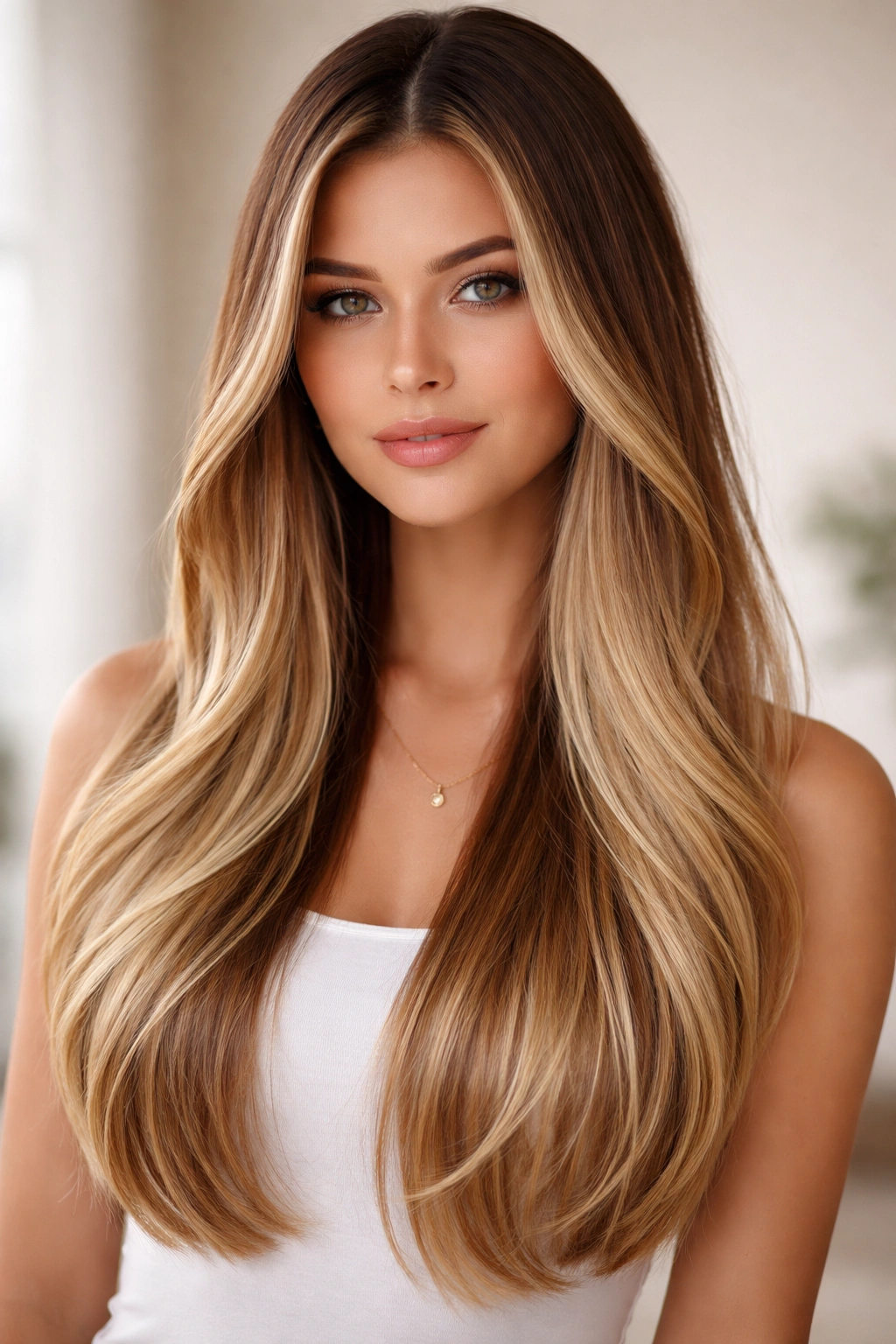
Instead of a clean horizontal gradient, balayage-style ombre places lighter pieces throughout your hair in a more freehand, dimensional way. On straight hair, this creates the illusion of sun-bleached sections without committing to a strict ombre line. You get color variation throughout your entire length rather than just at the ends, which feels less severe and works better if you prefer subtlety.
Why This Works for Straight Hair
The loose placement of color on straight hair mimics how natural sun lightening actually happens — faces, top layers, and random pieces lighten while underneath stays darker. Straight hair shows off this dimensional placement beautifully because the smooth texture lets you see every piece distinctly. The hand-painted technique also adapts to your hair’s natural shape rather than forcing it into a rigid color map.
What to Know Before Committing
- This technique requires a skilled colorist who understands how to paint color on straight hair without creating obvious stripes
- Placement matters hugely — face-framing lighter pieces need to actually frame your face, not sit in chunks
- Regrowth blends more seamlessly because there’s no hard line, but you’ll eventually see slightly darker roots throughout
- Maintenance is every 6-8 weeks rather than the stricter 4-6 week schedule of classic ombre
Worth knowing: Balayage-style ombre shows up even more beautifully on straight hair when you add a subtle gloss or toner every few weeks, which keeps the blonde looking intentional rather than tired.
3. Chocolate Brown to Caramel Ombre
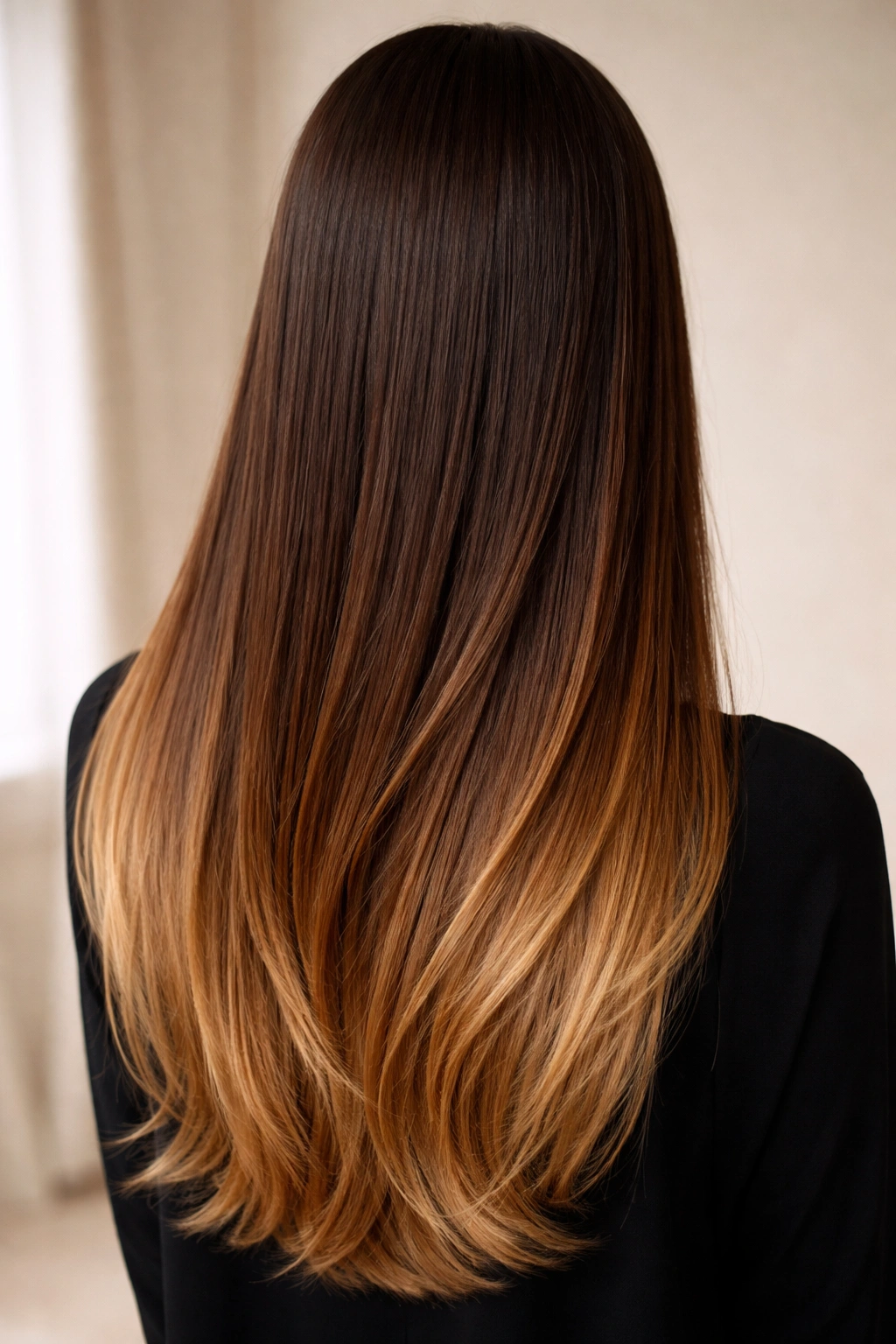
This approach stays within the warm brown family, transitioning from deep chocolate at the roots through medium brown to golden caramel or honey tones at the ends. The color shift is less dramatic than jumping from dark to blonde, but that subtlety actually suits straight hair because the clean lines make even gentle color transitions feel sophisticated and controlled.
Why This Works for Straight Hair
Warm brown-to-caramel transitions look absolutely stunning on straight hair because they enhance shine in a way that cooler tones sometimes don’t. Straight hair’s reflective quality picks up these warm undertones beautifully, making the color appear richer and more dimensional than it actually is. This look also works across a wider range of skin tones because brown and caramel are inherently flattering colors.
What to Know Before Committing
- The chocolate-to-caramel gradient requires good color placement because the transition zone is your most visible area
- Maintenance runs every 6-8 weeks primarily for root touch-ups, though the caramel ends rarely show damage even after several months
- This is one of the most forgiving ombre approaches for straight hair because browns don’t show brassiness the way blondes do
- You can actually extend this look by deepening the caramel to copper as it fades, which keeps it feeling intentional
Pro tip: Ask your colorist to add subtle copper undertones to your caramel ends — this catches light beautifully on straight hair and adds warmth that photographs incredibly well.
4. Ash Blonde Ombre
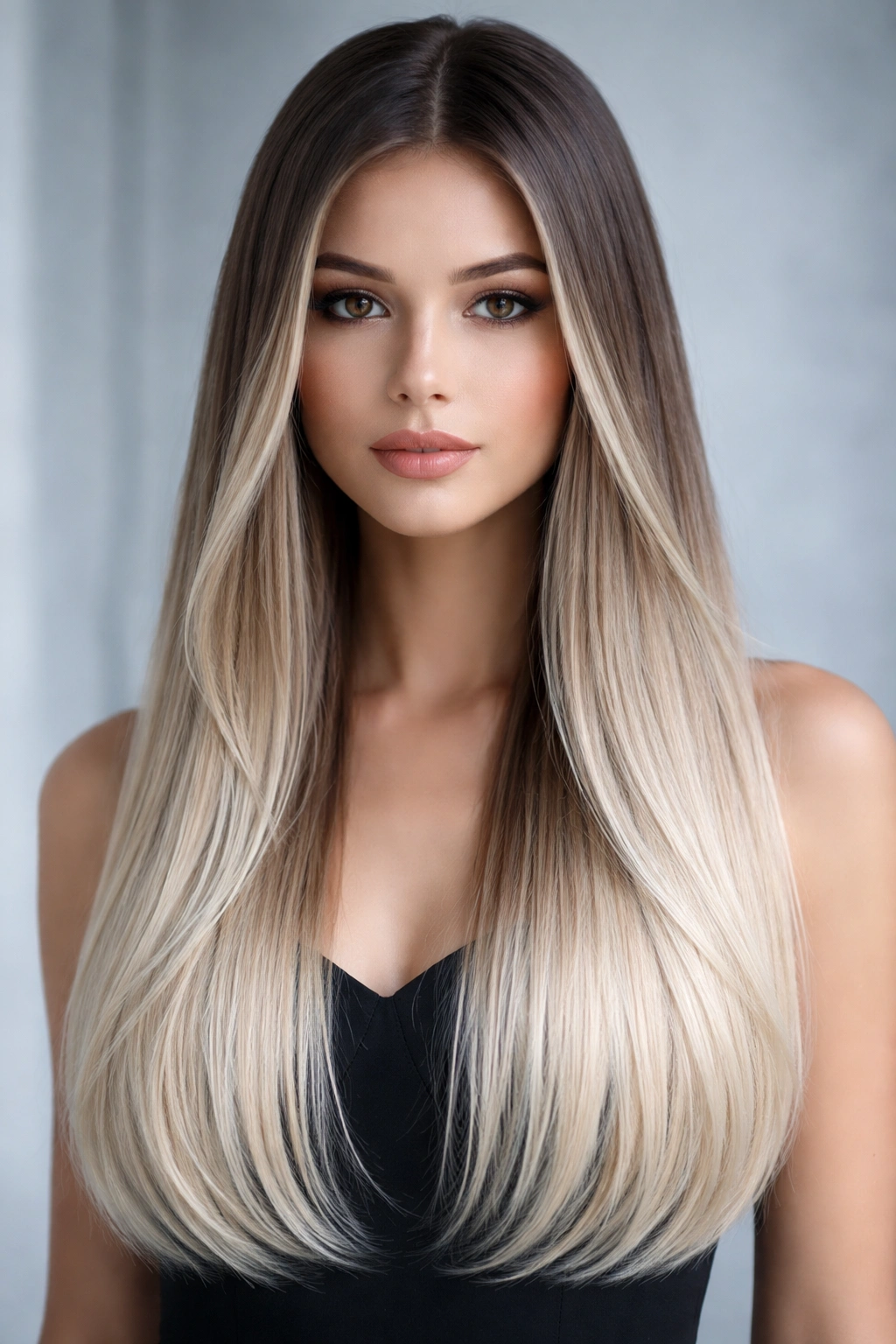
Cool-toned ash blonde creates a completely different vibe than warm golden blonde. This approach transitions from a dark ash or cool brown root through mid-tone ash blonde to pale platinum at the ends. On straight hair, the cool tones create an almost ethereal, high-fashion appearance that photographs beautifully but requires more commitment to upkeep.
Why This Works for Straight Hair
Straight hair displays cool ash tones with absolute clarity — there’s no warmth from curls or texture to muddy the color. The pale platinum ends on straight hair read as intentional and editorial rather than accidental or grown-out. This is the ombre style that looks most “done” and polished, which works if you’re going for a more refined aesthetic.
What to Know Before Committing
- Ash blonde ombre requires frequent toning — every 2-3 weeks is realistic if you want to avoid brassiness
- You need to start with very light blonde at the ends, which means significant damage risk if your hair isn’t in excellent condition before coloring
- This look is most flattering on cool or neutral skin tones; warm complexions can make the cool blonde look washed out
- Purple shampoo becomes your weekly essential, not a monthly treatment
Worth knowing: Ash blonde ombre actually looks better the second or third month after your initial color appointment because some warmth returning prevents that artificial-looking pure platinum stage.
5. Copper and Bronze Ombre
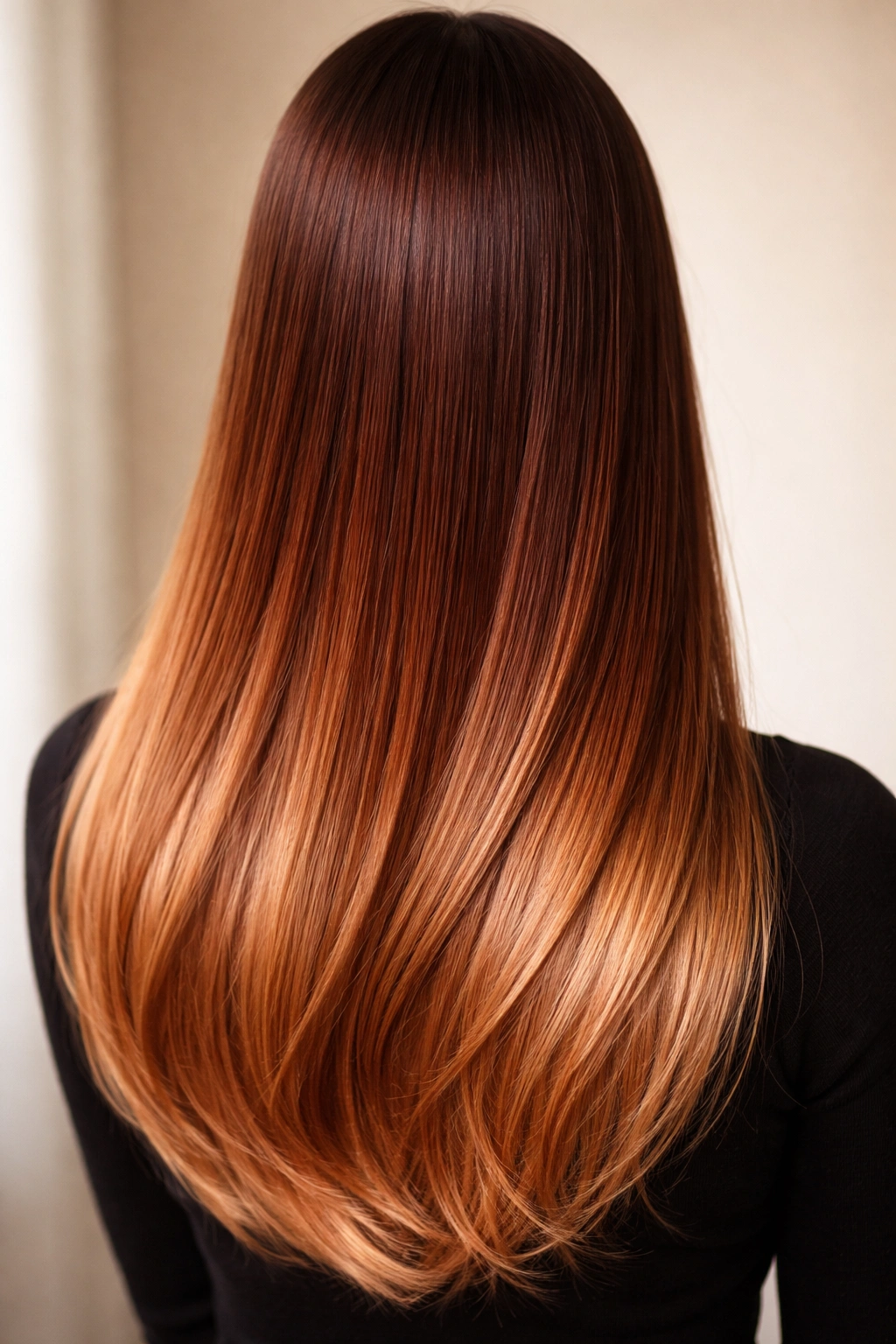
For those who want warmth without traditional golden blonde, copper-to-bronze ombre delivers rich, metallic tones that glow on straight hair. The darker copper roots transition through medium bronze to lighter copper or rose-gold ends, creating movement and warmth simultaneously. This approach works beautifully on all skin tones but especially complements warmer complexions.
Why This Works for Straight Hair
Copper and bronze tones are inherently glamorous, and straight hair’s smooth surface shows off the metallic quality beautifully. The warmth doesn’t look brassy the way some golds do — instead, it reads as intentional, warm, and dimensional. The straight hair allows you to see exactly where the copper begins and bronze takes over, creating a defined but not harsh transition.
What to Know Before Committing
- This ombre needs darker roots than some options because copper ends will look strange floating on light blonde roots
- Maintenance involves monthly touch-ups plus regular gloss treatments to keep the copper from turning muddy as it oxidizes
- Copper can stain straight hair and your shower walls if you’re not careful — use color-safe products exclusively
- This look photographs absolutely beautifully in warm lighting and sunlight
Pro tip: Pair copper-bronze ombre with a glossy finishing product designed for color-treated hair — the shine amplifies the metallic quality that makes this look special.
6. Burgundy and Red Ombre
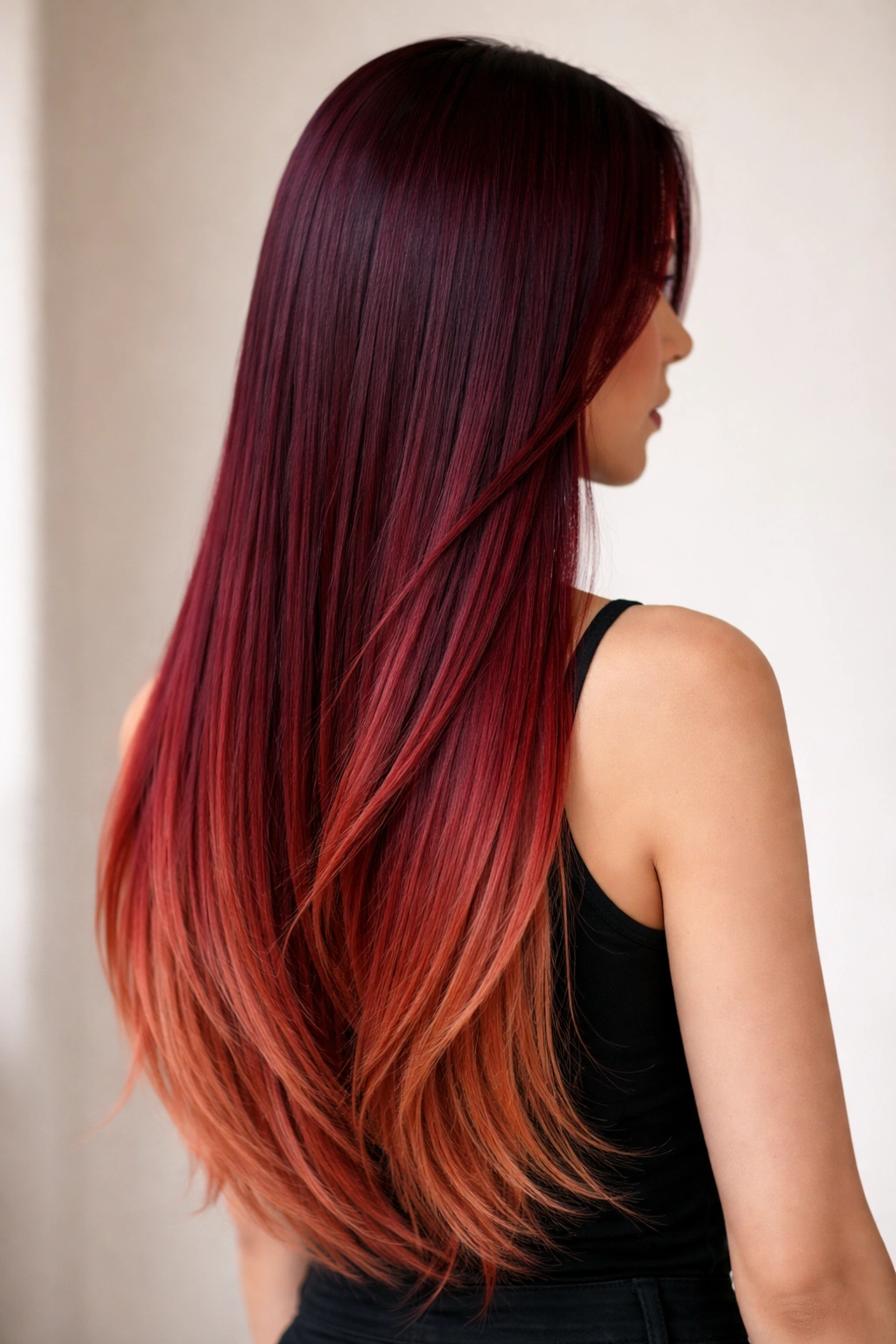
Deep burgundy or wine-toned ombre transitions from dark burgundy roots through rich wine tones to lighter copper-red or warm peachy tones at the ends. On straight hair, this creates an absolutely luxe appearance that feels more fashion-forward than classic ombre but less commitment-heavy than pure red hair.
Why This Works for Straight Hair
Burgundy and red undertones are incredibly flattering on straight hair because the smooth texture lets the color’s richness show through without getting lost in texture or frizz. The deep roots ground the style while the warmer ends feel modern and intentional. Straight hair displays these jewel-tone colors with absolute clarity, making them look more vibrant and intentional than they might on textured hair.
What to Know Before Committing
- Red tones fade faster than almost any other color, so you’re looking at glosses every 2-3 weeks to maintain vibrancy
- Burgundy and red can stain your skin and pillowcases if you’re not careful — color-safe shampoo is essential
- These tones suit cooler to neutral skin tones beautifully and can look less flattering on very warm complexions
- Your straight hair will show any brassy undertones immediately, so a good colorist matters enormously
Worth knowing: Burgundy ombre actually deepens and becomes more luxe-looking as it fades slightly, so the color doesn’t look “old” the same way that faded blonde does.
7. Black to Silver Ombre
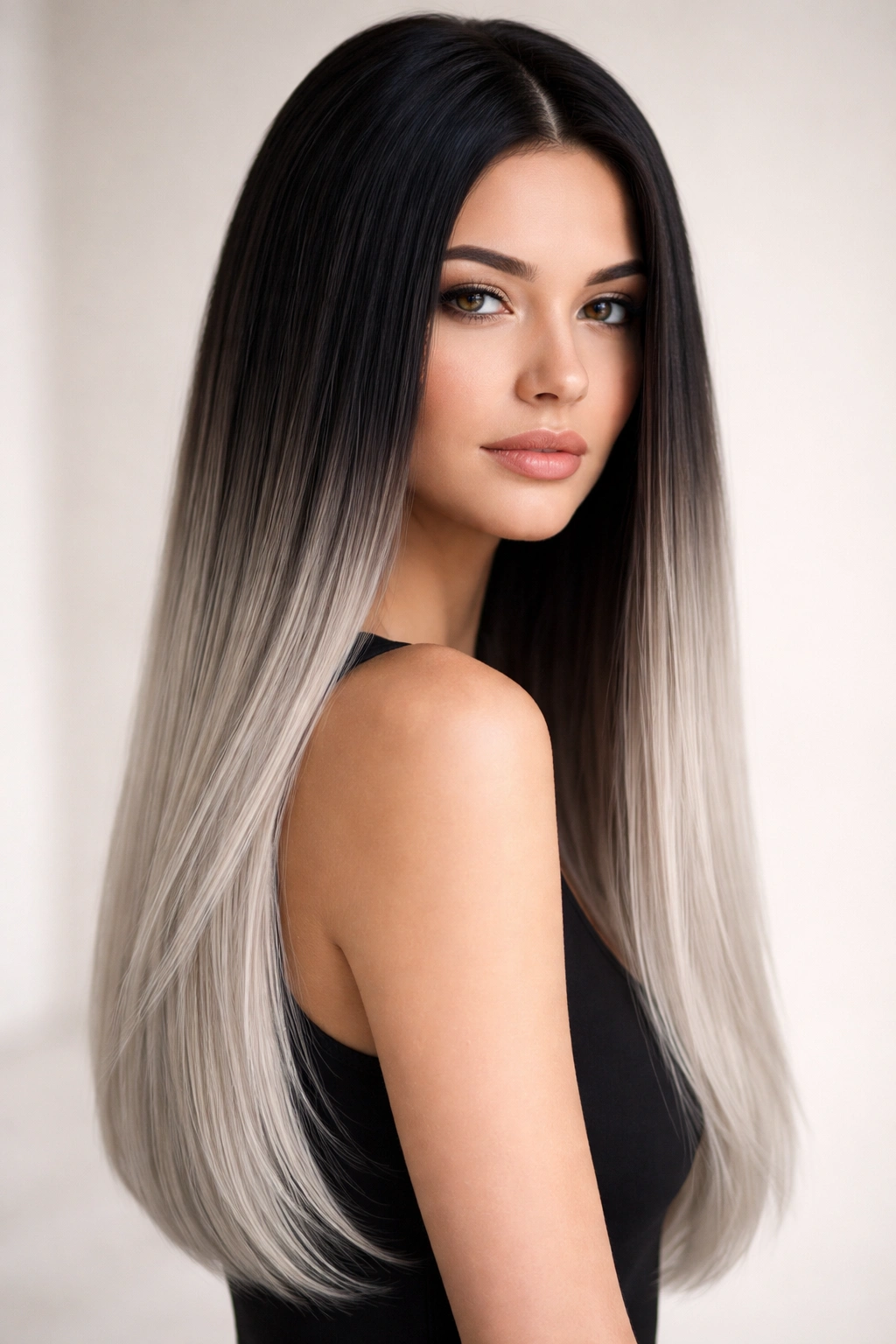
The most dramatic option pairs deep black roots with dramatic silver or platinum tones at the ends. This is a statement look that requires significant hair damage prevention and toning commitment, but on straight hair, the contrast is absolutely striking. The clean lines of straight hair make this extreme transition feel intentional and fashion-forward rather than accidental or chaotic.
Why This Works for Straight Hair
Straight hair’s smooth surface creates a clear demarcation between the black and silver zones, which is what makes this look work visually. The high contrast feels bold and intentional. On straight hair, you can actually see the silver shine and depth — it doesn’t get lost in texture or curl. This is the ombre that photographs best in professional settings and stands out most in person.
What to Know Before Committing
- You absolutely need to be starting with very light blonde or pre-lightened hair to achieve true silver on straight hair
- Weekly purple shampoo is non-negotiable, plus gloss treatments every 2-3 weeks to prevent brassiness
- The black roots need touch-ups every 3-4 weeks to maintain that defined contrast
- This look requires significant damage prevention beforehand — deep conditioning, protein treatments, and monthly glossing
- Silver ombre flatters cool skin tones most dramatically; warm skin tones might find the silver looking harsh
Pro tip: If you love this look but are hesitant about the commitment, ask your colorist about starting with a dark brunette-to-silver transition instead — same impact, slightly less maintenance.
8. Honey and Cream Ombre
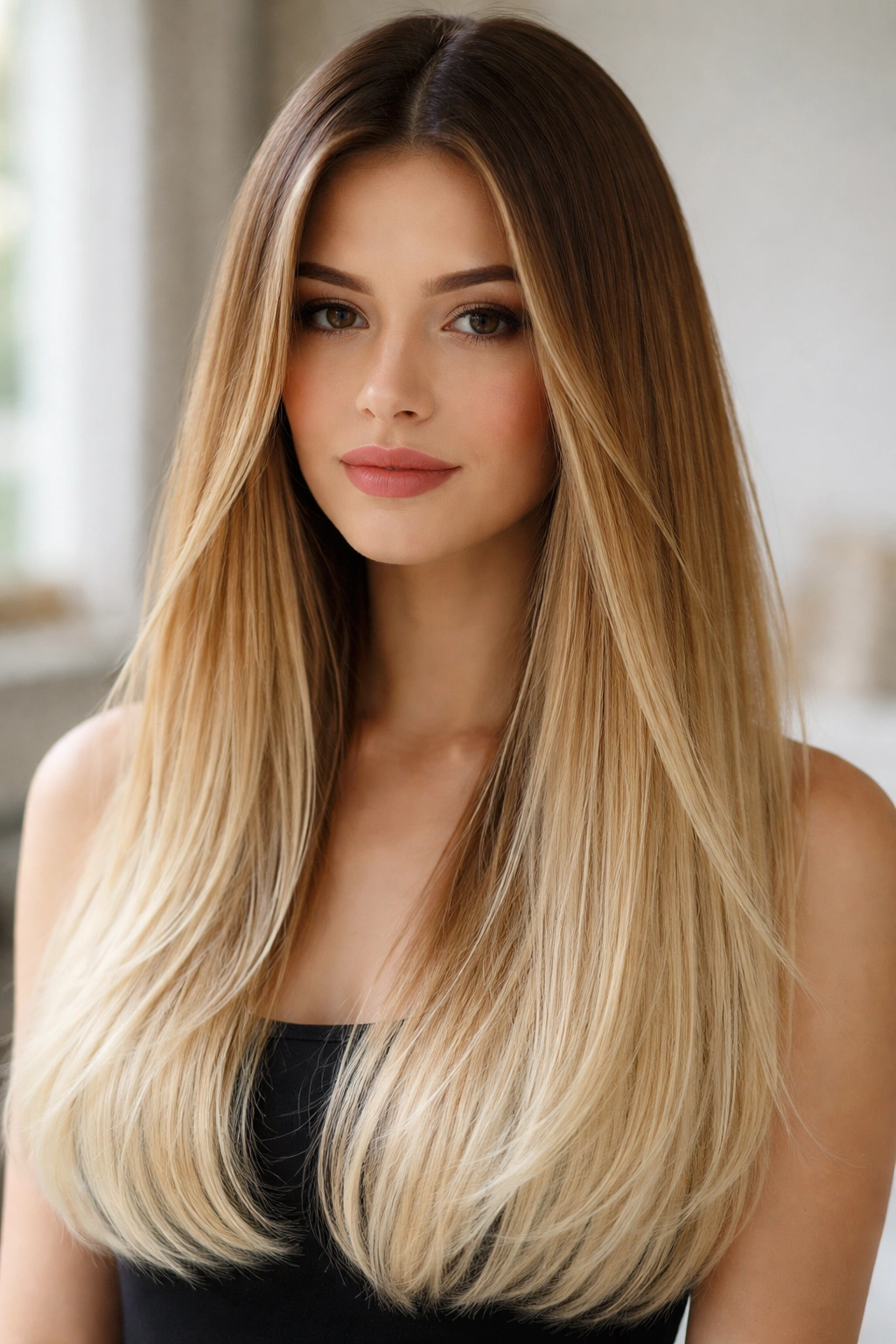
A softer, more subtle approach pairs warm golden-brown or honey tones at the roots with light cream or pale blonde at the ends. This creates dimension without being dramatic — the transition is gentle enough that you’re only committing to maintenance every 7-8 weeks. On straight hair, this produces an effortlessly blended, low-key dimensional look that feels more natural than it is.
Why This Works for Straight Hair
Honey and cream tones are universally flattering and the soft transition works beautifully on straight hair because it looks like natural sun exposure rather than obvious coloring. Straight hair’s lack of texture makes this subtle gradient visible and intentional. The warm tones enhance shine and create the illusion of healthier, glossier hair even if your actual hair is fine or thin.
What to Know Before Committing
- This is one of the lowest-maintenance ombre options because warm tones and gentle transitions hide regrowth effectively
- The blending is key — a good colorist will create an imperceptible gradient rather than obvious bands of color
- Maintenance is every 6-8 weeks, primarily for root touch-ups rather than constant toning
- This works beautifully across all skin tones, making it one of the most universally flattering options
Worth knowing: Honey and cream ombre actually looks better slightly grown-out because it creates a more natural-looking root shadow, so you get extra weeks between appointments.
9. Midnight Blue and Indigo Ombre
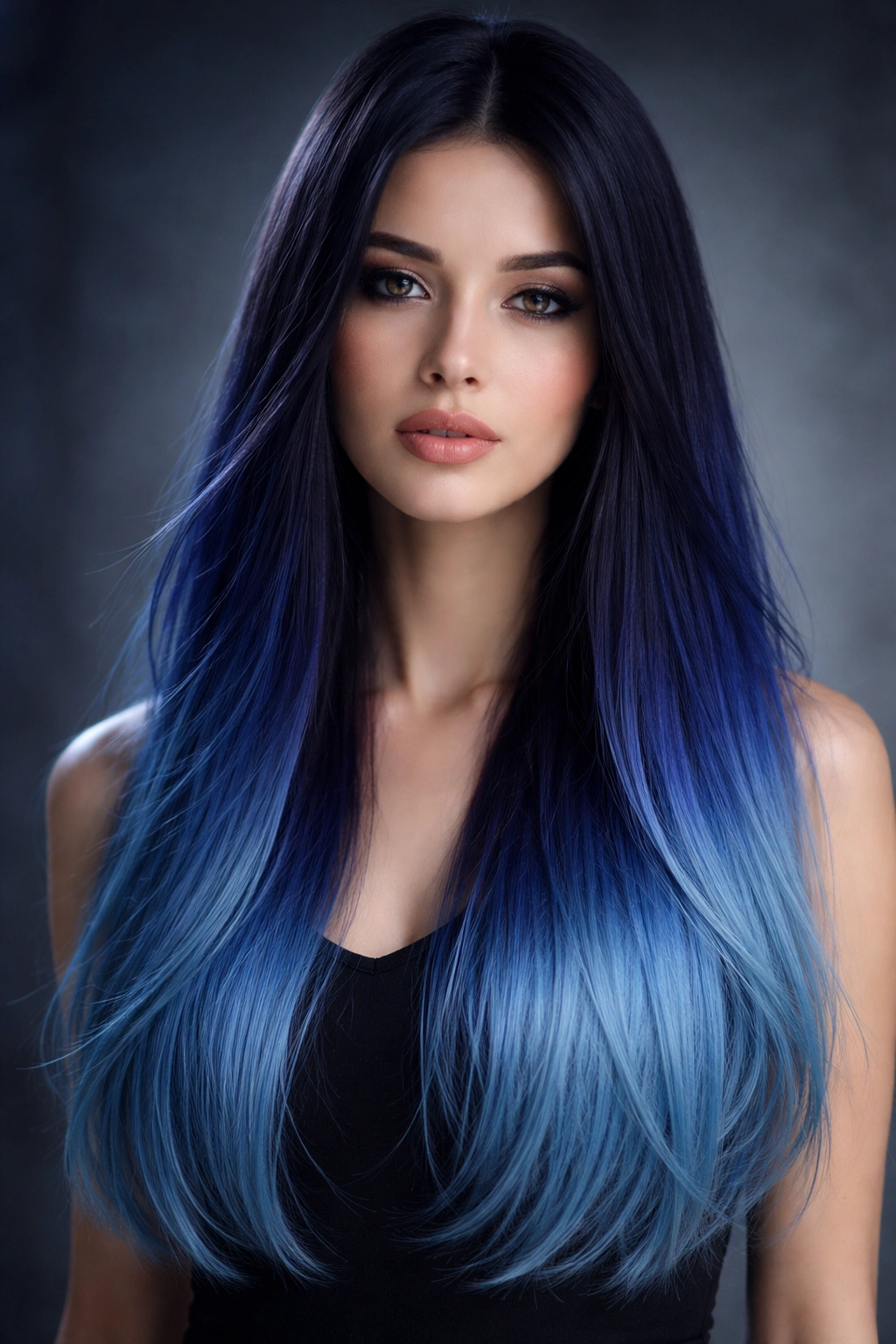
For those wanting to go unconventional, midnight blue or indigo ombre pairs dark indigo or deep blue roots with lighter blue or blue-purple tones at the ends. On straight hair, this creates a cool, moody look that’s fashion-forward without being costume-like. The straight hair displays the blue tones with crystalline clarity, making the color feel intentional and editorial.
Why This Works for Straight Hair
Blue tones need a clean, reflective surface to look true, and straight hair provides exactly that. The smooth texture prevents blue from looking murky or muddy — instead, it reads as intentional and vivid. The straight hair also shows the transition from deep indigo to lighter blue beautifully without the color getting lost in texture.
What to Know Before Committing
- Blue ombre requires starting with very pale blonde or pre-lightened ends to achieve true color
- Toning is essential — every 1-2 weeks with blue-depositing shampoo to keep the color from fading to gray
- Blue can stain skin and fabrics, so color-safe everything is non-negotiable
- This look suits cool skin tones beautifully and can look less flattering on very warm complexions
- You’re committing to frequent touch-ups and toning — this isn’t a low-maintenance option
Pro tip: Ask your colorist about using a blue-based demi-permanent color rather than permanent blue — it fades more gradually and looks intentional rather than tired as it fades.
10. Rooted Blonde Ombre with Shadows
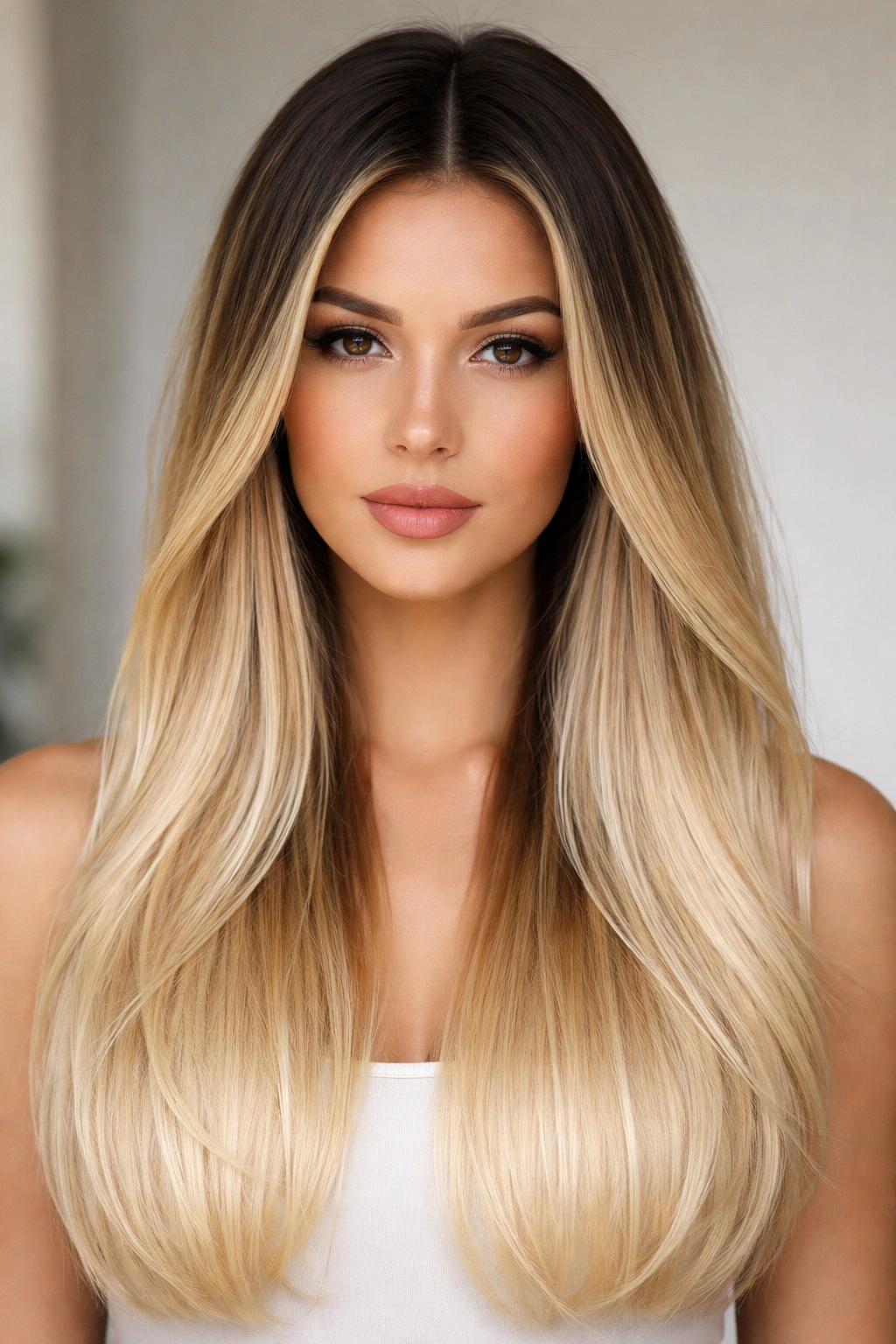
This approach starts with noticeably darker roots — sometimes natural color, sometimes a cool or warm brown shade — and transitions more abruptly into lighter blonde through the mids and ends. Unlike classic ombre where the transition is gradual, this version has a defined “shadow root” zone that’s intentionally darker. On straight hair, this creates modern, high-contrast dimension.
Why This Works for Straight Hair
The defined root shadow on straight hair looks polished and intentional rather than like you’re growing out your color. The clean lines of straight hair make the shadow root pop visually. This approach extends the time between root touch-ups because some darker roots are actually the aesthetic goal, making it more practical than pure blonde ombre.
What to Know Before Committing
- The shadow should be about 2-3 inches of intentionally darker color, blending gradually into blonde rather than a hard line
- You get the brightness of blonde ends without the constant root maintenance of full-head blonde on straight hair
- This look requires a skilled colorist who understands shadow root technique — uneven blending will look accidental
- Maintenance is every 5-6 weeks to deepen your shadow roots, making it one of the more manageable options
- This flatters most skin tones beautifully because you’re maintaining natural or darker color near your face
Worth knowing: The rooted blonde shadow approach actually looks better as some warmth returns to the blonde ends after a month or two, which is why colorists often space appointments 6-8 weeks apart for this style.
Final Thoughts
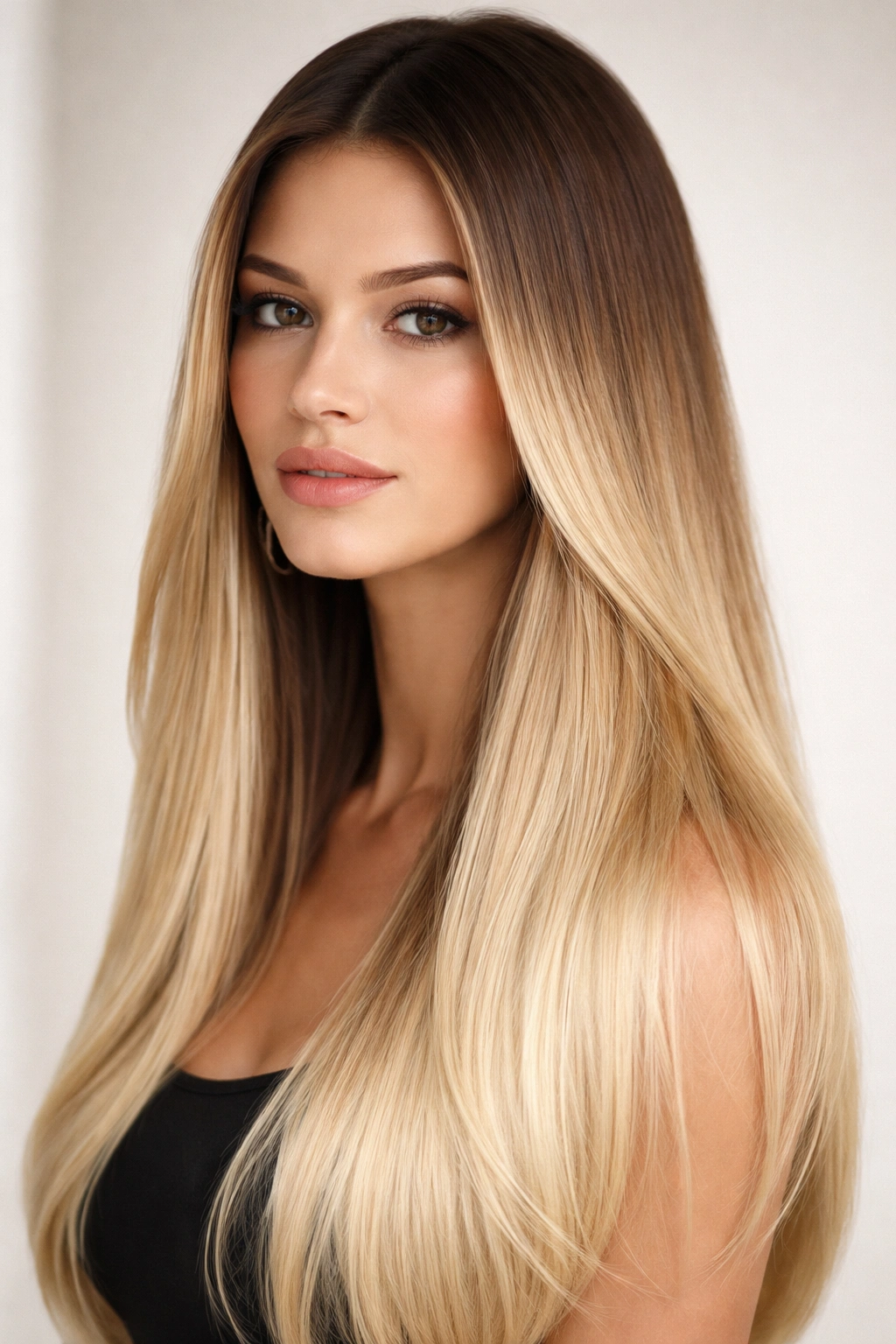
Straight hair gives you the advantage of seeing exactly what your colorist created — there’s nowhere for an uneven blend or an awkward color placement to hide. That’s both liberating and demanding: it means your ombre will look absolutely intentional and polished, but it also means precision matters enormously. The colorist you choose makes a bigger difference with ombre on straight hair than it might with textured hair where dimension comes partially from curl pattern rather than color work.
The maintenance reality varies dramatically across these ten approaches. Honey-and-cream ombre lets you stretch appointments to 7-8 weeks while black-to-silver demands toning every 2-3 weeks. Consider not just the color you love looking at, but the reality of upkeep that comes with it. A color you adore but can’t maintain will eventually disappoint you.
Your straight hair’s natural color, length, thickness, and skin tone all influence which ombre actually serves you best. If you’re torn between two options, bring both photos to a consultation with a colorist you genuinely trust, and let them advise you based on your specific hair. The best ombre isn’t the one that looks most striking in someone else’s photos — it’s the one that works with your hair’s reality and fits into your actual maintenance routine.
