



Straight hair is a gift when it comes to pixie cuts. While curly or wavy hair can sometimes fight against short styles, straight locks work with a pixie cut’s architecture to create clean lines, enhance face shape, and showcase bold styling choices with minimal fuss. The real beauty of a pixie cut with straight hair is that you get all the ease and edge of a cropped style without having to fight texture or unpredictability—and you’ll open up a whole wardrobe of styling possibilities you didn’t know existed.
The pixie has evolved far beyond the sleek, uniform cuts of decades past. Today’s versions range from subtly feminine to strikingly androgynous, from softly tapered to drastically textured. What works for your face, your lifestyle, and your personal aesthetic depends on how you play with length, layers, undercuts, and styling direction. Whether you want something that requires barely any styling or prefer a cut that gives you room to experiment with texture and dimension, there’s a pixie waiting for you.
The key to finding your perfect pixie is understanding which style complements your face shape and aligns with how much styling time you’re willing to invest. A blunt pixie demands precision and shows every texture; a shaggy one hides imperfections and builds movement. An undercut adds drama and separates the top from the sides; a tapered cut softens the overall silhouette. Your straight hair won’t disguise these differences—it will amplify them. That’s exactly what makes straight hair so magnificent for pixies: what you see is honestly what you get.
1. Classic Blunt Pixie
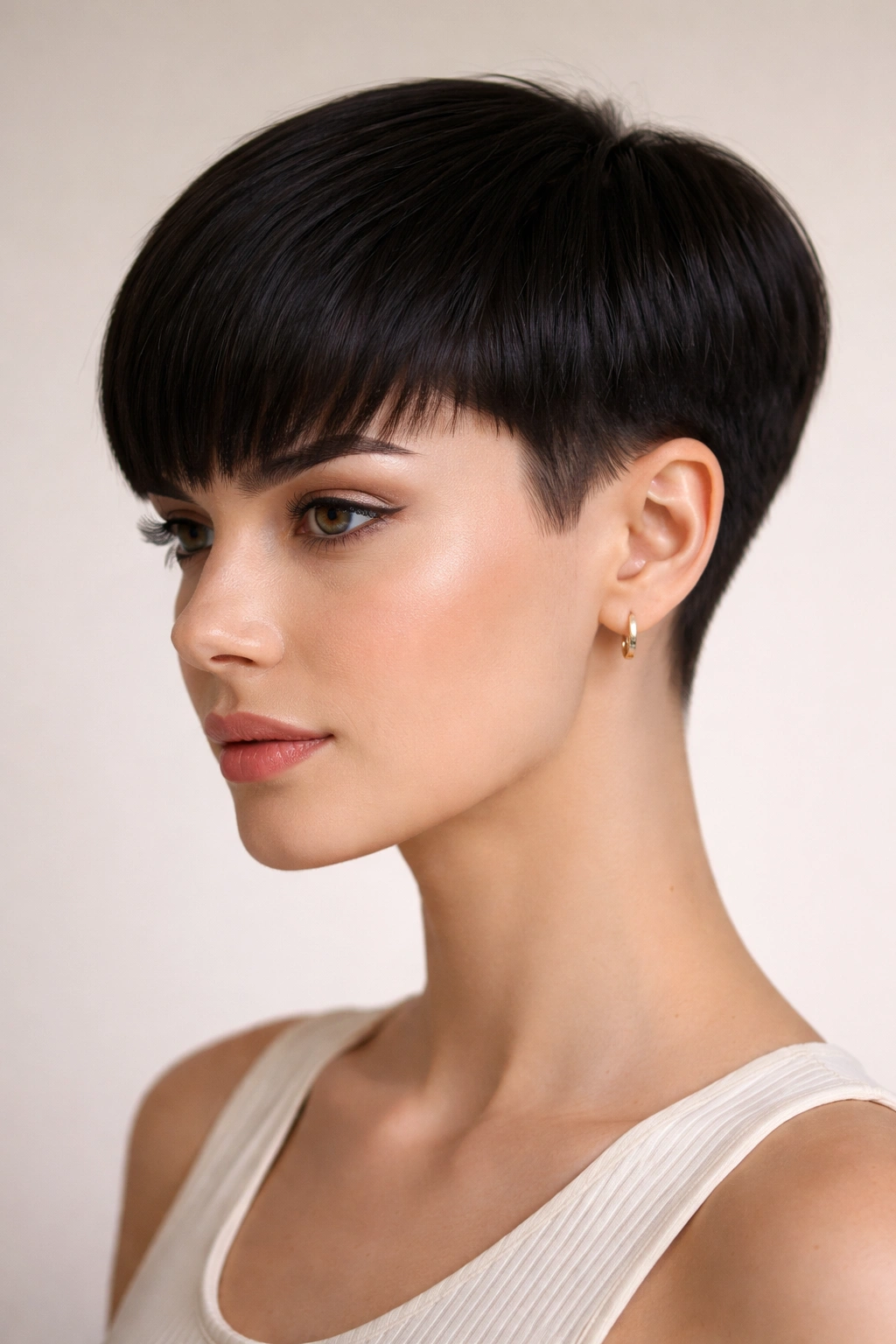
The classic blunt pixie is the foundation pixie—the one that defined the style and remains endlessly elegant. It’s shorter on the sides and back (usually around an inch or less) and slightly longer on top (roughly two to three inches), with a clean, geometric line around the hairline and a blunt front edge that frames your forehead. With straight hair, this cut shines because the blunt edges don’t disappear into waves—they create a sharp, intentional statement that feels modern and powerful.
Why It Demands Precision
A blunt pixie lives or dies by cut accuracy. Because there’s no texture or layering to hide uneven lines, your stylist needs to be someone you trust completely—ideally someone with serious pixie experience. The blunt front line is the signature feature, and it needs to hit exactly where it suits your face. Too low and it feels heavy; too high and it can look harsh. With straight hair, there’s nowhere to hide a mistake, but there’s also nowhere for the cut to hide when it’s absolutely right.
What Makes It Timeless
- Extremely low maintenance once styled—straight hair holds shape all day with minimal product
- Works on virtually every face shape when cut correctly, especially if your stylist adjusts the front placement to your proportions
- Photographs beautifully and reads as immediately confident and intentional
- Requires just a basic blow-dry routine with a small round brush to smooth the top
- The front line naturally draws attention upward, which flatters a wider jawline or fuller face
Pro tip: Ask your stylist to leave the front slightly longer than you think you want it—hair settles and grows, and you can always trim shorter, but you can’t add length back. A blunt pixie is one place where starting conservative makes sense.
2. Textured Cropped Pixie
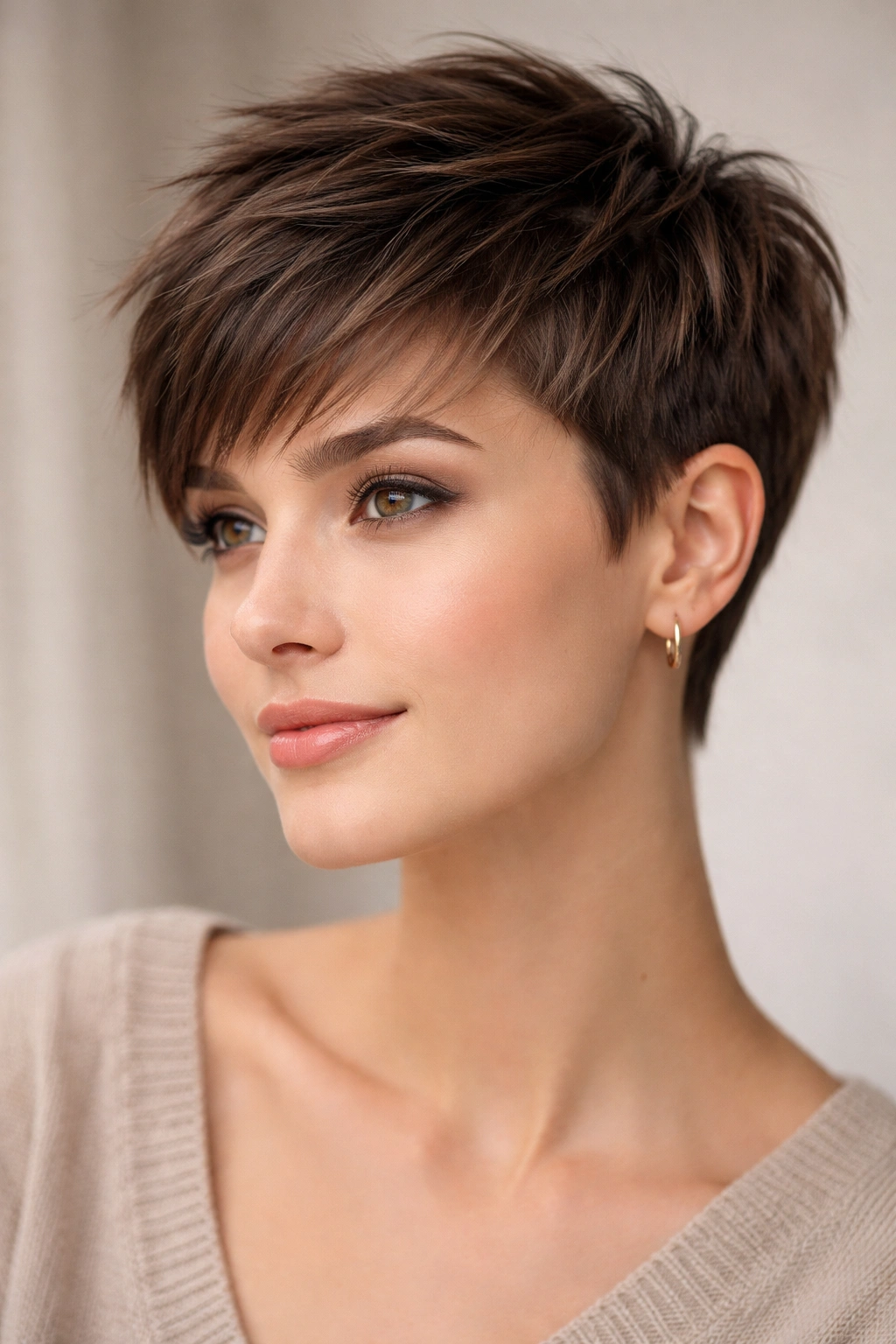
This is the pixie for people who want edge without severity. A textured cropped pixie uses point-cutting or razor-cutting techniques to create individual strands that stick up and separate, giving the whole cut an intentional, playful messiness. The overall length is similar to a blunt pixie—short on the sides, slightly longer on top—but the texture makes it feel softer and more forgiving. With straight hair, you get the best of both worlds: the texture reads clearly without competing with natural wave pattern, and styling becomes genuinely fun.
How Texture Changes Everything
Point-cutting creates movement where bluntness creates stillness. Those textured pieces catch light differently, add visual dimension, and make the cut feel less severe. When you run your fingers through a textured pixie, the strands separate instead of falling as one solid shape. This makes the cut feel more organic and less “bowl-shaped.” Straight hair shows off this texture brilliantly because the individual strands are clearly visible without any wave pattern to complicate them.
The Styling Possibilities
- Apply a light texturizing paste or matte clay to damp hair and tousle with your fingers for an effortless, piece-y look
- Use a small round brush and blow-dryer to smooth the top smooth if you want a more polished version
- Textured pixies work with a tiny bit of sea salt spray for extra definition and grip
- You can change the vibe dramatically depending on whether you style it tousled or sleek—one cut, multiple personalities
- Grow-out is more forgiving than a blunt cut because texture hides the length inconsistency as hair gets longer
Worth knowing: Textured pixies typically need trims every four to five weeks to maintain the texture definition. As the cut grows out, it loses that separated, piece-y quality and starts to flatten. If you love this look, you’re committing to regular salon visits.
3. Long Pixie (Pixie-Bob Hybrid)
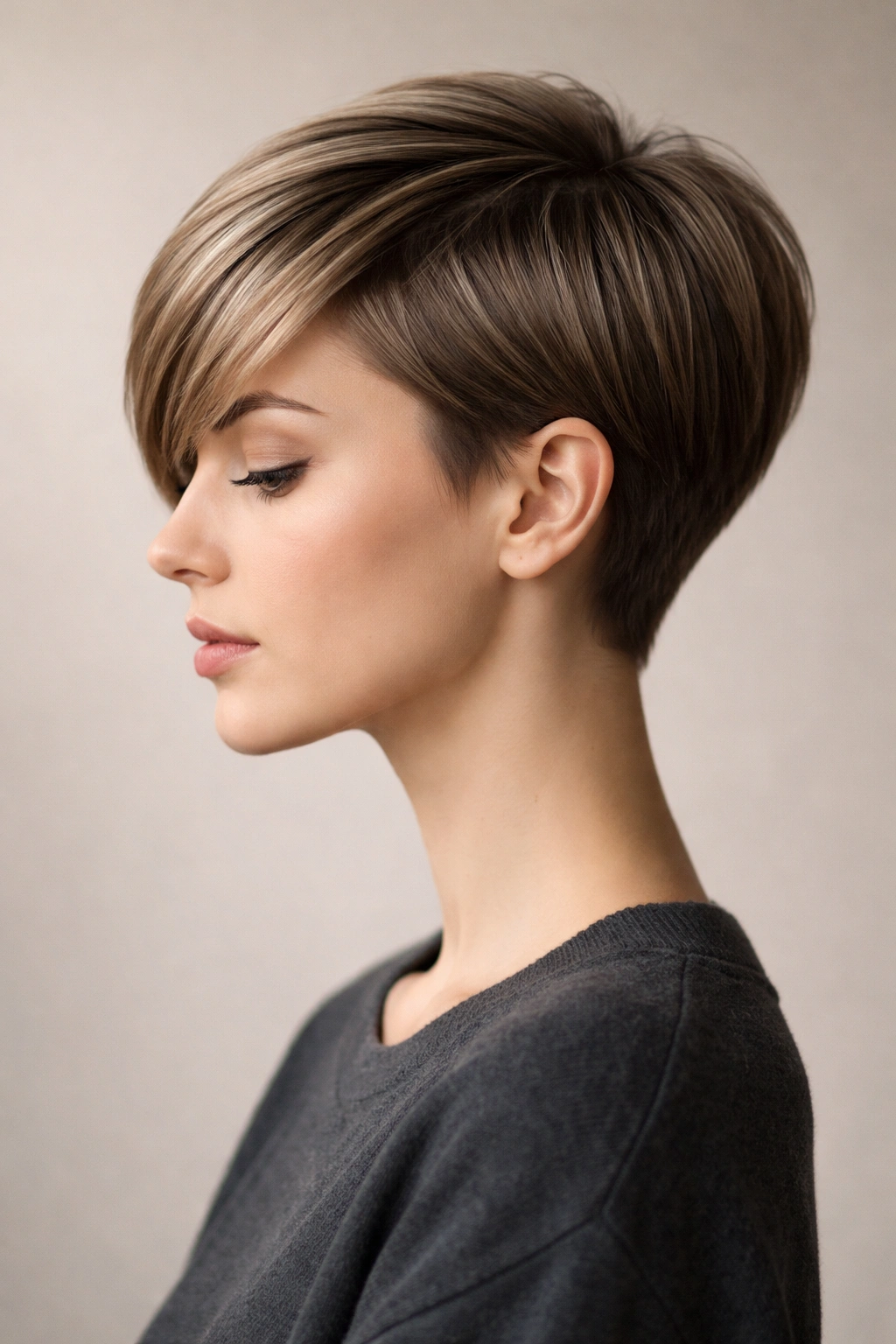
A long pixie splits the difference between a traditional pixie and a bob by keeping the cropped sides and back of a pixie while letting the top grow slightly longer—usually four to five inches—and sometimes leaving more length in the front for subtle styling direction. It’s perfect if you love the pixie silhouette but worry about completely losing length, or if you want room to style your hair differently on different days. The sides stay short enough to show your neck and ears, but the top gives you actual texture to work with.
Why This Works for Straight Hair
Long pixies benefit enormously from straight hair because the longer top section shows clean, geometric lines instead of getting lost in wave or curl. You can see exactly how the longer pieces transition to the shorter sides, which is the whole design point of this cut. The visual contrast between the cropped sides and the longer top becomes a feature rather than a random accident.
Real-World Styling Flexibility
- Blow-dry straight and smooth for a sleek, androgynous look that reads polished and intentional
- Apply pomade or cream and slick the longer top piece back for a completely different vibe
- Tousle with texture paste for a more relaxed, piece-y aesthetic
- Pin or clip one side back to show off the undercut and change the proportions of your face instantly
- Enough length on top to experiment with center parts, deep side parts, or even a faux-hawk styling direction
- This length works particularly well if you have a longer face or prefer not to show too much of your jawline
Real talk: If you’re someone who likes to have options and can’t quite commit to the severity of a true pixie, a long pixie is your answer. You get the edge and the ease of a short cut without feeling completely shorn.
4. Side-Swept Pixie
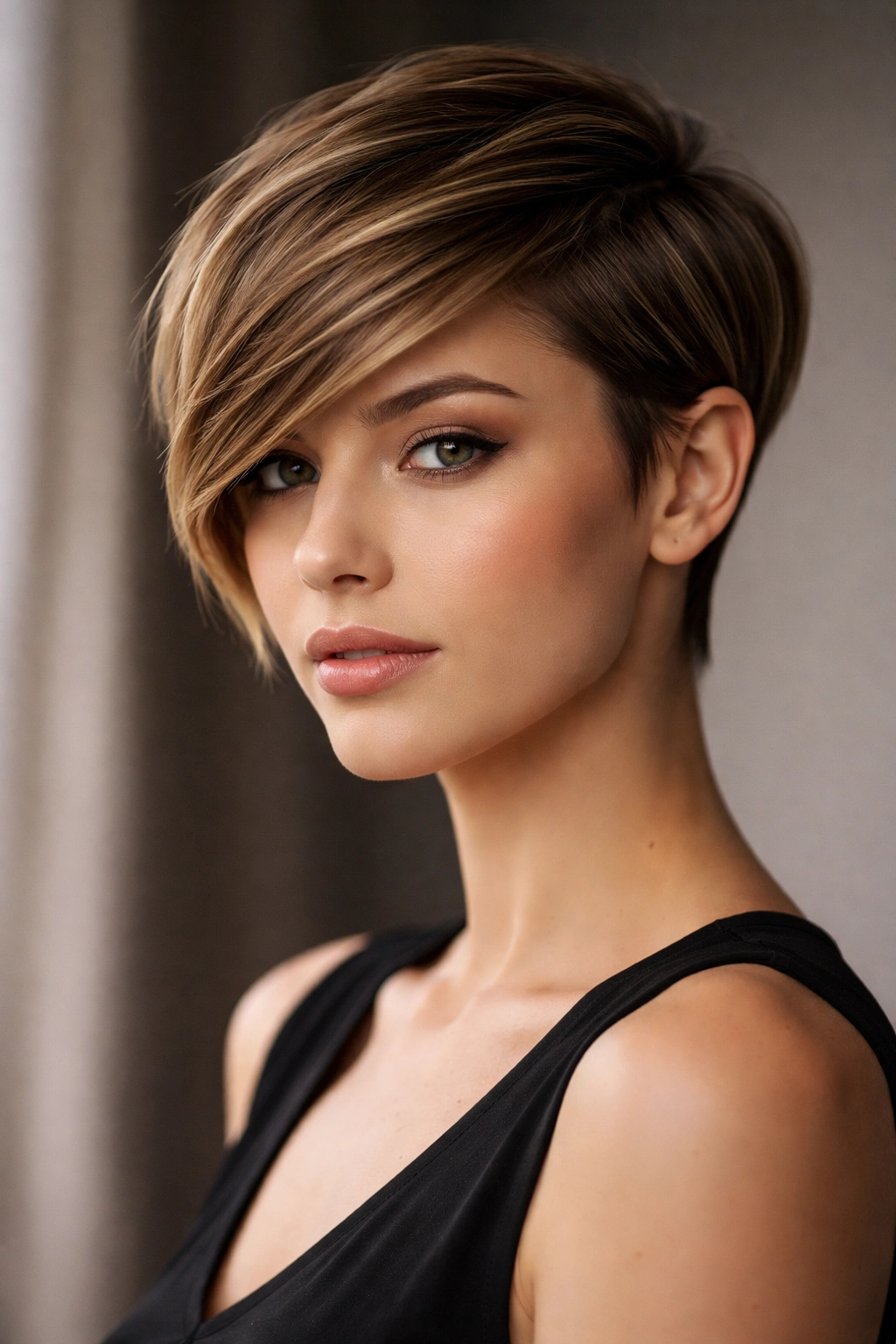
A side-swept pixie uses asymmetry as its defining feature. The longer section falls across one side of the face, usually covering part of the forehead or one eye depending on preference, while the other side stays considerably shorter. This creates directional movement and a slightly undone, romantic quality that feels more fashion-forward than a symmetrical pixie. With straight hair, the longer section drapes cleanly and frames the face with actual line and intention.
Why Asymmetry Works Here
Asymmetry creates visual interest in a way that symmetrical pixies sometimes don’t. The off-balance proportions feel intentional and playful rather than accidental. One longer side gives you something to style and play with—you can tuck it behind one ear, let it fall across your face, or pin it up depending on your mood. Straight hair shows off this styling versatility because the strands don’t collapse into waves; they hold shape and direction.
Face-Shaping Benefits
- The longer section on one side can soften a sharp jawline or draw attention to one side of the face you prefer
- Asymmetry tends to feel more flattering on square or rectangular faces because it breaks up the geometric lines
- You can flip which side is longer every time you get a trim if you want to experiment with different proportions
- The off-balance effect makes the cut feel deliberately fashion-forward rather than just “short”
- Works beautifully with blunt or textured versions, depending on whether you want precision or play
Pro tip: When you flip the longer side, your whole face reads differently to yourself and others. If you ever feel the styling getting stale, ask your stylist to switch sides at your next appointment. It’s like getting a completely different haircut.
5. Undercut Pixie
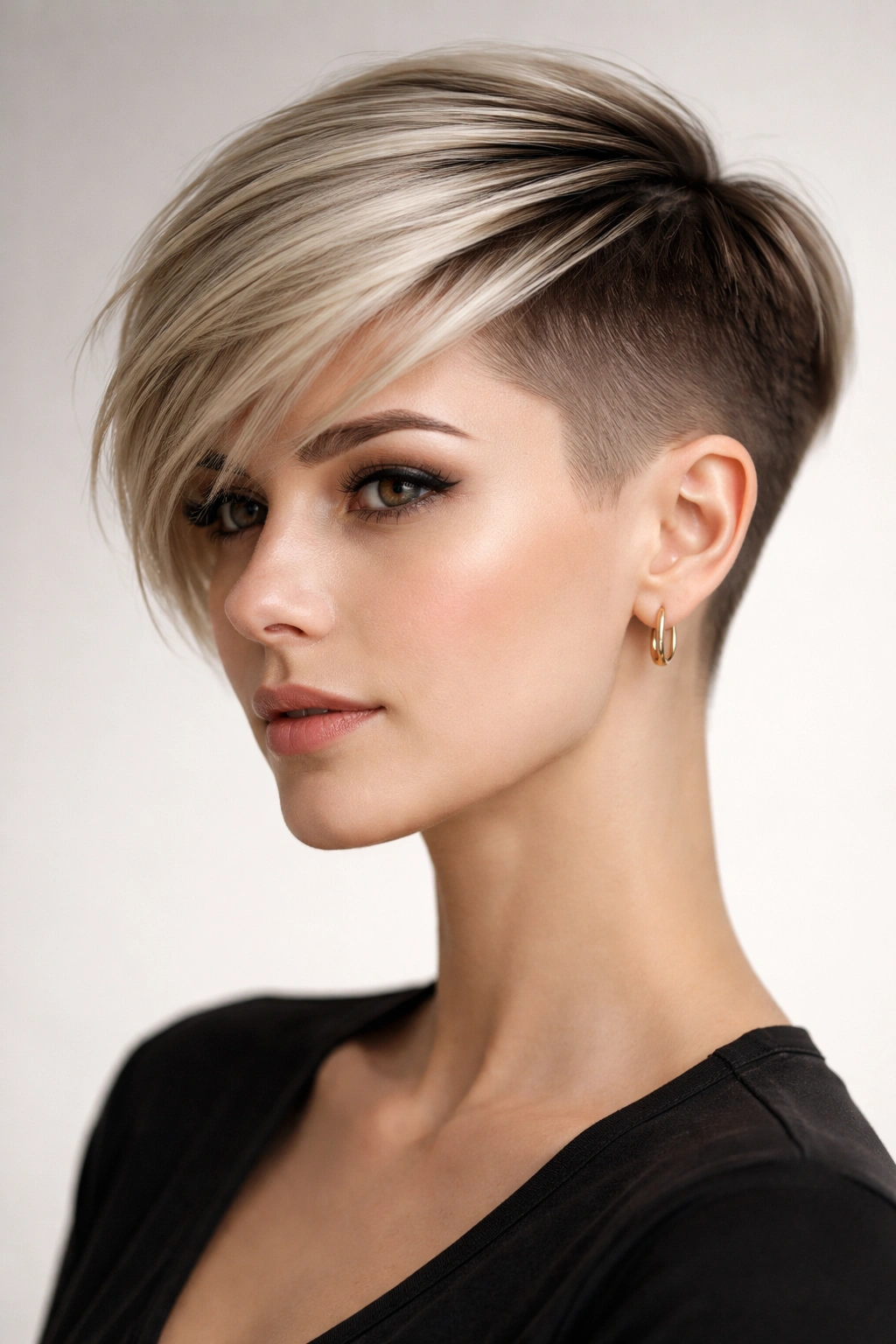
An undercut pixie uses dramatic length contrast by keeping the sides and back extremely close-cropped (sometimes down to an inch or less) while the top section stays noticeably longer, creating a clear separation between the two zones. You can see the skin underneath, which makes this cut feel edgy and intentional. Undercut pixies work beautifully with straight hair because the contrast is bold and unambiguous—no texture hides or softens that transition line.
The Drama of Visible Contrast
An undercut creates architectural interest through sheer contrast. The sides being so short makes the top feel fuller and more dramatic by comparison. This is the pixie cut for people who want their haircut to be a statement, not just a practical choice. With straight hair, you get maximum visual impact because the tight sides stay clean and sharp, and the longer top reads as genuinely voluminous in comparison.
Styling and Maintenance Considerations
- The undercut section needs frequent trims (every two to three weeks) because it grows visible quickly and that precise short line is the whole point
- Top section can be styled sleek and smooth for maximum undercut visibility, or textured for a softer vibe
- The contrast makes even basic styling feel high-impact—a simple side part becomes a dramatic styling choice
- Slicking the top back with pomade or gel really showcases the undercut for an edgy, fashion-forward look
- Undercuts transition well as hair grows out—the sides become longer and the overall look shifts toward a tapered pixie without looking unkempt
Insider note: Undercuts photograph exceptionally well and tend to photograph even more dramatic than they appear in the mirror. If you’re someone who loves documenting their look, an undercut pixie delivers.
6. Shaggy Pixie
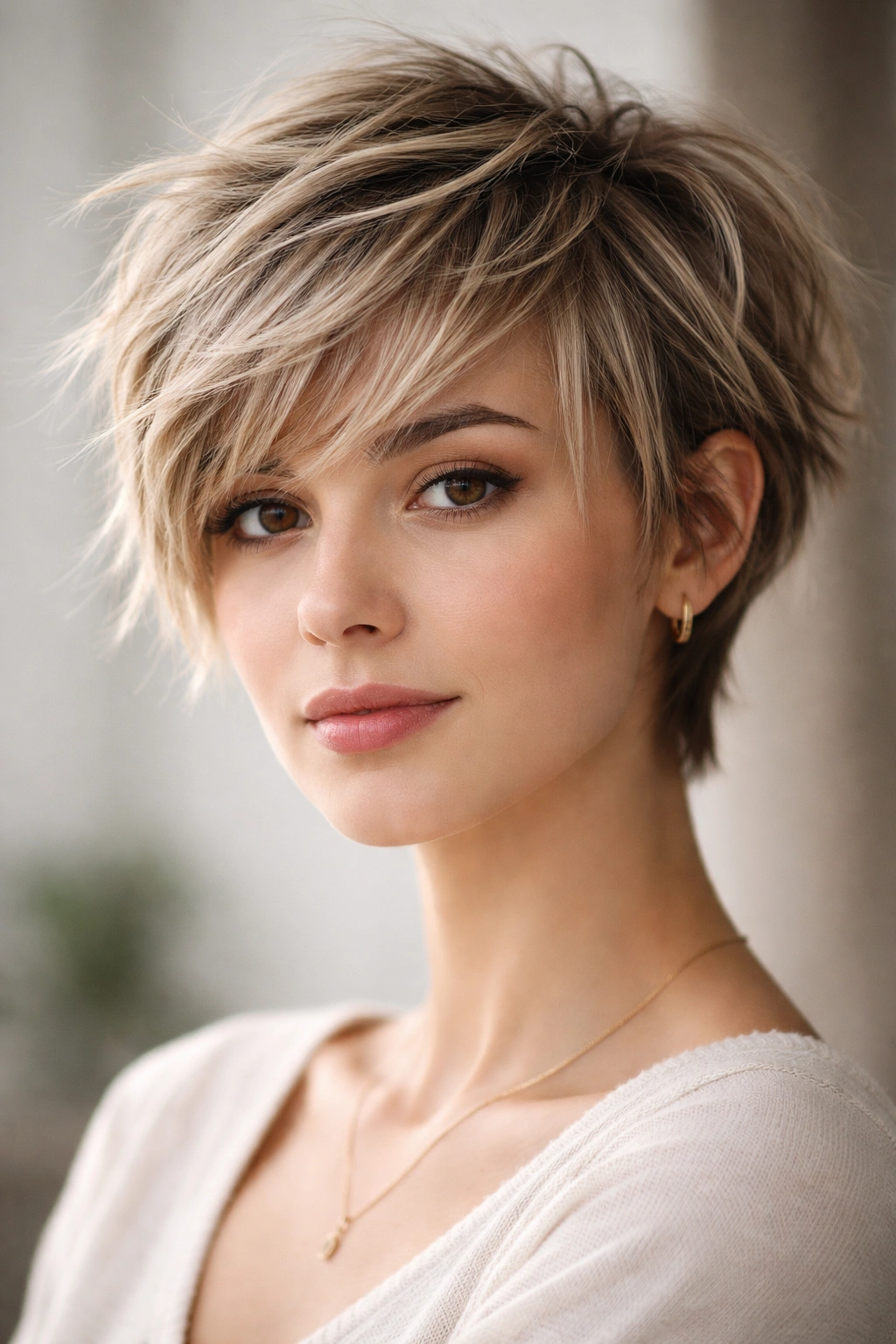
A shaggy pixie layers the hair throughout, creating a tousled, lived-in texture that feels casual and approachable. Instead of a precise geometric silhouette, layers break up the shape and create movement and dimension. The sides and back stay short, but the multiple lengths throughout the top mean the cut works with your hair’s natural movement rather than fighting it. With straight hair, a shaggy pixie feels intentional and playful rather than accidentally messy.
How Layers Transform the Silhouette
Layers are the opposite of the blunt or undercut approach. Instead of clean, precise edges, you’re creating multiple lengths that move independently. This makes the cut feel less severe and more textural. Shaggy pixies often have a slight ’70s or ’90s vibe—mod and retro and deliberately undone. Straight hair shows off layers beautifully because each individual layer reads clearly, creating visible dimension without needing texture or curl to do the heavy lifting.
Why Shaggy Pixies Feel More Forgiving
- The multiple lengths hide grow-out much better than blunt or precise cuts
- You can go longer between trims and still look intentional—the cut doesn’t depend on precision
- Styling is incredibly flexible: tousle for relaxed, blow-dry smooth for polished, or anything in between
- Layers create movement that makes the cut feel less severe on round or fuller faces
- A shaggy pixie works on almost every face shape because the texture softens lines rather than emphasizing them
- The messy element feels less like “I just woke up” and more like “I’m too cool to worry”
Worth knowing: Shaggy pixies need slightly more intentional styling than blunt or undercut versions if you want them to look deliberately textured rather than just grown-out. A sea salt spray or texturizing product is helpful for defining the layered effect.
7. Asymmetrical Pixie
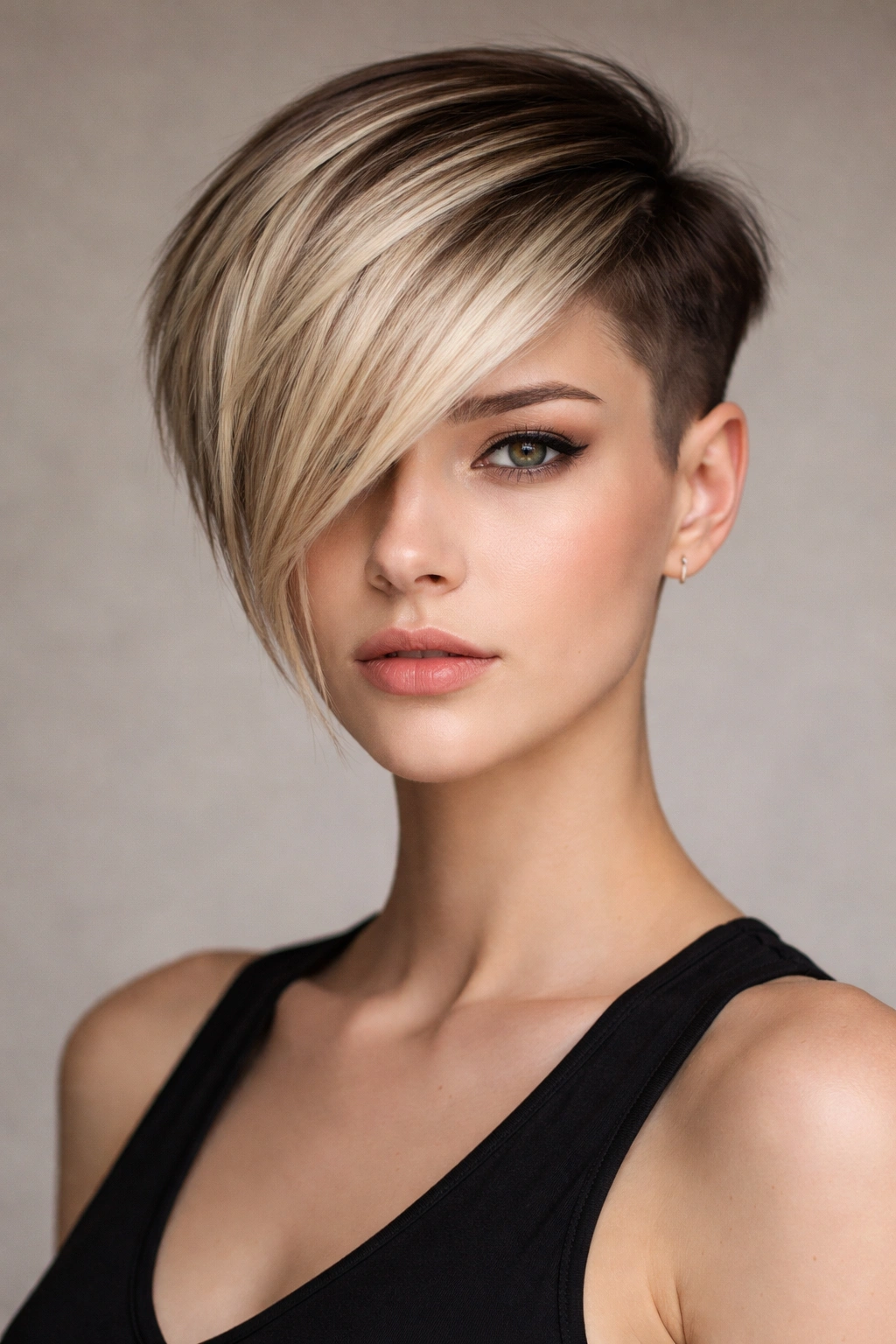
An asymmetrical pixie takes side-swept styling one step further by cutting one side significantly shorter than the other—sometimes down to a tight undercut on one side while the other side is longer. The contrast is more dramatic than a gentle side-sweep. This cut is fashion-forward and requires confidence, but with straight hair, it reads as absolutely intentional and bold. You’re making a statement with an asymmetrical pixie.
The Courage This Cut Demands
An asymmetrical pixie isn’t subtle. It says something loud about your personal style and willingness to stand out. The sides might be dramatically different lengths, or one side might be undercut while the other remains longer. This cut suits people who are genuinely interested in their appearance as self-expression, not just practical grooming. Straight hair shows off asymmetry unflinchingly—every bit of the contrast is visible and unmistakable.
Styling Approaches and Versatility
- You can style both sides differently: one sleek and the other textured, or one tucked and the other flowing
- Asymmetry works with bold colors or highlights that enhance the geometric nature of the cut
- The length differential can be subtle (one inch versus two inches) or dramatic (undercut versus longer length)
- This cut photographs beautifully and tends to feel more flattering on camera than in the mirror—the angles read as intentional and editorial
- Asymmetry is particularly striking on people with angular face shapes or strong bone structure
Pro tip: If you’re considering an asymmetrical pixie, bring reference photos to your consultation and discuss exactly which side should be longer and why. The stylist’s placement matters enormously for how the asymmetry actually frames your face.
8. Tapered Pixie
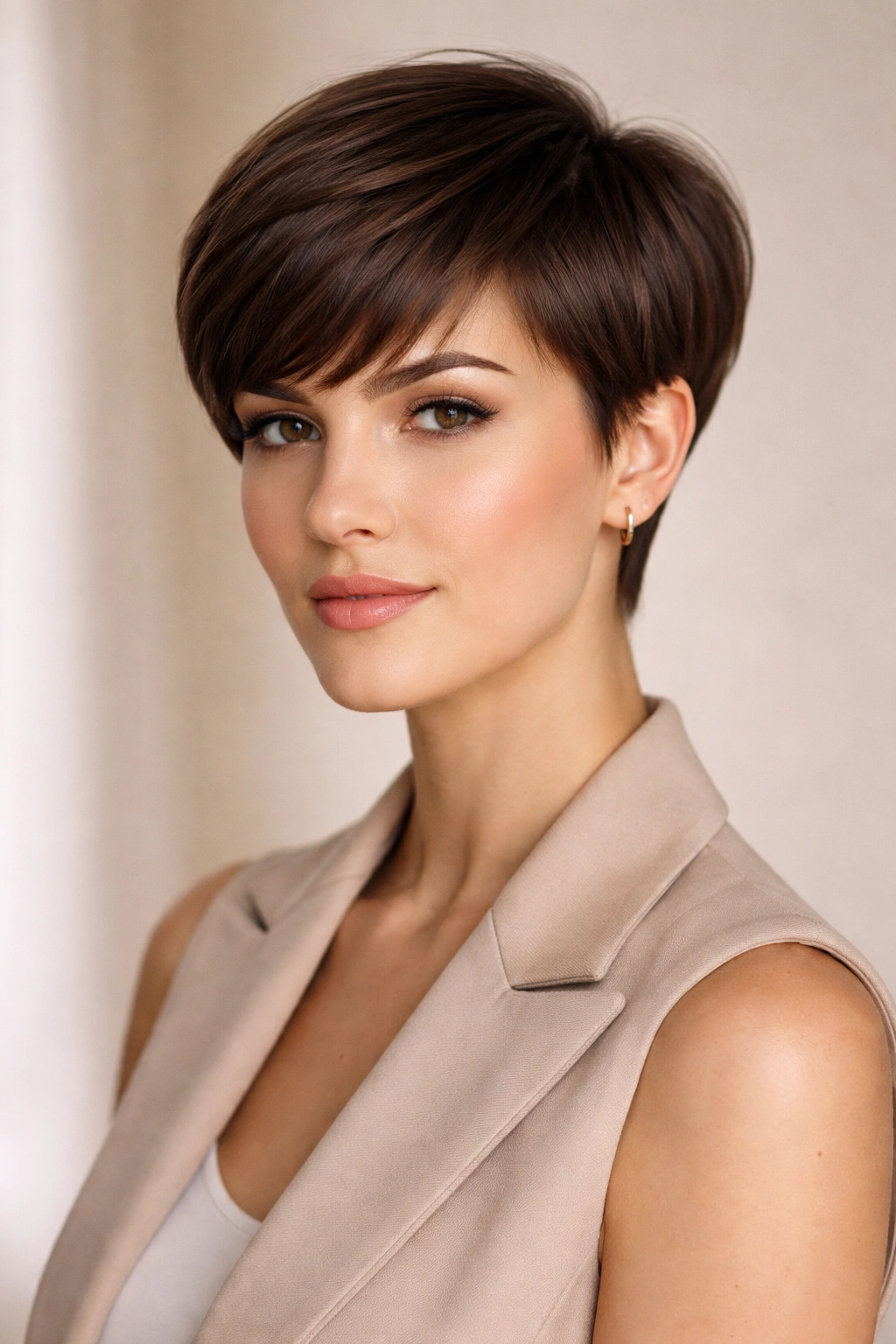
A tapered pixie uses length graduation rather than sharp contrast. The sides and back gradually increase in length from the nape up, creating a soft, curved silhouette rather than a blunt line. The top is still longer than the sides, but the transition between lengths is gradual and subtle. Tapered pixies feel more refined and less edgy than undercut or blunt versions. With straight hair, a taper creates a clean, professional silhouette that flatters most face shapes.
Why Taper Works as a Bridge Between Styles
A taper is the pixie for people who want short hair without the severity. It’s less dramatic than an undercut, less precise than a blunt cut, and more polished than a shaggy version. The graduated length creates a sculpted, intentional shape without relying on geometric precision or textural chaos. Straight hair shows off a taper’s elegant simplicity beautifully.
Real-World Practicality and Styling
- Tapered pixies are incredibly versatile and work on virtually every face shape and hair type combination
- Styling is straightforward: a basic blow-dry with your fingers or a small round brush is usually enough
- The soft edge means grow-out is relatively forgiving—the taper gradually becomes longer without looking drastically out of shape
- You can style it sleek or textured depending on mood, and both versions read as intentional
- A tapered pixie works particularly well if you prefer a slightly more traditionally feminine silhouette while still enjoying the practicality of short hair
- This cut suits professional environments because it reads as polished without being severe
Real talk: If you’re trying a pixie for the first time or you’re unsure about committing to something extremely short, a tapered pixie is the safest starting point. It gives you short hair’s ease without its edge, and you can always ask your stylist to taper tighter or cut sharper at your next appointment.
9. Slicked-Back Pixie
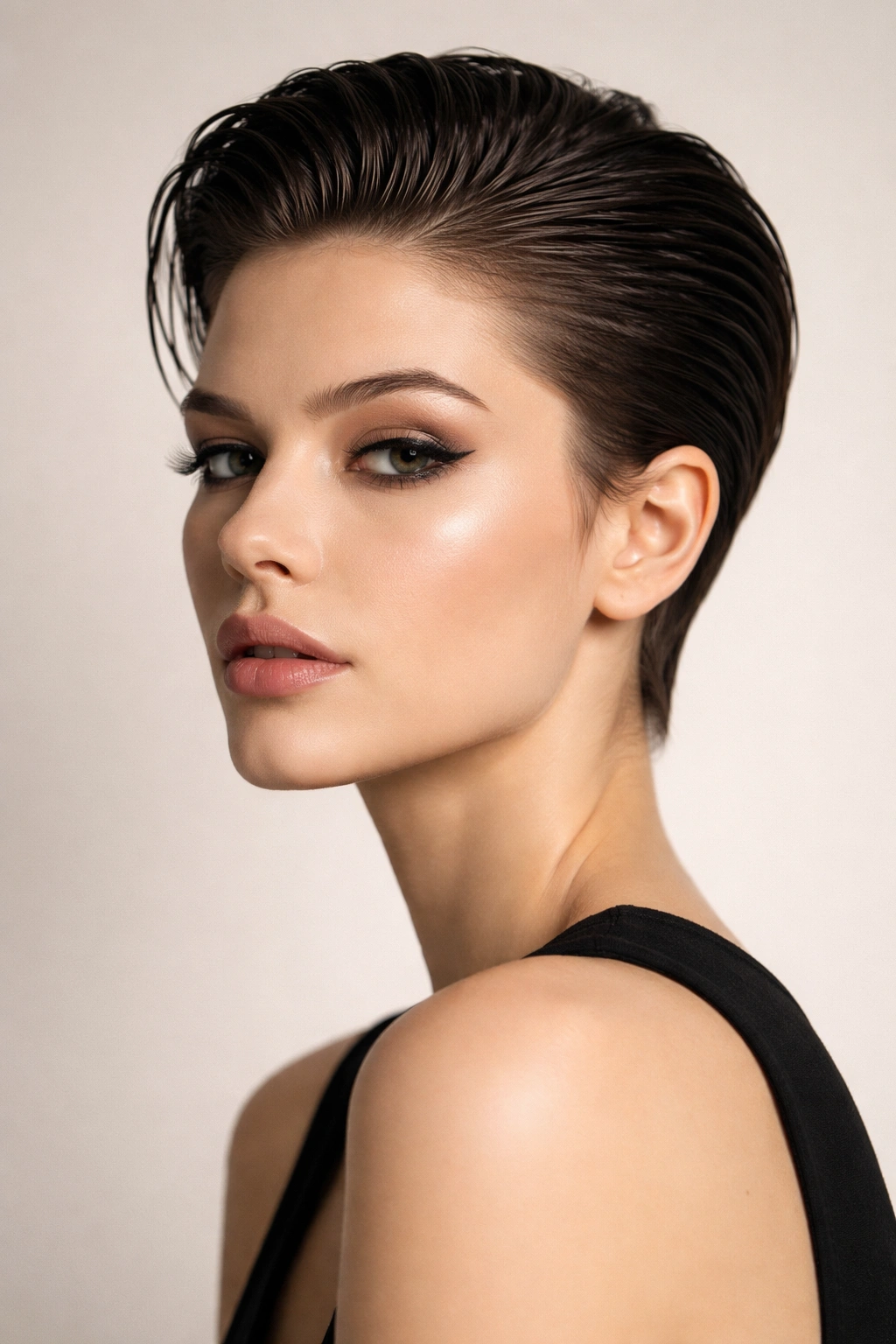
A slicked-back pixie is actually just a pixie cut—any version works—styled smoothly back and away from the face with pomade, gel, or a smoothing cream. What makes this a distinct styling approach is how it transforms the perception of the cut. When you slick a pixie back, you see maximum face, maximum ear, maximum neck. The whole cut’s architecture becomes visible. With straight hair, slicking back reveals the clean lines and geometric precision of the cut itself, making it feel editorial and bold.
How Styling Transforms the Same Cut
You could have a textured pixie that you usually wear piece-y and undone, but on a day when you want to feel powerful and intentional, slick it back and you’ve got a completely different look. Slicking back works with any pixie version—blunt, tapered, undercut, asymmetrical—but it completely changes the energy. Straight hair holds a slicked-back style all day without effort, and the smoothness emphasizes the cut’s clean lines.
When and Why You’d Style It This Way
- Slicked-back styling makes any pixie look more editorial and high-impact
- It shows off your face, ears, and jawline more than any other pixie styling approach
- Works beautifully if you have strong bone structure or features you want to emphasize
- A slicked-back pixie feels androgynous and bold—it’s a styling choice that commands attention
- This approach works year-round but feels particularly striking in warm weather when showing your neck and ears is practical
- Pair with bold makeup or a strong personal aesthetic for maximum impact
Pro tip: A light pomade or matte styling cream is better for slicked-back pixies than a heavy gel, which can look wet and dramatic. You want the hair to look smooth and intentional, not plastered down. With straight hair, even a tiny bit of product will hold all day.
10. Choppy Pixie
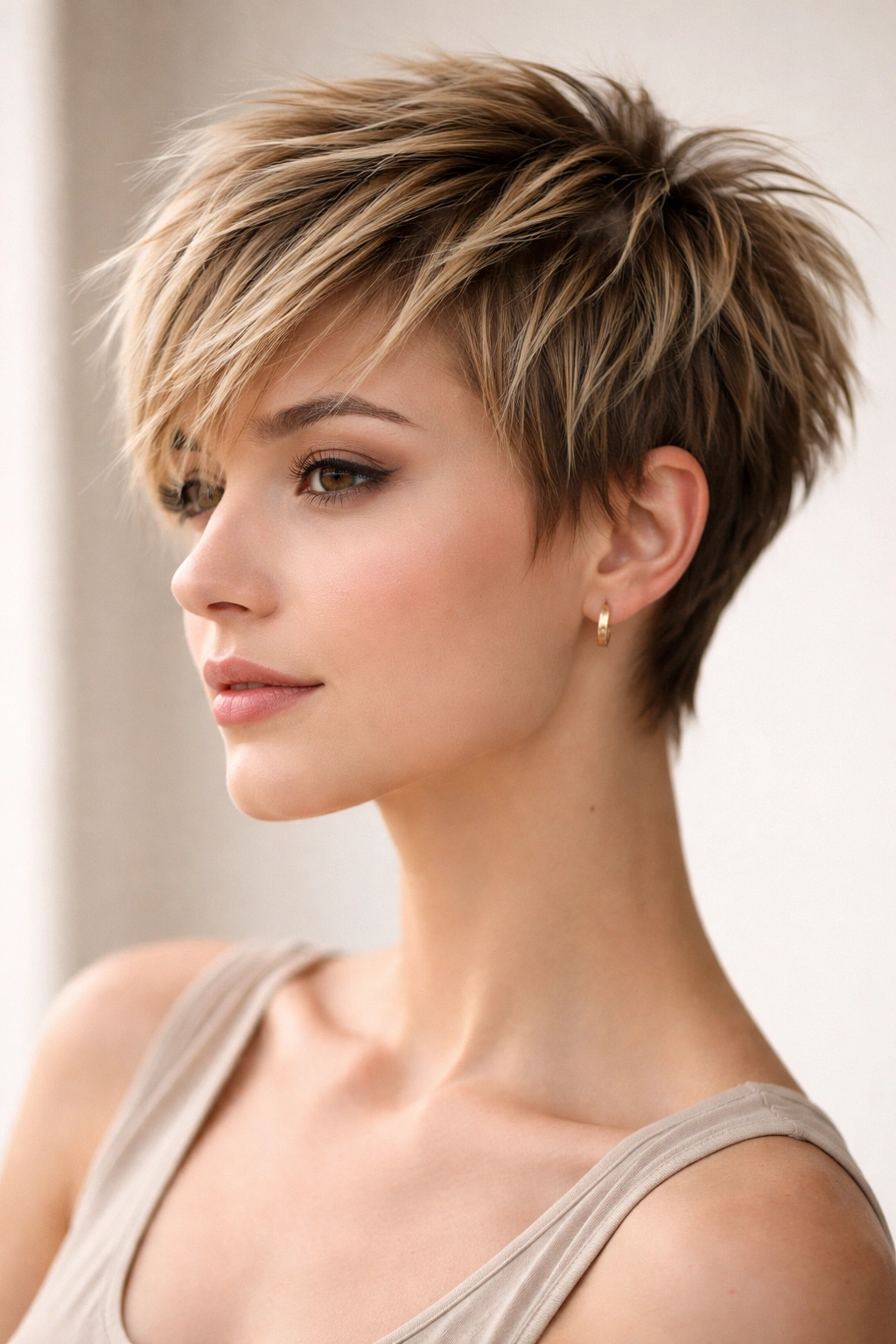
A choppy pixie combines layers with length variation, creating a textured, deliberately irregular silhouette that feels artfully messy. Think of it as a shaggy pixie’s edgier cousin—the layers are more pronounced and intentionally choppy rather than smoothly blended. The cut has movement and texture throughout, with no single line defining the shape. With straight hair, choppiness reads as intentional artistic choice rather than accidental roughness.
The Artful Imperfection of Choppiness
Choppiness is deliberate texture. It’s not a mistake or a grow-out phase; it’s the design of the cut. Choppy pixies suit creative people who embrace the messy-by-design aesthetic. The irregular lengths create visual interest and movement, and straight hair showcases this texture beautifully because every strand reads clearly. You’re getting edge without the severity of an undercut, and movement without the softness of a shag.
Styling and Personality of a Choppy Pixie
- Choppy pixies benefit from texturizing products that emphasize the layered, piece-y quality
- A sea salt spray, matte clay, or texturizing paste will enhance the intentional messiness you’re going for
- You can smooth it down with a blow-dryer and round brush if you want a more polished version, but the cut’s real personality comes through when it’s textured
- This cut feels particularly striking on people with angular face shapes or creative personal styles
- Choppy pixies photograph exceptionally well and always read as fashion-forward rather than grown-out
- The irregular lengths mean you can hide a few weeks of growth between trims more easily than with a blunt or geometric cut
Worth knowing: A choppy pixie takes a stylist with real confidence and technical skill. You want someone who understands how to create choppiness that looks intentional rather than just rough. Bring reference photos and discuss the specific level of choppiness you want—subtle and textured versus dramatic and choppy are very different things.
Final Takeaway
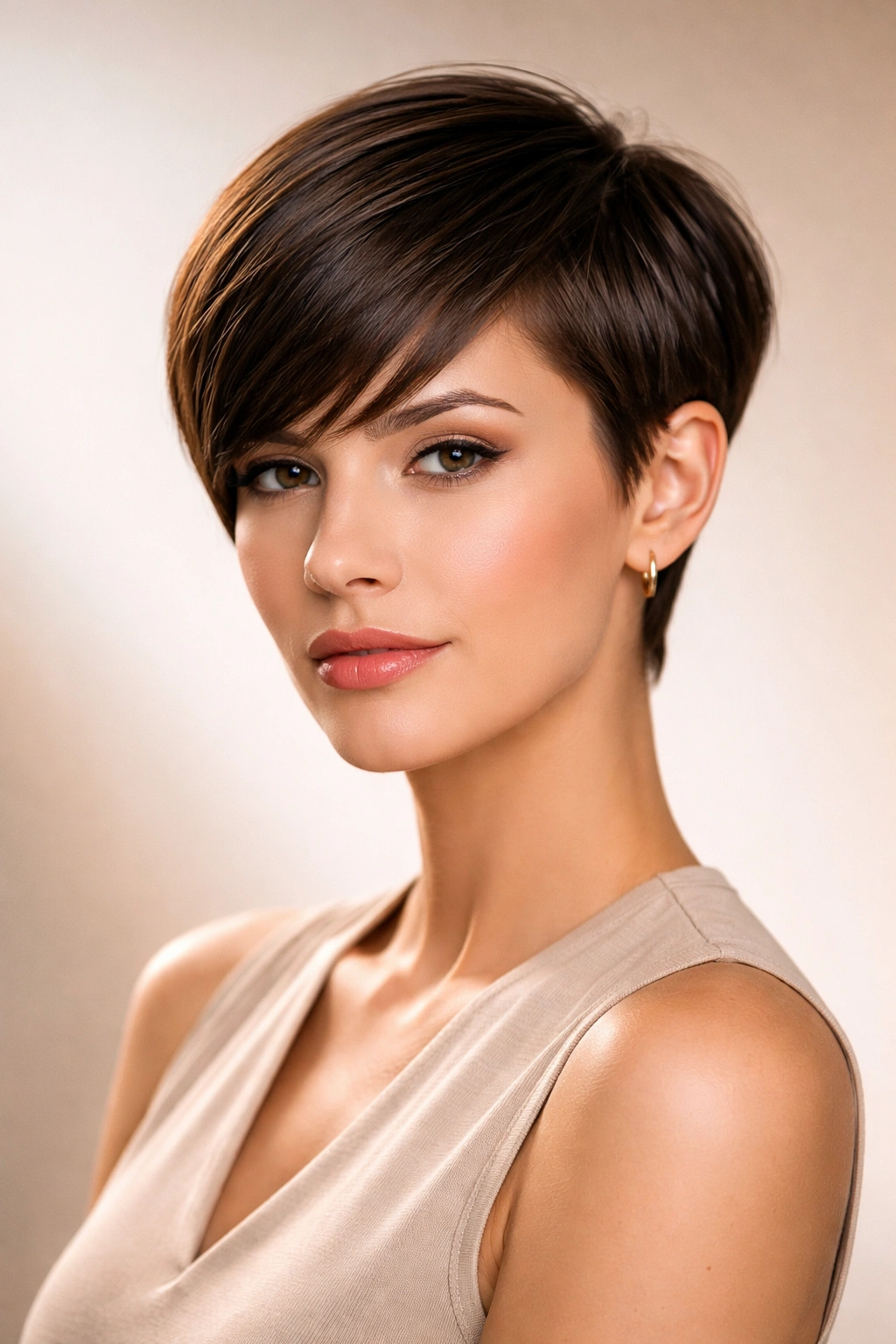
The right pixie cut for straight hair depends entirely on which version aligns with both your face shape and your styling personality. If you love precision and simplicity, a blunt or tapered pixie will serve you beautifully. If you’re drawn to texture and movement, a shaggy or choppy pixie delivers that in spades. For people who want drama and edge, undercuts and asymmetrical cuts make an undeniable statement. And if you’re still figuring out your comfort level with really short hair, a long pixie or side-swept version gives you more options without sacrificing that practical, easy-care quality.
Straight hair makes every single pixie cut easier to maintain and more visually striking because there’s nothing competing with the cut’s architecture. Your lines stay clean, your styling effort stays minimal, and the choice you make about length, texture, and shape reads exactly as you intended it to. The pixie cut isn’t one size fits all, but with your straight hair, whichever version you choose will absolutely deliver on the promise of looking intentional, modern, and uncompromisingly you.
