



Straight hair has a reputation for being low-maintenance, but that doesn’t mean it can’t be absolutely stunning with the right color technique. Blonde balayage is one of the most flattering ways to add dimension and movement to straight strands, and the best part? It doesn’t require tight curls or waves to look incredible. In fact, straight hair showcases balayage in a completely different way than curly hair does — the color placement becomes almost architectural, with clean lines and intentional dimension that become even more visible as light plays across the smooth surface of each strand.
The challenge with balayage on straight hair is that every placement decision shows. There’s nowhere for the color to hide, which means the technique needs to be even more thoughtful and precise than it would be on textured hair. But this is also why balayage can look so polished and sophisticated on straight hair — the color transitions appear intentional and expertly placed rather than accidental. Whether you’re drawn to warm honey tones, cool ash blondes, or dramatic rooted looks, there’s a balayage approach that’ll transform your straight hair from simple to genuinely striking.
These ten balayage ideas all work beautifully with straight hair because they’re designed with the visual clarity and light-reflection properties of straight strands in mind. Each one offers a different vibe and maintenance level, so you can pick the style that fits your lifestyle, skin tone, and maintenance comfort level. Let’s explore what’s possible when you combine the precision of balayage with the polish of naturally straight hair.
1. Sun-Kissed Blonde
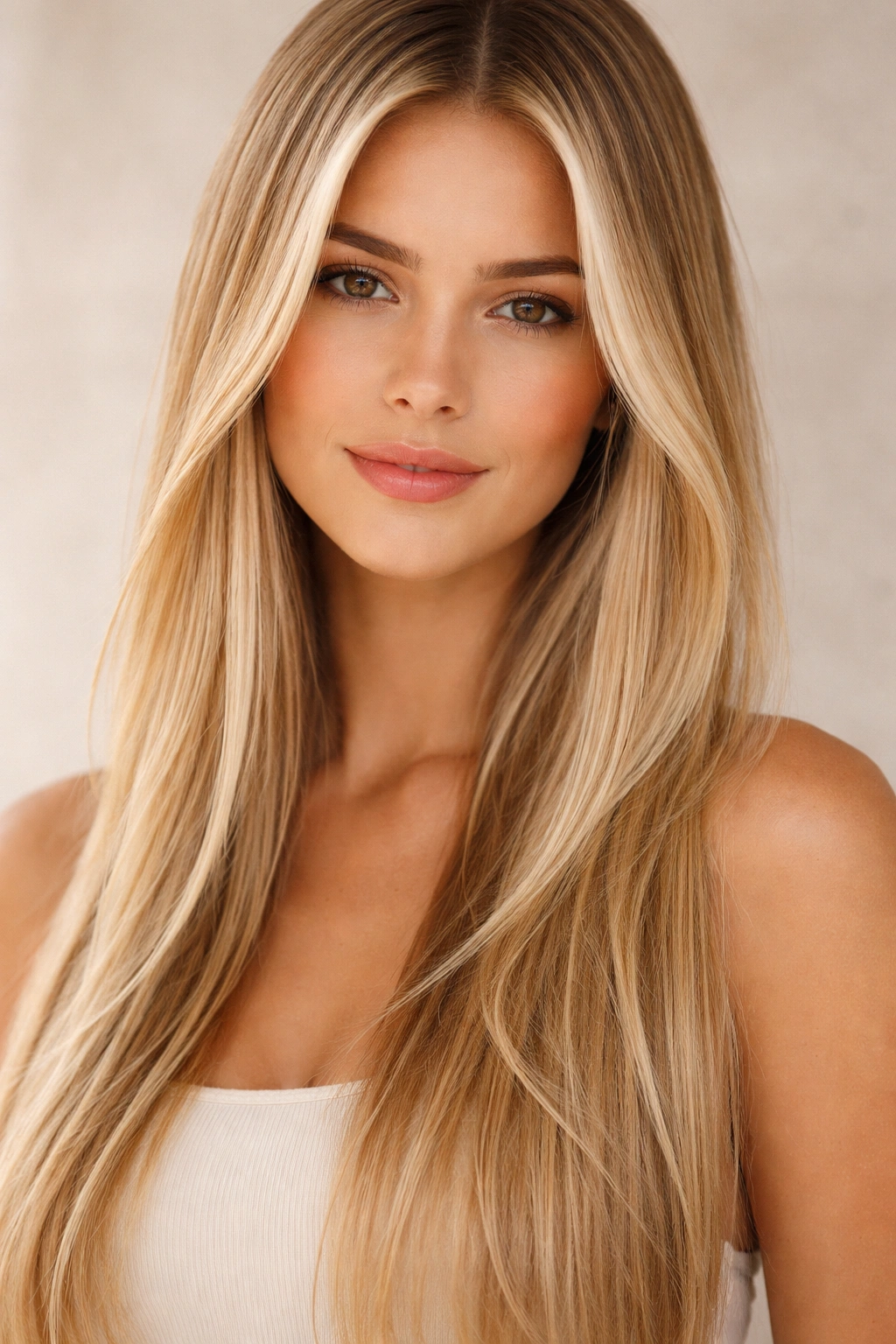
This is balayage in its most approachable form — soft, natural-looking blonde highlights that appear exactly like your hair lightened from sun exposure. The placement focuses on the pieces closest to your face, the crown, and the surface layers, creating an effect that looks effortless even though the technique is carefully considered. On straight hair, this style is absolutely luminous because the light hits those sun-lit pieces directly, creating a subtle glow that’s immediately flattering.
Why It Works So Well on Straight Hair
The genius of sun-kissed balayage on straight hair is that it skips the messy, lived-in texture that makes balayage work on waves or curls. Instead, your straight strands become the perfect canvas for clean, precise placement. The highlights sit exactly where you paint them, creating dimension that reads as intentional and sophisticated. You’re not trying to hide imperfect blending in texture — you’re creating clean transitions from darker to lighter that complement the natural movement of light down your hair shaft.
Best Practices for This Look
- Place highlights primarily through the front-framing pieces, temples, and crown area where the face naturally catches light
- Keep the underneath and roots slightly darker to create subtle depth and make regrowth less noticeable
- Use a light, warm blonde shade (think honey, vanilla, or light caramel) rather than a pale platinum — the warmth reads as more natural and sun-exposed
- Request a face-framing piece on each side that extends to about shoulder length, even if you’re not doing heavy layering
Pro tip: Ask your colorist to leave your very bottom layer slightly darker than the rest. This creates an illusion of depth and fullness that’s especially valuable on straight hair, which can sometimes appear flat without that tonal variation.
2. Honey Blonde with Face-Framing Highlights
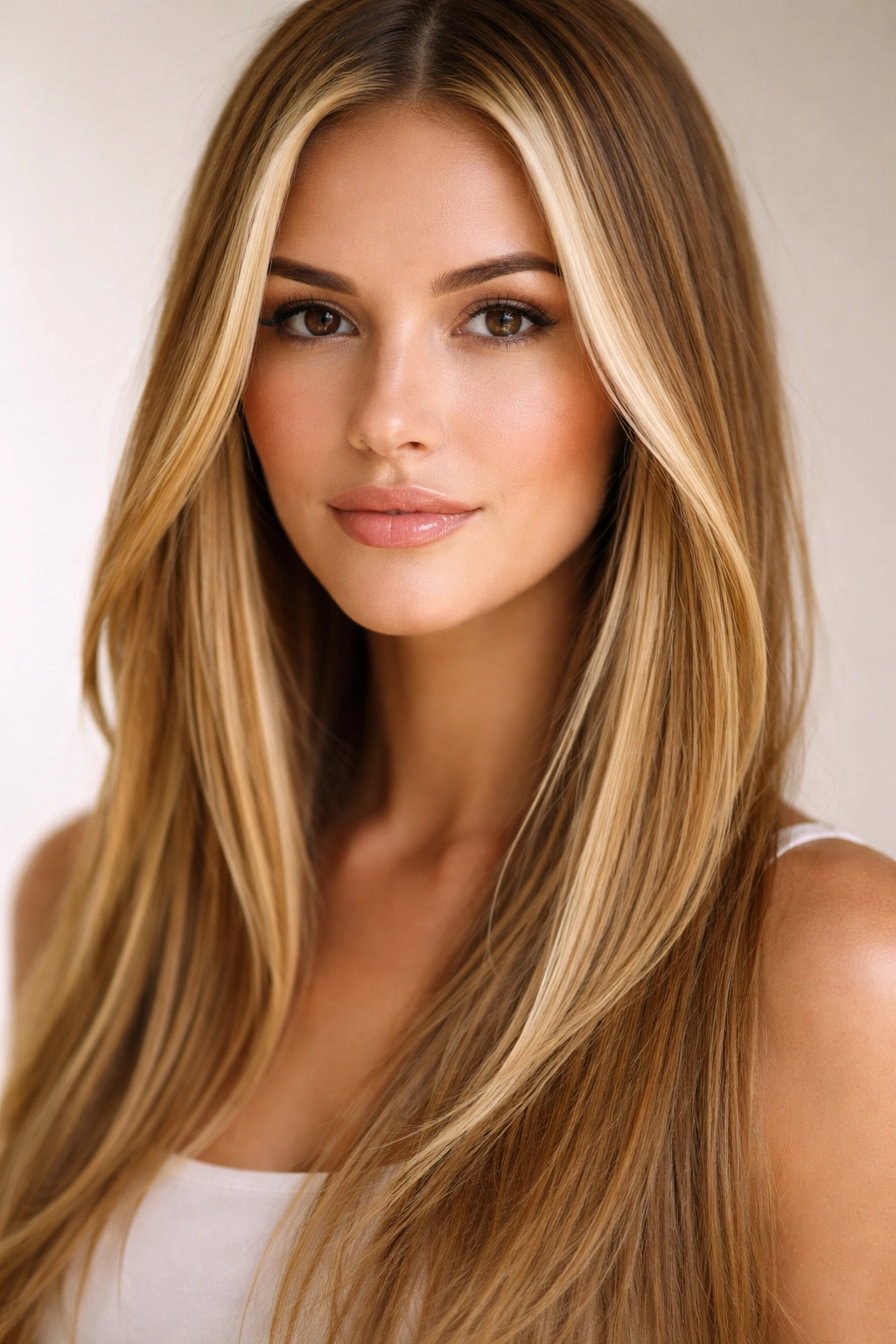
Honey blonde is that universally flattering warm blonde tone that seems to work on almost every skin tone, and when you combine it with strategic face-framing balayage, you’ve got a look that’s both dimensional and incredibly wearable. The idea here is to keep the overall blonde warm and honeyed, while creating brighter, lighter frames around your face that actually brighten your complexion and draw attention to your features. Straight hair shows off this contrast beautifully because the highlights create a deliberate visual frame rather than an accidental color variation.
Why Face-Framing Works on Straight Hair
Face-framing pieces have maximum impact on straight hair because they sit exactly where you place them — right beside your face — with no curl or wave to diffuse the color. This means you get maximum brightening effect with minimal actual lightening. The piece right at your cheekbone and temple can make your complexion appear more radiant even when the piece is only one or two shades lighter than your base. It’s strategic placement at its finest.
How to Maintain Honey Blonde
- Invest in a sulfate-free shampoo and conditioner specifically formulated for color-treated hair — honey blonde fades faster than cooler tones, especially in sun
- Do a glossing toner every 4-6 weeks to keep the warmth vibrant and prevent brassiness
- Use a deep conditioning mask once weekly to keep straight hair shiny and prevent the dryness that can make blonde look dull
- Consider a root touch-up every 8-10 weeks, or stretch it longer by having your colorist blend the roots with a shadow-root technique
Worth knowing: Honey blonde shows every speck of buildup. Make sure you’re using clarifying shampoo every 2-3 weeks to remove product buildup, which can make honey blonde look flat and muddy rather than luminous.
3. Cool-Toned Ash Blonde
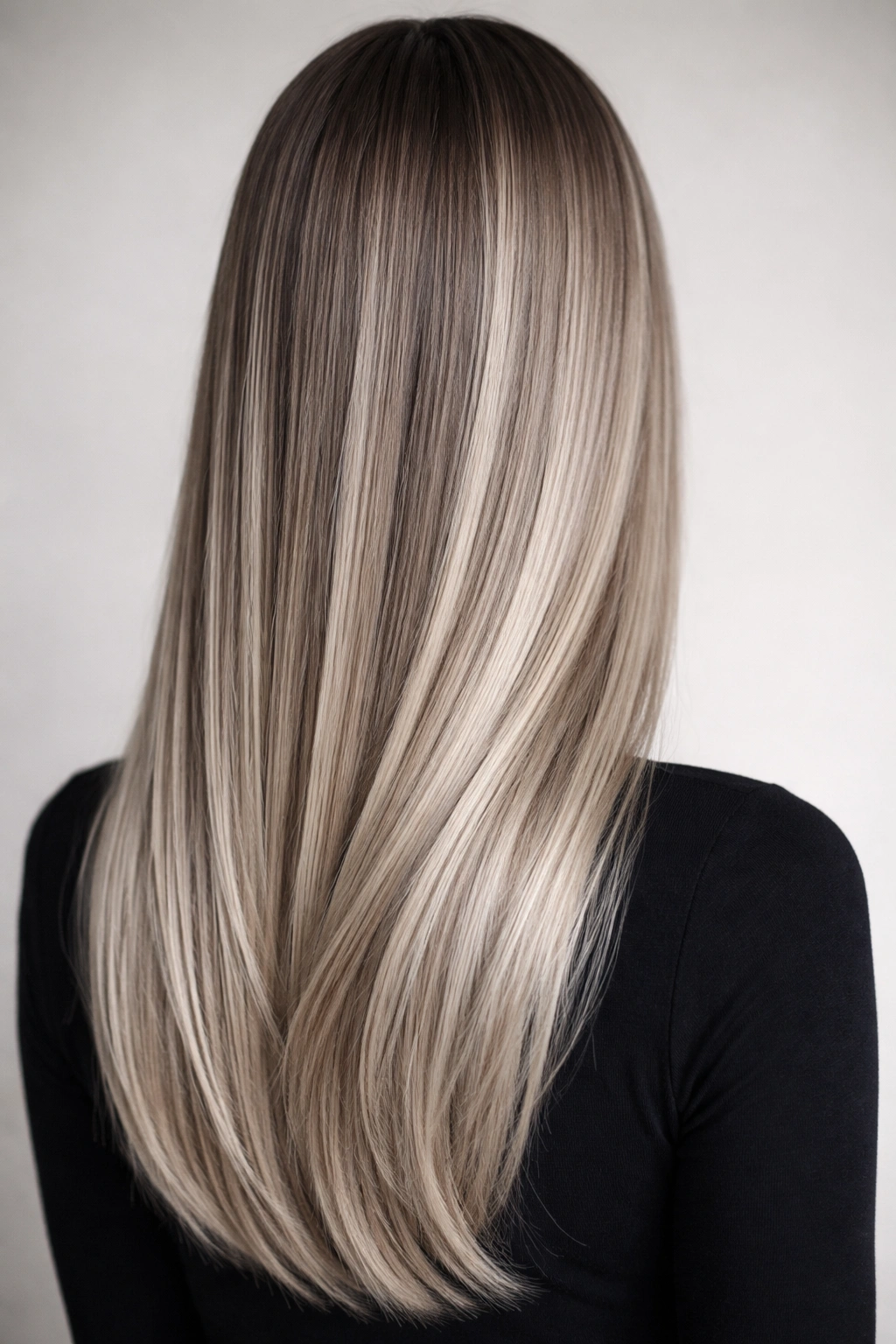
If honey blonde feels too warm for your undertone, ash blonde is the grown-up cousin that trades warmth for sophistication and edge. Ash blonde is essentially blonde with cool, ashy undertones that range from nearly platinum to a warmer ash-vanilla blend. When done as balayage on straight hair, it creates a refined, fashion-forward look that works especially well on cool skin tones with pink or red undertones. The straight texture lets every piece of the color show its true shade — there’s no bounce or curl to warm it up or hide it.
The Ash Blonde Advantage on Straight Hair
Ash tones can sometimes look flat or washed out on curly hair because the bounce and texture can make the cool tones recede. On straight hair, the sleek surface reflects light in a way that makes ash blonde actually glow rather than fade. The color sits on the strand clearly, and the cool tones read as intentional and rich rather than dull. This is genuinely one of the only times straight hair’s lack of texture becomes a visual advantage.
Keeping Ash Blonde from Going Brassy
- Use purple-toning shampoo twice weekly to neutralize warm tones that develop as the color fades
- Avoid hot water, which opens the hair cuticle and encourages color molecules to escape — use lukewarm or cool water instead
- Space out washing to every other day or even every third day to extend the life of the color
- Get a glossing toner every 6 weeks, or do a purple-toning mask at home weekly between salon visits
- Be cautious about sun exposure, which can shift ash tones toward brassy warm ones
Insider note: If you have straight hair and warm or olive undertones, ash blonde can sometimes look sallow rather than flattering. Do a strand test first, or consider adding just subtle face-framing ash pieces to a warmer honey or buttery blonde base instead of going full ash.
4. Butter Blonde with Dimensional Lowlights
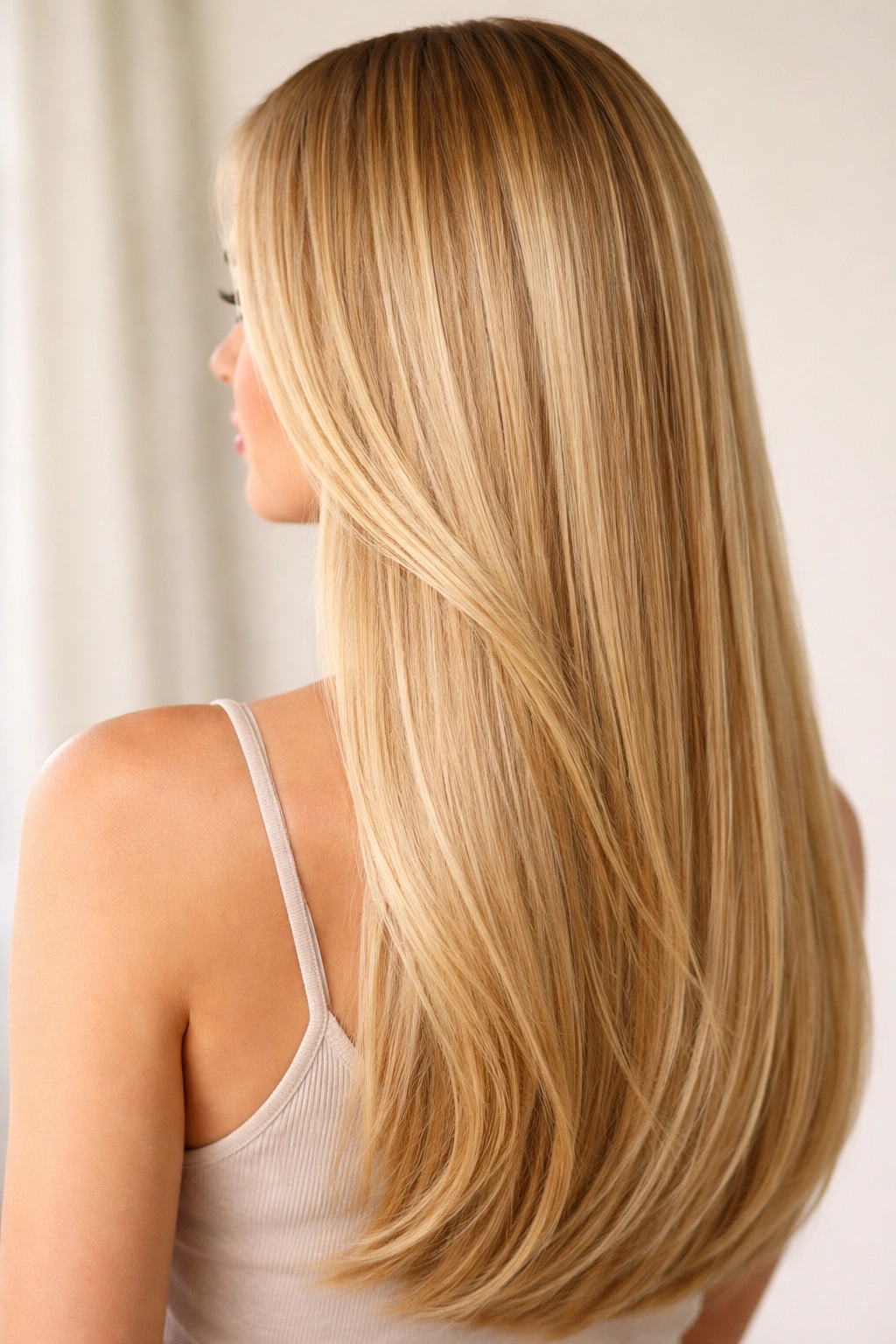
This approach reverses the typical balayage instinct: instead of adding light pieces to a dark base, you’re starting with a lighter, creamy butter blonde base and adding slightly darker blonde lowlights throughout for dimension. The result is a rich, dimensional look that reads as expensive and intentional. Butter blonde is inherently flattering because it has a soft, creamy quality that seems to glow rather than shine harshly. On straight hair, the lowlights create visual texture without actual texture, which means you get dimension and interest without needing waves or layers.
How Lowlights Change the Game on Straight Hair
Lowlights are incredibly effective on straight hair because they create shadows and depth that make your hair appear thicker and more voluminous than it actually is. Instead of lighter pieces traveling down your hair shaft (which can sometimes make thin straight hair appear thinner), darker pieces create dimension that tricks the eye into seeing more fullness. This technique is especially smart if you have finer straight hair and want dimensional color without sacrificing the appearance of density.
Placement Strategy for Butter Blonde Lowlights
- Place slightly darker lowlights (think caramel, light brown, or darker blonde) underneath and throughout the interior sections, keeping the surface lighter
- Reserve lighter butter blonde for the outer layer and face-framing pieces so the overall effect is still brightening and flattering
- Ask your colorist to weave lowlights through the back and underneath at different depths so the dimension shows as you move and turn
- Keep the overall look harmonious by ensuring your lowlights are only 2-3 shades darker than your base — too much contrast reads as striped rather than dimensional
Pro tip: Butter blonde with dimensional lowlights photographs beautifully and looks good even when your roots grow in, because the lowlights blend with the regrowth while the butter blonde pieces still frame your face.
5. Platinum Blonde with Darker Roots
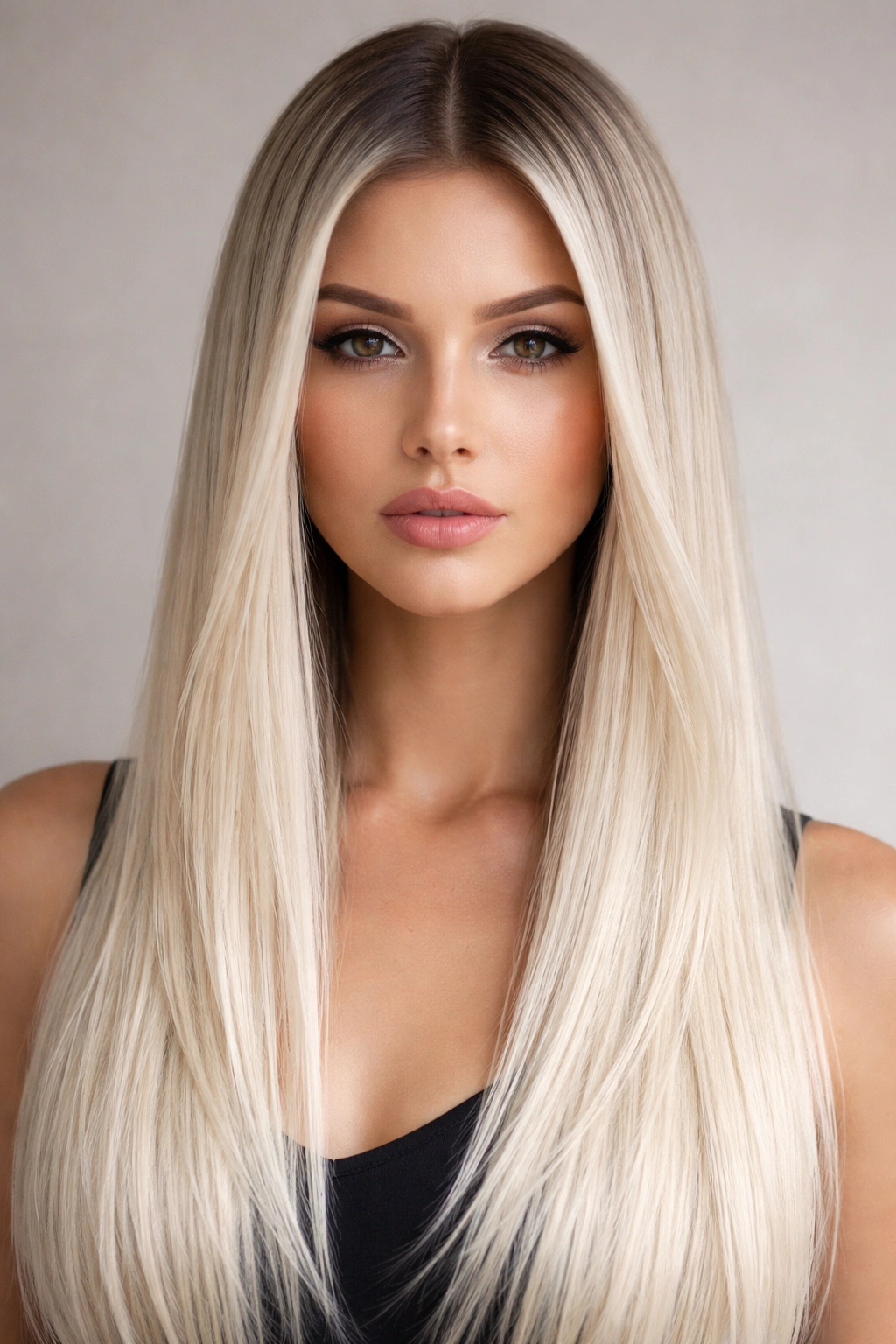
The rooted blonde trend isn’t going anywhere, and for good reason: it’s low-maintenance, fashionable, and allows you to embrace a little edge while still keeping your blonde bright and eye-catching. With platinum blonde balayage paired with intentionally darker roots (called a shadow root), you get a two-tone effect that looks cool and deliberate. On straight hair, this style works because the roots and blonde sit in clearly defined zones rather than blending gradually — the color blocks are distinct, which is exactly what makes the look intentional rather than accidental-looking.
The Shadow Root Advantage on Straight Hair
Straight hair actually showcases a shadow root more effectively than textured hair does, because the color transition appears cleaner and more intentional. There’s no curl or wave to blur the line between roots and blonde — instead, you get a sharp, graphic quality that reads as editorial and modern. This is genuinely one of the few times that straight hair’s lack of texture becomes a major style advantage, because the definition of the root color makes the overall look feel confident and planned.
Maintaining Platinum Blonde with Darker Roots
- Commit to a toner every 3-4 weeks to keep platinum bright, because without consistent maintenance, platinum fades to a brassy blonde that clashes with dark roots
- Use a purple-based conditioner between toners to maintain the cool tone
- The darker roots actually require less frequent touch-ups than traditional blonde — you can go 6-8 weeks before needing a root retouch because the contrast is intentional
- Consider embracing the grown-in look by asking your colorist to paint slightly darker pieces through your mid-lengths to blend the darker roots with your platinum ends
Worth knowing: This style requires commitment to toning. If you’re not willing to tone platinum blonde every month, choose a slightly warmer blonde shade instead, which fades more gracefully.
6. Warm Golden Blonde
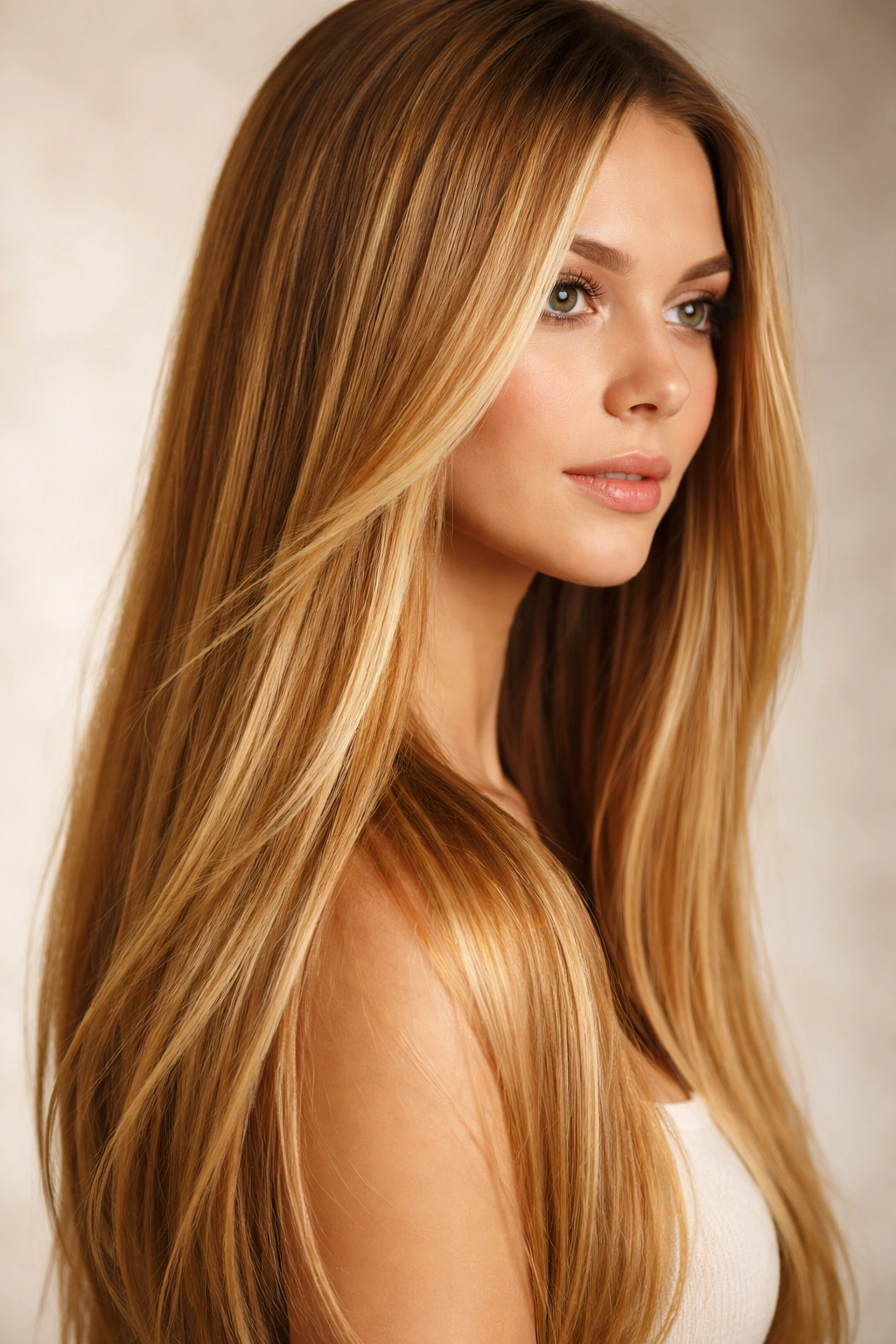
Golden blonde is the color that makes people stop and ask where you got your hair done. It’s warm, radiant, and visibly luxurious, with a quality that seems to glow from within. When applied as balayage on straight hair, golden blonde creates a rich, dimensional effect where lighter golden pieces sit against slightly deeper golden tones. The straight texture lets the warmth and richness of the color shine through without any texture to diffuse it — it’s pure color, pure shine, and pure impact.
Why Golden Blonde Looks Best on Straight Hair
Golden blonde contains orange and red undertones that warm the complexion and create a halo effect around the face. On straight hair, these warm tones reflect light beautifully and create an impression of health and shine that’s almost impossible to achieve with cooler tones. The smooth surface of straight hair becomes a mirror for the golden warmth, making this shade choice one of the most visibly flattering on sleek strands.
Keeping Golden Blonde Luminous
- Use a golden-toning shampoo or a moisture-focused shampoo rather than purple toner, since purple will mute the golden warmth you’re paying for
- Do a glossing treatment every 3-4 weeks with a golden toner to refresh the warmth
- Protect from sun exposure, which fades golden blonde toward pale yellow — use a UV-protective spray when spending time outdoors
- Deep condition weekly, because the warmth of golden blonde looks richer and more dimensional on healthy, shiny hair
- Consider a root smudge or shadow root to make maintenance easier — pure golden blonde without any root strategy requires touch-ups every 4-6 weeks
Pro tip: Golden blonde is extremely forgiving when roots grow in if you blend them with a slightly darker golden or caramel lowlight. Ask your colorist to paint slightly deeper pieces through your mid-lengths so the darker roots transition smoothly to your golden blonde ends.
7. Champagne Blonde Balayage
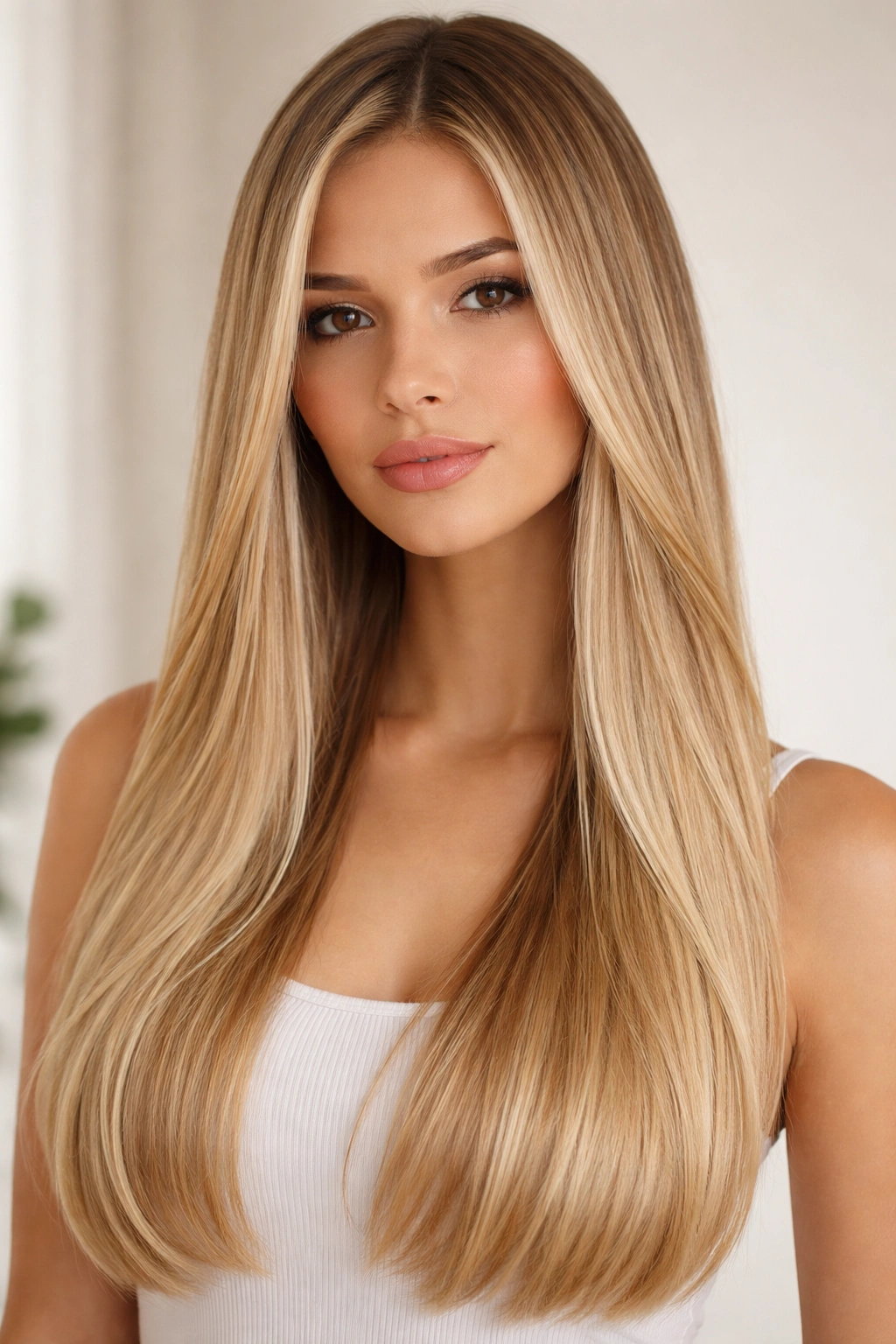
Champagne blonde is that special shade that somehow flatters nearly every skin tone — it’s pale enough to feel luxurious and blonde, but with enough warmth and depth that it doesn’t wash anyone out. It’s sophisticated without being icy, blonde without being flat. When you apply champagne blonde as balayage on straight hair, you create a soft, luminous effect where creamy champagne pieces sit against slightly warmer or slightly deeper undertones. The result is dimensionality that reads as intentional without being bold or contrasting.
The Champagne Blonde Sweet Spot
Champagne blonde lives in the middle ground between warm and cool tones, which is exactly why it translates so beautifully to straight hair. The straight texture doesn’t provide warmth through texture or movement, so the color itself needs to be warm enough to be flattering without being so warm that it looks brassy or dated. Champagne achieves this balance perfectly — it’s modern, wearable, and genuinely hard to mess up from a flattering-on-most-people perspective.
Styling and Maintenance Champagne Blonde
- Use a combination of purple and golden toning — a hydrating shampoo with subtle purple undertones and a conditioning mask with subtle golden warmth
- Schedule glossing appointments every 4-6 weeks to maintain the champagne tone, which sits right in the middle and fades in both directions
- Champagne blonde looks especially luxurious when paired with soft waves or a straight blow-out with lots of shine — invest in a smoothing serum or shine spray
- This shade is more forgiving with roots than platinum blonde but still benefits from a subtle rooted balayage where the roots aren’t completely dark
- Champagne blonde photographs beautifully in all lighting, from warm indoor light to cool daylight
Worth knowing: Champagne blonde requires quality toning because the shade lives in such a specific space. Don’t skip the glossing appointments thinking it will maintain itself — it won’t. The investment in maintenance is what keeps champagne blonde looking intentional and polished rather than brassy or faded.
8. Two-Tone Blonde Contrast
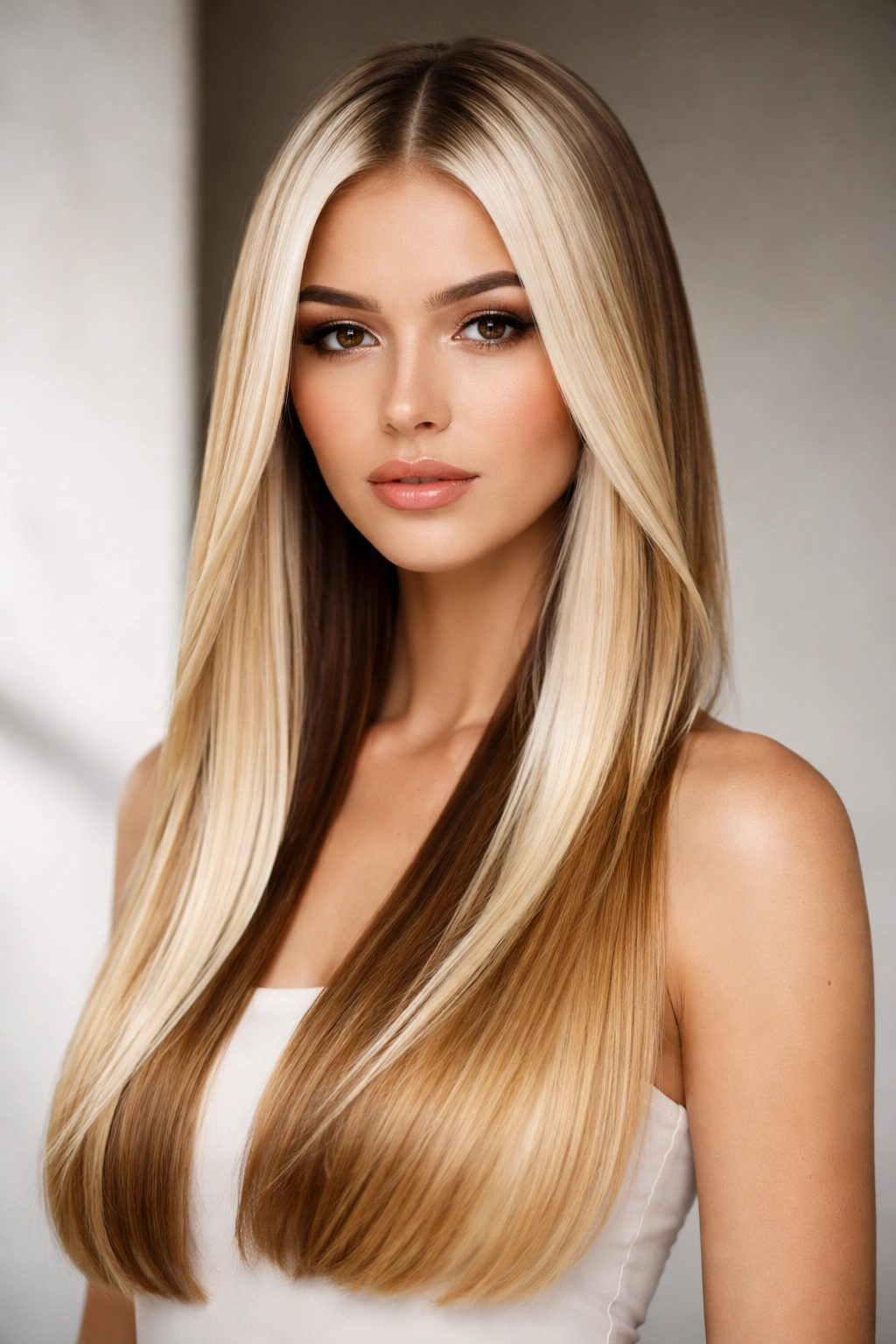
If you want impact and aren’t afraid of a more dramatic color statement, two-tone blonde balayage delivers. This approach combines two distinctly different blonde shades — such as platinum blonde and warm honey blonde, or ash blonde and golden blonde — placed strategically to create a bold, intentional contrast. On straight hair, the two tones sit in clearly defined zones rather than blending gradually, which creates a fashion-forward look that’s impossible to ignore. It’s modern, editorial, and completely intentional.
Making Two-Tone Blonde Work on Straight Hair
The key to two-tone blonde on straight hair is ensuring the placement is strategic enough that the contrast reads as intentional rather than like a root grow-out situation. Typical placements include: keeping roots slightly darker with very bright blonde throughout, running a darker tone through the underneath and back with a brighter tone on top, or creating a front-to-back contrast where face-framing pieces are one tone and the back is another. On straight hair, these contrasts are visible and graphic, which is exactly what makes them work.
Color Maintenance for Two-Tone Blonde
- Plan to maintain two distinct tones, which means two different toning products or more frequent salon glossing visits
- Toning every 3 weeks becomes essential because both tones need maintenance to avoid muddy, in-between color
- Consider which tone fades faster and plan your maintenance schedule around that — typically cooler tones fade faster than warm ones
- Use color-safe products specifically designed for blonde to extend the time between toning sessions
- Two-tone blonde is high-maintenance, so be honest about your commitment level before choosing this style
Pro tip: Two-tone blonde photographs incredibly well, especially in professional or editorial photos. If you’re willing to maintain it, this is the most visually striking option on straight hair.
9. Rooted Blonde for Low Maintenance
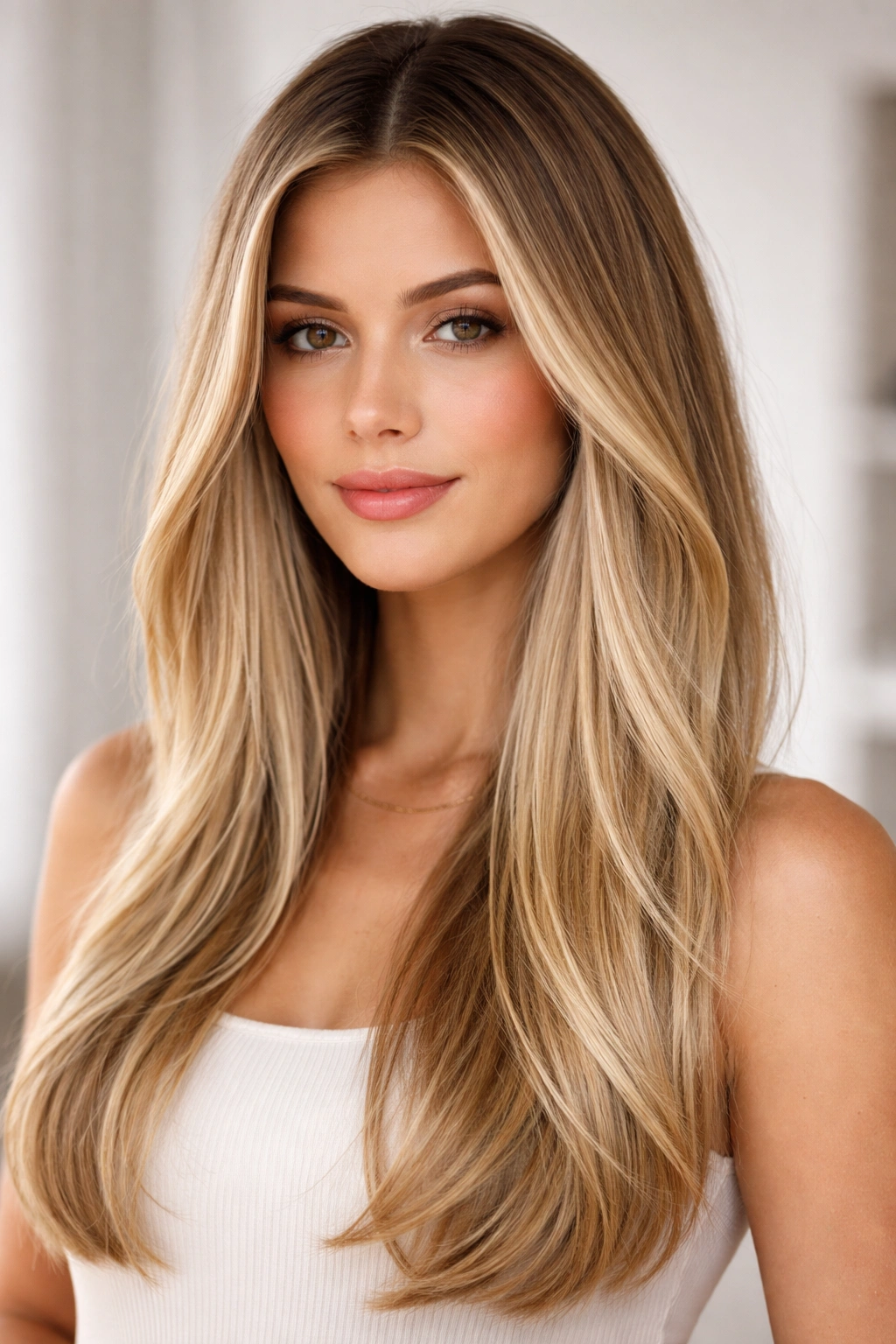
This approach is perfect if you love being blonde but hate frequent salon visits. A rooted blonde balayage intentionally keeps your natural roots dark or keeps a shadow root throughout, while placing bright blonde balayage pieces through the crown, face-framing area, and surface layers. The result is a dimensional look that actually becomes more intentional-looking as your roots grow in, rather than less. On straight hair, the contrast between roots and blonde is graphic and clear, which makes the whole style read as deliberate rather than neglected.
Why Rooted Blonde Is Genius on Straight Hair
Straight hair can sometimes look thin or flat without much dimension, and rooted blonde solves this problem while also solving the maintenance problem. The darker roots create visual depth and make your hair appear thicker, while the blonde pieces frame your face and catch light. You can honestly go 12+ weeks between color maintenance if your rooted blonde is painted correctly, because the darker roots are part of the design. On straight hair especially, this contrast creates the illusion of movement and texture that straight strands sometimes lack.
The Rooted Blonde Strategy
- Have your colorist paint blonde pieces starting at the mid-lengths or lower, rather than trying to keep roots completely clean — this makes the grown-in roots part of the design
- Ask for more blonde concentration through the crown and face-framing pieces, which get maximum light and create the brightening effect you want
- Request some slightly darker pieces mixed into the blonde balayage for subtle dimension that blends with your roots as they grow
- Embrace the lived-in quality — don’t ask for perfect blending; the slight separation between roots and blonde is exactly what makes this style work
Worth knowing: Rooted blonde can go even longer between glossing treatments (8-10 weeks) because the roots being present means the blonde doesn’t have to be perfect — it just needs to stay blonde rather than turn brassy. This is genuinely the lowest-maintenance blonde balayage option.
10. Silver-Blonde Highlights with Dark Roots
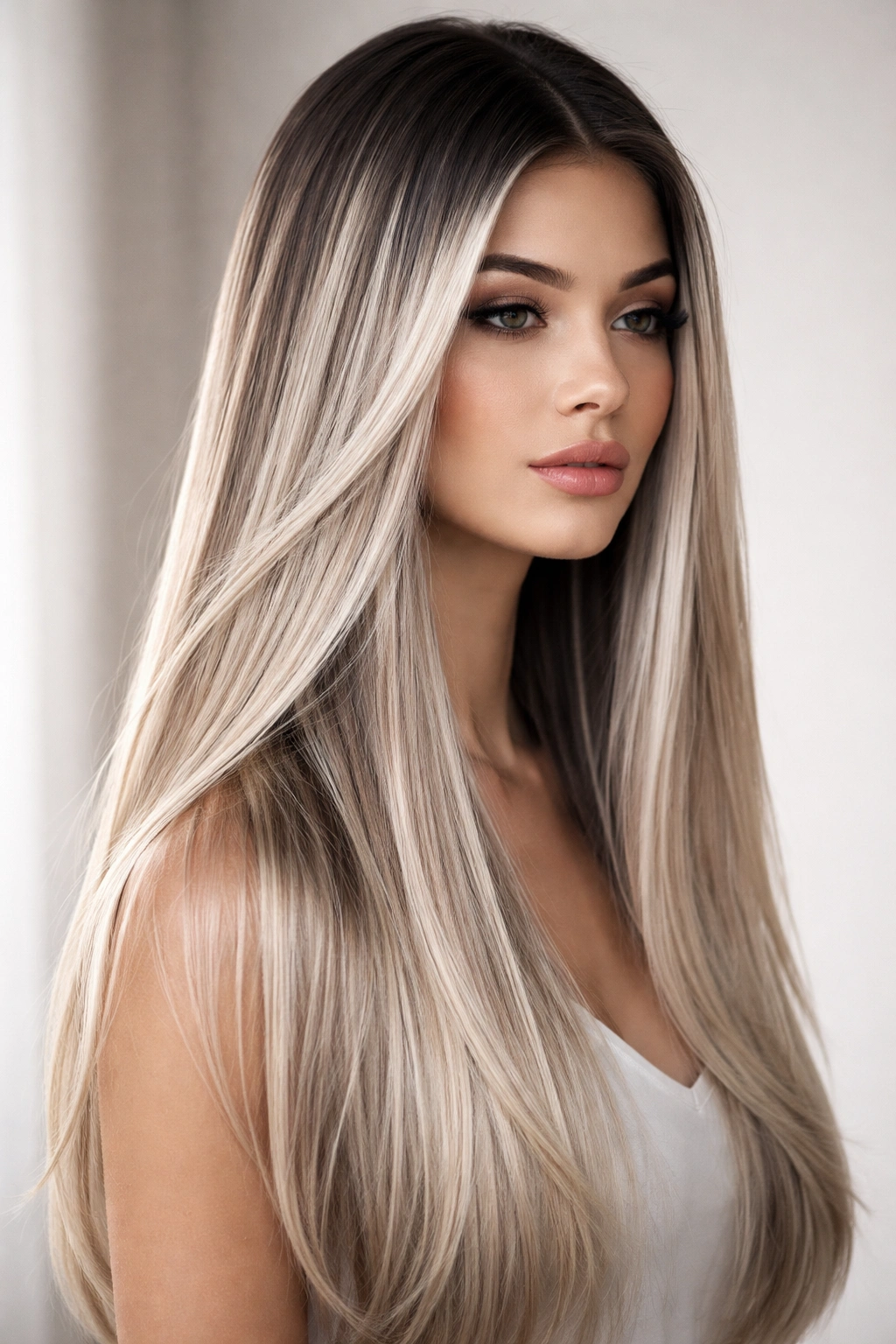
Silver blonde is trending, and for good reason — it’s edgy, modern, and completely different from the warm blondes that have dominated for years. Silver blonde is essentially a very cool, almost metallic blonde with ashy undertones, placed strategically through a dark-rooted style. The effect is dramatic, fashion-forward, and definitely statement-making. On straight hair, the silver tones have maximum visibility and impact because the smooth surface reflects the cool, metallic quality of the color. This isn’t a subtle style — it’s a confident color choice.
The Silver Blonde Effect on Straight Hair
Silver blonde is one of the few colors that actually benefits from the straight texture, because the sleek surface creates a mirror-like quality that makes silver tones glow. Curly or textured hair can sometimes make silver blonde appear dull or flat, but on straight hair, the metallic undertones catch light and create a genuinely striking visual effect. The contrast between dark roots and silver blonde pieces is graphic and modern, creating an editorial, almost androgynous quality.
Maintaining Silver Blonde
- Silver blonde requires aggressive purple toning — typically twice weekly with purple shampoo and conditioner
- Do a purple glossing treatment every 2-3 weeks without fail, because silver blonde fades toward yellow faster than almost any other blonde shade
- Use distilled water if possible when rinsing, because minerals in tap water can shift silver blonde toward brassy tones
- Minimize heat styling and sun exposure, both of which accelerate fading in silver tones
- Be prepared for this to be your highest-maintenance color option — silver blonde requires commitment
Insider note: Silver blonde shows every trace of buildup and mineral deposits. Invest in a chelating shampoo and use it monthly to remove buildup that can make silver blonde appear dull or yellow. This maintenance step is non-negotiable for keeping silver blonde looking intentional rather than brassy.
Final Thoughts
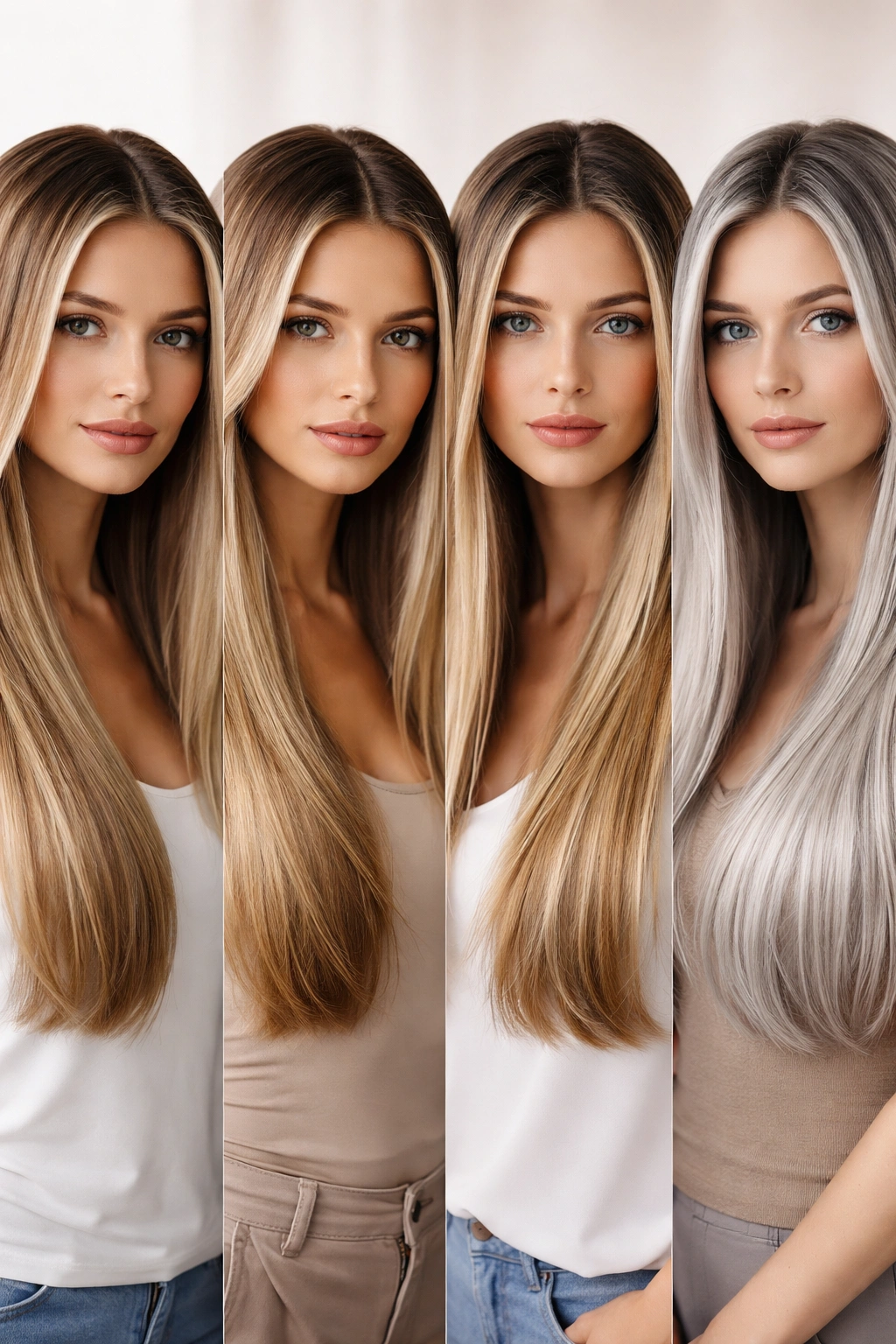
Straight hair and blonde balayage are genuinely a match made in color heaven. While people often assume balayage requires texture or waves to look good, the opposite is actually true — straight hair creates the perfect canvas for precise, intentional balayage placement because every color decision shows clearly and directly. Whether you’re drawn to the subtlety of sun-kissed blonde, the edge of dark roots with platinum pieces, or the drama of silver-blonde contrast, there’s a balayage approach that’ll make your straight hair look polished, dimensional, and absolutely striking.
The key to success with any of these styles is understanding the maintenance they require and committing honestly to that level of care. Some styles, like rooted blonde or sun-kissed balayage, are genuinely forgiving and low-maintenance. Others, like platinum blonde or silver blonde, require consistent toning and glossing to maintain their intended look. Neither is objectively better — but knowing what you’re signing up for before you sit in the chair makes the difference between a color decision you love and one that frustrates you.
Work with a colorist who understands straight hair and isn’t trying to force a balayage technique designed for curly hair onto your smooth strands. The best balayage for straight hair is strategic, precise, and intentional — where every piece is placed exactly where you want it to sit. That precision is what makes blonde balayage absolutely sing on straight hair, transforming simple strands into something genuinely eye-catching.
