



Straight hair is a natural canvas for precision ponytails that look intentional, polished, and elegantly simple. Unlike textured or curly hair, straight strands have a built-in advantage: they hold clean lines, reflect light beautifully, and create sharp, refined silhouettes with minimal effort. But that smoothness also means every ponytail style reads as its own distinct look, and what works brilliantly for one person’s hair texture might feel flat or unfinished on another.
The key to making ponytails work beautifully with straight hair isn’t about adding texture where there is none—it’s about understanding which styles leverage the natural strengths of your hair type and which techniques prevent that freshly-groomed ponytail from looking limp or overly severe by day three. Straight hair can transition flawlessly from a sleek, formal statement to a more relaxed, lived-in style with just a few tweaks, and it responds well to strategic placement, subtle anchoring techniques, and thoughtful accessory choices that give dimension without requiring heat styling or volumizing products.
What makes a ponytail genuinely work for straight hair comes down to three things: the position it sits on your head (which changes your whole face shape and formality level), how you secure and finish the base (which affects whether it looks effortlessly polished or hastily thrown together), and whether you add intentional texture, movement, or visual interest (which keeps straight hair from feeling one-note). Whether you’re styling for a professional meeting, a casual weekend, or something in between, these ten ponytail approaches offer distinct possibilities—each designed specifically to make straight hair look its absolute best.
1. Classic High Ponytail
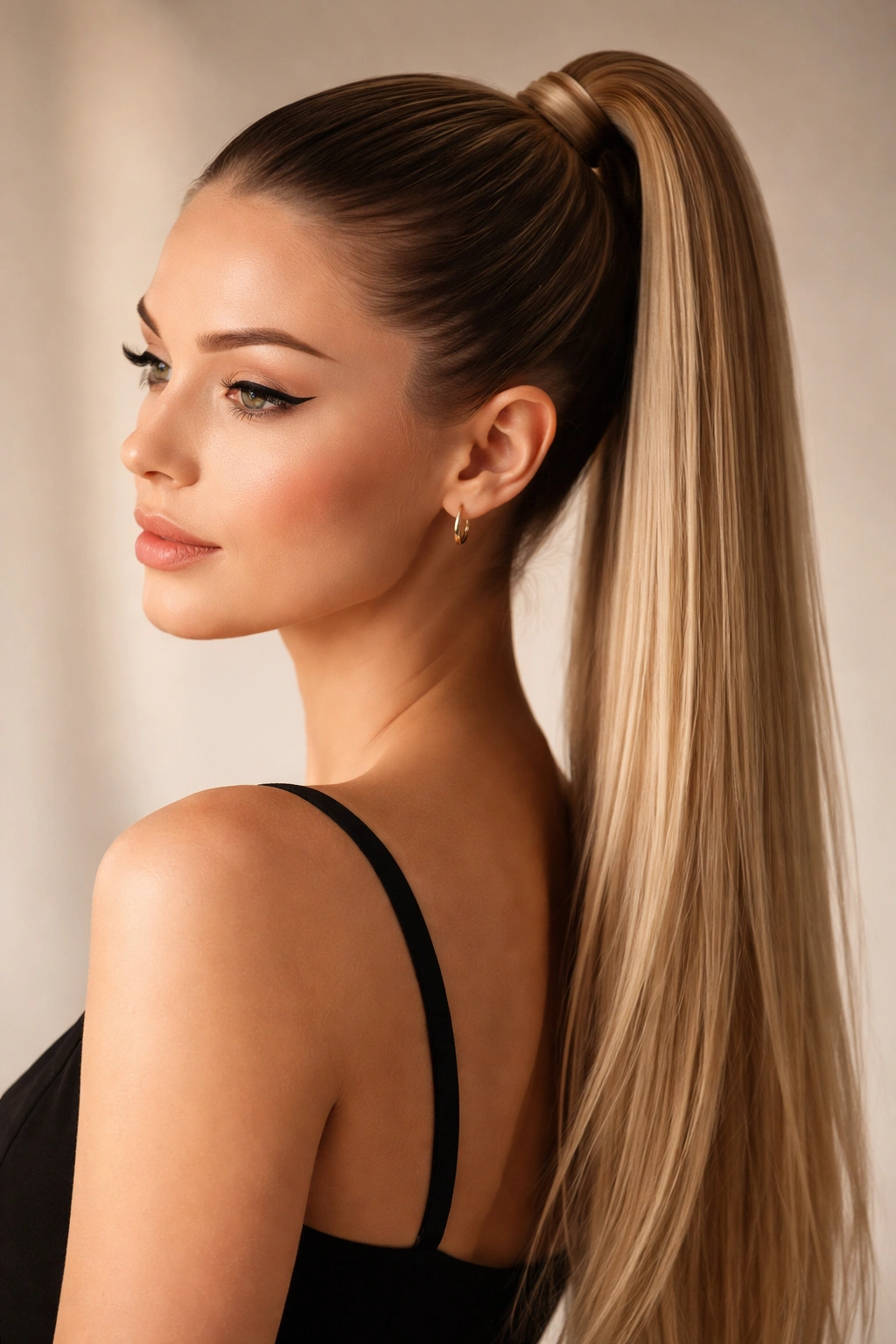
The high ponytail is the foundation style from which nearly every other ponytail evolves, and on straight hair, it has a particular power: it creates instant lift, frames your face with clean lines, and communicates a no-nonsense confidence that works everywhere from the gym to the office to a weekend brunch.
Why It Works Beautifully on Straight Hair
Straight hair holds a high ponytail with almost architectural precision. The smoothness of your strands means the ponytail won’t frizz at the base, won’t develop flyaways unless your hair is extremely fine, and creates a visual line that draws attention upward to your face and eyes. There’s a polish to a high ponytail on straight hair that feels intentional and put-together, even when you’ve literally just twisted your hair back while rushing out the door.
How to Build a High Ponytail That Stays
Start with clean hair or second-day hair that has light texture from a previous day’s styling—completely freshly washed straight hair can slip right through elastic. Flip your head upside down and gather hair at the crown, securing with a tight elastic. The upside-down technique creates lift at the roots, which prevents the ponytail from sitting flat against your head. Smooth the front hairline with a fine-tooth comb, then flip back upright. If your high ponytail feels too severe (this happens with very straight, sleek hair), take a few face-framing pieces and loosely curl them around your face with a straightener or curling iron—the curved strands soften the overall look without compromising the clean base.
Pro tip: Use a clear elastic rather than a dark one, or wrap the elastic with a 1-inch section of hair from the ponytail itself to hide it completely and create the illusion of a seamless gather.
2. Low Side Ponytail
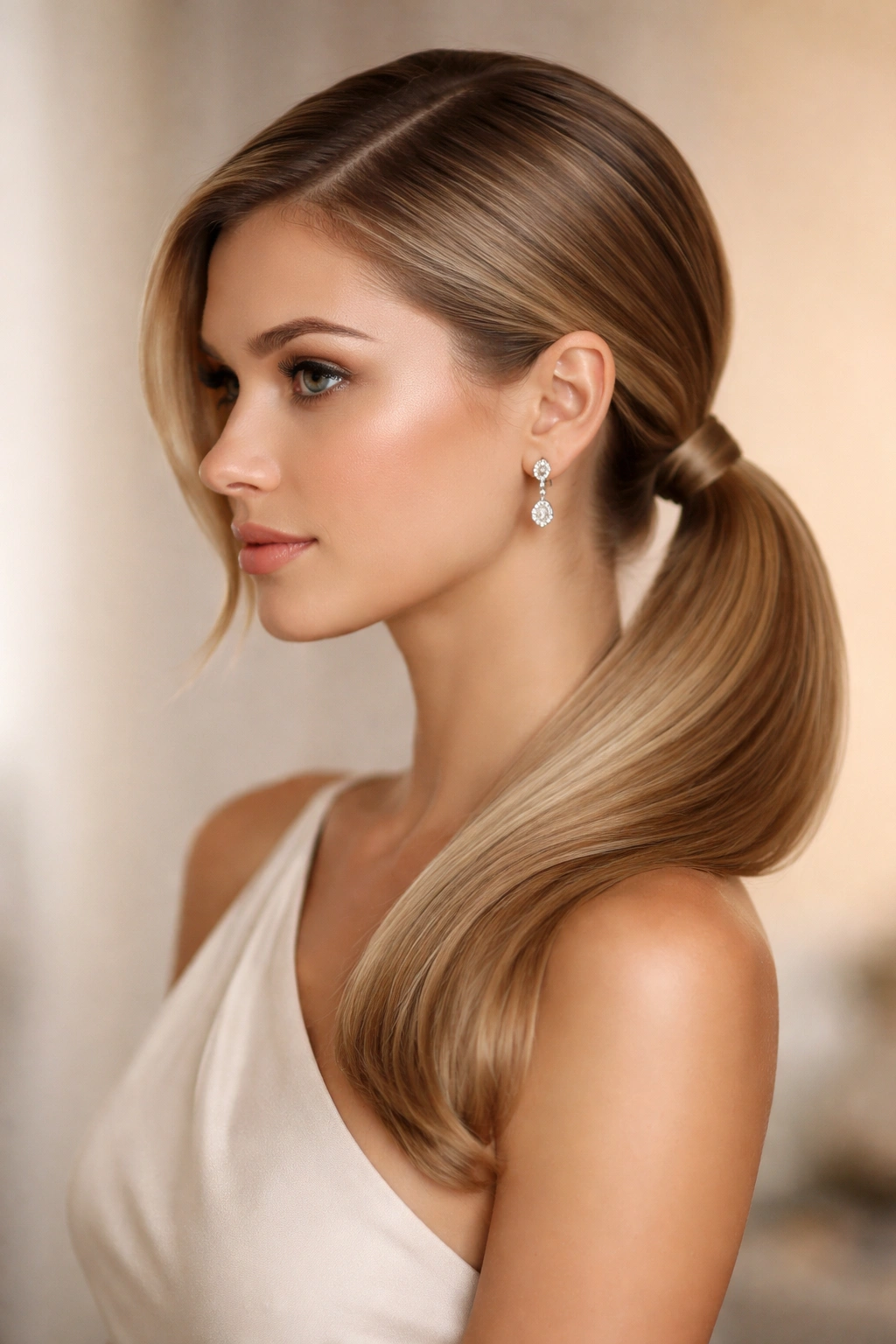
A low side ponytail is the elegant alternative to the high ponytail—it’s sophisticated, works for dressier occasions, and on straight hair, creates an asymmetrical line that’s flattering to most face shapes.
The Appeal for Straight Hair
Side ponytails require hair that sits smoothly and holds its position without constant adjustment. Straight hair does this naturally. Because you’re gathering hair to one side rather than straight back, there’s an inherent softness to the style that feels polished rather than athletic. This is also the perfect ponytail for days when your hair has a bit of natural bend or when you want to show off a longer length—the horizontal line draws the eye along your hair rather than upward, which emphasizes volume and length.
Creating a Side Ponytail That Actually Stays Put
Gather hair to one side at approximately ear level, slightly lower than a traditional side pony to maximize elegance. Use a strong elastic that won’t slip—the side positioning creates more tension on one side, which means your elastic needs to be secure. Smooth the hair on the opposite side of your part using a flat straightener if needed, creating a sleek line from your ear to the ponytail. This asymmetry is what makes the style read as intentional rather than accidental.
Worth knowing: Side ponytails photograph beautifully because the asymmetry creates visual interest in profile shots, which is why this style shows up so often in formal events and professional headshots.
3. Sleek Center-Part Ponytail
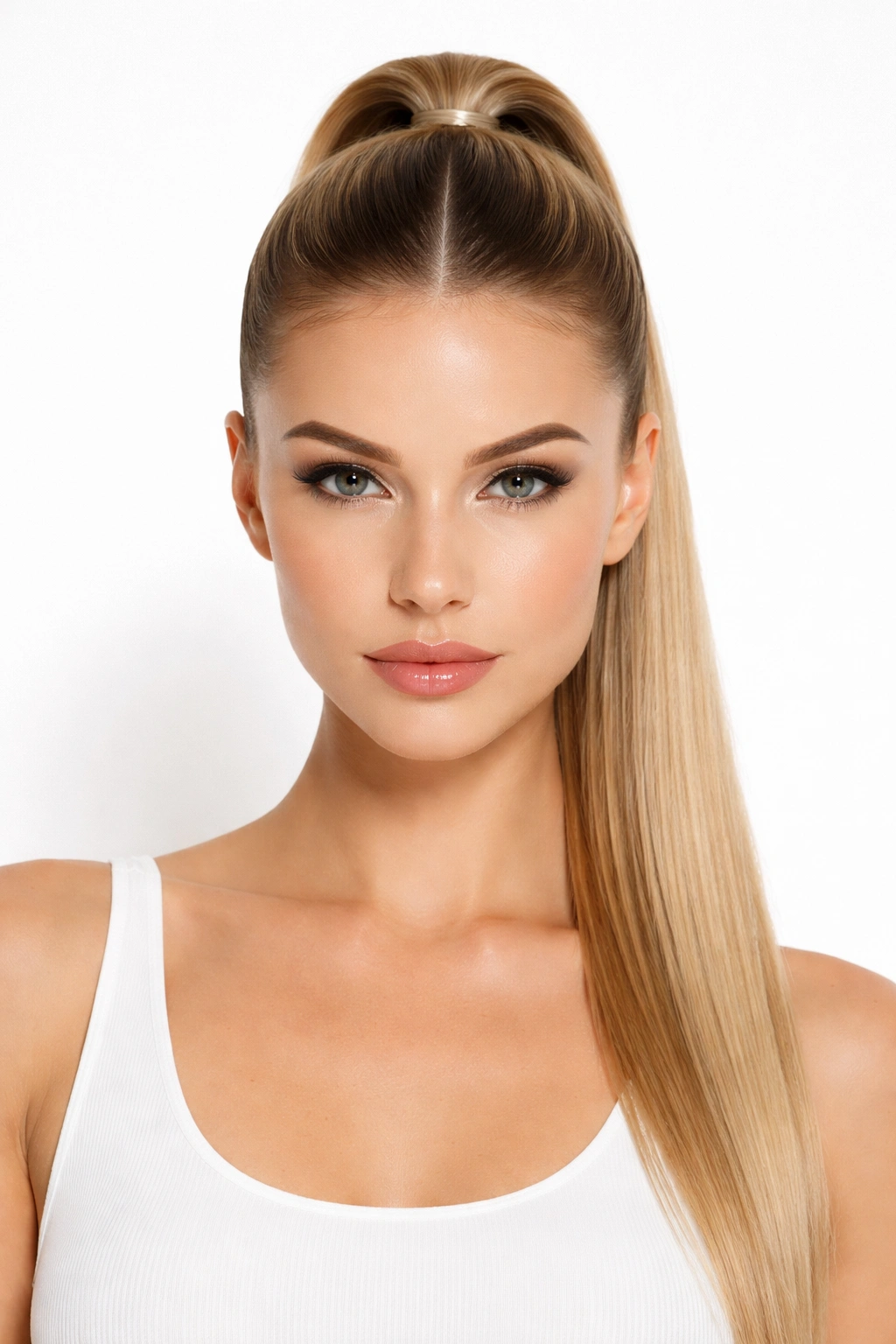
The center-part high ponytail is the minimalist’s dream—it’s the hairstyle equivalent of a well-tailored blazer, with zero fuss and maximum impact. On straight hair, this style reads as deliberately simple in the best possible way.
Why Center Parts and Straight Hair Are a Perfect Match
A clean center part is only possible when your hair is truly straight, which means this style is your exclusive playground if you have this hair type. The symmetry of a center part combined with the smoothness of straight hair creates an almost mathematical precision that feels very current and very intentional. There’s no hiding anything with this style—if your hair is shiny and healthy, this ponytail showcases that completely.
Building the Sleek Center-Part Ponytail
Part your hair precisely down the center from your hairline to the nape of your neck using the end of a rattail comb, which creates a clean line. Gather your hair into a high or mid-height ponytail at the back of your head, keeping both sides equally smooth. Smooth down any wispy hair using a lightweight serum or smoothing product—on straight hair, you need almost nothing to maintain this look, but that one touch of product can mean the difference between “polished” and “just-barely-holding-it-together.” Finish with a clear or color-matched elastic and you’re done.
Pro tip: Use a medium-hold hairspray misted lightly over the finished ponytail to lock down any individual strands that might shift throughout the day, especially if you have fine hair that tends to slip from elastics.
4. Wrapped Ponytail with Hidden Elastic
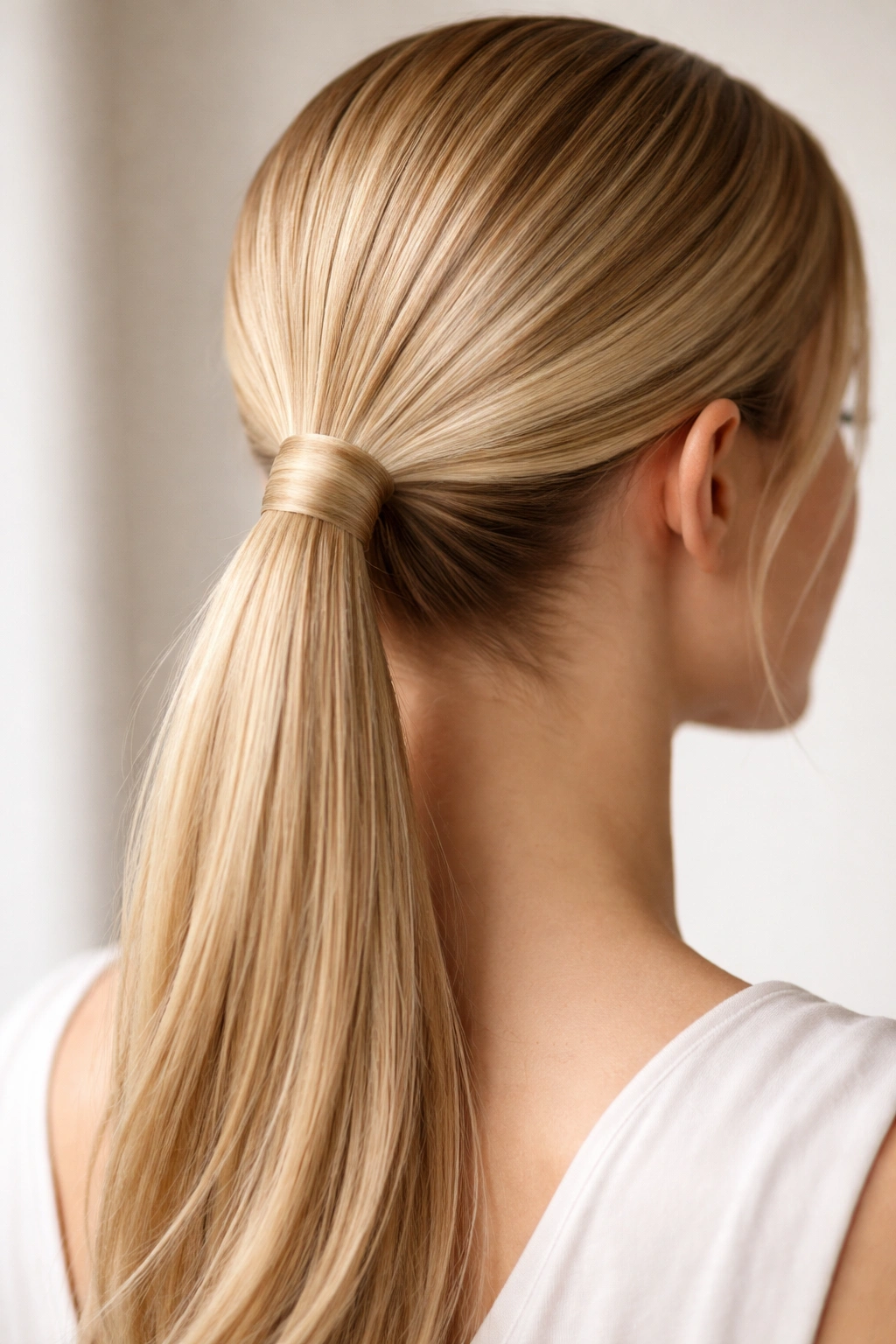
A wrapped ponytail is the same high, mid, or low ponytail you might wear any other day, except the elastic is completely concealed by a thin section of hair wrapped around the base. This small detail transforms a casual ponytail into a polished, finished style that reads as significantly more sophisticated.
The Transformation Wrapped Hair Creates
The wrapped elastic disguises your hair tie completely and creates a visual break between the gathered hair and the loose ponytail below, making the whole style read as more intentional and put-together. On straight hair, this wrapped section catches light beautifully and adds a subtle dimension that plain elastics don’t. It’s the hairstyling equivalent of tucking in your shirt—a tiny detail that communicates polish.
The Precise Technique for Wrapping
Gather your ponytail and secure with a clear elastic. From the base of your ponytail, take a thin 1-inch section of hair from underneath (this section should be about the thickness of a pencil) and wrap it firmly around the elastic, spiraling it around two or three times. Secure the wrapped section with a small bobby pin hidden underneath the wrap, or use a tiny clear elastic to hold it in place. Make sure the wrapped section is tight enough to stay put all day but not so tight that it’s uncomfortable.
Insider note: If you have very thick hair, you might need to take a thicker section to wrap—adjust based on your hair’s density so the wrapped section doesn’t look dwarfed by the ponytail.
5. Half-Up Ponytail
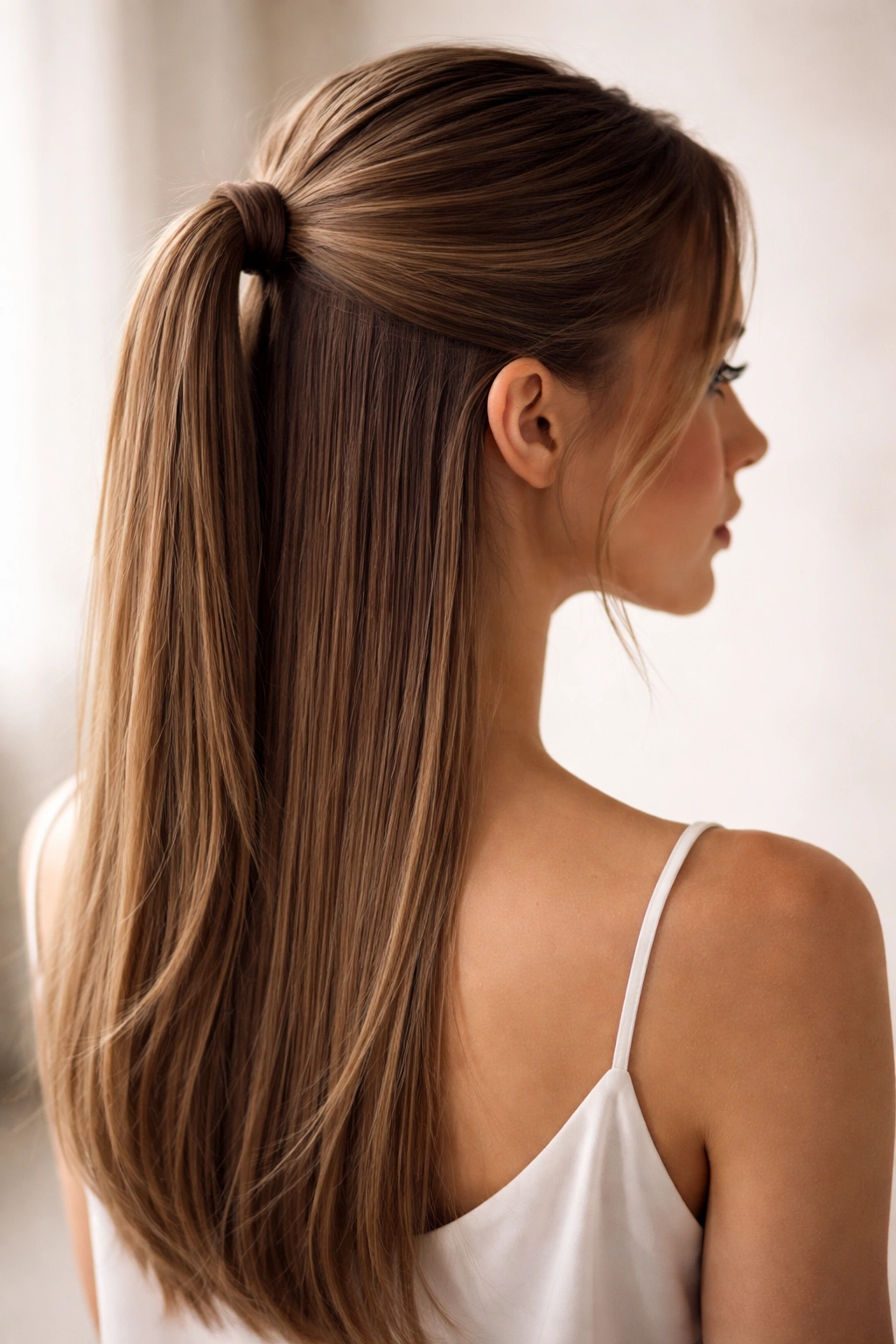
The half-up ponytail is the perfect middle ground between completely loose hair and a full ponytail. It keeps hair off your face and neck while maintaining the length and flow of down hair, and on straight hair, it creates clean lines that look intentional and effortlessly polished.
Why Half-Up Works So Well for Straight Hair
Straight hair holds its shape without the help of texture or curl, which means a half-up style on straight hair reads as clean and deliberate rather than accidental. There’s no question whether you meant to style it this way or whether your hair just naturally divided itself. The style is versatile enough for casual days but works equally well for dressier occasions, and it shows off your hair length while keeping the front sections framing your face.
Building a Half-Up Ponytail With Dimension
Start with hair that has a bit of body—second-day hair or lightly textured hair works better than freshly washed. Take a section from the crown area (from about temple to temple across the top of your head) and gather it into a small ponytail about two inches above the nape of your neck. The key is not making it too tight or too high, which would read as a full ponytail instead of a half-up style. If you want to add softness, gently pull at the gathered section to create a slightly undone texture, then secure with an elastic and wrap the base if desired.
Real talk: This style works best if you use a styling product or a light texture spray on the crown section before gathering, which prevents the half-up from slipping down your head as the day goes on.
6. Braided Ponytail
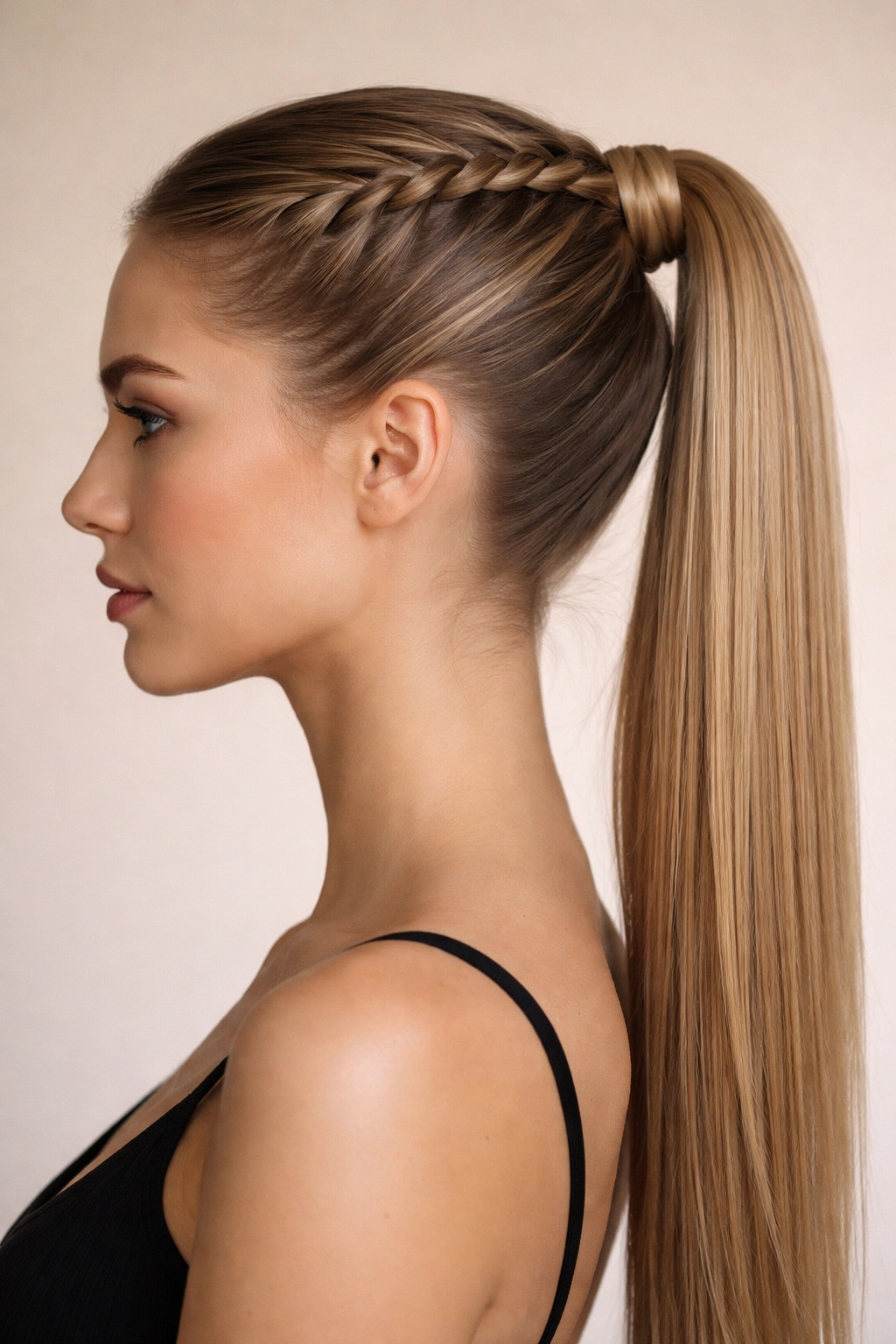
A braided ponytail combines the sleekness of a regular ponytail with the dimension of a braid, and on straight hair, the braid sits flush against your scalp with no frizz or texture issues, creating a look that reads as more polished than either a braid or a ponytail alone.
The Advantage Straight Hair Brings to Braided Styles
Braids are typically associated with textured or curly hair, but straight hair creates a different effect: the braid is perfectly smooth, sits tight against the scalp, and the individual strands of the braid are clearly visible, creating a crisp, defined look. This makes braided ponytails on straight hair feel modern and intentional rather than princess-like or overly elaborate. The smoothness of the braid against your head also means you can wear this style for days without it looking messy or loose.
Creating a Dutch or French Braid Ponytail
Begin at the crown and create a Dutch or French braid (underhand braid for Dutch, overhand for French—Dutch braids sit slightly higher on the head) that runs from your crown down to the nape of your neck. At the base, secure the braid with a clear elastic, then gather the remaining loose hair beneath the braid and add it to the elastic, creating a ponytail that incorporates the braid into its base. You can tighten the braid by gently pulling at each section, which makes the definition even more pronounced.
Worth knowing: A Dutch braid stays put longer than a French braid because the underhand technique creates more grip, which makes it the better choice if you’re wearing this style all day.
7. Bubble Ponytail
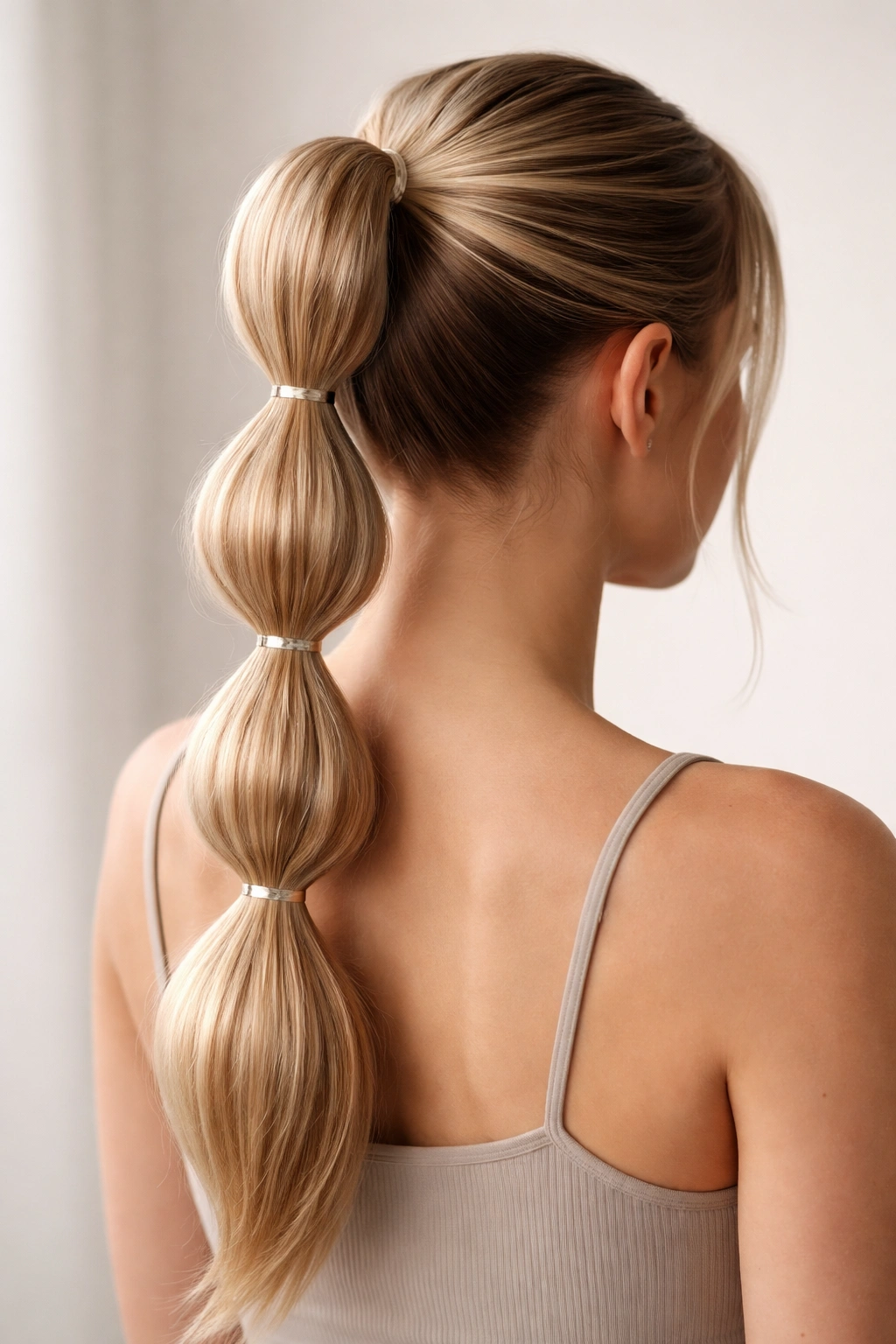
A bubble ponytail is a regular ponytail divided into sections with smaller elastics placed at intervals down the length, creating a segmented, sculptural look that’s playful and surprisingly modern. On straight hair, each bubble is clearly defined and holds its shape perfectly all day long.
Why Bubble Ponytails Suit Straight Hair
The bubble effect depends on the hair holding distinct sections, which is exactly what straight hair does naturally. Because straight hair doesn’t compress or flatten within those elastic segments, each bubble maintains its full volume and shape. The style works for casual occasions and also reads as intentional and fashion-forward rather than childish when done with the right proportions and finishing touches.
Building Bubble Ponytails That Actually Hold Their Shape
Create a standard ponytail and secure with an elastic at your desired height. Then, approximately 2-3 inches down from the first elastic, place a second elastic around the ponytail, creating your first “bubble” of hair between the two elastics. Continue this process down the length of your ponytail, spacing elastics evenly. For maximum bubble definition, gently pull outward on each section between the elastics, puffing out the hair slightly. If you want a softer look, skip this step and let the bubbles maintain their natural volume.
Pro tip: Use clear elastics for a seamless look, or match your elastic color to your hair color for maximum subtlety—colored elastics create a bolder visual statement.
8. Low Sleek Bun Ponytail
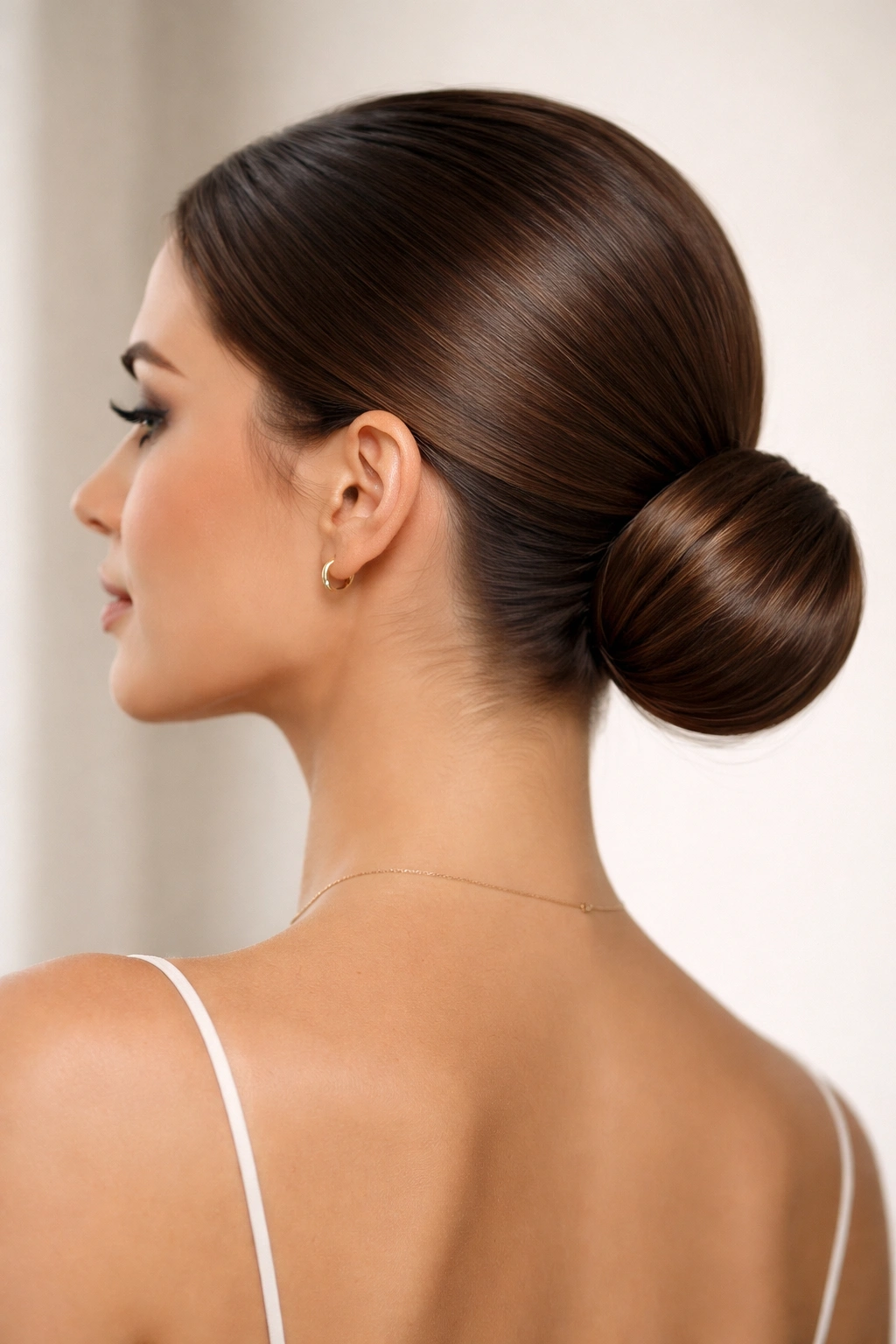
A low bun is the dressier sibling of the low ponytail. It’s sophisticated, works for formal events, and on straight hair, reads as intentionally polished rather than overly complicated because the smoothness of your hair makes the bun sit neatly against your head without any stray wisps.
The Elegance of a Low Bun on Straight Hair
Low buns on straight hair have a particular refinement because there’s no texture trying to escape from the secured section. The bun sits cleanly, the hair wraps smoothly, and the overall effect is understated elegance. This is the style to wear when you want your hairstyle to communicate “I have my life together” without screaming for attention.
Creating a Sleek, Polished Low Bun
Gather your hair into a low ponytail at the nape of your neck, securing with an elastic. Smooth the ponytail using a fine-tooth comb or by running your fingers through it. Then wrap the ponytail around the base of the elastic in a spiral, tucking the ends underneath and securing with bobby pins. Smooth the finished bun with the same smoothing product you might use for any sleek style—just a touch creates a refined finish without visible product buildup.
Insider note: If your low bun feels too severe or tight, take a few face-framing pieces before gathering the bun and curl them softly to create a romantic touch that balances the severity of the style.
9. Textured Ponytail with Intentional Waves
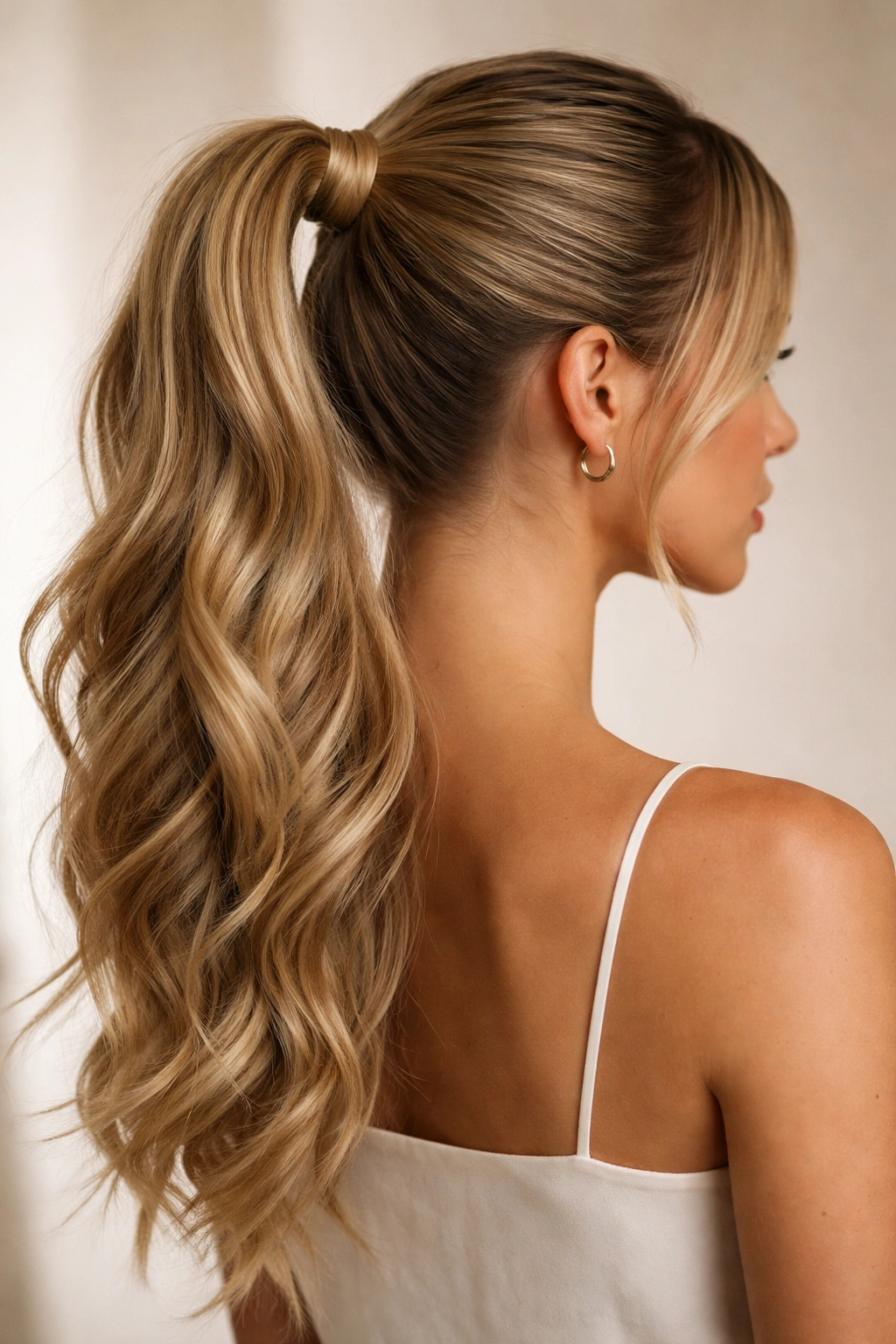
This style takes straight hair and deliberately adds subtle texture through waves or crimping, then gathers it into a ponytail. The result is a ponytail with movement and dimension that reads as more interesting than a completely sleek version, without requiring elaborate styling.
Adding Texture to Straight Hair Without Overdoing It
Straight hair’s default smoothness is beautiful, but adding intentional texture through waves, crimps, or even just rough-drying creates visual interest and prevents a ponytail from reading as one-dimensional. The key is not over-texturing—you want the ponytail to feel like elevated straight hair, not like you tried to create curls.
Building a Textured Ponytail
Before gathering your ponytail, create soft waves through your hair using a large-barrel waver, a curling iron, or by braiding damp hair overnight and releasing it before styling. The waves don’t need to be perfect or uniform—in fact, a bit of randomness reads as more modern. Once your hair has waves, gather it into a ponytail at your chosen height and secure with an elastic. Don’t smooth it down; instead, gently rough up the ponytail with your fingers to emphasize the texture.
Real talk: This style requires minimal product and no heat to maintain, because straight hair naturally falls back toward its straight state as the day progresses—the waves will still be visible by evening but just slightly less dramatic than they were in the morning.
10. Statement Ponytail with Decorative Accessories
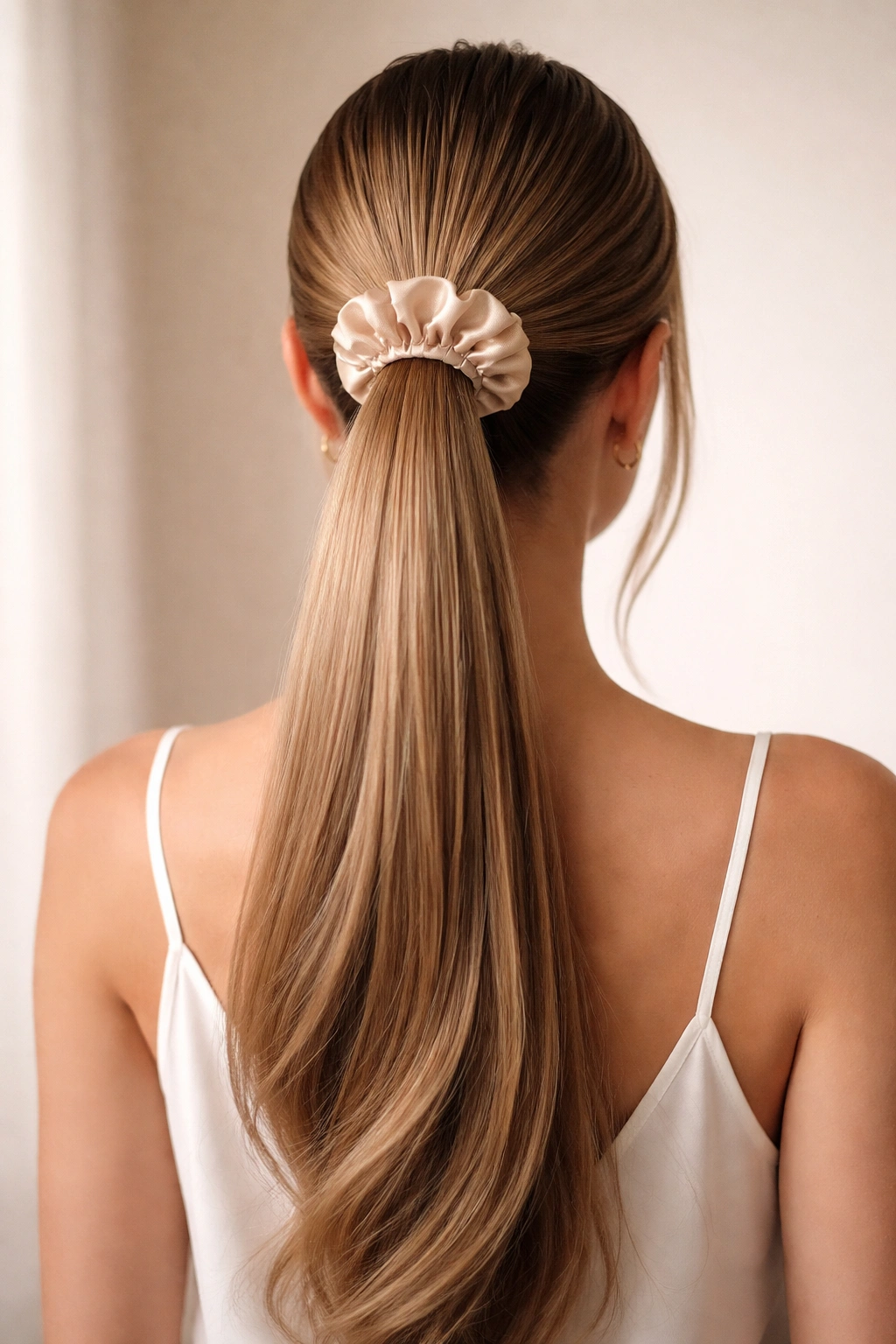
This final style is the same secured ponytail you’d wear any other day, but with intentional accessory choices—a silk scrunchie, decorative clips, ribbons, or a hair cuff—that elevate it into a statement piece. On straight hair, accessories sit perfectly against your hair without any texture interfering with the design.
Making Accessories Work on Straight Hair
Straight hair is the ideal canvas for hair accessories because there’s no texture competing for visual attention. A decorative clip sits flush against your hair. A ribbon wraps smoothly around your ponytail without bunching. A silk scrunchie glides effortlessly. The accessories read as the intentional focal point rather than as a practical necessity that you happened to decorate.
Choosing Accessories That Complement Your Hair
Consider metallic hair cuffs for a modern look, silk scrunchies in jewel tones for luxury, vintage hair clips for personality, or simple ribbons tied around the base of your ponytail for elegance. The key is choosing one statement piece rather than layering multiple accessories—on straight hair, restraint reads as more sophisticated than maximalism. Position your accessory at the elastic where it will sit securely and be immediately visible.
Pro tip: If you’re using a decorative clip or cuff, consider gathering your ponytail slightly lower than usual so the accessory sits at a flattering height and catches light beautifully.
Final Thoughts
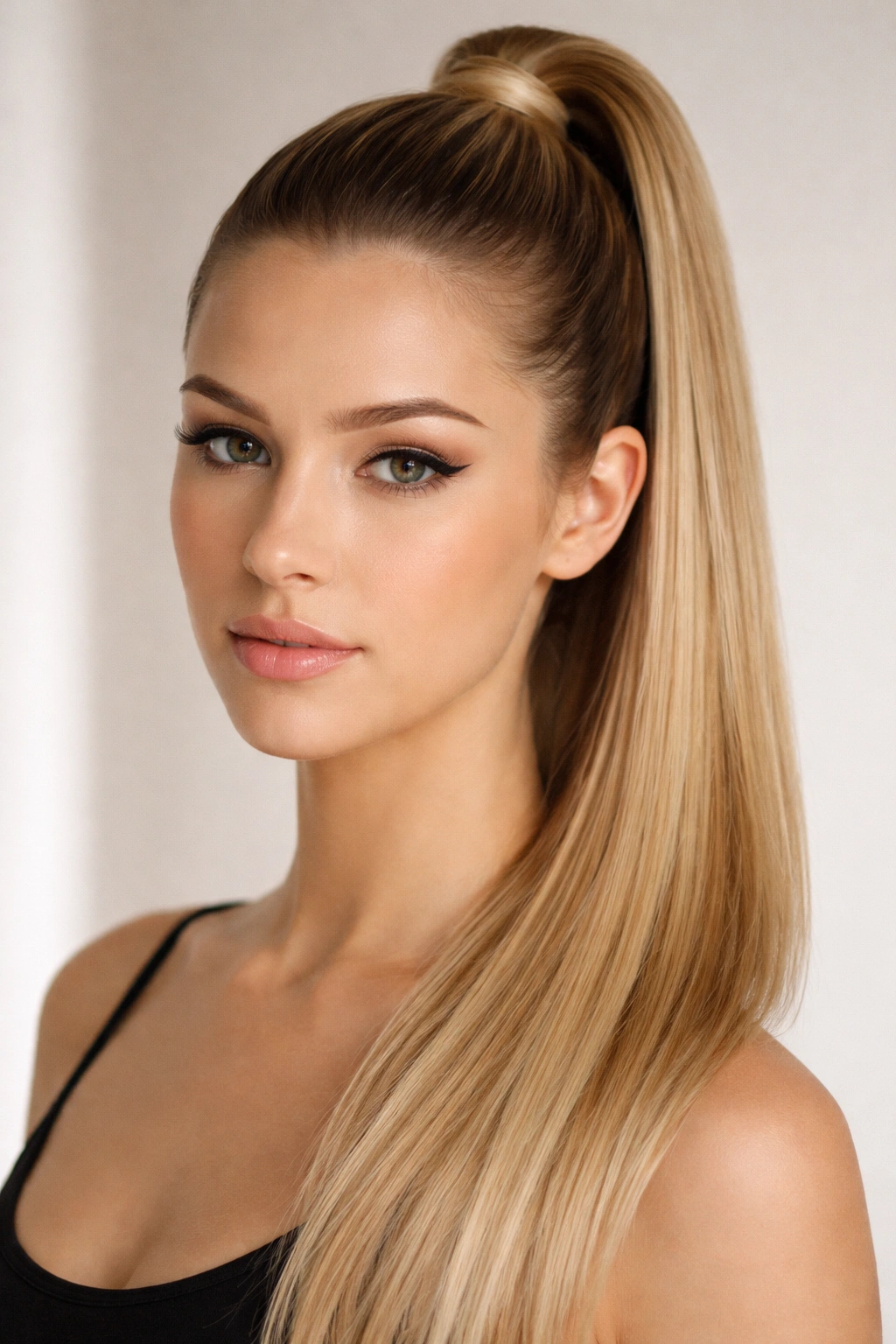
Straight hair’s natural smoothness and precision are superpowers when it comes to ponytails. Rather than fighting your hair type or trying to add texture that doesn’t naturally exist, these styles work with your straight hair to create clean lines, elegant shapes, and looks that read as intentional and polished. The best ponytail for straight hair is ultimately the one that works with your daily routine, complements the occasion, and makes you feel confident—whether that’s a sleek high ponytail that takes ninety seconds or a braided version you’ve taken time to perfect.
The beauty of straight hair is that it gives you options: you can go for maximum polish with a wrapped, center-parted, sleek style, or you can add texture and movement with waves before gathering. You can keep it simple or dress it up with accessories. And most importantly, you can change it daily based on your mood and needs, knowing that your hair will hold whatever shape you’ve chosen throughout the entire day. That reliability is something many hair types have to work hard for—on straight hair, it’s built in.
