



Straight hair and side bangs are a match made in heaven—bangs have this way of instantly transforming your entire face shape and personality, and when your hair is naturally straight (or you’ve worked hard to make it that way), side bangs amplify that sleek, polished effect without looking severe or demanding hours of styling every morning. The key to finding the right side bang style is understanding that not all side bangs are created equal. A wispy, face-framing version reads completely different from a blunt, modern take, and what you choose should complement your face shape, hair texture, and the overall vibe you’re going for.
If you’ve been scrolling through photos thinking “I want something different, but I’m scared it’ll look dated or require too much maintenance,” you’re not alone. The good news is that side bangs are having a major moment precisely because they’re infinitely versatile. Whether you’re drawn to something soft and romantic, edgy and architectural, or somewhere in between, there’s a side bang variation that’ll work with your straight hair and actually make your life easier—not harder. Let’s walk through ten distinct side bang styles, the specifics of what makes each one special, and exactly how to communicate what you want to your stylist so you get it right the first time.
1. Classic Side-Swept Bangs
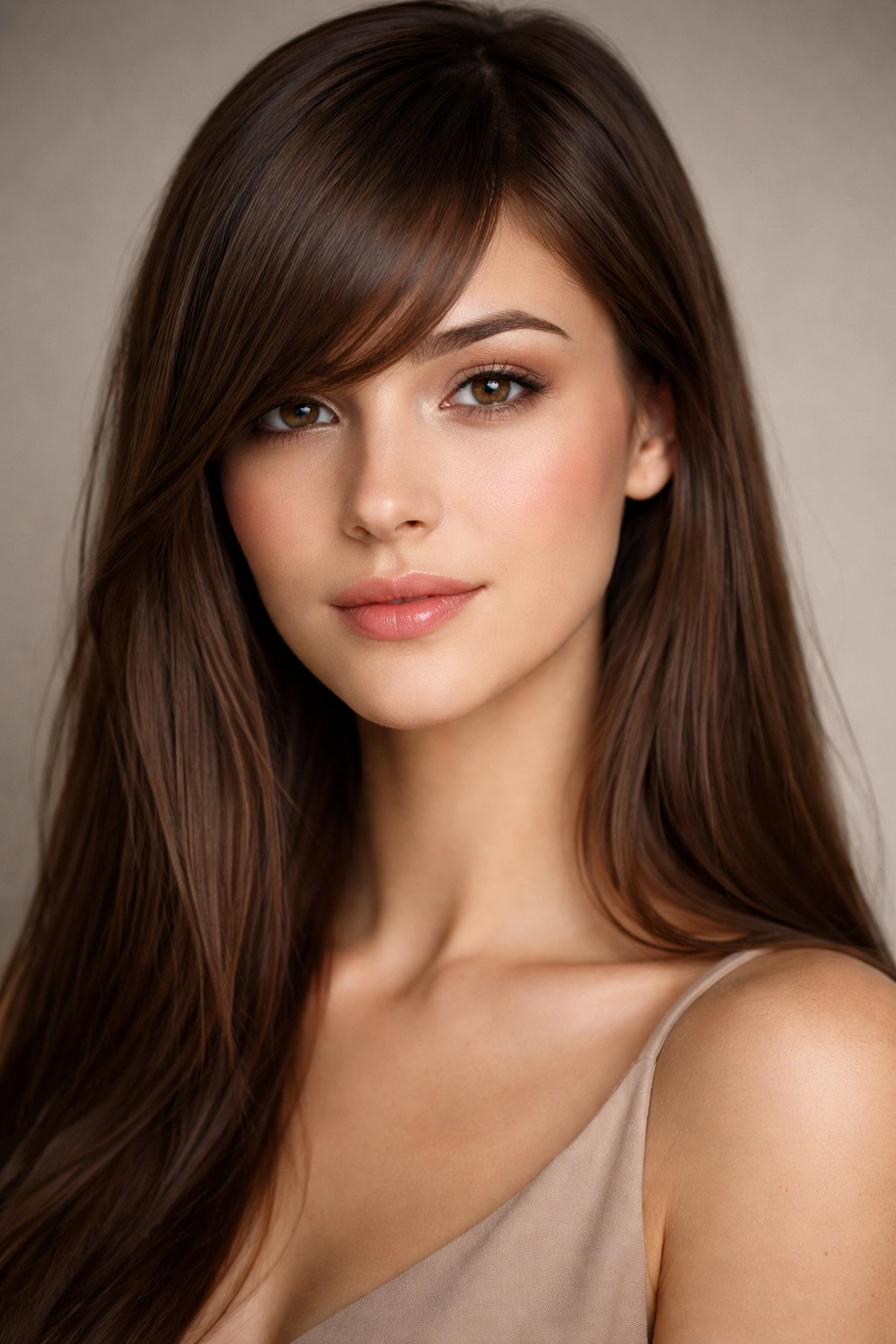
This is the timeless workhorse—long, gently curved bangs that start at about mid-forehead and sweep diagonally across to frame one side of your face, typically landing somewhere around your cheekbones or jawline. On straight hair, they look effortlessly polished because there’s no frizz or texture fighting against the line you’ve created. The beauty of classic side-swept bangs is that they work with almost every face shape and pair seamlessly with any length of hair, from a shoulder-length bob all the way down to long, waist-length styles.
Why This Style Works on Straight Hair
Straight hair is the ideal canvas for side-swept bangs because it holds the shape you create without needing to curl or straighten it every single time you wash. The smooth texture means your bangs catch light beautifully, making them look intentional and polished rather than accidental. They’re also forgiving—if your styling isn’t perfect one day, the style still reads as intentional rather than messy.
What You Need to Know
- Requires a side part (typically deep, starting about ⅓ of the way across your head) to frame the bangs properly
- Grows out gradually and beautifully, blending into your hair as it gets longer without an awkward in-between phase
- Work best when your bangs are cut with a slight curve rather than blunt—this creates the subtle swoop that makes them look modern instead of dated
- Styling is minimal: you can often just blow-dry straight with your regular routine and they fall into place
- Best paired with face-framing layers throughout the rest of your hair for a cohesive, intentional look
Pro tip: When you’re getting these cut, ask your stylist to dust them with a very slight textured edge rather than leaving them perfectly blunt—this micro-texture catches light and makes them look intentionally soft rather than just straight-edge.
2. Wispy Side Bangs
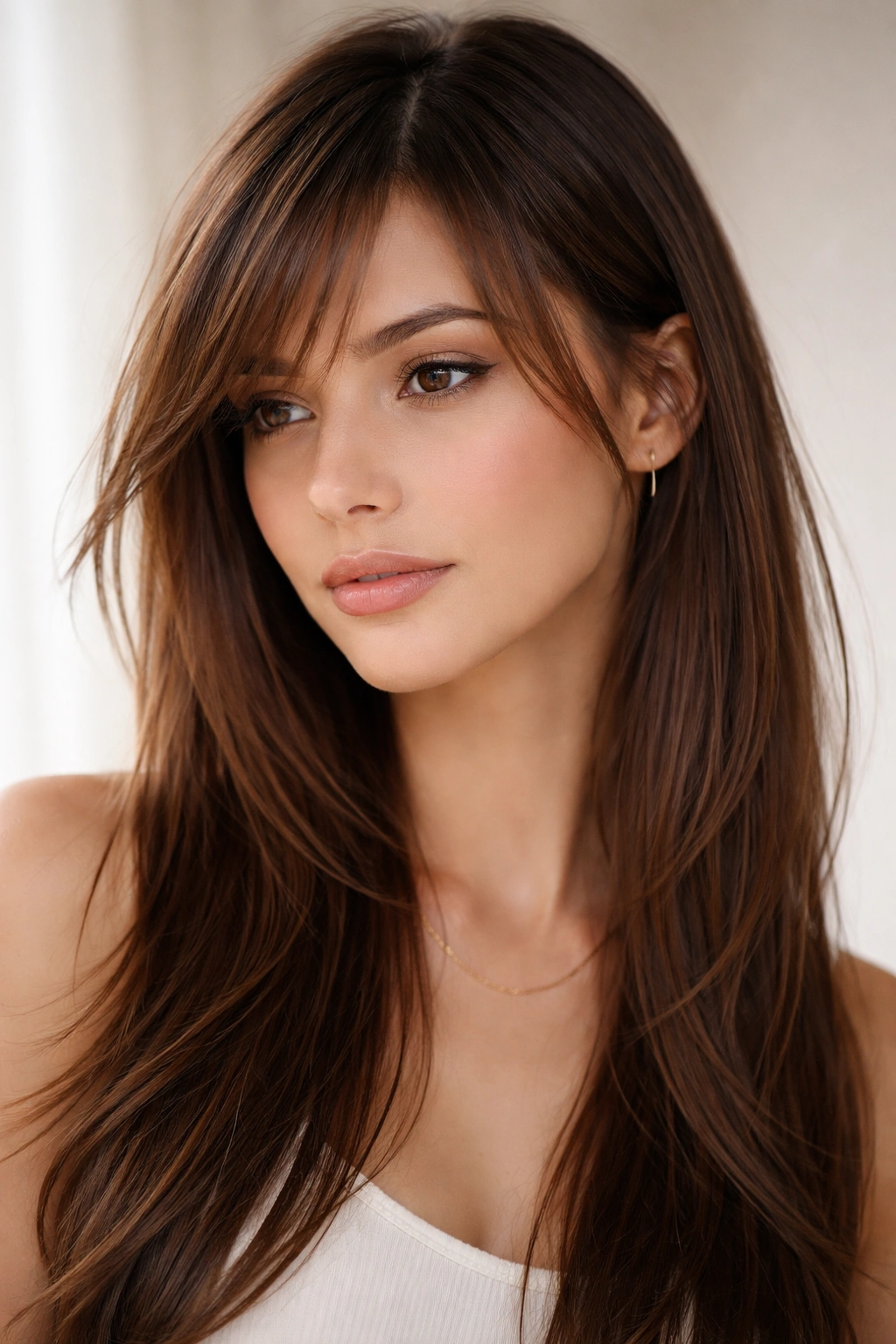
Wispy side bangs are the delicate, feathered interpretation—lighter and more romantic than classic side-swept, with shorter, graduated layers built into the bang itself so they taper down to almost nothing at the longest point. They create an airy, face-framing effect and work particularly well if you have a wider face that you want to soften, or if you prefer a gentler, less dramatic look than classic side bangs. On straight hair, the individual wisps are clearly defined, which actually works in your favor—it makes the style look intentional rather than like you’re growing out a longer bang.
How Wispy Bangs Frame Your Face
The layered, feathered construction means these bangs have movement and air built into them, so they don’t sit as a solid line across your forehead. Instead, they create multiple planes of length that bounce slightly and catch light individually. This softens angular features and adds a romantic, slightly bohemian quality that feels very current.
Key Styling and Maintenance Facts
- Layers within the bangs mean they’re a bit higher-maintenance to cut properly—you need a stylist who understands how to texturize and feather rather than just trim straight across
- Require regular trims (every 3-4 weeks) because the tapered ends show split ends more visibly than a blunt-cut bang would
- Blow-dry best with a round brush to encourage the feathering and movement; straightening them flat defeats the purpose
- Pair beautifully with shoulder-length haircuts and longer styles that have their own movement and layers
- Less structured than classic side-swept, so they work well if you have a more relaxed, less formal personal style
Worth knowing: If you have naturally straight hair that’s quite fine or delicate, wispy bangs can sometimes look a bit thin or wispy in the most literal sense—ask your stylist whether your hair density can support this style without looking sparse.
3. Textured Side Bangs with Layers
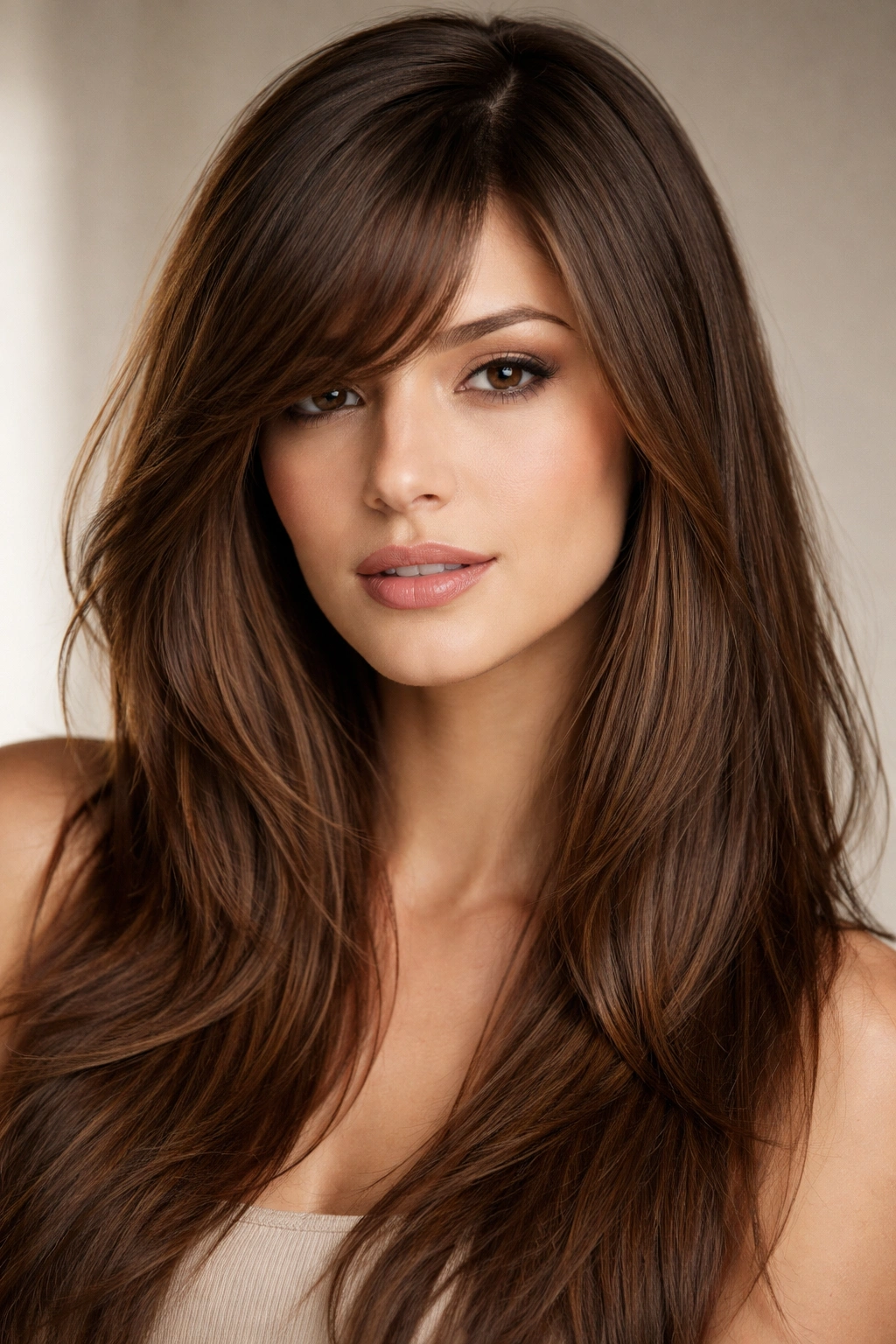
This is a more modern, architectural take where the side bangs are deliberately cut with visible texture and movement built in, usually paired with layers throughout the rest of your hair that coordinate with the texture of the bangs themselves. The effect is cohesive and intentional—every part of your hair is working together rather than having straight bangs that contrast with layered hair. On straight hair, the textured cuts show up clearly and look very deliberate.
Why Texture Transforms the Look
Texture is what makes straight hair interesting—it adds visual depth and prevents the straight-across-the-board sleekness from feeling flat or severe. When your bangs have that texture baked in from the cut itself, it elevates them from a simple framing device into an actual style statement. The texture also means the bangs move and shift throughout the day rather than sitting static, which adds personality.
How to Make This Work
- Requires a stylist who understands how to cut in texture using point-cutting or razor techniques rather than just following blunt lines
- Works best when you commit to styling with texture in mind—this typically means blow-drying with a round brush or diffuser attachment, not straightening everything flat
- Pairs perfectly with a textured hairstyle overall; if the rest of your hair is bone-straight, textured bangs will look disconnected and odd
- Works beautifully with medium to longer hair lengths where the textured layers throughout can echo the movement of the bangs
- Requires refreshing every 4-6 weeks because the texture becomes less defined as your hair grows and the cut loosens
Insider note: If you love this look but aren’t ready to commit to styling texture into your whole head of hair, ask your stylist about incorporating texture only into your bangs and a few face-framing pieces around your face—you can still get 80% of the effect with less daily work.
4. Blunt Side Bangs
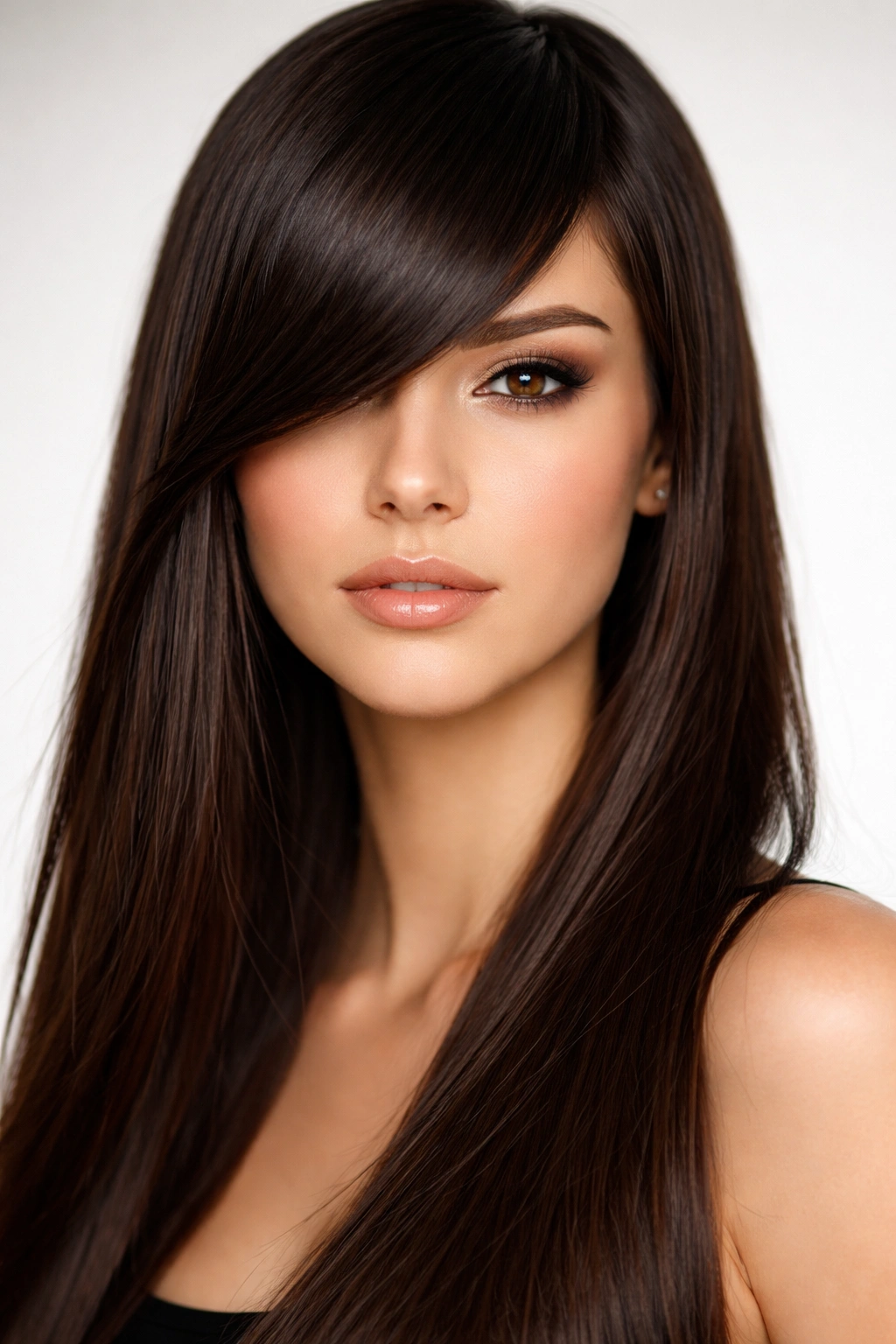
Bold, straight-across-the-bottom side bangs that sit at a definitive length (usually around your eyebrows or upper lashes) before sweeping across to one side. On straight hair, blunt bangs are incredibly striking because the line is so clean and intentional—there’s no ambiguity, no wispy edges softening the look. They read modern, editorial, and slightly edgy without being aggressive, and they’re excellent if you want an actual style rather than something subtle and understated.
The Impact of Blunt Geometry on Straight Hair
Blunt bangs on straight hair create a graphic line that draws the eye upward toward your face and eyes. The sharpness of the cut emphasizes the straightness of your hair as a positive quality rather than something that needs to be softened. This style makes a statement, and it works best when you’re genuinely drawn to more architectural, clean-lined aesthetic choices overall.
Practical Considerations
- The blunt line needs to be perfectly maintained to look polished—any growth or unevenness reads as sloppy, so you’re committing to trims every 2-3 weeks without exception
- Works best on thick or medium-density straight hair; fine hair can look overpowered by the visual weight of blunt bangs
- Pairs well with bobs, shoulder-length cuts, and any style where the bangs feel like part of a cohesive, intentional shape
- One of the easiest styles to maintain day-to-day once cut correctly—blow-dry straight and you’re done
- Flatters oval, round, and heart-shaped faces; on square faces, the horizontal line can emphasize jawline width (consider softer variants if that’s a concern)
Pro tip: If you want blunt bangs but are worried about committing, ask your stylist to cut them slightly longer than you ultimately want (maybe at your lashes instead of eyebrows), then style them blunt and see how you feel for two weeks before getting them trimmed even shorter.
5. Long Side Bangs (The Grown-Out Grown-In Style)
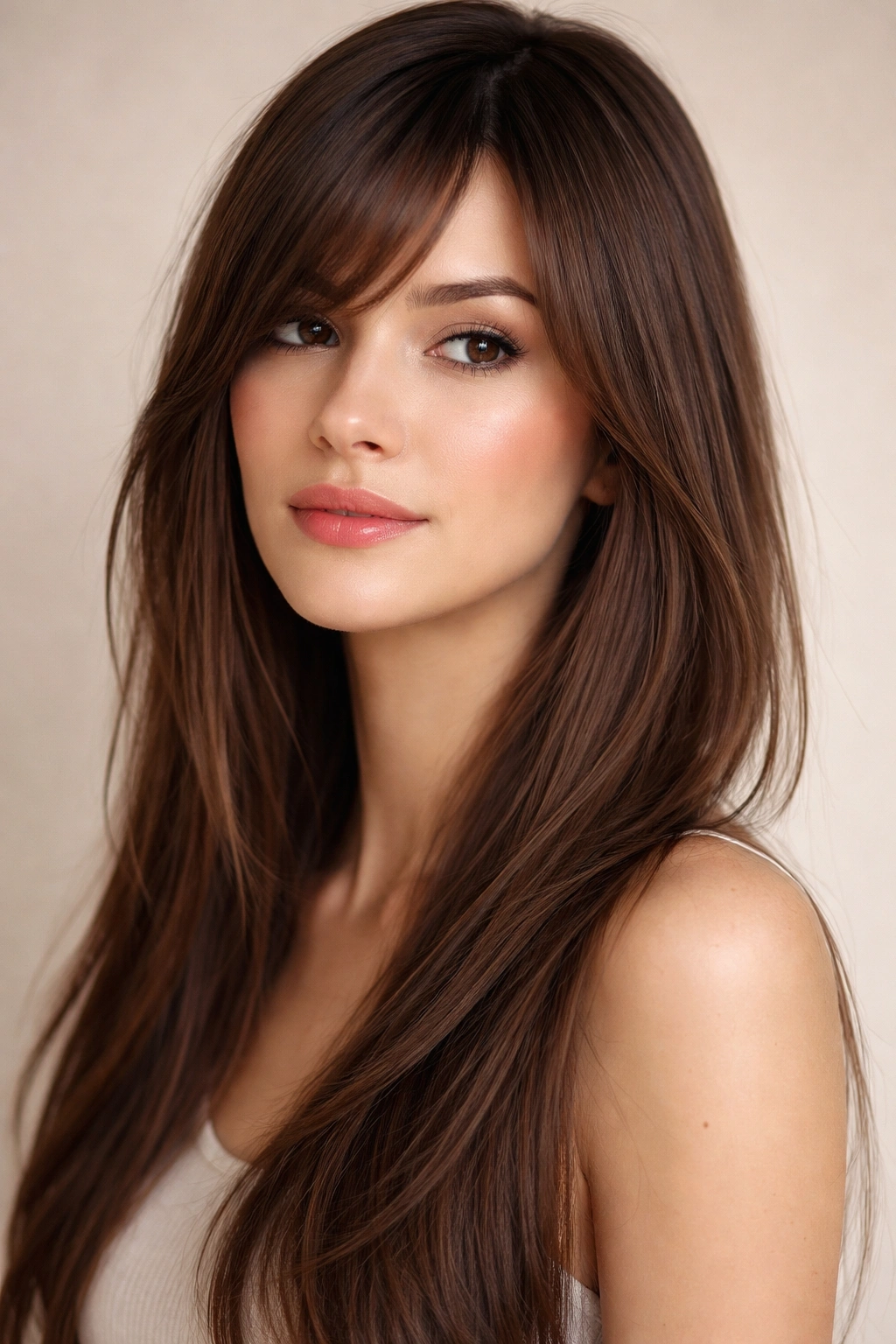
These are intentionally long side bangs that blend almost seamlessly into the rest of your hair, usually starting somewhere around mid-forehead and continuing down to blend with layers or the overall length by about chin-level. The effect is less “I have bangs” and more “I have beautifully framed hair”—they’re subtle enough that some people won’t immediately clock them as intentional bangs, but your face will look noticeably better framed. This is the perfect option if you love the idea of bangs but don’t want to commit to short, high-maintenance bang territory.
Why Length Changes Everything
Long side bangs are deceptively powerful because they’re long enough to frame your face without creating a distinct bang line that needs constant maintenance. They grow out beautifully, blending gradually into the rest of your layers rather than creating an awkward in-between phase. On straight hair, the length allows the bangs to flow naturally without looking choppy or separate.
The Practical Reality
- Minimal maintenance compared to shorter bangs—they grow out without looking drastically different and can go 6-8 weeks between trims
- Work with virtually any hairstyle and any overall length, from chin-length bobs to long straight hair
- Best styled with layers throughout the rest of your hair so the long bangs feel like part of the overall shape rather than an addition
- Can be styled sleekly straight, tucked behind your ear for a different look, or curled under for softness—they’re versatile
- Particularly effective if you’re working to soften a strong jawline or high cheekbones because the longer length provides more coverage without looking like an actual bang
Worth knowing: Long side bangs need a skilled stylist to cut properly because they have to blend seamlessly into the rest of your layers—a mediocre cut will look like you have a distinct fringe that just happens to be long, rather than a coordinated part of your overall style.
6. Side Bangs with Soft Fade
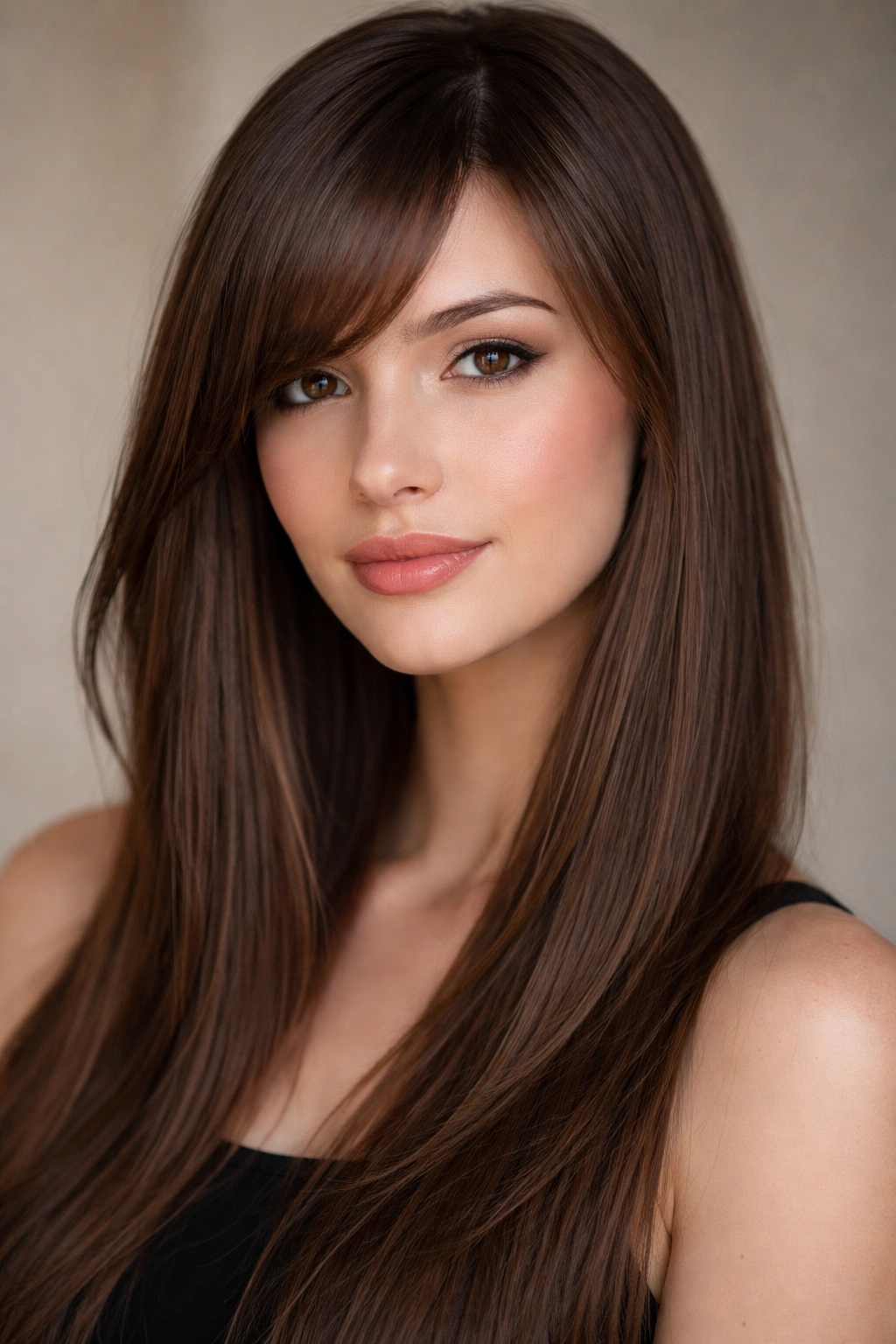
These bangs start slightly shorter near your forehead and gradually fade into longer lengths as they sweep across toward your side, creating an almost imperceptible gradation rather than a blunt or defined line. The fade is subtle enough that the bangs still read as bangs, but they feel grown-in and intentional rather than requiring razor-sharp maintenance. On straight hair, the fade shows up as a very slight textural difference that adds sophistication.
How the Fade Flatters Your Face
A soft fade creates visual movement and dimension where a blunt line would feel static. The gradation draws the eye across your face in a flattering, elongating direction. It’s particularly effective if you want bangs but have concerns about how a defined bang line would work with your face shape—the fade softens any potential harshness while still giving you the face-framing benefit.
Styling and Maintenance Details
- Requires a talented cut to look intentional; a poorly done fade just looks like an uneven, sloppy bang
- Grows out more gracefully than blunt bangs because the fade is already built into the design, so some growth doesn’t immediately ruin the look
- Works beautifully on straight hair because you can clearly see the graduated lengths and it looks intentional rather than accidental
- Pairs well with layered haircuts where the fade echoes the subtle texture and movement elsewhere
- Best maintained with trims every 4-6 weeks to keep the fade looking intentional
Pro tip: When consulting with your stylist about a fade, bring a photo that clearly shows the exact gradation you want—this is a subtle style that’s easy to misinterpret, and clarity upfront prevents disappointment.
7. Asymmetrical Side Bangs
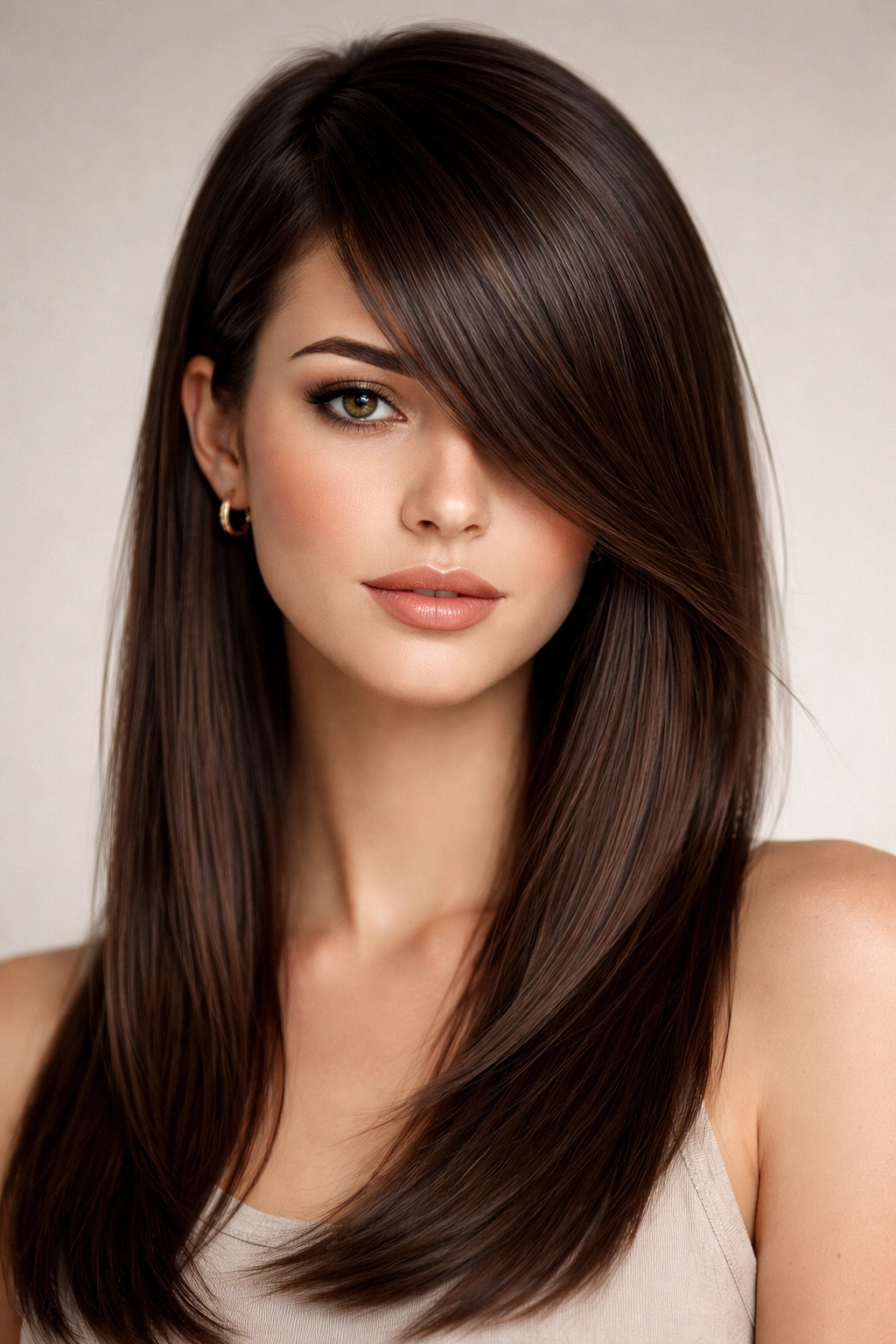
One side is noticeably shorter than the other, creating a dramatic, deliberately unbalanced look that reads modern and fashion-forward. The short side might frame just one eye while the longer side sweeps further across—or the difference might be even more pronounced. On straight hair, the asymmetry is crystal clear and looks striking rather than accidental, making this ideal if you want a style that’s unquestionably bold and intentional.
The Confidence Factor
Asymmetrical bangs aren’t subtle—they make a statement, and they work best when you’re genuinely drawn to edgy, fashion-forward aesthetics and comfortable being noticed. They pair beautifully with undercuts, shaved sides, or any cut that already has an architectural edge. If you tend toward classic, timeless styles, this probably isn’t your vibe, but if you want to turn heads, this delivers.
Making Asymmetrical Bangs Work
- Requires a skilled stylist who can execute clean, intentional lines without the asymmetry looking accidental or sloppy
- Works best on medium to longer hair that has dimension and movement elsewhere to balance the drama of the asymmetrical bangs
- Particularly striking on straight hair because the different lengths are so clearly defined
- Requires commitment to maintenance because the asymmetry becomes more pronounced as it grows, and an overgrown asymmetrical bang just looks unkempt
- Flatters most face shapes, but particularly effective on longer face shapes where the asymmetry adds visual interest and breaks up vertical lines
- Consider your lifestyle before committing—this style works best when you have the time and inclination to style regularly
Real talk: Asymmetrical bangs are fun, but they’re not for the faint of heart. Make sure you genuinely love the concept before booking your appointment, because you can’t really “downplay” them if you wake up and regret it.
8. Deep Side Part with Micro Bangs
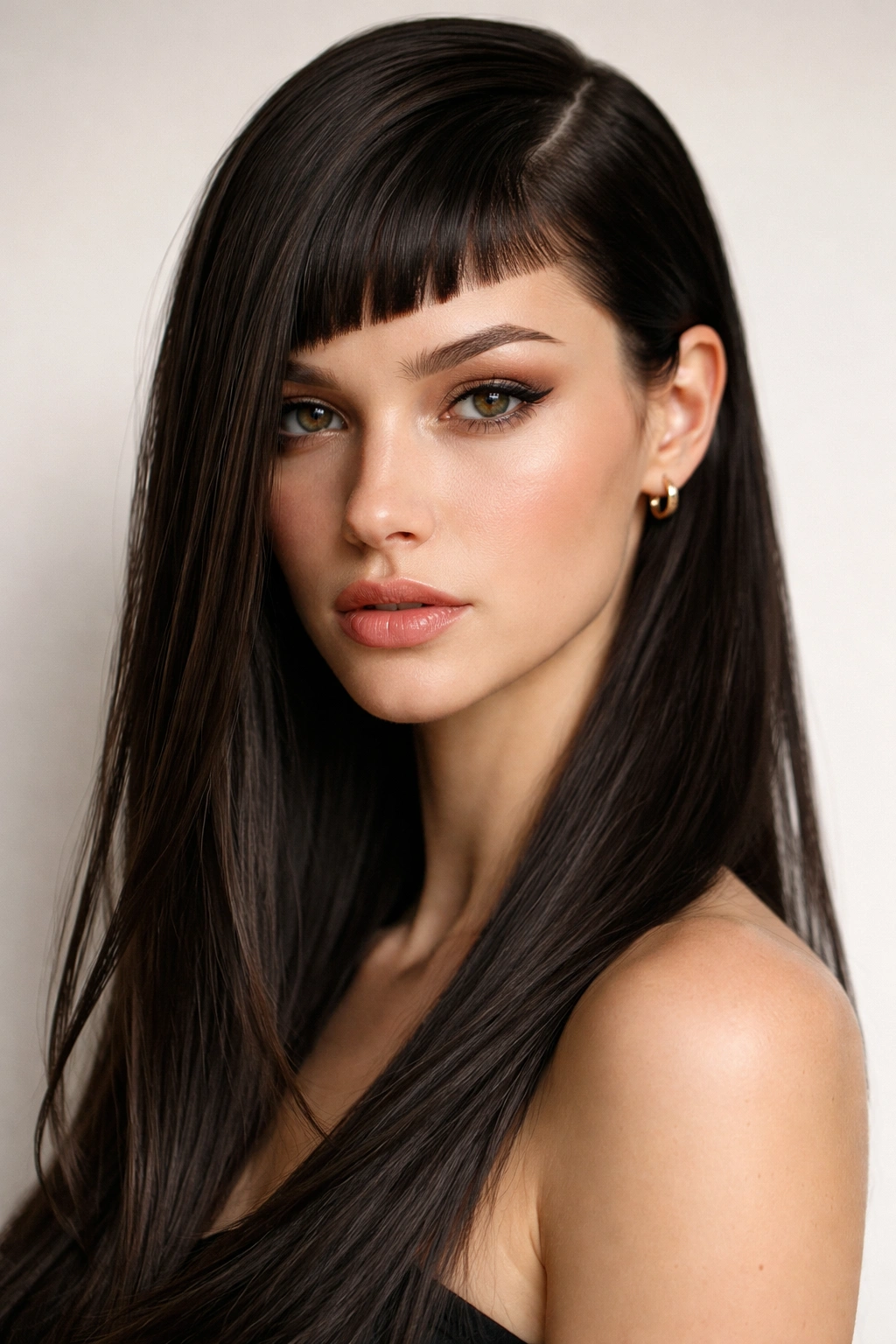
A dramatic deep side part (starting nearly at your temple) paired with very short micro bangs that only cover maybe a quarter to a third of your forehead before the rest of your hair sweeps dramatically across to the other side. The effect is incredibly chic and somewhat androgynous, with the side part and micro bangs drawing major attention to one side of your face and cheekbone. On straight hair, this looks editorial and intentional in the best possible way.
Visual Impact and Face Framing
The deep part and micro bangs combination is all about asymmetrical face framing—you’re deliberately highlighting one side while creating intrigue on the other with hair movement and coverage. This works exceptionally well if you have cheekbones you want to emphasize or one side of your face you prefer to highlight. The style reads modern, confident, and slightly fashion-magazine.
Execution and Maintenance
- Requires very precise cutting and a stylist who understands how to proportion micro bangs correctly so they don’t look too short or silly
- Best maintained with regular trims every 2-3 weeks to keep the micro bangs looking intentional rather than overgrown and scraggly
- Works on medium to longer hair lengths where you have enough hair depth to create the dramatic part and sweep
- Straight hair is actually ideal for this style because the clean lines and lack of texture make the geometric arrangement crystal clear
- Pair with face-framing layers on the swept side so the hair has movement and doesn’t just sit flat
- Requires daily styling to maintain the deep part; this isn’t a wash-and-go situation
Worth knowing: Micro bangs are shorter than you probably think—they should hit somewhere around your upper eyelid or between your brow and lash line, not your eyebrows. Longer than that and they stop being “micro.”
9. Side Bangs with Hidden Undercut
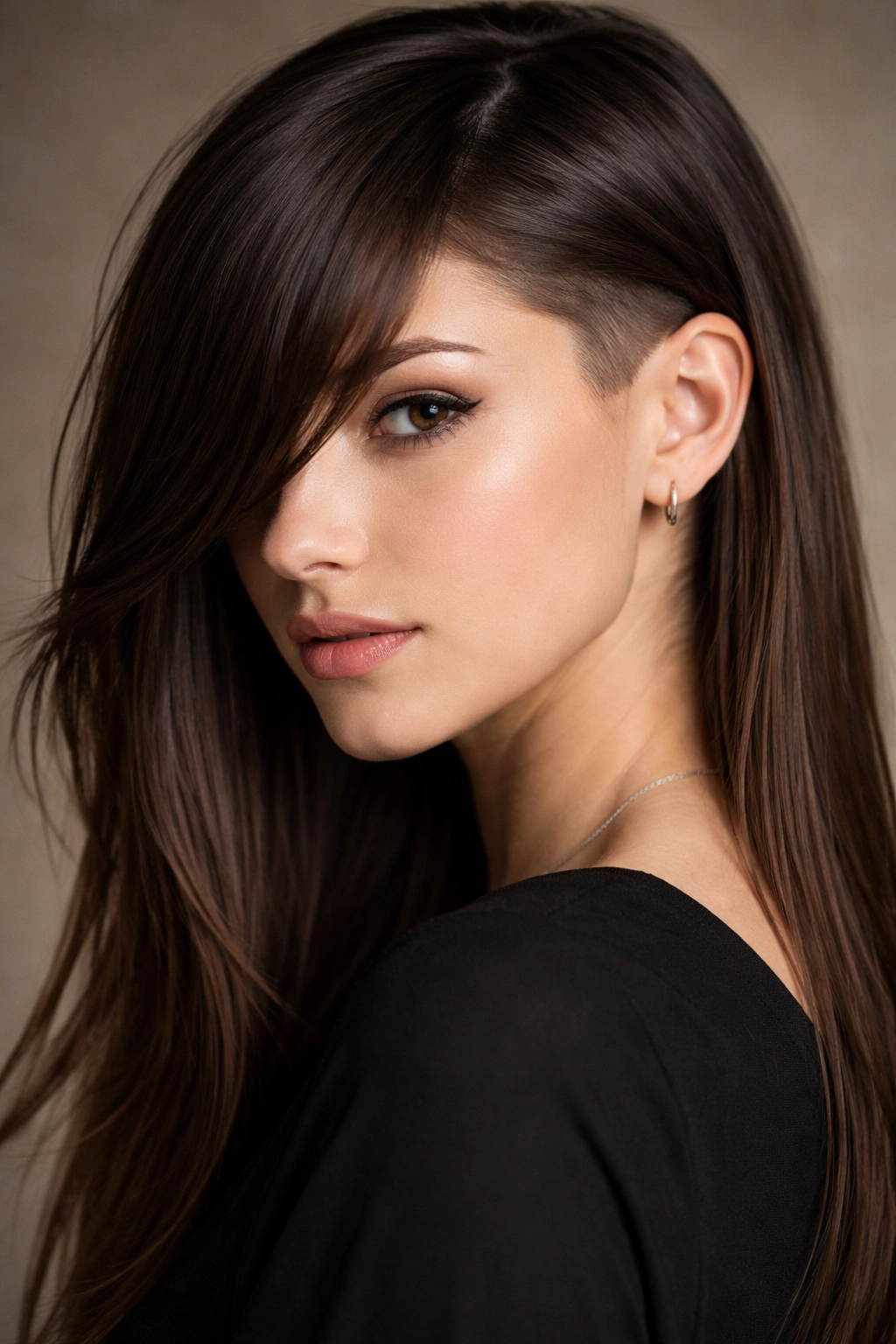
These are side bangs that look normal from the front but have an undercut or shaved section hidden underneath—visible only when you move your head certain ways or deliberately tuck your hair back to reveal it. The concept is playful and modern, giving you edge and personality without it being in-your-face all the time. On straight hair, the contrast between the smooth bangs and a sharp undercut is particularly striking.
The Surprise Factor
There’s something appealing about having a secret edgy element that only shows up when you choose to reveal it. You get the visual interest and personality of an undercut without committing to having it visible at all times, which makes this a smart choice if you want style without potential professional-setting concerns. The hidden element also adds dimension that reads beautifully in photos.
How to Make This Work Practically
- The undercut is typically on the side underneath the side bangs (under the side that sweeps across), or sometimes at the nape
- Works best on straight hair where the contrast between the smooth bangs and the shaved section is visually dramatic
- Allows you to style in multiple ways—slick and polished with the bangs covering the cut, or edgier with the bangs pinned back to reveal the undercut
- Requires a skilled stylist to cut both the visible bangs and the hidden undercut so both elements look intentional and well-executed
- The undercut will need maintenance every 4-6 weeks as it grows out, so factor in regular appointments
- Pairs beautifully with medium to longer straight hair where you have enough length to play with different styling options
Insider note: If you’re committing to a hidden undercut, ask your stylist about blade sharpness and fade quality—this style only works if the undercut is razor-sharp and well-faded where it transitions to longer hair.
10. Feathered Side Bangs
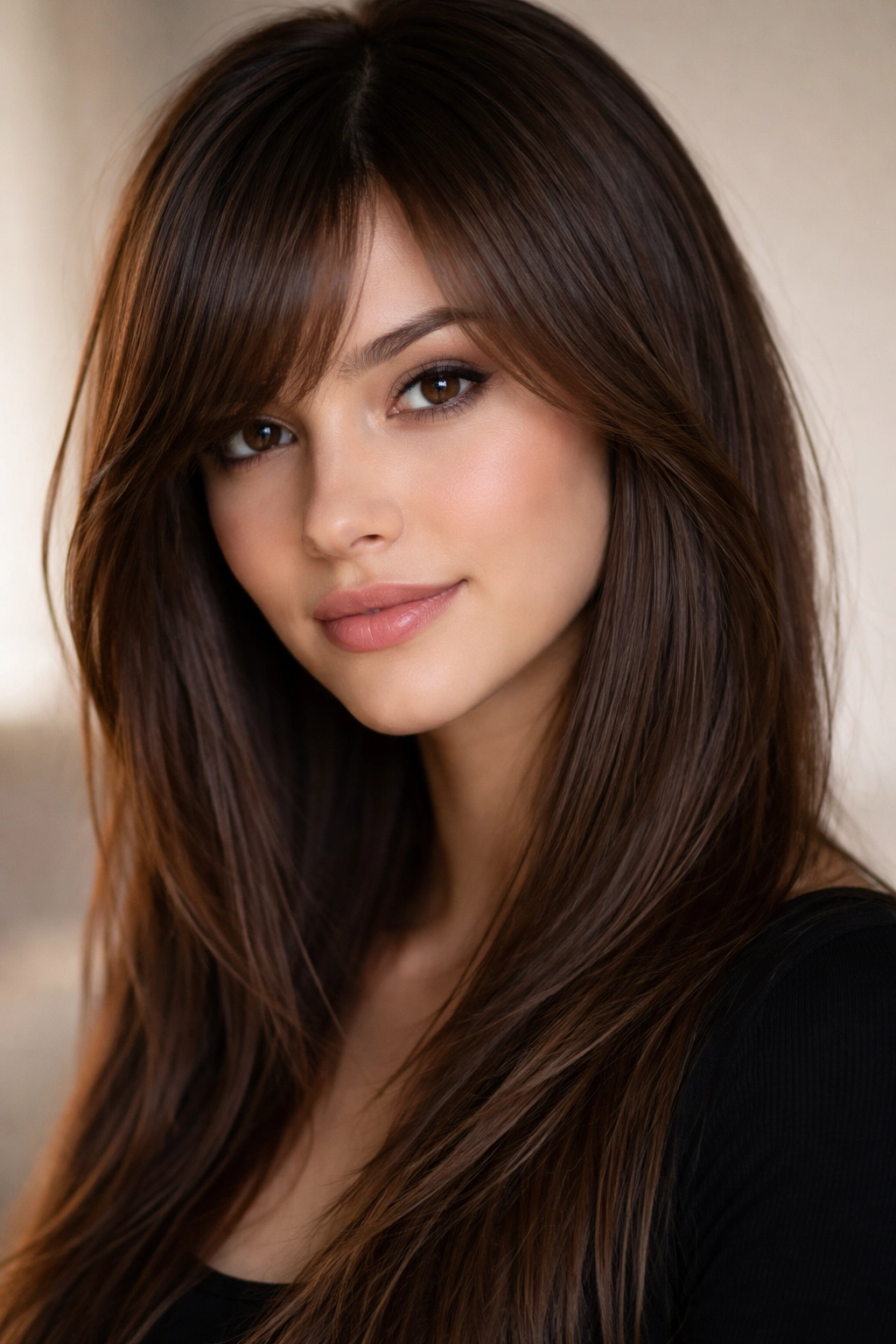
These bangs have multiple layers throughout, creating a feathered, almost ’70s-inspired softness, but proportioned and cut in a modern way so they read current rather than dated. Each layer is cut at a slightly different length, so the bangs have movement and air throughout rather than being solid and heavy. On straight hair, you can actually see each feathered layer distinctly, which creates beautiful dimension and catches light beautifully.
The Modern Take on a Classic Technique
Feathering is having a genuine moment in modern styling, and feathered side bangs are one of the most flattering applications of the technique. They soften your features without looking overly romantic or dated, and they work beautifully on straight hair because each feathered layer shows up clearly and looks intentional. The multiple lengths also mean they grow out beautifully without needing frequent trips to the salon.
What You Need to Know About Feathered Bangs
- Require a stylist who understands how to feather properly using point-cutting or razor techniques; these can’t be executed with just regular scissors
- Create beautiful movement and dimension on straight hair because each layer is clearly visible
- Grow out more gracefully than many bang styles because the layered construction is built into the design
- Best maintained with trims every 5-7 weeks to keep the feathering looking crisp and intentional
- Pair beautifully with layered haircuts throughout the rest of your hair for a cohesive, intentional look
- Work well on most face shapes and hair types, making them one of the most universally flattering bang options
- Require some styling to look their best—blow-drying with a round brush encourages the feathering and movement, while straightening them flat defeats the purpose
Pro tip: Ask your stylist to point-cut the ends of your feathered bangs very slightly rather than leaving them blunt—this adds another layer of texture and prevents the individual feathered pieces from looking separated or choppy.
Final Thoughts

Choosing the right side bangs for your straight hair comes down to understanding three things: the overall vibe you’re going for (romantic and soft, or modern and sharp?), how much maintenance you’re genuinely willing to commit to, and what face shape you’re working with. Straight hair is actually a huge advantage when it comes to side bangs because the smooth texture shows off the cut beautifully, and you can style it with minimal effort once it’s cut correctly.
Start by getting crystal clear on what style actually speaks to you—don’t just choose what’s trending or what looks good on someone else. Bring multiple reference photos to your stylist (at least 3-5 of the same style from different angles), and talk through your maintenance comfort level honestly. A blunt bang that requires trims every two weeks isn’t the right choice if you hate sitting in the salon, but a long, grown-out side bang might be perfect. The right side bang should make you feel like yourself, but slightly more polished and intentional—and on straight hair, you can absolutely make that happen. Book with a skilled stylist who has experience with bangs, and you’ll have transformed your look in just one cut.
