



Straight hair is the ultimate canvas for bangs. Unlike textured or curly hair that naturally breaks up lines and softens shapes, straight hair shows off clean, precise bang lines with beautiful clarity—and that means you get to choose exactly how a particular bang style reads on your face. The right bangs can reshape your entire look, draw attention to your eyes, add movement and dimension to an otherwise flat style, or create that effortlessly chic vibe you’ve been imagining. The wrong bangs, though, can feel heavy, dated, or unflattering faster than you’d like. The good news is that straight hair’s natural structure makes most bang styles look polished and intentional, which means you have genuine freedom to experiment.
The real trick isn’t figuring out whether bangs work on straight hair—they absolutely do. The trick is finding the specific bang shape that complements your face shape, matches your styling commitment level, and fits the overall vibe you’re going for. Some bangs demand daily styling attention and precise blow-drying technique. Others are nearly maintenance-free and look better the more casually you treat them. Some create a bold, dramatic statement. Others whisper rather than announce. This guide walks through ten distinctly different bang styles that genuinely shine on straight hair, what makes each one unique, and what you need to know before you commit to the scissors.
1. Wispy Bangs
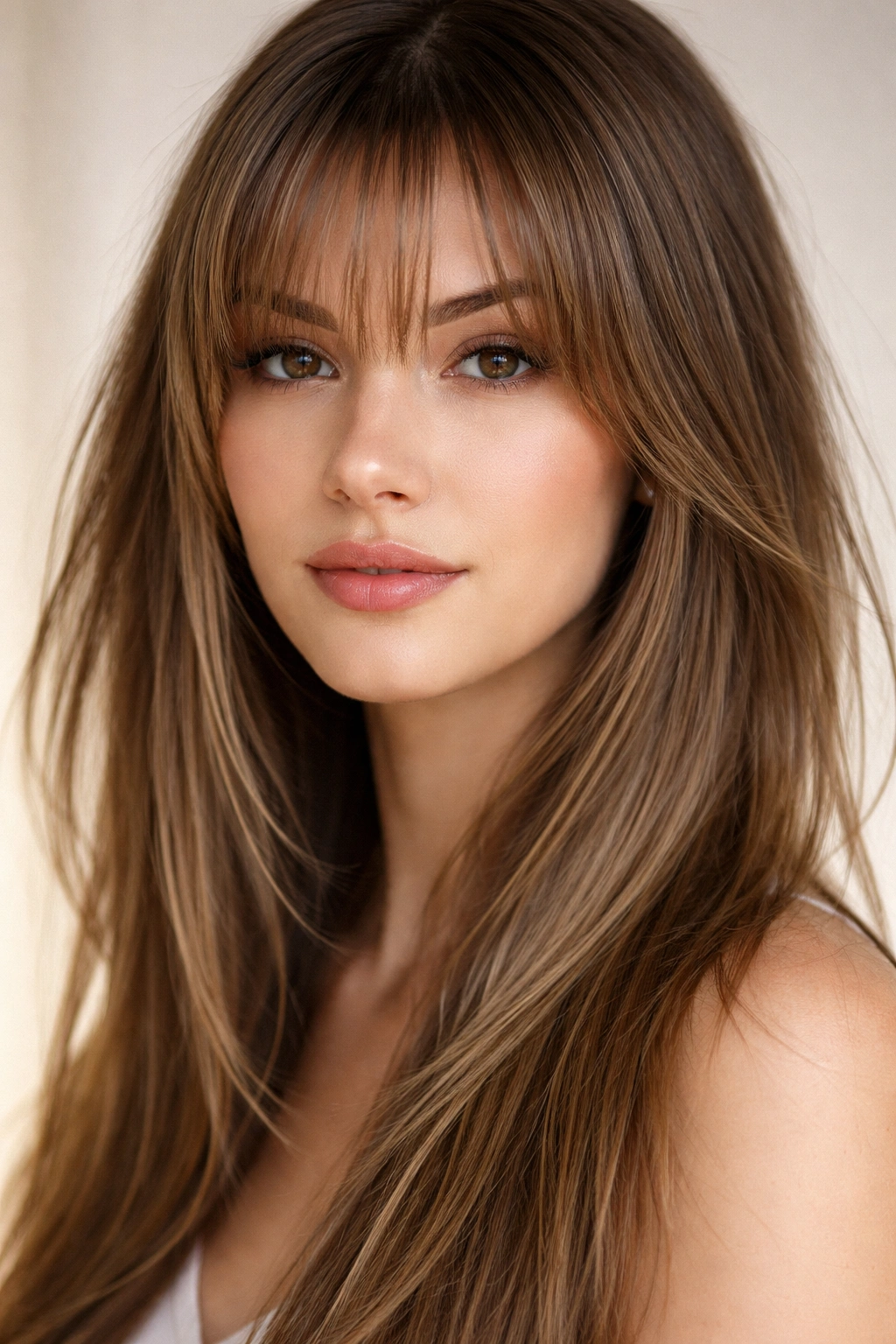
Wispy bangs are the gateway drug to the bang world. They’re subtle enough that they won’t feel like a radical change, but noticeable enough that they absolutely transform your face. The defining characteristic is that they’re cut in layers—shorter in the center, progressively longer toward the sides—which creates a soft, feathered edge rather than a blunt line. On straight hair, wispy bangs catch light beautifully and create movement without requiring any real effort to style.
Why They’re Ideal for Straight Hair
Wispy bangs work particularly well on straight hair because the layers stay defined and visible rather than blending together into a shapeless mass. The straight texture lets you see each individual feathered section, which creates visual dimension and softness without weight. Straight hair also holds the shape of these layers cleanly, so they don’t fall flat or lose their structure as the day goes on. Unlike on wavy hair where layers can disappear into the texture, wispy bangs on straight hair maintain their intentional, sculpted appearance from morning through evening.
How to Style and Maintain
- Part your hair in the middle or on your preferred side—wispy bangs work beautifully with either placement
- Blow-dry with a round brush, directing the layers slightly outward to emphasize the feathering
- They require a trim every 3-4 weeks as they grow out, since the layers are what define the look
- Use a light texturizing spray for extra movement if your straight hair feels too slick
- They pair particularly well with shoulder-length cuts or longer styles where the layers can blend naturally
Pro tip: If you have very fine, thin hair, wispy bangs can make your hair look even thinner because the layers reduce density. Consider a slightly chunkier version or a more blunt base layer if that’s your hair type.
2. Blunt Bangs
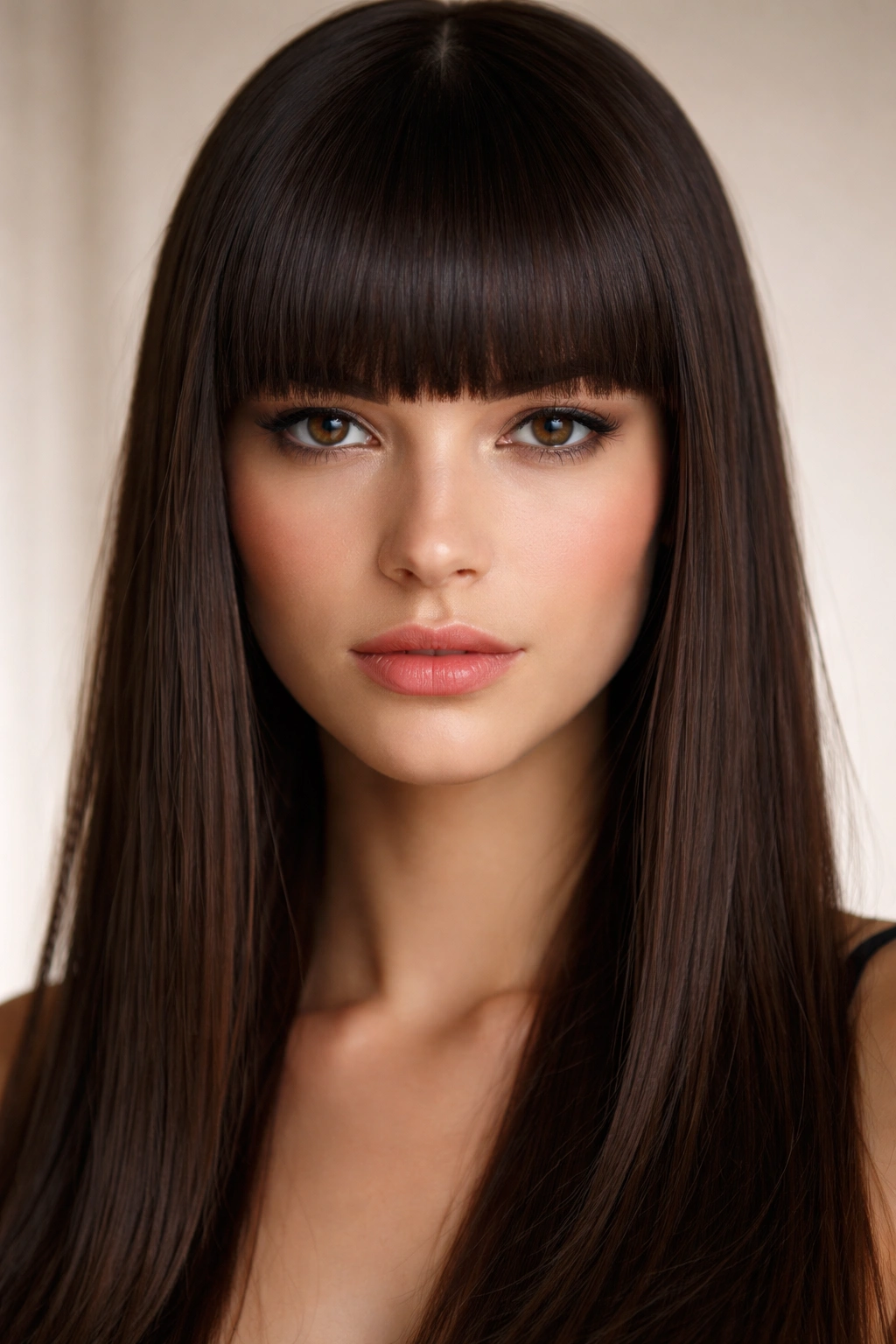
Blunt bangs are the statement maker—a strong, straight line across the forehead that reads as intentional, fashion-forward, and confident. They’re cut to the same length all the way across with minimal to no layering, creating a clean, architectural edge. On straight hair, this line is razor-sharp and absolutely commands attention. They work best on faces that can handle a bold element and on people willing to commit to styling them well.
Why They’re Ideal for Straight Hair
Straight hair is almost purpose-built for blunt bangs. The hair grows straight down from root to tip, which means the blunt line sits exactly where it was cut, with no wave or texture to disrupt the edge. This precision is harder to achieve on any other hair type. The blunt bang also works as a visual anchor for straight hair styles—it gives a sleek, polished look that emphasizes the hair’s natural straightness rather than fighting against it. The geometric simplicity of the cut actually elevates straight hair’s inherent sophistication.
How to Style and Maintain
- Blunt bangs require very precise trims every 2-3 weeks; even slight growth becomes visible
- Blow-dry straight down for maximum impact, using a paddle brush and directing heat downward
- They work best on faces with balanced proportions; very round or very long faces may feel less balanced with the heavy horizontal line
- Style them alone if you want maximum impact, or pair them with loose waves or a sleek ponytail
- A light texturizing spray or dry shampoo can add subtly softness if the line feels too severe
Insider note: Blunt bangs often look better slightly longer than you initially think they should be. The instinct is to cut them short, but bangs that hit just at or slightly below the eyebrow are more flattering and easier to style than ones that hover above the brows.
3. Side-Swept Bangs
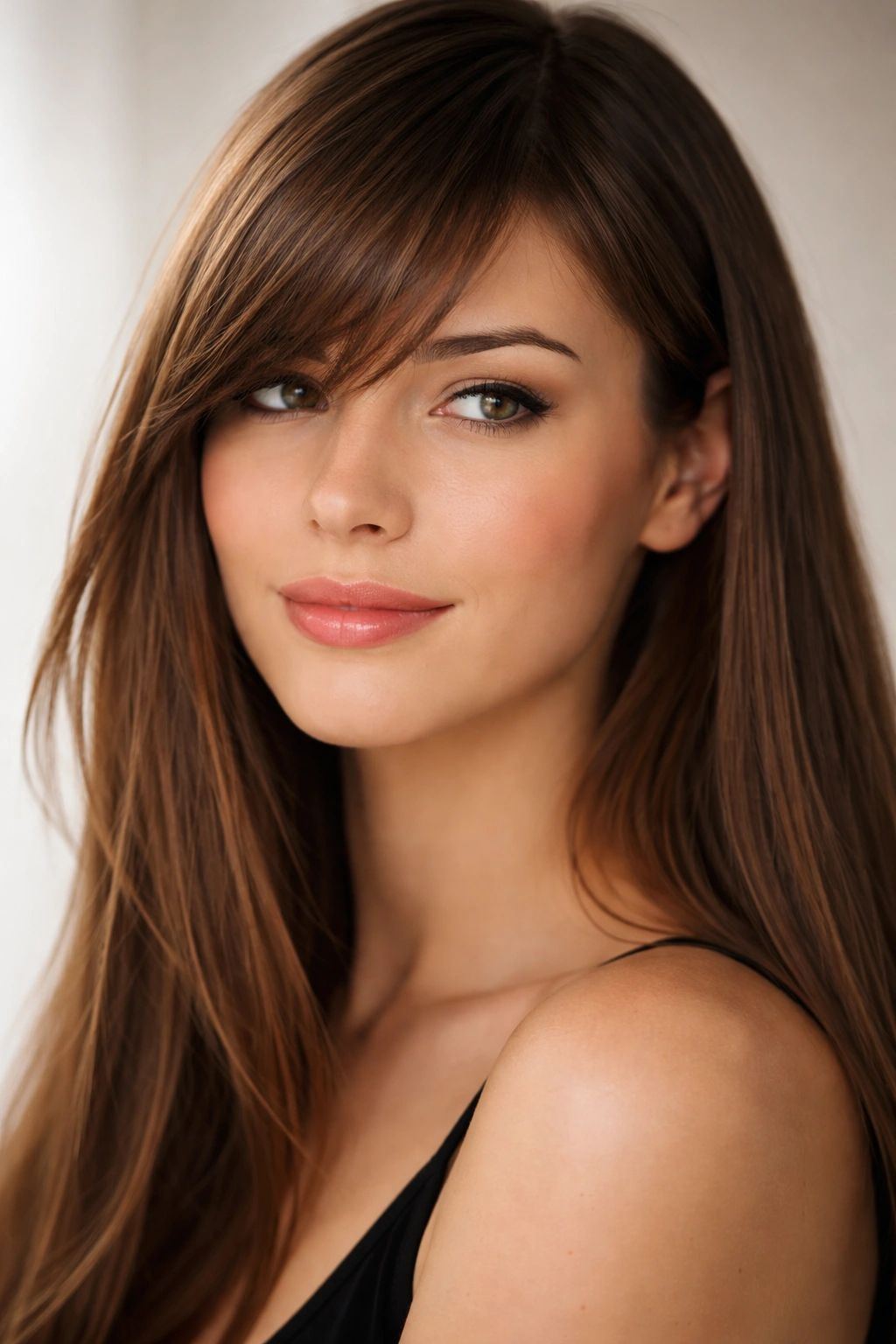
Side-swept bangs are the most forgiving bang style for almost every face shape and hair type. They’re longer on one side and gradually taper shorter as you move toward the other side, creating a diagonal line that sweeps across the forehead. They can be as subtle as barely-there wisps or as dramatic as nearly covering one eye. On straight hair, the side-swept line is clean and visible, but the angle itself softens the overall effect compared to straight-across bangs.
Why They’re Ideal for Straight Hair
Side-swept bangs work well on straight hair because the line is visible but the overall effect feels less harsh than blunt bangs. The straight hair maintains the diagonal line without wavy distortion, so the style looks intentional rather than accidental. They’re also incredibly versatile—you can tuck them to the side with a bobby pin for a different look on days you want variation, or you can let them fall naturally across your forehead. Straight hair cooperates beautifully with both approaches, maintaining the shape you want without frizz or breakage disrupting the line.
How to Style and Maintain
- Blow-dry in the direction you want them to sweep, using your fingers or a small round brush
- They work with virtually any face shape and hair length
- Trim every 4-6 weeks, though they’re more forgiving about growth than blunt bangs since the length variation is already intentional
- They pair well with both sleek straight styles and textured waves
- Use a light smoothing serum to enhance the shine and cleanliness of the line
Key advantage: If you’re not sure about committing to bangs, start with side-swept. They’re easy to grow out, nearly impossible to make look bad, and offer maximum styling flexibility.
4. Micro Bangs
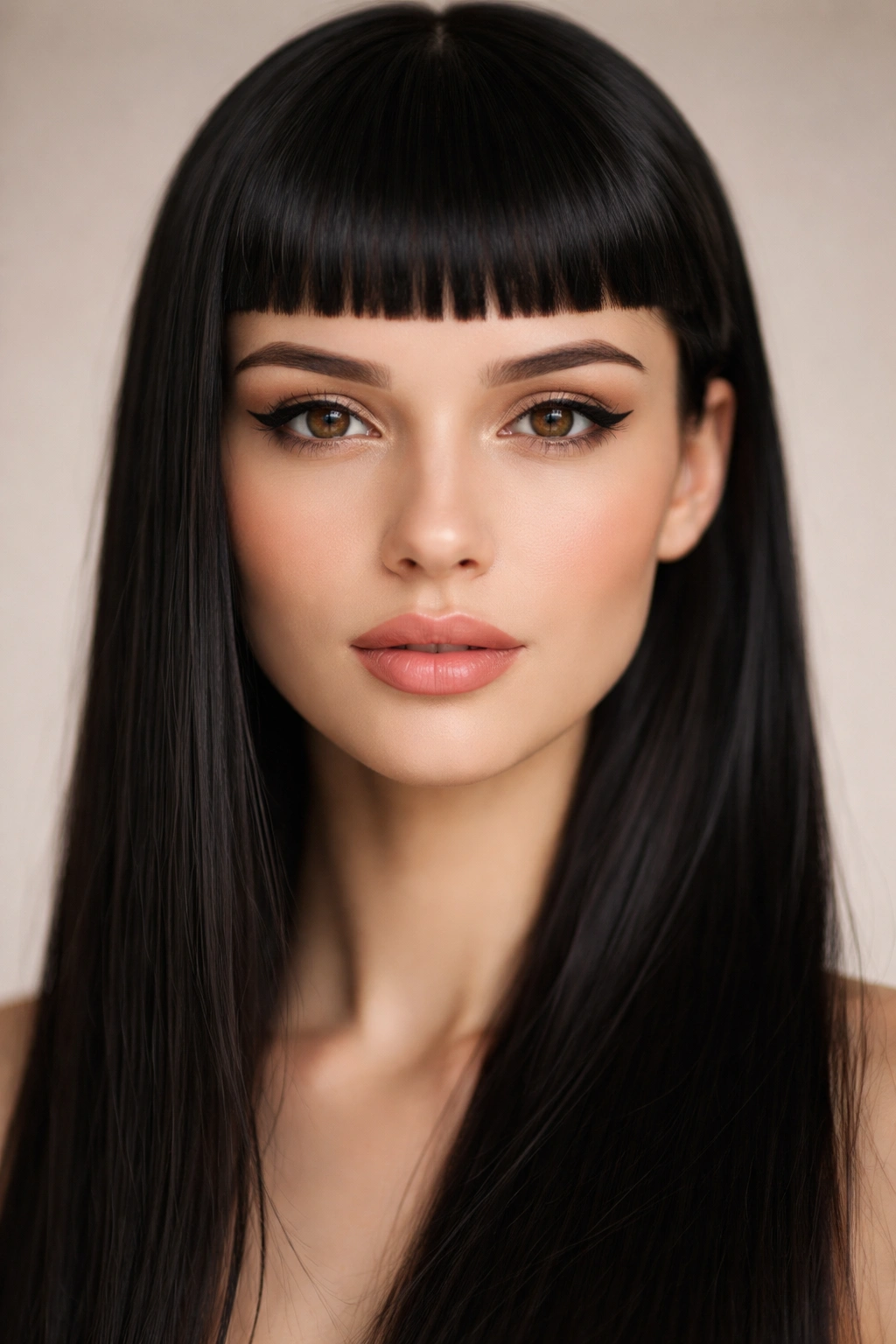
Micro bangs are a bold, trendy choice—they sit very high on the forehead, usually at least two inches above the eyebrows, and they’re typically blunt and densely packed. They’re a statement piece, full stop. On straight hair, they create a sharp, graphic look that reads as distinctly fashion-forward and confident. They’re not for everyone, but for the right person and face shape, they’re undeniably striking.
Why They’re Ideal for Straight Hair
Straight hair shows off the clean lines of micro bangs without any texture to soften or blur the edge. The precision and sharpness are actually part of the appeal—micro bangs are meant to look intentional and a bit edgy, and straight hair delivers that aesthetic perfectly. Because the bangs are cut so short, they sit away from your face entirely, which means they don’t interfere with your facial features or obscure your eyes. This works particularly well for people with smaller faces or high foreheads who want to make a bold visual statement.
How to Style and Maintain
- They require the most frequent trims of any bang style—every 2 weeks ideally, since even slight growth changes the proportions
- Styling is minimal: blow-dry them up and away from the face, and they’re done
- They look best with very polished overall styling—a messy bun won’t work if your bangs are this graphic
- Face shape matters more with micro bangs than with any other style; angular or heart-shaped faces typically look best
- Pair them with longer hair for balance, since short hair + micro bangs can read as very severe
Worth knowing: Micro bangs have a shorter lifespan as a style commitment. If you’re not naturally drawn to bold, edgy looks, you might find them exhausting after a few months.
5. Curtain Bangs
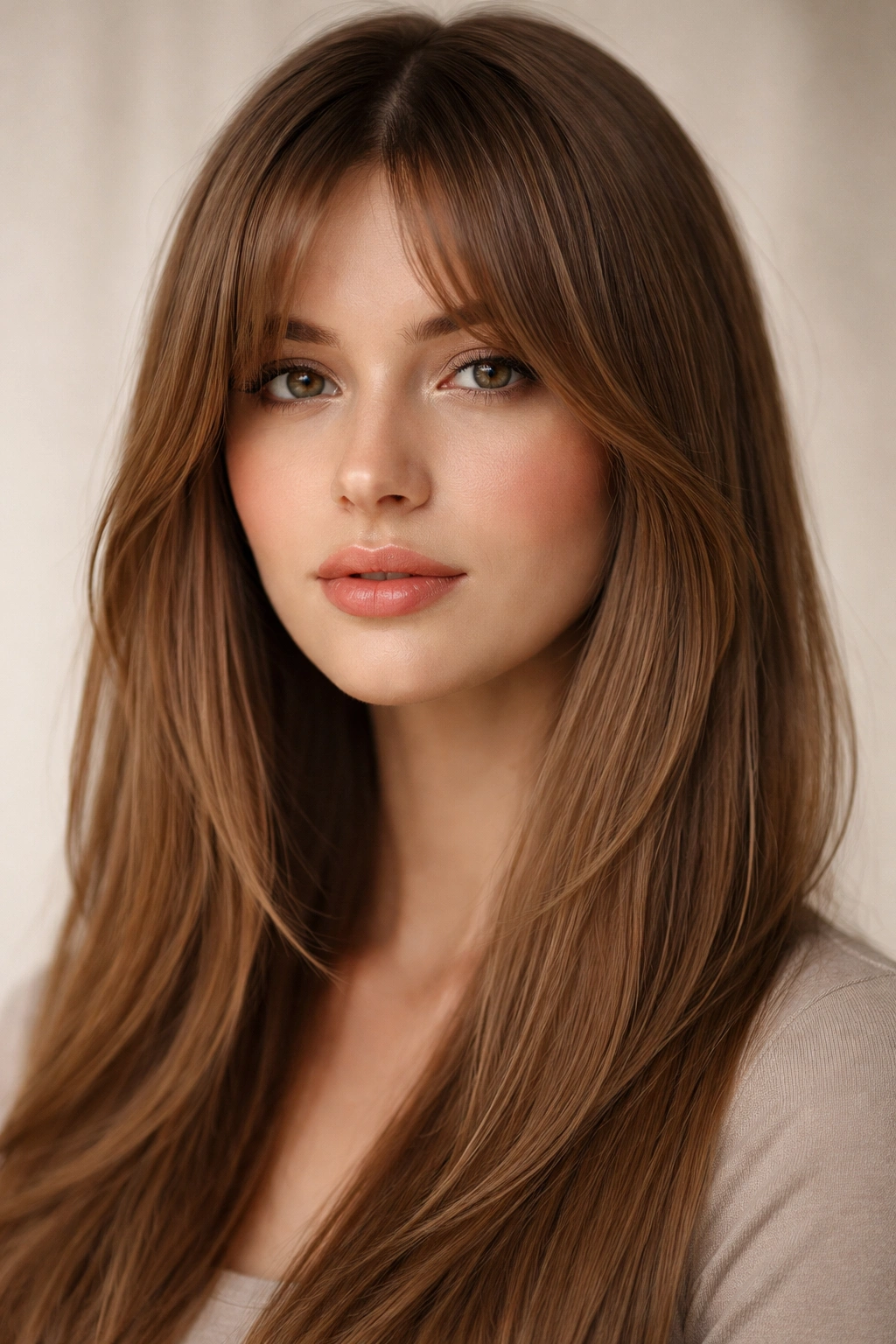
Curtain bangs are longer bangs that frame both sides of your face with a center part, creating a gentle opening down the middle of your forehead. They’re inspired by the curtain hairstyles of the 1970s and have the built-in benefit of framing your face without obscuring it. On straight hair, the two sides of the curtain stay separated and defined, creating a soft but deliberate look.
Why They’re Ideal for Straight Hair
Curtain bangs work beautifully on straight hair because the two halves maintain their distinct shape and don’t blend together into an undifferentiated mass. The straight texture means each side of the curtain is visible as a separate element rather than one cohesive piece. The center part also creates symmetry, which plays nicely with straight hair’s inherent linearity. Straight hair actually makes curtain bangs look more intentional and styled, rather than accidentally separated like they sometimes appear on wavey hair.
How to Style and Maintain
- They require a center part and work best when you’re willing to commit to styling both sides
- Blow-dry with a round brush, directing each side outward and slightly back for the classic curtain effect
- They’re lower-maintenance than blunt or micro bangs—trims every 5-6 weeks are usually sufficient
- They work with nearly any face shape and look particularly good on faces that are wider or more angular
- Layer them with your main hair length for a cohesive, intentional look
Real advantage: Curtain bangs are one of the easiest bang styles to grow out. If you change your mind, you just let them grow and work them into your regular styling—no awkward in-between phase required.
6. Feathered Bangs
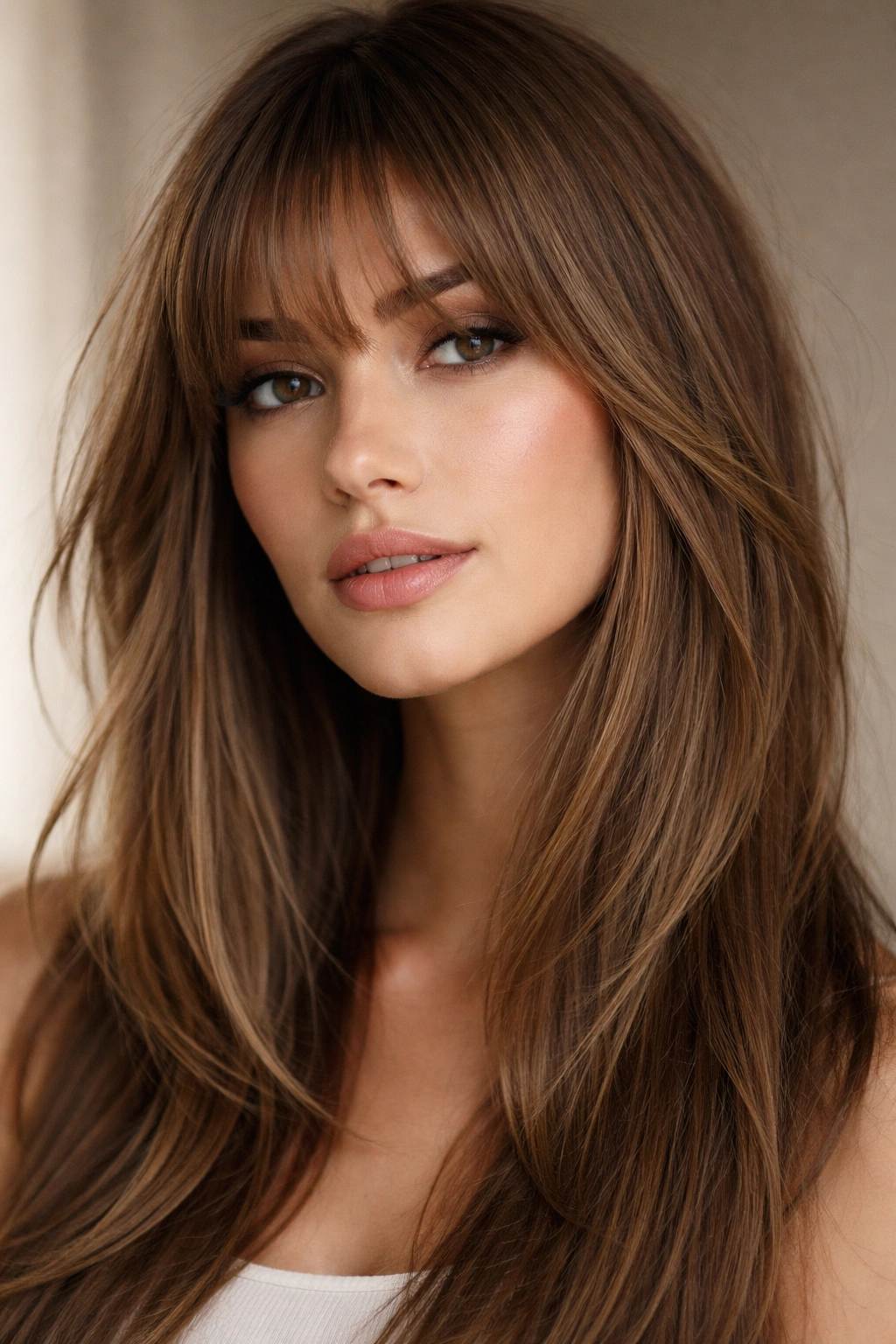
Feathered bangs are similar to wispy bangs but typically denser and with more internal layering throughout. Rather than feathering just at the edges, feathered bangs are cut with layers throughout their entire section, creating a textured, almost bird-feather-like appearance when light passes through them. On straight hair, these layers create visual interest and movement without actually moving the hair.
Why They’re Ideal for Straight Hair
Feathered bangs give straight hair texture and dimension that it might otherwise lack. The internal layers catch light and create the illusion of movement and softness, which can be particularly flattering if you’re concerned that stick-straight hair looks too flat or boring. The layers stay cleanly defined on straight hair, so you can see each individual feathered section. This creates a more sophisticated, intentional look than the layers might create on wavy or curly hair where they’d blend together.
How to Style and Maintain
- Blow-dry with a medium round brush, directing the layers to fan outward slightly
- They need trims every 4-5 weeks to maintain the feathered shape as they grow out
- Use a texturizing spray or volumizing mousse to emphasize the layered dimension
- They pair well with longer straight hair or with bobs that have internal layers
- They’re less dramatic than blunt bangs but more structured than wispy bangs—they’re a middle ground
Styling tip: If you find that feathered bangs look too limp on straight hair despite blow-drying, try using a flat iron to press the layers slightly at an angle, which can add subtle movement without making them look wavy.
7. Choppy Bangs
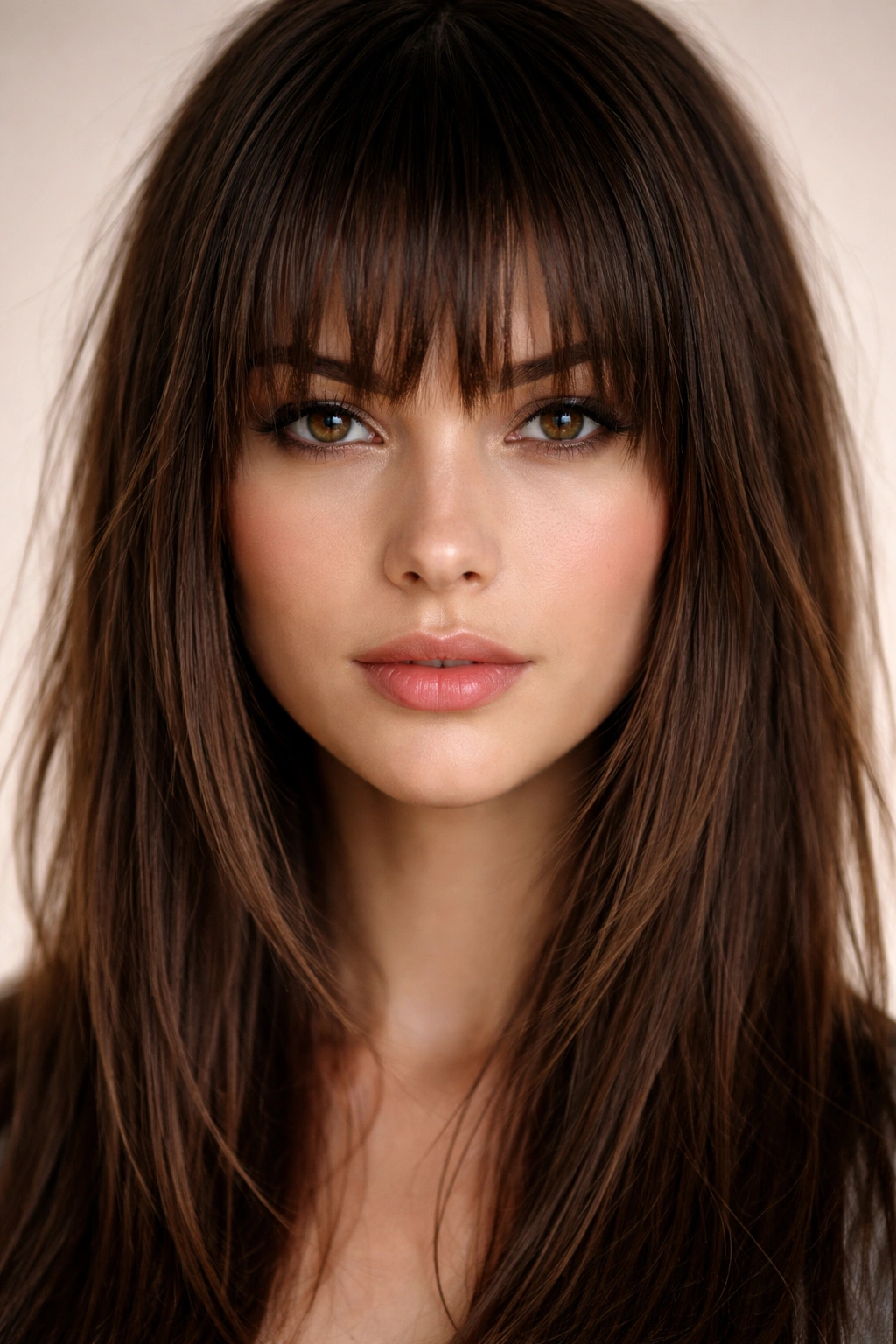
Choppy bangs are heavily textured with jagged, uneven lengths throughout that create a deliberately undone, almost punk-inspired look. They’re the most movement-oriented and least polished-looking of the bang options. On straight hair, choppy bangs create visual interest and can make straight hair look less flat, though they do require styling confidence and the right attitude to pull off well.
Why They’re Ideal for Straight Hair
Straight hair can sometimes benefit from the visual disruption that choppy bangs provide. The jagged lines break up the hair’s natural straightness and create the appearance of texture and movement. On people with very fine or thin straight hair, choppy bangs can actually make the hair look fuller because the uneven lengths create the illusion of density. The straight texture also means the choppy lines stay visible and intentional rather than blending into soft confusion like they might on curly hair.
How to Style and Maintain
- They’re more forgiving about styling than blunt bangs—you can blow-dry them messy or sleek
- Trims every 4-6 weeks keep the choppiness looking intentional rather than just grown-out
- They pair best with longer, layered hair or shaggy cuts that complement their texture
- They work particularly well on people with edgy, unconventional personal style
- Use a texturizing spray to emphasize the choppy texture and create even more movement
Important note: Choppy bangs can read as dated or overly trendy if not styled with the right attitude and overall aesthetic. Make sure your full look matches the vibe before committing.
8. Long Bangs (Frame Bangs)
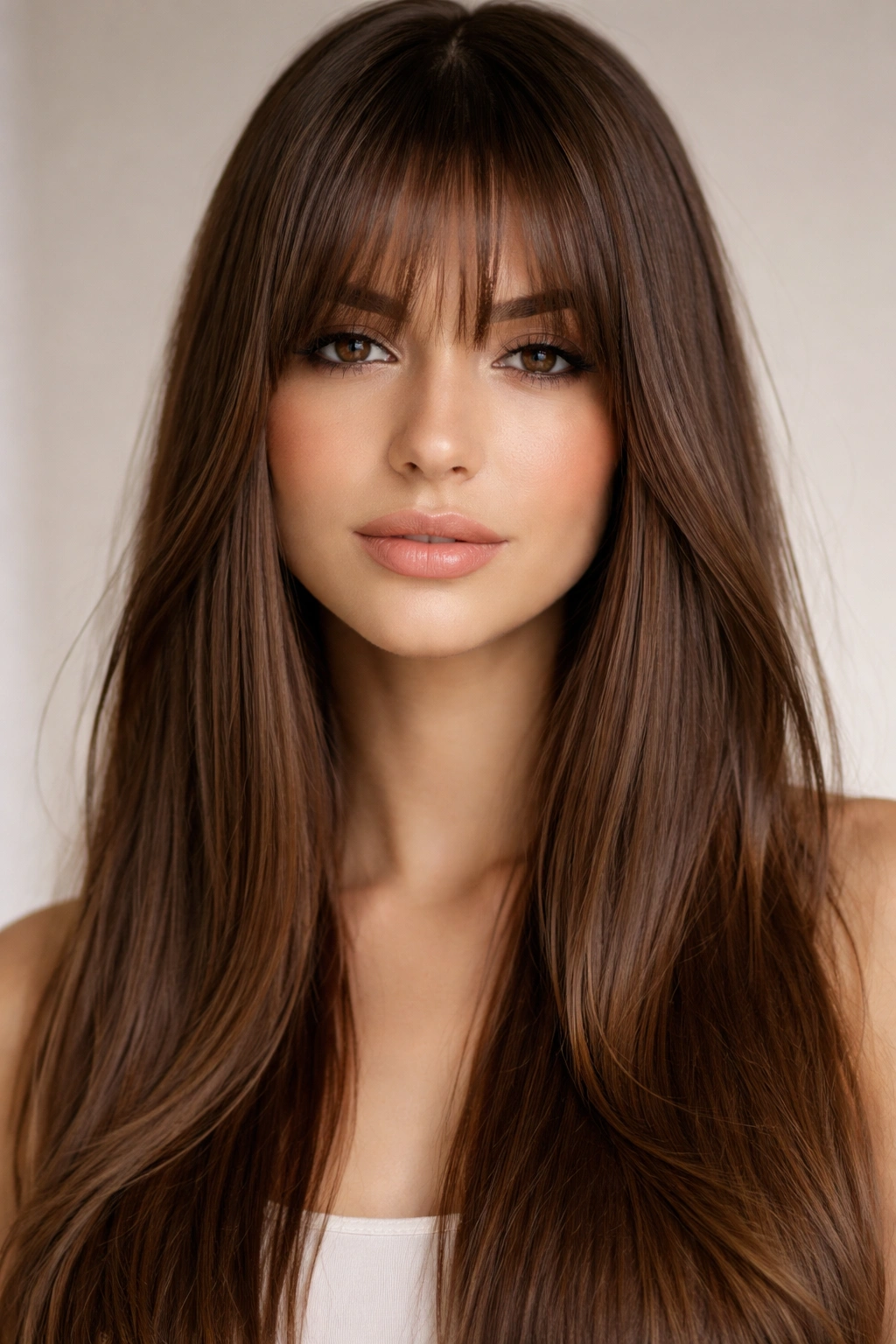
Long bangs extend past your eyebrows and cheekbones, sometimes nearly to your chin, creating a framing effect around your face rather than sitting across your forehead. They’re less “bangs” in the traditional sense and more like long face-framing pieces that happen to start at your hairline. On straight hair, these create an elongating effect and can be incredibly flattering for people with round or square face shapes.
Why They’re Ideal for Straight Hair
Long bangs work beautifully on straight hair because the length stays straight and visible without losing definition. The clean lines of the hair create an elongating effect that flatters most face shapes, especially round or square ones. Straight hair also makes the face-framing effect look intentional and deliberate rather than accidental. Because the bangs are longer, they integrate easily with longer hairstyles and don’t feel separated from the rest of your hair the way very short bangs sometimes do.
How to Style and Maintain
- They need the least frequent trims of any bang style—you can go 6-8 weeks between cuts
- Styling is minimal: they can be blow-dried straight or gently curved with a round brush
- They integrate beautifully with layered cuts or long straight styles
- They work well with both center and side parts
- Pair them with longer hair rather than very short styles for the most flattering effect
Key benefit: Long bangs are the easiest bangs to live with long-term. They’re low-maintenance, flattering on most faces, and don’t feel like a massive commitment the way shorter bangs do.
9. Half Bangs
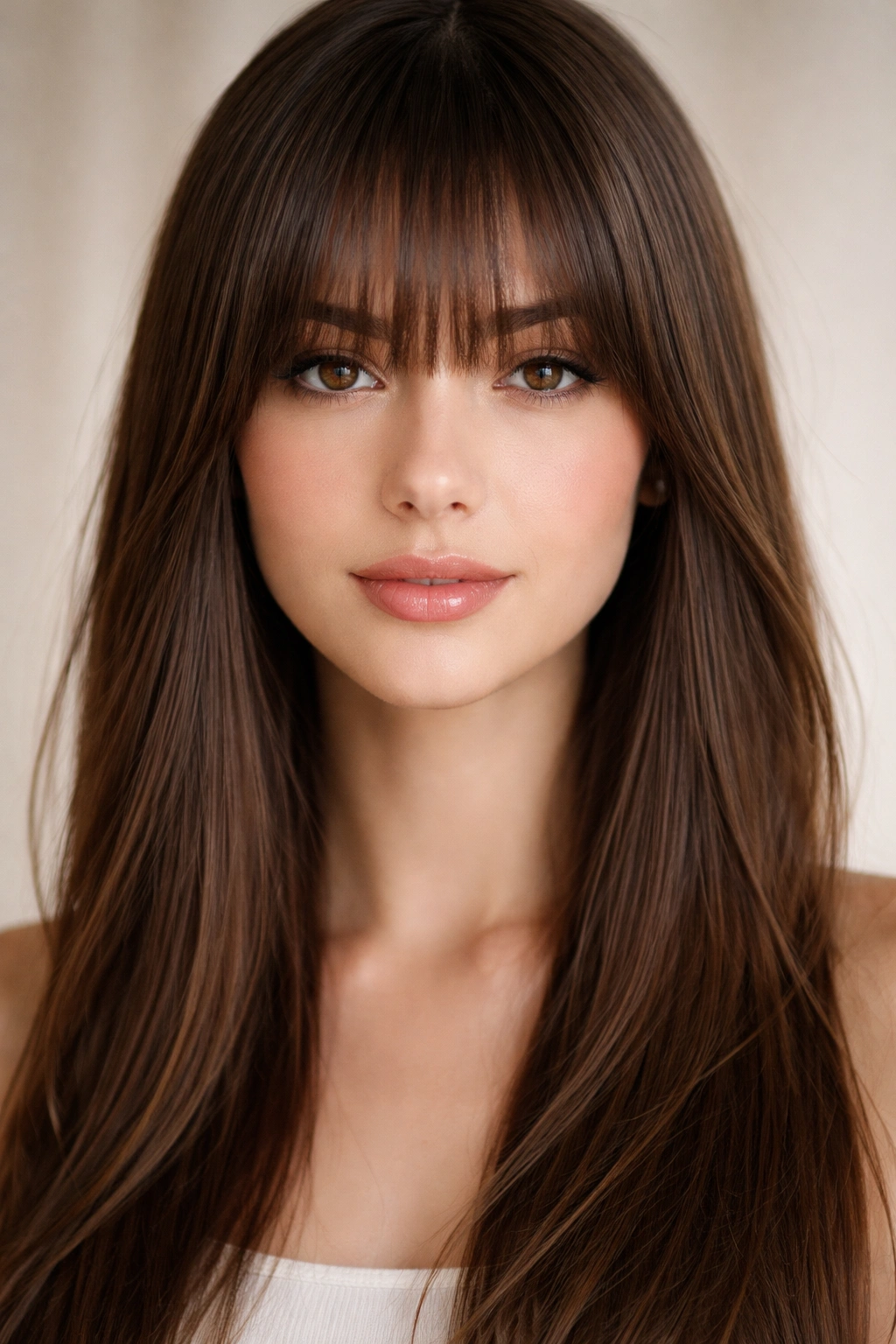
Half bangs are an interesting middle ground—they’re full-width bangs that sit roughly at nose level or longer, but they’re only dense in the center of your forehead with the sides tapering to nothing. This creates the effect of bangs without actually being traditional bangs. On straight hair, they create a soft face-framing effect that’s more subtle than standard bangs but still noticeable.
Why They’re Ideal for Straight Hair
Half bangs give you some of the visual benefit of traditional bangs without the full commitment. On straight hair, the center density of the bangs is visible and creates a nice focal point around the eyes, while the tapered sides blend seamlessly with the rest of your hair. The straight texture keeps the transition from dense to tapered looking clean and intentional rather than blurry or accidental.
How to Style and Maintain
- They’re relatively low-maintenance and work with minimal styling
- Trims every 5-6 weeks keep the shape looking intentional
- They work well on people who are curious about bangs but not ready for full commitment
- Pair them with long, straight styles or layered cuts for the most flattering effect
- They’re forgiving about face shape and work on nearly everyone
Consideration: Half bangs are sometimes called “money pieces” when they’re styled as longer face-framing layers rather than dense bangs. Make sure you and your stylist are on the same page about which effect you want.
10. Thick Bangs
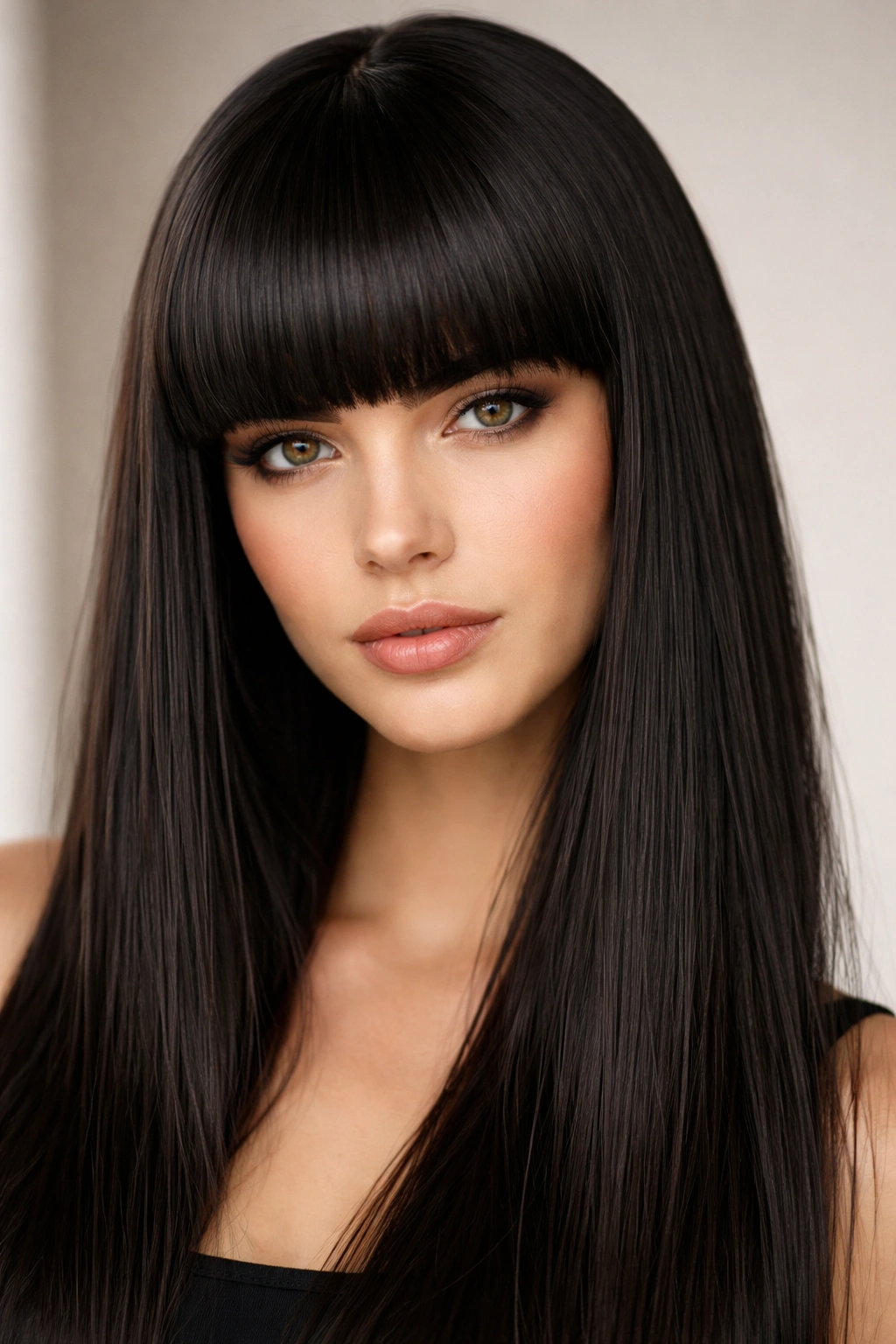
Thick bangs are densely packed, usually blunt or slightly textured at the ends, and created using a wider section of hair than most other bang styles. They create a bold, almost sculptural look that’s very much a statement piece. On straight hair, thick bangs create clean lines and significant visual presence without looking heavy or flat.
Why They’re Ideal for Straight Hair
Thick bangs actually benefit from straight hair’s natural texture because the straightness prevents them from looking blocky or heavy. Instead, they look polished and deliberate. The density of the bangs creates a strong frame for your face without any sacrifice of sophistication. Straight hair also holds thick bangs in place better than other hair types, so they maintain their shape throughout the day without getting frizzy or losing definition at the edges.
How to Style and Maintain
- They make the biggest visual statement of any bang style—this is a look, not a subtle touch
- Blow-dry them straight or with minimal texture for maximum impact
- Trims every 3-4 weeks keep the blunt line crisp
- They work best on people with angular or longer face shapes rather than round ones
- Pair them with polished, intentional overall styling—they demand that your whole look matches their boldness
Worth considering: Thick bangs work best when you’re genuinely excited about the bold statement they make. If you’re choosing them because you think you “should” try bangs, consider a subtler style instead—you’ll be happier.
Final Thoughts
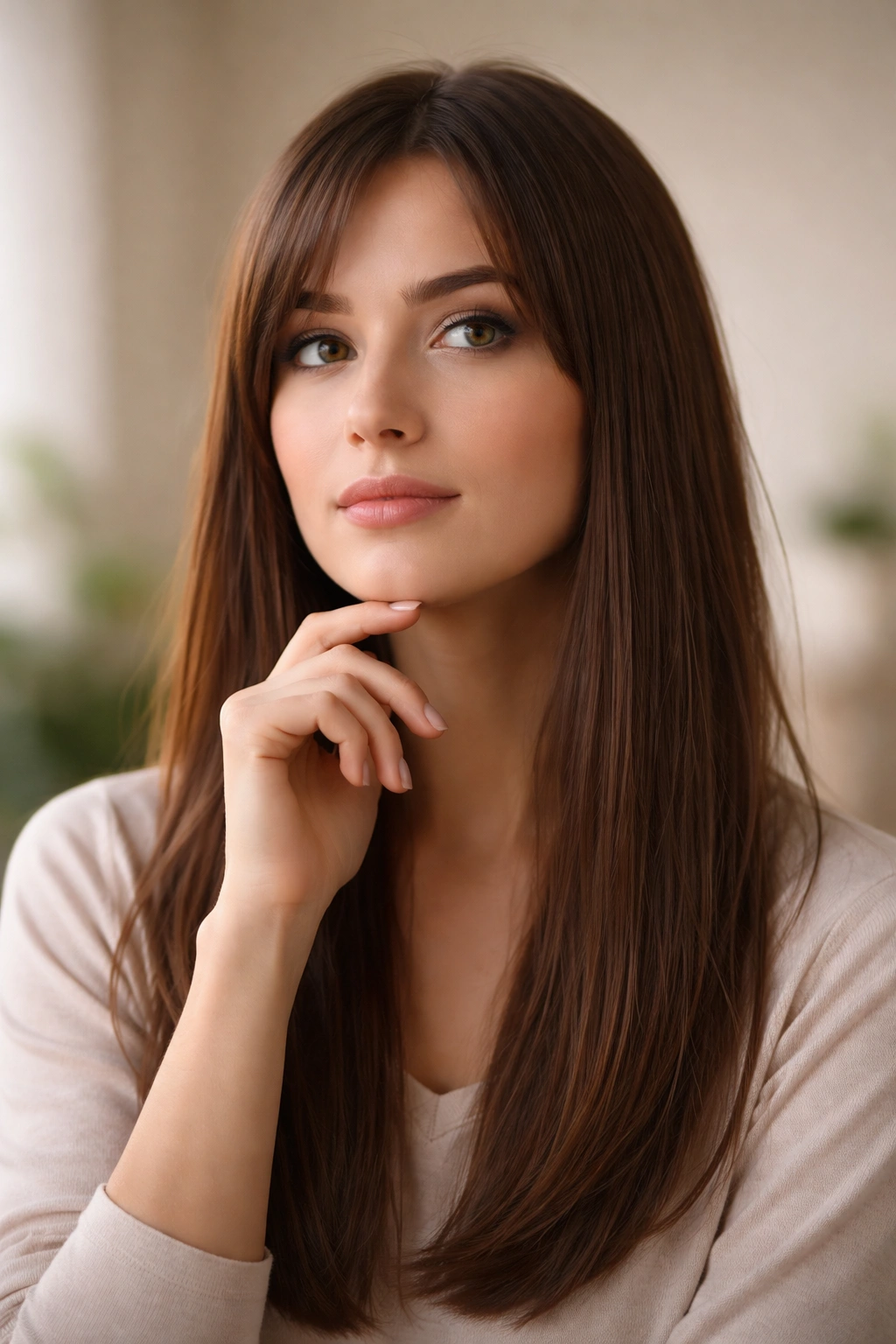
The best bang style for your straight hair isn’t about trends or what looks good on someone else—it’s about what aligns with your face shape, styling commitment level, hair texture, and the overall vibe you want to project. Straight hair gives you an advantage because most bang styles look polished and intentional on it. That said, the difference between a bang style that makes you feel amazing and one that makes you want to hide under a hat comes down to choosing the right one for your specific situation.
Before you commit to the scissors, have a conversation with your stylist about what you actually want to achieve. Are you looking for a softer, more romantic vibe? Blunt or micro bangs aren’t your answer—wispy, curtain, or long bangs are. Do you want to make a bold, confident statement? Blunt, thick, or choppy bangs deliver that energy. Are you unsure about bangs and want to test the waters? Side-swept, half, or long bangs are forgiving enough that you won’t regret them even if you change your mind.
Straight hair is genuinely one of the easiest hair types to wear bangs successfully, so if you’ve been on the fence about trying them, now’s the time. The clean lines of your hair will make whatever style you choose look intentional and polished, which is half the battle right there.
