



Wolf cuts have become one of the most sought-after styles for people with straight hair, and for good reason. This edgy, layered haircut combines the grunge aesthetic of the ’90s with modern, wearable style—giving you movement, texture, and an undeniable cool factor that works beautifully on straight locks. The beauty of a wolf cut lies in its versatility: it’s not one rigid style, but rather a framework that can be adapted to match your face shape, lifestyle, and personal aesthetic. Whether you want something short and sharp, long and flowing, or something entirely unexpected, there’s a wolf cut variation waiting for you.
The reason wolf cuts perform so well on straight hair is that the clean lines and precise angles of your natural texture actually highlight the cut’s carefully crafted layers. Unlike wavy or curly hair, which can blur the definition of shorter pieces, straight hair showcases every snip with clarity. This means the cut’s structure reads clearly, the layers fall exactly where they’re intended, and you get that signature wolf cut silhouette without the hair having to do extra work. Straight hair also gives you the flexibility to style your wolf cut in multiple ways—sleek and polished for professional settings, tousled and textured for a more lived-in vibe, or anything in between.
The wolf cut itself emerged from a fusion of two distinct hair movements: the shag, known for its layered, feathered texture throughout, and the mullet, famous for its shorter front and longer back contrast. When blended together thoughtfully, these elements create a cut that’s edgy without being intimidating, modern without feeling trendy, and flattering across a broad spectrum of face shapes and styling preferences. What makes a wolf cut different from a regular shag or layered cut is the deliberate emphasis on movement and the sharp contrast between the textured crown and the longer lengths, creating visual interest from every angle.
Let’s explore ten distinct wolf cut interpretations that all work beautifully on straight hair, each with its own personality and practical applications.
1. Classic Wolf Cut
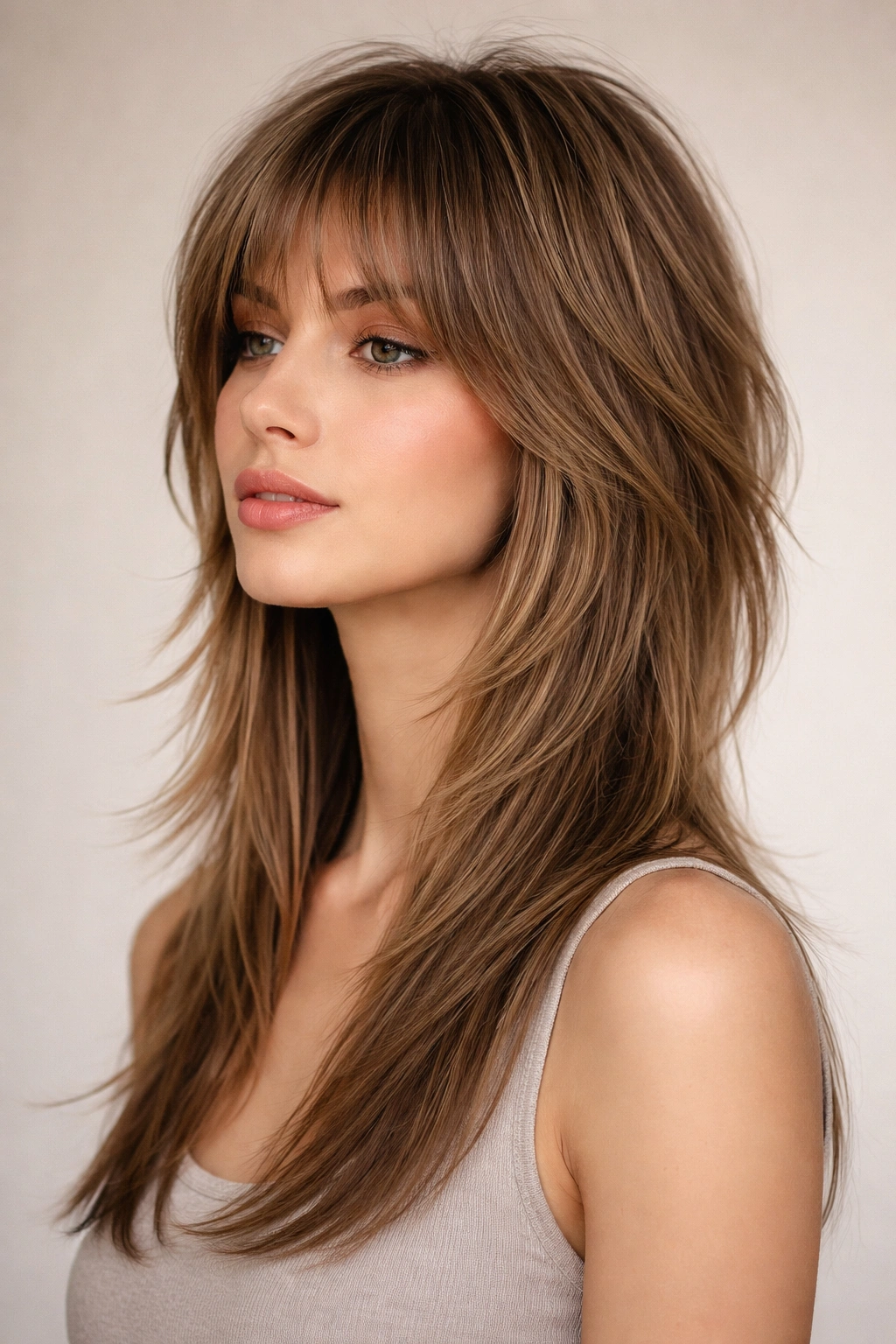
The classic wolf cut is the blueprint—the cut that defined the entire trend and remains the gold standard for anyone wanting authentic wolf cut energy. This version features a distinctly voluminous, textured crown with strategically placed layers that begin around ear level, giving you maximum lift at the top while maintaining longer lengths through the middle and back. On straight hair, this creates a stunning contrast between the shorter, choppy layers near the crown and the gradually longer pieces that frame your face and fall down your back. The sides are typically shorter than the back, and the front pieces taper to create that signature face-framing effect.
Why It’s the Signature Look
The classic wolf cut works across nearly every straight hair type and face shape because its proportions are naturally balanced. The texture and movement at the crown draw attention upward, which flatters round faces by creating vertical lines. For longer face shapes, the width created by the voluminous crown provides proportion. The longer back doesn’t feel heavy because the layers create internal texture that keeps it from sitting flat against your head.
How to Wear It
- Blow dry with a round brush to emphasize volume at the crown while keeping the face-framing layers smooth and directional
- Add texture spray or sea salt spray to enhance the layered definition, especially through the shorter pieces at the top
- Style with a center or slightly off-center part for maximum face-framing impact
- Pair with subtle or bold makeup depending on your mood—the cut itself makes a statement, so it works with minimalist beauty or editorial looks
- The longer back can be worn tucked behind your ears to show off the cut’s architecture or left loose for a softer, more romantic interpretation
2. Short Wolf Cut
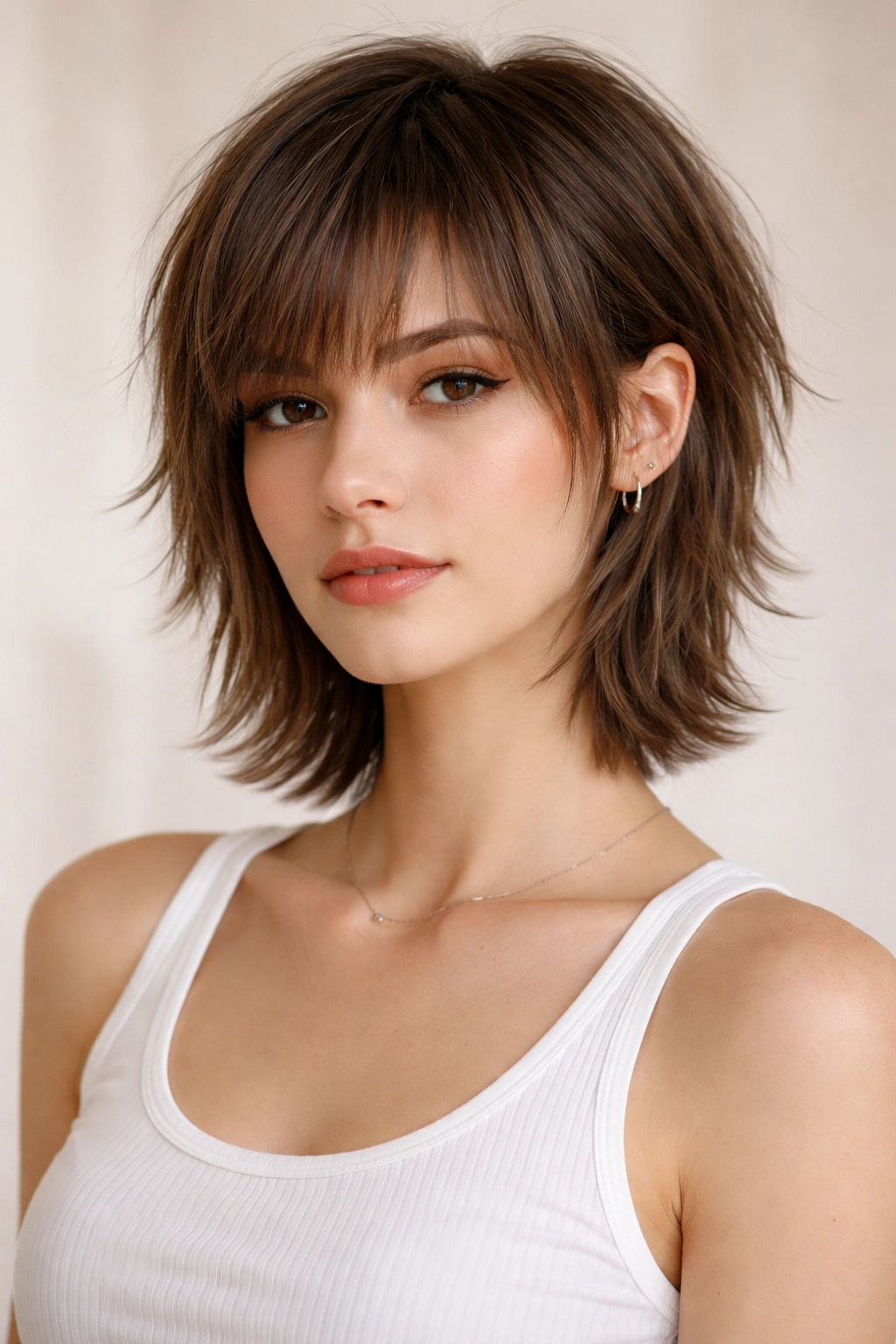
If you love the concept of a wolf cut but prefer shorter hair overall, the short wolf cut delivers all the edgy style in a more low-maintenance package. This interpretation keeps the total length around chin-level or shorter, with the crown still featuring those signature choppy, layered pieces that give you texture and movement. The back is slightly longer than a traditional short cut but shorter than a classic wolf, creating a compact silhouette that still reads distinctly as a wolf cut. This version sits somewhere between a textured pixie and a shag, giving you the best of both worlds.
What Makes the Short Version Stand Out
Short wolf cuts require more frequent trims—typically every 4 to 6 weeks—because the shorter length means regrowth is more visible and the layered structure needs refreshing to maintain its intentional shape. However, the daily maintenance is significantly lower than longer wolf cuts. You’re working with less hair overall, which means styling takes minutes rather than potentially longer. For people with fine or thin straight hair, the short wolf cut can actually appear fuller because the layers create separation and definition rather than one uniform length that might cling together.
Styling Tips for Short Wolf Cuts
- Dry with your fingers or a small round brush to encourage texture and movement rather than flat styling
- Use a texturizing product like clay or matte paste through the crown and shorter layers to enhance definition
- Experiment with how much you style versus leaving it naturally textured—sometimes the undone look is the most polished
- Consider how often you’re willing to get trims; this cut is worth the investment in maintenance
- Short wolf cuts pair beautifully with bold ear accessories since your ears are more visible
3. Long Wolf Cut
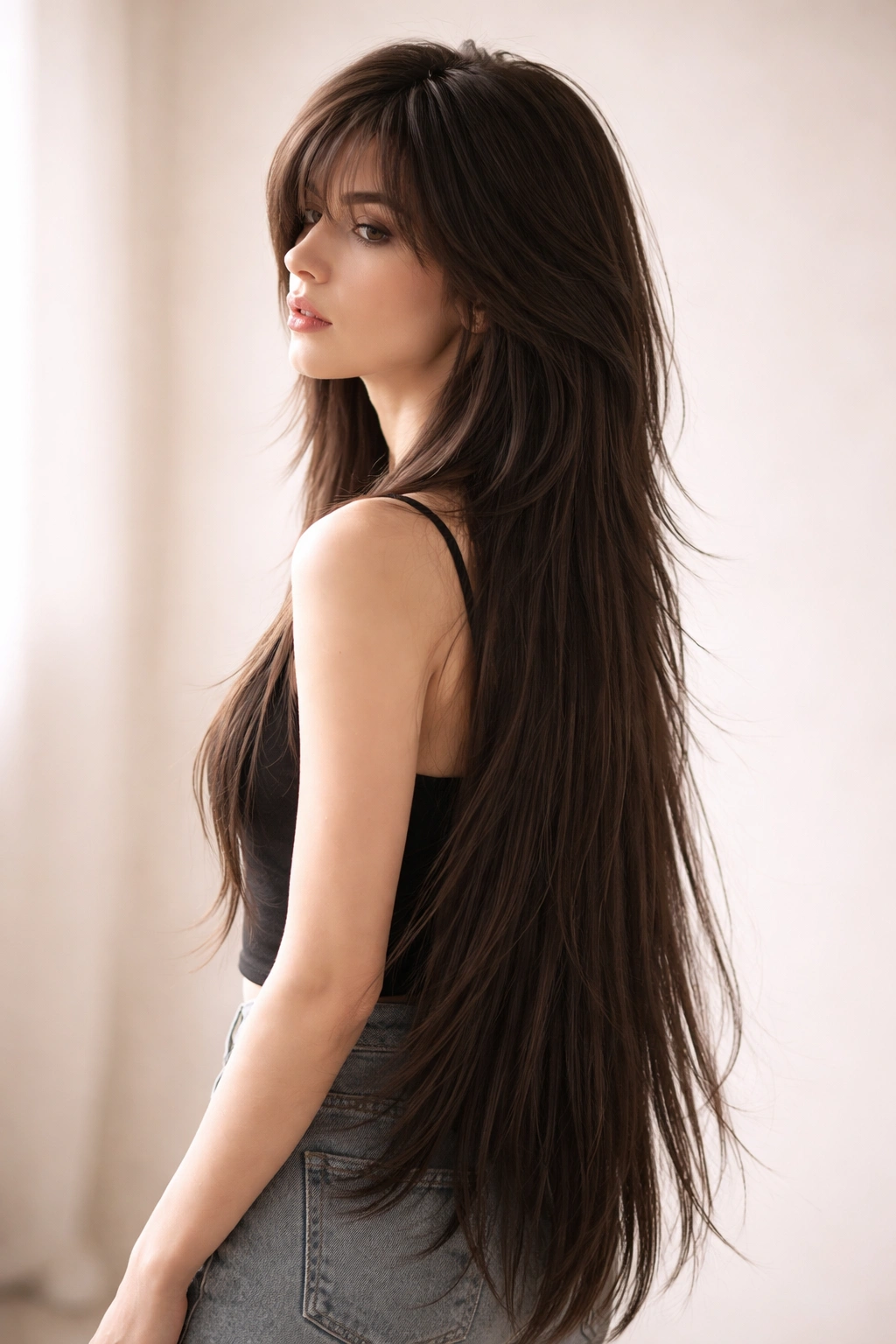
The long wolf cut extends the style to hip-length or longer, creating a dramatic, romantic interpretation of the wolf cut aesthetic. This version maintains the textured crown and face-framing layers but pairs them with significantly longer lengths through the back and sides. The contrast between the voluminous, choppy crown and the extended lengths creates a striking silhouette, especially when viewed from the side. On straight hair, this creates beautiful movement because the weight of the longer sections pulls the shorter layers slightly, creating a subtle, controlled texture rather than chaotic choppiness.
Why Length Changes the Entire Vibe
Adding length to a wolf cut fundamentally changes how the cut photographs, how it moves, and how it reads visually. The longer back becomes a canvas for texture and movement, while the shorter crown remains bold and graphic. The face-framing layers become more important because they bridge the gap between the voluminous crown and the extended lengths. Many people find that longer wolf cuts feel more wearable for formal or professional settings because the extended length reads as more polished and less aggressively edgy, even though the cut structure remains the same.
Maintaining a Long Wolf Cut
- Invest in a good texturizing shampoo and conditioning routine, as longer hair requires more hydration to prevent the ends from appearing dry
- Schedule trims every 8 to 10 weeks to maintain the layered structure, as layers can collapse over time without refreshing
- Use a heat protectant product if you blow dry, since you’re working with more hair length and heat exposure
- Consider layers as an investment in movement and texture; without them, longer straight hair can feel one-dimensional
- Long wolf cuts benefit from regular deep conditioning treatments to keep the texture looking intentional rather than damaged
4. Textured Wolf Cut
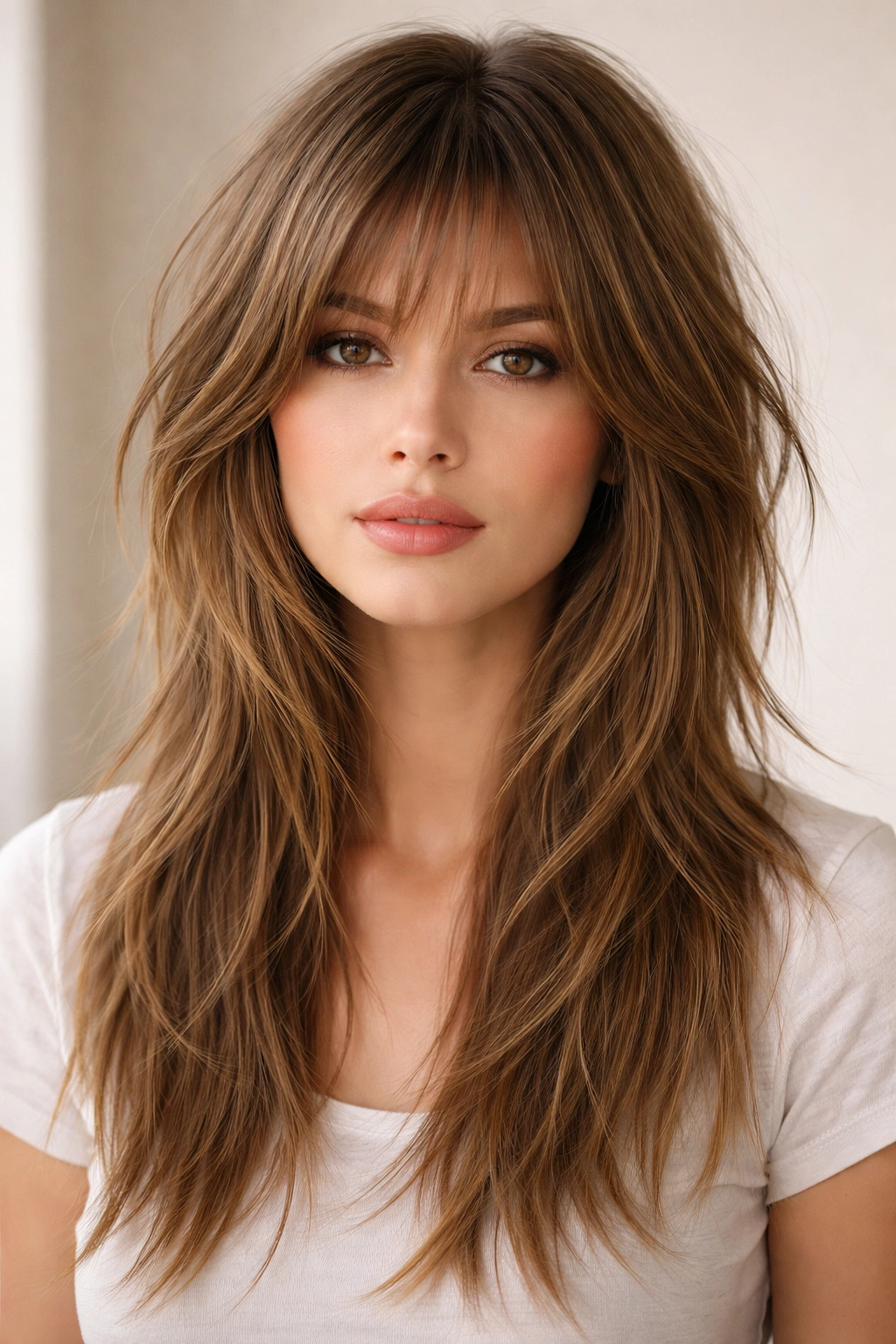
The textured wolf cut takes the concept of layers and amplifies the texture throughout the entire cut, creating a shaggy, movement-forward interpretation that feels lived-in and effortlessly cool. Rather than the contrast between a voluminous crown and longer, smoother lengths, this version features consistent layers and choppy texture throughout the entire head. On straight hair, this requires a stylist who understands how to cut texture into naturally straight hair so it doesn’t look blunt or harsh. The goal is to create a cut where every section has internal texture that catches light and creates visual interest.
How Texture Works on Straight Hair
Texture in straight hair comes from precise layering angles and point-cutting techniques rather than product manipulation. A stylist creating this cut needs to point-cut through the layers to create movement and separation without the hair looking overly choppy or damaged. The texture should feel intentional and refined, not like the hair is having a bad hair day. On straight hair, this means the styling must enhance the cut’s texture through product or styling technique, since the hair won’t naturally create texture on its own.
Product and Styling for Maximum Texture
- Apply texturizing spray or dry shampoo to damp roots for grip and volume before blow drying
- Use a blow dryer with your fingers or a small brush to scrunch texture into the damp hair as it dries
- Finish with a texture paste or sea salt spray to define and hold the textured layers
- Consider sleeping in braids or a loose bun to create additional texture overnight
- Light hairspray keeps the texture defined without feeling stiff or crunchy
5. Asymmetrical Wolf Cut
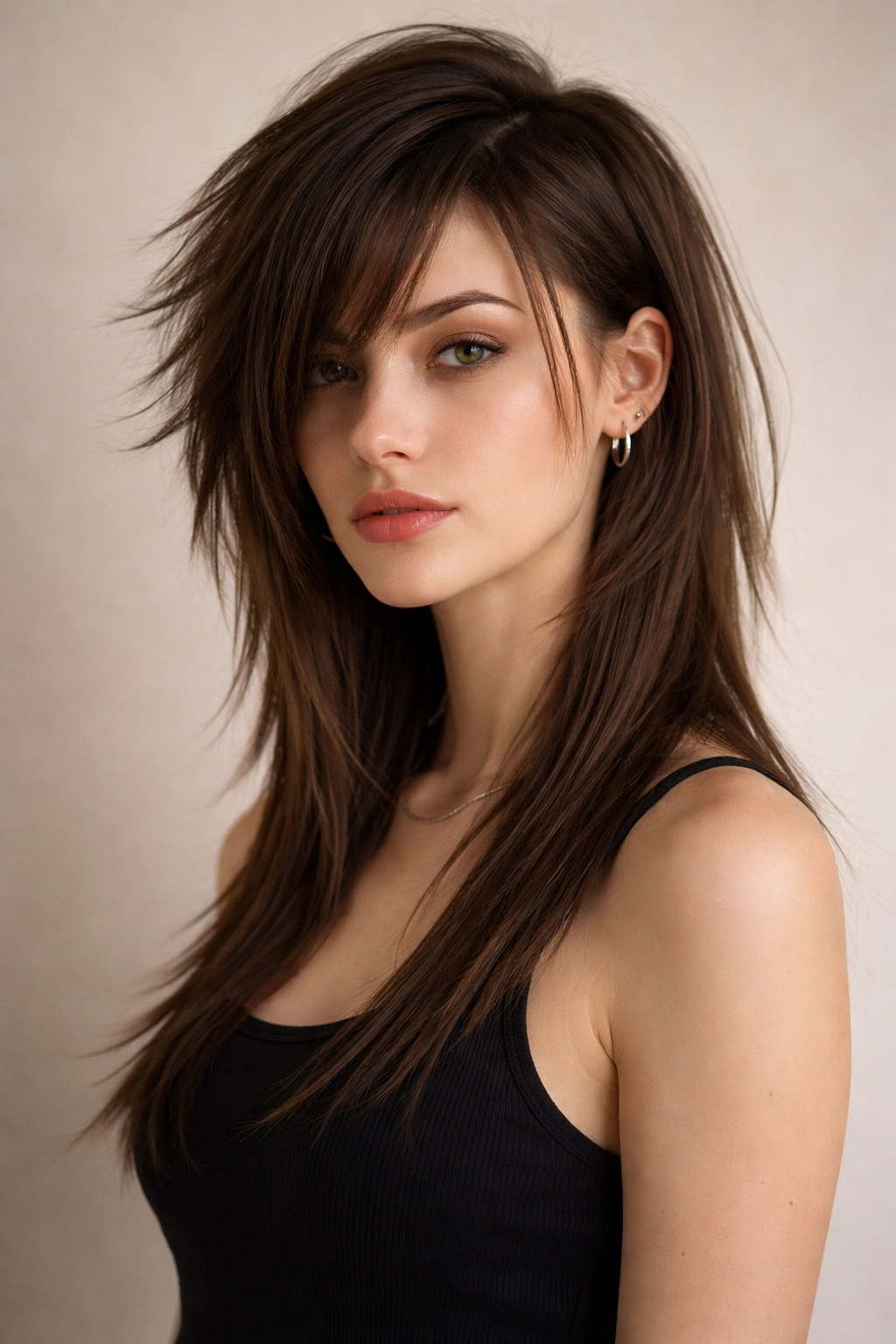
The asymmetrical wolf cut introduces intentional imbalance into the traditional wolf cut structure, with one side cut shorter or with more pronounced layers than the other. This variation appeals to people who want their wolf cut to feel more editorial or fashion-forward. One side might feature a dramatic undercut or significantly shorter layers, while the other side remains longer and smoother. This creates a striking, directional look that photographs beautifully and signals that you’re someone unafraid of unconventional style.
Building the Asymmetrical Element
The asymmetry works best when it’s intentional and not so extreme that it’s difficult to style or maintain. Some versions feature one side that’s noticeably shorter, while others are subtly uneven—the difference is perhaps just an inch or the way the layers are positioned. The face-framing can also be asymmetrical, with shorter, choppier layers on one side and longer, smoother pieces on the other. On straight hair, asymmetry reads clearly and creates strong visual lines, so it’s important to work with a stylist who understands proportion and balance even within an intentionally unbalanced cut.
Styling Asymmetrical Cuts
- Part your hair away from the shorter or more textured side to showcase the asymmetry
- Use styling direction to emphasize the imbalance—tousle the fuller side for texture, smooth the shorter side for contrast
- Asymmetrical cuts benefit from thoughtful accessories; one side might call for a clip or pin that the other doesn’t need
- Consider how the asymmetry interacts with your face shape; some people prefer the shorter side closest to their face for balance, others prefer it away
6. Wolf Cut with Bangs
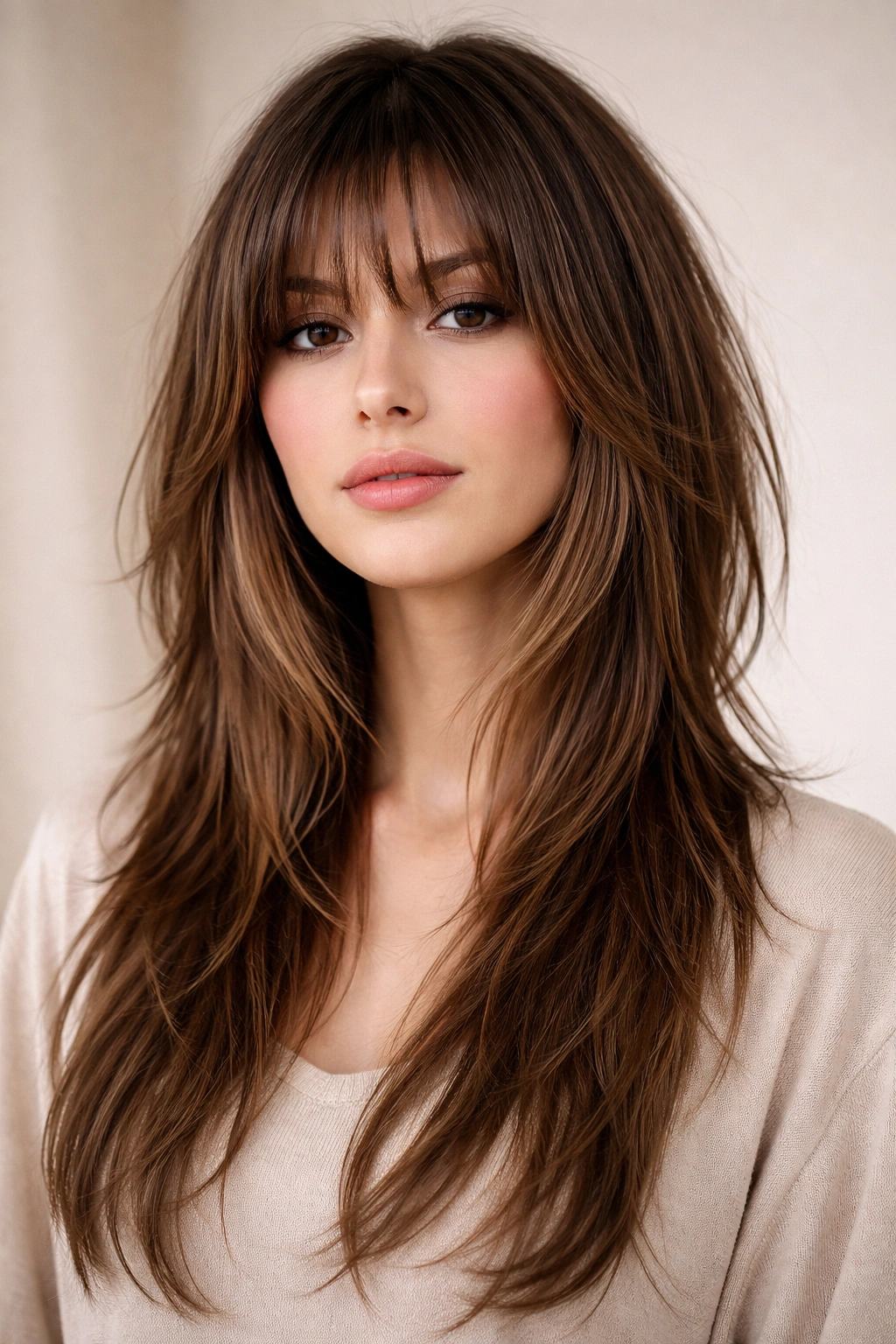
Adding bangs to a wolf cut creates an entirely different energy, particularly when the bangs coordinate with the overall layered structure rather than feel like a separate element. Bangs with a wolf cut can range from wispy face-framing pieces that blend seamlessly into the cut’s layers, to a blunt or textured style that makes a bolder statement. On straight hair, bangs read with sharp clarity, so the choice of bang style dramatically impacts how modern or editorial the overall look feels. Many contemporary wolf cuts feature feathered or textured bangs that begin the layering journey from the very front of the face.
Choosing the Right Bang Style
Wispy, feathered bangs that taper at the sides integrate most seamlessly with a wolf cut’s overall aesthetic, creating one cohesive narrative of texture and movement. Blunt or heavier bangs create more contrast and read as bolder, requiring the styling and personality to match. Textured or choppy bangs essentially extend the wolf cut’s layered concept forward, starting the texture at the forehead and continuing throughout. The length of the bangs matters significantly; longer bangs can be styled to frame the face gently, while shorter bangs create a more graphic, almost punk-influenced look.
Maintaining Bangs with Your Wolf Cut
- Bangs require more frequent trims, typically every 3 to 4 weeks, because they frame your face and length changes are visible immediately
- Invest in a blow dryer and styling technique that works for your bangs; they set the tone for your entire look
- Textured bangs may need a lightweight texturizing product to maintain definition between trims
- Consider the practicality of bangs in your daily life—active people or those who sweat frequently may find bangs annoying
- Bangs and wolf cuts together create a statement look, so be prepared for this cut to be noticed and recognized as intentional style
7. Wolf Cut with Face-Framing Layers
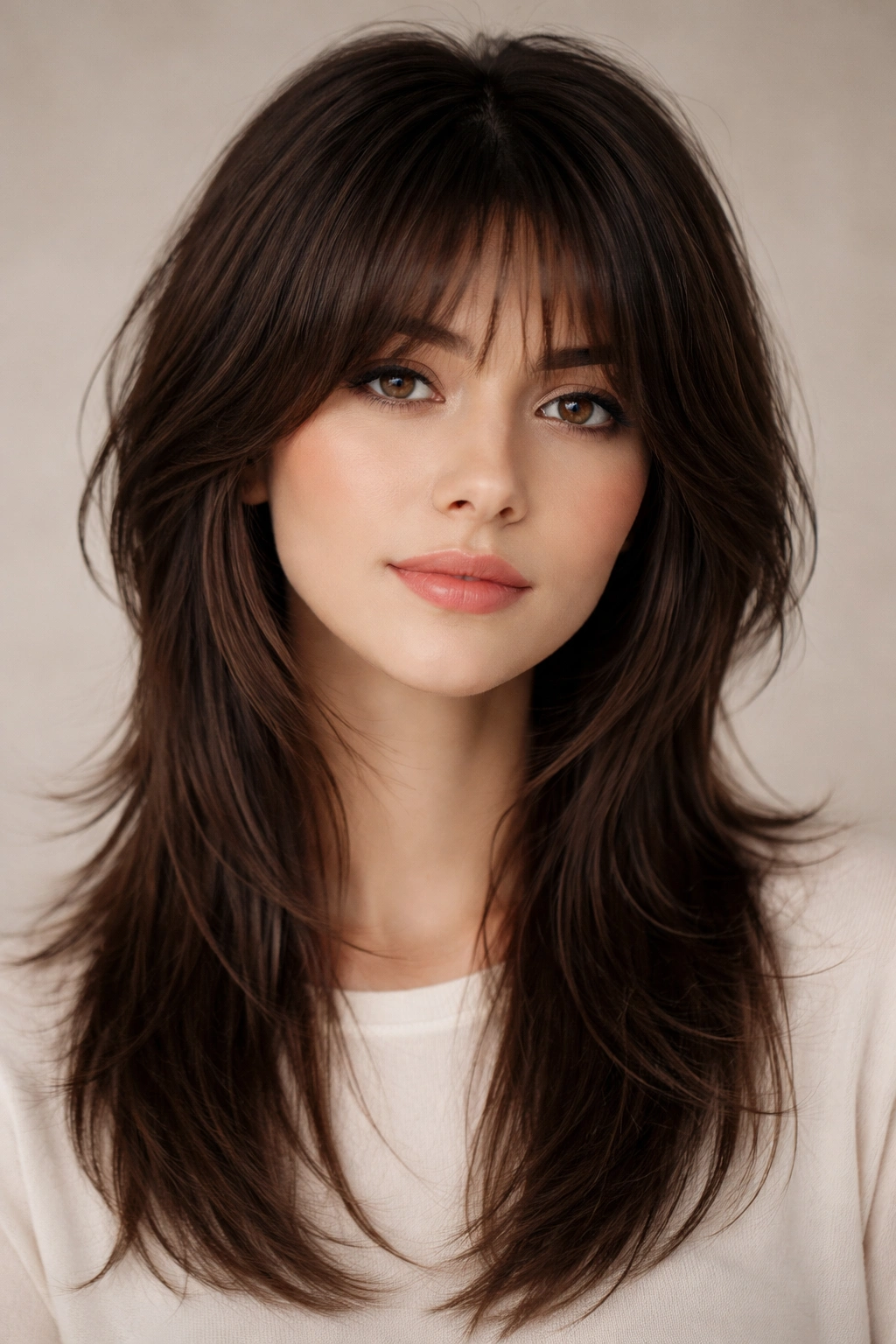
This interpretation emphasizes deliberately sculpted face-framing layers that soften the edges of the face and create flattering lines. While all wolf cuts feature some face-framing, this version prioritizes it as the central element of the design. The layers around the face are precise and intention-driven, starting at varying lengths to create a gradated frame that flatters your specific face shape. The crown still maintains the textured, voluminous wolf cut aesthetic, but the face-framing becomes the star of the cut’s structure.
How Face-Framing Changes the Softness
Face-framing layers create a softer, more approachable version of the wolf cut. Rather than feeling purely edgy or grunge-inspired, this interpretation balances the cut’s modern energy with wearable elegance. The layers around the face catch light and create subtle movement even when styled sleek. For straight hair, face-framing layers are especially effective because they create visual interest without requiring aggressive texturizing products; simply blow-drying with a brush that encourages the layers to curve slightly around the face is often enough.
Best Face Shapes for Emphasized Face-Framing
- Round faces benefit from longer, straighter face-framing that lengthens the face
- Square faces are flattered by softer, wavy face-framing that rounds the jawline
- Heart-shaped faces can use fuller, textured face-framing near the temples to balance the forehead
- Oblong faces work well with face-framing that adds width and softens harsh angles
- Oval faces, the most flexible, can rock any variation—let personal style guide you
8. Shoulder-Length Wolf Cut
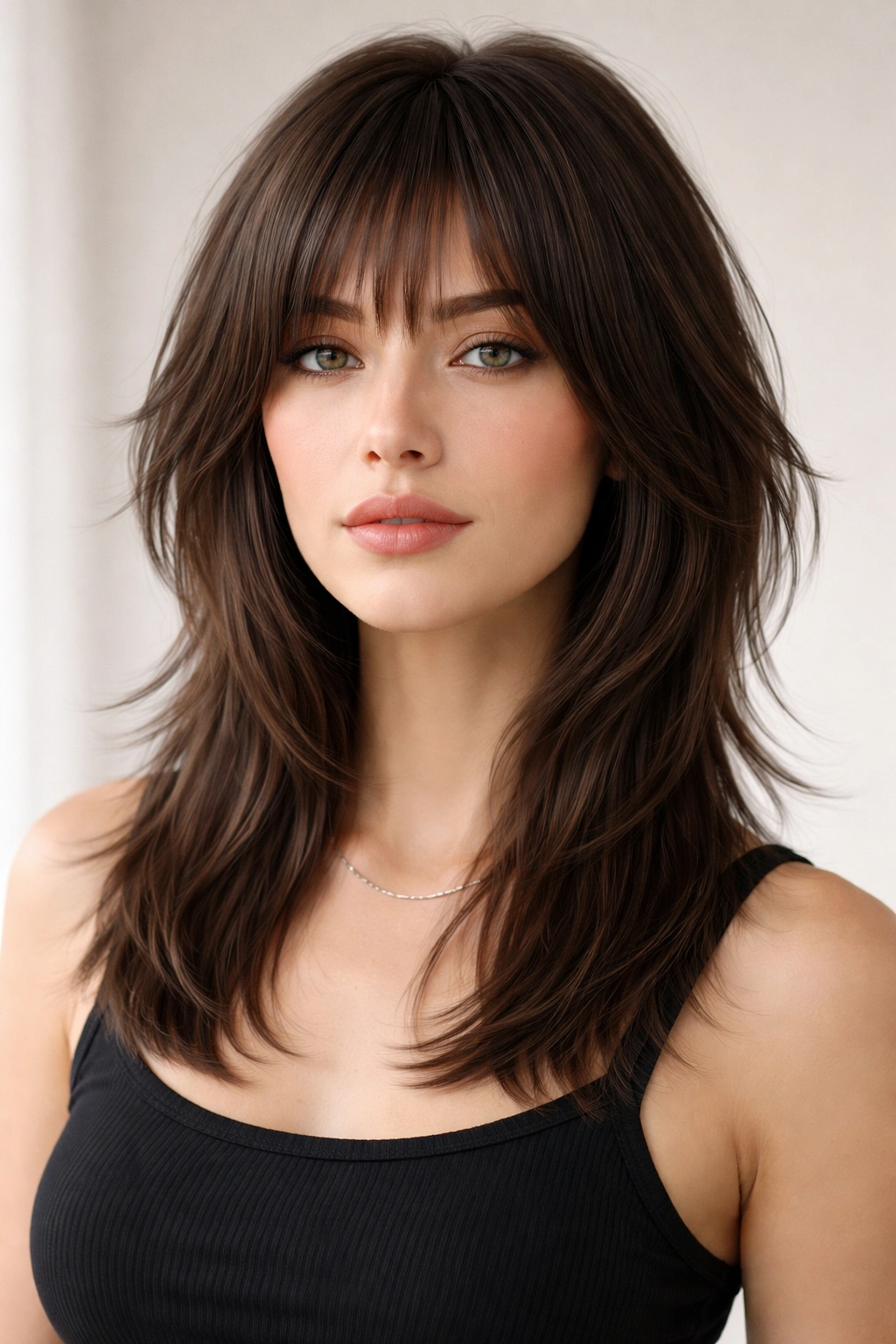
The shoulder-length wolf cut strikes a practical middle ground between the short and long versions, offering a wearable silhouette that’s neither too short nor too long. This length sits right at the shoulders, making it ideal for people who want the wolf cut’s personality without committing to extensive lengths or frequent short-hair maintenance. The crown remains textured and voluminous, while the back extends to shoulder level, creating a compact but distinctly wolf-cut silhouette. This length is particularly forgiving because it’s long enough to require styling flexibility but short enough to maintain relatively quickly.
Why Shoulder-Length Is the Most Versatile
This length works across the broadest range of lifestyles and face shapes. It’s short enough that you’re not battling with extensive length during workouts or in humid weather, but long enough that you have styling options. Shoulder-length wolf cuts can be styled sleek and professional for work, tousled and textured for casual wear, or even half-up styles that showcase both the crown texture and the longer lengths. For people with fine or thin hair, shoulder-length offers enough weight to feel substantial without being overwhelming. For thick hair, it’s short enough that it doesn’t feel heavy.
Styling Versatility at Shoulder Length
- Blow dry for volume and movement, or air dry for a more natural, undone texture
- Try half-up styles that gather some of the longer lengths while showing off the textured crown
- Experiment with how you part your hair; side parts create edge, center parts feel more romantic
- Shoulder-length wolf cuts photograph beautifully in both posed and candid settings
- This length works well with scarves, necklaces, and other accessories that might feel overwhelmed by much longer hair
9. Choppy Wolf Cut
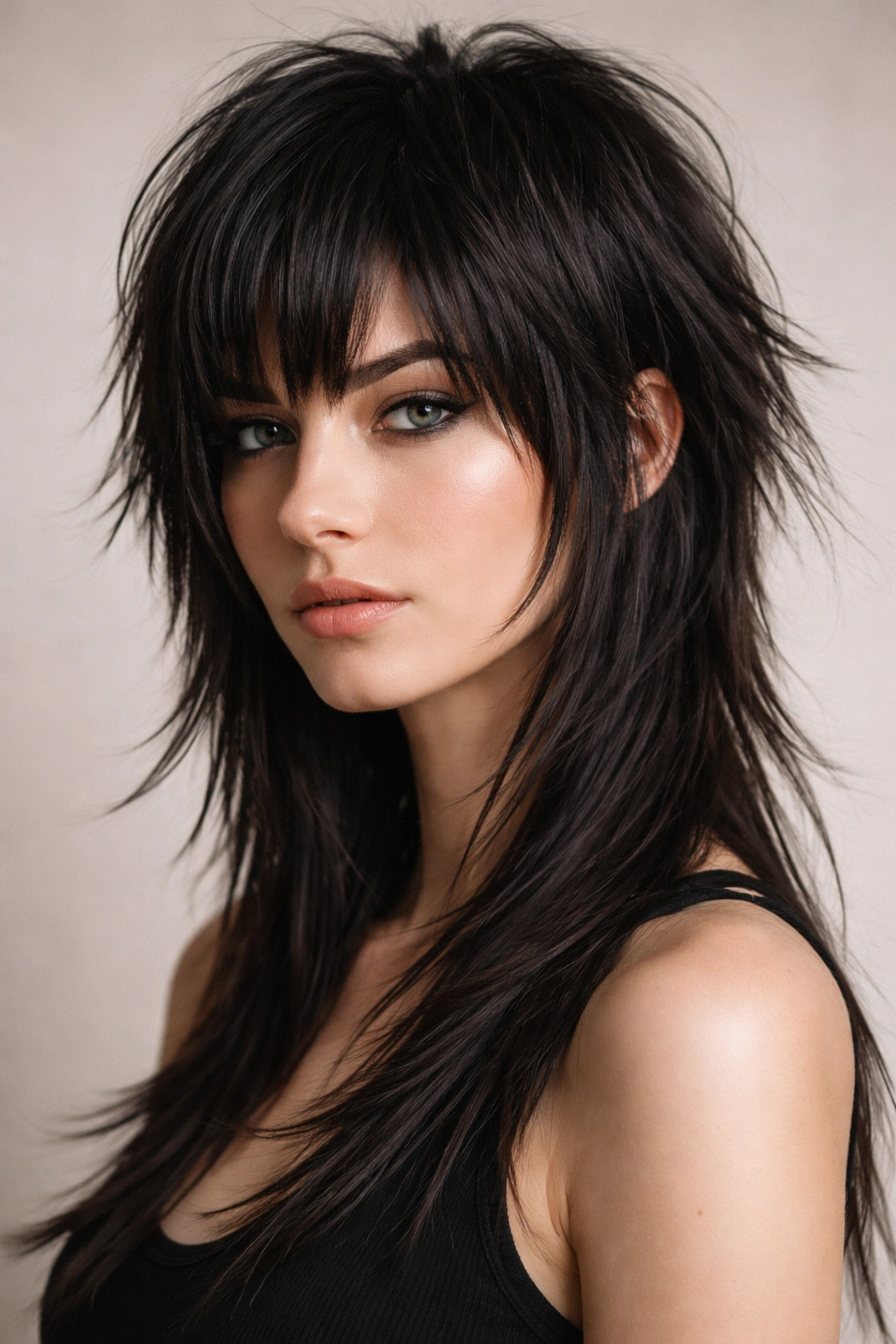
The choppy wolf cut amplifies the edginess of the traditional wolf cut by emphasizing exaggerated, aggressive layering throughout. Rather than the smoothness you might find in some wolf cut interpretations, the choppy version features short, visible layers that create pronounced texture and movement. This is the wolf cut for people who want zero subtlety—a cut that announces itself and doesn’t apologize for being unconventional. On straight hair, each chop reads distinctly, creating a look that’s graphic and intentional.
The Attitude Behind Choppy Styling
A choppy wolf cut requires conviction. This isn’t a haircut you get if you want to blend in or play it safe. The style reads as edgy, alternative, and confident—it appeals to people who see their hair as a form of artistic expression rather than simply a practical matter. The cut requires precise execution from a stylist who understands how to create movement and prevent the choppiness from looking accidental or damaged. On straight hair, a choppy wolf cut can look incredibly polished when cut well, or chaotic when the choppy layers aren’t positioned strategically.
Making Choppy Work for Straight Hair
- Style with texturizing products that define each choppy layer rather than smooth it
- Use a blow dryer to scrunch and encourage movement rather than blow-dry smooth
- Embrace the undone aesthetic; choppy cuts often look best when they’re not overly polished
- Maintain the cut frequently—every 4 to 6 weeks—so the choppiness remains intentional rather than growing out shapeless
- Consider how bold you want to be; choppy wolf cuts attract attention and comment
10. Wolf Cut with Curtains
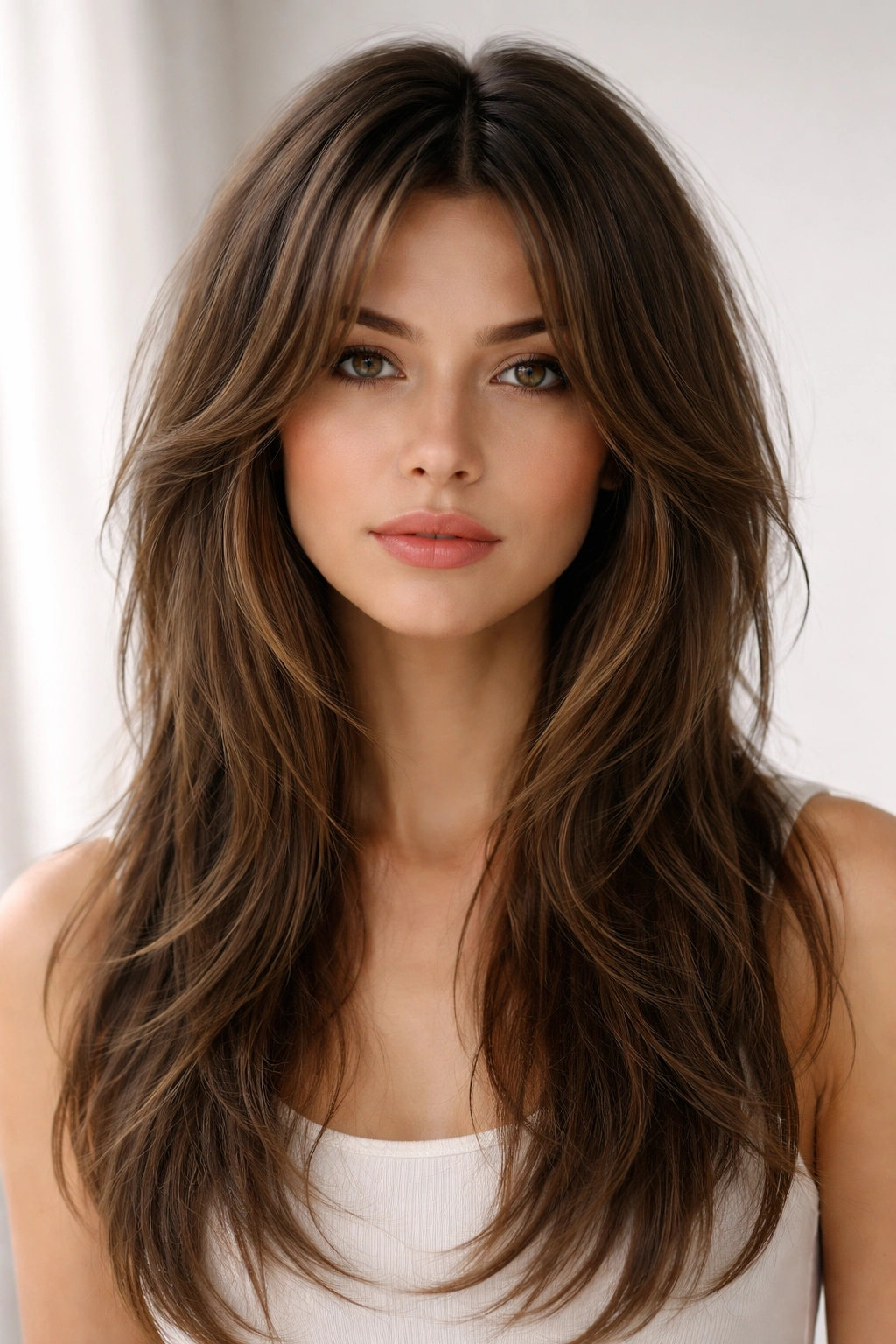
The wolf cut with curtains combines the textured, layered foundation of a wolf cut with a distinctive center-parted, face-framing element inspired by the curtain hairstyle trend. This version features a pronounced center part with longer face-framing pieces that fall away from the face like curtains, combined with the voluminous, textured crown of a traditional wolf cut. The result is a hybrid that feels both current and wearable, blending the wolf cut’s edgy energy with the softness and femininity of curtain bangs.
How Curtains Change the Wolf Cut’s Energy
Curtains introduce a romantic, flowing element to what is otherwise an angular, edgy cut. The two distinct face-framing pieces that extend from the crown and fall along both sides of the face soften the wolf cut’s sharpness. On straight hair, curtains create beautiful movement because the weight of these longer pieces naturally encourages them to curve slightly and frame the face. This version appeals to people who want the wolf cut’s personality but also want something that feels accessible and wearable for everyday life.
Styling and Maintaining Curtains
- The center part is essential to this version; styling with a side part fundamentally changes the look
- Use a blow dryer and round brush to encourage the curtain pieces to curve slightly outward and frame the face
- Textured products can enhance the layers throughout the cut, or you can style it smooth for a sleeker interpretation
- The curtain pieces require regular trims to maintain their length and prevent split ends from looking ratty
- This version works beautifully with minimal makeup or bold makeup; the framing effect complements both approaches
- Curtains with a wolf cut photograph beautifully and create a romantic, fashion-forward aesthetic
Key Takeaways
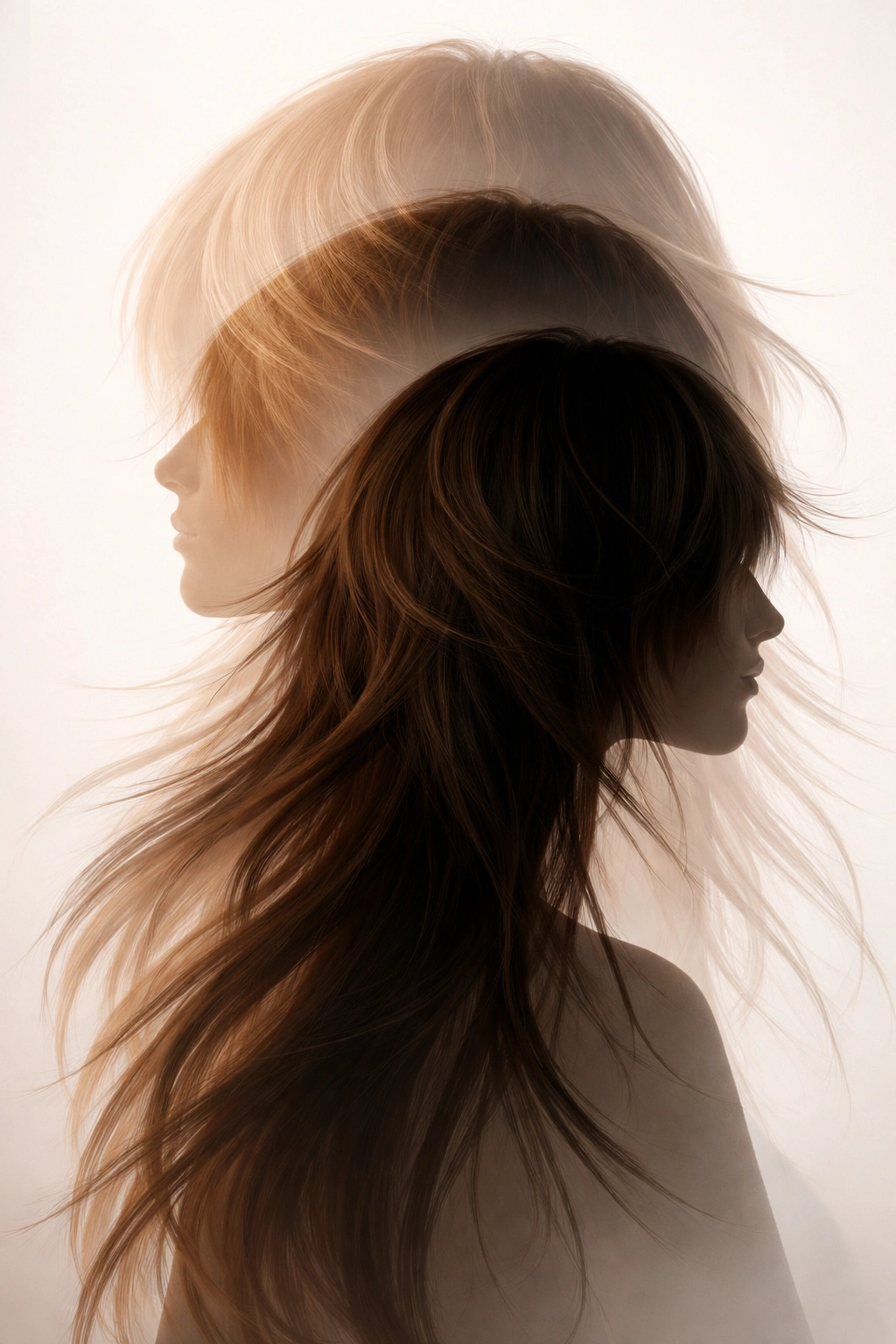
The wolf cut represents far more than just a trend—it’s a versatile cutting philosophy that adapts to nearly every straight-hair texture, face shape, and lifestyle. Whether you’re drawn to the classic, immediately recognizable wolf cut or you want to explore a variation that pushes the boundaries further, the foundation is the same: strategic layering that creates movement, texture, and visual interest from every angle.
The beauty of choosing a wolf cut for straight hair is that your natural texture becomes an asset rather than a limitation. The clean lines of straight hair showcase the cut’s precise architecture without requiring extensive styling to create texture or movement. You have the freedom to style your wolf cut in multiple ways depending on your mood and the occasion—polished and intentional one day, tousled and undone the next—without the cut losing its identity.
Find a stylist who understands the wolf cut philosophy and has experience working with straight hair specifically. The right stylist will help you choose the variation that flatters your unique face shape, respects your lifestyle and maintenance preferences, and aligns with your personal style. Regular trims every 6 to 8 weeks will keep your layers crisp and your wolf cut looking intentional rather than grown-out. Own the cut, style it with confidence, and embrace the fact that a wolf cut is fundamentally a statement that you’re someone who knows what you want—and you’re not afraid to wear it on your head.
