



Shag haircuts have made a serious comeback, and for good reason. If you’ve got straight hair, you’re sitting on a goldmine of styling possibilities with a shag cut. The beauty of this layered style is that it works with your hair’s natural texture instead of fighting it—creating movement, dimension, and effortless volume without requiring tons of heat styling or product manipulation. Whether you’re drawn to the edgy, rock-and-roll aesthetic or prefer something more refined and modern, there’s a shag variation that speaks to your style.
The thing that makes shags particularly perfect for straight hair is how they work with texture you already have. Straight hair has a clean canvas that showcases the geometric precision of well-placed layers, and the cuts themselves add visual interest without looking overdone or fussy. You get that coveted lived-in, tousled vibe that people spend hours trying to recreate with curling irons—except you’re doing it naturally just by letting your hair be itself.
What I’ve noticed over time is that straight-haired people often feel limited in their hairstyle options. Layers can feel risky, bobs can feel boring, and pixies might not feel like “you.” But a shag haircut splits the difference perfectly. It’s got enough dimension to feel modern and intentional, enough length to keep styling options open, and enough movement to flatter almost every face shape and hair type. Let’s walk through ten different shag variations and find the one that matches your vibe.
1. The Classic Choppy Shag
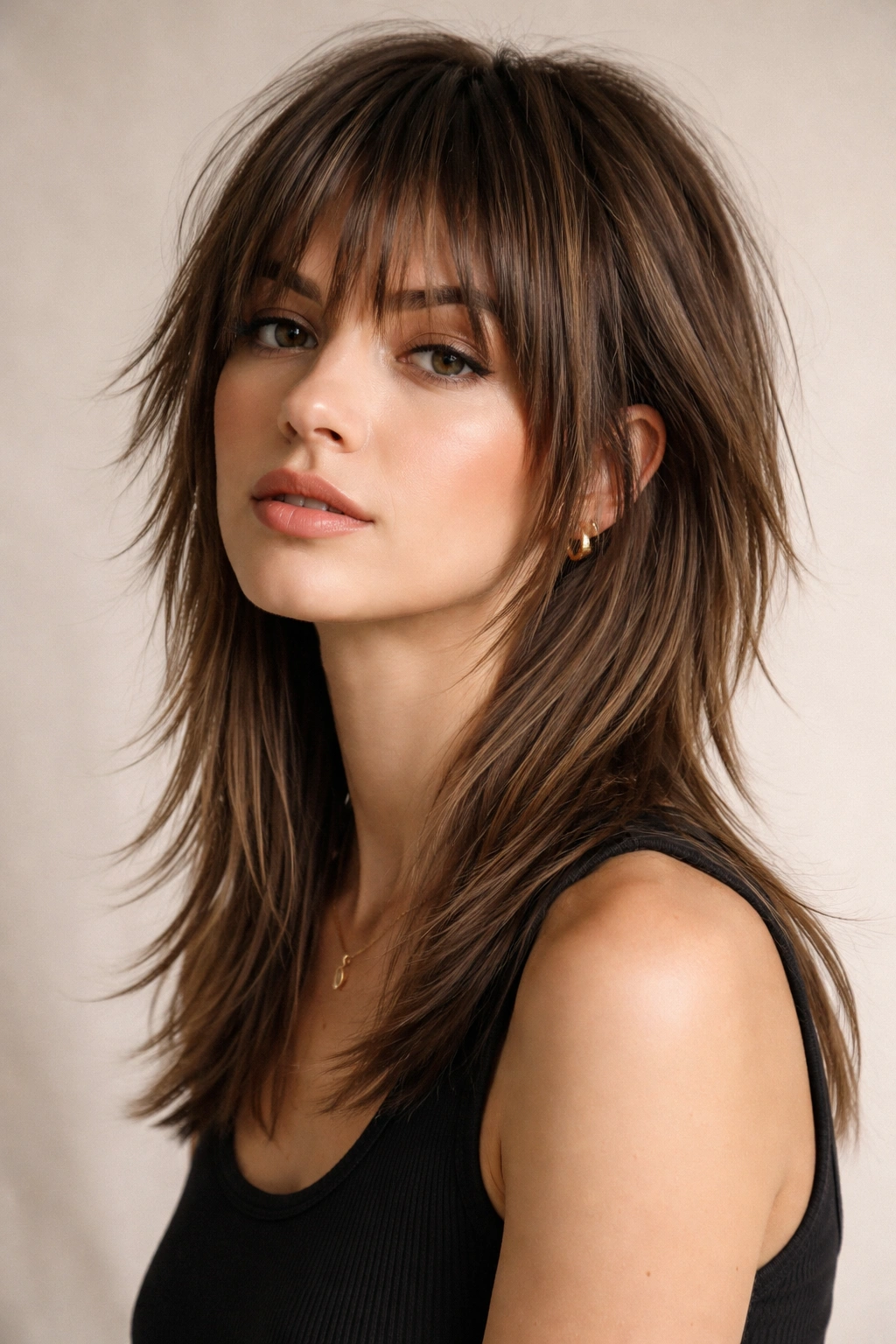
The classic choppy shag is the foundation style that started it all—think Meg Ryan meets modern edge. This cut features disconnected, shorter layers on top that create serious texture and movement, while the bottom sections remain longer and somewhat blunt. On straight hair, those shorter layers catch light beautifully and create definition without looking thin or wispy. The choppy texture is what gives this cut its signature personality; it’s intentionally irregular rather than smoothly blended.
Why It Works for Straight Hair
Straight hair shows off the geometric precision of choppy layers perfectly. Each layer has clean edges that aren’t hidden by wave or curl, which means the cut’s architecture is on full display. The disconnected layers prevent the style from looking flat or one-dimensional, and because the layers are deliberately choppy rather than graduated, the cut has personality and attitude. You’re not trying to hide your straight texture—you’re celebrating it as part of the cut’s design.
Key Styling Features
- Shorter layers start around the mid-ear area and get progressively longer toward the bottom
- The front pieces are often cut at an angle, creating a subtle face-framing effect
- Choppy texture throughout means you can style it tousled or sleek depending on your mood
- The back can be kept relatively blunt or layered further for more movement
- Best length range is anywhere from chin-length to bra-strap length
Pro tip: This cut actually looks better slightly undone. A bit of texture spray or sea salt spray applied to damp hair and finger-combed through will enhance the choppy nature of the cut and make it look intentional rather than messy.
2. The Textured Face-Frame Shag
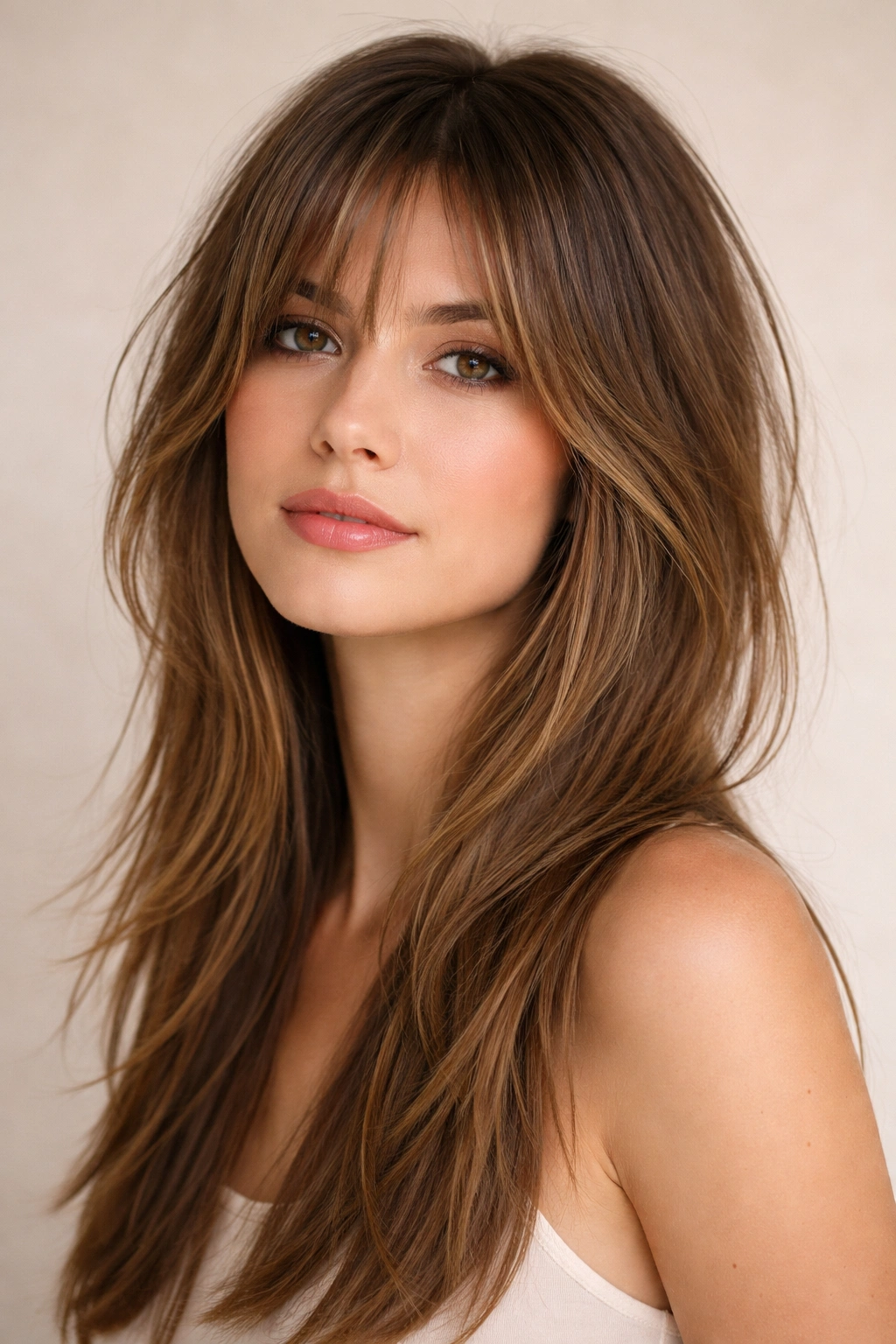
This variation keeps most of the length intact while adding shorter, deliberately textured layers exclusively around the face. It’s a more conservative take on the shag that works beautifully for people who love the idea of the style but want to keep their overall length or prefer a less dramatic transformation. The face-framing layers add movement and draw attention to your features without completely restructuring your hair.
What Makes It Different
The textured face-frame shag respects your length while still delivering shag energy through strategic placement. Rather than chopping layers throughout the entire head, this approach focuses the texture where it matters most—right around your face where it can catch light and create dimension. For straight hair, this means you get clean, visible layers that show off the cut’s intentionality without committing to a fully choppy aesthetic.
How to Style It
- Blow-dry straight for a sleek, modern look with just the face-frame layers visible
- Use a round brush to create subtle inward waves in the frame pieces for softness
- Flat iron the lengths while leaving the frame pieces slightly textured for contrast
- Apply volumizing powder to the roots for a lifted, more voluminous appearance
- Consider light waves throughout using a 1.25-inch curling iron for added texture and movement
Insider note: Ask your stylist to cut the face-frame layers when your hair is completely dry and straight, not wet. This way they can see exactly how the layers will sit and frame your face once you style them, ensuring they hit in all the right spots.
3. The Blunt-Hem Shag with Choppy Layers
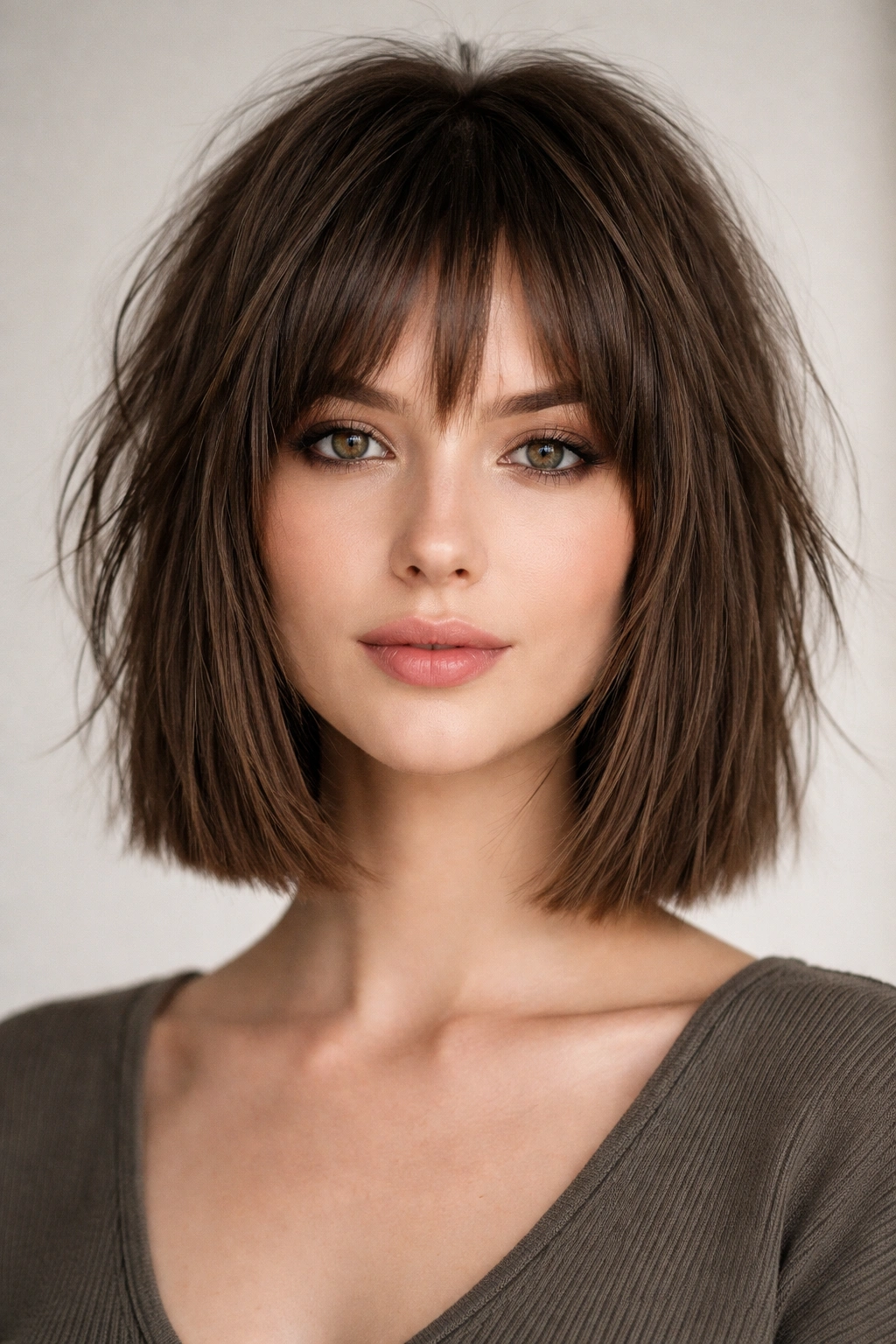
This cut takes a bold stance: keep the bottom edge fairly blunt and defined (usually chin-length or slightly longer), but pack plenty of choppy, disconnected layers on top and throughout the mid-lengths. The contrast between the clean bottom line and the textured upper layers is what makes this cut visually striking. It’s got structure and intentionality written all over it, making it feel sophisticated rather than chaotic.
The Architecture You’re Getting
The blunt-hem shag represents the perfect balance between edge and polish. The structured bottom line keeps the cut feeling grounded and intentional, while the choppy layers prevent it from looking corporate or too buttoned-up. Straight hair makes this cut especially effective because the blunt line at the bottom reads as a deliberate choice rather than an accident, and the choppy layers above show clear definition without blending softly into the line below.
Styling Tips for Maximum Impact
- A flat iron is your best friend—run it through the blunt hem to keep it clean and sharp
- The choppy layers look great tousled, so texture spray and finger-combing create the intended look
- You can also blow-dry straight and smooth, then flip a 1-inch section under at the ends for a modern, controlled vibe
- Consider adding a subtle line of razored texture to the very ends of the blunt hem for extra edge
- The face-framing pieces should hit around the jawline or slightly shorter for flattering proportions
Worth knowing: This cut requires regular trims every 4-6 weeks to maintain the integrity of the blunt bottom line. As it grows out, the blunt edge softens and the geometry of the cut becomes less pronounced. If you love this style, commit to maintenance.
4. The Feathered Shag
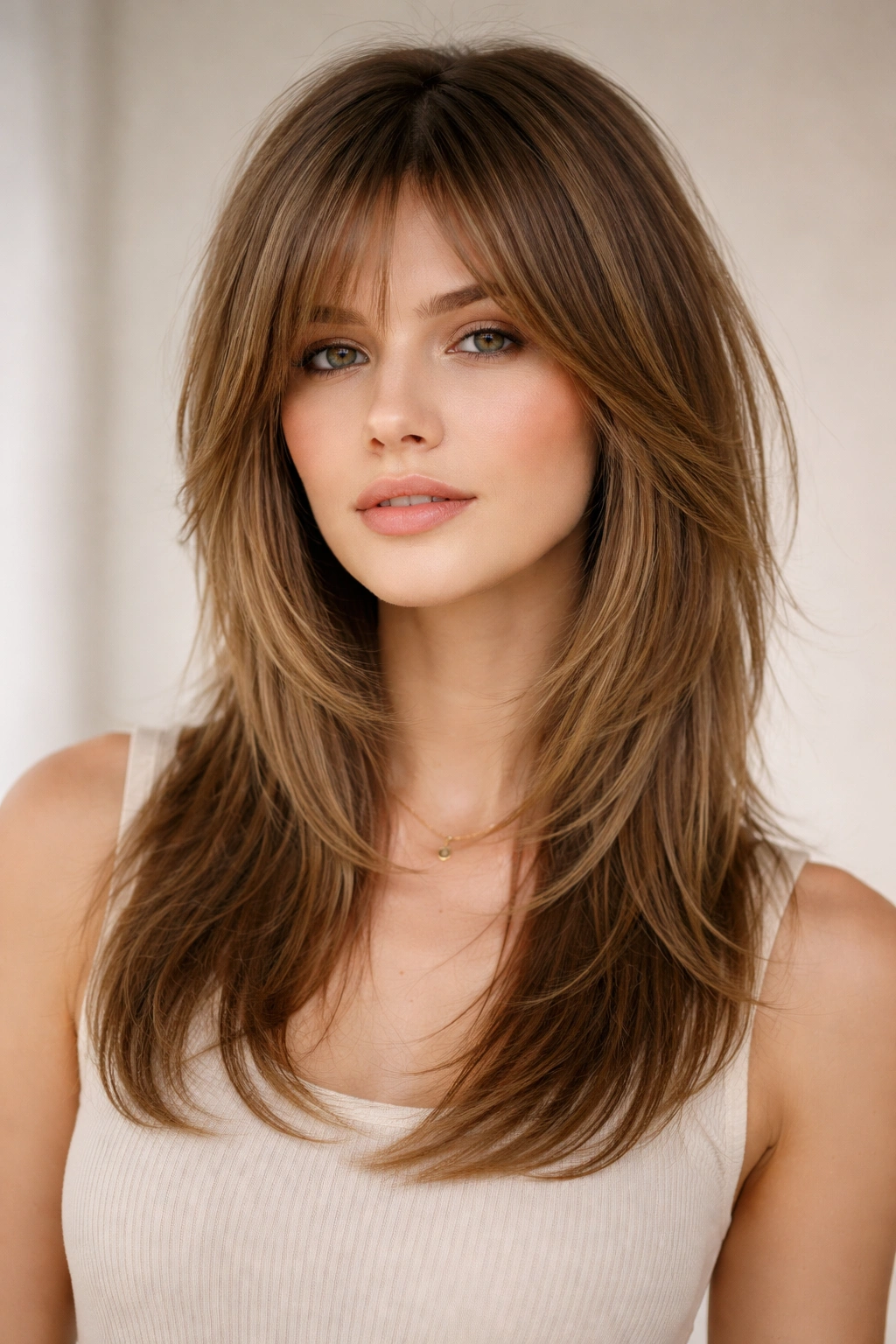
The feathered shag is where sophistication meets texture. This style features layers that are more gently worked throughout rather than aggressively choppy, creating a feathered, flowing effect. Each layer is cut at a subtle angle so that when you run your fingers through your hair, the layers move and breathe together. It’s less rock-and-roll than other shag styles and more polished, making it ideal if you want the shag silhouette without looking too edgy.
Why Feathering Works on Straight Hair
Feathered layers on straight hair create the illusion of movement and lightness without actually having waves or curls. The angled cuts direct light differently across each layer, and when you move, the layers move with you. Because your hair is straight, those feathered angles are crisp and visible rather than blurred by texture, which means the cut’s design reads clearly. It’s intentional sophistication rather than accidental tousle.
How to Achieve the Feathered Look
- Layers should be cut at a 45-degree angle to create the feathering effect
- The front pieces are usually longer, with layers becoming more pronounced toward the back and crown
- Shorter layers at the crown add lift and volume where most people need it
- Blow-dry with a blow-dryer and round brush, directing the brush downward to enhance the feathered effect
- Use a light texture spray for a softer, more movable result than sea salt spray
Pro tip: Ask your stylist to customize the feathering intensity based on where you need it most. If you have a rounder face, more pronounced feathering around the face adds dimension. If you have a longer face, feathering at the sides adds width.
5. The Mullet-Inspired Shag
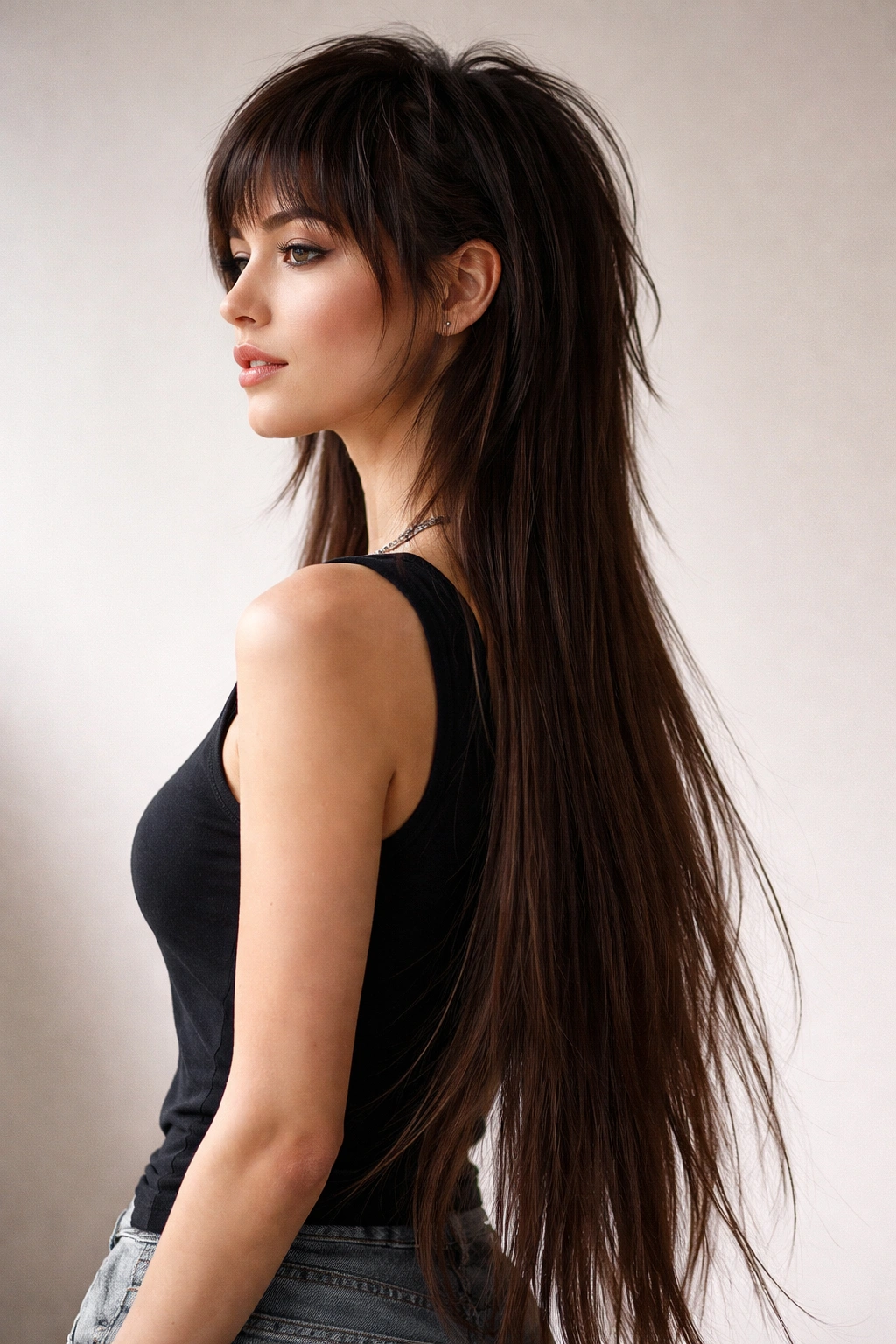
Here’s where modern shag meets edgy attitude: the mullet-inspired shag keeps the back significantly longer (often dramatically so—think waist-length) while the front and crown are cut short with choppy, textured layers. It’s directional, it’s bold, and it makes a statement. This isn’t for the faint of heart, but on straight hair, it’s absolutely stunning because every length is visible and contributes to the overall visual impact.
What Sets This Cut Apart
The mullet-inspired shag flips traditional proportion expectations on their head. Most layered cuts work to create balance and blend lengths together, but this cut celebrates contrast. Straight hair makes this contrast even more dramatic because there’s no wave or curl softening the transition between the shorter textured sections and the long, sleek back pieces. The result is bold, intentional, and genuinely fashion-forward.
Styling Options for Impact
- Wear the front sections tousled and textured while keeping the long back sleek and smooth for maximum contrast
- Blow-dry everything straight for a sharp, graphic look that emphasizes the length difference
- Add loose waves just to the back section for softness while keeping the front textured
- The back can be worn down for dramatic effect or pulled into a high pony to showcase the shag layers in front
- A side part emphasizes the asymmetry of the cut beautifully
Real talk: This cut requires commitment to the vision. It’s not a style you can hide or downplay—you’re choosing to make a statement. The tradeoff is that you’ll never look boring, and you’ll immediately stand out. If that appeals to you, this is your cut.
6. The Long Textured Shag
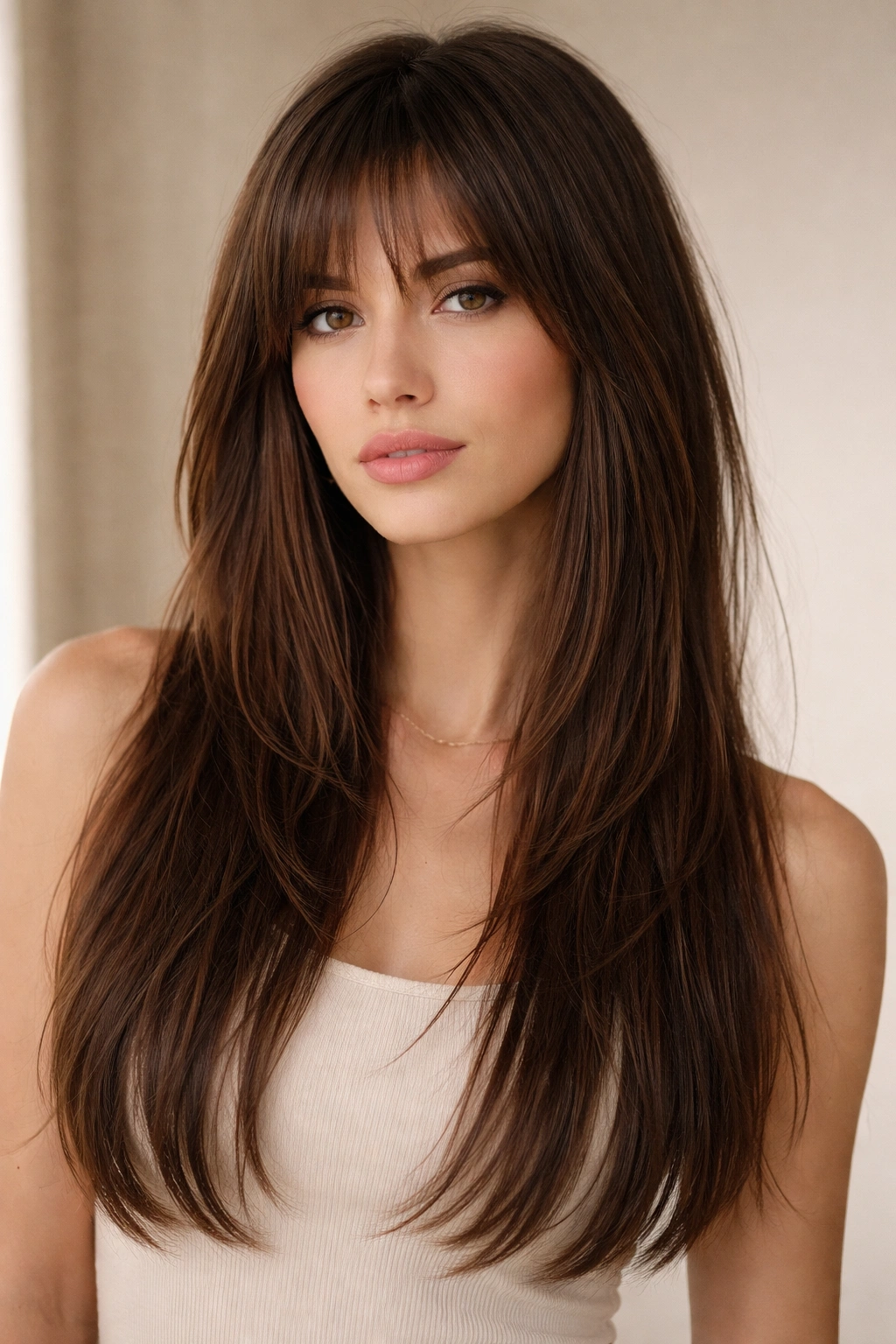
For people who want shag texture but need significant length, the long textured shag delivers. This version keeps hair long (often hitting mid-back or lower) while introducing layers and texture throughout, creating movement and dimension that prevents the long length from feeling flat or heavy. The layers start subtly at the crown and become more pronounced through the mid-lengths, creating a gorgeous graduated effect.
Why Long Hair Can Carry a Shag
The long textured shag works on straight hair because the layers create visual interest without the hair looking thin or scraggly. Straight hair has weight and density that allows it to carry layers beautifully—the layers separate and catch light without looking wispy. This is one of the few long haircuts that actually needs layers to look modern rather than outdated, and the shag layers solve that problem perfectly.
Styling Versatility You Get
- Straight and smooth through a blow-dry for a sleek, elegant look
- Tousled waves created with a curling iron or straightener for a more relaxed vibe
- Half-up, half-down styles look particularly good because the layers frame the face beautifully
- Braids look more interesting with layers—Dutch braids, French braids, and fishtails all benefit from the texture
- You can wear it in a ponytail and the face-framing layers fall loose for a low-key romantic aesthetic
Worth noting: Longer shags require more frequent deep conditioning because the ends are older hair. The layers expose more surface area, which means more potential for dryness. Invest in a quality hair mask and use it weekly to keep the lengths hydrated and looking healthy.
7. The Razor-Sharp Modern Shag
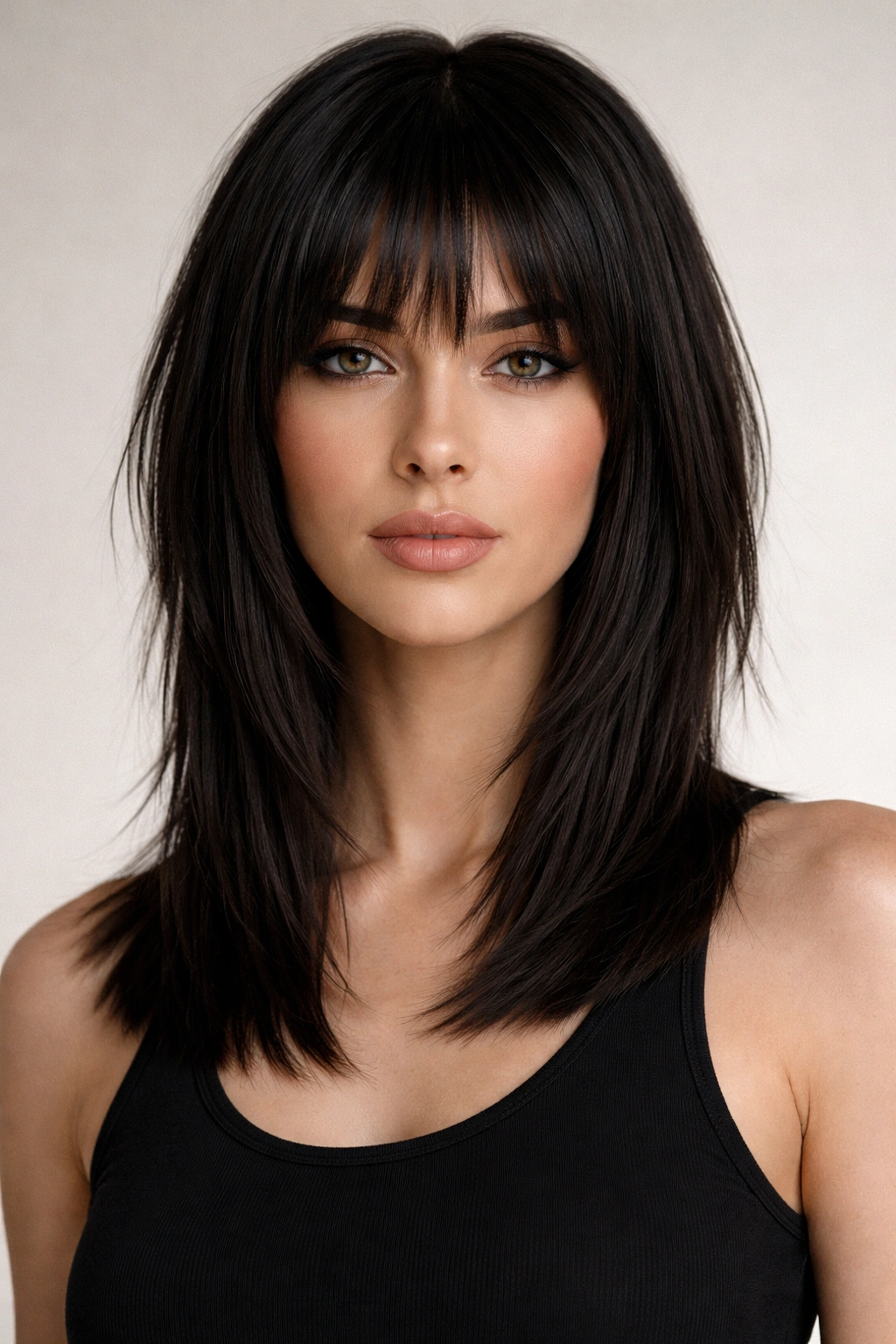
This cut takes a geometric, architectural approach to the shag. Rather than choppy, irregular layers, the razor-sharp modern shag features precise, clean lines that create defined sections and deliberate texture. It’s often slightly shorter (collarbone-length or above) and has an almost graphic quality to it. On straight hair, this precision is absolutely striking because every line reads clearly and contributes to the overall design.
The Modern Design Principle
The razor-sharp modern shag represents a contemporary interpretation of the classic style. While traditional shags embrace randomness and texture, this version applies design thinking to create intentional, elegant precision. Straight hair is essentially a blank canvas for this geometric approach—the angles and lines you create are fully visible without the softening effect of waves or curls. The result is incredibly chic and feels very current.
Creating Dimension Without Chaos
- Layers are cut with a straight razor for clean, precise edges rather than scissor-cut choppy texture
- The layers typically follow the contours of the head rather than creating disconnected pieces
- A strong side part usually accompanies this cut to emphasize the geometry
- The back is often slightly graduated to create shape without looking mullet-like
- Crown layers are strategically placed for lift without creating volume everywhere
Styling secret: This cut actually looks best when you’re not over-styling it. A simple blow-dry with a round brush and maybe a light texture spray is all you need. Over-tousling this cut defeats its purpose; the whole point is that the design does the work for you.
8. The Shoulder-Length Textured Shag
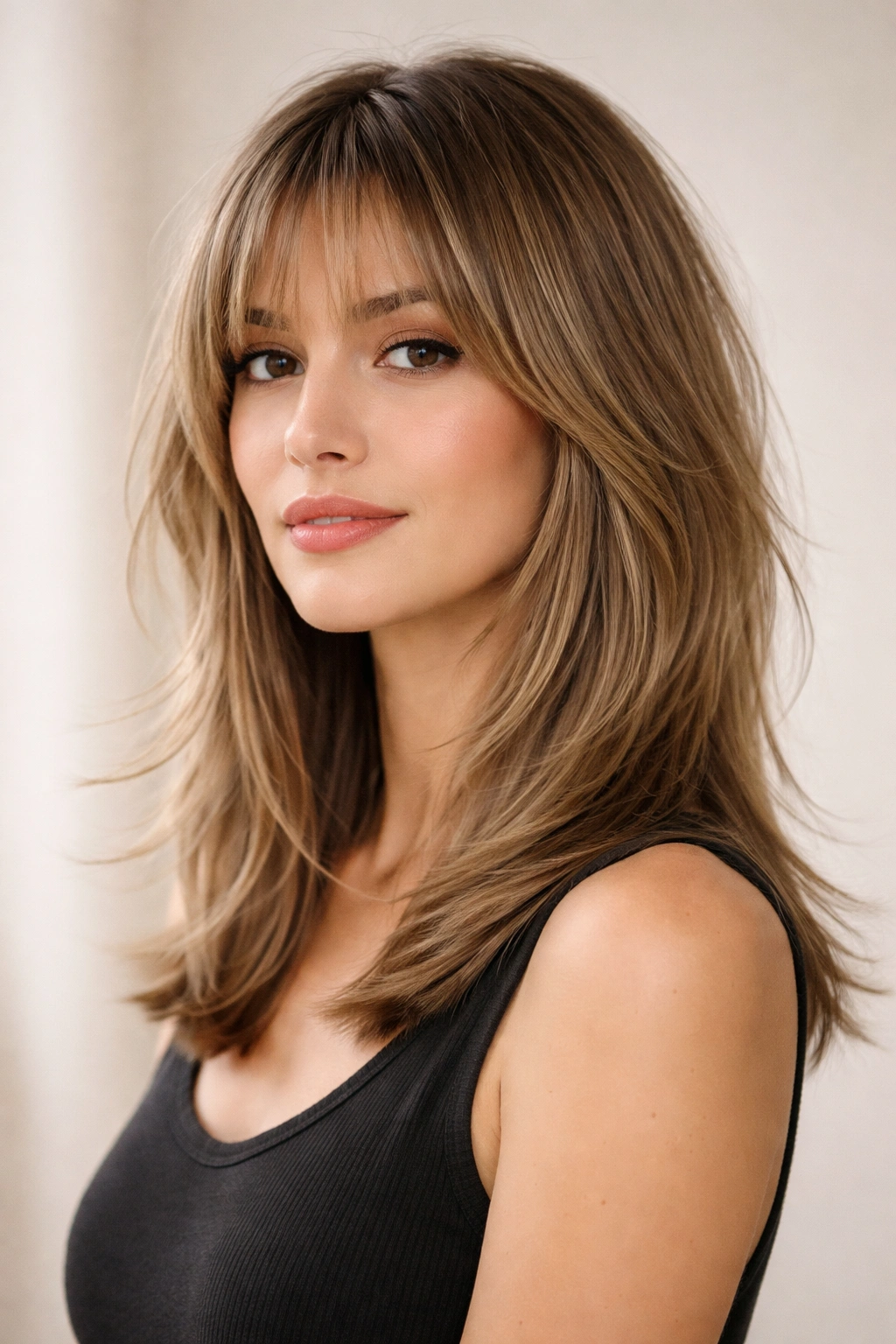
A true sweet spot for many people, the shoulder-length textured shag sits right at the shoulder with layers that create movement and bounce without dramatic length commitment. This length hits a golden zone—long enough to wear in multiple styles, short enough to feel fresh and manageable, and perfectly positioned for layers to do their magic. Straight hair at shoulder length with shag layers looks effortlessly cool without requiring extensive styling.
The Goldilocks of Shag Lengths
Shoulder length is where shag layers shine most. The length is substantial enough that layers don’t make hair look thin, but it’s short enough that the cut feels modern rather than dated. The shoulder creates a natural stopping point that balances the layers beautifully. For straight hair specifically, this length prevents the weight of longer layers from dragging everything down, so your hair maintains movement and lift throughout the day.
Ways to Wear It
- Straight and sleek with a center or side part for a polished, minimal look
- Curled into loose waves for a more romantic, tousled aesthetic
- Flipped at the ends using a round brush for a 70s-inspired vintage vibe
- Half-up styles that show off the face-framing layers while keeping hair off your face
- Textured spray added to damp hair for an undone, lived-in appearance
Pro tip: At shoulder length with layers, you can get away with a 6-8 week trim schedule instead of the typical 4-6 weeks. The shoulder naturally catches and defines the line, so minor growth doesn’t drastically change the cut’s integrity.
9. The Choppy Fringe Shag
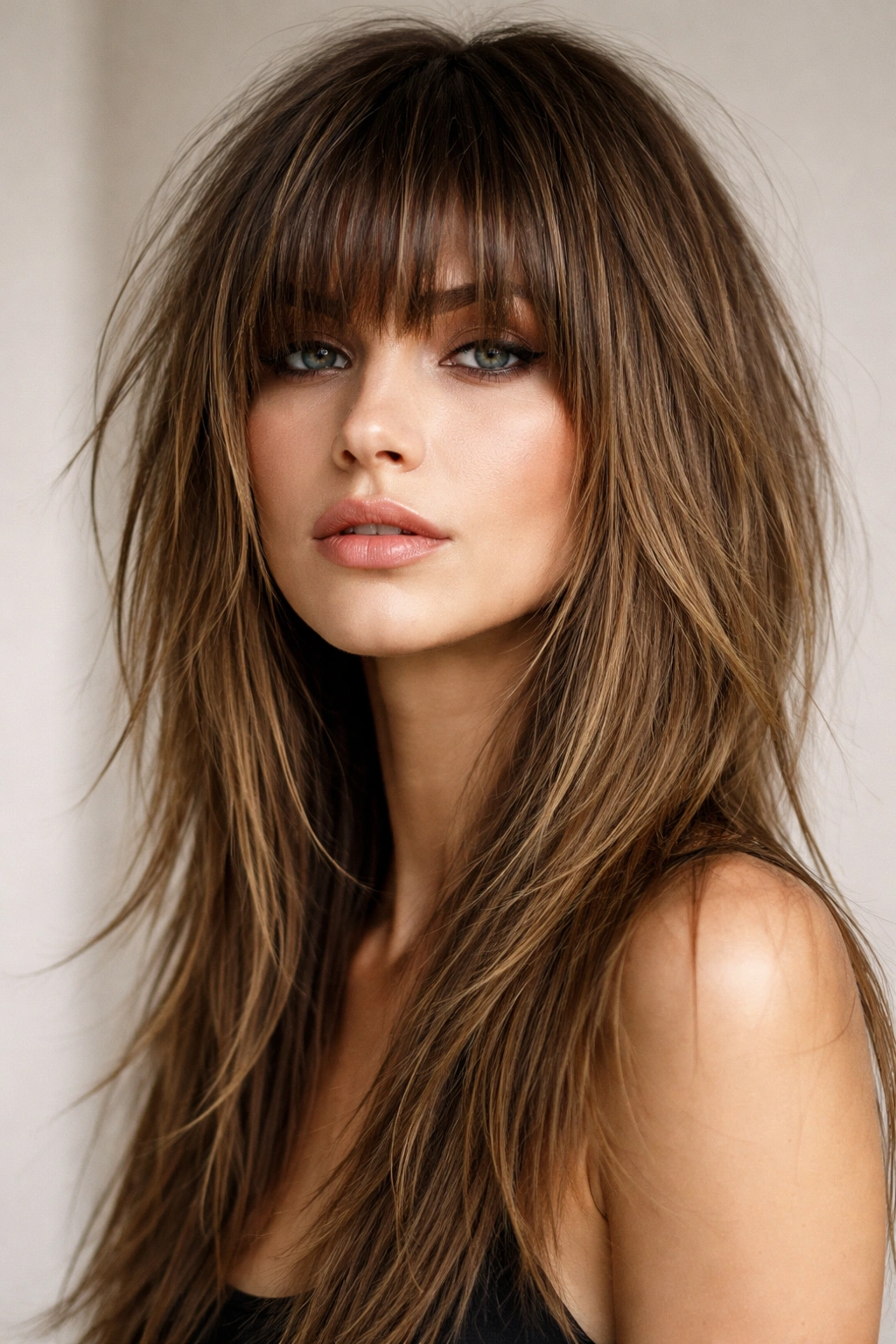
This cut combines a choppy, textured shag throughout with an intentional choppy bangs moment. The fringe is short (usually hitting mid-forehead) and is cut with the same choppy, disconnected technique used throughout the rest of the cut, creating continuity and a very intentional editorial vibe. It’s bold, it’s youthful, and it’s decidedly fashion-forward. On straight hair, the choppy fringe is absolutely stunning because every individual layer is visible and creates texture and movement.
Why the Fringe Changes Everything
Adding choppy bangs to a shag cut completely elevates the style’s attitude and intentionality. Rather than looking soft or undone, choppy bangs read as a deliberate editorial choice. The fringe immediately draws attention to your eyes and face, creating a focal point. For straight hair, choppy bangs create visual interest and movement right where people look first. It’s a confidence move—you’re saying you want to be noticed.
Styling the Fringe and Shag Together
- Blow-dry the fringe upward for a lifted, airy appearance
- Keep the fringe slightly shorter on one side with a side-swept style for dimension
- Texture spray through both the fringe and the rest of the cut creates cohesion and a tousled look
- Straightening the fringe while leaving the rest of the shag slightly textured creates visual contrast
- The fringe should never be blow-dried flat and straight down—it always needs some dimension to look intentional
Important: Choppy fringe requires styling every single day to look intentional rather than unkempt. If you’re not willing to spend 2-3 minutes each morning working with your fringe, this might not be the cut for you. However, if you enjoy that styling ritual, this cut will become your signature look.
10. The Minimalist Shag with Barely-There Layers
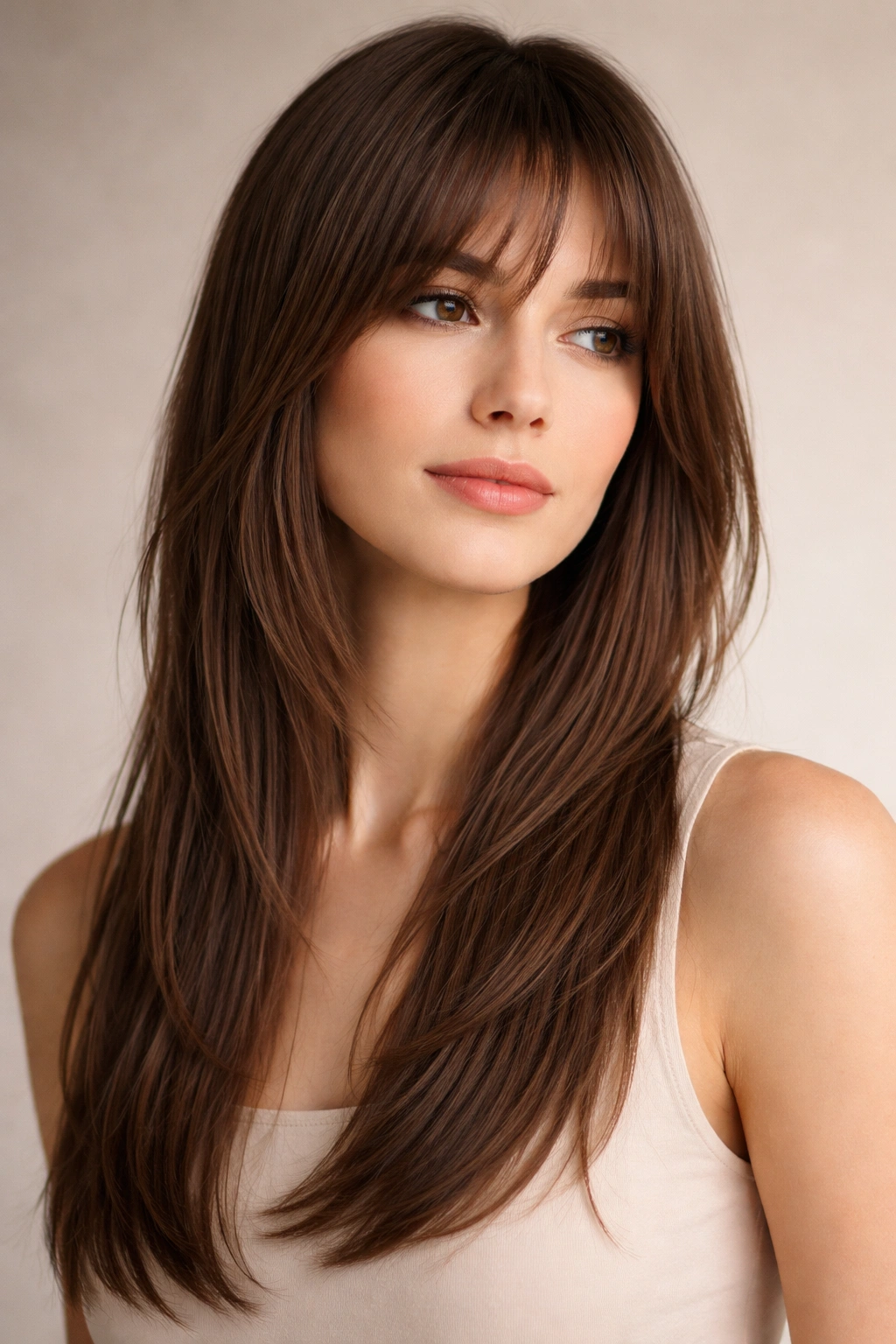
For people who want the shag spirit without a dramatic transformation, the minimalist shag delivers subtle sophistication. This version features extremely subtle layering that creates movement and prevents the hair from feeling flat, but the layers aren’t obvious or pronounced unless you know to look for them. It’s perfect for straight-haired people who want a modern cut but prefer a more conservative aesthetic. The layers are refined, intentional, and work quietly behind the scenes.
Quiet Sophistication Over Drama
The minimalist shag proves you don’t need aggression or edge to make a great cut. Straight hair with barely-there layers reads as refined and thoughtful. The layers prevent the hair from looking like a blunt cut, but they don’t announce themselves or create texture. It’s the thinking person’s shag—for people who appreciate that a well-executed cut doesn’t need to shout to be effective.
Creating Dimension Through Subtlety
- Layers are integrated gradually, starting at the crown and becoming incrementally more visible toward the ends
- The shortest layers in the front might only be an inch shorter than the longest sections, creating barely-there progression
- Texturizing is minimal—the cut relies on precise length changes rather than texture spray and tousling
- A blunt bottom line is usually maintained to give the cut structure despite the subtle layers
- The face-frame pieces are only marginally shorter than the rest of the hair, creating soft framing without obvious layers
Worth knowing: This cut benefits enormously from a good blow-dry routine. Because the layers are subtle, styling makes or breaks how the cut reads. A quality blow-dryer with a concentrator nozzle and a round brush will make this cut look polished and intentional.
Final Thoughts

The beautiful thing about shag haircuts on straight hair is that they work with your hair’s natural strengths rather than fighting against them. Your hair’s straight texture is a canvas that showcases every angle, line, and layer a stylist creates. Whether you’re drawn to bold, choppy drama or prefer subtle, minimalist sophistication, there’s a shag variation that matches exactly how you want to present yourself to the world.
The key to nailing any shag is communication with your stylist. Bring photos of shags you love, explain what appeals to you about them, and be honest about your styling commitment level. Some shags require daily styling and maintenance; others are genuinely wash-and-go friendly. There’s no “best” shag—just the right shag for your lifestyle, your face shape, and your personal style.
Once you get your cut, give yourself at least two weeks to adjust to it and learn how to style it. Every cut has a learning curve, and shags especially benefit from understanding exactly how to work with your specific layers. Watch a few tutorials, experiment with different styling products and techniques, and don’t judge the cut too harshly in that first week. You might be surprised how much you love it once you understand how to make it work for you.
