



The French bob—or bob à la française—has solidified itself as one of the most effortlessly chic and wearable haircuts in modern styling. Originally popularized by French women seeking low-maintenance elegance, this versatile cut works particularly well on straight hair, where clean lines and subtle movement can really shine. Unlike curly or wavy textures that add inherent dimension, straight hair becomes a canvas for precision cuts that create shape through geometry, layering, and angle alone. The French bob isn’t one rigid style; it’s a category with enough variation that virtually anyone can find a version that flatters their face shape, hair thickness, and personal aesthetic.
What makes French bobs so compelling for straight hair specifically is how they interact with light and movement. Every millimeter of length, every angle, and every subtle layer becomes visible and defined. A well-executed French bob on straight hair looks intentional and polished—it’s the opposite of a casual, undone look. You’re not hiding behind texture; you’re working with what you have and letting precision do the heavy lifting. Whether you prefer something sleek and minimal, slightly textured, or with unexpected details like undercuts or asymmetry, there’s a French bob variation that will make your straight hair look deliberately styled, even on days when you’ve just air-dried it.
The 10 French bob variations below showcase the full spectrum of what’s possible with this timeless cut on straight hair. Some lean classic and Parisian-minimal, while others bring contemporary edge. All of them prove that straight hair isn’t a limitation for great haircuts—it’s actually an advantage when you want a cut that reads clean, modern, and intentional.
1. Classic French Bob With Blunt Ends
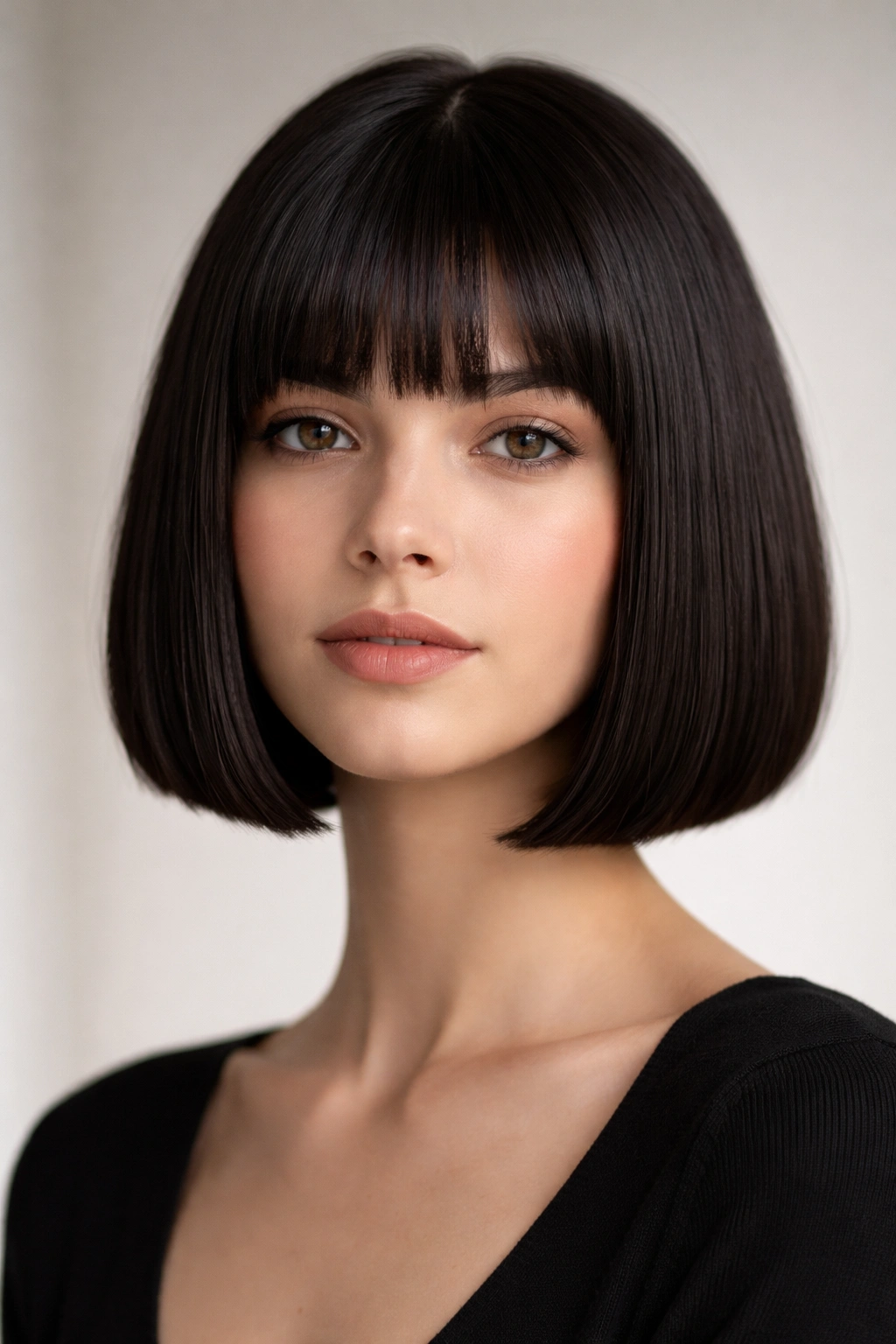
This is the foundational French bob that launched a thousand Pinterest boards. The cut sits at chin length, features a blunt horizontal line across the ends, and maintains one consistent length all the way around with minimal or no layering. On straight hair, this creates an almost geometric perfection—the ends are sharp and defined, and the simplicity of the cut lets your hair’s natural shine take center stage.
Why It Works
The blunt ends on straight hair create a sophisticated, deliberate look that signals precision and intentionality. There’s no fussiness here, just clean lines that frame the face beautifully. This cut works whether you part it down the middle for symmetry or shift the part to one side for a softer, more modern interpretation. The bluntness also means the cut doesn’t require constant trimming—as your hair grows out, it still reads as intentional for several months before the ends start to feel too long.
Styling and Maintenance
- Works best with a sleek, straight style achieved with a flat iron and smoothing serum for maximum impact
- Requires regular trims every 4-6 weeks to keep those blunt ends crisp and defined
- Pairs beautifully with a deep side part or a center part depending on your face shape
- The simplicity means minimal styling time once your hair is dry
Insider tip: Blow-dry this cut with a paddle brush for ultra-straight results, then use a flat iron only on the ends if needed. Over-ironing can make the style look too severe.
2. Chin-Length French Bob With Textured Layers
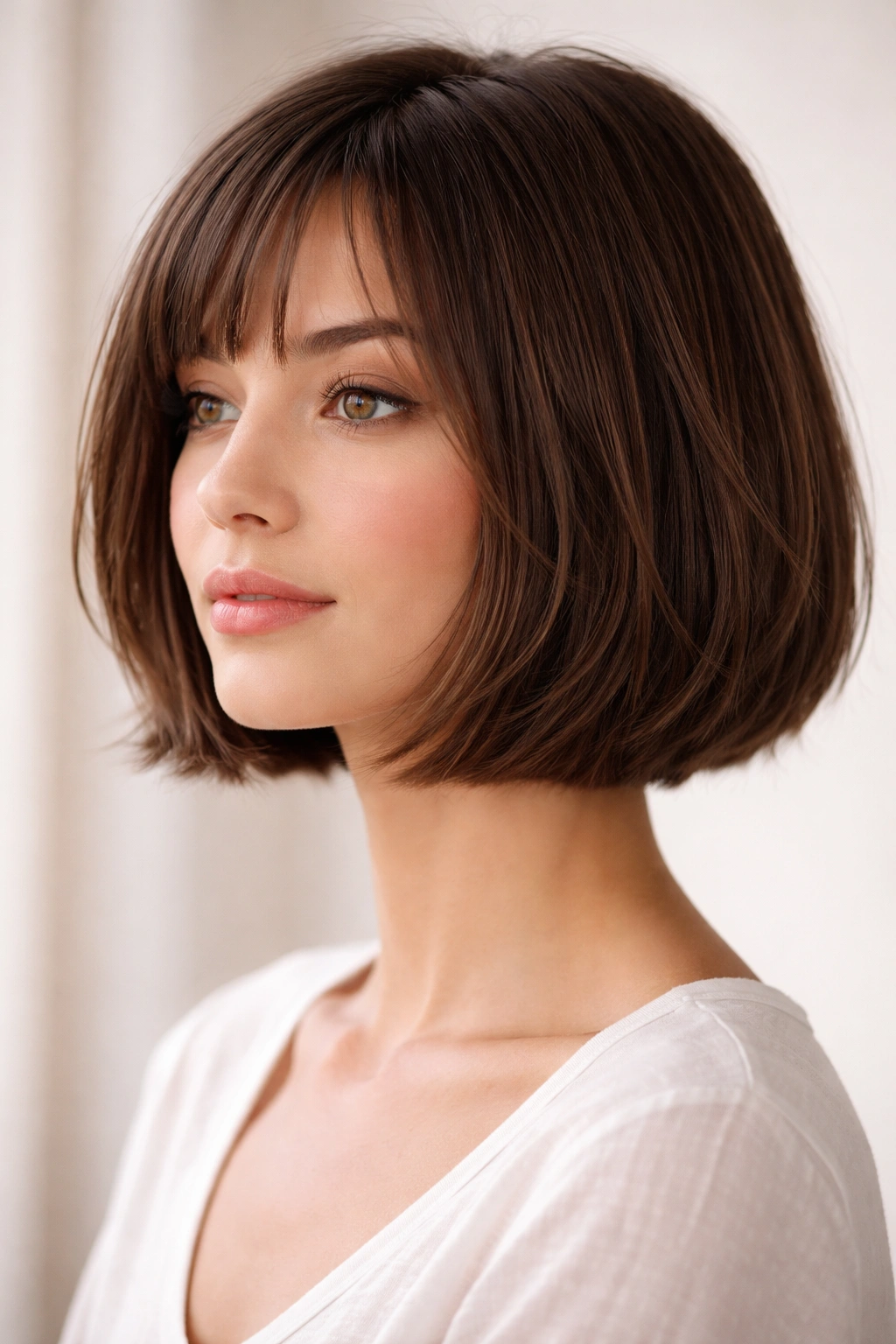
This variation keeps the French bob silhouette but adds internal layers throughout to create movement and texture within the cut. On straight hair, these layers don’t create waves—instead, they create subtle dimension through varying lengths and a softer overall shape. The layers begin around the face and work backward, giving the style a lived-in quality while maintaining the essential French bob aesthetic.
Why It Works
Layers add visual interest to straight hair without requiring texture or waves to activate them. The cut catches light differently at each layer, creating depth that reads as intentional styling. For people with thinner straight hair, layers are transformative—they remove bulk and make the style appear fuller and more dynamic. For thicker straight hair, layers prevent the cut from feeling heavy or boxy.
The Layering Strategy
- Face-framing layers start around cheekbone level and taper slightly shorter as they move backward
- Layers maintain the overall chin-length silhouette but create interior movement and breathing room
- The back stays slightly longer than the front for subtle dimension
- Layers can be cut with point-cutting or slide-cutting techniques to create softer texture
Key benefit: This version of the French bob reads as effortlessly stylish rather than strictly minimalist. It’s a small shift that makes a big difference in how put-together the style feels on straight hair.
3. Asymmetrical French Bob Cut
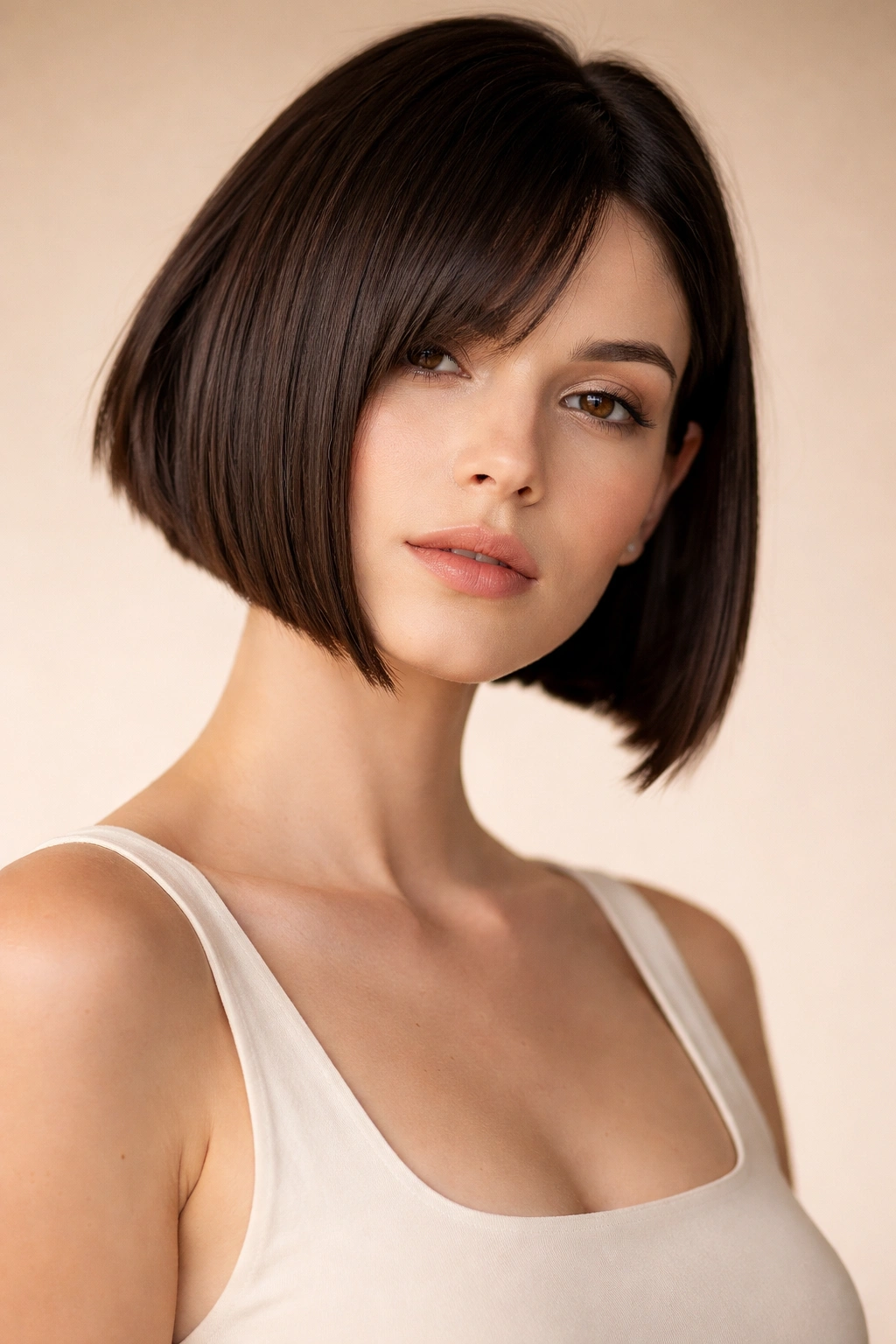
Asymmetry has long been a French fashion statement, and it absolutely works within the French bob framework. One side of this cut is slightly shorter than the other—sometimes dramatically so—creating a directional, fashion-forward look. On straight hair, the asymmetry is unmissable; there’s no texture to soften or blur the geometric difference between sides. This is a cut for people who genuinely love modern, slightly unconventional styling.
Why It Works
The asymmetrical French bob reads as intentional and editorial. It’s the cut of someone who understands fashion and isn’t interested in blending in. On straight hair, every angle is visible and precise. The asymmetry creates an automatic style direction—the hair naturally sweeps toward the longer side, giving you built-in movement and visual interest without curling or waving your hair.
Execution and Styling Tips
- One side typically sits at ear level while the other extends to mid-chin or lower
- Works best with a side part that follows the natural line of the cut
- Straight hair styling is essential here—the asymmetry needs to be clearly readable
- Use a flat iron to ensure each side is perfectly smooth and the angle is obvious
What to know: The asymmetrical French bob requires a stylist with strong geometric cutting skills. Precision matters tremendously with this style—a half-inch difference in how the asymmetry is cut changes the entire look.
4. French Bob With Subtle Bangs
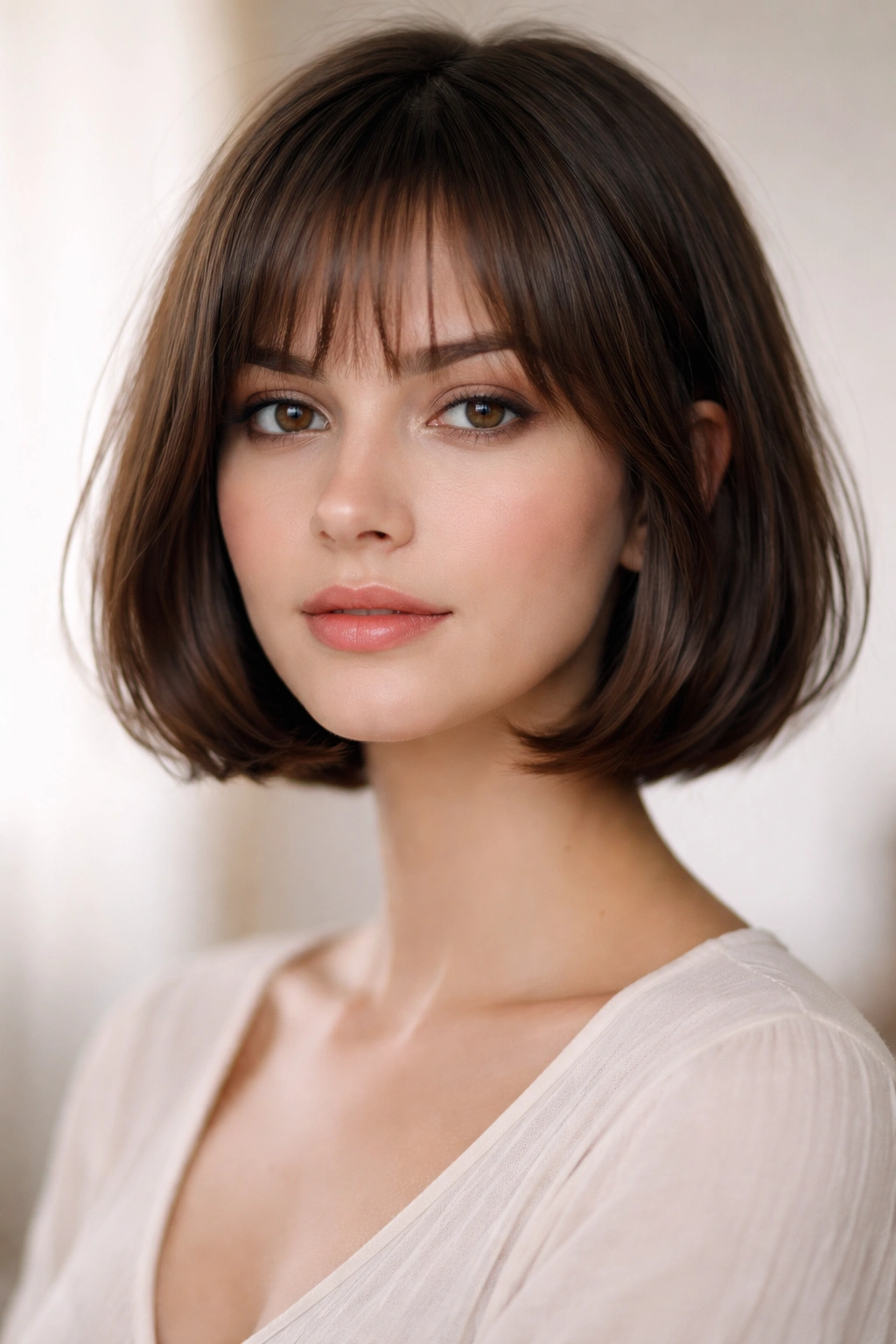
Adding delicate bangs to a French bob creates a new dimension of sophistication. These aren’t heavy, blunt bangs; they’re soft, wispy, and integrated into the overall cut. Typically they sit just at or slightly above the eyebrow and blend seamlessly with the layers of the bob itself. On straight hair, subtle bangs create a romantic, thoughtful quality that transforms the whole vibe of the cut.
Why It Works
Bangs draw attention to the eyes and face structure, making this variation particularly flattering if you have strong cheekbones or a defined jaw. The subtle nature of the bangs means they work with straight hair without feeling heavy or requiring constant maintenance. They soften the geometry of a standard French bob while still maintaining the essential shape and line of the cut.
Styling Considerations
- Bangs should be wispy rather than blunt—ask your stylist for side-swept or gently curved bangs rather than straight-across
- These bangs blend with the face-framing layers, creating a cohesive silhouette
- Styling is straightforward: flat iron the bangs straight or with a gentle curve toward the cheeks
- Grow-out is surprisingly graceful since the bangs naturally integrate with the rest of the bob
Pro tip: If you’ve never had bangs before, start with this softer version on a French bob. The bangs are forgiving as they grow out and don’t require the frequent trims that blunt bangs demand.
5. Longer French Bob to the Shoulders
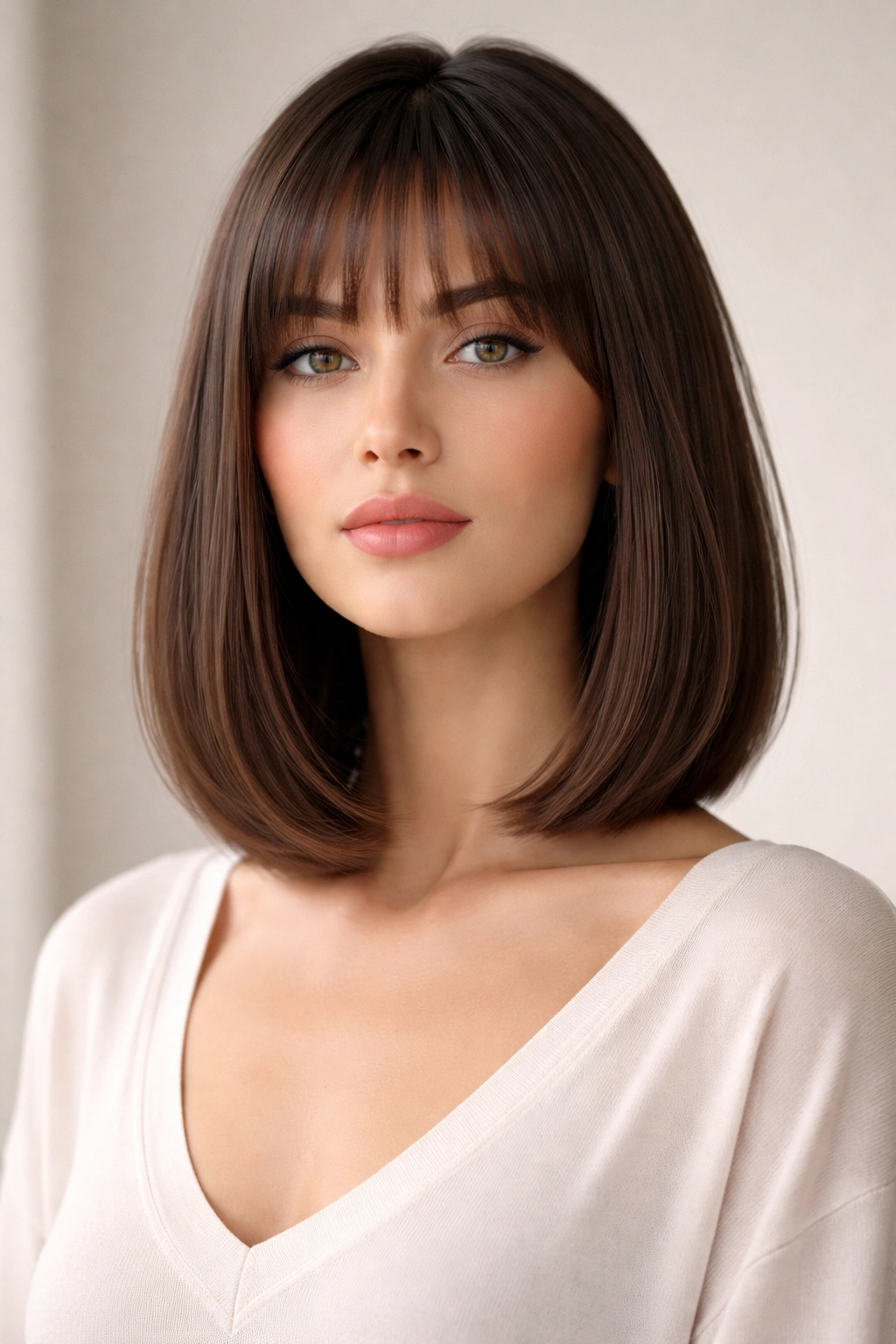
A French bob doesn’t have to stop at the chin. This variation extends to the shoulders while maintaining the essential French bob structure and shape. The length gives you more surface area to work with, and on straight hair, this creates a graceful, elongated silhouette. It reads as classic and Parisian while being slightly less severe than a chin-length version.
Why It Works
Longer French bobs are exceptionally versatile. They can be styled sleek and straight for a polished day at work, or you can add subtle waves or bends for a softer evening look. On straight hair, the added length gives you more flexibility without requiring you to commit to waves or texture. The cut still delivers the French bob’s essential clean geometry, just with more length to play with.
Versatility and Styling Options
- Add subtle movement by curling the ends inward with a 1-inch barrel curling iron
- Works beautifully with a middle part for a balanced, symmetrical look
- Can be styled fully straight for maximum sophistication or with gentle movement for dimension
- The length makes this version work well for people with longer face shapes who might feel overwhelmed by a shorter bob
Real-world benefit: This length hits right around the collarbone, which flatters most body types and face shapes. It’s the Goldilocks of French bobs—not too short, not too long.
6. French Bob With Babylights
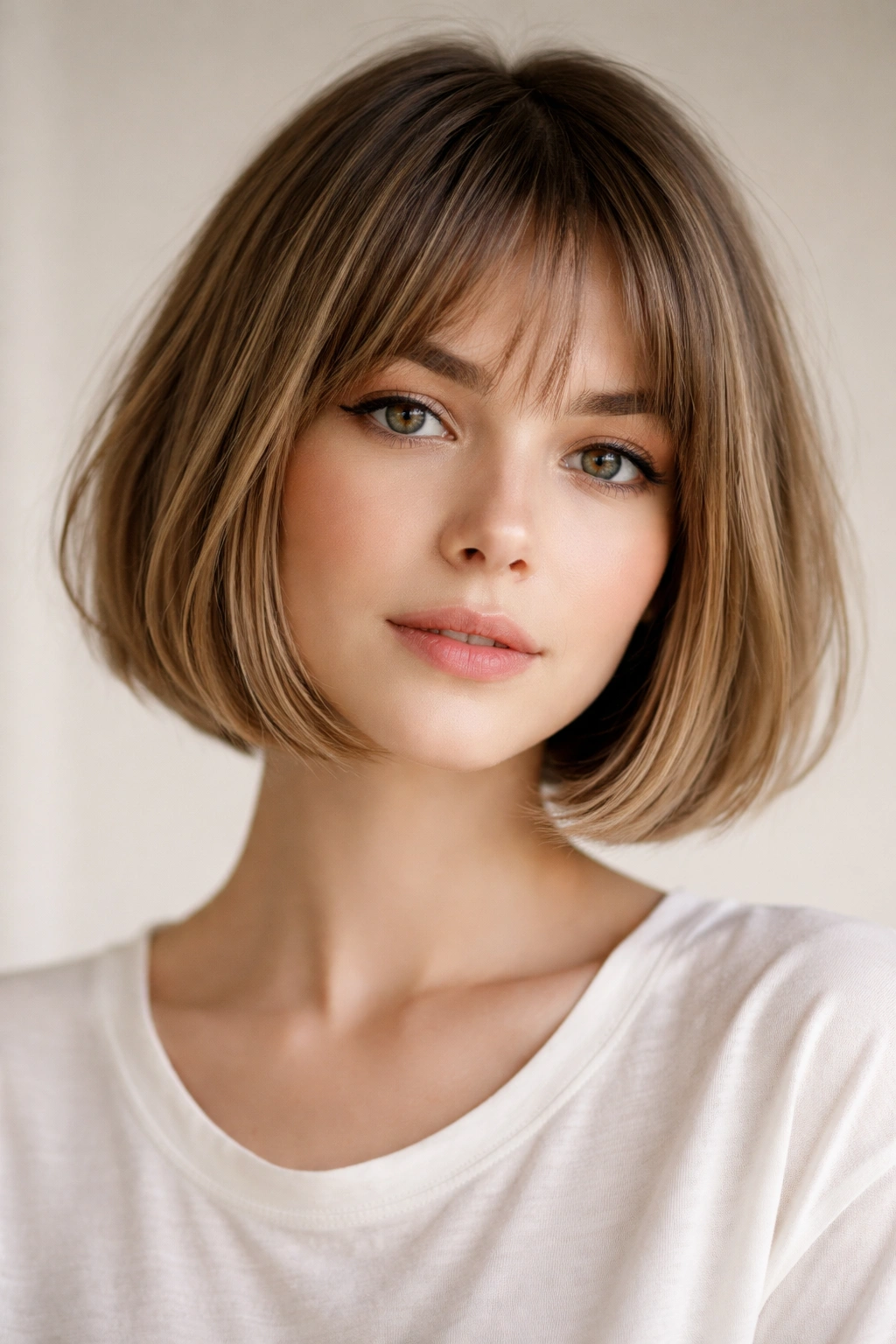
Babylights are fine, delicate highlights painted throughout the hair in a way that mimics how the sun naturally touches hair. When combined with a French bob on straight hair, babylights add depth and dimension that the cut alone might not provide. The highlights catch light as your hair moves, creating the illusion of movement and texture even though your hair is completely straight.
Why It Works
Straight hair is a perfect canvas for babylights because there’s no texture to blur or diffuse the color work. Every subtle highlight is visible and intentional-looking. The color adds visual dimension that makes even a simple, blunt-ended French bob feel more complex and interesting. Babylights are maintenance-friendly compared to traditional highlights—they blend seamlessly as they grow out and don’t require frequent touch-ups.
Color and Cut Combination
- Babylights typically use 2-4 shades within your natural color family or just a few shades lighter
- The placement is strategic around the face and throughout the crown for dimension
- Works beautifully with both warm and cool tones depending on your undertones
- The highlights should look like natural sun-lightening, not obvious streaks
Styling consideration: Once you have babylights, using a smoothing serum becomes even more important because it makes the color dimension pop. Flat-iron the hair to maximum straightness and apply shine serum for the full effect.
7. Sleek Straight French Bob With Center Part
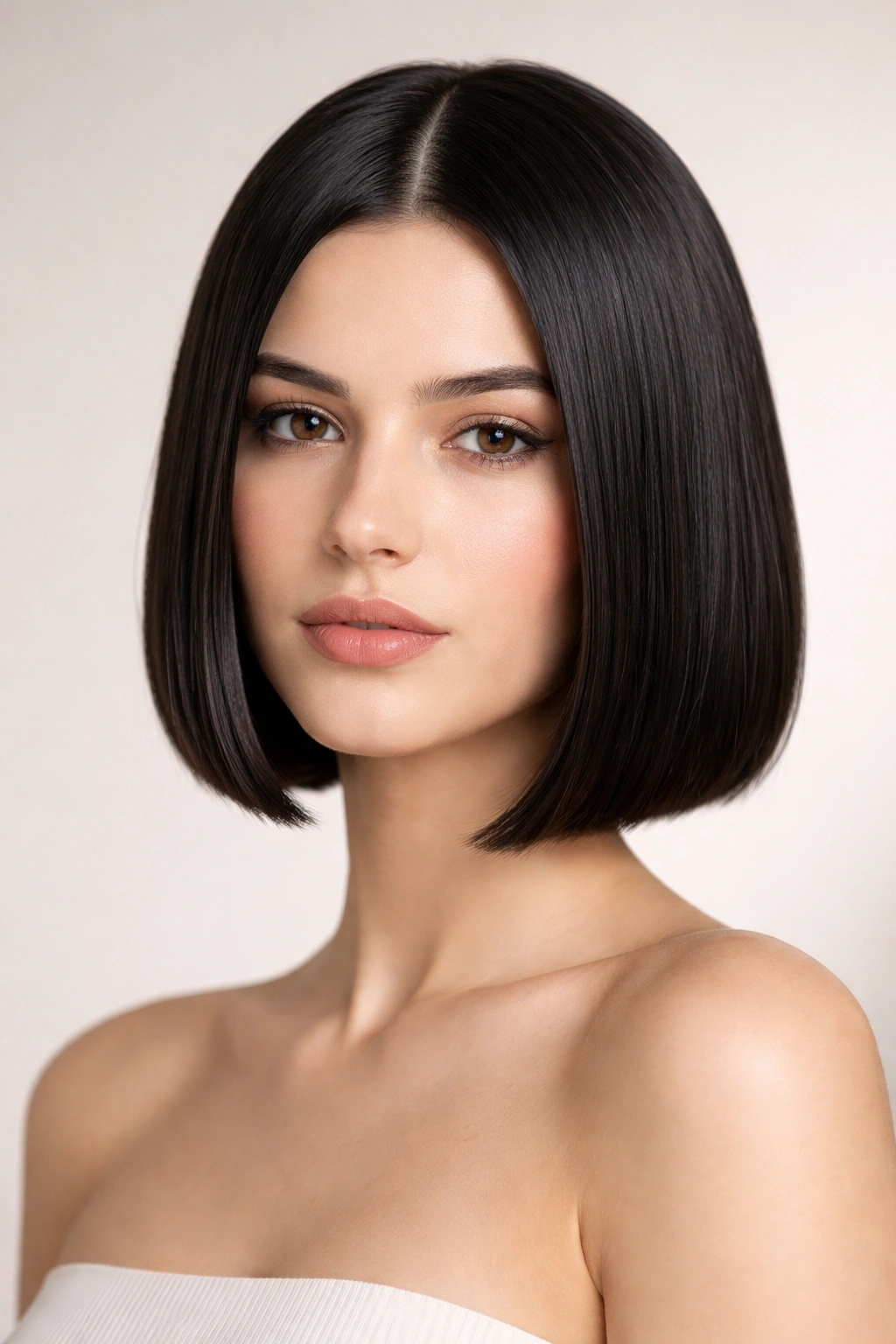
This is the purest, most minimalist interpretation of the French bob. A dead-center part divides the hair symmetrically, the bob is cut to a precise, blunt line at the chin, and the styling is ruler-straight with maximum shine. On straight hair, this style reads as intentional sophistication—every line is geometric and deliberate. There’s no texture to hide behind here; this cut is all about precision and clean aesthetics.
Why It Works
The center-parted French bob is timeless and works across age groups and face shapes. The symmetry is calming and balanced. On straight hair, the perfect center part and geometric lines create an almost meditative sense of order. This is a cut that signals confidence in simplicity. It’s the hairstyle equivalent of a perfectly tailored white button-up shirt—classic, elegant, and eternally relevant.
Achieving Maximum Sleekness
- A center part should be measured carefully and may require a fine-tooth comb and patience to get perfectly straight
- Use a smoothing serum or light styling cream applied to damp hair before blow-drying
- Blow-dry with a paddle brush for straightness, then finish with a flat iron if needed
- A light hairspray helps keep flyaways in place without adding weight or visible product
Key detail: This style looks best when your hair is very healthy and shiny—it shows everything. Regular deep conditioning and shine treatments are worth the investment if this is your chosen style.
8. French Bob With Undercut Details
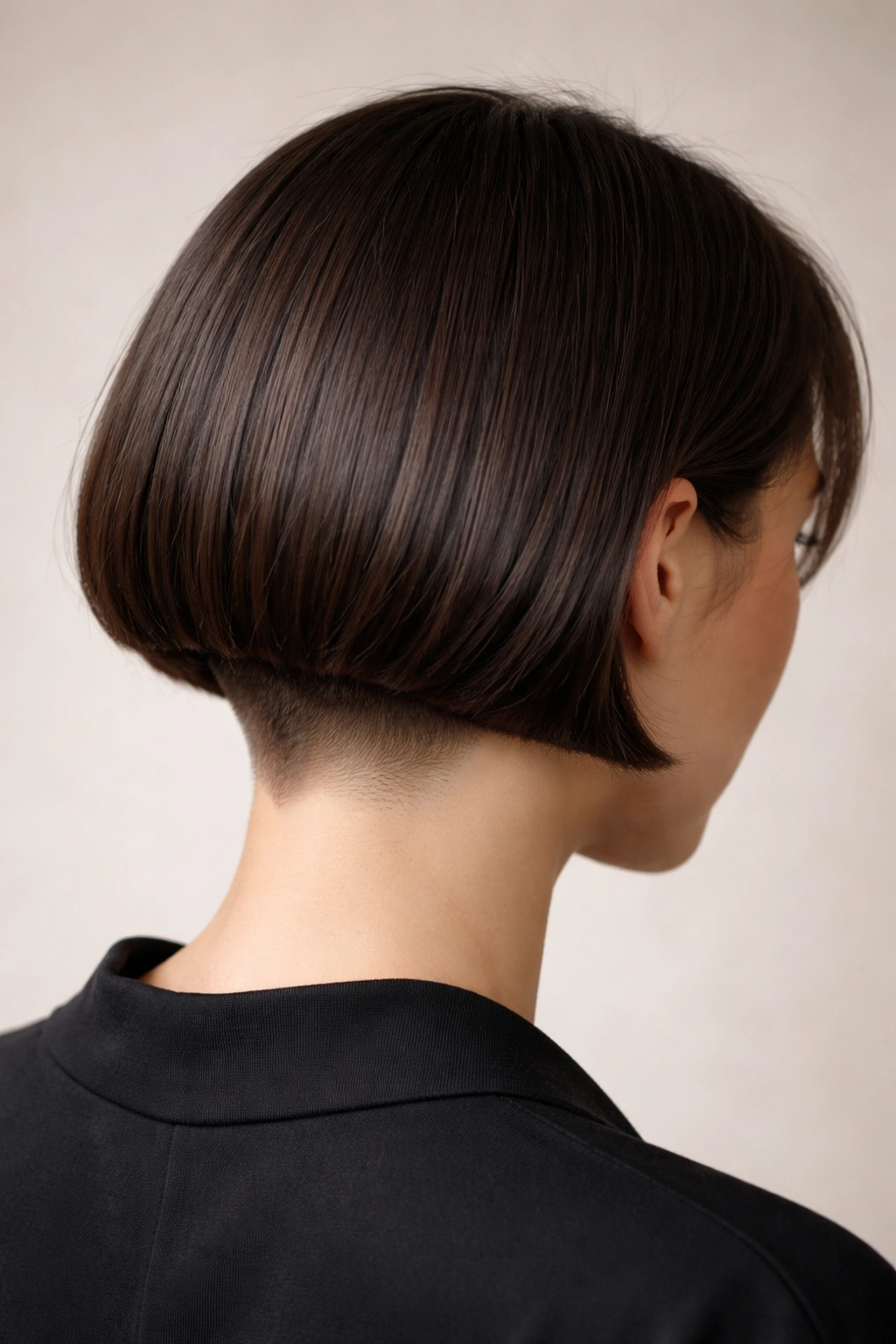
An undercut incorporated into a French bob creates unexpected edge and visual interest. The hair underneath or around the nape of the neck is cut much shorter than the top layer, creating a hidden contrast when your hair is down but revealing dramatic geometry when you tuck your hair behind your ears or in certain positions. This variation is perfect for people who want a sophisticated cut that has a hidden cool-girl edge.
Why It Works
The undercut adds a modern, artistic element to the classic French bob. On straight hair, the contrast between the short undercut and the longer top layers is crisp and defined. You get two looks in one—a polished, sleek French bob when your hair is down, and a sculptural, contemporary cut when any of the undercut is visible. It’s a subtle way to add personality and edge to an otherwise classic style.
Placement and Styling
- An undercut can be placed at the nape only, along the back of the head, or even at the temples for a bolder look
- The undercut is typically 1-2 inches shorter than the visible top layer
- Styling is straightforward when worn down—the undercut essentially hides
- You can style the hair up or tuck it back to show the undercut for evening events
Important note: Undercuts require more frequent trims than standard French bobs because the contrast between lengths is noticeable and specific. Every 4-6 weeks is ideal to keep the undercut sharp.
9. Micro French Bob for Straight Hair
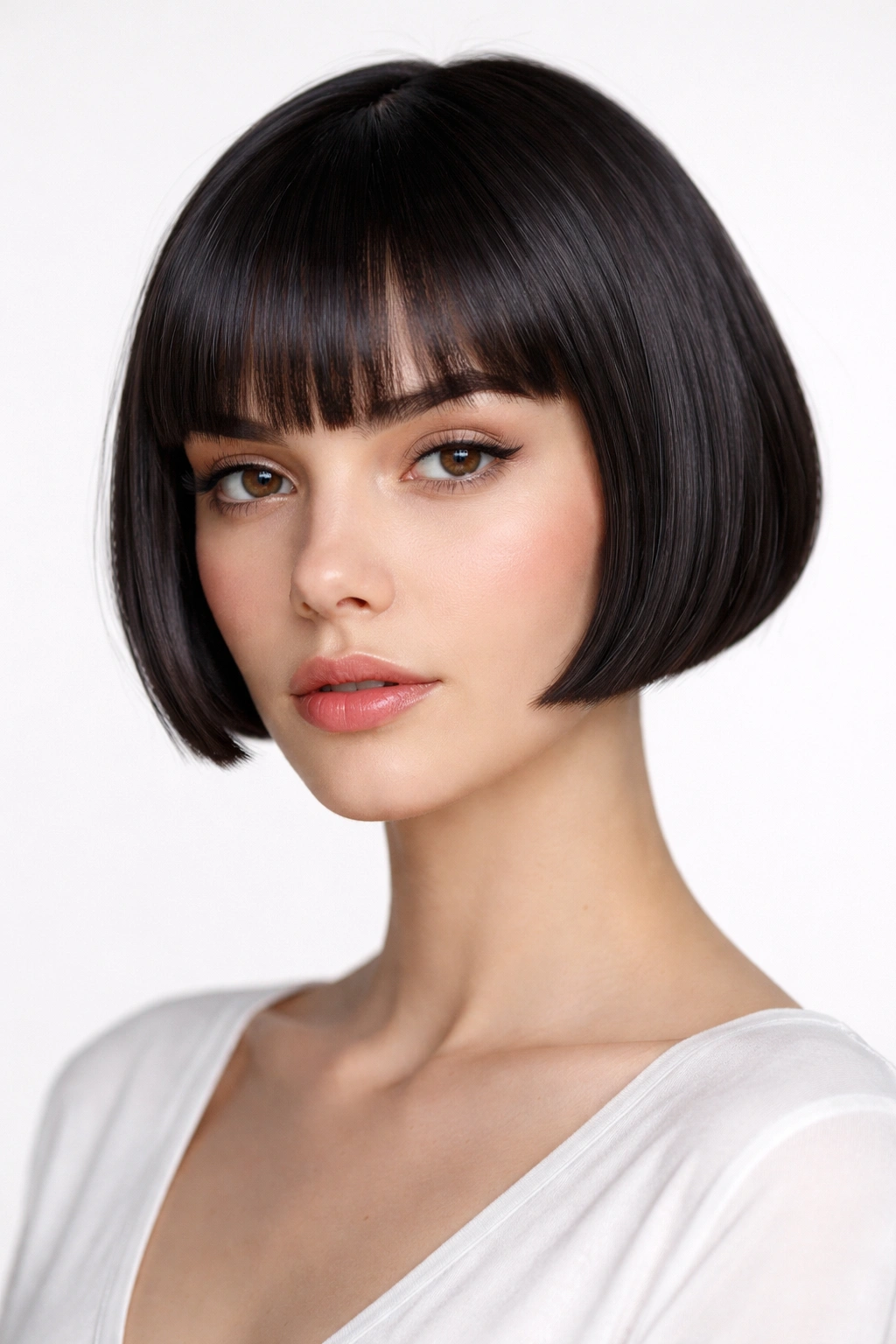
This ultra-short French bob interpretation sits well above the chin, typically ending around the ears or even shorter. The “micro” designation means minimal length overall, creating an almost sculptural, architectural quality. On straight hair, this cut is bold, modern, and requires a high level of styling precision. It’s not for the faint of heart, but it’s undeniably cool and fashion-forward.
Why It Works
The micro French bob makes an immediate statement. It reads as confident, artistic, and contemporary. On straight hair, the ultra-short length means every detail of the cut is visible—the shape, the angles, the proportions all matter tremendously. This is a cut that actually looks better when your hair is super straight and shiny rather than textured; the minimal length combined with perfect straightness creates a striking, editorial look.
Styling and Face Shape Considerations
- This cut works best with balanced or oval face shapes because there’s minimal hair to frame or soften features
- Requires flawless skin care because there’s nowhere for the hair to hide
- Styling is simple but essential: flat iron to maximum straightness and apply shine serum
- Works beautifully with minimal makeup in neutral or cool tones
Real talk: This cut requires commitment. Growing it out takes months, and the short length means every hair texture and movement is visible. If you have any texture or wave at all, the micro French bob may not be your best choice.
10. French Bob With Side-Swept Styling
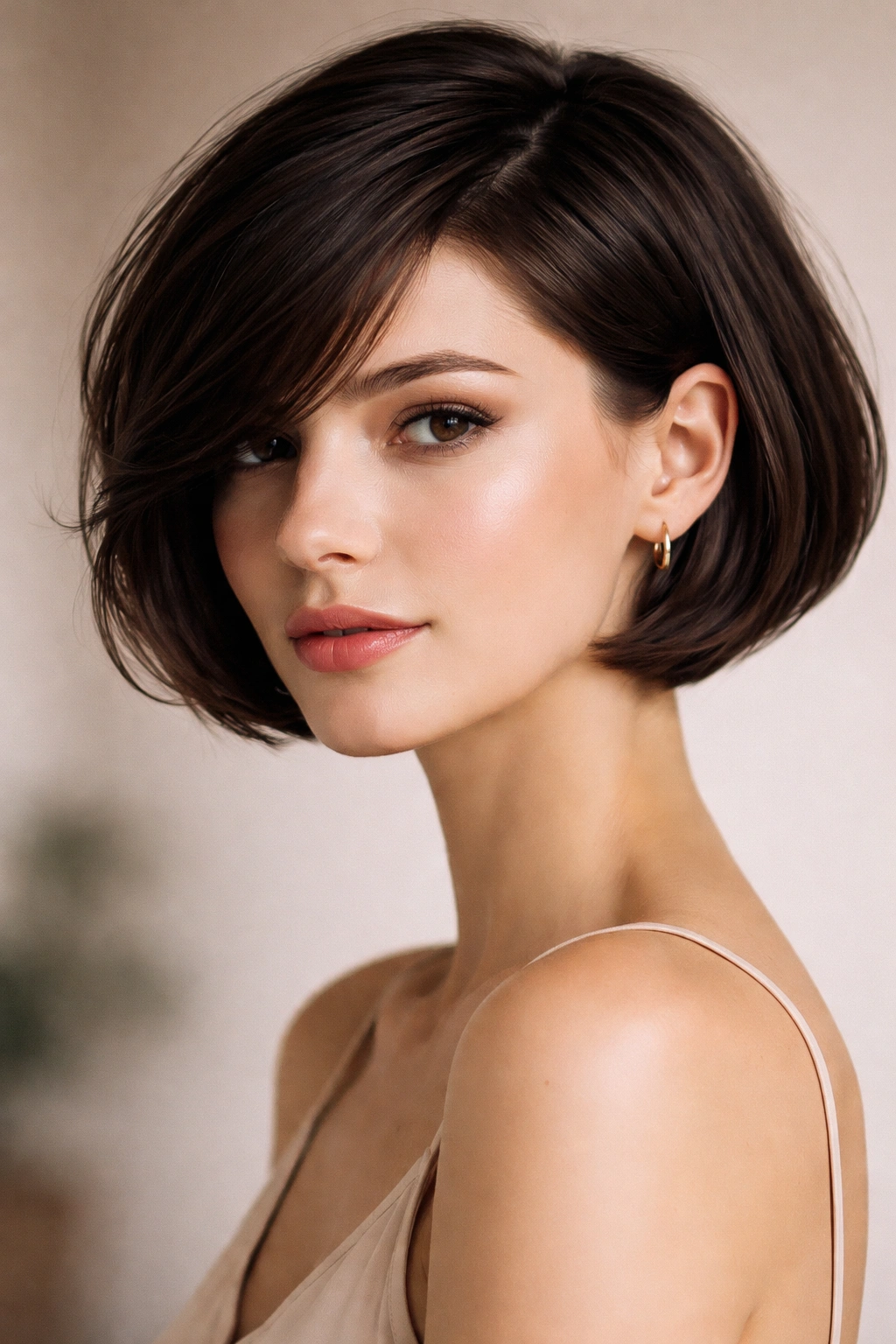
This variation takes a traditional French bob—blunt ends, chin length, minimal or no layers—but styles it with a dramatic, side-swept part instead of a center part or even side part. The hair sweeps dramatically to one side, creating volume at the crown and a graceful, asymmetrical silhouette even though the cut itself is symmetrical. On straight hair, the side-swept styling creates elegant movement and a sense of motion.
Why It Works
Side-swept styling adds romance and movement to an otherwise geometric cut. The asymmetrical styling creates visual interest and can actually make your face appear more sculptural through the play of light and shadow. On straight hair, the side-swept look reads as polished and put-together without requiring you to have waves or texture. It’s a cut that works hard to look effortless.
Achieving the Side-Swept Effect
- Blow-dry your hair to one side while it’s still damp, creating direction and volume at the crown
- Use a paddle brush to create smoothness while emphasizing the side-swept direction
- A light texturizing spray or dry shampoo applied near the roots adds grip and helps the side-sweep stay in place
- The sweep should start from above one ear and flow dramatically toward the other side
Styling tip: This version benefits from a face-framing layer or two in the hair that sweeps across the face—they create soft movement and follow the line of the sweep beautifully.
Final Thoughts
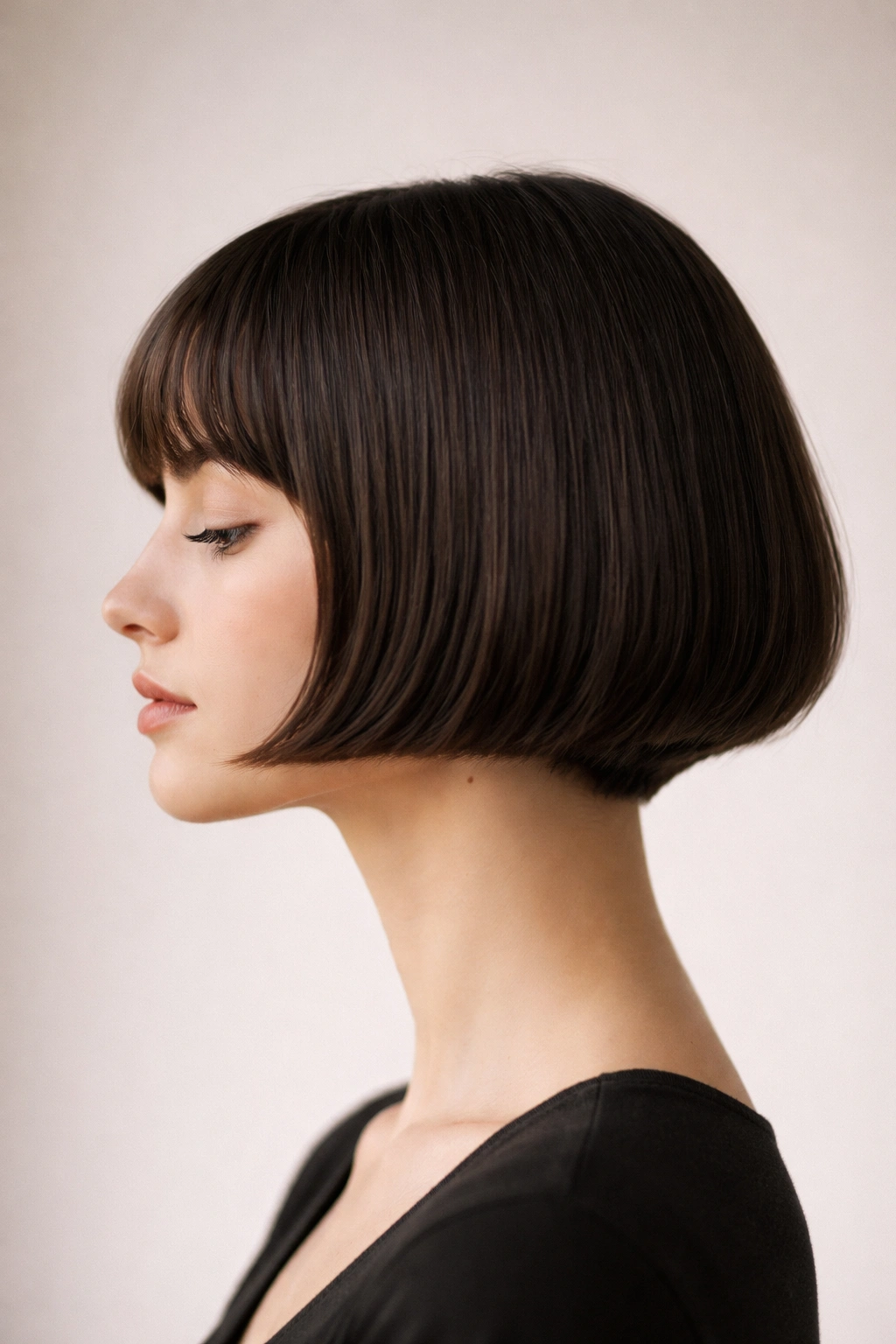
The French bob remains one of the most intelligent, wearable, and elegant haircuts available, and on straight hair, it becomes even more versatile than many people realize. Your straight hair isn’t a limitation—it’s actually an advantage when you want a cut where precision and clean lines are the whole point. Whether you’re drawn to the minimalist perfection of a blunt-ended classic, the modern edge of an asymmetrical cut, or the romantic softness of bangs, there’s a French bob variation that aligns with your aesthetic and lifestyle.
The key to making any of these cuts work is finding a stylist who understands both the essential geometry of the French bob and how your specific hair type, texture, and face shape interact with that shape. Straight hair gives you a blank canvas; the stylist’s job is to create intentional shape through precision cutting and angle rather than relying on texture to do the work. Once you have the cut, maintenance is straightforward—regular trims every 4-8 weeks depending on which variation you choose, quality straightening tools, and shine serums or smoothing creams to keep the lines crisp and the overall effect polished. A French bob on straight hair isn’t a casual, low-maintenance cut in the “I woke up like this” sense, but it is genuinely low-maintenance in the way that matters: it doesn’t require heat styling damage, constant product, or complicated techniques. It requires precision from your stylist and straightness from you—both achievable goals that result in a hairstyle that consistently looks intentional, sophisticated, and undeniably chic.
