



Straight hair presents a unique opportunity in the world of braiding. While cornrows work beautifully on textured and curly hair, they achieve a distinctly polished, graphic quality when worked through straight strands. The clean lines stay sharper, the definition between plaits remains crisp, and the overall aesthetic reads more architectural—almost sculptural. This quality makes straight hair an ideal canvas for cornrow designs that might look softer or less defined in other hair types.
If you’ve been hesitant to try cornrows because you assumed they’re designed exclusively for textured hair, think again. Straight-haired individuals can rock stunning cornrow styles that range from minimalist and understated to bold and experimental. The key difference lies in approach: cornrows on straight hair require slightly different tension, sometimes a helping hand (literally—extensions or thread can add grip), and a clear understanding of how your particular hair thickness and texture will hold the braid structure. But the payoff is worth it—you get a protective style that looks undeniably sharp, lasts longer than most other braided styles, and opens up creative possibilities that honor both your hair type and your personal aesthetic.
Whether you’re drawn to clean, geometric simplicity or intricate patterning, or you want to add pops of color and embellishment, cornrows for straight hair can work for you. These ten styles represent the spectrum of what’s possible—from timeless designs that feel effortlessly chic to statement-making looks that say you’re absolutely intentional about your style choices.
1. Classic Straight-Back Cornrows
The straight-back cornrow remains the gold standard for a reason. This style runs parallel rows of braids straight from your hairline to the nape of your neck, creating an absolutely clean, no-fuss aesthetic that works for nearly every face shape and occasion. On straight hair, these cornrows maintain the sharp definition that makes them visually striking without appearing harsh.
Why This Works So Well for Straight Hair
Straight hair holds the braid tension beautifully, meaning your cornrows will maintain their structure throughout the day without any of the loosening or fluffing that can happen with textured hair. The optical effect is almost graphic—you see every individual plait in perfect relief against the scalp. This style is also extremely practical; it requires minimal product, takes less time than more complex patterns, and stays neat longer because straight hair naturally resists the frizziness that might soften cornrows in other hair types.
How to Make It Your Own
- Start with freshly shampooed, conditioned hair dried completely straight—any residual curl will affect how the braids sit
- Section your hair into equal vertical panels using a rat-tail comb; typically 5-8 rows depending on your hair density and desired thickness
- Braid each row directly from the scalp, feeding in small pieces of hair with each pass to keep the braid growing outward, not just down
- Maintain consistent tension throughout—too tight strains the scalp, too loose loses the definition that makes straight hair cornrows stunning
- Seal the ends with clear nail polish, thread wraps, or small rubber bands depending on your preference
Pro tip: If you have fine or thin straight hair and your cornrows feel loose, try cornrowing over a thin piece of thread in a matching color. The thread adds grip without being visible once you’ve finished the braids.
2. Cornrows with Zigzag Patterns
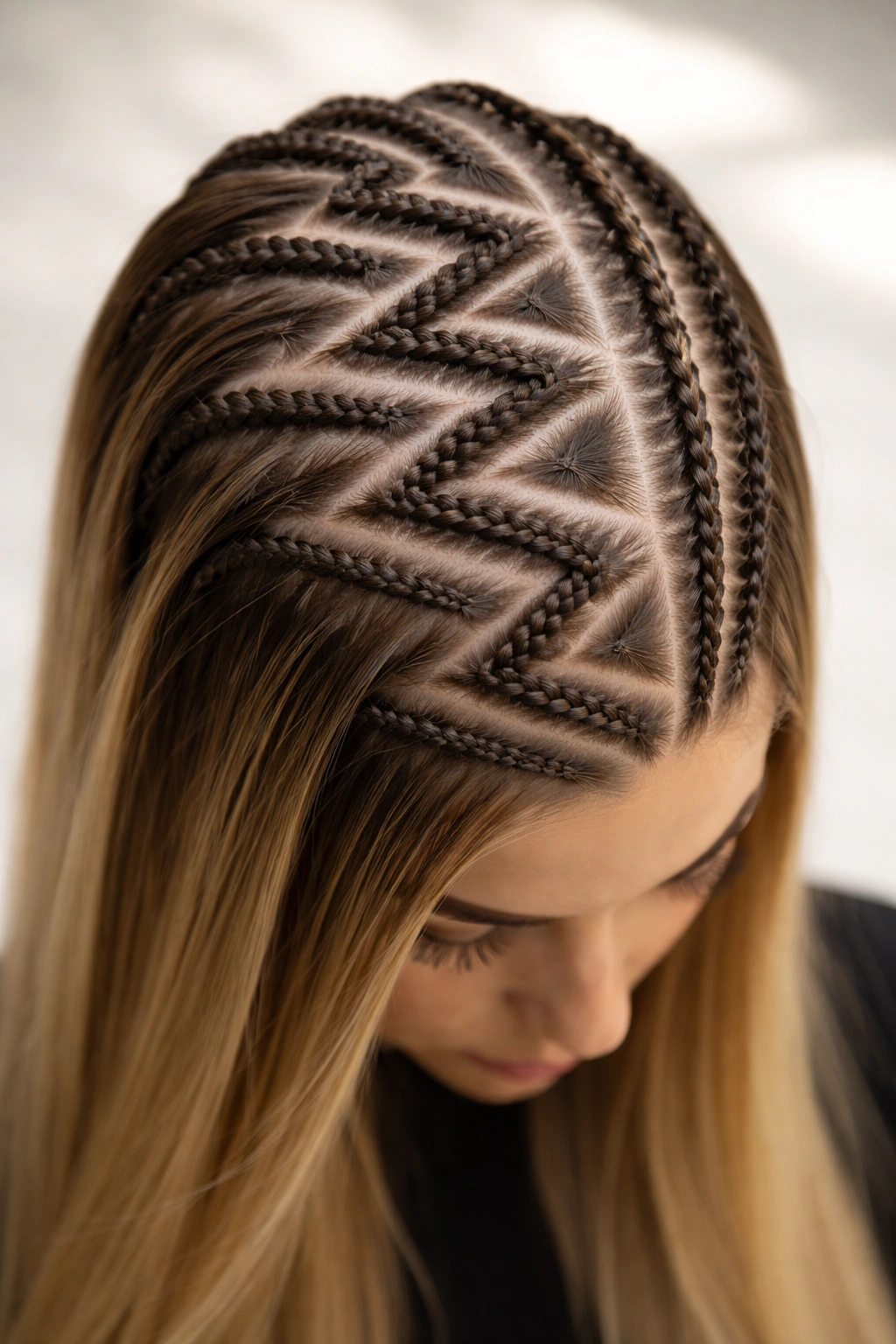
Moving beyond the traditional straight-back layout, zigzag cornrows create visual movement and graphic impact. Instead of running parallel to your center part, these braids weave left and right across your scalp in a lightning-bolt or serpentine pattern. The effect is playful, modern, and distinctly more experimental than straight-back braids.
The Visual Impact on Straight Hair
Zigzag patterns absolutely benefit from the inherent polish of straight hair. Because straight strands hold such clean lines, the zigzag pattern reads as intentional graphic design rather than just an alternative braid direction. The contrast between the angled paths of the braids and the smooth scalp between them creates genuine visual interest. This is a style for someone who wants cornrows to be a statement piece, not just a practical protective style.
Creating the Pattern
- Map out your zigzag pattern on your scalp using a stick of white makeup or a dry shampoo—seeing your pattern in advance prevents mistakes
- Mentally divide your scalp into diagonal sections that create the zigzag effect
- Braid each row following the diagonal, feeding hair in to create the angle
- The braid should start wide at one side, taper toward the middle of the head, then expand again as it angles toward the opposite side
- Your braids will naturally cross each other slightly where the pattern shifts direction—this is the intentional effect
Worth knowing: This pattern requires more precision than straight-back cornrows. It’s genuinely easier if you have someone else braid your hair, or if you’re experienced with sectioning your own braids. The payoff is a look that feels distinctly custom and creative.
3. Mohawk-Style Cornrows
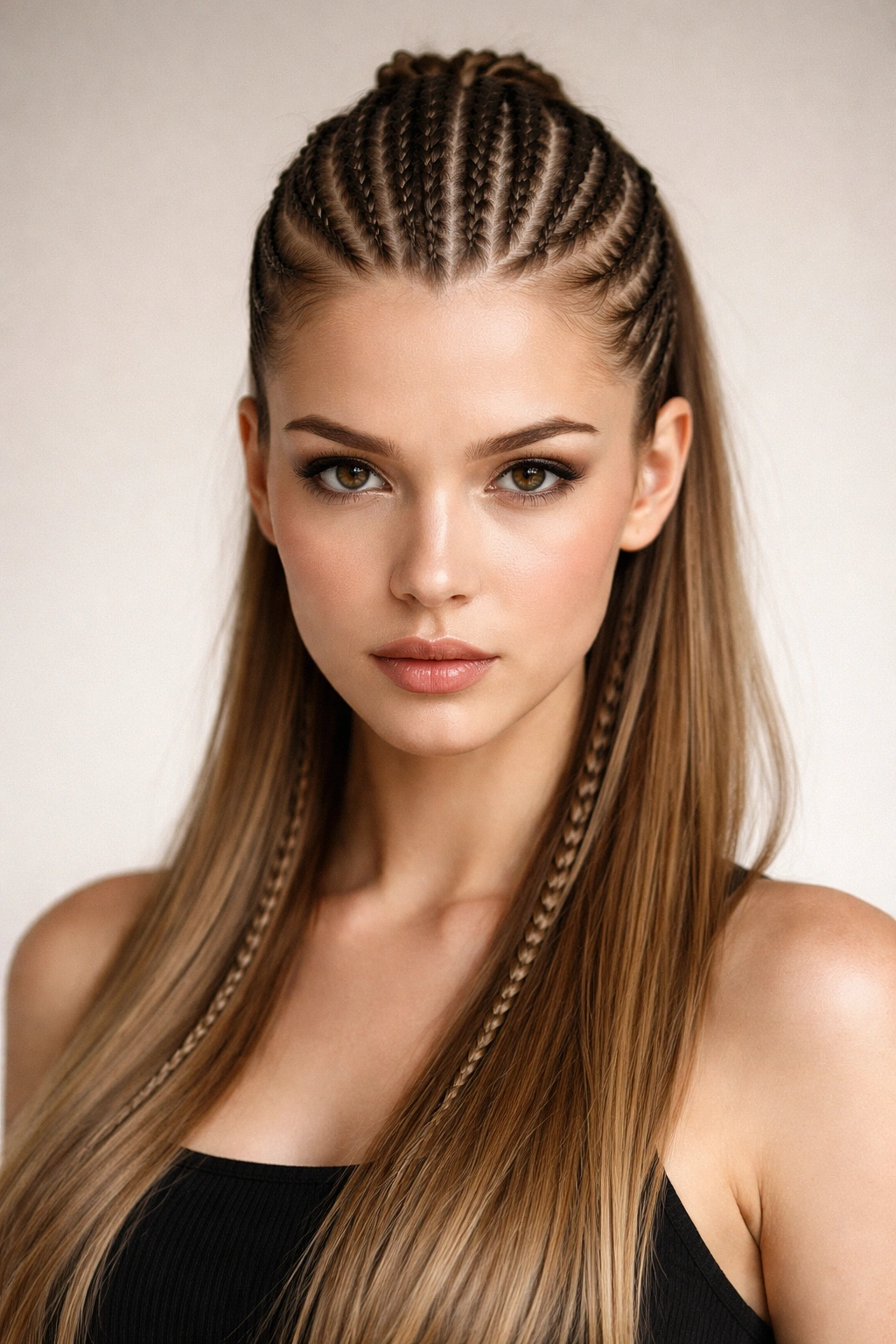
The mohawk cornrow style concentrates braids in a dramatic vertical strip down the center of your head, leaving the sides bare or with much smaller braids. This creates genuine statement-piece energy—it’s bold, it’s visible from every angle, and it shows that you’re committed to your aesthetic choices. For straight hair, this look is particularly striking because the clean lines of the braids command attention against the smooth, unbraided scalp on either side.
Why Straight Hair Shines in This Style
Straight hair makes the contrast between braided and unbraided sections super clear. The sculptural quality of the cornrows reads almost architectural when flanked by the sleek smoothness of straight hair on the sides. This style also tends to feel less severe on straight hair than on very textured hair, because the texture itself adds softness. With straight hair, you’re getting an intentional, polished edge that feels fashion-forward rather than hard.
Execution Tips
- Section your scalp into three vertical zones: a center strip approximately 2-3 inches wide (or wider if you want more dramatic braid volume) and two equal side zones
- Create 2-4 cornrows in the center strip, running from hairline to nape
- You can leave the sides completely bare for maximum impact, or braid the side sections into thinner, perhaps single-strand braids for a cohesive look
- The contrast in braid thickness between center and sides actually enhances the mohawk effect
- Consider adding beads, metallic thread, or thin colored extensions through the center braids for extra drama
Insider note: This style reads exceptionally well in photos and on video, and it looks equally striking styled sleekly versus tousled. You get visual impact without sacrificing versatility.
4. Cornrows with Colored Extensions
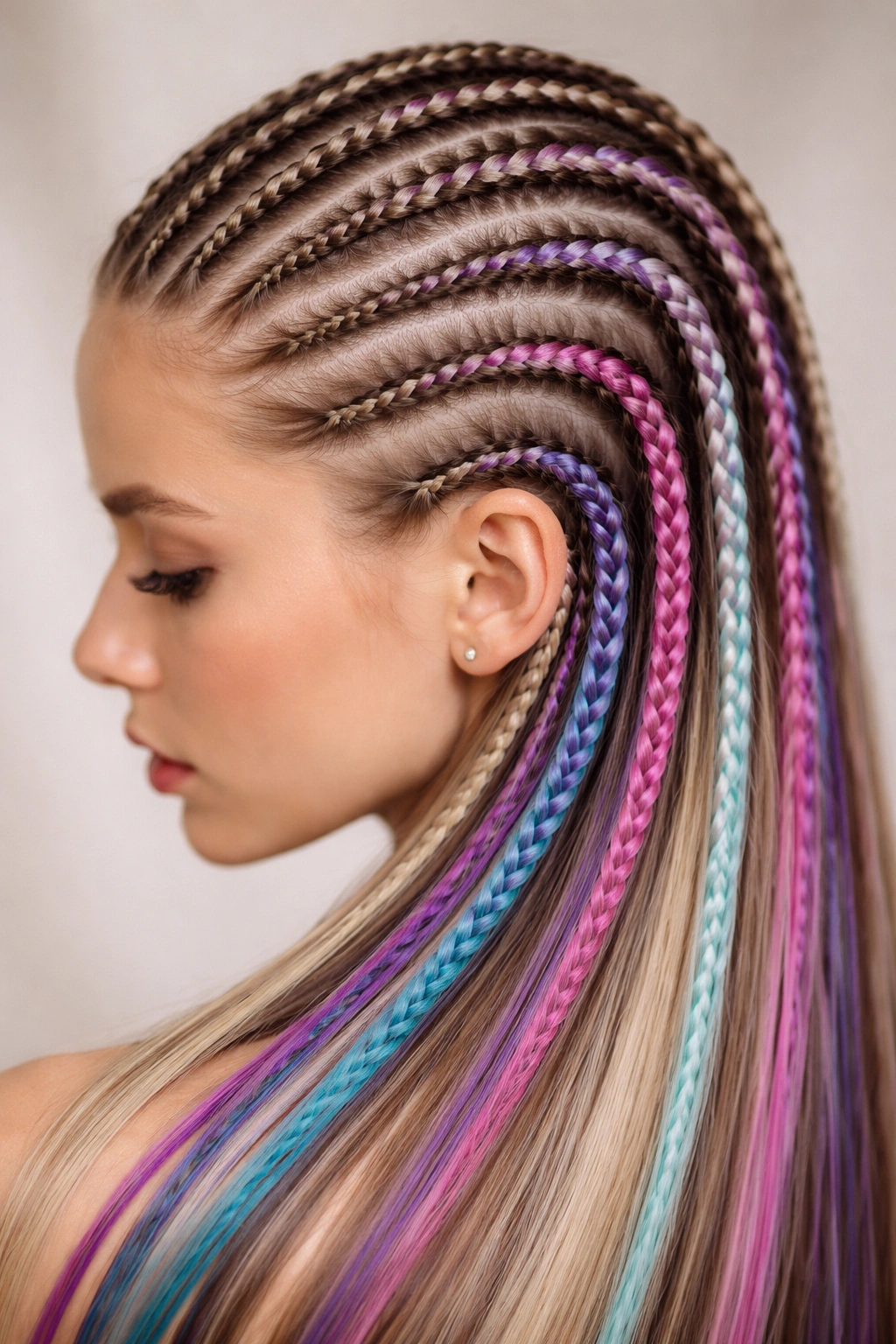
Adding color through extensions transforms cornrows from a protective style into a truly artistic statement. You can integrate thin strands of colored hair (synthetic, human, or yarn) into your braids, creating multi-tonal effects that range from subtle and sophisticated to bold and playful. On straight hair, this technique becomes especially impactful because the color hits against a smooth scalp background.
How Straight Hair Handles Colored Extensions
Straight hair presents a perfect foundation for colored extensions because there’s no texture variation that might make the extensions look inconsistent with your natural hair. If you choose extensions in colors that complement your skin tone—whether that’s jewel tones, earth tones, pastels, or metallics—they integrate seamlessly while still reading as intentional. The straight base means the colored strands create clean contrast without any visual confusion.
Integration Techniques
- Choose extensions that contrast with your natural hair color for genuine impact (if you have dark hair, blonde or white extensions create drama; if you’re blonde, jewel tones or hot pink sing)
- Decide whether you want the extensions only in every other braid, throughout all braids, or in a gradient pattern (darker at roots, lighter at ends)
- Feed the extension fiber into your cornrow alongside your natural hair as you braid—it becomes part of the plait, not a separate accessory
- You can use thin synthetic braiding hair, human hair extensions, or even embroidery floss or yarn for the most delicate effect
- Secure the colored extensions at the base and end of each braid with thread wraps that match either the extension color or your natural hair
Pro tip: If you’re nervous about commitment, start with just 2-3 colored braids. This creates genuine visual interest without requiring extensions throughout your entire head, and you can always add more braids next time.
5. Feed-In Cornrows for Blended Length
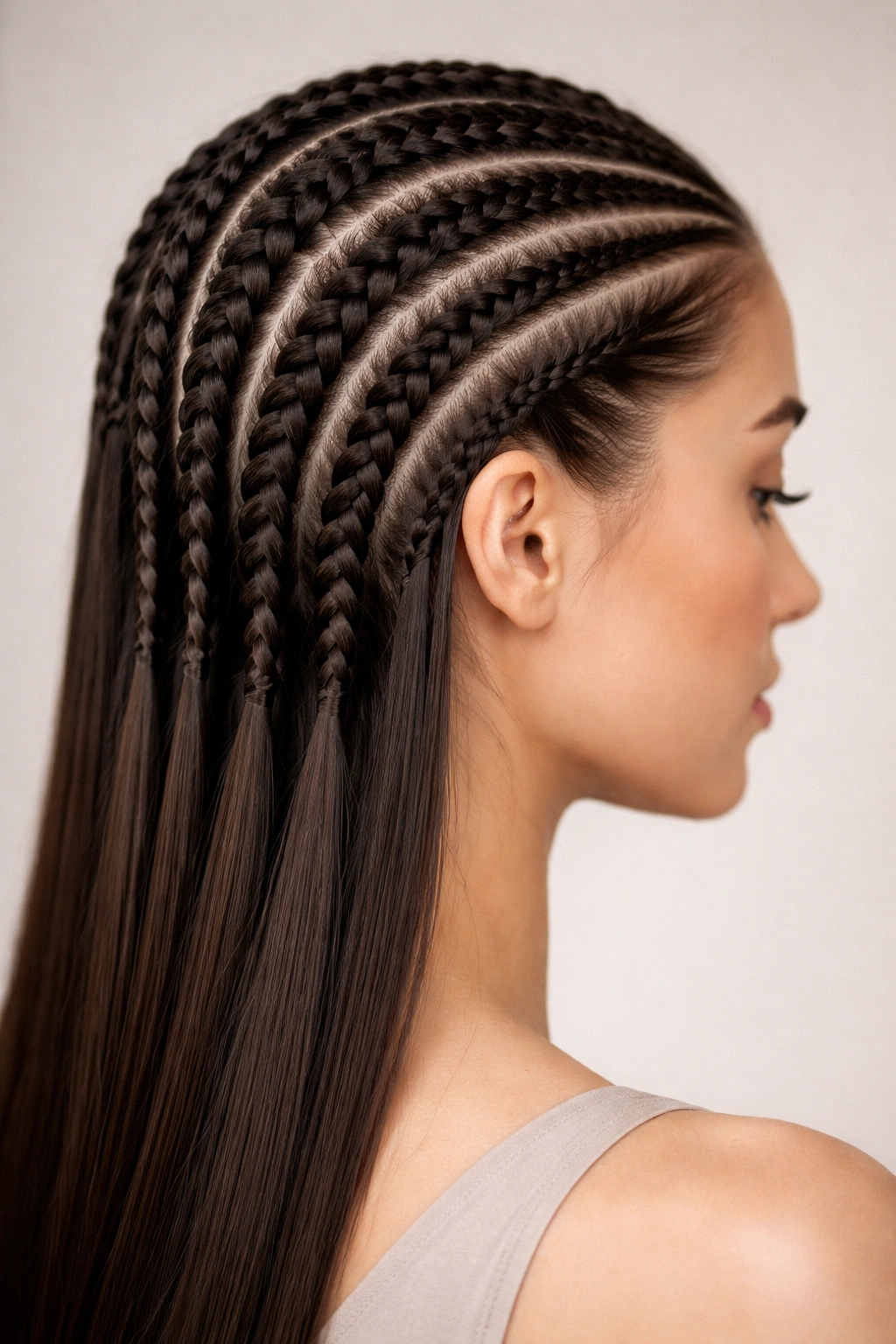
Feed-in cornrows—also called “feeding in braids”—begin very thin at the scalp and gradually get thicker as you feed in more hair with each pass of the braid. The result is braids that blend seamlessly with your natural hair, appearing almost like they’re growing from your scalp organically. This technique is especially flattering on straight hair because the gradual thickening creates a sophisticated, high-skill aesthetic.
The Benefit for Straight Hair Specifically
Feed-in cornrows on straight hair read as meticulously done and thoughtfully designed. The gradual incorporation of hair mass communicates precision and care. This style particularly suits straight hair because any unevenness in tension becomes visible—which means when your feed-in cornrows are done well, they look expertly done. Straight hair doesn’t hide technical skill; it showcases it.
Creating the Gradient
- Start with a very fine piece of hair at the very top of your scalp—almost thread-thin
- Braid this small beginning section 2-3 times, then feed in a slightly larger section of hair
- With each subsequent pass of the braid, feed in another small section until you’ve incorporated a generous amount of hair and your braid has reached full thickness
- The transition from thin to thick should feel gradual and intentional, not abrupt
- Your braids will typically be thinnest at the hairline and fullest by mid-scalp or lower
- Maintain consistent tension throughout this entire process, which requires focus and practice
Worth knowing: This technique takes longer than regular cornrows because the feeding-in process requires attention. But the final effect—braids that look professionally done and intentionally designed—is worth the time investment.
6. Cornrows with Bead Embellishments
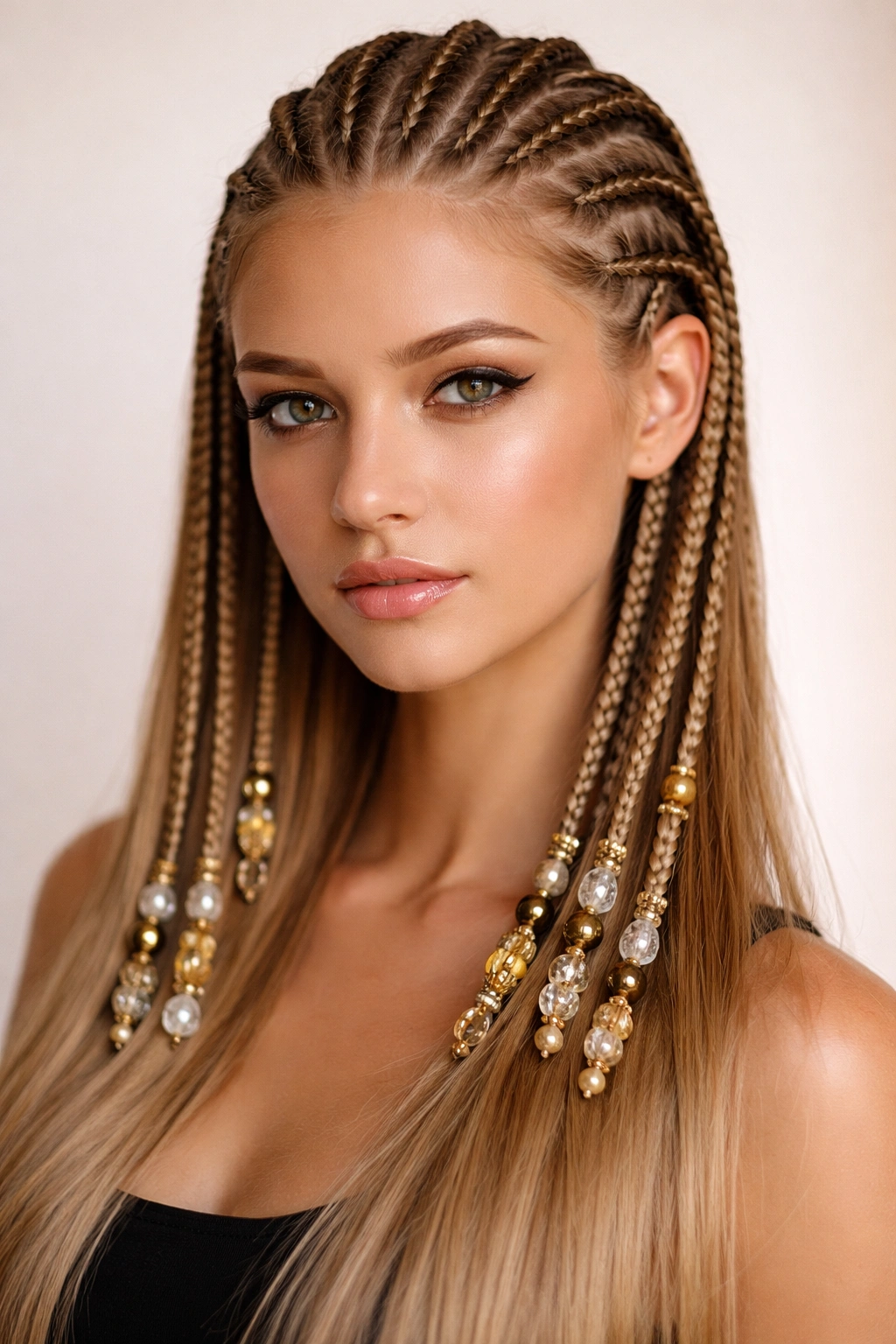
Beads have long been part of the braiding tradition, and they serve both aesthetic and practical purposes. Wooden beads, metal cuffs, acrylic beads in jewel tones, or even minimalist metallic beads can be threaded onto cornrows at strategic points, adding texture, movement, color, and a finished quality to your style.
How Beads Transform Straight-Hair Cornrows
Beads add dimensional interest to cornrows while maintaining the clean lines that straight hair naturally presents. They catch light, create subtle movement when you move your head, and signal that you’ve put intentional thought into your style. On straight hair, beads also prevent the braids from looking too two-dimensional or flat—the three-dimensional element of beads adds visual depth.
Bead Placement Strategies
- End placement: Thread a bead onto each braid at the very end, sealing it with a rubber band below the bead—this creates a polished finished look
- Distributed placement: Space 3-4 beads down the length of each braid, positioning them at intervals that feel visually balanced
- Clustered placement: Group multiple beads near the ends or at mid-length for a more ornate, statement-making effect
- Gradient placement: Use different sized or colored beads in a pattern that repeats across all your braids
- Asymmetrical placement: Place beads only in some braids, or in different positions across braids, for an artistic, less-structured feel
Pro tip: If you’re using synthetic extensions in your cornrows, position beads to cover the seam where your natural hair transitions to the extension—this creates a deliberate design choice that looks intentional rather than functional.
7. Curved Cornrow Designs
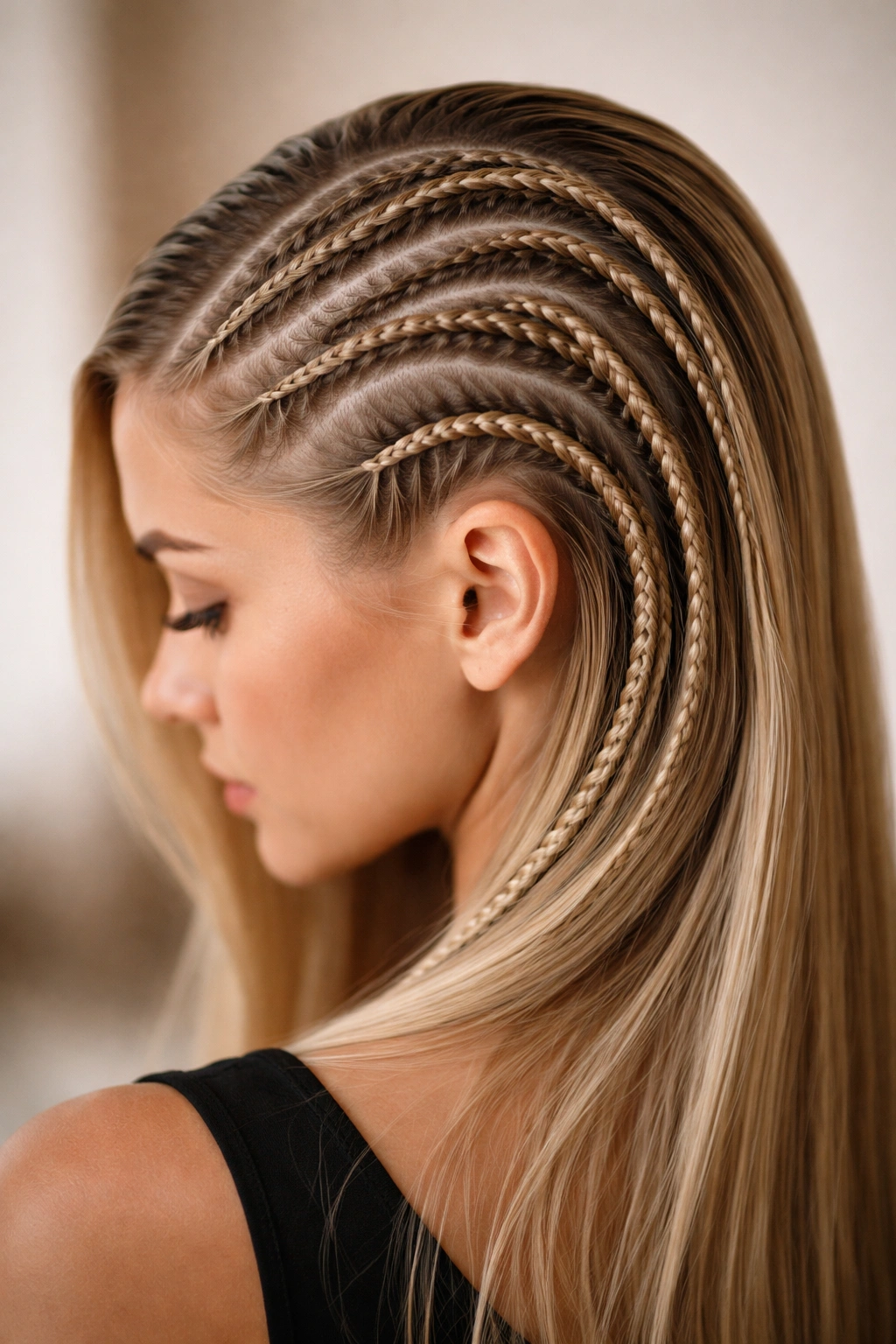
Rather than running straight down your scalp, curved cornrows follow rounded, flowing paths that move organically across your head. These might curve toward the sides, spiral around the back, create wave patterns, or follow any flowing design you imagine. On straight hair, curved cornrows create an elegant, almost meditative visual effect—they feel softer than geometric patterns while maintaining sharp definition.
Why Curves Work on Straight Hair
Straight hair’s natural polish combined with the flowing lines of curved cornrows creates a genuinely sophisticated aesthetic. The curves feel artistic without being chaotic, intentional without being rigid. This style particularly suits people who want cornrows to feel elegant and put-together rather than purely graphic or experimental.
Designing Your Curves
- Sketch out your intended curve pattern on paper first, or use white makeup to map it on your scalp
- Decide whether you want symmetrical curves (mirroring on both sides) or an asymmetrical, freestyle pattern
- Common curved patterns include: side-swept curves that flow toward one shoulder, spiral curves that circle the back of the head, or wave patterns that undulate across the scalp
- Braid following your drawn path, being especially attentive to tension as you navigate the curves—maintaining even tension through changes of direction is the technical challenge here
- Curved cornrows often work beautifully with feed-in technique for an ultra-polished result
Insider note: Curved cornrows photograph beautifully from behind and from above, so this is an excellent style choice if you’re planning photos or video content.
8. Triangle-Patterned Cornrows
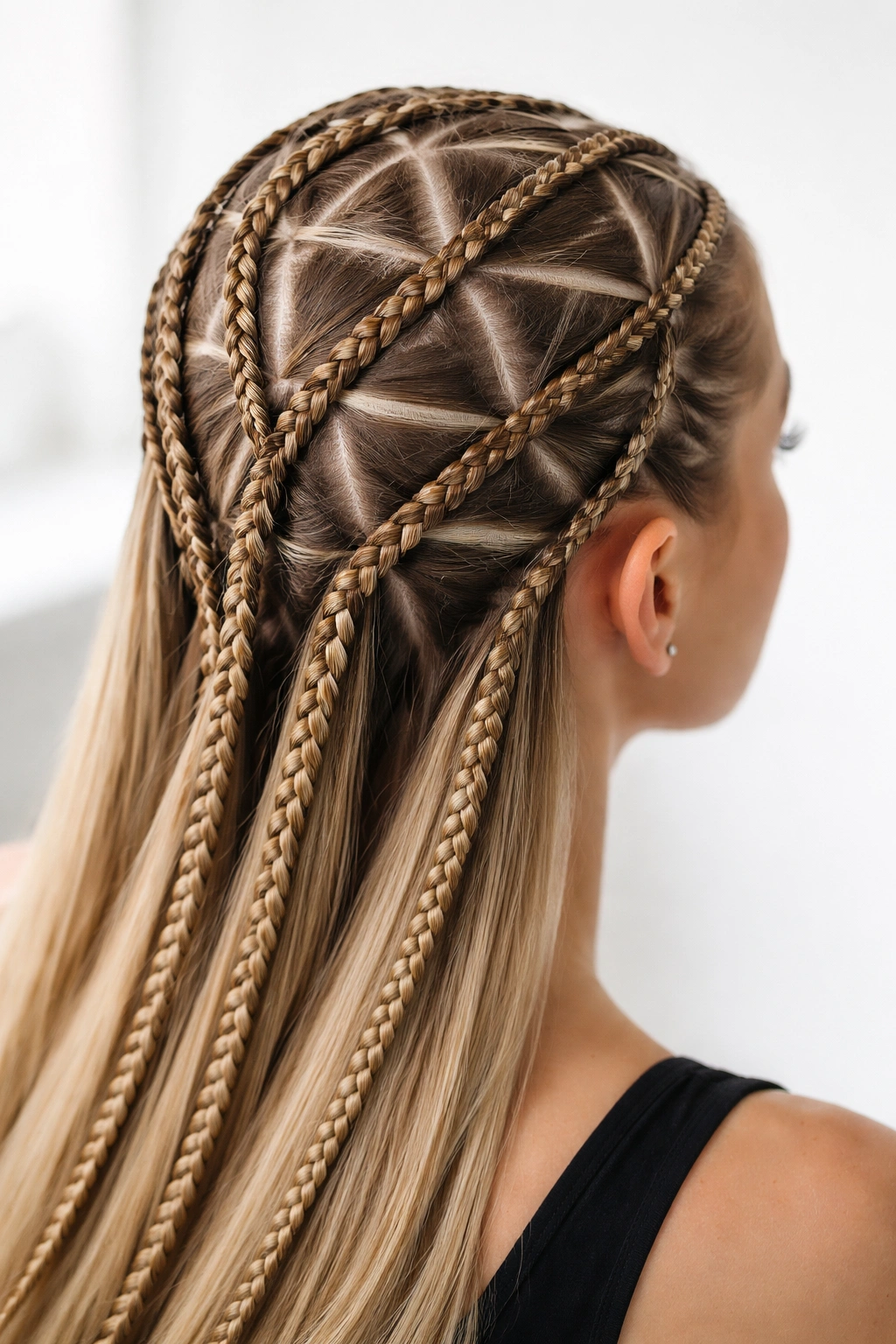
Triangle patterns create a geometric, structured aesthetic where cornrows branch and intersect to form triangular sections across your scalp. This pattern is highly visual and requires genuine planning, but the result is absolutely worth the effort. On straight hair, triangle patterns read as intentional architectural design—they’re attention-getting and impressive.
The Skill Factor and Payoff
Triangle cornrows require more advanced sectioning and braiding skills than simpler patterns. But they absolutely showcase skill and creativity. On straight hair, where every plait is visible and clearly defined, the geometric precision of your design becomes undeniably apparent. This isn’t a style for someone who wants to blend in; it’s for someone who wants their braids to be noticed and admired.
Creating Triangular Sections
- Divide your scalp into triangular sections using a comb, starting from your hairline and working backward
- Your largest triangles will typically be at the crown, with smaller triangles near the nape or sides depending on your design
- Each triangular section gets braided with cornrows that follow the triangle’s borders or fill the triangle completely
- Some designs use a single thick cornrow around the perimeter of each triangle; others fill the triangle with multiple thinner braids
- This pattern works especially well if you’re planning to add colored extensions or beads—the geometric structure gives you clear placement guidelines
Worth knowing: This style requires patience during installation and more skill than some other patterns. It’s genuinely worth booking an appointment with a braider experienced in geometric patterns rather than attempting this yourself if you’re not highly confident in your sectioning abilities.
9. Protective Style Cornrows with Tucked Ends
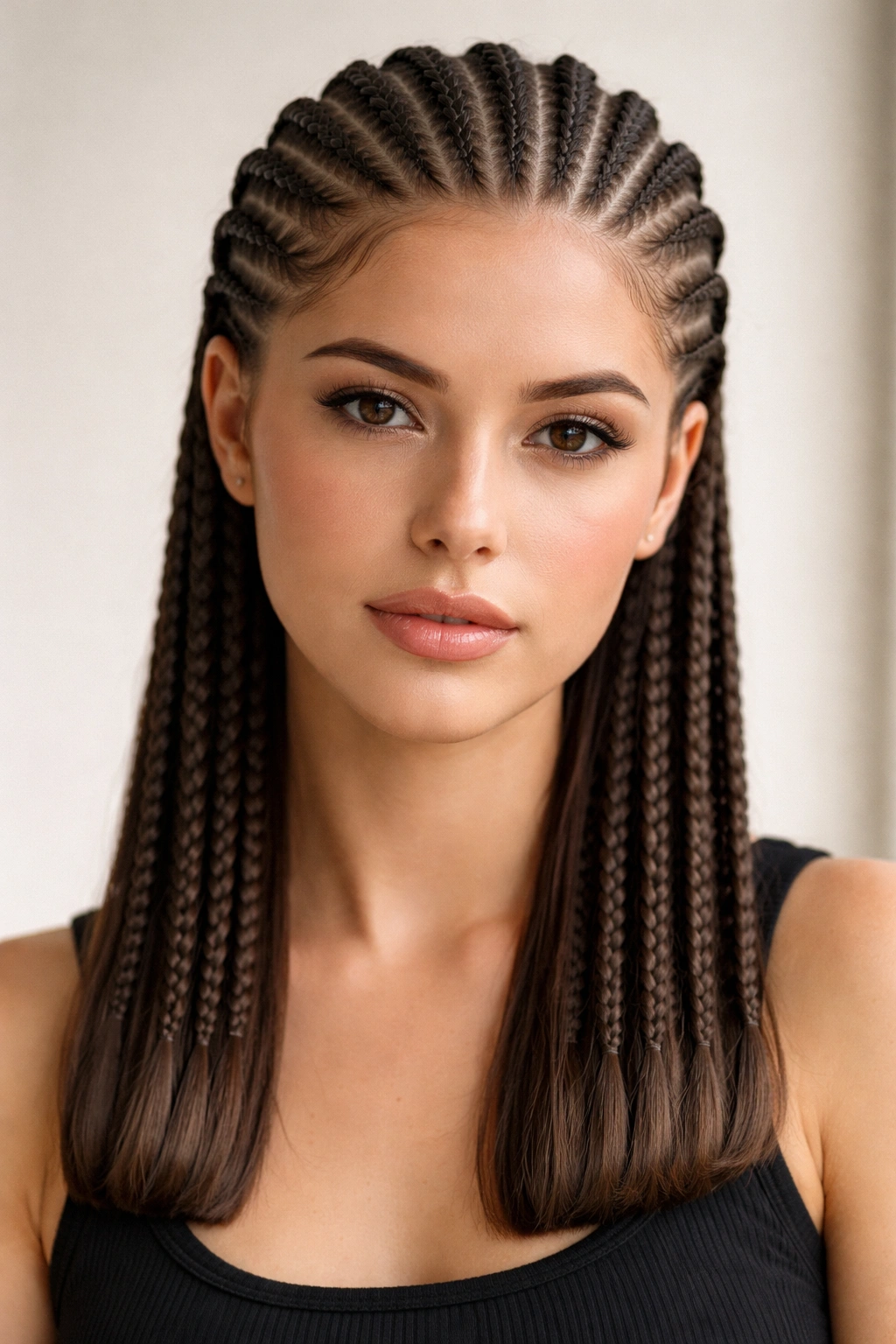
This variation focuses on the practical element of protective styling. Cornrows are braided all the way down, and rather than leaving the ends loose or sealed with beads, the braid ends are tucked under and secured—either hidden under a section of your own hair or wrapped and pinned flat against your scalp. This creates a fully protective style where no hair ends are exposed, which means maximum hair health benefits alongside a polished aesthetic.
Protecting Your Hair While Maintaining Style
Tucked-end cornrows represent the intersection of protection and intentional style. Your hair ends are completely sealed away from environmental damage, friction, and manipulation. On straight hair, this style maintains that polished quality while delivering genuine protective benefits. It’s the aesthetic equivalent of a comprehensive skincare routine—you’re caring for your hair while looking intentional and put-together.
Execution for Tucked Ends
- Braid your cornrows all the way down to the ends of your hair, maintaining consistent thickness throughout
- Rather than sealing with a rubber band or bead, you’ll tuck each braid’s end
- Tucking under your own hair: If your braids are long enough, you can tuck each braid’s end under a section of unbraided hair at the nape, then bobby pin it securely in place
- Wrapping and pinning: Alternatively, wrap the braid’s end with matching thread, fold it up against your scalp, and pin it with bobby pins—this creates a completely seamless look
- Test your pins before considering the style complete; you want absolutely zero movement when you shake your head
Pro tip: This style works beautifully for 2-3 weeks because the tucked ends remain protected. It’s genuinely one of the longer-lasting cornrow variations for people with straight hair.
10. Freestyle Cornrows with Asymmetrical Layout
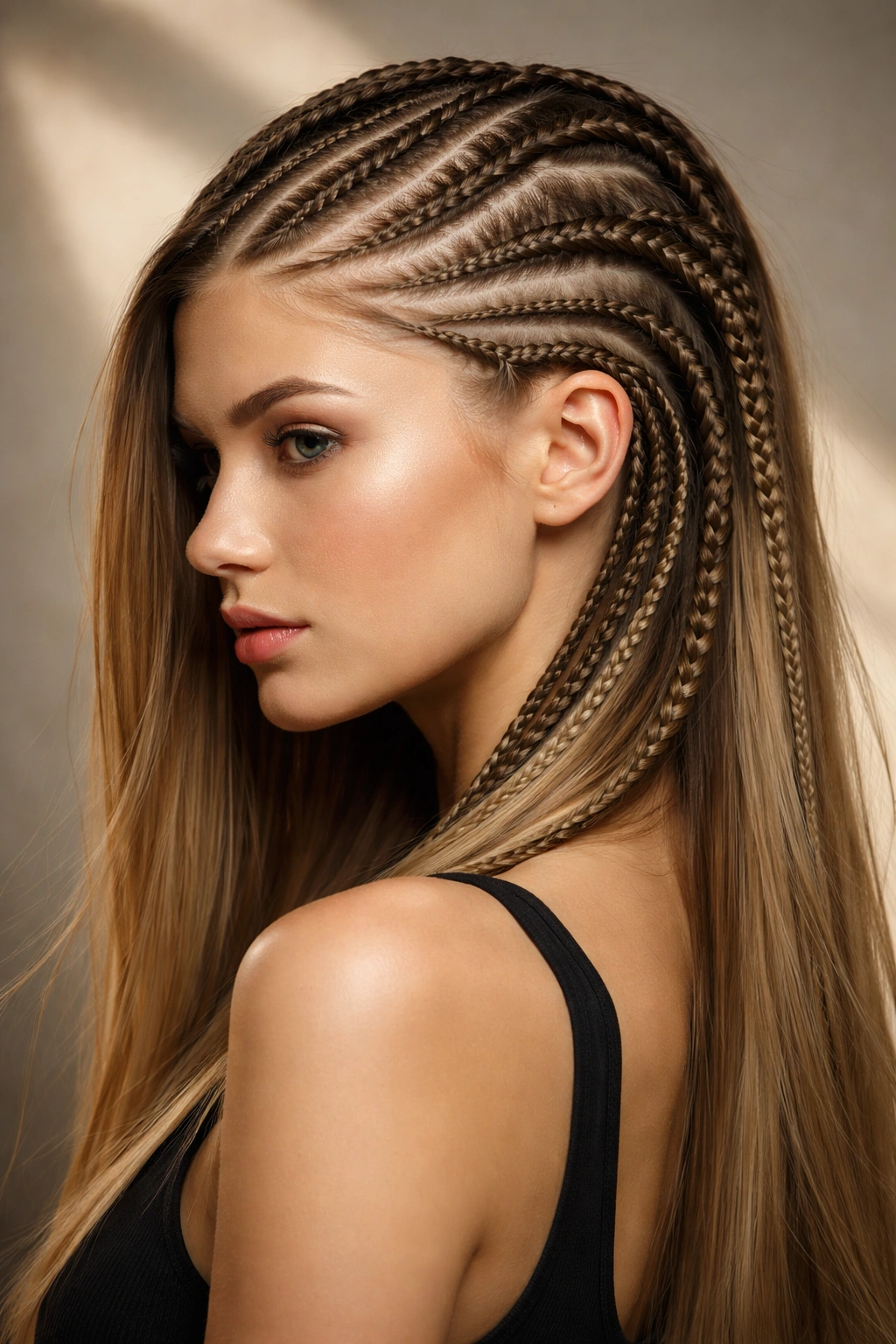
Freestyle cornrows abandon structure and pattern in favor of creative, artistic placement. Rather than parallel rows or planned geometric designs, you create cornrows in whatever pattern feels right—some braids might be thicker, some thinner; they might run at different angles; some areas might be heavily braided while others are left unbraided. This style celebrates artistic choice over formula, and on straight hair, it’s undeniably striking.
The Artistry of Asymmetry
Freestyle cornrows feel intentional and personal in a way that structured patterns sometimes don’t. You’re not following a template; you’re creating a unique design that’s particular to you. On straight hair, this artistic approach gets amplified because every braiding choice reads as deliberate. There’s no texture to soften the look or excuse unevenness; straight hair shows exactly what you’ve chosen to do, which is partly why freestyle cornrows are so powerful when executed with intention.
Creating Your Freestyle Design
- Decide on a general conceptual direction: do you want more braids on one side, a densely braided section on top with lighter braiding below, clusters of braids separated by unbraided sections, or something else entirely?
- You don’t need to plan every detail in advance—part of the beauty of freestyle cornrows is that you can respond organically as you braid
- That said, you should have a general vision for how you want the overall effect to feel and look
- Mix braid thicknesses intentionally: some thick statement braids and some thin delicate ones create visual interest
- Consider adding colored extensions, beads, or thread wraps to define different sections of your freestyle design
Insider note: If you’re concerned about how asymmetrical styling will look, start with photographs rather than immediately committing. Take a selfie, flip it, and see how the asymmetry reads. Many people find that slightly asymmetrical styling actually feels more personal and flattering than perfectly balanced designs.
Final Thoughts
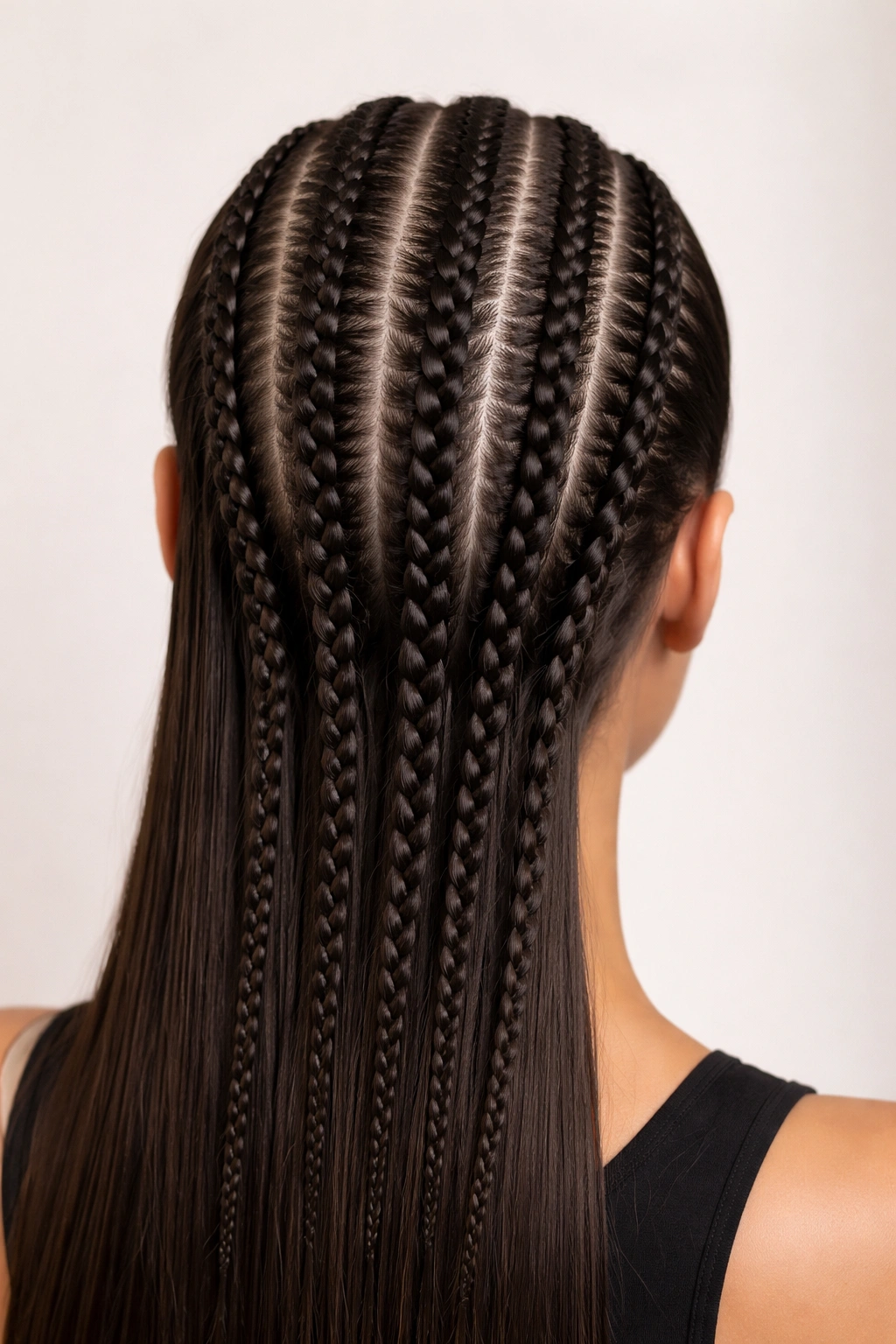
Cornrows on straight hair represent a genuine opportunity to express creativity while maintaining a polished, intentional aesthetic. Your straight strands give you a foundation of clean lines and sharp definition that makes every cornrow style pop visually. Whether you’re drawn to minimalist straight-back braids, bold geometric patterns, playful curved designs, or artistic freestyle arrangements, straight hair delivers that professional, clearly-executed quality that makes cornrow styles genuinely stunning.
The key is understanding that straight hair requires slightly different approach—sometimes a bit of extra grip through thread or extensions, consistent attention to tension, and section clarity. But these requirements aren’t obstacles; they’re part of what makes cornrows on straight hair such a powerful style choice. You’re working with a hair type that showcases technique, precision, and artistic intention with absolute clarity.
Start with a style that feels accessible to you—maybe the classic straight-back cornrows or simple curved design—and build your confidence. As you become more comfortable with the braiding process, you can experiment with more intricate patterns, colored extensions, and asymmetrical designs. The most important thing is that your cornrows feel authentic to you, aligned with how you want to present yourself, and achievable within your skill level or budget for professional installation. Cornrows on straight hair can absolutely be that, and the result is worth the effort.
