



The mullet is back—and it’s nothing like the ’80s disaster your parents might remember. If you’ve got straight hair, you’re actually in the perfect position to pull off one of the trendiest versions of this controversial cut. Straight hair gives mullets clean lines, sharper definition, and a polished look that curly or wavy textures can struggle to achieve.
Here’s the thing: mullets work on straight hair because the contrast between short and long is immediately visible and intentional. There’s no frizz to muddy the silhouette, no texture to soften the edges. When you’ve got straight strands, a mullet reads as deliberate, editorial, and modern—not accidental or unkempt. The cut plays perfectly with the natural structure of your hair, creating geometric shapes that would be impossible to achieve otherwise.
The mullet’s resurgence isn’t a joke anymore. Fashion designers, musicians, and celebrities who take their image seriously are committing to this cut. And with straight hair, you get a distinct advantage: you can style it sleek and refined in the morning, tousle it for an edgier afternoon vibe, or even straighten the front while letting the back wave slightly for a softer contrast. The versatility is real, and the styling options are endless.
This isn’t about nostalgia. It’s about understanding which mullet variation suits your face shape, lifestyle, and how seriously you want to commit to the statement. Some are subtle enough to pass as an undercut if you’re feeling second thoughts. Others are unmistakably bold. Let’s walk through 10 mullet styles that work beautifully on straight hair—and how to make each one work for you.
1. The Classic Clean Mullet
The classic clean mullet is the gateway version—short on top and sides, long in the back, with zero fuzziness and razor-sharp lines. It’s the mullet that works whether you’re heading to the office or to a bar. With straight hair, this style has an almost architectural quality because the geometric contrast is so clean.
How It Works With Straight Hair
Straight hair makes the transition from short to long look intentional and designed rather than like you forgot to get a haircut. The back section grows out smoothly without texture interrupting the silhouette, and the sides sit flat against your head without any bulk or waviness to distract from the cut’s lines.
How to Get the Look
- Ask your barber for a 0.5 to 1-inch fade on the sides and back (this will grow out to about 1.5 to 2 inches before your next cut)
- Keep the top 2 to 3 inches long with some texture and movement—this prevents a helmet head feeling
- The back should be left long; decide if you want it past shoulder length or stopping at the collar
- Request tight, clean lines where the short meets the long—this is non-negotiable for the classic version
- Use a straight razor for the neckline to ensure precision
Pro tip: This style needs a trim every 3 to 4 weeks on the sides to maintain the fade. The back can go longer between cuts—aim for a cleanup every 6 to 8 weeks to keep the ends healthy and the contrast sharp.
2. The Textured Top Mullet
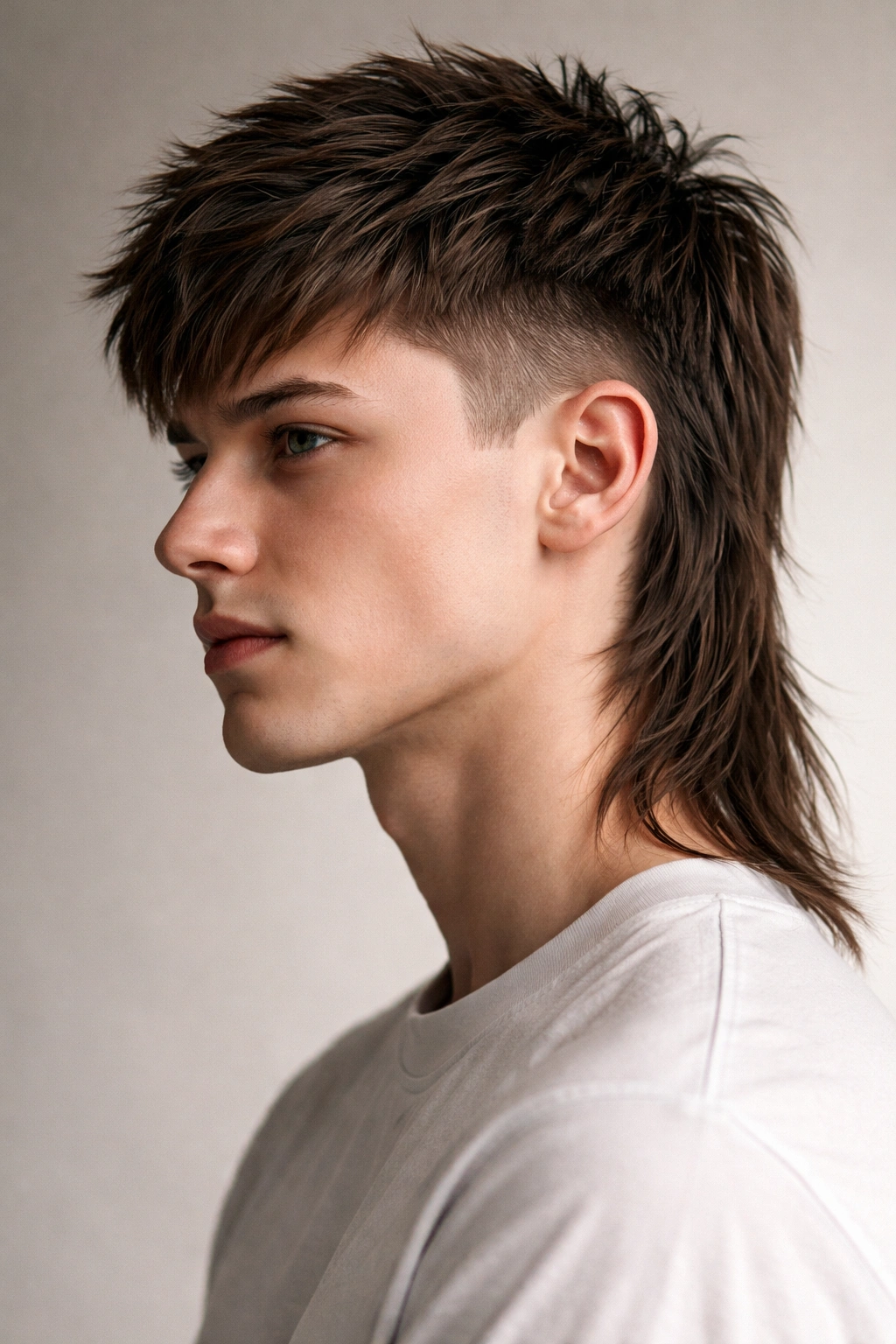
This version keeps the classic mullet’s structure but adds choppy, textured layers on top instead of a blunt cut. It’s modern, a little less stark than the pure classic, and gives you options for styling the front section with more movement and personality.
Why Texture Changes Everything
Adding texture to the top transforms the mullet from “barbershop statement” into “carefully considered style choice.” The layers catch light differently, they move when you move, and they let you style the front section in multiple ways throughout the day. Straight hair holds texture incredibly well—your layers will stay defined and visible rather than collapsing into a blob.
How to Get the Look
- Start with a textured fade on the sides (same length as classic, but ask your barber to point-cut the sides for texture rather than blending smooth)
- Request choppy, disconnected layers on top—aim for 2 to 4 inches with variation in length
- Keep the back long and relatively smooth so it contrasts with the textured top
- Ask your barber to create definition between the layers using point-cutting or razor techniques
- The neckline should still be clean, but you can soften the line slightly if you prefer a less harsh transition
Worth knowing: This style needs styling product to look intentional. Without texture paste, clay, or pomade on the top, you’ll just look like you didn’t style your hair. With product, it looks editorial and deliberate.
3. The Disconnected Undercut Mullet
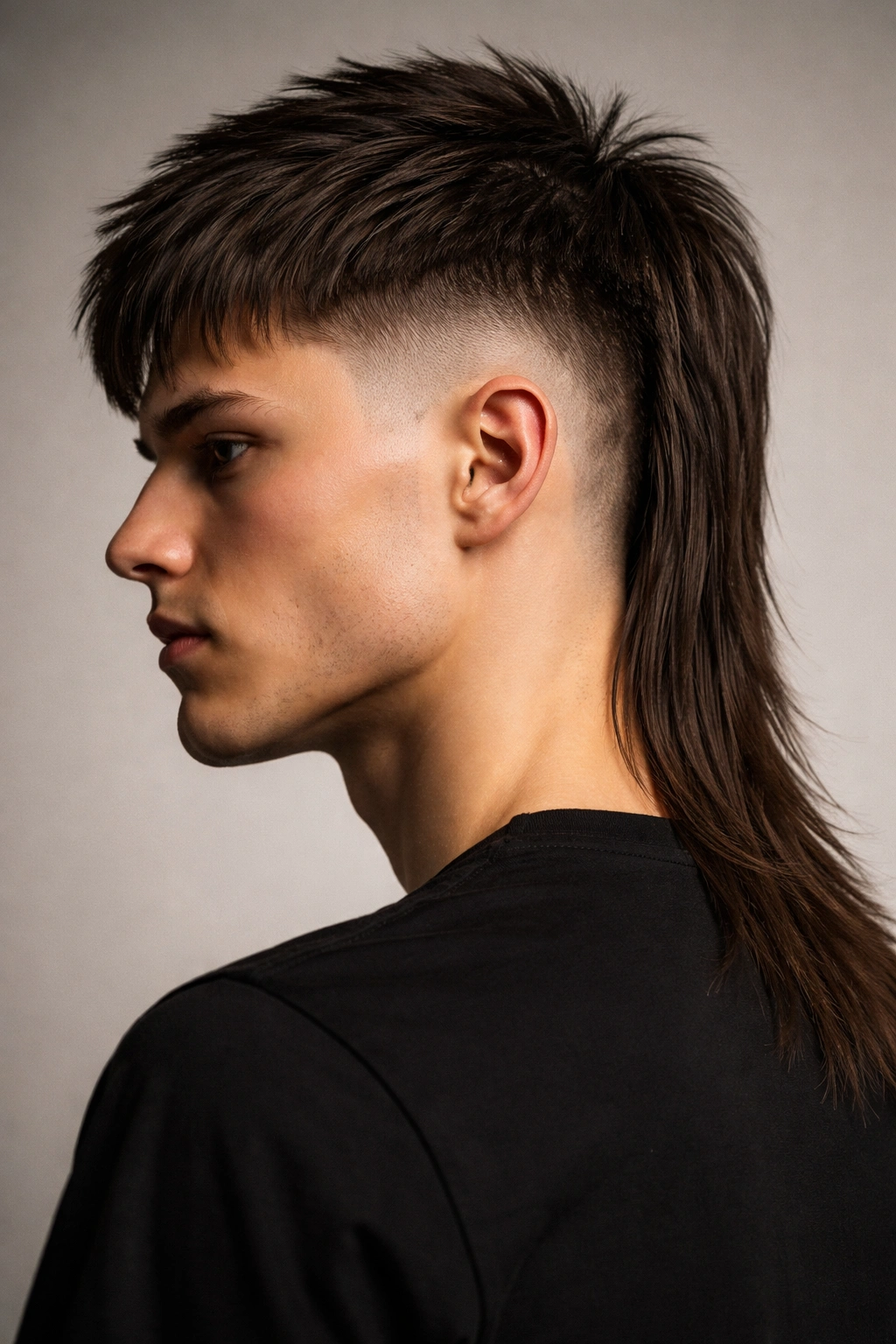
This style creates a clear separation between the short front and the long back—there’s almost a gap or disconnection where the two meet rather than a smooth fade. It’s bold, it’s graphic, and on straight hair it looks almost sculptural.
The Visual Impact
The disconnected undercut mullet is for people who want everyone to know they chose this cut. There’s no ambiguity. The contrast between the 0 to 1-inch undercut and the long back is striking and deliberate. Straight hair amplifies this impact because there’s no texture to soften or blur the line between sections.
How to Get the Look
- Ask for a skin fade or near-skin undercut on the sides and back of the head (this grows out to about 1 inch before your next cut)
- Keep the top section completely separate—don’t blend it into the undercut, maintain a clear line where they meet
- Grow the back section as long as you want; straight hair will display the length without looking stringy or thin
- Request a hard line or disconnected edge where the short section ends and the long section begins
- Your barber should use a straight razor to create a clean, defined edge at the neckline
Pro tip: This version can take 6 to 8 weeks to really hit its stride visually because the back needs length to create the contrast effect. The first few weeks might feel underwhelming; trust the process.
4. The Slicked-Back Mullet
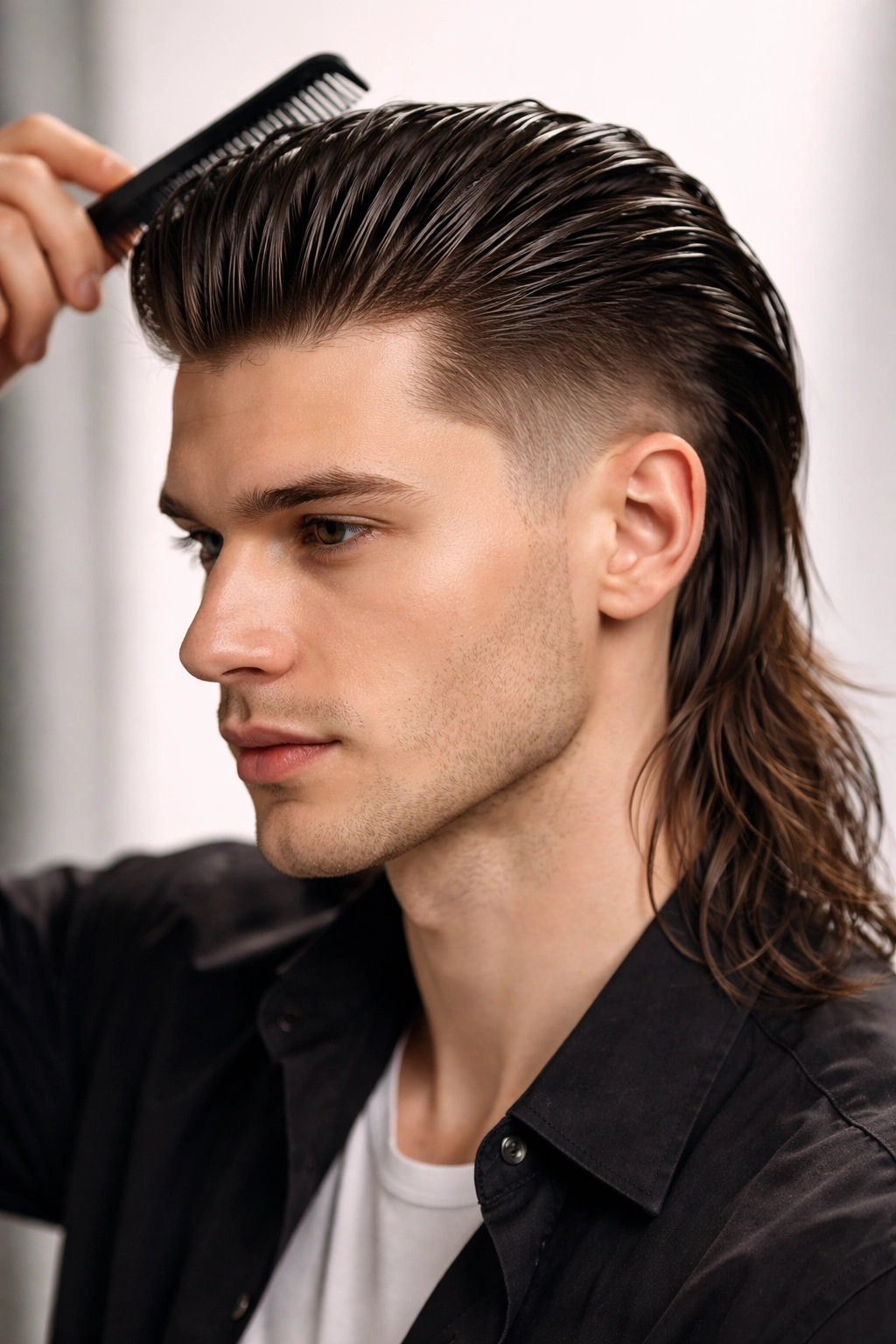
This style keeps the sides short but slicks the entire top—both front and back—straight back and away from the face using pomade, gel, or oil. It’s sleek, it’s polished, and it reads as intentionally retro without being costumey.
Why Straight Hair Is Perfect for This
Slicked-back styles require hair that cooperates with product and doesn’t fight back with texture or waves. Straight hair is the ideal canvas. The product glides through smoothly, you get a glossy, controlled finish, and the style holds all day without the back section rebelling and trying to wave up.
How to Get the Look
- Fade the sides down to 1 to 1.5 inches; the top should be longer—aim for 3 to 4 inches throughout
- Keep the back section longer; decide if you want it to curve down the back of your head or hang lower
- Every day, apply a strong-hold pomade or slicked-back gel to damp hair and comb it straight back
- The front section should sit back smoothly without any volume or texture poking through
- Use a comb to keep everything controlled; air-drying will ruin the effect
Worth knowing: You’ll need to re-apply product every morning. This isn’t a wash-and-go style. But if you like the precision and polish of a slicked look, the time investment is worth it.
5. The Voluminous Pomp Mullet
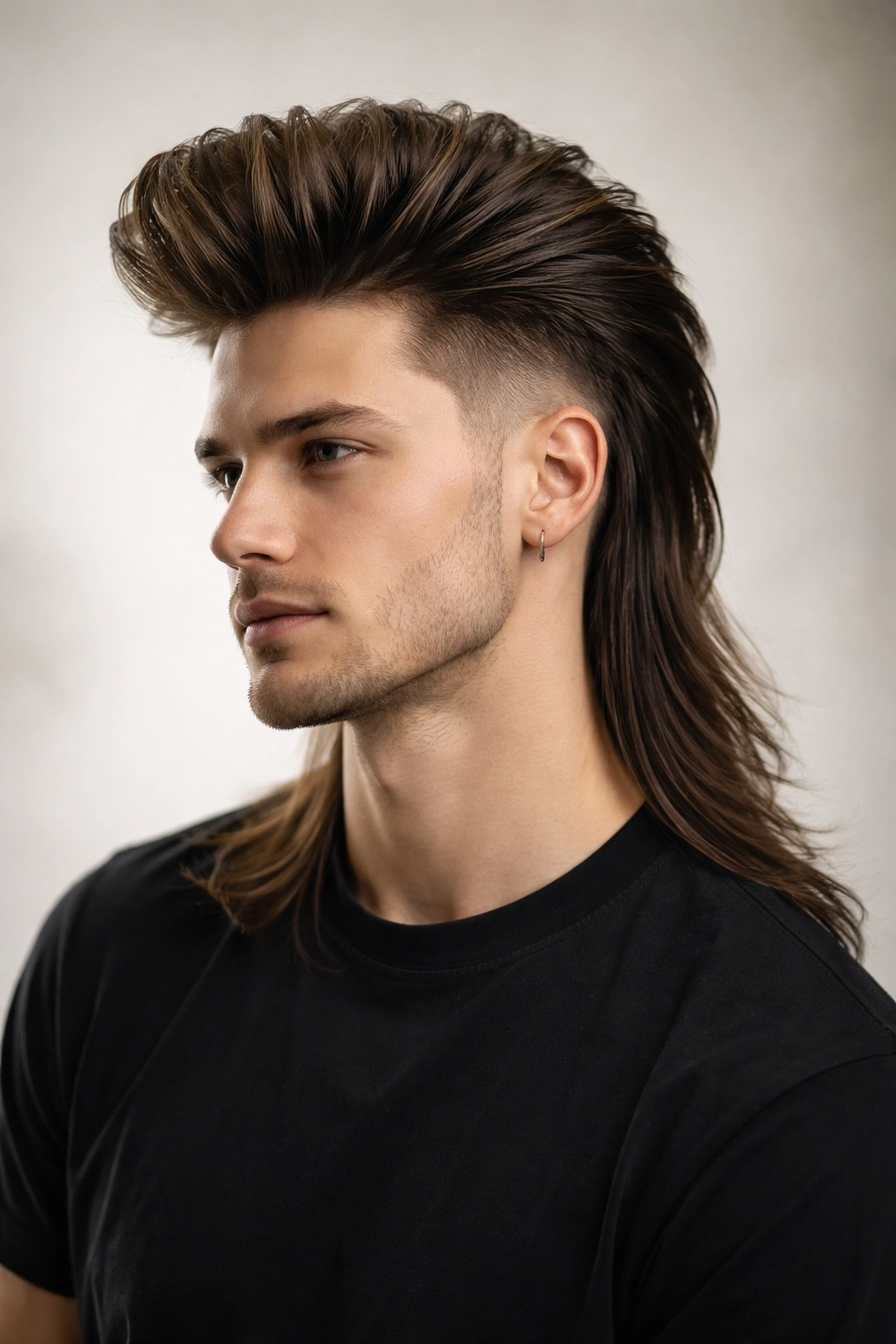
Here, you keep volume and height on top—like a classic pompadour—while maintaining the long mullet back. It’s a contradiction that works surprisingly well on straight hair, especially if you want something that reads as “styled” rather than “edgy.”
The Best of Both Worlds
This mullet takes the sophistication of a pomp and adds the personality of a mullet. Straight hair makes this possible because the volume on top stays put without texture making it look chaotic, and the length in the back flows cleanly downward without frizz or waviness undermining the polish.
How to Get the Look
- Request a 0.5 to 1-inch fade on the sides; keep length on top for volume
- The front section should be 3 to 4 inches to allow for pomp height
- The back section should be long—aim for past the collar for the full effect
- Use a blow dryer to create volume on top; blow-dry your hair against the direction of growth to lift it
- Apply a light pomade or volumizing product to the top while your hair is still slightly damp; this helps hold the shape
Pro tip: The key to this style is preventing the back section from looking disconnected from the voluminous top. Ask your barber to blend the top and back subtly rather than creating a sharp, stark line. You want it to read as one cohesive style with different length regions, not two separate cuts.
6. The Faded Mohawk Mullet
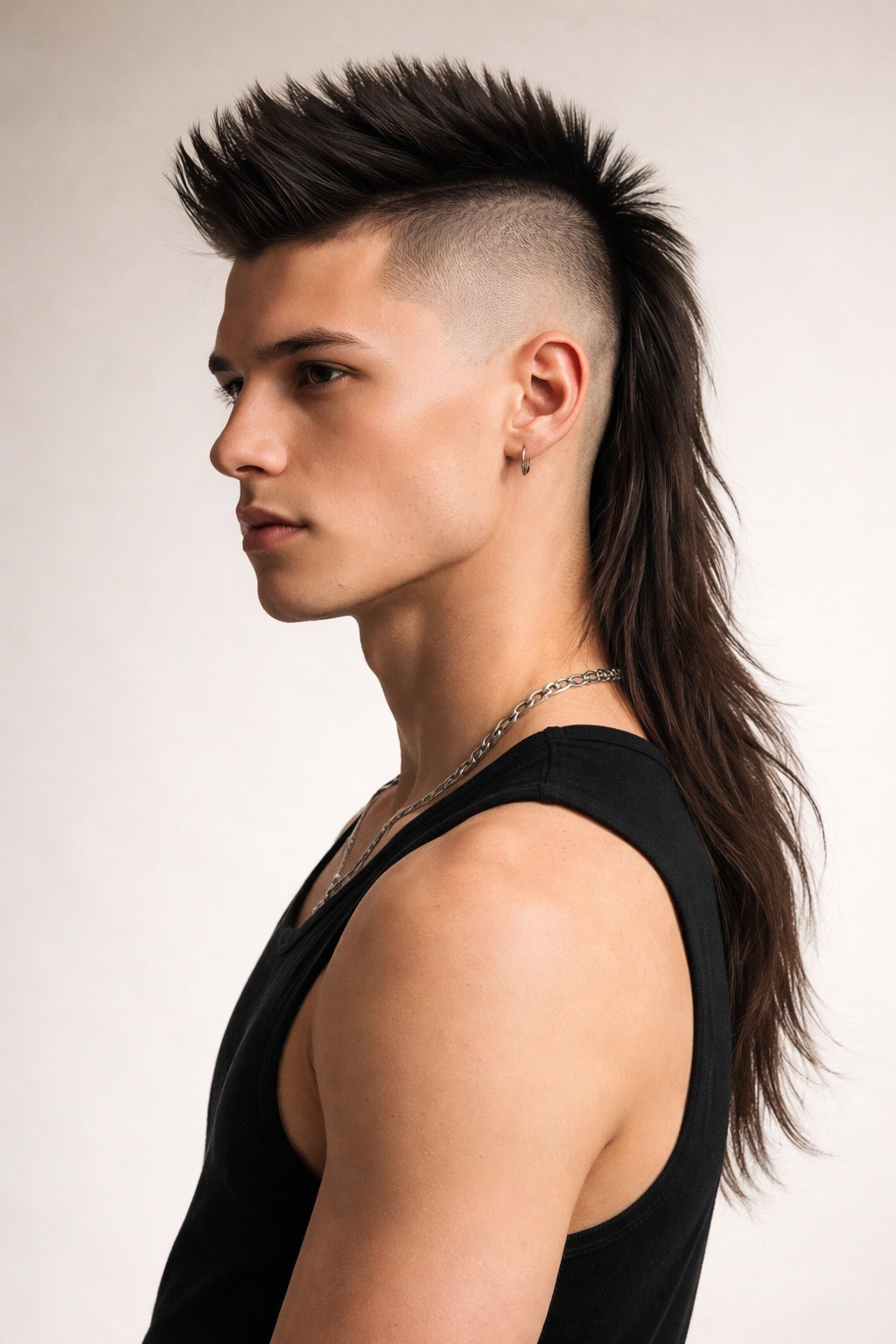
This is a mohawk meets a mullet—shaved or very short sides with a strip of longer hair running down the center of the head, then flowing into the long mullet back. It’s edgy, it’s modern, and it’s not for the faint of heart.
Visual Drama on Straight Hair
Straight hair makes this style readable and graphic. The shaved or near-shaved sides create contrast with the center strip, and the strip flows seamlessly into the long back section. There’s no texture to muddy the edges or make the shaved sides look less deliberate. Every line is crisp.
How to Get the Look
- Shave the sides down to skin (0 length) or keep them at 0.5 inches maximum
- Leave a strip of hair down the center; width varies from 1 to 3 inches depending on your preference
- Keep this center strip longer at the crown—aim for 3 to 4 inches for volume
- The back section should be long and connect seamlessly to the center strip
- Request clean, sharp lines where the shaved sections meet the longer strip
Worth knowing: This style needs weekly or bi-weekly touch-ups on the shaved sides to maintain the contrast. If you’re not willing to get a trim every 10 to 14 days, this version isn’t for you.
7. The Textured Shag Mullet
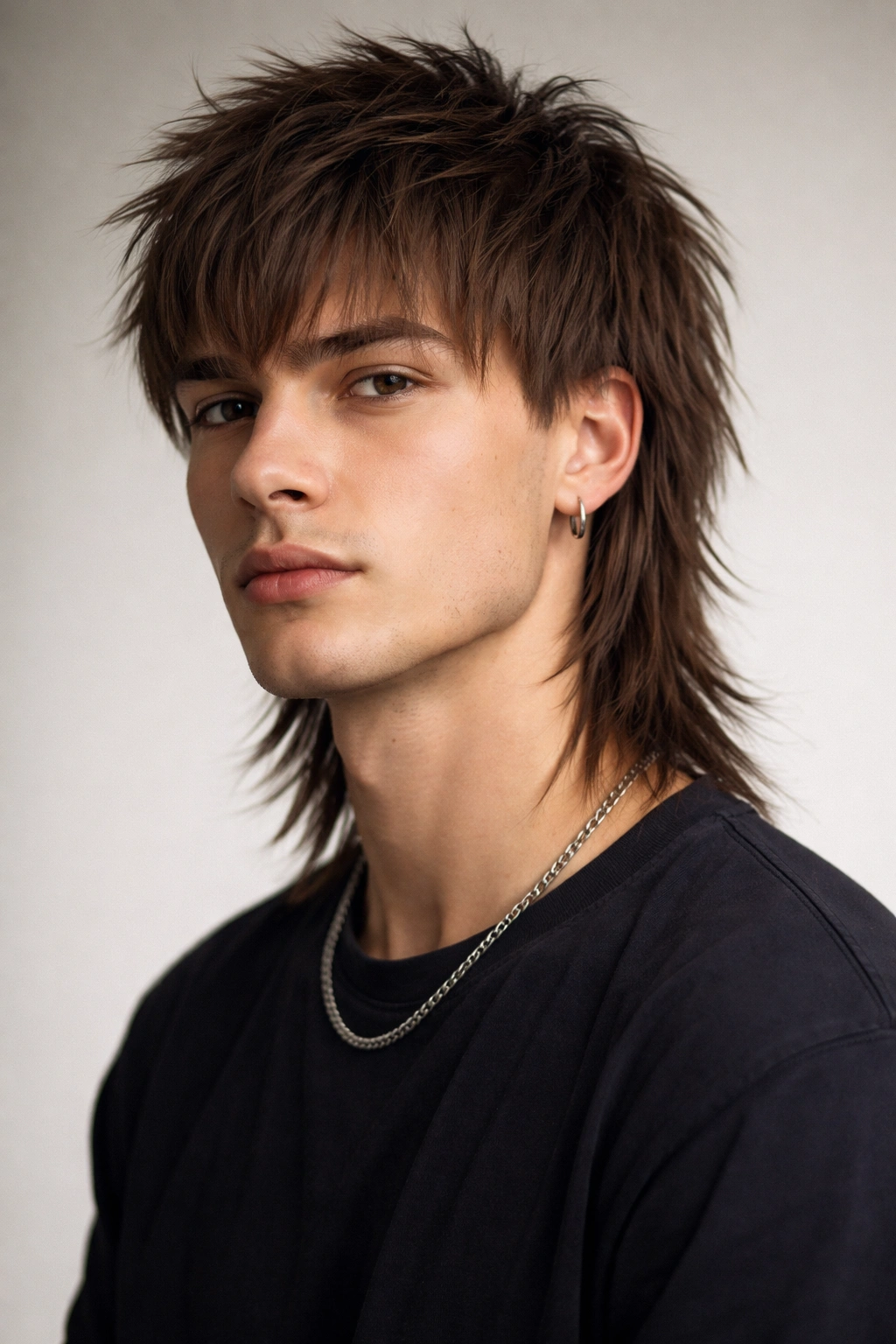
This is a shag haircut with a mullet twist—choppy, layered throughout, with shorter layers on top and sides, longer layers in the back. It’s the least formal mullet and the most “I woke up like this” (even though you didn’t).
Why Shag Mullets Work on Straight Hair
Shag haircuts live or die based on texture and movement. On straight hair, the choppy layers don’t collapse or clump; instead, they sit distinctly and create intentional separation. The cut actually looks more interesting on straight hair than on curly or wavy hair, where layers can get lost in the texture.
How to Get the Look
- Request choppy, disconnected layers throughout—the top should have layers at different heights
- Keep the top and sides shorter (1.5 to 3 inches) with texture
- The back should be longer (4 to 6 inches or more) and also layered, so it’s not a blunt wall but has movement
- Ask your barber to point-cut or razor-cut for that authentic shag texture
- The sides should be layered too, not just the top and back
Pro tip: This style benefits from matte styling products like texture paste or clay. A little bit of product on damp hair in the morning brings out the layer definition and makes the cut look intentional rather than shaggy in a bad way.
8. The Sleek Side-Parted Mullet
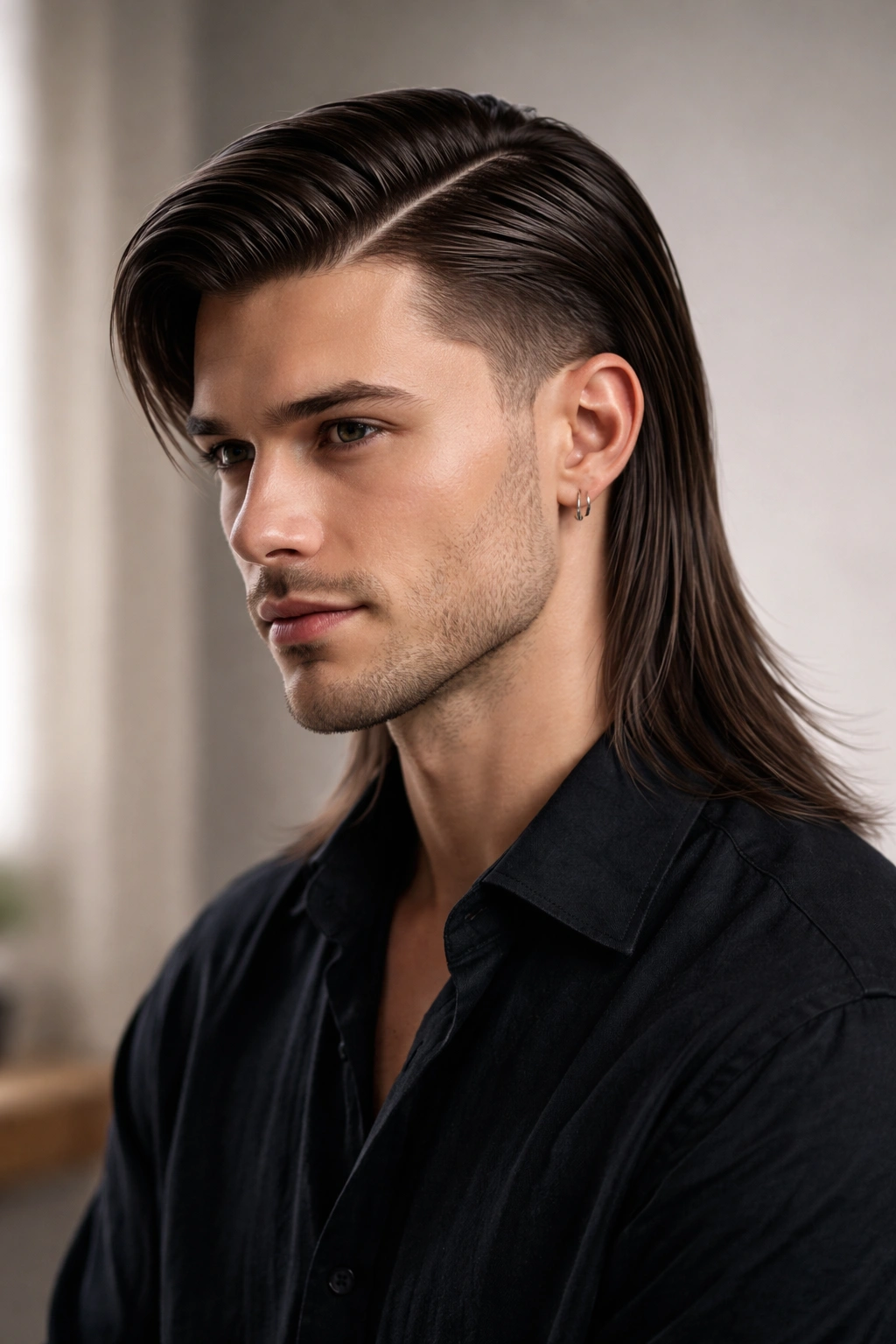
This version takes a clean mullet and adds a deep side part and a sleek, groomed finish. It’s preppy meets punk—formal on top, rebellious in the back. Straight hair shows off the part definition beautifully.
The Sophisticated Angle
This is the mullet for people who want to keep one foot in conservative style. The side part and groomed top make it appropriate for professional settings or formal events, while the long back keeps it interesting and personal. Straight hair makes the part line crisp and visible without any texture interference.
How to Get the Look
- Fade the sides to 1 to 1.5 inches; keep the top longer with a clear longer section on one side
- The longer side (the part side) should be 3 to 4 inches; the shorter side can be 2 to 3 inches
- Style a deep side part using a comb and a light pomade or gel
- The back should be long and sleek; you can comb it back and down or let it flow naturally
- Request a clean part line from your barber using a straight razor
Worth knowing: You’ll need to establish and maintain this part daily using a comb. It won’t stay naturally. But the payoff is a style that reads as intentional and carefully groomed rather than rebellious or accidental.
9. The Asymmetrical Mullet
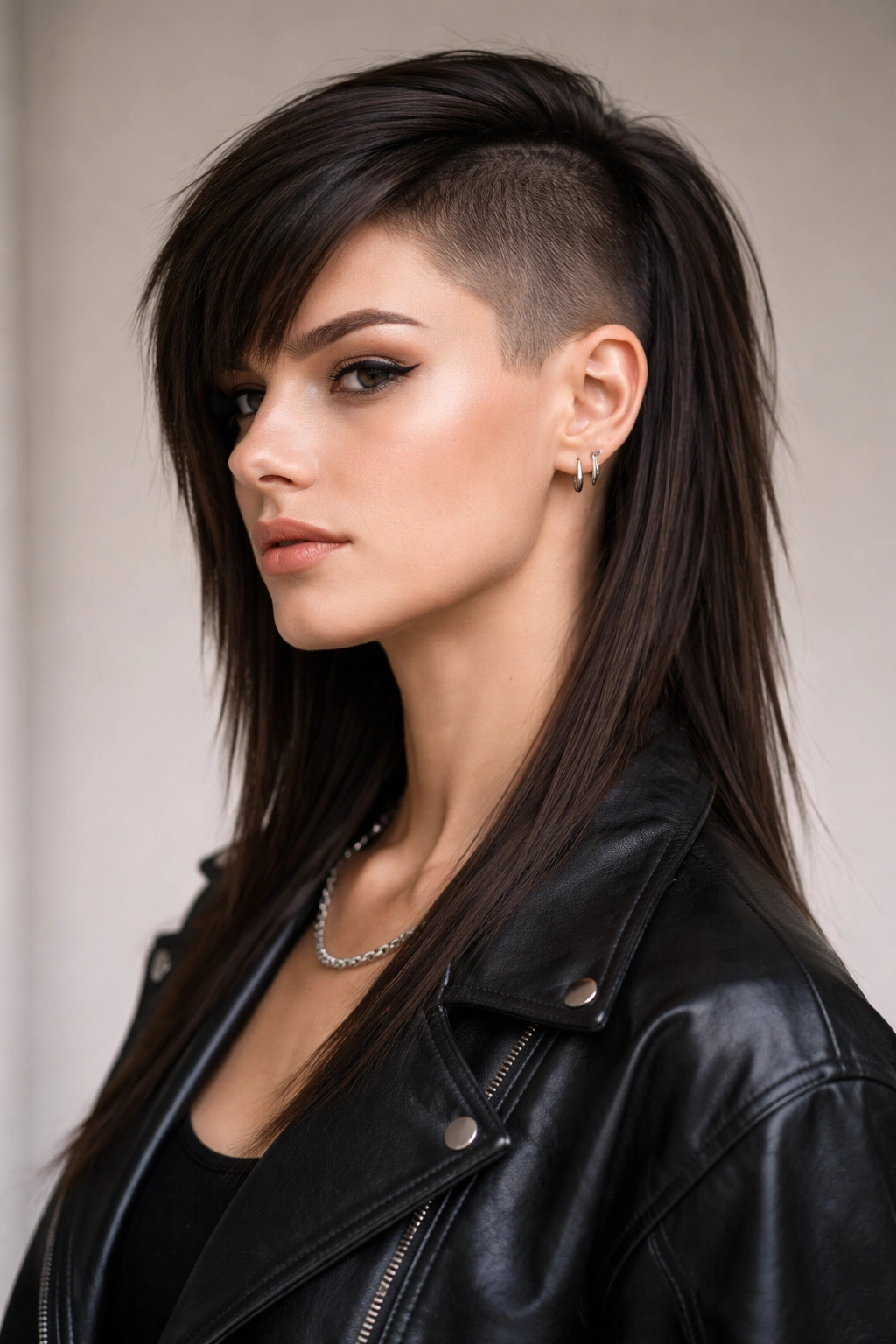
This version shortens one side more than the other, creating an asymmetrical silhouette. One side might be faded to 0.5 inches while the other is 2 inches. The long back remains the same length. It’s avant-garde and artistic.
Why Asymmetry Reads Differently on Straight Hair
Asymmetrical cuts can look accidental or messy on some hair types, but on straight hair they read as intentional and carefully designed. The clean lines make it obvious that the difference is deliberate. Straight hair’s lack of texture means there’s nothing to distract from or soften the asymmetry—it’s a full statement.
How to Get the Look
- Request a dramatic difference between sides—one side might be 0.5 inches, the other 2 inches
- Decide which side you want longer; this affects how you style it and which direction your hair naturally flows
- Keep the top section long enough to work with (2.5 to 4 inches) so you can style it toward the longer side
- The back should be even and long on both sides
- Ask your barber for precise line work to define where the asymmetry happens
Pro tip: Style this mullet by sweeping your top hair toward the longer side. Use product to create movement and emphasize the asymmetry rather than trying to hide it.
10. The Tapered Burst Fade Mullet
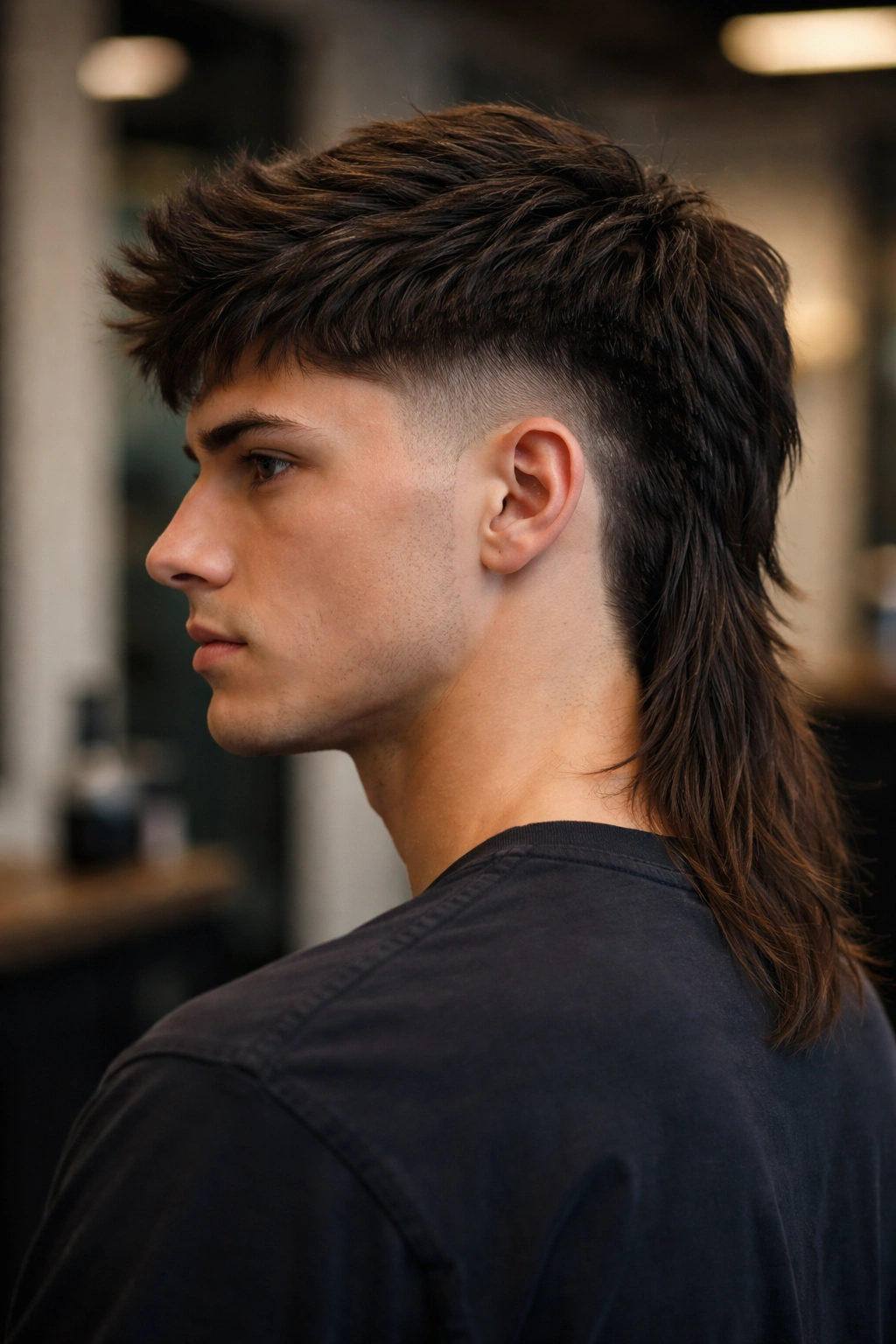
This style combines a modern burst fade (where the fade curves around the back of the head rather than blending straight up) with a long mullet back. It’s the most contemporary version—it’s what a modern barber would suggest if you asked for a mullet for 2024.
Modern Barbering Meets Classic Style
The burst fade is the gold standard in modern men’s cutting. Combining it with a mullet makes the style feel current and professionally executed rather than retro or ironic. On straight hair, the burst fade’s curved lines are crisp and precise, creating a sophisticated frame for the long back.
How to Get the Look
- Ask your barber for a burst fade on the sides and back—this means the fade curves around the back of your head rather than blending straight up the back
- Keep the back long and connect it seamlessly to where the burst fade ends
- The top should have some texture and length (2.5 to 4 inches) for styling options
- Request clean, sharp lines; a burst fade is precise work and demands a skilled barber
- The front hairline should be clean and defined; this is often where a burst fade really shows its precision
Worth knowing: You’ll want to find a barber who specializes in fades and frequents Instagram barbering accounts. This isn’t a style every barber can execute cleanly. It’s worth paying more for precision work here.
Final Thoughts
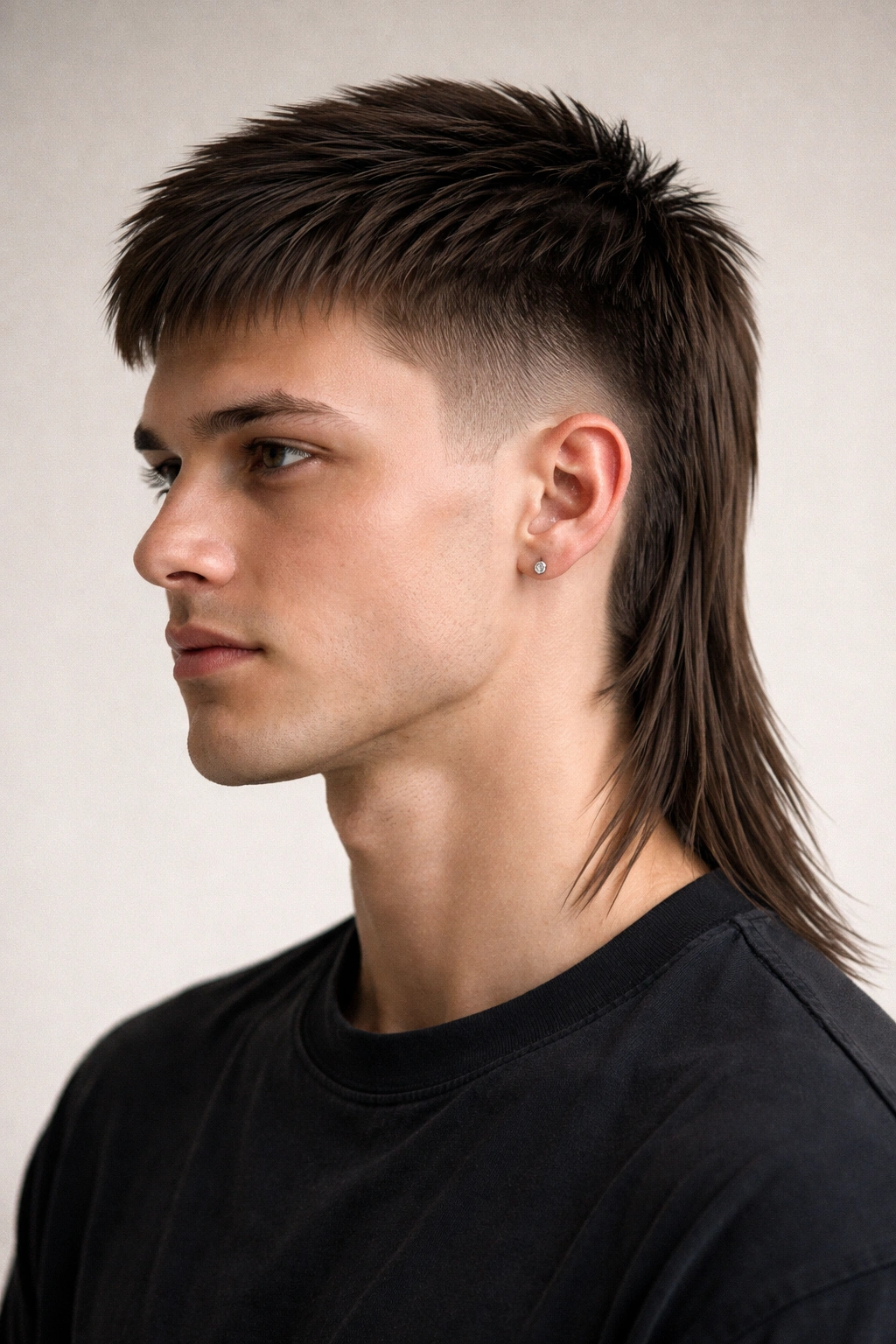
Mullets on straight hair aren’t a phase—they’re a legitimate styling choice that offers more versatility than you might expect. The key is choosing the version that matches your lifestyle, your face shape, and how bold you want to be. If you’re hesitant, start with the classic clean mullet or the textured top version. Both read as intentional without being shocking.
The straight hair advantage is real: your lines will be clean, your contrast will be sharp, and your mullet will photograph well. You won’t fight texture or frizz, and you’ll have consistent results every time you style. That’s something curly-haired people would genuinely envy.
Before committing, show your barber reference photos of the specific mullet you want. Not all barbers are equally skilled at mullets, and the difference between a great one and a mediocre one is the difference between looking like a style icon and looking like you lost a bet. Ask your barber questions—how often do they cut mullets, what do they recommend for your hair type, how should you style it daily. A good barber will have strong opinions and back them up with reasoning.
The mullet deserves a second look. On straight hair, it’s sharper, cleaner, and more intentional than it’s ever been. Give yourself permission to explore the version that speaks to you.
