



The right haircut can completely transform how your straight hair looks, moves, and frames your face — and long layered cuts are where that magic really happens. Unlike solid, one-length styles that can feel heavy and flat, layers add dimension, reduce bulk, and create natural movement even in the straightest hair. The key is finding a cut that works with your hair texture, face shape, and daily styling commitment.
Straight hair actually has a unique advantage when it comes to layers. Because there’s no natural wave or curl to hide behind, layers show up beautifully in straight hair — each individual section becomes visible, creating the kind of defined, intentional look that you can’t always achieve with other textures. The challenge is that straight hair also demands precision. A sloppy layer is much more obvious in straight hair than it would be in wavy or curly hair, so technique matters enormously.
What makes a layered cut work for straight hair specifically? First, the angle matters. Layers cut at the right angle (typically longer in front, shorter in back) complement straight hair by creating visual flow and preventing that boxy, helmet-like silhouette that can happen with blunt, one-length cuts. Second, the technique your stylist uses — whether they’re using scissors, a razor, or a combination — directly affects how clean and intentional your layers look. Third, the placement of layers matters just as much as the depth. Strategic layers near the face can highlight your features, while layers throughout the length add overall movement.
The 15 cuts below represent the most flattering long layered styles for straight hair, ranging from subtle, barely-there layers to dramatic choppy cuts that make a bold statement. Each one works specifically because it takes advantage of straight hair’s natural ability to showcase clean lines and intentional movement. Whether you’re looking for something professional and polished or edgy and textured, one of these cuts will give you exactly the dimension and movement you’re looking for.
1. Blunt Long Layers with Subtle Movement
This is the sweet spot for anyone who loves the look of long, straight hair but wants just enough layering to prevent it from looking flat. The cut maintains a mostly blunt, one-length appearance, but strategic layers throughout add subtle movement without compromising length. The longest point typically falls at the bra line or lower, and layers are cut into the interior of the hair rather than creating a lot of visible disconnection on the surface.
Why This Works for Straight Hair
Subtle layering is the secret weapon for straight hair because it creates dimension without sacrificing that sleek, polished aesthetic. The layers catch light differently at different points, which makes straight hair look shinier and more dynamic. Because the layers are interior-focused rather than heavily texturized, you still get that clean, intentional look that straight hair does so well. This cut is also forgiving — you don’t need a perfect blowout every single day to make it look good, and it grows out gracefully without looking shaggy.
What Makes This Cut Work Best
- You have naturally straight hair that doesn’t require heat styling to look polished (or you’re willing to flat-iron occasionally)
- You want length and movement but value the professional, put-together look of minimal layering
- Your straight hair tends to look limp without some internal texture
- You’re comfortable getting trims every 8-10 weeks to maintain the clean lines
- You want a cut that looks good in both casual and professional settings
Pro tip: Ask your stylist to focus the subtle layers in the mid-lengths and ends rather than near the roots — this keeps the crown fuller and prevents that over-layered, see-through look that can happen with too much texturing near the scalp.
2. Choppy Face-Framing Layers with Length
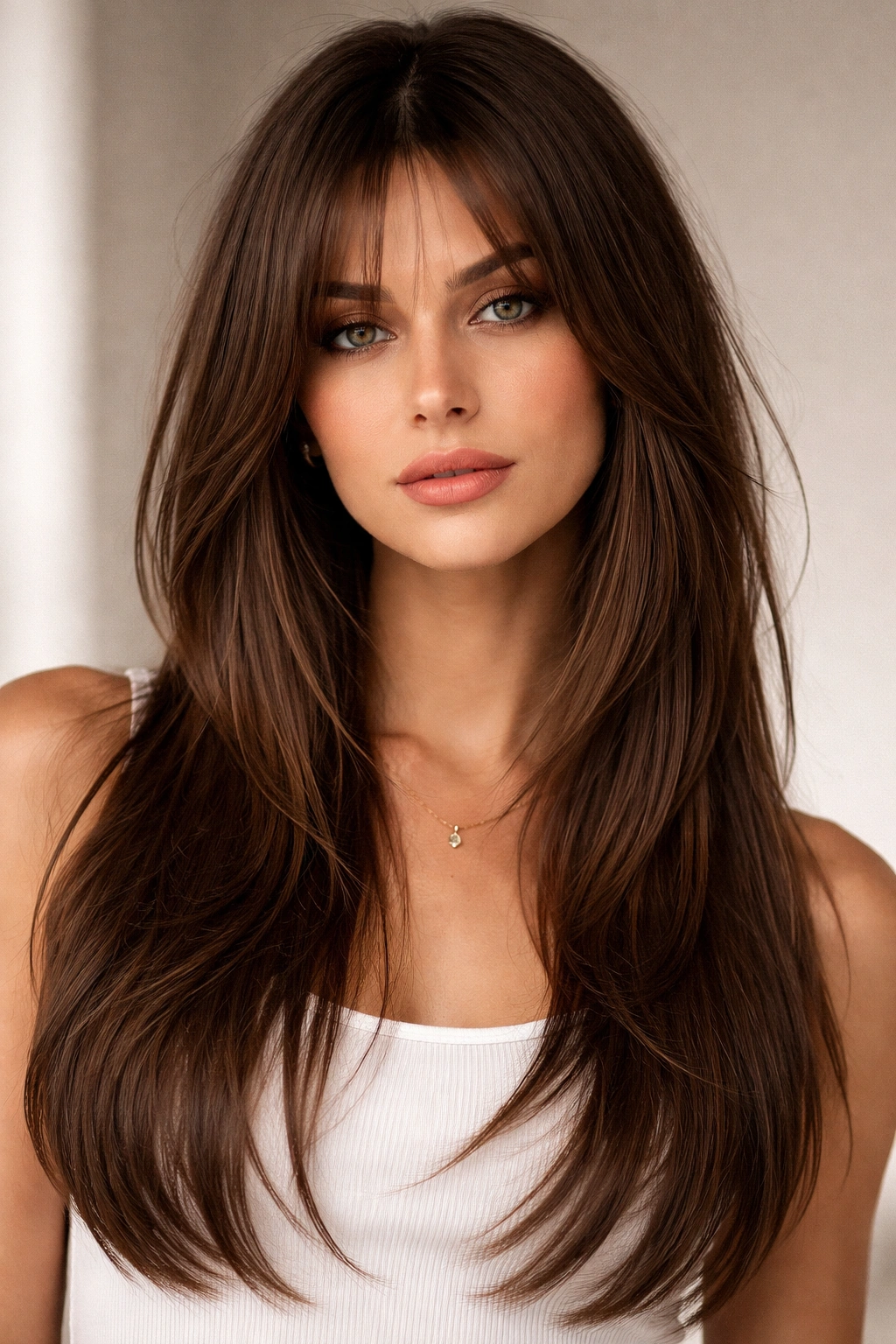
This cut is all about creating statement-making layers around the face while keeping the overall length long. The face-framing section is shorter, typically hitting around chin-length or slightly below, while the bulk of the hair remains at the bra line or longer. The contrast between the choppy, shorter front pieces and the long back creates immediate drama and draws attention to your features.
What Makes It Different
Choppy face-framing layers require your stylist to be precise and intentional with angle and length variation. Unlike blunt layers that sit uniformly, these layers are cut at different lengths to create that choppy, textured effect. The advantage for straight hair is that this choppiness reads as deliberate and edgy rather than unkempt — straight hair has the clean lines to pull off a choppy aesthetic without looking accidental. The shorter pieces around your face also act as instant face-flattering elements, drawing the eye upward and highlighting your cheekbones and jawline.
Key Details to Discuss With Your Stylist
- Exactly how many inches you want the face-framing pieces to be (typically 3-6 inches shorter than the longest pieces)
- Whether you want the choppy effect only in front or blended throughout
- How sharp or blended you want the transition between short and long pieces
- Which side you prefer the longest piece on (usually flatters when asymmetrical)
- Whether you want texture added throughout the length or just in the face-framing section
Worth knowing: This cut requires your straight hair to actually be straight. If you have a slight wave or bend naturally, the choppy layers will look less intentional. If you’re planning this cut and have slightly wavy hair, discuss a smoothing treatment or commit to regular flat-ironing with your stylist beforehand.
3. V-Shape Layered Cut for Straight Hair
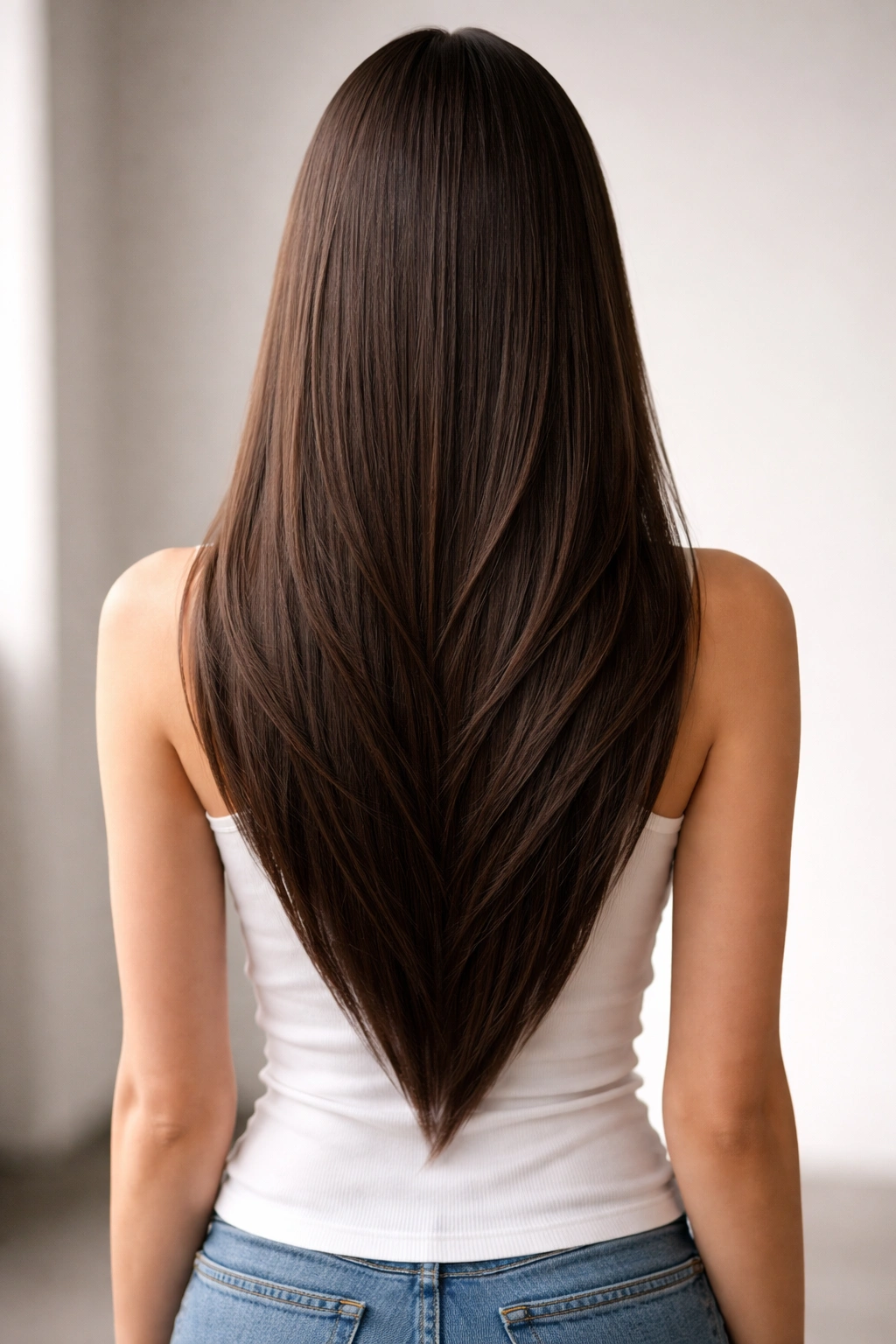
The V-shape cut is a geometric approach to long layers where the hair is cut to form a V silhouette when viewed from behind — longer in the center back, with gradually shorter pieces moving toward the sides. This creates a distinctive shape that flatters most face structures and works beautifully in straight hair because the clean lines of the V really show up clearly.
Why the V-Shape Stands Out
This cut is mathematically flattering because it naturally draws the eye down and creates the illusion of a longer, more oval face shape. For straight hair, the V-shape is especially effective because you can actually see the geometric precision of the cut. The center-back length can go as long as you want, while the layers progressively shorten, creating built-in movement and dimension. Straight hair’s natural reflectivity makes the V-shape even more dramatic — light hits the different layers at different angles, highlighting the structure of the cut.
How to Wear It Best
- Style it with a center part to emphasize the V-shape and create a balanced, intentional look
- Use a round brush on straight hair to flip the ends slightly outward, enhancing the geometric shape
- Apply a light smoothing serum to straight hair to let the cut’s lines really show
- Consider side-parting if you want a slightly softer take on the dramatic V-shape
- Blow-dry with tension to keep the ends smooth and the V-shape sharp
Insider note: The V-shape becomes more pronounced and stunning as your hair gets longer, so this is an excellent choice if your goal is maximum length. The cut actually looks better at 18+ inches than at shorter lengths.
4. Feathered Long Layers for Movement
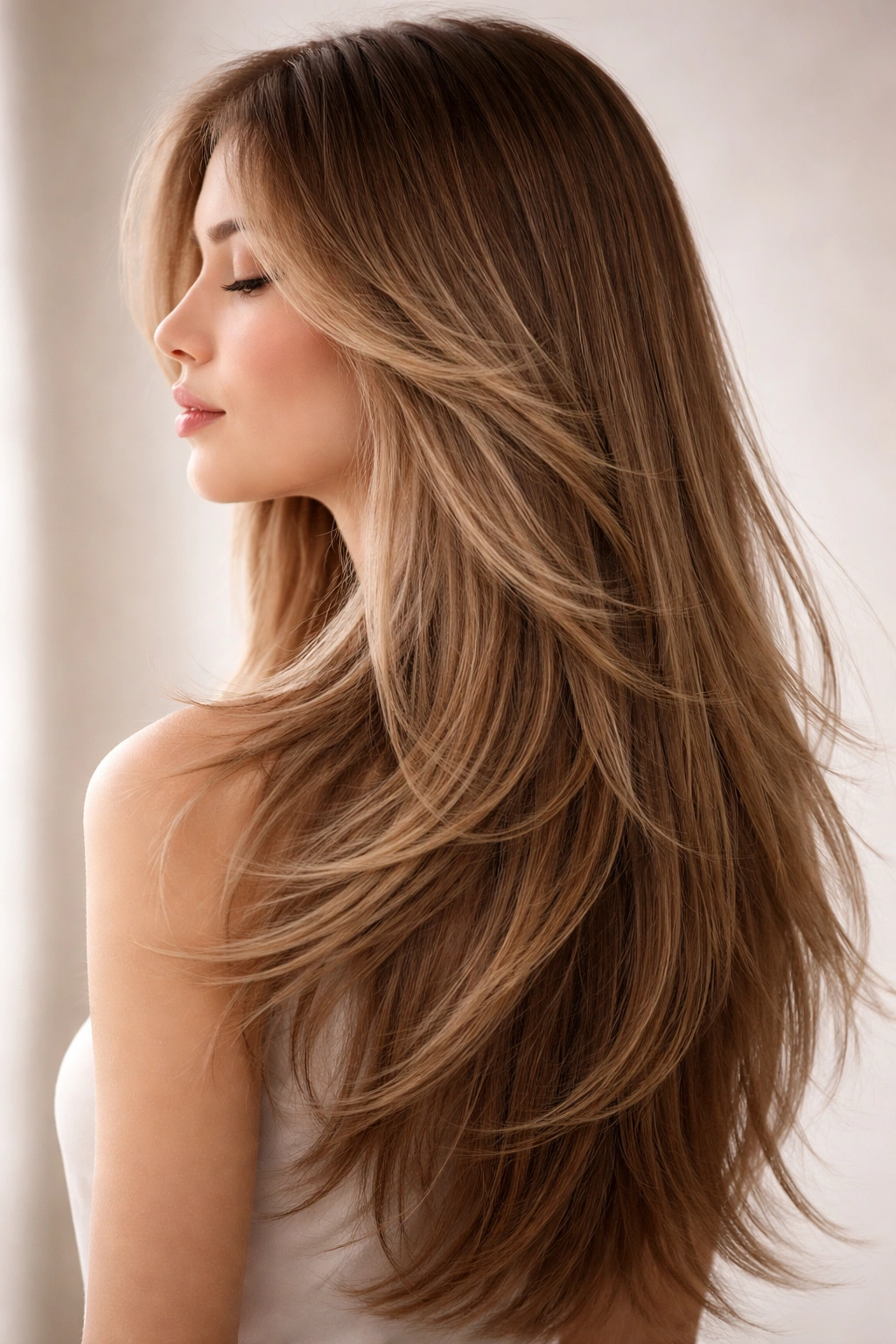
Feathering is a specific layering technique where thin, subtle layers are cut throughout the hair at angles, creating wispy, soft texture rather than blunt chop. Feathered layers work beautifully in straight hair because each feathered section remains visible and defined. The cut typically maintains overall length while creating soft texture throughout, giving straight hair an almost cloud-like quality when light hits it.
What Makes Feathered Layers Special
Feathering is different from chopping because it’s softer and more blended. A good feathered cut on straight hair creates the appearance of movement and texture without making the hair look thin or scraggly. The technique requires precision — your stylist is using specific angles and point-cutting methods to create those feathered sections. For straight hair, feathering adds dimension and prevents that flat, one-note appearance while maintaining the sleekness that makes straight hair desirable.
How to Know This Cut Is Right for You
- You want visible texture and movement but prefer a softer, less dramatic look than choppy layers
- You have straight hair that’s on the finer side and would look stringy with heavy, blunt layers
- You’re willing to style your hair regularly (feathered layers look best with some blow-drying or flat-ironing)
- You like the idea of texture that’s visible but not aggressive or edgy
- You want a cut that photographs well and looks good from multiple angles
Pro tip: Feathered layers look best with a light texturizing product — something like a salt spray or light mousse applied before blow-drying. This emphasizes the feathered sections and makes them look intentional rather than like the hair is just dry and textured.
5. Long Layers with Wispy Bangs
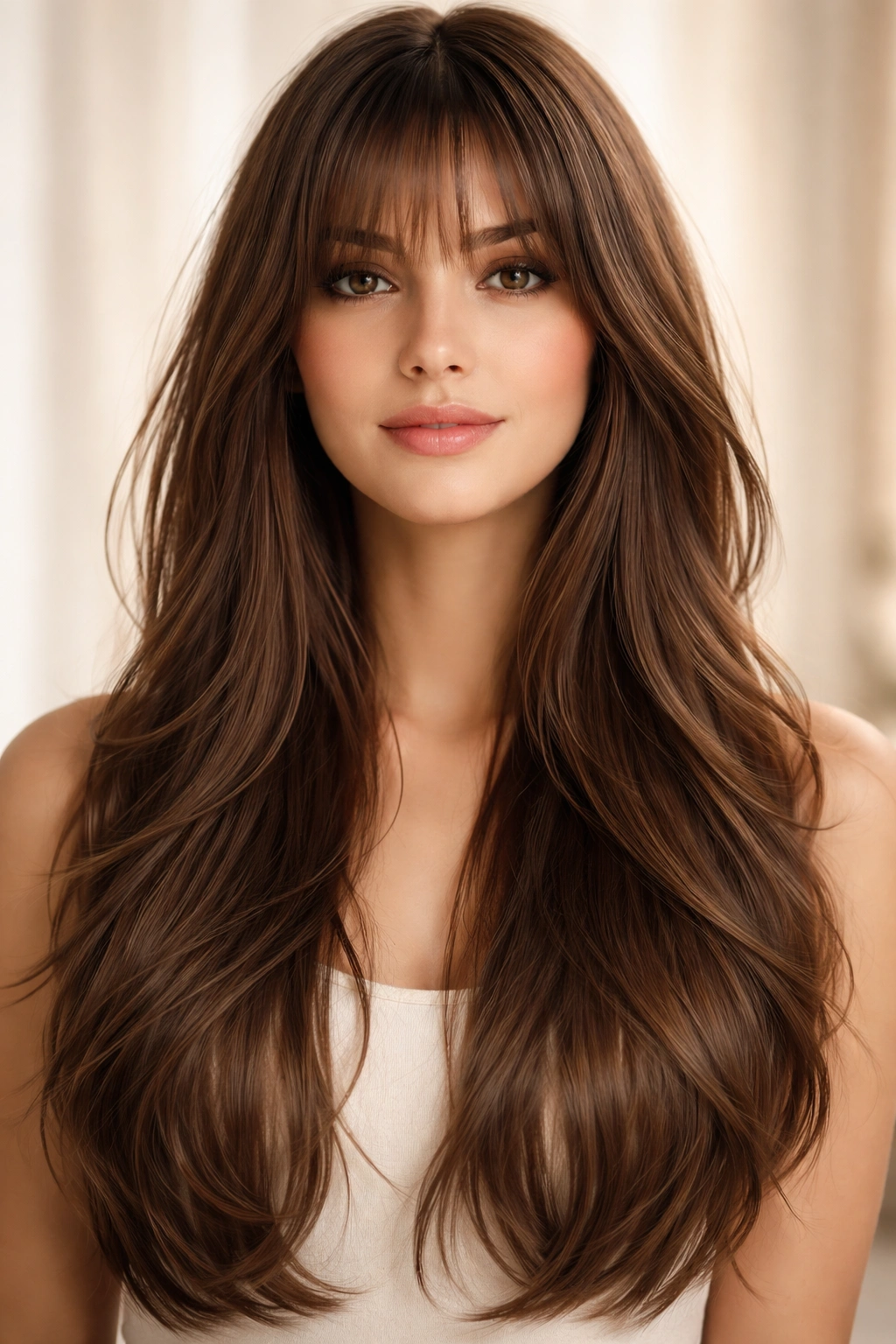
This combination pairs long, subtly layered hair with face-framing wispy bangs that sit somewhere between a full bang and just longer face-framing pieces. The bangs typically hit at or just below the eyebrows and blend seamlessly into the layered length below. The overall effect is romantic, face-flattering, and creates immediate softness around the features.
Why Wispy Bangs + Layers Work Together
Wispy bangs add instant personality to a long layered cut and create a focal point that draws the eye to your face. The bangs also work as another dimension of layering — they’re shorter, wispier, and create more texture than the main body of hair. For straight hair, the combination is particularly striking because the straight texture makes the bangs look intentionally wispy rather than just naturally wavy. The overall effect feels intentional and styled, even on days when you don’t do much to your hair.
Styling Considerations for This Look
- You’ll need to style the bangs regularly — they look best blow-dried or flat-ironed
- The bangs require trims every 3-4 weeks as they grow out and move past your eyes
- Consider your face shape: wispy bangs work beautifully for round, square, and heart-shaped faces
- The bangs pair best with center or deep side parts rather than styles that expose your whole forehead
- This cut requires your hair to actually be straight or your willingness to straighten the bangs regularly
Worth knowing: If you have thick, coarse straight hair, make sure your stylist cuts the wispy bangs thin enough that they actually look wispy. Too much weight in the bangs can make them look heavy and blunt rather than soft and face-framing.
6. Textured Long Layers with Point Cutting
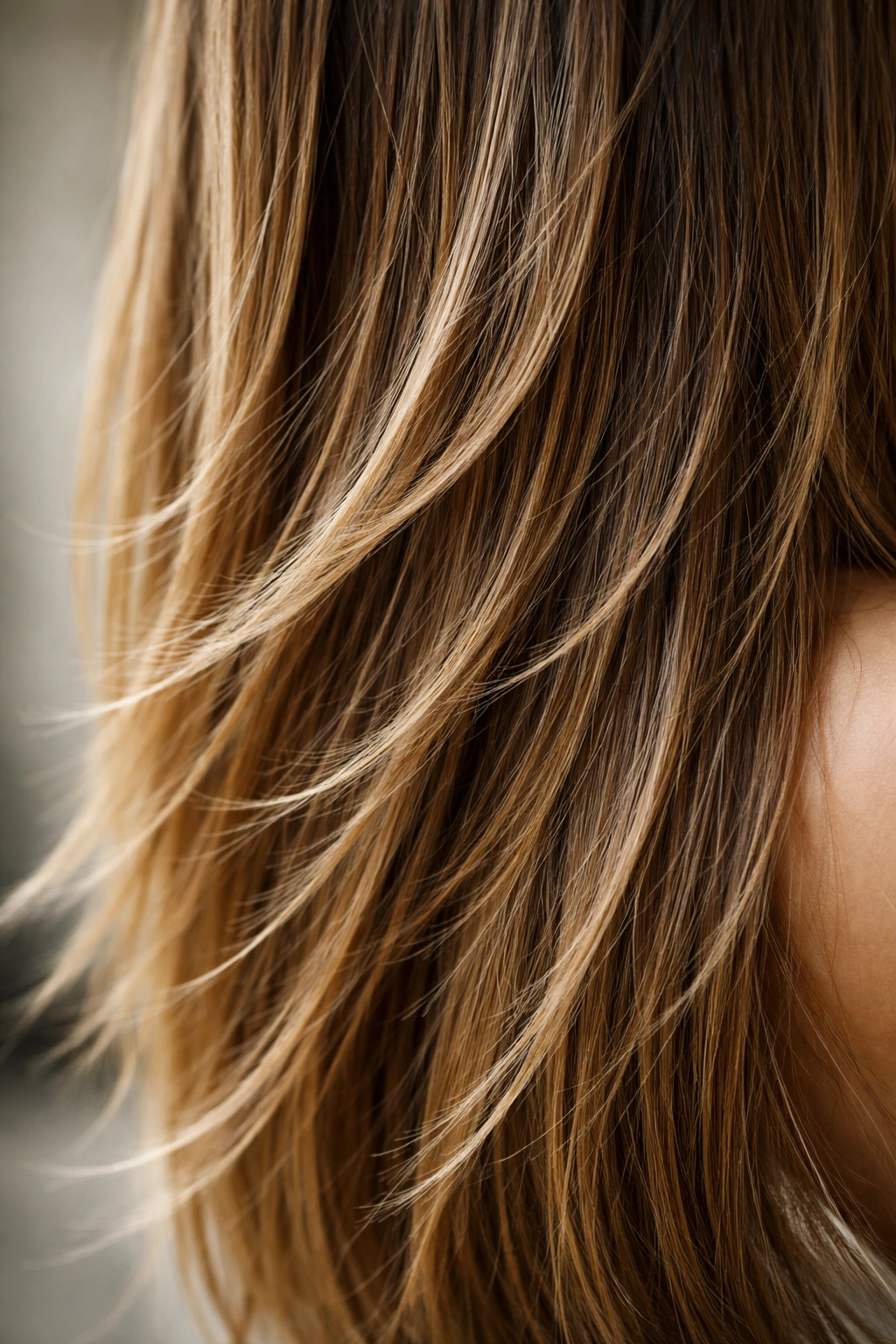
Point cutting is a technique where your stylist holds the scissors vertically and cuts into the ends of sections at angles, creating a jagged, textured effect rather than blunt lines. Applied throughout long layered hair, point cutting creates visible texture and movement while maintaining length. This works beautifully in straight hair because each point-cut section remains distinct and visible.
How Texture Transforms Straight Hair
Straight hair can sometimes look one-dimensional or even a bit slick, and point-cut texture solves that problem entirely. The irregular edges created by point cutting catch light differently and create the visual illusion of more volume and movement. Texture also helps straight hair hold styles better — if you’re trying to achieve soft waves or curls with heat tools, textured layers hold that shape longer than blunt layers. For straight hair that’s naturally thick or dense, texture prevents that heavy, thick appearance that can sometimes happen with too-blunt layering.
Perfect For
- Straight hair that’s naturally thick or coarse and needs texture to look lighter and more dynamic
- Anyone who occasionally heat-styles their hair and wants layers that hold curl or wave
- Straight hair that tends to look flat or lifeless no matter what you do
- People who prefer an undone, slightly edgy aesthetic over perfectly polished looks
- Anyone who’s not afraid to use texturizing products and styling tools regularly
Pro tip: Point-cut layers look best when you apply a texturizing spray before blow-drying or use a texture-focused product like sea salt spray. These products emphasize the point-cut texture and make it look intentional rather than just dry or damaged.
7. Shag Cut with Long Layering
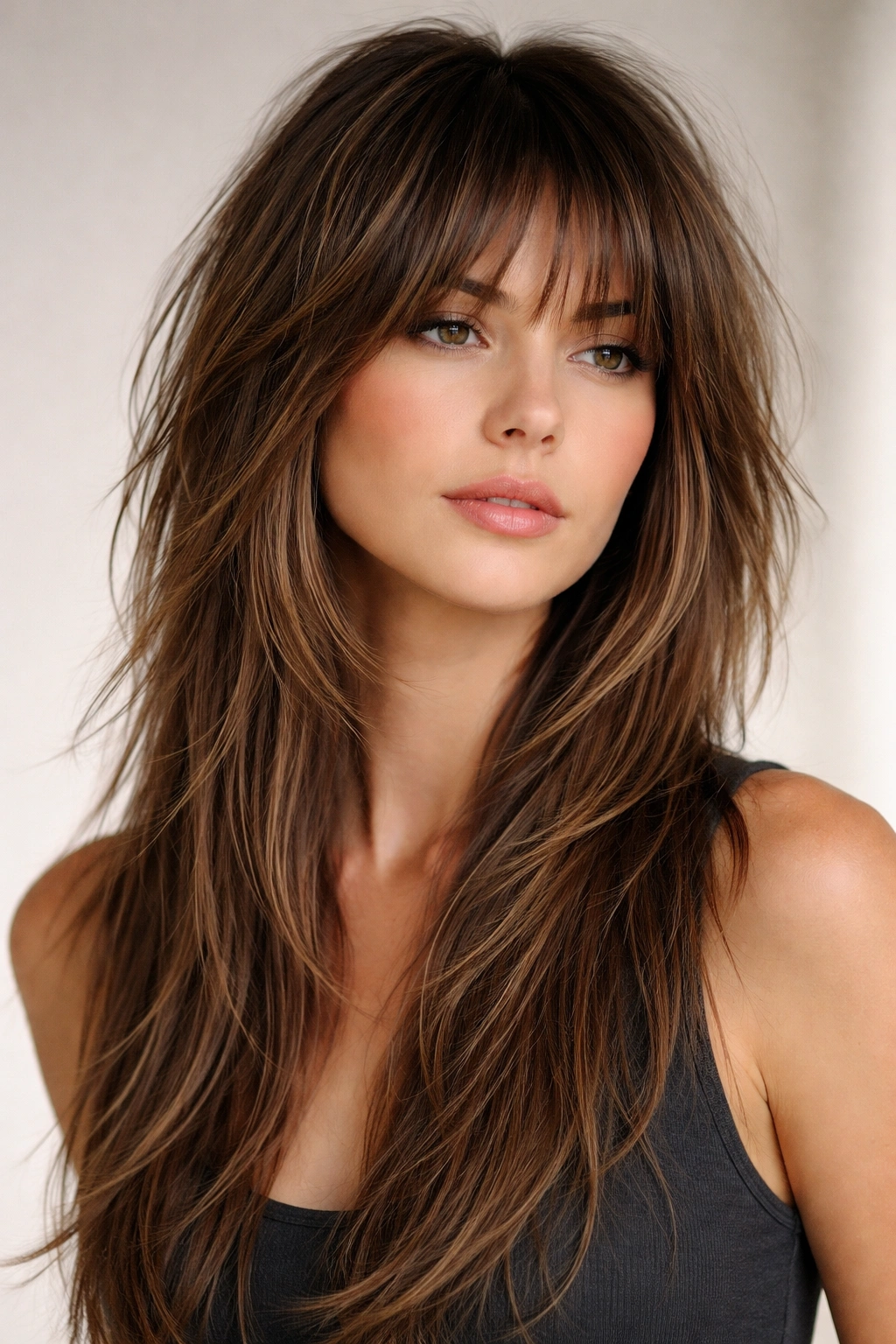
The shag is a comeback cut that combines choppy, textured layers throughout with longer overall length. Unlike a typical long-layered cut where layers are more subtle or focused in certain areas, a shag has visible, intentional texture everywhere — the crown, the mid-lengths, and the ends. The overall effect is rock-and-roll, undone, and surprisingly sophisticated in the right execution.
Why Shag Works for Modern Straight Hair
The shag was originally designed for wavy and curly hair, but a well-executed shag on straight hair is absolutely stunning. Because straight hair is so clean-lined, the shag layers read as intentional and deliberate rather than just messy. The texture throughout prevents straight hair from looking flat, and the choppy layers create movement and volume naturally. Modern shagging also tends to be more refined than the original 1970s version — there’s less overall volume and more wearability, making it feel contemporary rather than costume-like.
This Cut Suits You If
- You have naturally straight hair or are willing to blow-dry regularly
- You’re comfortable with a less polished, more relaxed aesthetic
- You have the styling skill (or interest in developing it) to make a shag look intentional rather than just messy
- You want a cut that immediately announces personality and edge
- Your straight hair is on the finer side and can benefit from the volume a shag creates
Insider note: A shag works best on straight hair that’s at least shoulder-length, with the longest pieces hitting at least mid-back. Shorter shags on straight hair can look a bit too punk or costume-like unless that’s exactly the vibe you’re going for.
8. Long Layers with Deep Side Sweep
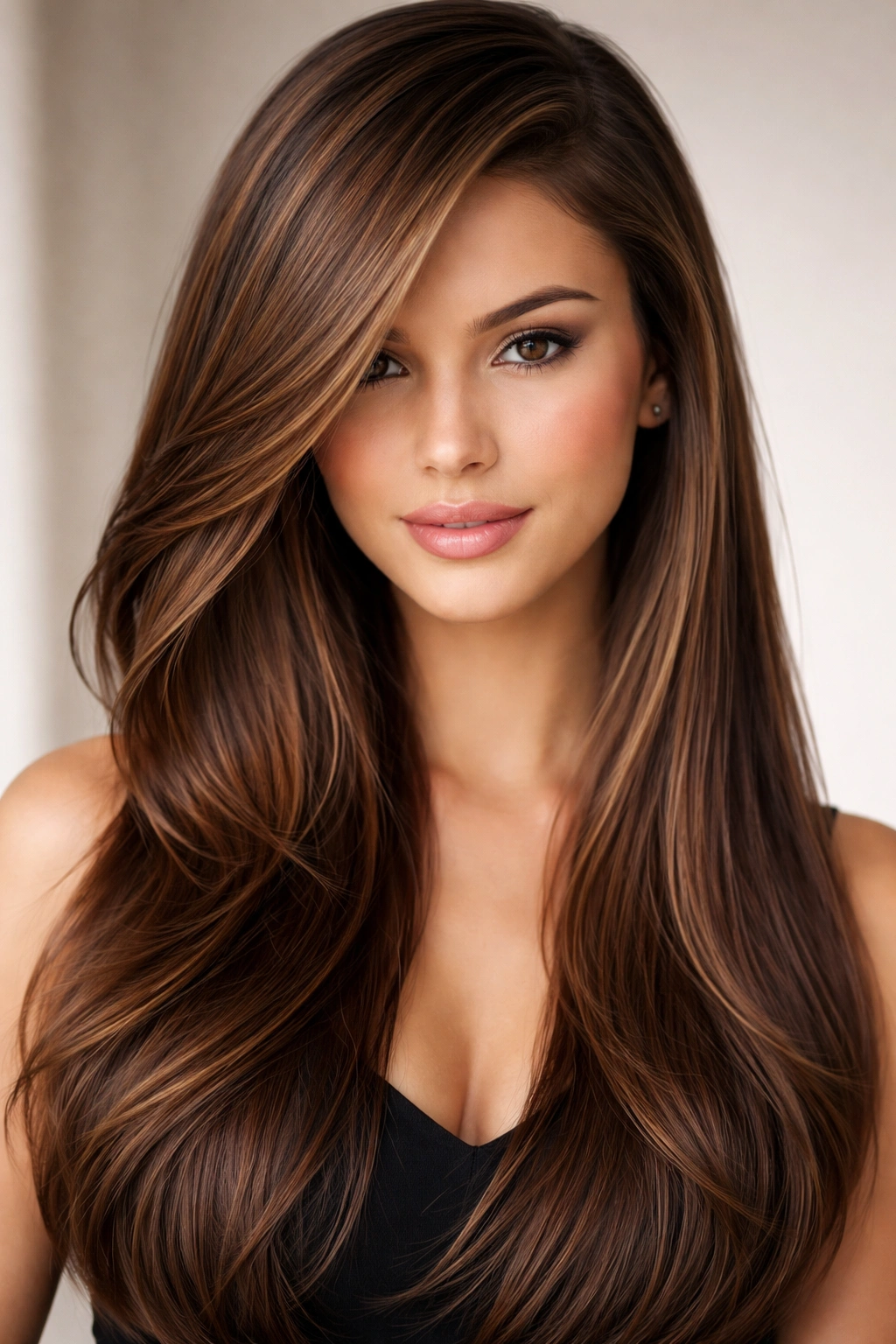
This cut combines long layered hair with an intentional deep side part that creates a sweeping silhouette. One side has noticeably more volume and length than the other, and the layers are angled to enhance that asymmetrical effect. For straight hair, the side sweep creates drama and makes a statement while still maintaining length and wearability.
What Makes the Side Sweep Flattering
An asymmetrical side-swept cut is incredibly face-flattering because it draws attention selectively. If one side of your face is a feature you want to highlight, you can keep that side longer and more visible. The side-swept angle also creates an elongating effect, making faces appear longer and more oval. For straight hair, the side-sweep is stunning because the straight texture actually holds the sweep — you can style it one way and it stays that way, unlike hair with natural texture that might shift throughout the day.
Styling and Maintenance
- You’ll need to always part on the assigned side (switching sides occasionally won’t ruin the cut, but the angle is designed for one specific direction)
- The longer side can be pinned or tucked behind the ear for a different look, or worn fully swept
- This cut looks best with regular blow-drying to maintain the sweep angle
- Layers should be concentrated on the shorter side to prevent that side from looking too thick
- The cut works well with center-parting occasionally if you want a different vibe, though it’s designed for the side sweep
Pro tip: Ask your stylist to angle the layers slightly toward the face-framing direction on the longer side. This makes the sweep feel intentional rather than like one side just happens to be longer.
9. Razor-Cut Long Layers for Precision
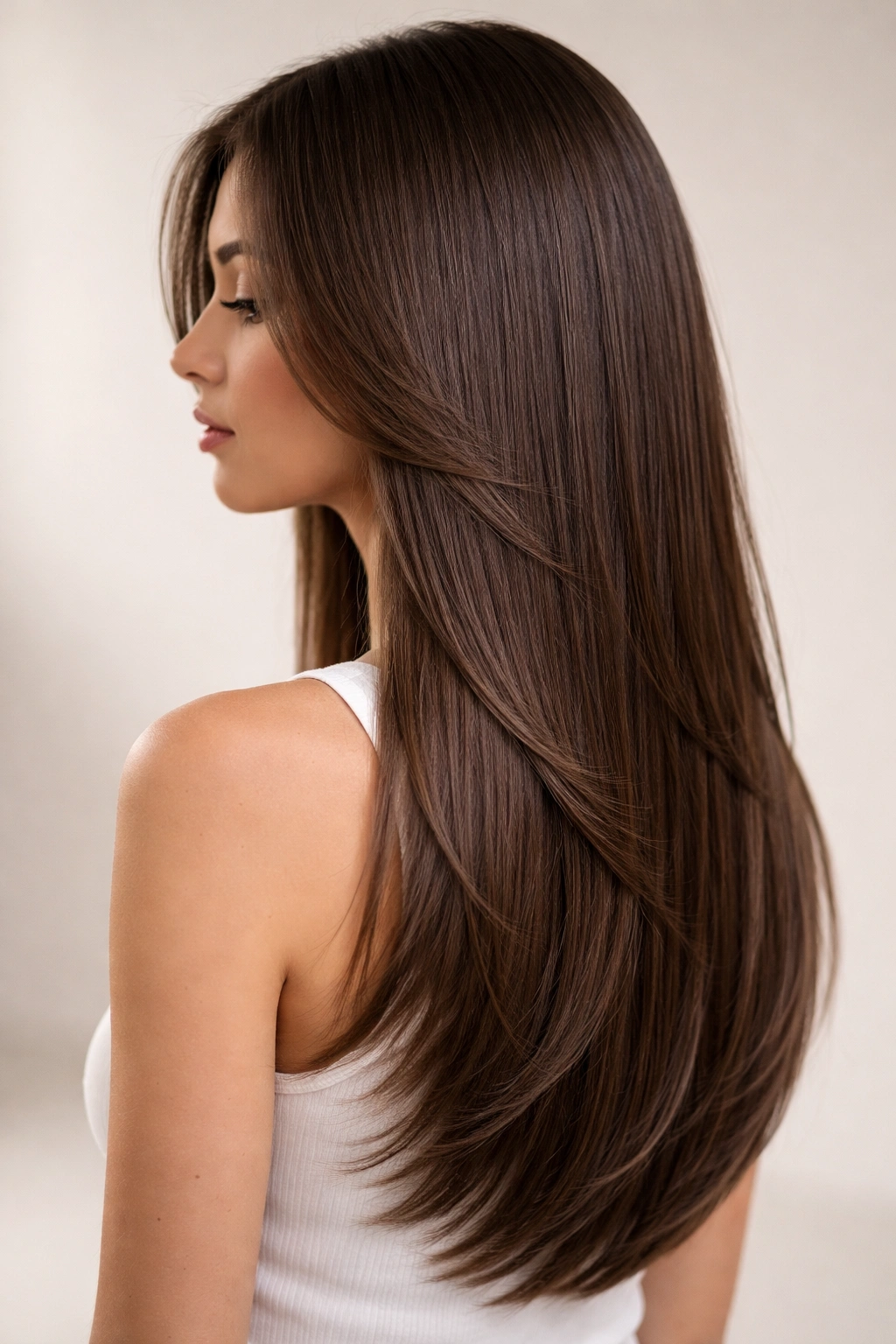
Razor cutting is a specific technique where your stylist uses a razor blade rather than scissors to cut the hair. Razor cutting on long layered hair creates incredibly clean, precise lines with a slightly softer feel than scissor-cut layers. The razor technique is particularly effective on straight hair because the precision shows up beautifully.
Why Razor Cutting Makes a Difference
Razor cutting creates a slightly beveled edge rather than a blunt line, which can actually make straight hair look slightly softer and less severe. The technique also tends to create less bulk at the ends, which is helpful for straight hair that can sometimes look too thick or heavy at the ends. Razor-cut layers also blend slightly better than scissor-cut layers, creating a more seamless transition between different lengths. For straight hair that tends toward thickness or density, razor cutting is often the preferred technique because it removes weight without sacrificing length.
Best Suited For
- Straight hair that’s naturally thick, dense, or coarse
- Anyone who wants clean, precise layers without a heavily textured or point-cut effect
- Straight hair that tends to look blunt and severe and needs softening
- People who want layers that blend rather than create distinct, separate sections
- Anyone who’s tried scissor-cut layers before and wants to experiment with a different technique
Worth knowing: Razor-cut layers require a skilled stylist. In less-experienced hands, razor cutting can sometimes create hair that looks too wispy or damaged at the ends. Make sure you’re going to a stylist who specifically specializes in razor cutting and has a portfolio of razor-cut work you love.
10. Curtain-Inspired Long Layers
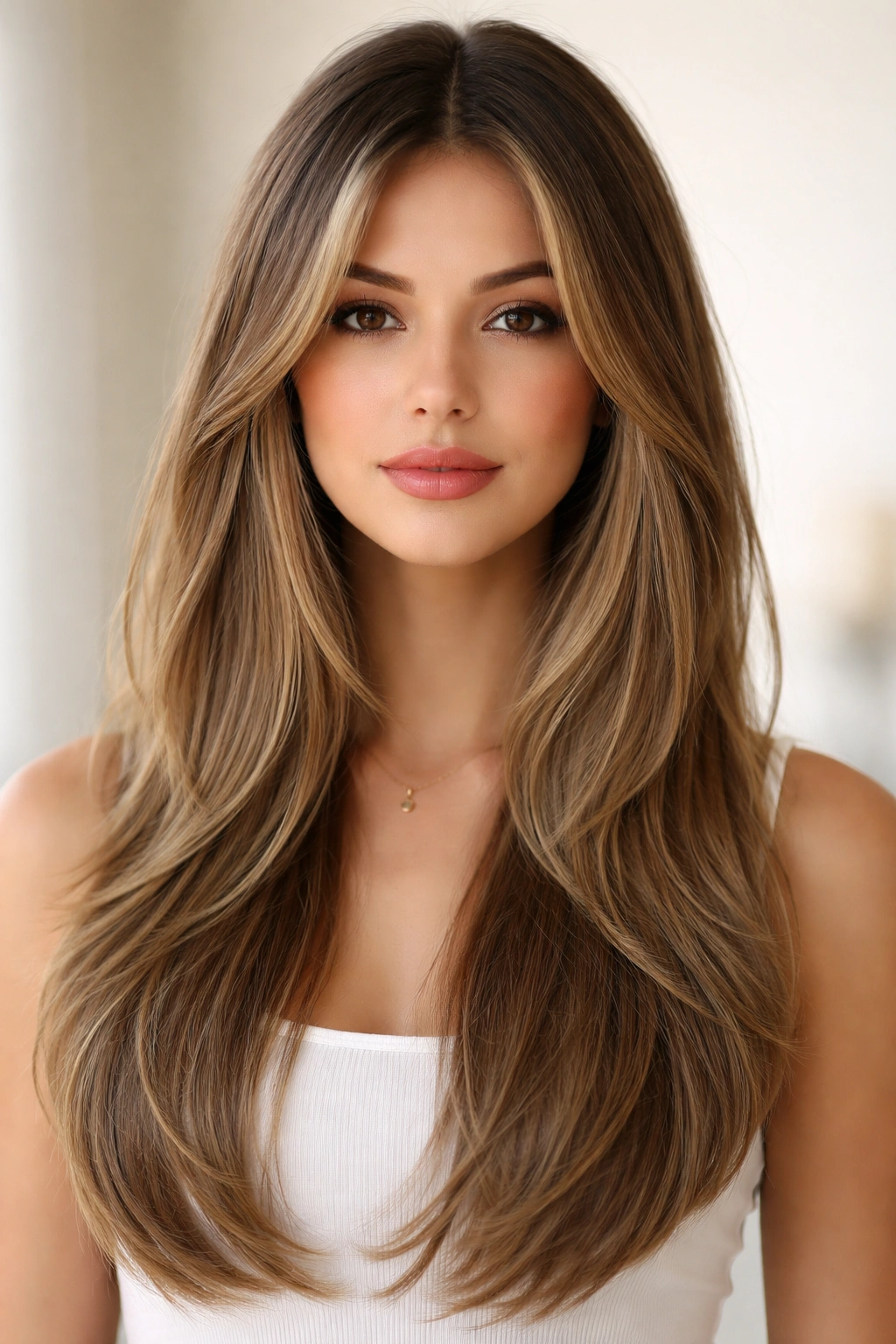
Curtain layers are a specific style where longer pieces frame the face on both sides and the hair parts naturally down the middle, creating the effect of a curtain opening. The sides are notably shorter than the center-back, and layers throughout create soft texture. This is a romantic, face-flattering option that’s become increasingly popular for straight hair.
Why Curtain Layers Are So Flattering
Curtain layers are face-framing by design, which means they immediately highlight your features. The longer center-back section gives you maximum length where you want it, while the shorter sides create softness around the face. For straight hair, the curtain effect is particularly striking because the straight texture makes the parted silhouette very clear and intentional. The layers work together to create movement without requiring heat-styling every single day.
How to Wear Curtain Layers
- Style with a center part for the full curtain effect
- Blow-dry the face-framing pieces away from your face for a polished look
- Allow them to fall naturally if you prefer a softer, less styled appearance
- Pin or tuck the sides behind your ears for a completely different look
- Works beautifully with or without bangs (though bangs can make the curtain effect feel even more intentional)
Pro tip: Curtain layers look best on straight hair that actually parts naturally down the middle. If your hair parts to the side naturally, you can still do curtain layers, but you’ll need to blow-dry them into the center-part position regularly to maintain the effect.
11. Piece-y Long Layers with Texture
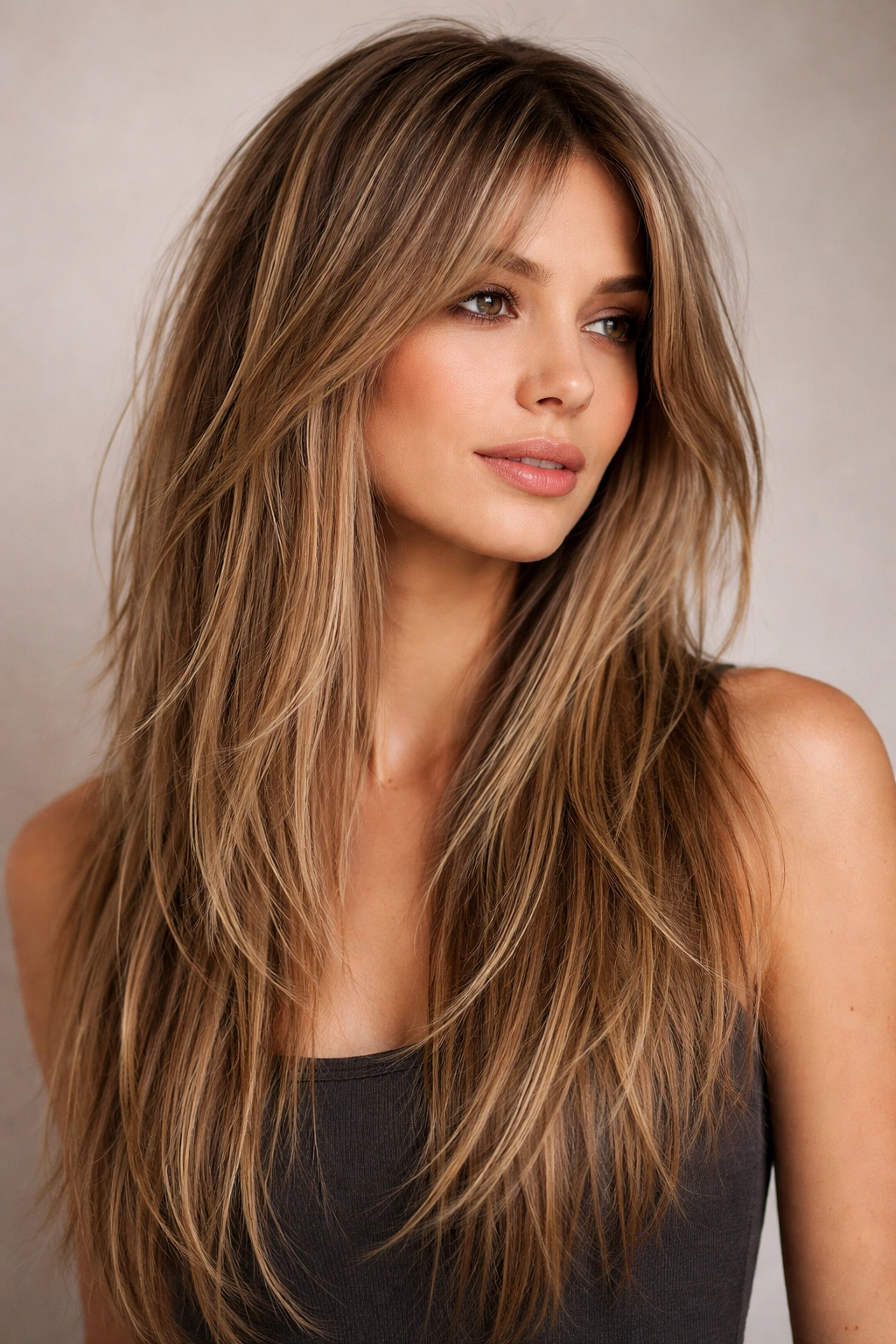
Piece-y layers are cut with intentional variation in length throughout, creating individual strands or “pieces” that are visible and distinct rather than blended. Each section of hair is a slightly different length, creating an overall look that’s intentionally undone and textured. This works beautifully in straight hair because the pieces remain defined and visible.
What Makes Piece-y Layers Unique
Piece-y layering is all about creating visual interest through variation. Unlike a blended, seamless layer, piece-y layers celebrate the different lengths and create intentional choppiness. This look is modern, slightly edgy, and reads as fashion-forward rather than conservative. For straight hair, piece-y layers solve the problem of looking one-dimensional — the different lengths and the visual separation between pieces creates immediate dimension and movement, even without heat-styling.
This Look Is Perfect If
- You have straight hair and want an intentionally textured, slightly undone aesthetic
- You’re comfortable with visible, defined layers rather than blended ones
- You use styling products regularly and enjoy playing with your hair’s texture
- You want a cut that looks different depending on how you style it
- You prefer a modern, slightly edgy look over classic or romantic styles
Insider note: Piece-y layers photograph beautifully because the different lengths and texture create visual interest from every angle. This is a great choice if you love having your photo taken or spend time on social media.
12. Long Layers with Deep Side Part and Texture
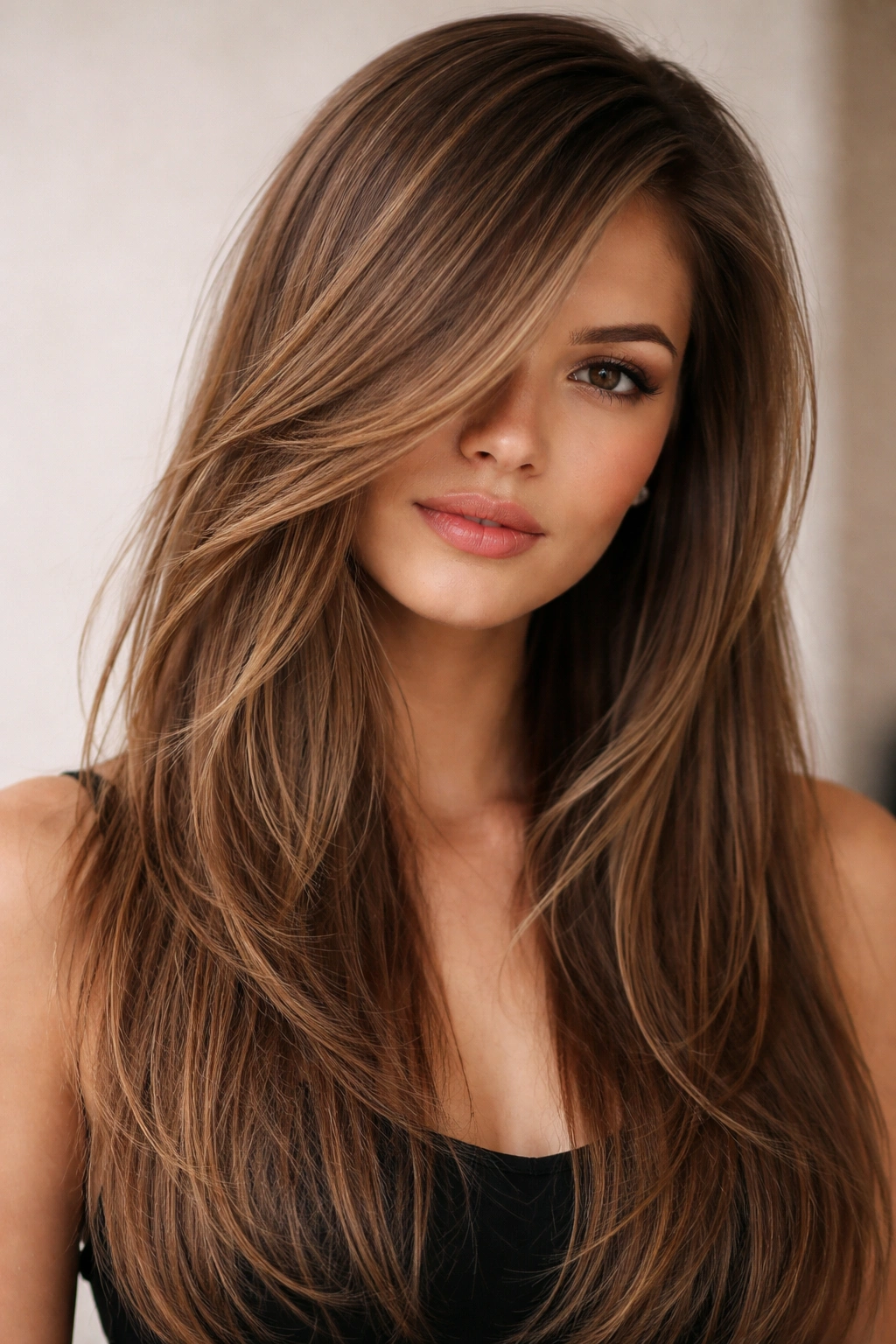
This cut combines long, layered hair with an intentional deep side part and textured layers throughout. Unlike a subtle side part that’s just your natural hair direction, this cut is designed for a dramatic side part — one side has notably more volume and covers part of the face, while the other side is more exposed. Texture throughout prevents the look from being too severe or heavy on one side.
Why Texture Matters Here
The textured layers throughout prevent this cut from looking lopsided or heavy. The texture creates movement and prevents the hair from just falling flat on one side. This is a sophisticated, slightly mysterious look that works beautifully on straight hair because the texture is clearly visible and intentional. The combination of the deep side part and the layered texture creates a look that’s both glamorous and wearable.
Wearing This Cut Successfully
- You’ll style with the deep side part consistently — switching to center-part changes the entire vibe
- The longer side can cover part of your face or be tucked behind your ear depending on your mood
- Blow-dry with texture products to enhance the layering and prevent it from looking flat
- Works well for medium to long hair (18+ inches) where the asymmetry really shows
- Best suited to straight hair that’s healthy and shiny — the texture shows off shine beautifully
Worth knowing: This cut can be aging if the side part is too deep or the texture is too heavy. Your stylist should balance the texture throughout rather than concentrating it only on the shorter side.
13. Heavily Layered Long Cut for Maximum Movement
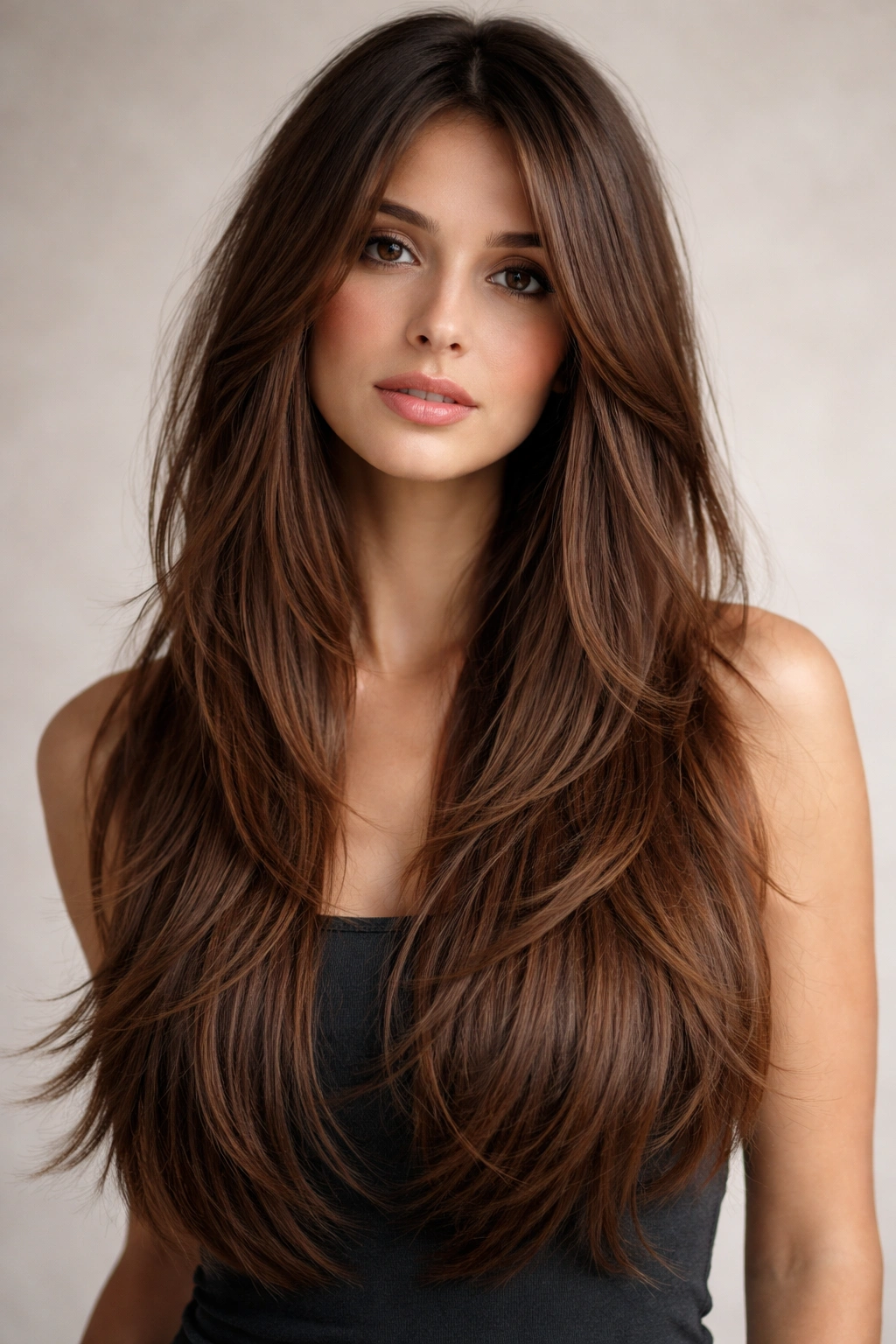
This is a bold choice: long hair that’s heavily layered throughout, with visible texture at every level. Rather than subtle interior layering, this cut makes the layers a design feature. Layers are visible throughout, creating movement and dimension naturally. This works for straight hair that can handle texture and actually benefit from the dimension.
When Heavy Layering Makes Sense
Heavy layering works beautifully on straight hair that’s naturally thick or coarse, because it removes weight while maintaining length. The texture throughout prevents the hair from looking heavy or flat. This cut also works on fine straight hair if you want maximum volume and movement — the layers create the illusion of thickness and fullness. The trade-off is that heavy layering requires regular styling and maintenance. This isn’t a wash-and-go cut; it looks best with blow-drying or styling products that emphasize the texture.
Best Suited For
- Straight hair that’s naturally thick and needs texture to look lighter
- Anyone with fine straight hair who wants maximum volume and movement
- Straight hair that’s already damaged or has texture from heat-styling and embraces a textured aesthetic
- People who style their hair daily and enjoy using texture products
- Anyone confident enough to wear an intentionally dramatic, textured cut
Pro tip: Heavy layering looks most intentional on straight hair when you use a texturizing product — sea salt spray, texturizing mousse, or even a light dry shampoo applied strategically. These products make the layers more visible and prevent the cut from looking accidental or just damaged.
14. Subtle Long Layers for Minimal Change
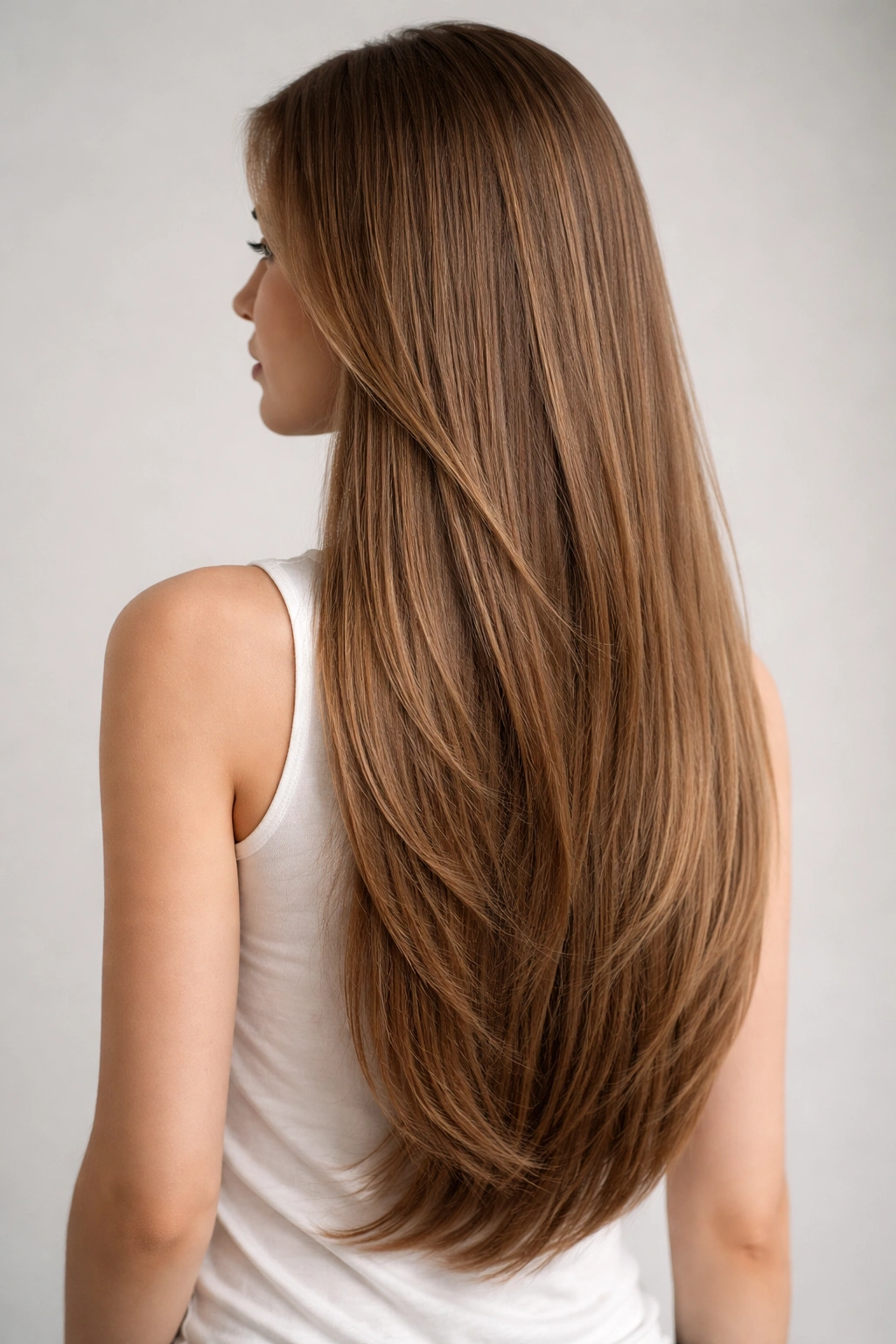
This is the understated version of layering: barely-there layers that you know are there because you feel the difference, but they’re not visually obvious at first glance. The cut maintains the overall aesthetic of long, straight hair while adding just enough internal texture to prevent flatness. This is perfect for anyone who loves their long straight hair but wants a subtle refresh.
Why Less Is Sometimes More
Not everyone wants obvious, visible layers. Subtle layering gives you all the benefits of layers — improved movement, less flatness, improved health at the ends — without changing the fundamental aesthetic of your hair. Straight hair with subtle layers still reads as long and straight but feels less heavy and looks slightly more dimensional. This cut is also the most forgiving in terms of grow-out; subtle layers grow out gracefully without ever looking shaggy or unkempt.
This Cut Suits You If
- You love your long straight hair and don’t want a dramatic change
- You want improved texture and movement but prefer an understated look
- You have straight hair that’s very fine and would look thin with heavier layers
- You prefer a polished, professional aesthetic
- You want the benefits of layers without obvious visual change
Worth knowing: Subtle layers require a skilled stylist who understands precision and restraint. This isn’t a dramatic cut, so the skill is in knowing exactly where to place minimal layers for maximum benefit. Ask to see before-and-after photos of subtle layering on straight hair before committing.
15. Geometric Layered Cut with Sharp Lines
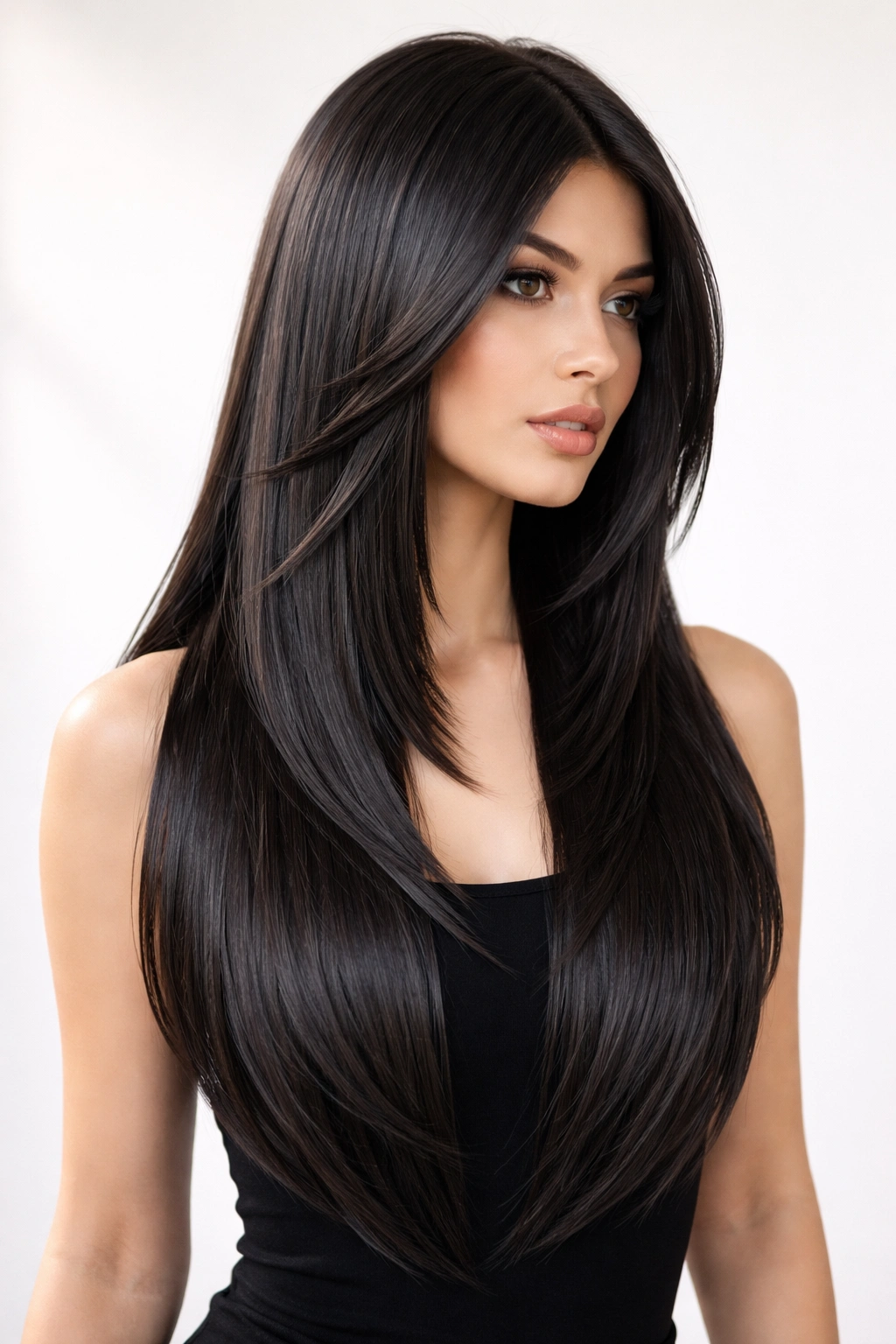
A geometric cut uses mathematical principles to create precise, intentional lines and angles. Applied to long layered hair, geometric cutting creates a modern, architectural look. The layers are clean, precise, and create distinct angles rather than soft curves. This is a sophisticated, fashion-forward option for straight hair.
Why Geometry Works on Straight Hair
Straight hair is the perfect canvas for geometric cutting because the clean lines of the hair texture align with the geometric principles of the cut. There’s no natural texture to blur the lines or soften the angles — everything reads as intentional and precise. A geometric cut on straight hair reads as high-fashion and deliberate in a way it might not on other hair textures. This look says that you’ve thought carefully about your style and chosen something specific and considered.
What to Expect With a Geometric Cut
- You’ll need to style it regularly to maintain the sharp lines (geometric cuts require blow-drying or flat-ironing)
- The cut should be refined and precise — there’s no room for messiness or imprecision
- It works best on straight hair that’s healthy and shiny; any damage or dullness shows
- You should be comfortable with a modern, slightly architectural aesthetic
- The cut requires trims every 6-8 weeks to maintain the clean lines
Insider note: Geometric cuts are best executed by stylists who have formal training in geometric cutting techniques. This isn’t a cut you want to trust to just any stylist — look for someone who specifically mentions geometric or precision cutting in their portfolio and experience.
Key Takeaways
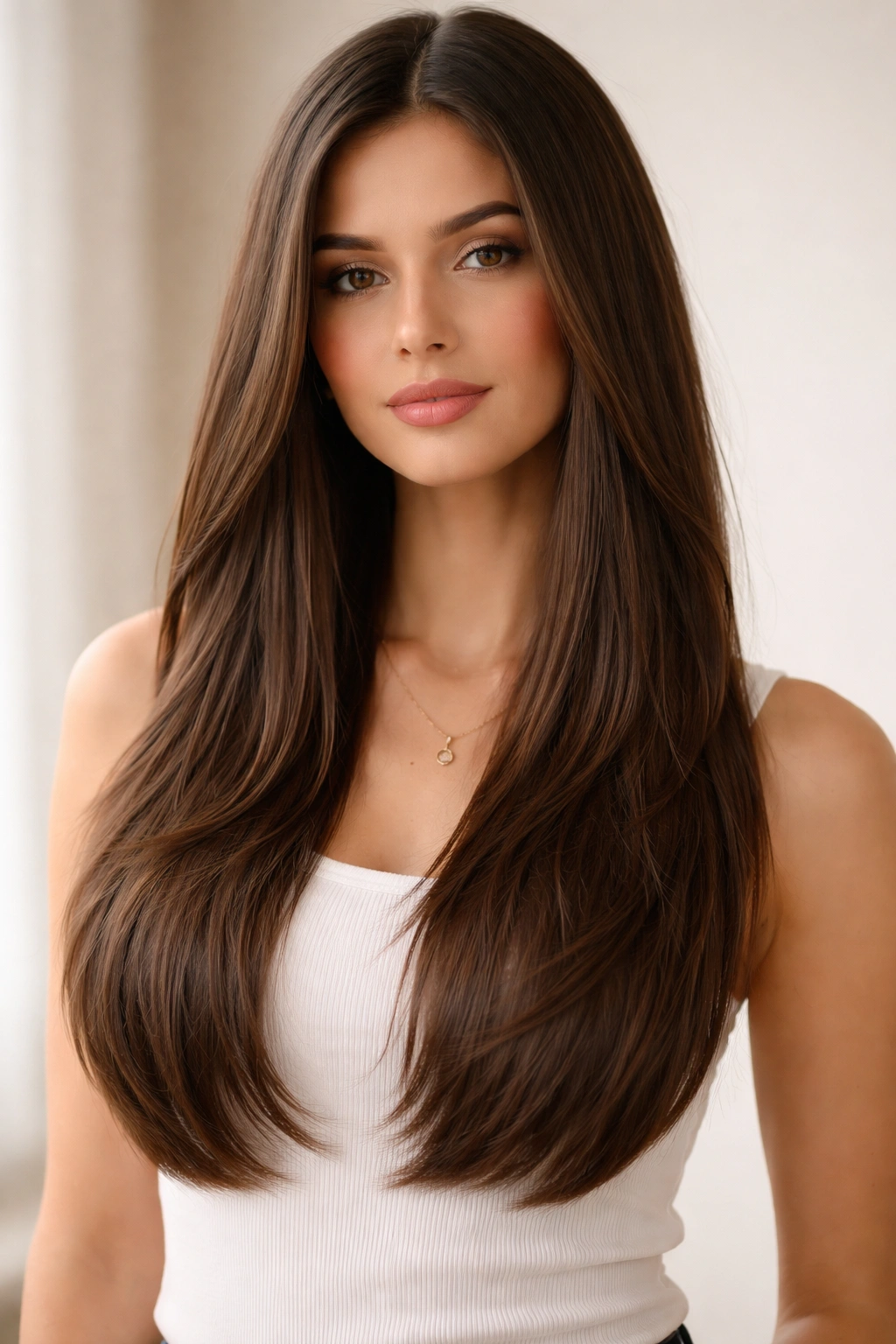
Finding the right long layered cut for straight hair comes down to understanding your hair’s natural texture, your lifestyle, and the aesthetic you’re actually going to commit to maintaining. Straight hair’s biggest advantage is that layers show up beautifully and clearly — but that also means imprecision is obvious. Work with a stylist who has specific experience cutting straight hair and who listens carefully to what you actually want rather than just assuming you want what’s trendy.
The best long layered cut is the one that makes you feel confident and beautiful while fitting into your actual daily routine. If you style your hair every single day, you can handle more dramatic, heavy layers. If you prefer wash-and-go simplicity, subtle layers or a shag might work better. Consider your face shape, your hair’s natural thickness, and how much time you’re genuinely willing to spend styling before committing to any cut.
Most importantly, bring reference photos to your consultation and be specific about what you’re looking for. Say “I want choppy layers around my face that are about 4 inches shorter than my longest pieces” rather than just “I want layers.” The more specific you are, the more likely you are to get a cut you absolutely love.
