



Fine straight hair has a reputation for being difficult to style, but the truth is that the right cut makes all the difference. When you have hair that lacks natural texture and density, a thoughtfully chosen haircut can create the illusion of volume, add movement, and make styling infinitely easier. The key is finding a cut that works with your hair’s natural properties rather than against them—one that uses precision and strategic layering to add shape without relying on curl or wave.
The challenge with fine straight hair isn’t that it can’t look amazing; it’s that certain cuts can leave it looking flat, wispy, or limp. But other cuts—specifically designed with fine texture in mind—can transform how your hair looks and feels. The difference often comes down to how your stylist handles layers, where they place length, how they handle the ends, and whether they use choppy, textured techniques or blunt, geometric lines. Some cuts add the illusion of thickness. Others create movement that fine hair naturally lacks. A few do both at once.
The following ten haircuts are specifically chosen because they’ve proven themselves across countless clients with fine straight hair. Each one addresses the core challenge: making fine, straight strands look fuller, shapelier, and more intentional. Whether you’re looking for something short and easy to maintain or longer and more versatile, there’s a cut here that will work with your hair type instead of fighting it.
1. Blunt Bob
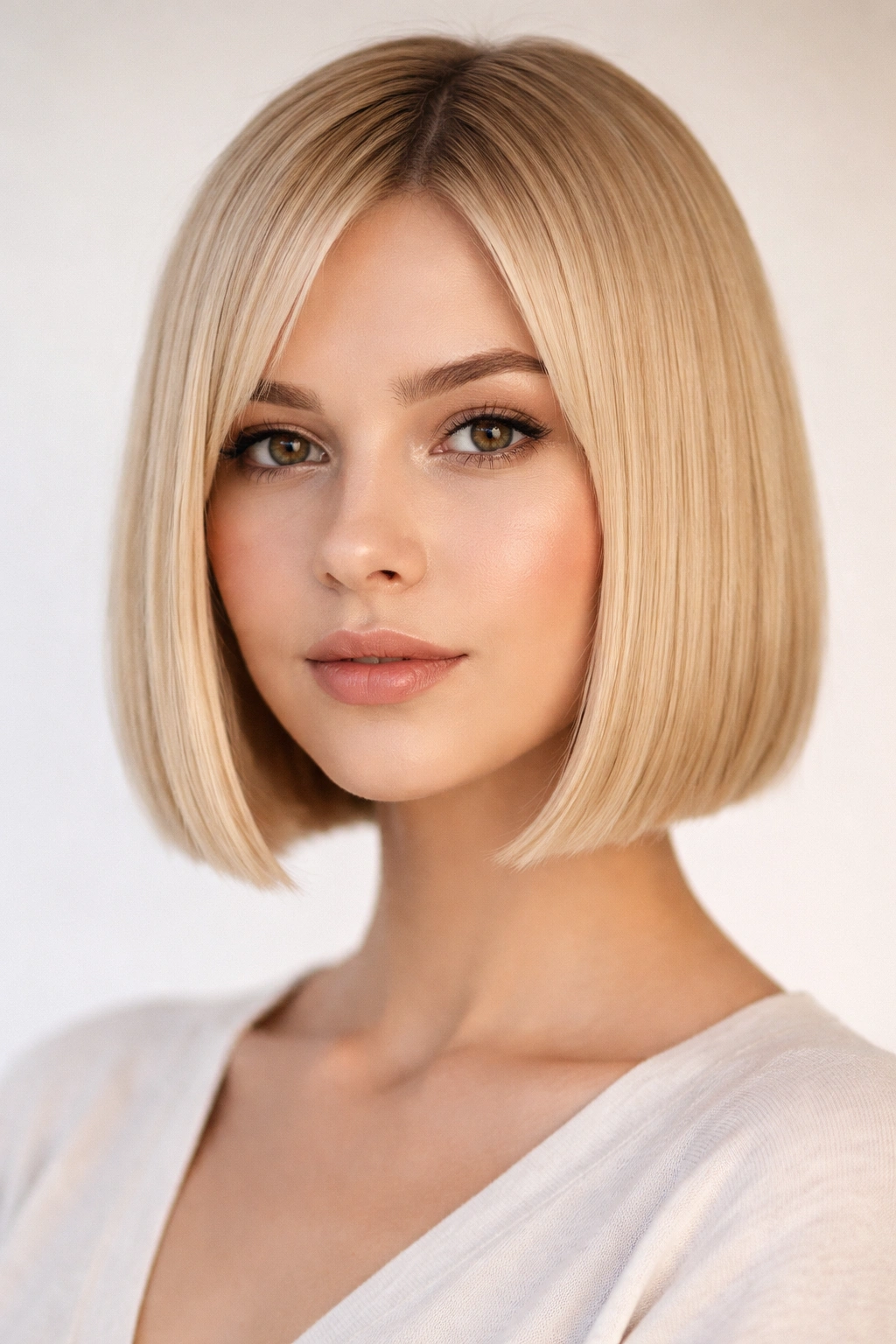
A blunt bob might seem counterintuitive for fine hair, but when cut properly, it’s one of the most flattering styles you can choose. The key is keeping it shorter—chin-length or even a touch shorter—which concentrates density where you want it most. Because there’s no layering to make fine hair look wispy, the solid line of a blunt cut actually creates a denser appearance, even if your hair isn’t naturally thick.
Why This Works for Fine Straight Hair
The blunt bob’s power lies in its simplicity and precision. When you cut straight across without layers, every strand contributes to the silhouette. With fine hair, this means the entire perimeter looks fuller and more substantial than it actually is. The weight sits right at your chin or just below, which frames your face beautifully and draws attention upward. The straight lines also pair naturally with straight hair texture—there’s no fighting against your hair’s straightness; you’re leaning into it. Plus, a blunt bob requires regular trims (every 4-6 weeks) to maintain its shape, which keeps your ends healthy and the overall style looking sharp.
Quick Facts About the Blunt Bob
- Best length is chin-length or slightly shorter to maximize the appearance of density
- Works best with a side part rather than a middle part, which can emphasize thinness
- Requires regular trims every 4-6 weeks to keep edges sharp and prevent that wispy, grown-out look
- A subtle contour around the face (slightly longer in front) makes it less severe while maintaining the blunt effect
- Minimal daily styling needed—a quick blow-dry with a round brush is usually enough
- Takes about 20-30 minutes to style, or you can wear it unstyled for a more relaxed look
Pro tip: Ask your stylist for a “graduated blunt bob,” which is slightly longer in the front and gradually shorter toward the back, adding dimension while maintaining that dense appearance.
2. Textured Pixie Cut
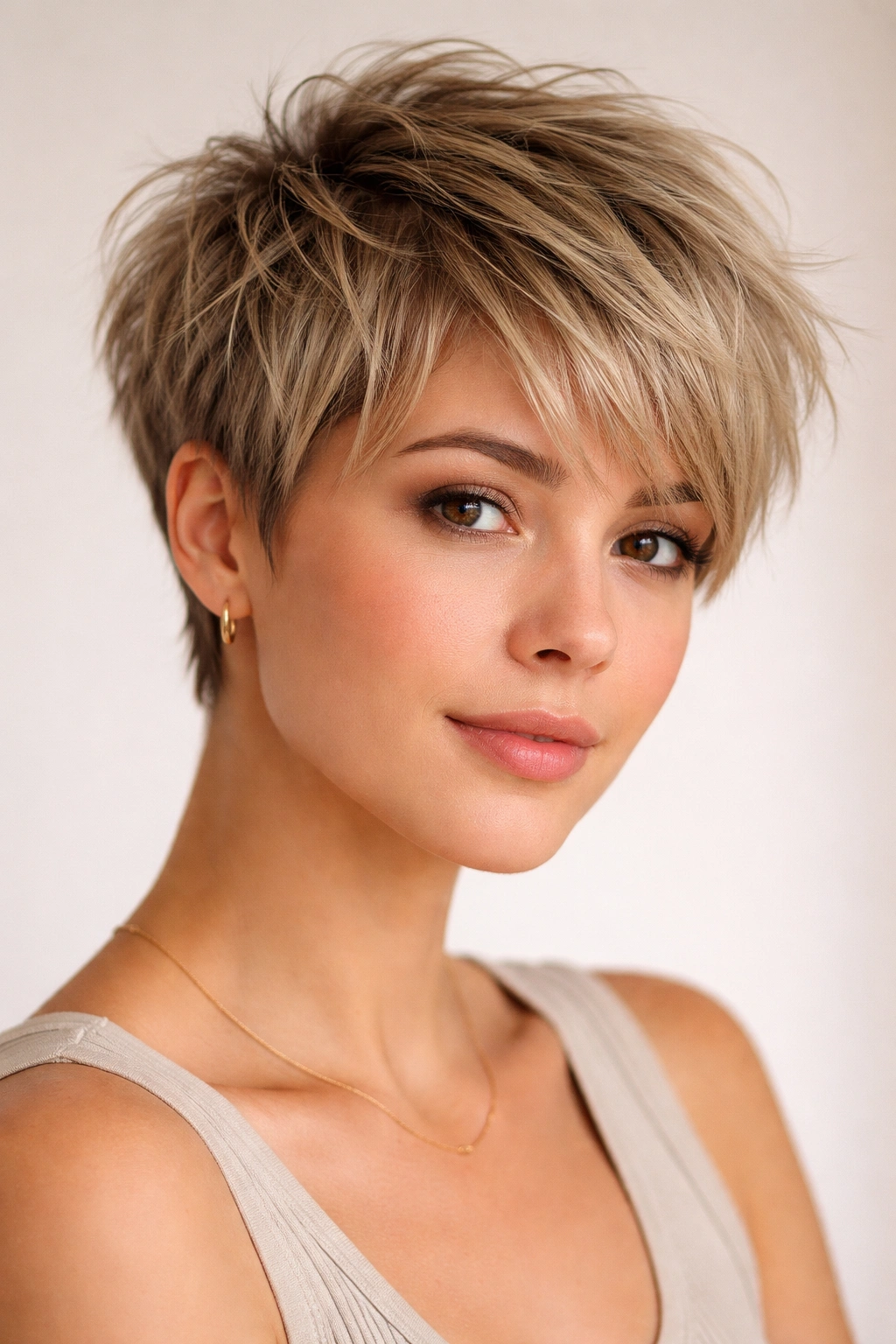
A pixie cut sounds risky for fine hair, but a textured, choppy pixie actually creates movement and the illusion of thickness that fine straight hair desperately needs. The trick is asking for lots of texture—short choppy layers throughout—rather than a sleek, smooth pixie. This creates tiny peaks and valleys across your scalp that catch light and break up the flatness that plagues fine hair.
Why This Cut Adds Dimension to Fine Hair
A smooth pixie can look limp on fine hair, but a textured one transforms it. By using choppy, point-cut layers throughout the cut, your stylist creates natural-looking texture that mimics the fullness of thicker hair. The shorter length also means there’s less weight pulling your hair down, so it can stand up naturally and look bouncier. You can also add styling products—texturizing sprays, matte clay, light pomades—to enhance the choppy texture and create even more dimension. A textured pixie also dries quickly and requires minimal heat styling, which is gentler on fine hair.
What Makes This Pixie Work
- The cut uses choppy, point-cut layers throughout to create texture and movement
- Longer layers on top (about 1-2 inches) with shorter sides (half an inch or less) create a modern, intentional look
- Can be styled sleek for a polished vibe or tousled and piece-y for a more casual feel
- Requires a styling product to really shine—texturizing spray or light clay works best
- Grows out relatively gracefully; you can stretch to 8-10 weeks between cuts if needed
- Perfect if you want a low-maintenance style that still looks fashionable and intentional
Worth knowing: This cut requires a stylist who understands how to use point-cutting and texturizing techniques specifically for fine hair. A blunt pixie will look thin; a textured one will look full.
3. Sleek Lob with Precision Layers
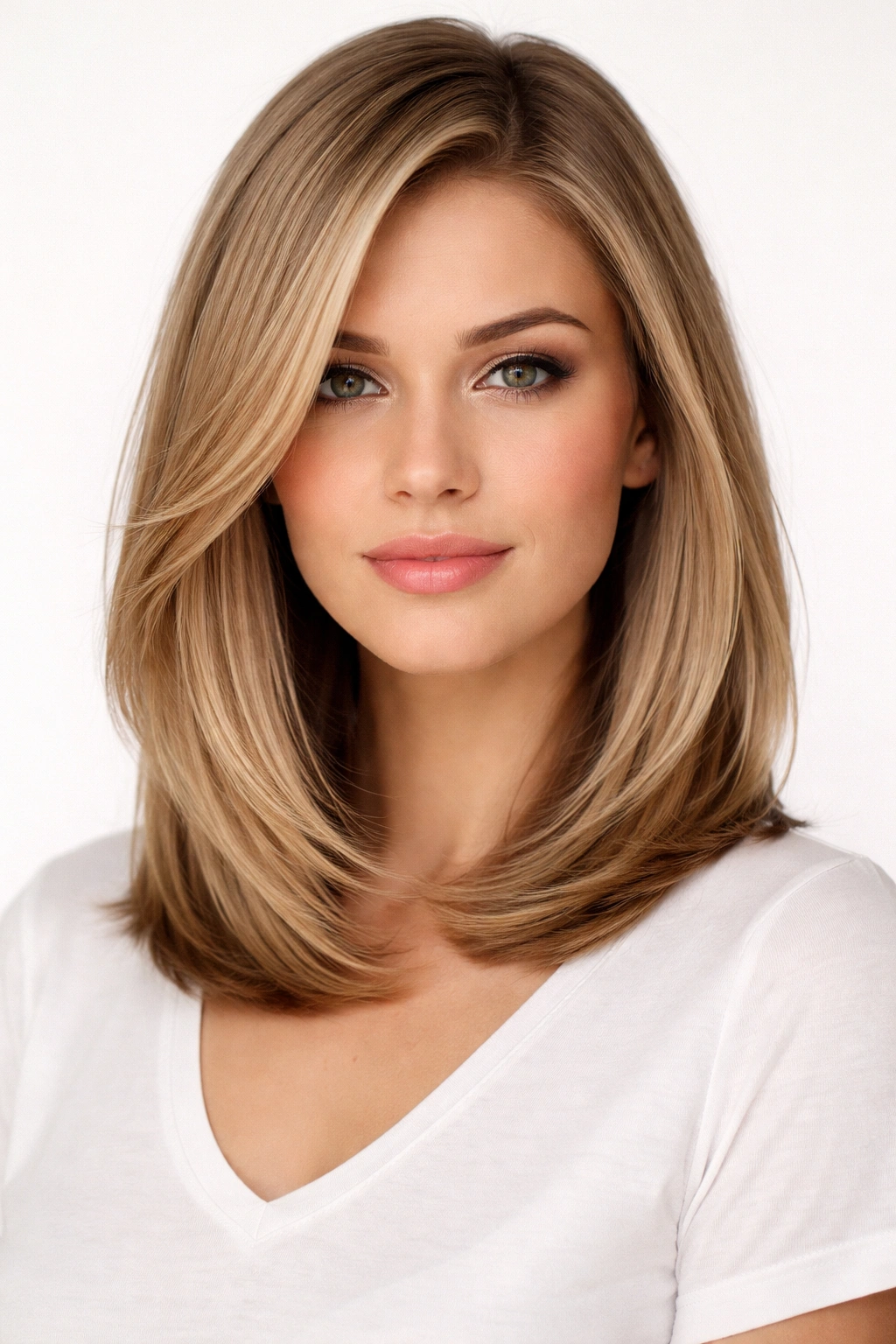
A lob (long bob) can work beautifully for fine hair if it’s cut with precision layers that add movement without creating the wispy, thin appearance that happens when you layer fine hair badly. The key is using strategic layering—not too many layers, and each one placed intentionally to create shape and movement rather than just thinning things out.
How Precision Layers Create Volume
A well-executed lob for fine hair uses layers that start a few inches below the shoulder and work outward, creating subtle waves of length rather than choppy, disconnected pieces. The face-framing layers are the most important—they should be thicker (longer) than you might expect, creating dimension without making your hair look scraggly. The blunt ends throughout add density, while the strategically placed layers add movement and prevent the style from looking like a solid block. This combination gives fine hair the illusion of fuller volume while actually enhancing its straight, sleek texture.
The Lob Structure That Works Best
- Cut to collarbone or just below for the optimal balance of length and density
- Face-framing layers should be thick and intentional, not wispy or too numerous
- The back should remain mostly blunt with subtle layers for movement, not choppy layers throughout
- Pair with a deep side part to create the illusion of volume at the roots
- Works beautifully with a subtle bend created by a flat iron or a very light wave
- Requires a trim every 8-10 weeks to maintain the shape and prevent the ends from looking thin
Styling tip: Use a round brush on a blow-dryer to create a subtle outward bend at the ends, which adds movement and prevents the style from looking flat and limp.
4. Layered Shag
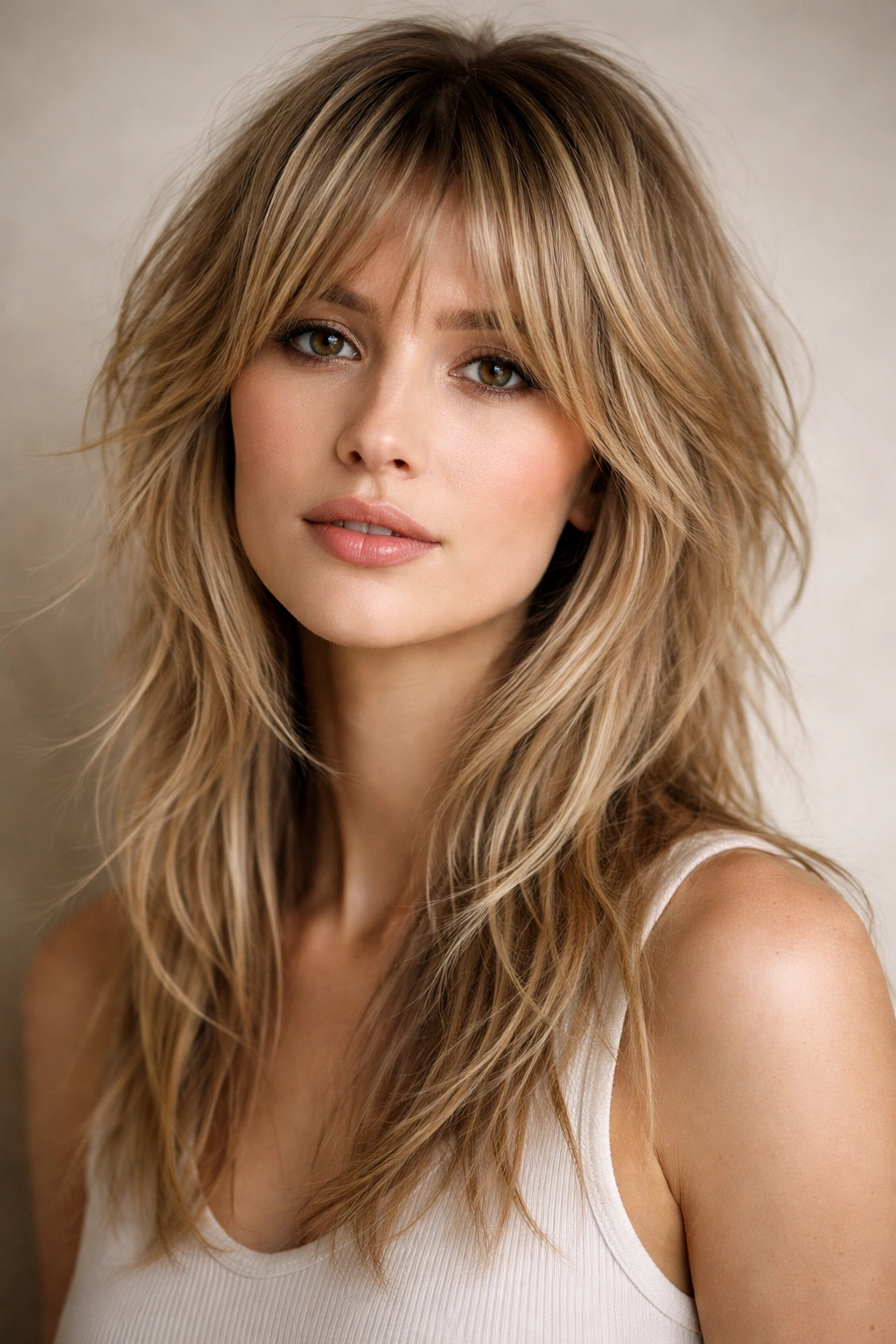
A shag is having a major moment, and it’s actually a smart choice for fine straight hair when executed properly. A modern shag uses choppy, textured layers throughout that create movement and visual fullness. Unlike a traditional shag, which can look messy and thin, a contemporary version uses point-cut and texturizing techniques that look intentional and polished while still delivering that signature piece-y, effortless vibe.
Why a Shag Works on Fine Hair
The magic of a shag for fine hair is that the choppy layers create texture and movement that straight hair doesn’t naturally have. Each layer is shorter than the one beneath it, which means your hair naturally separates into pieces rather than clumping together. This separation, combined with the right styling product, makes fine hair look fuller and more textured. The length is also versatile—you can wear it longer (shoulder length or below) without it looking limp because the layers prevent it from being a solid mass.
The Modern Shag Framework
- Short layers on top (2-3 inches) with longer layers underneath create movement and texture
- Point-cut and texturizing techniques used throughout, not blunt layers
- Longer overall length (shoulder or beyond) works better for fine hair than an ultra-short shag
- Requires a styling product—texturizing spray, sea salt spray, or light mousse—to look its best
- Dries relatively quickly with minimal blow-dry work; you can also air-dry and add texture with product
- The style grows out gracefully; you can usually go 10-12 weeks between cuts
- Creates a youthful, modern, intentionally undone aesthetic
Real talk: A shag requires some styling effort to look good. You’ll want to use texturizing spray and piece out the layers, so it’s not a completely wash-and-go style like a blunt bob.
5. Micro Bangs with a Straight Blunt Cut
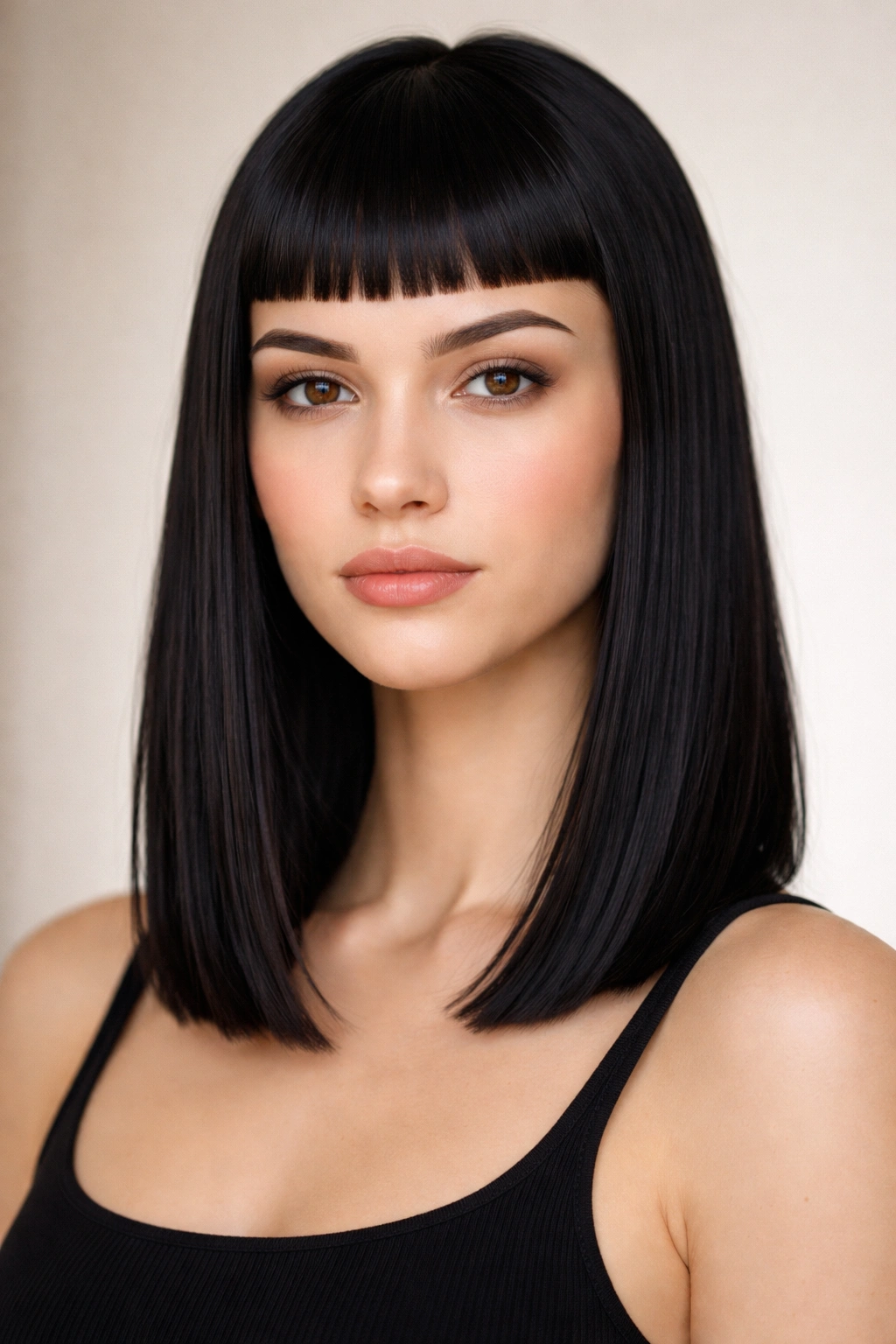
Micro bangs (short, blunt bangs that sit much higher on the forehead than traditional bangs) paired with a straight, blunt-cut length create a striking, fashion-forward look that works surprisingly well for fine straight hair. The short bangs add visual interest and a bold focal point, while the blunt length maximizes the density of your hair. This combination creates a graphic, intentional style that makes fine hair look like a deliberate choice rather than a limitation.
The Visual Impact of Micro Bangs
Micro bangs completely change the proportions of your face and create an undeniably bold statement. Because they’re cut so short, they sit above your eyebrows and expose your entire forehead, creating a chic, almost art-gallery vibe. On fine hair, this actually works in your favor—the bangs create a clear, graphic line that draws the eye upward and away from the hair texture itself. The straight blunt cut underneath becomes almost secondary to the bangs, which means your fine hair texture becomes part of the polished aesthetic rather than a problem to hide.
Making This Look Work
- Bangs should sit about an inch above your eyebrows for maximum impact
- The length underneath can be anywhere from chin-length to mid-back, depending on your preference
- A side part is more flattering than center, which can make the bangs look too severe
- Requires a trim every 3-4 weeks, as micro bangs grow out noticeably fast
- Works best with straight hair texture—this is one cut that truly benefits from your hair type
- Takes about 15-20 minutes to blow-dry straight; takes longer if you want body or waves
- Requires confidence; this is a statement cut that definitely gets attention
Important note: Micro bangs are high-maintenance and require regular trims. If you’re not willing to commit to every 3-4 weeks at your stylist, this cut isn’t for you.
6. Minimalist Mullet
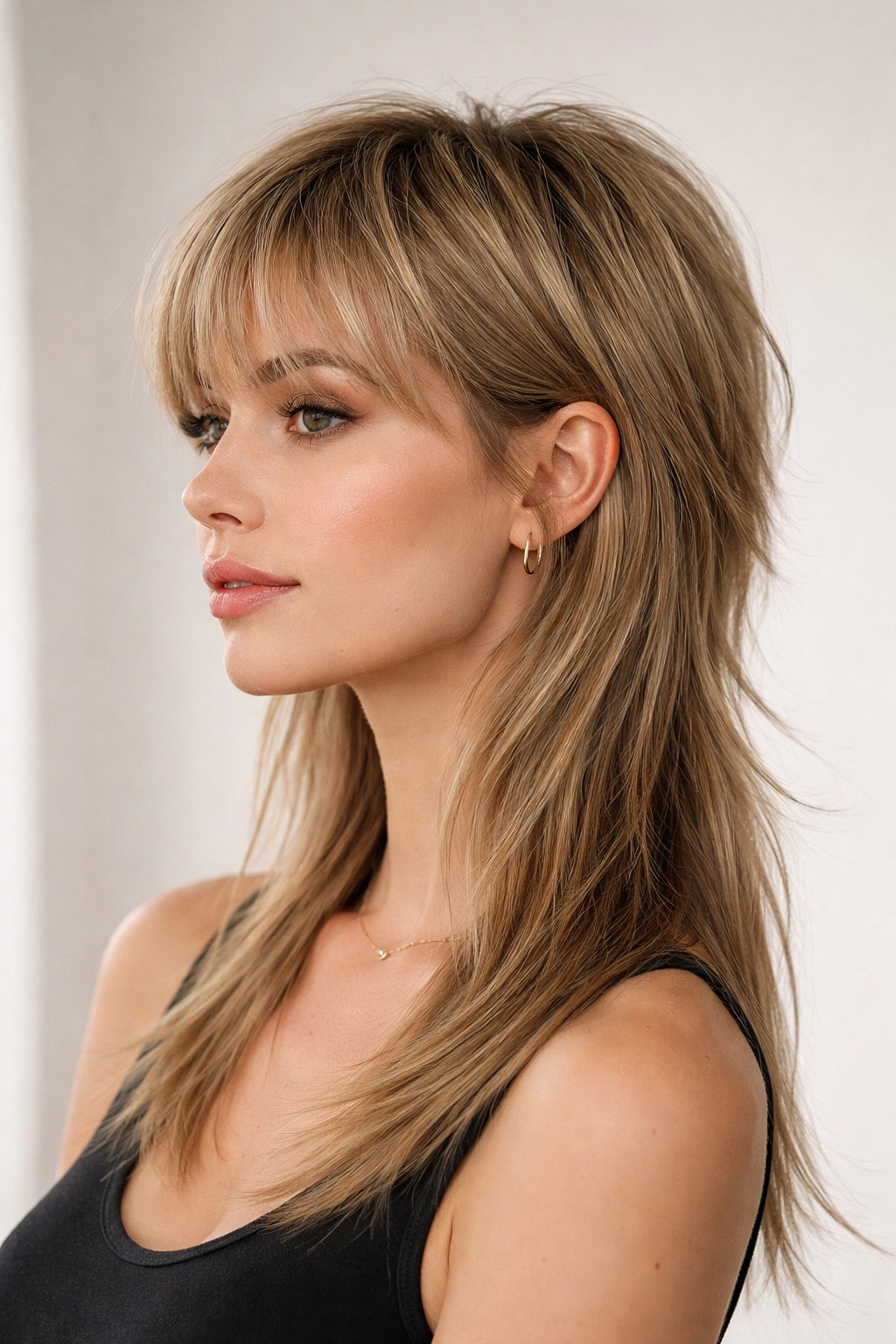
A minimalist or modern mullet is much subtler and more wearable than the 1980s versions—it’s basically slightly longer layers in the back with shorter, textured layers on top and sides. For fine straight hair, this cut offers the best of both worlds: the volume and density of shorter hair on top where you need it, plus longer length in the back for versatility.
How a Modern Mullet Works on Fine Hair
A minimalist mullet uses choppy layers on top and sides to create the illusion of fullness where it matters most—around the face and crown. The back is longer (shoulder-length or beyond) but still textured, so it doesn’t become a heavy weight that pulls your fine hair down and makes it look limp. The contrast between the shorter, textured top and the longer back creates movement and dimension that fine hair typically lacks. You can style the top with texturizing product for a piece-y, textured vibe, then flip the back hair into a sleek low ponytail or let it flow straight and simple.
The Structure of This Cut
- Short, choppy, textured layers on top (1-2 inches) create volume around the crown and face
- Slightly longer sides transition naturally into the longer back
- Back length stays longer (shoulder or beyond) with subtle layers for movement
- Much more wearable and modern than a traditional mullet
- Can be styled many ways: piece-y and textured, straight and sleek, or half-up
- Works as either a statement cut or something you can tone down depending on how you style it
- Requires a styling product to make the top layers pop; can be worn more naturally in back
Styling flexibility: The beauty of this cut is that you can style it dramatically or subtly depending on your mood and what the occasion calls for.
7. Choppy Medium Cut with Textured Ends
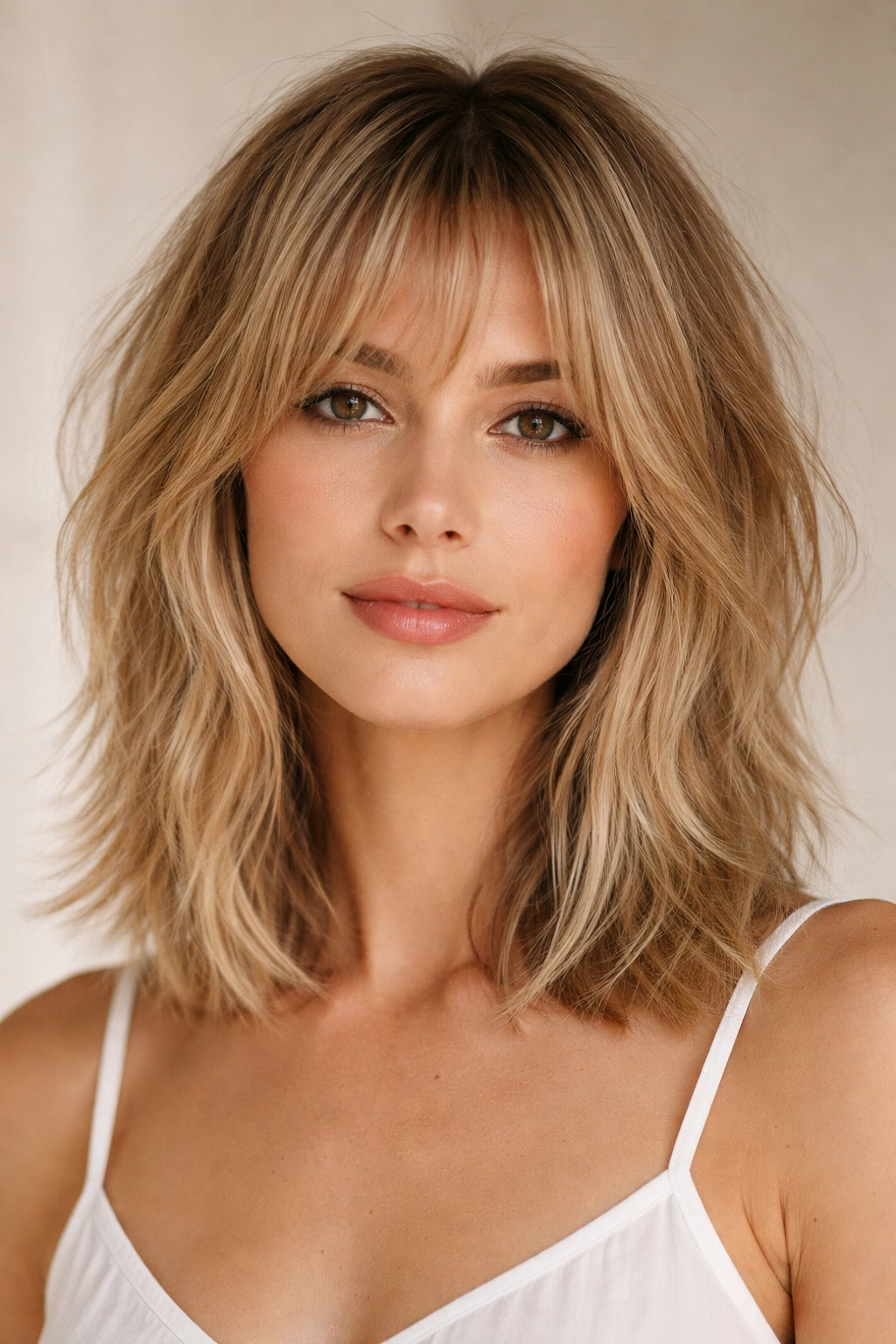
A choppy medium cut is essentially layers throughout, but executed in a way that creates intentional texture rather than a scraggly, shapeless result. The layers are shorter and choppier than traditional long layers, and the ends are texturized using point-cutting or razor-cutting techniques. This creates a youthful, modern look with tons of movement that makes fine hair appear fuller than it is.
The Art of Choppy Texture on Fine Hair
The difference between a choppy cut that looks great and one that looks thin comes down to execution. A good choppy cut for fine hair uses thicker layers (longer pieces between cuts) and point-cuts that create intentional separation without making each strand look isolated and wispy. The goal is to create the illusion of texture and movement without actually removing so much hair that you look thin. Combined with the right styling product—texturizing spray, sea salt spray, or dry shampoo—a choppy cut can make fine hair look genuinely voluminous.
What This Cut Delivers
- Choppy layers throughout create movement and prevent that flat, stringy appearance
- Point-cut and textured ends rather than blunt, which adds visual fullness
- Medium length (shoulder or slightly shorter) balances movement with some weight
- Great for straight hair because the texture you add with cutting can substitute for natural wave
- Works with or without styling products, but products enhance the effect
- Grows out relatively gracefully; you can go 8-10 weeks between cuts
- Perfect if you want a trendy, intentional look that still feels effortless
Maintenance reality: This cut benefits from regular blow-drying with product. If you prefer to air-dry, you might want a different style.
8. Straight Cut with Full Bangs
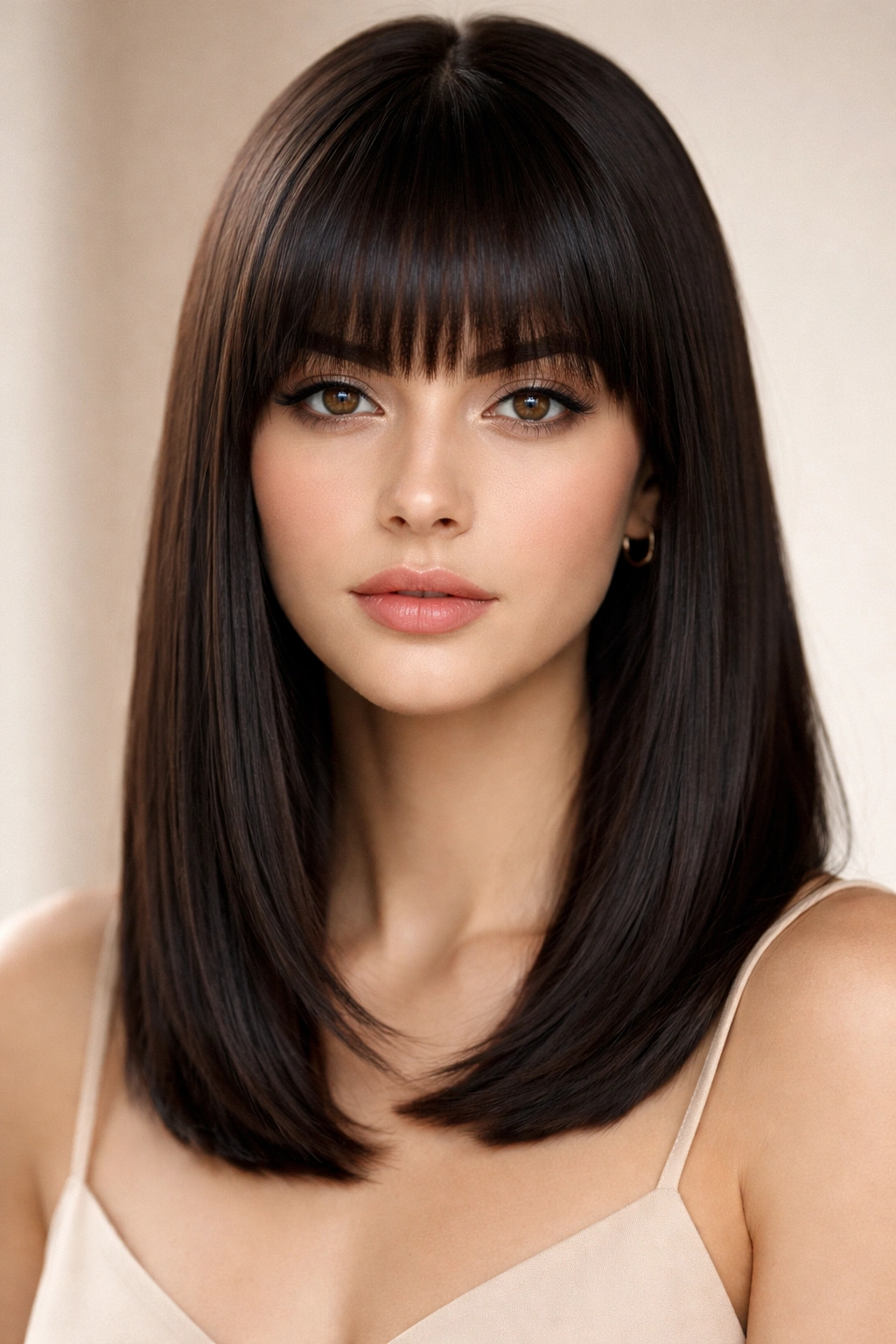
A straight-across blunt cut paired with full, blunt bangs creates a bold, geometric look that’s chic and very deliberate. Unlike micro bangs, full bangs reach your eyelashes and cover more of your forehead, creating a more comprehensive framing effect. This combination works beautifully for fine straight hair because every element is about clean lines and precision, which complements straight texture perfectly.
The Impact of Full Bangs
Full bangs create an instantly fashion-forward, editorial vibe. They frame your face dramatically and draw attention to your eyes and features rather than your hair texture. For fine hair, this is perfect—your hair becomes a polished frame rather than something you’re hyperaware of. The blunt bangs and blunt length create continuity and a sense of intentional styling that makes fine hair look like a deliberate aesthetic choice. The geometric precision also pairs beautifully with straight hair—there’s no fighting against your natural texture; you’re embracing it fully.
Making Full Bangs Work
- Bangs should reach your lashes or just below, creating a soft but full fringe
- Pair with a blunt length at the chin or just below for maximum impact
- Side part looks modern; center part is also striking but more dramatic
- Requires a trim every 4-6 weeks to maintain the blunt edge of the bangs
- Can be styled completely straight or with a subtle outward flip at the ends
- Works best for those comfortable with a bold, statement-making style
- Creates a very polished, intentional appearance even with minimal styling
Product tip: A lightweight smoothing serum helps bangs lie smoothly and adds a subtle sheen without weighing down fine hair.
9. Straight Long Layers
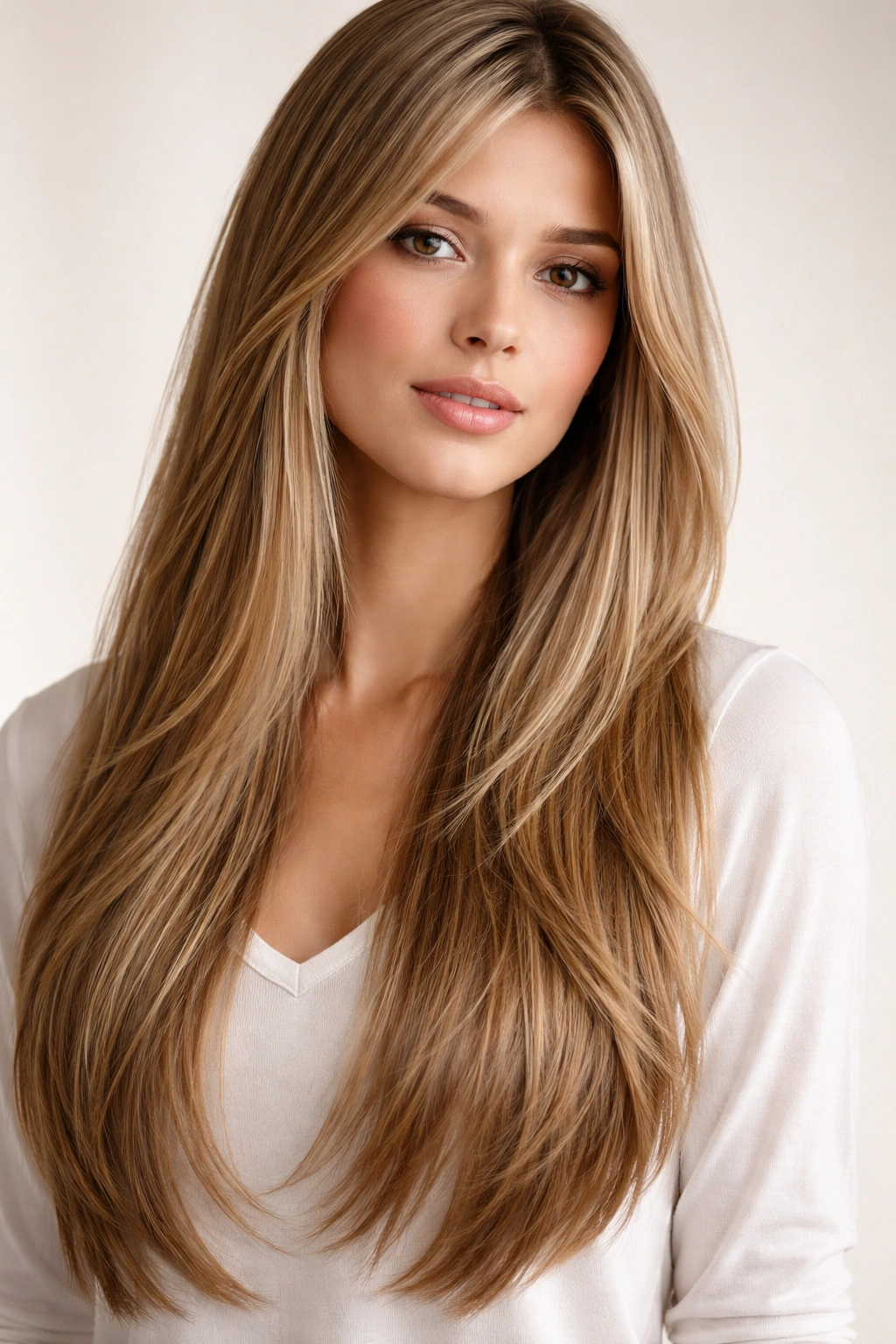
Long layers done correctly—with precision and intention—can work beautifully on fine straight hair. The key difference between flattering long layers and ones that look thin and wispy is where the layers start, how thick they are, and how the ends are finished. Well-executed long layers create movement and softness while maintaining enough density to avoid the shapeless look that thin-haired people often fear.
How Long Layers Add Movement Without Sacrificing Density
Long layers that start further down (mid-length or lower) rather than right at the crown create more subtle dimension. Instead of choppy, disconnected pieces throughout your hair, you get longer sections with some shorter layers that add shape. The key is making sure the ends of each layer are blunt enough to look intentional and substantial, not wispy. When combined with straight hair that naturally falls smoothly, long layers create a soft, feminine silhouette with movement that seems effortless.
The Long Layer Formula
- Layers should start at mid-length (not at the crown) to avoid excessive thinness
- Each layer should be thick enough to look intentional; avoid too many thin slivers
- Point-cutting on just the very ends adds subtle texture without sacrificing density
- Length can be mid-back or longer, depending on how much maintenance you want
- Works beautifully with a side part and a subtle bend created with a flat iron
- Requires a trim every 8-10 weeks to maintain shape and prevent stringy ends
- Versatile enough to wear straight, with subtle waves, or half-up
Maintenance note: Long layers need more frequent trims than you might expect to keep them looking intentional rather than just “long hair that’s grown out.”
10. One-Length Straight Cut
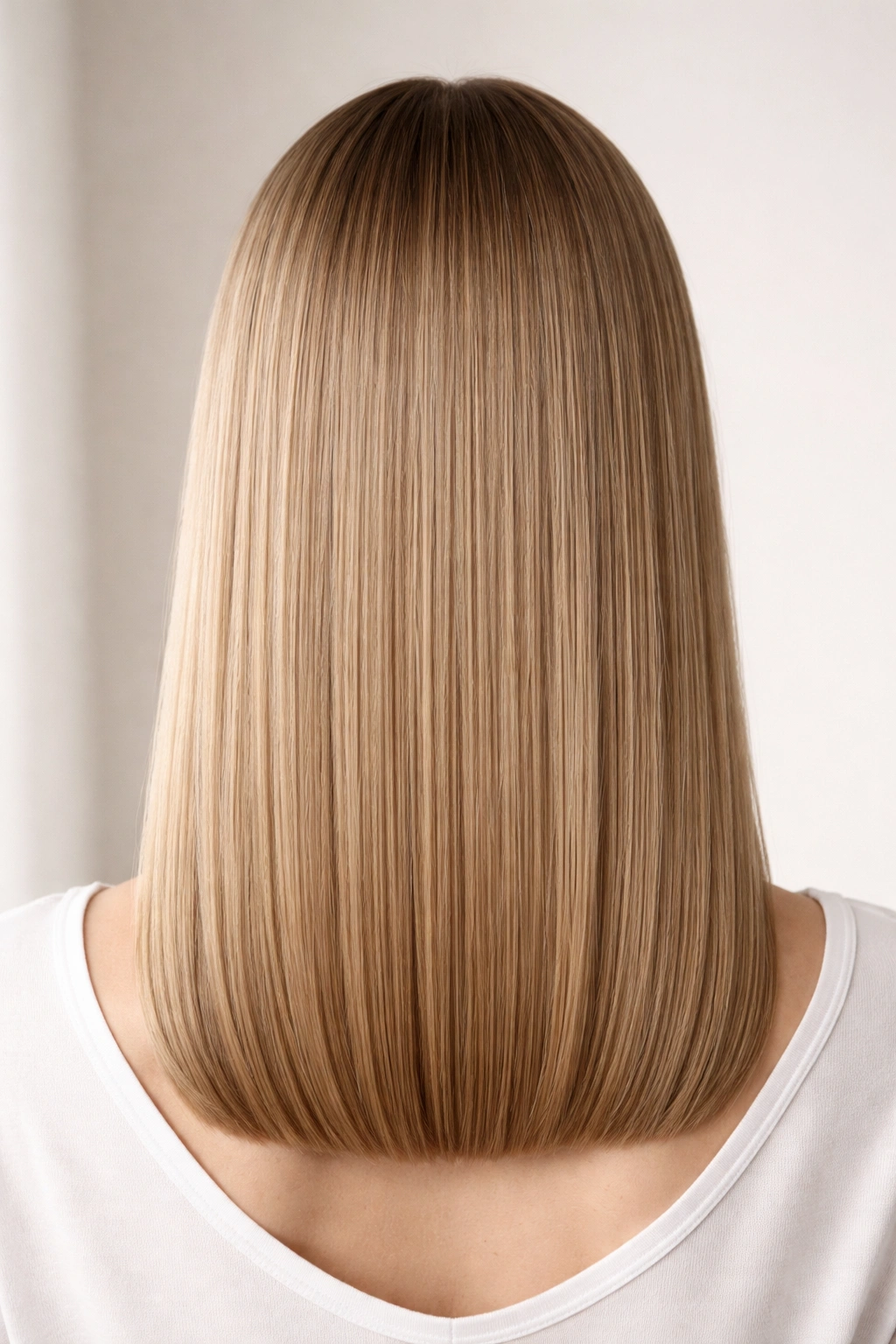
Sometimes the simplest option is the best. A one-length cut with no layers—hair that’s all the same length with a blunt, even bottom—can be incredibly striking on fine straight hair. There’s something undeniably elegant and modern about one-length hair, especially when it’s paired with straight texture. This cut maximizes density because there’s no layering to thin things out, and it has a timeless quality that never looks dated.
Why One-Length Works for Fine Hair
A one-length cut is the ultimate maximization of hair density. Every single strand contributes to the overall volume, and the blunt edge at the bottom creates a clean, substantial line. Because there’s no layering, there’s nowhere for the style to look wispy or thin. You get a solid perimeter that makes your hair look fuller than it actually is. The simplicity is also freeing—there’s very little styling required, and the style works across many different age groups and face shapes.
The One-Length Advantage
- Maximizes visible density because every strand is at roughly the same length
- Creates a clean, intentional silhouette with minimal styling required
- Can be any length you prefer: shoulder, mid-back, waist, or longer
- Requires a trim every 6-8 weeks to maintain the blunt edge and prevent wispy ends
- Works beautifully with a side part to add dimension to the face
- Incredibly versatile; you can wear it straight, add subtle waves, or style it up
- A timeless choice that never looks trendy or dated; it just looks classic
Styling options: A one-length cut works equally well worn completely straight with a silky finish, or with subtle waves created by a flat iron for a softer look.
Final Thoughts

The right haircut can transform how you feel about your fine straight hair. Instead of fighting against your hair’s natural properties, the cuts above all work with your straight texture and find ways to create the illusion of volume and movement that fine hair lacks on its own. Whether you choose a bold statement cut like micro bangs or a timeless classic like a one-length straight cut, the key is finding a stylist who understands how to cut fine hair specifically.
Precision matters enormously with fine hair. A great stylist won’t over-layer or use techniques that create wispy ends. They’ll understand that sometimes the best way to create the illusion of fullness is to concentrate hair density in strategic places—the crown, the face-framing area, or the overall perimeter. They’ll know which cuts benefit from choppy, textured techniques and which ones benefit from blunt, geometric lines.
The other crucial piece is committing to regular maintenance. Fine hair shows damage and grown-out ends more obviously than thick hair, so keeping up with trims every 4-8 weeks (depending on your cut) will make an enormous difference in how your style looks. Find a stylist you trust, communicate clearly about what you want, and then trust their expertise about what will actually work on your specific hair type.
