



Thick straight hair is one of those textures that can look absolutely stunning with the right cut — but absolutely dull and shapeless with the wrong one. The challenge isn’t whether you have enough hair to work with; it’s that too much of a good thing can easily look heavy, blunt, and difficult to manage if your stylist doesn’t understand how to add movement and dimension to substantial volume.
The secret is that thick straight hair actually benefits from strategic layering, texture, and deliberate length choices that create shape without requiring you to blow-dry or flat-iron your hair every single day. The right haircut for your texture should make styling easier, not harder — it should play with your natural thickness instead of fighting against it, and it should give you a silhouette that looks intentional and polished whether your hair is freshly washed or a few days into your routine.
What makes a haircut work beautifully for thick, straight hair is how the stylist uses the density to create definition through cut lines rather than through color or texture alone. The best cuts for this hair type leverage the weight and structure of your thick strands to create clean shapes, architectural lines, and movement that thinner hair types often struggle to achieve. Whether you’re drawn to shorter, bolder looks or prefer longer lengths, the key is choosing a cut that accounts for your natural volume and actually improves your daily styling experience rather than adding to it.
1. The Sleek Shoulder-Length Bob
A shoulder-length bob is the go-to choice for thick straight hair because it hits at exactly the right point to show off your density without overwhelming your frame. This cut sits right where your shoulders naturally curve, creating a neat, defined shape that feels modern and polished without requiring endless maintenance. The length is long enough to avoid that heavy top-heavy feeling you sometimes get with shorter bobs, but short enough that the weight distributes evenly through your hair.
Why This Cut Works So Well for Thickness
The shoulder-length bob works beautifully for thick hair because the weight of your strands actually helps create that enviable full, bouncy look that thinner hair textures spend tons of money trying to achieve with extensions or volumizing treatments. When your stylist cuts this length for your hair type, the natural density keeps the line clean and the shape structured without needing lots of layers that can sometimes look choppy or too texture-focused. Your straight texture means the line stays sharp and intentional — you get that polished, put-together appearance without the styling effort. The blunt or slightly textured ends create visual interest without sacrificing the sleek aesthetic.
How to Style and Maintain It
- Wash and air dry for a naturally sleek, straight finish that requires minimal effort most mornings
- Blow dry with a paddle brush for extra smoothness and to enhance the shape’s clean lines
- Add a lightweight serum or smoothing cream to prevent any frizz and keep the piece looking intentional
- Visit your stylist every 6-8 weeks to maintain the sharp line at your shoulders and keep the shape from looking grown out
- Straight-iron touch-ups on day two or three if you want maximum polish, though your thick hair typically holds the cut beautifully even without heat styling
Pro tip: Ask your stylist for a subtle angle where the front pieces are slightly longer than the back — just an inch or so — which creates a flattering frame for the face while keeping the overall silhouette modern and clean.
2. The Textured Shag With Choppy Layers
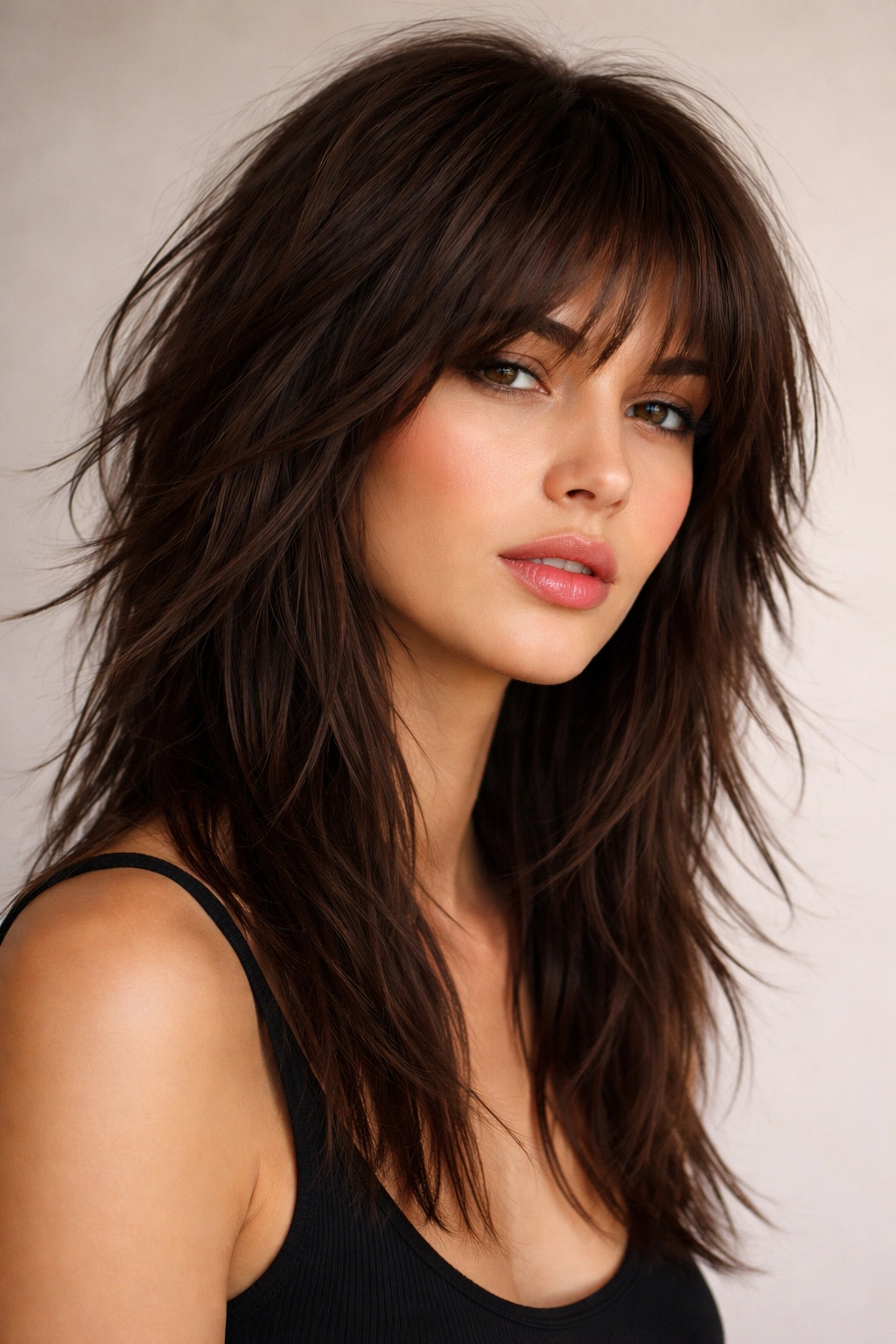
A shag cut brings movement and dimension to thick straight hair by using choppy, disconnected layers throughout the entire style. Rather than blending layers smoothly, this cut deliberately separates pieces so you see distinct texture and airiness even though your hair is naturally dense. The layers create the illusion of lighter weight while actually working with your thickness instead of against it — they break up the volume strategically rather than trying to thin out your entire head.
The Edge and Movement This Cut Provides
The beauty of a shag for thick straight hair is that it gives you edge and personality without requiring you to curl or texture your hair in any way. The choppy layers create visual movement that reads as intentional and modern, even though your hair is perfectly straight. Your density means the layers stay defined and don’t collapse or look wispy — instead, they create a bold silhouette with real presence. The shorter layers near the crown add lift and prevent that weighed-down feeling, while longer pieces in front give you face-framing length that feels romantic and undone.
Styling Strategies for Maximum Impact
- Air dry or blow dry with your fingers raking through to enhance the separation between layers — don’t brush it smooth
- Use a texturizing spray or sea salt spray to add grit and emphasis the choppy quality of the cut
- Style with a flat iron for a sleeker, more polished shag if you’re going for a dressier look
- Embrace the piecey quality — this cut is meant to look somewhat undone and deliberately textured
- Get trims every 5-6 weeks to keep the choppy layers sharp and prevent the cut from looking too grown out
Worth knowing: A shag requires more frequent trims than a blunt cut because the layers are the entire point of the style — when they grow out, the whole effect gets lost.
3. The Long Straight Cut With Subtle Layers
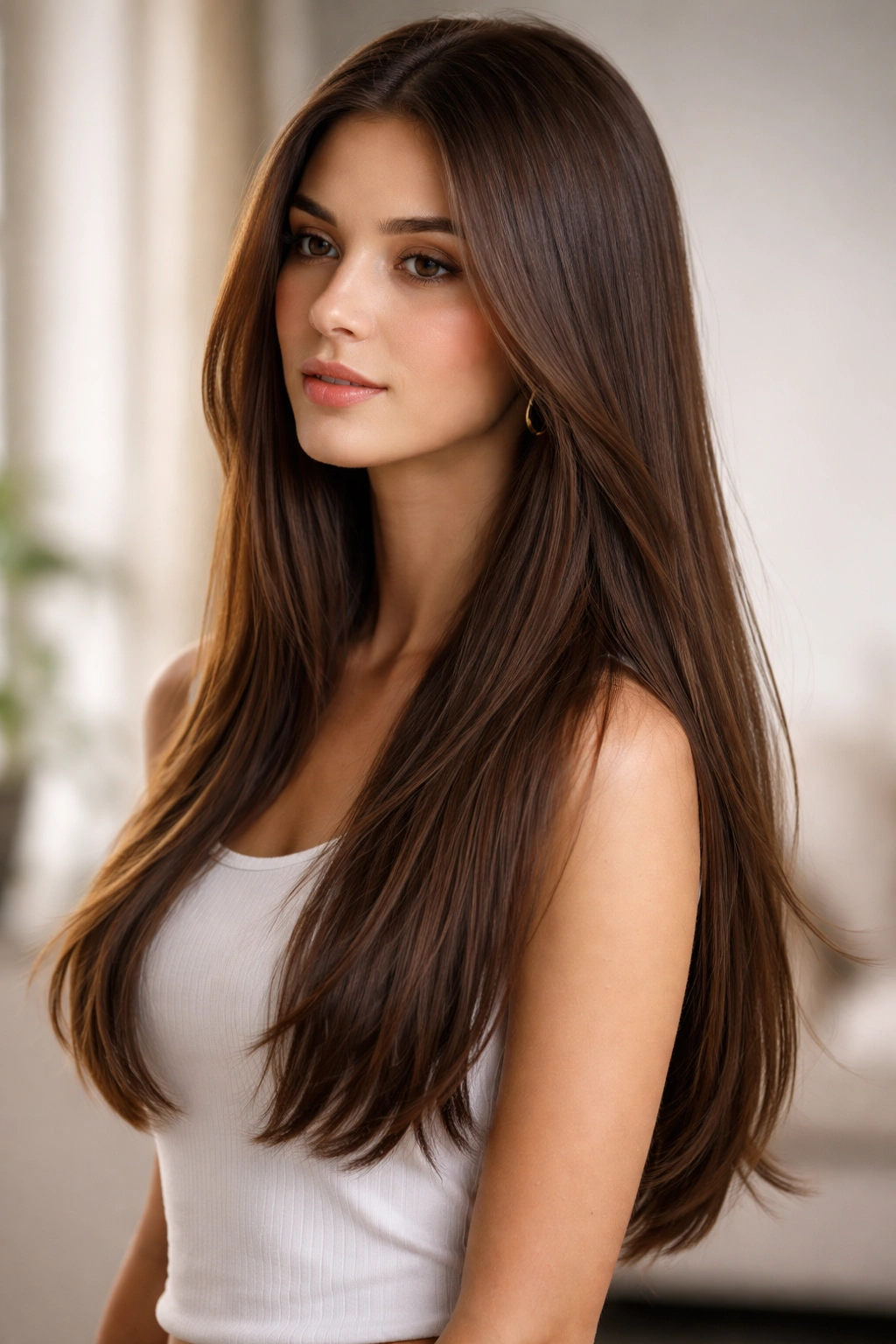
If you love length but want to add subtle dimension to thick straight hair, a long cut with barely-there layers is the sophisticated answer. This style keeps you the length you want while preventing that dense, heavy feeling that pure length sometimes creates with thick hair. The layers are so minimal that they’re almost invisible when your hair is down, but they make a noticeable difference in how your hair moves and feels.
How Invisible Layers Transform Thick Hair
The magic of this approach is that the layers are cut so that they’re only visible when your hair moves or when you look at it from certain angles. Most of the length is preserved, which means you still have the versatility of long hair — you can wear it up, half-up, in braids, or straight down — but the minimal layering keeps the strands from bunching together and looking plasticky or unmovable. Your thickness gets to work for you instead of becoming an obstacle. The layers are typically concentrated toward the ends and around the face, which adds dimension exactly where you want it without compromising the overall length and weight you’re after.
Maintenance and Daily Wear
- Wash and wear straight with no styling effort on casual days — your hair naturally looks polished
- Blow dry with a large barrel brush to enhance the subtle movement the layers create
- Use a smoothing cream or serum to keep strands from separating too much and looking frizzy
- Get trims every 8-10 weeks just to keep the ends fresh and healthy
- This length and cut style work beautifully for wearing your hair both down and up throughout the week
Pro tip: Ask your stylist to add the layers starting at ear level or lower so the face-framing effect is subtle — this gives you movement where it matters without making the cut feel disconnected.
4. The Blunt Midi Cut (Midi-Length Bob)
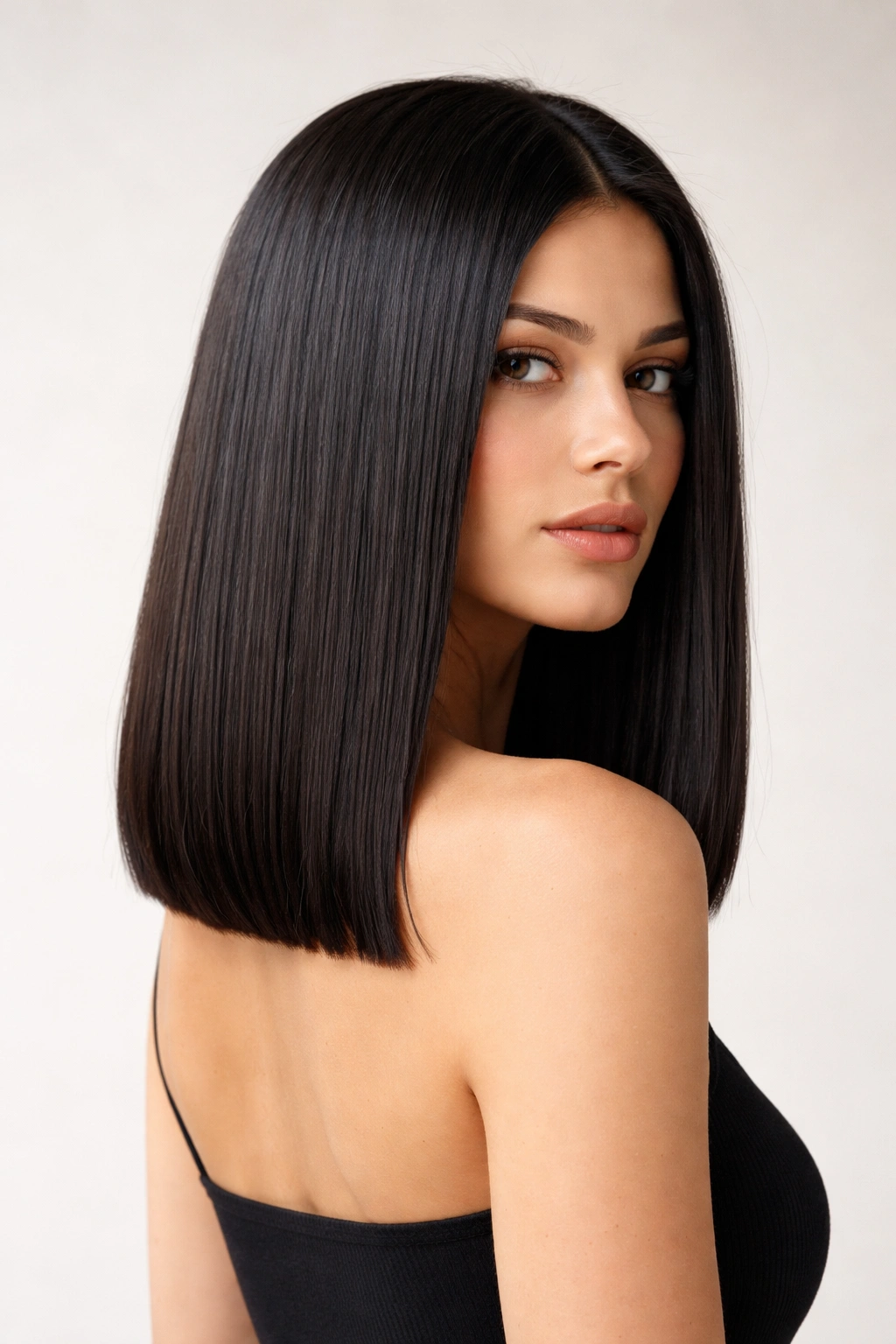
A blunt midi cut lands somewhere between shoulder-length and the middle of your back, hitting right around bra-strap length with a completely straight, sharp line. This length is wildly flattering on thick straight hair because it’s long enough to feel sophisticated and feminine, but short enough that your density doesn’t become overwhelming or create that weighed-down look. The bluntness of the line is what makes this work — it’s architectural and intentional, not grown-out and limp.
Why the Blunt Line Matters for Your Hair Type
The blunt line of this cut is essential because it creates clean, defined edges that your straight texture naturally preserves beautifully. There’s no blending or graduated length here — just a straight line that signals intentionality and polish. Your thick hair holds this line sharply, meaning you get professional-looking results that don’t require styling effort to maintain the shape. The weight is distributed evenly throughout the midi length, so you avoid both the top-heavy feeling of shorter cuts and the potential heaviness of very long hair without layers. This is the sweet spot for many people with your hair type.
Styling for a Polished Look
- Wash and blow dry straight with a paddle brush for maximum polish and line definition
- A light smoothing serum keeps the line crisp and prevents any frizz from obscuring your sharp edges
- This cut is intentionally simple, so styling is minimal — the cut does most of the work
- The line stays sharp for longer than you might expect; plan a trim every 7-8 weeks
- If you want to add styling variety, try half-up styles or sleek low ponytails that show off the precise line
Worth knowing: Blunt cuts show every bit of growth and every tiny split end more obviously than layered styles, so commit to regular trims and good hair health practices if you choose this approach.
5. The Modern Lob With Face-Framing Layers
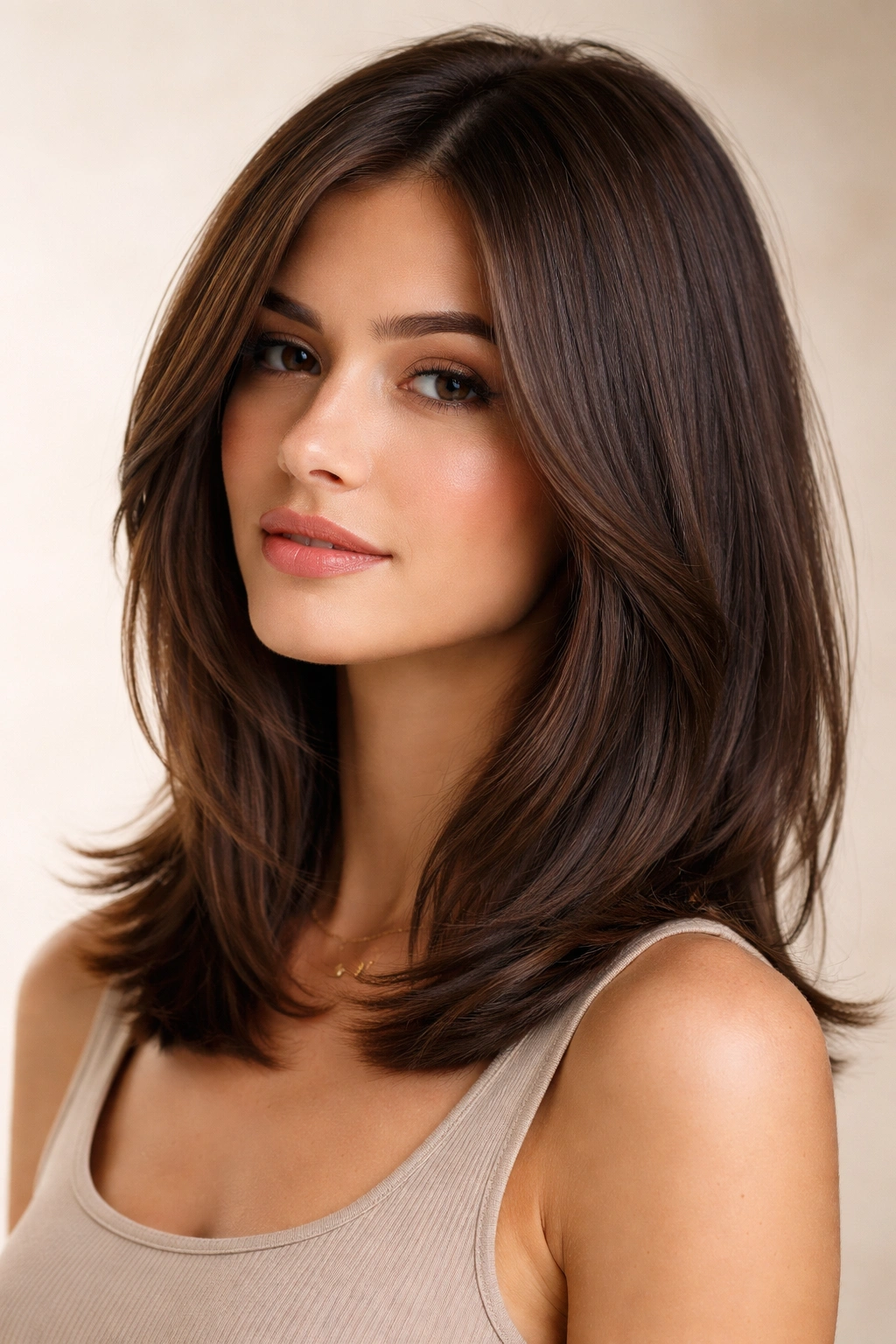
A lob — that sweet spot between a long bob and long hair, typically ending around collar bone length — becomes unexpectedly versatile when you add strategic face-framing layers. These layers aren’t choppy or shaggy; they’re soft, intentional, and designed to add movement specifically around your face while keeping the overall length intact. The lob is long enough to feel romantic and feminine, but the layers keep thick hair from looking purely blunt and shapeless.
The Face-Framing Effect on Thick Straight Hair
Face-framing layers for your hair type create dimension and movement exactly where you want it without the layers getting lost in your overall thickness. Because you have substantial density, the layers stay visible and defined rather than disappearing into the bulk of your hair. The shorter, layered pieces around your face add lift and softness while the longer layers underneath maintain the lob’s length and structure. This creates a really flattering silhouette that’s both modern and wearable — you get movement without requiring constant heat styling or product.
How to Wear and Care for This Cut
- Air dry naturally or blow dry while using your fingers to separate the layers slightly for movement
- The layers look best when they have texture, so a texturizing spray or salt spray is your friend
- Half-up styles look incredible with this cut and show off the face-framing beautifully
- Wear it down and straight for a more polished, professional appearance
- Plan a trim every 6-7 weeks to keep the face-framing layers sharp and prevent them from looking ragged as they grow
Pro tip: Ask your stylist to angle the face-framing layers so they’re slightly longer in the front and shorter toward the back — this creates a naturally flattering frame without looking like you’re hiding behind your hair.
6. The Sleek Pixie or Very Short Crop
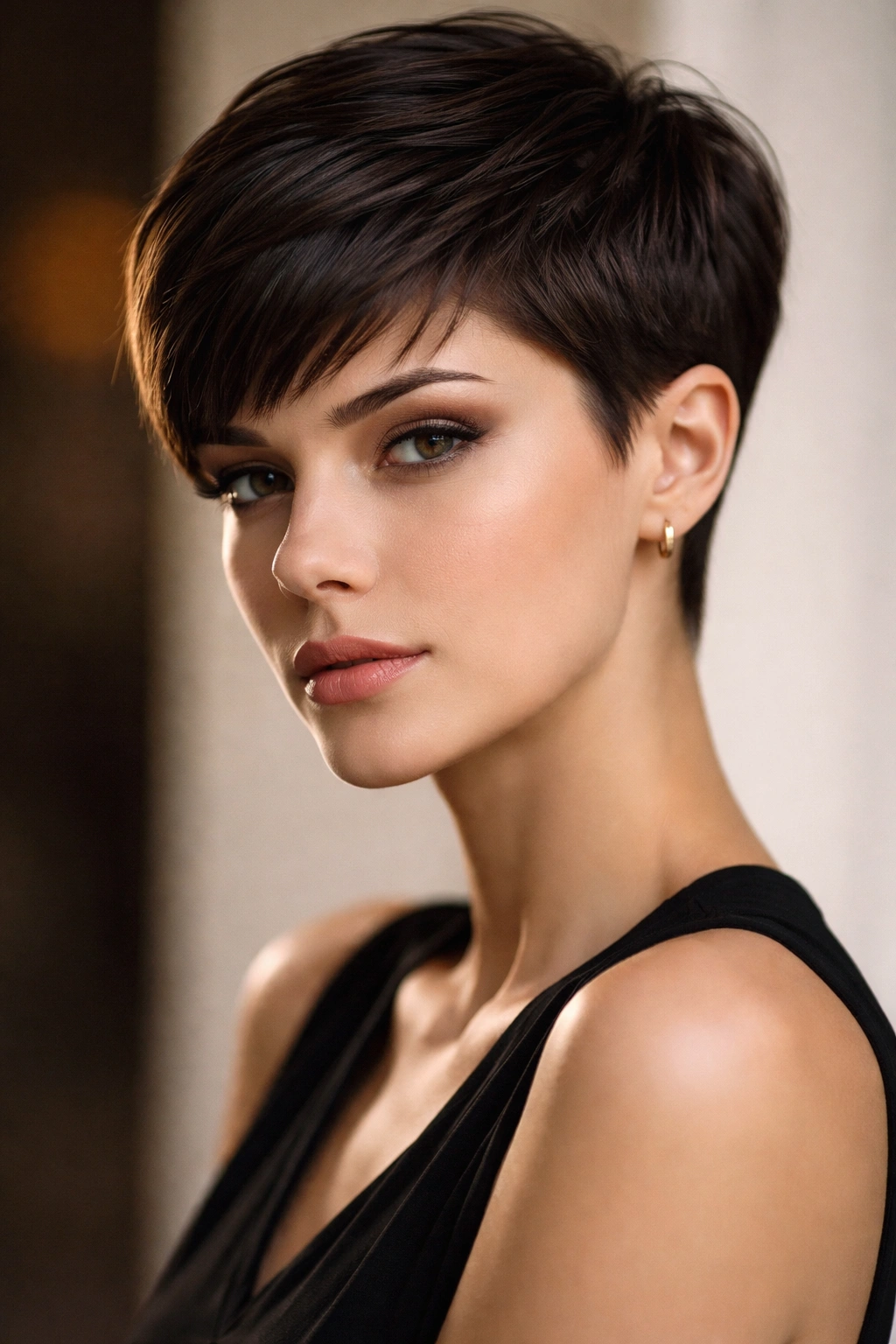
For those bold enough to go very short, a sleek pixie or short crop is dramatically flattering on thick straight hair. Rather than fighting your density by trying to keep everything blended and unified, a very short cut uses your thickness to create volume and shape right where you want it. The pixie is longer on top and very short on the sides, while a crop keeps everything relatively short but with subtle length variation. Both styles look intentional and chic on thick straight hair because the density creates natural volume without you having to do anything special.
Why Thickness is an Asset for Short Hair
With very short cuts, your thick straight hair is genuinely an advantage rather than something to minimize. The density creates a full, voluminous silhouette that makes the cut look polished and intentional rather than skimpy. The straight texture means you get clean lines through the short length, so the cut reads as architectural rather than wispy or tentative. You have the freedom to style these cuts in lots of ways — sleek and flat, tousled and textured, with length swept to one side — because your thickness supports all those variations beautifully.
Styling a Short, Bold Cut
- Blow dry and smooth for a sleek, polished professional look
- Rake through with texturizing spray for a piecier, more modern aesthetic
- Your hair is short enough that you can style it quickly and easily
- Grow out slightly between cuts (every 4-5 weeks) to control the shape and prevent looking too severe
- Work with a stylist who understands short hair — this cut is all about precision and it shows if your barber or stylist doesn’t know what they’re doing
Worth knowing: Short cuts require more frequent trims than longer styles because you notice growth immediately — but they’re also faster to cut and less expensive per visit.
7. The Blunt Bangs With Long Straight Hair
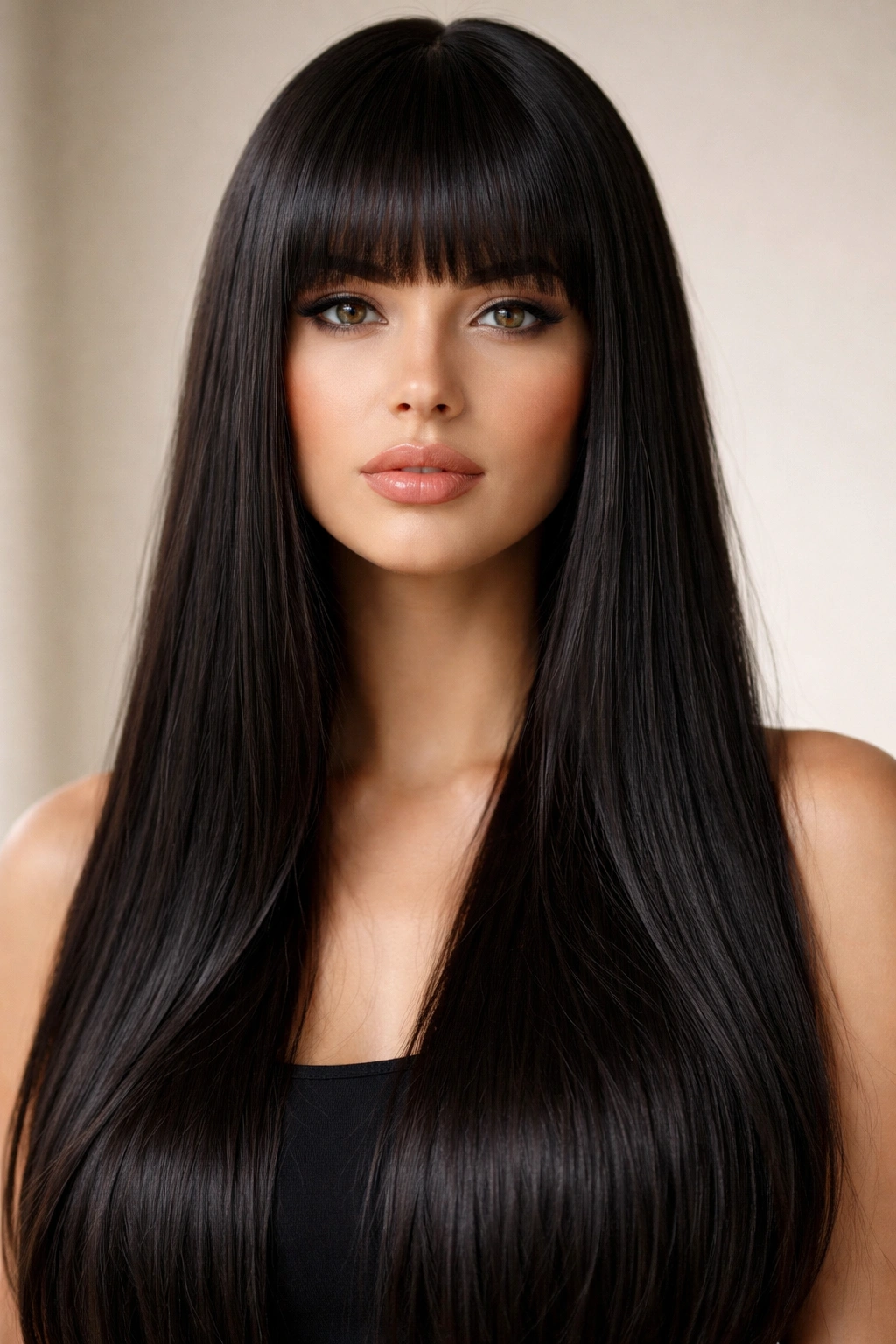
Adding blunt bangs to your long, thick straight hair creates instant dimension and a statement-making focal point without changing your length. Blunt bangs work exceptionally well with thick straight hair because the density keeps the line sharp, defined, and intentional-looking. Your straight texture means the bangs hit precisely where they’re meant to rather than curling or flipping unpredictably. The contrast between the short bangs and your long length below creates visual interest and draws attention to your face.
The Impact of Blunt Bangs on Your Look
Blunt bangs instantly make thick straight hair feel more intentional and polished — they’re a bolder statement than most other cut choices, which means they immediately elevate the sophistication of your whole look. Because your hair is thick and straight, the bangs stay perfectly aligned with your cheekbones or eyebrows (depending on where you place them) rather than sliding around or becoming wispy as they grow. The line is sharp enough to frame your face dramatically without requiring you to flat-iron them every single day. The bangs also add volume to your forehead and face area, which many people find flattering and face-enhancing.
Living With and Styling Blunt Bangs
- Blunt bangs require a trim every 3-4 weeks since you notice the growth so obviously
- They look best when you keep them smooth and straight — a quick blow dry and flat-iron on styling days
- Air dry is possible but the line gets less precise as they grow
- Your thick hair means the bangs won’t become thin or wispy even after multiple trims
- Pair with a blunt-cut long style for maximum impact, or layer the long sections for something softer
Pro tip: Start with bangs that hit just above your eyebrows — this is longer and more forgiving than trimming them shorter, and you can always go shorter as you get used to them and figure out the exact length you love.
8. The Textured Shoulder-Length Cut With Choppy Ends
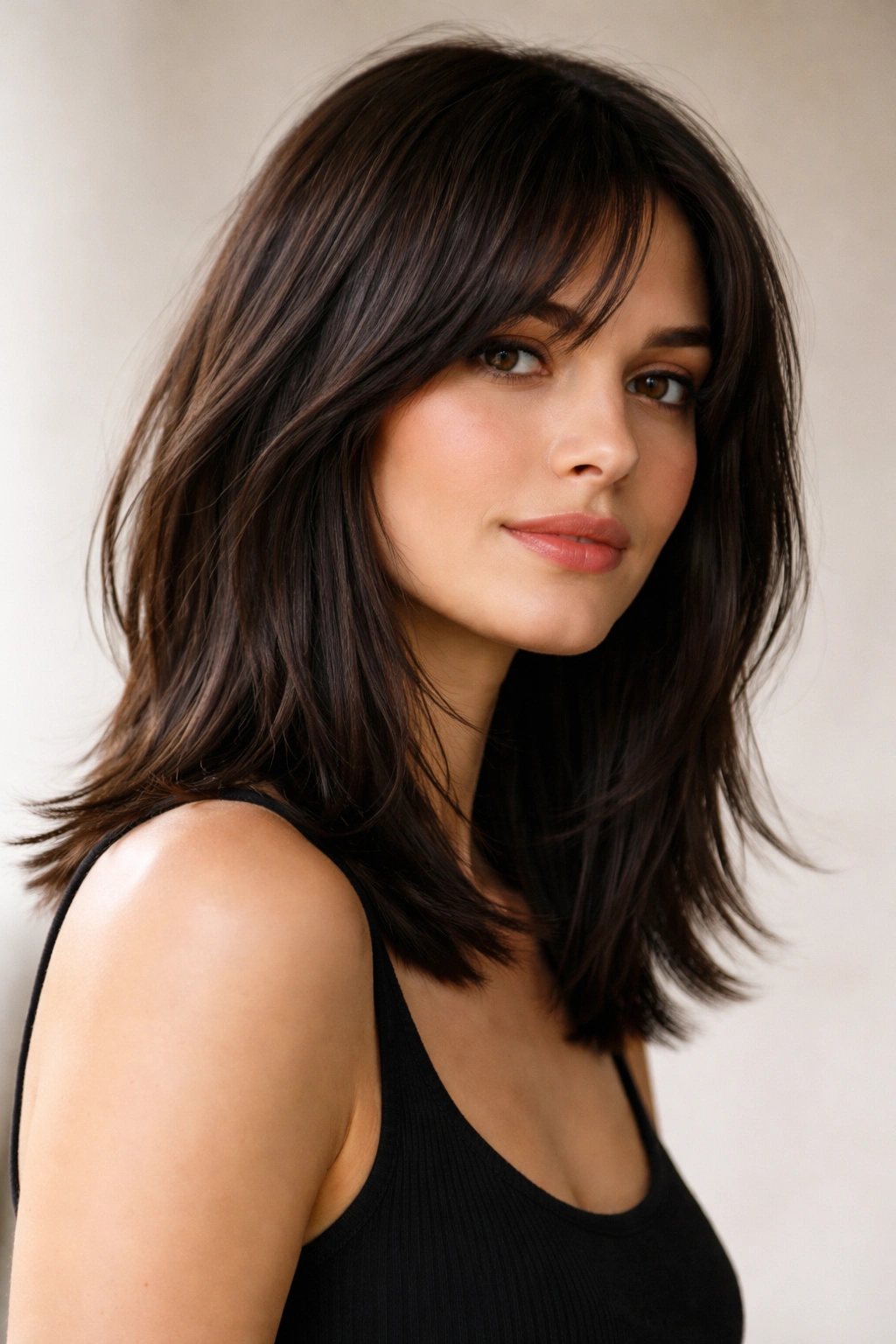
A shoulder-length cut with deliberately choppy, piece-y ends gives thick straight hair movement and edge without going full shag. This is the compromise between a sleek bob and a choppy shag — it has length similar to a traditional shoulder-cut bob, but the ends are cut in a textured, separated way rather than blunt and unified. The choppiness breaks up the weight of your hair while keeping the overall length, creating a modern, almost rebellious energy.
How Texture Adds Dimension to Thick Strands
The choppy ends on thick straight hair create visual interest and movement that your natural thickness alone might not provide. Rather than lying flat and heavy, the textured ends separate slightly, creating a fuller appearance and a more dynamic silhouette. Your straight hair means the choppiness reads as intentional design rather than accidental damage. The texture concentrates at the ends and around the face, so the cut feels purposeful rather than gimmicky. This is one of the most wearable, flattering options for thick hair because it has enough texture to be interesting without being high-maintenance.
Maintaining Choppy Texture
- Air dry with your fingers raking through to emphasize the choppy quality
- Use a texturizing spray to enhance separation between the textured pieces
- Blow dry with a brush if you want the cut to look sleeker and more polished
- Get trims every 5-6 weeks to maintain the defined choppiness at the ends
- The texture here is cut, not curled or permed, so it stays as-is whether you style with heat or not
Worth knowing: Choppy ends can look rough or unhealthy if you don’t get regular trims, so commit to your salon schedule if you choose this approach.
9. The Long Layered Cut With Lots of Movement
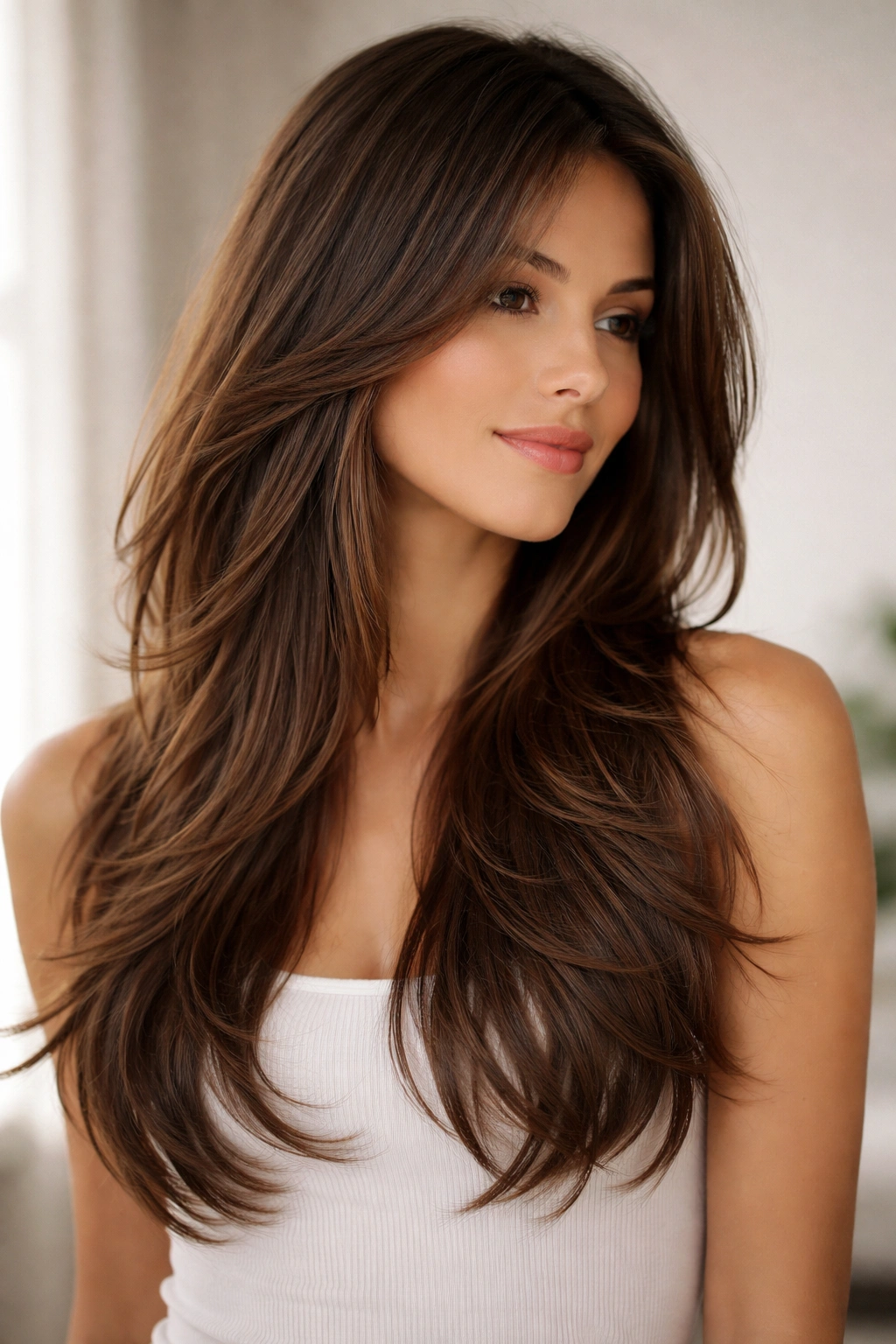
A long cut with plenty of layering throughout creates movement and dimension while keeping the length you want. Unlike the subtle layering approach, this style has more noticeable layers that create obvious texture and flow. For thick straight hair, strategic layering throughout the entire length prevents that dense, column-like appearance while creating a softer, more romantic silhouette. The layers also make your hair easier to style and feel lighter to wear.
How Strategic Layering Works for Thickness
Layering reduces bulk strategically throughout your entire head without leaving you with thin, wispy ends. Each layer removes some density while keeping enough weight to maintain shape and structure. On thick straight hair, layers are actually a gift — they give you the appearance of movement and flow without requiring you to curl or texture your hair in any way. The straight texture means the layers stay defined and don’t blur into a blurry mess. The result is hair that feels lighter to wear, styles faster, and looks more dynamic without requiring daily heat styling or product.
Styling Layered Length
- Air dry for a naturally soft, dimensional look that requires zero effort
- Blow dry and separate the layers slightly with your fingers or a brush for maximum dimension
- Layers work beautifully with braids and textured updos that show off the variation in length
- Add a texturizing spray for extra emphasis on the layered quality
- Plan a trim every 6-8 weeks to keep the layers from looking too grown-out and shapeless
Pro tip: Ask your stylist to keep slightly more length in the face-framing layers and go shorter toward the back of the head — this creates a flattering shape that lifts your hair off your shoulders while maintaining overall length.
10. The Sleek Geometric Cut
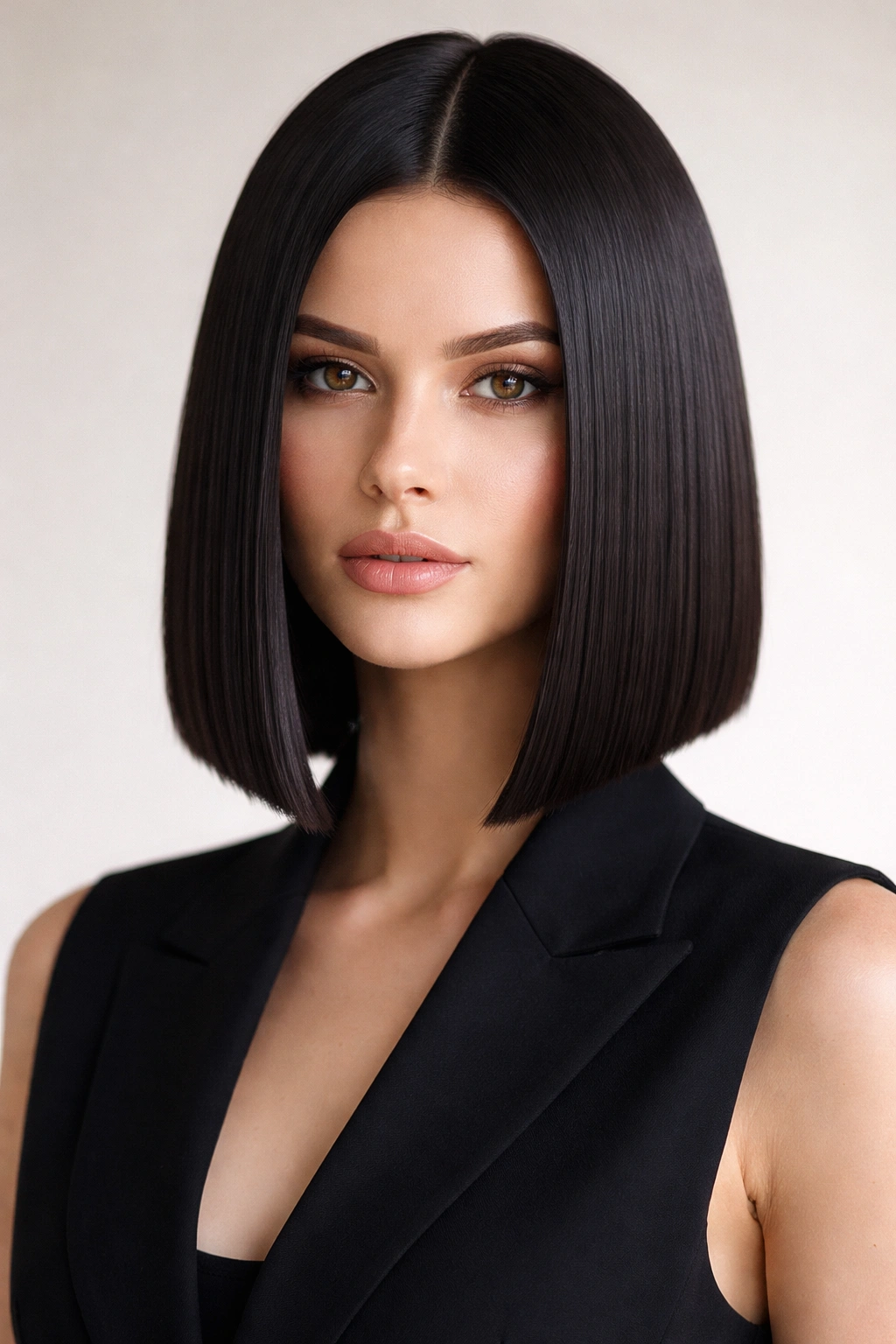
A sleek, geometric cut with sharp, defined lines is a modern, architectural approach to cutting thick straight hair. Rather than working with curves or softness, this cut uses angles and precise lengths to create shape and interest. Think sharp angled pieces, distinct length variations, and clean lines that look almost sculptural. On thick straight hair, a geometric cut reads as intentional and polished — your density supports the bold lines and keeps everything looking structured rather than loose or undone.
The Power of Precision and Angles
Geometric cuts work beautifully on thick straight hair because your texture preserves the precise lines perfectly. There’s no blurring or softening of the edges — every angle is exactly where it’s meant to be. The deliberate asymmetry or varied lengths create visual interest that keeps thick hair from looking flat or boring, while still honoring your preference for straightness and structure. This approach is for someone who likes intentional, statement-making style rather than something romantic or soft. The cut feels contemporary and a little bit bold, which can be incredibly flattering depending on your personal style.
Making a Geometric Cut Work Daily
- Blow dry straight with a paddle brush to enhance the geometric lines and sharp edges
- A smoothing serum keeps the lines crisp and prevents any frizz from obscuring the angles
- This cut style requires minimal styling — the cut does all the work
- Plan a trim every 5-6 weeks because these cuts show growth and lost precision pretty noticeably
- Work with a stylist who has experience with geometric cuts and understands how to maintain precision
Worth knowing: A geometric cut is bold, so make sure you love the cut in photos before committing — and find a stylist who understands your vision because this style is all about the details.
Final Thoughts
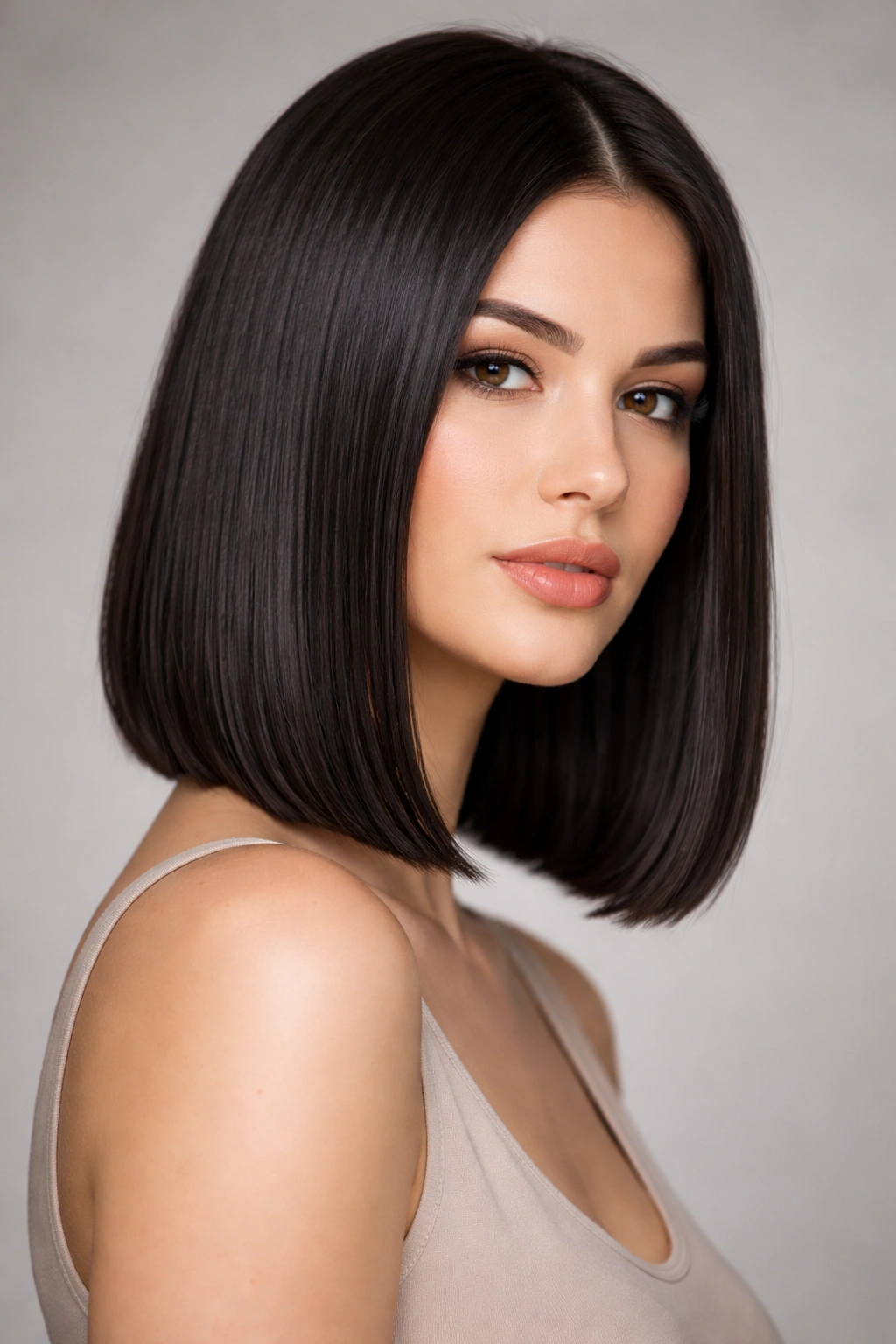
The right haircut for thick straight hair does more than just look beautiful — it transforms how your hair feels to wear, how quickly you can style it, and whether you feel confident and intentional every single day. Whether you’re drawn to the sleek simplicity of a blunt bob, the edge of a textured shag, the romance of layered length, or the boldness of a geometric cut, the key is choosing something that works with your natural thickness instead of fighting against it.
Your density is genuinely an asset when you find the right cut. It means your hair holds a shape beautifully, it means lines stay crisp and defined, and it means you can achieve polished results without needing tons of styling effort. The cut you choose should make your morning routine easier, not harder — it should be something you can air dry or quickly blow-dry and feel like yourself immediately.
Take time to find a stylist who understands thick straight hair specifically, not just a general hair type. Look at photos of cuts you love, discuss maintenance honestly, and commit to regular trims to keep your cut looking intentional and fresh. Your thick straight hair is a wonderful texture to work with — you have options across the entire spectrum of short to long, sleek to textured, bold to subtle. The cut that’s right for you is the one that makes you feel like the most confident, capable version of yourself.
