



Short layered haircuts have a special way of transforming straight hair into something that feels modern, effortless, and genuinely flattering. There’s something about the way layers interact with naturally straight strands — they create movement without frizz, add dimension without bulk, and give you options for styling that work whether you’re heading to the office or meeting friends for coffee.
The beauty of layering straight hair lies in the control you get. Unlike curly or wavy textures that create their own natural texture and volume, straight hair responds to layers with clean, deliberate lines that you can either emphasize or soften depending on your mood and styling choice. A well-executed short layered cut becomes the foundation for multiple looks — you can sleek it straight for a sharp, polished vibe, add texture with a blow dryer and some movement, or even encourage subtle waves for something softer and more romantic.
Finding the right short layered cut matters more than you might think. The cut you choose determines not just how your hair looks immediately after the salon, but also how it grows out, how easy it is to maintain, and whether you’ll actually be able to recreate the style at home between salon visits. That’s why understanding what each cut can do — and which one genuinely suits your face shape, hair texture, and lifestyle — makes all the difference.
1. Pixie Cut With Choppy Layers
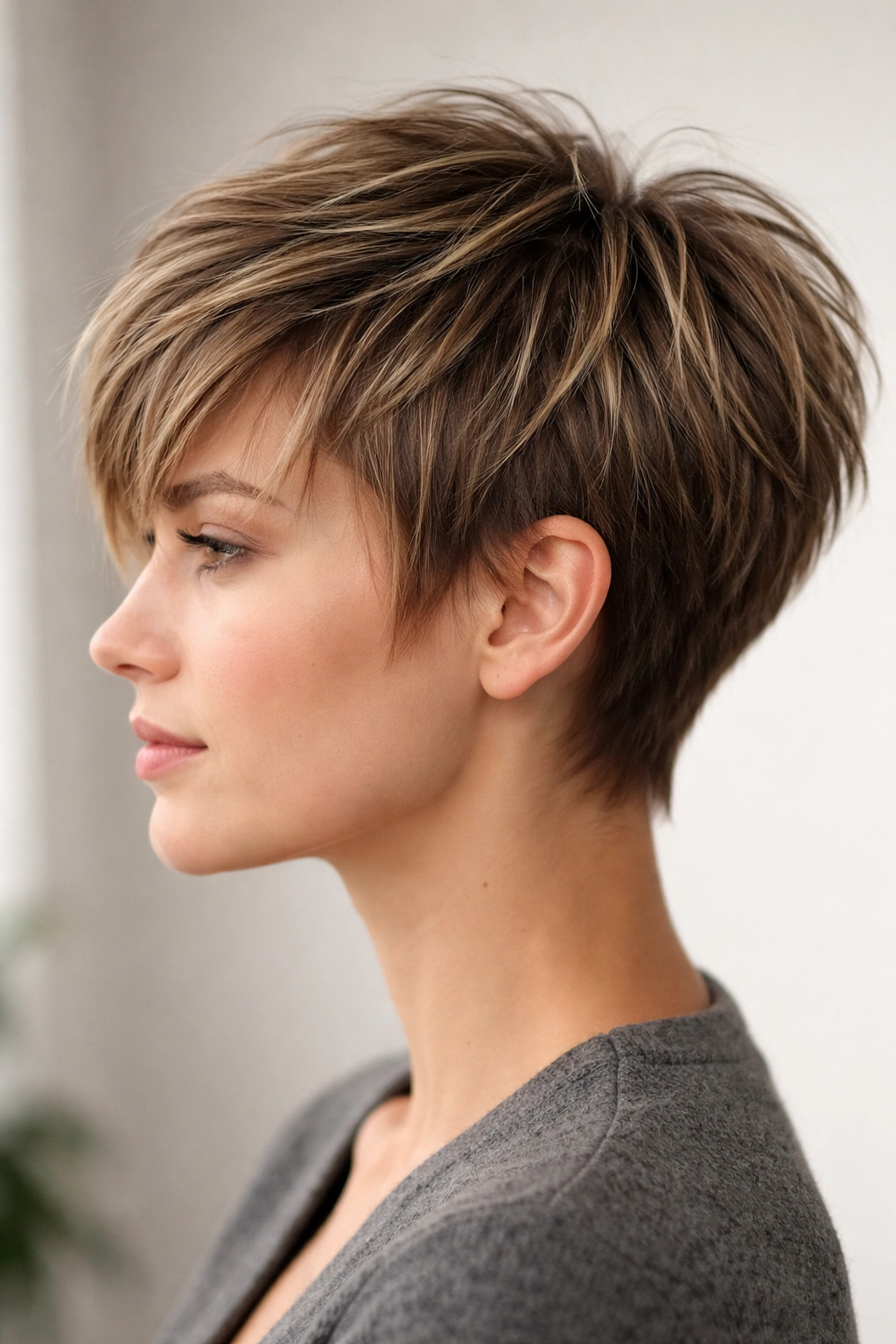
A pixie cut with choppy layers takes the classic short style and adds movement that straight hair can really showcase. Rather than a blunt, uniform pixie, the choppy approach uses shorter and longer strands throughout, typically keeping the back and sides close to the scalp while allowing the crown to have more length and texture. On straight hair, this creates a deliberate, almost tousled look that appears intentional and modern.
Why This Works for Straight Hair
Straight hair actually thrives with a choppy pixie because the layers catch light differently and create visual depth without relying on natural curl or wave. The staggered lengths prevent the cut from looking flat or boring, which can happen with super uniform short cuts on straight texture. You get genuine movement and dimension that reads as youthful and fresh.
Best Styling and Maintenance Tips
- Use a lightweight texturizing product (a dry texture spray or matte clay) to enhance the layered effect and add subtle separation between strands
- A pixie grows quickly, so plan for trims every 4 to 6 weeks to maintain the intentional choppy silhouette
- Blow-dry with your fingers rather than a brush to encourage that casual, lived-in texture
- The cut requires less daily styling than longer cuts — dry shampoo and texture product can refresh it between washes
- Fair warning: This cut works best on people with fairly regular face shapes; if you have a very round or very angular face, consult your stylist about customization
2. Textured Bob With Layered Ends
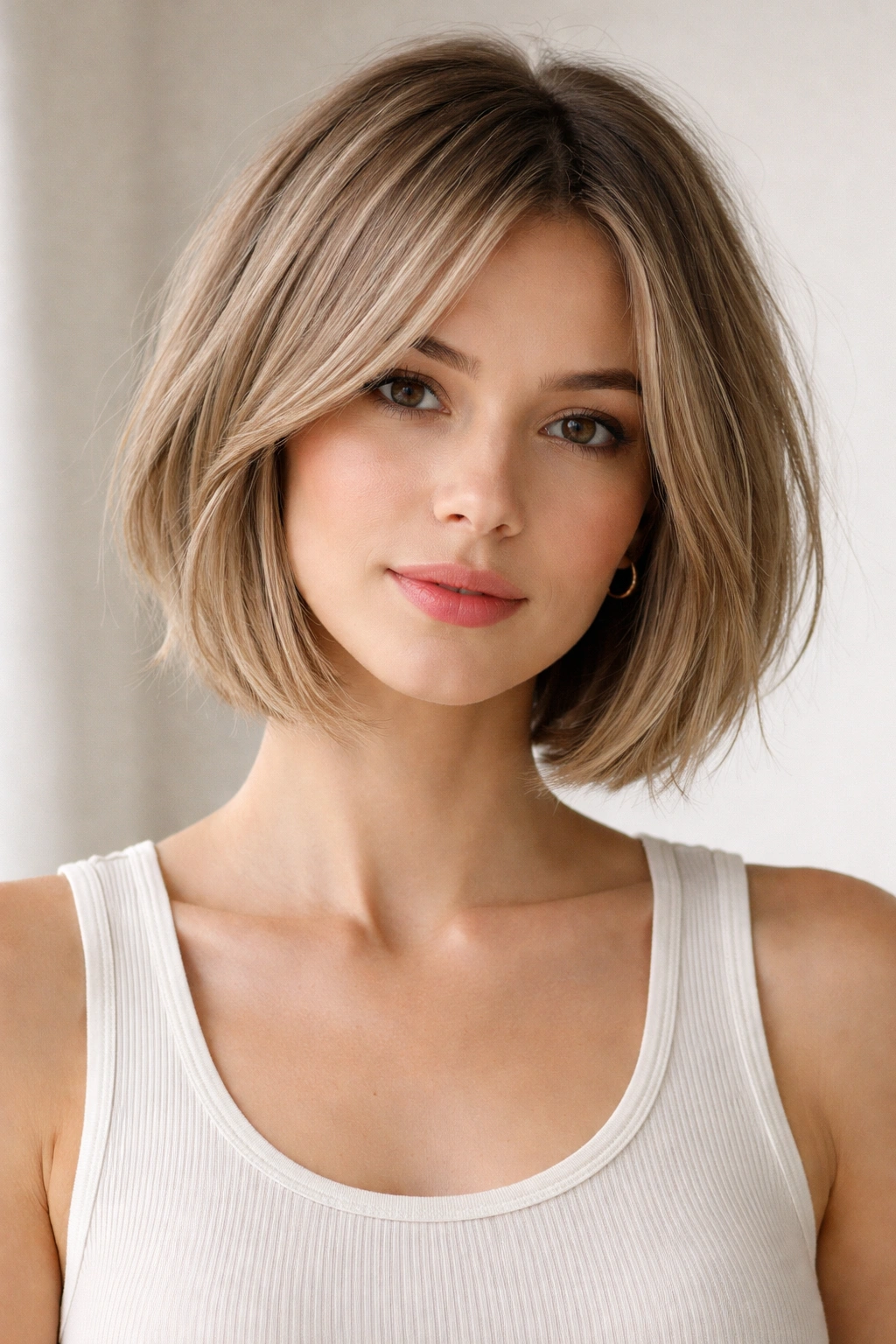
A textured bob sits right at or just below the chin and uses layers to break up the blunt line into softer, choppy ends. Rather than the super sleek, geometric bob, this version feels approachable and modern — it works on straight hair because the layers are visible as distinct, separated pieces rather than blending together. The result is a bob that has personality and doesn’t demand to be pin-straight to look good.
What Makes It Stand Out
This cut gives you the sophistication of a bob with the forgiveness of layers. You don’t need perfect blowout skills to make it look intentional — in fact, the more relaxed and undone it looks, the better it often appears. For straight hair specifically, those choppy ends create the illusion of texture and fullness that would take effort to achieve with styling products.
How to Style and Care For It
- Blow-dry straight or use a flat iron for a sleek version, then shake out with your fingers for texture
- Apply a lightweight leave-in conditioner to the ends to prevent them from looking wispy or damaged
- Trims every 6 to 8 weeks keep the choppy ends from looking too grown-out and shapeless
- It pairs beautifully with side-swept bangs or an off-center part for added dimension
- Works well with a deep side part, which elongates the face and shows off the layers on one side
3. French Bob (Carré) With Subtle Layers
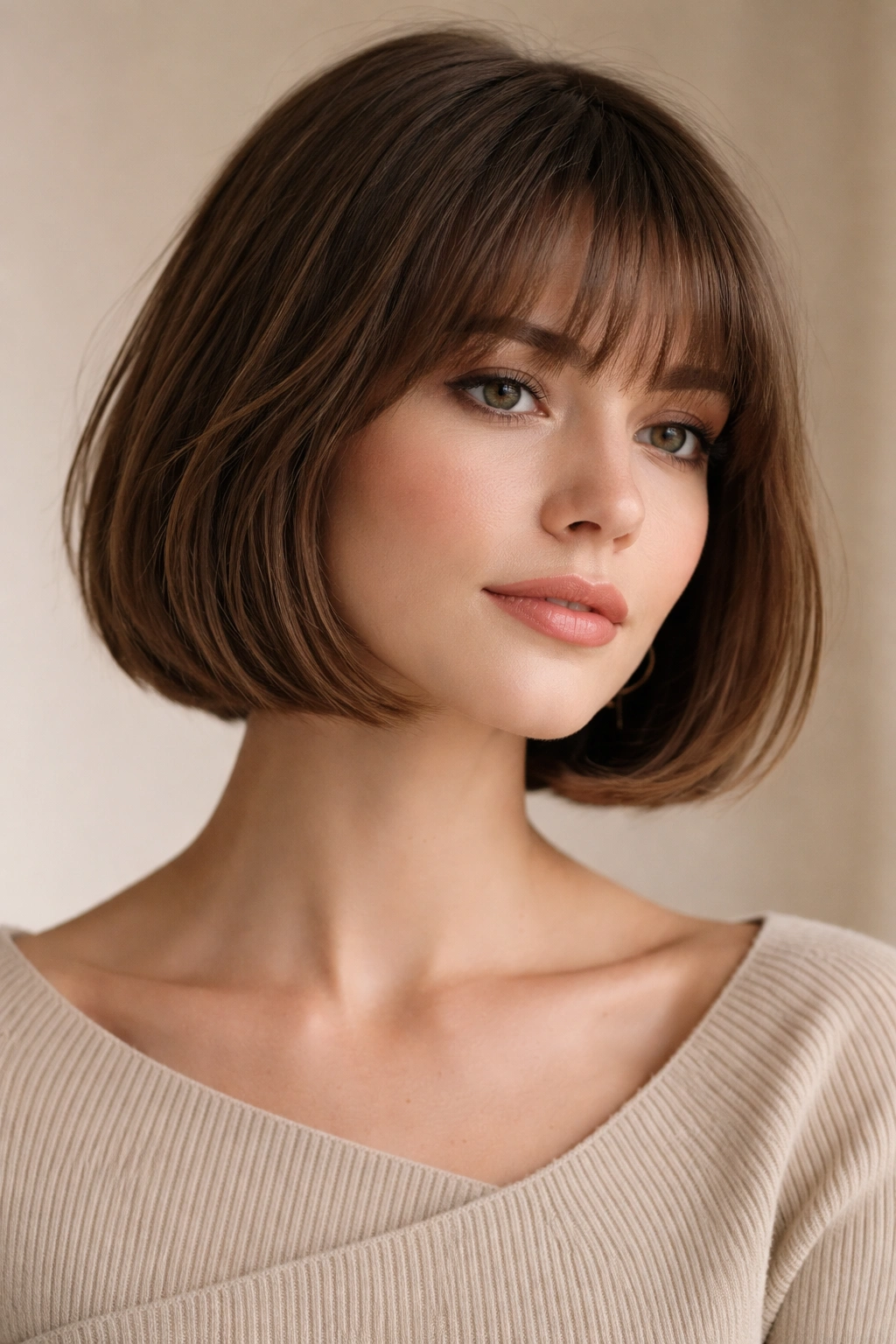
The French bob, or carré, is straight and chin-length with a very precise, almost severe line — but when you add subtle layers to straight hair, it becomes something incredibly chic. The layers are understated, usually just through the ends and maybe slightly shorter pieces around the face, which gives the cut a refined, Parisian edge without abandoning wearability. It’s the kind of cut that looks intentional and put-together, yet works on straight hair without needing constant styling.
The Science Behind Its Appeal
A French bob with layers plays with scale and proportion in a clever way. The precise outer line keeps the cut looking sharp and deliberate, while the interior layers prevent it from feeling harsh or too severe. On straight hair, you get a clean, elegant silhouette with just enough movement to feel modern rather than costume-y. It’s sophisticated without being fussy.
Wearing and Maintaining It
- This cut requires a really skilled stylist; the line needs to be absolutely precise, and the layers need to be minimal and well-placed
- Blow-dry with a round brush pointed downward to encourage the ends to flip inward slightly (the hallmark of a great carré)
- Flat iron on straight days for that pristine, sharp line that makes this cut special
- Trims every 6 weeks matter more for this cut than almost any other — the line breaks quickly as it grows
- Pair with minimal makeup and a confident attitude; this cut announces itself and looks best with understated styling elsewhere
4. Choppy Layered Cut With Longer Top
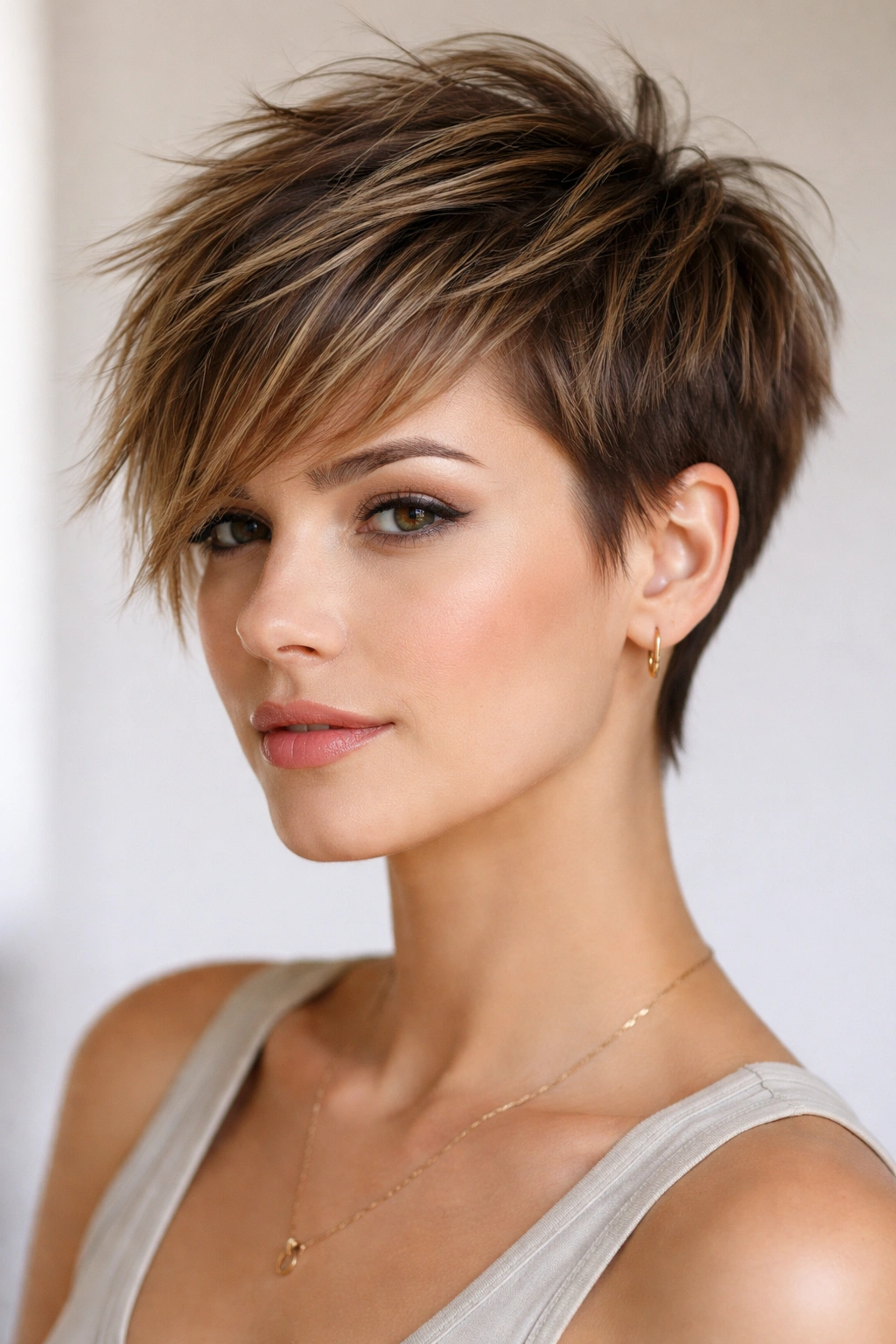
This is the cut that gives you serious texture and movement throughout while keeping the overall length short. The crown is noticeably longer than the sides and back, and those longer pieces on top are heavily layered, creating separated strands and a shaggy, almost modern-mullet vibe. On straight hair, every single layer is visible as a distinct strand, which creates volume and motion that reads as intentionally cool rather than grown-out or undone.
Why It Works So Well on Straight Texture
Straight hair actually shows off choppy layers better than any other hair type because there’s no natural wave or curl to blur the lines. You get clear, graphic separation between strands that creates visual movement and makes the cut look more dynamic. The volume sits exactly where you want it, right on top, which balances face proportions beautifully for most face shapes.
Styling Secrets and Maintenance
- Texturizing product is your friend here — use a sea salt spray, dry texture spray, or matte paste to enhance the choppy separation
- Blow-dry with your fingers or a diffuser to encourage that textured, piece-y quality
- Avoid blow-drying too smooth; the whole point is the choppy, separated look
- Trims every 5 to 7 weeks keep the choppy effect intentional; letting it grow too long makes it look shaggy rather than styled
- Part it on the side and let the longer pieces fall across the forehead for an effortlessly cool vibe
5. Blunt Lob With Interior Layers
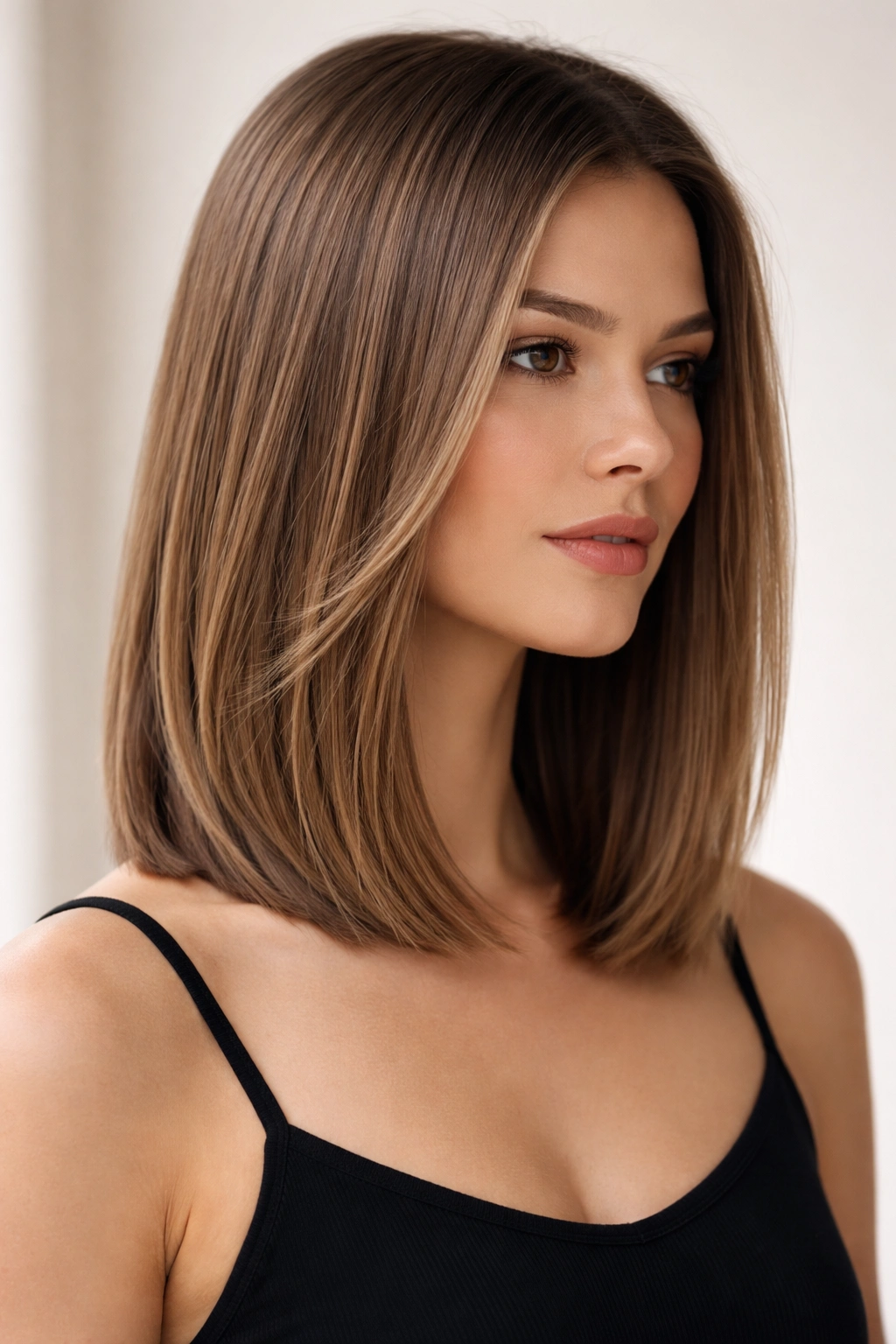
A lob sits somewhere between a bob and longer hair, usually hitting around shoulder-length or just above. When you add interior layers to a lob while keeping a blunt, precise outer line on straight hair, you get a cut that looks simultaneously sharp and textured. The blunt ends create a strong frame, while the interior layers add movement and prevent the cut from feeling dense or heavy. It’s the sweet spot between statement-making and wearable.
What Makes This Cut Special
The interior layers on a blunt lob are like a secret — they do the work of adding dimension and movement without disrupting the sleek outer silhouette. For straight hair, this is almost ideal because you get to show off both the clean lines and the textured interior depending on how you style it. Blow it smooth for professional polish, or add texture and separate the layers for something more relaxed.
Practical Care and Styling
- Blow-dry with a paddle brush for a sleek, blunt finish, or use texturizing products and fingers for a more undone vibe
- The blunt ends can look a tiny bit blunt at first, but straight hair works beautifully with this crisp finish
- Trims every 8 to 10 weeks maintain that precise blunt line; the interior layers don’t need as frequent maintenance
- Pair with face-framing layers or a center part depending on your preference
- This cut is surprisingly easy to grow out; if you change your mind, the length gives you options to transition into a longer style
6. Modern Shag Cut
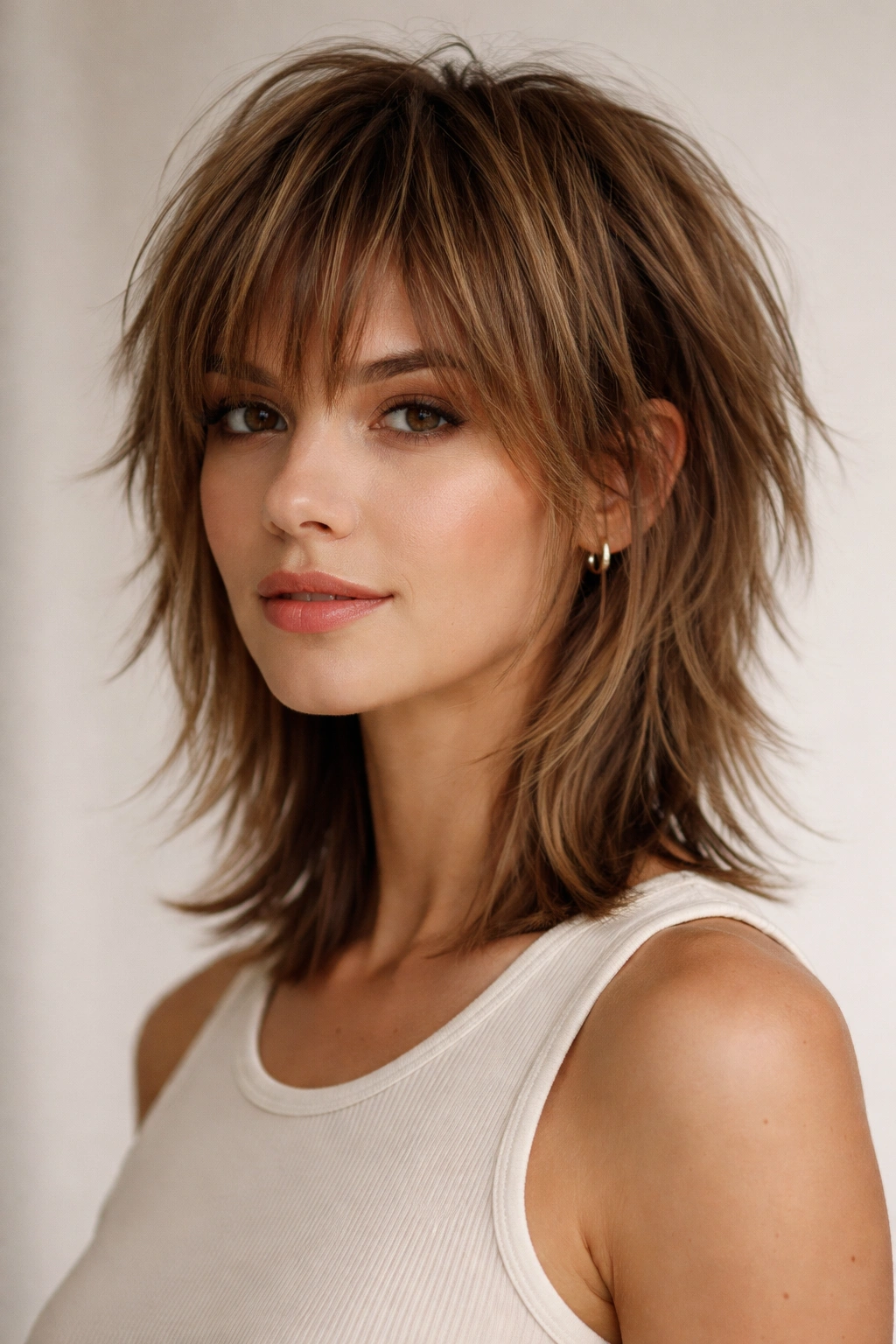
A shag cut on straight hair is having a real moment, and for good reason. A shag uses layers throughout the entire head, with shorter layers stacked on top and gradually longer strands beneath, creating layers upon layers of movement and texture. On straight hair, a shag is bold — it announces itself with separated, choppy pieces throughout, and it creates a retro-forward silhouette that feels undeniably cool and confident.
The Science and Attitude Behind It
A shag works because the multiple layers of varying length create natural movement without any wave or curl in the hair itself. Every layer is visible as its own strand, which creates incredible visual texture and dimension. For straight hair, this means you get movement that’s all about the cut, not about styling tricks or products. It’s graphic, it’s intentional, and it requires the right attitude to wear confidently.
How to Make It Work
- Texturizing products and sea salt sprays are essential — they separate the layers and enhance the intended choppy effect
- Blow-dry with your fingers or a diffuser to encourage separation rather than smoothness
- A shag can look amazing with tousled styling or blown straight and sleek; the cut works both ways
- Trims every 5 to 6 weeks keep the intentional choppiness from degrading into just “messy”
- This cut reads best with confidence and attitude; it’s not a subtle choice, and that’s the whole point
7. Asymmetrical Layered Cut
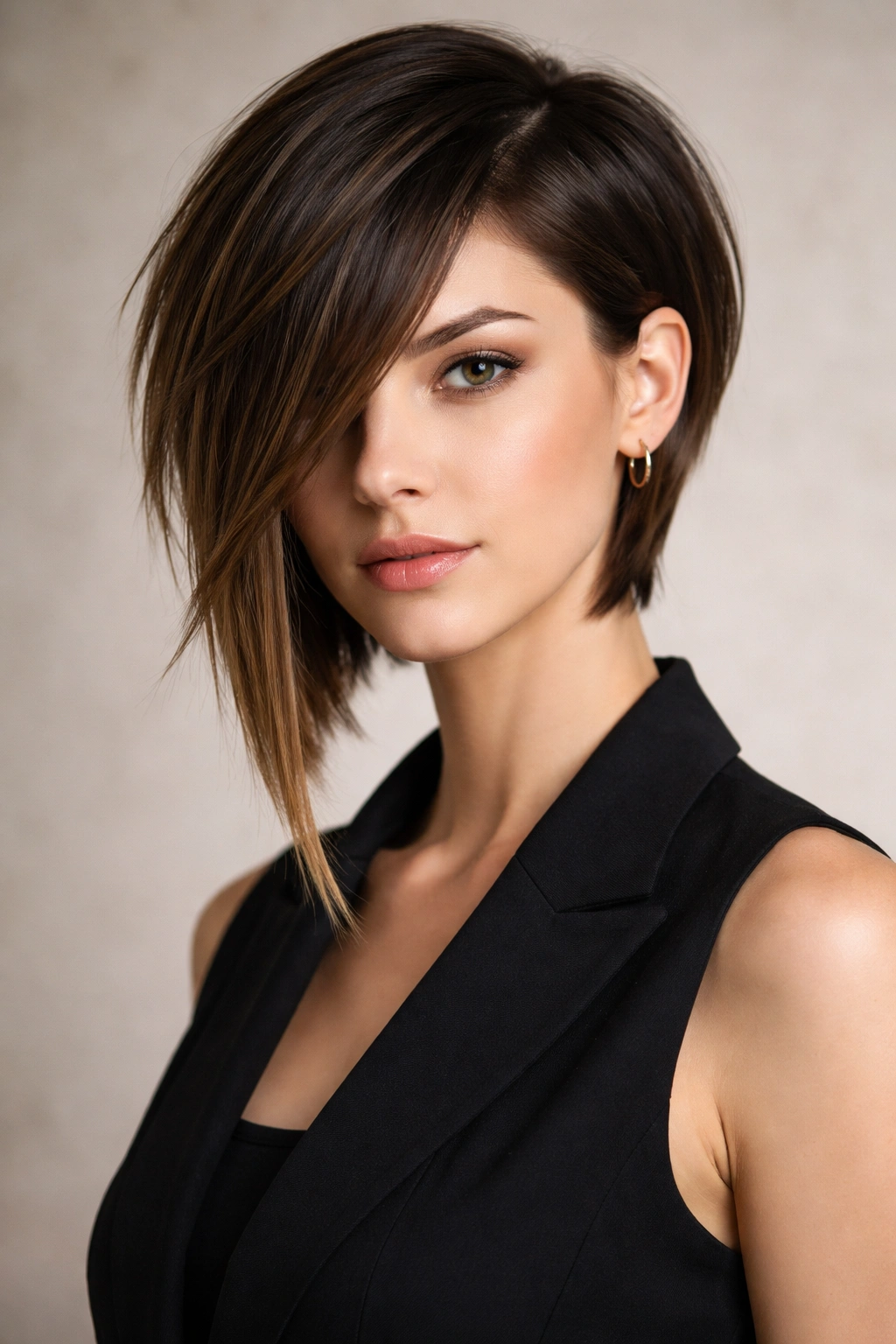
An asymmetrical cut has significantly different lengths on each side, usually one side much shorter than the other, with layers worked throughout both sides. For straight hair, asymmetry is striking because the proportion difference is absolutely clear and graphic — there’s no curl or wave to soften or blur the lines. It’s a cut that demands attention and works beautifully for people who aren’t afraid to make a statement with their hair.
Why Straight Hair Showcases This Cut
Asymmetrical cuts depend on clean, visible lines to make their impact, which is exactly what straight hair provides. The contrast between the longer and shorter sides is unmistakable, and when you add layers to both, you get movement on both sides that’s clearly different. It’s a cut that exudes confidence and modernity, and it photographs beautifully from every angle once you find your best side.
Styling and Wearing Considerations
- Blow-dry the shorter side for maximum texture and the longer side can be sleeker or textured depending on your preference
- The side part matters more with this cut — find the part that naturally sits where the cut transitions
- Layers on both sides mean you have options; style the shorter side textured for edgy or smooth for polished
- Trims every 6 to 7 weeks maintain the asymmetrical proportion; letting it grow out too long muddies the effect
- Important note: This cut requires a stylist who’s experienced with asymmetrical work; the proportions and layers need to be intentional and precise
8. Sleek Short Layers With Rounded Softness
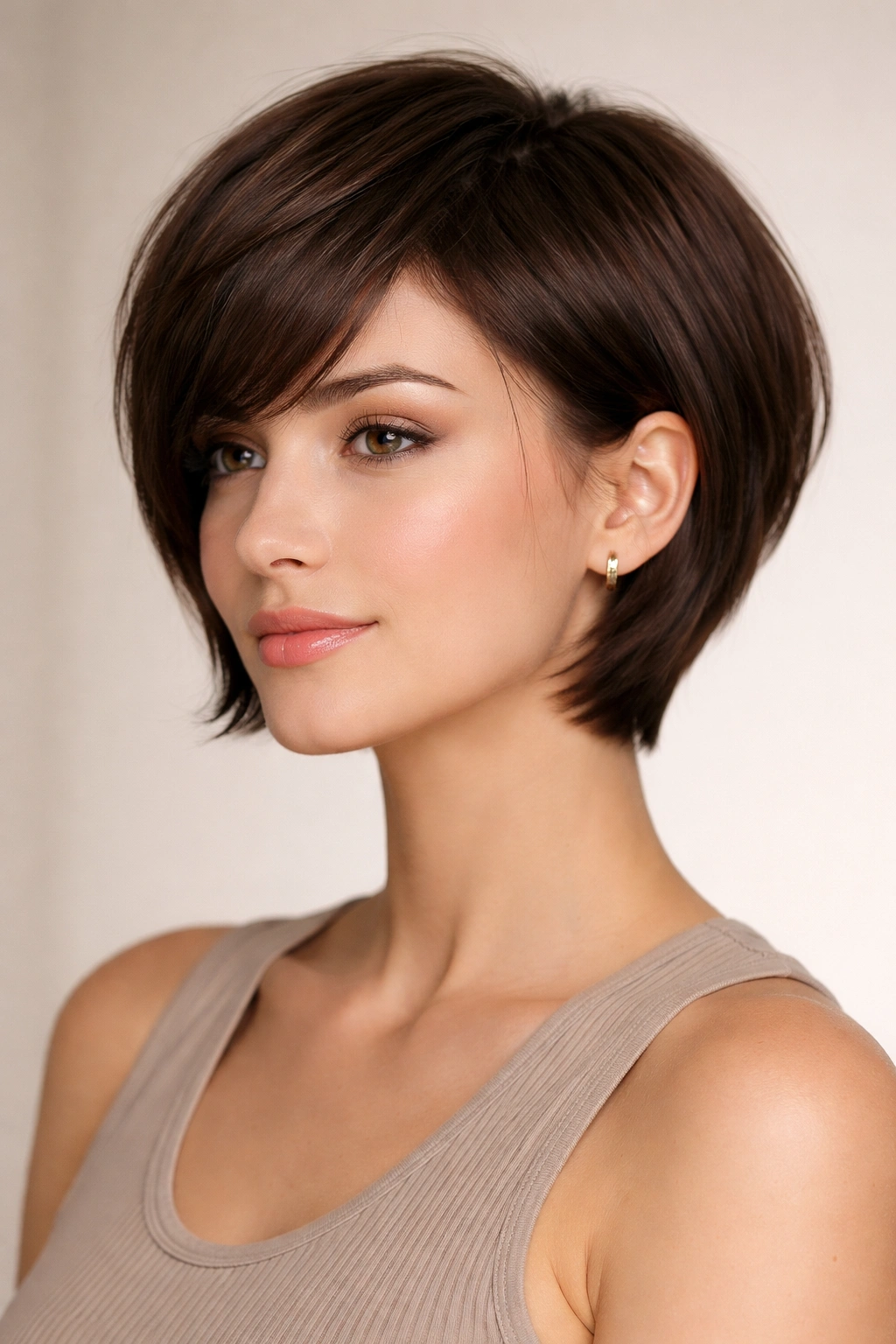
This cut is short overall — usually 2 to 3 inches on top — with layers that soften the shape into a rounded, almost feminine silhouette. Rather than choppy and edgy, this cut uses layers to create softness and flow. On straight hair, the layers are subtle enough that the cut reads as smooth and polished, but they’re present enough to add dimension and prevent the cut from feeling blunt or flat. It’s the cut for someone who wants short hair that feels elegant rather than edgy.
What Sets It Apart
The rounded softness of this cut comes from how the layers are placed and the overall shape of the cut. Instead of stacking layers for maximum texture, this approach uses layers to soften the perimeter and create a gentle shape. For straight hair, you get a cut that’s easy to style and looks polished without requiring texture products or complicated blow-drying. It’s sophisticated and low-maintenance simultaneously.
Maintenance and Daily Care
- Blow-dry with a round brush to enhance the rounded shape and soften the layers
- Minimal product needed; a light styling cream or smoothing serum keeps it looking polished
- Trims every 6 to 8 weeks maintain the rounded shape and soft layers
- Works beautifully with a deep side part or a center part; the soft shape flatters both
- This cut is particularly nice for fine or thin straight hair because the layers add dimension without weight
9. Peekaboo Undercut With Layered Top
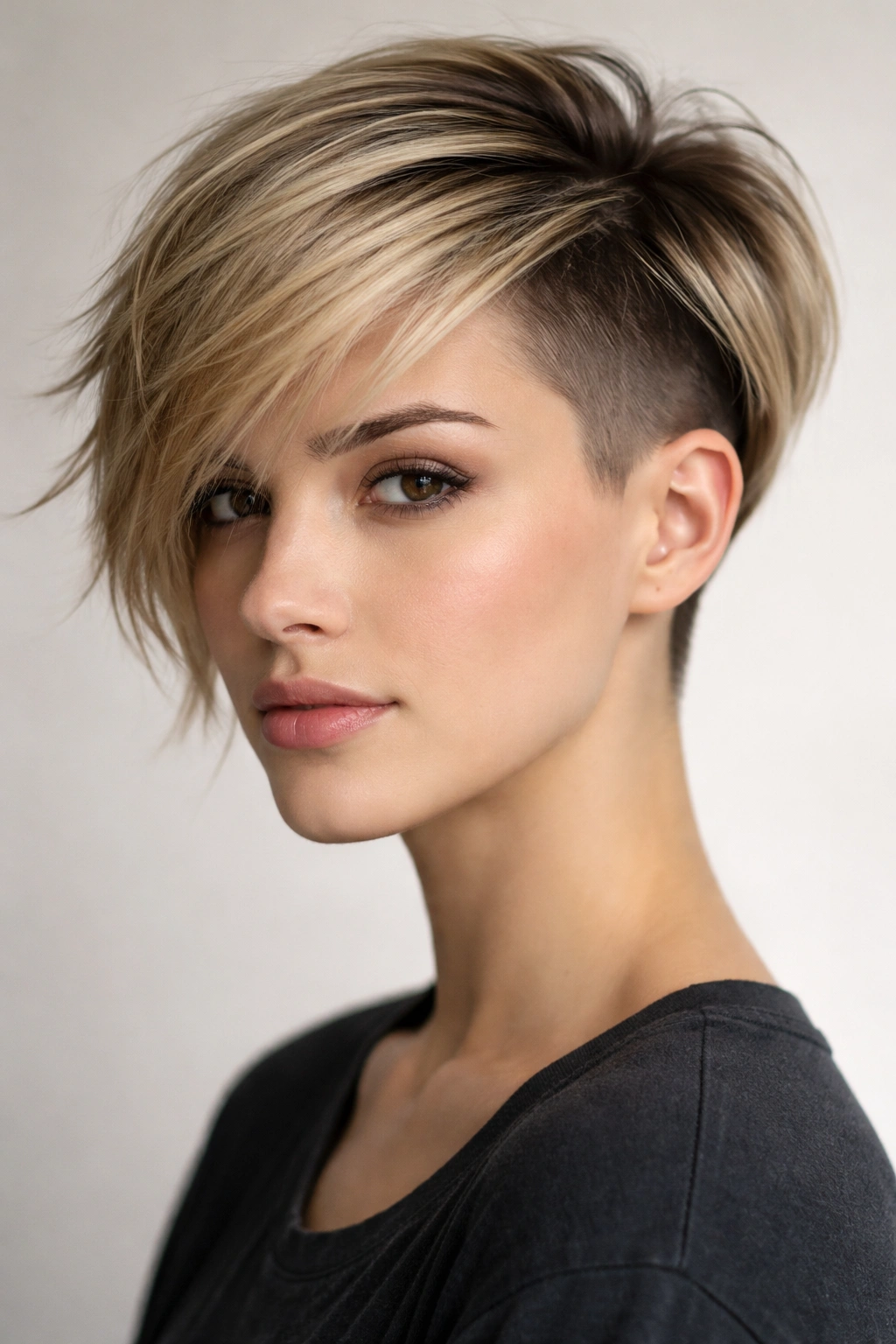
An undercut has very short, closely shaved or clipped sides and back, with longer hair on top that’s heavily layered. The “peekaboo” element means the undercut is hidden when your hair is down, creating a secret graphic detail underneath. For straight hair, this cut is stunning because the contrast between the super-short undercut and the textured, layered top is absolutely clear and dramatic. It’s edgy, cool, and surprisingly wearable.
Why This Cut Commands Attention
The peekaboo undercut works because the undercut creates a completely different silhouette than most cuts, and the layered top adds texture and movement. On straight hair, the layers on top are clearly visible and create motion that contrasts with the clean lines of the undercut. You get two different aesthetics in one cut — polished and graphic from the front, bold and edgy from behind or when your hair is styled up.
Practical Styling and Maintenance
- The undercut requires clipping every 3 to 4 weeks to stay sharp; the top layers need trims every 6 to 8 weeks
- Blow-dry the top with texturizing product for a piece-y, separated look that plays up the layers
- When you want to show the undercut, slick the top back or style it up in a ponytail or bun
- This cut is high-maintenance in terms of cuts and styling, so it works best for people who genuinely love the edgy aesthetic
- The undercut works on most face shapes, but a skilled stylist can customize the fade to be the most flattering for your proportions
10. Geometric Layered Cut
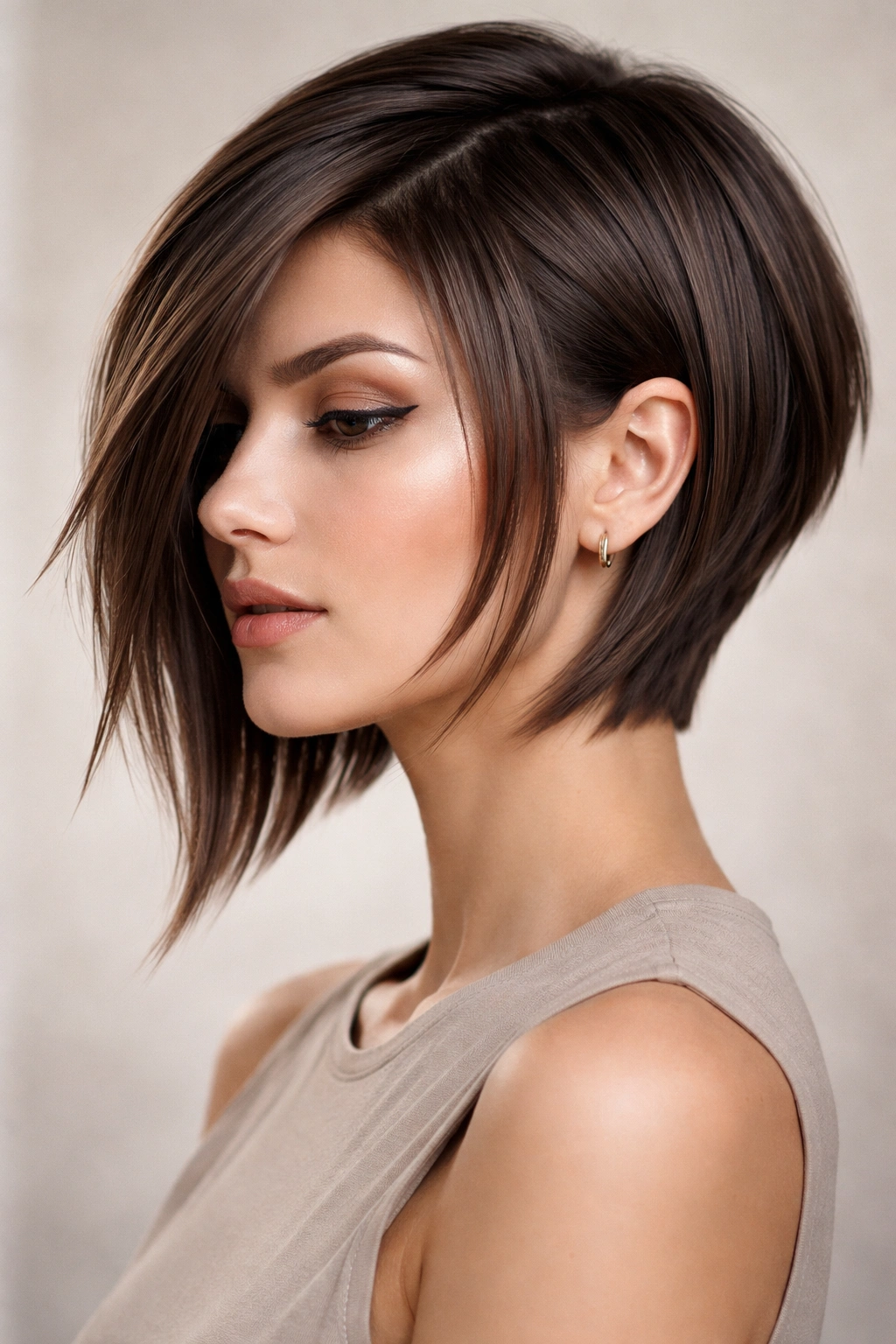
A geometric cut uses precise angles and clean lines to create a deliberately angular, structured silhouette. When you layer a geometric cut on straight hair, you get a cut that looks almost architectural — sharp angles throughout, with layers that maintain those angles rather than softening them. It’s a cut that reads as modern, artistic, and intentional. On straight hair, every angle is crystal clear, making this cut particularly striking and graphic.
The Artistry Behind Geometric Cutting
Geometric cuts are about proportion and angles working in conversation with each other. Layers in a geometric cut aren’t about adding softness or texture — they’re about creating additional angles and lines that enhance the overall structured shape. For straight hair, this means you get a cut that’s visually complex and dynamic, with intentional angles that create movement through shape rather than choppy separation.
Wearing and Styling a Geometric Cut
- Blow-dry straight and smooth to show off the geometric angles and clean lines
- Flat iron for extra precision and to enhance the geometric qualities
- Minimal product needed; this cut is about the shape, not texture or separation
- Trims every 6 to 8 weeks are important to maintain the geometric precision; angles blur quickly as the cut grows
- This cut absolutely requires a skilled, experienced stylist who understands geometric cutting principles
- Worth knowing: Geometric cuts often look better with minimal makeup and simple styling elsewhere; the cut itself is the statement
Final Thoughts

The right short layered cut can completely transform how you feel about your straight hair. Each of these cuts offers a different aesthetic — from edgy and modern to polished and elegant — and each one works because the layers are specifically designed to enhance straight texture rather than fight against it. The key is finding the cut that aligns with your lifestyle, your willingness to maintain it, and the energy you want your hair to project.
When you book your appointment, bring reference photos of the specific cut you’re interested in and have a detailed conversation with your stylist about what the layers will do, how the cut will look as it grows out, and what styling commitment you’re willing to make. A great stylist can customize any of these cuts to work specifically for your face shape, hair density, and personal style. Short layered hair on straight texture is incredibly versatile — you’re not locked into one look, and that flexibility is part of what makes these cuts so rewarding to wear.
