



Straight hair has a reputation for being “boring” or “flat,” but honestly, that’s just a lack of imagination about what you can do with it. Layered haircuts completely change the game — they add movement, texture, dimension, and personality without requiring heat styling or products that make straight hair feel heavy. The beauty of layers is that they work with your hair’s natural texture instead of fighting against it, creating depth and flow that make even fine, thin straight hair look fuller and more dynamic.
The trick is finding a layered cut that actually complements straight hair’s structure. Not all layers work the same way. Some cuts create choppy, textured pieces that look too choppy on straight strands. Others add too much volume at the roots and look awkward. The best layered haircuts for straight hair are ones that create clean lines, strategic movement, and dimension without disrupting the natural sleekness of your strands. Whether you want something face-framing, long and flowing, or shorter and more modern, there’s a layered medium-length cut that’ll transform how you feel about your hair.
1. The Classic Long Layers
Long layers that start around the collarbone and extend down to mid-chest create an effortless, cascading effect that’s been flattering straight hair for years. The beauty of this cut is its subtlety — the layers are graduated gradually from shorter pieces around the face to longer ones underneath, so the overall shape stays sleek and streamlined. You don’t get that choppy, piecy texture; instead, you get smooth movement that flows naturally when you walk or turn your head.
Why It Works for Straight Hair
Long layers work particularly well on straight hair because the weight of the longer lengths keeps the cut from looking too wispy or disconnected. Straight hair has enough inherent movement (or lack thereof) that you want layers that create dimension without creating chaos. This cut relies on the contrast between slightly shorter and slightly longer layers to create shape, not on choppy texture.
How to Style and Maintain It
- Blow-dry with a round brush for a polished finish, or air-dry and let gravity do the work
- Minimal styling effort — straight hair naturally gives you that sleek, intentional look
- Ask your stylist for “soft, blended layers” rather than “choppy layers” to keep the cut looking cohesive
- Trim every 8-10 weeks to maintain the layered shape, especially if you’re not blow-drying
The collarbone length is universally flattering because it hits at a naturally narrower part of the body, making the face appear slimmer. If you have a rounder face, ask your stylist to keep the face-frame layers just slightly longer and add subtle texture around the jawline.
2. The Wispy Face-Frame
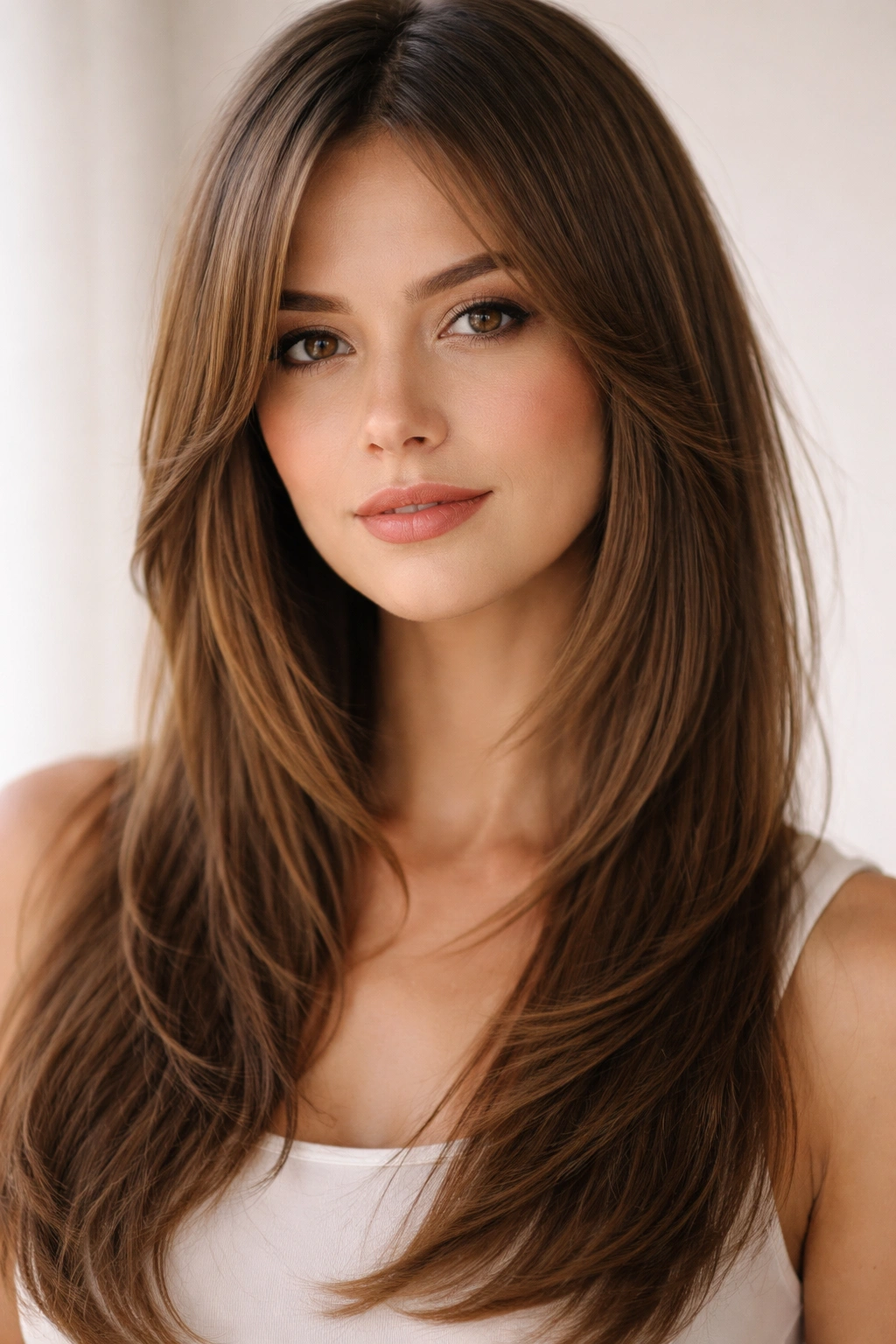
This cut puts all the emphasis on face-framing pieces — shorter layers that start around the cheekbones and blend into longer layers below. The face-frame pieces are cut with soft, subtle texture so they move gracefully without looking stringy. The rest of your hair hangs in relatively longer, blended layers that create a gentle, elongating shape.
The Strategic Purpose of Face Framing
Face-framing layers do two important things on straight hair: they add movement right where people see it most (around your face and neck), and they create the optical illusion of a narrower face shape. Because straight hair doesn’t have natural waves to move around your face, these intentional shorter pieces do that job. They’re also infinitely easier to style — just brush them down and they follow the line of your face.
What to Tell Your Stylist
- Request “soft face-frame layers” that start around your cheekbones or jawline
- Ask the stylist to blend them seamlessly into the longer layers — not a blunt change in length
- Mention that you want the face-frame pieces to fall forward when you move, not stick straight out
- Specify the longest layer length you want (shoulder, mid-chest, etc.) so the rest of the cut can be built around that
This cut works beautifully on all face shapes because the face-frame pieces can be customized. High cheekbones? Your stylist can start the layers slightly lower to emphasize them. A longer face? Shorter layers that hit around the cheekbones create more width.
3. The Choppy Textured Bob
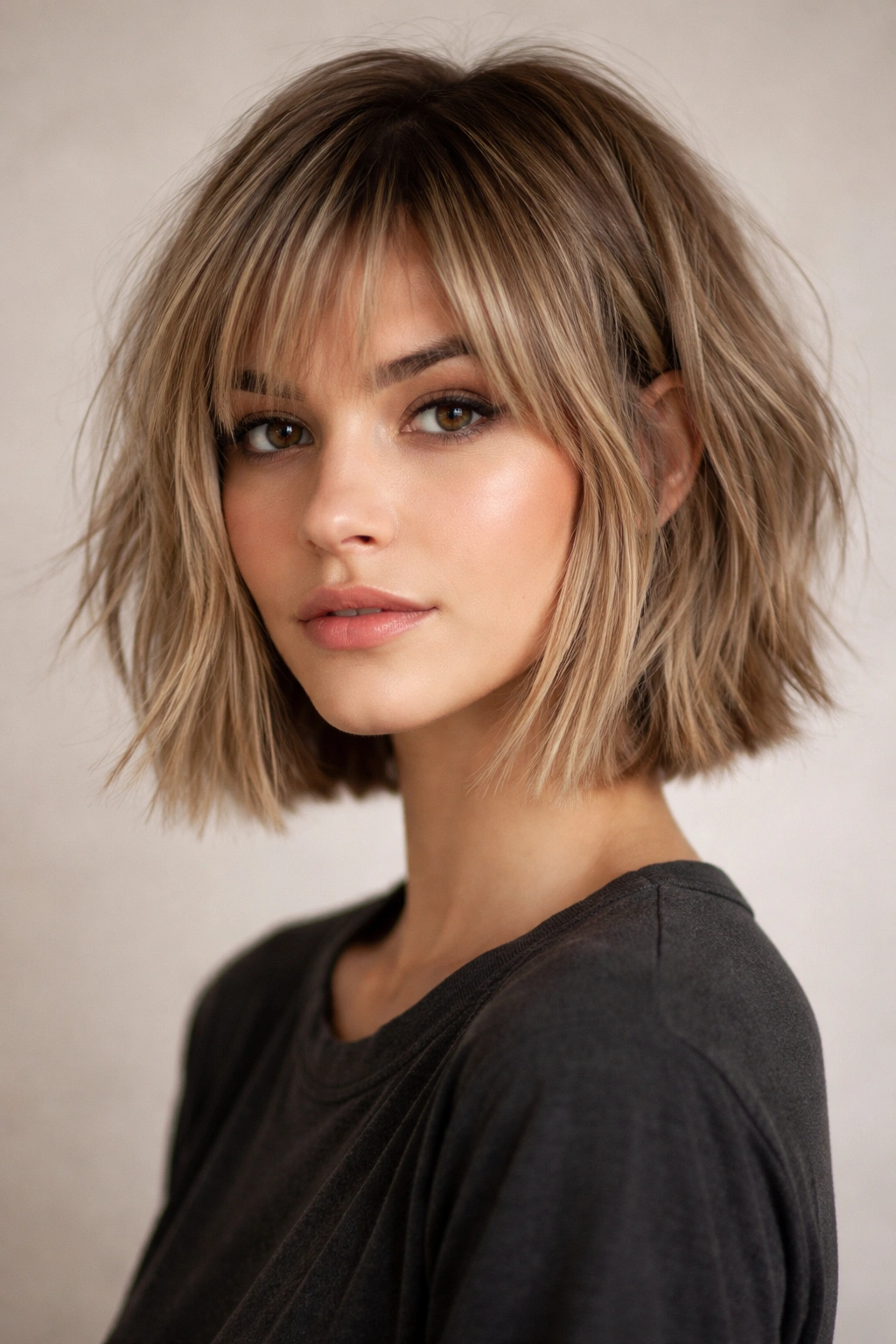
A choppy, layered bob that hits around chin or shoulder length gives straight hair that piece-y, modern texture that usually requires curling iron work on wavy hair, but can look naturally textured on straight strands with the right cut. The layers are cut with texture lines throughout, creating intentional separation and movement. It’s shorter and more contemporary than the classic long-layer look, with a bit more attitude.
Building Texture Into the Cut
This cut works on straight hair when the stylist uses specific techniques to create separation lines rather than relying on your hair’s natural texture to do it. The layers are cut at angles, sometimes with point-cutting or razor techniques, so each layer has definition. The cut looks best when it’s blunt at the ends (not tapered) because straight hair needs that weight to keep the choppy pieces from looking thin and wispy.
Styling This Texture
- Blow-dry with product for definition, or use a texture spray and finger-style
- The cut is forgiving — you can wear it sleek and blended if you want, or mess it up with product for texture
- Requires regular trims (every 6-8 weeks) because the choppy layers rely on clean lines
- Light texturizing sprays or sea salt sprays enhance the intentional piece-y look
This cut is perfect if you like a more fashion-forward, editorial vibe. It photographs beautifully and works especially well on straight hair that’s either very fine (it adds apparent density) or naturally slightly thick (the layers prevent it from feeling heavy).
4. The Shaggy Modern Layers
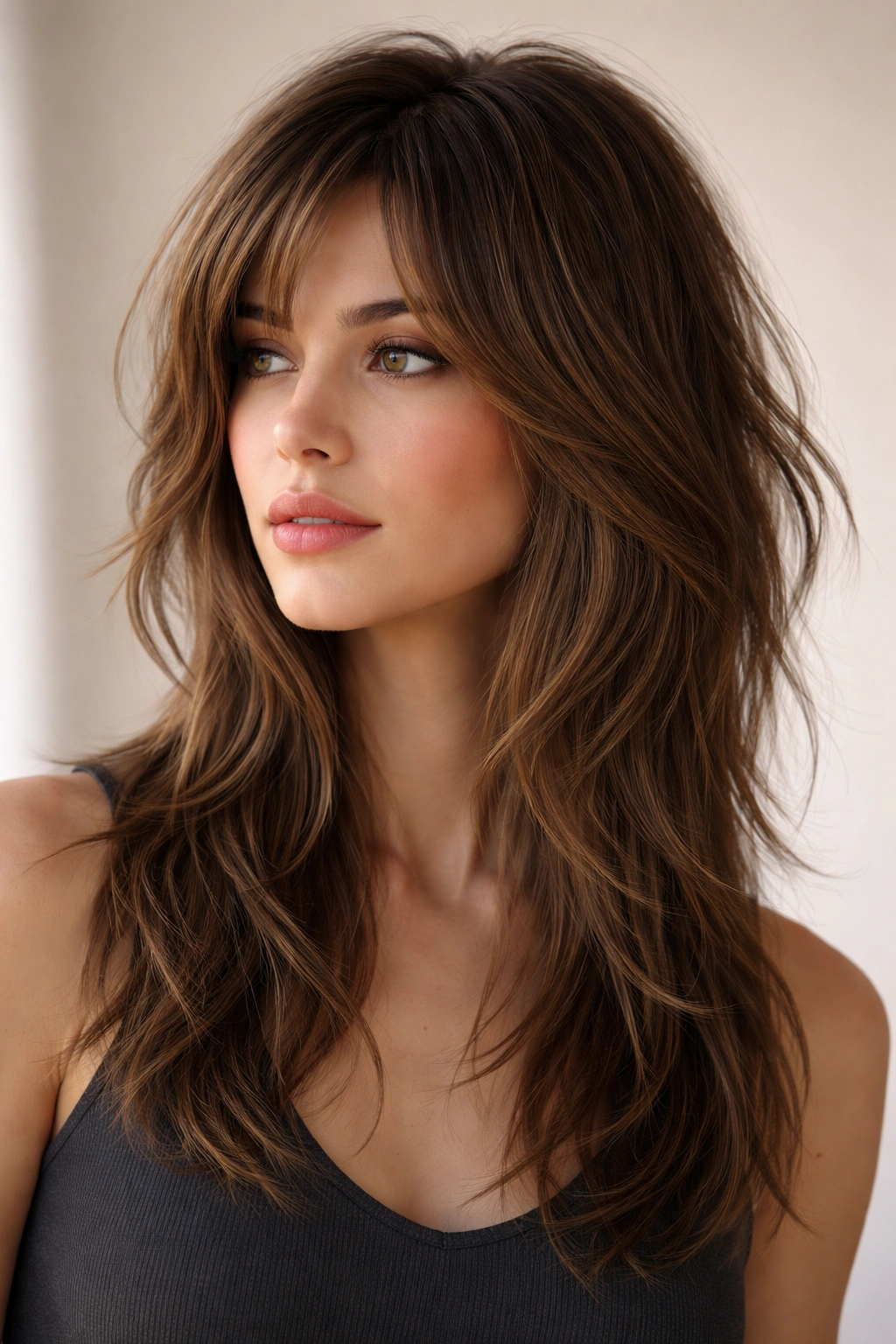
This cut takes inspiration from the shag haircuts of the 70s but updates them with modern proportions and technique. It’s longer (usually hitting mid-chest or below) with lots of layers throughout that create volume and movement, especially around the crown. Unlike a true shag, which can look heavy and dated, a modern shaggy layered cut feels contemporary, cool, and deliberately undone.
Creating Volume Without Frizz
The secret to making shaggy layers work on straight hair is how the layers are cut at the crown. Your stylist should focus on creating layers that start higher up (around the crown and temples) so you get volume at the root without needing to tease or backcomb your hair. The layers underneath are longer and blended, so the overall look is cohesive, not chaotic.
The Effortless Look That Takes a Bit of Work
- Blow-dry for best results, using your fingers to mess the layers as you go
- The shaggy texture looks best when slightly undone — you can skip the flat iron or round brush
- Use a texture product to enhance the piece-y quality of the layers
- This cut looks great on straight hair that’s slightly wavy or has a bit of natural bend
- Trim every 8-10 weeks to keep the shape looking intentional rather than overgrown
This cut is ideal if you like a more effortless, rock-and-roll aesthetic. It’s younger-feeling than blunt layers and works beautifully with both modern and bohemian fashion styles.
5. The Barely-There Subtle Layers
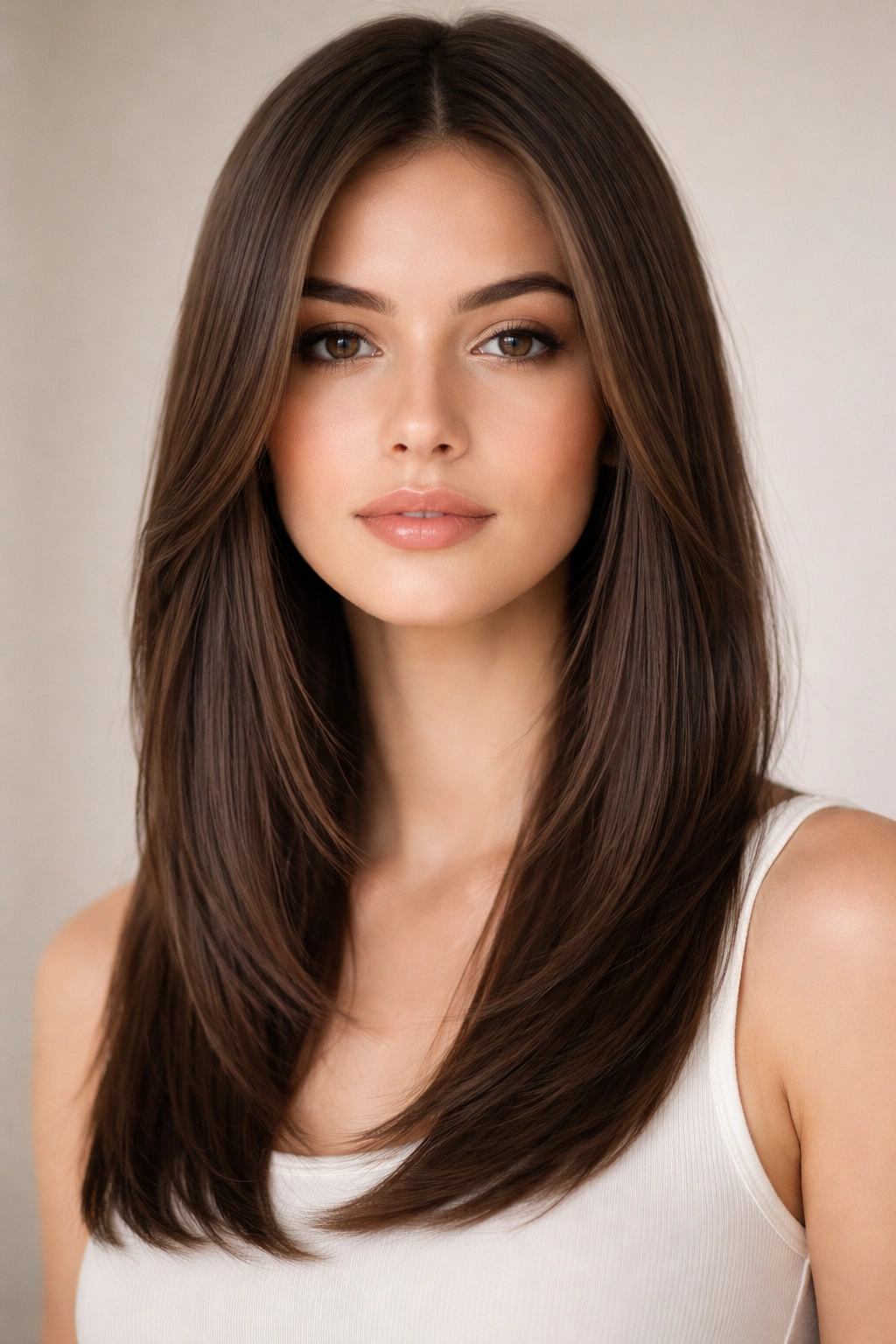
For people who love their straight hair’s sleekness but want just a tiny bit of movement and dimension, barely-there layers are perfect. This cut has layers, but they’re so subtle that the overall shape still looks relatively blunt and streamlined. The layers are cut about a quarter-inch shorter in strategic spots — around the face, throughout the crown, and in the back — so you get shape without a dramatic change in length.
The Art of Invisible Layering
Subtle layers require a stylist who understands proportion and restraint. The layers are cut so that straight hair still looks mostly straight and sleek when worn down and brushed smooth. But when you part your hair differently or pull it back, you see the dimension. It’s sophisticated and works beautifully for people with professional environments where you want polished, not too-trendy.
Maintenance and Styling
- These layers look best when your hair is pristine and healthy — any damage shows more on minimal layers
- Straight hair will look sleek without any styling, which is the whole point
- You can wear it exactly as it falls, or add a blow-dry for more polish
- Trim every 10-12 weeks; the subtle layers blur easily if not maintained
- Consider this cut if you have very straight, thick hair — the subtle layers prevent it from feeling heavy
This is the cut for people who want “good” hair but not “statement” hair. It’s timeless, works on every face shape, and flatters straight hair without overwhelming it.
6. The Blunt-Edged Layered Shag
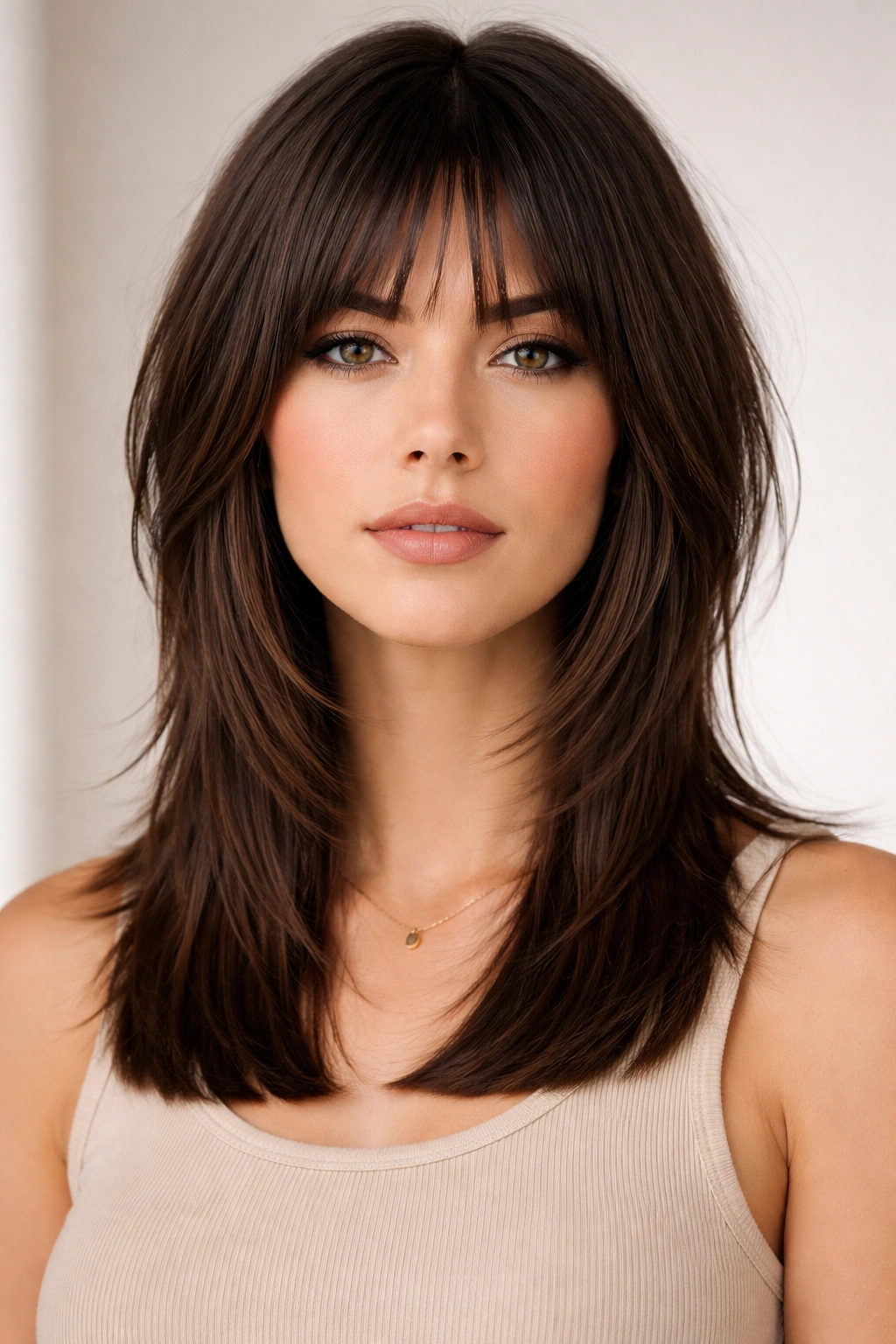
This hybrid cut combines blunt ends with visible layers throughout, creating a cut that’s structured but textured. The overall shape has blunt, clean lines, especially around the face and bottom, but layered throughout the interior. You get the sleekness of blunt hair with the movement and dimension of layers — it’s the best of both worlds for straight hair.
The Technical Approach
This cut requires precision because you’re combining two opposing techniques: blunt edges (which need clean lines) with layers (which create separation). Your stylist will cut the exterior edge of your hair relatively blunt while creating significant layers inside so it doesn’t look too heavy or solid. The contrast between the blunt perimeter and the layered interior creates visual movement.
Styling Options
- Blow-dry for polished, or air-dry for a more relaxed vibe
- The blunt edges mean the cut looks deliberately precise, not shaggy or overgrown
- Works beautifully with straight hair because the blunt edges show off clean lines
- Layer maintenance is crucial — every 8-10 weeks to keep the blunt edges sharp
- This cut suits straight hair that’s on the thicker side, as the blunt edges can feel heavy on fine hair
This is ideal if you want a modern, fashion-forward cut that still feels wearable and not too trend-dependent. It photographs beautifully and looks great at any age.
7. The Octopus Layers (aka 80s-Inspired Layers)
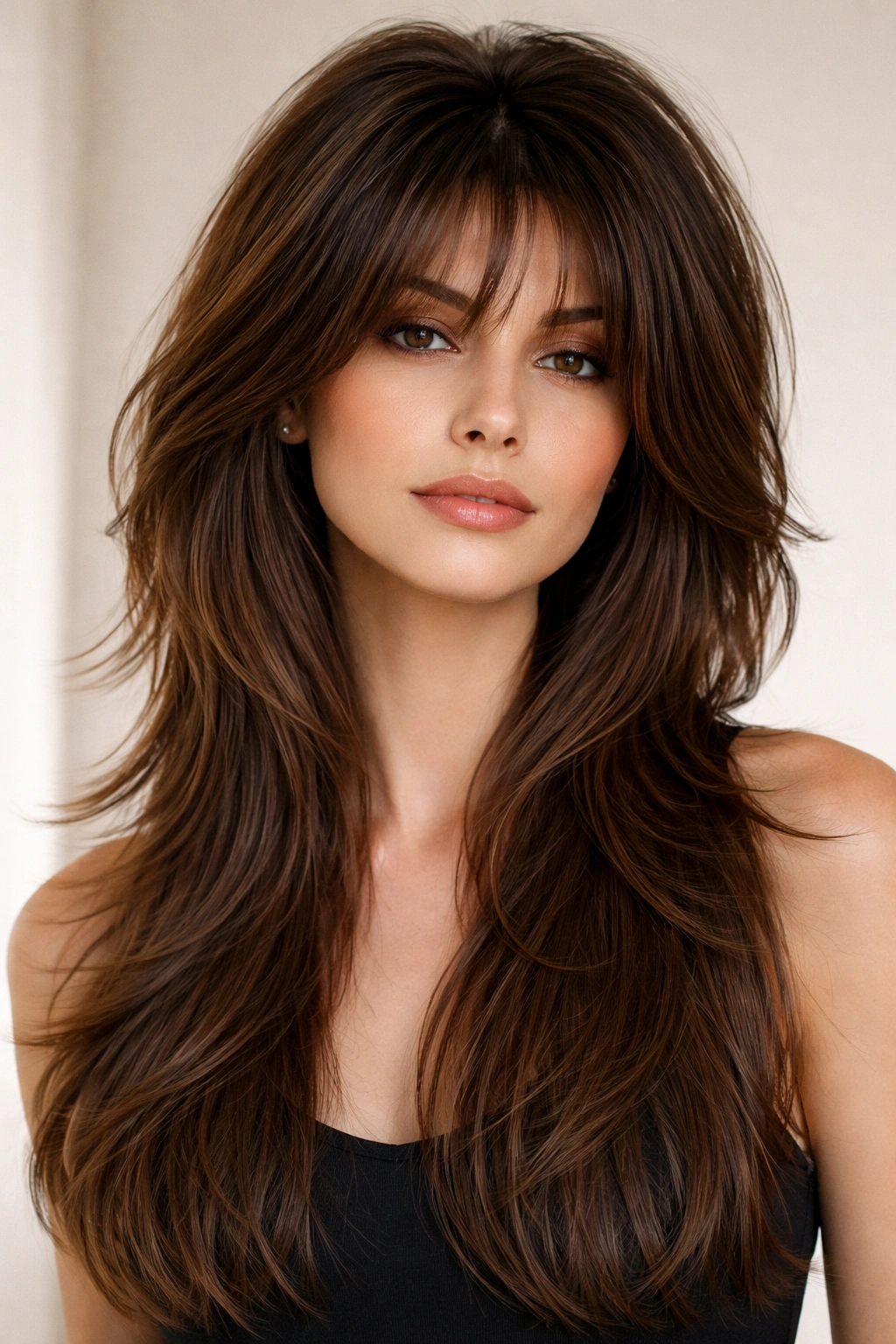
This cut features lots of layers throughout, but especially concentrated around the crown and temple area, creating volume and movement that radiates outward. It’s inspired by 80s and 90s styling but done with a modern sensibility so it feels current, not costume-like. The layers are shorter at the crown (creating lift) and gradually lengthen as you move toward the back.
Why Straight Hair Needs Special Handling Here
Heavy layers on straight hair can sometimes look thin or wispy if not cut correctly. The key is ensuring that each layer has sufficient weight and that the shortest layers near the crown are still long enough (usually 2-3 inches at minimum) to maintain volume without sticking straight up. Your stylist should create layers that work with straight hair’s tendency to fall flat, not against it.
Styling and Maintenance
- This cut requires regular blow-drying to look its best — air-drying flattens the crown layers
- Use a round brush and blow-dry upward at the crown to create the intended volume
- Texture spray or dry shampoo can add hold and make styling easier
- Trim every 6-8 weeks because the numerous layers require maintenance to look polished
- This cut works beautifully with color — ask your stylist about adding subtle highlights around the face to enhance dimension
This cut is fun and youthful. It works best on straight hair that has at least a little bit of thickness or density, because very fine straight hair might look thin with all those layers.
8. The Structured Layered Lob
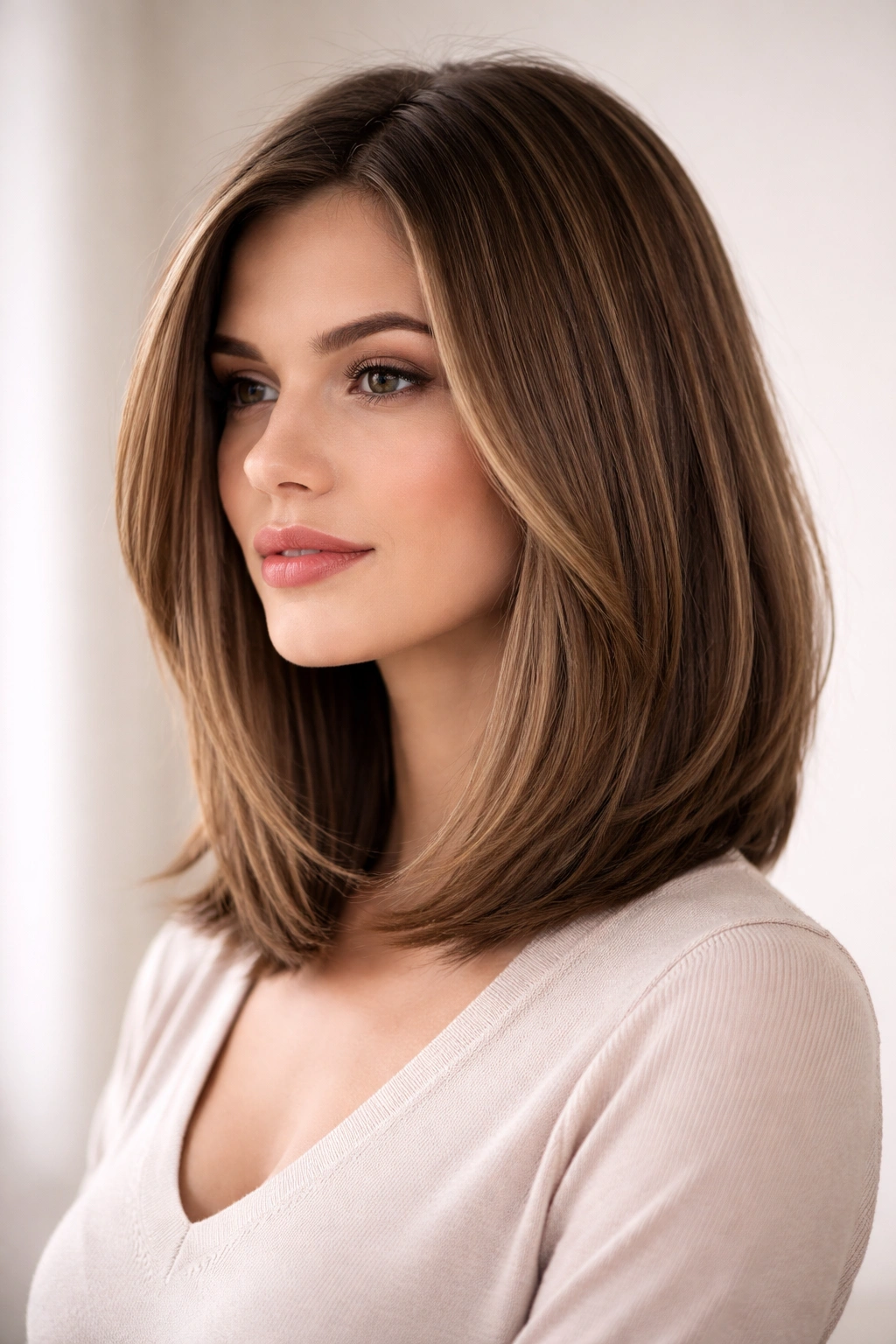
A lob (long bob) with structured, deliberate layers creates a modern, polished look that sits somewhere between a bob and longer hair. This cut usually hits around shoulder length or just below, with layers that are cut with precision and intention rather than soft blending. The layers create shape without the cut feeling shaggy or overly textured.
Why This Works on Straight Hair
Straight hair looks exceptionally polished in a structured lob because you get clean lines and clear shape without needing waves or texture to create dimension. The layers are visible and intentional. Each layer has a purpose and contributes to the overall silhouette. It’s sophisticated and can work in professional environments while still feeling current.
Building the Perfect Structured Lob
- Ask your stylist for “architectural layers” or “precision layers” rather than soft or blended ones
- Specify the longest length (usually shoulder or just below) and the shortest layer length near the face
- Request that the layers be visible but not choppy — they should blend smoothly without looking separated
- The back layers should be longer than the front, creating a subtle graduation that flatters the face
This cut requires some styling to look its best — a blow-dry with a round brush for smoothness, or a straightening iron to enhance the clean lines. But straight hair naturally cooperates with this look, so you’re not fighting your hair’s texture.
9. The Textured Piece-y Crop
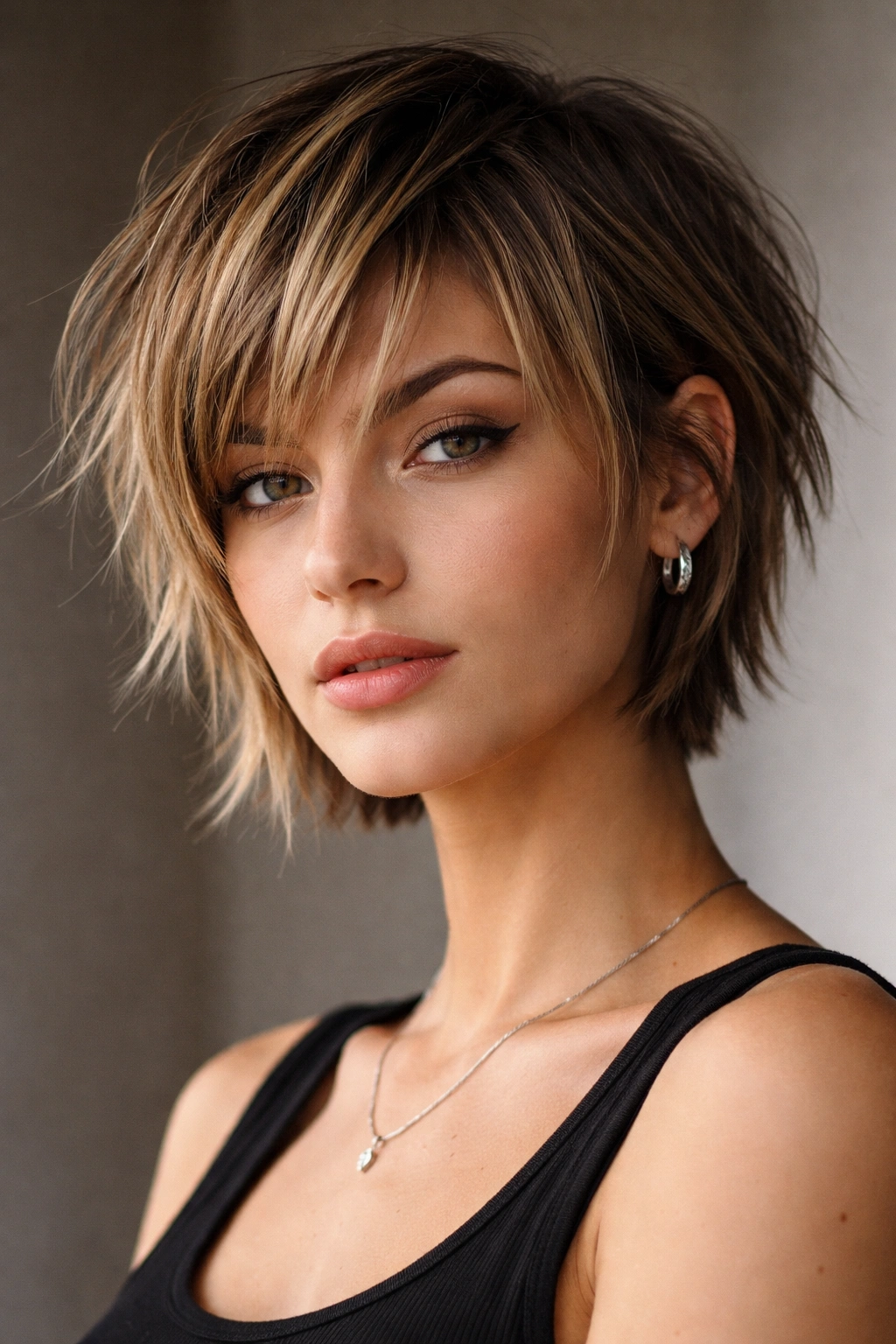
A shorter, more dramatic cut that hits around ear length or slightly longer, with lots of texture and piece-y layers throughout. This cut is fashion-forward and contemporary, with an androgynous, cool-girl energy. On straight hair, the piece-y texture is created through the cut itself rather than relying on waves, so it can look surprisingly edgy and polished.
Making a Short Cut Work on Straight Hair
Short, layered cuts can be trickier on straight hair because you lose the weight that longer lengths provide. The key is ensuring that the layers are cut with enough precision and texture that they don’t look flat or limp. Your stylist should create intentional separation and movement through technique, not hope that your hair will naturally wave.
Styling a Textured Crop
- This cut looks best with some texture product and deliberate styling
- Blow-dry while finger-styling the pieces, or use a diffuser for texture
- The cut requires regular trims (every 4-6 weeks) because short layers grow out quickly
- This is a more high-maintenance cut in terms of styling and upkeep
- It works beautifully on straight hair that’s very fine or thin, as the shorter length prevents heaviness
This cut is perfect if you want something daring and different. It’s youthful and modern, and works especially well if you already love using styling products and blow-drying your hair.
10. The Cascading Waterfall Layers
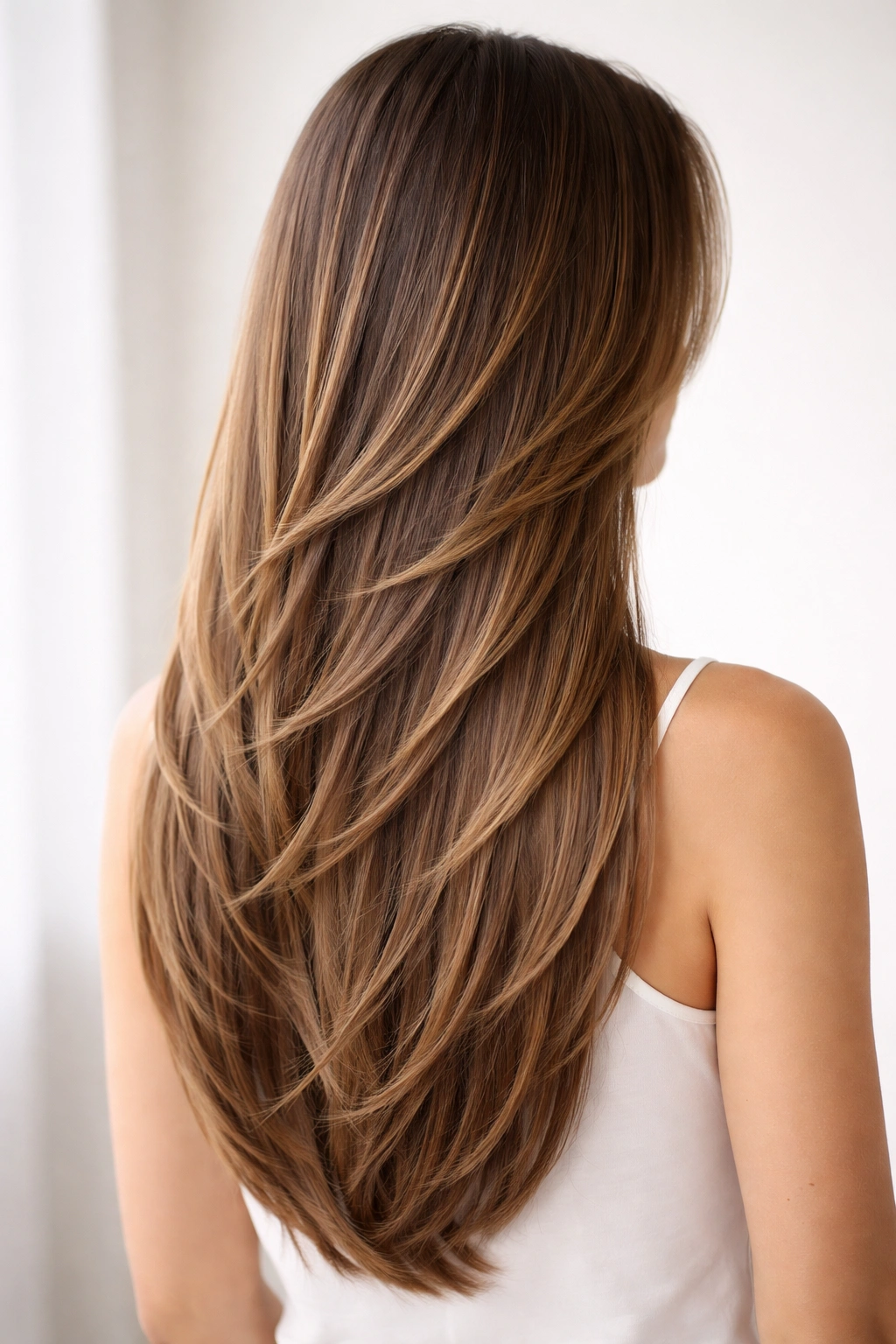
This cut features layers that are gradually, subtly longer as you move from the crown toward the bottom, creating a cascading effect that’s especially flattering for straight hair. The layers are cut so that each one is visible as a separate length when you look at the hair in profile or from behind. It’s like a visual waterfall of different lengths, creating movement and dimension without being choppy or texturized.
The Science of Cascading Proportions
This cut works beautifully on straight hair because straight strands will follow the layer lines clearly — you’ll actually see the cascade of lengths rather than having everything blend into one mass. The layers start subtly (maybe a half-inch difference between layers at the crown) and gradually increase in length difference as you move down, so the longest layers hang smoothly and the graduated lengths create natural movement.
Wearing and Styling the Waterfall
- This cut looks stunning when blow-dried smooth, as it shows off the layer lines clearly
- You can also air-dry straight hair and let the layers create their own soft, undone texture
- The gradient of lengths is flattering on all face shapes because it creates gentle lines
- Trim every 8-10 weeks to maintain the cascading shape and prevent the layers from becoming too blended
- This cut pairs beautifully with color — subtle highlights following the layer lines enhance the waterfall effect
This is probably the most universally flattering cut on this list. The cascading layers create shape and movement while still looking polished and intentional. On straight hair, the visual effect is almost three-dimensional, with clear depth and dimension.
Key Takeaways
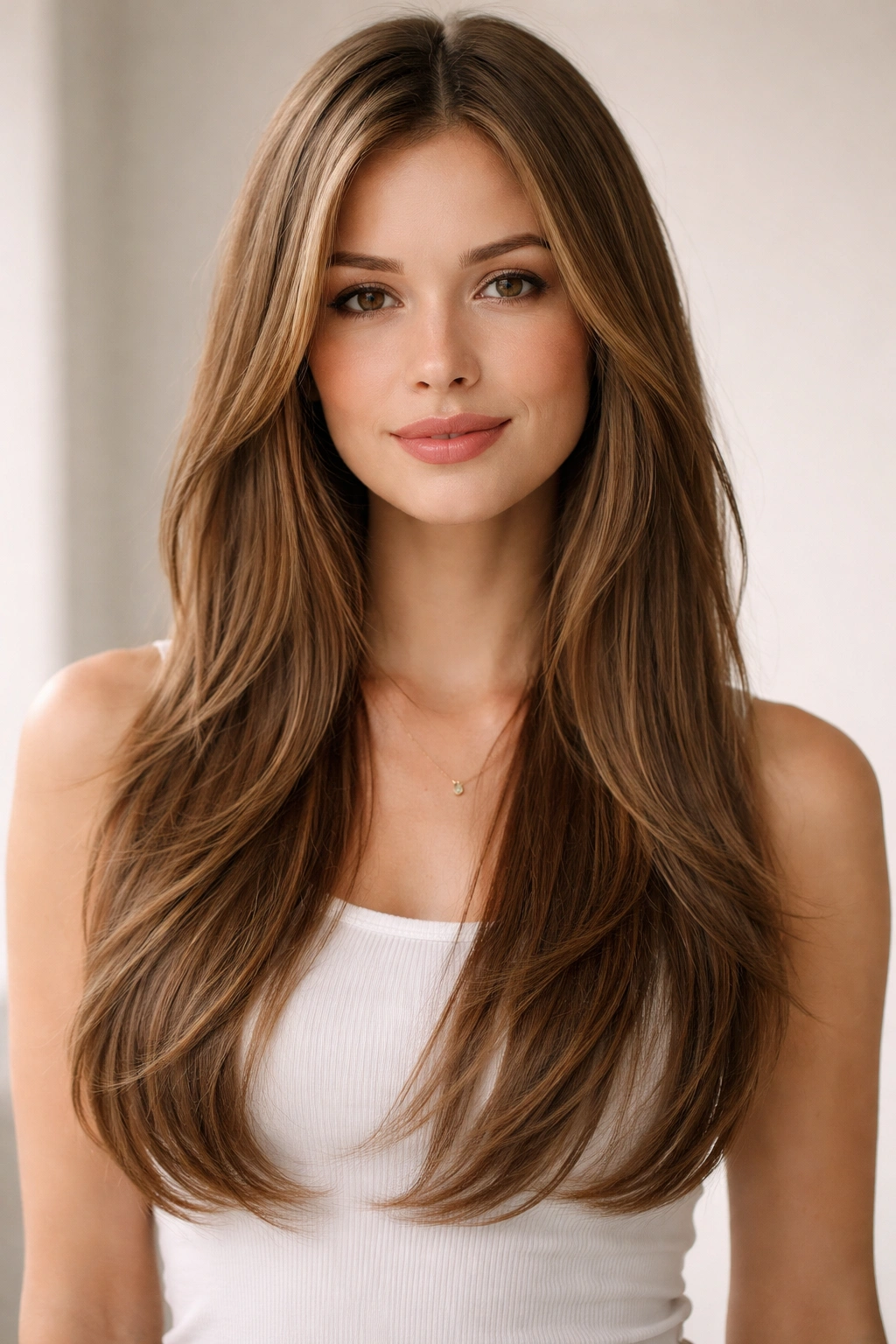
The best layered cut for your straight hair depends on your lifestyle, how much styling you’re willing to do, and what vibe you’re going for. If you want something low-maintenance and effortless, reach for the barely-there subtle layers or the classic long layers. If you’re willing to spend time blow-drying and styling, the choppy textured bob, shaggy layers, or piece-y crop will give you more dramatic dimension and movement.
Before booking your appointment, bring photos of cuts you love and have a specific conversation with your stylist about how much you’re willing to style, how often you can get trims, and what kind of shape you’re trying to achieve. The difference between a cut that transforms your hair and one that just sits there flat is often about having clear communication and finding a stylist who understands how straight hair behaves.
Your straight hair is actually an advantage when it comes to layered cuts — it’ll show off clean lines, dimension, and intentional shaping in a way that wavy or curly hair sometimes can’t. Once you find the right layered cut, you’ll wonder why you ever thought straight hair was boring.
